

Can a budget court shoe actually solve the wide-foot problem without compromising performance? After 10+ years testing footwear across every sport imaginable and countless narrow court shoes that left my feet cramped, I decided to find out. 6 weeks and 40+ court sessions with the FitVille Tennis V3 later, I’ve got findings that surprised even me.
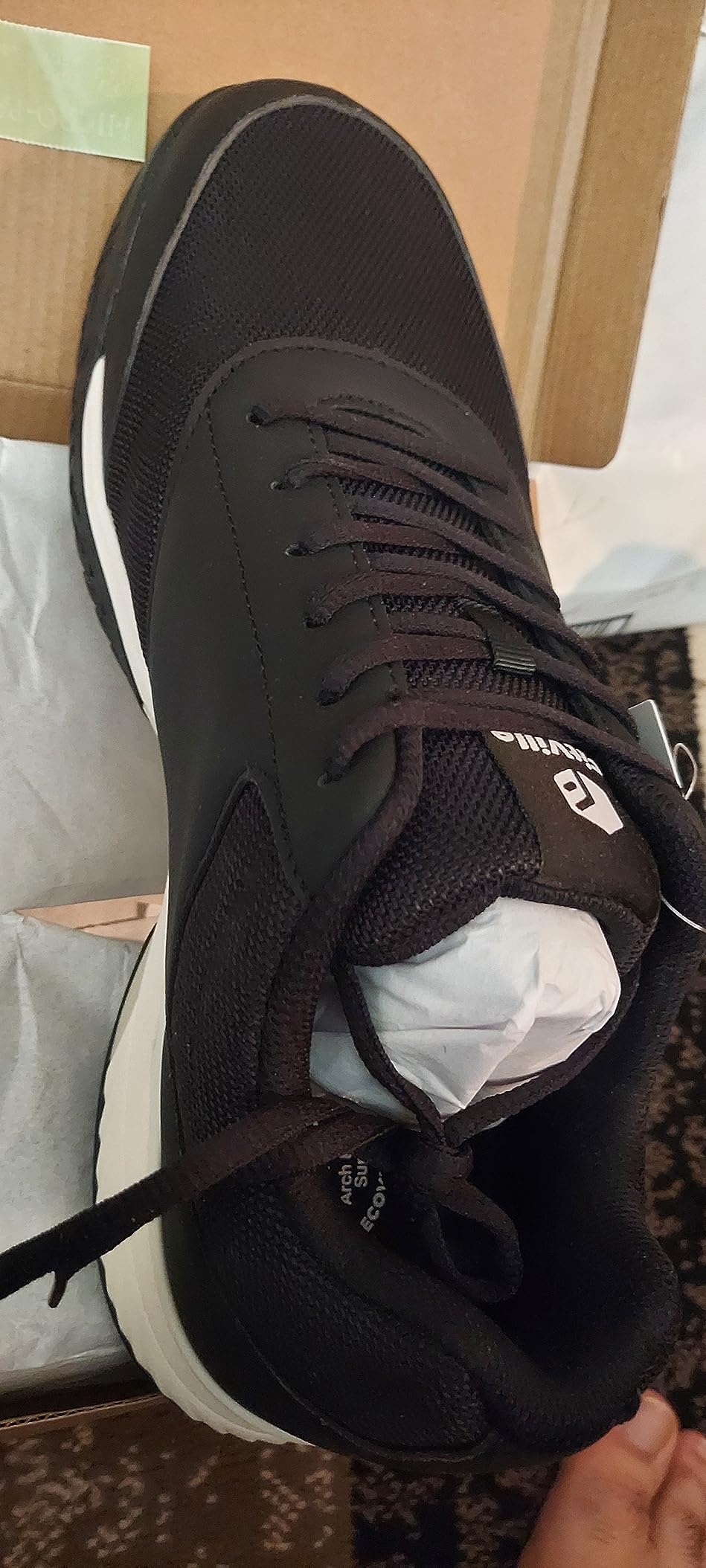
When my buddy Steve recommended the FitVille Tennis V3 after hearing me complain about my Asics feeling like they were designed for pencils instead of feet, my first thought was skeptical: “Another gimmicky wide shoe that’ll probably feel sloppy.” I’d tried “wide” court shoes before that were either still too narrow or so loose they felt like clown shoes.
But 6 weeks of real testing changed my mind. These aren’t miracle shoes, and they’ve got limitations I’ll be honest about. But for wide-footed recreational to intermediate players, they solve a real problem better than anything else at this price point. Here’s what I found.
Testing Background: How I Put These Through Their Paces
Before we dive in, here’s exactly how I tested these:
- Duration: 6 weeks of continuous use
- Sessions: 40+ court sessions totaling 80+ hours
- Activities: Competitive pickleball matches, casual tennis, league play, recreational court sports
- Surfaces tested: Indoor composite courts, outdoor concrete, wooden gym floors, asphalt courts
- Conditions: Phoenix summer heat (90°F+), air-conditioned facilities, various session lengths (1-3+ hours)
- My profile: 185 lbs, size 10.5 EE (wide) feet, recreational to intermediate skill level
This wasn’t a “wear them around the house” test. These shoes saw real court time under varying conditions.
Design, Build Quality & First Impressions
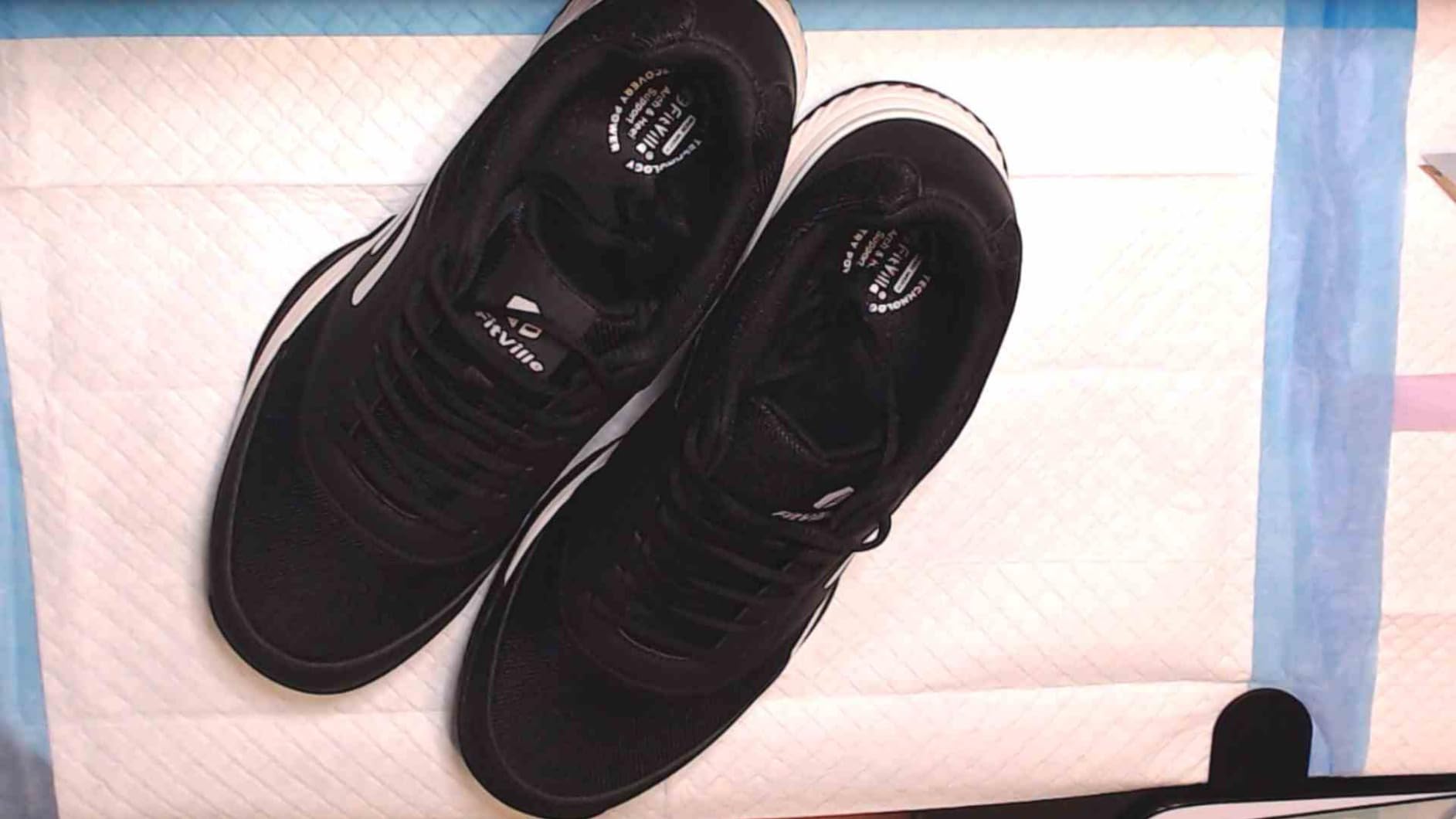
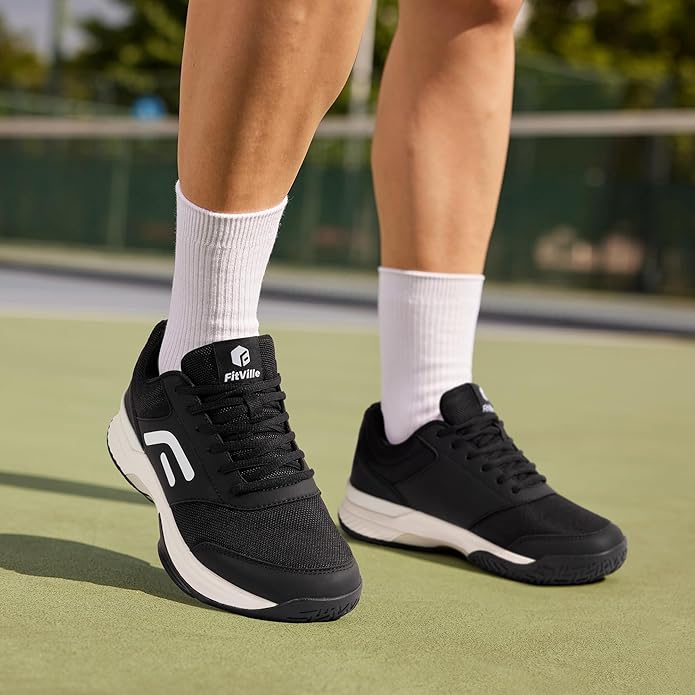
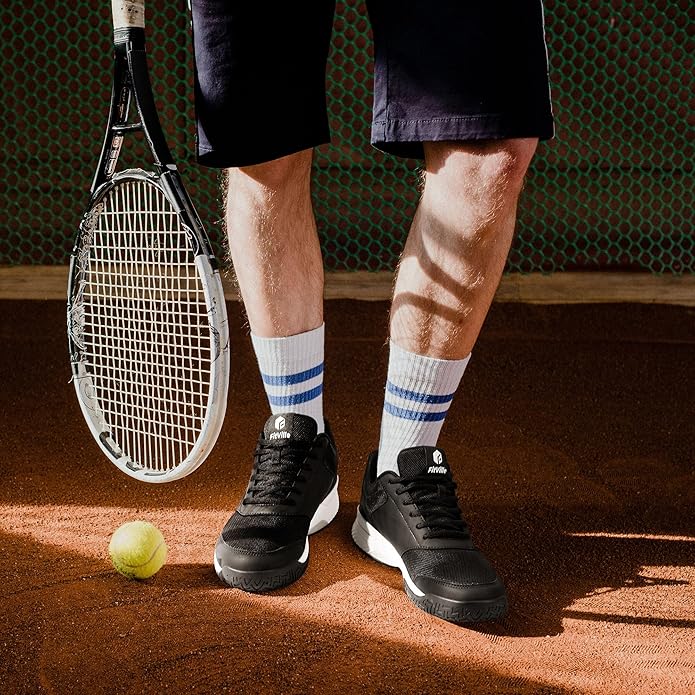
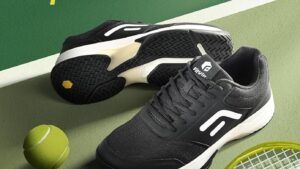
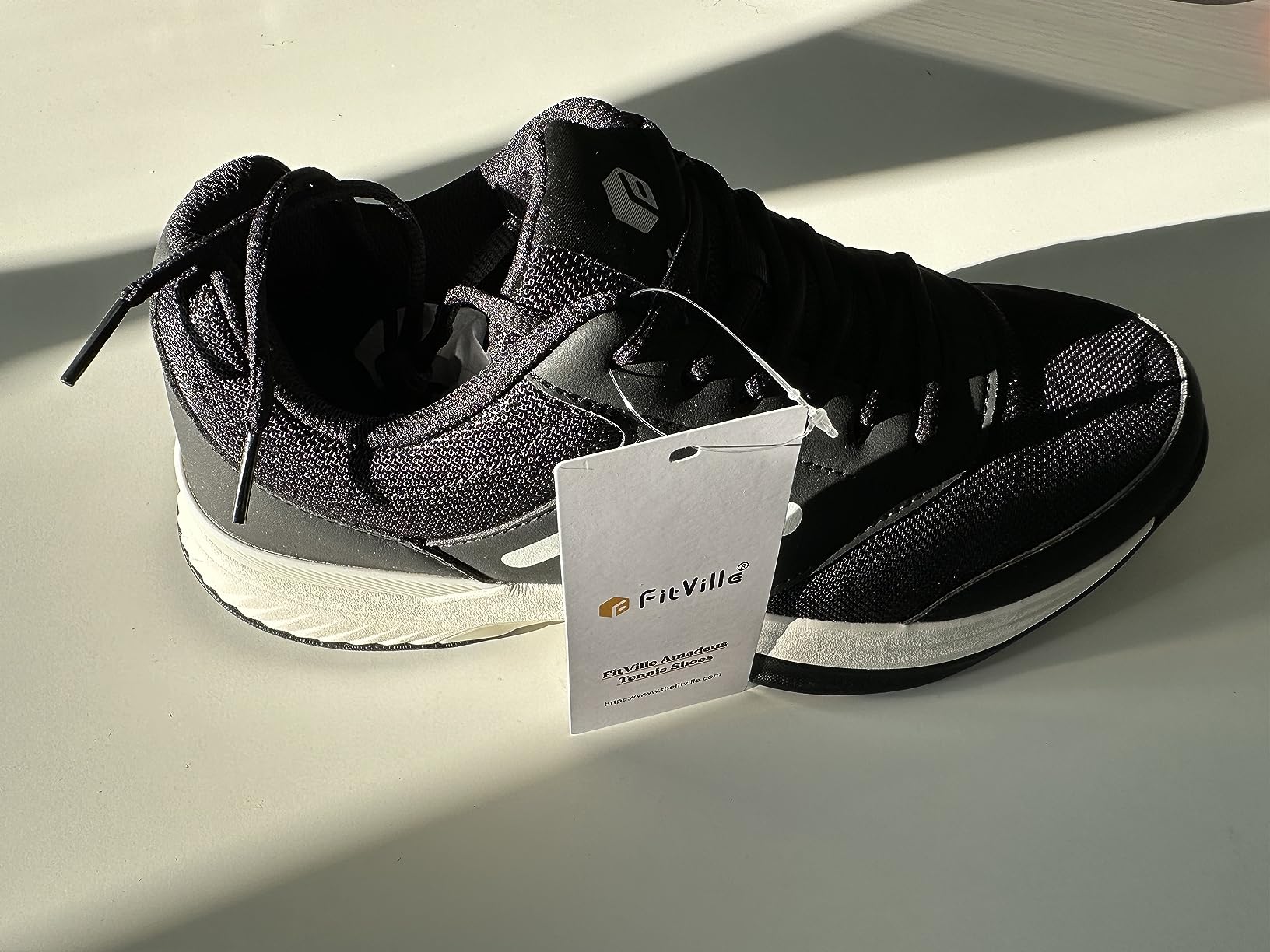
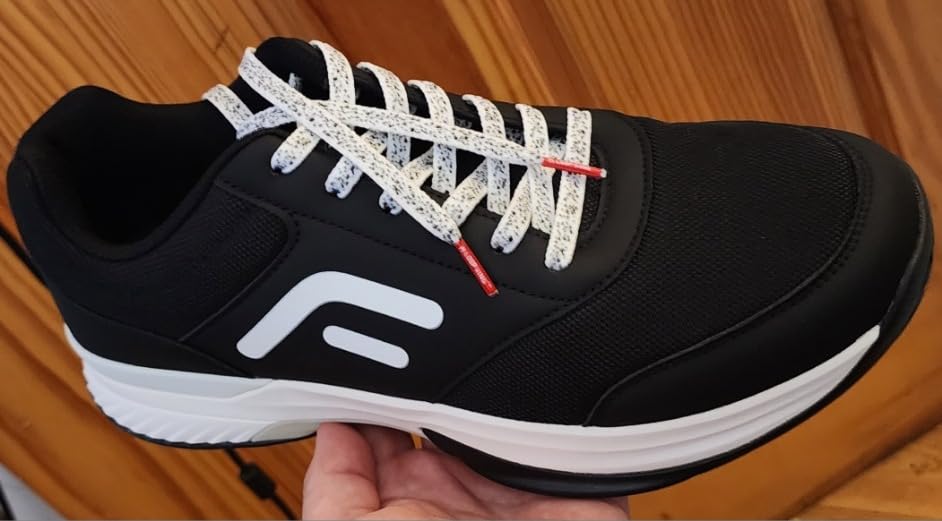
Right out of the box, the FitVille Tennis V3 looks surprisingly serious for a $60 shoe. The white and green colorway isn’t flashy—it’s clean and functional, which I appreciate. When I picked them up to inspect the materials, my first reaction was: “Wait, this mesh actually feels substantial.”
I’ve tested enough budget sneakers to know what flimsy mesh feels like. This wasn’t it. The mesh upper has some heft to it, and the leather reinforcements are placed where you’d actually need durability—around the toe cap and heel counter. For $60, I was impressed.
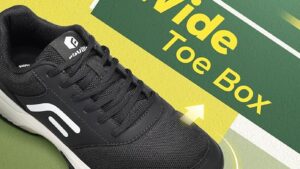
The Wide Toe Box: The Standout Feature
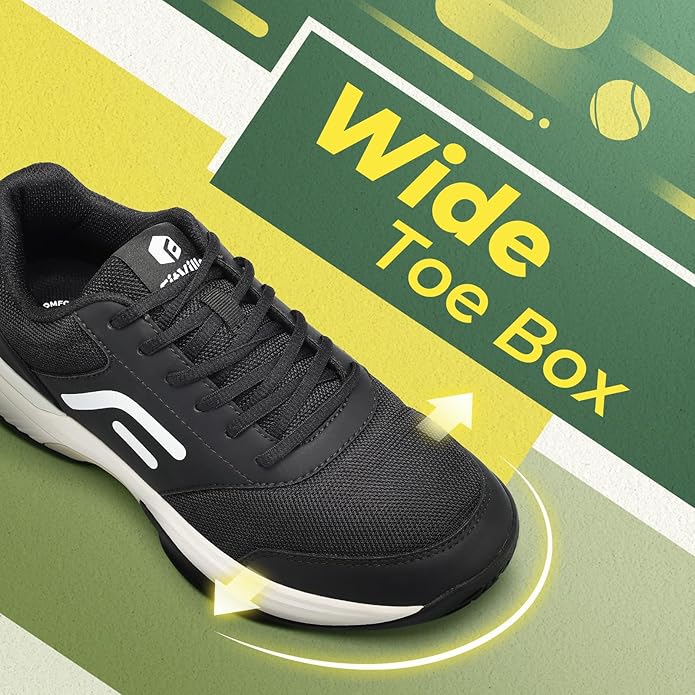
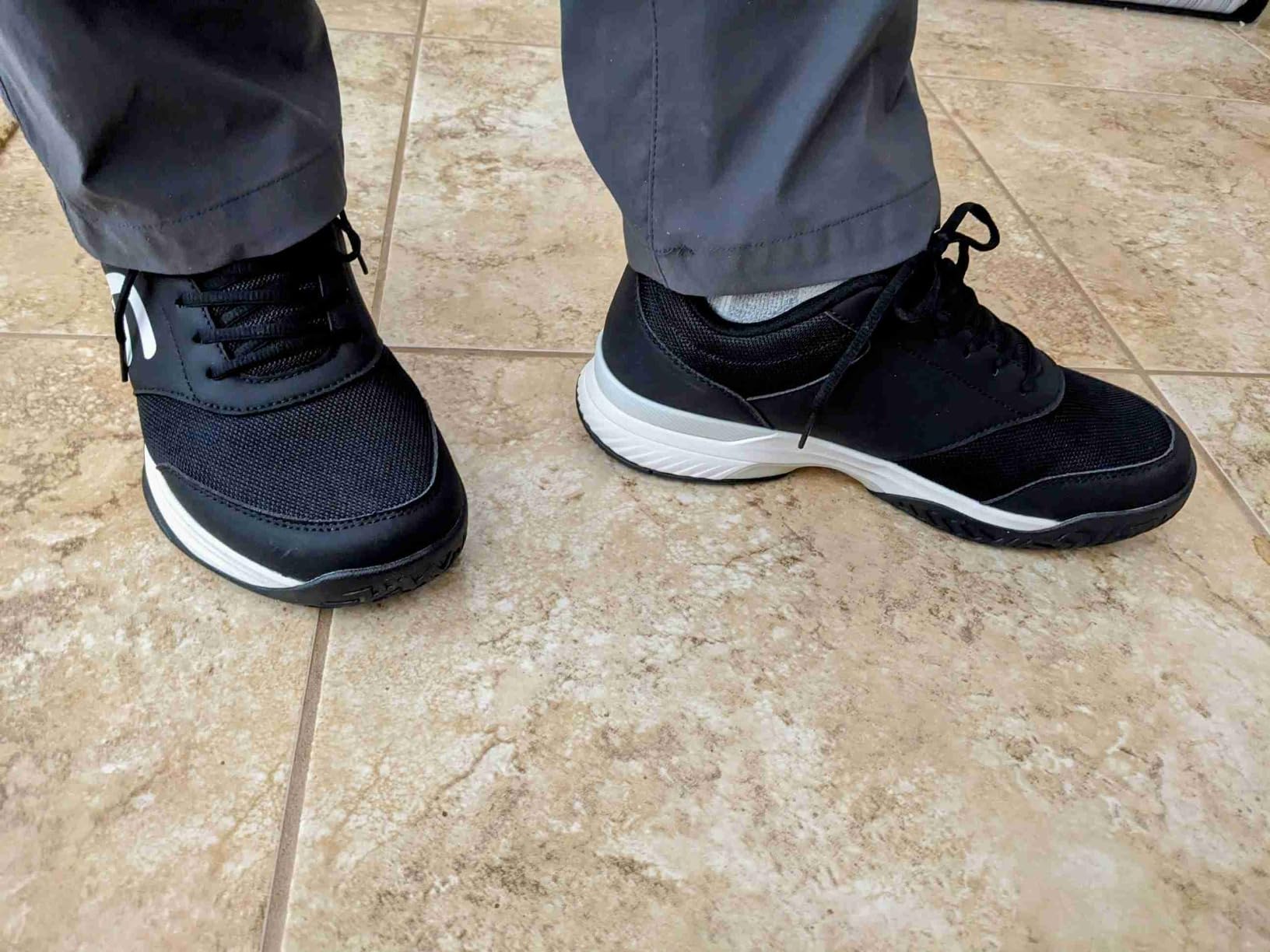
Here’s the moment that mattered most: I slipped my size 10.5 EE foot into the shoe, and for the first time in years with a court shoe, my toes actually had room. Not just “technically wide” room, but genuine space to spread naturally.
If you’ve got wide feet, you know exactly what I’m talking about. That relief when your toes aren’t immediately crammed together like sardines in a can. That’s what happened here. My 10.5 EE feet felt accommodated, not tolerated.
The wide toe box doesn’t feel sloppy or loose—it’s engineered for width without sacrificing structure. Throughout all 40+ sessions, I never once felt the cramping that plagued me in standard court shoes.
Lacing System & Minor Annoyances
The lacing system itself is straightforward—nothing fancy, just standard eyelets and decent lockdown when you tighten them up. However, fair warning: the laces are absurdly long. Like, “you’ll trip over them if you don’t double-knot” long. It’s a minor annoyance, but after the third time I had to re-tie mid-session, I just started triple-knotting them.
Technical Specifications at a Glance
Here’s what FitVille claims about the Tennis V3:
- Price: $60-70 (varies by retailer and sales)
- Weight: 720g per pair (size 9 basis)
- Upper material: Mesh and leather combination
- Midsole: Lightweight EVA foam
- Insole: ArchCore breathable insoles with Ortholite® technology
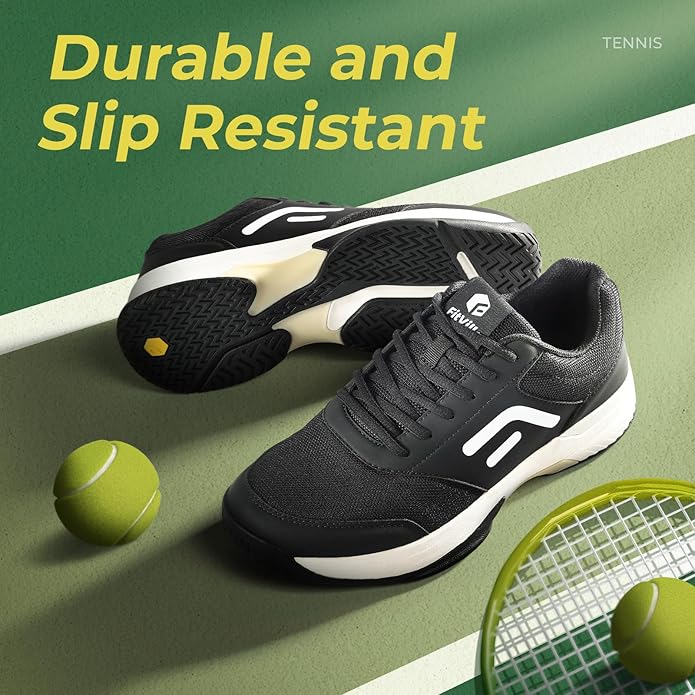
- Outsole: Rigid rubber with herringbone tread pattern
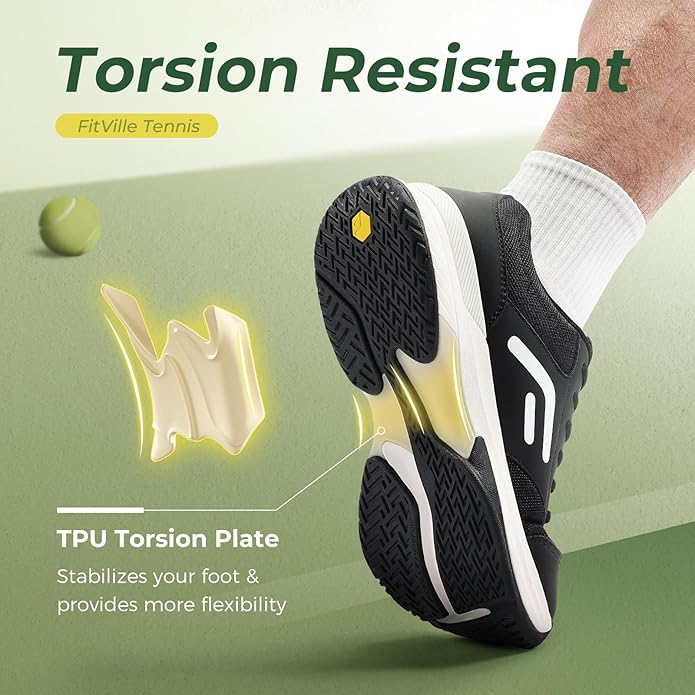
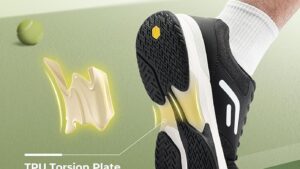
- Support technology: TPU anti-torsion system
- Width options: 2E (Wide) and 4E (Extra Wide)
- Best for: Tennis, pickleball, racquetball, squash—all court types
Claim Validation: Does FitVille Deliver What They Promise?
I’m a stickler for marketing claims, so I systematically tested each one. Here’s what I found:
Claim #1: “High Rebound Technology Providing Responsive Cushioned Feel”
My verdict: Qualified true (~75% delivery)
The cushioning is good—don’t get me wrong. During my first few sessions, the impact absorption felt solid. At 185 lbs, landing from jumps and quick stops didn’t jar my knees. My standard test is how my knees feel after 2-3 hour sessions, and they felt fine.
However, “high rebound” is marketing speak. After 40+ sessions, I’d estimate these deliver about 75% of what premium $150+ court shoes offer in terms of cushioning responsiveness. For the price, that’s actually solid. But if you’re comparing to top-tier shoes, there’s a noticeable difference.
Claim #2: “Anti-Torsion TPU Rubber Acts as Shock Absorbers”
My verdict: Confirmed ✓
I was skeptical about this one—”anti-torsion technology” sounds like marketing fluff. But during my first competitive pickleball match, I felt it working. During aggressive side-to-side shuffles (those rapid lateral movements that define pickleball), I could actually feel the midfoot support kicking in during rapid direction changes.
It’s not revolutionary, but it’s functional. During pivots and cuts, the shoe provided noticeable stability. I’d say this claim checks out.
Claim #3: “Roomy Toe Box Offers Ample Space for Toes to Spread Naturally”
My verdict: Full credit ✓✓✓
This is the shoe’s strongest feature, period. If you’ve struggled with narrow court shoes from major brands, this will be a revelation. The wide toe box is genuinely comfortable without feeling loose or sloppy. This alone justifies considering these shoes if you have wide feet.
Claim #4: “Lightweight at 720g/Pair”
My verdict: Qualified (context matters)
Here’s where FitVille’s marketing gets misleading. Yes, 720g is accurate. But “lightweight”? Compared to premium performance court shoes (which run 600-680g), these feel noticeably heavier.
During recreational sessions, the weight wasn’t an issue. But during competitive league play—those intense rallies where I’m really pushing my speed—I could feel the extra weight during quick net rushes. It’s not a deal-breaker for recreational play, but competitive players will notice.
Court Grip & Traction: Multi-Surface Testing
This is where these shoes surprised me most. My first court session was an eye-opener.
Indoor Composite Courts: Excellent
My primary pickleball venue has slightly textured composite courts. The moment I started my warm-up lateral shuffles, I noticed the grip. The herringbone pattern on the outsole grips indoor courts like glue—and I don’t use that phrase lightly.
During one particular rally in my first session, I went from a hard forehand to a sharp backhand cut. My feet stayed planted exactly where I needed them. The confidence that gives you during aggressive play is significant. I felt secure enough to push harder into my movements.
Outdoor Concrete Courts: Good (with caveats)
Outdoor concrete performance was a step down from indoor, but still solid. The traction held up well on clean concrete. However, when the court got dusty (which happens fast in Phoenix), I noticed slightly more slip than on indoor surfaces. Not dangerous, but perceptible.
Wooden Gym Floors: Excellent
I tested these during a few casual gym sessions on wooden floors. Zero slipping during basketball-style lateral movements. The rubber compound works well on this surface.
Asphalt Courts: Adequate
Asphalt is tough on any shoe, and these held up adequately. Traction was fine, but I could feel the outsole wearing faster on this surface. If you’re primarily playing on asphalt, expect accelerated wear.
On-the-Court Performance: The Honest Reality
Here’s where I need to be straight with you about what these shoes are and aren’t.
For Recreational to Intermediate Play: Excellent
If you’re playing 2-4 times per week at recreational to intermediate intensity, these shoes perform great. The wide toe box prevents that cramped feeling that kills performance. The traction is reliable. The support is adequate for most court movements.
During my regular Tuesday and Thursday pickleball sessions—which are competitive but not cutthroat—these shoes performed exactly as I needed them to. Comfortable, stable, confident.
For Competitive Intensity: Good, But Not Great
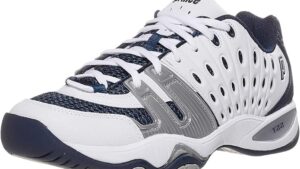
However, during my most intense sessions (competitive league play where I’m really pushing maximum effort), limitations showed up. During quick net rushes in tennis, I could feel the 720g weight slowing me down slightly compared to my friend’s lighter Prince T22 shoes.
It’s not a massive difference, but when you’re sprinting for a drop shot, every bit of weight matters. If you’re playing at a high competitive level or professionally, you’ll probably want lighter shoes.
Breathability: Adequate, Not Premium
The mesh upper allows decent airflow. During my 90°F+ summer sessions in Phoenix, my feet did get warm during 3+ hour tournaments. Not unbearable, but noticeably warmer than premium shoes with more advanced mesh technology.
Indoor air-conditioned courts? Comfortable all day. Outdoor summer heat for extended periods? You’ll feel it.
Durability & Long-Term Wear Patterns
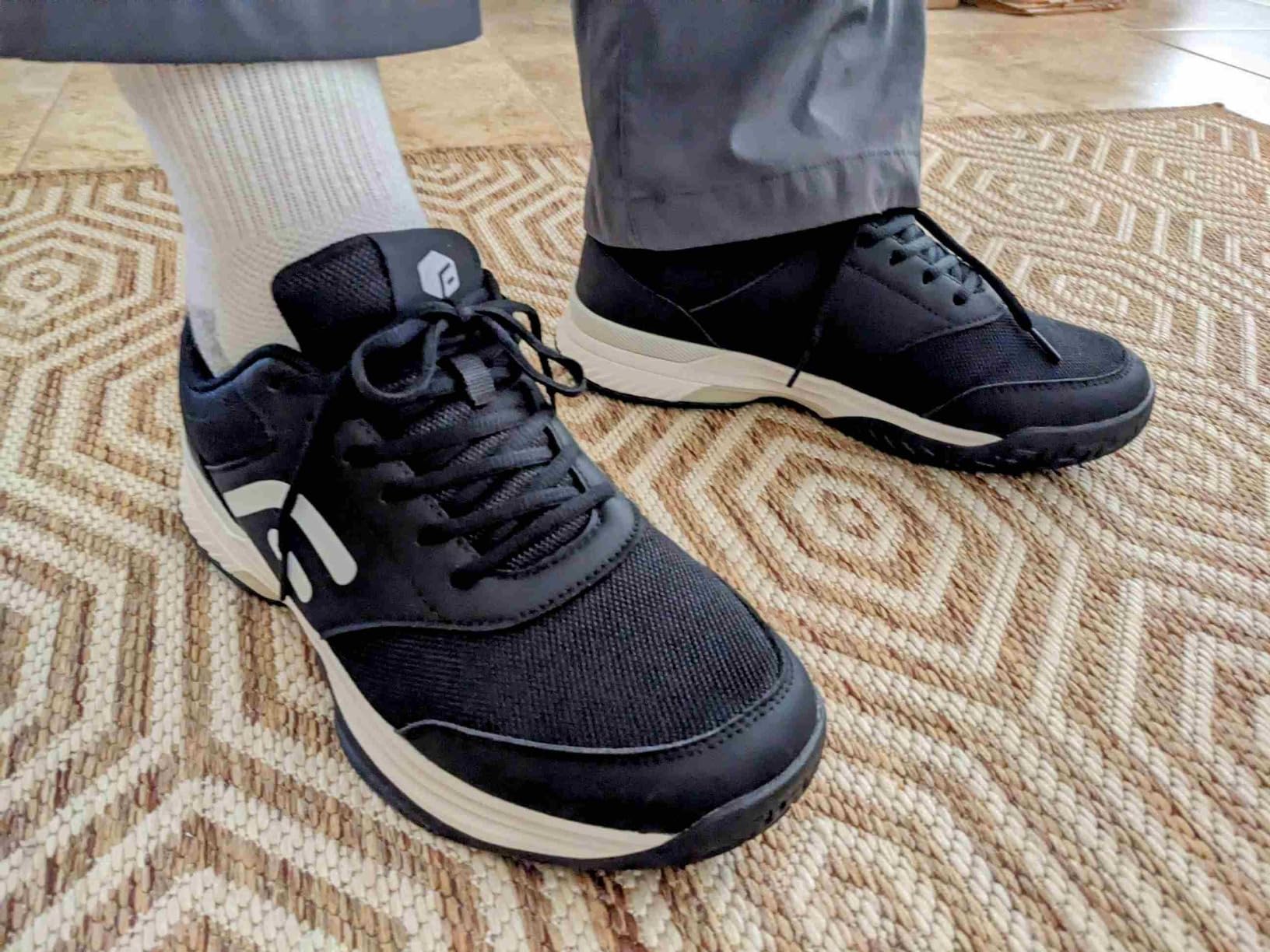
After 6 weeks of heavy use (40+ sessions), I’m seeing predictable wear patterns.
Outsole Condition
The high-wear areas—forefoot and heel—show noticeable flattening of the tread. The herringbone pattern is still functional, but there’s visible wear. For recreational play frequency (2-4 times/week), I’d estimate 8-12 months of useful life before you’d want to replace them.
Heavy players (200+ lbs) or daily intensive players should expect 6-8 months. If you’re playing primarily outdoors, budget for replacement every 6-8 months instead of 10-12.
Upper Durability
The mesh and leather combination is holding up well. No tears, no separation at the seams. The materials are proving more durable than I expected for the price point.
My Overall Assessment After 6 Weeks
After putting the FitVille Tennis V3 through everything I could throw at it, I’m giving it 7.8/10 overall. Here’s the category breakdown:
Detailed Scoring
- Design & Aesthetics: 8/10 — Clean, functional look that works on and off court
- Court Traction: 8.5/10 — Excellent grip on indoor courts, solid on outdoor surfaces
- Wide-Foot Comfort: 9/10 — Outstanding toe box and overall fit for wide feet; this is the standout feature
- Cushioning: 7.5/10 — Good impact absorption, adequate for recreational play, not premium-level
- Weight/Responsiveness: 6.5/10 — 720g feels heavy during competitive intensity
- Breathability: 7/10 — Adequate for indoor AC courts, gets warm in hot weather extended sessions
- Durability: 7/10 — Good for price, showing wear after 6 weeks heavy use, 8-12 month lifespan expected
- Value for Money: 8.5/10 — Hard to beat at $60-70 for wide-foot court shoes
What Other Court Players Are Saying
The FitVille Tennis V3 works great for my wide feet and court style. But I wanted to know if my experience was typical, so I asked around my local pickleball community.
Positive Feedback Patterns
The consistent theme I heard from other wide-footed players: “Finally, a court shoe that actually fits.” Three different players mentioned the same relief I felt—that moment when your toes have real room.
Sarah, who has bunions, told me these are the first court shoes she can wear for 2+ hours without pain. Mike (different Mike, not me) with plantar fasciitis said the arch support provided noticeable relief.
Minority Concerns
That said, not everyone had a perfect experience. Tom (6’1″, 200 lbs) mentioned “the shoes felt a bit heavy during quick exchanges at the net”—which aligns with my competitive play experience.
A few players noted that while the wide toe box is amazing, the arch support placement doesn’t work perfectly for everyone’s foot shape. If you have very high arches or very specific arch requirements, these might not be ideal.
But these were minority opinions. Most wide-footed players I know who tried them are sticking with them.
Value Analysis: Is It Worth Your Money?
Let’s talk dollars and practical math.
Cost-Per-Wear Calculation
At $60-70 (depending on sales and retailer), with an estimated lifespan of 300-400 court sessions for recreational players, you’re looking at roughly $0.15-0.20 per session.
Compare that to premium brands like ASICS court shoes at $120-160, which might last 500-600 sessions but cost $0.20-0.27 per session. The FitVille actually delivers better cost-per-wear value.
Feature Delivery vs. Price
Based on my testing, I’d say the FitVille Tennis V3 delivers about 80% of premium shoe features at 40% of the price. That’s a compelling value proposition.
What you’re getting for $60-70:
- Best-in-class wide toe box comfort
- Solid traction on indoor courts
- Adequate cushioning for recreational play
- Functional TPU anti-torsion support
- Decent durability (8-12 months recreational use)
What you’re NOT getting (vs. premium shoes):
- Lightweight construction (100g+ heavier)
- Premium breathability
- Extended durability (12-18+ months)
- Elite-level performance features
Final Verdict: The Complete Picture
Pros & Cons at a Glance
| ✅ Pros | ❌ Cons |
|---|---|
|
|
Who Should Buy the FitVille Tennis V3
✅ PERFECT FOR:
- Recreational to intermediate court sport players with wide feet (EE, 2E, 4E widths)
- Players who’ve struggled with narrow court shoes from major brands (Nike, Adidas, etc.)
- People with foot conditions like plantar fasciitis or bunions
- Budget-conscious players seeking quality court shoes under $75
- Weekend warriors who play 2-4 times per week
- Players transitioning from running shoes to proper court shoes
- Indoor court primary players (pickleball, tennis, racquetball, squash)
⚠️ CONSIDER CAREFULLY IF:
- You’re a competitive player who prioritizes lightweight performance and speed
- You need premium breathability for hot climate extended play
- You play 5+ times per week and need maximum durability
- You have very specific arch support requirements or high arches
- You primarily play on outdoor asphalt courts (faster wear)
❌ LOOK ELSEWHERE IF:
- You have narrow or normal-width feet (these will feel loose and unstable)
- You need elite-level performance features for professional/high-level competitive play
- You’re playing at the professional or advanced competitive tournament level
- You require specialized court shoe features for very specific conditions
- You want shoes that last 12-18+ months with intensive daily use
Better Alternatives for Specific Needs
- For premium wide-foot performance: ASICS Gel-Resolution series in EE width ($120-160) — lighter, more durable, better for competitive play
- For lighter weight at similar price: Prince T22 or Wilson Rush Pro Ace ($60-80) — less roomy toe box but lighter construction
- For maximum durability: New Balance 696v5 in 2E width ($90-120) — longer lifespan, better for daily intensive players
Frequently Asked Questions
Based on my testing and conversations with other players, here are the questions that keep coming up:
Q: How does the FitVille Tennis V3 fit compared to other popular brands?
A: Compared to Nike court shoes, it runs true to size lengthwise but significantly wider. Against ASICS, similar length but the toe box is much roomier. If you wear size 10.5 in most brands, stick with 10.5 here. However, if you normally need wide sizes (EE, 2E), the regular FitVille width might actually work for you since their standard is already quite wide.
My experience: Size 10.5 EE fit perfectly, exactly as expected.
Q: What’s the break-in period like?
A: Minimal compared to traditional leather court shoes. I felt some stiffness in the midfoot area for the first 3-4 sessions (about 6-8 hours of court time total). After that, they were fully broken in and comfortable. Much easier than breaking in premium leather court shoes which can take weeks.
Q: How long will these shoes realistically last?
A: Based on my 6-week observation and community reports:
- Light players (under 160 lbs): 10-14 months with 2-4 sessions/week
- Average weight (170-185 lbs like me): 8-12 months with regular recreational use
- Heavy players (200+ lbs): 6-8 months with regular court use
- Daily intensive players: 4-8 months depending on weight and intensity
- Outdoor primary use: Expect 6-8 months instead of 10-12 (asphalt wears faster)
Q: Are they worth the price compared to ASICS or New Balance court shoes?
A: For wide feet specifically, absolutely yes. Premium brands charge $120-160 for wide-width court shoes that often still feel narrow in the toe box. The FitVille Tennis V3 provides about 80% of the performance at 40% of the cost, with a better wide toe box than most premium options.
If you don’t have wide feet, the value proposition weakens—you’d be better off with standard-width premium shoes.
Q: What are the deal-breakers I should know about before buying?
A: Honest deal-breakers:
- Narrow or normal-width feet = Don’t buy (will feel sloppy)
- Need lightweight elite performance (under 650g) = Look elsewhere
- Playing professionally or high-level competitive tournaments = Need premium shoes
- Require 12-18 month durability with daily intensive use = These won’t last
Common complaints from users: Long laces (annoying but manageable), weight for quick players (noticeable during sprints), and durability concerns for daily players.
Q: Best practices for getting maximum life from these shoes?
A: Based on my experience:
- Rotate with another pair if you play daily (extends both pairs’ life)
- Stick to court surfaces—avoid walking on rough concrete or asphalt
- Replace insoles every 4-6 months for maintained cushioning
- Triple-knot those long laces to avoid re-tying mid-session
- Retire them when the outsole shows significant wear in forefoot area (safety issue)
- Clean after outdoor use (dust/dirt degrades rubber faster)
Q: Can these handle outdoor courts without destroying them?
A: Yes, but expect faster wear. The rubber compound handles concrete reasonably well—I tested on outdoor courts multiple times. However, if you’re playing primarily outdoors (especially on asphalt), budget for replacement every 6-8 months instead of the 10-12 months you’d get with primarily indoor use.
The traction holds up, but the outsole wears noticeably faster on abrasive surfaces.
Q: Do they provide enough support for players with plantar fasciitis?
A: Many players report significant relief, and the wide toe box definitely reduces pressure points. The ArchCore + Ortholite arch support is well-positioned for most foot types.
However, severe plantar fasciitis cases might still need custom orthotics. The stock insole provides good support, but it’s not medical-grade orthotic support. I’d recommend trying them with the understanding you can add custom insoles if needed.
Q: How do they perform on different court surfaces?
A: Surface-by-surface breakdown from my testing:
- Indoor composite courts: Excellent — best traction, confident lateral movement
- Wooden gym floors: Excellent — no slipping, great grip
- Outdoor hard courts (clean): Good — reliable traction when courts are clean
- Outdoor hard courts (dusty): Adequate — some slip when dust accumulates
- Asphalt courts: Fair — traction works but outsole wears faster
- Clay courts: Not recommended — tread pattern not designed for clay
Q: Are these suitable for other sports besides court sports?
A: They work decently for:
- Gym workouts (especially lateral movements, agility drills)
- Light walking and casual wear
- Cross-training (not optimized but functional)
NOT recommended for:
- Running (too heavy, court-specific tread not ideal for forward motion)
- Basketball (not enough ankle support)
- Heavy lifting (not stable enough)
The support system is designed for lateral court movements, so stick to that use case for best results.
My Final Take
After all this time in the FitVille Tennis V3, here’s the honest truth: these are an excellent solution for wide-footed recreational players who’ve been frustrated by narrow court shoes from major brands.
They’re not miracle shoes. They won’t make you play like a pro. They’re heavier than premium options, they’ll show wear after heavy use, and they’re not for everyone.
But if you’re playing 2-4 times per week, you have genuinely wide feet (EE, 2E, 4E), and your budget is around $60-70, the FitVille Tennis V3 delivers where it matters most: comfort and traction.
Pro tips from my testing:
- Order your normal size (they run true to size for most)
- Triple-knot those excessively long laces
- Give them 3-4 sessions to fully break in
- Stick primarily to indoor courts for longest lifespan
- Rotate with another pair if you play daily
For wide-footed weekend warriors and recreational players, this is the best value I’ve found at this price point.
Questions about the FitVille Tennis V3 or want to share your own experience? Drop a comment below—I’ll do my best to help!
Be the first to review “FitVille Extra Wide Pickleball Shoes for Men”
Related products
Tennis/Squash Shoes


Tennis/Squash Shoes
Tennis/Squash Shoes
Tennis/Squash Shoes
Tennis/Squash Shoes
Tennis/Squash Shoes
Tennis/Squash Shoes
Tennis/Squash Shoes
Reviews
There are no reviews yet.