
Technical Specifications at a Glance
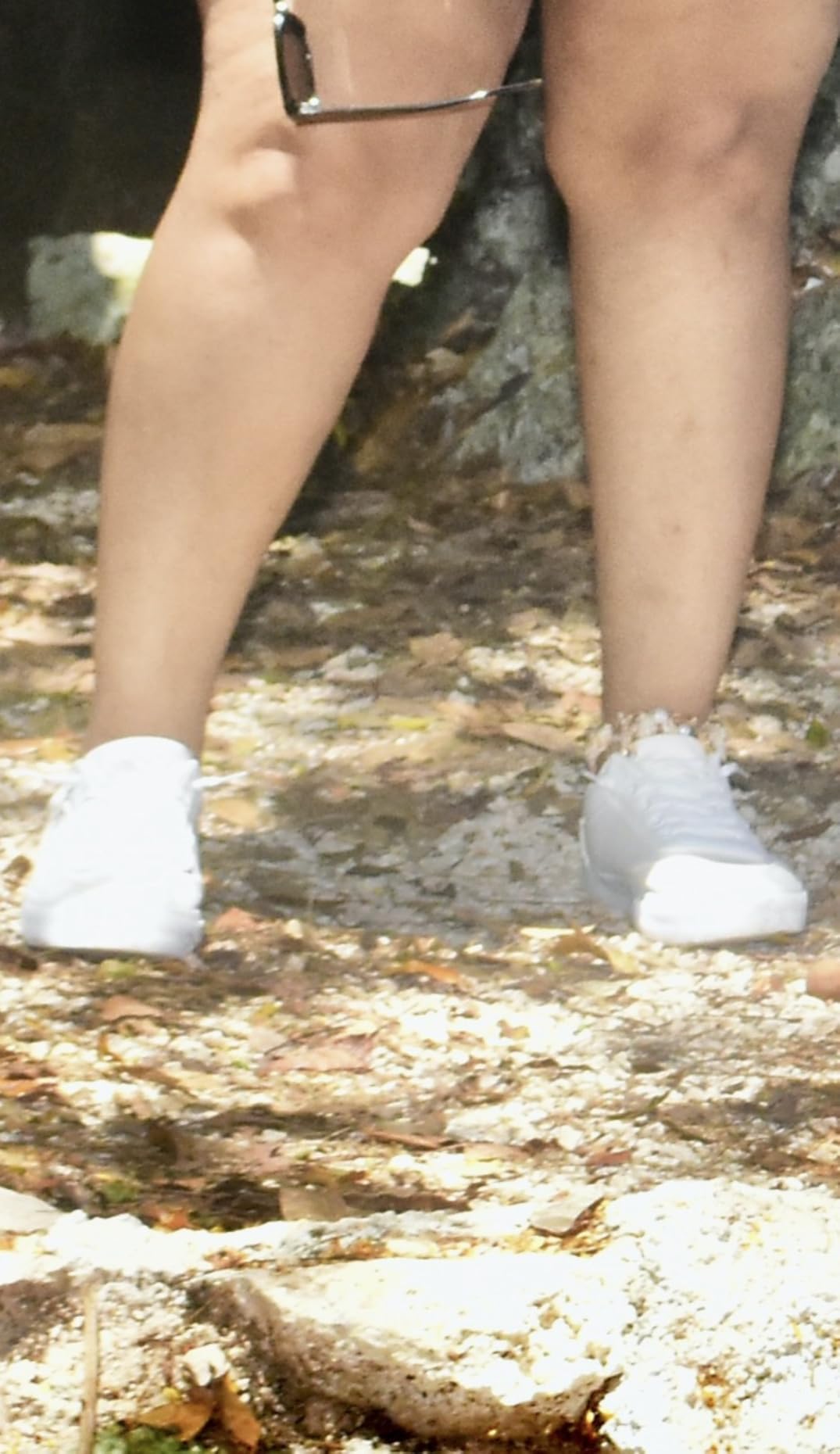
First Impressions: Design and Construction Reality Check
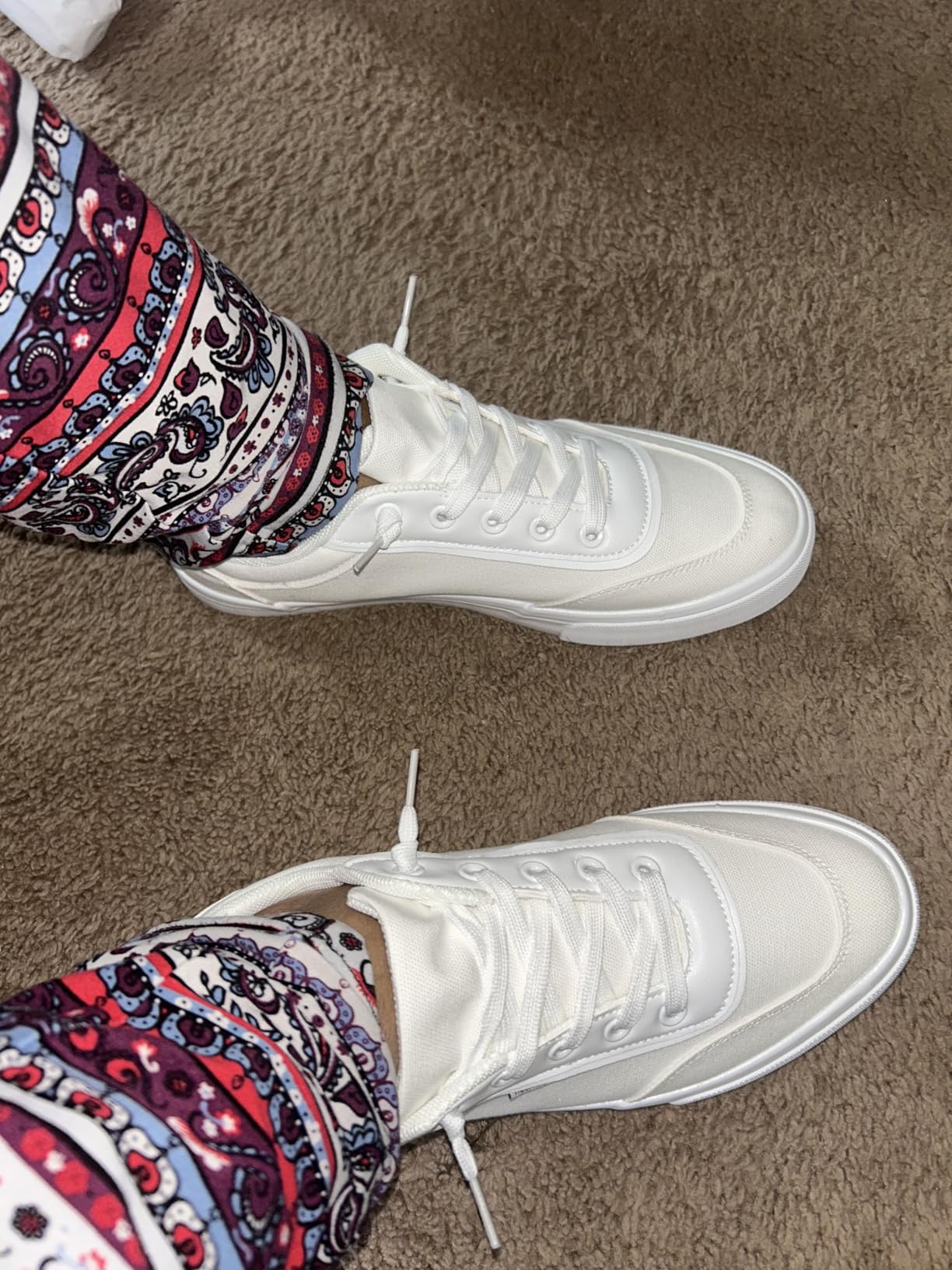
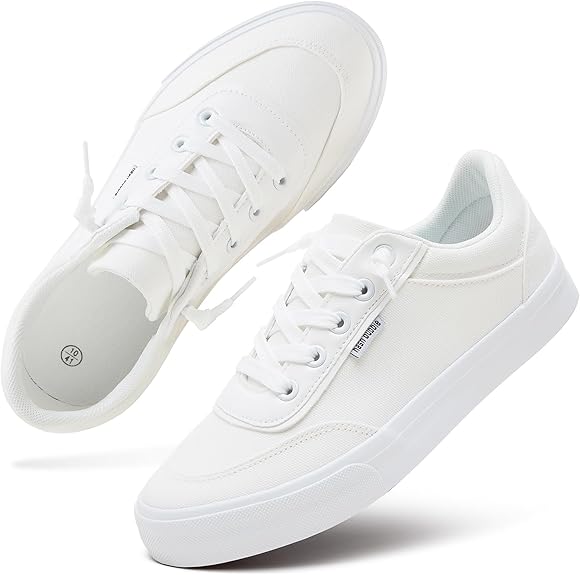
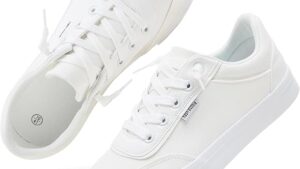
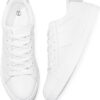
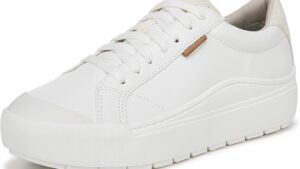
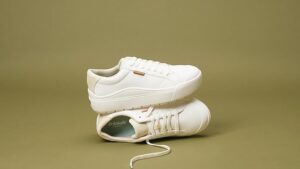
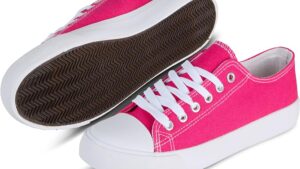
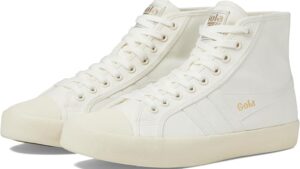
The box arrived with zero fanfare—basic brown packaging with minimal branding. Pulling these out, my first thought was honest surprise at how clean they looked. The white canvas has that classic canvas sneaker aesthetic that borrows heavily from the Vans and Converse playbook, which isn’t a criticism at $25. They’re simple, minimalist, and frankly look more expensive than their price tag suggests.
Running my hands over the canvas, the material feels noticeably lighter and thinner than my Converse Chuck Taylors. It’s not flimsy exactly, but you can tell this is budget-grade canvas from the get-go. During my first week of testing, the texture had a slightly rough feel that I wasn’t crazy about, though it did soften up after a few wears. The stitching looked decent enough—no major red flags jumping out at first glance.
The decorative laces caught my attention immediately. They’re pre-tied and purely aesthetic since the shoe functions as a slip-on through elastic panels on the sides. I appreciated the clean look they provide, though it took me a moment to realize I couldn’t adjust them for a tighter fit. The elastic does its job, but it’s a one-size-fits-all situation with no customization.
What wasn’t as impressive? I spotted a few loose threads that needed trimming right out of the box. Not deal-breakers, but visible reminders that quality control at this price point has its limits. The rubber sole felt flexible when I bent it, which suggested decent initial comfort potential. There was some visible glue residue near the sole connection—again, minor but noticeable if you’re looking closely.
The construction reveals its budget roots pretty quickly. Compared to premium canvas shoes I’ve tested over the years, these lack the reinforced toe caps, thicker canvas layers, and more substantial sole attachment you’d find in $50-65 alternatives. That said, for casual women’s sneakers designed for light wear, the build seems appropriate for what you’re paying.
The Fit Situation: Sizing Truth You Need to Know
I ordered my usual size 8, and the moment I slipped them on, I knew something was off. These run noticeably roomier than I expected, especially in the toe box. With my narrow feet, there was more space than I typically deal with in canvas sneakers. The width didn’t cause any functional problems for short wear sessions, but it definitely affected the overall fit experience.
The toe box deserves its own discussion. It’s genuinely wide—more generous than the Vans Authentic I’ve tested and significantly wider than Converse Chuck 70s, which tend to run narrow. If you’ve got wider feet and typically struggle with canvas sneakers pinching your toes, this could actually be a selling point. For me with narrow feet, it meant the fit felt a bit sloppy even with the elastic holding the sides.
Here’s my sizing recommendation based on six weeks of wear: if you have narrow to normal-width feet, size down half a size from your usual sneaker size. If you have wide feet, true to size should work well—you might actually love the extra room. Compared to major brands, Hash Bubbie runs about half to a full size larger than Nike, similar in sizing to Converse All Stars (which also run large), and definitely bigger than Vans.
The slip-on design means you’re stuck with whatever fit you get. Unlike lace-up canvas sneakers where you can tighten or loosen as needed, the elastic provides zero adjustability. I tried wearing thicker socks to take up some of the extra space, which helped marginally but wasn’t a complete solution. The lack of a heel tab makes removal slightly more challenging than other slip-ons I’ve tested—you end up using your other foot to push them off or reaching down to pull at the heel.
Break-in wasn’t much of an issue. The canvas softened within the first few wears without causing any hot spots or blisters. The elastic stretched just enough to make entry easy without becoming loose over time. After 40+ sessions, the fit remained consistent—they didn’t stretch out significantly like some budget shoes do.
Comfort Reality: The 4-Hour Truth
I need to be honest about the comfort level here, because this is where Hash Bubbie’s marketing and reality diverge pretty sharply. The brand claims a “softer insole material compared to traditional canvas shoes,” but my feet tell a different story. That insole is firm—almost hard. Not uncomfortable for the first hour or two, but definitely not what I’d call soft or cushioned.
The comfort has a clear time limit based on my testing. For the first couple of hours, these are perfectly acceptable. Running quick errands, hitting Target for a half-hour shopping trip, or grabbing coffee with a friend—all fine. Between two and four hours, they remain functional but you start noticing the firm insole more. Beyond four hours? That’s when things get problematic.
During a Saturday shopping trip that stretched to about three and a half hours, my feet definitely felt the impact. Not painful exactly, but that tired, achy feeling you get when shoes lack proper cushioning. A three-hour outdoor event where I spent most of the time standing made it even more obvious—by the end, I was genuinely uncomfortable and counting down until I could change shoes. Quick errands under two hours, though? Those scenarios played out perfectly fine without any foot fatigue.
The arch support is essentially nonexistent. If you need any kind of support for your arches, these won’t provide it naturally. The insole sits pretty flat with minimal contouring. For someone with normal arches and no specific foot issues, it’s manageable for short durations. Anyone dealing with plantar fasciitis, high arches, or flat feet will likely struggle.
Here’s where I see a workable solution: aftermarket insoles. The shoe has enough internal room to accommodate thin cushioned insoles, and adding a pair would likely extend that comfort window significantly. I didn’t test this extensively during my six-week period, but based on the construction, a $15-20 cushioned insole insert would probably make these viable for longer wear sessions. Several people in my workout class who’d bought similar budget canvas slip-on sneakers mentioned the same firm insole issue and found success with aftermarket options.
The lightweight construction does have one comfort benefit—your feet never feel weighed down. At 8.5 ounces, these don’t add much weight even during longer walking sessions. The canvas breathes well enough that your feet don’t overheat, which I appreciated during warmer days. But breathability and light weight can’t fully compensate for the lack of cushioning when you’re on your feet for extended periods.
Slip-Resistance Claims: Testing the Truth
This is where I need to keep it real about Hash Bubbie’s marketing. They brand these as “non-slip fashion canvas sneakers” with “enhanced traction” and “textured outsoles providing superior traction and stability.” Having tested them across various surfaces over six weeks, I can tell you those claims are overselling what these shoes actually deliver.
The textured rubber pattern on the sole exists—that part’s accurate. On dry surfaces with normal walking, the traction is adequate. Grocery store floors, dry pavement, indoor retail spaces—all handled fine without any slipping concerns during casual movement. For everyday errands in dry conditions, they work as you’d expect budget canvas sneakers to work.
Smooth surfaces revealed limitations pretty quickly. Walking across polished floors in a pharmacy, I noticed less confidence in my footing than with actual slip-resistant work shoes. Nothing dramatic—I didn’t slip—but I could feel the difference compared to shoes designed with genuine slip-resistance. On slightly damp outdoor pavement after a light rain, I found myself being more cautious than usual. The rubber doesn’t grip wet surfaces with any real confidence.
Having tested legitimate slip-resistant work shoes for healthcare and restaurant environments in previous reviews, these Hash Bubbie sneakers don’t come close to that standard. The term “non-slip” has specific performance expectations in work environments, and these don’t meet them. If you need shoes for a job requiring slip-resistance—restaurant kitchens, hospitals, retail with smooth floors—do not rely on these. The marketing claim is, to put it bluntly, overstated.
Where they do work: casual daily wear in typical dry conditions. Walking around town, running errands, light activities where you’re not dealing with wet floors or demanding traction requirements. That’s the realistic scope of their grip performance. The textured pattern provides basic traction, not the “superior stability” the product description promises.
At least two other reviewers I came across specifically mentioned concerns about the slip-resistance not living up to expectations, particularly for work environments. The consensus seems clear—these are fine for casual use but shouldn’t be purchased based on any belief that “non-slip” means work-safe slip-resistant footwear.
Performance Across Real-World Scenarios
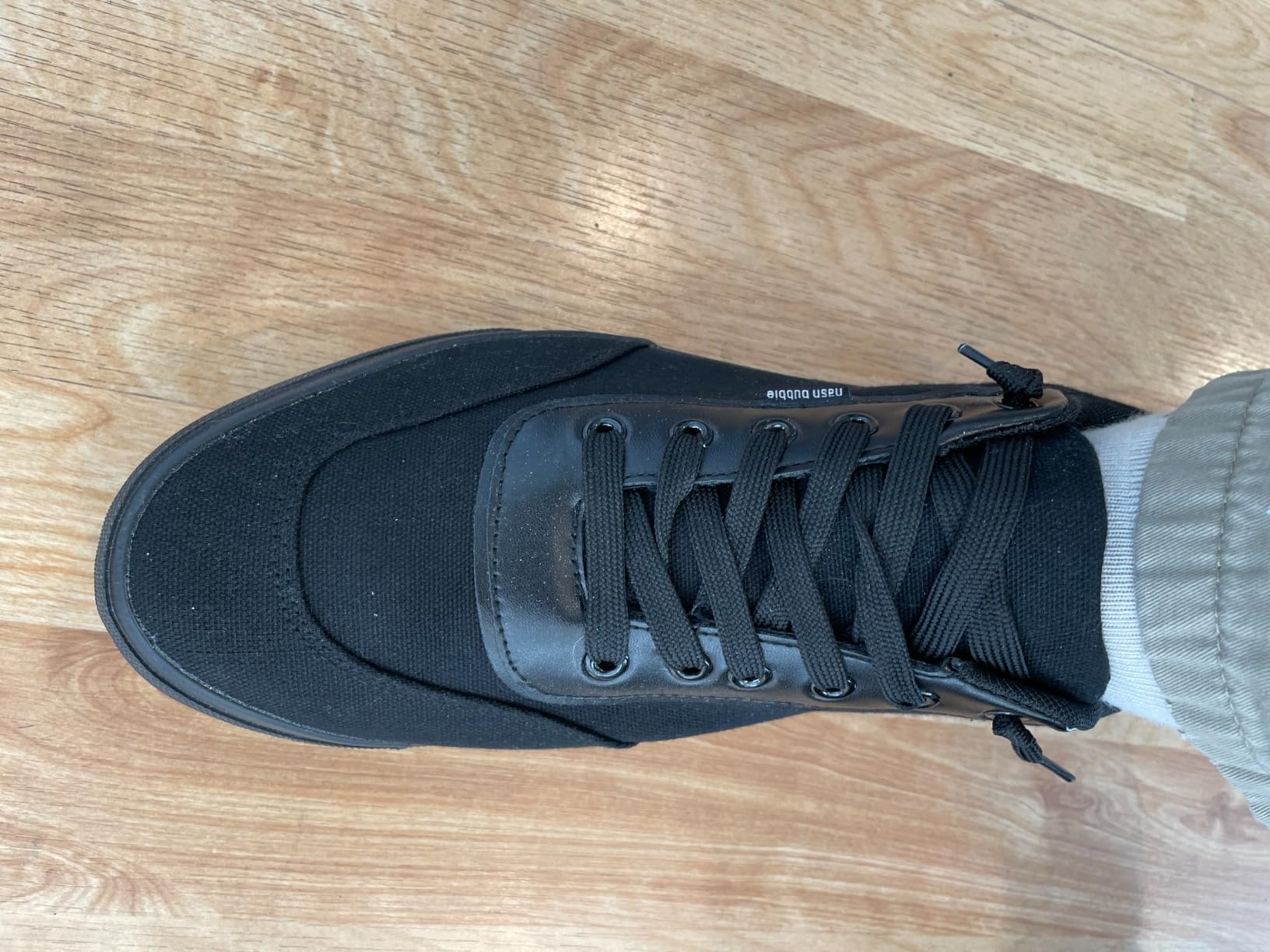
Daily Errands and Shopping
This scenario represents where Hash Bubbie sneakers genuinely shine. The slip-on design makes them perfect for the constant in-and-out of running errands. Target runs, grocery shopping, pharmacy stops—situations where you’re in and out of the car multiple times—these excel. I found myself reaching for them frequently during my testing period specifically because of that convenience factor.
The two to three-hour sweet spot I mentioned earlier? That aligns perfectly with typical errand timeframes. A Saturday morning hitting multiple stores for about three hours fell right in the acceptable comfort range. The lightweight feel meant my feet weren’t tired from the shoes themselves, though that firm insole remained noticeable by the end.
Travel and Vacation Wear
I took these on a weekend getaway specifically to test their travel viability. The lightweight construction is a legitimate packing benefit—they barely took up space in my bag and added minimal weight. Airport walking worked fine for the duration it took to get through security and to the gate. Around the hotel and casual restaurants, they looked appropriate and felt comfortable enough.
Where they wouldn’t work for travel: extensive walking tours, full days of sightseeing, or situations where you’re covering serious mileage on foot. The comfort limitations would make long tourism days miserable. For a beach vacation where you need casual shoes for dinners and light walking? Perfect. For exploring European cities with miles of daily walking? Look elsewhere.
Standing Scenarios
Extended standing exposed the biggest weakness. That three-hour outdoor event I mentioned earlier really drove this home. Standing around chatting, minimal movement, feet in the same position—the firm insole became genuinely uncomfortable after about two and a half hours. By the three-hour mark, I was shifting my weight constantly and genuinely ready to sit down.
If your work involves significant standing time—retail floor positions, kitchen work, trade show staffing—these aren’t the right choice. Even with aftermarket insoles, I’d be hesitant to recommend them for jobs requiring 6-8 hours of standing. The minimal cushioning and arch support just aren’t designed for that use case.
Light Walking
Distances under a mile felt manageable without major complaints. Neighborhood walks, short strolls, casual walking around town—all worked within the shoes’ capabilities. Push past that mile mark, especially into the 2-3 mile range, and the lack of proper cushioning starts creating foot fatigue.
The canvas material handles dry conditions well but shows immediate vulnerability in rain. Even light drizzle soaks through the canvas within minutes, leaving your feet wet and the white fabric showing water marks. Surface type matters too—smooth pavement is ideal, while rougher terrain or uneven surfaces amplify the minimal cushioning issue. These are strictly fair-weather, easy-terrain shoes.
Durability and Longevity: Setting Realistic Expectations
After six weeks of regular testing, I can spot early wear patterns forming. The canvas shows some light scuffing in high-stress areas, particularly around the toe and sides where the material bends during walking. Nothing catastrophic yet, but visible signs that this isn’t built-to-last-years footwear. The white color shows dirt and marks fairly easily, which was expected but worth noting for maintenance considerations.
Based on what I’m seeing combined with the construction quality, here are my realistic lifespan estimates: with light use at 2-3 times per week for casual wear, expect 6-8 months before you’re looking at replacement. Daily wear would compress that timeline to about 3-4 months. Heavy use with lots of walking or standing? Probably 2-3 months at best.
The loose threads I mentioned earlier required trimming, and I’ve kept an eye on those areas. Some stitching looks like it could become a failure point over time, particularly where the elastic meets the canvas upper. At least a couple of reviewers reported sole separation issues after several months of wear, which tracks with what you’d expect from budget construction. The glue connection between sole and upper isn’t the reinforced attachment you get with premium brands.
Quality control inconsistencies seem fairly common at this price point. That visible glue I noticed, the loose threads, slightly uneven stitching in places—these are budget shoe realities. You’re not getting the manufacturing precision of $60 sneakers. Some pairs probably arrive in better condition than others, which adds an element of luck to the purchase.
Here’s the value calculation that makes the durability somewhat acceptable: $25 divided by 6-8 months equals about $3-4 per month if you’re using them regularly. That’s cheaper than a couple of fancy coffees. From a pure cost-per-wear perspective, even with limited longevity, the math isn’t terrible. The trade-off is accepting that these are somewhat disposable shoes rather than investment pieces you’ll keep for years.
Maintenance can extend their life marginally. I treated mine with a protective spray after the first week, which helped with stain resistance on the white canvas. Rotating them with other shoes instead of wearing them daily would reduce wear accumulation. But realistically, you’re still looking at under a year of useful life even with good care habits.
Weather and Climate Performance
The breathability in warm weather represents one of the genuine strengths. During warmer testing days, the canvas allowed enough airflow to keep my feet from overheating. Compared to synthetic materials or less breathable shoes, I appreciated this during errands on hot afternoons. The lightweight canvas and open design mean these work well for spring, summer, and early fall wear when temperatures climb.
Cold weather is a different story. There’s essentially zero insulation. On cooler days, my feet felt the temperature pretty quickly. These aren’t designed for winter wear, and I wouldn’t even consider them once temperatures drop toward freezing. Late fall through early spring in colder climates would require pairing with very thick socks at minimum, which then creates fit issues given the roominess.
Rain and wet conditions? Forget it. The canvas soaks through almost instantly. I got caught in unexpected light rain during testing, and within two minutes my socks were damp. The white canvas showed obvious water marks that required proper drying to prevent permanent discoloration. Canvas is inherently not water-resistant—this isn’t a Hash Bubbie-specific flaw—but it’s worth emphasizing that these are strictly dry-weather shoes.
That protective spray I mentioned becomes essential if you go with white. Without treatment, every sidewalk puddle, dirt splash, and grass stain shows up clearly on the canvas. I learned this quickly and went back to apply spray after my first few wears. Even with protection, white canvas requires regular cleaning attention. The black or darker color options would hide wear and dirt better, which might be the smarter choice for low-maintenance wearers.
Humidity handling is decent—the canvas breathes well enough that moisture doesn’t get trapped inside creating uncomfortable dampness. In humid summer conditions without rain, they performed fine. But any actual water exposure, from rain to puddles to damp grass, reveals the material’s limitations immediately.
How Hash Bubbie Compares to Alternatives
| Feature | Hash Bubbie | Converse Chuck Taylor | Vans Authentic | Budget Alternative (Walmart) |
|---|---|---|---|---|
| Price | $25 | $50-65 | $50-60 | $15-20 |
| Comfort (4+ hours) | Limited | Moderate | Moderate | Limited |
| Durability | 6-8 months light use | 12-18 months | 12+ months | 3-6 months |
| Slip-on Convenience | ✓ Yes | ✗ Lace-up | ✗ Lace-up | Varies |
| Style Versatility | High | High | High | Moderate |
| Toe Box Width | Wide | Narrow | Narrow-Medium | Varies |
The comparison against Converse and Vans reveals clear trade-offs. Hash Bubbie costs half what you’d pay for those established brands. That $25-30 price difference buys you significantly better durability with the name brands—we’re talking roughly double the lifespan. If you wear canvas sneakers heavily and want them to last a year or more, that extra investment in Converse Chuck Taylors or Vans makes financial sense over time.
The slip-on convenience is Hash Bubbie’s distinct advantage over lace-up alternatives. If that functionality matters significantly to your lifestyle—busy parents, frequent travelers, people with mobility issues that make bending down difficult—then the trade-off in durability might be worthwhile. You’re paying less and getting genuine convenience that the premium brands don’t offer in their standard canvas lines.
Against ultra-budget Walmart alternatives in the $15-20 range, Hash Bubbie occupies a middle ground. You’re paying $5-10 more but getting noticeably better style and likely similar durability. The cleaner design and more versatile aesthetic justify that small premium over the absolute cheapest options. Both categories involve accepting limited longevity, but Hash Bubbie at least looks good while it lasts.
When to choose Hash Bubbie: budget is the priority, you want slip-on convenience, your use case fits light casual wear, and you accept the 6-8 month replacement cycle. When to upgrade to premium: you need better durability, want all-day comfort, wear canvas sneakers as daily drivers, or can amortize the higher cost over longer use.
The Medical Perspective: What Your Feet Need to Know
Speaking from a health standpoint, minimal arch support canvas sneakers like these come with real considerations. The flat insole provides almost no architectural support for your foot’s natural arch. For younger people with normal arches and no existing foot issues, short-duration wear in shoes like this won’t typically cause problems. But that doesn’t mean they’re ideal from a podiatric perspective.
If you have high arches, these will likely feel uncomfortable pretty quickly. The lack of support means your arch gets zero help, putting more stress on the plantar fascia and surrounding structures. Anyone currently dealing with plantar fasciitis or a history of that condition should probably skip these entirely unless adding substantial orthotic insoles. The firm, flat insole combined with minimal cushioning creates exactly the wrong environment for feet that need proper support.
Flat feet present similar concerns from the opposite direction. Without arch support to help distribute pressure correctly, you’re relying entirely on your foot’s natural structure to handle the impact. For someone with flexible flat feet, this could lead to fatigue and discomfort fairly quickly during wear. Rigid flat feet might tolerate it slightly better for short periods, but it’s still not an ideal match.
The shoes do have enough internal volume to accommodate thin orthotic insoles or over-the-counter arch support inserts. If you have mild support needs, adding a slim insert could make these functional. Just account for the extra $15-25 cost of decent insoles in your budget calculation. The wide toe box actually becomes beneficial here—there’s room for orthotics without creating a cramped fit.
Age factors into tolerance for minimal support shoes. In my experience testing footwear across different demographics, younger wearers with healthy feet tend to tolerate budget canvas sneakers better than older individuals. As we age, foot structure changes, fat padding on the heel thins, and support needs typically increase. What feels fine at 25 might be uncomfortable at 45 in the exact same shoe.
For people without specific foot conditions, these work acceptably for the light casual use they’re designed for. But “acceptable” doesn’t mean optimal. Even healthy feet benefit from proper cushioning and support, especially during longer wear periods. The time limitations I mentioned earlier—that 4-hour comfort threshold—aren’t arbitrary. They reflect the reality of what happens when feet deal with firm insoles and minimal support over extended periods.
Style Versatility: What Actually Works
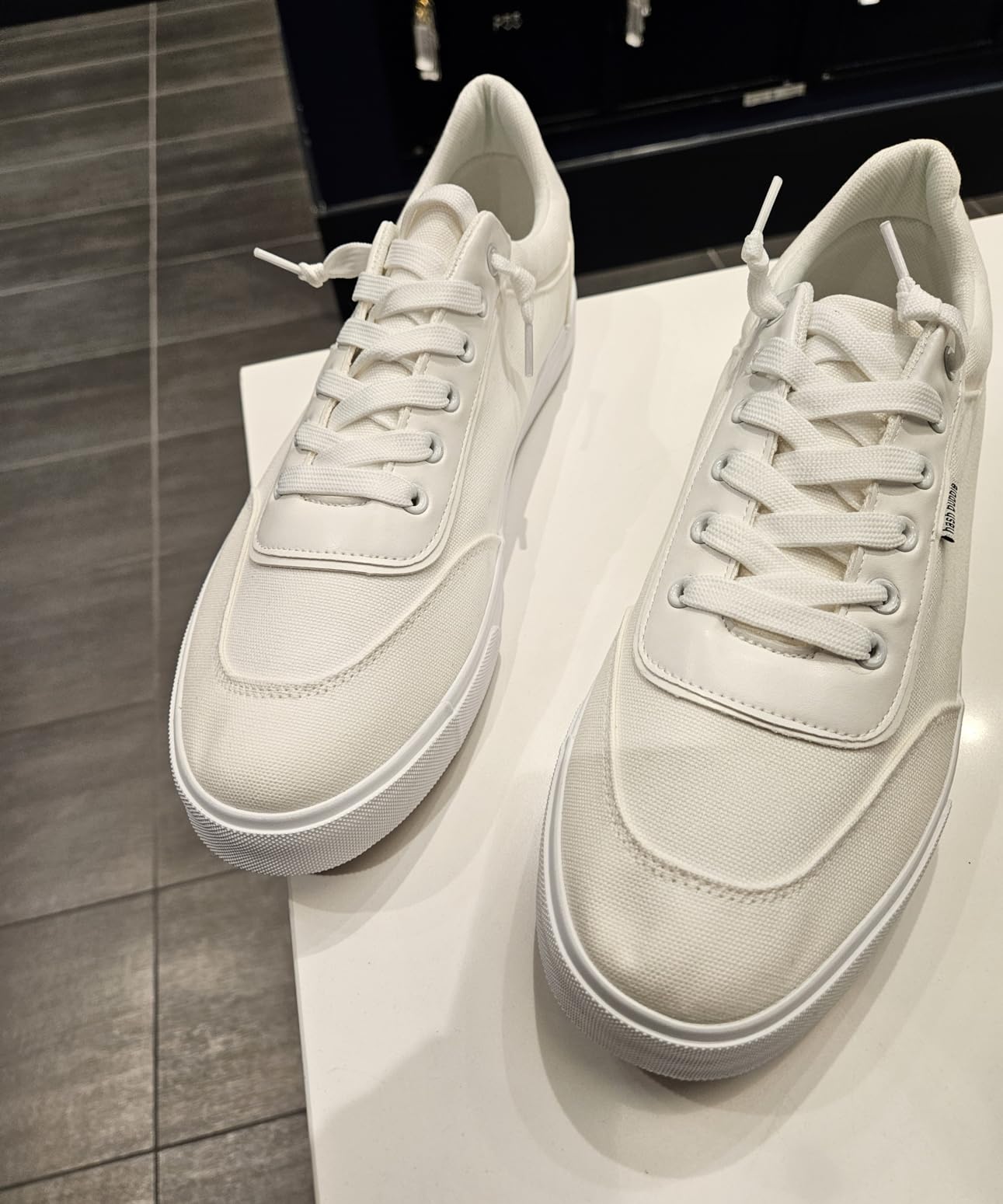
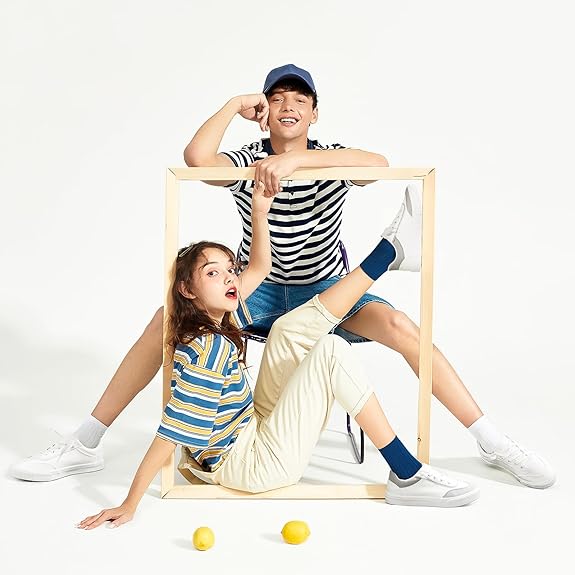
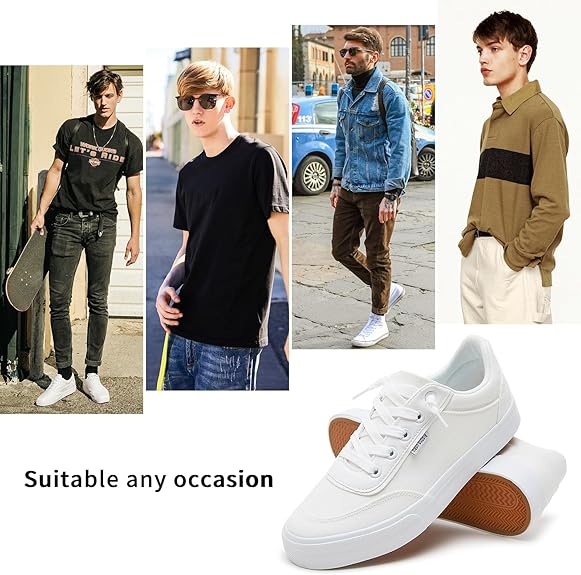
I’ll give Hash Bubbie credit here—the clean, minimalist design delivers genuine style versatility within the casual category. The white canvas with subtle branding looks more expensive than $25, which is honestly impressive. During my testing period, I found myself reaching for them frequently because they paired easily with most casual outfits without much thought.
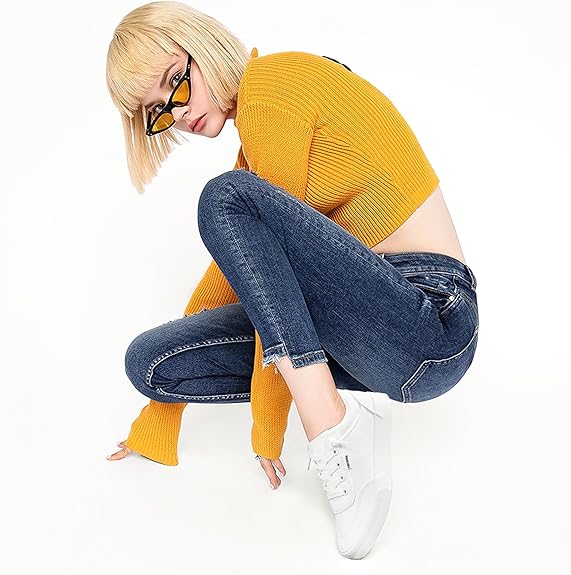
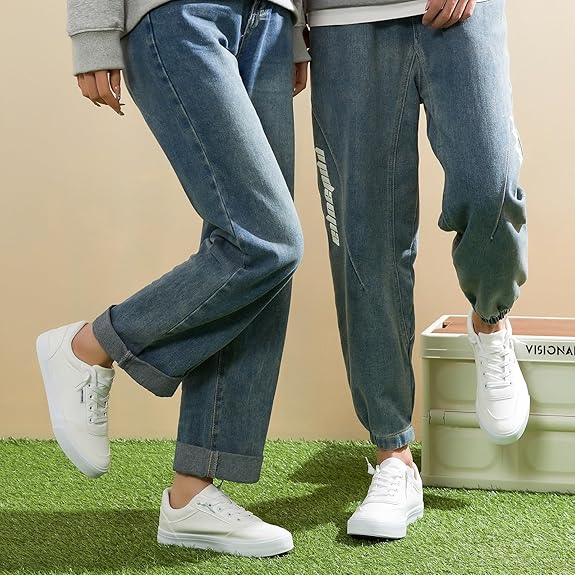
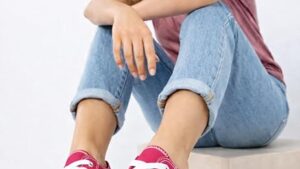
With jeans and a t-shirt, they hit that classic casual aesthetic perfectly. The white provides a fresh, clean look that works across different denim washes and casual top styles. I wore them with everything from black skinny jeans to light wash boyfriend jeans without any style clashes. For casual women’s casual wear, they function as a reliable neutral.
Casual dresses surprised me by working well too. I tested them with a cotton sundress for a casual outdoor event and a jersey knit dress for running errands—both looked appropriate and balanced. The low-profile design doesn’t overwhelm lighter, more feminine pieces the way chunkier sneakers might. That timeless canvas sneaker shape reads as intentionally casual rather than athletic.
Even with workout gear, they looked acceptable. Not ideal for actual exercise, obviously, but for the walk to and from the gym or casual athleisure outfits, they worked fine. The clean white design bridges that casualwear-activewear aesthetic overlap that’s become common.
Where they absolutely don’t work: business casual or anything approaching professional dress. These are too casual for office environments, client meetings, or any situation requiring elevated polish. The canvas material and slip-on design read clearly as leisure footwear. I wouldn’t wear them to a nice restaurant, professional networking event, or anywhere beyond solidly casual settings.
The white color choice shows dirt more readily than darker options but offers maximum versatility for outfit pairing. If you prioritize low maintenance over versatility, the black or darker colors would hide wear and stains better while still working with most casual wardrobes. The various color options—baby blue, light pink, dark green, beige—give you flexibility to match personal style preferences.
For students, the style hits that sweet spot of looking intentional without trying too hard. The minimalist aesthetic fits current casual fashion trends favoring simple, classic pieces over heavily branded or trendy designs. At this price point, you’re getting a style that reads similarly to $50-60 alternatives, which represents genuine value.
Value Analysis: Is $25 Worth It?
Let’s talk real value for your dollar here. At $25 for the initial purchase, these sit firmly in impulse-buy territory price-wise. That’s low enough that the financial risk feels minimal even if they don’t work out perfectly. But understanding the full value picture requires looking beyond just that upfront cost.
Feature delivery assessment based on my testing: Style-wise, they deliver about 90% of what you’d hope for. The clean design looks good, pairs versatilely, and doesn’t immediately signal “cheap shoes” when you wear them. Comfort delivers maybe 60%—acceptable for short durations but the firm insole and time limitations create real compromises. Durability lands around 70%, which is appropriate for the price but means accepting replacement within a year. Versatility hits about 80% for the casual use cases they target.
The cost-per-wear calculation helps frame the value realistically. If you wear these twice a week for six months, that’s roughly 48 wears. $25 divided by 48 comes out to about $0.52 per wear. From that perspective, even with limited longevity, you’re getting reasonable value. Compare that to $60 Converse that last 18 months with 3x weekly wear—roughly 234 wears—and you get about $0.26 per wear. The premium option delivers better per-wear value over time, but requires more upfront capital and commitment.
Hidden costs deserve acknowledgment in the value equation. If you want better comfort, add $15-25 for aftermarket insoles. Protective spray for the white canvas runs another $8-10. Suddenly your $25 shoes become a $40-50 investment to get them functioning optimally, which starts approaching the price of name-brand alternatives that include better materials from the start.
Compared to other budget options in the $20-30 range, Hash Bubbie holds its own. You’re getting better style than most ultra-cheap alternatives while paying a reasonable premium. The slip-on convenience adds value if that functionality matters to you. Against the absolute cheapest Walmart canvas shoes at $15, that extra $10 buys you meaningfully better aesthetics and slightly better construction.
The overall value verdict: good if your expectations match reality and your use case aligns with the shoe’s strengths. If you need casual slip-ons for light wear, understand the comfort limitations, and accept the 6-8 month replacement cycle, $25 represents fair value. If you’re hoping for all-day comfort, long-term durability, or shoes that work for demanding use cases, the value proposition falls apart. You’d be better investing in comfort-focused sneakers with better construction from the start.
Who Should (and Shouldn’t) Buy These
✓ Perfect For:
- Budget-conscious shoppers who need casual footwear without spending $50+ on name brands
- College students with limited shoe budgets who need versatile sneakers for campus wear and light activities
- Travelers wanting lightweight, packable shoes for vacation wear and casual evening outings
- Errand runners who prioritize slip-on convenience for frequent car in-and-out scenarios
- Women with wider feet who typically struggle with narrow canvas sneakers pinching their toes
- Minimalist style fans seeking clean, simple aesthetics that pair easily with casual wardrobes
- People willing to add insoles who understand the comfort limitations and plan to upgrade cushioning
- Secondary shoe seekers who want an affordable backup pair for specific situations rather than daily drivers
⚠ Consider Carefully If:
- You’re on your feet for 4+ hours regularly and need reliable all-day comfort
- You plan daily wear and need shoes lasting a full year or longer
- You have narrow feet and aren’t comfortable sizing down or dealing with roomier fits
- You need genuine arch support for high arches or existing foot conditions
- You live in a rainy or wet climate where canvas shoes get frequent moisture exposure
- You want truly slip-resistant footwear for work environments with safety requirements
- You’re hoping for workout-appropriate athletic sneakers rather than casual-only wear
✗ Look Elsewhere If:
- You need certified slip-resistant shoes for restaurant, healthcare, or retail work
- You want shoes for regular walking distances over a mile or serious exercise
- You require all-day standing comfort for retail, service, or event work
- You have plantar fasciitis, flat feet, or other conditions requiring substantial foot support
- You want investment-piece shoes that last multiple years with heavy daily use
- You need winter footwear or shoes that perform in cold, wet conditions
Better Alternatives for Specific Needs:
- All-day comfort: Skechers Go Walk series or other memory foam designs built for extended wear
- Durability in canvas: Converse Chuck Taylor All Stars or Vans Authentic for 12-18 month lifespan
- True slip-resistance: Shoes for Crews or other certified work-safe footwear designed for actual non-slip performance
- Serious arch support: Vionic or Orthofeet brands with built-in orthotic footbeds
- Workout functionality: Proper athletic training shoes with sport-specific cushioning and support
Frequently Asked Questions
How does the fit compare to Converse, Vans, and Nike?
Hash Bubbie runs noticeably larger than Nike—about half to a full size bigger. Compared to Converse Chuck Taylors, the sizing is similar (both run large), though Hash Bubbie has a wider toe box. Against Vans, which typically run true to size or slightly narrow, Hash Bubbie runs larger and wider. My recommendation: size down half a size from your usual sneaker size if you have narrow to normal-width feet. If you have wide feet, stick with your true size and you’ll likely appreciate the extra room.
Are they really comfortable for all-day wear?
No, not in my experience. The comfort has a clear time limit around 4 hours. For the first 2-3 hours, they’re perfectly acceptable for casual wear. Beyond that, the firm insole becomes problematic, especially if you’re standing or walking extensively. During a 3-4 hour shopping trip, my feet felt the impact noticeably. For all-day wear, you’d definitely want to add aftermarket cushioned insoles—that would help significantly, though I’d still hesitate to recommend them for 8+ hour days even with insoles.
How long will they realistically last?
Based on my six-week testing and observed wear patterns: expect 6-8 months with light use (2-3 times per week for casual wear). Daily wear would likely reduce that to 3-4 months. Heavy use with lots of walking or standing might only give you 2-3 months. The budget construction, thinner canvas, and quality control inconsistencies mean these aren’t built for multi-year durability. Factors affecting lifespan include wear frequency, activity intensity, surface types, and maintenance habits like using protective spray on white canvas.
Are they actually slip-resistant?
The marketing claims “non-slip” performance, but that’s overstated. The textured rubber sole provides adequate traction for normal casual walking on dry surfaces—grocery stores, retail floors, dry pavement all worked fine. On smooth or slightly wet surfaces, the traction is less reliable than claimed. For work environments requiring genuine slip-resistance (restaurants, hospitals, commercial kitchens), these absolutely do not meet safety standards. They’re fine for casual use, but don’t buy them expecting certified slip-resistant work shoe performance.
Can I wash them in the washing machine?
I wouldn’t recommend it based on the construction quality. The budget materials and glue attachment between sole and upper would likely not hold up well to machine washing. Hand cleaning with a soft brush, mild soap, and water works better for spot cleaning dirt and stains. For white canvas, treating with protective spray before wearing helps prevent stains from setting in. If they get really dirty, gentle hand washing is safer than machine washing, though there’s still a risk of sole separation or canvas damage.
Do they work for wide feet?
Yes, actually this is one area where Hash Bubbie performs better than many canvas alternatives. The toe box is genuinely wide—more generous than Converse Chuck 70s or Vans Authentic, which tend to run narrow. If you typically struggle with canvas sneakers pinching your toes or feeling cramped, the wide fit here could be a significant benefit. For wide feet, I’d recommend ordering your true size rather than sizing down. The roominess that’s excessive for narrow feet becomes a genuine advantage for wider feet.
Can I add aftermarket insoles?
Yes, and I’d actually recommend it if you want to extend the comfort duration. There’s enough internal volume to accommodate thin to medium cushioned insoles without creating a cramped fit. Slim cushioned inserts from brands like Dr. Scholl’s or Superfeet would fit and likely make these much more comfortable for longer wear sessions. Just factor in the $15-25 cost of decent insoles when calculating your total investment. The wide toe box helps here—adding insoles won’t make the fit too tight.
Are they good for travel?
For certain types of travel, yes. The lightweight construction (8.5 oz per shoe) makes them excellent for packing—they barely take up space or add weight to your luggage. For beach vacations, casual resort wear, or travel involving light walking and casual dining, they work well. However, for sightseeing-heavy trips with extensive daily walking, the comfort limitations would make them a poor choice. Airport walking to your gate is fine, but don’t rely on them for exploring cities with miles of walking. They’re best for low-activity travel where you need casual shoes for short duration wear.
What’s the best way to keep them clean?
Start by treating white canvas with protective spray before your first wear—this prevents stains from setting in and makes subsequent cleaning easier. For regular maintenance, spot clean with a soft brush and mild soap solution as dirt appears. Don’t let stains sit; address them promptly. A magic eraser works surprisingly well for scuffs on the rubber sole and minor marks on white canvas. Avoid soaking them completely or machine washing, as the budget construction might not hold up. For darker colors, maintenance is easier since they naturally hide dirt better than white.
Are they worth it compared to cheaper alternatives?
Compared to ultra-budget options at $15-20 from Walmart or similar retailers, Hash Bubbie’s $25 price point buys you noticeably better style and similar durability. The cleaner design and more versatile aesthetic justify that $5-10 premium. Compared to $50-60 name brands like Converse or Vans, you’re trading durability (roughly half the lifespan) for significant cost savings and slip-on convenience. The value depends on your priorities—if budget is paramount and you accept the replacement cycle, they’re worth it. If you want investment pieces lasting years, spend more upfront for better construction.
Can I wear them for exercise or workouts?
No, these aren’t appropriate for actual exercise or workouts. They lack the lateral support, cushioning, and stability needed for athletic activities. The minimal arch support, firm insole, and basic construction make them unsuitable for running, gym workouts, sports, or fitness classes. They’re strictly casual lifestyle sneakers designed for light wear, not athletic performance footwear. You can wear them to and from the gym or for casual athleisure styling, but don’t use them for the actual workout itself.
Final Verdict: My Honest Recommendation
After six weeks and 40+ wear sessions testing Hash Bubbie slip-on canvas sneakers across errands, travel, social outings, and various everyday scenarios, here’s my bottom line: these are solid budget-friendly shoes for light casual wear, but only if you understand and accept their clear limitations.
Overall Score: 6.8/10 (within the budget casual sneaker category)
Category Breakdown:
- Design & Aesthetics: 8/10 – Clean, versatile style that looks more expensive than $25
- Comfort Quality: 5/10 – Acceptable for short periods, firm insole limits extended wear significantly
- Build Quality: 6/10 – Appropriate for price but shows budget compromises in materials and QC
- Versatility: 8/10 – Works well within casual category, genuine slip-on convenience
- Value for Money: 7/10 – Fair value if expectations match reality and use case fits strengths
The Good:
- Excellent style versatility for casual outfits without looking obviously cheap
- True slip-on convenience makes them perfect for errands and quick trips
- Lightweight and breathable construction works great for warm weather
- Affordable $25 price point with low financial risk
- Wide toe box benefits people with wider feet who struggle with narrow canvas sneakers
- Minimal break-in period, comfortable from first wear for short durations
The Not So Good:
- Firm insole creates comfort limitations beyond 4 hours of wear
- Sizing runs large, requiring careful size selection especially for narrow feet
- Slip-resistance claims are overstated—not suitable for work safety requirements
- White canvas shows dirt and stains easily, requiring regular maintenance
- Limited durability with 6-8 month realistic lifespan for light use
- No arch support for feet requiring structural support
- Quality control inconsistencies show budget manufacturing
Bottom Line:
Hash Bubbie slip-on canvas sneakers deliver decent value at $25 for their intended purpose: light casual wear, quick errands, and situations where slip-on convenience matters. They look good, feel acceptable for 2-4 hour sessions, and cost little enough that the limited durability doesn’t sting as much. Understanding the limitations is absolutely key to satisfaction with this purchase. These aren’t all-day comfort shoes, they’re not built for years of heavy use, and they definitely aren’t work-safe slip-resistant footwear despite the marketing.
Best for short-duration casual wear, errand running, travel where you need lightweight packable shoes, and situations where the slip-on design provides genuine convenience. Skip them if you need all-day comfort, work safety footwear, serious durability, or shoes for activities beyond casual walking.
Pro Tips if You Buy Them:
- Size down half a size from your usual sneaker size unless you have wide feet
- Add cushioned insoles immediately if you want to extend the comfort window beyond 4 hours
- Treat with protective spray before first wear, especially for white canvas
- Rotate with other shoes—don’t wear them daily to maximize lifespan
- Consider darker colors if you want lower maintenance than white canvas
Would I buy them again knowing what I know now? If I needed budget casual slip-ons for light use and accepted the trade-offs, yes. But I’d go in with realistic expectations about comfort duration, durability timeline, and appropriate use cases. At $25, they’re a low-risk purchase that delivers adequately for what they cost—just make sure that adequately is actually what you need.
Reviews
There are no reviews yet.