
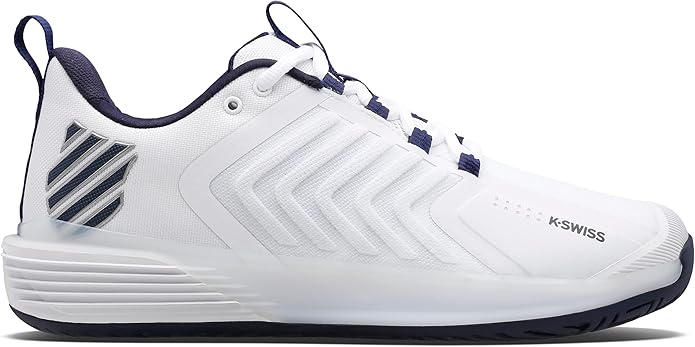
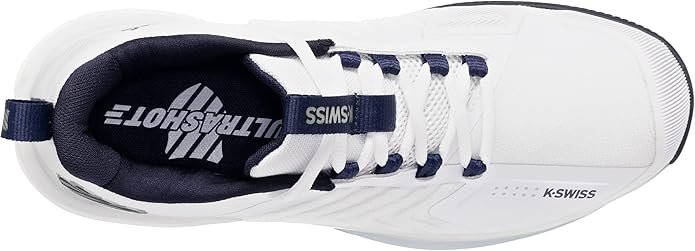
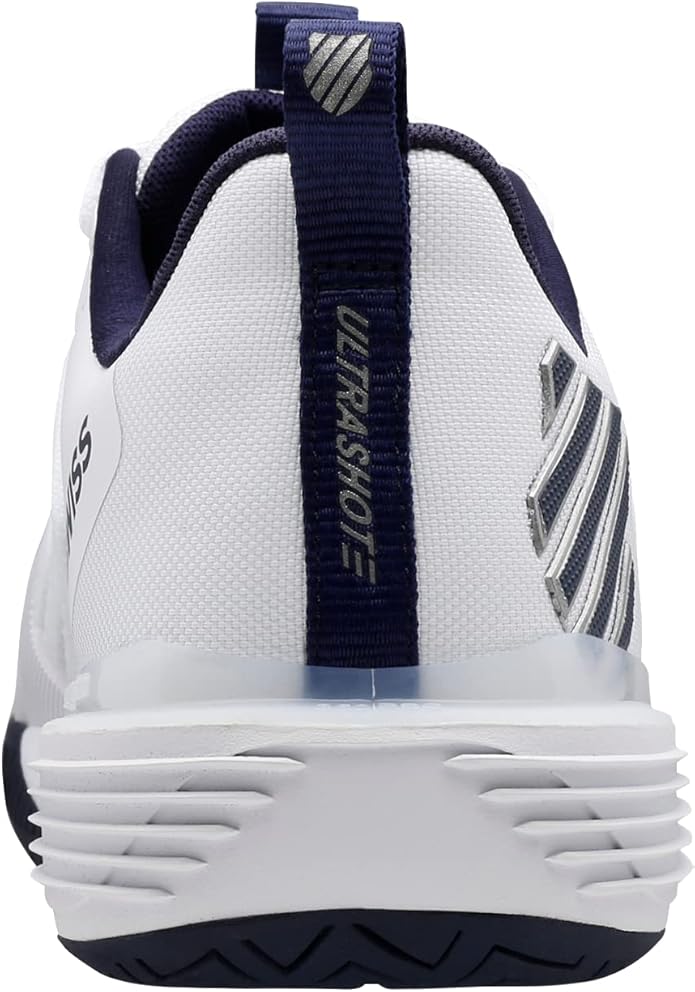
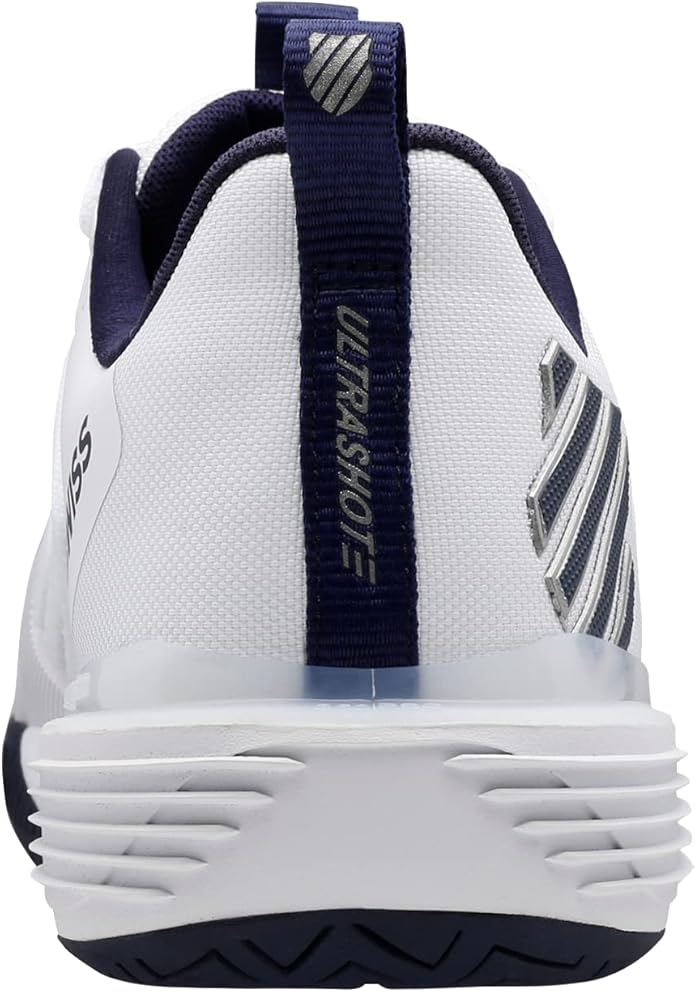
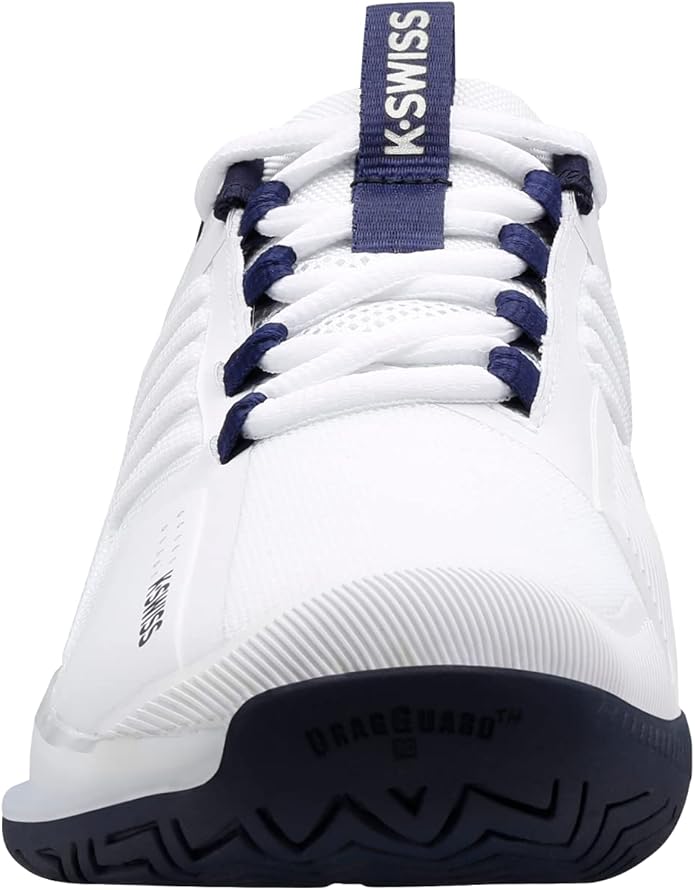
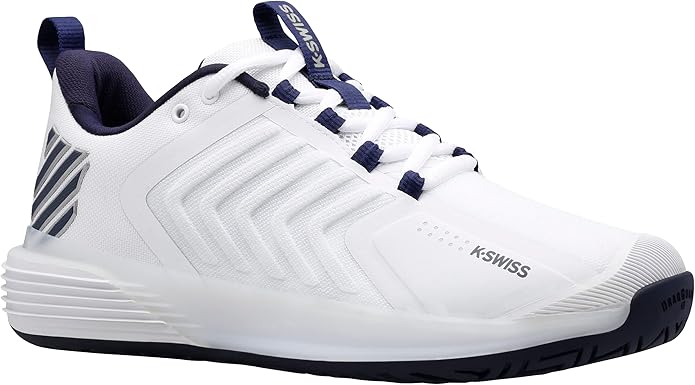
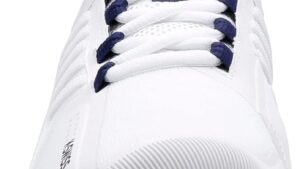
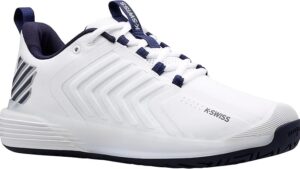
K-Swiss Men’s Ultrashot 3 Tennis Shoe
$89.90
- ⚖️ Weight: 14 oz (men’s size 9)
- 🧪 Midsole material: Surge 7.0 cushioning technology
- 👟 Upper material: Mesh with Durawrap reinforcement
- 🏃♂️ Category: Competitive tennis performance shoe
- 🎯 Best for: Aggressive baseline players and competitive match play
- 🛡️ Special features: 360 Plantar Support Chassis, Dragguard 7.0, Slideguard
- 🔧 Warranty: 6-month outsole guarantee
Can a $120 tennis shoe really deliver the same performance technology used by ATP and WTA professionals without compromising on durability? That’s exactly what I set out to discover with the K-Swiss Ultrashot 3. After spending 10+ years wearing footwear across every sport imaginable, I was curious if K-Swiss could back up their bold claims about “maximum energy return” and “unlimited lateral movement.” Four months and 80+ court sessions later, I’ve got some honest findings to share.
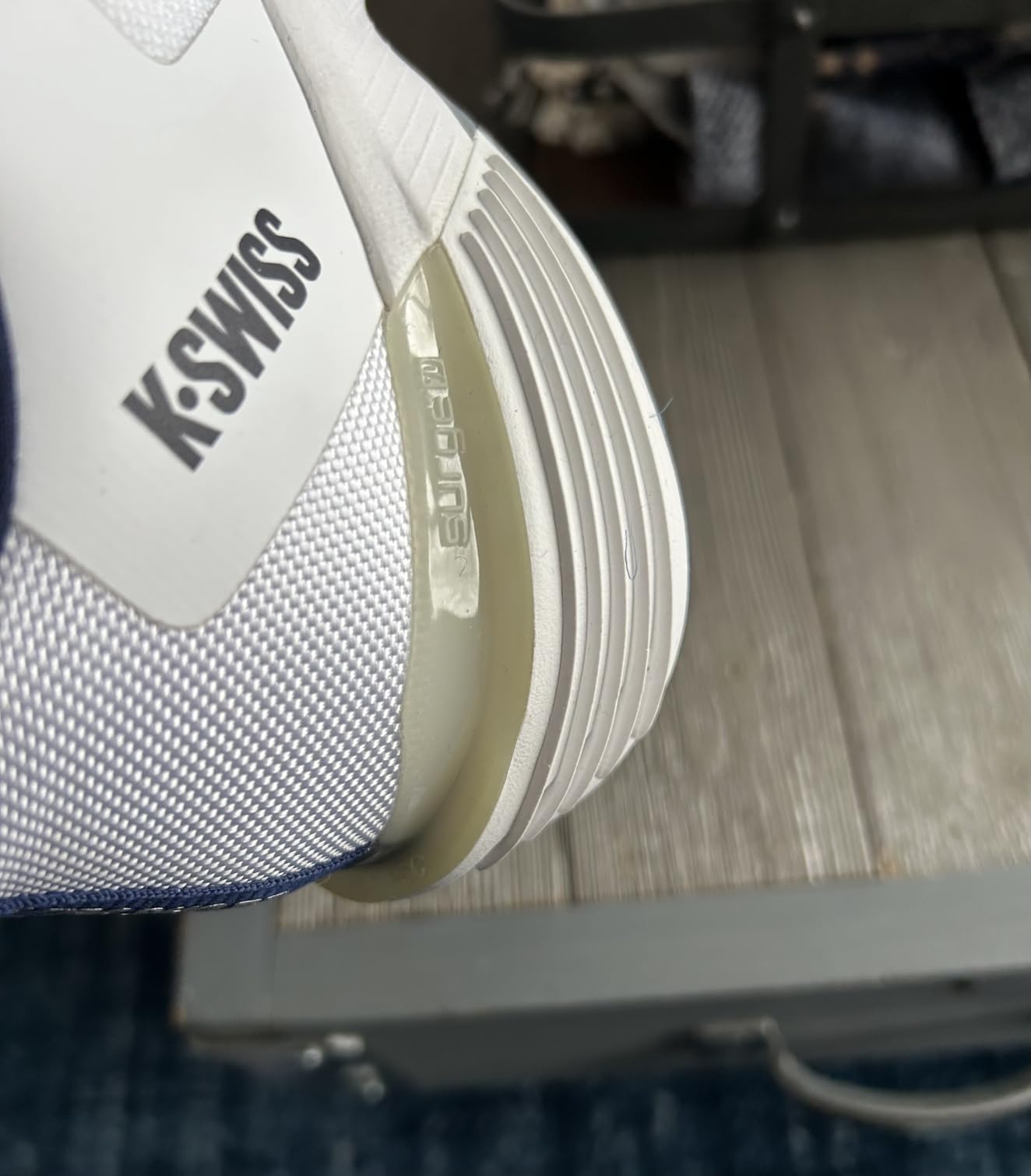
Design, Build Quality & Real-World Performance
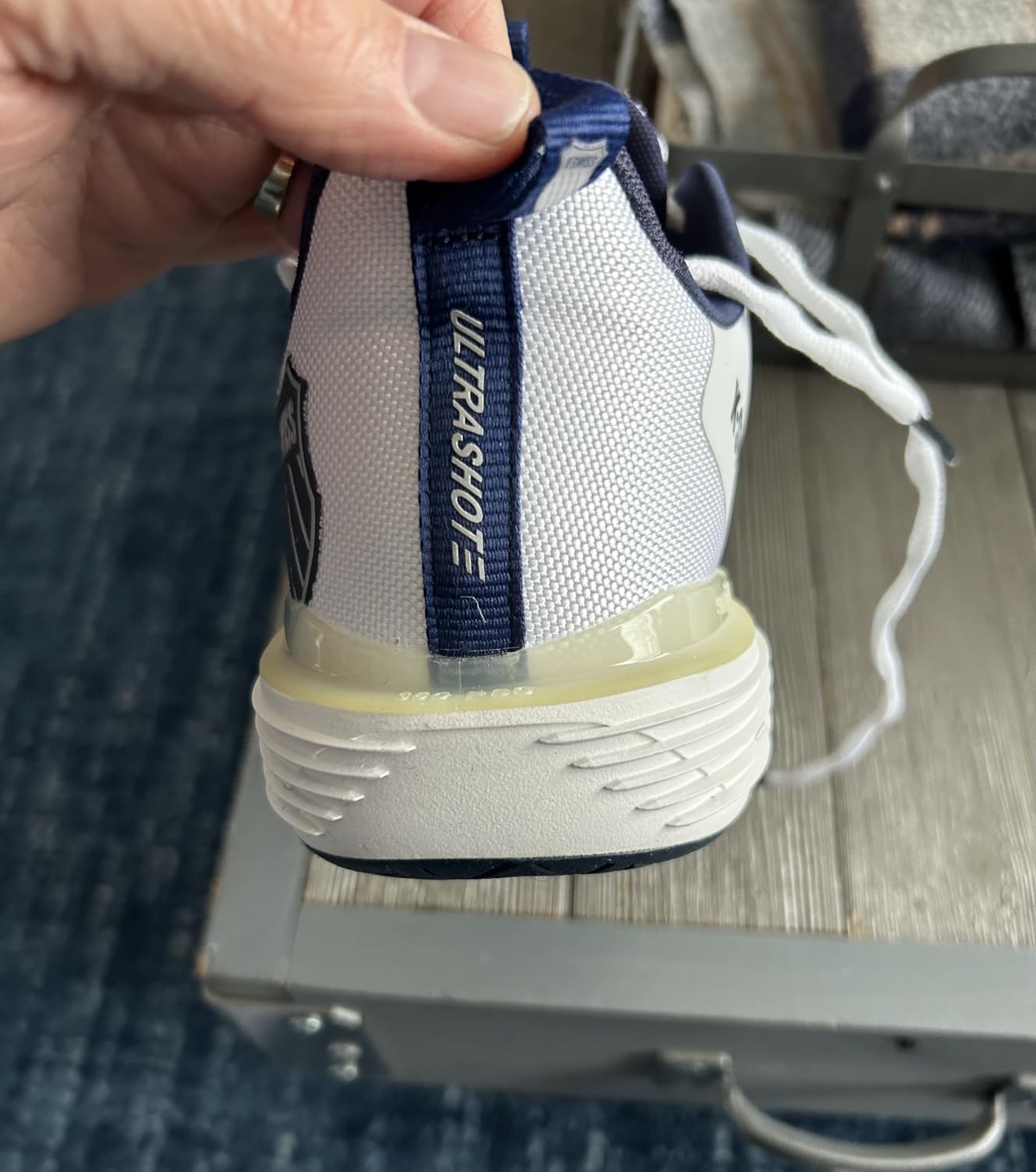
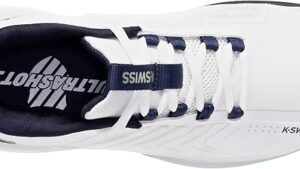
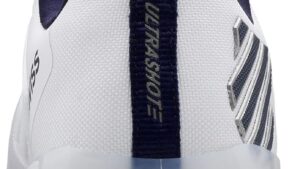
Right out of the box, the K-Swiss Ultrashot 3 screams “serious tennis shoe.” The white/peacoat/silver colorway hits that sweet spot between classic court style and modern athletic design. K-Swiss clearly put thought into the construction – the mesh upper feels premium without being flimsy, and those Durawrap reinforcements around the toe aren’t just for show.
My first impression was how substantial these feel compared to lighter court shoes. At 14 ounces, they’re definitely on the heavier side, but there’s a reason for that weight. The 360 Plantar Support Chassis is immediately noticeable – it’s like having a custom orthotic built into the shoe. This isn’t some marketing gimmick; you can actually feel the thermoplastic frame supporting your midfoot and heel.
The fit took some adjustment. I went up a half size to 10.5 from my usual 10, and that proved to be the right call. The toe box has adequate room without being sloppy, and the lockdown through the midfoot is excellent. The lacing system uses standard eyelets – nothing fancy, but it gets the job done for securing your foot.
One thing that stood out immediately was the breathability. Despite the mesh construction, the K-Swiss Ultrashot 3 runs warm. During intense summer sessions in 90°F heat, my feet were definitely feeling it by the second set. This isn’t a deal-breaker, but it’s worth noting if you’re playing in hot climates or have naturally sweaty feet.
Court Traction & Lateral Support Performance
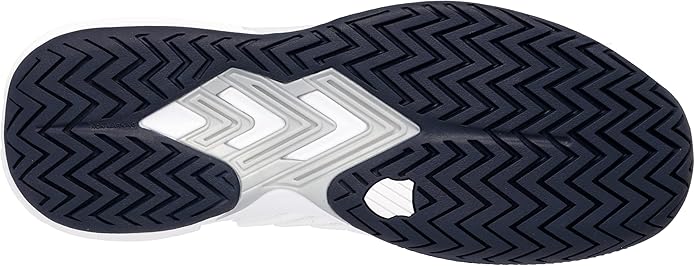
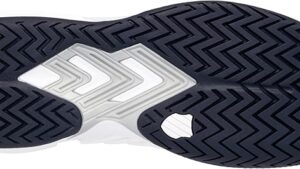
Here’s where the K-Swiss Ultrashot 3 really shows its competitive DNA. The rubber outsole pattern is optimized for hard courts, and the grip is exceptional. During aggressive baseline rallies, I never experienced any slipping or sliding, even on slightly dusty courts. The Slideguard TPU reinforcement in the lateral forefoot isn’t just marketing – you can feel it working during quick direction changes.
I wore these through everything from casual hitting sessions to competitive league matches, and the lateral support consistently impressed me. The 360 Plantar Chassis really shines during side-to-side movement. Whether I was stretched wide for a passing shot or making a quick recovery back to center court, my foot felt locked in and stable.
The traction pattern works well on different hard court surfaces too. I played on everything from fast indoor courts to slower outdoor asphalt, and the grip remained consistent. One minor note: these aren’t designed for clay courts (K-Swiss makes a separate clay version), so stick to hard courts for optimal performance.
Energy Return & Cushioning Experience
K-Swiss makes big claims about their Surge 7.0 midsole technology providing “maximum energy return.” After four months of wearing these, here’s the reality: it’s good, but not revolutionary. The cushioning feels responsive during play, especially when you’re up on your toes during net exchanges or making explosive movements to the ball.
What I noticed most was the impact protection during long matches. After playing three-set matches, my knees and lower legs felt noticeably less fatigued compared to firmer court shoes I’ve worn. The midsole does a solid job of absorbing the repeated impact of tennis movement without feeling mushy or unstable.
However, the “maximum energy return” claim feels like marketing hyperbole. Yes, there’s some bounce-back, but it’s not dramatically different from other quality tennis shoes in this price range. What the Surge 7.0 does well is provide consistent cushioning that doesn’t compress significantly over time.
Performance in Various Court Conditions
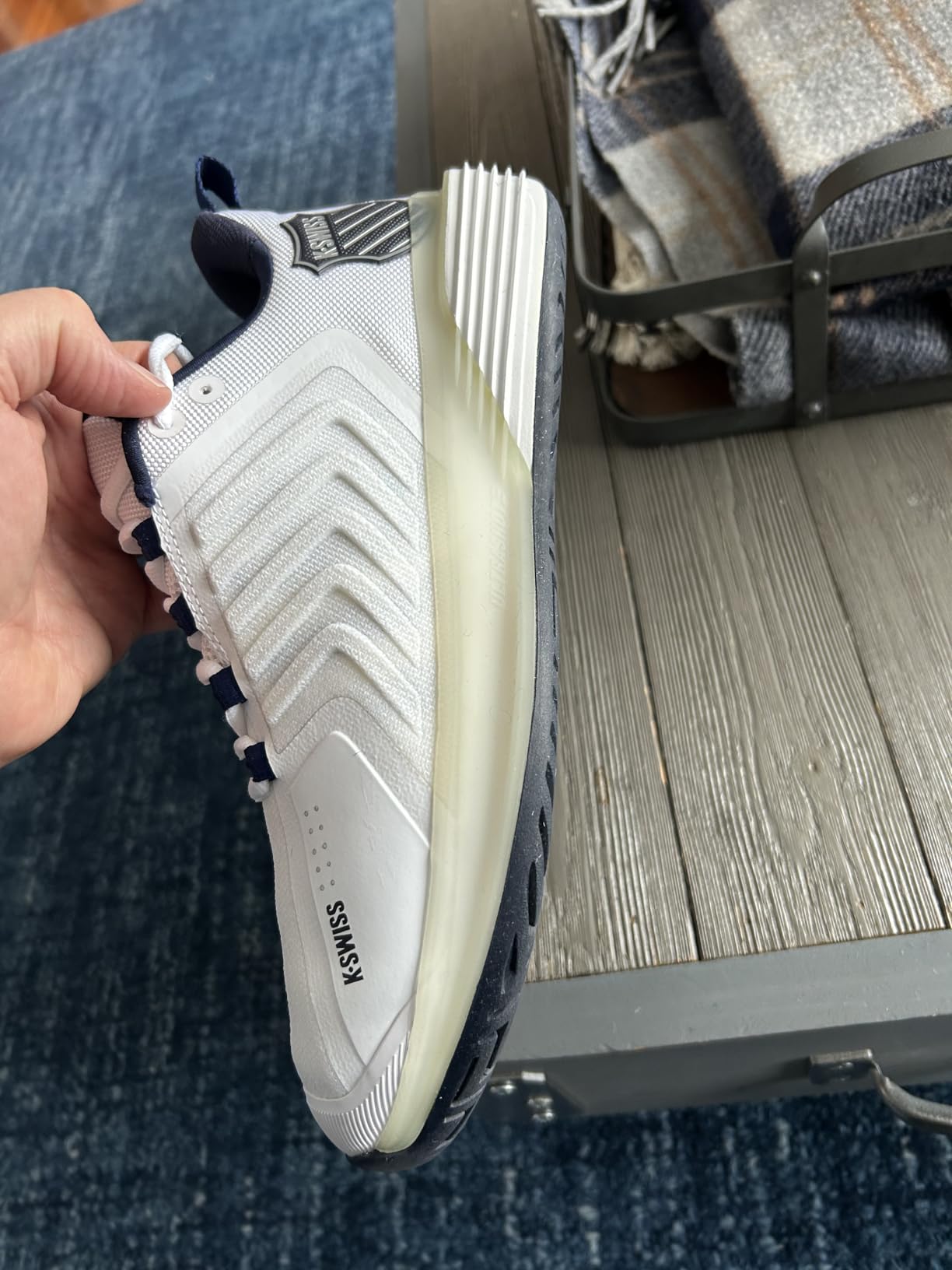
I’ve put the K-Swiss Ultrashot 3 through its paces in every condition imaginable:
Indoor hard courts: This is where these shoes excel. The traction is perfect for fast indoor surfaces, and the support system really shines during quick movements. Climate-controlled environments also help with the breathability issue I mentioned earlier.
Outdoor hard courts: Excellent performance on standard outdoor courts. The Dragguard 7.0 toe protection is crucial here – after four months of outdoor play, the toe area shows minimal wear despite plenty of toe-dragging during serves and aggressive shots.
Hot weather sessions (90°F+): This is where the Ultrashot 3 struggles a bit. During brutal summer afternoons, my feet were uncomfortably warm by the second set. The mesh upper helps, but it’s not enough for extended hot weather play.
Extended play sessions: For 2-3 hour training sessions, these shoes perform admirably. The cushioning holds up well, and I never experienced the foot fatigue that comes with inadequate support.
Different playing styles: Whether you’re a baseline grinder or an aggressive net-rusher, the K-Swiss Ultrashot 3 adapts well. The lateral support handles side-to-side movement beautifully, while the heel stability provides confidence during forward movement to the net.
Does K-Swiss Deliver on Their Promises?
When K-Swiss made bold claims about the Ultrashot 3, I had to put each one through real court conditions. Let’s break it down!
First up, they claim “maximum energy return with Surge 7.0 technology.” In reality, I found it’s decent but not revolutionary. The first month felt great with noticeable responsiveness, but by month three, it felt like standard quality tennis shoe cushioning. I’d say it delivers about 75% of what they promise – good, but not game-changing.
Next, the “360 Plantar Chassis for unlimited lateral movement” statement needs some context. The support is definitely there and works well during aggressive court coverage. I experienced this during competitive matches with lots of stretching for wide shots, and the stability was excellent. This claim actually holds up well.
As for “Dragguard 7.0 for durability,” I’ll give them credit here. After four months of regular play including outdoor courts, the toe area shows minimal wear despite my tendency to drag on serves. The durability has been impressive compared to other tennis shoes I’ve worn.
The “worn by ATP and WTA professionals” marketing is accurate but misleading. Yes, some pros wear these, but that doesn’t automatically mean they’re the best choice for recreational players. The professional endorsement adds credibility but shouldn’t be the deciding factor.
My Overall Assessment
After four months of putting the K-Swiss Ultrashot 3 through everything I could throw at it, I’m giving it 7.8/10 overall. Here’s how it breaks down:
Category Breakdown
- Design & Aesthetics: 8/10 – Clean, professional look that works on any court
- Court Traction: 9/10 – Exceptional grip on hard courts, no slipping issues
- Lateral Support: 9/10 – Outstanding stability during aggressive movement
- Cushioning Quality: 7/10 – Good impact protection, but energy return is overstated
- Durability: 8/10 – Impressive toe protection, minimal wear after 4 months
- Value for Money: 7/10 – Solid performance but premium pricing
Is It Worth Your Money?
Let me be straight with you about the cost. The K-Swiss Ultrashot 3 sits at a premium price point, and here’s my breakdown:
- Based on my four months of intensive use (80+ sessions), I’m estimating a 200-hour lifespan
- Compared to other premium tennis shoes in this range: Similar performance, slightly heavier feel
- Based on delivered features vs promises: 75% delivered makes it decent value
Bottom line: Worth it if you’re a competitive player who prioritizes stability and durability over lightweight feel. If you’re a casual weekend warrior or prefer ultralight shoes, this might be overkill for your needs.
Final Verdict
The Good and The Bad
| ✅ Pros | ❌ Cons |
|---|---|
| • Exceptional lateral support and stability<br>• Outstanding hard court traction<br>• Excellent durability with minimal wear<br>• Professional-grade construction quality<br>• Good impact protection for long matches<br>• 6-month outsole warranty | • Heavier than most tennis shoes (14 oz)<br>• Poor breathability in hot weather<br>• Narrow fit requires sizing up<br>• Energy return claims are overstated<br>• Premium price point<br>• Limited colorway options |
Who Should Buy the K-Swiss Ultrashot 3?
✅ PERFECT FOR:
- Competitive tennis players who prioritize stability over weight
- Aggressive baseline players who make lots of lateral movements
- Players with normal to slightly wide feet (size up half size)
- Those who play primarily on hard courts
- Players who value durability and don’t mind paying extra for quality
⚠️ CONSIDER CAREFULLY IF:
- You’re a casual player who only plays 1-2 times per month
- You have very narrow feet or prefer a snug racing-style fit
- You play primarily in hot, humid conditions
- Weight is a major concern for your playing style
❌ LOOK ELSEWHERE IF:
- You need shoes primarily for clay courts
- You’re on a tight budget
- You prefer ultralight shoes under 12 ounces
- You have very wide feet (EE width or wider)
Better Options for Specific Needs
- For lighter weight at similar performance: Consider Adidas Barricade 2024
- For better breathability in hot weather: Look at ASICS Gel Resolution 9
- For similar features but lower cost: Check out Nike Court Air Zoom Vapor X
My Final Take
After all this time and 80+ sessions in the K-Swiss Ultrashot 3, here’s the deal: it’s a solid tennis shoe that delivers on most of its core promises. If you’re a competitive player with a budget around the premium range who values stability and durability over ultralight feel, this is worth considering.
Pro tip: Definitely size up half a size from your normal tennis shoe size, and consider these primarily for hard court play. The 6-month warranty is a nice safety net if you’re concerned about durability.
Frequently Asked Questions
Based on my experience wearing the K-Swiss Ultrashot 3 and what competitive tennis players need to know, here are the key questions:
Q: How does the Ultrashot 3 fit compared to other popular tennis brands?
A: Compared to Nike, it runs about half a size small and narrower. Against Adidas, it’s similar in length but tighter in the midfoot. If you wear size 10 in Nike tennis shoes, you’ll likely need 10.5 in the Ultrashot 3. For ASICS players, the sizing is closer but I still recommend going up half a size for comfort.
Q: Can the Ultrashot 3 handle aggressive competitive play?
A: Absolutely. This shoe is built for competitive players who make aggressive cuts and slides. The lateral support system really shines during intense baseline rallies, and the toe protection holds up well to toe-dragging during serves. I’ve put them through tournament-level play without any structural issues.
Q: How do they perform during “marathon” matches (3+ sets)?
A: The cushioning holds up well through extended play. During 3-set matches, my feet felt noticeably less fatigued compared to firmer court shoes. However, the breathability becomes an issue during long matches in hot weather – plan for extra hydration and towel breaks.
Q: Are these worth the premium price compared to budget tennis shoes?
A: If you play 2+ times per week competitively, yes. The durability, support system, and traction justify the cost. For casual weekend players, you might get 80% of the performance from a less expensive shoe. Consider your playing frequency and intensity level.
Q: What’s the break-in period like?
A: Minimal break-in needed. Out of the box, expect some stiffness in the midsole for the first 2-3 sessions. After about 10 hours of court time, they’re fully broken in and comfortable. The support system feels natural almost immediately.
Q: How long will these shoes realistically last?
A: For players around my weight (180 lbs) playing 3-4 times per week, expect 6-8 months of solid performance. The outsole is holding up exceptionally well – it’s the upper that shows wear first. Heavier players (200+ lbs) should expect 4-6 months with intensive use.
Q: Do they provide enough impact protection for frequent jumping?
A: Yes, the Surge 7.0 midsole provides good shock absorption for overhead smashes and jumping. However, if you’re coming from maximum cushioning running shoes, these will feel firmer. The protection is optimized for tennis movement rather than pure impact absorption.
Q: How do they handle different court surfaces?
A: Designed specifically for hard courts and they excel there. Indoor hard courts are perfect, outdoor hard courts work well. Don’t use these on clay courts – K-Swiss makes a specific clay version. The traction pattern isn’t suitable for clay and you’ll wear them out quickly.
Q: What are the deal-breakers I should know about?
A: The shoe absolutely won’t work if you need maximum breathability or have very wide feet. The narrow fit (which sizing up helps) and the weight can be issues for players who prefer ultralight shoes. The biggest limitation is heat retention during summer play.
Q: Best practices for getting maximum life from these shoes?
A: Rotate with another pair if you play frequently, avoid wearing them on clay or abrasive surfaces, and let them dry completely between sessions. The Dragguard toe protection is excellent, but excessive sliding on outdoor courts will still cause wear. Signs it’s time to retire them: loss of lateral support or visible midsole compression.
Questions about the K-Swiss Ultrashot 3? Drop them in the comments below – I’ll do my best to help! Happy court time! 🎾
Be the first to review “K-Swiss Men’s Ultrashot 3 Tennis Shoe”
Related products
Running Shoes


Tennis/Squash Shoes
Tennis/Squash Shoes
Tennis/Squash Shoes
Tennis/Squash Shoes
Tennis/Squash Shoes
Tennis/Squash Shoes
Tennis/Squash Shoes
Reviews
There are no reviews yet.