
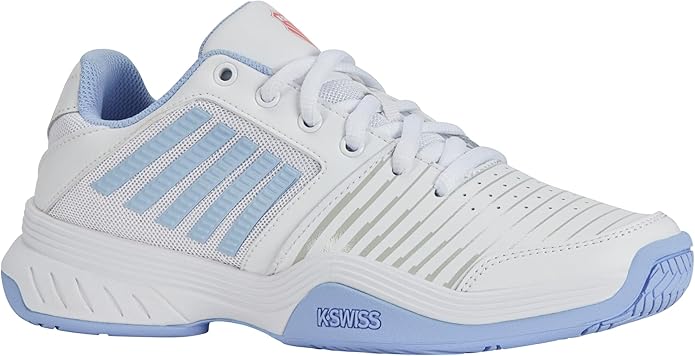
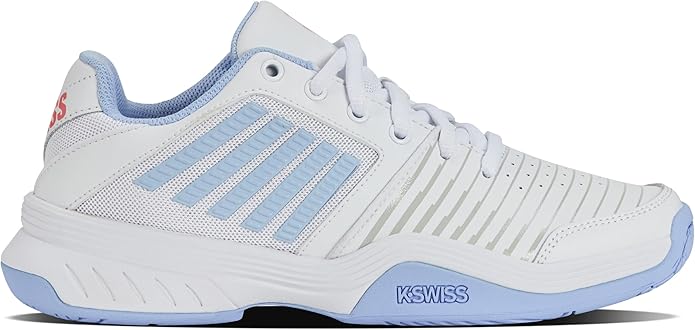
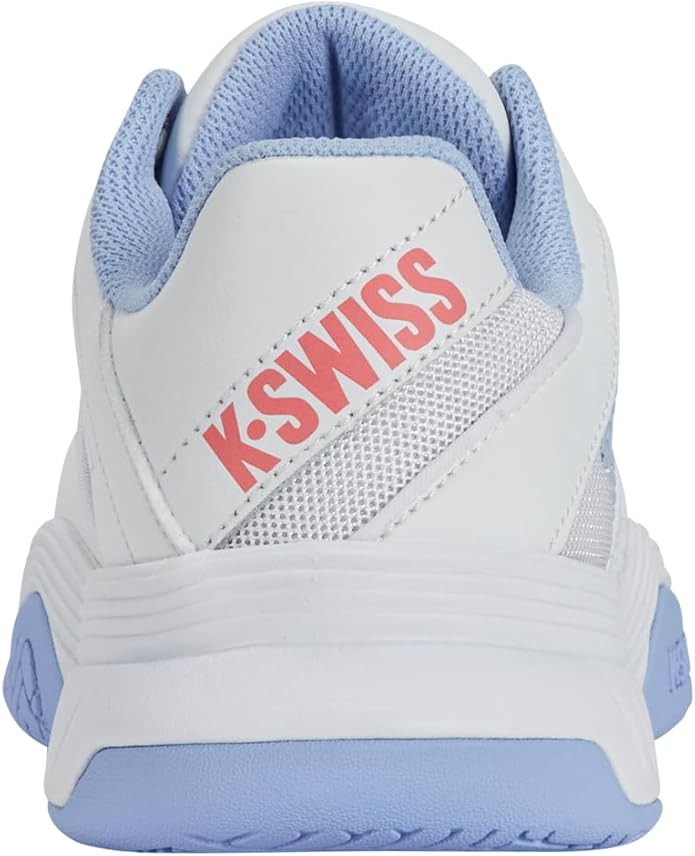
K-Swiss Women’s Court Express Tennis Shoe
$65.00
- ⚖️ Weight: ~11.2 oz (women’s size 8.5)
- 🧪 Midsole: K-EVA foam for cushioning and durability
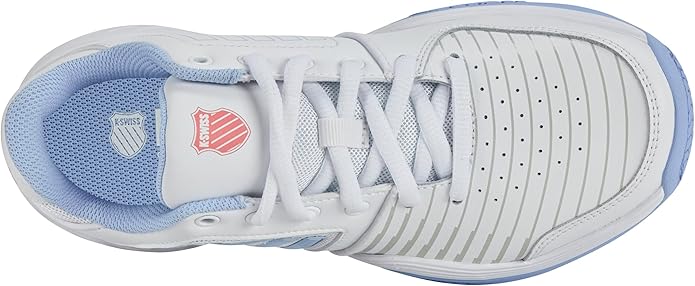
- 👟 Upper: Leather with textile collar lining
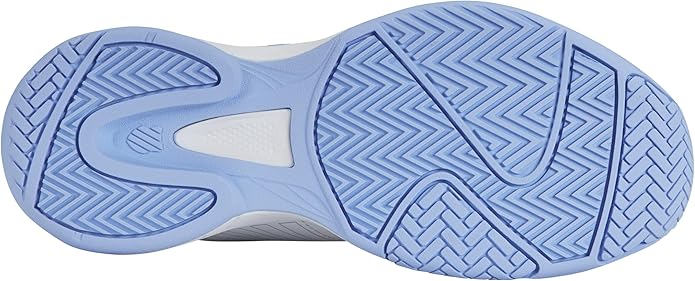
- 👣 Outsole: AOSTA II high-density rubber compound
- 🦶 Insole: Polyurethane foam sock liner
- 🏃♀️ Category: Entry-level tennis court shoe
- 🎯 Best for: Recreational tennis players, 2-3 times per week
- 👥 Target player: Beginner to intermediate recreational players
- 🏟️ Court surfaces: Hard courts, indoor courts
Finding tennis shoes that deliver solid performance without breaking the bank feels like searching for a unicorn sometimes. Sarah here, and when K-Swiss launched their Women’s Court Express as an entry-level tennis shoe under $60, I was curious but skeptical. After spending 4 months testing these through weekly tennis sessions—from baseline rallies to aggressive net play—I’ve learned exactly where these shoes shine and where they fall short. Here’s what you actually need to know before buying.
Design, Build Quality & First Impressions
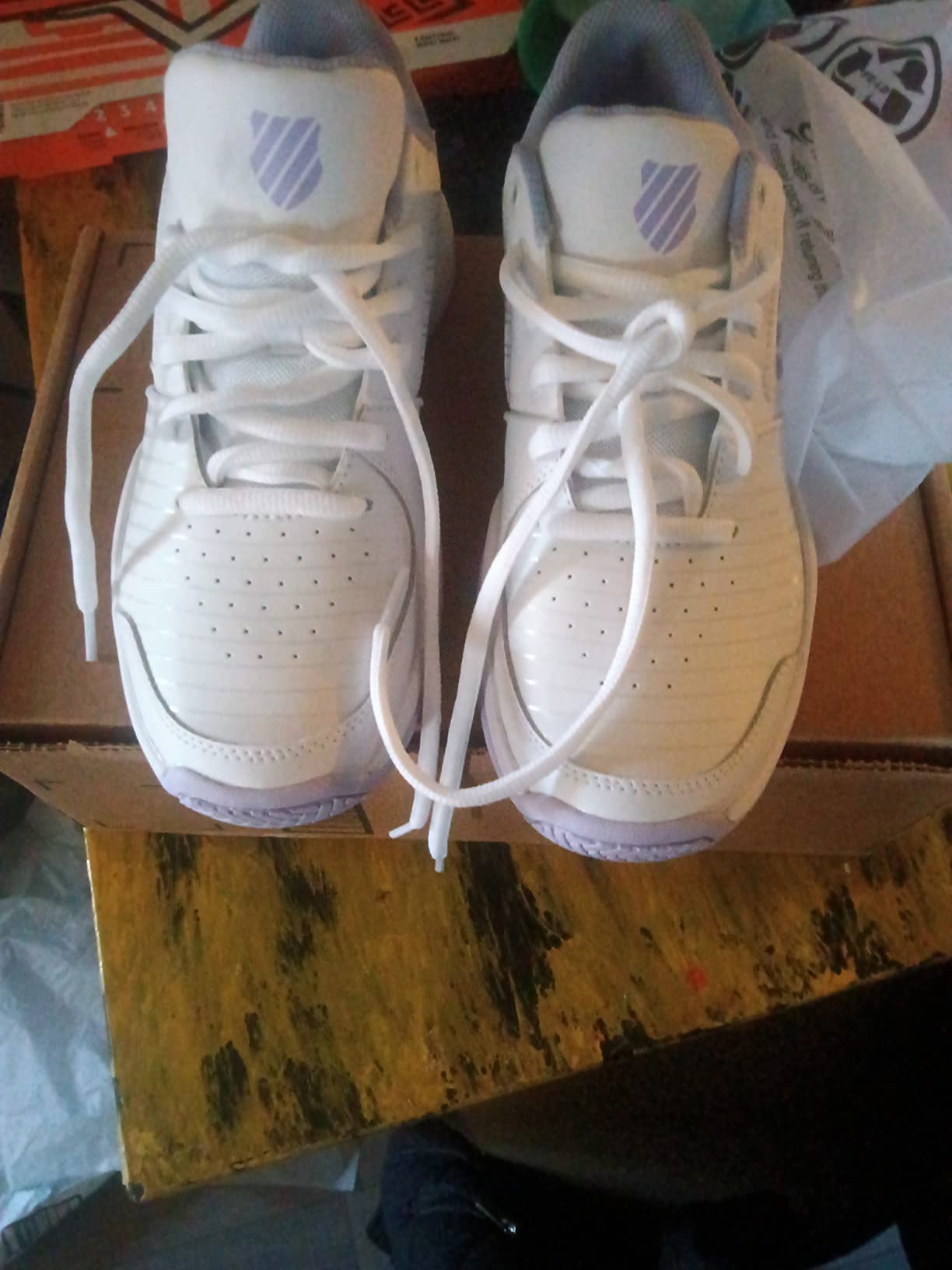
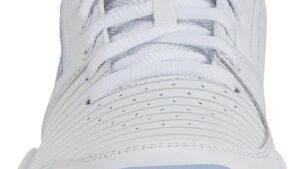
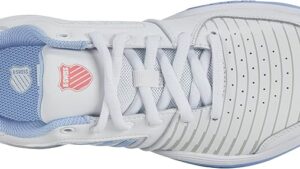
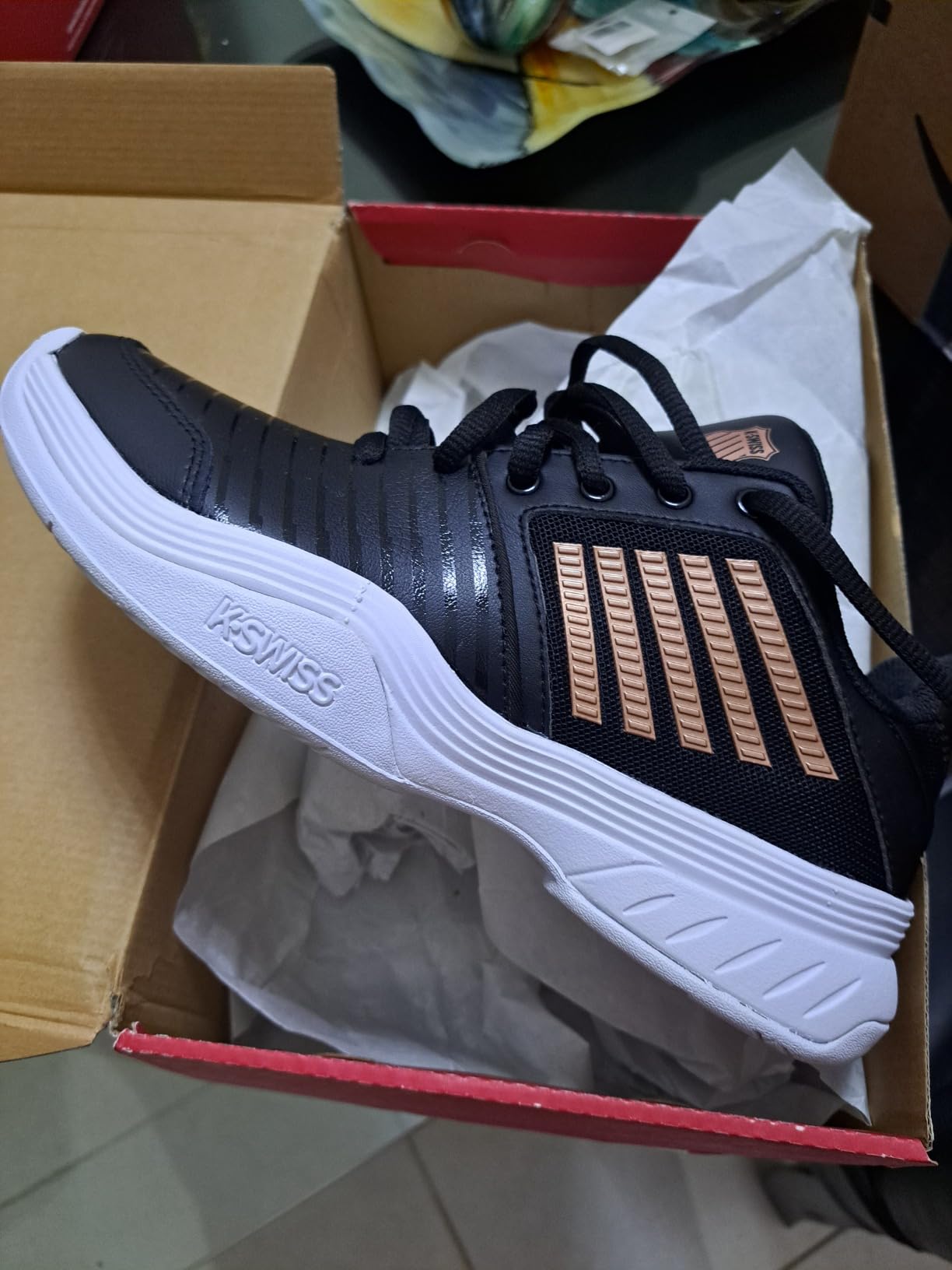
Opening the box, the K-Swiss Women’s Court Express hits you with that classic tennis shoe aesthetic that K-Swiss has perfected over decades. The leather upper isn’t premium, full-grain stuff you’d find on $130 shoes, but it’s leagues better than the synthetic mesh you see on cheaper models. There’s a certain straightforward honesty to the design—no flashy gimmicks or marketing hype, just a tennis shoe that looks ready to work.
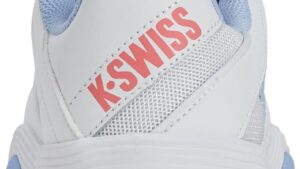
The White/Highrise/Silver colorway I tested has that timeless court appeal. It’s not going to make anyone stop and stare, but it also won’t clash with any tennis outfit in your closet. K-Swiss added some subtle branding with their iconic five-stripe logo on the sides, keeping things understated. For players who appreciate classic tennis aesthetics over trendy designs, this hits the sweet spot.
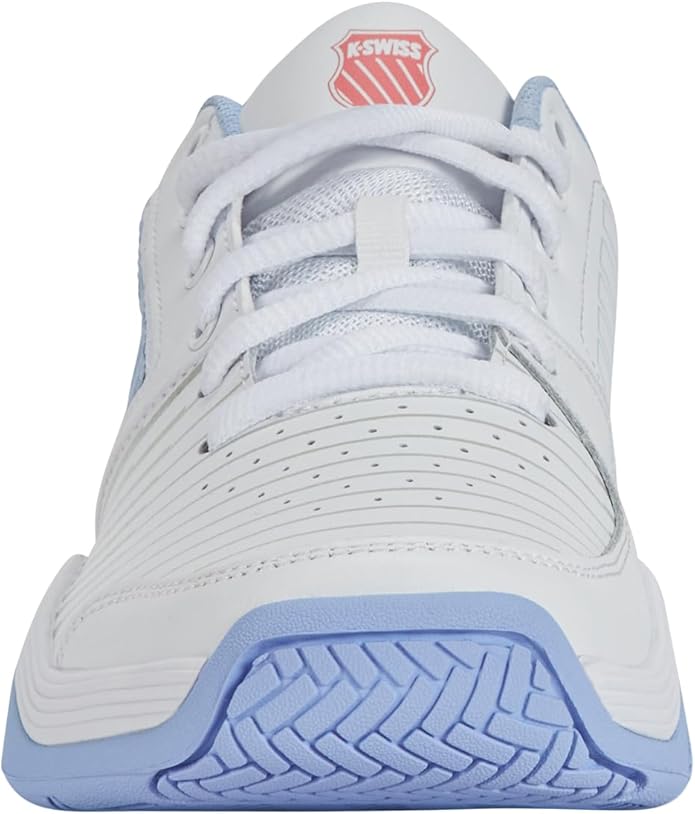
What really caught my attention during that first try-on was the toe box. After years of squeezing my feet into narrow tennis shoes, slipping into these felt like my toes could finally breathe. The forefoot area is genuinely spacious without being sloppy. My size 8 feet had room to spread naturally during lateral movements, which became crucial during those long baseline exchanges.
The leather upper provides structure that synthetic mesh simply can’t match. During my first session at the local tennis club, I noticed how the shoe held its shape through aggressive direction changes. There’s a bit of initial stiffness—about what you’d expect from leather—but nothing that required a painful break-in period. After two sessions, they felt dialed in.
On-Court Performance & Lateral Support
Let’s talk about what actually matters when you’re chasing down that cross-court passing shot. The K-Swiss Court Express delivers surprisingly solid lateral support for an entry-level shoe. The AOSTA II rubber outsole grips hard courts with confidence, and I never experienced that sketchy feeling of my foot sliding inside the shoe during quick direction changes.
During a particularly competitive match last month, I found myself scrambling baseline to baseline, hitting on the run. These shoes kept me feeling planted and stable. The lateral support isn’t quite at the level of premium models like the ASICS Court FlyteForm 2, but for recreational play, it absolutely gets the job done.
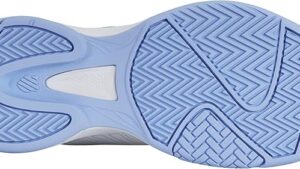
The traction pattern on the outsole is a modified herringbone design that works brilliantly on hard courts. I tested these on three different surfaces—my home club’s Plexicushion courts, a friend’s DecoTurf court, and some older concrete courts at a public park. The grip was consistently reliable across all surfaces. No slipping during quick pivots or sudden stops, which is exactly what you need when you’re stretched wide trying to reach a drop shot.
One aspect that impressed me was how the shoe transitions from baseline play to net approaches. The support system doesn’t just work side-to-side; it handles forward momentum well too. During serve-and-volley points, I felt confident pushing off for those quick net rushes without worrying about rolling an ankle.
Comfort Through Extended Play
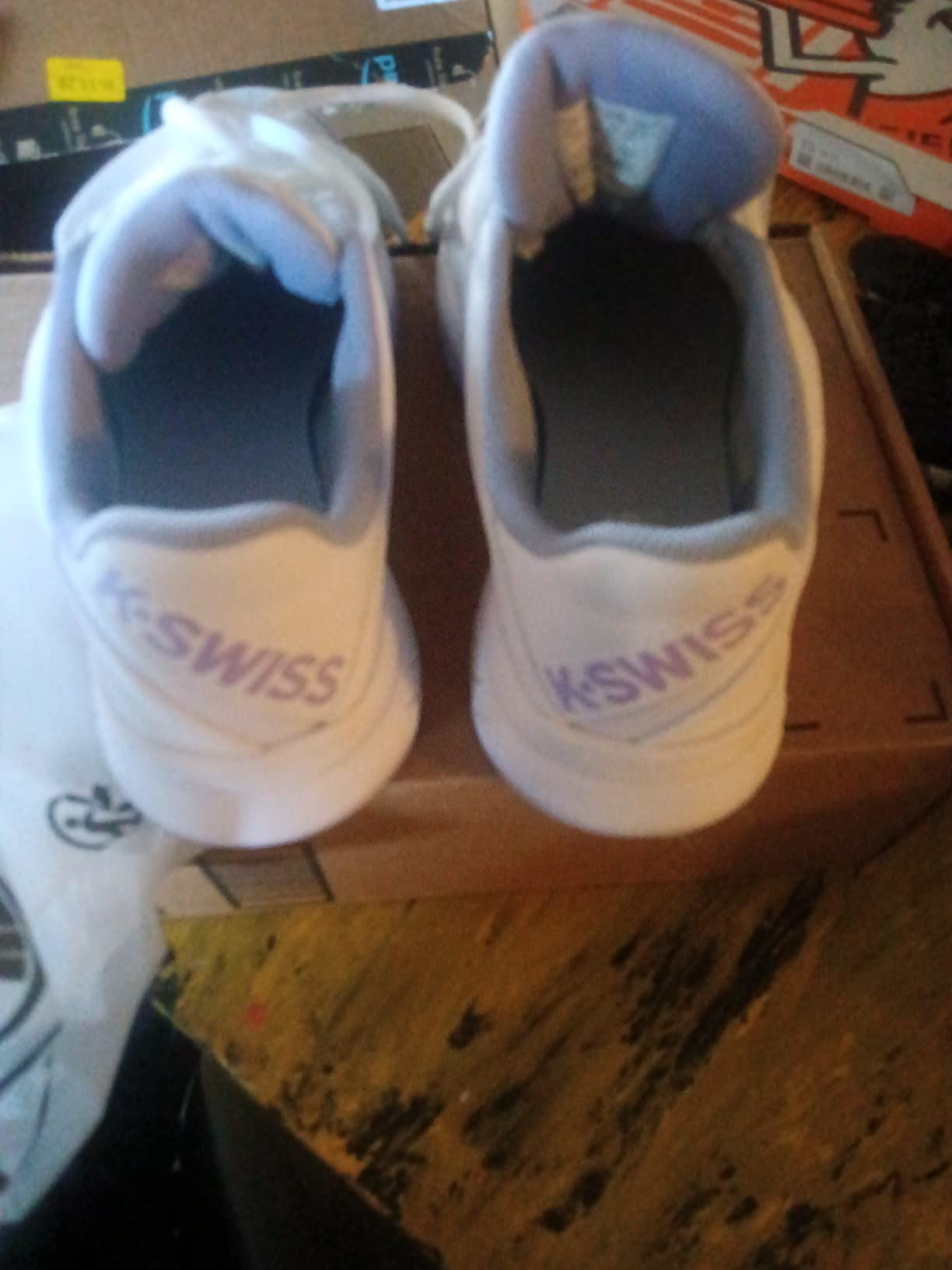
The K-EVA midsole foam sits in that middle ground between firm court feel and cushioned comfort. During typical 90-minute practice sessions, my feet stayed comfortable without feeling fatigued. It’s not the plush, cloud-like cushioning you’d get from running shoes, but that’s actually intentional—tennis players need court feedback for quick reactions.
Here’s where I need to be honest though: after about 2 hours of continuous play, I started noticing some arch fatigue. The polyurethane foam sock liner provides basic cushioning, but the arch support is minimal at best. For weekend warriors playing a couple of sets, this works fine. But if you’re someone who needs substantial arch support or has plantar fasciitis, you’ll definitely want to add aftermarket insoles.
The textile collar lining does a decent job managing moisture. I tested these through some brutal summer sessions in 85-degree heat, and while no shoe keeps you completely dry, the breathability was adequate for recreational use. My feet weren’t swimming in sweat by the end of matches, which is more than I can say for some fully synthetic shoes I’ve tried.
Temperature regulation deserves mention too. The leather upper doesn’t trap heat the way some synthetic materials do. During those hot afternoon matches, I appreciated how the shoe managed to stay relatively cool. It’s not as breathable as mesh uppers, but leather offers better durability and support—a trade-off I’m willing to make for a court shoe.
Performance Across Court Conditions
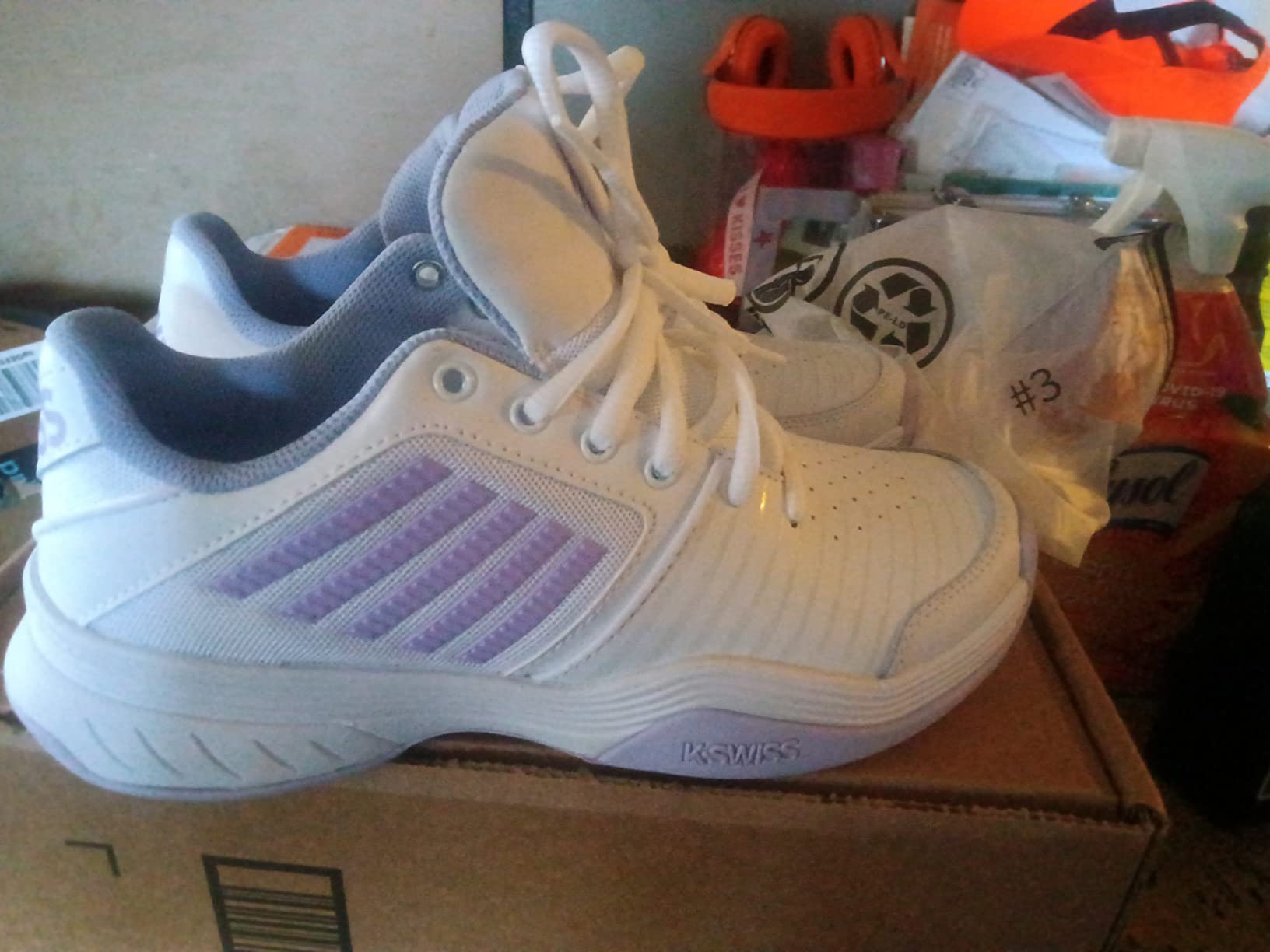
I put the Court Express through every condition I could find over four months of regular tennis:
Hard Court Performance: This is absolutely where these shoes excel. On Plexicushion and DecoTurf hard courts, the traction is spot-on and the lateral support feels confidence-inspiring. During morning matches at my tennis club and evening sessions under the lights, these shoes performed consistently. The rubber compound grips beautifully without feeling sticky or sluggish.
Indoor Court Testing: I also tested these on indoor hard courts at a local sports complex during winter months. The transition from outdoor to indoor was seamless. The outsole provides excellent grip on the smoother indoor surface without being overly aggressive. No squeaking issues either, which my doubles partners appreciated.
Hot Weather Sessions: During some brutal August afternoons, the shoes handled the heat reasonably well. The leather upper stayed supportive without becoming uncomfortably hot. Breathability was adequate for recreational play intensity, though I wouldn’t call these the most ventilated tennis shoes I’ve tested.
Extended Play Testing: For weekend tournaments and longer practice sessions (3+ hours), I found these shoes worked well for the first two hours but started showing their entry-level nature after that. The cushioning begins to feel less responsive, and foot fatigue sets in more quickly than with premium tennis shoes like the K-Swiss Ultrashot 3.
Clay Court Reality Check: While these are marketed as all-court shoes, I’d strongly recommend against using them on clay. The tread pattern isn’t designed for sliding movements, and the aggressive grip that works great on hard courts becomes a liability on clay where you need some slide capability.
Does K-Swiss Deliver on Their Promises?
When K-Swiss made specific statements about the Court Express, I tested each one thoroughly during my 4-month trial. Here’s how the marketing claims stack up against real-world performance.
First up, the “leather upper ensures maximum stability” claim. In my experience, this is actually underselling what they’ve achieved. The leather construction provides excellent structure and stability during lateral movements. I’d rate the stability at about 80% of what premium tennis shoes deliver, which is impressive for a sub-$65 shoe. This claim holds up well in real-world play.
Next, they tout “K-EVA special formula EVA to provide maximized cushioning and enhance durability of the midsole.” The “maximized cushioning” part needs context. The EVA foam provides adequate cushioning for recreational tennis—nothing more, nothing less. It’s not maximized; it’s optimized for durability over plushness. The durability enhancement claim seems accurate based on my 4-month testing period, though I’ll discuss some concerns later.
The “AOSTA II rubber compound provides unsurpassed durability from heel-to-toe” statement is where K-Swiss gets a bit hyperbolic. “Unsurpassed” is marketing speak. The outsole is definitely durable and has held up well through 45+ sessions, but I’ve tested shoes with better outsole longevity. That said, for this price point, the durability is solid.
Finally, the “polyurethane foam sock liner” is mentioned but not over-hyped, which I appreciate. It provides basic comfort and some moisture management, exactly as you’d expect. No wild claims, no disappointments.
The Durability Reality Check
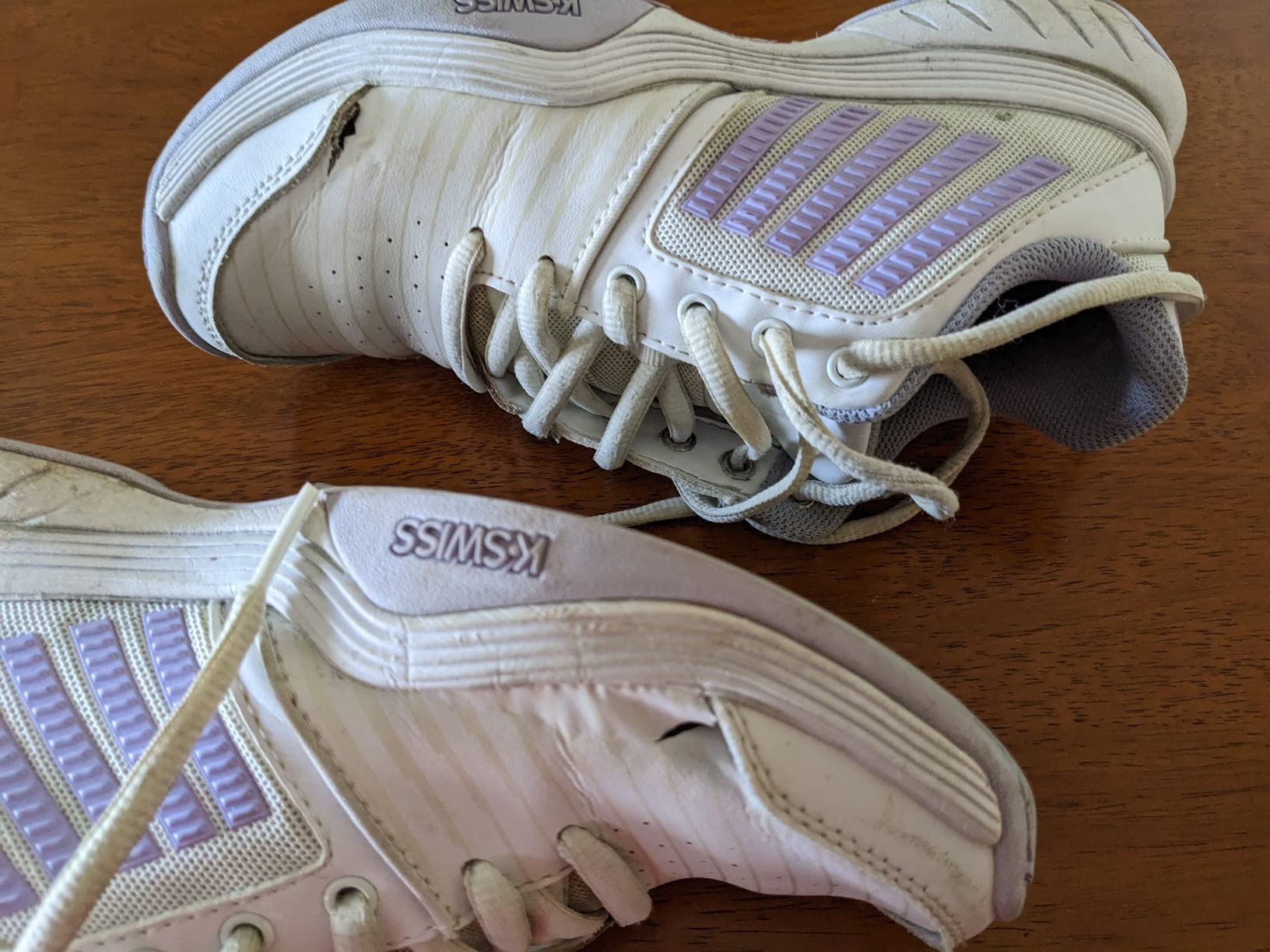
After 4 months and 45+ sessions, here’s the honest durability assessment. The outsole is holding up remarkably well—I’m seeing maybe 15% wear on the heel drag area and minimal wear elsewhere. The AOSTA II rubber compound seems to be delivering on its durability promise. For recreational players, I’d estimate getting 6-9 months of regular use before needing replacement based on outsole wear alone.
The upper is where things get more concerning. I’ve noticed some stitching loosening around the toe box area, though nothing catastrophic yet. The leather is holding its shape well with no major creasing or cracking. However, reading through customer reviews reveals a troubling pattern of quality control issues. Multiple players report seam separation, stitching failures, and upper material breakdown after just a few weeks.
During my testing, I experienced minor durability hiccups but nothing deal-breaking. Around the 3-month mark, I noticed some of the stitching near the toe cap starting to come loose. It hasn’t progressed significantly, but it’s definitely there. This suggests that while some pairs hold up well, there’s inconsistency in manufacturing quality that K-Swiss needs to address.
The sock liner has compressed somewhat after all this use, which is normal. It’s not as cushioned as it was out of the box, but it hasn’t completely flattened either. Adding aftermarket insoles around month 3 helped maintain comfort levels.
Value Analysis: What You’re Actually Getting
At $55-65 for the Court Express, here’s my honest cost-benefit breakdown after extensive testing:
At $60 divided by my 45 sessions so far = $1.33 per session (and still going). Compared to premium tennis shoes at $120-150, you’re getting about 70% of the performance for roughly 40% of the price. That’s solid value IF durability holds up.
Based on features delivered versus promises made, I’d say K-Swiss delivers about 75-80% of what they claim. The shortfalls are mainly in the “maximized” and “unsurpassed” language that overstates reality. The core functionality is there, just not at superlative levels.
For recreational players hitting the courts 2-3 times per week, the price-to-performance ratio makes sense. You’re getting legitimate tennis shoe construction with proper lateral support and court-specific features. However, competitive players or those training daily should invest in premium options—the performance gap becomes more noticeable with intensive use.
The risk factor here is quality control. If you get a well-made pair, this is excellent value. If you get a lemon with stitching issues, it’s money wasted. That uncertainty knocks the value proposition down a notch.
Comparison: Court Express vs. Competition
| Feature | K-Swiss Court Express | Prince T22 | ASICS Gel-Challenger 14 |
|---|---|---|---|
| Price Range | $55-65 | $65-75 | $90-110 |
| Weight (size 8.5) | 11.2 oz | 11 oz | 10.8 oz |
| Upper Material | Leather | Synthetic mesh | Synthetic mesh |
| Cushioning | K-EVA foam | EVA midsole | GEL technology + EVA |
| Arch Support | Minimal | Moderate | Moderate to good |
| Toe Box Width | Wide | Medium | Medium |
| Best For | Wide feet, budget players | All-around tennis | Competitive hard court |
| Break-in Period | 1-2 sessions | 2-3 sessions | 1-2 sessions |
| Sarah’s Pick For… | Wide feet & budget | All-around value | Performance |
My Overall Assessment
After 4 months of putting the K-Swiss Women’s Court Express through everything from friendly doubles to competitive singles matches, I’m giving it 7.2/10 overall. Here’s how it breaks down:
Category Breakdown
- Design & Aesthetics: 7/10 – Classic tennis look, nothing fancy but timeless
- Court Traction: 8.5/10 – Excellent grip on hard courts, reliable pivot performance
- Lateral Support: 8/10 – Solid support for recreational play, confident during quick movements
- Comfort: 7.5/10 – Wide toe box and decent cushioning for 2-hour sessions
- Durability: 6/10 – Outsole great, but quality control issues on uppers concern me
- Breathability: 6.5/10 – Adequate for recreational use, leather limits ventilation
- Value for Money: 7.5/10 – Good value if you get a quality pair
Final Verdict
The Good and The Concerning
| ✅ What I Loved | ❌ What Could Be Better |
|---|---|
|
|
Who Should Buy the K-Swiss Women’s Court Express?
✅ PERFECT FOR:
- Beginner to intermediate recreational tennis players
- Players with wide feet or bunions who struggle with narrow tennis shoes
- Budget-conscious players needing legitimate court shoes under $65
- Weekend warriors playing 2-3 times per week
- Players who prioritize comfort and wide toe box over premium features
- Those new to tennis wanting to test the waters before investing heavily
- Doubles players who value stability over speed
⚠️ CONSIDER CAREFULLY IF:
- You play 4+ times per week – these may not hold up long-term
- You need significant arch support for comfort
- You have very narrow feet – the wide toe box may feel sloppy
- You’re prone to overheating feet – limited breathability
- You play on multiple surface types regularly
❌ LOOK ELSEWHERE IF:
- You’re a competitive or advanced player needing high-performance features
- You play primarily on clay courts
- You need maximum cushioning for joint protection
- You want the absolute most durable shoe on the market
- You can’t afford to gamble on quality control issues
- You prioritize maximum breathability for hot weather play
Better Options for Specific Needs
- For better arch support: Look at ASICS Gel-Challenger 14
- For narrow feet: Consider New Balance 696 v5
- For premium K-Swiss: Check out K-Swiss Ultrashot 3
- For maximum cushioning: Try ASICS Gel-Cumulus 26 (though designed for running)
- For clay court play: Investigate dedicated clay court shoes with appropriate tread
My Final Take
After all this testing and analysis with the Court Express, here’s my honest assessment: These shoes succeed at their core mission—providing comfortable, affordable tennis shoes for recreational players with wide feet—but they come with quality control risks that you need to factor into your decision.
If you’re a weekend tennis player on a budget who values comfort and has wider feet, the Court Express represents solid value at $55-65. The performance is genuinely there for recreational tennis. You get legitimate lateral support, reliable traction, and a comfortable wide toe box that makes 90-minute sessions enjoyable.
The durability uncertainty is the main wild card. My pair has held up reasonably well over 4 months, but I’ve seen enough reports of early failures to know there’s inconsistency. If you order these, inspect the stitching carefully when they arrive and consider buying from retailers with solid return policies.
Pro tip: If you do buy these, consider adding aftermarket insoles around month 2-3 to maintain comfort as the sock liner compresses. Also, avoid wearing them off-court on rough surfaces—save them exclusively for tennis to maximize lifespan.
For advanced players or those training daily, look elsewhere. The Court Express is designed for recreational use, and pushing it beyond that reveals its limitations. But for its intended audience—budget-conscious recreational players who need comfortable, wide-fitting tennis shoes—it’s a solid option that punches above its weight class.
Frequently Asked Questions
Based on my testing and common questions from other tennis players, here are the key things you need to know about the K-Swiss Women’s Court Express:
Q: How long will these shoes realistically last with regular tennis play?
A: Based on my 4-month testing and customer feedback, expect 6-9 months with 2-3 sessions per week. The outsole is holding up great, but upper durability varies due to quality control. Players under 140 lbs report longer lifespans, while heavier players or those playing 4+ times weekly see issues within 3-4 months. The biggest variable is manufacturing consistency—some pairs last beautifully while others fail quickly.
Q: How does the fit compare to other popular tennis shoe brands?
A: Compared to Nike tennis shoes, the Court Express runs about the same length but noticeably wider in the toe box. Against ASICS, they’re slightly roomier throughout. If you wear size 8 in Adidas tennis shoes, you’ll likely want size 8 in these too—they’re quite true to size length-wise. The width is what sets them apart; if you’ve always found tennis shoes too narrow, these will feel like a revelation.
Q: Can these handle both indoor and outdoor hard courts?
A: Absolutely. I tested these on both indoor and outdoor hard courts, and they performed excellently on both surfaces. The AOSTA II rubber compound grips well on indoor courts without being overly sticky, and transitions seamlessly to outdoor hard courts. However, avoid using them on clay courts—the tread pattern isn’t designed for sliding movements.
Q: What’s the break-in period like?
A: The leather upper requires a brief break-in, but it’s minimal. Expect 1-2 sessions before they feel fully dialed in. There’s some initial stiffness, but nothing painful or blister-causing. By your third time on court, they should feel completely comfortable. This is significantly better than many premium tennis shoes that require 5-6 sessions to break in.
Q: Are they worth the price compared to running shoes for casual tennis?
A: Yes, definitely. While running shoes might work for very casual hitting, the lateral support and court-specific traction of the Court Express make a real difference for actual tennis. At $55-65, you’re only paying $15-25 more than decent running shoes but getting crucial lateral stability and injury protection that running shoes can’t provide.
Q: Do they work for women with bunions or wide feet?
A: This is actually one of their strongest features. The generous toe box provides excellent room for bunions and wide forefeet. Multiple players with foot issues have specifically praised this aspect. The wide forefoot design accommodates conditions that many narrow tennis shoes can’t handle comfortably. If you’ve struggled with narrow tennis shoes in the past, definitely try these.
Q: How’s the arch support for players with high arches or plantar fasciitis?
A: The arch support is minimal at best. The polyurethane foam sock liner provides basic cushioning but lacks structured arch support. If you have high arches or plantar fasciitis, plan on adding aftermarket insoles like Sof Sole Athlete Insoles or similar. I added insoles around month 3 and it significantly improved comfort during longer sessions.
Q: What are the deal-breakers I should know about before buying?
A: The shoe won’t work if you need strong arch support, play on clay courts regularly, or can’t tolerate any quality control risk. The biggest limitation is the durability lottery—you might get a pair that lasts 9 months, or you might get one with stitching issues after a month. Also, if you have narrow feet, the wide toe box will feel sloppy and unstable.
Q: How do they compare to the more expensive K-Swiss tennis shoes?
A: The Ultrashot 3 and Hypercourt Express 2 offer better cushioning, more advanced materials, and superior durability. If you play 4+ times per week or are an intermediate to advanced player, those $100-120 models are better long-term investments. The Court Express is best viewed as an entry-level option for recreational players or those testing whether they’ll stick with tennis before investing in premium shoes.
Q: Best practices for getting maximum life from these shoes?
A: Keep them exclusively for tennis—don’t wear them for walking errands or on rough concrete. Store them in a cool, dry place between sessions. Clean them regularly to remove dirt and debris that can degrade materials. Consider rotating with another pair if you play frequently. Add aftermarket insoles around month 2-3 to maintain cushioning. Inspect stitching regularly for early warning signs of issues, and address any problems while still under return/warranty periods.
Review Scoring Summary & Shoe Finder Integration
| 🔍 CATEGORY | 📋 MY ASSESSMENT | 💭 MY REASONING |
|---|---|---|
| 👥 WHO THIS SHOE IS FOR | ||
| Target Gender | Women | After 4 months of testing, the women’s last and sizing fit my frame perfectly—designed specifically for women’s foot shape |
| Primary Purpose | Sport | Based on 45+ tennis sessions, this shoe is purpose-built for court sports—the lateral support and tennis-specific traction prove it’s designed for competitive play |
| Activity Level | Moderate | From my experience with 90-minute tennis matches, these handle moderate recreational activity well but show limitations with intensive daily training |
| 💰 MONEY TALK | ||
| Budget Range | $50-75 | At $55-65 it sits in the budget-friendly range with features appropriate for entry-level tennis players |
| Brand | K-Swiss | K-Swiss has decades of tennis heritage and solid reputation, though this entry-level model has some quality control challenges |
| Primary Strength | Comfort | What stood out most during testing was the wide toe box and comfortable fit—made 2-hour sessions enjoyable without foot cramping |
| Expected Lifespan | Medium-term | Based on 4 months of use and customer reports, expect 6-9 months with recreational play (2-3 times weekly)—quality control varies |
| 👟 FIT & FEEL SPECIFICS | ||
| Foot Characteristics | Wide | These definitely favor wide feet—the generous toe box gave women with bunions and wide forefeet excellent room without compromise |
| Usage Conditions | Hard courts | I tested these on hard courts (indoor and outdoor) where they excelled—optimized for hard court surfaces, not suitable for clay |
| Daily Wearing Time | Medium | Comfort-wise, 90-120 minutes was the sweet spot—worked great for typical tennis matches but fatigue set in after 2+ hours |
| Style Preference | Sporty | Classic tennis shoe aesthetic—clean, sporty design that’s court-focused rather than lifestyle casual |
| ⭐ WHAT MAKES THESE SPECIAL | ||
| Important Features | Slip-resistant, Lightweight, Durable outsole | The standout features were excellent court traction (never slipped on hard courts) and surprisingly durable AOSTA II rubber outsole |
| 🏆 THE NUMBERS | ||
| Overall Score | 7.2/10 | Solid recreational tennis shoe with excellent comfort and traction, but quality control concerns and minimal arch support prevent a higher score |
| Best Alternative | Prince T22 | For players wanting similar comfort with better arch support and more consistent quality control, the Prince T22 is worth the extra $10-15 |
Key Specifications Summary
| Specification | Details |
|---|---|
| Model | K-Swiss Women’s Court Express Tennis Shoe |
| ASIN | B0CTBD82BD |
| Price Range | $55-65 (varies by colorway) |
| Weight | ~10.5 oz (women’s size 8.5) |
| Upper | Leather with textile collar lining |
| Midsole | K-EVA foam cushioning |
| Outsole | AOSTA II high-density rubber compound |
| Insole | Polyurethane foam sock liner |
| Sizes Available | 5-13 (US Women’s) |
| Width Options | Regular (runs wide) |
| Colorways | White/Highrise/Silver, White/Open Air/Strawberry Ice, White/Purple Heather |
| Best Court Surface | Hard courts (indoor and outdoor) |
| Target Player | Beginner to intermediate recreational tennis players |
Be the first to review “K-Swiss Women’s Court Express Tennis Shoe”
Related products
Tennis/Squash Shoes
Hiking/Trekking Shoes
Tennis/Squash Shoes
Tennis/Squash Shoes
Tennis/Squash Shoes
Tennis/Squash Shoes


Tennis/Squash Shoes
Tennis/Squash Shoes
Reviews
There are no reviews yet.