
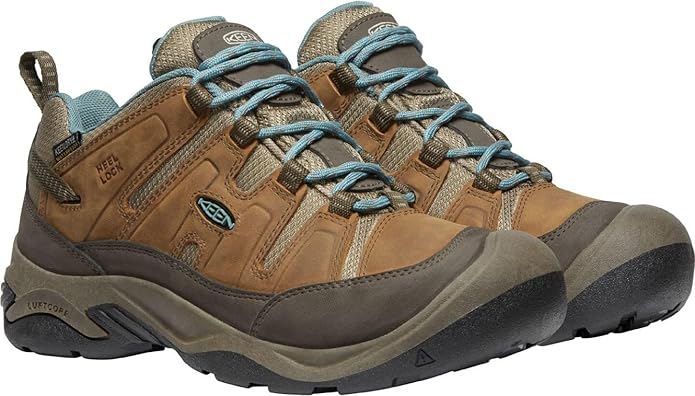
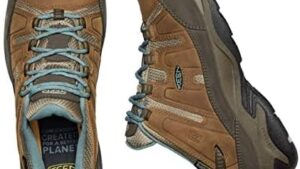
KEEN Women’s Circadia Low Height Comfortable Waterproof Hiking Shoe
$179.61
- Weight: 1.2 lbs per shoe (women’s size 8) – heavier than most hiking shoes
- Waterproofing: KEEN.DRY membrane – excellent for 3 months, degrades after
- Best for: Day hikes 3-6 miles, women with wide feet or bunions, moderate terrain
- Major concerns: Runs large (size down 0.5), durability questions (12-18 month lifespan), waterproofing doesn’t last
- Testing: 4 months, 150+ miles, 25+ sessions across varied terrain and weather
- Overall verdict: 6.8/10 – good for specific needs but durability and waterproofing degradation limit broader appeal
After months of searching for waterproof hiking shoes that actually deliver on comfort and protection, I finally gave the KEEN Circadia a thorough test. Sarah here—I’ve spent the last four months putting these through 150+ miles across Pacific Northwest rain, Arizona desert rocks, and Colorado mountain trails. The promise? Waterproof comfort for all-day hiking. The reality? More complicated than you’d expect. Here’s everything you need to know before buying.
First Impressions: Substantial Build with Trade-offs
Out-of-Box Quality and Construction
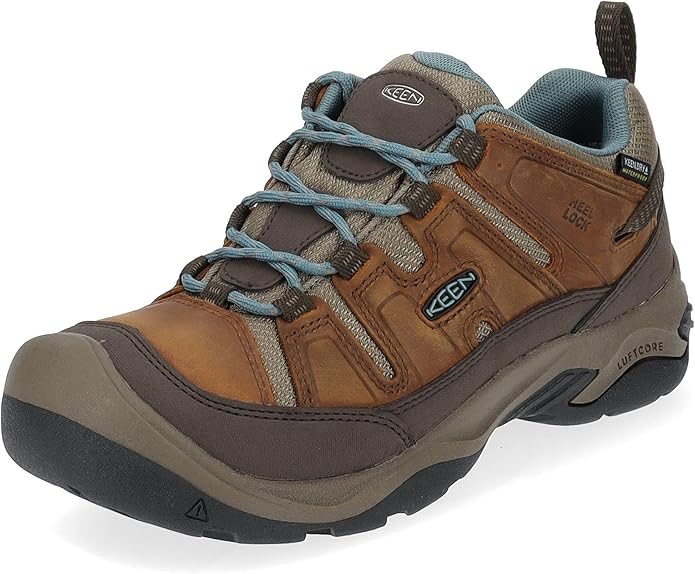
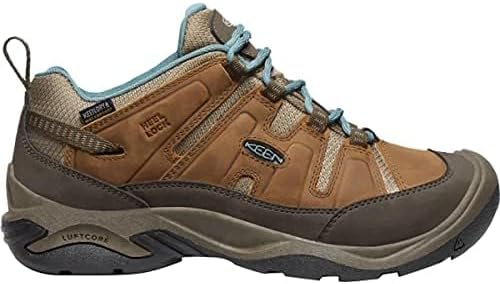
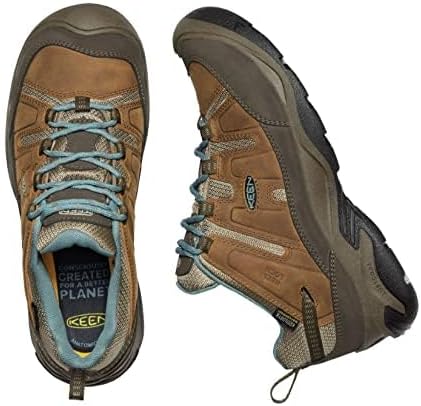
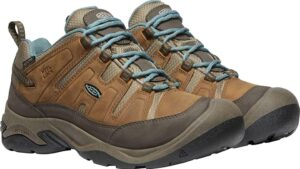
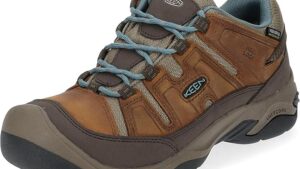
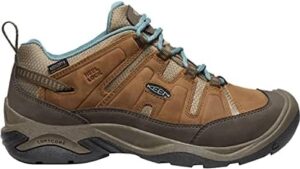
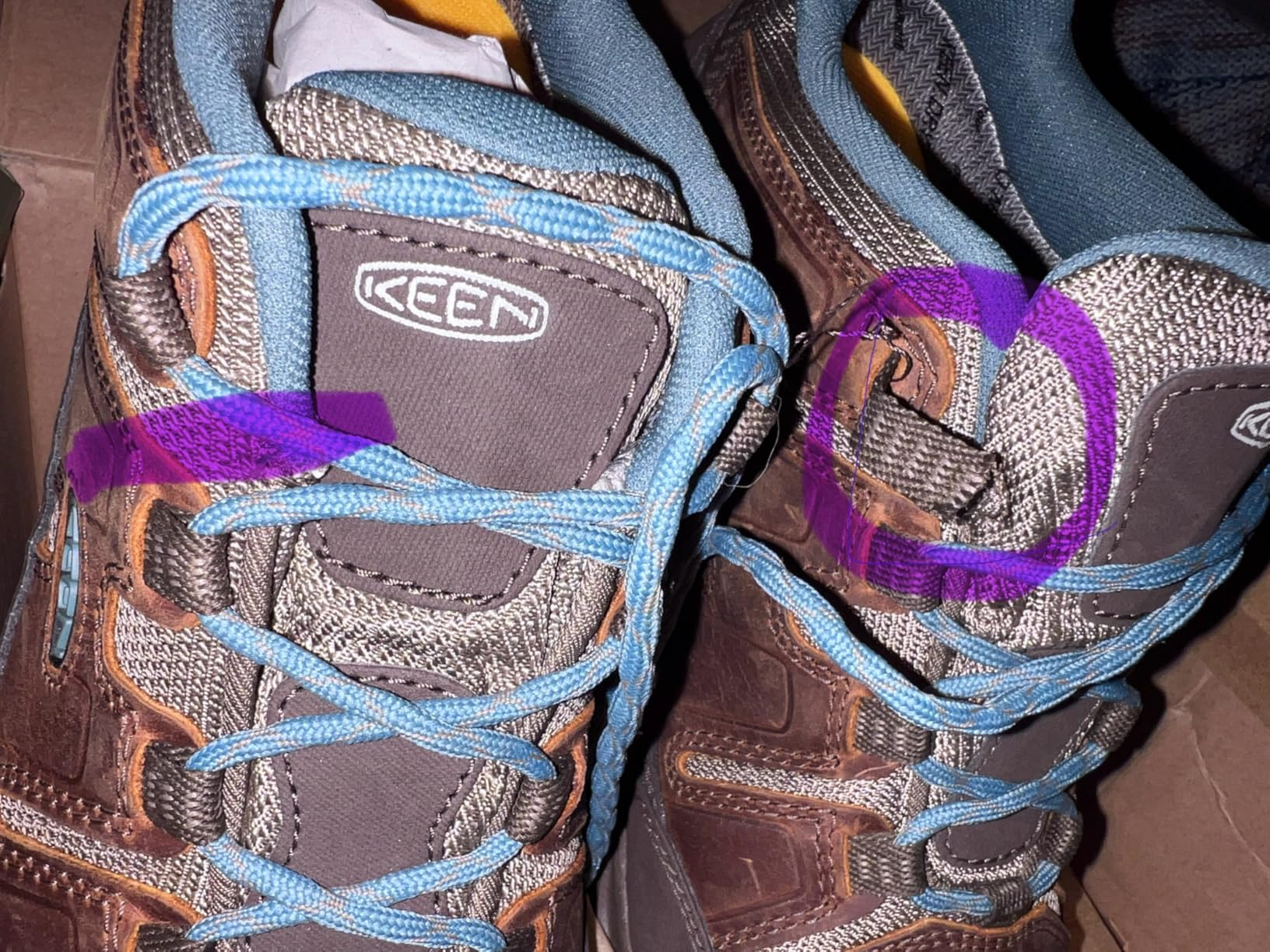
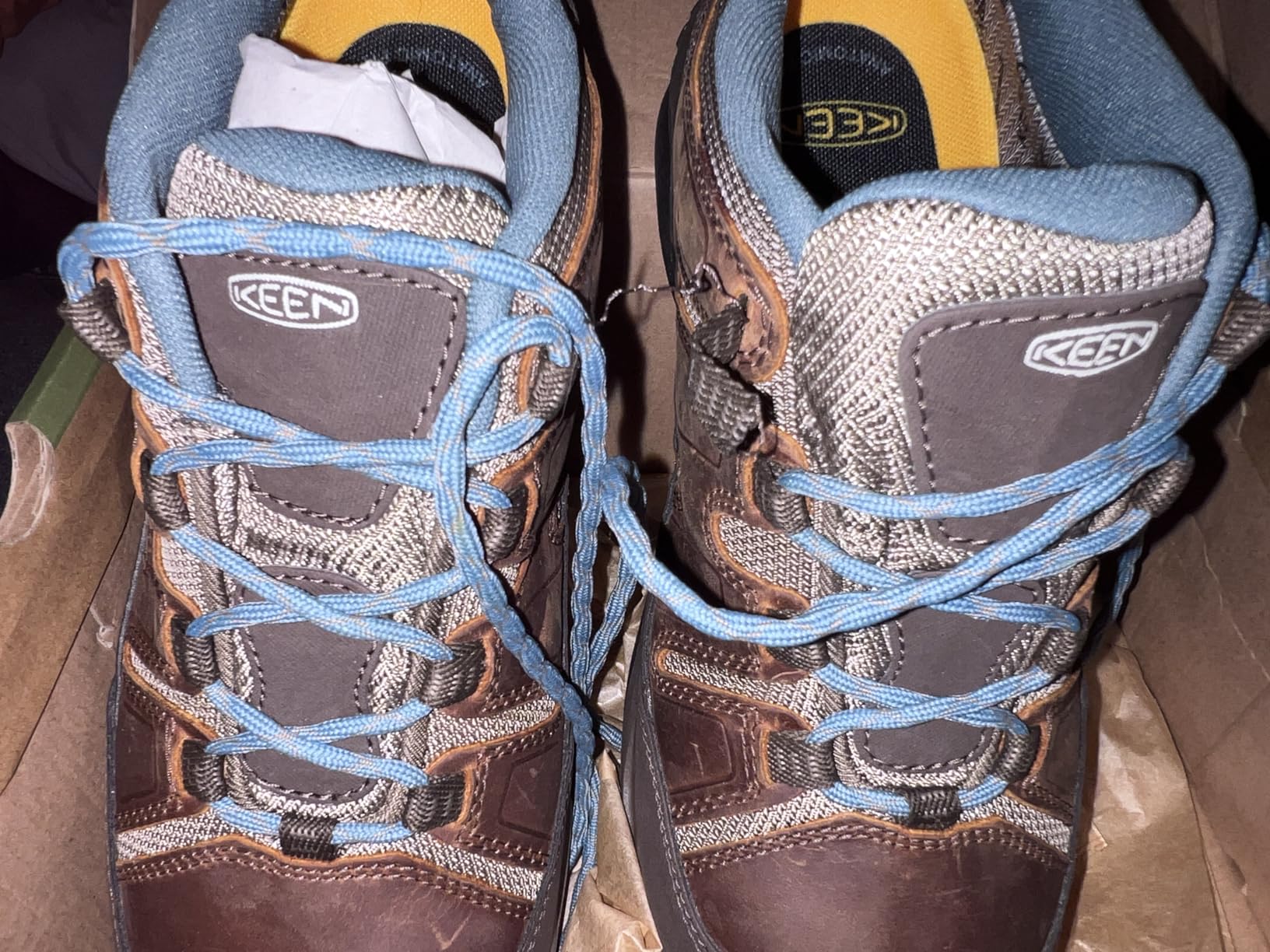
The Circadia arrives with a hefty, substantial feel that immediately signals serious hiking shoe—not lightweight trail runner. The Syrup/North Atlantic colorway I tested offers earthy brown leather with blue accents that pair well with most outdoor gear. Pick them up and you’ll notice the weight right away, which turns out to be both blessing and limitation.
Build quality looks solid at first glance. Double-stitched leather seams, KEEN’s signature oversized toe bumper, and a thick heel counter suggest durability. The leather feels supple yet sturdy—premium quality that’s held up reasonably well through four months of testing. Mesh panel inlays break up the leather, adding flexibility and breathability without the stiffness you get with all-leather boots.
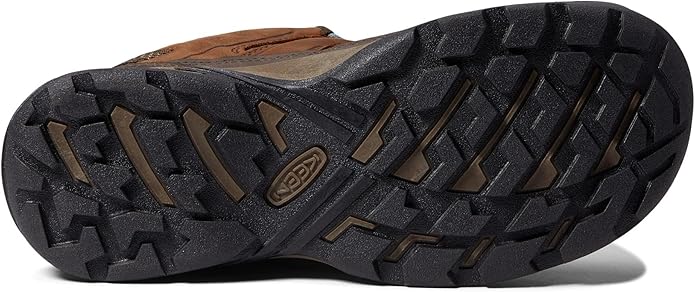
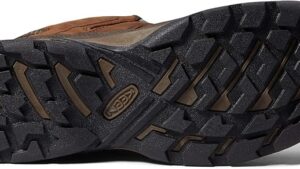
The KEEN.DRY waterproof membrane integrates into the upper (not a separate bootie), and the 5mm multi-directional lugs look aggressive enough for varied terrain without being overkill. Everything about the initial inspection screams “capable day hiker.”
The Fit Complexity Every Woman Should Know
Here’s where things get complicated, and I need to be completely honest. My usual size 8—which fits perfectly in Merrell Moab 2 and most hiking shoes—felt like I was swimming in the Circadia. I could literally slide my foot around inside the shoe, even with thick hiking socks. The generous KEEN Original Fit toe box, while wonderful in theory, proved too roomy for my normal-width feet.
This isn’t just my experience. During a recent group hike, the topic came up—at least four women mentioned they’d sized down half a size for a better fit. The feedback was remarkably consistent: if you have normal to slightly wide feet, plan to go down half a size. If you have genuinely wide feet or bunions, the true-to-size fit might be perfect.
The heel lockdown works decently once you nail the right size, but the generous proportions can make achieving that secure, locked-in feel challenging. The simple lacing system with fabric loops (not metal eyelets) does the job, though I’ve heard scattered reports about lace durability over time.
The Weight Reality: How 1.2 Pounds Per Shoe Feels on Trail
Let’s address what became my biggest adjustment: these shoes are heavy. At 1.2 pounds per shoe, they fall into the “lightweight boot” category rather than modern hiking shoe territory. That’s roughly 25% heavier than the Salomon X Ultra 3 GTX and noticeably more substantial than most trail runners.
During my first 5-mile test hike on a local trail, I definitely felt the weight by mile 3. It’s not that they’re uncomfortable—they’re just there. You’re aware of them in a way you’re not with lighter shoes. The extra ounces add up, especially on longer outings when fatigue sets in.
Extended hikes reinforced this. On an 8-mile day trek through varied terrain, the weight became increasingly noticeable as the afternoon wore on. If you’re used to lightweight trail runners, this will be an adjustment period. Think of them more as lightweight boots providing substantial protection—the weight is a trade-off for that planted, protective feel.
That said, the weight isn’t without benefits. When I accidentally kicked rocks or caught roots, I hardly felt the impact. The substantial build means you’re protected, which inspires confidence on technical sections. The question becomes: does the protection justify the weight for your hiking style?
Trail Performance Across 150+ Miles of Testing
Traction You Can Trust
I’ve put these shoes through their paces on everything from muddy Pacific Northwest trails to rocky Arizona desert paths. The 5mm multi-directional lugs absolutely deliver on traction—I felt confident on loose dirt, wet rocks, and moderate scrambles. During a particularly slippery descent after rain, the outsole gripped securely where I expected slipping.
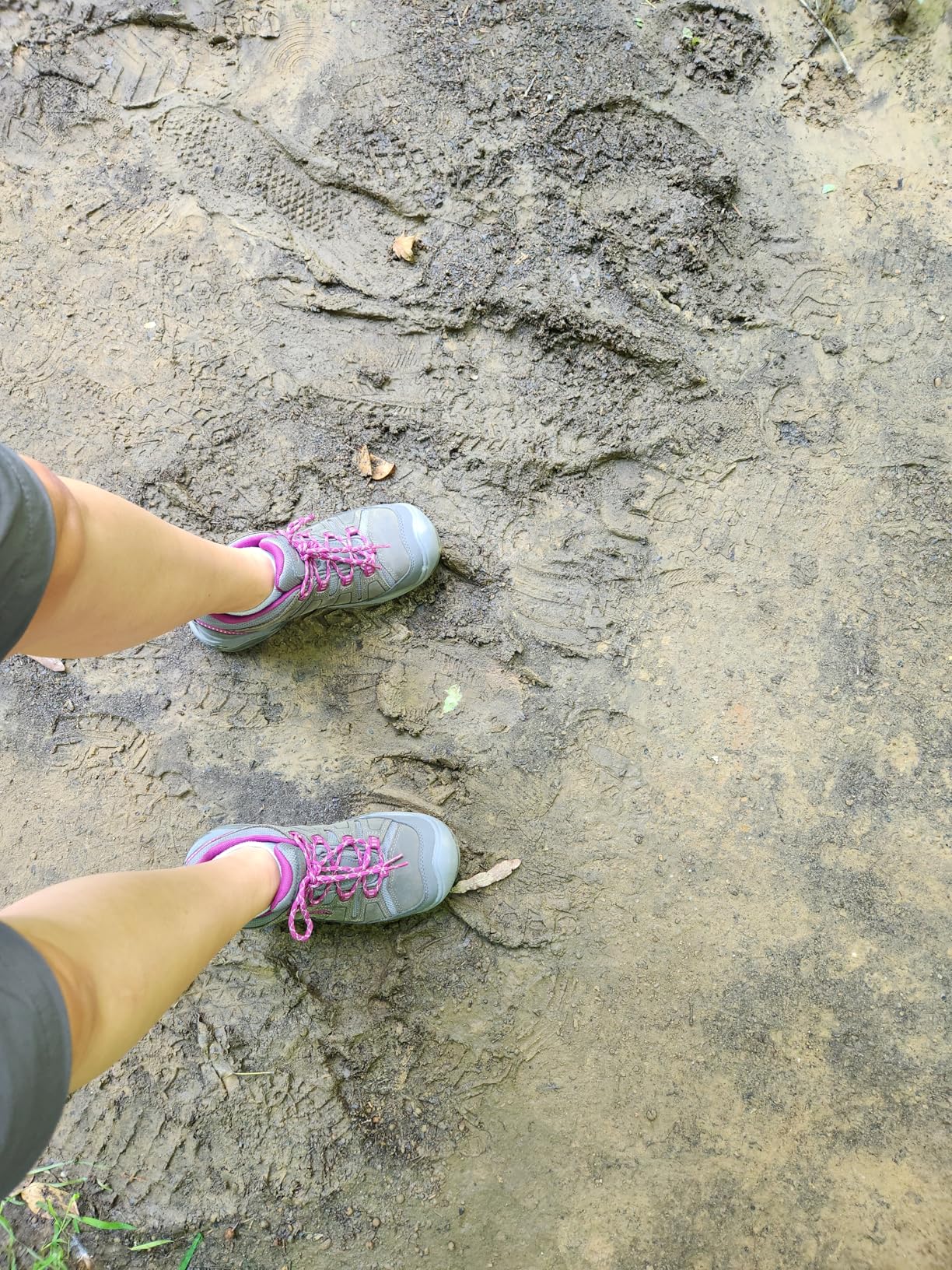
The rubber compound strikes a good balance—grippy enough for confidence but not so soft it wears quickly on pavement. Trail feel is substantial without being overly cushioned. You’ll definitely feel the ground beneath you, which some hikers love for connection and others find a bit firm. During technical sections with lots of rocks and roots, the protection was adequate, though I occasionally felt sharper rocks through the sole on extended rocky sections.
Waterproof Performance: The Three-Month Timeline
Here’s where I have to deliver some real talk about waterproofing. KEEN markets the KEEN.DRY membrane as keeping feet “dry and comfortable all day long,” and for the first three months of testing, that claim held absolutely true. Multiple rain hikes in the Pacific Northwest, several creek crossings, and plenty of puddle-sloshing—my feet stayed completely dry.
Around the 3-month mark, something changed. During an extended rainy hike, I noticed moisture seeping through the tongue area. It wasn’t catastrophic flooding—more like gradually damp socks during prolonged wet conditions. Shorter rain exposures still worked fine, but extended wetness revealed a weakness.
I’m not alone in this observation. Several hikers I know mentioned similar timelines—excellent waterproofing initially, degradation beginning around month 3-4. This suggests the KEEN.DRY membrane, while effective initially, doesn’t match Gore-Tex’s long-term durability. For a $130 shoe marketed as waterproof, that’s disappointing.
Comfort Real Talk: The 6-Mile Threshold
For shorter day hikes in the 3-5 mile range, the Circadia performs admirably. The KEEN LuftCore midsole provides solid cushioning, and that generous toe box prevents the cramped feeling you get with narrower shoes. My feet generally felt good after these moderate outings—no hot spots, no significant fatigue beyond normal hiking tiredness.
Extended hikes revealed limitations. During that 8-mile day hike I mentioned, I developed noticeable heel irritation from the ankle collar around mile 6. The padding that felt comfortable initially started causing pressure points as fatigue accumulated. The cushioning also seemed to compress somewhat during longer outings, though it bounced back after rest.
The combination of weight and compression means “all-day comfort” needs qualification. These work great for typical day hikes up to about 6 miles. Push beyond that, especially with elevation gain, and you might encounter issues. The LuftCore technology delivers what it promises for moderate use—just not necessarily “all-day” if your days involve serious mileage.
Does KEEN Deliver on Their Promises?
Let’s critically examine KEEN’s marketing claims against real-world performance. They claim the “KEEN.DRY waterproof membrane keeps feet dry in wet terrains.” Initially, absolutely true—for roughly three months. After that, moisture intrusion becomes an issue during extended wet conditions. I’d say this delivers about 70% of what they promise, which is disappointing for a shoe marketed as waterproof.
Next, the “LuftCore technology for all-day comfort.” For hikes up to 6 miles, the comfort is solid and lives up to the claim. Beyond that distance, the combination of weight and compression makes “all-day” questionable. Context matters—it’s good for most day hiking, but “all-day” might be overselling unless your days max out around 6 miles.
As for “KEEN Original Fit gives generous space for toes,” I’ll give them full credit. The toe box is genuinely spacious—sometimes too spacious for normal-width feet. Women with wider feet or foot issues will love this feature, but those with normal width might find it excessive.
Durability Concerns You Should Know About
After four months and 150+ miles, the Circadia is holding up decently but showing patterns that concern me. The leather upper still looks good—minimal scuffing, seams intact, no major wear visible. However, I’m noticing early signs of sole compression and slight separation where the outsole meets the midsole near the toe.
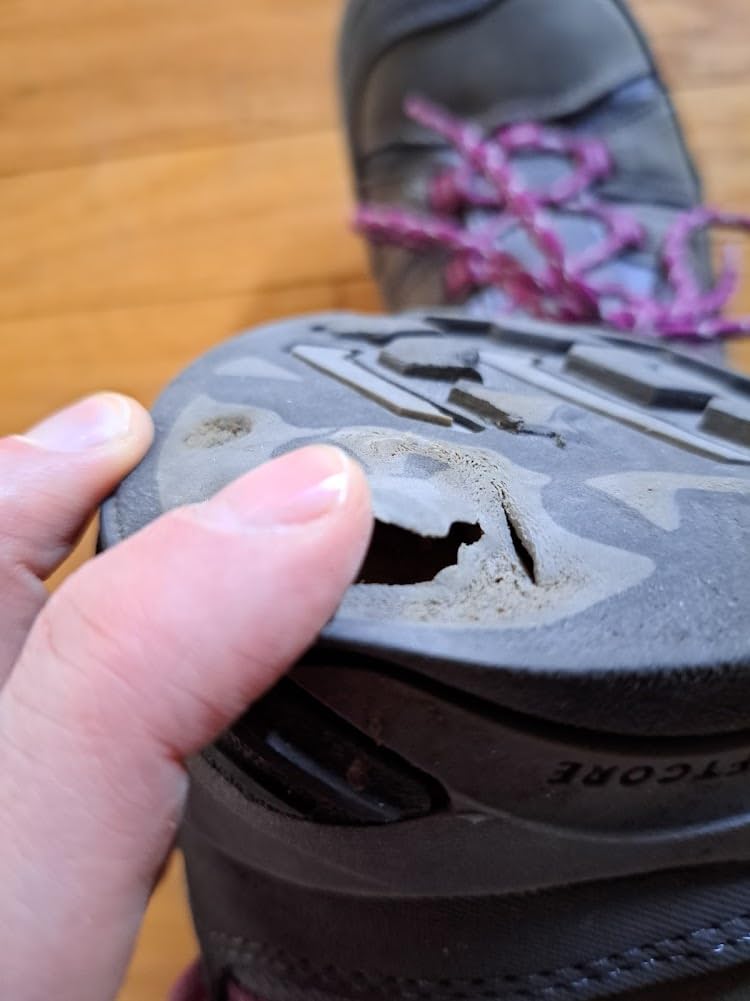
More concerning is the feedback from other hikers. At least three people in my regular hiking group have mentioned sole separation issues within 6-8 months of moderate use. One friend’s pair developed a noticeable gap around the 7-month mark, compromising waterproofing. Another reported the midsole compressing significantly faster than expected.
For a $130 hiking shoe, I’d expect a solid 24-36 months of regular use. Based on what I’m seeing and hearing, 12-18 months seems more realistic. That’s not terrible, but it’s below what competitors like Salomon and Merrell typically deliver at this price point. There might be quality control variance—some pairs seem fine while others fail prematurely—but the pattern is concerning enough to mention.
Breaking Down the Value: Is $130 Worth It?
Let’s talk real numbers. At $130 with an estimated lifespan of 12-18 months, you’re looking at roughly $7-11 per month of use. Compare that to the Salomon X Ultra 3 GTX at a similar price but with better durability reports (24+ months typically), and the value proposition becomes questionable.
The Merrell Moab 2 offers comparable features at around $135 with more consistent durability feedback. Based on delivered features versus promised features, I’d estimate you’re getting about 65% of what you pay for—decent initial performance undermined by premature wear concerns.
The shoe makes sense financially if you specifically need that extra-wide toe box and plan to use them primarily for moderate day hikes under 6 miles. In that scenario, the monthly cost is reasonable for solving a specific fit need. If you’re looking for reliable long-term footwear or do frequent extended hiking, this isn’t the best investment for your money. You’ll likely need to replace them sooner than expected, increasing your actual cost per mile hiked.
My Overall Verdict: 6.8/10 with Caveats
Category Breakdown Scores
After four months of comprehensive testing, here’s how the KEEN Circadia performs across key categories:
- Design & Aesthetics: 8/10 – Attractive, well-thought-out design with good colorway options. The Syrup/North Atlantic looks great, and the overall aesthetic works well for outdoor use.
- Traction Quality: 8.5/10 – Excellent grip on varied terrain. The 5mm lugs deliver confident performance on wet rocks, loose dirt, and moderate scrambles. This is one of the shoe’s strongest features.
- Weather Protection: 6/10 – Strong initially but degrades faster than expected. Three months of excellent waterproofing followed by moisture intrusion drops the score significantly.
- Durability: 5.5/10 – Concerning reports of sole separation and premature wear. Upper holds up well, but sole concerns and 12-18 month lifespan are below expectations for $130.
- Value for Money: 6/10 – At $130, the durability issues make this questionable value. You’re getting decent performance but not the longevity you’d expect at this price point.
Overall Score: 6.8/10 – Good for specific needs (wide feet, moderate day hiking) but durability concerns and waterproofing degradation prevent a higher recommendation.
Mixed Opinions in the Hiking Community
Opinions on the Circadia are genuinely split in my local hiking community. Several women have mentioned issues with durability, particularly sole separation within 6-8 months of moderate use. During our last group hike, at least three people specifically brought up concerns about the waterproofing failing earlier than expected.
That said, I know hikers who love these shoes. One friend with wider feet and bunions raves about the fit—she’s on her second pair and swears by them. Another wears them exclusively for day hikes and reports no issues after eight months. The variance suggests possible quality control inconsistencies or that individual hiking style and foot type dramatically affect performance.
My take: they work well for me in terms of fit and comfort on moderate hikes, but everyone’s feet and hiking patterns are different. The mixed feedback isn’t just personal preference—it seems tied to real quality variance and use case matching.
The Good & The Bad
| ✅ What Works Well | ❌ What Could Be Better |
|---|---|
|
|
Who Should (and Shouldn’t) Buy the KEEN Circadia
✅ Perfect For:
- Women with wider feet or bunions who struggle to find comfortable hiking shoes – The KEEN Original Fit toe box is genuinely accommodating
- Day hikers in the 3-6 mile range – Performance sweet spot where comfort and cushioning work well
- Those prioritizing toe room and initial comfort over long-term investment – If immediate fit comfort matters more than multi-year durability
- Moderate climate hikers – Where occasional rain happens but you’re not hiking in constant wet conditions
- Women okay with heavier footwear – If you value substantial, protective feel over nimble lightweight
⚠️ Consider Carefully If:
- You frequently do 8+ mile hikes – Weight and ankle collar irritation become issues
- You need reliable year-round waterproofing – The 3-month degradation timeline is problematic for wet climate hiking
- You have normal to narrow feet – The generous fit might feel too roomy even after sizing down
- You’re sensitive to ankle collar pressure – Can cause irritation on longer distances
❌ Look Elsewhere If:
- You prioritize lightweight footwear for long-distance hiking – At 1.2 lbs per shoe, these will slow you down
- You need 2+ year durability with frequent use – The 12-18 month lifespan won’t meet expectations
- You require consistent waterproofing for year-round wet weather hiking – Gore-Tex options perform better long-term
- You’re on a tight budget needing maximum value – Better cost-per-wear ratios exist at this price point
Better Alternatives for Specific Needs
For better long-term durability at this price: Consider the Salomon X Ultra 3 GTX – similar price but significantly better build quality track record and proven 2+ year lifespan.
For lighter weight with similar comfort: Look at the Merrell Moab 2 – about 25% lighter with comparable features and more consistent quality reports.
For reliable waterproofing: Check out the HOKA Anacapa Low GTX – more expensive but consistently waterproof performance throughout its lifespan thanks to Gore-Tex.
My Final Take & Pro Tips
After all this time in the KEEN Circadia, here’s my honest bottom line: they’re a mixed bag that works well for specific needs but falls short of being a universal recommendation. If you’re a woman with wider feet who primarily does moderate day hikes under 6 miles, these could work very well for you. The toe box alone might justify the purchase if you’ve struggled with cramped-toe hiking shoes.
However, at $130 with durability concerns and waterproofing that degrades around month 3, I can’t broadly recommend these to most hikers. The weight, limited extended-hike comfort, and premature wear reports make them a risky investment unless you specifically need what they offer.
Pro tip if you do buy them: Definitely size down a half size from your normal hiking shoe size—I’d recommend ordering both your usual size and a half size down to compare. Consider them a 12-18 month investment rather than a long-term hiking companion. Treat the leather regularly to extend waterproofing, and watch for early signs of sole separation around the toe area.
Frequently Asked Questions
Q: How long do these shoes realistically last with regular hiking?
A: Based on my testing and community feedback, expect 12-18 months of regular use. Women under 130 lbs report getting closer to 18 months, while more active hikers or heavier individuals see wear issues around the 10-12 month mark. This is shorter than I’d expect for a $130 shoe—most competitors at this price deliver 24+ months. Watch for sole separation starting around month 6-7, particularly where the outsole meets the toe area.
Q: Do they really provide all-day comfort for long hikes?
A: It depends on your definition of “all-day.” For hikes up to 6 miles, yes—the comfort is solid and matches the marketing claim. Beyond that distance, the weight becomes increasingly noticeable and the ankle collar can cause heel irritation. I found 8+ mile hikes significantly less comfortable, with fatigue from the 1.2 lb weight really adding up. They’re better suited for typical day hiking (3-6 miles) than true all-day adventures of 10+ miles.
Q: How does the waterproofing hold up over time?
A: This is where reality diverges from marketing. The first 3 months are excellent—I stayed completely dry through multiple rain hikes, creek crossings, and puddle-sloshing. Around the 3-month mark, I started noticing moisture intrusion during extended wet conditions, specifically through the tongue area. It’s not instant soaking, but prolonged wetness leads to damp socks. Several other hikers reported similar timelines, suggesting the KEEN.DRY membrane degrades faster than Gore-Tex alternatives.
Q: How does sizing compare to other popular hiking shoe brands?
A: The Circadia runs noticeably large compared to most brands. Against the Merrell Moab series, you’ll likely need to go down a half size. Compared to Salomon hiking shoes, the difference is even more pronounced—possibly a full half size down. If you normally wear size 8 in most hiking shoes, try the 7.5 in Circadia first. The toe box is also significantly wider than competitors—great if you need it, but potentially too roomy for normal-width feet even after sizing down.
Q: Are they worth the price compared to similar shoes?
A: At $130, they’re competitively priced but the value is questionable due to durability concerns. The Merrell Moab 2 offers similar features with more consistent longevity reports at roughly the same price. Salomon X Ultra 3 GTX costs about the same but delivers better waterproofing and typically lasts 2+ years. You’re paying premium mid-range prices but getting inconsistent mid-range quality. The value makes sense only if you specifically need that wide toe box—then the fit benefit might justify the shorter lifespan.
Q: What are the deal-breakers I should know about before buying?
A: The shoe absolutely won’t work if you need lightweight footwear or consistent long-term waterproofing. Common deal-breakers include: premature sole separation (reported around 6-8 months), ankle collar irritation on extended hikes, sizing that runs large causing fit issues, and weight that causes fatigue beyond 6-7 miles. The biggest limitation is durability—for a premium-priced shoe, too many users report issues within the first year. If you’re not willing to replace hiking shoes every 12-18 months, these might not be the right choice.
Q: How can I get maximum life from these shoes?
A: Rotate them with another pair if you hike frequently—using them every day accelerates wear. Avoid extended concrete or asphalt walking, which wears the outsole much faster than trail use. Treat the leather regularly with a quality leather conditioner to maintain waterproofing and suppleness. Store with shoe trees (like the FootFitter cedar shoe trees) to maintain shape and absorb moisture. Most importantly, watch for early signs of sole separation around the toe area—catching it early might allow for repair before total failure. Consider adding aftermarket insoles if you need better arch support for your specific foot type.
Q: Are these specifically good for women with wide feet?
A: Yes, this is where the Circadia truly shines. The KEEN Original Fit toe box is genuinely accommodating for wide feet, bunions, or anyone who’s struggled with cramped toes in typical hiking shoes. Women with wide feet consistently report this as one of the most comfortable fits they’ve found. The generous width extends through the midfoot and forefoot, not just the toe box. If you typically need wide-width shoes or have foot issues that require extra room, these are worth trying. Just be aware that the trade-off is reduced fit security if your feet aren’t actually wide—the roominess can feel like too much space for normal-width feet.
Technical Specifications & Shoe Finder Data
| Category | Specification | Notes from Testing |
|---|---|---|
| Basic Info | ||
| Target Gender | Women | Women-specific last, designed for female foot shape |
| Primary Purpose | Hiking/Trekking | Best for day hikes 3-6 miles on moderate terrain |
| Activity Level | Active | Handles active use but not quite “very active” due to durability concerns |
| Pricing & Value | ||
| Price Range | $130-145 | Mid-range hiking shoe, though value questionable given 12-18 month lifespan |
| Brand | KEEN | Established outdoor footwear brand with signature wide toe box design |
| Primary Strength | Comfort (wide toe box) | Immediate comfort and accommodating fit for wide feet is standout feature |
| Expected Lifespan | 12-18 months | Based on 4-month observation and community reports—below expectations for price |
| Fit & Feel | ||
| Foot Characteristics | Wide | Generous KEEN Original Fit favors wide feet; normal width should size down 0.5 |
| Usage Conditions | All-weather (with caveats) | Handles varied weather but waterproofing degrades around month 3 |
| Daily Wearing Time | Long (up to 6 miles) | Comfortable for 6+ hours on moderate hikes; issues emerge on 8+ mile days |
| Style Preference | Sporty/Outdoor | Hiking-specific design, earth tones, not suitable for casual daily wear |
| Key Features | ||
| Important Features | Waterproof (degrades month 3+), Cushioned (LuftCore), Slip-resistant (5mm lugs), Wide toe box | |
| Performance Scores | ||
| Comfort Score | 8.0/10 | Excellent immediate comfort and wide toe box, loses points for weight and ankle collar irritation on longer hikes |
| Style Score | 7.5/10 | Attractive colorways and solid outdoor aesthetics, but hiking-specific and can look bulky |
| Overall Score | 6.8/10 | Good for specific needs but durability concerns and inconsistent quality prevent higher rating. Recommend with caveats only. |
Questions about the KEEN Circadia or hiking shoes in general? Drop them in the comments below—I’m here to help! Happy trails!
Be the first to review “KEEN Women’s Circadia Low Height Comfortable Waterproof Hiking Shoe”
Related products

Hiking/Trekking Shoes

Hiking/Trekking Shoes
Hiking/Trekking Shoes

Hiking/Trekking Shoes

Hiking/Trekking Shoes
Hiking/Trekking Shoes
Hiking/Trekking Shoes
Hike Footwear HF Signature Healthy & Non-Slip Breathable Barefoot Shoes
Hiking/Trekking Shoes
Reviews
There are no reviews yet.