
Unboxing and First Reactions
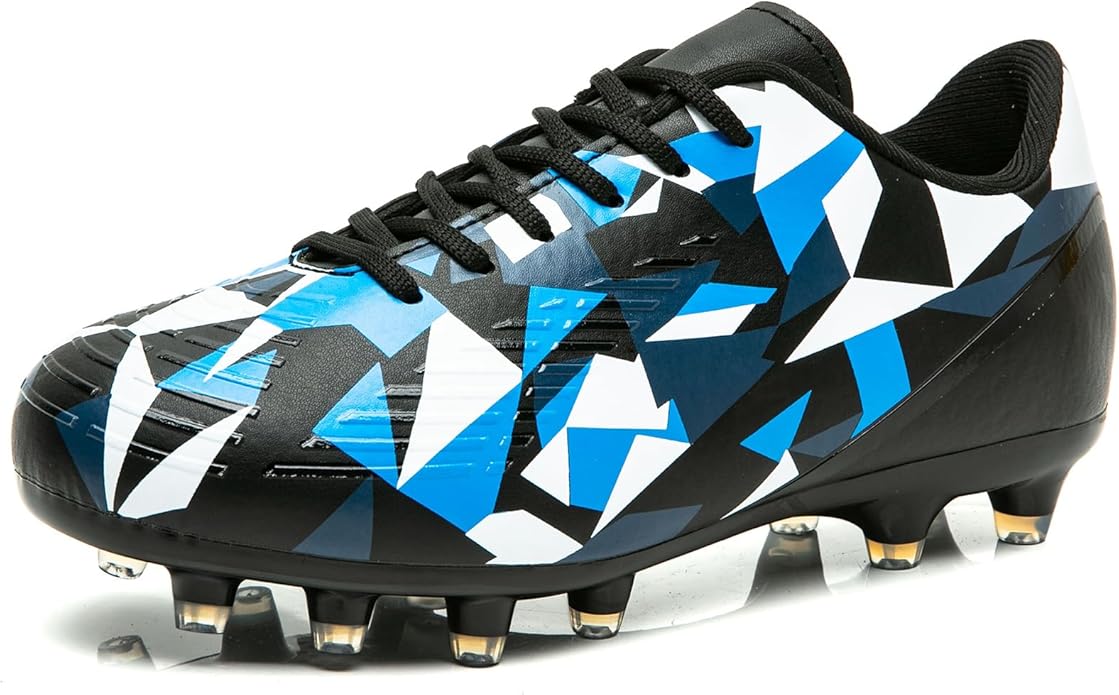
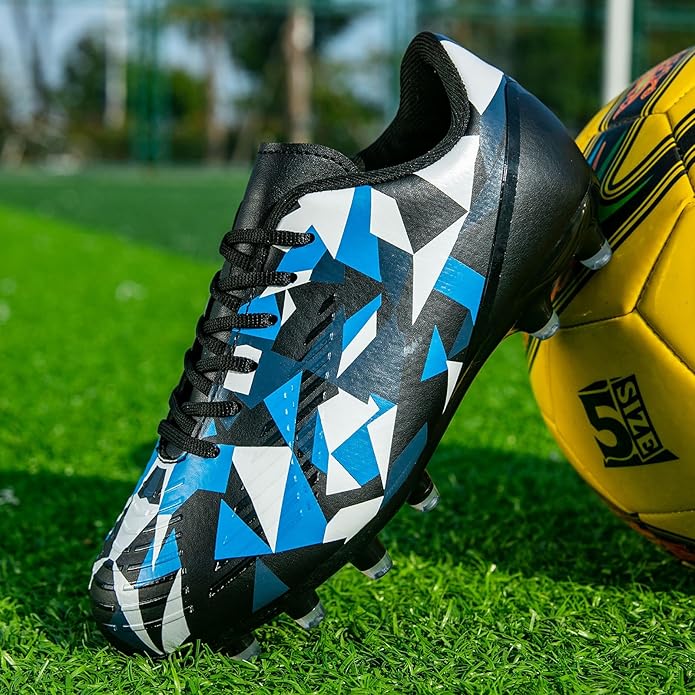
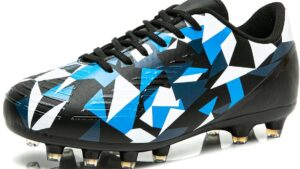
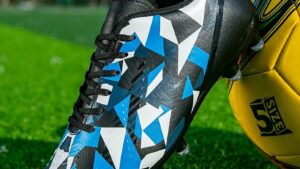
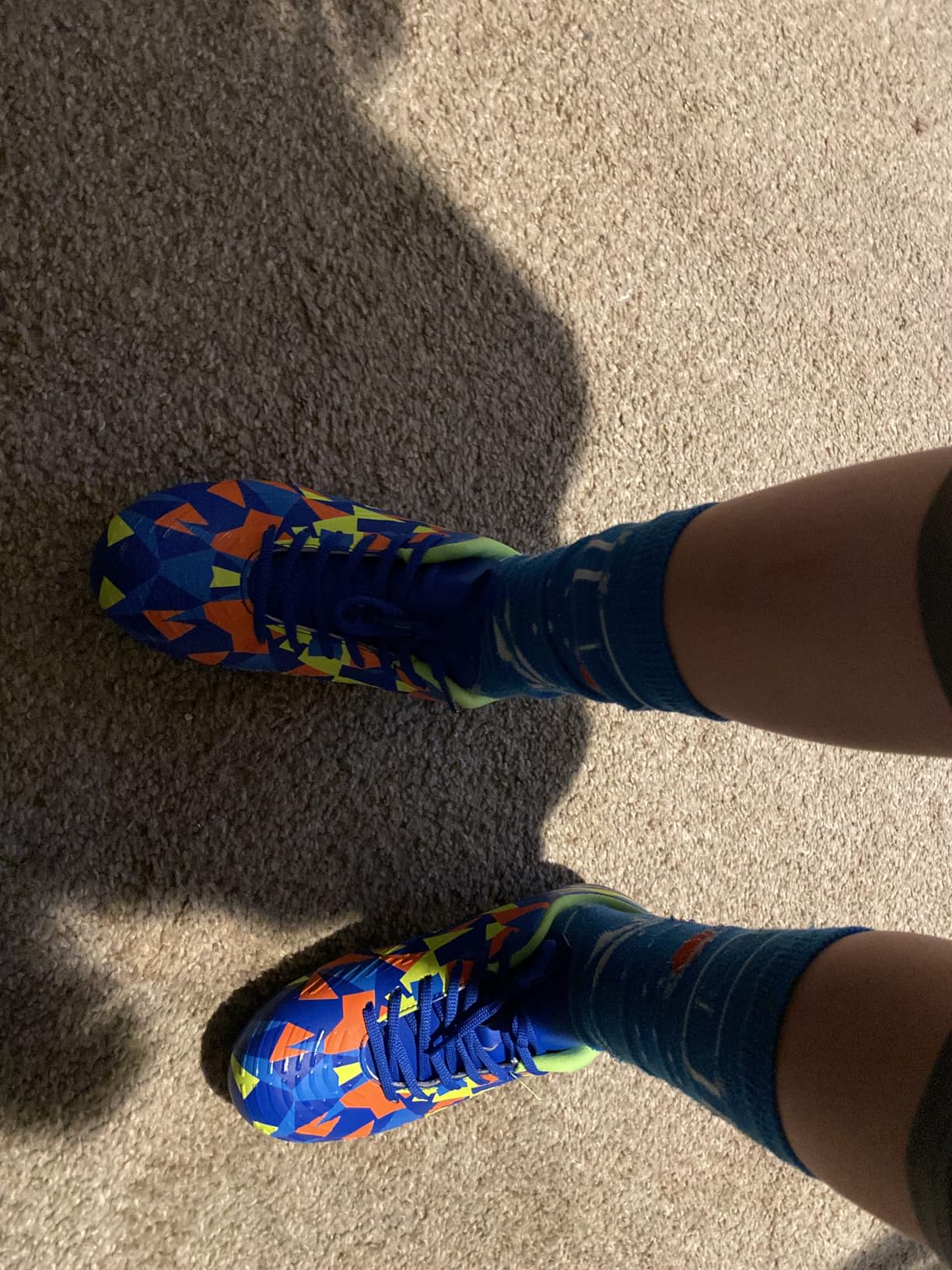
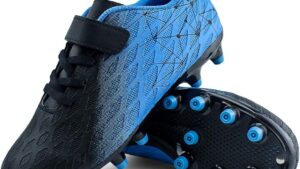
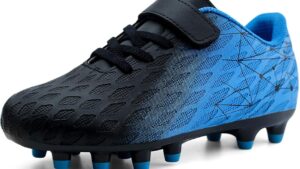
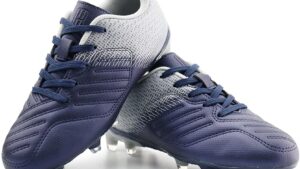
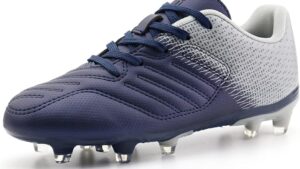
My son chose the blue-and-black colorway himself, and the second he pulled them out of the box, he was sold. “These look like pro cleats!” — his words, not mine. And honestly? They do look sharp. The colors are bold and saturated, and for a kid who wants to feel like the coolest player on a crowded Saturday morning field, that matters more than any spec sheet.
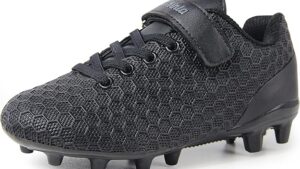
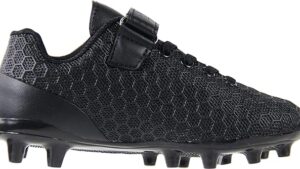
The synthetic upper has a smooth, almost plastic-like texture. Picking them up, I noticed how featherlight they felt — noticeably less hefty than the Brooman Kids Soccer Cleats my friend’s son had been wearing. But that lightweight feel came with a trade-off I spotted immediately: the material was stiff. Not alarmingly so, but enough that I could tell these wouldn’t be a walk-out-of-the-box-and-play kind of shoe. My daughter squeezed the toe box and raised an eyebrow. “It’s like bending a folder,” she said — and that pretty much captured the initial feel.
The lacing system is standard fare. Nothing fancy, nothing terrible. What I did notice, and what became a recurring annoyance, was that the laces felt short and slippery. Within the first practice, both kids’ laces had come undone multiple times. We switched to double-knotting and never looked back, but if you’re buying these for a younger child who’s still learning to tie shoes, keep some longer replacement laces on hand.
Getting the Right Fit — Read This Before Ordering
This is the section I wish someone had written for me before I ordered. MIFAWA themselves acknowledge on their Amazon listing that 15% of customers report the sizing runs small, and they recommend ordering one size up. Based on my experience and talking to a handful of other soccer parents, I’d call that advice essential, not optional.
My son normally wears a size 2 in sneakers. We ordered a 2 in the MIFAWA cleats, and they were snug — tight enough with soccer socks that he complained during the first practice. We exchanged for a size 3 and that was the sweet spot: room for thick socks, a little growth space, and no sliding around inside.
My daughter, who has slightly narrower feet, fit more comfortably in her regular size, but even she said they felt “tight across the top” for the first couple of wears. If your child has wide feet, these probably aren’t the right pick — multiple parents I spoke with described the fit as narrow. For average to slim feet, sizing up one full size seems to be the move.
A practical tip: measure your child’s foot in centimeters and compare it to the insole length chart on the Amazon listing. The size 3 Big Kid, for example, corresponds to a 9.0-inch (22.9 cm) insole. Don’t trust the US size number alone — the measurements are more reliable.
The break-in period is real but short. After about three practices, the synthetic softened up enough that neither kid complained about stiffness anymore. If you want to speed things up, have them wear the cleats around the house for a couple of afternoons before hitting the field.
How They Performed on the Field
Grip That Earned Trust
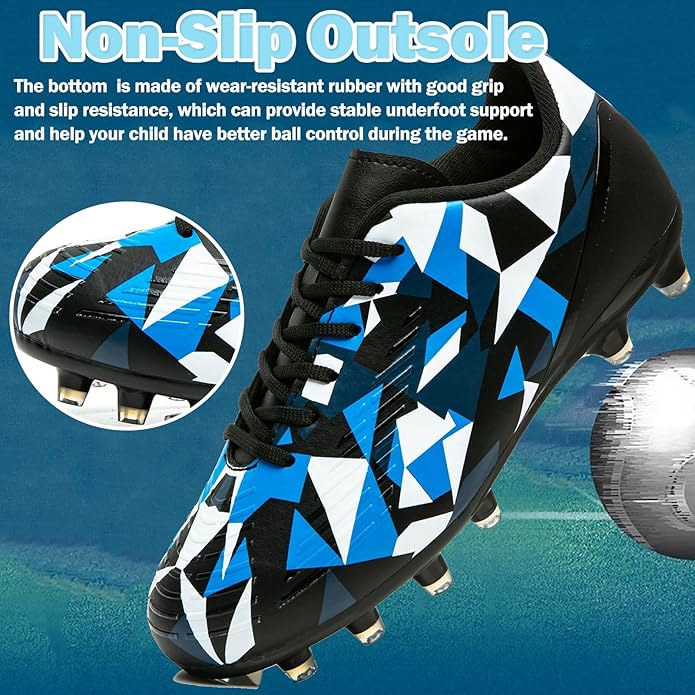
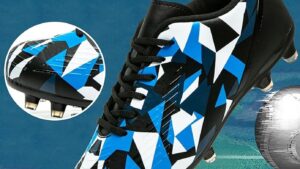
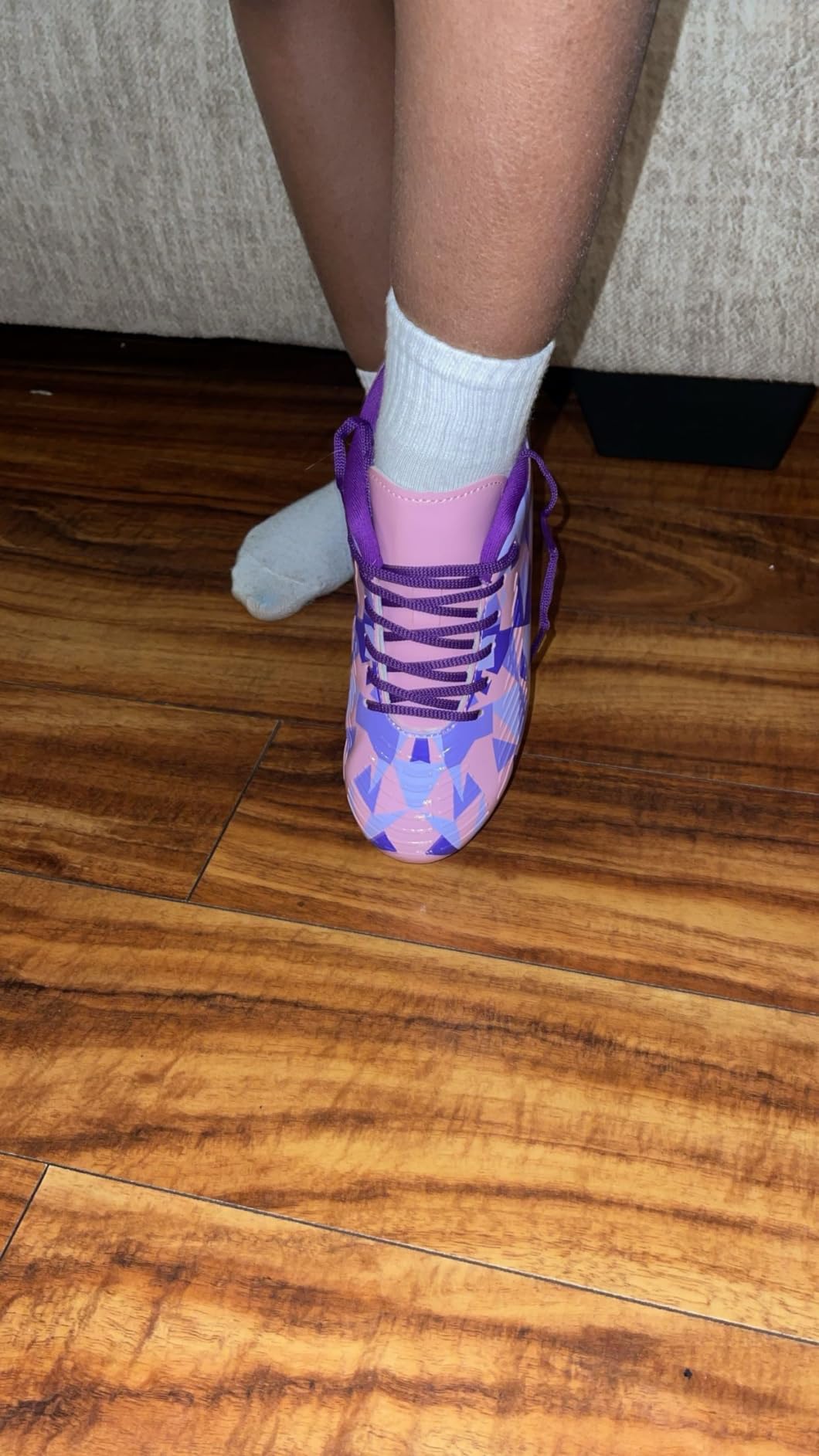
This is where the MIFAWA cleats genuinely surprised me. The TPR cleat pattern on the rubber outsole delivered consistent, reliable traction across every surface we encountered during the season. Early-morning games on dew-slicked grass? My son planted and cut without hesitation. Late-season practices on dried-out, hard-packed dirt? Still solid. Even during two rainy practices — the kind where some kids were slipping in their worn-out sneakers — both of mine stayed upright and confident.
For parents wondering how these compare to something like the DREAM PAIRS Soccer Cleats or budget Adidas alternatives: the grip felt on par with anything in the $30-$45 range. The TPR studs aren’t as aggressive as what you’d see on competitive-level cleats, and that’s actually a feature for younger players — less stress on developing ankles and knees during those chaotic scrambles for the ball.
Ball Feel for Young Learners
The smooth synthetic upper isn’t going to give your kid the textured ball grip you’d find on a $100+ pair of Adidas Predators, but for the level of play at a typical rec league, it works. My daughter, who was focused on improving her passing this season, said the ball felt “okay” coming off her foot — not amazing, not slippery. For kids still learning touch and control, the surface is predictable and consistent, which is arguably more useful than a specialized texture they can’t fully utilize yet.
Where it fell a little flat: when the ball was wet. That smooth synthetic got slick in the rain, and both kids mentioned the ball felt harder to control during our rainy practices. Not a dealbreaker for the occasional shower, but worth noting if your local league plays through heavier weather.
Comfort Over a Full Season
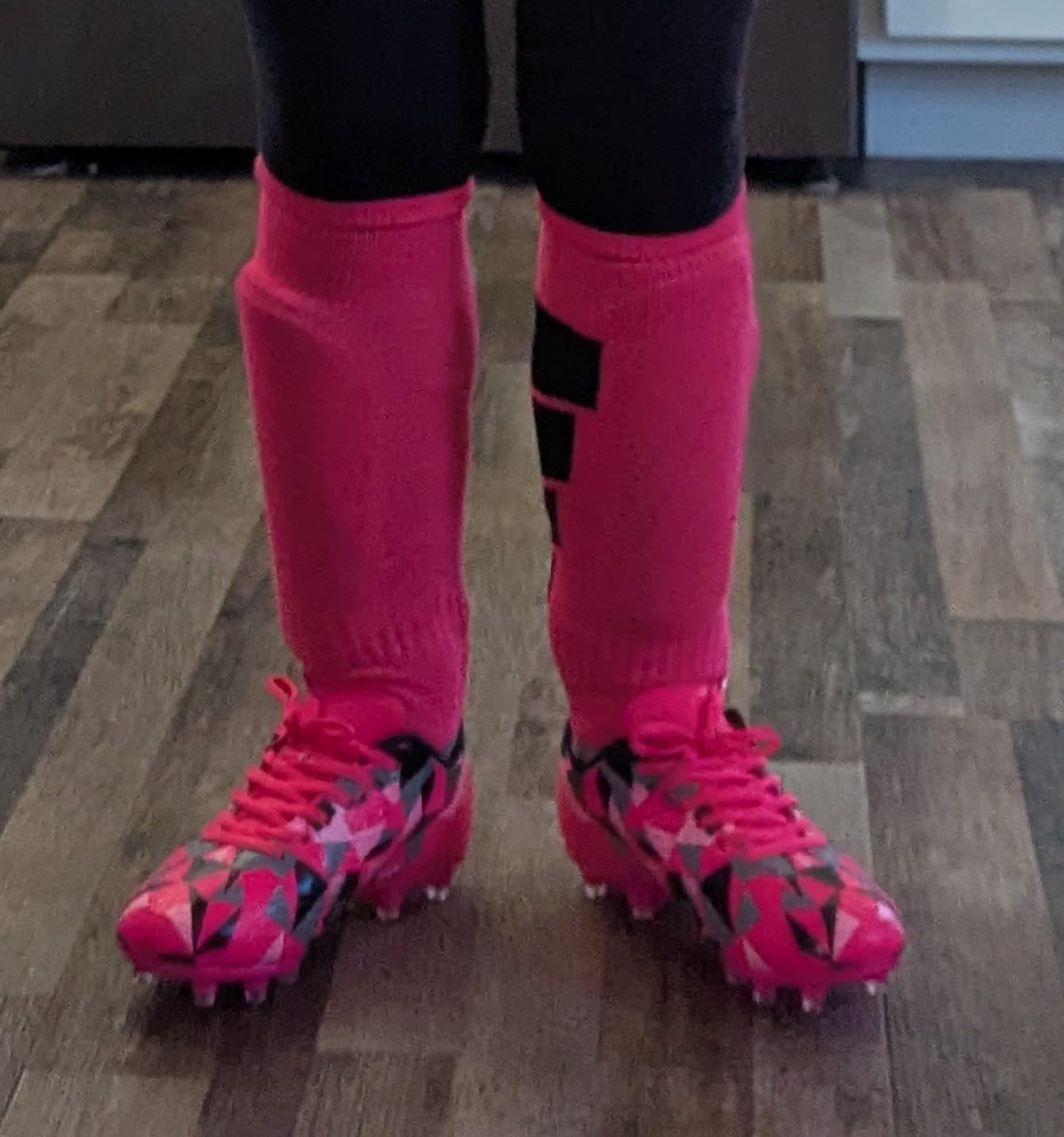
Comfort is where age made the biggest difference in my testing. My 8-year-old, who was newer to structured cleats (he’d been playing in regular sneakers the previous season), found the MIFAWA cleats “harder” than his everyday shoes for the first two weeks. He never got blisters, but he’d occasionally mention his feet felt “stiff” after a game. By week three, those complaints disappeared entirely.
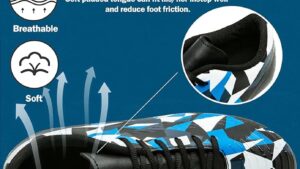
My 11-year-old, who’s been wearing cleats for three seasons now, never complained once. She actually mentioned the ankle padding felt “nice” — not bulky, but noticeable enough to feel secure during quick lateral movements. The soft insole added a layer of cushioning that I genuinely wasn’t expecting from a $30 cleat.
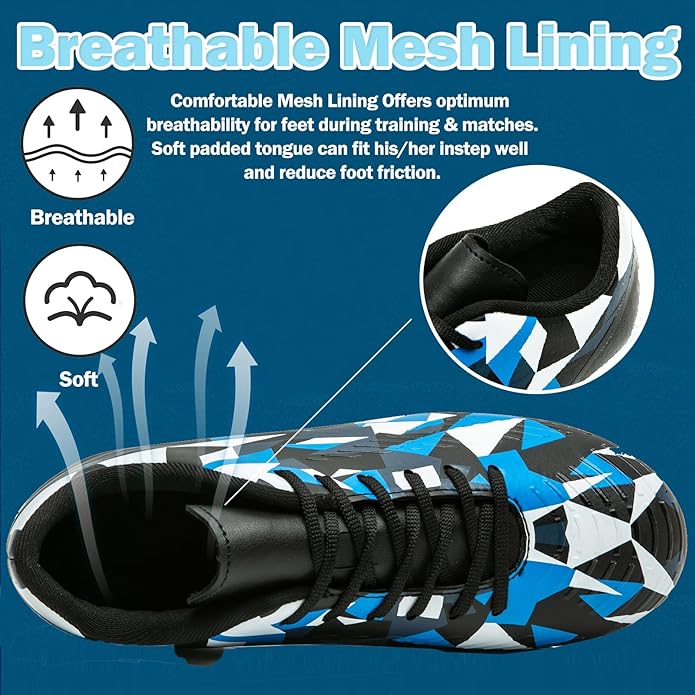
Breathability is fine, not great. Neither kid complained about hot feet during 50-minute games, but these aren’t ventilated the way a mesh-paneled running shoe would be. For the short bursts of wear they’re designed for — an hour-long practice, a Saturday morning game — it’s a non-issue. I wouldn’t want them for all-day wear, but that’s not what they’re built for.
One parent at our games mentioned her daughter’s feet got sweaty during a hot early-September practice, so if your child tends to overheat, keep that in mind. For most kids playing through a typical fall season? Perfectly adequate.
Durability Report — End of Season
This is the test that matters most for budget cleats: did they survive the season? The answer is yes, with caveats.
After roughly 20 events — a mix of hour-long practices and game days — both pairs showed cosmetic wear (scuffs, some dirt permanently embedded in the texture) but zero structural failures. The seams held. The sole stayed firmly attached. The TPR cleats showed expected wear patterns but weren’t ground down. For $30, making it through a full recreational season without falling apart is a genuine win.
The easy-clean factor deserves a shout-out here because it became my favorite feature as a parent. That smooth synthetic material that felt “plasticky” at first? It sheds mud like nothing. A damp cloth or baby wipe after games had them looking presentable in under a minute. After dealing with mesh cleats that trapped dirt and took forever to dry, this was a revelation.
Would they survive a second season? Possibly, depending on how much your child has grown. The materials seem to have enough life left, but realistically, most kids’ feet will outgrow them before the cleats give out — which is kind of the point of buying budget.
How MIFAWA Compares to Other Budget Cleats
I spent time researching and talking to other parents about the alternatives. Here’s how the MIFAWA cleats stack up against the most popular budget options:
| Feature | MIFAWA | brooman FG | DREAM PAIRS | Adidas Goletto VIII |
|---|---|---|---|---|
| Price Range | $26-$36 | $25-$40 | $20-$29 | $30-$45 |
| Upper | Smooth synthetic | Textured synthetic | Synthetic PU | Synthetic + stitching |
| Outsole | Rubber + TPR | Rotational molded | TPU conical studs | FG outsole |
| Amazon Rating | 4.6/5 | 4.7/5 | 4.5-4.7/5 | 4.7/5 |
| Sizing | Runs small | Generally TTS | Generally TTS | TTS |
| Width | Normal-narrow | Wider fit | Standard | Standard |
| Style Factor | Bold, flashy colors | More conservative | Variety available | Classic Adidas look |
| Break-In | 2-3 sessions | Stiff initially | Flexible out of box | Minimal |
| Best For | Style-focused kids | Wide feet + bundles | Tightest budget | Brand trust |
The quick takeaway: MIFAWA wins on style and easy maintenance. brooman is the better bet if your kid has wider feet or you want the bundle value (some kits include socks and shin guards). DREAM PAIRS is the cheapest entry point and flexes right out of the box. Adidas Goletto gives you brand-name consistency at a slightly higher price. None of these are bad choices for rec league — it really comes down to your kid’s feet and your priorities.
The Real Value Calculation
Let me do the math that convinced me these were worth it.
Our fall season ran about 10 weeks: two practices per week plus Saturday games. That’s roughly 20 wears per kid. At $33 per pair (what I paid), that’s $1.65 per use. Compare that to the $65 Adidas cleats another parent bought — same season, same number of wears — and you’re looking at $3.25 per use for a shoe that won’t fit next spring either.
The growing feet factor is the elephant in the room with all kids’ cleats. My son went up nearly a full shoe size during the season. Those $33 cleats? They served their purpose and they’ll get handed down to a younger cousin. The $65 pair? Same fate, twice the cost.
Where budget cleats stop making sense: if your child is on a competitive travel team playing year-round, the extra investment in a premium cleat with better breathability, more precise fit, and enhanced ball feel starts to justify itself. But for the vast majority of kids in rec leagues and community programs, spending $30-$35 on cleats they’ll outgrow in six months is the pragmatic call.
Who These Are For (and Who Should Keep Looking)
These Are a Smart Buy If:
- Your child is playing in a recreational, intramural, or community soccer league
- You’re outfitting a kid between ages 5 and 14 who’s still growing rapidly
- Budget matters — you want solid performance without the name-brand premium
- Your kid cares about having cool-looking cleats (and most of them do)
- You need soccer cleats that can pull double duty for flag football or casual outdoor sports
Think Twice If:
- Your child has wide feet — the fit runs narrow, and sizing up may not fully solve the width issue
- Your kid is sensitive to shoe stiffness and won’t tolerate a break-in period
- You need cleats that fit perfectly on the first try — the sizing inconsistency means you might need to exchange
Look Elsewhere If:
- Your child plays competitive or travel soccer and needs performance-level cleats for year-round use
- You have zero tolerance for quality control lottery — occasional reports of broken laces or mismatched sizes on delivery
- Breathability is a top priority for your child
Final Verdict: 7.8 out of 10
| Category | Score | Notes |
|---|---|---|
| Design & Style | 9.5/10 | Bold colors, kids genuinely excited. Biggest hit of any feature. |
| On-Field Performance | 8.5/10 | Traction was reliable across conditions. Ball feel is basic but functional. |
| Durability | 8.0/10 | Survived the full season structurally. Easy cleaning extends the lifespan. |
| Comfort & Fit | 7.0/10 | Sizing issues and initial stiffness dock points. Good after break-in. |
| Value for Money | 9.0/10 | At $1.65 per wear, hard to argue with the economics. |
| Overall | 7.8/10 | A budget cleat that delivers where it counts for recreational youth soccer. |
The MIFAWA Kids Soccer Cleats do exactly what a $30 youth cleat should: they look great, grip the field, survive the season, and don’t drain your wallet. The sizing gamble and initial stiffness are real drawbacks, but they’re manageable ones. For parents outfitting rec league players with feet that won’t stop growing, this is one of the smarter buys in the budget cleat category.
Pro tip: Order one full size up from your child’s regular shoe size. Keep replacement laces handy. Have your kid break them in around the house for a day or two before the first practice. Do those three things and you’ll likely avoid the only real frustrations with this shoe.
Frequently Asked Questions
How do MIFAWA cleats fit? Should I size up?
Yes — sizing up is strongly recommended. MIFAWA’s own Amazon listing notes that 15% of customers report the shoe running small, and from my experience, that number feels conservative. I’d suggest ordering one full size up from your child’s regular shoe size, especially if they’ll be wearing thick soccer socks. Measure the foot in centimeters and compare it to the insole length chart on the listing for the most accurate fit.
Will these last through a full soccer season?
For recreational play, yes. Both pairs I tested survived a full fall season of 2-3 wears per week with no structural failures — seams held, soles stayed attached, cleats showed normal wear. If your child is in a casual rec league, these are built to last the season. For year-round competitive play, you’d want something more robust.
What’s the break-in period like?
Expect about two to three practices before the synthetic upper softens enough to feel comfortable. The material starts out noticeably stiff — my 8-year-old compared them unfavorably to his regular sneakers for the first couple of weeks. The quickest way to speed this up is to have your child wear them around the house for a few afternoons before their first game.
Can kids use these for flag football, baseball, or other sports?
They work well for any outdoor field sport at a casual level. The cleat pattern provides good traction on grass for flag football, and several parents in our league used them for T-ball and coach-pitch softball too. Keep in mind they’re designed as soccer cleats, so they won’t have the toe cleat of a baseball shoe or the ankle height of a dedicated football cleat.
What are the most common problems parents report?
Three issues come up repeatedly: (1) Sizing — they tend to run small, so ordering up is essential. (2) Quality control — a small number of buyers report receiving shoes with broken laces, mismatched sizes, or items that appeared used. These seem to be outliers, but they’re worth knowing about. (3) Initial stiffness — the synthetic material needs a break-in period that some kids find frustrating.
How do they compare to Adidas or Nike kids’ cleats?
At roughly half the price of entry-level Adidas or Nike youth cleats, the MIFAWA cleats hold their own on traction and season-long durability. Where name brands pull ahead: more consistent sizing, better breathability, and superior ball-feel textures. The question is whether those advantages are worth double the price for a shoe your child will outgrow in six months. For most rec league families, the answer is no.
Are these good for kids with wide feet?
Not ideal. The fit runs normal to narrow, and multiple parents have described them as snug across the midfoot. If your child has genuinely wide feet, I’d recommend looking at the brooman Kids Soccer Cleats, which are generally reported to offer a wider fit. Sizing up in the MIFAWA helps with length but won’t fully address a width issue.
How do I clean them after muddy games?
This is one of the best things about these cleats. The smooth synthetic upper doesn’t trap dirt the way mesh or textured materials do. A damp cloth or baby wipe is all you need — a quick wipe-down right after the game and they look close to new. For stubborn mud in the cleat studs, an old toothbrush works well. No special cleaning products necessary.
Be the first to review “MIFAWA Kids Soccer Cleats Shoes”
Related products
Football Shoes
Football Shoes
Football Shoes
Football Shoes
Football Shoes
Football Shoes
Football Shoes
Reviews
There are no reviews yet.