
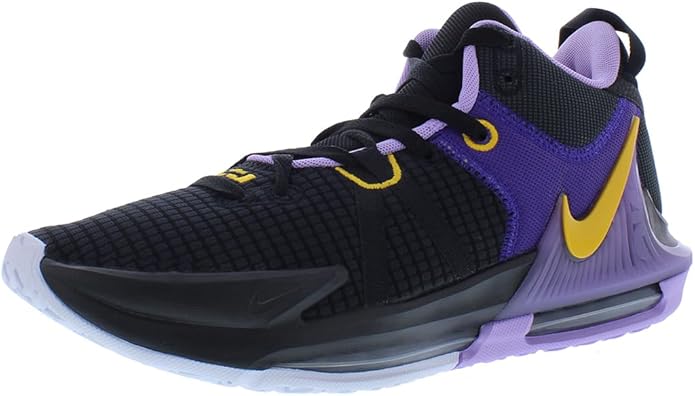
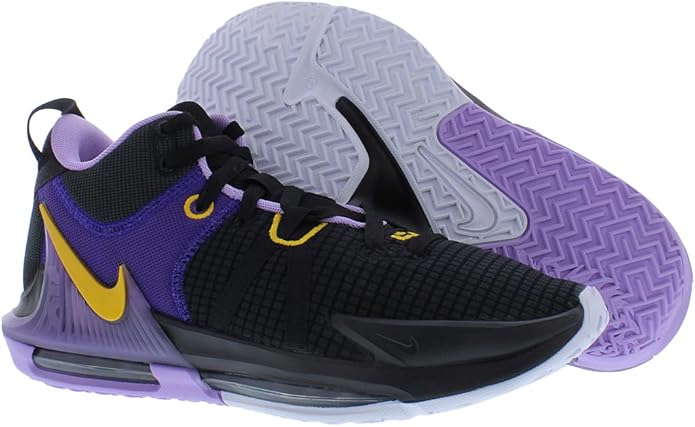
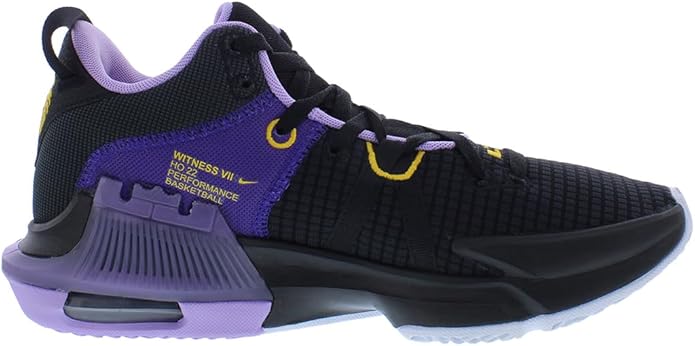
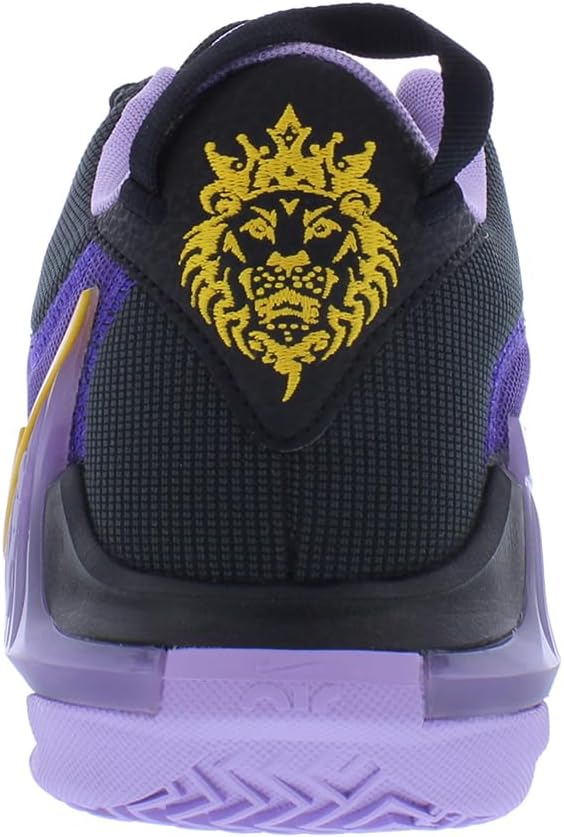
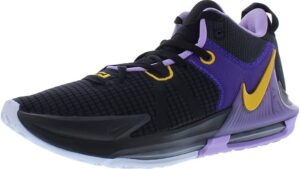
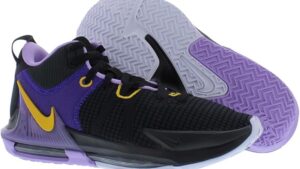
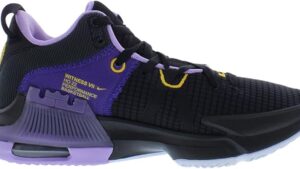
The verdict: Buy these if you prioritize impact protection and outdoor durability on a budget, have patience for 10-15 games of adaptation, and play a power game that benefits from serious cushioning. Skip them if you need instant responsiveness, premium materials, or that locked-in race-car fit guards prefer. At $70, I’d buy them again for outdoor hooping. At $115 retail? Not a chance.
First Impressions and The Wobbling Nobody Explains
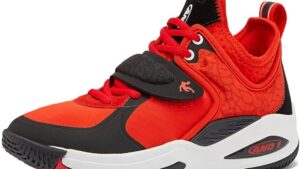
Out of the box, the Witness 7 feels lighter than it looks. That chunky midsole profile suggests weight, but at 387 grams they’re dead average for basketball shoes. The mesh upper has this industrial, deconstructed aesthetic—grid pattern weave that looks deliberately unfinished. Some people find it plain; I appreciated the departure from overly busy designs.
Game one revealed the core issue: instability during cuts. Not the “my ankle’s about to roll” kind that sends you to the bench. More subtle. Every time I planted my foot to change direction, I felt perched high with my midfoot searching for solid ground underneath. The sensation reminded me of wearing thick foam slippers on hardwood—functional but uncertain. After two more sessions, that uncertainty started bothering me enough to consider whether these were playable at all.
Here’s what causes it: You’re sitting 34.1mm off the court at the heel (the tallest stack in RunRepeat’s database), with a three-quarter-length Max Air unit creating a platform between your foot and floor. The midsole thins right at the midfoot arch area, so during quick lateral movements, you lose contact surface exactly where you need stability most. Add in a brand-new air unit that hasn’t compressed yet, and you get that wobbly-platform feeling.
By game five, I’d mentally drafted the “maybe skip these” section of this review. But the cushioning on landings felt too good to quit. Coming down from rebounds, my knees absorbed impact easily—none of that jarring sensation I get in flatter budget shoes. So I pushed through another week, figuring the air unit might break in like everyone vaguely mentioned.
Cushioning Evolution: Week One Uncertainty to Week Six Confidence
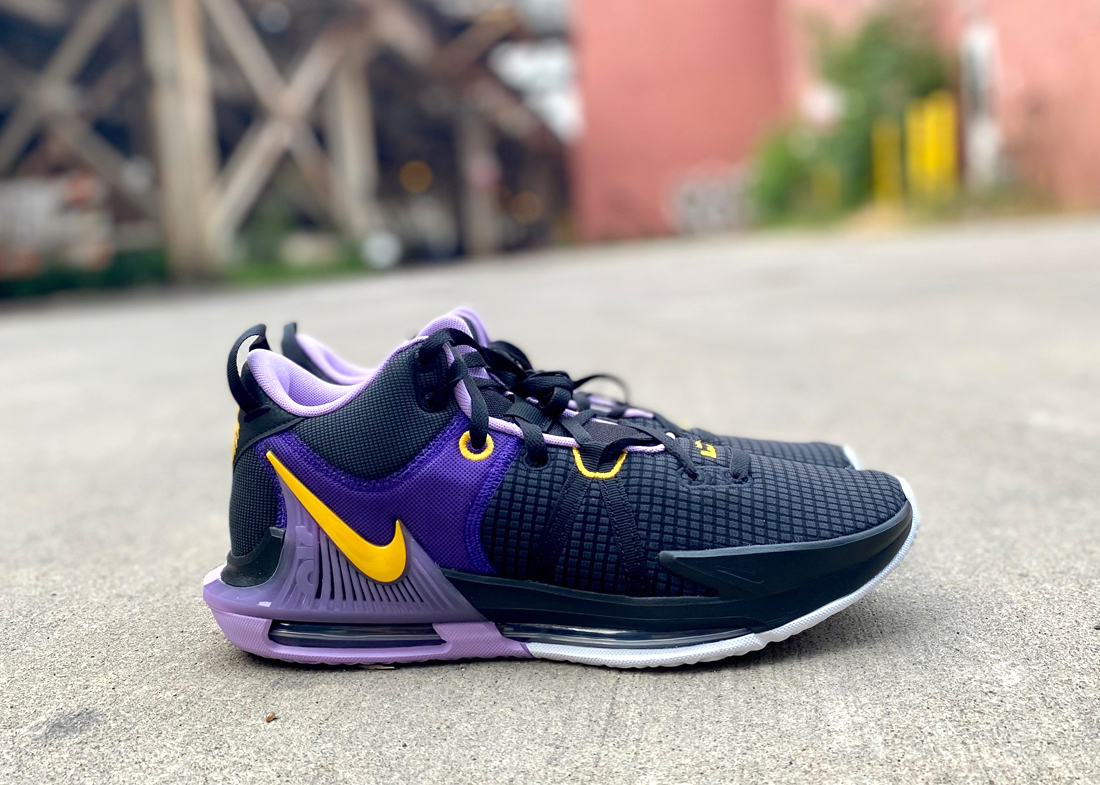
That full-length Max Air unit dominates the Witness 7’s performance story, but nobody talks about how the experience changes across a month of play. Week one felt bouncy in an unstable way—like the air hadn’t decided how much to compress yet. Landings worked fine, but pushing off felt unpredictable. The 25.2mm forefoot stack gave plenty of protection, but I couldn’t quite trust it during explosive movements.
Week three marked the shift. The air unit had compressed enough through regular use that the bouncy uncertainty settled into controlled cushioning. I noticed it first during a fast break in game fifteen—planted for a euro step and the foot felt stable instead of searching. The Max Air still compressed under impact, but now it returned energy predictably rather than wobbling.
By week six and game twenty-five, I could load up on that cushioning with full confidence. Contested rebounds from two feet up? Knees felt fresh on landing. Back-to-back games? Legs didn’t ache the next day like they do in my flatter shoes. The 8.9mm drop (heel-to-toe offset) positions you to land heel-first, and that extra 9mm of stack in the back absolutely protects your joints when you’re banging down low.
The trade-off never went away though. Court feel stayed minimal throughout testing. You’re insulated from the surface, which means responsive guards who need to feel every texture under their forefoot won’t love these. The firmness rating of 30.3 HA (about 9% stiffer than average according to RunRepeat’s lab tests) provides a stable platform, but under that firm layer sits softer 14.1 HA foam that allows the Max Air to compress. That dual-density setup explains why these feel controlled rather than mushy—you get protection without the marshmallow instability of single-layer soft foam.
Game eighteen crystallized the cushioning benefit for me. Contested rebound, came down hard from about two feet up, landed slightly off-balance on my right foot. In flatter shoes, that jarring impact would’ve sent shockwaves through my knee. Here? The air compressed, the firm midsole kept me stable, and I pushed right back up the court. My knees stayed remarkably pain-free through this six-week test compared to sessions in budget shoes with standard EVA foam.
Traction: Built for Outdoor Punishment
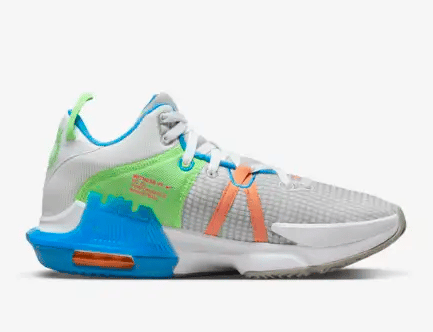
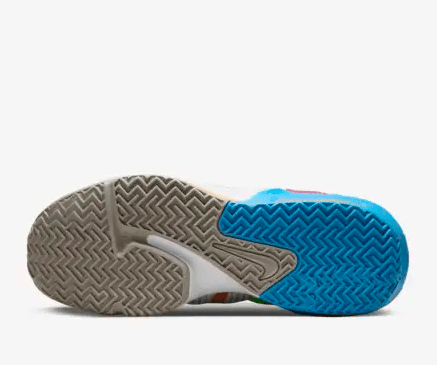
Indoor gym floors during games one through fifteen: The herringbone pattern grabbed well enough for confident stops and starts, though not with that aggressive “sticky” bite you get from softer rubber compounds. On pristine wood, I could occasionally break the grip threshold during max-effort defensive slides. Good traction, not elite.
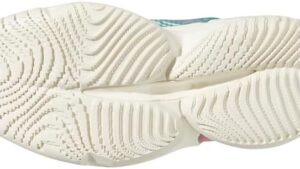
Outdoor asphalt during games sixteen through thirty: This is where the Witness 7’s true purpose reveals itself. That hard rubber compound (85.8 HC on the Shore C durometer scale versus 81.5 HC average) survives abrasive surfaces better than any budget shoe I’ve tested. After fifteen outdoor sessions on rough asphalt that would’ve worn bald spots into my previous shoes by game ten, I checked the outsole—edges showing use but no smooth patches yet. The deeply-cut grooves maintained their shape and continued providing grip.
Games twenty-four and twenty-five on a dusty outdoor court tested the pattern’s ability to shed particles. You still need wipe-downs every few possessions when courts get chalky, but those deep herringbone cuts cleared dust better than shallow patterns. Once wiped, grip came back immediately instead of requiring multiple wipes to restore bite.
The rubber hardness represents Nike’s clear design choice: Prioritize outdoor durability over peak indoor performance. If you’re exclusively playing on perfect gym floors three times a week, softer-rubber options like the Under Armour Lockdown 7 might give you slightly better initial bite. But outdoor ballers who chew through shoes every month will appreciate how this harder compound extends lifespan without completely sacrificing grip quality.
Fit, Sizing, and the Wide-Foot Blessing
I wear size 10.5 in most Nike basketball shoes, so that’s what I tested. Length felt true to size—toes had appropriate room without excess space. But that 103.1mm toebox width (about 1.5mm wider than average per RunRepeat’s measurements) combined with stretchy mesh creates a distinctly roomy forefoot experience.
For my normal-width feet, the extra space felt comfortable rather than sloppy during the first week. By week three, the mesh had stretched slightly from repeated stress, and I started noticing my foot sliding maybe 2-3mm inside the shoe during hard lateral cuts. Game twenty-two defensive drill highlighted it—quick direction changes let me feel that slight internal movement. Not performance-killing, but definitely present.
My wide-footed teammate tried these during a pickup game and immediately asked where to buy them. He’d been cramming his feet into standard-width basketball shoes for years, always fighting toe pinch and lateral squeeze. The Witness 7’s generous toebox let his toes spread naturally for the first time. That stretchy mesh upper everyone complains about? For wide feet, it’s a feature, not a bug.
The lockdown system uses a V-shaped strap connecting the laces to the midsole, which helps contain the midfoot during side-to-side movements. Heel fit stayed secure throughout testing—no slippage issues even as the mesh stretched. The problem zone is that forefoot, where the thin mesh allows more movement than structured materials would permit. Narrow-footed players should consider going half a size down, though that risks the length being too short.
If you’ve worn Nike Downshifter 12 and found them too narrow in the toebox, the Witness 7 will feel liberating. If you’re coming from locked-down guards shoes that wrap your foot like a second skin, these will feel loose by comparison. The fit works best for normal to wide feet playing a power game where slight forefoot room beats uncomfortable squeeze.
Materials Reality Check: You’re Paying for Air, Not Premium Build
RunRepeat’s lab put that grid-pattern mesh through a Dremel abrasion test and scored it 1 out of 5 for durability—the lowest rating tier. Their test piece failed in twelve seconds. I didn’t have lab equipment, but after thirty games I can confirm that rating tracks with real-world wear.
Game twenty showed the first fabric pilling on high-friction zones. The toe drag area where my right foot pushes off started looking slightly fuzzy. By game thirty, that pilling had spread to the forefoot flex point, and the mesh weave looked visibly thinner when held up to light. No tears or holes yet, but the trajectory was clear. At my current wear rate—five to six games per week—I’d estimate these have fifty to sixty total games before significant degradation becomes an issue. Maybe eighty if you’re gentler with footwork.
The heel collar tells a similar story. Week four, I noticed the padding had compressed noticeably. What started as cushy collar foam became thinner and less protective around the ankle. The 9mm tongue padding (RunRepeat’s measurement) maintained its shape better, but you can feel the budget cuts in materials quality throughout.
Compare this to the Nike LeBron 20, which uses knit and leather materials that still look nearly new after thirty games. Or even the Nike Air Max Impact 4 at a similar price point, which showed less visible wear despite comparable testing. The Witness 7’s thin mesh and minimal reinforcements represent Nike’s conscious choice: Put the budget into that Max Air cushioning system, accept cheaper materials everywhere else.
For perspective, at $70 on sale, fifty-to-sixty-game durability works out to roughly $1.20 per game. At $115 retail, that jumps to nearly $2 per game, which starts feeling expensive for materials that degrade this quickly. The stitching held up fine—no separation concerns there—but the fabrics themselves won’t give you the marathon lifespan of premium shoes. Budget accordingly.
Support and Stability: The Transformation After Break-In
Week one and two: Unstable during cuts, uncertain during quick direction changes, that wobbly platform feeling I mentioned earlier dominating every lateral movement.
Week three and four: Air unit broken in enough that compression became predictable. Foot adapting to the height. Still aware of the elevation but no longer fighting it constantly. Trust building.
Week five and six: Confident pushing hard off that platform. Defensive slides felt planted. The rigidity that initially contributed to instability now worked as an asset—the shoe doesn’t twist under you (5 out of 5 torsional rigidity rating per RunRepeat means maximum resistance to twisting forces). Game twenty-five defensive drill cemented it: rapid side-to-side movements with full confidence that the midsole wouldn’t flex or give way underneath.
The external TPU overlays and webbing system provide lateral containment once you’ve adapted to the base height. The heel counter rates 4 out of 5 for firmness (RunRepeat’s testing), which keeps your heel locked in place during movements. The midsole width measures 110.5mm at the forefoot and 86.3mm at the heel—both slightly narrower than average, so you’re not getting the widest possible base. But combined with that maximum torsional rigidity, the platform feels stable enough for power play.
Position fit became clear through testing: Centers and power forwards who play physical, grinding basketball will appreciate how the shoe supports that style once broken in. Quick guards doing elite-level speed work and rapid changes might always feel that height as a limitation. My 180-pound, power-forward game style matched well—I drive hard, rebound through contact, and play more physical than finesse. The Witness 7 supported that approach after the adaptation period.
The mid-top collar provides moderate ankle coverage without being a true high-top. If you’ve had ankle injuries and need maximum support, this won’t give you high-top lockdown. But for players with stable ankles wanting some coverage, the cut height works fine.
Weight and On-Court Quickness
At 387 grams per shoe (13.7 ounces for a men’s size 10), the Witness 7 matches the industry average almost exactly. That’s impressive considering the chunky midsole profile and substantial Max Air unit. The mesh upper’s lightness offsets the cushioning system’s weight.
On court, they feel balanced rather than fast or slow. Never got that “flying” sensation you get from ultra-light minimalist shoes, but also never felt bogged down during two-hour sessions. By week six, my legs felt fresh after long games—the cushioning helped more than the average weight hurt. Quick movements felt controlled rather than explosive. Fine for recreational play and pickup games. Elite speed players might notice the lack of that “fast” sensation lighter shoes provide.
If you’re coming from old-school maximalist basketball shoes (think 2000s-era Shox), these feel noticeably lighter. If you’re coming from modern ultra-light court shoes (sub-350 grams), these feel heavier. They sit right in the comfortable middle for players who don’t obsess over every gram but appreciate not being weighed down.
Who Should (and Shouldn’t) Buy the Witness 7
Buy these if you:
- Play outdoors regularly on asphalt or concrete courts where shoes die fast
- Prioritize impact protection and cushioning for your knees and legs
- Have wide feet that get pinched in standard basketball shoes
- Are budget-conscious with a $60-80 spending limit
- Have patience for a 10-15 game break-in period before they feel stable
- Play power basketball (rebounds, drives, post moves) rather than speed game
- Weigh 180+ pounds and need serious cushioning for joint protection
- Accept 50-60 game durability as reasonable for the price
Skip these if you:
- Need instant performance with no adaptation time
- Require locked-down, race-car-tight fit for elite quickness
- Play speed-focused guard game requiring maximum responsiveness
- Want premium materials that last 100+ games
- Need maximum court feel and low-to-ground sensation
- Prefer narrow or slim-fitting basketball shoes
- Have ankle instability issues (initial wobbling could aggravate)
- Only play indoors on perfect gym floors (better options exist)
Position-specific guidance:
- Centers and power forwards: Yes. The impact protection for banging down low and rebounding makes sense.
- Small forwards: Depends on playstyle. Physical small forwards who rebound and drive = maybe. Finesse players = probably not.
- Shooting guards: Probably not. Better options exist for the speed game shooting guards play.
- Point guards: No. Too high, not responsive enough for elite ball handling and quickness.
Better alternatives for specific needs:
- Need better materials at similar price: Nike Air Max Impact 4
- Want lower, faster feel: Under Armour Lockdown 7
- Need more lockdown: Giannis Immortality 2 (though less cushioning)
- Want similar quality cheaper: AND1 Pulse 3.0 (older design but functional)
Value Assessment and Final Verdict
Current pricing ranges from $60 on deep discount to $100 at full retail, down from the original $90-105 MSRP. I paid $72 during a Dick’s Sporting Goods sale, and at that price the value equation makes sense.
At $60-70: Excellent value. You’re getting cushioning technology from Nike’s $200 flagship line with acceptable material compromises for the price. Buy immediately if you need outdoor shoes.
At $75-85: Fair value. The sweet spot where performance benefits justify the materials trade-offs. Still a reasonable purchase.
At $90-100: Borderline. Materials quality becomes harder to excuse at this price. Better alternatives exist unless you specifically need this cushioning setup.
At $115 retail: Skip entirely. Wait for sales. At full MSRP, competitors offer better materials, longer durability, or superior performance.
What you’re actually getting versus paying for: Cushioning technology scores a 9 out of 10—genuinely impressive for any price point. Traction rates 8 out of 10, especially for outdoor use. Materials quality drops to 4 out of 10—budget cuts are obvious and durability suffers. Lockdown system rates 6 out of 10—works adequately but not exceptional. Overall durability for fifty-to-sixty games lands at 6 out of 10 for the price paid.
My personal verdict after six weeks and thirty-plus sessions: I would buy these again at $70 for outdoor basketball as my primary court shoe. They’ve become my go-to for outdoor pickup games where the hard rubber outsole extends their life and the cushioning protects my knees on unforgiving concrete. For indoor-only play, I’d probably look at alternatives with better lockdown and materials. But outdoor ballers on a budget? This represents the best impact protection under $80 available.
The break-in period remains a real consideration. Those first two weeks tested my patience, and players unwilling to push through adaptation might quit on these before they reveal their strengths. But by week four, what almost made me write them off became their primary selling point: serious cushioning that survives outdoor punishment at a price that doesn’t hurt when they eventually wear out.
Comparison: Witness 7 vs Budget Alternatives
| Feature | Witness 7 | Air Max Impact 4 | UA Lockdown 7 | Giannis Immortality 2 |
|---|---|---|---|---|
| Price | $60-100 | $75-95 | $60-80 | $70-90 |
| Cushioning | Max Air (9/10) | Air unit (7/10) | EVA foam (6/10) | Zoom Air (8/10) |
| Outdoor Durability | Excellent (85.8 HC) | Good | Fair | Good |
| Materials | Budget (4/10) | Decent (6/10) | Fair (5/10) | Good (7/10) |
| Break-in Time | 10-15 games | 3-5 games | 2-3 games | 5-7 games |
| Fit Width | Wide (103.1mm) | Standard | Narrow-standard | Standard |
| Court Feel | Minimal (34.1mm stack) | Moderate | Good (lower stack) | Good |
| Best For | Outdoor bigs | All-around indoor | Quick guards | Versatile forwards |
| Weight | 387g (average) | 395g | 365g | 380g |
| Mike’s Pick For | Outdoor cushion priority | Best all-around value | Speed + indoor only | Balanced performance |
Frequently Asked Questions
Do the Nike LeBron Witness 7 run true to size?
True to size for length, but roomy in the forefoot. I wore my typical Nike size 10.5 and the length felt perfect with appropriate toe room. The 103.1mm toebox width creates extra space side-to-side though, especially for normal or narrow feet. Wide-footed players will love the room—my wide-footed teammate called them the most comfortable basketball shoe he’d worn. Narrow-footed players should consider going half a size down, though that risks the shoe being too short. Thick socks can help fill the forefoot space if you want to stick with your normal size.
How long is the break-in period and what should I expect?
Plan for 10-15 games (roughly 2-3 weeks playing 5 times per week). Week one felt unstable during cuts—that wobbly platform sensation I described. Week two I was adapting but still cautious. Week three the air unit had broken in enough that compression felt predictable. By week four I trusted them fully on standard basketball movements. Don’t judge these on game one. The high stack height and new Max Air unit need real time to break in and for your foot/ankle to adapt.
Are the Witness 7 good for outdoor basketball?
Excellent for outdoor use—probably the best budget outdoor option I’ve tested. The hard rubber outsole (85.8 HC hardness) survives asphalt punishment better than softer compounds. After fifteen outdoor games on abrasive concrete, the outsole showed edge wear but no bald spots. Deeply-cut herringbone grooves maintained their shape and kept providing grip. The cushioning also helps on harder outdoor surfaces where your joints take more impact. If you play outdoors 2-3 times per week and burn through shoes fast, the Witness 7 will outlast softer-rubber alternatives significantly.
What’s the wobbling issue everyone mentions but doesn’t explain?
That 34.1mm heel stack height creates a “perched” feeling during the first 10-15 games, especially during quick cuts and lateral movements. You’re sitting high off the court with a Max Air unit that hasn’t compressed to its stable state yet. The midsole also thins at the midfoot arch, so you lose contact surface right where you need stability. It’s not dangerous ankle-rolling instability—more like walking on a thick foam mat for the first time. Your foot and ankle need to adapt to trusting that height. As the air unit breaks in and your body adjusts, the wobbling decreases significantly. By week 4-5, it’s no longer a concern for standard basketball movements.
How does the cushioning compare to other budget basketball shoes?
Best impact protection under $100, period. That full-length Max Air unit provides cushioning quality you’d expect from $150+ shoes. After six weeks of testing, my knees and legs felt noticeably less sore compared to sessions in flatter budget options like the Under Armour Lockdown 7. The trade-off is you sacrifice court feel—you’re insulated from the surface with minimal ground connection. Guards needing to feel every texture under their forefoot won’t love this. But if joint protection and landing comfort are priorities, nothing else in this price range cushions as well.
Will the Witness 7 work for guards or are they only for big men?
Depends heavily on playing style. Physical slashing guards who drive hard and finish through contact might adapt to them. Quick-twitch playmakers who live on speed and rapid direction changes? No. The height, break-in requirement, and moderate responsiveness don’t suit elite guard play. These work best for centers and power forwards—players who benefit from maximum impact protection for rebounding and post play. Small forwards with physical games could go either way. Point guards and shooting guards should look at lower-profile, more responsive options. My 180-pound power-forward style matched well; a 160-pound point guard would probably hate these.
How long will the Witness 7 last before I need to replace them?
50-60 games based on observed wear rates, maybe 80 if you’re gentle. The mesh upper rates 1 out of 5 for durability in lab tests, and that tracks with real-world use. I saw fabric pilling by game 20, visibly thinner mesh by game 30. The heel collar padding compressed noticeably by week 4. No tears or holes yet at 30 games, but the trajectory suggests these won’t survive 100+ games like premium shoes. The outsole will outlast the upper—that hard rubber compound resists wear well. At $70, figure roughly $1.20 per game. At $115 retail, that jumps to nearly $2 per game, which feels expensive for materials that degrade this quickly.
Can I use custom orthotics or insoles with these shoes?
Yes, the insole is removable. The stock insole measures 5mm thick (thin compared to plush options), so there’s room for orthotics or aftermarket insoles without making the shoe feel cramped. If you need arch support or custom footbeds for plantar fasciitis or other conditions, you can swap the insole easily. Just be aware that adding thicker insoles will raise your foot height even more inside an already-tall shoe, which might increase that initial instability feeling.
How do the Witness 7 compare to the previous Witness 6 model?
Same Max Air cushioning unit, different upper materials and aesthetic. The Witness 6 used woven textile that provided slightly better lockdown. The Witness 7 switched to this stretchier grid-pattern mesh, which creates more room (good for wide feet, less ideal for lockdown). If you loved the Witness 6, you’ll adapt to the 7, but expect the fit to feel roomier in the forefoot. The cushioning performance is essentially identical since Nike kept the same air unit. Design-wise, the 7 has that deconstructed, industrial look versus the 6’s more traditional profile. Price-wise, both sit in the same $60-100 range depending on sales.
What’s the best price to pay for the Witness 7?
Don’t pay the $90-115 retail price. Wait for sales in the $60-80 range. I paid $72 at Dick’s Sporting Goods and felt that was fair value for what you get. At $60-70, these are an excellent budget buy—you’re getting flagship cushioning technology with acceptable material compromises. At $75-85, still reasonable if you specifically need this cushioning setup for outdoor use. At $90-100, materials quality becomes harder to justify. At full $115 retail, skip them entirely and wait for markdowns or look at alternatives. Check Dick’s, Foot Locker, and Champs Sports regularly for sales.

Reviews
There are no reviews yet.