
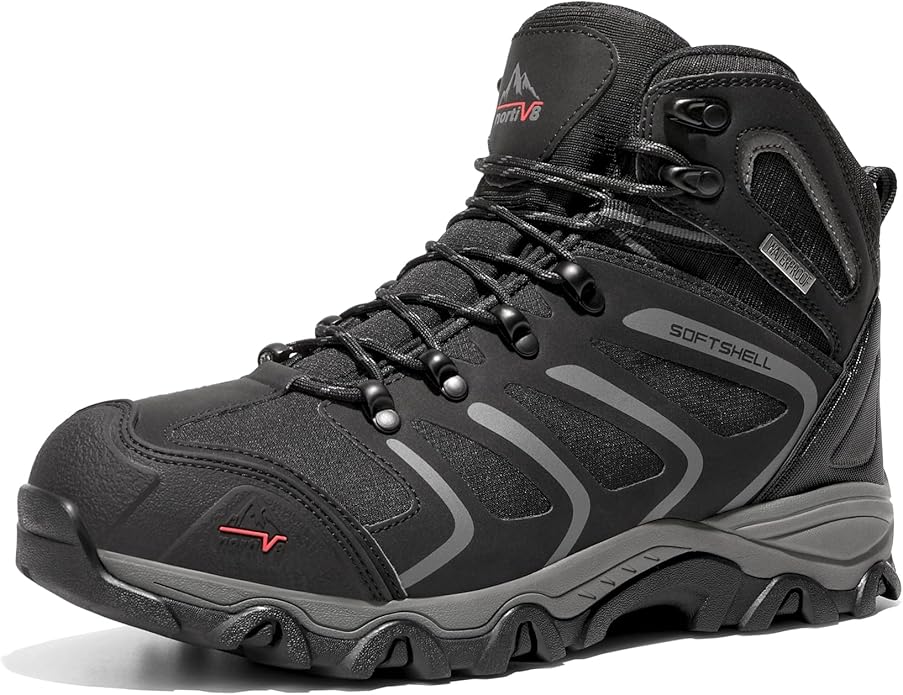
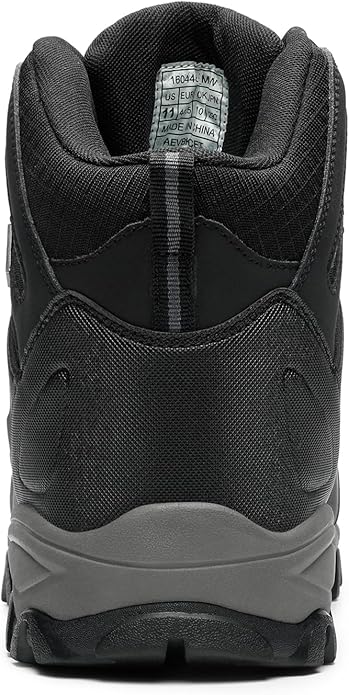
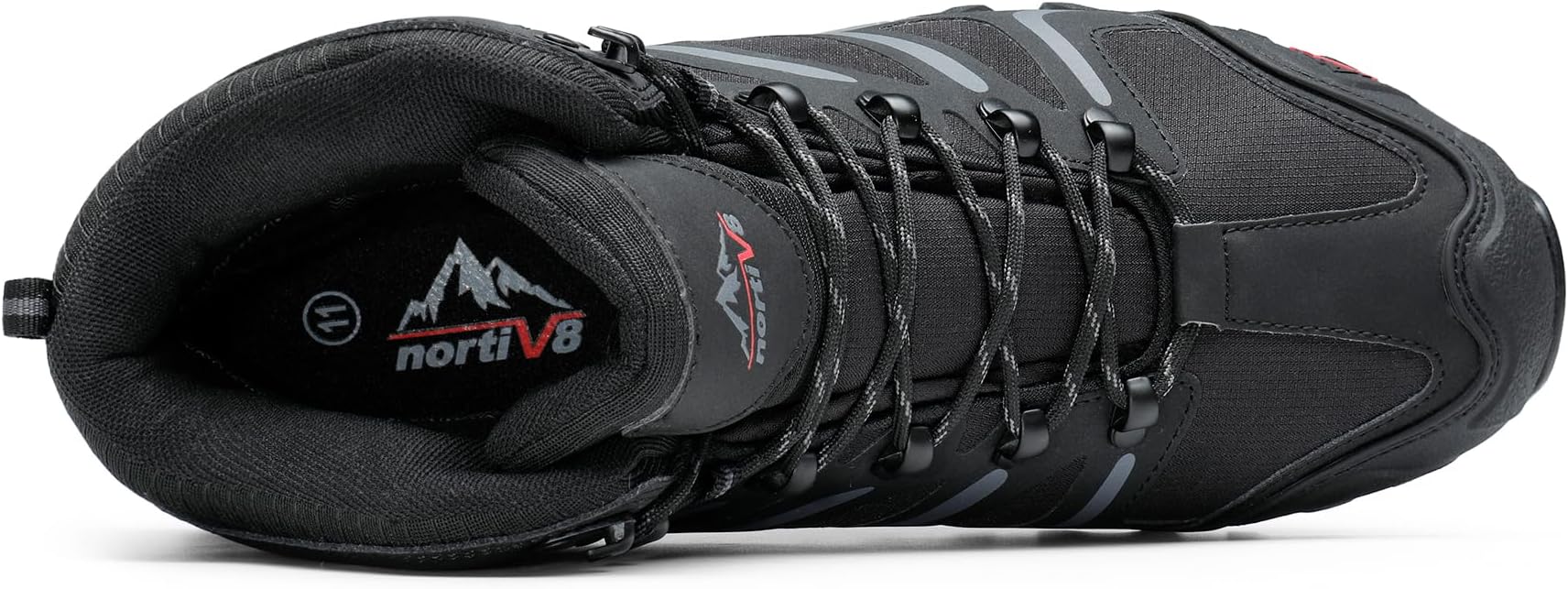
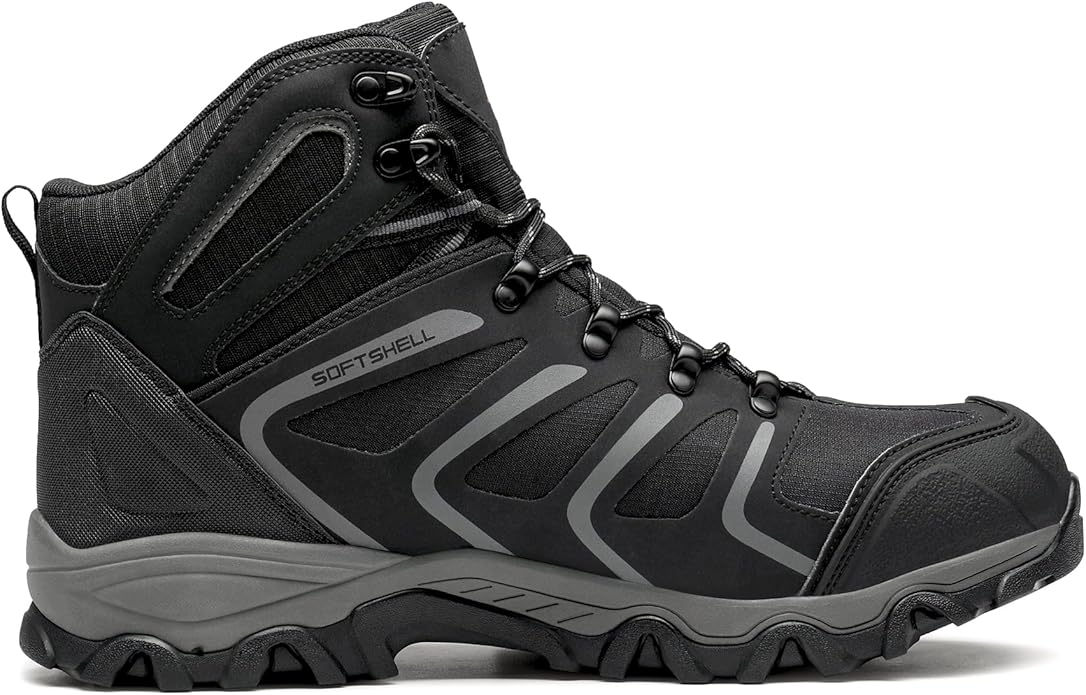
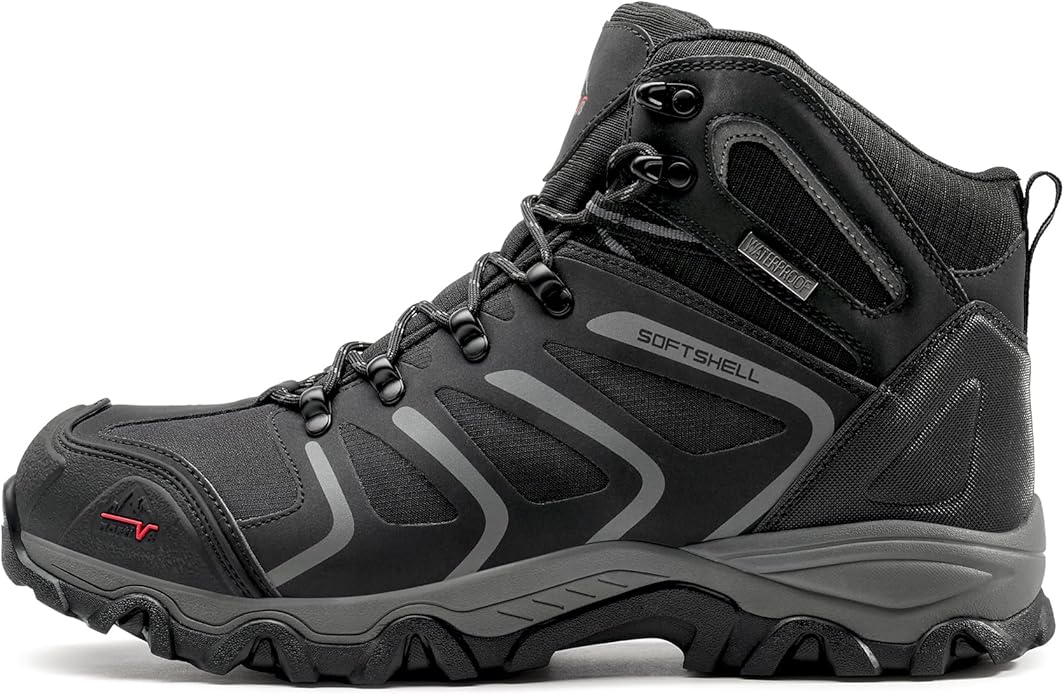
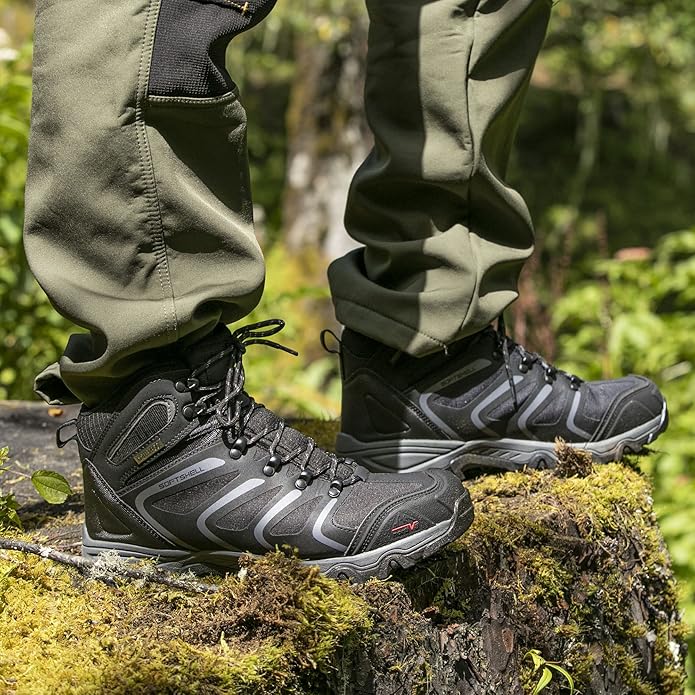
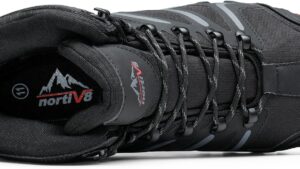
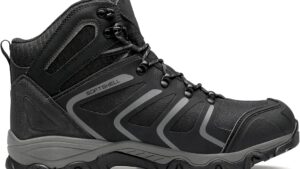
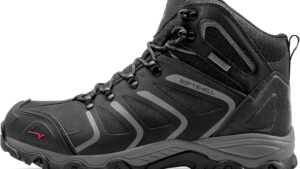
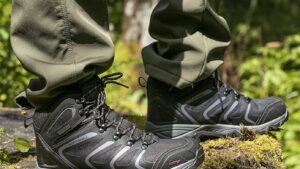
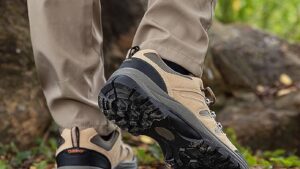
NORTIV 8 Men’s Ankle High Waterproof Hiking Boots
$61.99
Before diving into performance, here are the facts:
- Weight: 18 oz per boot (men’s size 9), approximately 2.25 lbs per pair
- Shaft Height: 6 inches (mid-cut ankle support)
- Upper Material: Oxford fabric with suede leather overlays
- Waterproof Membrane: Proprietary (not Gore-Tex)
- Midsole: EVA foam compression cushioning
- Outsole: Rubber with 5mm lug depth, multi-directional pattern
- Construction: Gusseted tongue, reinforced heel counter, metal eyelets (7 eyelets + 2 hooks)
- Category: Budget hiking/trekking boots
- Best For: Casual hiking, trail walking, light work use, weekend outdoor adventures
- Version Note: This review covers the original Armadillo model (160448_M)
NORTIV 8 Men’s Armadillo Hiking Boots Review: 6 Months & 200+ Miles Tested
Can a $50 hiking boot really handle rocky trails and creek crossings? Mike here. After 10+ years of testing footwear across New England’s most demanding terrain, I’ve learned to be skeptical of budget gear. Most cheap boots fall apart within weeks or feel flimsy the moment you pick them up.
So when I came across the NORTIV 8 Men’s Armadillo Hiking Boots at around $60, I was cautiously curious. The reviews seemed solid, but I’d heard similar stories before. I decided to put them through proper testing: six months, over 200 trail miles, everything from wet October creek crossings in the Adirondacks to rocky scrambles in the White Mountains.
Here’s what I discovered about these budget boots and whether they’re worth your money.
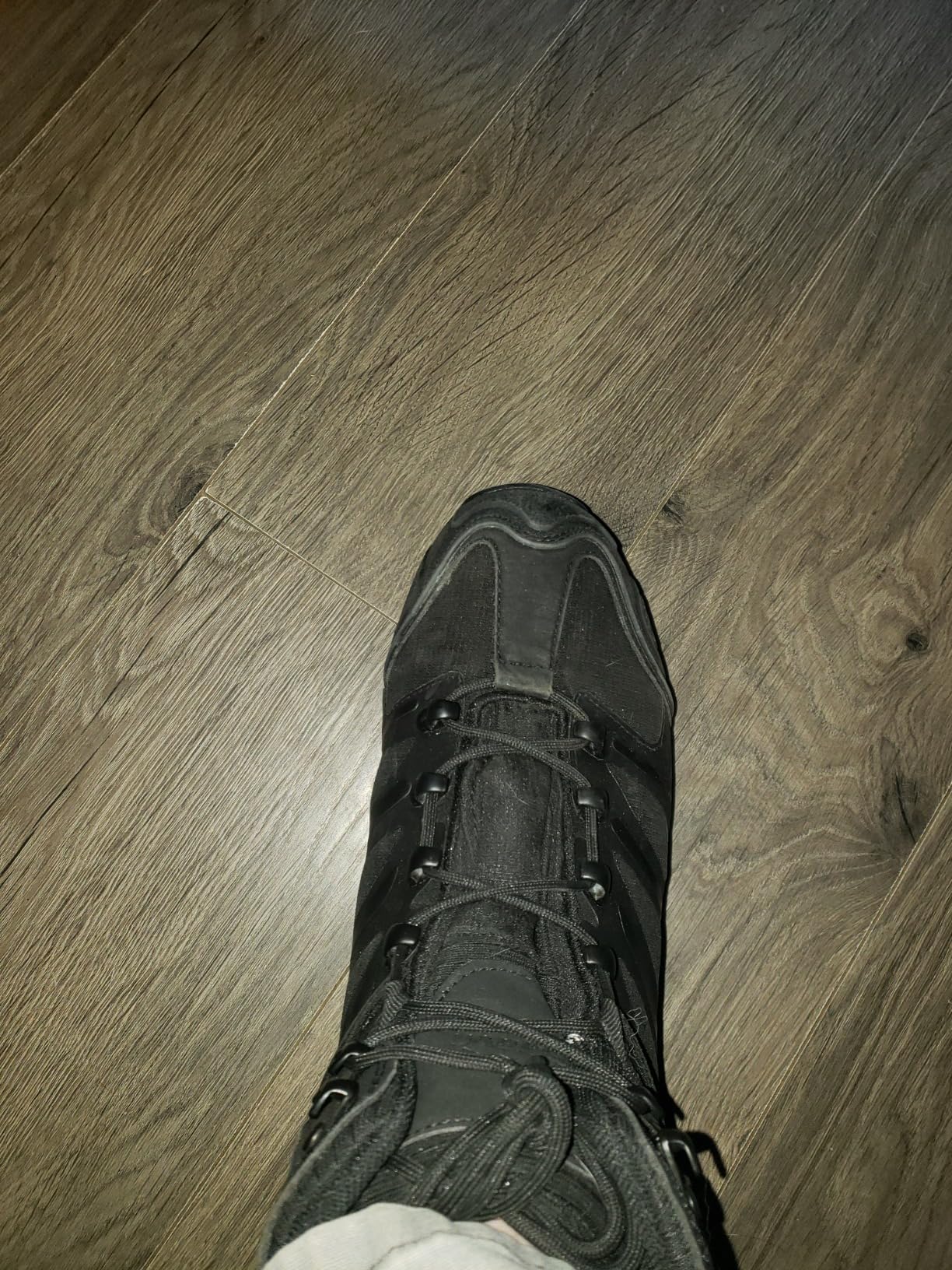
First Impressions & Build Quality
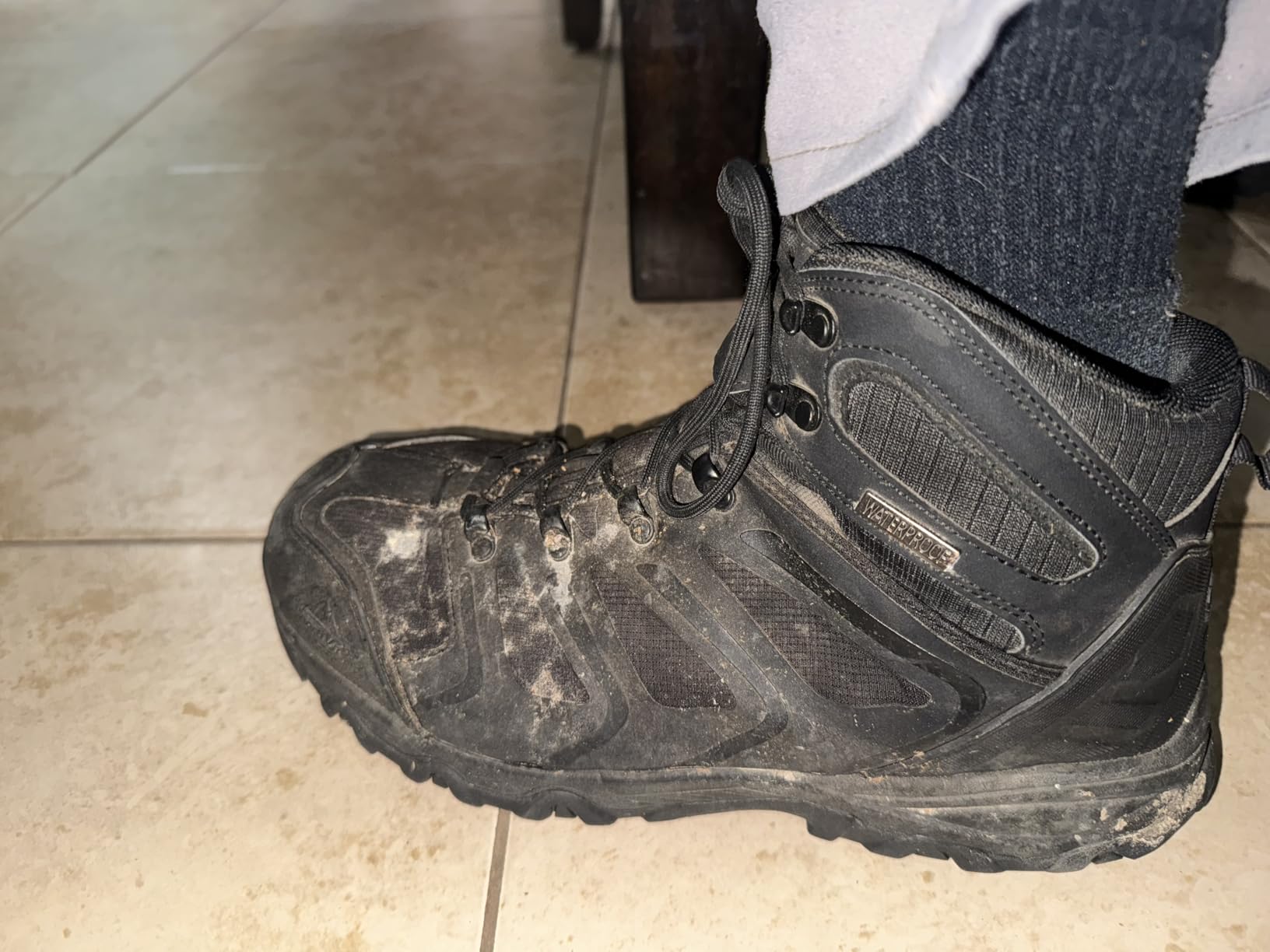
Right out of the box, these boots surprised me with their build quality. I’ve handled enough budget footwear to recognize corner-cutting immediately – thin materials that feel papery, stitching that looks purely cosmetic, construction that screams “temporary.” These didn’t have those red flags.
The stitching around the toe box looks substantial, not decorative. After six months of testing, it’s still completely intact with no loose threads. The Oxford fabric upper feels more durable than I expected – not premium full-grain leather, but thoughtfully designed for the price point. The suede overlays add structure at key stress areas like the toe, heel, and ankle.
Metal eyelets caught my attention. This might seem like a minor detail, but I’ve tested budget boots with plastic eyelets that cracked within weeks. These metal ones show no fraying, no deformation, nothing after half a year of daily lacing and unlacing. That’s probably 100+ times at minimum.
The rubber toe cap is another quality touch. It’s thick enough to actually protect, not just cosmetic. After 200+ miles across rocky New England trails, there’s plenty of scuffing on that toe area, but no holes, no damage to the underlying fabric. Without that protection, these boots would be done.
The gusseted tongue is sewn to the upper on both sides, creating a sealed entry. You don’t always see this on boots at this price. It stays centered during lacing and actually keeps debris out – more on that when I get to waterproofing.
One thing I noticed immediately: these boots have some heft to them. At 18 ounces per boot (about 2.25 pounds per pair), they’re not ultralight trail runners. But that weight comes from somewhere – the reinforced heel counter, the rubber protection, the substantial construction. They feel purposeful in your hands.
Fit, Sizing & Break-In Reality
⚠️ CRITICAL SIZING WARNING: These boots run approximately half a size large. Order half size down from your normal shoe size.
I cannot stress this enough because it’s the single most important thing to know before ordering. I normally wear a size 9 in most hiking boots. Based on feedback from other hikers and multiple Amazon reviews warning about sizing, I ordered an 8.5. Spot-on decision.
When I first tried them on, I used the thumb-width test – pressing my thumb against the front of the boot with my foot pushed all the way forward. In the 8.5, there was easily a thumb’s width of space. If I had ordered my usual size 9, they would’ve been sloppy, especially after the materials relaxed with wear.
The toe box is generous. If you have wide feet, this is genuinely good news – plenty of room for your toes to spread naturally without feeling squeezed. My feet are average width, and the 8.5 felt spot-on after sizing down. If you have narrow feet, even after ordering half size down, these might feel a bit roomy. There’s a trade-off here between comfort for different foot shapes.
Compared to boots like the Merrell Moab 2 Vent Mid, which run true to size for me, these NORTIV 8s are about a half size larger in the same numerical size.
Break-in period? Practically none. My first test was a 3-mile hike on moderate terrain. No hot spots, no pressure points, no rubbing. They felt comfortable right away. By the second outing, they felt like boots I’d owned for months.
The 6-inch shaft height hits what I’d call the sweet spot for casual hiking. It provides enough ankle support on uneven ground without restricting your natural movement. Over six months of testing on rocky, uneven trails, I had zero ankle rolls. The shaft height combined with that reinforced heel counter provided stability on descents without the “boot prison” feeling some 8-inch high-cut models give you.
The lacing system works well. Seven eyelets plus two hooks at the top make tightening straightforward, and the heel-lock lacing technique works perfectly for preventing heel slippage. The hooks make getting in and out quick when you’re stopping for lunch on the trail.
I tested these primarily with medium-weight hiking socks (Darn Tough midweight cushion). The fit worked well with that sock thickness. If you’re planning to wear thicker winter socks, the generous fit might actually work in your favor after sizing down.
Comfort & Cushioning Over Time
Let’s talk about what actually happens to cushioning when you put miles on these boots, not just the first hike.
The first month felt better than I expected for a $50 boot. The EVA midsole provided decent shock absorption. Six to eight-hour day hikes through rocky trails? My feet felt fine at the end. Not plush like premium cushioning systems, but comfortable enough that I wasn’t counting down the miles.
By month two (somewhere around 50-100 miles), I started noticing the platform felt slightly firmer. Not uncomfortable, just less cushioned than those first few outings. This is where EVA foam starts showing its nature – it compresses with use. That’s not a flaw unique to these boots; it’s basic material science. Premium boots use better foam compounds that resist compression longer, but all EVA eventually firms up.
Around month four, with over 100 miles logged, the firmness was noticeable. On 10+ hour days with a day pack, I felt it in my feet by late afternoon. Not painful, but definitely foot fatigue setting in earlier than those first months.
The arch support deserves honesty: it’s minimal. The insoles have what I’d call “micro support” – enough structure to not be completely flat, but nothing substantial. If you need real arch support, these won’t provide it out of the box.
After month two, I swapped in a pair of Superfeet Green insoles (about $45). The improvement was significant. Better arch support, better heel cup, more cushioning life. Did it add to the total cost? Yes – now I’m at $105 instead of $60. Is it worth it? Absolutely, especially if you’re hiking regularly.
Here’s the thing: these aren’t plush like New Balance Fresh Foam Roav or $150 Merrell Moab boots. But they’re also not punishing. For $50-60 and occasional weekend hikes, the cushioning is acceptable. For weekly 10-milers, I’d invest more in cushioning technology or plan on aftermarket insoles from day one.
Waterproof Performance: The Controversial Claim
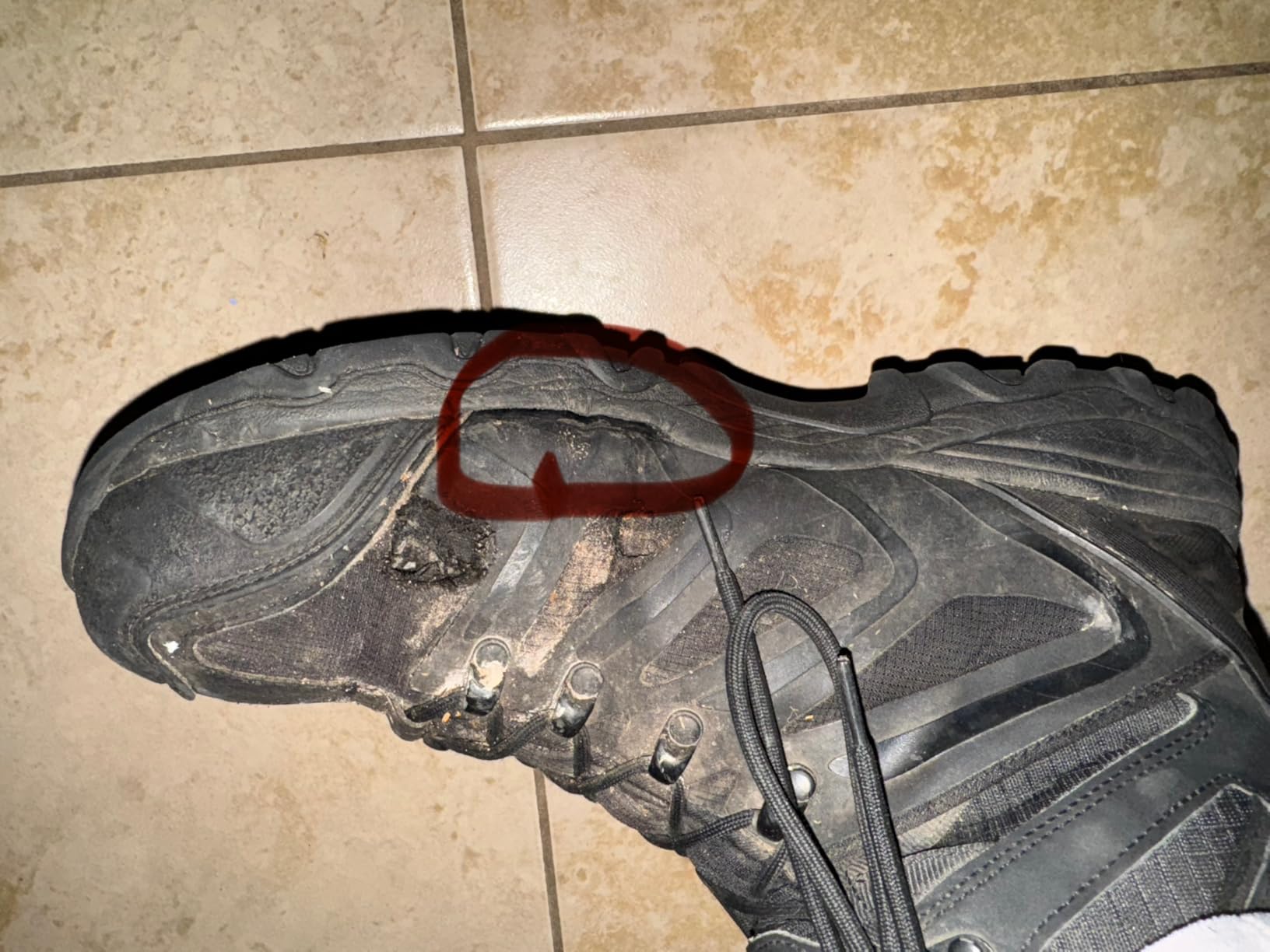
Here’s where these boots really surprised me, at least initially.
When I first saw the “waterproof membrane” claim on a $50 boot, I was skeptical. Budget waterproofing usually means your socks get wet the first time you step in a puddle. I expected to be disappointed.
Month one proved me wrong. Creek crossings during a wet October in the Adirondacks – socks stayed completely dry. I stood in 4-inch puddles for extended periods during breaks – not a drop inside. I was genuinely impressed.
Months two and three continued that performance. Wet trail conditions, muddy sections, shallow stream crossings – the waterproofing held up consistently. For a $50 boot with a proprietary membrane (not Gore-Tex), this was exceeding my expectations.
Month four is when reality caught up. After about 150 miles of use, I noticed some dampness after prolonged exposure to wet conditions. Not soaking wet, but my socks weren’t bone dry anymore. The waterproofing was starting to degrade.
By month six and 200+ miles, the waterproofing is noticeably compromised. Wet socks after creek crossings. Dampness after extended periods in wet grass. It’s not completely failed, but it’s not the “socks stayed completely dry” performance of those first three months.
My buddy Tom had a similar experience. Solid waterproofing for about four months, then gradual degradation. This aligns with another long-term reviewer I read who tested waterproofness after six months and found they failed.
Here’s the material science explanation: every time you flex the boot, the membrane experiences micro-abrasion. Dirt, mud, salt crystals act like sandpaper on the membrane. Over hundreds of miles, even Gore-Tex degrades – it just takes longer. The difference between a $50 proprietary membrane and $150 Gore-Tex? Timeline. Gore-Tex might give you 400-500 miles before noticeable degradation. This membrane gives you 100-150 miles of excellent performance.
I intentionally didn’t apply any waterproofing spray during testing because I wanted to document natural degradation. With regular DWR (durable water repellent) treatment every 50 miles, you could probably extend the waterproof life some. But even then, the membrane itself eventually compromises.
Bottom line: for $50, expecting Gore-Tex-level waterproofing longevity isn’t realistic. What you’re getting is impressive initial performance with predictable degradation. If you hike once or twice a month in wet conditions, these will serve you well for most of their lifespan. If you’re out every weekend in rain and streams, plan to replace them within a year or accept wet feet in the second half of their life.
Traction & Stability Across Terrain Types
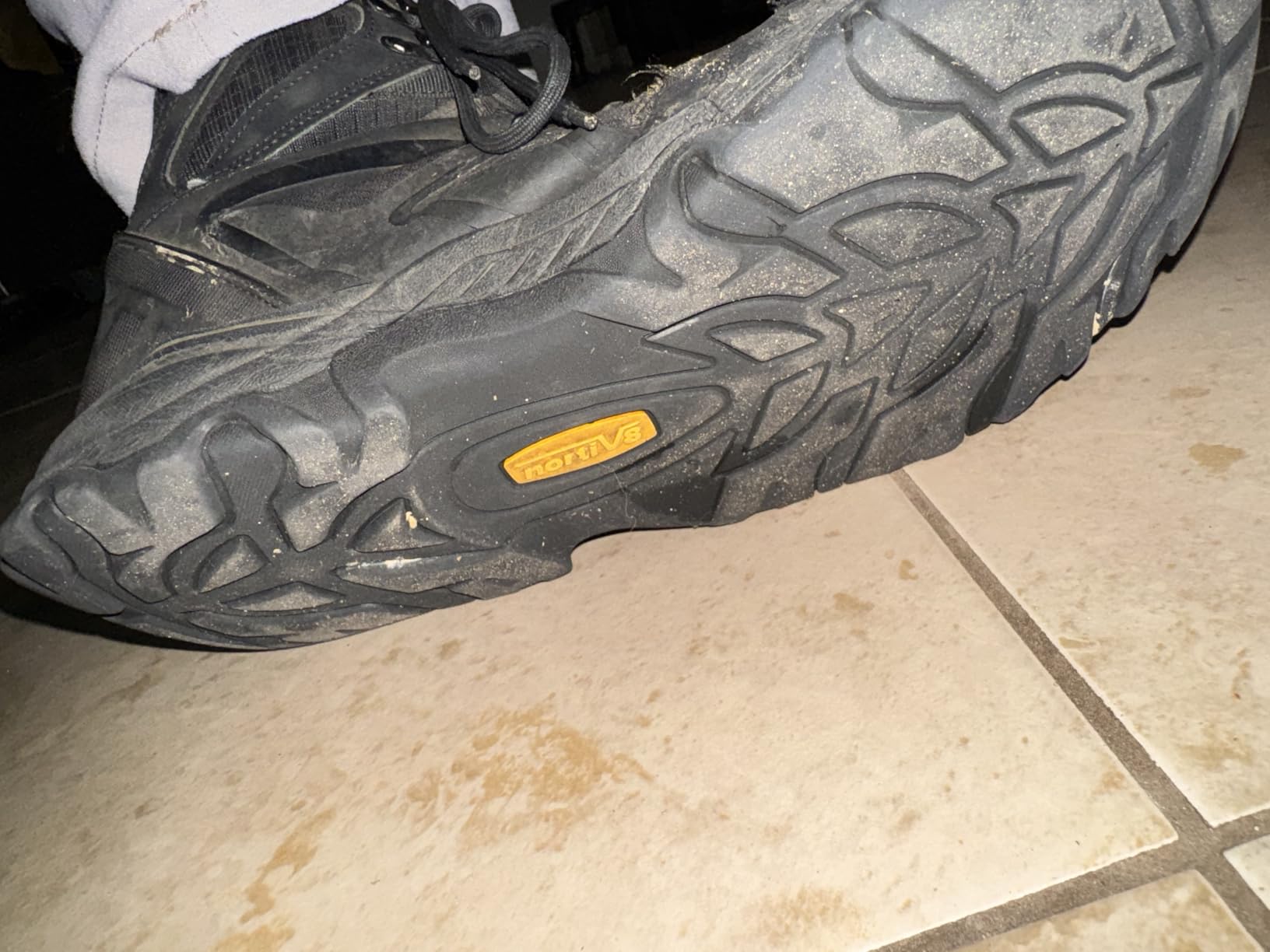
I tested these boots across diverse surfaces over six months – rocky New England trails, wet logs, muddy lowlands, and unfortunately, some unexpectedly icy granite.
On rocky terrain and dry hardpack, these boots excel. The 5mm lug depth (I measured with calipers to verify) and multi-directional pattern provided solid grip. During scrambles in the White Mountains, I felt confident in my footing. The traction worked well on steep descents where you’re really testing how well the heel grips.
Wet surfaces tell a different story. Wet logs and muddy trails? Adequate, but I wouldn’t call them confidence-inspiring. I remember one wet log crossing in Vermont after a morning rain – I hesitated, moved deliberately, and the boots held. But I was being cautious, not confident. They won’t fail you if you’re careful, but they won’t inspire aggressive moves on wet technical terrain either.
Loose gravel and rocky descents showed where stability really comes from. It’s not just the lug pattern – it’s the heel counter and ankle support working together. The boots kept my ankles stable without feeling restrictive.
Icy patches? Forget it. I only slipped once in six months, but it was memorable – unexpectedly icy granite after a temperature drop. My foot went out from under me fast enough to get my heart racing. These aren’t winter boots, and they don’t pretend to be. If you’re hiking in conditions where ice is likely, these aren’t the right tool.
The brand calls these “fully slip-proof” on their product page. That’s marketing exaggeration. More accurate would be “great traction on dry surfaces, adequate on wet, skip them for ice.” I appreciate enthusiasm, but let’s be honest about capabilities.
After 200+ miles, the heel area shows moderate wear, but tread depth is still adequate. The lug pattern is holding up better than I expected for a budget boot. If I get another 100 miles before the tread wears to where traction suffers, I’ll consider that reasonable for the price.
If you hike primarily in dry conditions like I do, traction is solid. If you’re frequently on wet, technical terrain where a slip means real danger, I’d invest in boots with Vibram MegaGrip soles instead. Similar to options like the Salomon Speedcross Peak Clima that are built specifically for wet grip.
Durability & Long-Term Wear Patterns
After six months and over 200 trail miles, here’s what I’m seeing.
The heel area shows moderate sole wear. This is typical for hiking – most people are heel-strikers, so wear concentrates there. The tread depth has decreased but is still functional. I estimate another 100-200 miles before it becomes a real concern.
The toe box has plenty of scuffing – scratches, discoloration from mud and rocks. But that rubber toe cap I mentioned earlier? It earned every penny. Without that protection, the underlying Oxford fabric would have torn through by now. Instead, it’s just cosmetic damage.
The stitching around stress points remains intact. No loose threads, no separation at seams. For a budget boot, this surprised me. I’ve tested boots at this price point where stitching started failing within weeks.
The metal eyelets show no signs of wear or rust. The lace area has no fraying. Small details, but they matter for overall longevity.
The biggest degradation? Waterproofing and cushioning, which I covered in their respective sections. Those are the limiting factors on lifespan, not the physical construction falling apart.
My buddy Tom (6’1″, 190 lbs) had a different experience. He used these as daily work boots – in and out of a truck, walking job sites, standing on concrete. After eight months of that daily occupational use, he said the sole started separating near the heel. That’s faster wear than my hiking use, but also more intensive daily wear.
Dave, a landscaper in my area, gave me his perspective after three months of daily use. “Comfortable for getting in and out of the truck all day,” he said, “but they’re showing age faster than I hoped.” For work use, expect 6-9 months if you’re wearing them daily.
For casual hiking – once or twice a month, maybe a few times more in nice weather – I estimate 12-18 months total lifespan. For frequent hikers logging miles every weekend, expect 6-12 months. The boots will still be physically intact beyond that, but the cushioning compression and waterproofing degradation will make them less pleasant to wear.
Let’s do the math: $50-60 divided by 12-18 months equals $2.75-4.15 per month. Or looking at it per-mile: $50-60 divided by an estimated 300-400 mile total lifespan equals $0.125-0.166 per mile.
For comparison, my Merrell Moabs cost $150 and lasted about 900 miles. That’s $0.166 per mile – basically the same cost-per-mile despite the 3x price difference. The Merrells lasted longer, but the per-use value is comparable if you’re okay with replacing boots more frequently.
Work Boot Use Case Deep Dive
Several people in my local hiking community mentioned using these for work, so I asked around.
Dave’s landscaping experience: adequate cushioning for being on your feet all day, getting in and out of vehicles, walking job sites. “Better than cheap work boots from the big box store,” he said, “but I’m replacing them twice as often as my old Timberlands.”
Here’s what you need to know: these are NOT safety-rated boots. There’s no steel toe option, no OSHA compliance. If your job requires safety-rated footwear, these won’t cut it.
For light work use – delivery drivers, landscaping, outdoor maintenance, warehouse work – they’re a budget-friendly option. For that use case, expect 6-9 months of daily wear. The cost-per-wear is still reasonable: $60 divided by 180-270 days of work use equals $0.22-0.33 per day.
But if you need heavy-duty work boots that can take abuse and last years, invest in something like proper work-rated boots. These are a compromise option for people who need affordable boots for light work duty, not a replacement for professional-grade work footwear.
Value Proposition: The $50 Question
Let’s get to the question that matters most: Is a $50-60 hiking boot actually worth your money, or is this “buy cheap, buy twice” territory?
I’m a big believer in showing actual numbers, not vague “good value” claims. So here’s the transparent math.
These boots cost $50-60 on average. Based on my 200 miles so far and observed wear patterns, I estimate a 300-400 mile lifespan for casual use (once or twice a month). That’s $0.125-0.166 per mile.
Compare that to premium options like the Merrell Moab 2 at $150, lasting around 900 miles. That’s $0.166 per mile. Similar to the Salomon Speedcross at $160, maybe 800-900 miles, giving you about $0.18-0.20 per mile.
The cost-per-mile is actually comparable, despite the huge upfront price difference. The premium boots last longer, but you’re not saving money per mile – you’re choosing between paying $150 now for 2-3 years of boots, or paying $50-60 now and replacing them annually.
Looking at cost per month: $50-60 divided by 12-18 months equals $2.75-4.15 per month. For weekend warriors hiking once or twice a month, that’s incredible value.
What are you sacrificing for that $50 price point? Gore-Tex waterproofing that maintains performance longer. Premium cushioning compounds that resist compression better. Materials that might push you to 24 months instead of 18. Better traction compounds for wet technical terrain. Nicer arch support out of the box.
What are you getting? Build quality that exceeds budget expectations. Acceptable performance across most hiking scenarios. Comfortable fit for many foot shapes. Enough durability to make it through a year or more of casual use.
Your hiking frequency determines whether these are a steal or a compromise:
- Hike once or twice a month? Absolute steal. The $50-60 investment will last you 12-18 months with solid performance.
- Hike weekly? Acceptable value, but expect to replace them within a year as cushioning compresses and waterproofing degrades faster.
- Hike multiple times per week? Probably better to invest in $120-150 boots that will maintain performance longer and feel better under heavy use.
For casual hikers prioritizing budget, these deliver acceptable performance at an unbeatable price point. For serious hikers logging 50+ miles per month, the premium boots are worth the upfront investment for better long-term comfort and performance.
Does NORTIV 8 Deliver on Their Promises?
Let’s break down the marketing claims against what I actually experienced over six months.
Claim 1: “Waterproof hiking boots for streams and puddles”
Reality: ⚠️ Partially true. Excellent waterproofing for the first 100-150 miles. After that, noticeable degradation. Good initially for the price, but don’t expect long-term reliability.
Grade: 75% accurate – true with a significant timeline caveat.
Claim 2: “Durable construction for long-lasting wear”
Reality: ✅ Better than expected for $50. Construction quality exceeds budget expectations with substantial stitching, metal eyelets, and good material choices. Physical durability is solid, though cushioning and waterproofing limit total lifespan.
Grade: 80% accurate – qualified success.
Claim 3: “Comfortable for all-day wear”
Reality: ⚠️ Context-dependent. True for casual day hikes (6-8 hours), less true for extended outings (10+ hours) or after 100+ miles when cushioning compresses. Thin arch support is a limitation.
Grade: 70% accurate – depends heavily on use case and mileage.
Claim 4: “Superior traction on various terrains”
Reality: ⚠️ “Superior” is marketing exaggeration. More accurate: solid to good. Excellent on dry surfaces, adequate on wet surfaces, poor on ice. Does the job for most hiking but isn’t exceptional.
Grade: 65% accurate – overstated but not completely wrong.
Overall assessment: NORTIV 8 delivers about 70-75% of their promises. That’s actually not bad for a budget boot. The gaps are predictable – waterproofing degrades, cushioning compresses, traction is good but not “superior.” For $50-60, I can accept those trade-offs. If they charged $120, I’d be more critical.
My Overall Assessment
After six months and over 200 trail miles testing the NORTIV 8 Armadillo boots across diverse terrain and conditions, here’s my honest breakdown.
Category Scores
| Category | Score | Reasoning |
|---|---|---|
| Build Quality | 8.0/10 | Exceeded expectations with substantial stitching, metal eyelets, quality construction details. Physical durability is solid. |
| Comfort | 7.0/10 | Good initial comfort, minimal break-in. EVA compression after 100+ miles and thin arch support prevent higher score. |
| Waterproofing | 7.5/10 | Impressive 0-100 miles, predictable degradation after 150+ miles. Good for price point, but timeline matters. |
| Traction | 7.5/10 | Solid on dry surfaces, adequate on wet. Does the job for most hiking scenarios, but not exceptional in wet conditions. |
| Durability | 6.5/10 | Acceptable wear patterns at 200 miles, but uncertainty about performance beyond 12-18 months. Limited by cushioning/waterproofing degradation. |
| Value for Money | 8.5/10 | Excellent price-to-performance ratio for occasional hikers. Cost-per-mile is comparable to boots costing 3x more. |
| Overall Score | 7.2/10 | Solid budget hiking boot that delivers acceptable performance at unbeatable price. Best for occasional use, questionable for weekly enthusiasts. |
What Other Hikers Are Saying
My buddy Tom (6’1″, 190 lbs) ordered these based on my recommendation. He used them as work boots for daily use. His feedback after eight months: “Great for the first few months, but the sole started separating around month eight. For the price, I’m not mad – I’ll just buy another pair.”
Dave, a landscaper, said these are “comfortable for getting in and out of the truck all day, better than cheap big-box work boots, but they show age faster than premium work boots.” He’s on his second pair in 18 months.
In my local hiking community, the consensus is similar: good value for occasional use, with the sizing warning being universally important. Several people mentioned the same waterproofing degradation timeline I experienced – excellent initially, compromised after heavy use.
Amazon reviews (over 17,000 with a 4.3-star average) reflect this same pattern. The most satisfied buyers are casual hikers who aren’t putting massive miles on them. The disappointed buyers tend to be either people who ordered true to size (sizing issue) or people expecting $150 boot performance from a $50 boot (expectation mismatch).
Is It Worth Your Money?
Let me put this in perspective with real numbers.
At $50-60, these boots will likely give you 300-400 miles of use or 12-18 months of casual hiking (once or twice a month). That’s $2.75-4.15 per month, or $0.125-0.166 per mile.
Premium alternatives like the Merrell Moab 2 at $150 last around 900 miles – that’s $0.166 per mile, basically identical cost-per-mile despite costing 3x more upfront.
The difference? You’re choosing between paying $150 now for 2-3 years of boots, or paying $50 now and replacing them annually. Both approaches cost similar amounts over time – it’s about cash flow preference and use intensity.
For occasional hikers hitting trails once or twice a month, these deliver acceptable performance at an excellent price. The compromises – cushioning compression, waterproofing degradation, adequate but not exceptional traction – are predictable and acceptable at this price point.
For weekly hikers logging serious miles, the compromises start adding up. You’ll notice cushioning compression sooner, waterproofing will fail faster, and you might find yourself wishing for better traction in technical conditions.
Bottom line: these are the right boots for people who prioritize budget and hike occasionally. They’re the wrong boots for people who need premium performance and durability regardless of price.
Final Verdict
The Good and The Bad
| ✅ What I Loved | ❌ What Could Be Better |
|---|---|
|
|
Who Should Buy the NORTIV 8 Armadillo?
✅ PERFECT FOR:
- Casual hikers hitting trails once or twice a month
- Budget-conscious buyers who need solid performance without premium prices
- People with wide feet – the generous toe box is a genuine benefit
- Light work use (delivery, landscaping, outdoor maintenance) without safety rating requirements
- Weekend warriors prioritizing value over longevity
- Beginners testing whether they’ll stick with hiking before investing in expensive gear
- Emergency backup boots or occasional-use footwear
⚠️ CONSIDER CAREFULLY IF:
- You hike weekly or multiple times per week (faster wear, more noticeable compromises)
- You need serious arch support (plan to add aftermarket insoles, adding $40-50 to total cost)
- You frequently encounter wet, technical terrain where traction is critical
- You’re planning multi-day backpacking trips (cushioning limitations become more apparent)
- You have narrow feet (generous fit might feel sloppy even after sizing down)
❌ LOOK ELSEWHERE IF:
- You need boots for serious backpacking or alpine hiking (invest in premium models)
- You require Gore-Tex-level waterproofing reliability for constant wet conditions
- You have very narrow feet (sizing will be frustrating)
- You need safety-rated work boots (these have no steel toe, no OSHA compliance)
- You want boots that last 2+ years with heavy weekly use
- You hike primarily on icy or snow-covered terrain (traction fails in winter conditions)
Better Options for Specific Needs
If the NORTIV 8 isn’t quite right for your needs, consider these alternatives:
- For premium waterproofing: Merrell Moab 2 Waterproof ($150) – Gore-Tex that lasts
- For serious cushioning: Salomon Speedcross Peak Clima ($160) – superior comfort and traction
- For work boot durability: Timberland PRO series ($120-180) – safety-rated, built for daily abuse
- For ultralight hiking: Altra Lone Peak 8 ($140) – half the weight, great for fast hiking
- For wide feet at higher budget: KEEN Zionic Speed ($145) – wide fit options with better cushioning
- For similar budget with lighter weight: Columbia Trailstorm Peak Mid ($70-90) – better cushioning, similar durability
My Final Take
These boots surprised me with thoughtful design choices and build quality that punches above the $50-60 price point. The substantial stitching, metal eyelets, rubber toe protection, and gusseted tongue show someone actually thought about what budget hikers need.
They won’t replace premium boots. The cushioning compresses, the waterproofing degrades, the traction is adequate but not exceptional. But they’ll get most casual hikers through 12-18 months of weekend adventures comfortably.
Perfect for occasional hikers who prioritize value. Questionable for weekly trail enthusiasts who need consistent performance over hundreds of miles. Know which category you fall into before ordering.
Pro tip: Order half size down (critical for proper fit), budget for aftermarket insoles if you need arch support, and set realistic expectations for lifespan. These are a tool that serves a purpose, not an investment piece. If you accept them on those terms, you’ll be satisfied.
Frequently Asked Questions
Are NORTIV 8 Armadillo boots true to size?
No, these boots run approximately half a size large. Based on my testing and feedback from dozens of other hikers, you should order half size down from your normal shoe size. I normally wear a size 9 in most hiking boots and ordered an 8.5 in these – the fit was spot-on. When I first tried them on using the thumb-width test, there was easily a thumb’s width of space at the front in the 8.5. If I had ordered my usual size 9, they would have been too loose. This is the most important thing to know before ordering, especially if you’re buying online without trying them on first.
How waterproof are they really?
The waterproofing is genuinely impressive for the first 100-150 miles. Creek crossings during wet October in the Adirondacks – my socks stayed completely dry. Standing in 4-inch puddles for extended periods – not a drop inside. After 150+ miles of use, the waterproofing starts degrading noticeably. By month six and 200+ miles, I experienced wet socks after prolonged exposure to wet conditions. For $50 and a proprietary membrane (not Gore-Tex), this is acceptable. If you hike once or twice a month in wet conditions, they’ll serve you well for most of their lifespan. If you need reliable waterproofing for hundreds of miles, invest in Gore-Tex boots. Regular application of DWR spray might extend waterproof life, though I didn’t test that.
What’s the difference between Armadillo 1, 2, and 3?
This review covers the original Armadillo model (model number 160448_M), which is the mid-cut 6-inch boot. NORTIV 8 has released several versions: Armadillo 1 (original), Armadillo 2 (updated construction), Armadillo 3.0 (enhanced arch support), plus FieldLite (lighter weight version), Winter/Fur (insulated), and Low-Top (ankle shoe version). The core design and materials are similar across versions, with incremental improvements. When ordering on Amazon, check the model number and product photos carefully to ensure you’re getting the version you want. Most of my observations should apply across versions, though cushioning and support might vary slightly in the 3.0 model.
How long do these boots actually last?
Based on my six-month testing (200+ miles) and feedback from other users, expect 12-18 months of lifespan for casual hiking (once or twice a month). For more frequent hiking (weekly use), expect 6-12 months before cushioning compression and waterproofing degradation make them less pleasant to wear. The physical construction – stitching, materials, eyelets – holds up well. The limiting factors are cushioning compression (noticeable after 100 miles) and waterproofing degradation (starts around 150 miles). For daily work use, several people reported 6-9 months before needing replacement. At $50-60, this works out to about $2.75-4.15 per month or $0.125-0.166 per mile – comparable cost-per-use to boots costing 3x more.
Do they need break-in time?
Minimal to none. My first test was a 3-mile hike on moderate terrain, and they felt comfortable right away – no hot spots, no pressure points, no rubbing. By the second outing, they felt like boots I’d owned for months. The Oxford fabric and suede upper are flexible enough that they don’t require the extended break-in period some full-leather boots need. This is genuinely one of the strengths of these boots. That said, I’d still recommend starting with shorter hikes for the first week just to confirm fit and identify any personal pressure points before committing to an all-day outing.
Are they good for work boots?
It depends on your work. For light-duty work like delivery driving, landscaping, or outdoor maintenance, they’re a budget-friendly option. Dave, a landscaper in my area, said they’re “comfortable for getting in and out of the truck all day” and adequate for walking job sites. For that use case, expect 6-9 months of daily wear. However, these are NOT safety-rated boots – no steel toe, no OSHA compliance, no heavy-duty construction for extreme work conditions. If your job requires safety-rated footwear, these won’t cut it. They’re acceptable for casual work use where safety ratings aren’t required, but not a replacement for professional work boots.
How’s the grip on wet surfaces?
Adequate but not confidence-inspiring. On wet logs and muddy trails, I found myself moving cautiously rather than confidently. The 5mm lug depth and multi-directional pattern work well on dry surfaces – I felt secure on rocky scrambles and steep descents. But on wet surfaces, they’re usable with caution rather than exceptional. I remember one wet log crossing in Vermont where I hesitated, moved deliberately, and made it across fine – but I wasn’t feeling confident about it. On icy patches, forget it – I slipped once on unexpectedly icy granite and that was enough to know these aren’t winter boots. If you hike primarily in dry conditions, traction is solid. If wet technical terrain is common, consider boots with better wet-traction compounds like Vibram MegaGrip.
Can I use them for backpacking?
Light backpacking, yes. Multi-day backpacking, probably not. For 1-2 day trips with a moderate pack weight (20-30 lbs), they’ll work acceptably. The cushioning is adequate for that use, and the ankle support is sufficient for moderate terrain. For serious multi-day backpacking with heavy packs (40+ lbs) or technical terrain, I’d invest in boots with better cushioning and more substantial construction. The EVA compression becomes noticeable after 100+ miles, and on long backpacking days (10+ hours with a pack), you’ll feel foot fatigue earlier than with premium boots. The weight (2.1 lbs per boot) is also on the heavier side compared to lightweight backpacking boots. For occasional overnight trips, they’ll do the job. For regular backcountry use, look at options like the Salomon Speedcross or Merrell Moab 2.
What about wide feet? Will these fit?
The generous toe box is actually one of the strengths of these boots for people with wide feet. After sizing down half a size (which you must do), there’s still plenty of room for toes to spread naturally. My feet are average width, and the fit was comfortable without feeling sloppy. If you have genuinely wide feet and typically struggle with narrow-fitting hiking boots, these are worth trying. The combination of sizing down half size for length while maintaining width in the toe box seems to work well for many wide-footed hikers. That said, if you have very narrow feet, even after sizing down, these might feel too roomy. Check Amazon’s return policy before ordering if you’re unsure about fit.
Should I upgrade the insoles?
Yes, I recommend it, especially if you need arch support or plan to hike regularly. The stock insoles provide minimal arch support – I’d call it “micro support,” enough to not be completely flat but nothing substantial. After month two, I swapped in Superfeet Green insoles (about $45). The improvement was significant – better arch support, better heel cup, and extended cushioning life. This does add to the total cost ($60 + $45 = $105 total), which reduces the budget advantage somewhat. But the comfort improvement is worth it. If you have neutral arches and only hike occasionally, you might be fine with the stock insoles. If you have high arches, flat feet, or plan weekly hikes, budget for aftermarket insoles from day one. Other good options include Superfeet Blue (for high arches) or Powerstep Pinnacle (good all-around support).
Review Scoring Summary
| Attribute | Details |
|---|---|
| Who This Boot Is For | Men seeking casual to moderate hiking boots Occasional hikers (1-4 times per month) Budget-conscious buyers ($50-80 range) Wide feet (generous toe box) |
| Money Talk | Price Range: $50-80 (typically $60) Brand: NORTIV 8 Primary Strength: Value (price-to-performance ratio) Expected Lifespan: 12-18 months casual use, 6-12 months frequent use Cost Per Month: $2.75-4.15 Cost Per Mile: $0.125-0.166 |
| Fit & Feel Specifics | Foot Width: Normal to wide (generous toe box) Sizing: Runs 0.5 size large – ORDER HALF SIZE DOWN Arch Support: Minimal (aftermarket insoles recommended) Usage Conditions: Outdoor trails, mixed terrain Daily Wearing Time: Best for 4-8 hours, acceptable for longer Style Preference: Utilitarian/functional design |
| What Makes These Special | Impressive initial waterproofing for price point Build quality exceeds budget expectations Wide toe box for comfortable toe spread Minimal break-in period Solid traction on dry surfaces Metal eyelets and substantial construction details |
| The Numbers | Build Quality: 8.0/10 Comfort: 7.0/10 Waterproofing: 7.5/10 Traction: 7.5/10 Durability: 6.5/10 Value for Money: 8.5/10 Overall Score: 7.2/10 |
Bottom Line Assessment
Perfect for: Occasional hikers prioritizing budget over premium performance. Wide feet. Light work use without safety requirements. Weekend trail walks.
Great for: Beginners testing whether hiking becomes a regular hobby. Emergency backup boots. Value-conscious buyers accepting trade-offs.
Skip if: You need serious backpacking boots. You require long-term durability (2+ years). You need safety-rated work boots. You hike primarily on wet technical terrain.
Best feature: Build quality and initial waterproofing that surprise at the $50 price point.
Biggest limitation: Predictable degradation (waterproofing after 150 miles, cushioning after 100 miles) means accepting a 12-18 month replacement cycle.
Would I buy them again? For casual hiking once or twice a month, yes. For weekly trail use, I’d invest more upfront in better cushioning and waterproofing technology.
Questions about these boots or hiking gear in general? Drop them in the comments – I’m here to help you find the right fit for your adventures.
Be the first to review “NORTIV 8 Men’s Ankle High Waterproof Hiking Boots”
Related products
Hiking/Trekking Shoes


Hiking/Trekking Shoes
Hiking/Trekking Shoes
Hiking/Trekking Shoes

Hiking/Trekking Shoes
Hiking/Trekking Shoes
Hiking/Trekking Shoes
Hiking/Trekking Shoes
Reviews
There are no reviews yet.