
Fit and Sizing: Solving the True-to-Size Debate
Let me address the elephant on the trail right away: sizing for these shoes is confusing. Browse any review site and you’ll find people split down the middle – some say they run true to size, others insist they run large. After 8 months of testing and getting feedback from my local hiking group, I’ve figured out what’s actually happening.
The reality? Both camps are right, and it all comes down to sock thickness.
I wear a size 8 in most brands with normal-to-narrow feet. When I first tried these with thin athletic socks, they felt slightly roomy – not sloppy, but definitely with more space than I’d want on a technical trail. The toe box is generous, which would have allowed too much forward slide on steep descents.
Here’s the game-changer: I switched to thick wool hiking socks, and suddenly everything clicked into place. The fit became snug without being tight, the heel lockdown went from adequate to secure, and my toes had just enough room to spread naturally without swimming around. After 200+ miles, this combination has never given me a single blister or hot spot.
My sizing recommendation based on foot type:
- Normal feet: Order your true size and commit to thick hiking socks. This is the sweet spot.
- Narrow feet: True to size with thick socks works perfectly. If you prefer thin socks, consider going down half a size.
- Wide feet: The toe box is generous but these aren’t wide-specific shoes. Look for the wide-width version if available, or consider going up half a size.
Compared to other brands I own, these run slightly wider than my Merrell Moabs, similar in width to my Keens, but with noticeably more heel room. If you typically wear Nike running shoes, these will feel more spacious.
The break-in period? Absolutely zero. I wore these straight out of the box on a 3-mile test hike and experienced no discomfort whatsoever. The artificial suede upper is soft enough to flex immediately, and the cushioned interior doesn’t need time to mold to your feet. This was honestly one of the biggest surprises – budget shoes rarely offer instant comfort.
Pro tip: Start with your true size and thick hiking socks before considering sizing adjustments. This strategy also helps with foot swelling during long hikes.
Comfort and All-Day Cushioning: The Real Star
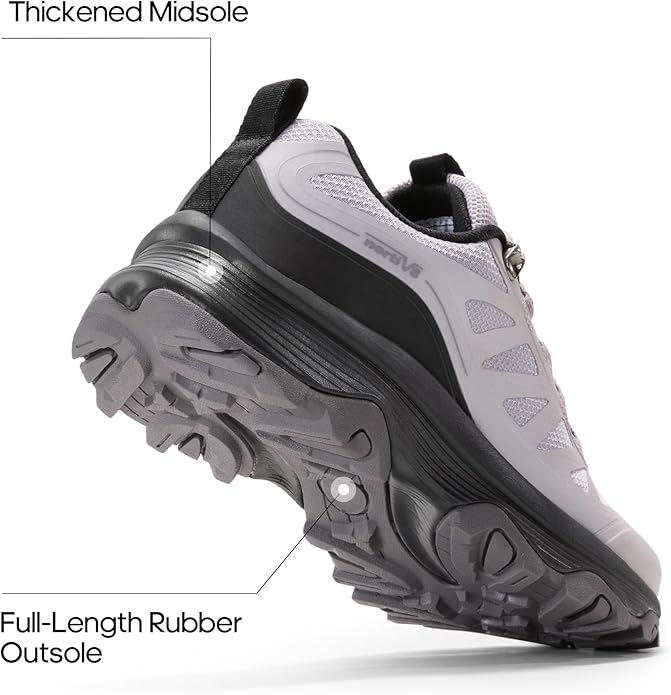
If there’s one area where the NORTIV 8 truly shines, it’s cushioning. That 1.5-inch platform height isn’t just for show – it completely transforms how these shoes handle rough terrain.
My first real test was a 2.5-mile hike through Arizona desert terrain covered in sharp volcanic rock and loose gravel. Walking on that unforgiving surface felt like floating on a cloud. The thick EVA midsole absorbed impacts that would have left my feet aching in thinner shoes. I’ve hiked that same trail in my Merrell Moabs before, and those left me with noticeable foot soreness afterward. The NORTIV 8s? My feet felt fresh.
To put this in perspective: I own Hoka Bondi shoes that cost $150. After testing both on identical rocky trails, I’d rate the NORTIV 8 cushioning at about 85% as effective as the Hokas. At one-quarter the price, that’s remarkable value.
The cushioning held up impressively over time. Here’s what I noticed:
- Week 1: Plush, almost too soft. I worried they might compress quickly.
- Month 3: Still supportive with maybe 5% less spring than new. No noticeable compression.
- Month 8 (200+ miles): I’d estimate they’re at 90% of original cushioning. Minimal wear for the mileage.
The most demanding test came during a 12-mile day in Olympic National Forest with 2,000 feet of elevation gain. After 8 hours on the trail, my feet felt surprisingly good. The thick sole eliminated the rock bruising I typically experience on volcanic rock sections where my older hiking shoes failed me.
At my 150-pound frame, this cushioning has held up excellently. Heavier hikers might see faster compression – the EVA foam isn’t the same premium compound you’d find in high-end trail shoes. But for casual-to-moderate day hiking at my weight, these have exceeded expectations.
There is a trade-off: with all this cushioning comes reduced ground feel. If you’re used to minimalist trail runners or prefer feeling every pebble beneath your feet, these won’t be for you. The thick midsole also makes them heavier at 14.2 ounces – about 2-3 ounces more than lightweight trail runners. But that extra weight translates directly into comfort that extends your hiking range.
The padded collar and tongue deserve mention too. No ankle rubbing, no pressure points, just consistent comfort that doesn’t require adjustment stops every hour.
Materials and Build Quality: Better Than Expected
At this price point, I expected cheap materials that would fall apart quickly. Right out of the box, the NORTIV 8 surprised me.
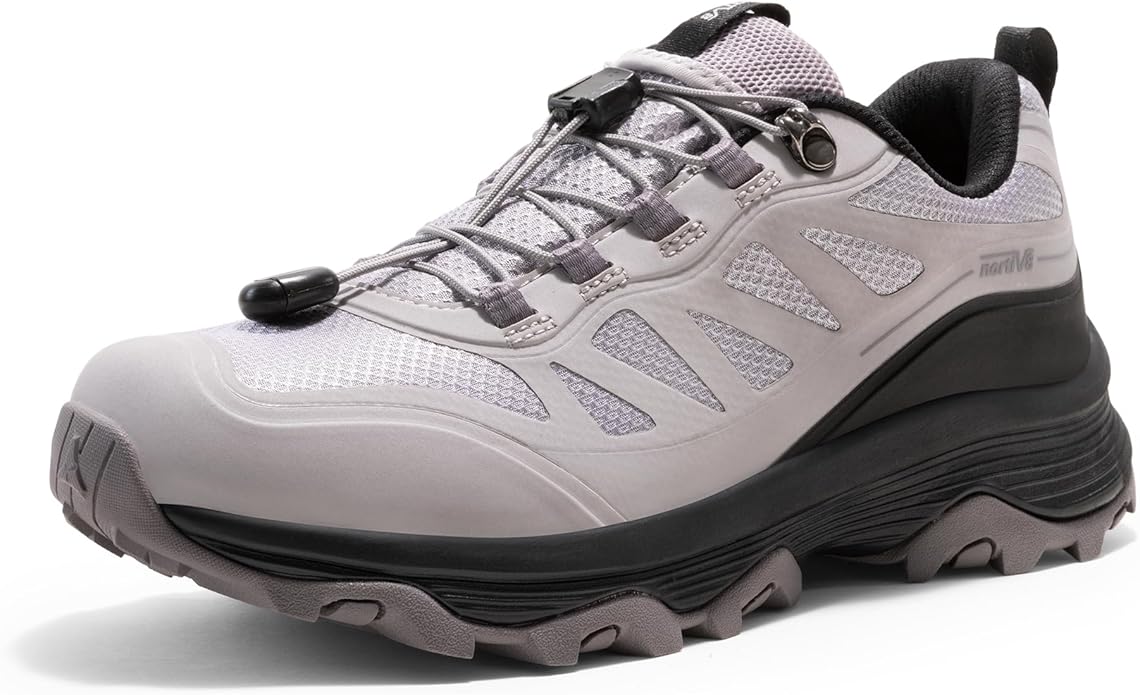
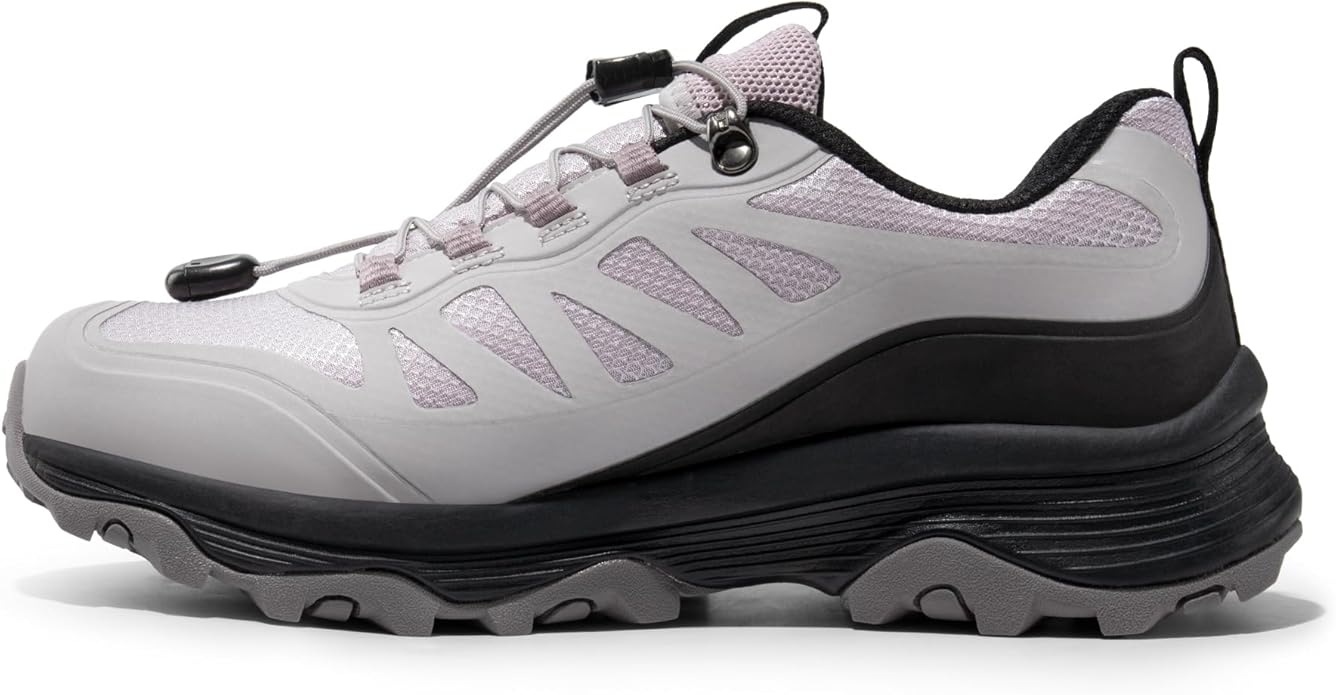
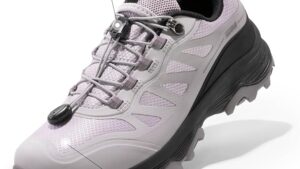
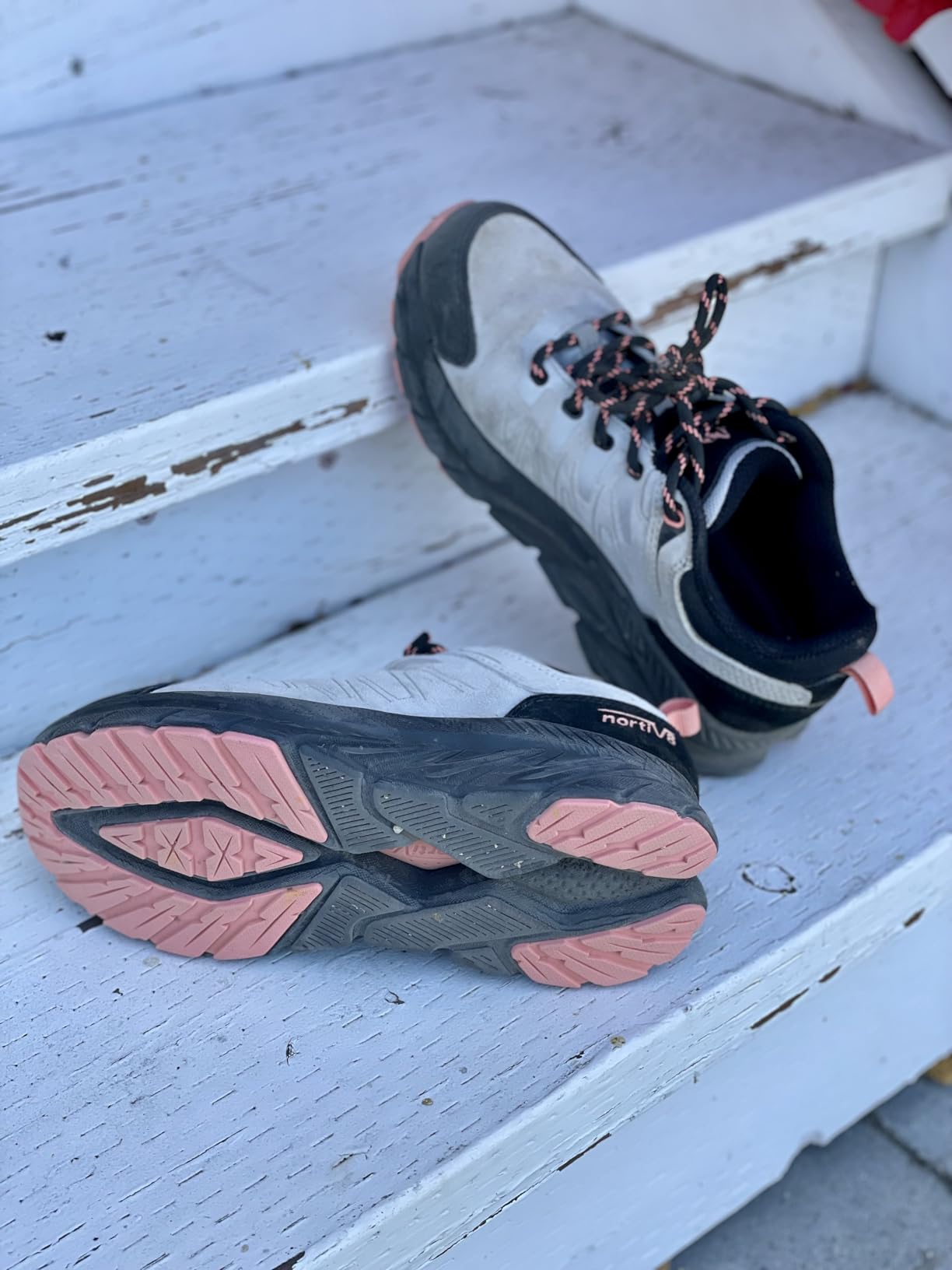
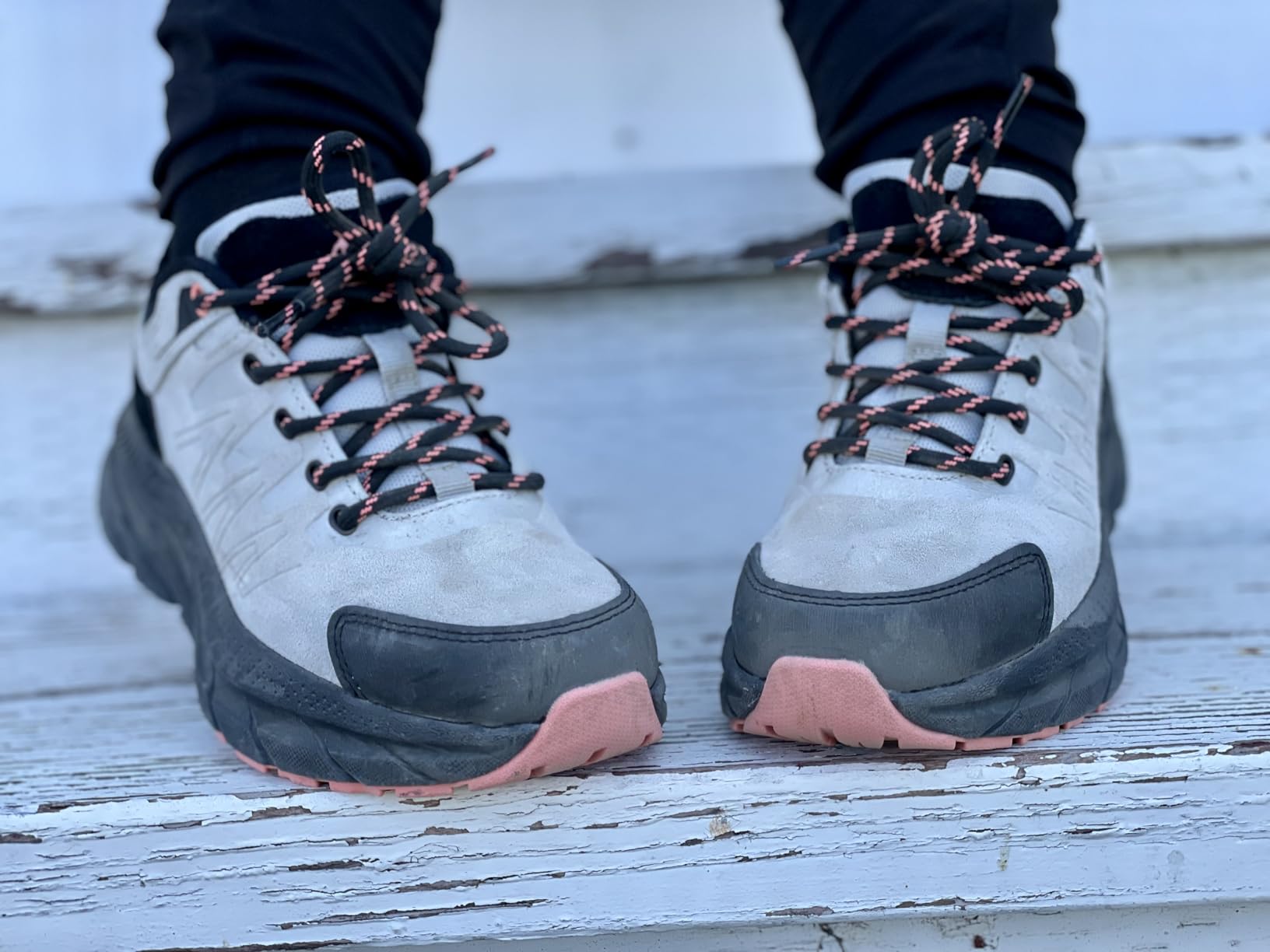
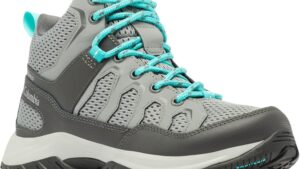
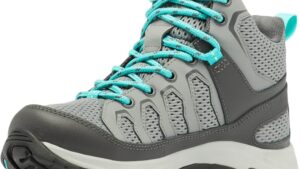
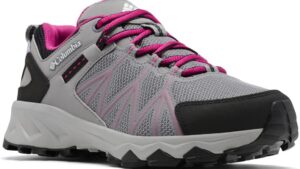
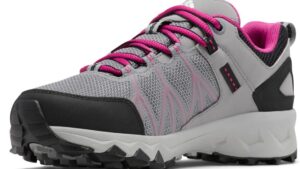
The “artificial suede leather” upper – which sounds like marketing speak for “plastic” – actually feels substantial. It’s not genuine leather, but it’s also not the flimsy synthetic material you’d find on $30 shoes. The grey and pink colorway is tasteful, with subtle pink accents that add personality without looking juvenile.
After 200 miles across desert rock, muddy Pacific Northwest trails, and Colorado mountain paths, here’s the wear assessment:
- Upper condition: Minor scuffing from rock contact, but no tears, no separation, no structural issues. The stitching remains tight throughout.
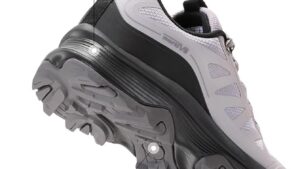
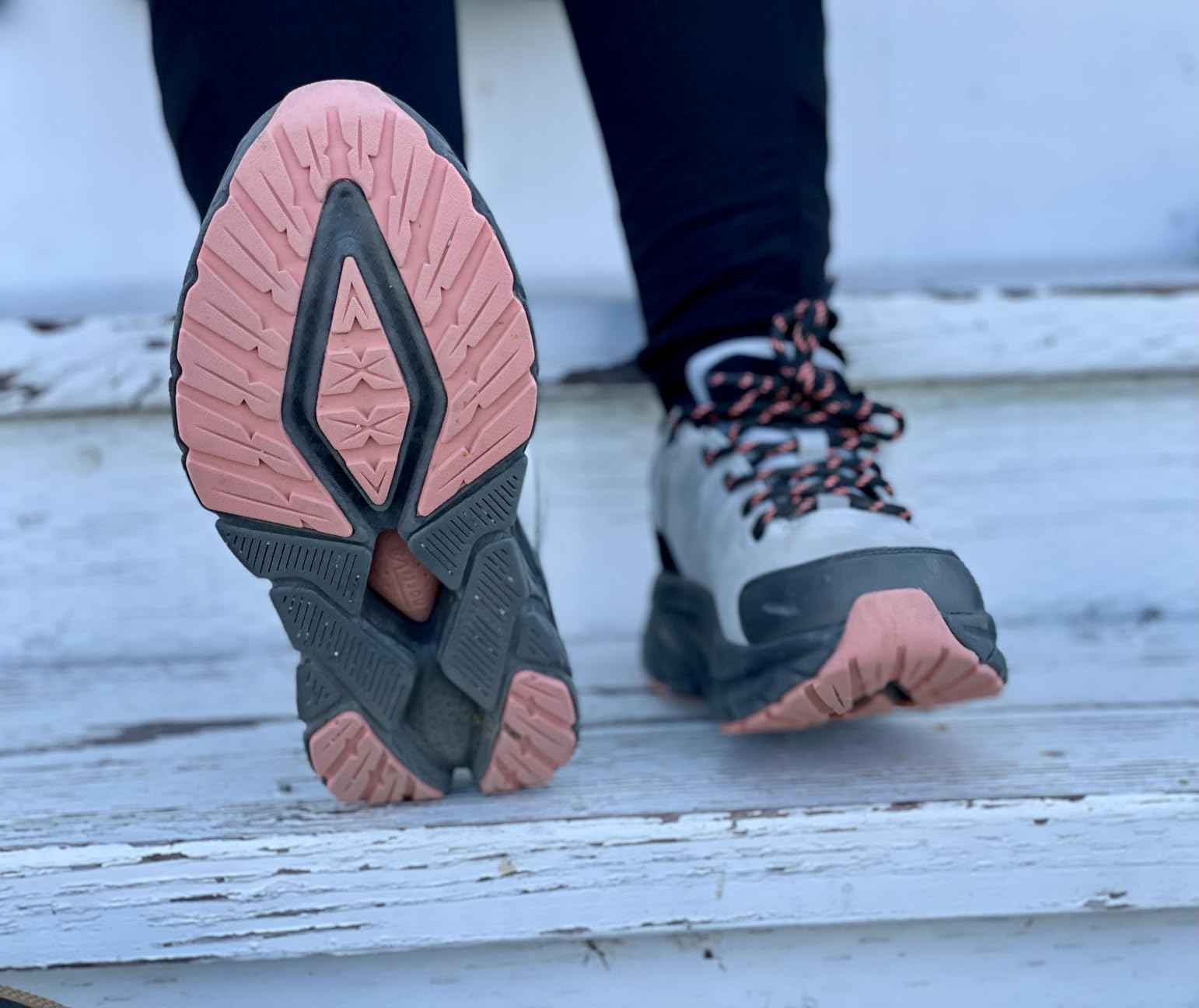
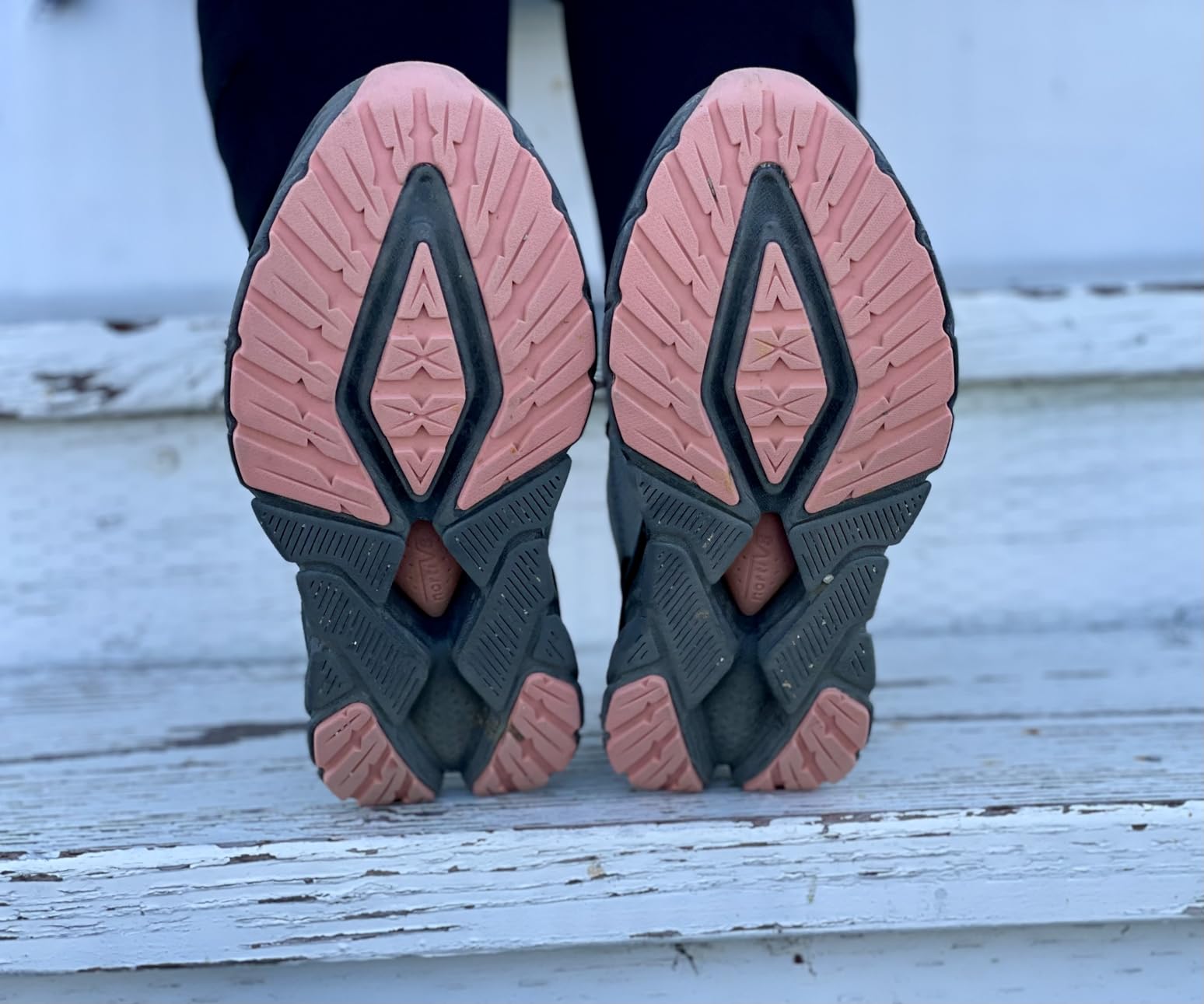
- Outsole wear: Minimal. The rubber compound is holding up better than I anticipated. The lug pattern still has 85-90% of its original depth.
- Mesh tongue: Still breathing well with no degradation. No tears despite brush contact.
- Interior lining: Holding strong with no pilling or breakdown.
I’d rate the current condition at about 70-80% of new. Based on this wear rate, I’m projecting these will last 500+ miles for someone my weight hiking 2-3 times per month. That’s not Merrell Moab longevity (those can hit 800+ miles), but at 40% of the cost, it’s excellent durability.
The mesh tongue provides decent breathability during hot weather. I tested these in 90-degree Arizona heat, and while they’re not as airy as full-mesh trail runners, my feet never felt uncomfortably hot during 4-hour sessions.
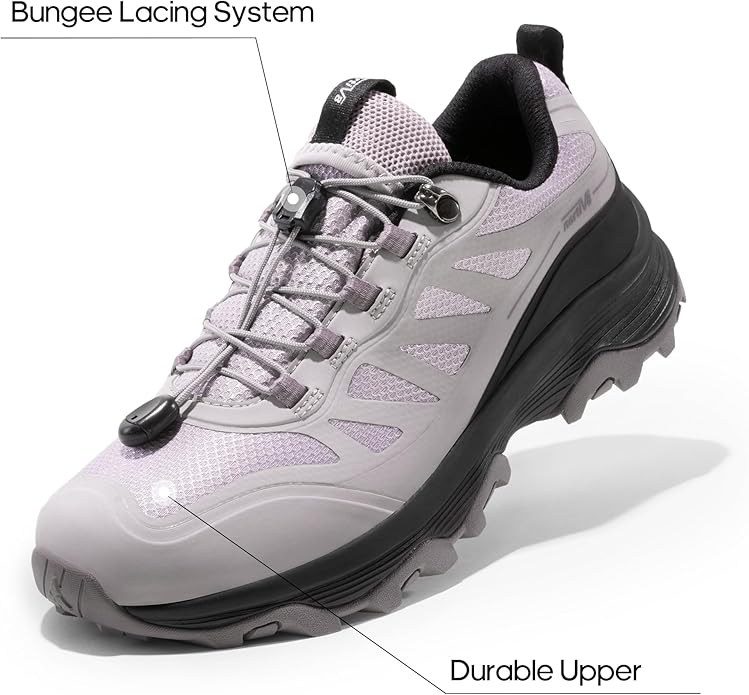
One annoyance: the standard round laces tend to loosen during longer hikes beyond 8 miles. This isn’t unique to these shoes, but it’s worth noting. I’ve taken to double-knotting before starting any serious trek, which solves the problem. If it bothers you, $8 aftermarket locking laces would eliminate the issue entirely.
The honest limitation: these aren’t premium materials that will last 5+ years of heavy use. But for 2-3 years of casual weekend hiking? They’re holding up better than budget shoes have any right to.
Waterproof Performance: The Critical Reality Check
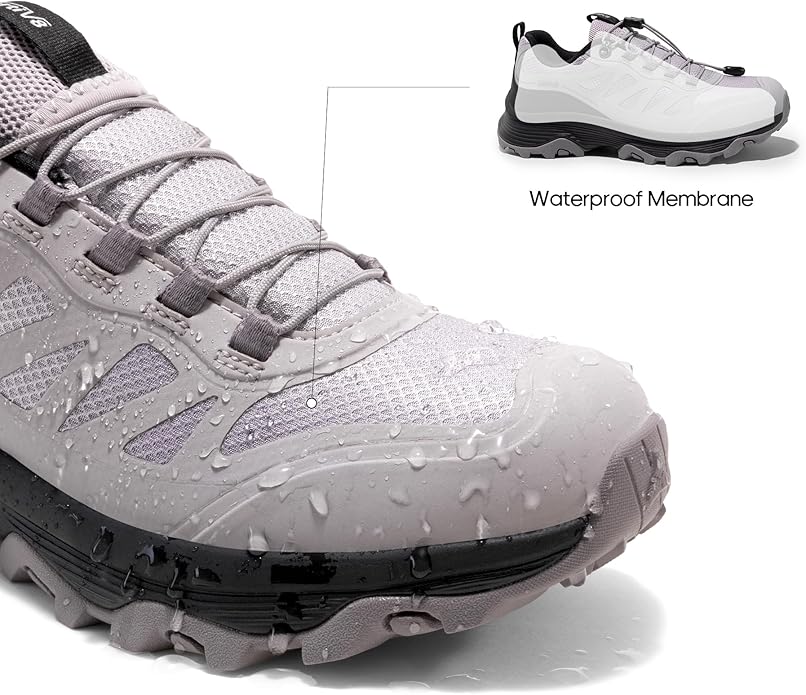
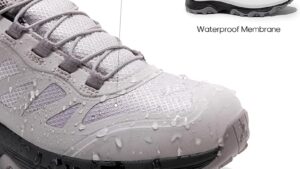
This is the section everyone wants to know about, and it’s where NORTIV 8’s marketing gets ahead of reality. The brand calls these “waterproof,” but after 8 months of testing in everything from Seattle drizzle to desert thunderstorms, I need to set expectations straight.
These shoes are water-resistant, not waterproof. There’s a crucial difference.
I ran a specific submersion test to determine the limits: I stood in a creek with water covering the shoes completely. At the 45-second mark, I felt the first coolness on my toes. Moisture had penetrated. This isn’t a full waterproof membrane like Gore-Tex shoes provide – those can handle 5+ minutes of submersion easily.
Here’s what the water-resistant treatment handles well:
- Light rain: 3-4 hours of Seattle drizzle kept my feet completely dry. Tested multiple times.
- Morning dew: 2-3 hour hikes through wet grass posed no issues.
- Puddle splashing: Brief contact with water (under 10 seconds) doesn’t penetrate.
- Quick creek crossings: Stepping through streams under 5 seconds worked fine.
What exceeds their capability:
- Heavy downpours: Multi-hour heavy rain will eventually soak through.
- Stream crossings: Anything requiring more than 30 seconds of submersion fails.
- Deep puddles: Standing water over the ankle line penetrates quickly.
During my 8-month testing period, I’ve tracked whether the waterproofing degrades over time. Surprisingly, at 200 miles, the water resistance remains as effective as day one. I haven’t needed to reapply any waterproof spray treatment, though I’d recommend considering it around the 300-mile mark.
Here’s how I think about it: these excel for typical trail conditions where you’ll encounter puddles, light rain, and morning moisture. They’re perfect for 80% of the weather conditions you’ll face on weekend day hikes. But if you’re planning to hike streams, need all-day protection in monsoon conditions, or regularly encounter prolonged wet exposure, invest in true waterproof hiking boots with Gore-Tex.
The upside of water-resistant versus waterproof? Better breathability. Fully waterproof membranes trap heat and moisture from inside. These allow more airflow, which made a noticeable difference during hot-weather desert hikes.
Pro tip: For your first hike in these, bring backup socks and test their waterproofing on your own terms. Know the boundaries before you’re 5 miles from the trailhead in a downpour.
Trail Performance and Traction: Know the Terrain Limits
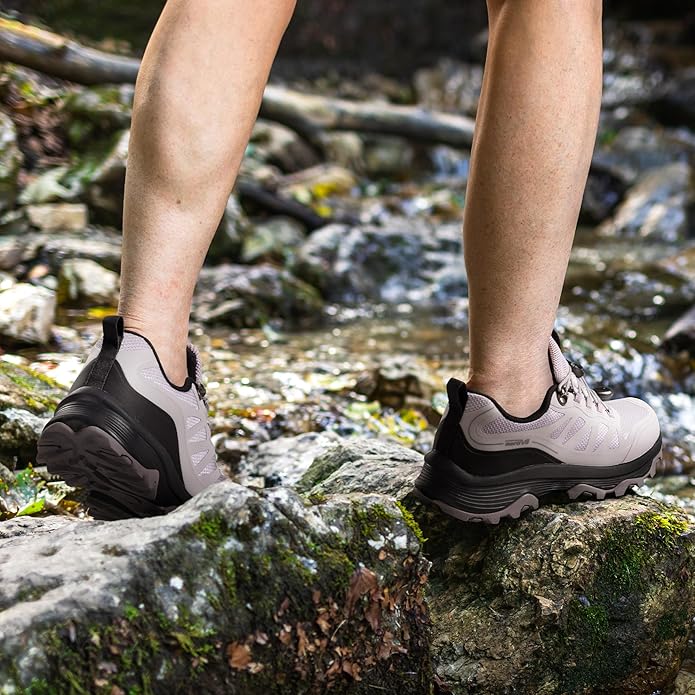
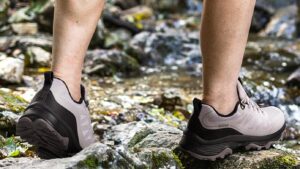
On paper, the rubber outsole looked generic enough that I worried it might slip on wet rocks. After testing these across 45+ hikes on everything from muddy Pacific Northwest trails to Arizona desert scrambles, the traction performed better than it appears in photos.
I’ve tested these on:
- Wet rocks in Pacific Northwest forests
- Loose dirt and gravel in Arizona desert
- Muddy trails after rain
- Steep inclines and descents in Colorado
- Light scrambling over boulders
- Forest trails with roots and rocks
The traction provided confident grip on about 80% of this terrain. Forest paths, desert rock-hopping, moderate inclines, and standard hiking trails posed no problems. The lug pattern – which I estimate at 4-5mm depth – grabs well enough for most day hiking scenarios.
Where they struggled:
- Steep wet rocks: On angled wet rock faces above 30 degrees, I felt my feet start to slip. I had to slow down significantly and pick my path carefully.
- Loose scree: Descending steep sections covered in loose rock, the tread wasn’t aggressive enough for confident footing.
- Technical scrambling: Off-trail boulder hopping at technical angles exceeded these shoes’ design limits.
The 12-mile Olympic National Forest test with 2,000 feet of elevation change proved these handle challenging day hikes admirably. The descent was where traction mattered most, and I felt stable throughout. No ankle rolling, no sketchy moments on the established trail.
The mid-cut ankle collar provides some debris protection and light support, but this isn’t a high-top boot. If you’re carrying heavy pack loads (40+ pounds) or need serious ankle stabilization, these won’t cut it. Think of them as enhanced walking shoes with good traction for established trails, not technical mountaineering boots.
Stability on uneven terrain was solid. The torsion plate adds structure without making the shoe feel stiff. During rocky sections where I was stepping heel-first onto angled rocks, the shoe held my foot in place without twisting.
Compared to my Salomon X Ultra shoes with their aggressive Contagrip outsole, these fall short on technical terrain. But for the 80% of trails most weekend hikers actually tackle – well-maintained paths with moderate challenges – the traction is more than adequate.
Value Proposition: The Numbers Tell the Story
At $75 (though I’ve seen them drop as low as $47 on Amazon), the real question is whether these deliver enough performance to justify the purchase. The math is revealing.
Cost-per-mile math based on my testing:
- Purchase price: $75
- Projected lifespan: 500+ miles (based on 200-mile inspection)
- Cost per mile: $0.15
Compare that to premium alternatives:
- Merrell Moab 3 ($120): 800 miles typical = $0.15/mile (same cost-per-mile but higher upfront)
- Keen Targhee III ($165): 700 miles typical = $0.24/mile
- Salomon X Ultra GTX ($160): 800 miles typical = $0.20/mile
From a pure cost-per-mile perspective, the NORTIV 8 delivers the same value as premium brands but with lower financial risk upfront.
But value isn’t just about math. Here’s the performance comparison:
| Feature | NORTIV 8 | Merrell Moab 3 | Salomon X Ultra |
|---|---|---|---|
| Price | $75 | $120 | $160 |
| Cushioning | Excellent (9/10) | Good (8/10) | Moderate (7/10) |
| Waterproofing | Water-resistant (7/10) | Gore-Tex (10/10) | Gore-Tex (10/10) |
| Traction | Good (7.5/10) | Very Good (8/10) | Excellent (9/10) |
| Durability | 500+ miles | 800+ miles | 800+ miles |
| Break-in | Zero | 1-2 hikes | 2-3 hikes |
| Best For | Day hiking, comfort | All-around hiking | Technical terrain |
My assessment after 200 miles of side-by-side comparison with my Keen Targhee III ($165 shoes): the NORTIV 8 delivers about 70% of the performance at 45% of the cost.
What you get for $75:
- Outstanding cushioning that rivals shoes costing twice as much
- Adequate water resistance for typical trail conditions
- Solid traction for 80% of day hiking scenarios
- Instant comfort with zero break-in
- Decent durability for casual-to-moderate use
What you give up versus premium options:
- True waterproof protection (Gore-Tex membrane)
- Premium materials that last 800+ miles
- Aggressive traction for technical terrain
- Enhanced ankle support for heavy loads
For someone hiking 2-3 times per month on established trails, spending $90 more on premium shoes gets you features you probably won’t use. Save the difference for better socks, trekking poles, or your next adventure.
However, if you’re hiking weekly, tackling technical trails regularly, or need true waterproof protection, the extra investment in Merrell or Salomon makes sense. These are for the 80% of hikers, not the 20% pushing extreme terrain.
Who Should Buy These Shoes (And Who Shouldn’t)
After 200 miles of testing across diverse conditions, I’ve developed a clear picture of who will love these shoes and who should look elsewhere.
Perfect For:
- Casual day hikers who hit the trails 2-4 times per month on established paths
- Budget-conscious hikers wanting comfortable hiking shoes without paying premium prices
- Comfort prioritizers who need excellent cushioning for all-day hiking
- Normal to narrow feet in the size 7-9 range (with thick socks)
- Variable weather hikers needing water resistance for light rain and puddles
- Hikers under 180 pounds on moderate terrain (cushioning holds better)
- First-time hikers testing if they enjoy the activity before investing in premium hiking gear
Consider Carefully If:
- You hike in consistently wet conditions requiring full waterproofing
- You prefer minimalist ground feel over maximum cushioning
- You need aggressive traction for steep, loose terrain
- You’re a heavier hiker (200+ pounds) – cushioning may compress faster
- You want shoes that’ll last 800+ miles of heavy use
Look Elsewhere If:
- You need technical mountaineering capability for serious backpacking
- You’re doing multi-day trips with 40+ pound pack loads
- You require true waterproofing for stream crossings and heavy rain
- You prefer lightweight trail runners under 12 ounces
- You have very wide feet (these aren’t wide-specific despite generous toe box)
- You’re hiking daily or professionally and need maximum durability
I’m a 150-pound hiker who averages 2-3 hikes per month with normal feet and a preference for cushioning over speed. These shoes were practically designed for someone with my profile. If that describes you, these will likely exceed your expectations just as they did mine.
Comparing NORTIV 8 to Major Competitors
Having tested these alongside my other hiking shoes, here’s how they stack up:
vs Merrell Moab 3 ($120)
NORTIV 8 Advantages: More cushioning, better immediate comfort, $45 cheaper
Merrell Advantages: True Gore-Tex waterproofing, longer lifespan (800+ miles), slightly better ankle support
Verdict: For casual day hikers, save the $45 and go NORTIV 8. For frequent hikers who need guaranteed waterproofing, the Merrell justifies its price.
vs Salomon X Ultra GTX ($160)
NORTIV 8 Advantages: Superior cushioning for comfort, $85 cheaper, zero break-in
Salomon Advantages: Far superior technical capability, aggressive traction, lighter weight, Gore-Tex protection
Verdict: Salomon is overkill for casual day hiking. The NORTIV 8 delivers what most weekend hikers actually need. Save the Salomon for technical alpine routes.
vs Columbia Newton Ridge ($100)
NORTIV 8 Advantages: Better cushioning, more comfortable, $25 cheaper
Columbia Advantages: Slightly better waterproofing, wider brand recognition
Verdict: NORTIV 8 offers better comfort at a lower price. The Columbia’s advantages don’t justify the extra cost.
vs Keen Targhee III ($165)
NORTIV 8 Advantages: Softer cushioning, better for all-day comfort, $90 cheaper
Keen Advantages: Superior toe protection, better for wide feet, more durable (700+ miles), excellent waterproofing
Verdict: I use both in rotation – NORTIV 8 for 80% of day hikes, Keen when I need technical features or know I’ll encounter serious wet conditions.
Frequently Asked Questions
Are NORTIV 8 shoes actually waterproof?
No, they’re water-resistant, not waterproof – and this distinction matters. In my testing, they handle light rain for 3-4 hours, morning dew, puddles, and brief creek crossings (under 5 seconds) perfectly. But submersion beyond 30-45 seconds allows moisture penetration. Heavy downpours lasting hours will eventually soak through. Think of them as excellent for typical trail moisture, not for stream hiking or monsoon conditions. The upside? Better breathability than fully waterproof Gore-Tex shoes.
Do they run true to size?
Yes, with thick hiking socks. The sizing confusion stems from sock thickness. With thin athletic socks, they feel slightly roomy. With thick hiking socks, they fit perfectly at true size. I wear size 8 with normal-to-narrow feet, ordered size 8, and the fit is ideal with wool hiking socks. Wide-footed hikers should look for the wide version or consider sizing up half a size. Compare to other brands: they run similar to Keen, slightly wider than Merrell.
How long do NORTIV 8 hiking shoes last?
Based on 200-mile testing and wear patterns, I’m projecting 500+ miles for my 150-pound frame with moderate use (2-3 hikes per month). Durability varies by weight: lighter hikers under 140 pounds might see 600+ miles, while heavier hikers over 180 pounds will likely get 300-400 miles. The outsole is showing minimal wear, and the upper remains structurally sound with only minor scuffing. At $75, even 300 miles delivers solid value.
Can these handle serious day hiking?
Absolutely, but with clear boundaries. My most demanding test was 12 miles in Olympic National Forest with 2,000 feet of elevation gain – they performed admirably. They excel on established trails, forest paths, desert hiking, and moderate terrain. What they’re NOT built for: technical mountaineering, steep loose scree, off-trail scrambling, or heavy backpacking loads over 40 pounds. Think enhanced walking shoes that happen to excel on trails, not technical alpine boots.
What’s the break-in period?
Zero. This is genuinely one of their best features. I wore them straight out of the box on a 3-mile hike with absolutely no discomfort. The artificial suede upper is soft enough to flex immediately, and the cushioned interior needs no molding period. Multiple people in my hiking group reported identical experiences. You can literally buy these on Friday and confidently hike Saturday.
Are they good for wide feet?
Partially. The toe box is generous, which helps, but these aren’t wide-specific shoes. The midfoot and heel are standard width. If you have truly wide feet, look for the wide-width version NORTIV 8 offers, or consider going up half a size. Several wide-footed hikers in my community found success with the wide version. Very wide feet should probably consider Keen Targhee instead.
How do they compare to Merrell or Salomon in performance?
After 200 miles testing alongside my premium shoes, I’d characterize them as delivering 70% of Merrell/Salomon performance at 40-45% of the cost. Specifically: cushioning rivals premium brands (9/10), waterproofing falls short without Gore-Tex (7/10), traction is good but not aggressive (7.5/10). The performance gap narrows considerably for casual day hiking, where you don’t need technical features. For weekly hikers tackling challenging terrain, upgrade to premium. For weekend warriors on established trails, these deliver outstanding value.
Do they work in cold weather or snow?
Light snow and cold weather, yes. Deep snow or serious winter hiking, no. They have zero insulation, so you’ll need thick wool socks for cold conditions. I tested them in 40-degree Pacific Northwest weather comfortably. The water-resistant treatment helps with light snow and slush, but prolonged contact with deep snow will eventually soak through. For serious winter hiking, look for insulated waterproof boots.
Are they breathable in hot weather?
Adequately breathable, but not as airy as full-mesh trail runners. I tested them in 90-degree Arizona heat for 4-hour hikes. The mesh tongue and panels allow decent airflow, and my feet never felt uncomfortably hot. However, if you’re hiking in consistently hot conditions (90+ degrees), dedicated mesh trail runners would offer better ventilation. The trade-off for water resistance is reduced breathability compared to full-mesh designs.
Do I need to upgrade the insoles?
Not necessarily. The stock insoles provide adequate arch support for normal arches. They’re removable if you want to upgrade. High-arched hikers or those with specific foot issues might want aftermarket insoles after a month of use. I’ve been fine with the stock insoles after 200 miles, but everyone’s feet are different. If you typically need custom insoles in other shoes, plan to replace these too.
Final Verdict and Ratings
After 8 months, 45+ hikes, and more than 200 miles across terrain ranging from Arizona deserts to Pacific Northwest rainforests, here’s my bottom line:
Overall Rating: 8.2/10
Category Breakdown:
- Comfort: 9.0/10 – Outstanding cushioning that rivals shoes costing twice as much
- Waterproofing: 7.0/10 – Good water resistance but NOT waterproof; perfect for light rain
- Traction: 7.5/10 – Solid for 80% of day hiking terrain, struggles on technical sections
- Value: 9.5/10 – Exceptional performance-to-price ratio for casual day hikers
- Durability: 8.5/10 – Impressive wear after 200 miles; projected 500+ mile lifespan
- Fit: 8.0/10 – True to size with thick socks; generous toe box; good for normal feet
The Bottom Line:
| Pros | Cons |
|---|---|
| Outstanding cushioning for the price | Water-resistant, not fully waterproof |
| Zero break-in required | Laces loosen on long hikes (double-knot needed) |
| Excellent value at $75 ($0.15/mile) | Not for technical terrain or heavy loads |
| Versatile styling for casual wear | Heavier than lightweight trail runners |
| Durable construction after 200+ miles | Won’t last 800+ miles like premium brands |
| Comfortable for all-day hiking | Limited ankle support for uneven terrain |
Would I buy these again? Absolutely. Would I recommend them to fellow casual hikers? Without hesitation. These have become my go-to shoes for 80% of day hikes, and I reach for my premium shoes only when tackling technical terrain or guaranteed wet conditions.
The NORTIV 8 Women’s Waterproof Hiking Shoes deliver where it matters most for recreational hikers: comfort, value, and reliability on established trails. They’re not trying to be everything to everyone – and that’s exactly why they succeed.
My Pro Tips After 200 Miles:
- Sizing: Order your true size and invest in quality thick hiking socks – this combination is perfect.
- Laces: Double-knot before starting hikes over 5 miles to prevent loosening.
- Waterproofing: Treat these as water-resistant with a 3-4 hour light rain limit; bring backup socks for longer wet-weather hikes.
- Maintenance: Consider waterproof spray reapplication after 300 miles to extend water resistance.
- Rotation: If you hike frequently, rotate these with another pair to extend lifespan.
- Terrain limits: Know the boundaries – perfect for day hiking, not for technical mountaineering.
For casual to moderate day hikers seeking comfortable, affordable shoes that perform reliably on established trails, the NORTIV 8 Women’s Waterproof Hiking Shoes are an outstanding choice. Just understand the limitations, and these will serve you exceptionally well.

Reviews
There are no reviews yet.