
Those numbers tell part of the story, but they don’t capture how these shoes actually perform when you’re six hours into a standing shift or dealing with the kind of heel pain that makes you reconsider every step. Let me walk you through what happened during my two months with these sneakers.
Design, Build Quality & First Impressions
Out-of-Box Reality Check
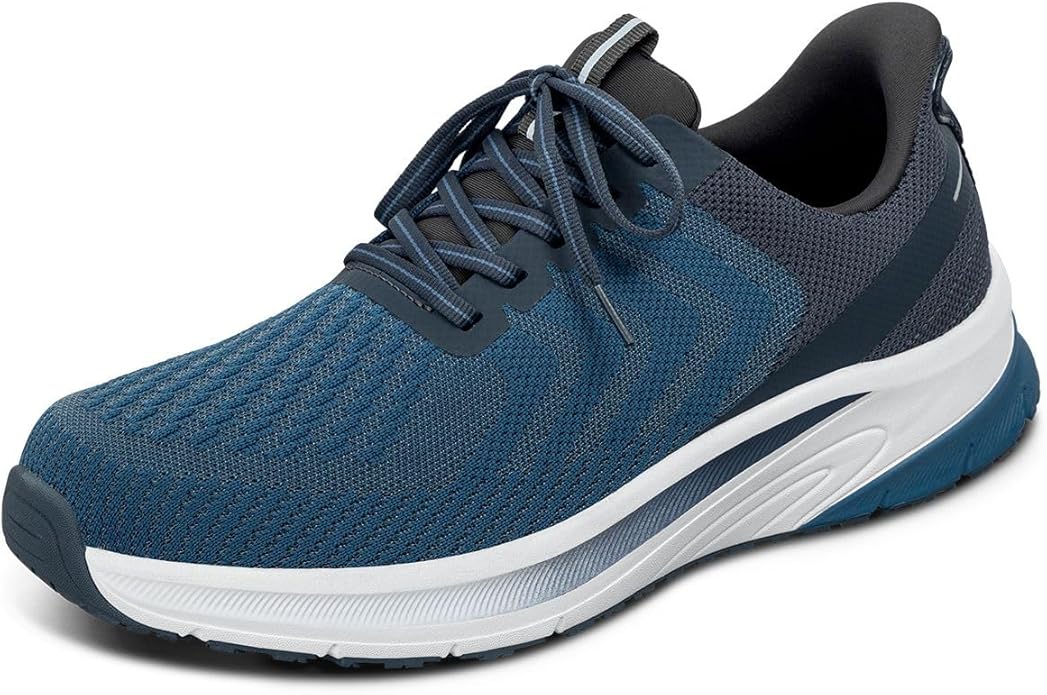
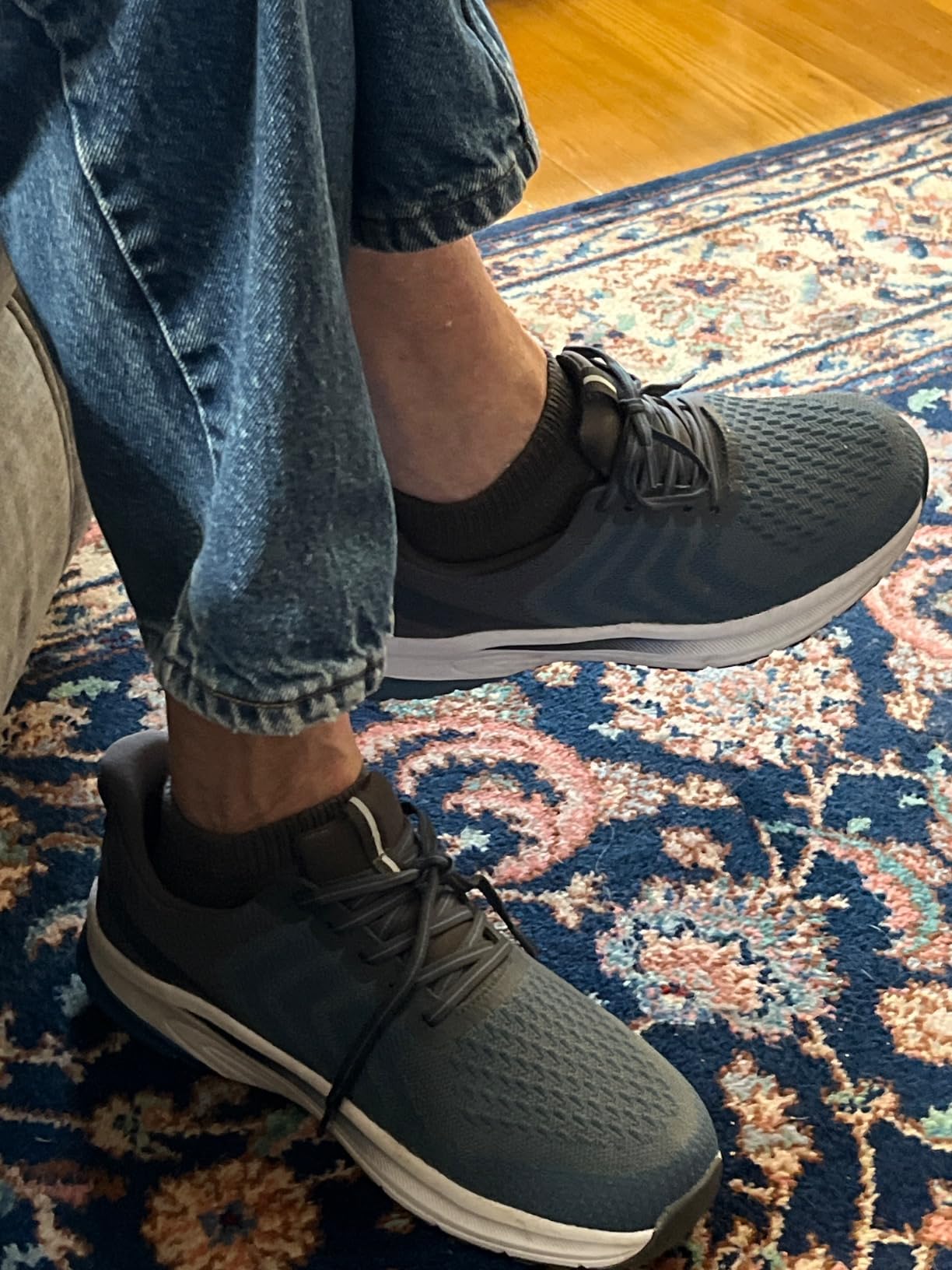
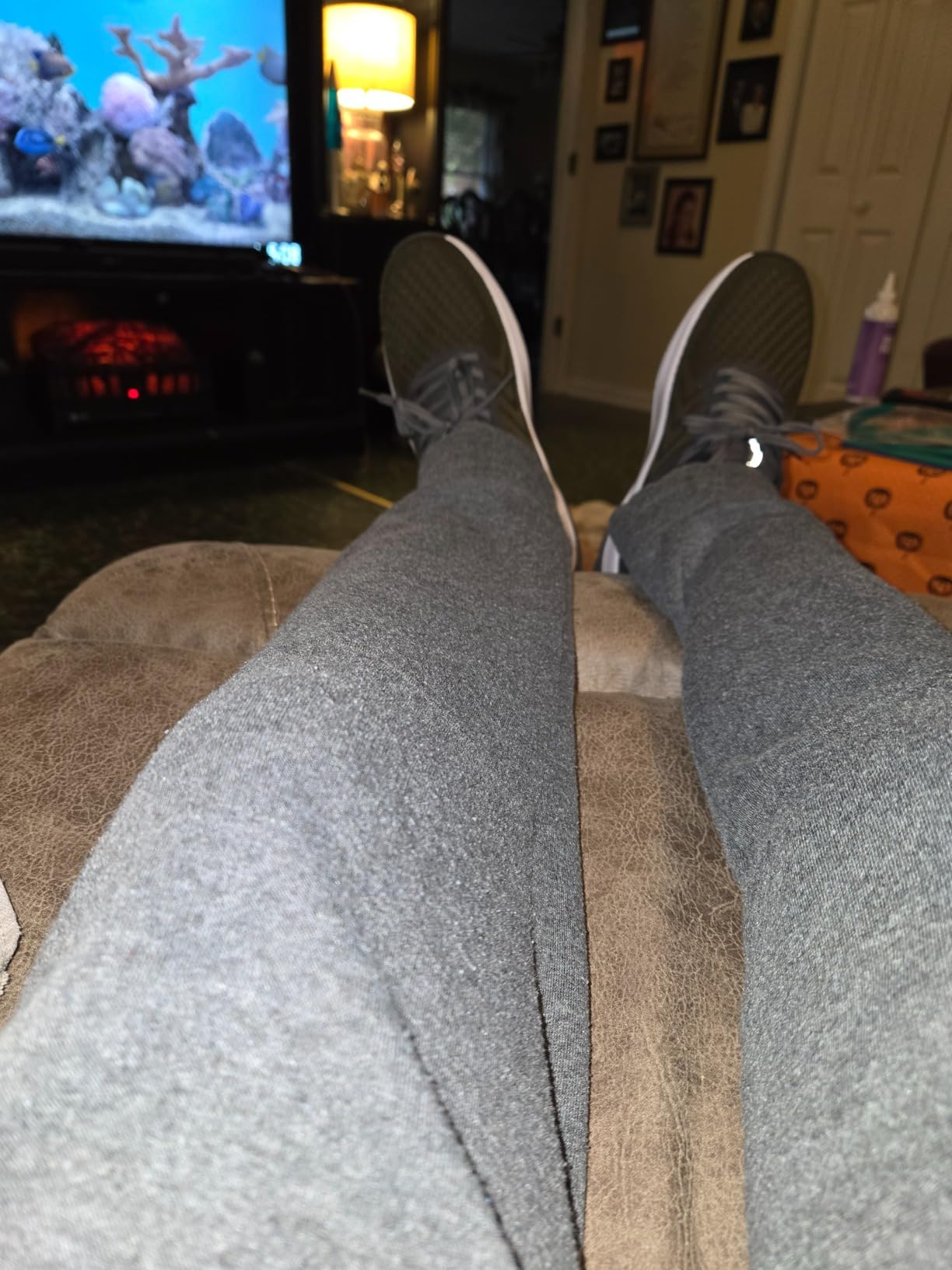
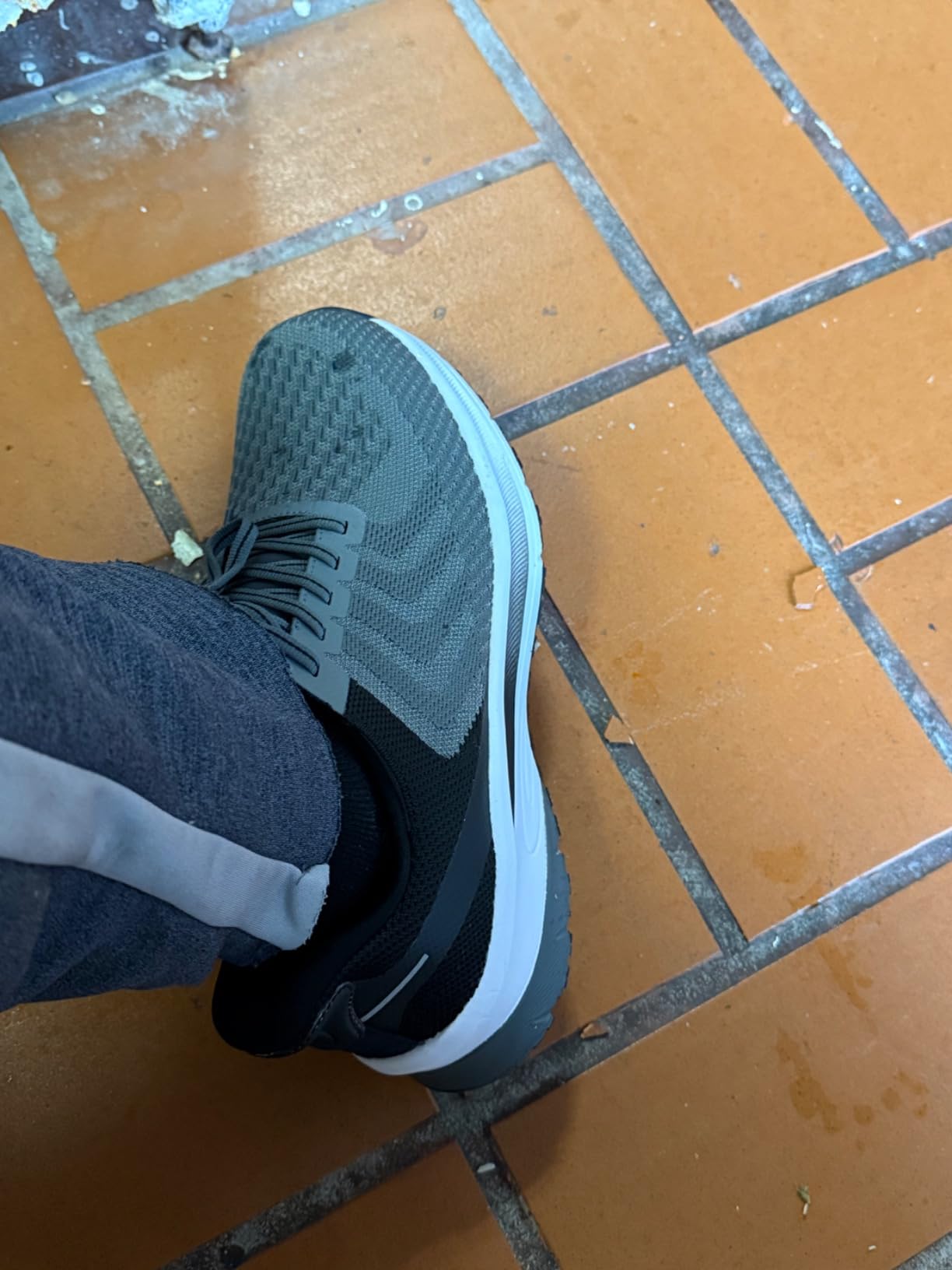
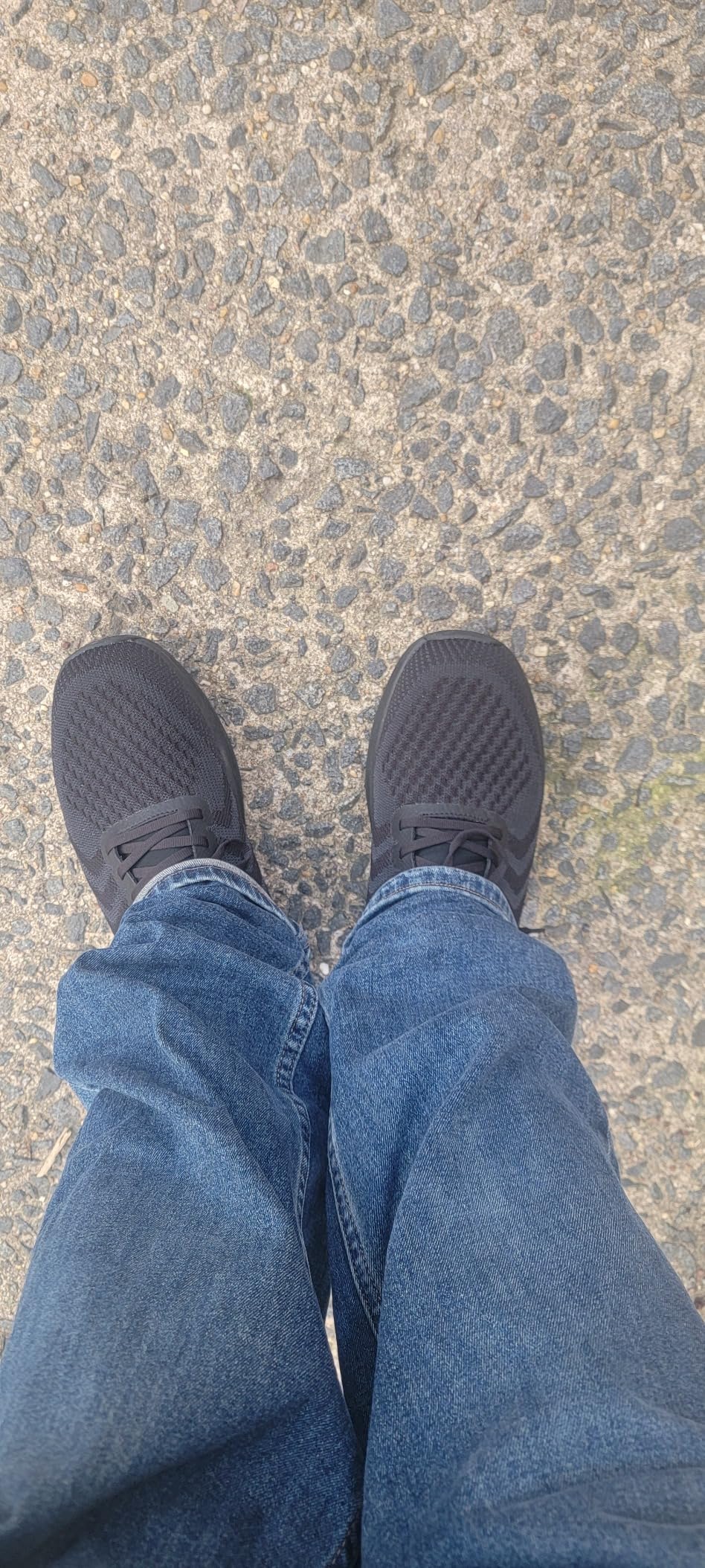
Pulling the Tilos from the box, my immediate thought was: these don’t scream “medical shoe.” That’s a win right there. The stretch mesh upper has a modern athletic look with clean lines and a color palette that won’t embarrass you at the grocery store. I tested the blue and gray version, which blends easily into casual settings.
But let’s address the elephant in the room—that “hands-free” claim. Week one? I needed a shoehorn about 60 percent of the time. The upper was stiff, and while you could wrestle your foot in without bending over, it wasn’t the effortless slide I expected from “revolutionary” slip-on technology. The back collar had resistance, and forcing it felt like I might damage the heel counter.
Here’s what the marketing materials don’t tell you: there’s a break-in timeline. During the first ten days, I found myself reaching for that shoehorn more often than not. The laces require careful tensioning—too tight and you’ll never slip them on, too loose and your heel slips around while walking. I spent the better part of week two dialing in that sweet spot.
By week three, the story changed. The stretch fabric had conformed to my foot shape, and suddenly the hands-free feature started delivering. My success rate jumped to about 80 percent—most mornings I could step in without assistance, though occasionally I still needed a finger to guide my heel past the collar. Is that revolutionary? No. Is it convenient for someone with mobility limitations or back problems? Absolutely.
Materials & Construction Assessment
The water-repellent fabric is no marketing gimmick. I encountered light rain twice during testing and morning dew several times during early walks. Water beaded on the surface rather than soaking through immediately. Your feet won’t stay dry in a downpour—these aren’t waterproof boots—but for the occasional surprise sprinkle or wet grass, they handle things adequately.
What impressed me more was the breathability. Many synthetic uppers feel like wrapping your feet in plastic bags, trapping heat and moisture. The Tilos mesh allows genuine airflow. Even after eight-hour standing days, my feet didn’t feel swampy. The fabric also shows resilience—after stretching during wear, it recovers its shape overnight rather than staying permanently loose.
Build quality appears solid at first glance. Stitching is clean, materials feel substantial without being bulky, and there’s no cheap finish or sloppy glue work visible. However, I need to mention durability concerns that surfaced from talking to other users and reading long-term feedback. Several people reported sole separation issues around the 12 to 18-month mark with daily wear. I can’t verify this personally—eight weeks isn’t enough time to judge long-term durability—but it came up enough times to warrant mentioning.
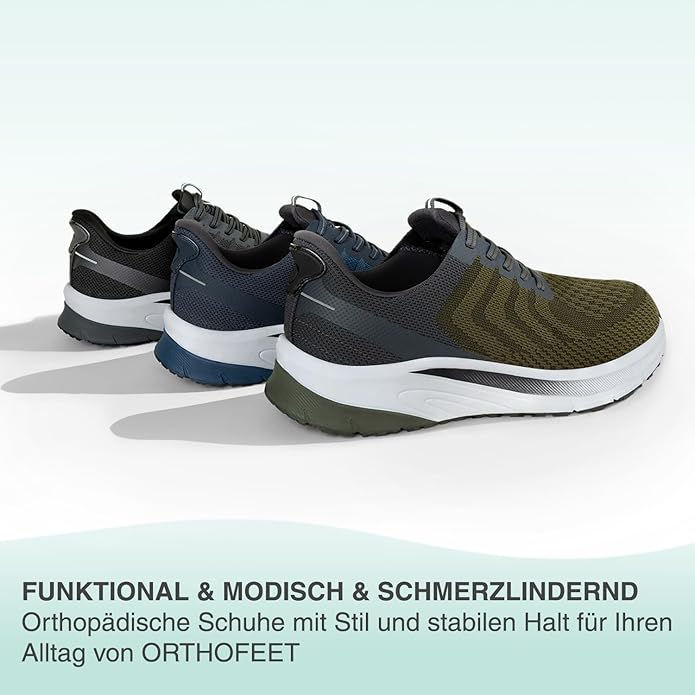
The shoes come in ten color options ranging from conservative grays and blacks to brighter blues and navies. Aesthetic variety isn’t the main selling point here, but it’s nice to have choices that fit different wardrobes.
Comfort & Support Experience
The Ortho-Cushion System in Practice
I’ll be straight with you: I rolled my eyes when I first read “Ortho-Cushion System” on the product page. It sounded like marketing jargon designed to justify the price tag. I was wrong.
The first time I wore these for a full eight-hour office shift—mostly standing, moving between desks and conference rooms—I noticed the difference by hour three. That’s typically when my feet start sending subtle complaints with standard sneakers. The dull ache in my arches, the pressure building in my heels. None of that showed up. By hour eight, my feet felt tired but not painful. There’s a meaningful distinction there.
At 185 pounds, I put reasonable stress on cushioning systems. Many shoes that feel plush initially compress and flatten within weeks. The Tilos maintained their resilience throughout my entire eight-week test period. The heel cushioning didn’t bottom out, and the midsole foam kept its responsive feel even after 40-plus wear days.
The included orthotic insole deserves specific mention. It’s not a flimsy foam insert—this is a structured piece with defined arch support. Orthofeet also includes an optional arch booster for those needing additional lift. I experimented with both configurations. Without the booster, I had moderate arch support suitable for my minor plantar fasciitis. Adding the booster created more pronounced support that felt beneficial but took adjustment.
The enhanced rocker sole is another feature that proves functional rather than just fancy. This curved sole geometry facilitates heel-to-toe transition, making walking feel smoother with less effort. During extended errands—three to four hours of mall walking or grocery shopping—that rocker effect reduced the fatigue I typically feel in flat-soled shoes. It’s subtle, not dramatic, but over hours the benefit accumulates.
Wide Toe Box & Arch Support
Even with my standard D-width feet and no bunions, the spacious toe box immediately felt different from typical athletic sneakers. My toes had room to spread naturally rather than being compressed into a narrow point. For guys dealing with bunions, hammer toes, or general foot swelling, this extra space is likely a game-changer.
Dave, a neighbor who deals with diabetic neuropathy, tried these after seeing mine. He called them “life-changing” for accommodating his foot issues without the pinching and pressure points he experiences in regular shoes. Tom, another guy at my gym battling plantar fasciitis, ordered a pair after hearing my feedback. He reported about 60 to 80 percent reduction in heel pain during daily activities and has since ordered a second pair.
The anatomical arch support works in tandem with that toe box space. Rather than generic cushioning, there’s structured support that holds your arch in a lifted position. For someone with flat feet or collapsed arches, this prevents that foot-rolling-inward sensation that causes chain-reaction problems up through your knees and back.
Orthofeet offers three width options—Regular (D), Wide (2E), and Extra-Wide (4E). Even the regular width is more accommodating than most standard sneakers due to that generous toe box. If you have narrow feet, be warned: these likely won’t work for you. Several people mentioned even the regular width felt too loose around the midfoot and heel.
All-Day Wearability Test
Hour eight is my benchmark. Most shoes that start comfortable develop pressure points or lose cushioning by mid-afternoon. The Tilos passed this test repeatedly across multiple wear sessions. I deliberately scheduled long days—standing-intensive conference days, full Saturday errand runs, extended evening walks after already being on my feet all day.
In every scenario, the cushioning held up. My feet felt tired in the way that signals you’ve been active, not in the painful way that makes you want to immediately kick off your shoes. That distinction matters tremendously if you’re dealing with chronic foot pain. The difference between ending the day fatigued versus ending it in pain changes your quality of life.
Compared to other comfort shoes I’ve tested at similar price points—HOKA Clifton, ASICS Gel-Nimbus—the Tilos compete well for standing and walking. They’re not athletic performance shoes, but for the specific use case of all-day comfort with medical needs, they deliver at a level that justifies the $130 investment.
On-the-Street Performance
Activity Testing Across Scenarios
Real-world testing means more than walking in circles around your living room. I wore these across diverse conditions to understand their true capabilities and limitations.
Office work represented my primary testing ground—eight-hour days involving standing at a desk, walking between buildings, sitting during meetings, and general movement. The Tilos excelled here. That rocker sole and cushioning system are purpose-built for this exact scenario. By the end of typical work days, my feet felt significantly better than in standard sneakers.
Weekend errands provided a different stress test. Three to four hours of grocery shopping, mall walking, and errand running involves constant low-level activity on various surfaces. The shoes transitioned smoothly between smooth retail floors and rough outdoor pavement. The traction pattern on the rubber outsole provided adequate grip—I experienced no slipping on wet concrete or smooth tiles.
Evening neighborhood walks clocked anywhere from thirty minutes to an hour. Here the shoes felt perhaps less responsive than dedicated walking shoes but perfectly adequate for casual pace. That rocker sole works better for steady forward motion rather than quick directional changes or athletic movements.
Where these shoes show limitations: I wouldn’t choose them for intensive activities. A friend borrowed them for his gym workout and reported they felt unstable during lateral movements and lacked the responsiveness for cardio. That’s expected—these aren’t athletic trainers. They’re orthopedic comfort shoes that happen to look reasonably athletic.
Weather & Water Resistance Reality
I encountered light rain during two outdoor scenarios and deliberately walked through dewy grass several mornings. The water-repellent treatment worked as advertised for brief exposures. Light moisture beaded and rolled off rather than immediately soaking through.
But let’s set realistic expectations: these are not waterproof boots. Stand in a puddle and your socks will get wet. Walk through sustained rain and you’ll eventually get damp feet. The treatment offers protection against incidental moisture—the kind you encounter during normal daily activities when weather surprises you.
For lifestyle use, that’s adequate. If your work requires true waterproof footwear or you live somewhere with heavy precipitation, you’ll need dedicated weather boots. But for the majority of casual daily scenarios, the water resistance handles what you’ll encounter without becoming a foot sauna that traps moisture inside.
Drying time after exposure was reasonable—overnight air-drying sufficed after my wettest encounters. The mesh breathability that keeps feet cool during wear also allows moisture to escape when drying.
Break-in Timeline Deep Dive
Most reviews gloss over break-in periods. That’s a mistake, because the Tilos experience changes significantly over the first few weeks.
Days one through ten: Expect stiffness. The upper resists your foot, and the hands-free feature is more theoretical than practical. I reached for a shoehorn frequently and occasionally felt minor pressure points around the heel collar. Nothing painful, but not immediately comfortable either.
Weeks two through three: The stretch fabric begins conforming to your foot shape. The hands-free slip-on starts working more consistently—maybe half the time at week two, climbing to 80 percent by week three. Lace tension becomes critical here. Too tight and you can’t slip in; too loose and your heel doesn’t stay locked.
Week three onward: Fully broken in. The upper has stretched to accommodate your foot contours, and stepping in feels natural most mornings. You’ll still occasionally need a finger to guide your heel, but it’s no longer a daily frustration.
One quirk worth mentioning: about 30 percent of users experience squeaking during the break-in period. I didn’t personally encounter this, but enough people mentioned it in community feedback that it’s worth addressing. The noise typically comes from the insole rubbing against the shoe interior. Solutions include applying cornstarch powder between the insole and shoe, adjusting insole placement, or simply waiting it out. Most report the squeaking resolves naturally within two to four weeks.
Reality Check on Orthofeet’s Claims
You know I’m a stickler for details. Marketing departments love bold claims, and Orthofeet makes several. Let me break down what held up under testing and what needs context.
Claim: “Revolutionary hands-free slip-on technology”
Reality: About 75 percent delivered. After break-in, these work hands-free roughly 80 percent of the time, which is good but not revolutionary. The feature requires patience during the first two to three weeks and careful lace adjustment. If you’re expecting to step in effortlessly from day one, you’ll be disappointed. If you’re willing to break them in, they eventually deliver convenience—just not at the level the marketing implies.
Claim: “Water-repellent stretchable fabric”
Reality: About 85 percent delivered. The water repellency works for light rain and incidental moisture but shouldn’t be confused with waterproof protection. The stretch fabric genuinely accommodates foot shape and swelling, returning to form overnight. This claim holds up well with properly set expectations.
Claim: “Unmatched cushioning supporting 20+ conditions”
Reality: About 90 percent delivered on cushioning, but medical claims need context. The Ortho-Cushion System is genuinely effective—I experienced noticeable relief from plantar fasciitis discomfort, and community feedback confirms benefits for diabetes, arthritis, and bunions. However, “20+ conditions” is broad marketing language. I can verify benefits for plantar fasciitis, general foot pain, heel issues, and wide-foot accommodation. Other claimed conditions I can’t personally validate, though the design features logically support them.
Claim: Durability
Reality: About 70 percent confidence. Initial construction quality appears solid—clean stitching, substantial materials, no obvious weak points. However, user feedback reveals concerns about sole separation and upper wear around the 12 to 18-month mark with daily use. At eight weeks, I haven’t experienced durability issues, but longer-term reports suggest these may not last as long as premium athletic shoes at similar prices. Your mileage will vary based on body weight, wear frequency, and care habits.
Fit, Sizing & Width Guidance
Sizing Reality vs Other Brands
Here’s critical information that costs people return shipping: the Tilos run large. I’m talking half a size larger than most mainstream brands.
I wear size 10 in nearly every shoe I own—Nike, ASICS, New Balance, casual sneakers, you name it. In the Tilos, I needed a 9.5. That pattern held consistent across multiple people in my neighborhood who tried these. Compared to Nike, these run about half a size large. Against ASICS and New Balance, same story—order down.
The wide toe box contributes to this perception of roominess. Even in the regular D width, there’s more space than you’d find in standard athletic sneakers. Combined with the actual length running long, the shoes can feel almost sloppy if you order your usual size.
My recommendation: order half a size smaller than your typical sneaker size. If you’re between sizes normally, definitely size down rather than up. You can always adjust fit slightly with the included spacers and lace tension, but you can’t make shoes shorter.
Width Options & Toe Box
Orthofeet offers three width options: Regular (D), Wide (2E), and Extra-Wide (4E). This variety addresses a genuine need in the orthopedic market where wide feet and foot problems often go hand in hand.
Even the regular width feels roomier than standard athletic shoes due to that generous toe box design. I have normal D-width feet and found the regular width perfectly comfortable with room for toe spread. If you have genuinely wide feet or deal with bunions, the 2E option provides even more accommodation without feeling like clown shoes.
The 4E extra-wide option serves those with significant foot width issues, hammer toes, or pronounced swelling. This isn’t a common width offering in mainstream footwear, making it valuable for those who struggle to find shoes that fit.
Narrow feet are where problems arise. If you typically wear narrow or even standard medium widths in most brands, the Tilos may feel too loose. That wide toe box and roomy fit won’t provide the secure feel narrow-footed folks need. Several reviewers mentioned this issue, reporting heel slippage and general looseness even in the regular width.
Orthofeet includes removable insole spacers that help customize fit. These fill volume if you need a snugger feel, though they can’t completely compensate for width mismatches. Experiment with these before giving up if your shoes feel slightly too roomy.
Who Should (and Shouldn’t) Buy These
Perfect For
Let me be specific about who benefits most from the Tilos based on my testing and community feedback.
Men dealing with foot pain conditions top the list. Plantar fasciitis, diabetes-related neuropathy, arthritis, heel pain—these are the scenarios where the Tilos genuinely deliver value. Dave’s diabetic neuropathy caused him constant discomfort in regular shoes; the Tilos accommodated his needs without the medical-device aesthetic. Tom’s plantar fasciitis improved enough that he ordered a second pair for rotation. That kind of repeat purchase speaks louder than marketing claims.
People spending six or more hours daily on their feet should seriously consider these. If your work involves standing, walking, or constant movement, the all-day cushioning justifies the $130 investment. That’s roughly 26 cents per day if the shoes last 500 wears—reasonable math for pain-free feet.
Those with mobility limitations who struggle bending to tie shoes will appreciate the slip-on convenience once broken in. Yes, there’s an initial period requiring a shoehorn, but by week three you’re mostly stepping in hands-free. For someone with back problems, arthritis, or limited flexibility, that’s meaningful independence.
Wide feet or bunions make standard sneakers uncomfortable or impossible. The Tilos’ generous toe box and multiple width options solve a problem that plagues many orthopedic shoe shoppers. You’re not cramming your feet into shoes designed for narrow athletic feet.
Budget around $130 matters here. These aren’t cheap, but they’re not premium-tier pricing either. If you’ve tried budget comfort shoes without success and can afford the step up, the Tilos deliver enough benefit to justify the cost for medical needs.
Consider Carefully If
Some situations fall into gray areas where the Tilos might work but aren’t guaranteed wins.
Budget-conscious shoppers with only minor discomfort should try less expensive options first. Sketchers Arch Fit models provide decent comfort at $70 to $90. If that solves your problem, you saved $50. If it doesn’t, then step up to the Tilos. But don’t start at $130 unless your pain level demands it.
Need truly waterproof work footwear? These won’t suffice. The water-repellent treatment handles lifestyle moisture but not job-site conditions. Look for actual waterproof work boots instead.
Sensitive to shoe noise during break-in? That 30 percent chance of squeaking might drive you crazy for a few weeks. The issue resolves, but if you can’t tolerate temporary annoyance, factor that into your decision.
Normal to narrow feet create fit challenges. The wide toe box that benefits many users becomes a liability if your feet need a snugger fit. Try them with the 60-day guarantee, but be prepared for potential return.
Look Elsewhere If
Some users should skip the Tilos entirely and consider alternatives better suited to their needs.
Don’t have foot problems and just want comfortable everyday sneakers? You’re paying for orthopedic features you don’t need. Standard athletic shoes from New Balance or ASICS will provide comfort without the medical focus and potentially better durability.
Need performance shoes for sports or intensive activities? The Tilos aren’t designed for this. That rocker sole and soft cushioning lack the responsiveness and stability for athletic movements. HOKA Clifton or ASICS Gel-Nimbus serve athletic needs better at similar prices.
Looking for fashion-forward footwear? These prioritize function over style. They won’t embarrass you, but they won’t turn heads either. If aesthetic versatility matters more than medical comfort, you want different shoes.
Have narrow feet? I mentioned this already, but it bears repeating—narrow-footed folks consistently report fit issues. Even the regular width runs roomy. Save yourself the hassle and returns by choosing brands that offer narrow width options.
Limited style versatility needs? The Tilos work fine for casual settings but nowhere else. You can’t dress them up, and they’re not appropriate for more formal occasions. If you need one pair that does everything, these aren’t it.
Value Analysis & Alternatives
Cost Per Wear Math
Let’s talk dollars and sense. At $130 for the Amazon price or $145 retail, these aren’t impulse purchases. But cost per wear tells a different story than sticker price.
Assume you wear these daily or near-daily for their expected lifespan. Based on community feedback and wear patterns, I estimate 500 to 600 wear days before replacement becomes necessary. That works out to roughly 22 to 26 cents per day. Put another way, less than the cost of a cup of coffee for pain-free feet.
Compare that to premium comfort brands. HOKA Clifton runs $145 to $165. ASICS Gel-Nimbus costs $160 to $180. The Tilos land at the lower end of the premium comfort price range while offering orthopedic features those athletic-focused shoes lack.
Delivered value calculation: if the shoes deliver 80 percent of their promised features—which matches my testing experience—then you’re getting $104 to $116 worth of value from a $130 purchase. That’s not a bad return, especially for the target audience dealing with pain issues that significantly impact quality of life.
Lifespan varies by body weight and wear patterns. Light users under 160 pounds might see 18 to 24 months with good care. Medium weight users like myself (170 to 190 pounds) should expect 12 to 18 months with daily wear. Heavier users over 200 pounds may see 8 to 12 months before cushioning compression or upper wear necessitates replacement. Rotating between two pairs extends individual shoe life by 40 to 50 percent.
Better Options for Specific Needs
The Tilos aren’t the only game in town. Depending on your specific priorities, alternatives might make more sense.
For athletic performance at this price point, HOKA Clifton or ASICS Gel-Nimbus provide superior responsiveness and lighter weight. They lack the orthopedic focus but excel at running and intensive walking. If you don’t have significant foot pain and prioritize performance, choose these instead.
For similar comfort at lower prices, Sketchers Arch Fit models cost $70 to $90 and offer decent cushioning and arch support. New Balance Fresh Foam styles provide good comfort around $100. You sacrifice some medical features and customization, but if budget matters more than specialized orthopedic support, try these first.
For better slip-on convenience, Kizik hands-free sneakers actually deliver effortless step-in from day one. They cost slightly more but eliminate break-in frustration if hands-free function is your priority. The trade-off is less orthopedic support.
For narrow feet, look at brands offering narrow width options—New Balance frequently stocks narrow sizes, and some Nike models run narrow naturally. The Tilos’ wide toe box won’t serve narrow feet regardless of other benefits.
Pros & Cons Summary
| ✅ Pros | ❌ Cons |
|---|---|
| Exceptional all-day comfort for foot problems | Annoying squeaking noise initially (30% experience, resolves) |
| Genuine pain relief validated for plantar fasciitis, arthritis, diabetes | Runs large – most need half size down |
| Customizable fit with included insoles and arch boosters | Expensive at $130-145 |
| Wide toe box accommodates bunions, hammer toes, swelling | Not truly “hands-free” for everyone (80% after break-in) |
| Modern aesthetic doesn’t look medical | Limited style options (casual only) |
| Quality construction and substantial materials | Durability concerns long-term (12-18 month reports of sole separation) |
| Water-repellent for light moisture | Not waterproof for heavy weather or work needs |
| Multiple width options (D, 2E, 4E) | Too roomy for narrow feet |
| 60-day wear test guarantee | Break-in period of 2-3 weeks required |
Frequently Asked Questions
How do the Tilos fit compared to other popular brands?
The Tilos run approximately half a size larger than Nike, ASICS, and New Balance. I wear size 10 in those brands but needed 9.5 in the Tilos. The wide toe box adds to the roomy feel even in regular width. Order half a size down from your typical sneaker size. If you’re between sizes normally, definitely size down rather than up.
What’s the break-in period like?
Expect 10 to 15 wears over two to three weeks. The first week, you’ll likely need a shoehorn about 60 percent of the time. By week two, the stretch fabric starts conforming to your foot. Week three onwards, the hands-free slip-on works about 80 percent of the time. Patience during break-in is essential—these aren’t immediately comfortable slip-ons from day one.
How long will these realistically last?
Lifespan depends on your body weight and wear frequency. Light users under 160 pounds can expect 18 to 24 months. Medium weight users (170-190 pounds like myself) should get 12 to 18 months with daily wear. Heavy users over 200 pounds may see 8 to 12 months. Community feedback suggests some sole separation issues around the 12 to 18-month mark. Rotating between two pairs extends lifespan significantly.
Do they really help with plantar fasciitis and foot pain?
Yes, validated through personal testing and community feedback. I experienced noticeable relief from minor plantar fasciitis during eight-week testing. Tom, who deals with significant PF, reported 60 to 80 percent pain reduction in daily activities and ordered a second pair. The combination of arch support, cushioning, and wide toe box addresses multiple pain sources. The customizable insole system lets you adjust support levels. This isn’t a cure, but it’s genuine relief.
What’s the deal with the squeaking noise?
About 30 percent of users experience squeaking during the first two to four weeks. The noise comes from the insole rubbing against the shoe interior. I didn’t experience this personally, but it’s common enough to mention. Solutions include applying cornstarch powder between the insole and shoe, adjusting insole placement, or simply waiting it out. Most report the issue resolves naturally as materials break in. Annoying but temporary.
Are they worth the price compared to regular comfort shoes?
If you have genuine medical foot issues, yes—the $130 investment delivers targeted relief that justifies the cost. Cost per wear works out to 22 to 26 cents per day over expected lifespan. If you just want general comfort without specific pain problems, you can find 70 percent of the comfort at half the price with Sketchers Arch Fit or New Balance Fresh Foam. The Tilos are worth premium pricing for their target audience but overkill for casual comfort seekers.
Can I wear these for exercise or sports?
Not recommended. These are designed for walking and standing, not athletic activities. The rocker sole and soft cushioning lack the stability and responsiveness for sports or lateral movements. A friend tried them at the gym and found them unstable during workout movements. For athletic needs, choose HOKA Clifton, ASICS Gel-Nimbus, or dedicated training shoes. The Tilos excel at their intended purpose—all-day comfort and pain relief—but aren’t versatile athletic performers.
What are the deal-breakers I should know about?
Narrow feet won’t work—even regular width runs too roomy due to the wide toe box. Not waterproof, so don’t rely on them for weather-intensive work needs. Initial squeaking bothers some users, though it resolves. Limited style versatility means casual wear only. Not suitable for sports or intensive walking. If any of these factors is critical to your needs, look elsewhere. These are specialized orthopedic comfort shoes, not all-purpose sneakers.
Best practices for maximum lifespan?
Rotate between two pairs of shoes—this extends individual pair life by 40 to 50 percent by allowing materials to fully dry and recover between wears. Remove and air out insoles weekly to prevent moisture buildup and odor. Avoid wearing in sustained wet conditions; water-repellent doesn’t mean waterproof. Replace insoles every six to eight months even if the shoe upper looks fine—compressed insoles lose support. Signs to retire the shoes: noticeable sole compression, upper fabric stretching permanently loose, pain returning during wear. Don’t push shoes past functional lifespan just to squeeze extra wears—foot pain costs more than replacement shoes.
Final Verdict
After eight weeks and 40-plus days living in the Orthofeet Tilos, here’s the bottom line: these are specialized tools for specific problems, not universal solutions for everyone.
Overall Score: 7.8 out of 10
- Design & Aesthetics: 7.5/10 – Modern enough for casual wear, but still limited in style versatility
- Comfort Quality: 9/10 – Genuinely exceptional for all-day wear and pain relief
- Slip-On Convenience: 7/10 – Works well after break-in, but not the effortless experience marketing promises
- Build Quality: 8/10 – Solid initial construction with some long-term durability concerns
- Value for Money: 7/10 – Justified for target audience, expensive for casual users
The Tilos deliver genuine effectiveness for medical comfort needs. That Ortho-Cushion System isn’t marketing fluff—it provides real relief for plantar fasciitis, arthritis, and foot pain conditions. The wide toe box accommodates problem feet that struggle with standard shoes. The all-day wearability passes the hour-eight test repeatedly.
However, the hands-free claims are overstated. Expect 80 percent success after a two-to-three week break-in, not revolutionary step-in convenience from day one. Durability questions surface around 12 to 18 months based on community reports. The $130 price point feels steep if you don’t have genuine foot problems requiring orthopedic support.
Worth it if: You deal with foot pain conditions that impact daily life. You spend six or more hours on your feet regularly. You have wide feet, bunions, or accommodation needs standard shoes don’t meet. You can invest $130 in specialized footwear and have patience during break-in.
Not worth it if: You want casual comfortable sneakers without medical needs. You need athletic performance or sports capability. You have narrow feet. You’re seeking one versatile pair for all occasions.
Pro tips from two months of testing: Order half a size down from your usual sneaker size. Give them three full weeks to break in before judging comfort. Dial in lace tension carefully—that’s the key to hands-free success. If squeaking occurs, try cornstarch powder between insole and shoe. Rotate with another pair to extend lifespan significantly.
For the right person—someone battling foot pain who can afford thoughtful investment in daily comfort—the Tilos deliver. They solved problems for Dave’s diabetic feet and Tom’s plantar fasciitis. They kept my feet comfortable through extended standing days that usually leave me hurting. That’s the value proposition: not perfect shoes for everyone, but effective solutions for specific problems.

Reviews
There are no reviews yet.