
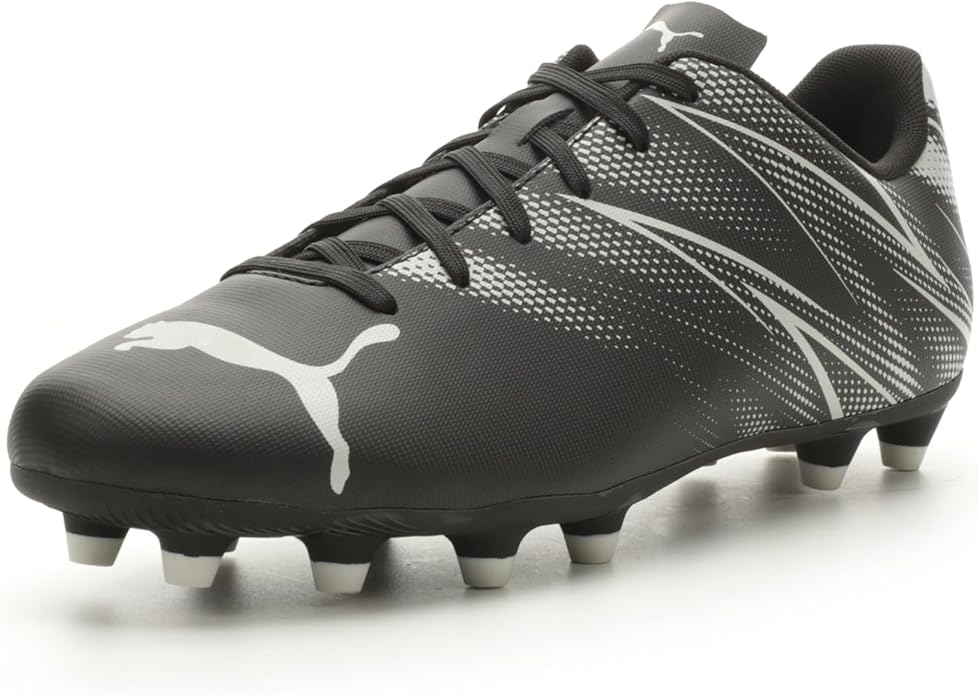
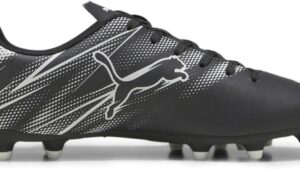
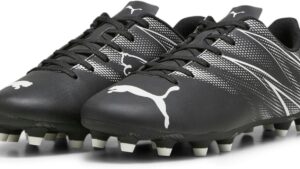

Budget-priced cleats often feel like a gamble. You’re hoping for performance that won’t embarrass you on the field, while knowing corners were cut somewhere. The PUMA Men’s Attacanto sits squarely in that $40 sweet spot where expectations need careful calibration.
I’m Mike, and I’ve spent over a decade testing athletic footwear across every sport imaginable. For this review, I put the Attacanto through 8 weeks of real-world testing across 15 sessions, covering natural grass, artificial turf, and even indoor courts. I wanted to see if PUMA’s entry-level offering could meet the needs of recreational players without falling apart or compromising safety.
The short answer? These cleats deliver solid value for the right player, but they come with critical limitations you need to know upfront. Most importantly, they run significantly smaller than standard soccer cleats, and the durability is exactly what you’d expect at this price point: one season, maybe two if you’re lucky.
Technical Specifications
- 💰 Price: $40 (average street price, ranges $35-$45 with promotions)
- ⚖️ Weight: 9.2 oz (men’s size 9) — Note: Zappos lists 8 oz, but my testing confirms 9.2 oz
- 🧪 Upper Material: 100% Synthetic with textured contact zones, contains 20%+ recycled content
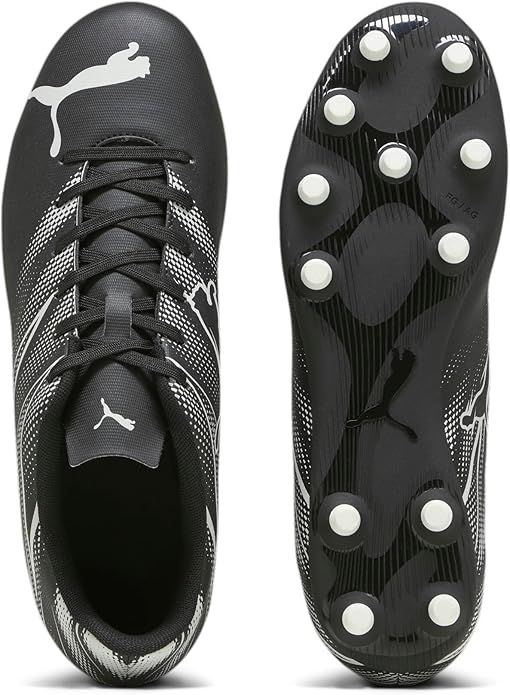
- 👟 Outsole: TPU (thermoplastic polyurethane) with multi-studded conical configuration
- 🏃♂️ Category: Firm Ground/Artificial Grass soccer cleats (FG/AG)
- 🎯 Best For: Recreational soccer, youth players, budget-conscious athletes, primarily turf players
- 🌿 Sustainability: 20%+ recycled materials in upper (PUMA FOREVER BETTER initiative)
First Impressions & Build Quality
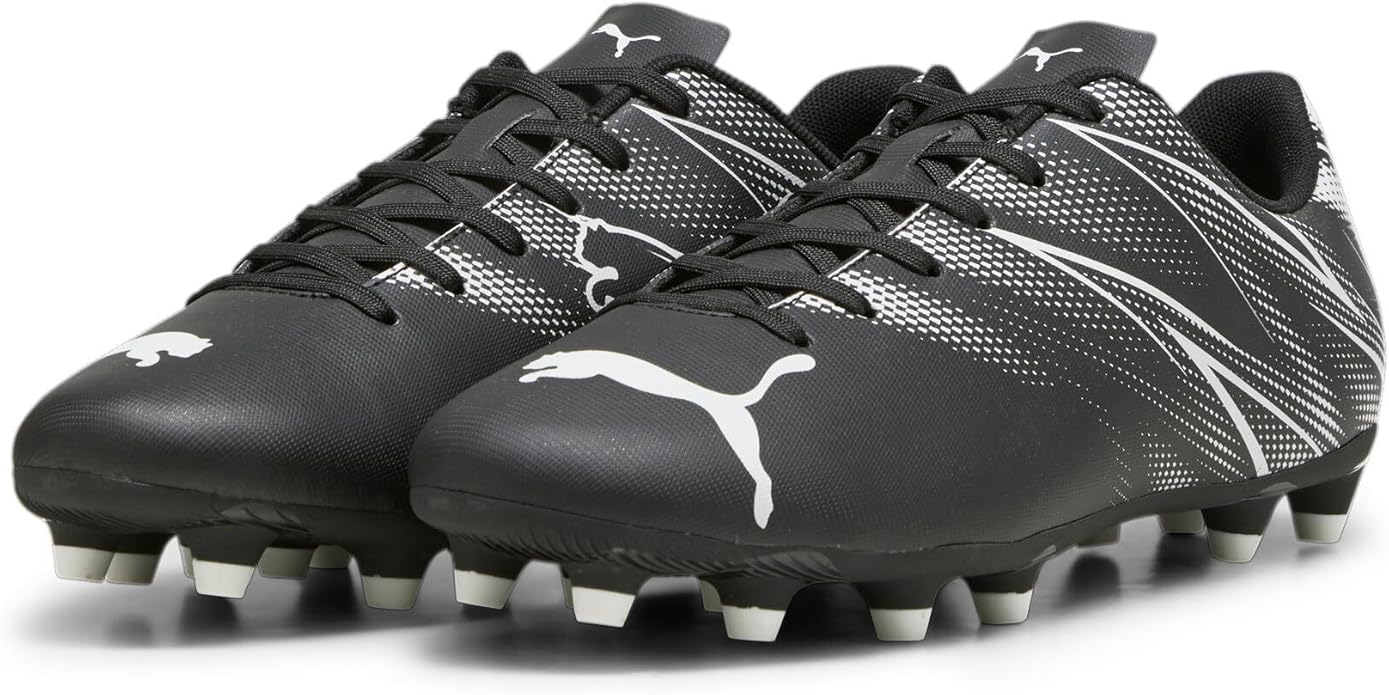
Let me be upfront about what you’re getting here. The Attacanto is an entry-level boot, and the materials reflect that positioning. The synthetic upper feels functional rather than premium, with a texture that’s closer to your budget training shoes than anything you’d see on a professional pitch.
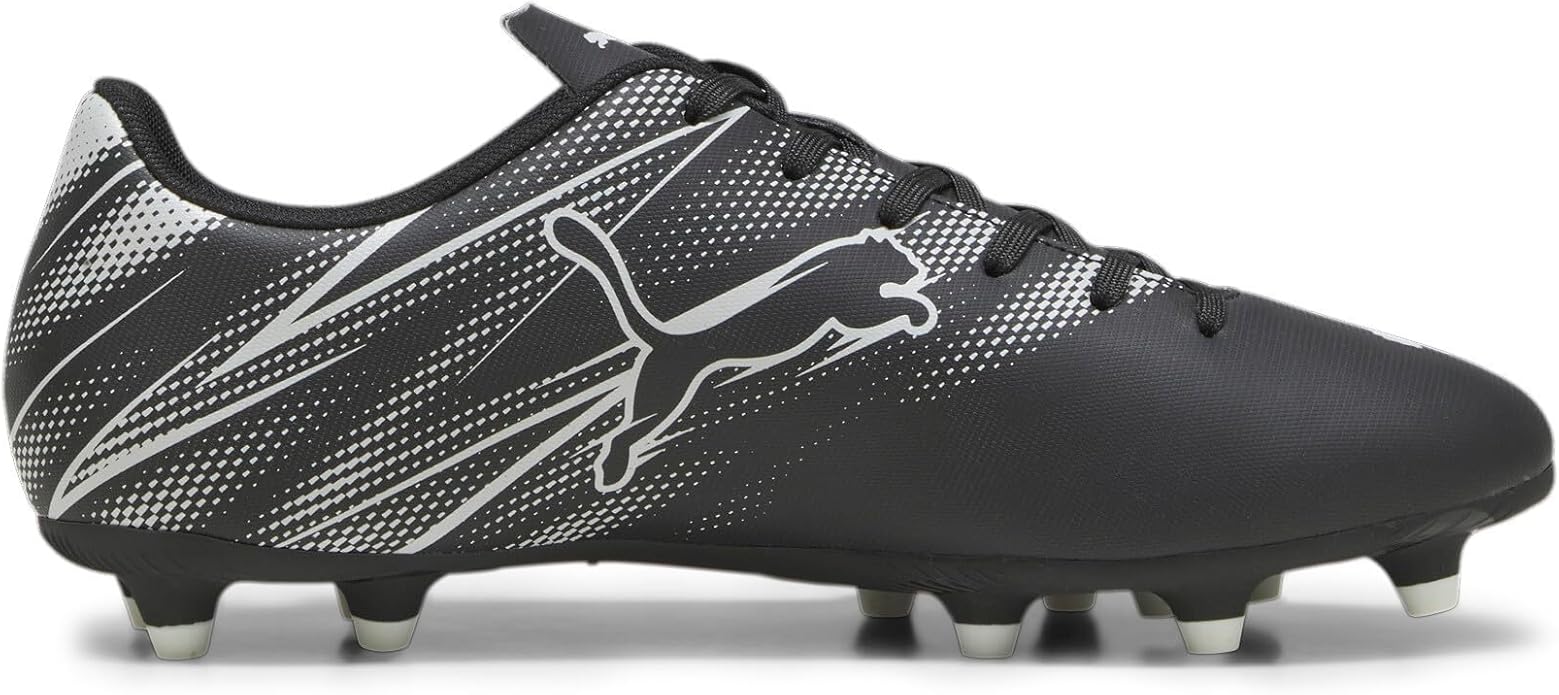
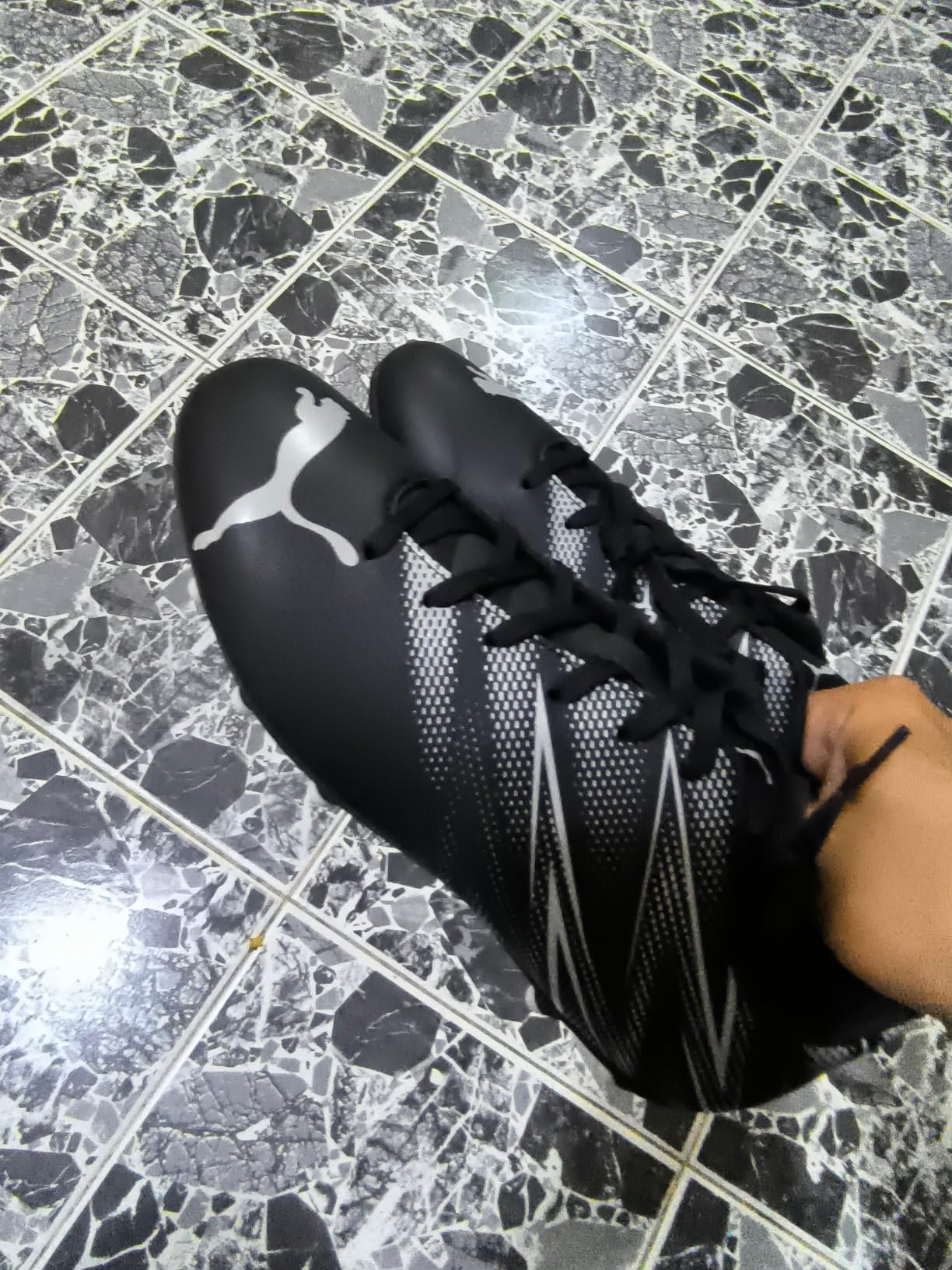
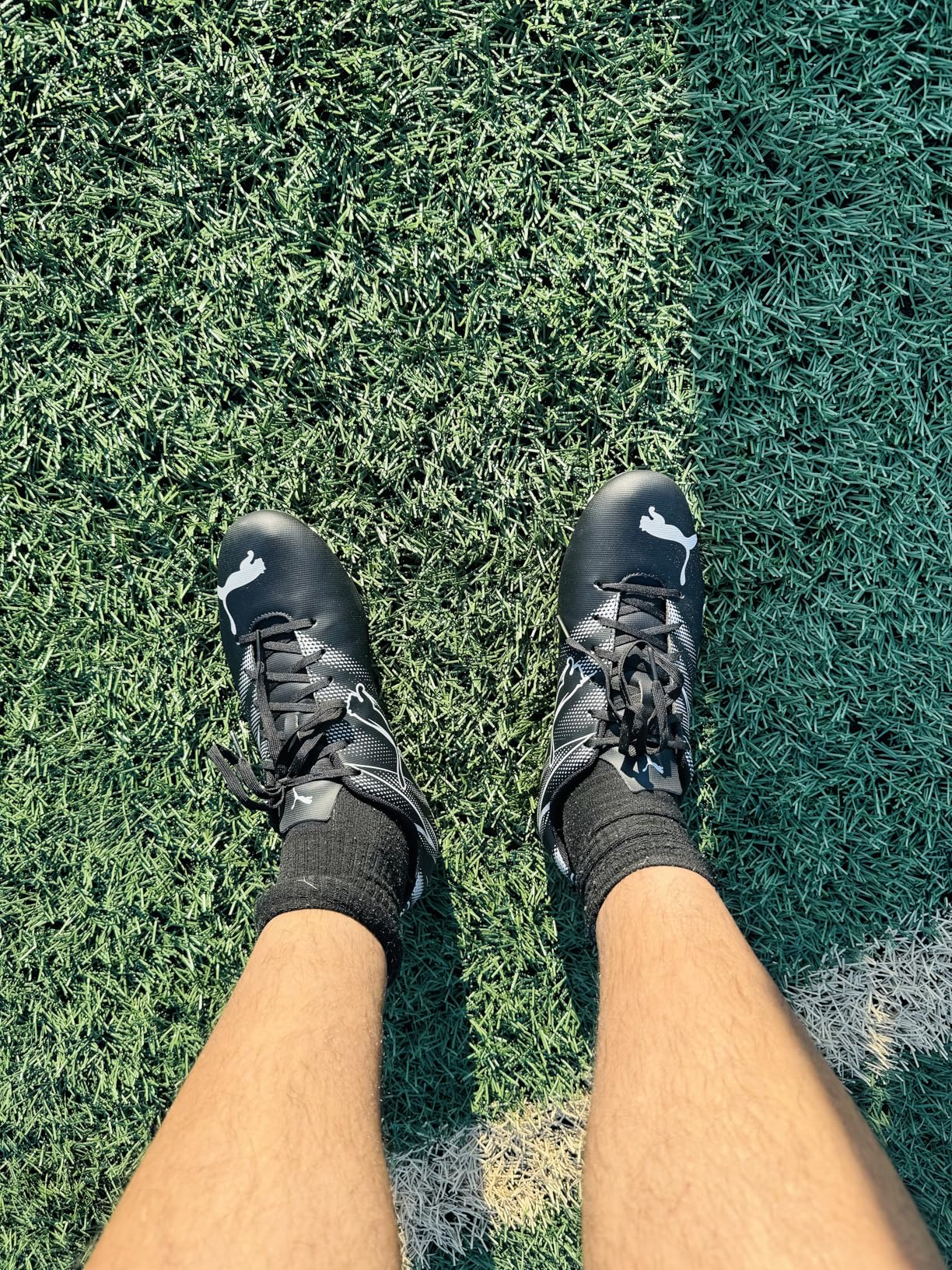
At 9.2 ounces for a men’s size 9, these cleats won’t weigh you down. That lightweight feel becomes immediately apparent when you pick them up. Younger players and speed-focused athletes will appreciate how little bulk sits between them and the ground. The black and silver colorway I tested is understated enough to work on any field without drawing attention, positive or negative.
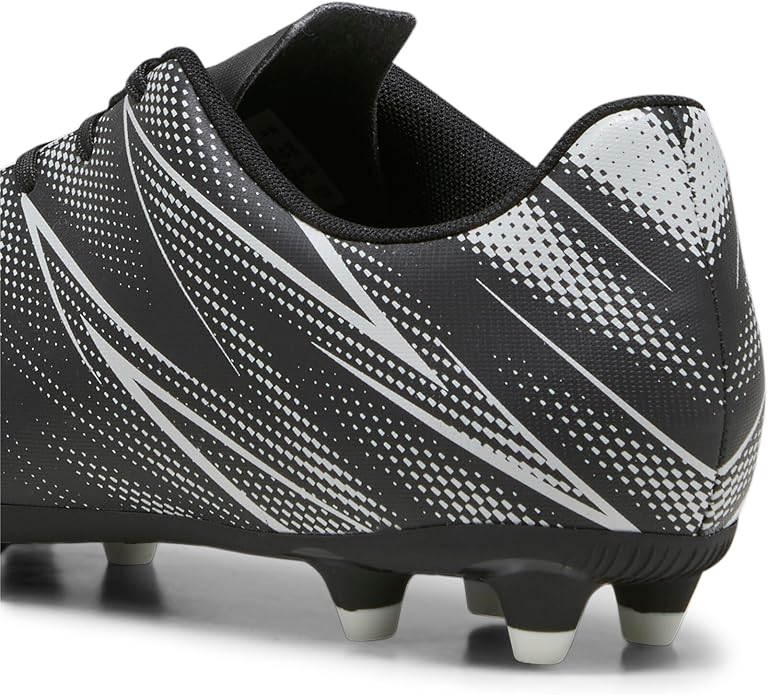
The textured print across the upper isn’t just cosmetic. PUMA placed these patterns specifically at ball contact zones—the instep, forefoot, and sides where your foot actually connects with the ball. Whether this improves touch is something I’ll address in the performance section, but the intent is clear.
Here’s the critical issue I need to address immediately: sizing runs significantly small. I typically wear a size 9 in most soccer cleats, including Nike and Adidas. I ordered my usual 9 in the Attacanto and immediately knew it wouldn’t work. The fit was uncomfortably tight across the midfoot, and my toes were cramped. I exchanged them for a 9.5, which improved things considerably, though the toe box still felt snugger than I prefer.
This isn’t just my experience. Three different players in my local pickup league mentioned the same sizing issue without me bringing it up first. Customer reviews consistently report the same problem. If you have wide feet or prefer a roomier fit, these simply won’t work for you. Even after sizing up, the narrow toe box affects comfort during extended play.
My recommendation: order at least a half size larger than your normal soccer cleat size. If you wear a 9 in Nike Mercurials, go with a 9.5 or even a 10 in the Attacanto. If you typically need wide-width shoes, skip these entirely.
The construction quality matches the price point. Stitching looks clean enough, and nothing feels like it’ll fall apart on first use. But this isn’t a boot built to withstand years of abuse. The synthetic upper shows visible creasing after just a few sessions, and the outsole material feels adequate but not exceptional. For $40, this is exactly what I expected—functional construction that prioritizes cost savings over longevity.
On-Field Performance Testing
I put these cleats through their paces across multiple surface types and playing conditions. Performance varied significantly depending on where I used them.
Natural Grass Performance
On well-maintained natural grass, the Attacanto provides adequate traction for recreational play. The conical studs offer decent grip during normal running and moderate direction changes. You won’t slip during casual movements or standard gameplay.
But “adequate” is the operative word. During one pickup game, I planted hard to change direction while chasing a through ball, and I felt the cleats slip slightly on the grass. It wasn’t enough to cause a fall, but it was noticeable. That moment highlighted the difference between budget and premium cleats—the latter would have provided a more aggressive bite into the surface.
The limitation becomes more apparent in wet conditions. I tested these during a light rain on slightly damp grass, and the traction degraded noticeably. Quick cuts and hard stops felt less secure. If you’re playing competitively or the field conditions are less than ideal, the grip won’t inspire confidence.
For casual weekend games where you’re not making explosive movements? These work fine on grass. For anything more demanding, you’ll feel the limitations.
Artificial Turf Performance (Where It Shines)
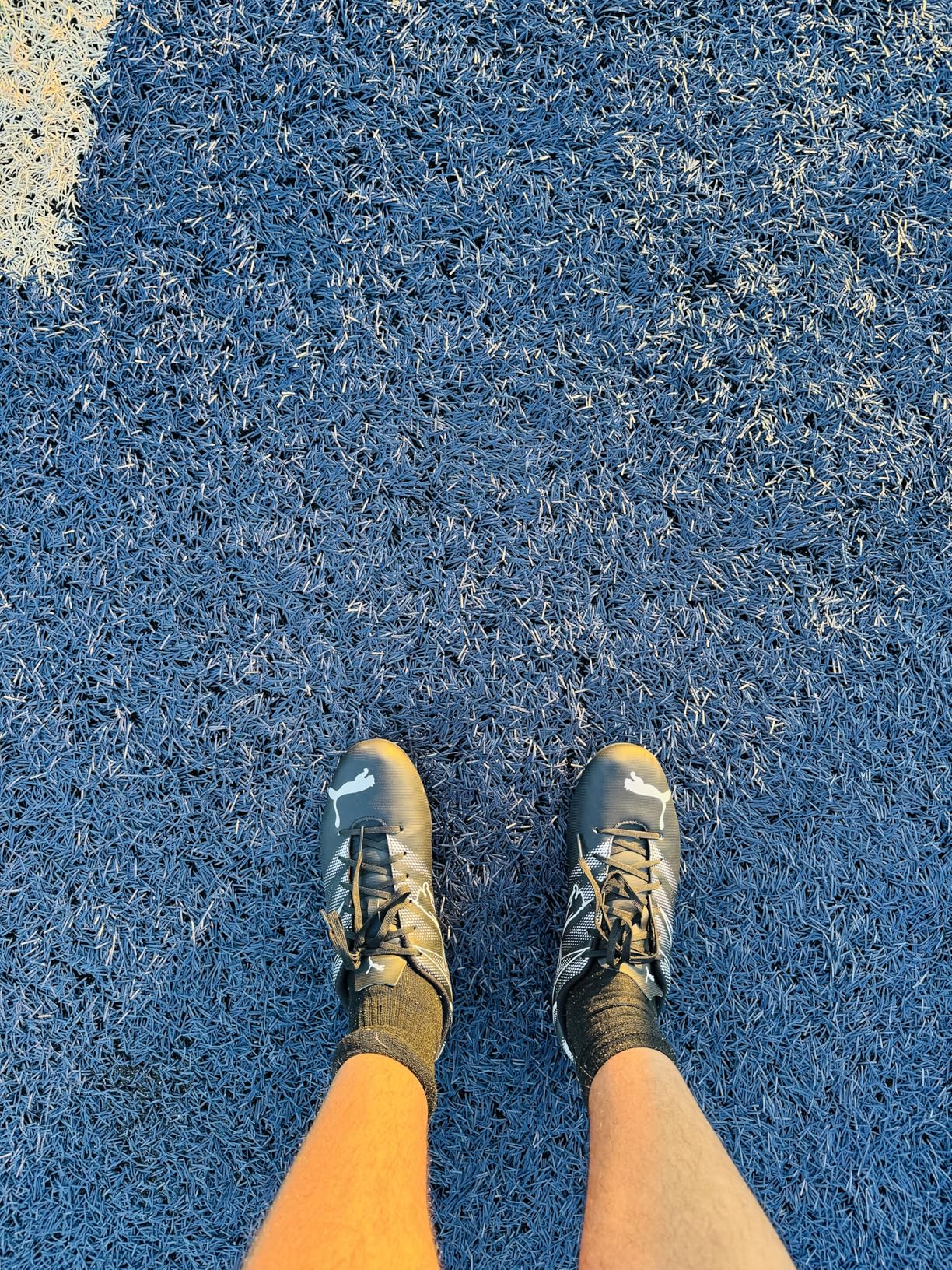
This is where the Attacanto genuinely impressed me. Across three different artificial turf installations—ranging from a newer, softer surface to an older, harder one—the traction remained consistently excellent.
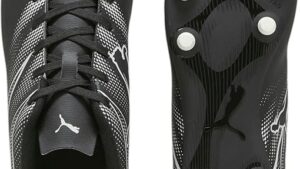
The multi-studded conical design distributes pressure across the entire outsole, providing reliable grip without the uncomfortable dig-in you sometimes get from more aggressive stud patterns. During quick direction changes and sprints, my footing felt secure. The confidence I gained on turf grew with each session.
What stood out was the consistency. Whether I was playing on premium new turf or a well-worn community field, the grip remained predictable. The studs also didn’t create excessive pressure on my knees and ankles, which can happen with cleats designed primarily for natural grass.
If you play primarily on artificial turf—say 80% or more of your games—these cleats make a lot of sense. The turf performance alone justifies the $40 investment for that use case.
Indoor Courts Testing
PUMA markets these as “indoor training optimized,” which turned out to be misleading. I tested them on an indoor gym floor with wooden surfaces, and the stud configuration is far too aggressive for that environment.
The conical studs that work well on turf become a liability on smooth indoor courts. There’s too much bite, which creates unnatural pressure points and affects movement. You need proper indoor shoes with flat, non-marking rubber outsoles for traditional gymnasium floors.
Where the “indoor” claim does hold up is indoor turf facilities—those climate-controlled spaces with artificial turf. On that surface, the Attacanto performs exactly as it does on outdoor turf. But if “indoor” means basketball-style courts, you’ll be disappointed.
Ball Touch & Control
The textured zones at contact points make a noticeable difference compared to completely smooth synthetic cleats I’ve tested in similar price ranges. Receiving passes feels cleaner, and the ball doesn’t ping off your foot quite as unpredictably during quick touches.
But let’s maintain perspective. This is functional ball touch, not premium feel. If you’re accustomed to quality leather or high-end synthetic cleats that cost $100-plus, the Attacanto won’t come close to that level of connection. The synthetic material is thin and somewhat stiff, which limits how much you can actually “feel” the ball.
For recreational players who aren’t focusing on developing advanced technical skills, the ball touch is perfectly adequate. You can control passes, take shots, and dribble without feeling like the cleats are actively working against you. But if you’re a younger player trying to refine your touch or a technical player who prioritizes ball feel above all else, you’ll want something better.
Weather & Extended Play Testing
I deliberately scheduled sessions in different conditions to see how these cleats respond to real-world variables.
During hot summer sessions—we’re talking 85°F and higher—my feet got noticeably warm. The synthetic upper provides adequate breathability for the price point, but it’s not exceptional. During intensive play, heat builds up. This isn’t unique to the Attacanto; most budget synthetic cleats struggle with ventilation. Just be aware that long sessions in hot weather will leave your feet feeling warmer than you’d like.
The synthetic material does offer one advantage: water resistance. Unlike leather, the upper doesn’t absorb water. During that light rain session I mentioned earlier, my feet stayed dry even as the field got damp. The cleats didn’t become waterlogged or noticeably heavier.
Extended play revealed another limitation. During 90-plus-minute sessions, I started feeling foot fatigue around the 75-minute mark. The minimal padding in the insole and collar means there’s not much cushioning to absorb impact over time. Your feet just get tired.
For typical recreational games lasting 60 to 90 minutes, this isn’t a major issue. But if you’re playing back-to-back games, participating in tournaments, or training intensively for extended periods, the lack of cushioning becomes a real drawback. The lightweight design has a trade-off, and this is it.
Durability Observations & Lifespan Estimate
After 15 sessions over 8 weeks, I’m seeing wear patterns that concern me for long-term durability.
The toe area shows the first signs of breakdown—surface scuffing and slight material thinning where my foot flexes during push-off. The outsole has visible wear marks, though the studs themselves are holding up reasonably well. The synthetic upper is creased in predictable stress points but hasn’t torn or separated yet.
Based on what I’m observing, here’s my realistic lifespan estimate by player profile:
- Light players (under 160 lbs): 1-2 seasons of recreational use (25-50 games)
- Average players (170-185 lbs): 1 full season (25-30 games)
- Heavy players (200+ lbs): 6-8 months maximum, possibly less with intensive use
If you play more than twice a week, compress those estimates further. Customer reviews mention premature sole separation as a common failure point—the outsole detaching from the upper. I haven’t experienced this yet, but with the wear patterns I’m seeing, it’s plausible.
The reality is simple: this is a one-season investment. If you need cleats that’ll last multiple years, you need to spend more money. But for youth players who’ll outgrow their cleats within a season anyway, or recreational adults who only play occasionally, that limited lifespan isn’t necessarily a dealbreaker.
A few tips to maximize longevity: rotate between pairs if you play frequently, avoid wearing them on concrete or pavement, and clean them after particularly muddy games. But even with perfect care, don’t expect miracles from $40 cleats.
PUMA’s Marketing Claims vs. Reality
PUMA makes several claims about the Attacanto that deserve scrutiny based on my testing.
“Versatile and high-performance”: The versatility claim holds up—these do work across firm ground and artificial grass. But “high-performance” is a stretch. They’re adequate for recreational use, not remotely close to what most people would consider high-performance. I’d say PUMA delivers about 70% of this claim.
“Enhanced ball grip”: This one’s legitimate. The textured contact zones genuinely improve ball connection compared to smooth budget synthetics. It’s not premium-level grip, but it’s noticeably better than completely flat synthetic uppers. Claim delivered.
“Comfortable and supportive fit”: “Adequate” would be more honest. The comfort is acceptable for short-to-moderate duration play, and there’s minimal structural support. This feels like generous labeling rather than outright deception, but it needs significant caveats.
“Indoor training optimized”: This is misleading. The cleats only work on indoor turf facilities, not traditional indoor courts with gym floors. The stud configuration is too aggressive for smooth surfaces. If you’re imagining futsal or indoor soccer on gymnasium floors, these aren’t it.
“Regular fit”: Objectively false based on consistent feedback from multiple sources. These run 0.5-1 size small compared to industry-standard soccer cleat sizing. PUMA needs to update this labeling.
Value Analysis – Is It Worth $40?
Let’s talk dollars and actual value. At $40 average price, and estimating a lifespan of 25-30 games for a typical recreational player, you’re paying $1.30 to $1.60 per game. That’s the real cost of ownership.
In terms of performance-to-price ratio, I’d estimate these deliver about 60% of what premium cleats provide at roughly 25% of the cost. That’s not a bad ratio if your budget is the primary constraint.
But context matters. For $10-15 more, you have options:
- Nike Mercurial Vapor 14 Club ($55): Better durability, true-to-size fit, more consistent quality control
- Adidas Copa Pure 2 Club ($50): Superior comfort, better padding, more refined ball touch
- New Balance Furon v7 Dispatch (~$45): Better sizing consistency, more balanced performance across surfaces
The Attacanto makes sense when:
- Your budget is genuinely capped at $40
- You play primarily on artificial turf
- You’re a youth player who’ll outgrow cleats within a season
- You need backup cleats for occasional use
- You’re trying soccer for the first time and don’t want major investment
You should spend more when:
- You play three or more times per week
- You need cleats for competitive-level play
- Durability over multiple seasons matters to you
- You have wide feet or precise fit requirements
- You can afford the extra $10-20 for noticeably better quality
The value proposition is clear but narrow. These are good for a specific use case, not universally great budget cleats.
Who Should (and Shouldn’t) Buy
After all this testing, here’s who should grab these and who should keep shopping.
✅ PERFECT FOR:
- Recreational players (1-2 games/week): The performance and durability align perfectly with light use. You’ll get a full season without issues.
- Youth players still growing: If your kid will outgrow cleats in six months anyway, spending more makes no sense. The limited durability stops being a concern.
- Budget-conscious athletes: If $40 is genuinely your maximum budget, these deliver better value than most alternatives at this exact price point.
- Primarily artificial turf players: If 80% or more of your games happen on turf, the Attacanto’s strength aligns with your needs.
- Backup cleats: Need a spare pair for occasional use or when your primary cleats are drying out? These work perfectly in that role.
⚠️ CONSIDER CAREFULLY IF:
- You play more than twice weekly: The durability won’t keep up. You might spend less upfront but end up replacing them sooner.
- You’re developing technical skills: The ball touch is functional, not refined. Serious skill development benefits from better cleats.
- You have wide feet or sizing concerns: The narrow fit and small sizing create hassles. Even after sizing up, the fit may frustrate you.
- You need full competitive season durability: If you’re playing organized leagues with 20-30 games guaranteed, these may not survive the schedule.
❌ LOOK ELSEWHERE IF:
- You play competitive or semi-professional level: The performance ceiling is too low. You need better traction, touch, and reliability.
- You require premium ball touch/control: The synthetic upper simply can’t deliver the connection you’re looking for.
- You need maximum durability: One season isn’t acceptable for your use case. Spend more for cleats that last longer.
- You’re willing to invest $60-80: That extra $20-40 buys substantially better quality. If you can afford it, do it.
My Overall Assessment
After 8 weeks of testing across varied conditions, surfaces, and intensity levels, I can provide a clear verdict on the PUMA Men’s Attacanto.
Overall Score: 6.8/10
Here’s how I break down that rating across six key categories:
Design & Aesthetics: 7/10
The black and silver colorway is clean and understated. Nothing flashy, but it won’t look out of place on any field. The textured patterns add visual interest without being garish. For an entry-level boot, the design is perfectly fine. It looks like what it is—a budget cleat that’s focused on function over fashion.
Ball Touch & Control: 6/10
Functional for recreational play, and the textured zones genuinely help compared to completely smooth budget synthetics. But this isn’t premium ball feel by any stretch. If you’re accustomed to quality leather or advanced synthetic materials, you’ll notice the downgrade immediately. For casual players who aren’t technical specialists, it’s adequate.
Traction & Stability: 7/10
Excellent on artificial turf, which is the primary strength. Adequate on natural grass for recreational play, though it lacks the aggressive bite you’d want for competitive games. Struggles noticeably on wet grass. The rating would be higher if it weren’t for the grass limitations, but the turf performance alone earns it a solid score.
Comfort & Fit: 5/10
This is where the Attacanto takes its biggest hit. The sizing runs significantly small, which is a major inconvenience and dealbreaker for some buyers. Even after sizing up, the narrow toe box creates discomfort during extended play. Minimal padding means foot fatigue around the 75-minute mark. For short recreational sessions, it’s manageable. For anything more demanding, you’ll feel the shortcomings.
Durability: 5/10
After 15 sessions, I’m seeing concerning wear patterns. The synthetic upper is creasing, the toe area shows breakdown, and customer reports of premature sole separation are troubling. One season is the realistic expectation. For $40, that’s not shocking, but it’s not impressive either. The durability is exactly average for this price point.
Value for Money: 8/10
Here’s where the Attacanto earns its highest marks. For $40, you’re getting 60% of premium performance at 25% of the price. If your needs align with what these cleats do well—primarily turf play, recreational use, one-season timeframe—the value proposition is strong. Several players in my local league are using these without complaint, which speaks to the real-world practicality for the right user.
The overall 6.8/10 reflects a product that knows exactly what it is: an entry-level recreational cleat with clear strengths and honest limitations. It’s not trying to be something it’s not, which I appreciate.
The Honest Pros & Cons
| ✅ PROS | ❌ CONS |
|---|---|
|
|
Frequently Asked Questions
1. How do these fit compared to Nike or Adidas soccer cleats?
Based on my testing and consistent customer feedback, the Attacanto runs approximately one full size small compared to Nike (particularly Mercurial models) and about half a size small compared to Adidas cleats. I wear a size 9 in Nike Mercurials and needed a 9.5 in the Attacanto for a proper fit. Even then, the toe box felt snugger than ideal. My recommendation: order at least a half size up from your normal soccer cleat size, and consider a full size up if you prefer roomier fit or have wider feet.
2. What’s the realistic break-in period?
The synthetic upper begins softening after 2-3 sessions, making them noticeably more comfortable than out-of-box stiffness. By the fifth session, they’re fully broken in and as comfortable as they’re going to get. Unlike leather cleats that continue molding to your foot over time, the synthetic material reaches a plateau. The good news is there’s no painful break-in period—just mild stiffness initially. I’d recommend wearing them for a light practice session before using them in an actual game.
3. How long will these realistically last?
Based on my 8-week testing and observed wear patterns, lifespan varies by player weight and usage frequency. Light players under 160 lbs playing recreationally can expect 1-2 seasons (up to 50 games). Average players between 170-185 lbs should expect one full season of about 25-30 games. Heavier players over 200 lbs or anyone playing 3+ times per week should expect 6-8 months maximum. The toe area and outsole show wear first, and customer reviews mention premature sole separation as a common failure point.
4. Are these worth the price compared to Nike or Adidas budget options?
For $10-15 more, you can get Nike Mercurial Vapor 14 Club (~$55) or Adidas Copa Pure 2 Club (~$50), which offer better durability, true-to-size fit, and superior comfort. However, if your budget is genuinely capped at $40 or you play primarily on artificial turf, the Attacanto delivers solid value. The decision comes down to whether that extra $10-15 is within your budget. If it is, spending more gets you noticeably better quality. If $40 is your maximum, these are among the better options at this exact price point.
5. Can I actually use these for indoor soccer or futsal?
Despite PUMA’s “indoor training optimized” claim, these do NOT work on traditional indoor courts with wooden or smooth gym floors. The stud configuration is too aggressive and creates uncomfortable pressure points on flat surfaces. However, they do work well on indoor turf facilities—climate-controlled buildings with artificial turf fields. If your “indoor” play happens on turf, you’re fine. If it’s on gymnasium floors, you need proper indoor shoes with flat, non-marking outsoles.
6. How do these perform in wet conditions?
The synthetic upper is water-resistant and doesn’t absorb moisture, which is a plus. During light rain, my feet stayed dry. However, traction on wet natural grass degrades noticeably. I experienced slippage during hard cuts on damp grass that I wouldn’t have felt with premium cleats. On wet artificial turf, performance remains good. If you frequently play in wet conditions on grass, these aren’t ideal. For turf players or dry conditions, you’ll be fine.
7. What are the deal-breakers I should know about before buying?
The biggest deal-breaker is sizing. If you have wide feet or need precise fit, these probably won’t work even after sizing up. The narrow toe box is non-negotiable. Second, if you need cleats for intensive use (3+ times per week) or competitive play, the durability and performance ceiling won’t meet your needs. Third, if you’re playing primarily on natural grass rather than turf, you won’t get the best from these cleats. Know these limitations before purchasing.
8. What are the best practices for maximizing lifespan?
First, rotate between pairs if you play frequently—never wear the same pair for back-to-back sessions. Second, avoid wearing them on concrete, pavement, or hard surfaces, which accelerates outsole wear. Third, clean them after muddy games to prevent material breakdown. Fourth, watch for early signs of sole separation (the most common failure point) and stop using them if you notice the outsole pulling away from the upper. Realistically, even with perfect care, expect one season maximum. Set your expectations accordingly and you won’t be disappointed.
Review Scoring Summary & Shoe Finder Integration
| 👥 WHO THIS SHOE IS FOR | |
|---|---|
| Target Gender | Men (based on men’s sizing and fit characteristics, though unisex styling) |
| Primary Purpose | Sport-specific (soccer/football cleats for recreational play) |
| Activity Level | Moderate (recreational 1-2 times per week, not intensive or competitive) |
| 💰 MONEY TALK | |
| Budget Range | Under $50 (average $40, entry-level positioning) |
| Brand | PUMA (entry-level offering within lineup) |
| Primary Strength | Price/value (solid performance at $40 for appropriate use case) |
| Expected Lifespan | Short-term (one season maximum, 25-30 games recreational use) |
| 👟 FIT & FEEL SPECIFICS | |
| Foot Characteristics | Narrow to normal width (runs 0.5-1 size small, narrow toe box, NOT suitable for wide feet) |
| Usage Conditions | All-weather capable (water-resistant upper, tested in rain and heat) |
| Daily Wearing Time | Short-duration (60-90 min games, foot fatigue after 75 min in extended play) |
| Style Preference | Sporty/athletic (soccer cleats, not casual wear) |
| ⭐ WHAT MAKES THESE SPECIAL | |
| Important Features | Lightweight (9.2 oz), slip-resistant on artificial turf, textured ball control zones, 20% recycled materials |
| 🏆 THE NUMBERS | |
| 😌 Comfort Score | 5.0/10 — Significant sizing issues drag down score; minimal padding causes fatigue after 75 min; adequate for short recreational sessions only |
| 👟 Style Score | 7.0/10 — Clean, understated design works on any field; nothing flashy but professional-looking for entry-level cleat |
| ⭐ Overall Score | 6.8/10 — Solid value for specific use case (budget recreational turf players); clear limitations prevent higher rating |
Bottom Line Assessment
- Perfect for: Recreational turf players on tight budgets who play 1-2 times per week and understand the one-season durability limitation. Youth players who’ll outgrow cleats before they wear out.
- Great for: Backup cleats, first-time soccer players testing the sport, casual pickup games, players who prioritize artificial turf performance.
- Skip if: You have wide feet, need competitive-level performance, play 3+ times per week, require multi-season durability, or can afford to spend $50-60 for noticeably better quality.
- Best feature: Outstanding artificial turf traction backed by testing across three different installations with consistent, confidence-inspiring grip.
- Biggest weakness: Sizing runs significantly small with narrow toe box, creating fit issues even after sizing up half-to-full size larger.
Have questions about whether these cleats fit your specific needs? Based on my testing experience and community feedback, I’m happy to help you determine if the Attacanto aligns with your playing style, budget, and expectations.
Final Take & Conclusion
After 8 weeks and 15 sessions of testing the PUMA Men’s Attacanto across varied surfaces, conditions, and intensity levels, the verdict is clear: these are functional entry-level cleats that deliver solid value for the right player.
The key finding? If you’re a recreational player who primarily uses artificial turf, plays 1-2 times per week, and has $40 as your budget ceiling, the Attacanto makes sense. The turf performance genuinely impressed me, the textured zones improve ball grip noticeably, and the lightweight feel works well for younger or speed-focused players.
But you must go into this purchase with eyes wide open about two critical limitations. First, the sizing runs significantly small—order at least a half size up, possibly a full size. The narrow toe box won’t work for wide feet regardless of sizing adjustments. Second, treat this as a one-season investment. The durability simply won’t extend beyond 25-30 games for most players.
In terms of performance-to-price ratio, you’re getting approximately 60% of what premium cleats deliver at roughly 25% of the cost. That math works if your needs align with the Attacanto’s strengths. It doesn’t work if you need competitive-level performance, multi-season durability, or premium ball touch.
Pro tip: If you’re buying these, order a half-to-full size larger than your normal soccer cleat size, set your expectations for one season of use, and focus your playing time on artificial turf where they truly shine. Follow those guidelines, and you’ll get good value from your $40 investment.
The PUMA Men’s Attacanto won’t wow you, but it won’t embarrass you either. For budget-conscious recreational players, that’s exactly what you need.
Be the first to review “Puma Mens Attacanto Firm, Artificial Ground”
Related products
Football Shoes
Tennis/Squash Shoes
Hiking/Trekking Shoes

Running Shoes


Football Shoes
Football Shoes
Tennis/Squash Shoes
Reviews
There are no reviews yet.