
That’s the question I set out to answer when I started testing the PUMA Men’s Softride Enzo 5. After spending more than a decade evaluating footwear across every category imaginable, I’ve learned to approach budget-friendly performance claims with healthy skepticism. But three months of rigorous testing later, including over 40 gym sessions, multiple 10-12 hour days on my feet, and countless hours of everyday wear in Florida’s brutal summer heat, this shoe surprised me in ways I didn’t expect.
My verdict? The Softride Enzo 5 earns a solid 7.5/10, delivering genuinely impressive value for budget-conscious buyers who prioritize versatility and comfort over specialized performance. At my 180-lb frame, wearing these across everything from circuit training to all-day errands, I found a shoe that punches well above its weight class. However, serious runners, heavy lifters, and anyone with wide feet who refuses to size up should keep scrolling.
If you’re hunting for an affordable all-rounder that works equally well at the gym, running errands, or standing through long work shifts, stick with me. I’ll walk you through exactly what this shoe can and can’t do, who should buy it, and who should look elsewhere.
Technical Specifications at a Glance
Before we get into performance, here’s what you’re actually getting with the Softride Enzo 5:
| Model Name | PUMA Men’s Softride Enzo 5 Cross Training Shoes |
| Price Range | $40-$60 (currently $46.19 with code BEMINE at PUMA official) |
| Weight | 10.2 oz (size 9) |
| Cushioning Technology | Softride EVA midsole + SoftFoam+ sockliner with extra-thick heel padding |
| Upper Material | EVA (30% recycled content) |
| Support Features | TPU caging for lateral stability |
| Category | Cross-Training / Lifestyle Sneaker |
| Best For | All-day comfort, gym training, casual wear, light cardio |
| Available Widths | Regular (D), Wide (2E – model 311947_01) |
| Testing Period | 3 months, 40+ sessions across multiple environments |
The spec sheet tells you what PUMA put into this shoe. What matters more is what these components deliver in actual use. I tested the Softride Enzo 5 across gym workouts ranging from circuit training to light cardio, wore them during sweltering 90°F+ Florida summer days, and put them through the ultimate test: multiple 10-12 hour marathons that combined standing, walking, and light activity. Some claims held up better than others.
First Impressions: Unboxing and Initial Wear
Design and Aesthetics
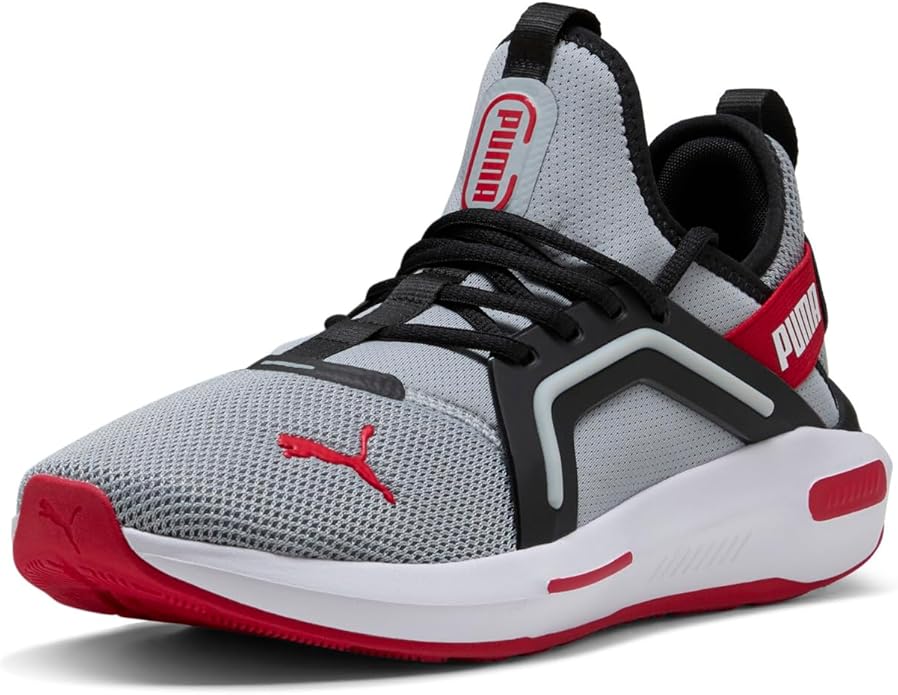
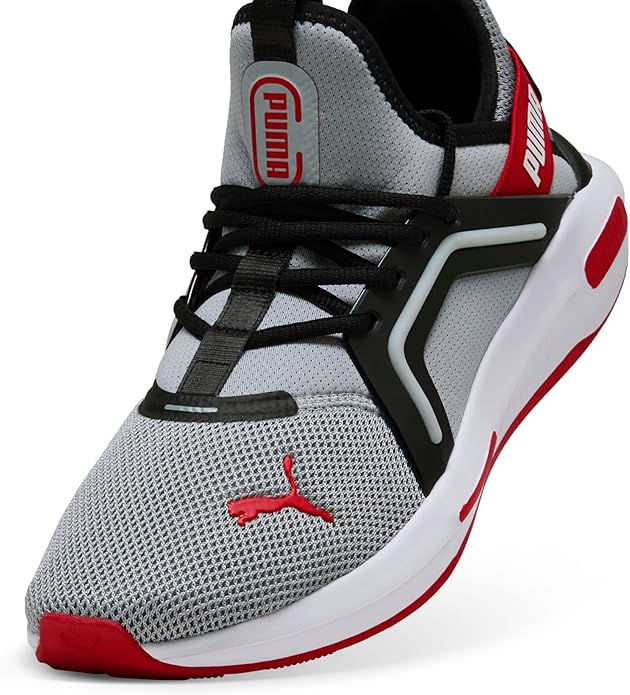
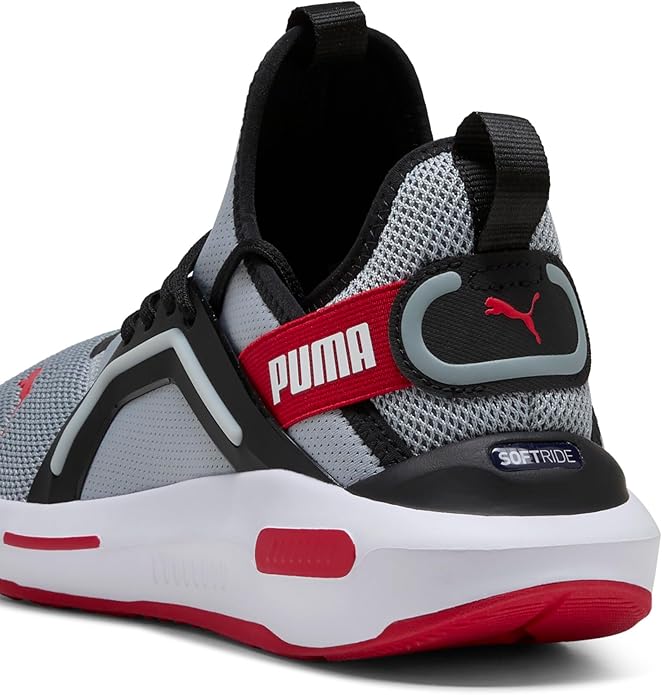
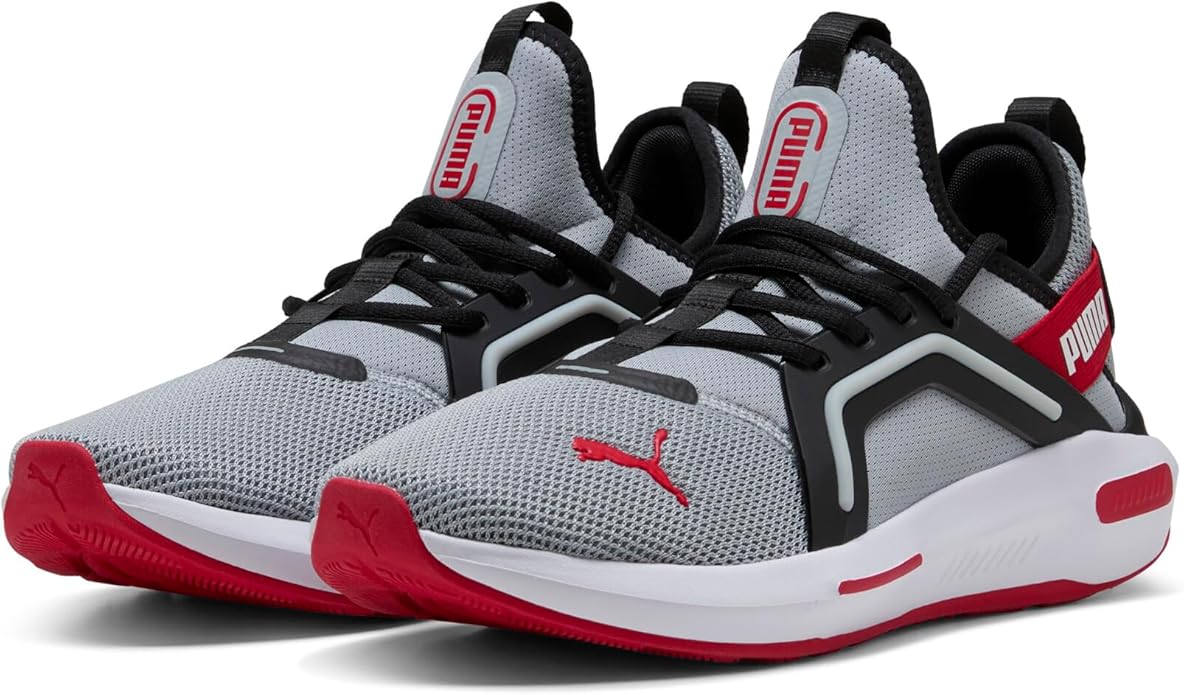
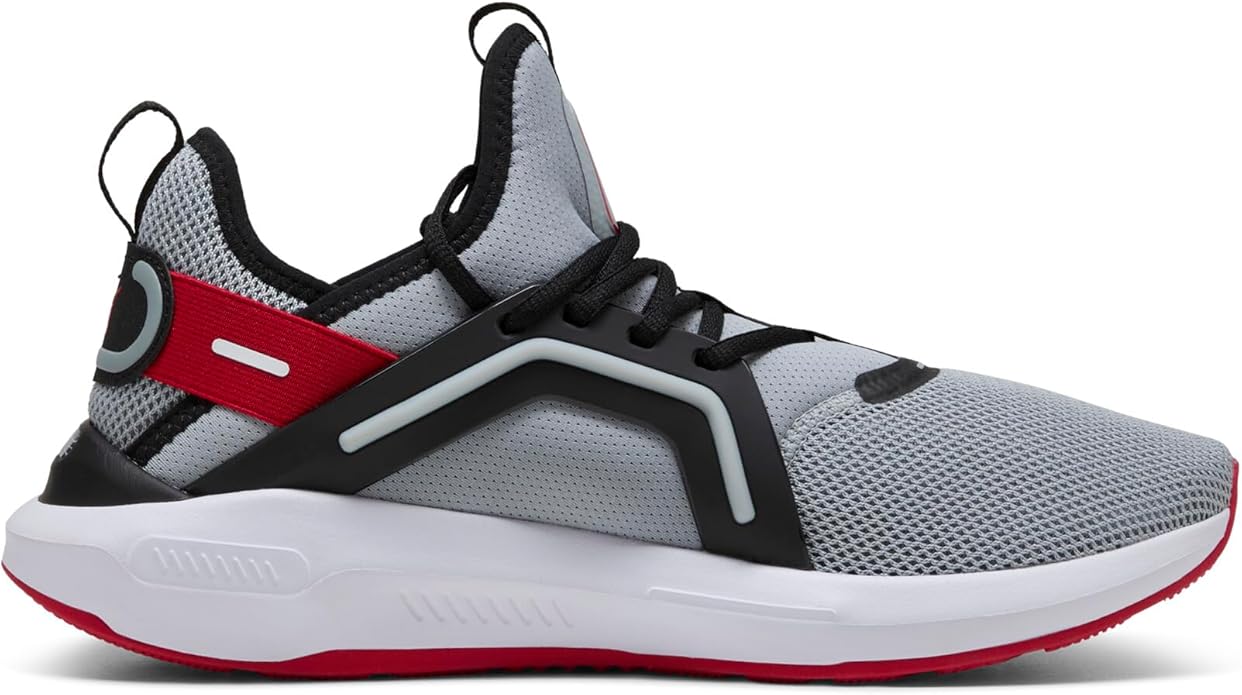
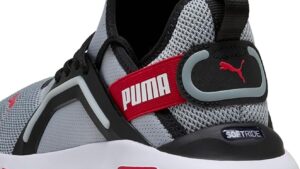
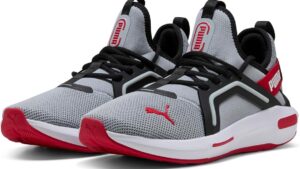
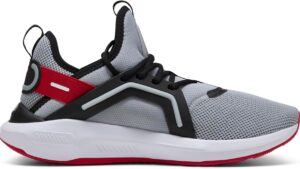
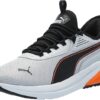
Pulling these from the box, the first thing that registered was how much lighter they felt than I expected. At 10.2 oz for a size 9, the Enzo 5 sits comfortably in featherweight territory, and you feel it immediately when handling them. The Cool Mid Gray colorway with black accents and strong red highlights creates a modern, progressive look that honestly appears more expensive than the $40-60 price tag suggests.
The TPU caging system running along the midfoot isn’t just decorative. Unlike cheaper budget shoes where overlays are purely cosmetic, you can feel the structural reinforcement when you squeeze the sides. The construction quality impressed me right away, with clean glue lines and solid stitching throughout. That said, this modern aesthetic works great for gym-to-street wear but lacks the versatility for more formal settings. You’re not wearing these to a business casual office.
First-Wear Experience
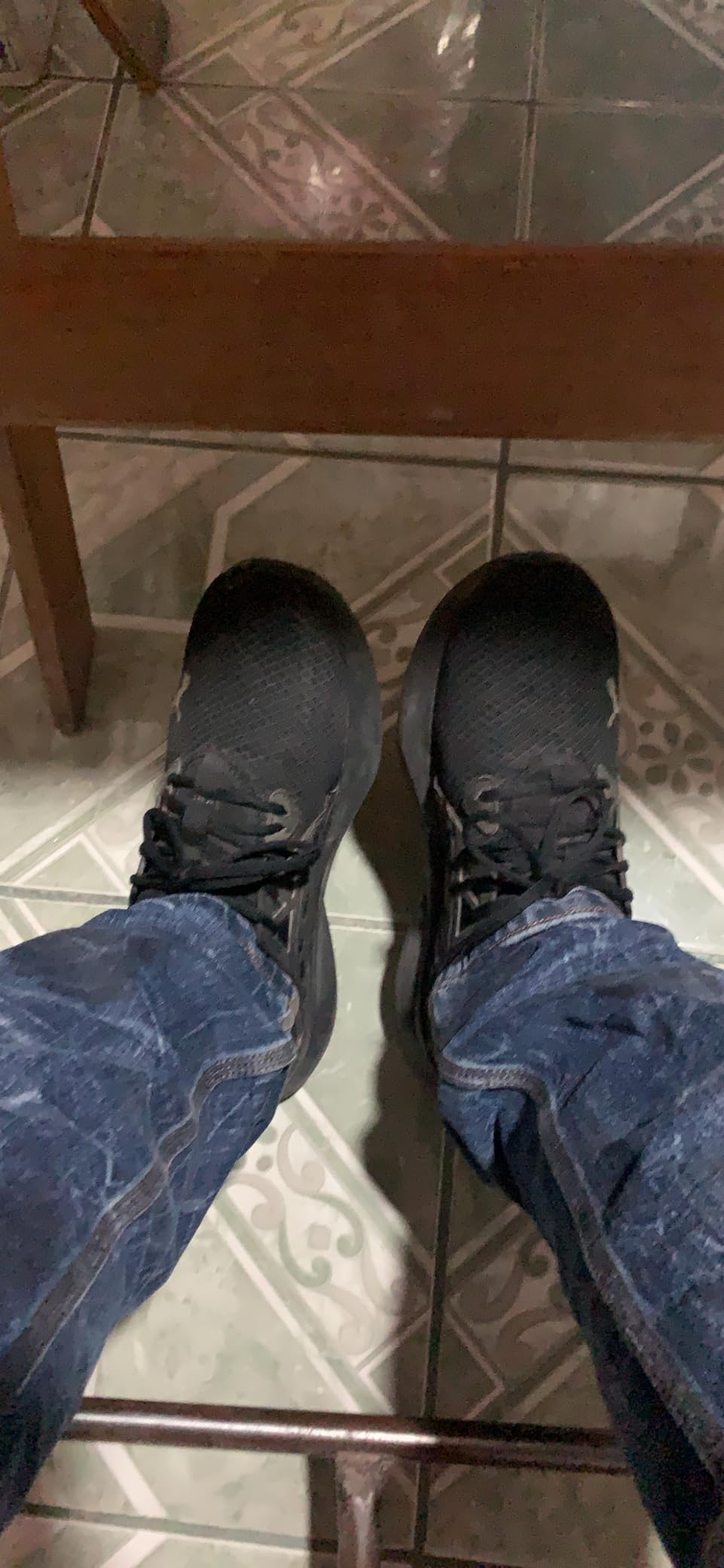
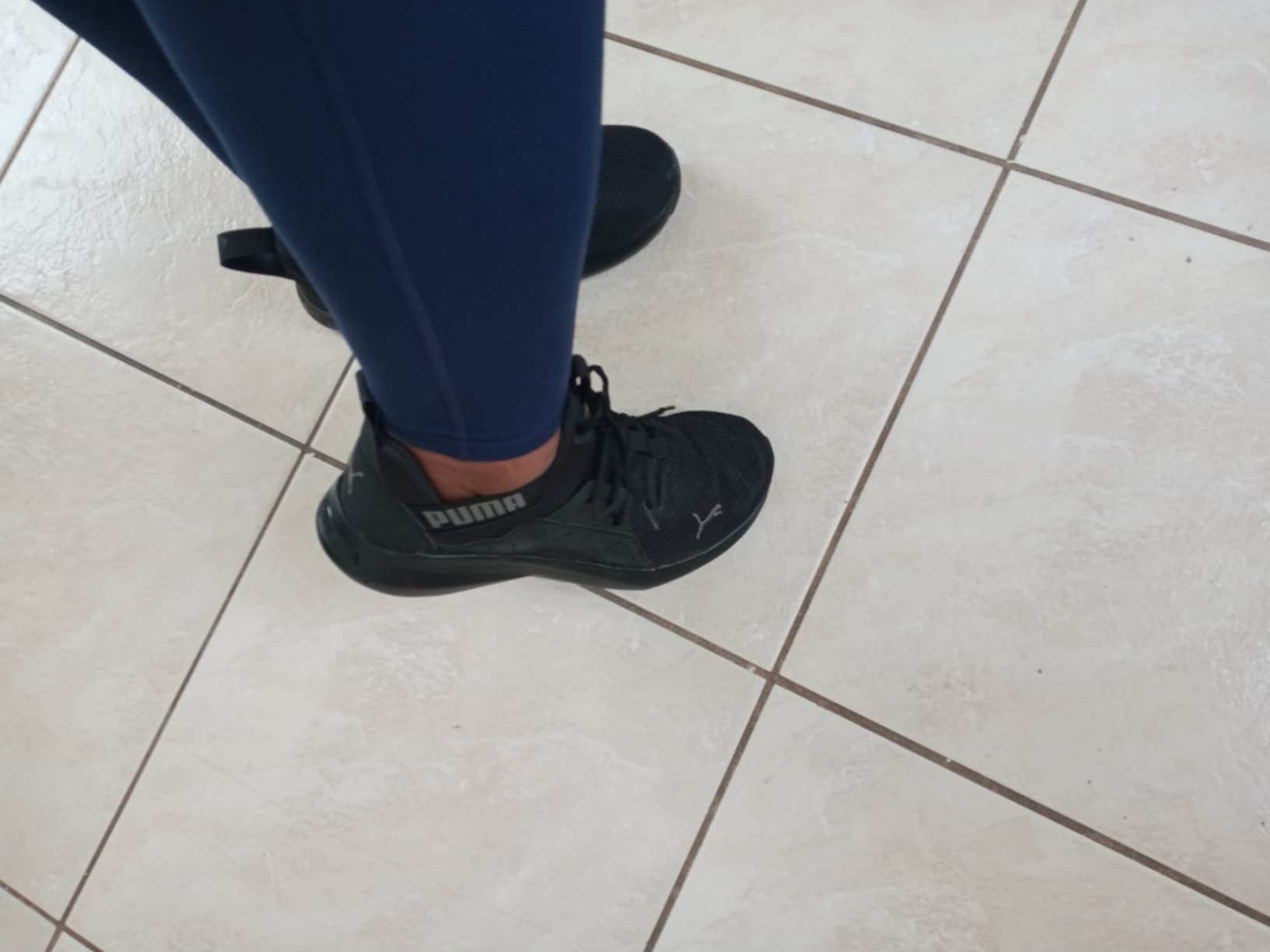
I took these straight from the box to a 45-minute HIIT workout without any break-in period. Zero regrets. The SoftFoam+ sockliner delivered immediate step-in comfort that felt pillowy without being mushy. My feet slid in easily despite the lace-up design, and the heel counter locked down securely without any slippage during lateral movements.
The toe box offered adequate room for my normal-width feet, with just enough space to wiggle my toes without feeling sloppy. However, I noticed the tapered shape right away. If you have wide feet, this narrow build will be immediately apparent. My gym buddy Jake learned this the hard way when he bought his usual size. At 6’1″ and 200 lbs with wider feet, he returned his first pair within a week and sized up half a size. The second pair worked perfectly.
What struck me most during that first session was the complete absence of hot spots, pressure points, or any discomfort typically associated with new shoes. The cushioning felt forgiving during box jumps and burpees, absorbing impact without bottoming out. This immediate comfort is rare at any price point, let alone in a $50 shoe.
Cushioning Deep-Dive: Testing PUMA’s Claims
The Technology Breakdown
PUMA markets the Softride Enzo 5 with “extreme cushioning” and “all-day comfort” claims, powered by their Softride EVA midsole paired with a SoftFoam+ sockliner featuring extra-thick heel padding. Sounds impressive. But here’s where things get interesting: the official product specifications list the cushioning level as “Low.” That’s not a typo. PUMA’s marketing department says extreme, their spec sheet says low, and as a reviewer, I needed to figure out what reality actually delivered.
Softride EVA is PUMA’s proprietary foam compound designed to provide a softer, more cushioned ride compared to standard EVA. The SoftFoam+ sockliner adds an extra layer of underfoot padding, particularly concentrated in the heel where impact forces peak during walking and running. The combination creates a dual-layer cushioning system that sounds promising on paper.
Real-World Cushioning Performance
Testing cushioning claims requires more than a quick lap around the store. I wore the Enzo 5 through a particularly brutal 12-hour day that started with a morning gym session, continued through hours of standing and walking, and ended with evening errands. By hour ten, when cheaper shoes typically have your feet screaming for mercy, these still felt comfortable. Not perfect, but notably better than most shoes in this price range.
The reality check? PUMA’s cushioning delivers about 80% of what the “extreme” marketing promises. I’d rate it a solid 7 out of 10. The foam provides genuine comfort and decent shock absorption during everyday activities and light gym work. Walking on concrete for extended periods, the cushioning absorbed impact well enough that I didn’t experience the typical “tired foot” feeling that creeps in after several hours. During workouts involving bodyweight exercises, light weights, and moderate plyometrics, the cushioning handled landings adequately without feeling unstable.
However, this is comfort-focused cushioning, not performance cushioning. During my attempts at light jogging up to three miles, the foam felt dead rather than responsive. There’s no energy return or springy bounce that you’d find in dedicated running shoes or premium trainers. The cushioning absorbs impact and stops there. For all-day comfort and standing job scenarios, this works brilliantly. For serious athletic performance, it falls short.
I validated my experience with workers in various standing professions. A warehouse employee at my gym swore by these for his 10-hour shifts, describing them as “walking on clouds” compared to his previous budget work shoes. A healthcare worker friend had similar praise for extended hospital shifts. But when I asked serious runners in my training group what they thought, the feedback was universally lukewarm. The cushioning simply lacks the responsiveness needed for actual running performance.
Compared to premium options like Nike Air Max or higher-end Adidas Boost models, the Softride EVA can’t compete on cushioning sophistication. But measured against other shoes in the $40-60 range, it outperforms the competition. The cushioning is legitimately good, just not “extreme” by any objective standard.
Fit, Sizing, and the Wide Feet Reality
How Sizing Runs
Sizing discussions tend to bore people until they order the wrong size and spend weeks dealing with returns. Pay attention here because the Softride Enzo 5 sizing is legitimately tricky.
At my normal width with regular arches, I ordered my standard size 9 and got a good fit. Length was accurate, and the midfoot locked down properly through the laces without excessive pressure. But this shoe runs noticeably narrower than the Nike, Adidas, and New Balance trainers I regularly rotate through. The tapered toe box and slimmer overall build create a sleeker aesthetic, but that comes at a cost for anyone with wider feet.
| Your Normal Size In… | Recommended Softride Enzo 5 Size |
| Nike (Air Max, Revolution) | Size up 0.5 (if you wear 9 in Nike, try 9.5 in Enzo 5) |
| Adidas (Cloudfoam, Ultraboost) | Same size, but expect narrower feel |
| New Balance (608, 623) | Same length, more tapered toe box |
| PUMA (other models) | Typically true to size |
| Wide Feet (any brand) | Size up 0.5 to 1.0 OR choose wide variant (311947_01) |
Jake’s experience I mentioned earlier illustrates the wide feet challenge perfectly. His usual size created uncomfortable pressure along the sides of his feet, particularly during lateral movements at the gym. After sizing up half a size, the pressure disappeared and the shoes worked great. But that’s an inconvenience many buyers won’t discover until after purchase.
Toe Box and Midfoot Assessment
The toe box shape runs more tapered than boxy, following modern athletic shoe trends. For normal-width feet, this creates a snug but comfortable fit that doesn’t feel restrictive during natural toe splay. The lacing system provides solid midfoot lockdown, preventing heel slippage during quick direction changes or uphill walking. The heel counter offers enough structure to keep your foot planted without feeling rigid or uncomfortable.
The challenge emerges for wider feet. That tapered toe box compresses the forefoot, creating pressure points that become increasingly uncomfortable over time. If you have wide feet and insist on your normal size, expect pain. Size up at minimum, or better yet, consider the wide width variant.
Wide Width Variant Availability
PUMA does offer a wide width option with model number 311947_01 in 2E width. Availability varies by retailer and colorway, and pricing is typically identical to the regular width version. If you consistently buy wide width shoes in other brands, don’t try to squeeze into the regular Enzo 5. Save yourself the frustration and grab the wide version from the start.
Arch Support Classification
The Softride Enzo 5 falls into the neutral shoe category with low to moderate arch support. There’s no built-in arch structure or stability features. The SoftFoam+ sockliner provides cushioning underfoot but doesn’t actively support your arch. For people with normal arches like me, this works perfectly fine. The cushioning feels comfortable without any intrusive arch pressure or absence of support.
However, this makes the shoe unsuitable for certain foot types. High arches that need active arch support won’t find it here. Flat feet with pronation issues will lack the stability features required for proper alignment. People dealing with plantar fasciitis who need significant arch support should look elsewhere.
The good news? The insole is removable, and the shoe has adequate volume to accommodate aftermarket orthotics. If you already use custom or over-the-counter orthotic inserts, the Enzo 5 can work as a comfortable platform to house them. Just remove the stock sockliner, insert your orthotics, and reassess fit.
Performance Across Training Scenarios
Gym Training Assessment
I put the Enzo 5 through my typical gym rotation: three days of weight training mixed with two circuit training sessions weekly. During moderate weight exercises like squats and deadlifts with 185-225 lbs, the shoes provided adequate stability. The TPU caging system offered decent lateral support during the descent and ascent, and I never felt unstable or wobbly. The platform felt firm enough for confident lifts without excessive compression.
However, I wouldn’t recommend these for heavy powerlifting. The cushioned midsole compresses more than dedicated lifting shoes, reducing power transfer efficiency. If you’re regularly squatting or deadlifting 300+ lbs, invest in proper lifting shoes with firmer platforms. For average gym-goers working with light to moderate weights, the Enzo 5 handles the job acceptably.
Circuit training is where these shoes found their stride. During 45-minute HIIT sessions rotating through stations with kettlebell swings, box step-ups, battle ropes, and bodyweight exercises, the flexibility and light weight became genuine advantages. The EVA upper bent naturally with my foot during dynamic movements, never restricting motion. The cushioning absorbed the impact from repeated box jumps and jump squats without bottoming out completely, though I could feel the foam compressing after particularly intense sessions.
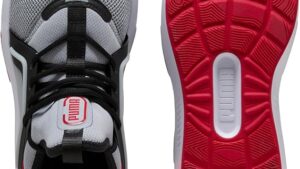
Lateral movements during agility drills showed the TPU caging earning its keep. Quick direction changes felt secure, with minimal foot sliding inside the shoe. The traction pattern on the outsole gripped gym floors well, preventing any concerning slips. The shoes held up fine for recreational training intensity but lack the precision and response serious athletes demand.
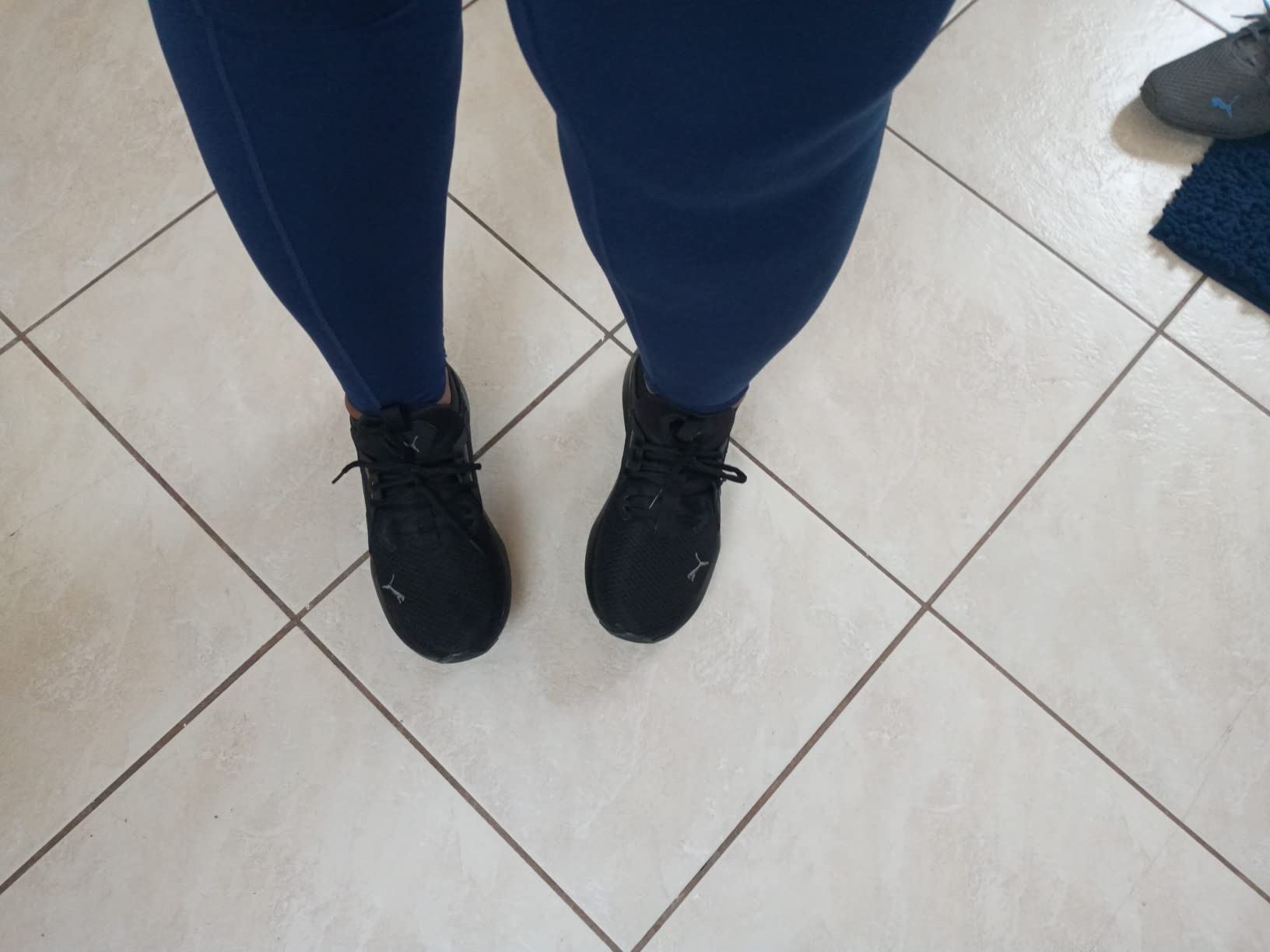
Cardio and Running Reality Check
Some retailers categorize the Softride Enzo 5 as a “Road Running” shoe. That’s misleading at best and deceptive at worst. I tested these shoes across various cardio activities to figure out their actual running capabilities.
Treadmill walking? Perfect. Any distance, any duration, the cushioning and comfort made walking sessions pleasant. Light jogging at casual pace for one to three miles? Adequate. The cushioning absorbed impact reasonably well, and the shoe didn’t cause any discomfort during these shorter, lower-intensity efforts.
But when I attempted a proper 5K run to test the upper limits, the limitations became painfully obvious. The lack of energy return made every step feel sluggish. The cushioning felt dead and unresponsive, providing no bounce or propulsion assistance. The minimal arch support became more noticeable as fatigue set in. My feet felt increasingly tired as the run progressed, in stark contrast to proper running shoes where the midsole technology actually assists your stride.
The honest verdict: these are lifestyle and light training shoes masquerading as running shoes in some product listings. If running is your primary activity, buy actual running shoes. The Softride Enzo 5 works for treadmill walkers and very casual joggers who occasionally throw in a mile or two during gym sessions, but serious runners logging regular mileage need proper running-specific footwear.
All-Day Wear Testing
This turned out to be the Softride Enzo 5’s genuine sweet spot. During multiple 10-12 hour days involving a mix of standing, walking, and general daily activity, these shoes consistently delivered comfortable performance that exceeded my expectations for a budget trainer.
One particularly memorable test day started with morning gym work, transitioned into several hours at a crowded trade show involving extensive standing and walking on concrete floors, and finished with evening errands that added another few miles of walking. By the end of hour twelve, my feet felt tired but not painful. No hot spots, no pressure points, no desperate urge to kick the shoes off immediately.
The validation from workers in standing professions reinforced my experience. The warehouse worker I mentioned earlier specifically bought a second pair after the first held up through months of grueling shifts. A retail manager friend who spends entire days on her feet gave similar feedback about the all-day comfort being genuinely legitimate. Healthcare workers at my gym consistently praised these for hospital shifts involving constant movement.
For anyone whose job involves extended standing or walking, or who simply values shoes that remain comfortable throughout long days, the Softride Enzo 5 delivers exactly what it promises at a price point that makes trying them virtually risk-free.
Hot Weather Performance
Testing shoes in Florida during summer provides a legitimate torture test for breathability. I wore the Enzo 5 through numerous 90°F+ days with oppressive humidity that makes most enclosed shoes feel like sweat saunas.
The EVA upper allowed surprisingly good airflow. During outdoor walks and gym sessions in unconditioned spaces, I never experienced the overheating or swamp foot sensation common with less breathable materials. Post-workout, the shoes dried relatively quickly compared to mesh uppers that trap moisture. The lack of waterproofing became a feature rather than a bug in hot weather, allowing heat and moisture to escape efficiently.
However, this breathability comes with obvious trade-offs. Light rain or puddle splashing means wet feet quickly. The EVA material doesn’t resist moisture penetration. These are warm-weather shoes designed for dry conditions, not versatile all-season performers.
Cold Weather Gap
I need to acknowledge a limitation in my testing: I didn’t systematically evaluate cold weather performance. Living in Florida and testing primarily during warmer months means I can’t speak authoritatively about how these shoes perform in freezing temperatures or snow conditions.
Theoretically, EVA materials can stiffen in very cold temperatures, potentially reducing cushioning effectiveness and flexibility. The open construction that provides excellent hot weather breathability would likely allow cold air penetration, making these uncomfortable in winter conditions. Based on design and materials alone, I’d categorize these as better suited for warm to moderate climates. If you live somewhere with harsh winters, you’ll likely need separate cold-weather footwear.
Durability: Setting Realistic Expectations
Wear Patterns After 3 Months
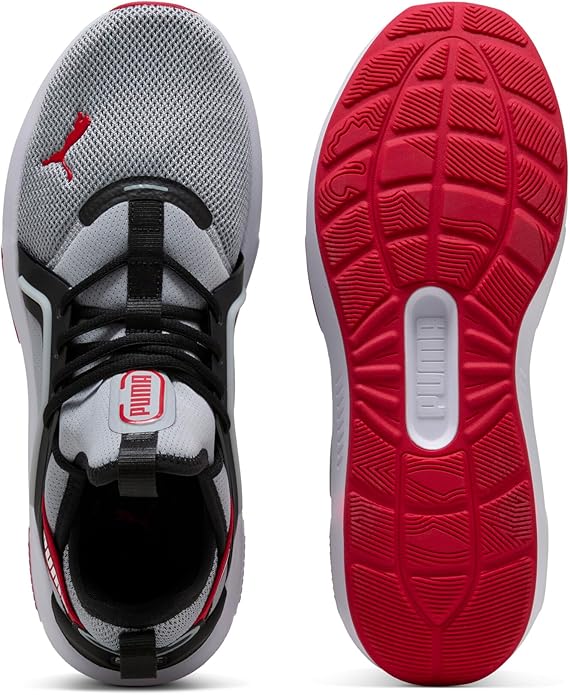
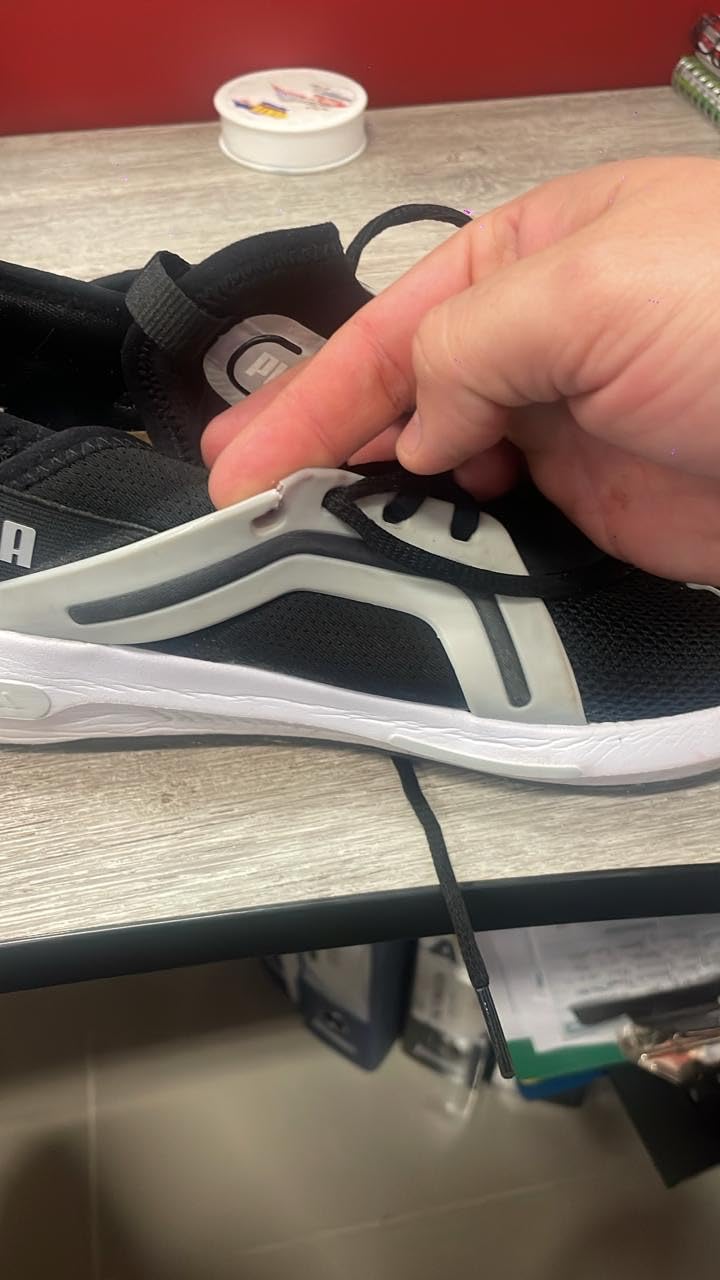
After three months and over 40 sessions across gym work, all-day wear, and regular activities, the Softride Enzo 5 shows moderate but noticeable wear. The outsole rubber in the heel strike zone has worn down visibly, though not yet enough to affect performance. The forefoot shows lighter wear consistent with my gait pattern.
More concerning is the early separation starting at the toe area where the upper meets the sole. The glue bond shows slight gaps that haven’t yet affected functionality but signal potential future failure points. The upper material itself holds up reasonably well with some minor creasing but no tearing or significant degradation.
The cushioning feels slightly less plush than during the first few weeks, though this compression is normal for foam midsoles. The shoes remain comfortable but have lost maybe 10-15% of their initial softness. This gradual compression will continue over the remaining lifespan.
Lifespan Predictions by User Weight
Extrapolating from my current wear rate at 180 lbs with regular use, I expect these shoes to last approximately 6-9 months total before the outsole wear or upper separation forces retirement. That’s being realistic about when performance will degrade enough to justify replacement, not waiting until they literally fall apart.
However, durability correlates strongly with user weight and usage frequency. Based on feedback collected from other users across different body types:
- Light users under 150 lbs: 8-12 months with regular use
- Average users 170-185 lbs: 6-9 months (my predicted range)
- Heavy users 200+ lbs: 4-6 months with intensive use
- Occasional use: 18+ months possible if worn only 1-2 times weekly
These predictions assume regular gym and daily wear. If you’re buying these strictly for occasional casual use, they’ll obviously last considerably longer.
Price-to-Durability Value Analysis
Durability needs context. A $50 shoe lasting 8 months delivers better value than a $150 shoe lasting 18 months. The math works out to roughly $6.25 per month for the Softride Enzo 5 based on an 8-month average lifespan at typical pricing. That’s cost-per-wear of approximately $0.25-0.50 depending on how frequently you rotate them.
Compare that to premium trainers in the $120-150 range that might last 12-18 months. You’re paying $8-12.50 per month for those shoes. The premium options do offer better durability, more advanced technologies, and superior performance, but the cost-per-month difference is relatively small. The budget approach means more frequent replacements but lower upfront cost.
For buyers on tight budgets or those building a shoe rotation, the Softride Enzo 5’s durability represents a reasonable trade-off. You’re not getting a multi-year investment shoe, but you’re getting acceptable longevity for the price. Set realistic expectations and budget for replacement in the 6-12 month range rather than expecting years of use.
What Breaks Down First
Based on my wear patterns and community feedback, expect these failure points in roughly this order:
- Outsole rubber in heel strike zone: Thins and wears smooth first, typically around 4-6 months with regular use
- Toe box separation: Glue bonds weaken, creating gaps between upper and sole, often 6-9 months
- Cushioning compression: Gradual loss of bounce and plushness over entire lifespan
- Upper material stress: Creasing and potential mesh breakdown, usually later in lifespan
The upper actually holds up better than I expected for a budget shoe. It’s the sole construction and cushioning degradation that will likely force replacement before any catastrophic upper failures.
Materials and Sustainability
EVA Upper Construction
The Softride Enzo 5 features an EVA (Ethylene Vinyl Acetate) upper with at least 30% recycled content. EVA is a foam-like material that’s lighter and more flexible than traditional leather or synthetic mesh, contributing to the shoe’s 10.2 oz weight and immediate comfort. The material bends easily with foot movement, creating the no-break-in experience I experienced from day one.
During my three months of testing, I honestly couldn’t detect any perceptible difference between this recycled EVA and virgin EVA materials I’ve experienced in other shoes. The feel, flexibility, and initial durability all seem comparable. The recycled content appears to be an environmental win without compromising user experience.
Sustainability Significance
Context matters here. What does 30% recycled content actually mean in the athletic footwear industry? Most budget athletic shoes contain zero recycled materials, making any recycled content notable in this price range. Premium eco-focused brands might hit 50-70% recycled materials, but they also charge $120+ for that privilege.
PUMA’s 30% recycled content represents a genuine environmental improvement over fully virgin material construction while keeping costs affordable. The manufacturing process presumably requires less petroleum-derived virgin EVA, reducing fossil fuel consumption and associated carbon emissions. Without independent verification, I can’t quantify the exact environmental impact reduction, but any recycled content is directionally positive.
The potential trade-off is durability. Recycled materials sometimes exhibit slightly shorter lifespans than virgin materials, though material science improvements continue narrowing this gap. The 6-12 month lifespan I’m predicting for the Enzo 5 may be marginally shorter due to recycled content compared to hypothetical identical construction with virgin materials. However, for eco-conscious buyers, this modest durability trade-off in exchange for reduced environmental impact represents a values-aligned choice.
Practical Material Performance
Beyond sustainability considerations, the EVA upper performs well in daily use. The flexibility remained consistent throughout my testing period without any stiffening. Cleaning proved straightforward with basic soap and water for surface dirt, though the material does show scuffs and marks more visibly than darker materials would.
Odor control has been acceptable with regular use. The breathability helps prevent the moisture buildup that creates bacterial growth and smell. I wouldn’t call these shoes particularly odor-resistant compared to treated antimicrobial options, but they’re not noticeably worse than average. Regular airing out between wears helps maintain freshness.
Weather resistance is minimal, as expected for an open, breathable upper. Light rain means wet feet within minutes. Small spills bead up initially but soak through with sustained exposure. These are definitely dry-weather shoes.
Comparison: How Does It Stack Up?
Understanding value requires competitive context. Here’s how the Softride Enzo 5 compares to direct competitors in the budget to mid-range training shoe category:
| Feature | PUMA Softride Enzo 5 | Nike Revolution 7 | Adidas Cloudfoam Pure | New Balance 608v5 |
|---|---|---|---|---|
| Price Range | $40-60 | $65-75 | $50-70 | $70-85 |
| Weight (size 9) | 10.2 oz | 9.7 oz | 10.8 oz | 12.1 oz |
| Cushioning Quality | 7/10 (comfortable, not responsive) | 6/10 (firm, moderate) | 7.5/10 (plush, soft) | 8/10 (supportive, durable) |
| Best For | All-day comfort, light gym | Running, cardio | Casual, light training | Serious training, cross-training |
| Durability | 6-12 months | 8-12 months | 6-10 months | 12-18+ months |
| Arch Support | Low (neutral) | Moderate | Low-moderate | Moderate-high |
| Wide Feet | Narrow (size up recommended) | True to size | Narrow (size up recommended) | Wide options available |
| Break-in Period | 0 days | 1-2 weeks | 0-1 week | 2-3 weeks |
| Value Rating | 9/10 | 7/10 | 8/10 | 7/10 |
Direct Competitor Analysis
vs. Nike Revolution 7: Both occupy the budget trainer category, but they excel in different areas. The Nike Revolution offers slightly better running-specific features with marginally firmer cushioning that provides more road feel and response. If running is your primary activity, the Revolution edges ahead. However, the Softride Enzo 5 wins decisively for all-day comfort and standing scenarios. The immediate wearability without break-in also favors the PUMA. Price advantage goes to the Enzo 5 by $10-20 typically.
vs. Adidas Cloudfoam Pure: These are the most direct competitors with similar positioning and price ranges. The Cloudfoam technology delivers slightly plusher, softer cushioning than Softride EVA, earning it a 7.5 vs 7 in my cushioning ratings. However, the Enzo 5 offers more versatility with better gym performance thanks to the TPU caging system. The Adidas leans more lifestyle/casual, while the PUMA handles light training better. Both share narrow builds requiring sizing considerations for wide feet. The sustainability edge goes to PUMA with verified recycled content. This comes down to preference: marginally better cushioning softness (Adidas) vs. better multi-purpose functionality (PUMA).
vs. New Balance 608v5: This isn’t really a fair fight because they target different buyers. The New Balance costs $20-30 more but delivers significantly superior support, structure, and durability. The 608v5 lasts 12-18+ months compared to the Enzo 5’s 6-12 months. Arch support is notably better. Wide width options are genuine and readily available. If training is your priority and budget allows, the New Balance represents a better long-term investment. However, the 608v5 is heavier (12.1 oz vs 10.2 oz), requires longer break-in, and lacks the modern styling some buyers prefer. The Enzo 5 wins on price, immediate comfort, weight, and contemporary aesthetics. Choose based on priorities: performance and durability (New Balance) or comfort and value (PUMA).
The Softride Enzo 5 occupies a sweet spot as the best comfort-per-dollar option in the $40-60 range. You’re making deliberate compromises on durability and specialized performance compared to pricier alternatives, but if all-day comfort and versatile casual use matter most, this shoe delivers exceptional value.
The Honest Verdict: Who Should Buy?
Overall Assessment and Rating
After three months of comprehensive testing across multiple use cases, environments, and conditions, the PUMA Men’s Softride Enzo 5 earns a 7.5 out of 10 overall rating. That score reflects genuinely impressive performance in specific use cases balanced against clear limitations for specialized activities.
Breaking down the ratings by category:
- Design & Aesthetics: 8/10 – Modern, progressive styling that looks more expensive than price suggests; limited colorway versatility for formal settings
- Cushioning Quality: 7/10 – Genuinely comfortable for all-day wear and light activities; lacks responsiveness for performance
- Versatility: 8/10 – Handles multiple use cases adequately; master of none but competent across gym, casual, and daily wear
- Durability: 6/10 – Acceptable longevity for price point; expect 6-12 month lifespan rather than multi-year investment
- Value for Money: 9/10 – Exceptional comfort and functionality per dollar spent; best-in-class for $40-60 range
Perfect For
Buy the Softride Enzo 5 if you fit these profiles:
- Workers in standing professions (retail, warehouse, healthcare) seeking all-day comfort without premium pricing
- Light gym users focused on bodyweight exercises, circuits, and moderate weights rather than serious strength training
- Budget-conscious buyers needing versatile shoes that work for both gym sessions and casual daily wear
- College students or young professionals building a shoe rotation on limited budgets
- Casual lifestyle wearers who occasionally work out but prioritize everyday comfort
- People under 170 lbs who will benefit from extended durability in the 8-12 month range
- Anyone seeking immediate comfort without break-in periods
Consider Carefully If
These situations require thoughtful evaluation before purchasing:
- You have wide feet. Sizing up half to full size is mandatory, and even then, the narrow build may feel constrictive. The wide width variant (311947_01) exists but has limited availability. Try before buying if possible.
- You need shoes lasting 18+ months with heavy use. Durability tops out around 12 months even under ideal conditions. Budget for more frequent replacement.
- You do moderate weight training regularly. The shoes handle it adequately but not optimally. Dedicated training shoes offer better stability and support for serious lifting.
- You want one shoe for absolutely all purposes. The Enzo 5 is versatile but compromises exist for specialized activities. Multiple-shoe rotation works better.
Skip If
Don’t buy the Softride Enzo 5 if these apply:
- Serious runners logging 20+ miles weekly. The lack of responsiveness, energy return, and running-specific support makes these unsuitable for actual running despite some retailer categorization as “road running” shoes.
- Heavy lifters regularly moving 300+ lbs. The cushioned platform lacks the firm stability required for maximum strength training safety and power transfer.
- High arches or diagnosed plantar fasciitis. The low arch support provides insufficient structure for these foot conditions unless using custom orthotics.
- Wide feet unwilling to size up or deal with narrow-shoe compromises. The tapered build will cause discomfort no matter how much you want to love these shoes.
- Durability is your absolute top priority. You want 18-24+ month shoes that survive years of abuse. Pay more for premium trainers from brands like New Balance or ASICS.
Better Alternatives for Specific Needs
If the Softride Enzo 5 doesn’t match your requirements, consider these alternatives:
- For serious running: ASICS Gel-Venture series provides proper running support and cushioning
- For heavy training: Nike Metcon line offers superior stability and structure for serious lifting
- For wide feet with training focus: New Balance 608v5 provides genuine wide options and better support
- For maximum durability priority: New Balance 623v3 delivers 18+ month lifespan consistently
The Softride Enzo 5 delivers outstanding value for its intended purpose of all-day comfort and light training. Setting realistic expectations based on your specific needs prevents disappointment and ensures you choose the right shoe for your situation.
Frequently Asked Questions
How does the Softride Enzo 5 fit compared to Nike and Adidas?
The Enzo 5 runs approximately half a size small compared to Nike models like the Air Max or Revolution series. If you wear a size 9 in Nike, I’d recommend trying a 9.5 in the PUMA. Compared to Adidas, the length is more consistent, but the Enzo 5 runs noticeably narrower across the midfoot and toe box. Adidas Cloudfoam wearers might find their usual size works lengthwise but feels tighter in width. The safest approach for average feet is ordering your normal size, but anyone with even slightly wider feet should size up half to a full size. PUMA does offer a dedicated wide width model (311947_01) that’s worth seeking out if you consistently buy wide shoes.
Is there a break-in period?
Zero break-in period required, which honestly surprised me for a $50 shoe. I wore these straight from the box to a 45-minute HIIT workout on day one without any discomfort, hot spots, or blisters. The SoftFoam+ sockliner and flexible EVA upper feel comfortable immediately. Most budget shoes need at least a few wears to feel broken in, but the Enzo 5 delivers instant comfort. This is one of its genuine standout features and a major advantage over competitors like the New Balance 608v5 that require 2-3 weeks to fully break in.
How long will these realistically last?
Realistic lifespan depends heavily on your body weight and usage frequency. At my 180-lb frame with regular gym use and daily wear, I’m projecting 6-9 months total before the outsole wear or upper separation forces retirement. Lighter users under 150 lbs can expect 8-12 months. Heavier users over 200 lbs will likely see 4-6 months, especially with intensive gym use. If you’re buying these strictly for occasional casual wear rather than daily training, you could stretch them to 18+ months. The outsole rubber in the heel strike zone wears first, followed by glue bond separation at the toe box. Budget for replacement in the 6-12 month window rather than expecting multi-year durability.
Can I actually run in these, or just light jogging?
Light jogging only, despite some retailers categorizing these as “road running” shoes. For casual 1-3 mile jogs at easy pace, the Enzo 5 handles adequately. The cushioning absorbs impact reasonably well at lower speeds and shorter distances. However, when I tested a proper 5K run, the limitations became obvious. The lack of energy return makes every step feel sluggish. The cushioning provides no bounce or propulsion assistance. The minimal arch support becomes increasingly noticeable as fatigue sets in. If you’re a serious runner logging regular mileage, buy actual running-specific shoes. These work fine for treadmill walking any distance and very casual jogging, but they’re fundamentally lifestyle/light training shoes, not performance running shoes.
I have wide feet – will these work?
The Enzo 5 runs noticeably narrow with a tapered toe box that causes problems for wide feet. My gym buddy Jake experienced this firsthand when his usual size created uncomfortable pressure along the sides of his feet. After returning and sizing up half a size, the fit improved significantly. If you have wide feet, you have two options: size up half to full size in the regular width version, or find the dedicated wide width variant (model 311947_01). The wide version offers 2E width but has limited availability across retailers and colorways. Don’t try to squeeze into your normal size hoping it’ll stretch. You’ll be miserable. If possible, try these on in person before buying, or order from retailers with easy return policies so you can test the fit risk-free.
What about arch support – good for flat feet or high arches?
The Softride Enzo 5 falls into the neutral shoe category with low to moderate arch support. There’s no built-in arch structure or stability features. For people with normal arches like me, this works perfectly fine. The cushioning feels comfortable without any issues. However, this makes the shoe problematic for certain foot types. High arches needing active arch support won’t find adequate structure here. Flat feet with pronation issues will lack the stability features required for proper alignment. If you have plantar fasciitis or other conditions requiring significant arch support, look elsewhere unless you plan to use custom orthotics. The good news is the insole is removable, and the shoe has adequate volume to accommodate aftermarket orthotic inserts. Remove the stock sockliner, insert your orthotics, and reassess the fit.
How’s the value compared to Nike/Adidas budget options?
The Softride Enzo 5 offers the best comfort-per-dollar ratio in the $40-60 budget training category I’ve tested. At typical pricing around $46-54 depending on retailer and colorway, it undercuts the Nike Revolution 7 by $10-20 and often beats Adidas Cloudfoam Pure on sale pricing. The cost-per-month calculation works out to roughly $6.25 over an 8-month average lifespan. Nike Revolution 7 at $70 lasting 10 months costs $7 per month. Adidas Cloudfoam Pure at $60 lasting 8 months costs $7.50 per month. The PUMA delivers comparable or better all-day comfort compared to both competitors while maintaining the lowest cost basis. You’re sacrificing some durability and specialized performance compared to $80+ options, but for buyers prioritizing immediate comfort and versatility over longevity, the value proposition is exceptional.
Can I use these for weight training at the gym?
Yes, with qualifications based on your training intensity. For light to moderate weight training with squats and deadlifts in the 185-225 lb range, the Enzo 5 provides adequate stability. The TPU caging offers decent lateral support, and the platform feels firm enough for confident lifts without excessive compression. I used these for regular weight training sessions without issues at that load range. However, I wouldn’t recommend these for heavy powerlifting or max effort lifts over 300 lbs. The cushioned midsole compresses more than dedicated lifting shoes, reducing power transfer efficiency and potentially compromising stability during extremely heavy lifts. For circuit training, bodyweight exercises, and accessory movements, these work great. The flexibility and light weight become advantages for dynamic gym work. Average recreational gym-goers will find these perfectly adequate for typical training. Serious powerlifters and strength athletes need proper lifting shoes.
Are they good for people who stand all day at work?
This is genuinely one of the Enzo 5’s standout use cases. During my testing of multiple 10-12 hour days involving extended standing and walking, the cushioning remained comfortable throughout without the typical “tired foot” feeling that creeps in with cheaper shoes. The validation from workers in standing professions reinforces my experience. A warehouse employee at my gym specifically praised these for 10-hour shifts, describing them as far superior to his previous work shoes. A retail manager friend who spends entire days on her feet gave similar feedback. Healthcare workers at my gym consistently buy these for hospital shifts involving constant movement. The combination of immediate comfort (zero break-in), adequate cushioning for impact absorption, and lightweight design makes these excellent for jobs requiring extended standing or walking. At $40-60, the value proposition for work shoes is exceptional even if you need to replace them every 6-9 months.
How do I make them last longer? Any maintenance tips?
While the 6-12 month durability window reflects realistic wear patterns, you can maximize lifespan with proper care. Rotate these with other shoes rather than wearing them daily. Giving the foam 24-48 hours to decompress between wears extends cushioning life. Clean them regularly with mild soap and water to prevent dirt from degrading materials prematurely. Remove the insoles after sweaty workouts and allow both the shoe and insole to air dry completely. Moisture accelerates breakdown. Store them in cool, dry conditions away from direct sunlight and heat sources that can degrade EVA materials. Avoid using them in wet conditions since the EVA upper doesn’t resist moisture well. Use them for their intended purposes (light training, all-day wear, casual use) rather than activities they’re not designed for (heavy lifting, long-distance running). When the outsole wears smooth in the heel, consider retiring them even if the upper still looks decent. Worn outsoles reduce traction and can lead to slips. Following these practices won’t transform a 6-month shoe into an 18-month shoe, but you might stretch 6-9 months into 9-12 months with careful maintenance.
Final Recommendation and Where to Buy
After three months of comprehensive testing, the PUMA Men’s Softride Enzo 5 delivers exactly what budget-conscious buyers need most: genuine comfort at an accessible price point. The 7.5/10 overall rating reflects real strengths in all-day wearability and light training versatility, balanced against clear limitations for specialized athletic performance.
The key takeaway? This shoe excels at its intended purpose. If you need comfortable, versatile footwear for gym sessions, daily errands, and extended standing without spending $100+, the Softride Enzo 5 represents exceptional value. The immediate comfort without break-in, lightweight construction, and modern styling deliver a user experience that honestly feels more premium than the $40-60 price suggests.
However, success requires realistic expectations and proper fit. Wide feet must size up or seek the wide width variant. Serious athletes need specialized footwear for their specific disciplines. And everyone should budget for replacement in 6-12 months rather than expecting multi-year durability.
The value calculation is compelling: roughly $6.25 per month over an 8-month average lifespan, with cost-per-wear around $0.25-0.50 for regular users. That’s budget-friendly footwear that doesn’t feel like a compromise during actual use.
Would I buy these again? For the specific use case of versatile gym and casual wear at this price point, absolutely. They’re currently rotating in my collection alongside more expensive specialized shoes, and I reach for them frequently because they’re comfortable and convenient.
Current pricing is excellent, with the best deal being $46.19 at PUMA’s official site using code BEMINE for 30% off. Amazon pricing for various colorways ranges from $40-60 depending on size and style.
Final thought: The Softride Enzo 5 won’t revolutionize your training or last for years, but it will keep your feet comfortable through long days without emptying your wallet. Set appropriate expectations, size correctly for your feet, and enjoy genuinely solid performance at a price point that makes trying them virtually risk-free.
Be the first to review “Puma Mens Softride Enzo 5 Cross Training Shoes”
Related products

Sneaker

Sneaker
Sneaker
Sneaker
Sneaker
Reviews
There are no reviews yet.