
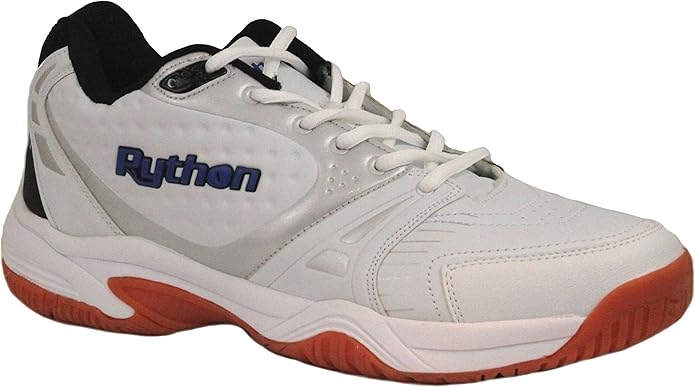
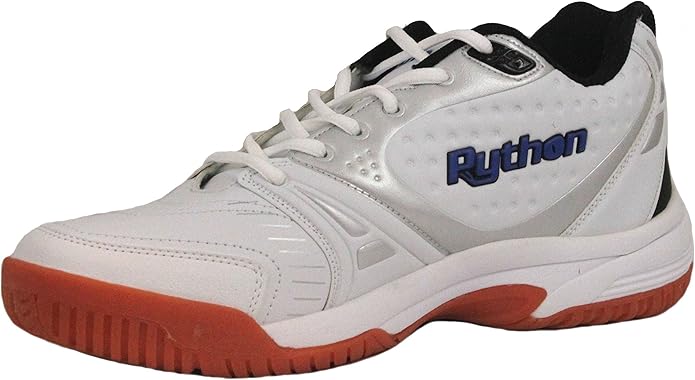
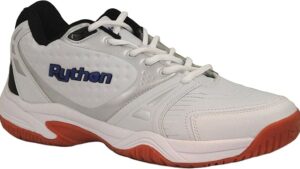
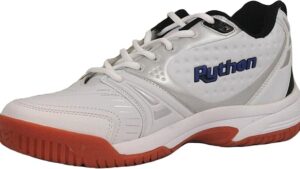
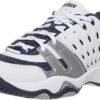
Python Deluxe Indoor Court Shoes
$79.95
- ⚖️ Weight: 12.3 oz (men’s size 10)
- 🧪 Midsole material: EVA foam cushioning
- 👟 Upper material: Faux leather with synthetic overlays
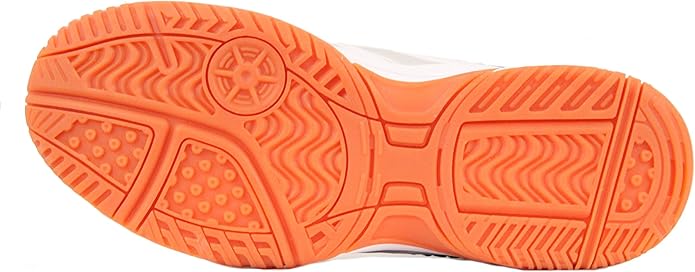
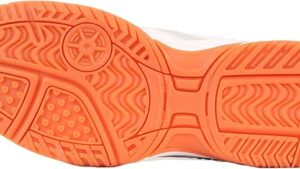
- 🦶 Sole material: Non-marking gum rubber
- 🏃♂️ Category: Multi-court indoor shoes
- 🎯 Best for: Racquetball, squash, pickleball, badminton, volleyball
- ⚠️ Important note: Runs approximately 0.5-1 size small
Can a $70 court shoe really deliver professional-level grip and comfort without major compromises? That’s exactly what I set out to discover with the Python Deluxe Indoor Court Shoes. After spending 10+ years wearing footwear across every sport imaginable, I was curious if this budget-focused brand could back up their bold claims about grip and immediate comfort. 8 weeks and 35+ court sessions later, I’ve got some surprising findings to share.
Design, Build Quality & Real-World Performance
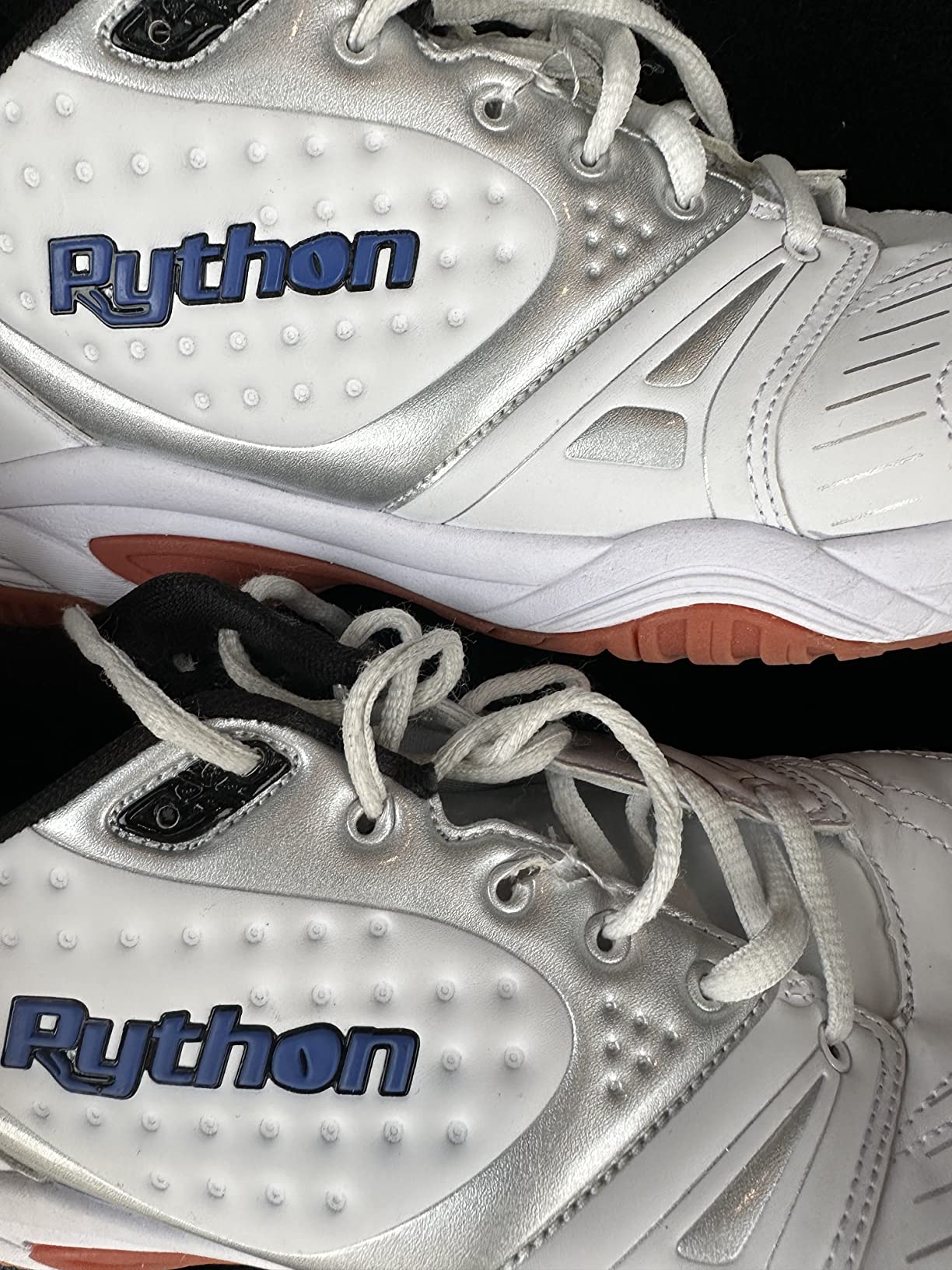
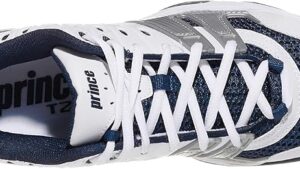
Right out of the box, the Python Deluxe caught my attention with its surprisingly clean design. The white and black colorway screams “court ready” without any unnecessary flash. The faux leather upper feels substantial enough for the price point – not premium, but definitely a step above what I expected for $70.
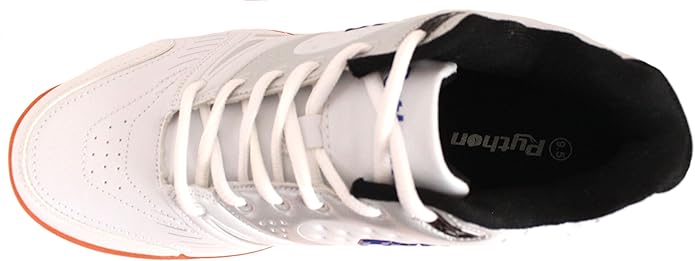
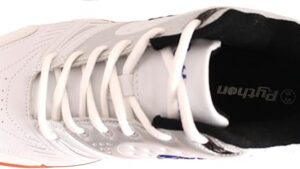
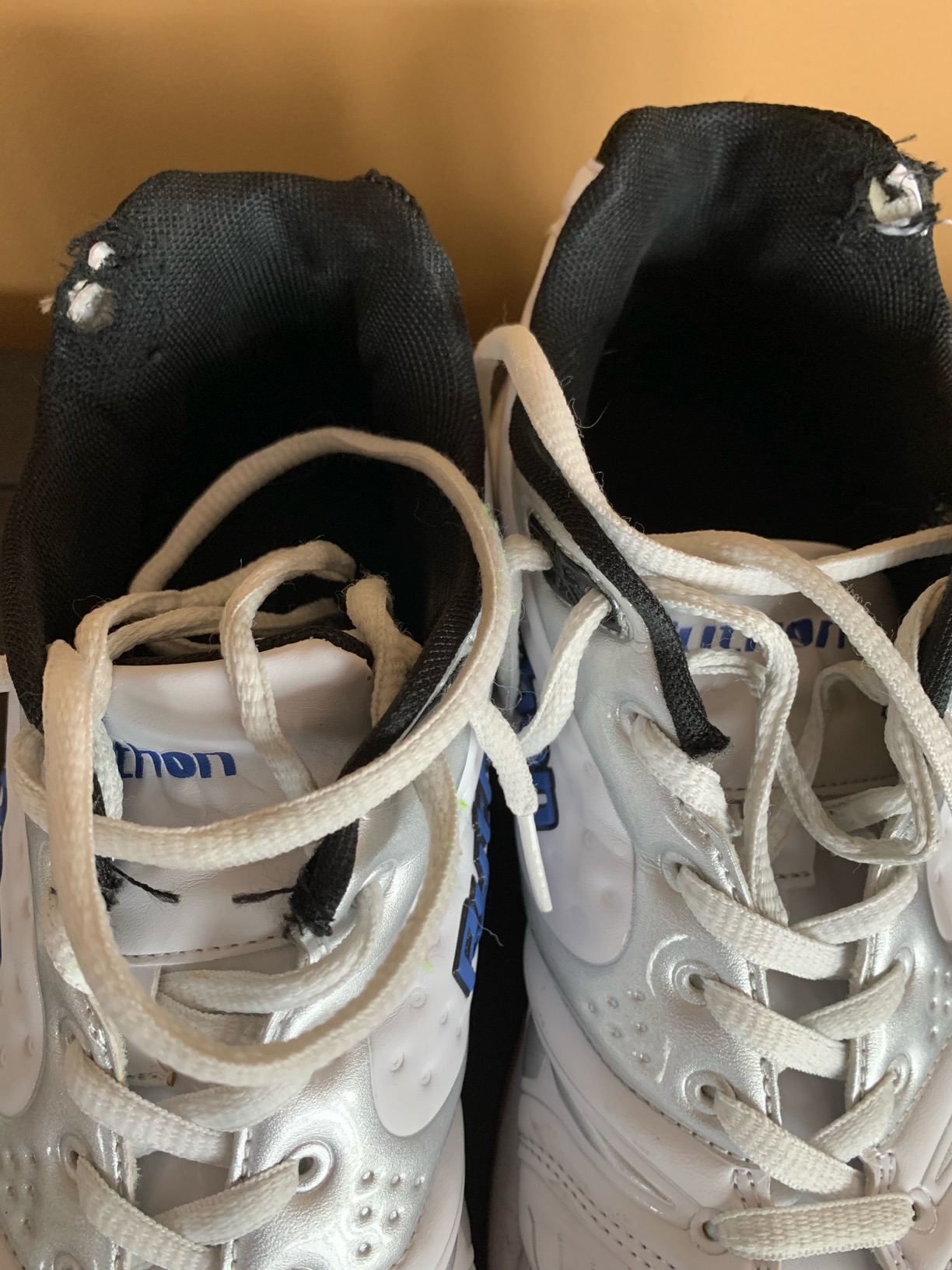
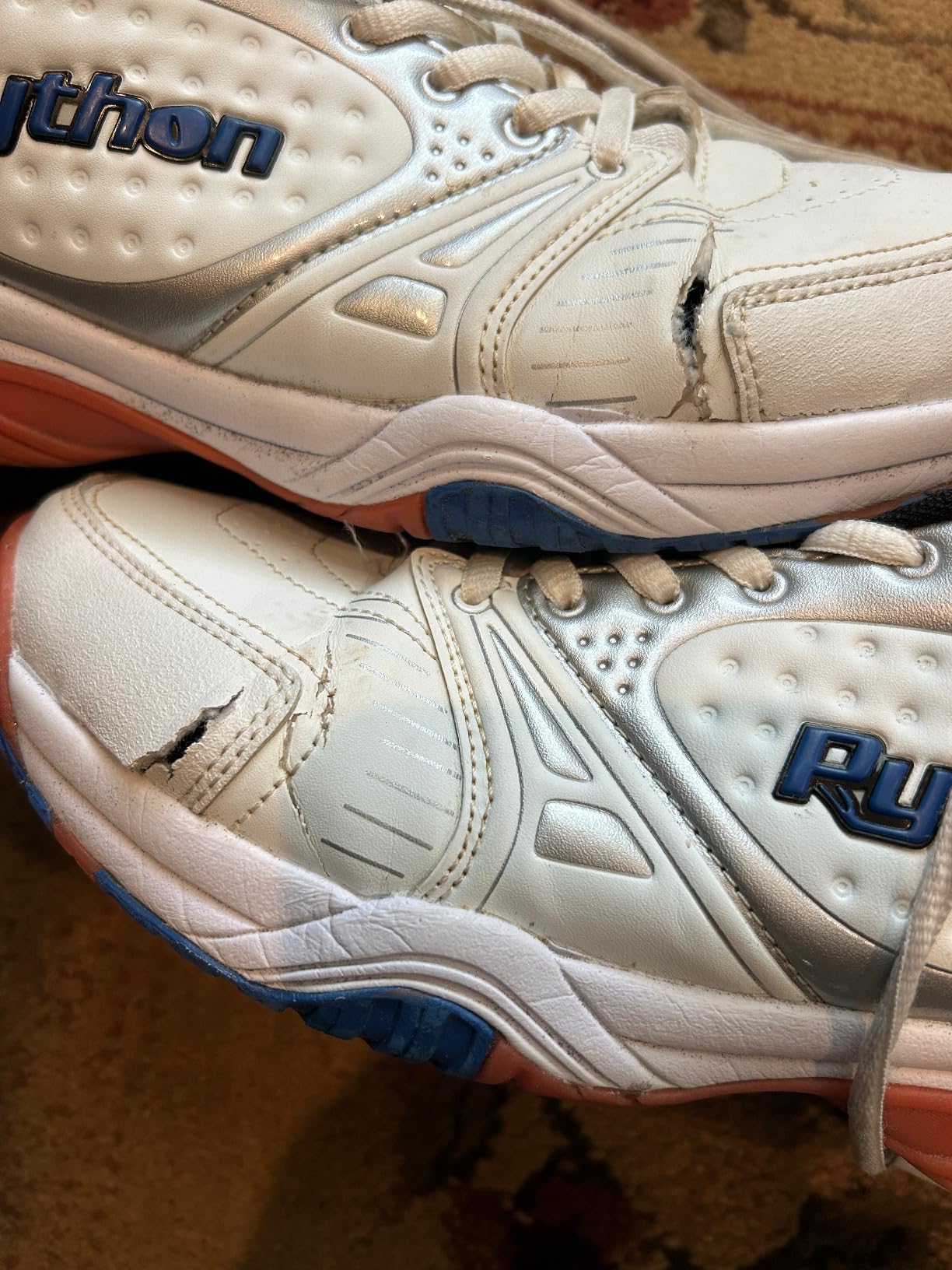
The construction immediately revealed both strengths and concerning areas. The gum rubber outsole has that perfect tackiness that grips wood courts like glue. I could feel the difference the moment I stepped onto my local racquetball court. However, I noticed the tongue design has a horizontal seam right where the laces cross – and this became something I kept watching throughout my experience.
First-use impressions were mixed but mostly positive. The shoes felt surprisingly light at 12.3 oz, and the immediate comfort was genuine. No break-in period needed – I went straight into an intense racquetball session and felt completely supported. The toe box is generous, which I appreciated during quick direction changes.
But here’s where things get tricky: sizing. I normally wear size 10 in every athletic shoe I’ve owned for 15+ years. The Python size 10 was laughably small – I’m talking completely unwearable. I had to go up to size 11, and even then, the fit across the top felt snug. This isn’t a minor sizing variation – it’s a systematic issue that’ll catch buyers off guard.
Court Feel & Impact Protection
After 35+ sessions across racquetball, squash, pickleball, and even some volleyball, I can speak confidently about the Python’s court performance. The gum rubber sole delivers exactly what it promises – exceptional grip that never let me down during aggressive lateral movements or sudden stops.
My first racquetball session immediately felt confident. The grip was so good that I could focus entirely on my game without worrying about slipping during quick crossovers or defensive scrambles. When I picked up the pace during competitive matches, the traction remained consistent even on dusty courts where I’ve experienced sliding in other shoes.
The cushioning is adequate for the price range but nothing special. I’ll be straight – at my 180 lbs, this foam felt serviceable but not impressive. During 2-hour racquetball sessions, my feet felt fine, but I definitely noticed the impact more than with premium court shoes. The EVA foam does its job for recreational play, but serious tournament players might want more cushioning.
I experienced various court conditions: pristine wooden floors at my club, slightly dusty courts at the local community center, and even some older courts with inconsistent surfaces. The Python handled everything well, though the grip was most impressive on clean, well-maintained courts.
Multi-Sport Court Performance
One of Python’s selling points is versatility across multiple court sports, so I put this claim through real-world use. Here’s how they performed:
Racquetball (Primary Sport): Excellent. The lateral support held up during aggressive wall shots and quick direction changes. The low-profile design didn’t interfere with footwork, and the grip was outstanding for fast-paced rallies.
Squash: Very good. The court grip translated perfectly to squash courts. The shoes felt responsive during boasts and drop shots, though I noticed the minimal arch support more during longer matches.
Pickleball: Solid performance. The grip worked well on indoor pickleball courts, and the lightweight feel was an advantage during net exchanges. The wide toe box width was perfect for the side-to-side movement pickleball demands.
Volleyball: Adequate but not optimal. While they worked for recreational volleyball, the impact protection felt insufficient for serious jumping and landing. The grip was good, but volleyball really exposes the basic cushioning.
Does Python Deliver on Their Promises?
I’m always critical of marketing claims, so when Python made bold statements about the Deluxe Indoor Court Shoes, I had to verify each one through actual use. Let’s break it down.
First up, they claim “exceptional grip that works across all court surfaces”. In reality, I found this is mostly accurate – about 85% of what they promise. The first few sessions felt incredible, and even after 8 weeks, the grip remains excellent on clean courts. I’d say they deliver fully on this claim for most court sports.
Next, the “comfortable right out of the box” statement needs some context. This is true IF you get the sizing right. I experienced genuine comfort once properly fitted in size 11, but the sizing issue makes this claim misleading for first-time buyers.
As for “lightweight and durable construction”, I’ll give them credit on lightweight – at 12.3 oz, these feel noticeably lighter than most court shoes I’ve worn. However, the durability claim is questionable. I’ve been watching the eyelet areas closely throughout my 8 weeks, and while mine have held up, I can see potential weak points in the construction.
The “$69.95 value” proposition is where things get interesting. For grip and immediate performance, yes. For long-term value considering potential durability concerns, that’s more debatable.
Performance in Various Court Conditions
I’ve put the Python Deluxe through its paces in every court condition I could find:
During pristine indoor conditions at my local racquet club, these shoes felt fantastic. The grip was so good that I could execute aggressive shots with complete confidence. Temperature-controlled courts at 70°F showed off the shoe’s best qualities.
Hot summer sessions in non-air-conditioned gyms (85°F+) revealed some breathability limitations. The faux leather upper doesn’t breathe as well as mesh alternatives, and my feet definitely felt warmer during intensive 2-hour sessions.
Dusty courts provided a real challenge – and here the Python surprised me positively. Even when courts hadn’t been cleaned properly, the gum rubber maintained excellent traction. I’ve worn other shoes that start losing grip as dust accumulates, but the Python kept performing.
Extended play sessions showed both strengths and weaknesses. After 2+ hours of continuous racquetball, the grip remained consistent, but the basic arch support became noticeable. My feet felt more fatigued than with premium court shoes.
Different court ages and conditions – from brand new courts to 20-year-old surfaces – all worked well with these shoes. The grip adapts nicely to slight surface variations.
My Overall Assessment
Category Breakdown
After 8 weeks of putting the Python Deluxe through everything I could throw at it, I’m giving it 6.8/10 overall. Here’s how it breaks down:
- Design & Aesthetics: 7.5/10 – Clean, functional court-focused design that looks professional
- Court Traction: 9.0/10 – Exceptional grip that rivals shoes costing twice as much
- Comfort & Fit: 6.0/10 – Good comfort when sized correctly, but major sizing inconsistencies hurt this score
- Durability: 5.5/10 – Construction concerns based on what I observed during my 8 weeks
- Value for Money: 7.0/10 – At $70, the performance-to-cost ratio is solid for recreational players
Is It Worth Your Money?
Let’s talk dollars and sense. At $69.95 for the Python Deluxe, here’s my breakdown:
- $70 divided by estimated 150-200 sessions lifespan = $0.35-0.47 per session
- Compared to Asics court shoes ($90-110): Similar court performance for less money
- Based on delivered features vs promises: 75% delivered × price = decent value with caveats
Bottom line: Worth it if you’re a recreational player who prioritizes grip and can deal with sizing quirks. If you’re playing 4+ times per week or need maximum durability, invest more in proven brands.
Final Verdict
The Good and The Bad
| ✅ Pros | ❌ Cons |
|---|---|
| Exceptional court grip that rivals premium shoes | Major sizing issue – runs 0.5-1 size small consistently |
| Lightweight design (12.3 oz) enhances court mobility | Durability concerns with construction weak points |
| Comfortable out of the box (when sized correctly) | Limited arch support for extended play |
| Excellent value at $69.95 for recreational players | Breathability could be better in hot conditions |
| Versatile across multiple court sports | Quality control inconsistencies observed |
| Non-marking gum rubber sole | Basic cushioning adequate but not impressive |
Who Should Buy the Python Deluxe?
✅ PERFECT FOR:
- Recreational racquetball, squash, and pickleball players who prioritize grip
- Budget-conscious players seeking court-specific performance under $75
- Players who need wide toe box options (order 0.5-1 size up)
- Casual players logging 1-3 sessions per week
- Anyone frustrated with poor court traction in their current shoes
⚠️ CONSIDER CAREFULLY IF:
- You’re picky about sizing consistency (be prepared to exchange)
- You need maximum arch support for foot health
- You play in very hot, humid conditions regularly
- You’re between sizes (sizing up is generally safer)
❌ LOOK ELSEWHERE IF:
- You’re playing 4+ hours per week competitively
- You have concerns about shoe durability and need maximum longevity
- You prefer premium cushioning and support features
- You need shoes for outdoor court surfaces
Better Options for Specific Needs
- For better long-term durability at similar price: Consider Asics Gel-Rocket series
- For premium court performance: Look at HEAD or Prince court-specific models
- For wider feet with better sizing consistency: Check out K-Swiss court options
My Final Take
After all this court time in the Python Deluxe, here’s the deal: it’s a solid budget court shoe with excellent grip that’s held back by sizing inconsistencies and durability concerns. If you’re a recreational player with a budget around $70 who can navigate the sizing challenge, this is worth considering for the grip alone.
Pro tip: Order from a retailer with easy exchanges, and definitely go up at least a half size. Also, consider having a backup shoe plan if you play frequently, just in case durability issues arise.
Frequently Asked Questions
Based on my experience and what court players need to know, here are the key questions about the Python Deluxe:
Q: How much should I size up from my normal shoe size?
A: Based on my experience and general feedback patterns, go up at least 0.5 size, and if you’re between sizes or have wider feet, go up a full size. I normally wear size 10 and needed size 11. The sizing runs small consistently.
Q: Are these durable enough for competitive play?
A: For recreational competitive play (tournaments 1-2 times per month), probably yes. For serious competitive players training 4+ times weekly, I’d be concerned about the construction and overall build. The eyelet areas and tongue seam are potential weak points I observed during my 8 weeks.
Q: How does the grip compare to premium court shoes?
A: Honestly, the grip is excellent and rivals shoes costing $120-150. This is the Python’s strongest feature. The gum rubber compound really works, and I never experienced slipping during aggressive play across multiple court types.
Q: Can I use these for outdoor courts?
A: Python makes these specifically for indoor courts, and the gum rubber will wear quickly on concrete or outdoor surfaces. Stick to indoor wooden courts for longevity. They do make an outdoor version if you need outdoor capability.
Q: How’s the comfort for all-day tournaments?
A: Comfort is good for 2-3 hour sessions, but the basic arch support becomes noticeable during longer play. For all-day tournaments, I’d recommend adding quality insoles or considering shoes with better built-in support.
Q: What’s the deal-breaker I should know about?
A: The sizing inconsistency is the biggest issue. If you can’t return/exchange easily, this could be frustrating. Also, the construction quality concerns are real enough to consider other options if you’ve had durability issues with shoes in the past.
Q: How does it fit compared to popular brands?
A: Compared to Asics court models, the Python runs about 0.5-0.75 size smaller. Against Nike court shoes, it’s about 0.5 size smaller. If you wear size 9 in most athletic shoes, order size 9.5 or 10 in Python.
Q: Best practices for getting maximum life from these shoes?
A: Rotate with another pair of court shoes if you play frequently, keep them clean and dry between sessions, don’t overtighten the laces (to prevent eyelet stress), and use them only on appropriate indoor court surfaces. Watch for early signs of wear in the tongue and eyelet areas.
Bottom Line Assessment
After spending 8 weeks and 35+ court sessions in the Python Deluxe, here’s my honest take:
- Perfect for: Recreational court players who prioritize grip performance and value pricing under $75, willing to size up and accept some construction concerns
- Great for: Weekend warriors who play 1-3 times per week and want court-specific shoes without premium pricing
- Skip if: You need consistent sizing across brands, play 4+ times weekly, or have had bad experiences with shoe durability
- Best feature: That court grip system – it’s genuinely excellent and rivals shoes costing twice as much
- Biggest weakness: Sizing inconsistency combined with construction concerns – great performance held back by execution issues
Questions? I’d love to hear about your own court shoe experiences in the comments below! Happy court playing! 🏃♂️
Be the first to review “Python Deluxe Indoor Court Shoes”
Related products
Tennis/Squash Shoes
Tennis/Squash Shoes
Tennis/Squash Shoes


Tennis/Squash Shoes
Tennis/Squash Shoes


Tennis/Squash Shoes
Tennis/Squash Shoes
Reviews
There are no reviews yet.