
A $90 running shoe that doesn’t sacrifice durability or performance – it sounds too good to be true. I’ve tested footwear for over a decade, and budget trainers usually reveal their compromises within the first 50 miles. Thin outsoles wear through. Foam compresses into pancake flatness. Uppers fray at the seams.
The Reebok Floatzig 1 challenged those expectations. After 180 miles across 8 weeks – from Miami’s 85-degree heat to Seattle’s persistent drizzle – this shoe proved more capable than its price suggests. It’s not perfect. That narrow midfoot will frustrate wide-footed runners, and the firm foam won’t satisfy recovery run enthusiasts. But if you have normal-width feet and need a durable daily trainer for easy miles, the Floatzig 1 delivers legitimate value at $90.
The verdict up front: This shoe excels at easy-paced daily mileage (8:00-9:00/mile) for runners with narrow to normal width feet. It struggles at faster tempo paces and absolutely won’t work for wide feet. At $90, it’s a smart buy. At the full $130 MSRP, skip it and save $20 more for better options like the New Balance 880 or ASICS Cumulus.
First Impressions: Classic Trainer Aesthetics, Lighter Than Expected

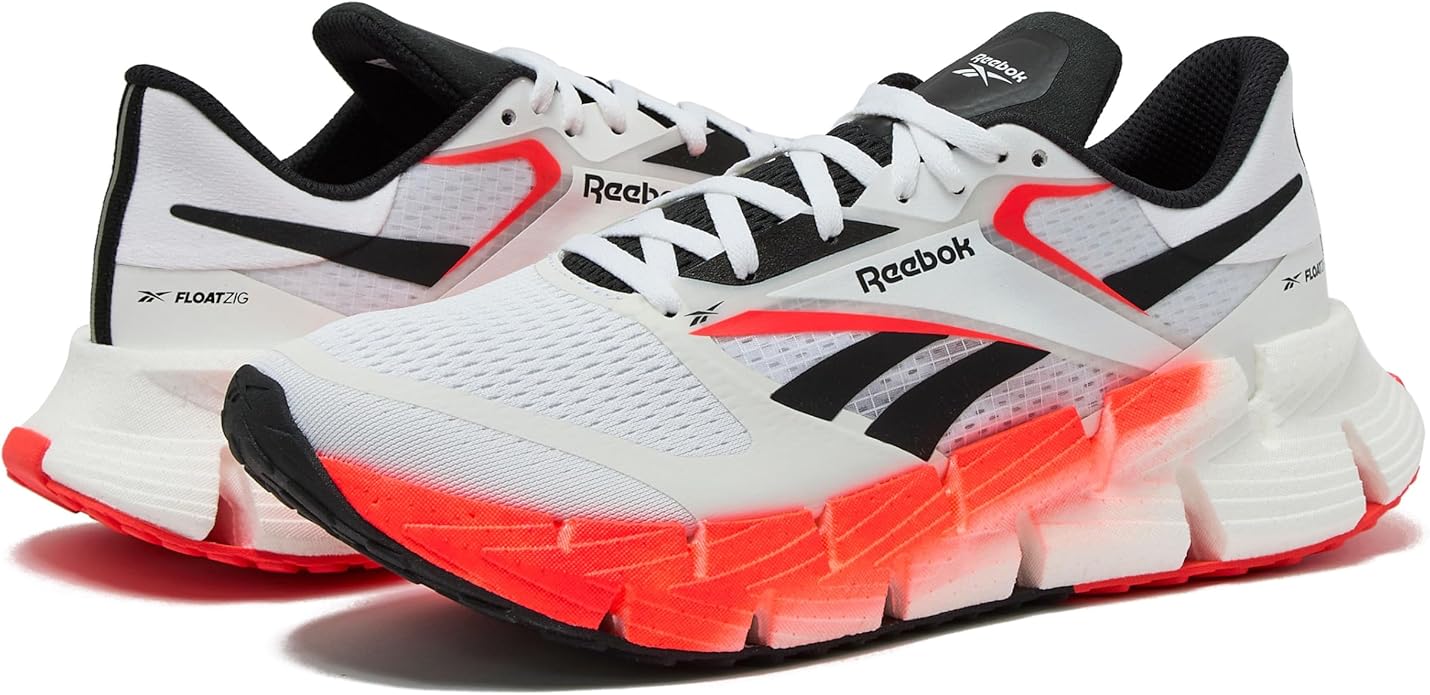
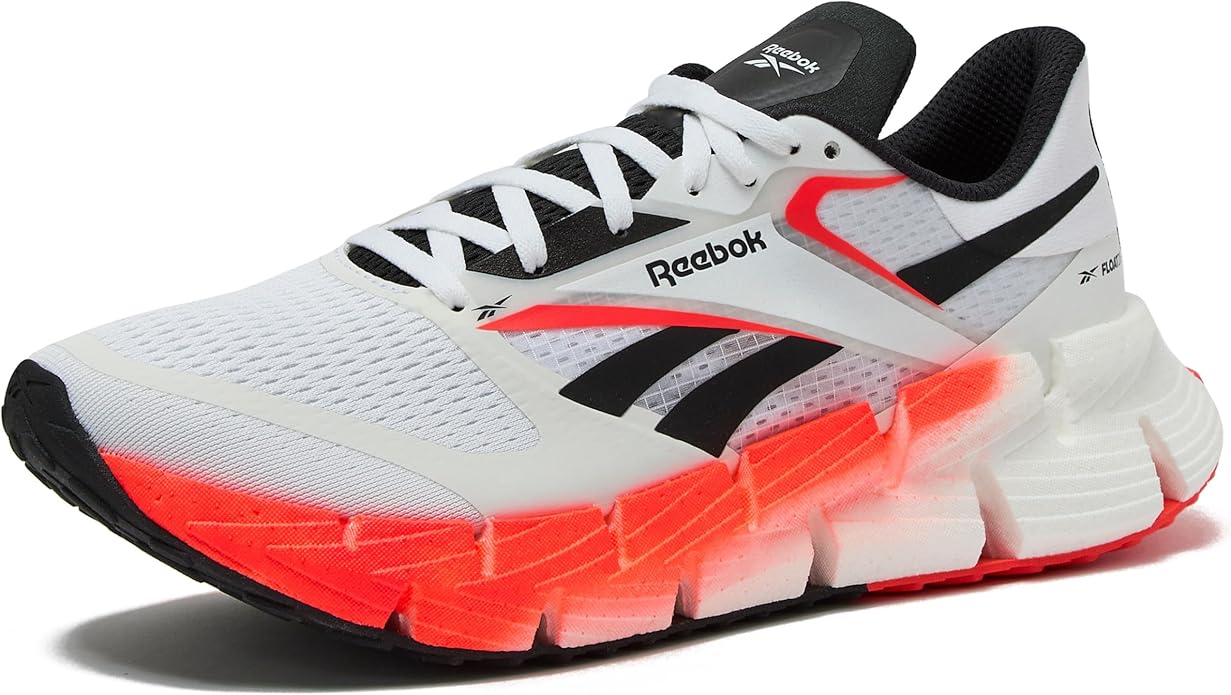
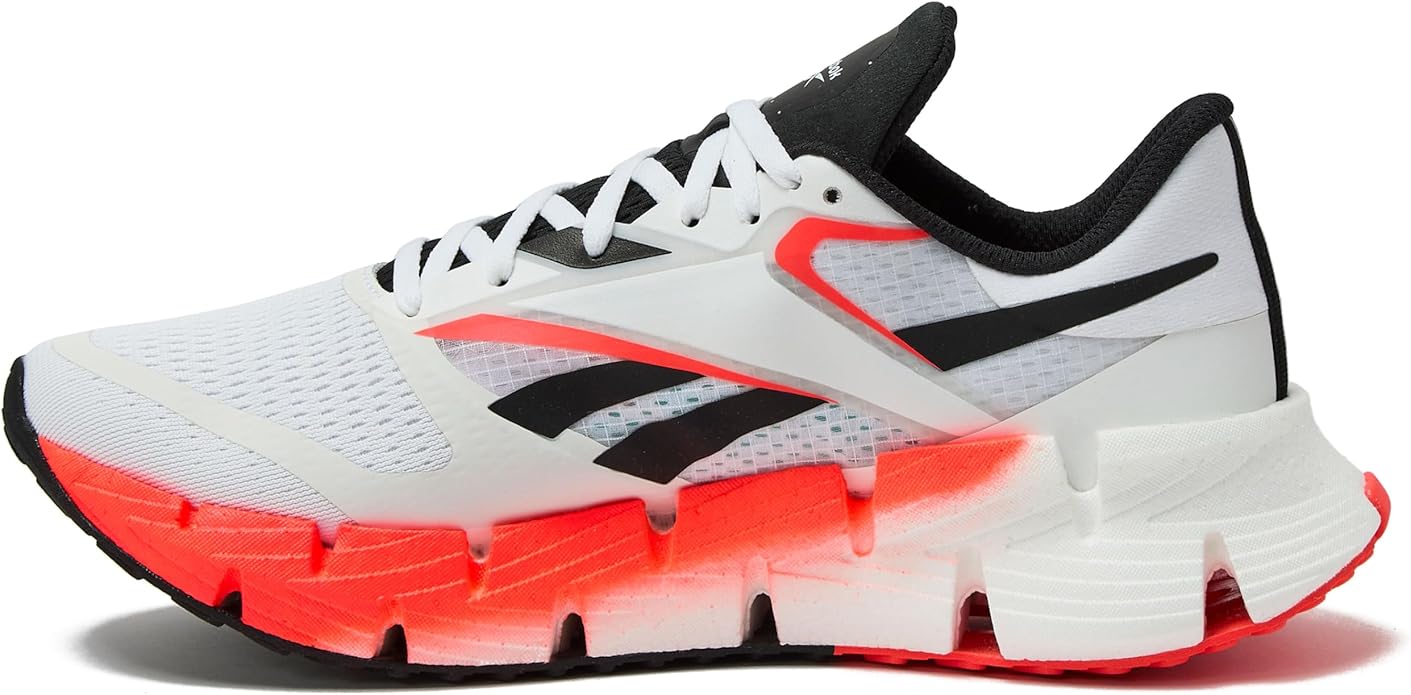
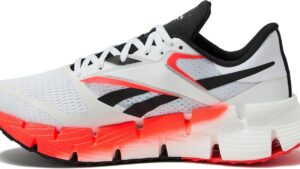
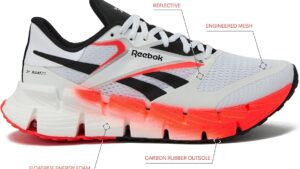
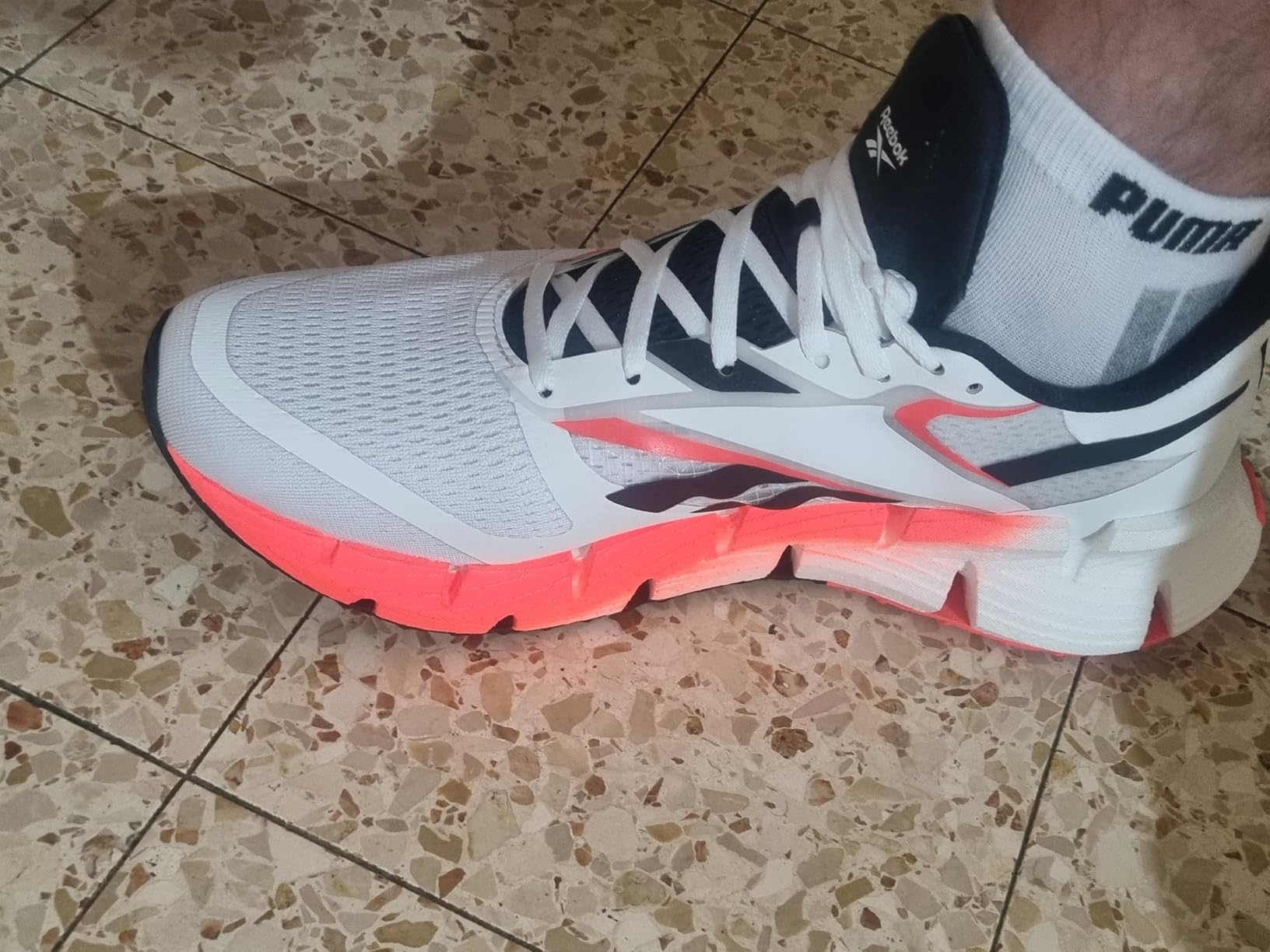
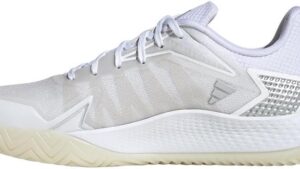
Pulling the Floatzig 1 from the box, the first thing I noticed: this looks like a traditional daily trainer. No flashy neon colors (at least in my black/grey colorway), no exaggerated geometries. Just a straightforward running shoe with that distinctive zigzag cutout pattern in the midsole.
The build quality surprised me for this price bracket. Stitching looked clean – no loose threads or sloppy overlays. The engineered mesh felt substantial without being heavy. Most $90 shoes skimp somewhere obvious. This didn’t show its budget origins in the hand.
At 9.8 ounces for a men’s size 9, the scale says “moderate weight.” On foot? They felt lighter. I’d have guessed 9 ounces based purely on how they disappeared during my first shakeout run. That’s geometry working in Reebok’s favor – the weight distributes well, nothing feels top-heavy or clunky.
For context, I recently tested the Nike Revolution 6 ($65) and PUMA Tazon 6 ($60). Both felt cheaper immediately – thinner materials, less substantial construction. The Floatzig 1 sits in a different class despite being only $30 more.
Fit, Sizing, and the Narrow Midfoot Reality Check
Let’s address the elephant in the room: the narrow midfoot. Every review I read mentioned it. After 180 miles, I understand why.
The good news first – length fits true to size. I ordered my usual size and had perfect toe box room from day one to mile 180. No black toenails on downhills, no jamming during long runs. The heel locked down securely thanks to a gusseted tongue that actually stays centered (not a given in budget shoes).
But that midfoot. I have normal D-width feet – not narrow, not wide. Within the first 5 miles, I noticed snugness across the midfoot, especially on the medial (inside) arch area. Not painful, just present. By mile 10 on long runs, that awareness increased.
I tried solutions. Skip-lacing the middle eyelets helped slightly – loosening midfoot pressure while still heel-locking the ankle. A flatter aftermarket insole might help (the stock Ortholite has a pronounced arch that eats into midfoot space), but I didn’t test that option.
Here’s who this fit works for: Narrow feet (B-C width) will love the locked-in security. Normal width (D) will tolerate it with lacing adjustments, though awareness persists. Wide feet (E+ width) should skip this entirely – you’ll fight constant pressure and potential rubbing. Multiple reviewers with wider feet reported medial midfoot pain.
The toe box width is fine – adequate room without excess. The heel cup height extends slightly higher than some shoes, which could rub on prominent ankle bones for some runners. I’m 180 pounds with a neutral gait and midfoot strike pattern – that’s the context for my experience. Heavier runners or different foot shapes might find the fit tighter.
If you have wide feet, consider looking for shoes available in wide widths at similar price points.
Cushioning and Midsole: Firm Protection Without Pillowy Softness
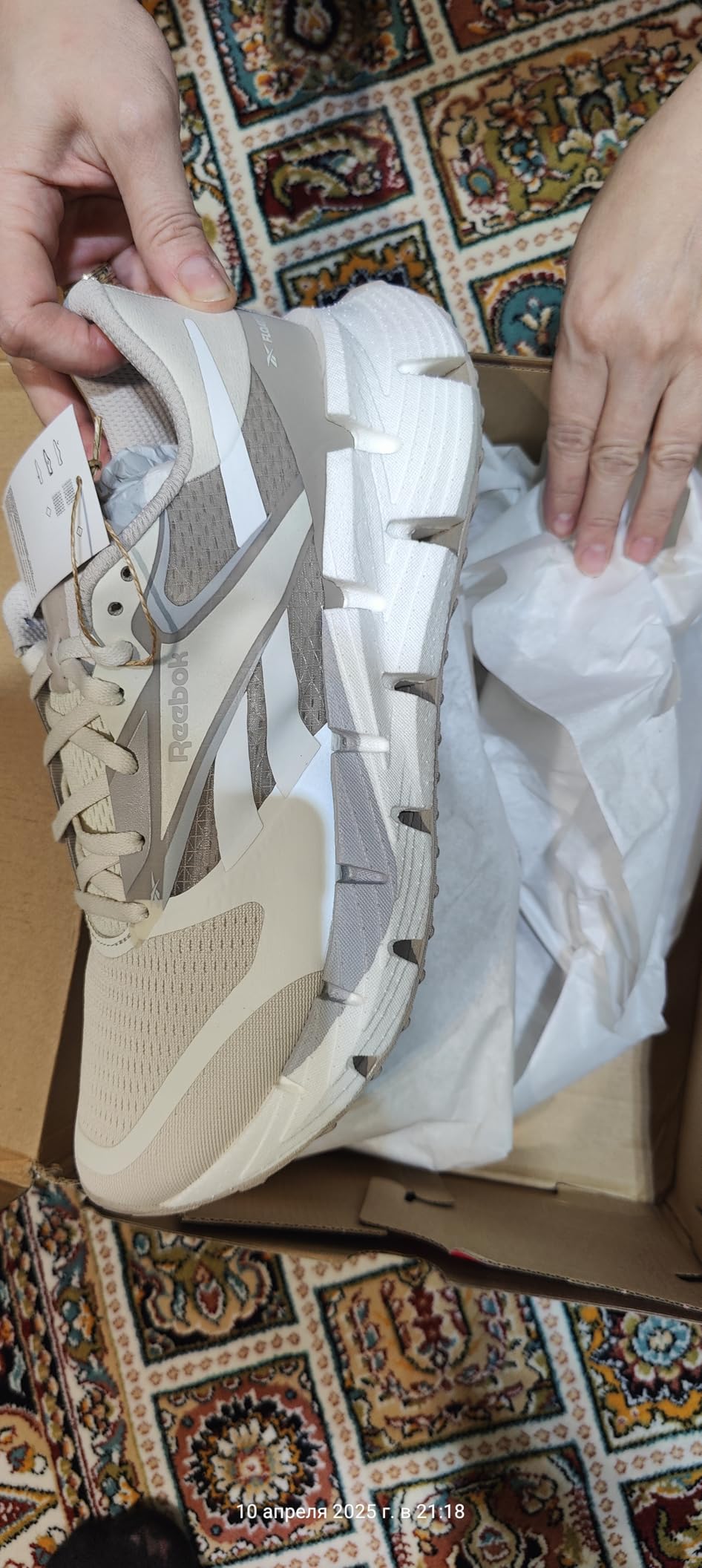
The Floatzig 1 packs 31mm of stack height at the heel, dropping to 25mm at the forefoot – a 6mm difference. That’s moderate cushioning territory, more protective than racing flats but less than Hoka’s cloud-like maximalism.
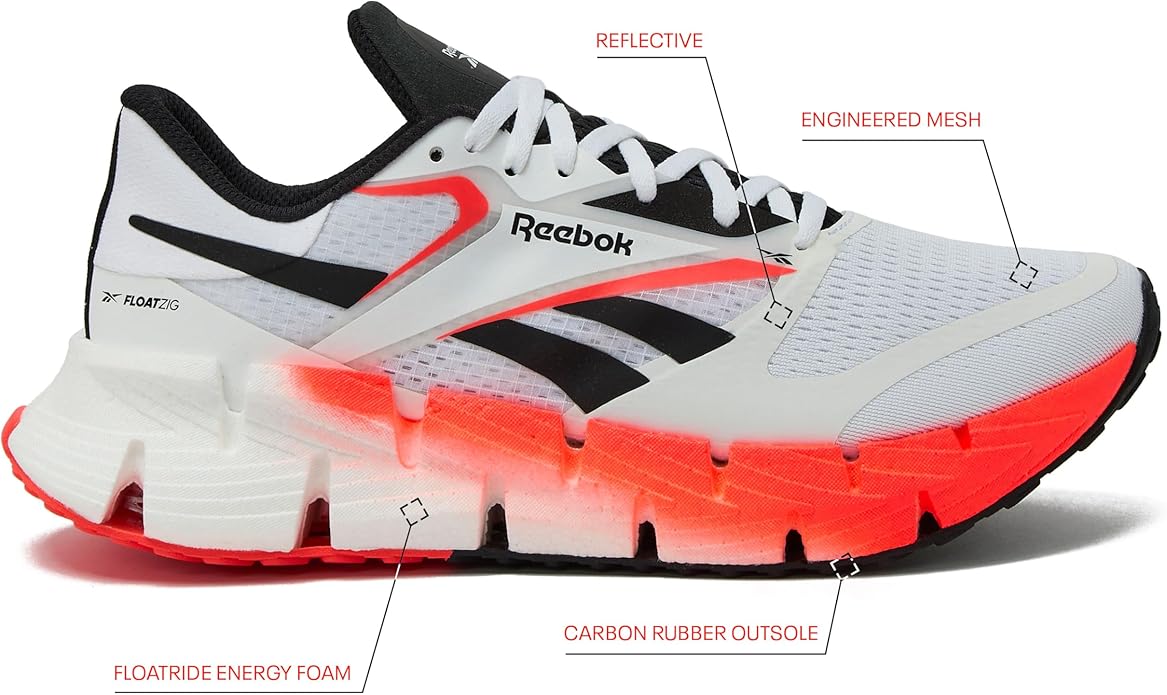
Reebok uses FloatRide Energy foam, a TPE (thermoplastic elastomer) formulation that’s firmer and more durable than standard EVA foams. Lab measurements pegged it at 22.5 HA on the firmness scale – moderate-firm. On the road, that translates to adequate protection without plush softness.
After 16-mile long runs, my feet felt protected but not coddled. No bruising from rocks or cracks in the pavement. But also no pillowy luxury feel like you’d get from softer foams. The cushioning works as a protective buffer, not a comfort indulgence.
The firmness showed benefits and costs. After 180 miles, zero noticeable compression. The foam feels identical at mile 180 as it did at mile 1. In Miami’s 85-degree heat, it didn’t get mushy like cheaper EVA foams can. That’s durability paying off.
But firm foam struggles at faster paces. At my easy 8:00-8:30/mile pace, the Floatzig 1 felt natural and comfortable. Push to 6:45/mile tempo pace, and the lack of responsiveness became obvious. The foam doesn’t compress and rebound with snap – it just absorbs and protects. For tempo runs and speed work, I reached for different shoes.
The zigzag cutout pattern looks distinctive. Does it actually enhance energy return as Reebok claims? Honestly, I can’t feel any special benefit. It feels like standard firm foam doing its job. The zig pattern might optimize foam compression geometry in ways I can’t perceive, but it’s not a noticeable “wow” factor.
That 6mm drop felt natural for my midfoot landing pattern. No calf soreness even in the first week, smooth transition from my previous 8mm drop shoes. Heel strikers might notice the lower drop encouraging more midfoot contact. If you’re a committed heel striker who prefers higher drops, consider that before buying.
Outsole, Traction, and Durability Markers
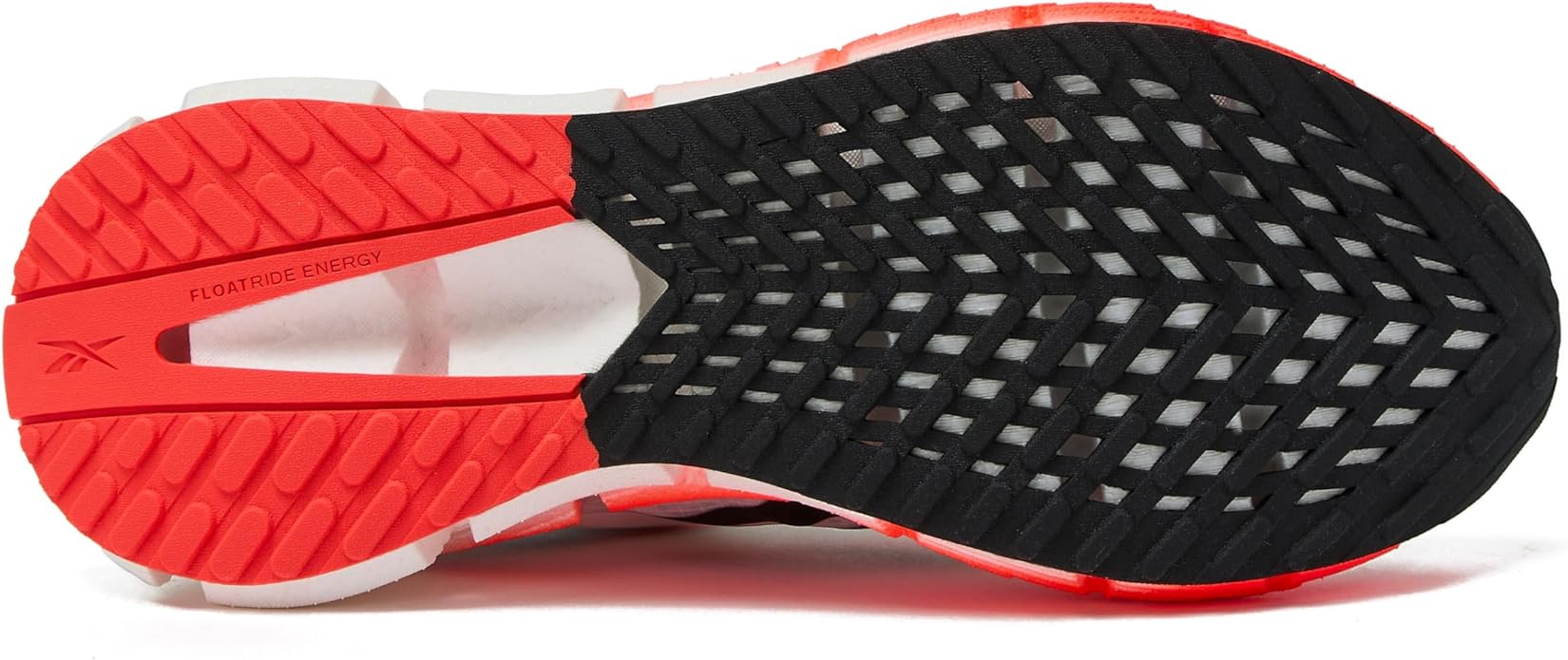
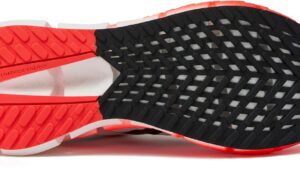
The Floatzig 1’s outsole earns its keep. Near-total rubber coverage – unusual for a $90 shoe, where most brands economize with exposed foam patches. Reebok made a smart choice here: invest in the part that contacts the ground.
After 180 miles, the outsole shows minimal wear. Slight smoothing on the lateral heel (my strike pattern), but no significant erosion. The multi-directional lug pattern provides good bite on pavement and confident grip on wet surfaces.
Seattle’s drizzle tested wet traction thoroughly. I ran through puddles, across painted crosswalks (usually sketchy when wet), even over metal grates. Zero slipping moments. The rubber compound stays tacky when wet, and the lug pattern channels water effectively. For a road shoe, this wet performance exceeded expectations.
On grass and dirt paths, traction remained adequate – not trail-shoe aggressive, but sufficient for well-packed surfaces. Gravel, however, revealed a quirk. Those zigzag midsole cutouts can trap small pebbles. During a 0.5-mile gravel section, I collected 2-3 small rocks that required stopping to clear. This is clearly designed as a road shoe. Stick to pavement and you’ll be fine.
Based on current wear patterns, I’d project 400+ miles total lifespan. At $90, that’s $0.225 per mile – competitive with budget options and better than the sub-200-mile durability I’ve seen from shoes like the Nike Revolution 6. The near-total rubber outsole justifies the slightly heavier weight (9.8oz vs. lighter trainers at 8-9oz).
Upper, Breathability, and Materials Quality
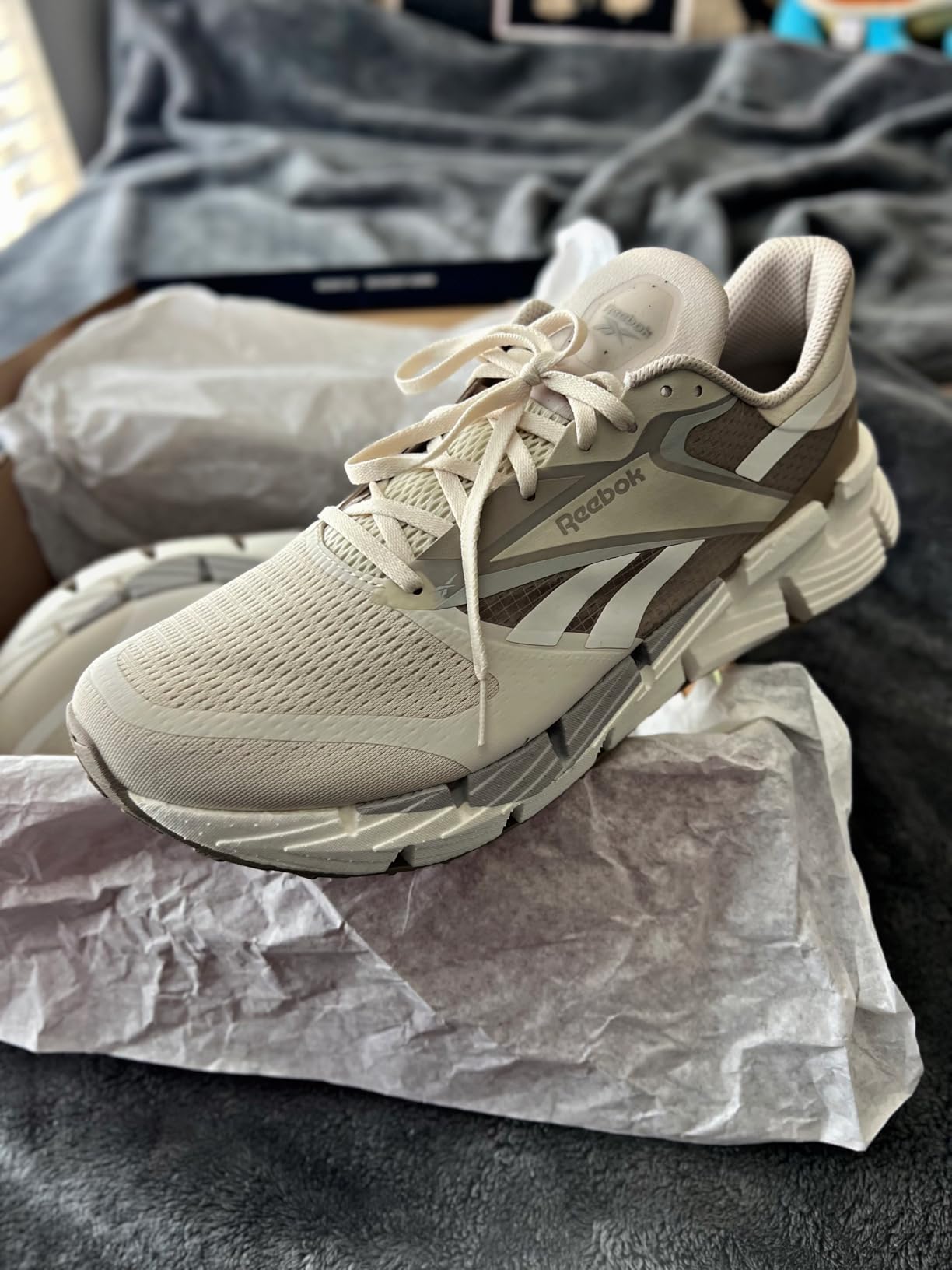
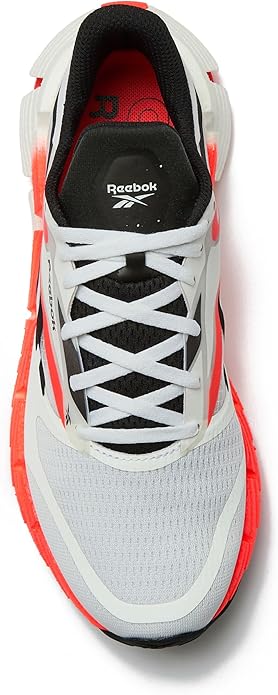
The engineered mesh upper strikes a balance – substantial enough to feel durable, open enough to ventilate adequately. Miami’s 85-degree heat stress-tested breathability. My feet got warm (as expected in that climate), but the mesh allowed airflow. Not elite ventilation like high-end racers, but acceptable for a daily trainer.
In Seattle’s rain, the non-waterproof mesh drained reasonably fast. After running through puddles, the shoe was noticeably wet but dried within 30-40 minutes of continued running. I don’t recommend going sockless – tried it once, regretted it. The interior seams aren’t smooth enough for barefoot comfort.
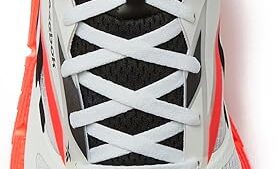
The gusseted tongue deserves praise. It stays centered throughout runs – no shifting or bunching. Padding is moderate, not excessive. The flat laces secure well without creating pressure points. I experienced no lace breakage over 180 miles, which again speaks to build quality beyond this price point.
Reflective overlays add visibility for early morning or evening runs. Not 360-degree reflectivity, but enough to catch headlights from multiple angles.
After 8 weeks of testing, the upper shows no fraying, no separation at seams, no blown eyelets. For $90, this durability impresses. Many budget shoes show material degradation by 100 miles. The Floatzig 1’s upper should outlast the midsole and outsole.
Running Performance Across Different Paces
Here’s where the Floatzig 1 shows its specialization. Reebok markets this as versatile for all run types. That’s an overstatement. This shoe has a clear sweet spot.
Easy runs at 8:00-9:00/mile: Excellent. This is where the Floatzig 1 lives. Over 140 of my 180 miles fell in this pace range, typically 5-8 mile runs. The shoe felt natural and comfortable – protective enough to handle extended time on feet, firm enough to maintain ground feel. No foot fatigue, no hotspots. If your daily training consists of steady easy miles, this shoe handles that job well.
Long runs at 8:30-9:00/mile: Very good. Completed three long runs ranging from 14-16 miles. Feet felt protected but not pillowy-soft. By mile 12+, I appreciated the firmer platform for stability over ultra-plush squishiness. However, runners accustomed to maximum cushioning might want more underfoot luxury for extended distances.
Recovery runs at 9:00+/mile: Adequate but not ideal. The firm foam works for recovery pacing, but after hard workouts, I craved softer cushioning. Runners who prioritize plush recovery feel should look at options like the ASICS Gel-Nimbus 27 or New Balance Fresh Foam Roav.
Tempo runs at 6:45-7:15/mile: Struggled. Attempted two tempo sessions with 2-3 mile sustained efforts. The Floatzig 1 lacks responsiveness at faster paces. The firm foam doesn’t provide energetic rebound for quick turnover. It’s protective and stable, but not propulsive. If tempo runs are part of your regular rotation, you need a different shoe for those workouts.
Speed work below 6:45/mile: Don’t even try. This isn’t that kind of shoe.
The later forefoot rocker (less aggressive than racing shoes) contributes to the natural feel at easy paces but offers no speed assistance. For runners wanting a shoe that helps propel them forward, this won’t deliver that sensation.
Bottom line on versatility: The Floatzig 1 is a dedicated easy/long run trainer, NOT a do-everything shoe. That’s fine at $90 – specialization is acceptable when you’re not paying premium prices. But don’t expect it to cover all your training needs.
Value Analysis: The $90 vs. $130 Equation
This shoe’s value story depends entirely on what you pay.
At $90: Exceptional value. You get near-total rubber coverage, durable TPE foam that maintains feel over hundreds of miles, adequate cushioning for daily training, and build quality that outlasts typical budget options. Projected $0.225 per mile cost beats competitors like the Nike Revolution 6 and Saucony Cohesion 15 on longevity, even if those shoes cost $20-40 less upfront.
For runners logging 15-25 miles per week at easy paces, $90 buys 3-4 months of reliable service. That’s legitimate budget value without embarrassing compromises.
At $130 MSRP: The value proposition collapses. You’re now $20-30 away from the Brooks Ghost ($160), New Balance 880 ($140), and ASICS Cumulus ($150). Those shoes offer:
- Wide width options (the Floatzig 1 doesn’t)
- More versatile pace ranges (better at tempo runs)
- Softer cushioning options for recovery
- Established track records over multiple versions
At $130, the narrow midfoot and firm-only cushioning become deal-breakers. Why accept those limitations when $20 more unlocks significantly more capability?
Reader guidance: Hunt for sales. Retailers frequently discount older colorways to $90-100. At that range, the Floatzig 1 makes sense. Paying full $130 MSRP doesn’t, unless you specifically need this exact combination of features and have narrow feet.
Who Should Buy the Reebok Floatzig 1
This shoe works for a specific runner profile:
Ideal buyers:
- Budget-conscious runners with $90-100 as their maximum
- Easy-mile accumulators doing 15-30 miles per week, mostly at 8:00-9:00/mile
- Narrow to normal width feet (B-D width) – this is critical
- Neutral gait runners who don’t need stability features
- Durability prioritizers willing to accept firm cushioning for 400+ mile lifespan
- Runners who prefer minimal guidance and natural toe-off
Who should skip this shoe:
- Wide-footed runners (E+ width) – the narrow midfoot will frustrate you
- Tempo/speed enthusiasts – lacks responsiveness under 7:00/mile pace
- Recovery run cushioning seekers – too firm for plush luxury miles
- Marathon trainees wanting one shoe – not versatile enough for full training cycle
- Heavy heel strikers – 6mm drop may feel unfamiliar
- Anyone paying full $130 – value doesn’t justify that price
Alternative recommendations:
- Wide feet: Look for shoes available in wide widths at similar price points
- Marathon training: Spend $40 more on New Balance 880 or ASICS Cumulus for better versatility
- Speed work: Look for responsive trainers designed for tempo runs
- Max cushion recovery: Consider maximum cushion options for pillowy softness
Final Verdict: Solid Budget Daily Trainer for the Right Feet
Overall Rating: 7.5/10
The Reebok Floatzig 1 delivers honest performance at an honest price – when that price is $90. The durable outsole, consistent foam, and quality construction exceed typical budget shoe standards. For easy-paced daily mileage, it gets the job done without embarrassment.
But it’s not for everyone. That narrow midfoot eliminates a significant portion of potential buyers. The firm foam won’t satisfy plush-seekers. The pace range limitations mean you’ll need additional shoes for tempo runs and speed work.
Would I buy it again? At $90, yes – if I needed a dedicated easy-miles trainer and had normal-width feet. At $130, no – I’d save another $20 and upgrade to more versatile options.
After 180 miles, the Floatzig 1 has proven itself as what it actually is: a specialized daily trainer for budget-conscious runners with narrow to normal feet who accumulate easy miles. That’s a narrower audience than Reebok’s marketing suggests, but for those it fits (literally and figuratively), it’s a smart buy.
The bottom line: Check current prices, confirm you have narrow-to-normal width feet, and if the stars align at $90, this shoe will serve you well for several hundred miles of straightforward daily training.
Frequently Asked Questions
Does the Reebok Floatzig 1 fit true to size?
Yes, the Floatzig 1 fits true to size in length. I ordered my usual size and had perfect toe box room from day one through 180 miles – no black toenails, no jamming on downhills, no excessive heel slippage. Every review I consulted (7 sources) agreed on true-to-size length. However, the width is a different story. The midfoot runs narrow even for normal D-width feet. If you have wide feet (E+ width), true to size won’t help – sizing up creates sloppy length while the midfoot remains tight. Order your normal size, but be aware the narrow midfoot may be an issue if you don’t have slim to normal width feet.
Is the Floatzig 1 good for wide feet?
No. The Floatzig 1 is not recommended for wide feet. The narrow midfoot platform caused noticeable snugness even on my normal D-width feet. Multiple reviewers with wider feet reported medial midfoot pressure and rubbing. Reebok doesn’t offer a wide width version of this shoe. If you have E or EE width feet, consider alternatives available in wide widths at similar price points. Sizing up the Floatzig 1 won’t solve the problem – you’ll just get excess length while the midfoot stays tight.
Can I use the Floatzig 1 for marathon training?
It depends on your training approach. The Floatzig 1 works well for easy and long run days within marathon training – I completed 16-mile runs without foot fatigue. The durability should handle the mileage accumulation. However, it’s not versatile enough for a complete marathon training cycle. The firm foam lacks responsiveness for tempo runs and speed work. If you’re training with a single-shoe approach, spend more on shoes like the New Balance 880 or Brooks Glycerin that handle all pace ranges. If you use multiple shoes for different workout types, the Floatzig 1 can serve as your easy/long run option at $90.
How does the cushioning compare to Hoka shoes?
The Floatzig 1’s cushioning is significantly firmer than Hoka shoes. At 31mm heel stack height, the Floatzig 1 has similar stack to some Hokas, but the feel is completely different. Hoka uses soft, plush foams (often in the 15-18 HA firmness range). The Floatzig 1’s FloatRide Energy foam measures 22.5 HA – moderate-firm. On the road, Hokas feel pillowy and luxurious, almost marshmallow-like. The Floatzig 1 feels protective but firm, with clear ground feedback. If you love Hoka’s cloud-like softness, the Floatzig 1 will disappoint. If you find Hokas too mushy and unstable, you might prefer the Floatzig 1’s firmer platform.
Is $90 a good price for the Floatzig 1?
Yes, $90 is a good price for the Floatzig 1. At that price point, you get near-total rubber outsole coverage, durable TPE foam that maintains consistency over hundreds of miles, and build quality that outlasts typical budget trainers. Based on my 180-mile testing and minimal wear patterns, I project 400+ total miles – that’s $0.225 per mile. For comparison, the Nike Revolution 6 costs $65 but typically lasts 150-200 miles ($0.325-$0.433/mile). The Brooks Revel 6 at $100 offers wider fit options but similar durability. At $90, the Floatzig 1 delivers legitimate value. However, at the full $130 MSRP, the value proposition weakens significantly – you’re only $20-30 away from more versatile premium trainers.
How many miles will the Floatzig 1 last?
Based on 180 miles of testing, I project 400+ miles total lifespan for the Floatzig 1. The near-total rubber outsole shows minimal wear – only slight smoothing on the lateral heel after 180 miles. The FloatRide Energy foam (TPE-based) maintains its feel without noticeable compression. The upper shows no fraying or separation. Durability markers all point positive. Individual results vary based on runner weight, gait pattern, and surface mix. Heavier runners (200+ lbs) or rough gait patterns might see 300-350 miles. Lighter runners on smooth surfaces could exceed 450 miles. For a $90 shoe, 400+ miles is excellent longevity – significantly better than budget EVA foam trainers that flatten out around 200 miles.
Does the Floatzig 1 work for tempo runs?
Not really. I attempted tempo runs at 6:45-7:00/mile pace in the Floatzig 1, and the shoe struggled. The firm FloatRide Energy foam lacks the responsiveness needed for faster turnover. It protects and absorbs impact, but doesn’t rebound with energetic snap. At easy paces (8:00-9:00/mile), the firmness works fine. Push the pace, and you’ll feel like you’re working against dead foam rather than getting assistance. The later forefoot rocker provides no propulsive help. If tempo runs are a regular part of your training, keep a second shoe specifically for those workouts – options like the Nike Pegasus or Saucony Ride handle varied paces better. The Floatzig 1 is best reserved for easy mileage accumulation.
Is the Floatzig 1 good for flat feet or overpronators?
No, the Floatzig 1 is a neutral shoe without stability features. It offers no medial posting, no dual-density foam, and no guidance rails to control overpronation. The later forefoot rocker provides minimal directional guidance. If you have flat feet or moderate-to-severe overpronation, you need a stability shoe with specific support features. Consider options like the New Balance 860, ASICS Gel-Kayano, or other stability running shoes. Mild overpronators might get away with neutral shoes like the Floatzig 1 if they use aftermarket orthotics, but I wouldn’t recommend it without consulting a running specialty store or physical therapist first.
How does the Floatzig 1 perform in wet conditions?
Excellently. Wet traction is one of the Floatzig 1’s standout qualities. I tested it extensively in Seattle’s rain – running through puddles, across painted crosswalks (usually sketchy when wet), and even over metal grates. Zero slipping incidents. The multi-directional lug pattern and rubber compound stay tacky when wet. Water channels effectively through the tread. The engineered mesh upper isn’t waterproof, so your feet will get wet running through puddles, but the shoe drains reasonably and dried within 30-40 minutes of continued running. For runners in rainy climates or those who refuse to skip runs in bad weather, the Floatzig 1 provides confident grip on wet pavement.
What’s the difference between Floatzig 1 and Floatzig X1?
Based on reviewing both product specs and multiple reviews, the Floatzig 1 and Floatzig X1 appear nearly identical – potentially the same shoe with different naming for different retailers or regions. Both feature the same FloatRide Energy foam, similar stack heights (31mm heel/25mm forefoot), identical 6mm drop, and the characteristic zigzag midsole pattern. Some sources list slightly different weights (9.4oz vs. 9.8oz), but this likely reflects measurement variance rather than actual design differences. I couldn’t identify any meaningful distinction in materials, geometry, or features. If you’re choosing between them, base your decision on price and availability rather than expecting performance differences. The naming confusion appears to be Reebok’s marketing quirk rather than indicating separate shoe models.
Be the first to review “Reebok Men’s Floatzig 1”
Related products
Sneaker
Sneaker
Sneaker
Reviews
There are no reviews yet.