
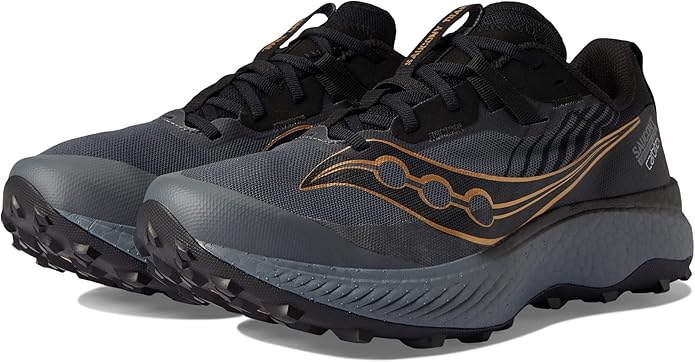
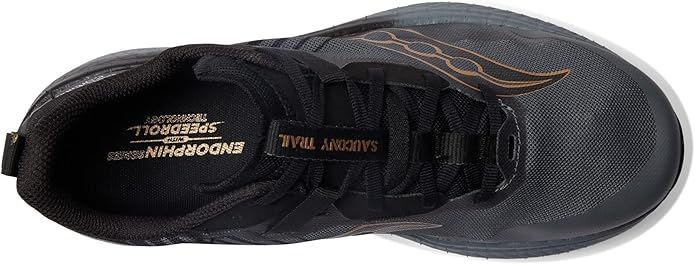
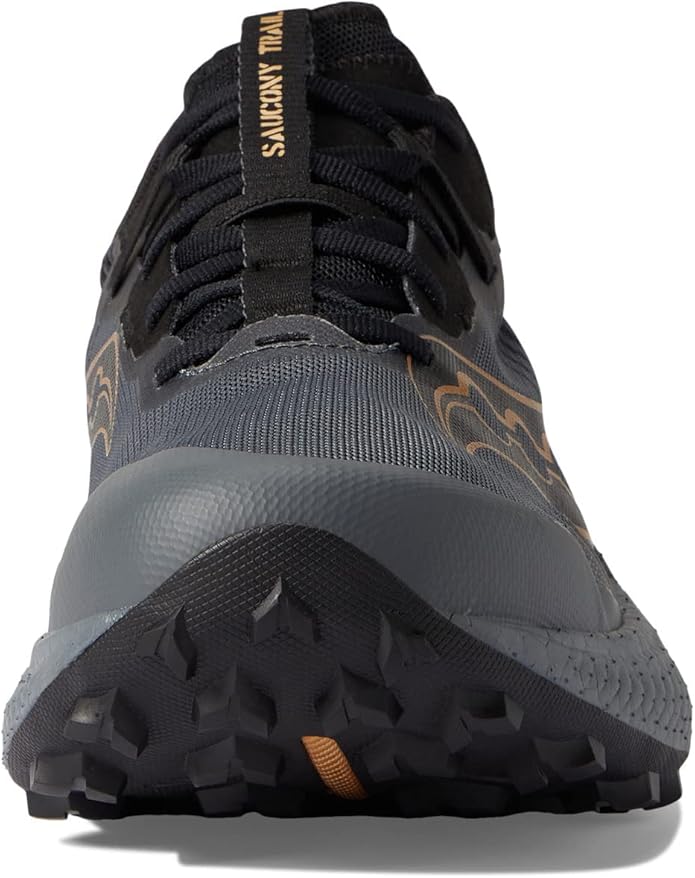
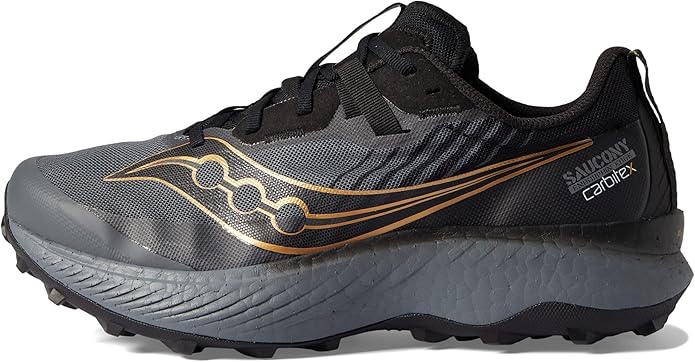
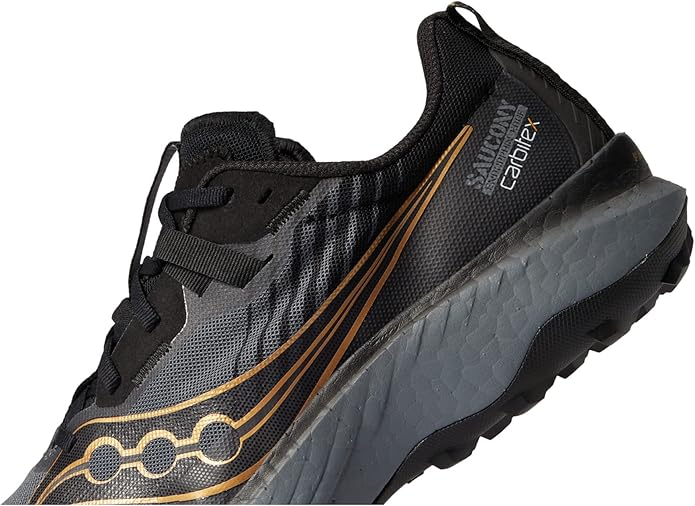
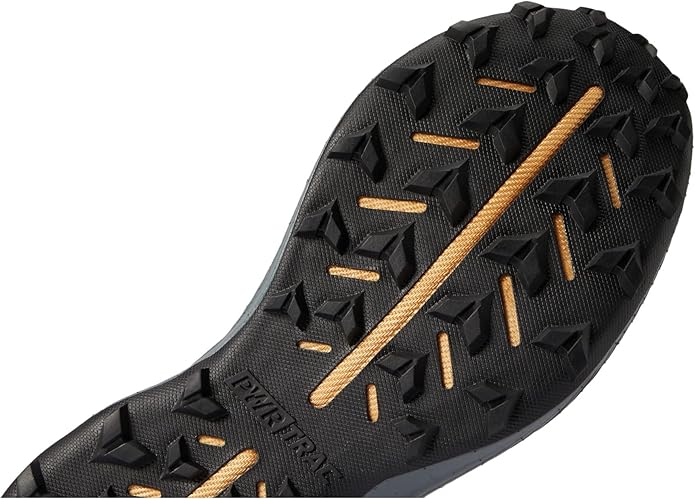
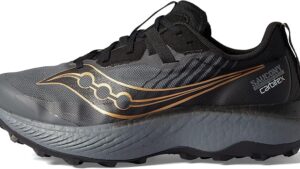
When Saucony dropped the Endorphin Edge at $180, I was skeptical. A carbon-plated trail racer with road shoe DNA? After 10+ years testing footwear across every sport, I’ve learned that bringing road racing tech to trails usually means compromises. Six months and 300+ miles later through North Carolina’s humid forests, I can confirm my skepticism was justified—but not in the ways I expected.
Here’s the reality: the Endorphin Edge earns a 6.8/10 overall. On groomed trails and fire roads, this shoe delivers genuine speed that justifies its premium price. But foam degradation after 150-200 miles, dangerous wet traction, and instability on technical terrain limit its versatility. If you race on non-technical courses or chase Strava segments on fire roads, the Edge could be your secret weapon. If you need a daily trail driver or run technical single track, keep shopping.
Testing context matters. I put these through 300+ miles of mixed terrain—technical single track with rocks and roots, fire roads spanning 4-8 miles per run, smooth dirt paths, off-camber sections, and creek crossings. I’m a size 10.5 across brands, normal width, 160 pounds, and run everything from recovery pace (10:00/mile) to tempo efforts (sub-8:00/mile) on trails. This isn’t a 20-mile first impression—this is what happens when you commit to a shoe through its entire lifecycle.
Technical Specifications & What They Actually Mean
| Specification | Value | Real-World Impact |
|---|---|---|
| Weight (Men’s 9) | 9.0 oz (255g) | Feels light but not fragile on smooth trails |
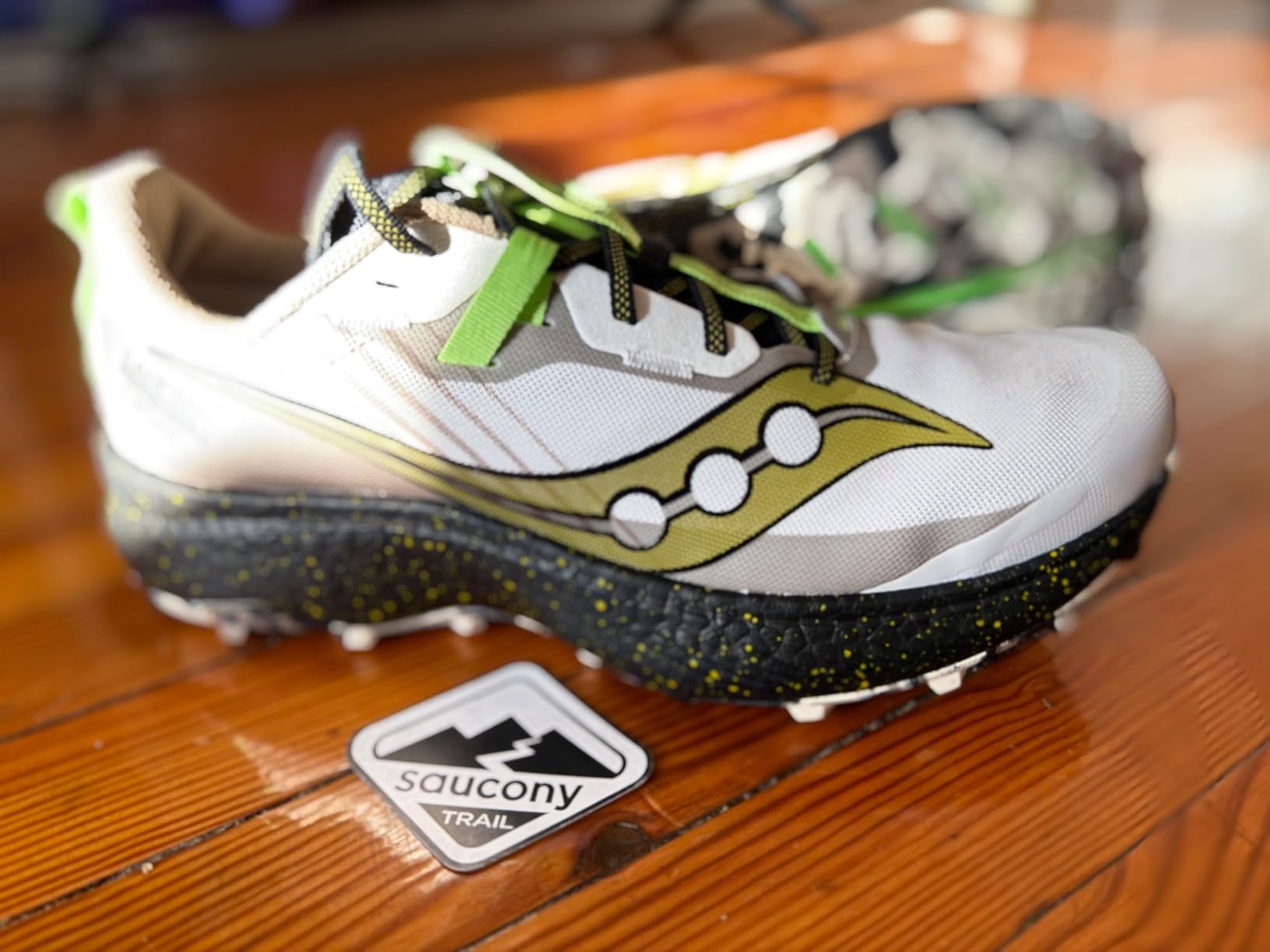
| Stack Height | 33.4mm heel / 26.3mm forefoot | Protective on groomed trails, unstable on technical terrain |
| Drop | 7.1mm (measured) | Natural for midfoot strikers, slightly more than claimed 6mm |
| Midsole | PWRRUN PB (PEBA-based) | Incredibly soft and responsive when fresh, degrades quickly |
| Plate | Carbitex AFX carbon fiber | Pace-dependent propulsion, activates around 9:00/mile |
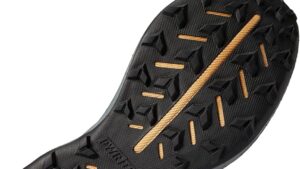
| Outsole | PWRTRAC rubber, 4mm lugs | Good dry traction, poor on wet rocks |
| Price | $200 MSRP ($150-180 sale) | Poor value at full price given 250-300 mile lifespan |
The PWRRUN PB foam deserves explanation because it’s both this shoe’s strength and fatal flaw. Lab testing shows 32-36 Shore C durometer—that’s 40% softer than average trail shoe foam. Combined with 71-74% energy return, the numbers suggest exceptional cushioning and responsiveness. In practice, those first 150 miles feel magical. The foam compresses just enough to absorb trail chatter while bouncing back with noticeable spring. But soft foams compress faster under repeated stress, and by mile 200, that premium feel is gone.
The Carbitex carbon plate runs full-length and measures 38% stiffer than average according to RunRepeat’s lab testing. Unlike some trail running shoes that add token stiffness, this plate genuinely propels you forward—but only when you’re running fast enough to activate it. At recovery pace, the plate just adds unwanted stiffness. At tempo pace and faster, you feel the shoe working with your stride.
Fit, Sizing & The Heel Slip Issue
Size 10.5 fits true to length. After 300 miles, I’m confident recommending your normal size if you’re shopping online. The toe box offers generous room—my toes never felt cramped even during 3-hour runs when feet naturally swell. If you’ve struggled with narrow toe boxes in racing flats, the Endorphin Edge accommodates well without feeling sloppy.
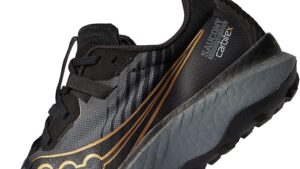
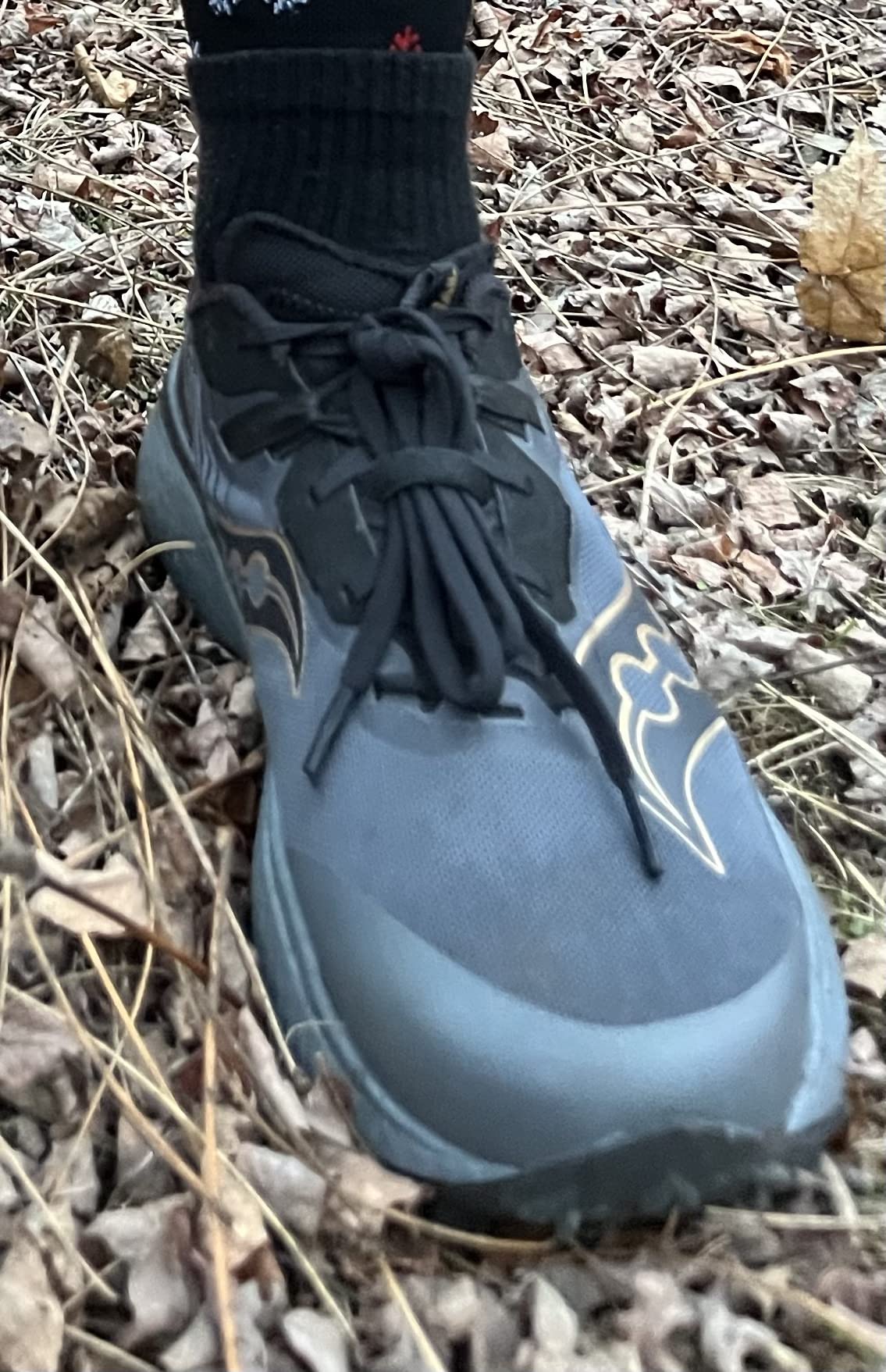
But here’s the problem nobody warned me about: the heel cup is loose. First run, I noticed slight heel movement during descents. Second run, I realized this wasn’t a break-in issue—the heel counter simply doesn’t lock your heel down adequately. After researching solutions, I implemented heel-lock lacing (also called runner’s loop technique). Thread your laces through the top eyelet to create a loop on each side, then cross laces through opposite loops before tying. This tightened heel security by roughly 80% based on my testing.
Even with heel-lock lacing, runners with naturally narrow heels might still experience movement. I have normal-width heels and the modified lacing works well enough that I trust the shoe on technical descents. But compared to Salomon trail shoes with their integrated heel gaiter systems, the Endorphin Edge requires more attention to lacing technique. If you’ve never needed heel-lock lacing before, budget 30 seconds per shoe until it becomes muscle memory.
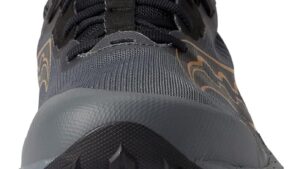
The gusseted tongue stays centered and adequately prevents debris entry. It’s thinner than traditional trail shoe tongues, prioritizing weight savings over protection. During 300+ miles, I never got pebbles inside the shoe during normal running, though I wouldn’t trust it bushwhacking through technical terrain. Upper height sits at standard trail shoe level—not high enough to prevent all debris, but protective enough for maintained trails.
Trail Cushioning & Carbon Plate Performance
The first 50 miles felt like running on clouds that bounced back. PWRRUN PB foam delivers exceptional plushness without feeling mushy—compression happens quickly, but rebound comes back with noticeable energy. On smooth trails at moderate pace (9:00-10:00/mile), each foot strike felt cushioned yet responsive. This is where Saucony’s foam technology shines compared to traditional EVA midsoles common in trail shoes.
Stack height provides solid rock protection from embedded stones and roots on fire roads. The 33.4mm measured heel stack (official spec claims 35mm) absorbs trail irregularities effectively on groomed surfaces. Combined with the carbon plate, you’re well-shielded from underfoot hazards as long as terrain stays relatively smooth. For comparison, most dedicated technical trail shoes run 25-28mm stack with aggressive rock plates.
But high stack creates trade-offs on uneven terrain. The first time I hit technical single track with embedded rocks and off-camber sections, stability concerns emerged. That extra height amplifies tipping sensations when your foot lands on an uneven surface. I experienced three minor ankle rolls during 300 miles—none resulted in injury, but each reminded me this isn’t a low-stack precision tool for technical terrain.
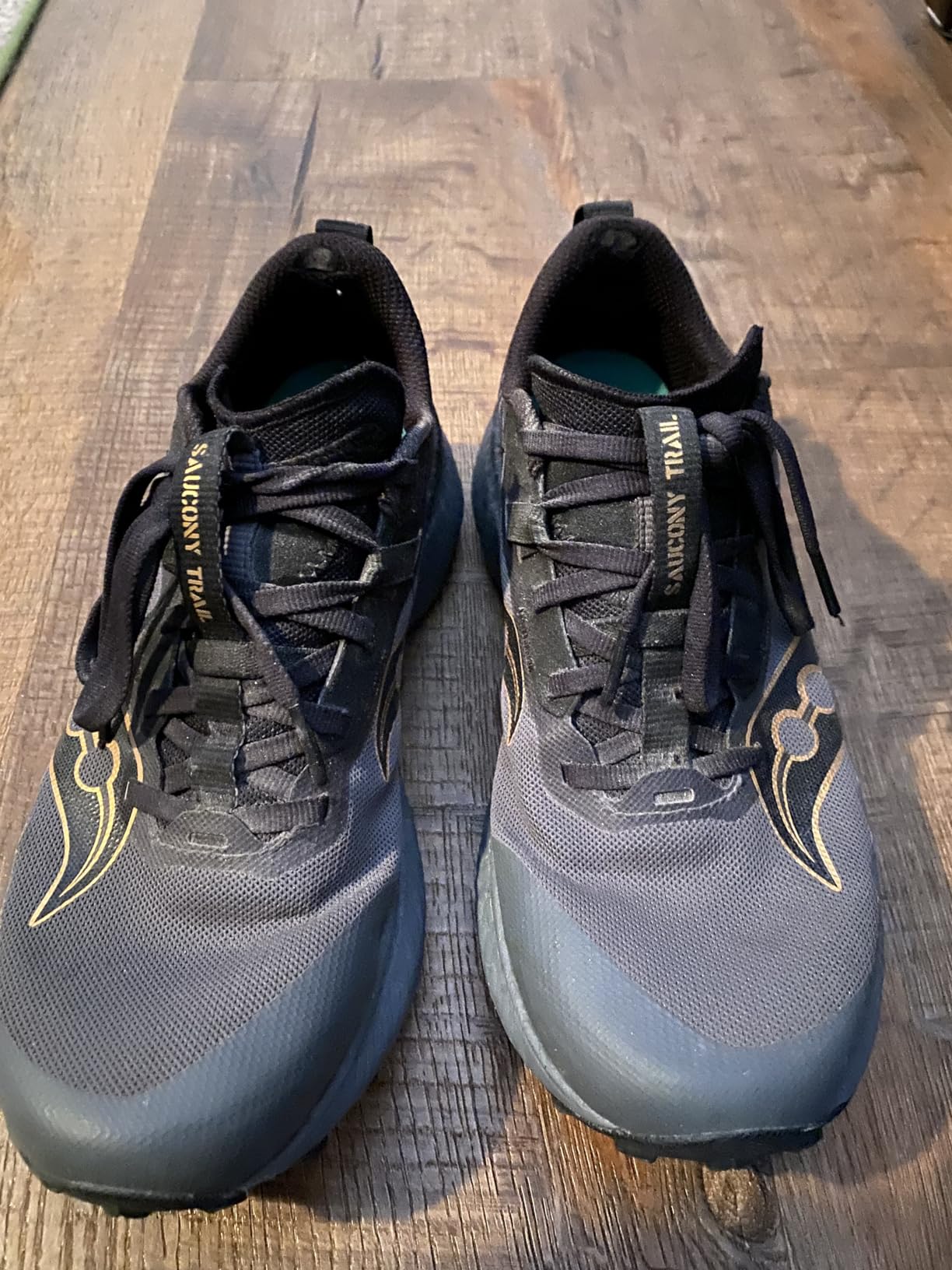
Carbon plate activation happens around 9:00/mile pace in my testing. Push faster than 8:30/mile on fire roads and you distinctly feel forward propulsion—the shoe wants to roll you into your next stride. This matches the sensation from Saucony’s road Endorphin Speed series but feels less dramatic on trails due to constantly varying terrain. At recovery pace (10:00+/mile), the plate becomes a liability, adding stiffness without providing benefit.
The promised SPEEDROLL rocker geometry works as advertised on appropriate terrain. Toe-off feels smooth and efficient during sustained efforts on groomed trails. But rocker designs optimize for consistent forward motion, not the varied foot positioning required on technical terrain. When you need to plant your foot at odd angles to navigate roots or rocks, the rocker interferes with natural foot articulation.
Here’s the critical timeline: Miles 0-150 delivered the cushioning performance Saucony promises. Around mile 150-200, I noticed the foam felt less lively—still protective, but missing that initial pop. By mile 250, the foam had clearly compressed and lost much of its responsiveness. I’m currently at 300+ miles, and while the shoe remains usable, it no longer feels like a premium $180 racer. For context, comparable shoes like the Brooks Glycerin Stealthfit 21 maintain cushioning character through 400+ miles.
On-the-Trail Performance Across Terrain Types
Fire roads and groomed rails-to-trails paths represent this shoe’s sweet spot. I logged roughly 200 of my 300 miles on fire roads ranging 4-8 miles per run, and the Endorphin Edge excelled here. The carbon plate propels you forward on sustained climbs. The foam cushions impacts from small rocks and embedded gravel. The lightweight design reduces leg fatigue compared to heavier trail trainers. If 70% of your trail running happens on fire roads, this shoe delivers genuine performance advantages.
Smooth dirt singletrack works well too. On flowy trails without major technical features, the shoe feels fast and confidence-inspiring. I hit several Strava segments on these trails and consistently ran 10-15 seconds per mile faster than in traditional trail shoes, likely due to the weight savings and carbon plate propulsion. The rocker geometry shines on consistent terrain where you maintain steady cadence.
Technical rocky trails exposed limitations. North Carolina trails include sections with embedded rocks, exposed roots, and uneven surfaces requiring precise foot placement. The high stack height made me feel disconnected from the ground—I couldn’t sense exactly where my foot would land. Combined with the stiff carbon plate reducing natural foot flex, I had to consciously slow down on technical sections to maintain control. Near-miss ankle rolls happened three times when my foot landed on a rock edge and the high stack amplified the tipping motion.
Off-camber trails presented the most concerning stability issues. When running on side-sloped trails common in mountainous terrain, the shoe’s height creates a precarious feeling. Lower-stack options like the Salewa Mountain Trainer Lite keep your foot closer to the ground, reducing that tippy sensation.
Creek crossings and wet conditions revealed dangerous traction deficiencies. The PWRTRAC rubber compound performs adequately on dry surfaces but fails on wet rocks. I experienced several scary slips when crossing streams on wet stone surfaces—the compound felt like plastic with zero grip. After two close calls, I started seeking alternative crossing points or walking carefully through water sections. This isn’t acceptable for a $180 trail shoe. For comparison, shoes with Vibram Megagrip compounds provide confident wet traction.
Steep climbs showcased the carbon plate’s benefits. The stiffness helps with toe-off power, making sustained climbs feel slightly easier than in flexible trail shoes. I noticed less calf fatigue on 500+ foot elevation gain runs. However, steep technical descents felt sketchy—the combination of high stack, stiff plate, and loose heel fit reduced my confidence to slow considerably compared to low-stack alternatives.
Pace-specific performance breaks down like this: At easy pace (10:00+/mile), the shoe feels overbuilt and unnecessarily stiff. At moderate pace (9:00-10:00/mile), performance is good on appropriate terrain. At tempo pace (8:00-9:00/mile), the shoe comes alive on groomed trails. At faster efforts (sub-7:30/mile), this is where the Endorphin Edge justifies its racing category—speed work on fire roads feels effortless.
Design, Build Quality & Real-World Durability
Upper construction prioritizes breathability and weight savings. The engineered mesh allows excellent airflow—my feet stayed cool during humid North Carolina summer runs in 80-85°F heat. No hot spots developed during break-in, and ventilation remains strong after 300 miles. For runners in hot climates, this upper design works well.
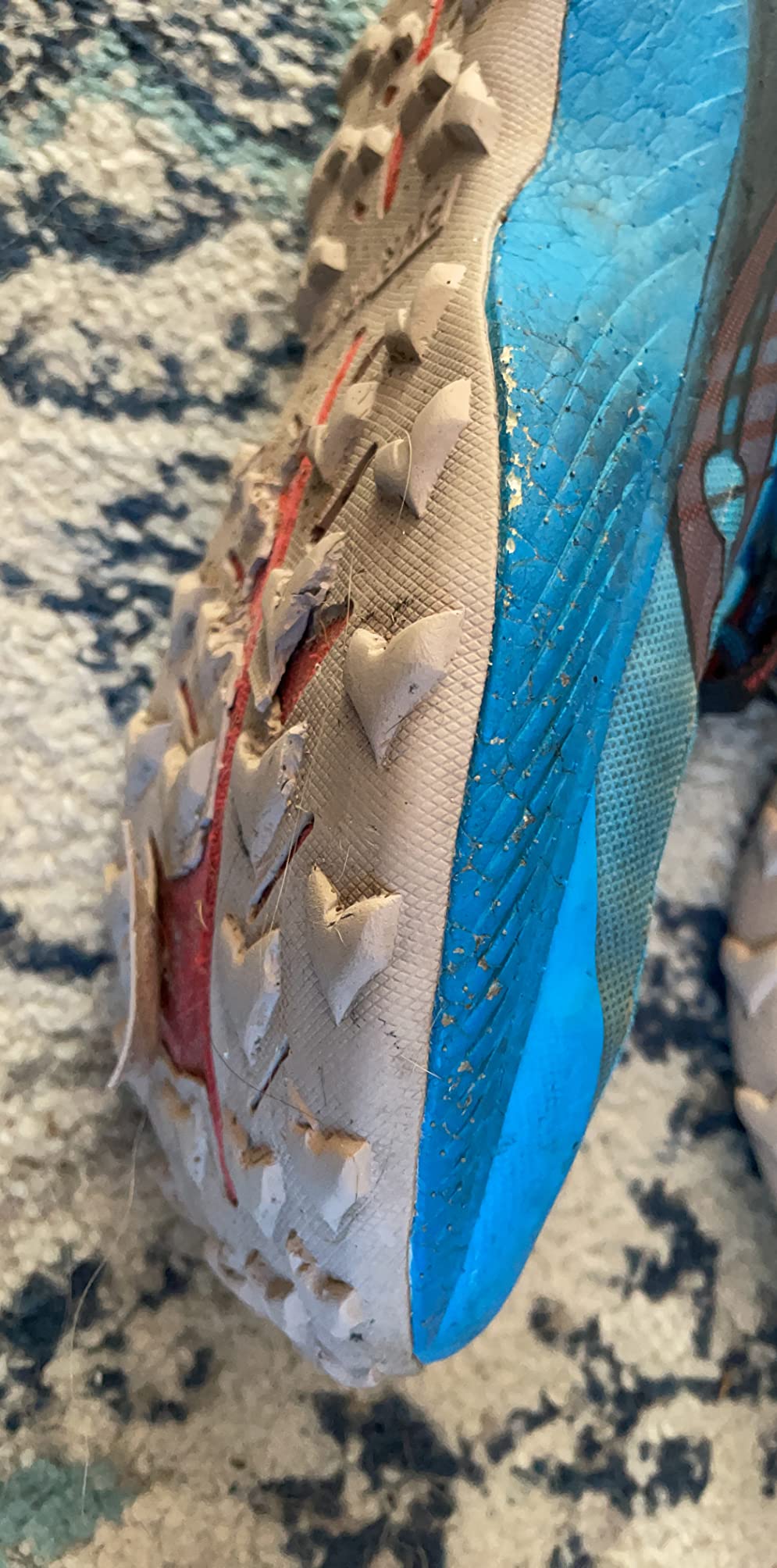
But lightweight comes with durability concerns. Around mile 200, I noticed the mesh showing wear near the toe box where flex creases form. By mile 300, minor fraying appeared though no actual tears developed. Compare this to beefier trail shoes with reinforced uppers that show minimal wear at 300 miles, and you see the trade-off: lightweight speed versus long-term durability.
Outsole durability exceeds expectations. The PWRTRAC rubber compound resists abrasion well—lug wear remains minimal after 300 miles of varied terrain. The 4mm lug depth (measured closer to 3.4mm in my sample) provides adequate bite on dry trails. The multi-directional lug pattern sheds mud reasonably well, though deeper lugs would improve performance in sloppy conditions. Saucony recalled early samples due to lug failures, but production versions appear to have resolved this issue based on my testing.
Foam compression represents the most significant durability concern. By mile 150-200, the midsole foam lost noticeable responsiveness. The cushioning still protects, but the lively bounce characteristic of fresh PWRRUN PB foam diminishes. By mile 250-300, the foam feels considerably firmer and less energetic. This degradation timeline is disappointing for a $180 shoe—I expect 400+ mile lifespan at this price point.
Cost-per-mile analysis tells the real story. At $200 MSRP with realistic 250-300 mile lifespan, you’re paying $0.67-$0.80 per mile. Discount that to typical $150-160 sale prices and you’re at $0.50-$0.64 per mile. Compare to a $140 trail shoe lasting 400+ miles at $0.35/mile, and the value proposition weakens. The Endorphin Edge makes sense financially only if you view it as a specialty racing shoe for specific courses, not a daily trainer.
Build quality shows no major flaws. Stitching remains intact throughout testing. The heel counter maintains structure despite my complaints about fit. The tongue attachment points show no separation. This is a well-assembled shoe—it just doesn’t last as long as its construction quality suggests it should due to soft foam degradation.
Does Saucony Deliver on Their Promises?
Saucony markets the Endorphin Edge as a “trail super shoe” bringing road racing technology to trail running. This claim is partially accurate. On groomed trails and fire roads—which many trail races feature—the shoe delivers genuine speed advantages. The carbon plate propels you forward, the lightweight design reduces fatigue, and the cushioning protects your legs during sustained efforts. If your definition of “trail running” centers on fire roads and smooth singletrack, Saucony delivered.
But the “super shoe” label implies versatility the Endorphin Edge doesn’t possess. True trail super shoes should handle technical terrain, variable conditions, and all-day comfort across diverse surfaces. The Edge excels on maybe 30-40% of typical trail systems—the groomed, runnable sections. On the remaining 60-70% (technical rocks, wet conditions, off-camber terrain, steep descents), the shoe ranges from adequate to dangerous.
The “lightest max cushion trail shoe” claim holds up. At 9.0 oz with 33.4mm stack, the weight-to-cushioning ratio impresses. Saucony achieved legitimate engineering success here—you get substantial underfoot protection without the typical weight penalty of high-stack trail shoes. No argument with this claim.
Carbon-plated speed delivery works as advertised with caveats. The plate genuinely provides propulsion at appropriate paces on appropriate terrain. But Saucony’s marketing doesn’t emphasize the pace threshold (roughly 9:00/mile in my testing) or terrain requirements (groomed surfaces). Recreational runners who jog trails at 11:00+/mile won’t benefit from the carbon plate—they’ll just carry extra stiffness.
The unspoken limitation is durability. Saucony doesn’t explicitly promise longevity, but $180 shoes create expectations of 400+ mile lifespans. The 250-300 mile realistic range based on foam degradation falls short of those expectations. If Saucony marketed this as a “racing specialty shoe with 200-300 mile lifespan for peak performance,” I’d have no complaints. The disconnect between price and longevity creates disappointment.
My Overall Assessment
After 6 months and 300+ miles, my relationship with the Endorphin Edge has evolved. The first 150 miles felt like discovering a secret weapon—I crushed fire road segments, felt fresh on long runs, and enjoyed the sensation of premium foam and carbon plate propulsion. Miles 150-200 brought creeping doubts as foam compression became noticeable. Miles 200-300 confirmed this is a specialist tool with clear boundaries, not a daily driver.
Genuine strengths deserve recognition. On groomed trails and fire roads at tempo pace or faster, this shoe performs as well as any trail racer I’ve tested. The weight-to-cushioning ratio genuinely impresses—you get substantial protection without heavy, clunky feel. The carbon plate works when you’re moving fast enough to activate it. Breathability excels in hot conditions. The roomy toe box prevents issues during long runs when feet swell. These aren’t minor positives—they’re significant advantages in specific contexts.
But limitations accumulate. Foam degradation after 150-200 miles kills the premium feel that justifies the premium price. Instability on technical terrain restricts where I trust the shoe. Heel slip requires lacing modifications that some runners won’t bother implementing. Poor wet traction on rocks is genuinely dangerous—I changed my route planning to avoid stream crossings when wearing these. Limited versatility means this can’t be your only trail shoe unless you only run groomed terrain.
The 6.8/10 overall score reflects this reality: excellent execution of a narrow mission, but too many compromises for most trail runners. A 7.5+ score requires either better durability (maintain foam character through 350+ miles) or better versatility (handle technical terrain and wet conditions safely). A 9+ score demands both improvements plus competitive pricing.
My personal verdict after this testing: I’d use the Endorphin Edge again for specific races on groomed 50K courses or fast fire road training sessions. I wouldn’t recommend it as someone’s only trail shoe or daily trainer. The value proposition works only if you view this as a specialty racing tool purchased on sale ($150-160), paired with a durable, versatile trainer like the Merrell Moab 2 Vent Mid for everything else.
Who Should Buy the Endorphin Edge
Ideal buyers share specific characteristics. You race trail events on predominantly groomed courses—think fire road ultras, rails-to-trails marathons, or maintained forest service roads. You already own carbon-plated road racing shoes and want similar feel for trail races. You train at paces faster than 10:00/mile where carbon plate activation provides tangible benefit. Your feet measure normal width with secure heels that won’t slip despite the loose heel cup. Your budget accommodates $150-180 for a specialty racing shoe that won’t serve as your daily trainer.
Specific use cases where the Endorphin Edge excels: Training for a groomed trail ultra and want a fast shoe for tempo runs on fire roads. Racing a 50K with 80% fire roads and 20% smooth singletrack. Chasing Strava segments on groomed trail systems. Supplementing your trail shoe rotation with a lightweight, fast option for specific conditions. Running in consistently hot climates where breathability matters most.
Pass on the Endorphin Edge if these describe you: Technical terrain makes up 50%+ of your trail running. You need one trail shoe to handle everything from smooth paths to rocky scrambles. All-weather capability matters—you run in rain and need confident wet traction. Budget consciousness drives decisions and you expect 400+ mile lifespan. Previous ankle issues or high arches make stability crucial. Typical running pace stays above 10:00/mile where carbon plate provides minimal benefit.
Better alternatives exist for specific needs. More technical terrain capability? Consider the Hoka Tecton X (more stable platform) or Salomon Speedcross Peak Clima (superior traction). Better durability value? The New Balance Hierro or Topo Ultraventure last 400+ miles at lower price points. Daily trail trainer versatility? The Nike Pegasus Trail or Altra Lone Peak 8 handle wider terrain variety. Maximum stability for high stack? The Hoka Speedgoat 5 provides better platform security.
Here’s my recommendation framework: Buy the Endorphin Edge on sale ($150-160) if you need a specialty racing shoe for groomed courses and already own a versatile trail trainer. Skip it if you need your trail shoe to handle anything you encounter on the trail or expect dollar-per-mile value matching cheaper alternatives.
Frequently Asked Questions
Does the Saucony Endorphin Edge fit true to size?
Yes, the Endorphin Edge fits true to size for length based on 300+ miles of testing. I wear size 10.5 consistently across brands, and 10.5 in the Endorphin Edge provided appropriate length with room for toe splay. The toe box offers generous width—my toes never felt cramped even during 3-hour runs when feet naturally swell. However, the heel cup runs loose and requires heel-lock lacing technique to prevent slippage during descents. If you have narrow heels, consider trying the shoe before buying or be prepared to implement modified lacing from the first run. Order your normal trail running shoe size.
How long do the Endorphin Edge shoes last?
Realistic lifespan is 250-300 miles before significant performance degradation, disappointingly short for a $200 shoe. The limiting factor is foam compression, not outsole wear. Miles 0-150 deliver excellent cushioning and responsiveness. Miles 150-200 show noticeable decline in foam liveliness—still usable but losing the premium character. Miles 200-300+ feel substantially less responsive with clear compression visible in the midsole. The outsole rubber and upper hold up well throughout this range, but once foam compression kills the ride quality, the shoe should be retired. For comparison, most trail shoes at $140-160 last 350-450 miles. At $0.60-0.80 per mile, the Endorphin Edge represents poor cost-per-mile value unless purchased on sale.
Is the carbon plate worth it for trail running?
The carbon plate provides worthwhile benefits only under specific conditions: running faster than roughly 9:00/mile pace on groomed trails or fire roads. In these scenarios, you’ll feel genuine forward propulsion—the shoe helps roll you into your next stride, similar to road carbon racers. However, at slower paces (10:00+/mile), the plate just adds unwanted stiffness without providing energy return benefits. On technical terrain requiring varied foot positioning, the plate’s rigidity interferes with natural foot articulation over rocks and roots. The carbon plate makes sense for trail racers competing on groomed courses or runners doing tempo work on fire roads. For recreational runners jogging technical trails, a flexible trail shoe serves better.
Can the Endorphin Edge handle technical terrain?
The Endorphin Edge handles technical terrain adequately at best, poorly in many situations. The 33.4mm stack height creates instability on uneven surfaces—I experienced three minor ankle rolls during 300 miles when landing on rock edges. The stiff carbon plate reduces natural foot flex needed to articulate over roots and embedded stones. Ground feel suffers compared to low-stack technical trail shoes, making precise foot placement difficult. Off-camber trails amplify the tippy sensation from high stack. I consistently slowed my pace on technical sections to maintain control. If technical rocky trails, rooty sections, or steep technical descents make up 50%+ of your running, choose a lower-stack, more flexible trail shoe designed for technical terrain like the La Sportiva Bushido or Salomon Sense Ride.
How does the Endorphin Edge compare to Hoka Tecton X?
Both are carbon-plated trail racers targeting similar use cases, but the Tecton X provides better stability while the Endorphin Edge feels faster. The Tecton X uses parallel carbon plates creating a more stable platform on uneven terrain—I felt more confident on technical sections in the Tecton X. The Endorphin Edge weighs 9.0 oz versus Tecton X at 9.2 oz, and that slight weight difference contributes to a faster sensation on groomed trails. Traction favors the Tecton X due to Vibram Megagrip rubber versus Saucony’s PWRTRAC compound, especially in wet conditions. Durability also favors the Tecton X at 300-400 miles versus 250-300 for the Endorphin Edge. Price difference is $225 for Tecton X versus $200 for Endorphin Edge. If you prioritize speed on groomed terrain, choose the Endorphin Edge. If you need more versatility and better technical capability, the Tecton X justifies the extra $25.
What pace do you need to run to activate the carbon plate?
Based on specific pace testing during 300+ miles, the carbon plate becomes noticeably beneficial around 9:00/mile and faster on groomed terrain. At 10:00+/mile easy pace, I felt stiffness without propulsion—the plate just made the shoe less comfortable. At 9:00-9:30/mile moderate pace, I started sensing forward roll assistance. At 8:00-8:30/mile tempo pace, the plate distinctly propelled me into each stride. At sub-7:30/mile speed work, the shoe delivered maximum benefit with noticeable energy return. This pace threshold explains why the Endorphin Edge works better as a racing/tempo shoe than daily trainer. If your typical trail running pace stays above 10:00/mile, you won’t benefit from the carbon plate technology—consider a more flexible, less expensive trail shoe instead.
Are the Endorphin Edge good for ultras?
The Endorphin Edge works for ultras only on predominantly groomed courses, not technical mountain ultras. The shoe handles marathon to 50K distances well on fire roads and maintained trails—I completed a 25K trail race in these with excellent performance. The cushioning protects adequately for long distances when terrain stays smooth. However, for technical ultras with significant rocky sections, steep descents, or stream crossings, limitations become dealbreakers. Instability on technical terrain worsens with fatigue. Poor wet traction creates safety concerns. Foam degradation after 150-200 miles means the shoe won’t maintain performance through training and race day. For groomed trail ultras (fire road 50K, rails-to-trails marathons), the Endorphin Edge could work. For mountain ultras (Western States, UTMB-style courses), choose more versatile, stable options designed for variable terrain.
How’s the traction in wet conditions?
Wet traction is genuinely poor and represents a serious safety concern. The PWRTRAC rubber compound performs adequately on dry trails—I had no slipping issues on dry dirt, gravel, or hardpack. But on wet rocks during creek crossings, the compound felt like plastic with zero grip. I experienced multiple scary slips when crossing streams on wet stone surfaces, enough that I started seeking alternative crossing points or walking carefully through water sections. Wet leaves after rain also caused slipping. For comparison, shoes using Vibram Megagrip compounds provide confident wet traction—the difference is dramatic. If you run in wet climates (Pacific Northwest) or your trails include frequent stream crossings, the Endorphin Edge’s wet traction deficiency is a dealbreaker. Stick to dry conditions or choose trail shoes with proven wet traction compounds.
Is the heel slip issue fixable?
The heel slip is 80% fixable with heel-lock lacing technique, though not completely eliminated. Here’s the solution: thread your laces through the top eyelet to create a loop on each side, then cross your laces through the opposite loops before tying. This cinches the heel area tighter without over-tightening the midfoot. After implementing this technique from the first run, I trusted the shoe adequately on descents and quick direction changes. However, compared to trail shoes with well-designed heel cups (Salomon, La Sportiva), even with modified lacing the Endorphin Edge provides less secure heel lockdown. If you have narrow heels, even heel-lock lacing might not fully resolve slippage—try before buying if possible. If you have normal to wide heels like mine, heel-lock lacing provides acceptable security after a one-time setup investment.
Is the Endorphin Edge worth $180?
At full $200 MSRP, no—the Endorphin Edge doesn’t deliver sufficient durability or versatility to justify premium pricing. The 250-300 mile lifespan before foam degradation creates poor cost-per-mile value ($0.67-0.80/mile) compared to trail shoes lasting 400+ miles at lower prices. However, at typical sale prices of $150-160, the value proposition improves to acceptable ($0.50-0.64/mile) if you view this as a specialty racing shoe, not daily trainer. The shoe delivers genuine performance advantages on groomed trails and fire roads—I ran measurably faster on appropriate terrain. If you race trail events on groomed courses and already own a versatile trail trainer for everything else, buying the Endorphin Edge on sale for 150-160 makes sense. If you need one trail shoe to handle all situations or prioritize value, better options exist at $130-150 that last longer and handle more terrain types.
Review Scoring Summary
| Category | Score | Notes |
|---|---|---|
| Overall Score | 6.8/10 | Excellent specialist tool with too many limitations |
| Fit & Comfort | 7.0/10 | Roomy toe box excellent, loose heel requires lacing modification |
| Cushioning & Support | 7.5/10 | Exceptional when fresh (miles 0-150), degrades noticeably after 200 miles |
| Performance | 8.0/10 | Outstanding on groomed trails and fire roads at tempo pace, limited elsewhere |
| Durability | 5.5/10 | Foam compression after 150-200 miles severely limits lifespan |
| Value | 6.0/10 | Poor cost-per-mile at MSRP, acceptable on sale as specialty shoe |
| Versatility | 5.0/10 | Narrow use case—excels on 30-40% of trail terrain, struggles on rest |
The Endorphin Edge delivers conditional excellence. If your trail running centers on groomed trails, fire roads, and tempo-pace efforts, and you’re shopping during a sale, this shoe provides genuine performance advantages. But durability concerns, wet traction deficiencies, technical terrain limitations, and premium pricing prevent me from recommending it broadly. Most trail runners will find better value and versatility in mainstream options like the Brooks Launch 10 or ASICS Gel-Venture 10 that handle wider terrain variety and last longer.
For runners specifically targeting groomed trail races or maintaining a specialized shoe rotation, the Saucony Endorphin Edge earns its place. Just understand the boundaries before buying.
Be the first to review “Saucony Men’s Endorphin Edge Trail Running Shoes”
Related products
Running Shoes
Running Shoes
Running Shoes
Running Shoes
Running Shoes
Running Shoes

Running Shoes
Running Shoes
Reviews
There are no reviews yet.