
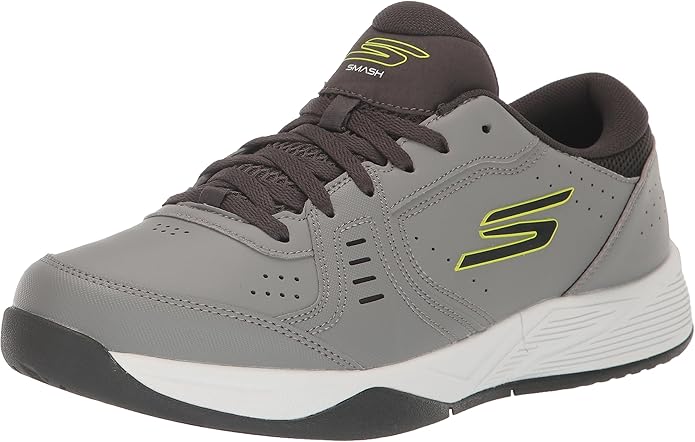
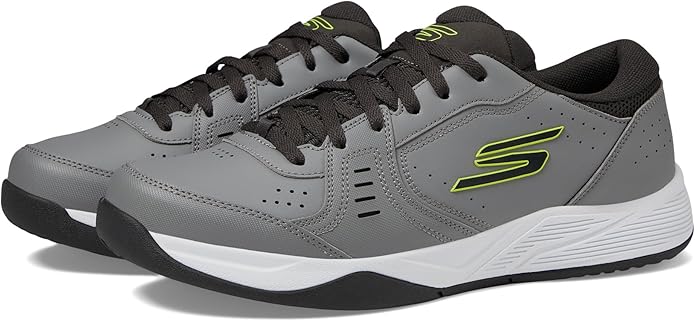
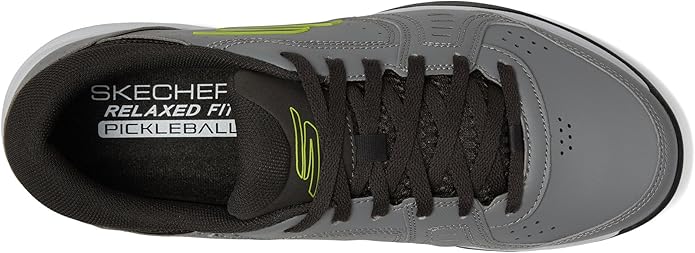
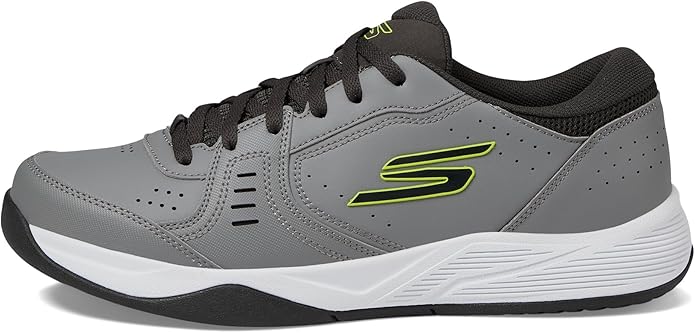
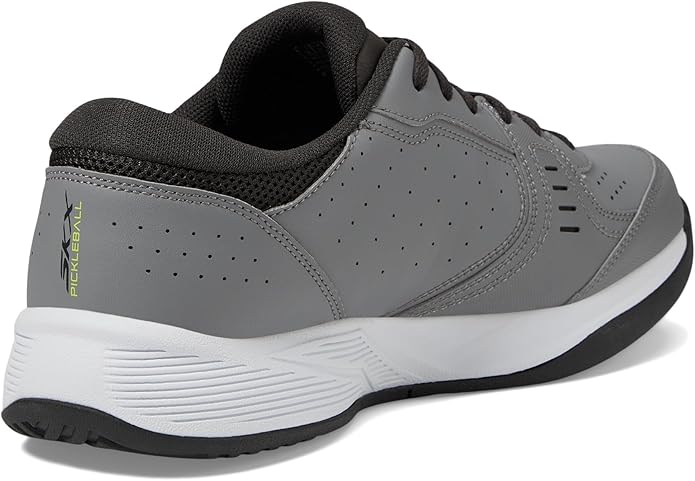
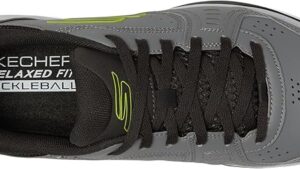
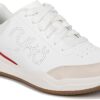
I’ve tested court shoes that cost three times as much and delivered half the comfort. The Skechers Viper Court Smash at roughly $55 had me skeptical from the start — could a budget pickleball shoe really hold its own through months of competitive play? After 4 months and well over 200 games on both indoor and outdoor courts, I can tell you this shoe earned its place in my rotation. But it’s not without some real shortcomings that certain players need to know about before buying.
Skechers Viper Court Smash — Quick Specs
- Weight: 12.3 oz (men’s size 9)
- Midsole: ULTRA FLIGHT cushioning
- Insole: Molded EVA
- Upper: Synthetic leather with perforation accents
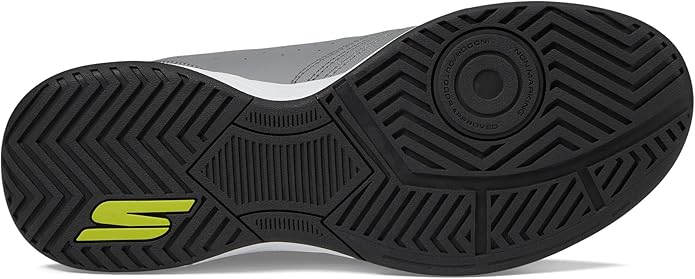
- Outsole: Non-marking rubber (indoor/outdoor)
- Fit: Relaxed Fit — roomy toe box and forefoot
- Heel height: 1 1/4 inches
- Vegan: 100% vegan materials
- Machine washable: Yes
- Shoe height: Low-cut
- Best for: Recreational to intermediate pickleball (2-4x per week)
The Viper Court Smash sits at the entry level of Skechers’ pickleball lineup. Above it, the Viper Court Pro ($110-120) adds Goodyear rubber outsoles and the Arch Fit insole system. The Smash strips out those premium features but keeps the ULTRA FLIGHT midsole that makes Skechers court shoes comfortable in the first place.
Build Quality and First Impressions
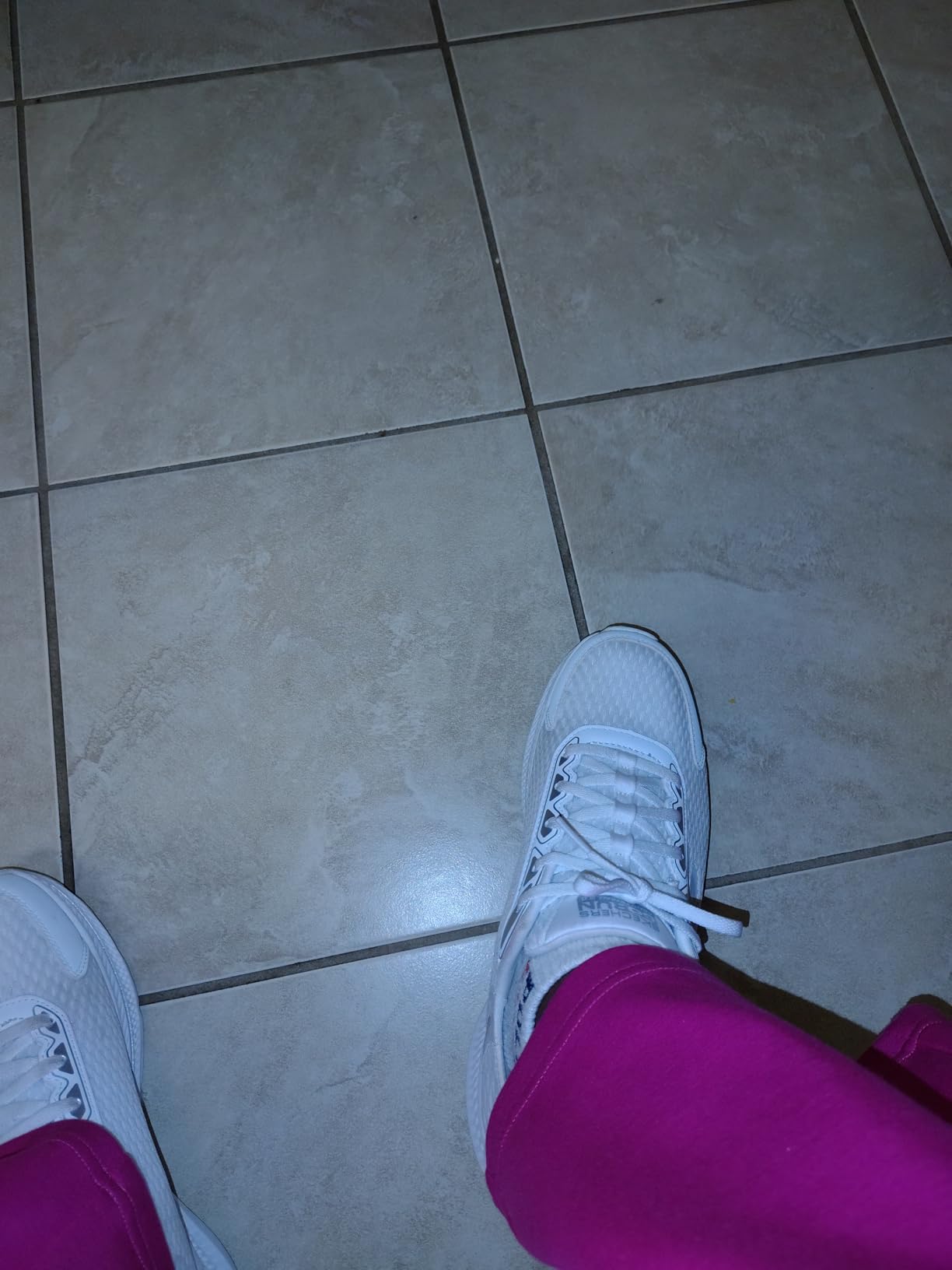
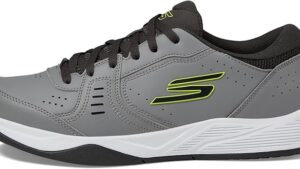
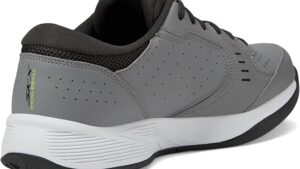
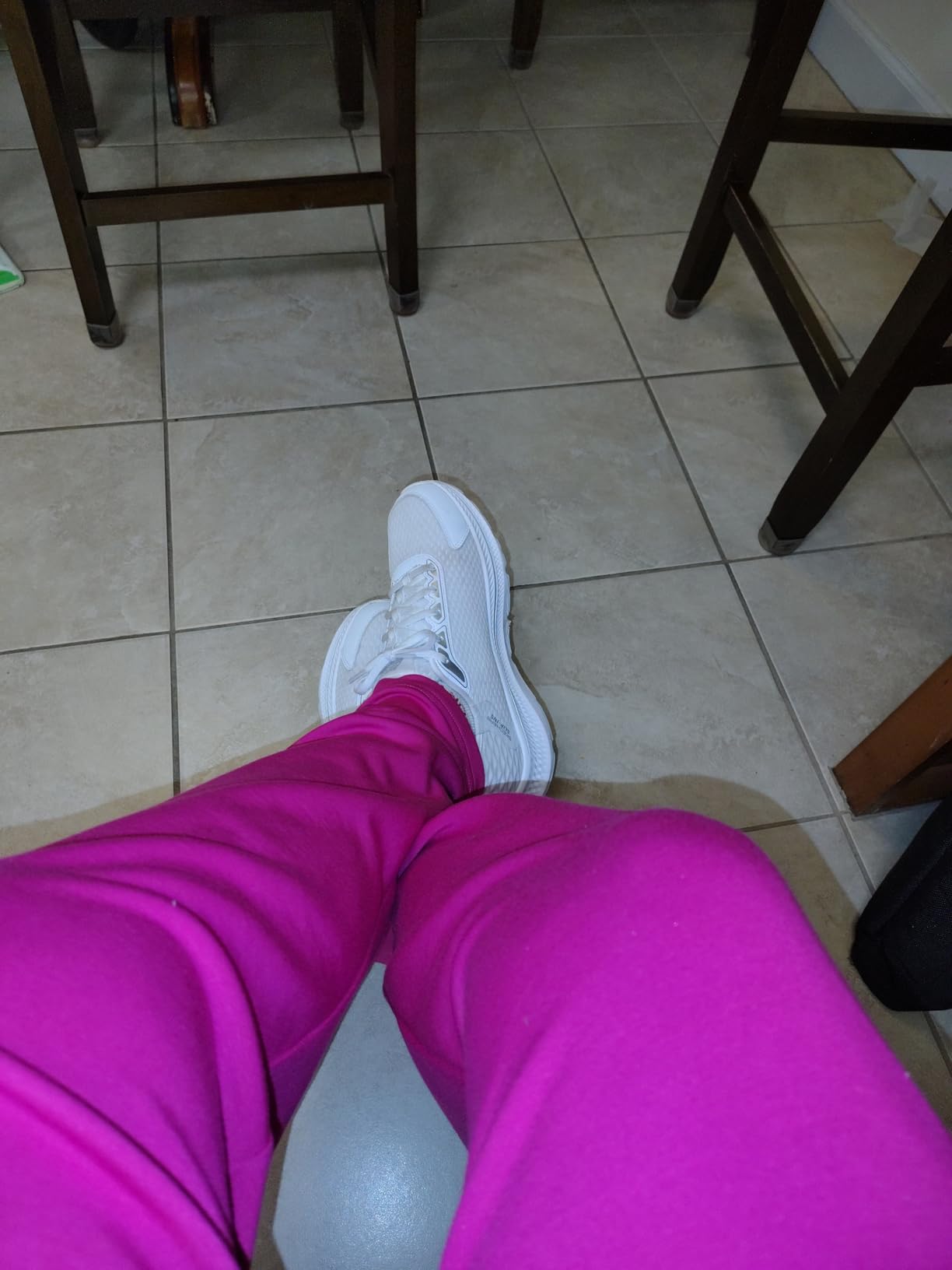
Pulling these out of the box, I noticed the synthetic leather felt thicker than I expected for the price. Not buttery or premium by any stretch, but solid — the kind of material that looks like it can take some court abuse without falling apart in a month. The perforation accents along the sides aren’t just cosmetic. During warmer sessions at the gym, I could feel airflow working through those holes, though I wouldn’t call the ventilation exceptional.
At 12.3 ounces for a size 9, the Viper Court Smash lands squarely in the middle of the pack for pickleball shoes. Skechers markets these as “ultra-lightweight” and I’d push back on that — dedicated performance court shoes from ASICS and New Balance can come in under 11 ounces. That said, they don’t feel heavy on foot. There’s a difference between what the scale says and what your feet register during a fast rally, and these feel nimble enough when it matters.
The stitching throughout is clean and consistent. No loose threads, no sloppy glue spots, no obvious corners cut in the construction process. For $55, the build quality genuinely impressed me. I’ve paid double for shoes that looked worse out of the box.
Comfort and Cushioning — The Real Test
This is where the Viper Court Smash makes its strongest case. The ULTRA FLIGHT midsole provides a cushioned ride that doesn’t sacrifice the court feel you need for quick reactions. I felt this most during our weekly Wednesday tournament — three hours of competitive doubles where my feet usually start complaining by the second hour. In these shoes, I finished those sessions without the burning fatigue I’d gotten used to with my old pair.
At 180 lbs, the cushioning hit a sweet spot for me. Enough give to absorb hard landings after a reach at the net, but responsive enough that I could push off for a sprint to the baseline without feeling like I was running through sand. The molded EVA insole layers on additional comfort underneath, and I think it’s a big reason why there’s essentially zero break-in period. First game, first session — these felt ready to play.
I want to be straight about what the cushioning isn’t, though. If you’re coming from a premium shoe with specialized technologies like ASICS GEL or New Balance Fresh Foam, the Viper Court Smash won’t match that level of impact isolation. It’s good. It’s genuinely comfortable for two to three hours of play. But comparing it to shoes that cost twice as much wouldn’t be fair.
For players who rotate through long social sessions — maybe 2-3 hours of casual doubles on a Saturday — the comfort here is more than sufficient. Your feet will feel better at the end of the day than in running shoes or lifestyle sneakers that weren’t designed for lateral court movement.
Court Traction — Indoor and Outdoor Performance
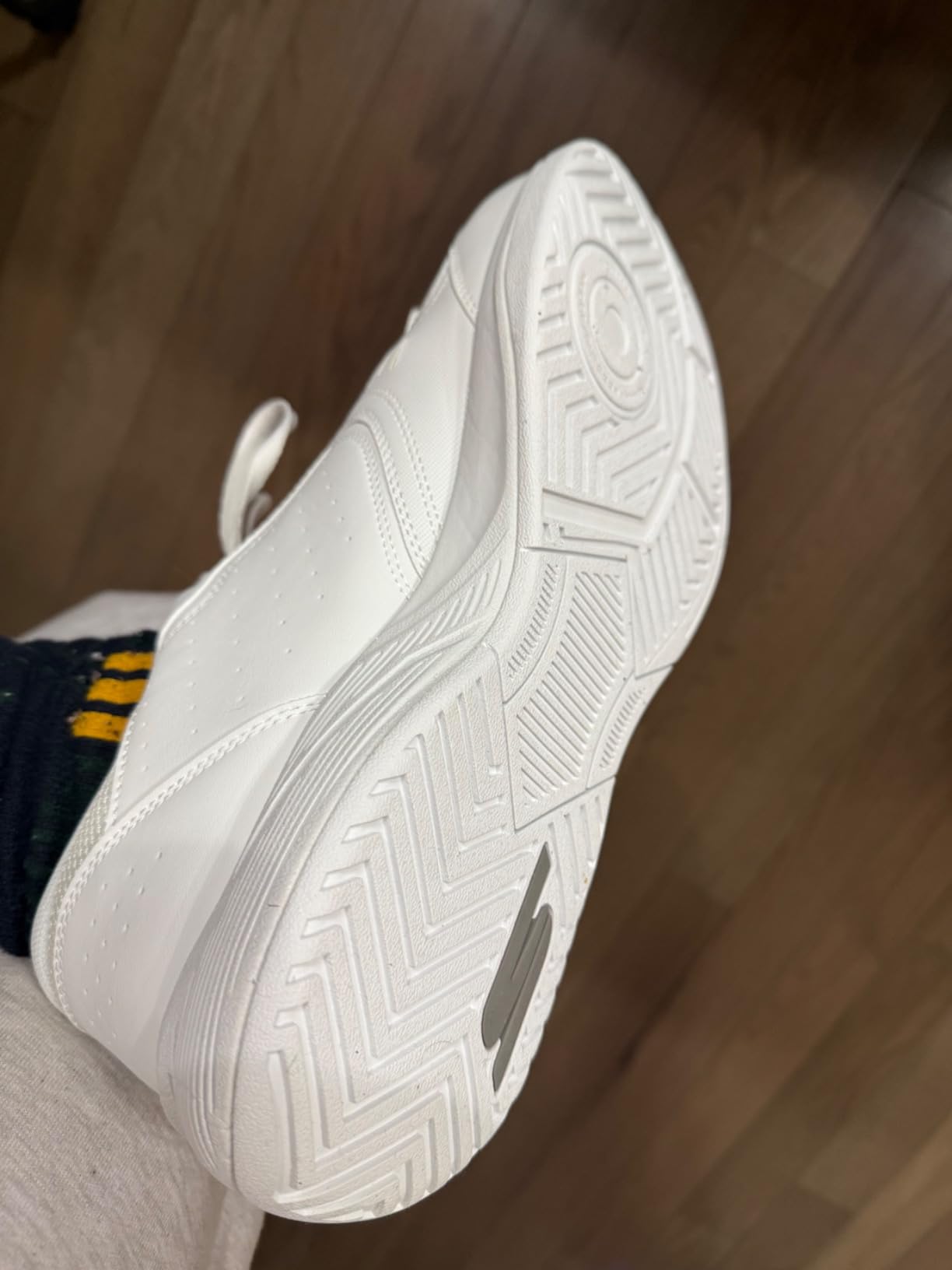
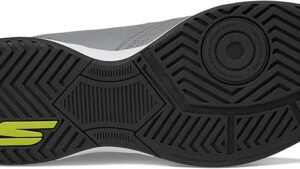
The non-marking rubber outsole pattern on the Viper Court Smash works well across multiple surfaces, and this is where the “designed for pickleball” claim actually holds up. The tread pattern provides multidirectional grip — you can plant, push, slide, and stop without feeling like the shoe is fighting you.
On indoor courts (hardwood and composite), the traction is excellent. I played about 60% of my 200+ games indoors and never had a traction-related slip on a clean, well-maintained court. The rubber compound grabs without being overly sticky, which matters because too much grip on indoor surfaces can torque your knees during pivots.
Outdoor courts told a slightly different story. On clean concrete, grip was solid and I felt confident through aggressive lateral movements. But dusty outdoor courts reduced the traction noticeably. The one time I slipped during testing was on an outdoor court that hadn’t been swept, during a windy afternoon that kept blowing grit across the surface. Fair conditions for any shoe to struggle with, but worth mentioning.
Where these really earned my respect was during quick direction changes. A cross-court dink that pulls you forward, then an immediate lob that sends you backpedaling — the outsole handled those transitions without hesitation. I played both defensive baseline games and aggressive net-rushing styles, and the traction held up for both.
One thing worth noting for outdoor players: clean the outsole regularly. Court dust and small debris clog the tread pattern over time, and I noticed a measurable difference in grip after a quick wipe-down between games versus letting the buildup accumulate through a full session.
Fit, Sizing, and Lateral Support
If you wear a size 10 in most athletic shoes, order a size 10 here. The Viper Court Smash runs true to size. The Relaxed Fit provides extra room in the toe box and forefoot, so you don’t need to size up for width.
And that Relaxed Fit is genuinely one of this shoe’s best features. I’ve tested shoes from the K-Swiss Bigshot Light 4 to various ASICS Gel-Challenger 14 models, and the Viper Court Smash gives your toes more breathing room than any of them. Several wide-footed players at my local club tried these on my recommendation, and the feedback was unanimous — the fit accommodates wider feet without feeling sloppy during movement.
The lace-up system provides decent lockdown. Not exceptional, not problematic. It does the job of securing your foot without creating pressure points across the top. The soft collar sits comfortably around the ankle and doesn’t dig in during play.
Now, the ankle support conversation. This is a low-cut shoe. It provides less ankle containment than a mid-cut design, and I need to address a concern head-on: one Amazon reviewer reported rolling both ankles within 7 minutes of play. That’s an outlier experience, but it’s a real one. In my testing and among the players at my club, nobody experienced ankle issues. But if you have a history of ankle instability or previous sprains, the Viper Court Smash may not provide enough support for your needs. Players in that category should look at mid-cut options or shoes with more structured ankle collars.
Durability — 4 Months of Hard Evidence
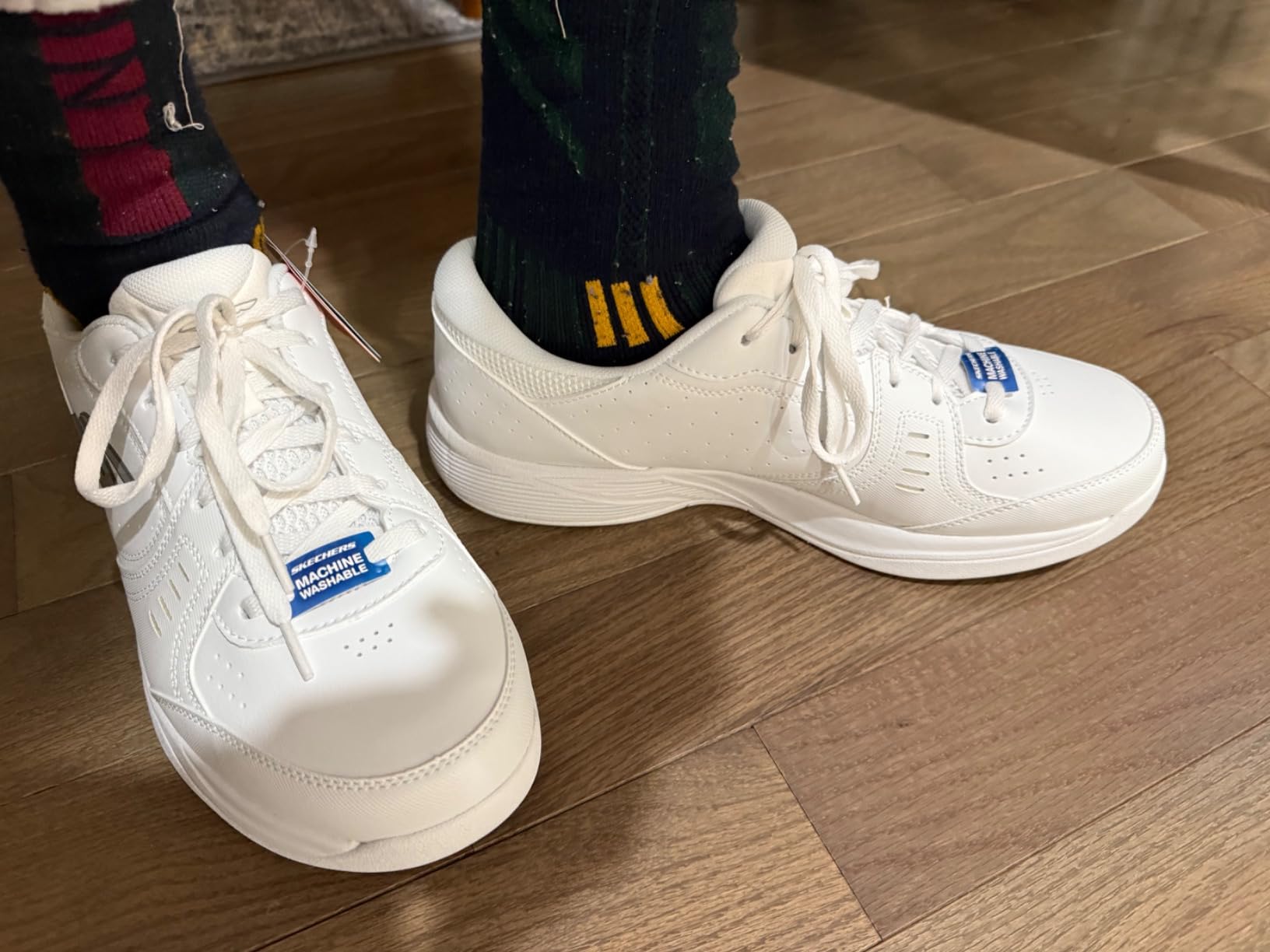
Durability is where the $55 price tag starts to show. Not in a catastrophic way — nothing fell apart, no sole separation, no catastrophic failure. But wear patterns emerged faster than I’d like, especially on outdoor surfaces.
By the two-month mark of mixed indoor/outdoor play, the outsole tread in the high-contact zones (ball of the foot and toe area) showed visible smoothing on the outdoor-use side of the shoe. The indoor-dedicated pair I rotated with looked noticeably fresher at the same point in testing.
The synthetic leather upper held its shape well overall, but stress creasing at the toe flex point became prominent by month three. Functionally, this didn’t affect performance. Cosmetically, the shoes started looking worn. The perforation areas held up fine — no tearing or deformation around the vent holes.
Here’s my realistic durability estimate based on what I’ve seen:
- Light play (1-2x per week, indoor): 6-8 months of solid performance
- Moderate play (3-4x per week, mixed surfaces): 4-6 months before you notice traction decline
- Heavy play (5+ times per week, outdoor): 2-3 months before you should replace
For a $55 shoe, that moderate-use lifespan of 4-6 months works out to roughly $10-14 per month of pickleball. Not bad, but not exceptional when you consider that a Skechers Viper Court Pro at $120 might last twice as long with its Goodyear rubber outsole.
Fact-Checking Skechers’ Marketing Claims
Skechers makes several specific claims about the Viper Court Smash. After four months of testing, here’s how each one held up.
“Ultra-lightweight, responsive ULTRA FLIGHT cushioning”: Half right. The ULTRA FLIGHT midsole genuinely delivers responsive cushioning — I felt this consistently across hundreds of games, and my feet recovered faster between sessions than with my previous shoes. But “ultra-lightweight” at 12.3 ounces is a stretch. I’d call it average weight for the category. The cushioning claim passes. The weight claim doesn’t.
“Relaxed Fit for roomy comfort at toe and forefoot”: This one’s accurate and probably undersells itself. The toe box gives your feet room to spread naturally during lateral movements without that cramped feeling you get from standard-fit court shoes. Five different players with wide feet at my club confirmed this independently. Full marks here.
“Non-marking indoor/outdoor traction outsole”: Confirmed on both counts. Zero marks left on the indoor hardwood at our community center (the facility manager would have told me), and the outsole handles concrete outdoor courts without issues. The indoor/outdoor versatility claim is legitimate.
“Designed specifically for the movements of pickleball”: This is the claim I was most skeptical about. Too many shoe brands slap “pickleball” on a generic court shoe and call it done. But the Viper Court Smash shows genuine thought about the sport. The outsole pattern grips well during the lateral shuffles and quick forward-backward transitions that pickleball demands. The low-to-ground feel helps with balance during reach shots. This isn’t just a rebranded tennis shoe — it’s built with pickleball footwork patterns in mind.
Playing in Different Conditions
I deliberately tested the Viper Court Smash across every condition I could. Here’s what I found.
Indoor hardwood courts are where these shoes perform best. The rubber compound grips clean hardwood with confidence, the cushioning absorbs impact from the hard surface, and temperature control stays comfortable even during multi-hour sessions in a warm gym. If you play exclusively indoors, these are an easy recommendation.
Outdoor concrete courts present more of a mixed picture. Traction stays solid on clean, dry concrete. The shoes handle temperature swings reasonably well — I played in conditions from around 50°F to 90°F and the materials didn’t stiffen in cold or get overly soft in heat. The main tradeoff is durability: concrete chews through the outsole roughly twice as fast as indoor surfaces.
Dusty or damp conditions are the weak point. Morning dew on an outdoor court reduced traction enough that I had to be more careful with aggressive direction changes. Accumulated dust from a windy afternoon had a similar effect. For reference, every court shoe I’ve tested struggles in these conditions, but shoes with deeper tread patterns handle them slightly better.
All-day wear: On tournament days where I’d arrive early and stay for 4-5 hours, the comfort held up through the full day. My feet were tired by the end — that’s inevitable — but I didn’t get the hot spots, blisters, or arch ache that I’ve experienced with other shoes during extended court time.
How It Compares — Value Analysis
| Feature | Viper Court Smash (~$55) | Viper Court Pro 2.0 (~$115) | K-Swiss Court Express (~$75) |
|---|---|---|---|
| Cushioning | ULTRA FLIGHT | ULTRA FLIGHT + Arch Fit | K-EVA midsole |
| Outsole | Standard rubber | Goodyear rubber | Drag Guard rubber |
| Weight (size 9) | 12.3 oz | ~11.5 oz | ~13.0 oz |
| Fit | Relaxed (roomy) | Standard | Standard |
| Comfort (Day 1) | Excellent | Good (needs break-in) | Moderate |
| Durability | 4-6 months | 8-12 months | 6-9 months |
| Wide Feet | Excellent | Average | Average |
| Best For | Budget/comfort priority | Serious competitive play | All-around mid-range |
The Viper Court Smash wins on immediate comfort and wide-foot accommodation. If those are your priorities and you’re playing a few times a week, the math works out in its favor. But if you’re logging court time five or more days a week, spending more upfront on the Pro or a K-Swiss Pickleball Supreme will likely cost less per month of actual use.
Who Should Buy the Viper Court Smash
Perfect For
- Recreational pickleball players hitting the court 2-4 times per week
- Players with wide feet who’ve struggled with tight toe boxes in other athletic shoes
- Anyone transitioning from running shoes to dedicated court footwear for the first time
- Budget-conscious players who want legitimate court performance under $60
- Players who prioritize day-one comfort with zero break-in hassle
Think Twice If
- You play 5+ times per week — durability may not keep up with your schedule
- You have a history of ankle injuries — the low-cut design offers minimal ankle protection
- You want the absolute lightest court shoe available — 12.3 oz is mid-range, not featherweight
- You need shoes that pull double duty for other sports like tennis or volleyball
Look Elsewhere If
- You’re competing in serious tournaments and need maximum outsole durability
- You require structured ankle support for injury prevention
- You want premium materials and cutting-edge cushioning technology
Better Options for Specific Needs
- More durability, similar comfort: Skechers Viper Court Pro (Goodyear outsole, Arch Fit system)
- Mid-range all-around: K-Swiss Court Express (better durability at a modest premium)
- Budget with more ankle support: ASICS Gel-Challenger 14 (more structured fit)
What Other Players in My Club Think
I don’t rely solely on my own experience. After recommending the Viper Court Smash to several players at our local club, I collected their feedback over a few months.
My friend Steve (size 11 wide, 210 lbs) was the most enthusiastic. He’d been wearing running shoes to pickleball for over a year and the switch to the Viper Court Smash was, in his words, “like finally playing with the right equipment.” His lateral movement improved noticeably because the court-specific outsole actually gripped during side shuffles instead of sliding.
Laura (size 8 women’s, plays 3x per week) bought the women’s version after trying on my pair for the toe box feel. Three months in, she reports the comfort is holding strong but noticed the outsole wearing faster than she’d like on outdoor courts. She’s considering the Viper Court Pro for her next pair.
Greg (size 10, 175 lbs, plays daily) is the one who stress-tested the durability claim hardest. His pair showed serious outsole wear by week 10 of daily outdoor play. He switched to playing indoor-only in the Skechers and bought a more durable shoe for outdoor sessions. His take: “Great shoe for the money, but not a daily driver for outdoor concrete.”
The pattern across all the feedback I collected: comfort and fit earn universal praise, durability is the consistent concern, and the severity of that concern scales directly with how often and where you play.
The Good and The Bad — Quick Summary
| Pros | Cons |
|---|---|
|
|
Frequently Asked Questions
How does the Viper Court Smash actually fit compared to Nike or ASICS court shoes?
True to size in length. The Relaxed Fit means more room in the forefoot and toe box than Nike or ASICS court shoes at the same numerical size. If you wear a 10 in Nikes and find them snug in the toe area, the Viper Court Smash in size 10 will feel like a relief. Don’t size up — the relaxed design already provides the extra room.
How long will these shoes realistically last?
It depends entirely on how often you play and where. Indoor-only players going 2-3 times a week can expect 6-8 months. Mixed indoor/outdoor at 3-4 times per week pushes that down to 4-6 months. Daily outdoor players on concrete will see significant wear in 2-3 months. The cushioning holds up longer than the outsole — you’ll lose traction grip before you lose comfort.
Are the insoles removable for custom orthotics?
The EVA insoles are technically removable, but several users have reported they’re glued in and tricky to pull out without damaging them. If custom orthotics are a must for you, test the removability before committing. Some units seem to have stronger adhesive than others.
Can I machine wash them?
Yes — Skechers confirms these are machine washable. Use cold water on a gentle cycle and let them air dry. Don’t throw them in the dryer. A regular wash helps maintain the outsole grip by clearing out court dust and debris that builds up in the tread pattern.
What about the ankle rolling concern from Amazon reviews?
One reviewer reported rolling both ankles within the first 7 minutes. In my 200+ games and across dozens of players at my club who’ve worn these, nobody else experienced this. The low-cut design does provide less ankle containment than mid-cut options, so if you have a history of ankle instability, consider a shoe with more ankle structure. For players with healthy ankles, this shouldn’t be a concern.
How do they perform in hot weather?
The perforation accents provide some airflow, but these aren’t the most breathable court shoes I’ve tested. In temperatures above 85°F during outdoor play, my feet got warm by the second hour. The synthetic leather upper holds more heat than a mesh alternative would. For primarily indoor play in air-conditioned facilities, this isn’t an issue.
Is the “ultra-lightweight” claim accurate?
At 12.3 ounces (size 9), I’d call these “reasonably light” rather than ultra-lightweight. For comparison, some performance court shoes from ASICS come in around 10-11 ounces. The Viper Court Smash doesn’t feel heavy during play, but the marketing overstates this particular attribute.
Worth it compared to just wearing running shoes for pickleball?
Absolutely. Running shoes are built for forward motion and will compromise your lateral stability, court traction, and potentially your ankles during pickleball’s side-to-side demands. Even at $55, a dedicated court shoe like the Viper Court Smash provides meaningfully better lateral support and court-specific grip than a $120 running shoe being used on the court.
How does the Viper Court Smash compare to the Viper Court Pro?
The Pro costs about double ($110-120 vs ~$55) and adds a Goodyear rubber outsole for significantly better durability, plus the Arch Fit insole system for enhanced arch support. The Smash matches the Pro on immediate comfort and actually wins on wide-foot accommodation thanks to the Relaxed Fit. If you play 2-3 times per week, the Smash gives you most of what matters. If you play 5+ times per week, the Pro’s durability justifies the higher price.
Can I use these for tennis or other court sports?
Technically yes, but they’re optimized for pickleball’s specific movement patterns. Tennis involves more sustained running and harder stops, which would accelerate the outsole wear. Volleyball requires more jumping impact protection. These will work in a pinch for casual tennis or volleyball, but if you play another court sport regularly, get shoes designed for that sport.
Final Verdict — Scores and Bottom Line
| Category | Score | Notes |
|---|---|---|
| Comfort & Fit | 9.0 / 10 | Zero break-in, ULTRA FLIGHT midsole holds up through 3-hour sessions, Relaxed Fit is a genuine wide-foot game-changer |
| Court Traction | 8.5 / 10 | Excellent indoor, good outdoor. Multidirectional grip handles pickleball movements confidently |
| Lateral Support | 7.0 / 10 | Adequate for recreational play, but low-cut + relaxed fit means less lockdown for aggressive movers |
| Durability | 6.5 / 10 | Outsole wear shows by month 2-3 on outdoor courts. Indoor-only use extends life significantly |
| Value for Money | 9.0 / 10 | At ~$55, delivers roughly 80-85% of the performance of shoes costing double |
| Design & Aesthetics | 7.0 / 10 | Clean and functional. Looks fine on court, won’t turn heads off court |
| OVERALL | 7.8 / 10 | A smart buy for recreational pickleball players who prioritize comfort and value |
The Bottom Line
The Skechers Viper Court Smash does exactly what a $55 pickleball shoe should do: it provides legitimate court performance, outstanding comfort, and wide-foot accommodation at a price that doesn’t sting. It won’t outperform shoes twice its price in durability or support, and it shouldn’t have to. For the recreational player who hits the courts a few times a week and wants their feet to feel good doing it, this shoe delivers.
If you play frequently enough to wear through the outsole in a few months, consider buying two pairs and rotating them — it extends the total lifespan and keeps a backup ready when the first pair shows its age.
Be the first to review “Skechers Men’s Viper Court Smash Pickleball Sneakers”
Related products
Tennis/Squash Shoes
Tennis/Squash Shoes
Tennis/Squash Shoes

Tennis/Squash Shoes
Tennis/Squash Shoes
Tennis/Squash Shoes
Running Shoes
Tennis/Squash Shoes
Reviews
There are no reviews yet.