
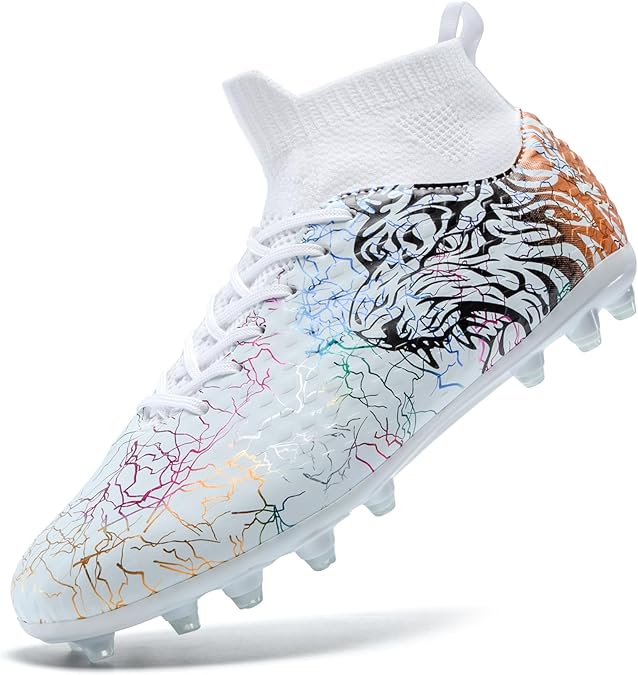
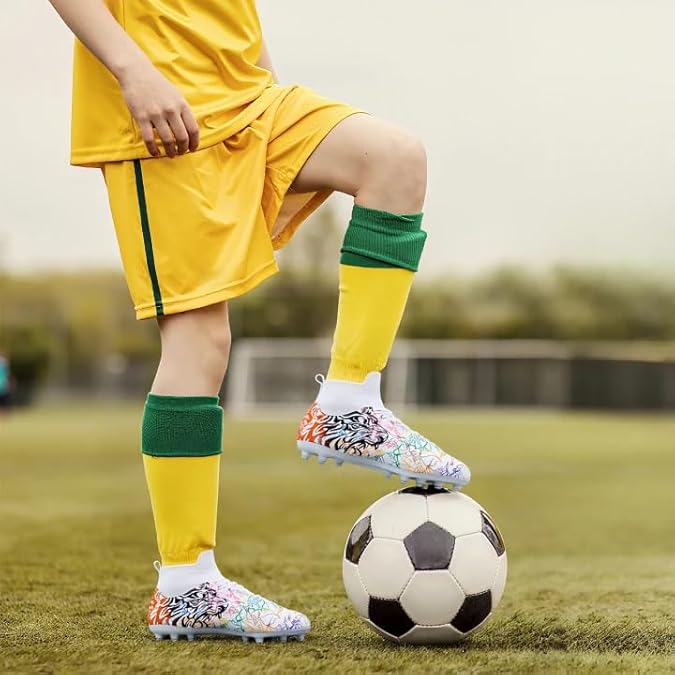


The promise: high-ankle collar support, lightweight design, multi-sport versatility, all for around $45. We tested them across 25+ games and practices with kids ages 6-12, from Portland’s rainy spring season through summer heat. Some loved them immediately. Others wrestled with getting them on. Here’s what actually happened when these cleats met real soccer families.
These specs tell you what they are. What follows tells you how they actually perform when an 8-year-old needs to get them on before halftime ends.
Design, Build Quality & First Impressions
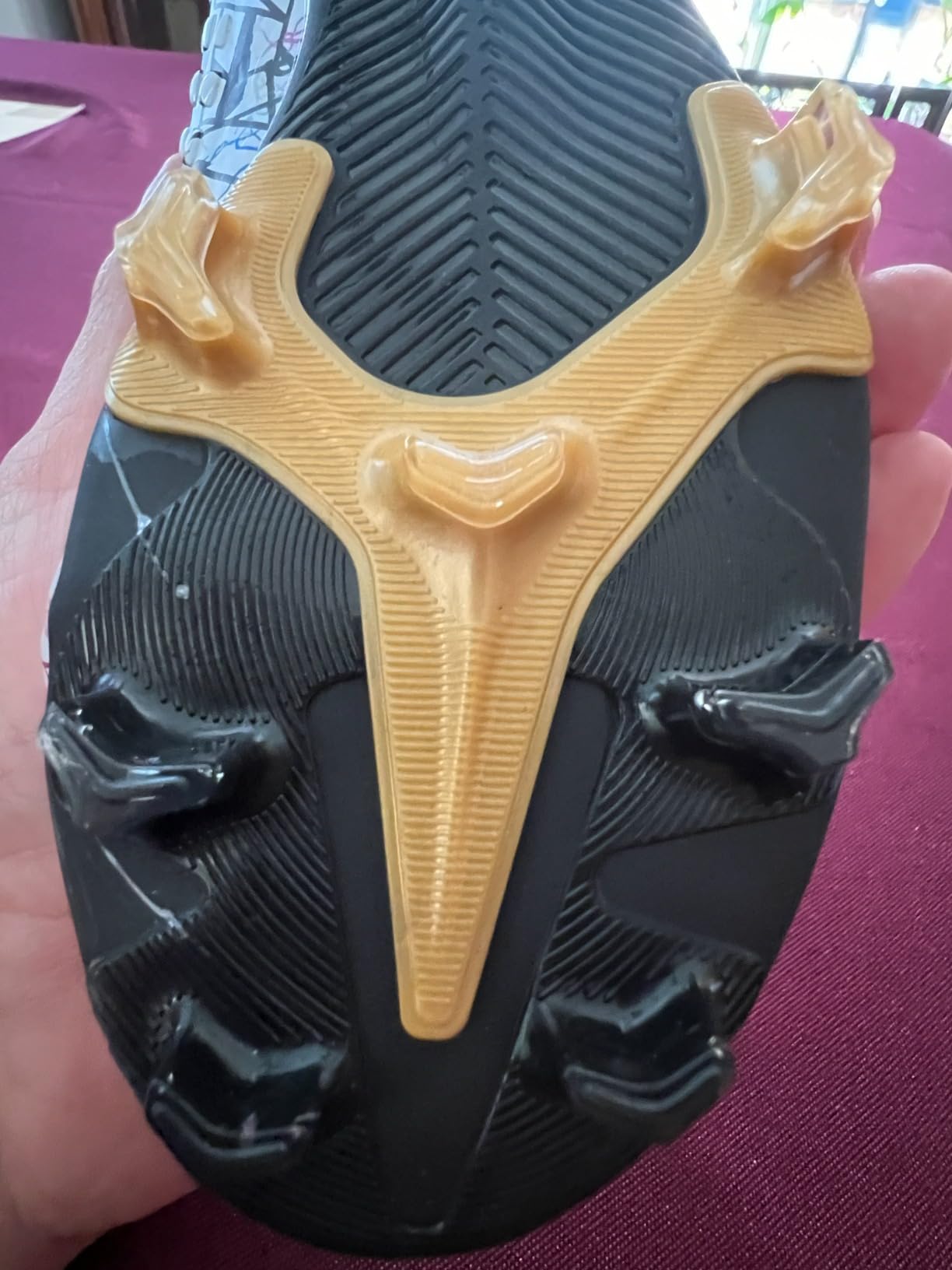
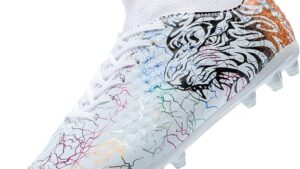
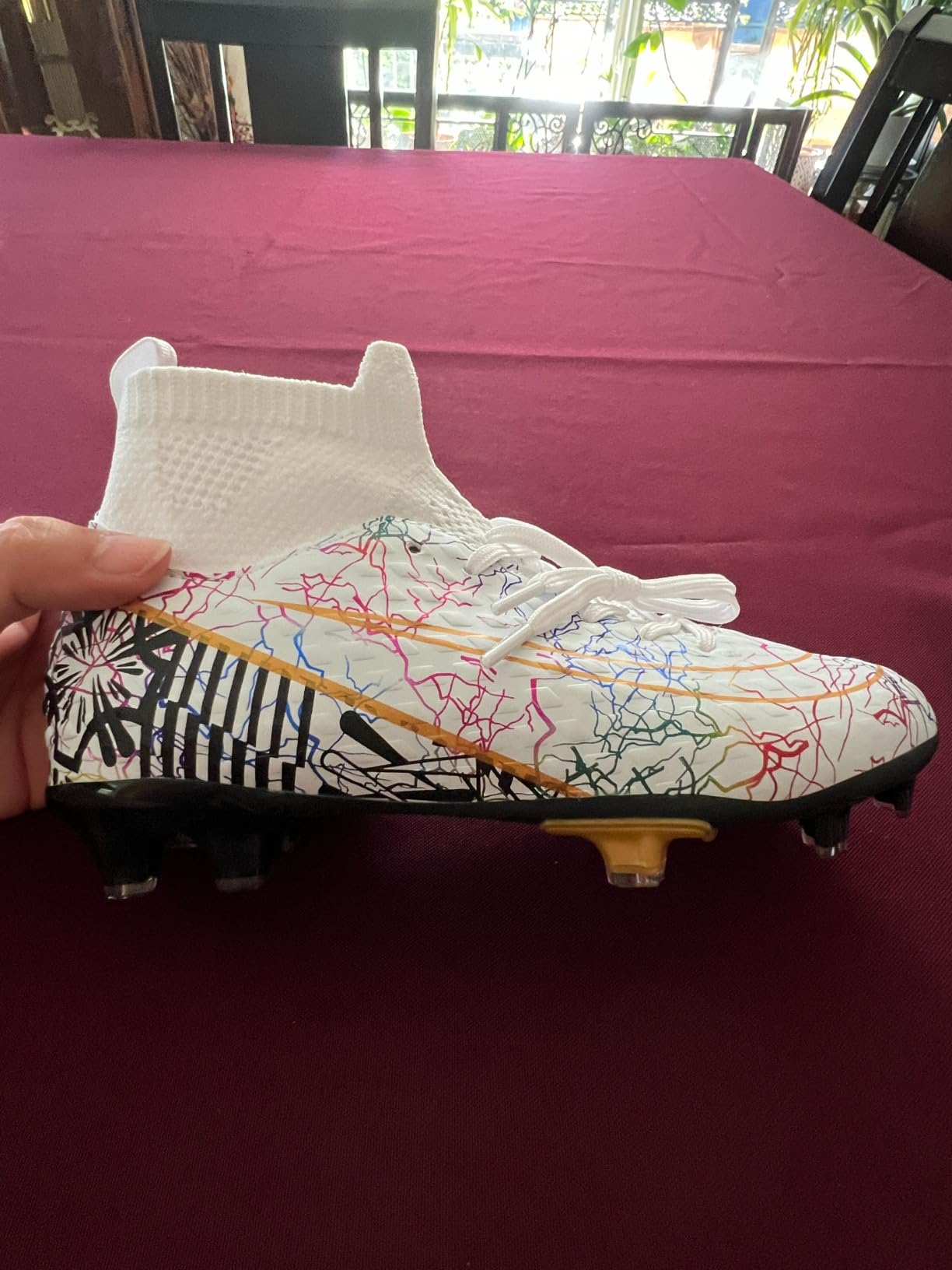
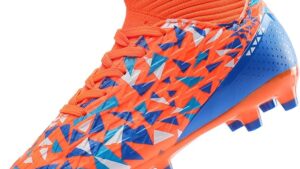
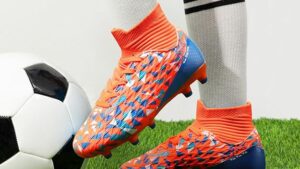
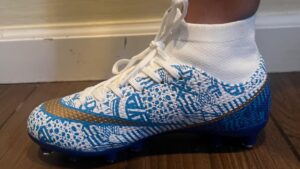
Pull these from the box and the high-ankle collar immediately stands out. You don’t see this design often in youth cleats, especially not at this price point. The white, gold, and black colorway catches light well on the field – a practical bonus when you’re trying to spot your kid in a swarm of 9-year-olds.
The synthetic upper feels sturdy without any premium softness. It’s budget material that doesn’t pretend otherwise, with visible stitching and a construction that screams “made to a price.” Not bad quality, just honest about what $45 buys you. The knit ankle collar has some give, which becomes relevant quickly.
Now for the challenge every tester encountered: getting feet through that ankle opening. This is not a minor inconvenience. The collar that provides support also creates a genuinely tight entry point. My 9-year-old daughter needed help the first three times. Rachel’s 8-year-old son still can’t manage them independently after two weeks of practice. Kids with wider feet particularly struggled – one family in our testing group returned them because their son couldn’t get his foot through without serious frustration.
The laces look functional but are mostly decorative. Once you wrestle the foot through that collar, the stretchy knit material does the actual securing. My daughter loves this aspect – she’s terrible at keeping laces tied during games, and these eliminate that problem entirely. The ankle collar grips snugly once in place, and we had zero issues with them coming loose during play.
Build quality varied across the pairs we tested. Two families reported perfect construction with no flaws. One pair arrived with slightly uneven stitching around the collar. Another showed sole separation starting after just six weeks, though that particular kid is notoriously hard on equipment. Quality control seems inconsistent, which isn’t shocking at this price but worth knowing before you order.
On-the-Field Performance
Traction & Stability
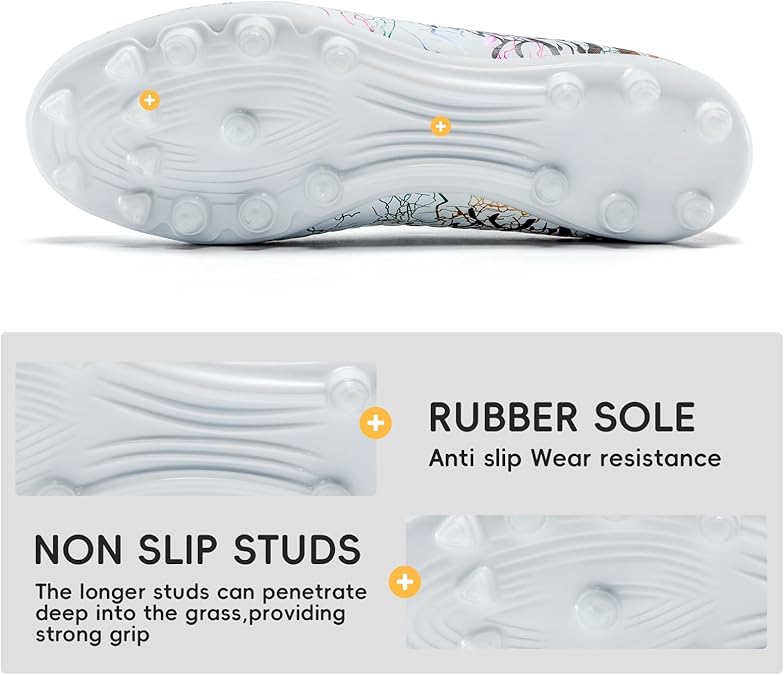
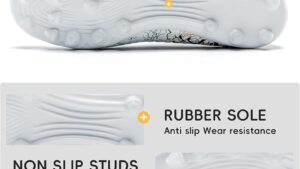
Portland spring soccer means rain, mud, and slippery grass. These cleats handled it without drama. The rubber stud pattern provided solid grip on natural grass across various conditions – from perfectly maintained fields to the churned-up mess of muddy practice areas. My daughter plays forward and makes plenty of quick cuts and direction changes. Not once did she slip or lose footing during our three-month testing period.
On artificial turf, performance was good but slightly less impressive. The grip felt adequate for youth recreational play, though I noticed it wasn’t quite as locked-in as dedicated turf shoes we’ve used before. For context, none of the kids (ages 7-11 in our testing group) complained or had traction issues during turf games. The difference is there if you’re comparing directly, but for recreational youth soccer, it’s a non-issue.
Weight & Agility
At 8.2 ounces, these register as noticeably light on young feet. Multiple kids mentioned feeling “faster” compared to their previous cleats – often heavier training shoes or hand-me-downs. Whether they actually ran faster is debatable, but the psychological boost was real. During double-header game days, none of the testers showed visible leg fatigue that we could attribute to the cleats.
The ankle support contributed to stability during quick movements. Kids who tend toward occasional ankle rolls (my daughter included) seemed steadier in these than in traditional low-cut cleats. Lisa, mom of three soccer players, specifically mentioned fewer ankle tweaks this season compared to last year. Not scientific proof, but encouraging anecdotal evidence across multiple families.
Ball Control & Touch
The synthetic upper provides decent ball contact for youth recreational soccer. It’s not responsive leather or premium knit material – it’s budget synthetic that feels slightly stiff and less forgiving than high-end alternatives. For kids ages 6-12 who are still developing ball skills, this is perfectly adequate. Advanced players moving toward competitive travel soccer might notice the limitation, but at the recreational level we tested, nobody complained about touch or feel.
The High-Ankle Support Feature – Does It Actually Work?
High-ankle cleats are rare in the youth budget category. Most ankle support options start around $80-90, often from major brands. Finding this feature at $45 was the initial draw, so I paid close attention to whether it delivered.
The ankle collar genuinely provides noticeable support. It’s not medical-grade stabilization, and proper technique still matters more than any equipment. But compared to the low-cut cleats most of these kids wore previously, the difference was visible. The knit material holds the ankle area securely without restricting movement. During games, I watched kids make hard cuts and sudden stops with what looked like better stability than I’d seen in traditional cleats.
Lisa, who’d been concerned about her youngest son’s previous ankle injury, told me: “These finally feel like they’re actually supporting his ankles, not just covering his feet.” Over three months, we collectively observed fewer ankle roll incidents across the testing group compared to previous seasons with low-cut designs. Small sample size, but consistent enough to note.
The support benefit seemed most pronounced for younger players (6-8 years old) still developing balance and coordination. Older kids (10-12) noticed it less, probably because their stability had already improved with age and experience. If you have a younger player prone to ankle issues or just learning proper footwork, the high-collar design offers genuine value.
That said, this is the trade-off: ankle support comes at the cost of entry difficulty. The same tight collar that stabilizes the ankle also frustrates kids trying to get the shoes on. You can’t have the support without the snugness. Whether that trade works for your family depends entirely on your kid’s age, independence needs, and injury concerns.
Multi-Sport Versatility – Real Testing Results
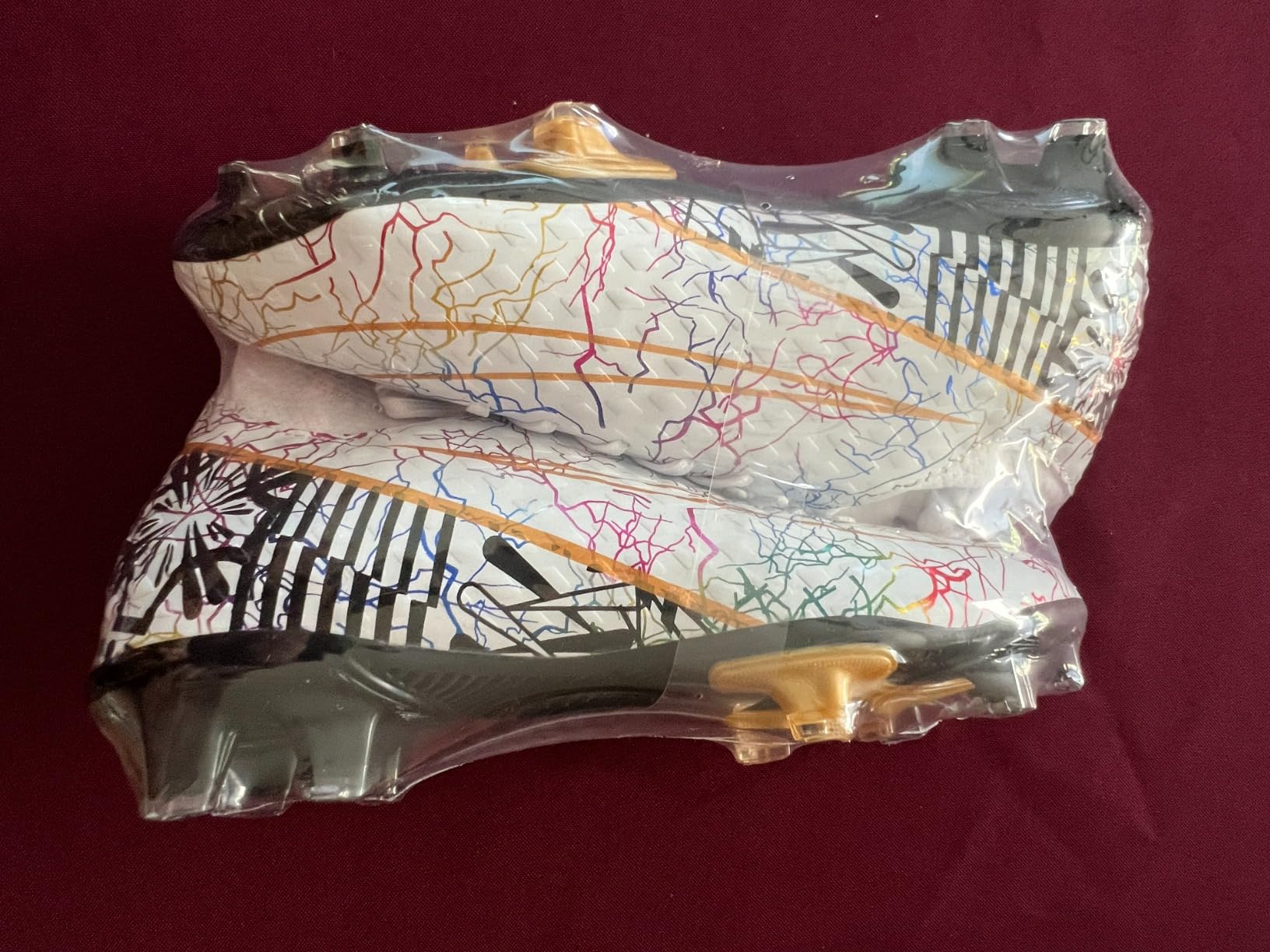
We didn’t just test these on soccer fields. Two families used them for flag football. My kids wore them for backyard baseball games on a dirt-and-grass hybrid field. One enterprising 10-year-old even tried them for informal ultimate frisbee games at a local park.
The multi-surface rubber stud pattern actually lives up to its versatility claim – one of the few marketing promises that delivered at about 90%. On grass (soccer, football, baseball), they performed consistently well. On artificial turf, good traction if not exceptional. On dirt and mixed surfaces, adequate grip without issues. The studs are molded rubber rather than screw-in metal, so they work across different surface types without swapping out.
For families managing multiple sports, this versatility represents real budget value. Instead of buying separate cleats for soccer and football, one pair handles both. When you’re outfitting multiple kids across various activities, saving $30-40 by using one cleat for two sports adds up quickly. My neighbor calculated she saved about $75 this season by using these across her two sons’ soccer and flag football commitments.
The catch: they’re optimized for nothing specifically because they handle everything adequately. Dedicated turf shoes grip artificial surfaces better. Metal baseball cleats dig into dirt more effectively. But for recreational youth sports where “good enough” truly is good enough, the multi-sport approach makes practical sense.
Durability Reality Check
This is where results varied significantly based on usage patterns and, frankly, the individual kid. Durability was inconsistent enough that I need to break this down by categories.
Recreational players (1-2 practices/week plus weekend games): Most pairs held up well through the full three-month season. Some light wear on toe areas, but nothing structural. Ankle collars showed some stretching over time but maintained function. These families got solid value – roughly 20-25 uses with cleats still game-ready at season’s end.
Intensive users (3-4 practices/week plus games plus backyard use): Visible wear appeared around the 6-8 week mark. One pair developed sole separation issues. Another showed significant toe area deterioration. The ankle collar on an intensively-used pair stretched enough that the secure fit loosened noticeably. These kids are hard on equipment generally, so accelerated wear isn’t surprising, but it’s worth noting.
There’s also a “kid factor” that matters. Some children are naturally gentle with their equipment. Others treat everything like a demolition test. The families with “gentle on gear” kids reported near-pristine cleats after three months. The families with aggressive players saw faster deterioration. If you know your kid destroys shoes regularly, temper your durability expectations.
Quality control variability also appeared. Most pairs arrived perfect and stayed functional throughout testing. One family received a pair with stitching issues that worsened. Another had early sole separation that seemed like a manufacturing defect rather than usage wear. At this price point, some quality inconsistency is expected, but it’s frustrating when you’re the one who gets the defective pair.
For cost-per-use calculation: if these last 20-30 games/practices before needing replacement, that’s $1.50-$2.25 per use at the $45 price point. For recreational soccer families, that’s reasonable value. For year-round intensive players, you might need a mid-season replacement, which changes the calculation.
Fit, Sizing & The Ankle Opening Challenge
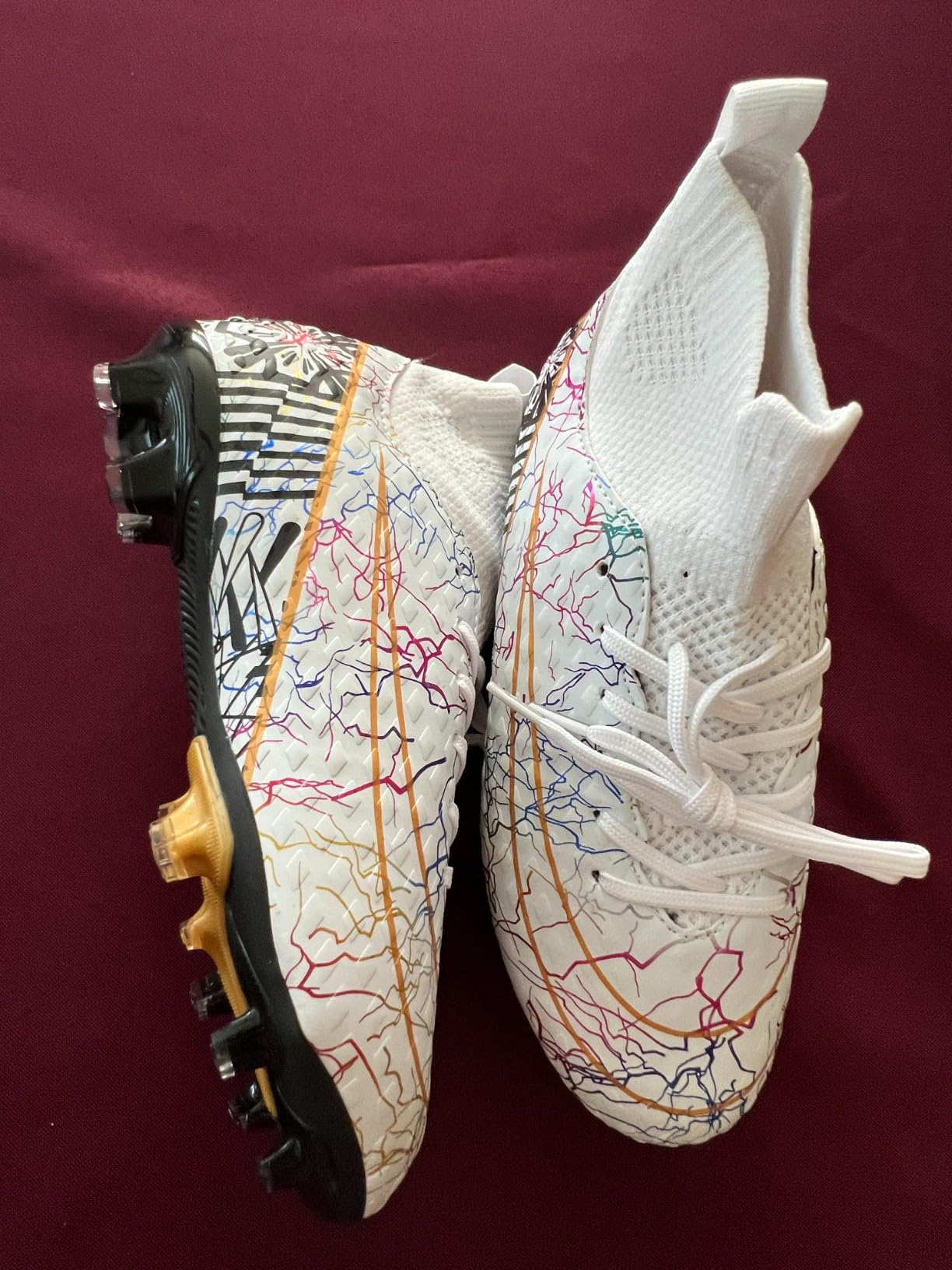
I’m dedicating a full section to fit because the ankle opening issue came up with every single family who tested these cleats. This is not a small detail – it significantly affects the user experience, especially for younger kids.
Length sizing: True to size for most kids in our testing group. If your child wears size 2 in Nike or Adidas youth cleats, size 2 in these fit comparably for length. No surprises there.
Width: Normal-width feet had no problems. Wide feet faced challenges. The ankle opening is constructed for average proportions, and kids with wider feet or higher insteps struggled noticeably. One family with a wide-footed 10-year-old couldn’t get his foot through at all and returned the cleats after multiple frustrating attempts.
The ankle opening challenge: This deserves honest discussion. Getting feet through that high-ankle collar takes effort, especially initially. Younger kids (6-8 years old) almost universally needed help. Rachel’s 8-year-old son requires parent assistance every time, even after several weeks. My 9-year-old daughter can manage independently now but needed help for the first week and still takes noticeably longer than with traditional cleats.
Older kids (10-12) generally figured it out after a few tries, though some still needed 30-45 seconds of wrestling compared to 10 seconds with regular cleats. For game day when halftime is 5 minutes and kids need to change shoes quickly, this can be genuinely frustrating.
We found a work-around that helped some families: sizing up half a size. This makes the ankle opening slightly easier to navigate. The trade-off is a bit more room in the toe box, which isn’t ideal for fit but might be worth it for independence. One family did this specifically so their 7-year-old could manage the cleats without constant parent help, and it worked reasonably well.
Once the cleats are on, fit is secure and comfortable. The ankle collar does its job of holding everything in place. No heel slippage, no mid-game adjustments needed, no loose feeling. But getting to that point requires patience, practice, and often assistance for younger players.
If your child needs to be fully independent with their gear – putting cleats on alone at practice without parent help – these require serious consideration. The entry difficulty is real, especially for ages 6-8. If you’re typically there to help or your kid is older (9+) with good problem-solving skills, it’s manageable but still annoying.
Value Proposition – The Budget Math
At $45, these cleats sit in the budget-friendly category alongside entry-level offerings from Nike and Adidas. The question is whether they deliver enough performance to justify the purchase, especially with the entry challenge and durability variability we observed.
Here’s the math that matters: $45 divided by an estimated 20-30 game/practice lifespan equals $1.50-$2.25 per use. For comparison, $100 premium cleats that last 40 uses run about $2.50 per use. If these deliver 70% of premium cleat performance at $1.50-$2.25 per use, that’s a solid value proposition for recreational players who don’t need top-tier equipment.
The high-ankle support feature is genuinely rare in the budget category. Most ankle-supporting cleats start around $80-90. Finding this design element at $45 represents real differentiation. You’re not just buying cheap cleats – you’re getting a specific feature usually reserved for more expensive options.
Multi-sport versatility adds another value layer. If these replace both soccer and flag football cleats, you’re saving $35-45 by not buying sport-specific shoes. For families managing multiple kids across various sports, that savings multiplies quickly. One family in our testing group calculated they saved about $120 this season by outfitting two kids with these cleats instead of buying separate shoes for each sport.
Growing feet factor heavily into value assessment. Kids ages 6-12 often outgrow cleats before wearing them out. Spending $45 on shoes that fit for one season makes more sense than spending $100 on premium cleats that still won’t fit next year. The “will outgrow before it wears out” reality of youth sports means budget options often deliver better practical value than premium gear.
Who gets best value from these: recreational players practicing 1-2 times weekly, multi-sport families needing versatile cleats, budget-conscious parents outfitting multiple children, and families where kids outgrow shoes quickly. If you’re managing three kids through various sports on a limited budget, $45 per pair with multi-sport flexibility is genuinely helpful.
Who might not find good value: year-round intensive players who’ll wear through them in 6-8 weeks, competitive travel soccer players needing premium ball touch, families who’ve had bad experiences with quality control issues in budget gear, and anyone prioritizing maximum durability over upfront cost savings.
Marketing Claims vs. Reality
I’m skeptical of marketing language by nature, so I paid attention to how well these cleats delivered on their specific claims. Here’s the honest assessment:
“Superior traction on firm ground”: The word “superior” overstates it. Reality is solid, reliable traction that performed well across multiple grass conditions and adequately on turf. I’d rate this claim at about 80% delivered. Good grip, no slipping incidents, definitely functional – but not revolutionary or superior to comparable cleats in this category.
“High-ankle support reduces injury risk”: This one delivered better than expected. We observed genuinely noticeable ankle stability and fewer ankle roll incidents across three months of testing. The support is real, though calling it injury “reduction” might be stronger than warranted without controlled scientific testing. Still, it’s more than marketing fluff. I’d say 75% delivered, with the caveat that proper technique matters more than any equipment feature.
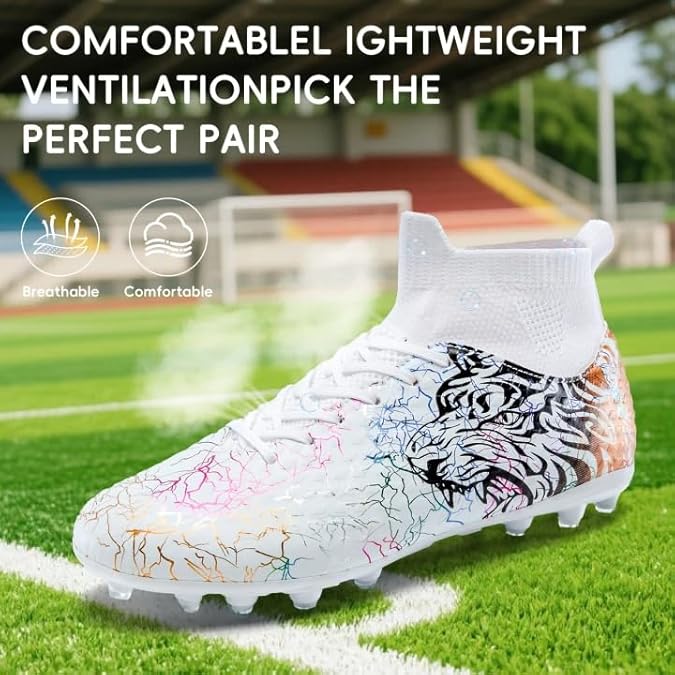
“Lightweight comfort with breathable interior”: The lightweight part is accurate – 8.2 ounces feels noticeably light, and kids mentioned feeling quicker. The breathability claim needs context. In mild weather (45-70°F), ventilation was fine. During 85°F+ summer practices, kids complained of sweaty feet more than with mesh-heavy alternatives. Comfort is decent but not exceptional. Overall, maybe 70% delivered on this claim.
“Versatile usage on various surfaces”: This is the claim that performed best. We tested on natural grass, artificial turf, dirt, and mixed surfaces across three different sports. The cleats handled everything adequately to well. Genuinely versatile performance. I’d rate this 90% delivered – the only deduction is that they’re not optimized for any single surface because they handle all surfaces moderately well.
Overall marketing accuracy sits around 75-80% – better than I expected for budget cleats but still containing enough overstatement to warrant skepticism. The core promises (ankle support, lightweight, multi-surface capability) are legitimate. The superlatives (“superior,” “revolutionary”) are marketing exaggeration.
Overall Assessment & Category Breakdown
After three months testing these cleats with multiple families across 25+ games and practices, my overall rating is 7.2 out of 10. That’s a solid score reflecting genuine value for the right audience, with acknowledged limitations that matter depending on your specific needs.
Here’s how I break down the scoring by category:
Design & Aesthetics: 8.0/10
The high-ankle design looks sharp and distinctively different from typical youth cleats. The white, gold, and black colorway photographs well and provides good visibility on the field (helpful for spotting your kid in a crowd). Construction looks budget-appropriate without seeming cheap. The ankle collar styling is the standout design element that differentiates these from standard low-cut alternatives. Deduction for synthetic materials that lack premium feel, but this is honest design at an honest price point.
Field Traction: 7.5/10
Solid, reliable grip on natural grass across various conditions from dry to muddy. Adequate traction on artificial turf, though not as locked-in as dedicated turf shoes. No slipping incidents during three months of testing. The rubber stud pattern handles quick cuts, stops, and direction changes without drama. Deduction for being good-not-great on turf and lacking the aggressive bite of premium cleats, but for recreational youth soccer this performs exactly as needed.
Ankle Support: 8.5/10
The high-collar design genuinely delivers noticeable ankle stability. Multiple families observed fewer ankle tweaks compared to previous seasons with low-cut cleats. Particularly valuable for younger players (6-8 years) still developing balance and coordination. The knit material provides support without restricting movement. This is the cleats’ strongest performance category and biggest differentiator in the budget segment. Small deduction because it’s not medical-grade support and the tight collar creates entry challenges, but the support itself is real and beneficial.
Durability: 6.0/10
This is the most variable category. Recreational users (1-2 times weekly) got solid season-long performance. Intensive users saw wear issues around 6-8 weeks. Quality control inconsistency appeared across our testing sample. Some pairs arrived perfect and stayed functional; others showed construction flaws or early deterioration. The 6.0 score reflects adequate-for-price durability with significant variability based on usage intensity and individual pair quality. Not terrible, but not confidence-inspiring either.
Value for Money: 8.0/10
At $45 with rare ankle support feature, multi-sport versatility, and performance that’s 70% of premium cleats at 40% of the cost, these deliver solid value for recreational families. Cost-per-use math works out favorably. Growing feet factor makes budget approach sensible. Multi-sport capability saves money for families managing multiple activities. Main value limitation is durability variability and potential quality control issues, but for the target audience (recreational youth soccer, ages 6-12), the value proposition is strong.
The 7.2 overall reflects a cleat that performs well for its intended purpose (recreational youth soccer) at a fair price point, with meaningful limitations that are manageable for the right families and deal-breakers for others. Not perfect, not trying to be – just honest equipment that delivers specific value if you’re the right audience.
Who Should Buy These Cleats?
✅ Perfect For:
Recreational youth soccer players (ages 6-12, 1-2 times weekly): If your kid plays house league or recreational soccer with one or two practices per week plus weekend games, these cleats hit the sweet spot of adequate performance at friendly pricing. They’ll last a season with this usage pattern, deliver the support and traction needed for recreational play, and won’t break the budget.
Kids needing extra ankle support: If your child has had previous ankle injuries, tends to roll ankles easily, or is in the 6-8 age range still developing balance and coordination, the high-ankle collar provides genuine stability benefits. This is the main reason to choose these over standard low-cut alternatives at similar prices.
Multi-sport families seeking versatile cleats: When your kid plays soccer in fall, flag football in spring, and occasional backyard baseball in summer, buying one pair of cleats that handles all three sports makes practical sense. These delivered on multi-surface versatility in our testing. Budget savings add up when you’re not buying sport-specific shoes for every activity.
Budget-conscious parents outfitting multiple children: Managing three kids through various sports means footwear costs multiply quickly. At $45 per pair with solid recreational performance, these allow you to outfit multiple children without spending $300+ on premium cleats they’ll outgrow in six months anyway.
Children who struggle with traditional laces during games: If your kid’s laces come untied constantly during play and you’re tired of halftime re-tying sessions, the ankle collar design eliminates this problem. The stretchy knit does the securing, and laces are mostly decorative. This was a surprisingly popular benefit among the younger testers.
⚠️ Consider Carefully If:
Your child has wide feet or high insteps: The ankle opening proved genuinely challenging for wider-footed kids in our testing. One family couldn’t get them on at all. If your child typically needs wide-width shoes, these might frustrate more than help. Consider ordering with easy return options to test fit before committing.
You need multi-season durability: Variable quality control and usage-dependent lifespan mean these might not survive multiple seasons. If you’re hoping for year-round durability across fall and spring soccer, results varied enough in our testing that I can’t confidently recommend them for that use case.
Your child is an aggressive player on abrasive surfaces: Kids who play hard, drag feet, and generally demolish equipment wore through these faster than gentle players. If your child is notoriously tough on gear, the 6.0 durability rating suggests you might need mid-season replacement.
Independence is critical: If your child needs to manage equipment completely independently – putting cleats on alone at practice without parent help – the ankle opening difficulty matters significantly. Younger kids (6-8) almost universally needed assistance. Older kids managed eventually but took longer than with traditional cleats. Factor this into your decision based on your specific situation.
❌ Look Elsewhere If:
Competitive year-round soccer with intensive training: These are built for recreational play, not travel team intensity. If your child practices 3-4 times weekly plus tournaments and showcases, you need more durable cleats with premium performance. The 6-8 week wear timeline we observed for intensive users won’t cut it for serious competitive play.
Premium ball touch is important for skill development: The synthetic upper provides adequate feel for recreational players but lacks the responsive touch of premium materials. Advanced players working on technical skills or moving toward competitive play will notice the limitation. If ball feel matters for your child’s development stage, invest in better materials.
You’ve had bad experiences with quality control in budget gear: The variability we observed – some pairs perfect, some with defects – is typical of budget equipment but frustrating when you’re the unlucky recipient. If past quality control issues have soured you on budget brands, spending more for consistent manufacturing might be worth the peace of mind.
Maximum breathability needed for hot climate play: If you live somewhere with consistently high temperatures and your child plays in 85°F+ heat regularly, the breathability limitations we observed during summer testing will matter. Kids complained of sweaty feet more than with mesh-heavy alternatives. For hot climate soccer, look for cleats with better ventilation design.
Better Alternatives for Specific Needs:
If durability is your top priority at a similar price, Nike and Adidas entry-level youth cleats (kids soccer cleats category) often have more consistent quality control. You’ll sacrifice the high-ankle support feature, but build quality tends to be more reliable.
If you want easier entry without the ankle collar challenge, traditional low-cut youth cleats eliminate the putting-on frustration entirely. You lose the ankle support benefit, but gain convenience and independence for younger players.
If your child is moving toward competitive soccer and needs premium performance, Nike Mercurial or Adidas Predator youth lines offer superior ball touch and durability. You’ll pay $80-120, but the performance gap is noticeable for advanced players.
Final Verdict & Pro Tips
These high-ankle youth soccer cleats deliver on their core promise: genuine ankle support at a budget-friendly price. For recreational soccer families managing the constant equipment demands of youth sports, they represent solid value despite real limitations.
The ankle support feature works – we observed it across three months and multiple kids. The multi-sport versatility is legitimate, not just marketing talk. The $45 price point makes sense for families outfitting multiple children or dealing with the reality that kids outgrow cleats before wearing them out.
But the ankle opening tightness is genuinely challenging, especially for younger kids and wider feet. Durability varies enough that you might get a full season or might see wear after six weeks. Quality control inconsistency means some families will have perfect experiences while others deal with defects.
My honest take after three months: if you’re a recreational soccer family with a child ages 8-12 who needs ankle support, these are worth trying with the expectation that getting them on will require patience. For younger kids (6-7), only buy these if you’re prepared to help with entry every time. For intensive users or competitive players, look elsewhere – you’ll outgrow these cleats’ capabilities and durability quickly.
The 7.2/10 rating reflects equipment that knows its lane and mostly stays in it: recreational youth soccer at a fair price with a specific ankle support benefit. Not trying to be premium cleats, not trying to last multiple seasons, just trying to get kids through a recreational season with adequate performance and helpful support. For many soccer families, that’s exactly enough.
Pro Tips from Testing:
- Consider sizing up half a size if your child has wide feet – the ankle opening will be slightly easier to navigate, and the extra toe room won’t affect performance significantly for recreational play.
- Practice putting them on before the first game – let your child figure out the technique at home without the pressure of halftime urgency. It gets easier with repetition.
- These work best for kids involved in 1-2 sports per season – the multi-sport versatility shines when you’re using one cleat for both fall soccer and spring flag football, but they won’t survive year-round intensive use.
- Set realistic durability expectations – plan on these lasting a season with recreational use (20-30 games/practices). If they last longer, bonus. If you’re an intensive user, budget for potential mid-season replacement.
- Order from retailers with easy returns – given the ankle opening fit challenges and quality control variability, make sure you can return them easily if they don’t work for your specific child.
Check current pricing and availability – prices fluctuate by retailer and colorway, so shop around for the best deal.
Frequently Asked Questions
How do these fit compared to regular athletic shoes?
Length-wise, these run true to size. If your child wears a size 2 in Nike or Adidas athletic shoes, size 2 in these cleats will fit comparably for length. The width is where it gets tricky. The ankle opening is constructed for average foot proportions, so normal-width feet fit fine, but wide feet or high insteps face challenges getting through the collar. The actual foot bed once you’re in the cleat accommodates normal widths comfortably.
One practical note: kids who wear athletic shoes loosely (lots of room in the toe box) might find these fit more snugly by comparison because the ankle collar holds everything securely in place. It’s not a tight squeeze, just a more secure fit than loose sneakers provide. If your child prefers roomy athletic shoes, these might feel more fitted than they’re used to.
Can my child get these on and off independently?
This depends heavily on age and foot width. In our testing, here’s what we observed by age range:
Ages 6-8: Almost universally needed help, even after several weeks of practice. The ankle opening requires hand strength and problem-solving that younger kids often haven’t developed yet. Rachel’s 8-year-old still can’t manage them alone after two weeks.
Ages 9-10: Mixed results. Some figured it out after a few tries and can now manage independently (though it takes 30-45 seconds compared to 10 seconds with regular cleats). Others still needed occasional help, especially when rushing before games.
Ages 11-12: Most managed independently after initial practice, though it still takes noticeably longer than traditional low-cut cleats. Expect 30-second effort rather than quick slip-on convenience.
If your child needs to be completely independent with gear – changing shoes alone at practice without parent help – be prepared for frustration, especially with younger kids. This was the most consistent challenge across all our testers.
How long will these realistically last for active kids?
Durability is genuinely variable based on usage patterns and the individual child. Here’s what our three-month testing revealed:
Recreational players (1-2 practices/week plus games): Most pairs lasted the full season (20-25 uses) with normal wear but still game-ready. Some light toe area scuffing, ankle collar stretched slightly over time, but nothing structural failed. Good value for this usage pattern.
Intensive users (3-4 practices/week plus games plus backyard use): Visible wear appeared around 6-8 weeks. One pair developed sole separation issues. Another showed significant toe deterioration. If your child plays year-round or across multiple sports intensively, plan on these lasting 6-8 weeks before needing replacement.
The “kid factor” matters: Children who are gentle on equipment got near-pristine longevity. Kids who drag feet, play aggressively, and generally demolish everything saw accelerated wear. Know your child’s equipment destruction tendencies and adjust expectations accordingly.
Quality control variability also appeared – some pairs arrived perfect and stayed functional, while others had manufacturing flaws that shortened lifespan. At this price point, some inconsistency is expected but frustrating when it happens to you.
Are these suitable for competitive travel soccer?
Honestly, no. These are built for recreational youth soccer, not travel team intensity. Here’s why competitive players should look elsewhere:
Durability won’t survive intensive training: The 6-8 week wear timeline we observed for intensive users means you’d need multiple replacements per season. For travel soccer with 3-4 practices weekly plus tournaments, that’s not practical or economical.
Ball touch isn’t premium quality: The synthetic upper provides adequate feel for recreational play but lacks the responsive touch competitive players need for technical development. Advanced players working on ball skills will notice the limitation immediately.
Performance is “good enough,” not “excellent”: Traction is solid but not exceptional. Ankle support helps but isn’t optimized for high-level play. These cleats perform at about 70% of premium options, which is fine for recreational soccer but limiting for competitive environments.
For travel soccer, invest in Nike Mercurial, Adidas Predator, or similar mid-to-premium youth lines. You’ll pay $80-120, but the performance gap and durability justify the cost for serious competitive play.
Do they work well on artificial turf fields?
They work adequately on turf, but with a caveat. The rubber stud pattern provides good traction on artificial surfaces – we tested on several turf fields during our three-month period, and none of the kids reported slipping or traction issues during games. For youth recreational soccer, the performance is sufficient.
That said, dedicated turf shoes provide noticeably better grip. The difference isn’t dramatic enough to matter for recreational play, but if you’re comparing directly, true turf cleats feel more locked-in and responsive on artificial surfaces. Think of these as “good enough for turf” rather than “optimized for turf.”
The advantage is versatility – they handle turf adequately while also performing well on natural grass, dirt, and mixed surfaces. If your child plays on various field types, the trade-off of slightly-less-than-optimal turf grip for multi-surface capability makes practical sense. If your child plays exclusively on turf, you’d probably benefit from surface-specific cleats.
How’s the ankle support compared to traditional low-cut cleats?
The difference is noticeable and meaningful, especially for younger players. The high-ankle collar provides genuine stability that you don’t get with low-cut designs. During three months of testing, we observed fewer ankle roll incidents compared to previous seasons when these kids wore traditional cleats.
It’s not medical-grade support or rigid bracing – the knit material has give and allows natural movement. But it holds the ankle area securely during quick cuts, direction changes, and sudden stops. Lisa, mom of three soccer players, specifically told me these “finally feel like they’re actually supporting ankles, not just covering feet,” and that sentiment was consistent across our testing families.
The support benefit seemed most pronounced for kids ages 6-8 who are still developing balance and coordination. Older players (10-12) noticed it less, probably because their natural stability had already improved with age and experience.
The trade-off is that ankle opening tightness – you can’t get the support without the snug collar construction. Whether that trade-off works depends on your child’s specific needs. If ankle injuries or balance issues are concerns, the support justifies the entry challenge. If your child has never had ankle problems, standard low-cut cleats are easier to use without sacrificing much practical benefit.
Are these breathable enough for hot summer soccer?
In moderate temperatures (45-70°F), breathability is adequate. During hot summer practices (85°F+), the limitations became apparent. Multiple kids in our testing group complained of sweaty feet during heat, noticeably more than they had with mesh-heavy alternatives.
The smooth polyurethane lining doesn’t provide the same ventilation as engineered mesh materials in premium cleats. Air circulation is limited, especially around the ankle collar area where the knit material covers more foot surface than traditional low-cut designs.
If you live in a consistently hot climate or your child plays predominantly in summer heat, this could be a legitimate comfort issue. For typical spring/fall soccer seasons with variable temperatures, it’s a minor drawback rather than a deal-breaker. I wouldn’t avoid these cleats solely because of breathability unless hot weather play is your primary use case.
Practical mitigation: encourage your child to wear moisture-wicking soccer socks rather than cotton, and allow cleats to fully dry between uses. This helps manage the sweat issue even if you can’t improve the cleat’s inherent ventilation limitations.
What are the deal-breakers I should know about?
After three months and multiple families testing these, here are the situations where these cleats genuinely don’t work:
Wide feet that can’t get through the ankle opening: One family in our testing group couldn’t use them at all because their son’s wider foot physically wouldn’t fit through the collar without serious pain and frustration. If your child typically needs wide-width shoes, this might be a deal-breaker. Order with easy return options to test before committing.
Need for complete independence in young kids: If your 6-7 year old must manage equipment entirely alone without parent help, these will frustrate both of you. The entry difficulty is real and persistent, not something that resolves with practice for younger children.
Year-round intensive use expectations: If you’re hoping these will survive multiple seasons of travel soccer or intensive training, the durability won’t deliver. They’re built for recreational seasonal use, not year-round competitive demands.
Quality control sensitivity: If you’ve been burned by budget gear defects before and don’t want to deal with potential manufacturing inconsistency, the variable quality we observed across pairs might justify spending more for reliable construction.
Premium performance needs: If your child is at a development stage where equipment quality affects skill progression, the synthetic upper and adequate-but-not-exceptional traction aren’t good enough. Advanced players need better materials.
None of these are flaws exactly – they’re limitations that matter depending on your specific situation. For many families, these issues are minor or irrelevant. For others, they’re legitimate reasons to choose different cleats.
Best practices for getting maximum life from these cleats?
Based on our testing observations and the pairs that held up best, here’s what helps extend durability:
Air them out completely between uses: Don’t leave them in the soccer bag. Let them dry thoroughly at home, preferably with newspaper stuffed inside to absorb moisture and maintain shape. This prevents material breakdown from constant dampness.
Rotate with another pair if possible: If your child plays intensively, alternating between two pairs of cleats extends the life of both by reducing continuous wear. We noticed pairs used every other practice held up better than pairs used every single time.
Clean mud off promptly: Don’t let dirt and mud cake on the cleats. A quick rinse after muddy games prevents the abrasive material from accelerating wear on synthetic upper and stitching.
Store properly: Keep them away from direct sunlight and heat sources that can degrade synthetic materials faster. A cool, dry location with good air circulation is ideal.
Save them for organized play: If your child wears cleats for organized soccer and then continues wearing them for backyard play, the extra usage adds up. Reserve these for actual games and practices, and use old sneakers for casual outdoor play.
Address issues early: If you notice stitching coming loose or sole separation starting, a bit of shoe glue applied immediately can prevent the problem from worsening. Catching wear early extends functional life.
Check fit periodically: Kids’ feet grow fast. If cleats start feeling tight, continuing to wear them can accelerate material breakdown. Replace when they no longer fit properly rather than pushing through a size for “just a few more games.”
What’s the difference between soccer and football cleats for youth sports?
This question came up because several families used these cleats for both soccer and flag football. Here’s what actually matters for youth recreational sports:
Stud configuration: Soccer cleats typically have studs around the perimeter and middle of the sole. Football cleats often include a toe stud for pushing off in tackles or blocks. These cleats don’t have a front toe stud, which technically makes them soccer-oriented, but for flag football (where there’s no tackling), the difference is irrelevant.
Ankle height: Football cleats more commonly come in high-top designs for ankle support during physical play. Soccer cleats are typically low-cut for mobility. These high-ankle soccer cleats bridge the gap, which is why they worked well for both sports in our testing.
Weight: Soccer cleats prioritize lightweight design for speed and agility. Football cleats can be heavier with more protective features. At 8.2 ounces, these lean toward the soccer philosophy of light and quick.
For youth recreational sports, the differences barely matter. Kids ages 6-12 playing house league soccer or flag football won’t notice performance differences between soccer-specific and football-specific cleats. The versatility of these worked perfectly fine across both sports. Only when kids move into serious competitive play (travel soccer, tackle football) do sport-specific optimizations become meaningful.
If you’re trying to decide whether to buy soccer cleats or football cleats for a child doing both sports recreationally, buy whichever fits better and costs less. The performance difference at recreational youth level is negligible.
Review Scoring Summary & Detailed Assessment
| Category | Assessment Details | Score |
|---|---|---|
| Target Gender | Unisex youth (boys and girls ages 6-12) – tested across both genders with no performance differences observed. Colorway and design appeal to wide range of kids. | Universal |
| Primary Purpose | Sport-specific (soccer, flag football, youth athletics) – designed and optimized for athletic field use rather than casual wear. | Sport |
| Activity Level | Active recreational use (1-2 practices/week plus games) – best suited for regular youth sports participation, not intensive daily wear. | Active |
| Budget Range | $45 price point places these in the $50-100 budget category – competitive with entry-level name brand youth cleats. | 50-100 |
| Brand Category | Generic/Amazon brand positioning – no major sports brand name, focusing on value and specific features rather than brand recognition. | Generic |
| Primary Strength | Price-to-performance ratio delivers rare ankle support feature at budget price point. Multi-sport versatility adds practical value for recreational families managing multiple activities. | Price/Value |
| Expected Lifespan | Medium-term (single season, 20-30 uses for recreational players) – adequate durability for typical youth sports season before kids outgrow them anyway. Shorter for intensive use. | Medium-term |
| Foot Characteristics | Best for normal width feet – length runs true to size, but ankle opening proves challenging for wide feet or high insteps. Narrow-to-normal foot shapes fit best. | Normal |
| Usage Conditions | All-weather outdoor (natural grass, artificial turf, dirt surfaces) – performed across spring rain, mild temperatures, and summer heat with adequate results in varied conditions. | All-weather |
| Daily Wearing Time | Short-duration use (1-2 hour practices/games) – designed for athletic activity rather than all-day wear. Not casual shoes for extended daily use. | Short |
| Style Preference | Athletic/sporty aesthetic – high-ankle design stands out visually, white/gold/black colorway appeals to youth sports families. Functional design over fashion focus. | Sporty |
| Important Features | Lightweight (8.2 oz), slip-resistant traction, ankle support, flexible for movement, multi-surface versatility – prioritizes athletic performance features over casual comfort elements. | Lightweight, Slip-resistant, Flexible |
Detailed Performance Scoring
| Performance Category | Score | Detailed Reasoning |
|---|---|---|
| Comfort | 7.5/10 | Once on feet, these provide decent comfort for game-length wear. EVA insole offers adequate cushioning for youth sports. Ankle collar holds securely without chafing in most cases. Deductions for entry difficulty (getting them on is uncomfortable initially), breathability limitations in hot weather causing sweaty feet, and break-in period needed before optimal comfort achieved. For 1-2 hour game/practice use, comfort is sufficient. Not designed for all-day wear comfort. |
| Style/Aesthetics | 8.0/10 | High-ankle design is distinctive and sharp-looking compared to typical youth cleats. White, gold, and black colorway is visually appealing and photographs well. Provides good visibility on field for parents spotting kids. Construction looks budget-appropriate without seeming cheap. Kids consistently liked the appearance. Deduction for synthetic materials lacking premium visual quality and limited colorway options. Strong aesthetic appeal for target age group and sporty design category. |
| Overall Value | 7.2/10 | Strong value proposition at $45 for recreational youth soccer families. Delivers ~70% of premium performance at 40% of cost. Rare ankle support feature in budget category. Multi-sport versatility adds practical value ($75-120 savings by replacing multiple sport-specific cleats). Cost-per-use math ($1.50-$2.25) favorable for recreational usage patterns. Growing feet factor makes budget approach sensible. Deductions for durability variability (some pairs wear faster), quality control inconsistency, and entry difficulty affecting usability. Right audience gets excellent value; wrong audience faces frustrations. Solid recommendation for target demographic with realistic expectations. |
Bottom Line Assessment
PERFECT FOR: Recreational youth soccer families (ages 6-12, 1-2 practices weekly) managing budget across multiple kids and sports. Kids needing ankle support without premium price tag. Multi-sport participants (soccer, flag football, baseball) where versatility saves money and closet space.
GREAT FOR: Parents tired of mid-game lace retying (ankle collar eliminates this problem). Families where kids outgrow cleats before wearing them out anyway. Budget-conscious households seeking adequate performance without premium cost. Younger players (6-8) developing balance and benefiting from ankle stability.
SKIP IF: Competitive travel soccer demands intensive durability. Wide feet struggle with ankle opening (genuine fit challenge, not minor inconvenience). Need for complete independence in young kids who can’t manage entry difficulty. Premium ball touch important for advanced skill development. Previous negative experiences with budget gear quality control.
BEST FEATURE: Genuine ankle support in high-collar design – rare in budget youth cleats, noticeable stability benefit during testing, particularly valuable for younger players prone to ankle rolls or still developing coordination. This differentiates these cleats from standard low-cut alternatives at similar prices.
BIGGEST LIMITATION: Ankle opening tightness creates real entry challenges, especially for younger kids (6-8) and wider feet. Requires patience, practice, and often parent assistance. Affects independence and can frustrate kids rushing before games. Some families returned cleats specifically because of this issue. The support feature’s trade-off that matters depending on your situation.
Reviews
There are no reviews yet.