
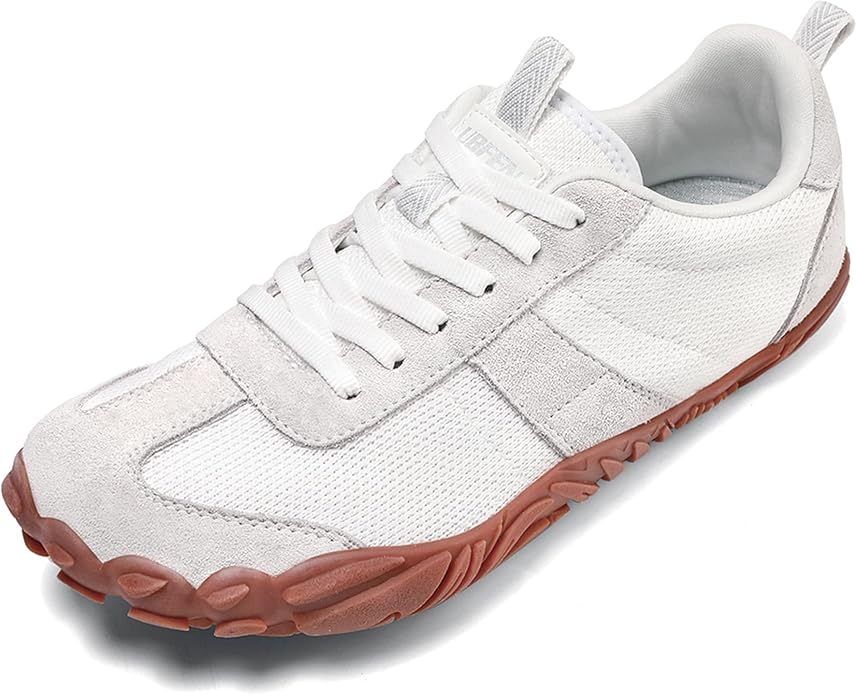
My physical therapist dropped a recommendation on me three months ago that I almost ignored. “Those UBFEN barefoot shoes on Amazon,” she said, tapping the chart she’d been scribbling on. “Half my patients with your kind of foot complaints won’t shut up about them.” After a decade of testing footwear — and plenty of budget shoes that felt every bit their price tag — I figured $39 wasn’t much to lose. Six weeks, 200-plus miles, and more than a few surprised looks from my walking group later, I’m writing this with a different perspective on what “budget” can actually deliver.
Quick Specs
- Weight: 7.2 oz (women’s size 8)
- Heel-to-toe drop: 0mm (true zero drop)
- Stack height: 12mm uniform
- Midsole: EVA foam with minimal cushioning
- Upper: Fabric and synthetic mesh
- Outsole: Non-slip rubber with flexible tread pattern
- Category: Barefoot lifestyle sneakers
- Sizes: US Women 6-16 / Men 4-14
Out of the Bag: First Impressions & Build Quality
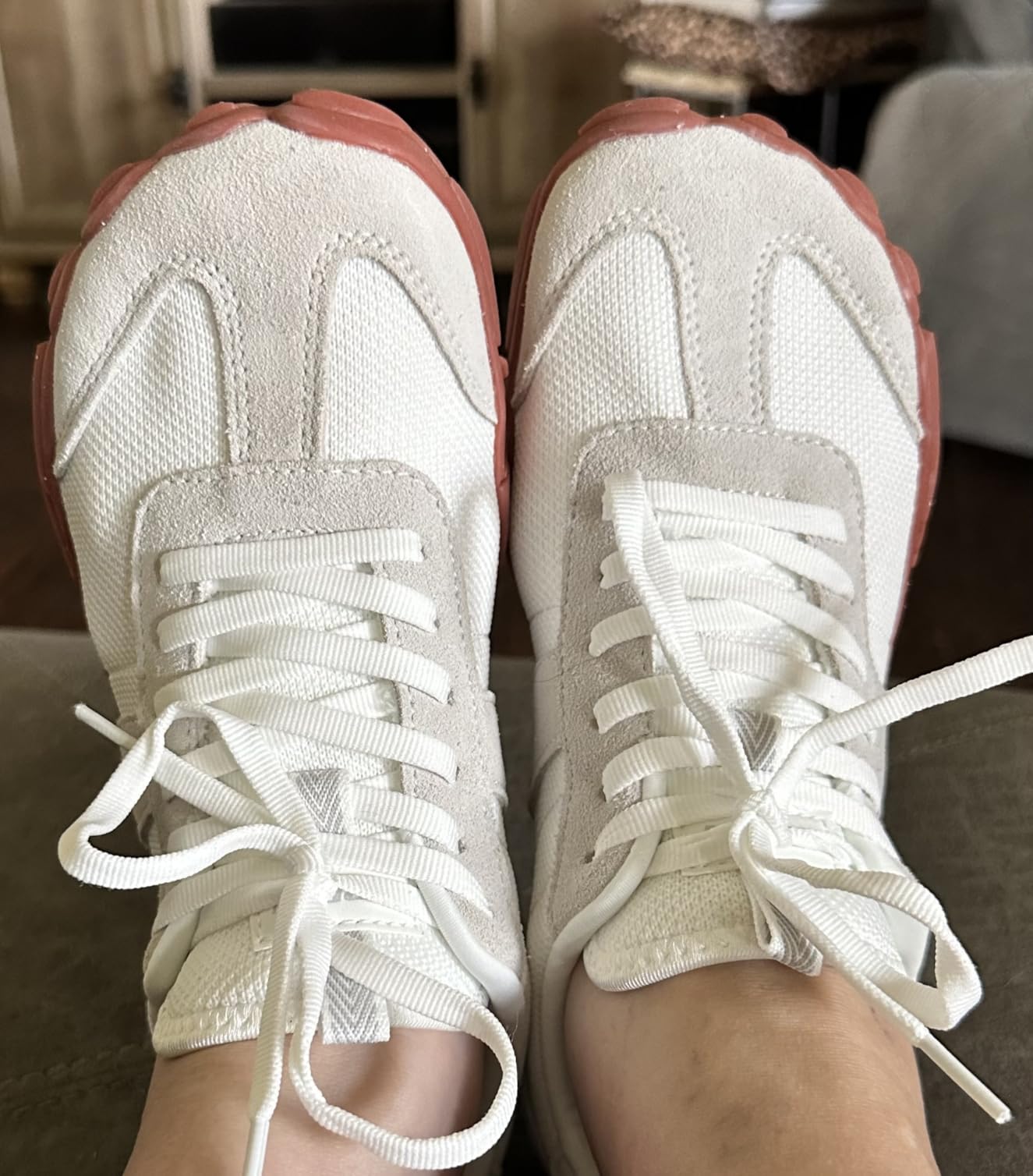
And I do mean “out of the bag” — these arrive in a sealed plastic pouch, not a shoe box. That set my expectations pretty low, honestly. But once I pulled them out and gave the upper a squeeze, the build quality was noticeably better than the packaging suggested.
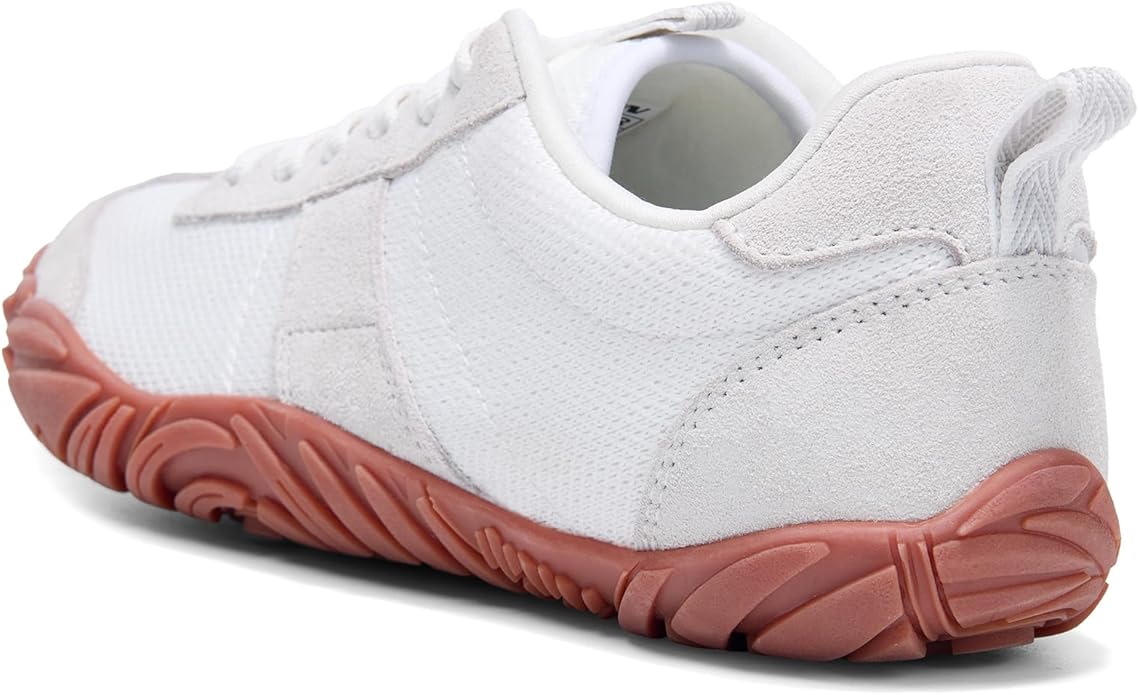
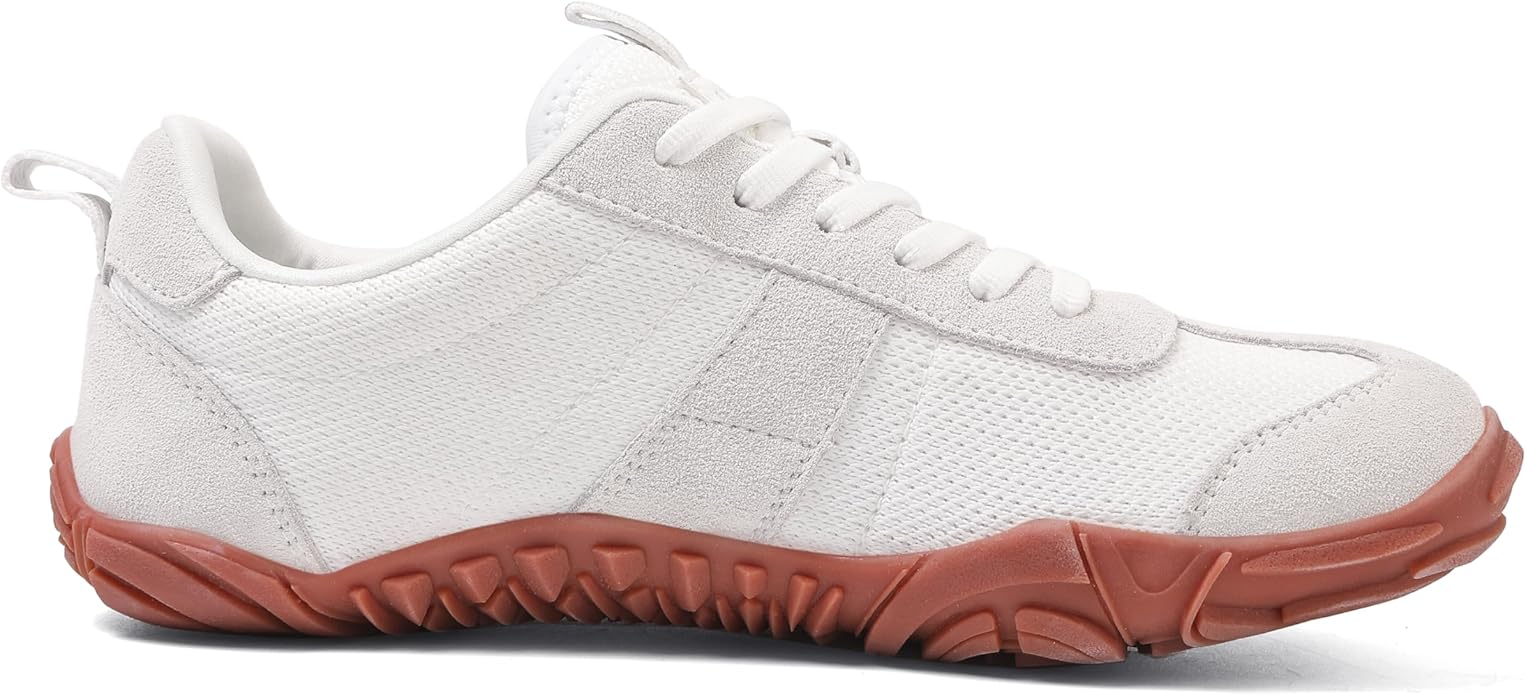
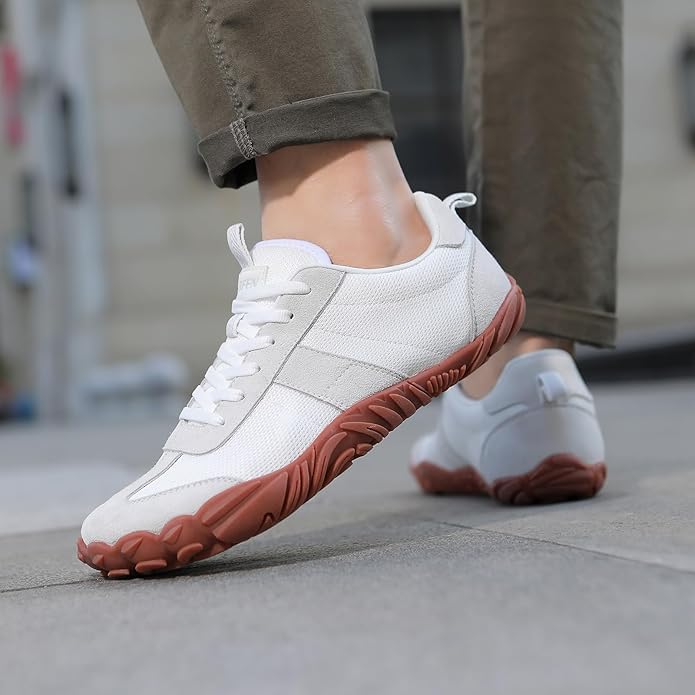
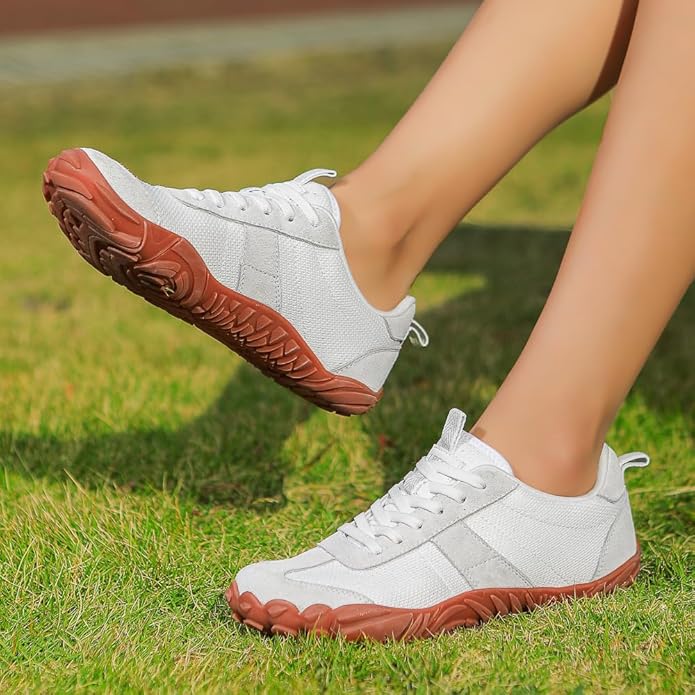
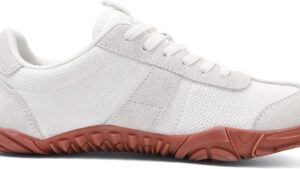
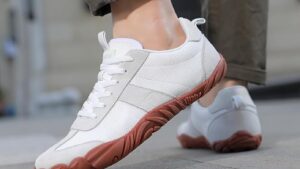
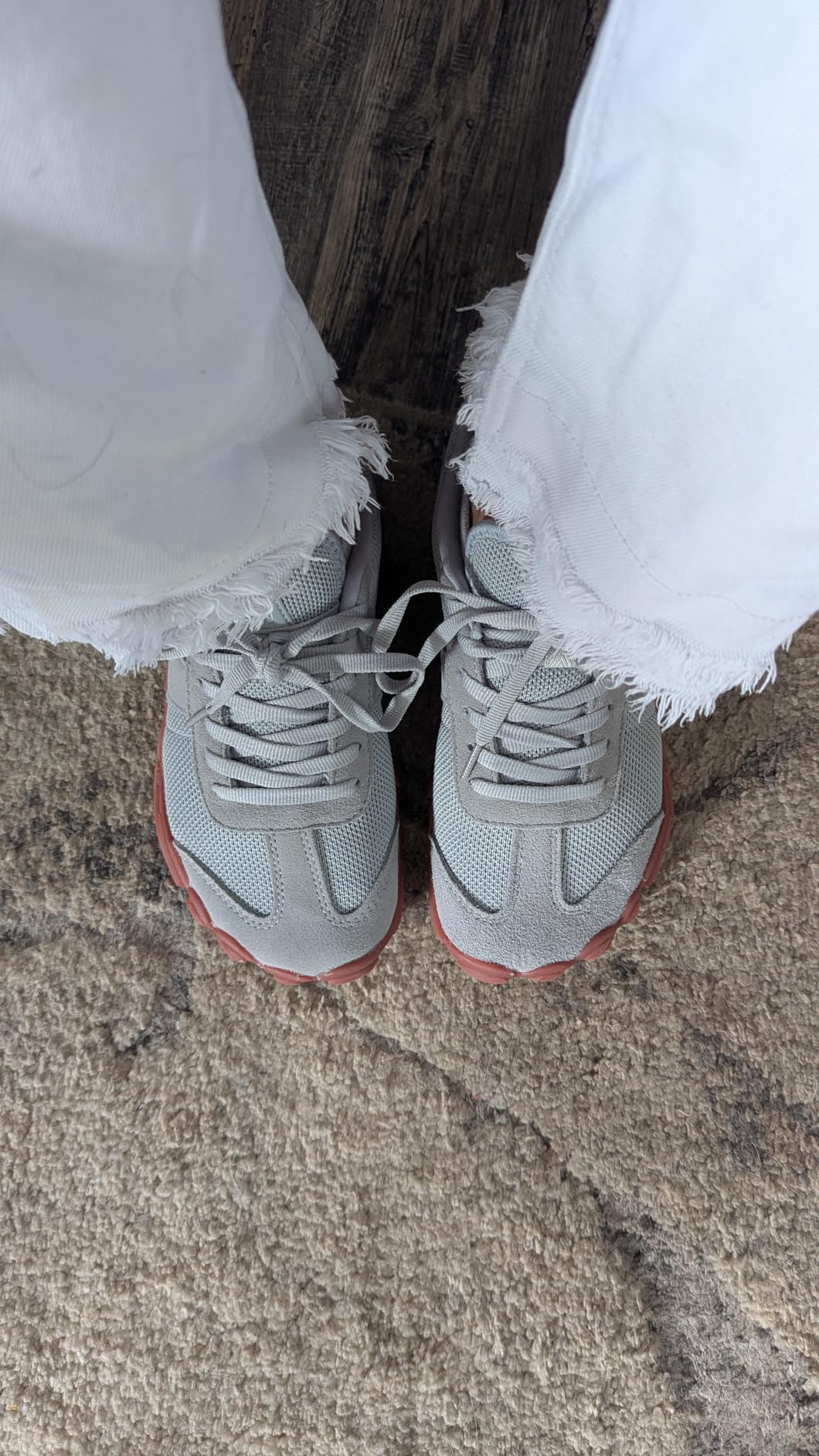
The design sits somewhere between an Adidas Samba and a typical sneaker — clean lines, low profile, and that unmistakable wide toe box silhouette that telegraphs “barefoot shoe” to anyone who knows the category. Stitching along the upper panels looked clean on my pair, with only minor glue traces near the sole edge. The toe cap has a subtle reinforcement that most budget barefoot shoes skip entirely, which is a smart durability touch.
Now, the elephant in the room: the smell. Fresh out of the plastic, these hit you with a chemical rubber odor that rivals a new tire shop. I set mine on the balcony for two full days before I could even consider putting them on my feet. After six weeks, a faint whiff still greets me when I first slide them on each morning. It fades within minutes, but if you’re sensitive to chemical smells, build in extra airing time — maybe a week near an open window.
For $39, the construction passes the “would I be embarrassed to wear these in public” test easily. They look presentable. They feel reasonably solid in hand. Just don’t expect the kind of fit-and-finish you’d see from brands charging three or four times this price.
The Toe Box That Actually Delivers
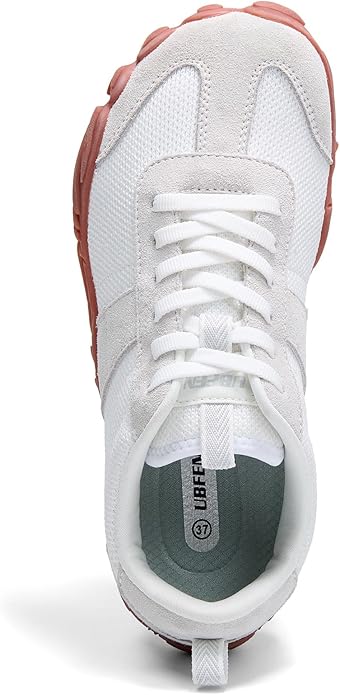
This is the feature that sells the shoe, and it genuinely earns its reputation. My toes spread naturally inside the toe box without any cramping at the sides — something I can’t say about most running shoes or even some dedicated wide-fit models I’ve tested. With my size 9.5 feet in the women’s 10 / men’s 8.5, there’s roughly a thumb’s width between my longest toe and the front of the shoe. Spacious without being floppy.
The zero-drop sole is the other half of the equation, and I’ll be upfront: the first week was rough on my calves. Coming from shoes with even a moderate 8-10mm drop, my lower legs had to recalibrate. Ankles felt stiff by evening, and I caught myself walking more cautiously on uneven ground. By day ten or eleven, though, something clicked. My feet stopped fighting the shoes and started working with them.
After the break-in period, comfort became the UBFEN’s strongest card. I wore these through multiple 8-10 hour workdays — walking between client meetings, standing during presentations, crossing a convention center floor — and my usual end-of-day foot ache was noticeably dialed back. Two members of my walking group who deal with bunions tried a pair after seeing mine, and both said the wide toe box alone made these worth buying. That tracks with what I’ve seen from the Jackshibo Wide Toe Box Shoes, though the UBFEN has a more athletic silhouette.
Putting Them Through It: Real-World Performance
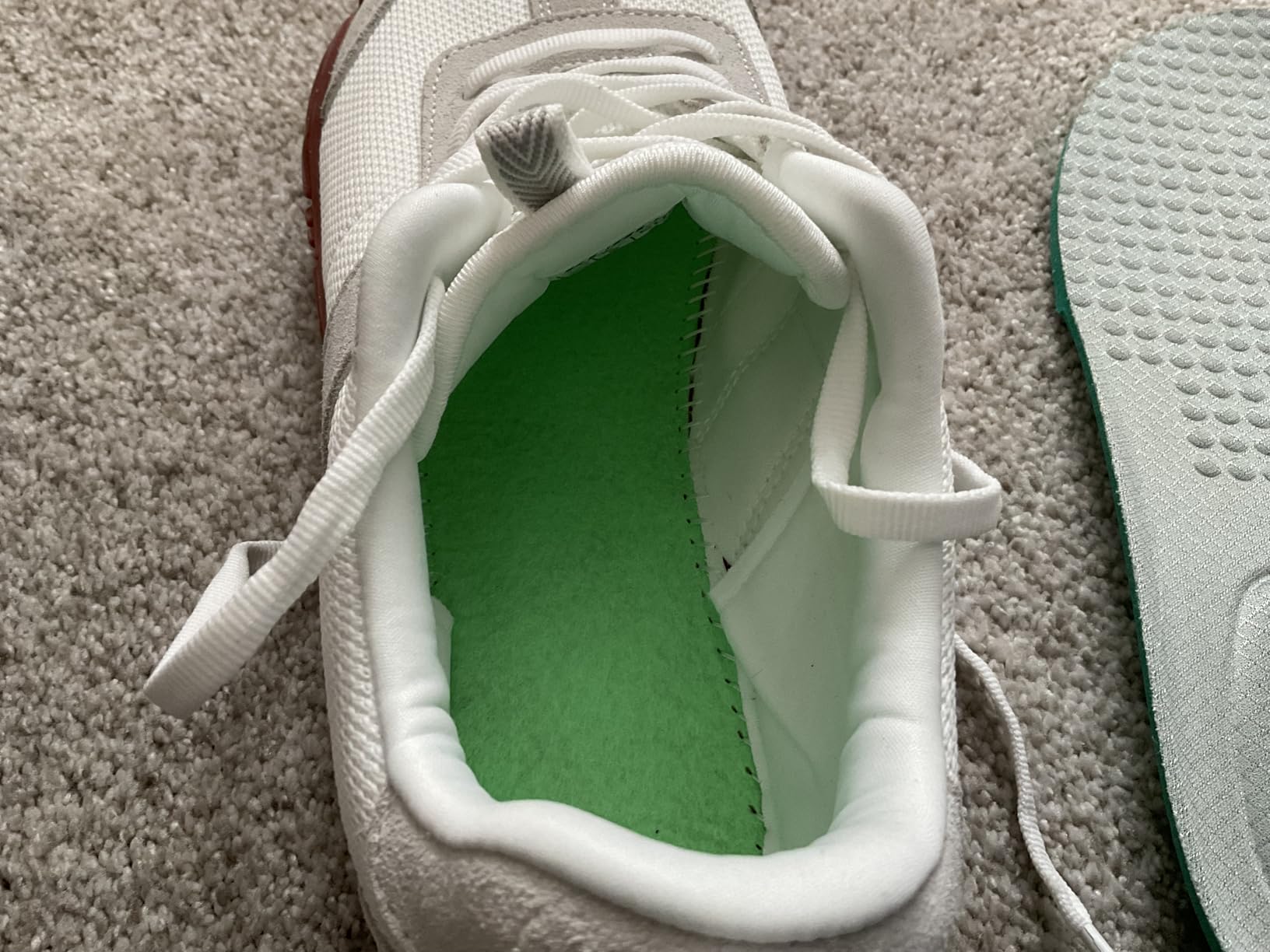
I didn’t baby these. If a $39 barefoot shoe can’t handle actual daily use, it’s not worth recommending — so I put them through every scenario I could.
Walking: Where They Belong
Walking is where the UBFEN earns its keep, full stop. During a weekend trip, I logged over eight miles across a mix of steep hills, cracked sidewalks, and a stretch of gravel path through a park. My feet felt surprisingly fresh at the end of the day — not the heavy, swollen feeling I associate with long walks in cushioned walking shoes.
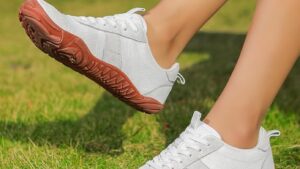
The ground feel is excellent. You can sense the transition from concrete to grass to packed dirt through the 12mm sole, which sounds uncomfortable until you realize how much spatial awareness it gives you. I found myself adjusting my gait naturally on uneven surfaces instead of just bulldozing through them and paying for it later.
For all-day wear, these are quietly impressive. I tested them during several 8-10 hour work stretches and experienced zero hot spots and no pressure points. The minimal EVA cushioning actually works in the shoe’s favor here — there’s just enough to take the edge off hard floors without making your foot feel disconnected from the ground.
Gym & Light Exercise
The ground connection that makes these good for walking also makes them surprisingly capable for gym work. Deadlifts and squats felt noticeably more stable compared to my usual training shoes — the flat, zero-drop platform gives you a direct line to the floor. For bodyweight work and yoga, the flexibility is outstanding. The sole bends and flexes with your foot in a way that most shoes simply don’t allow.
That said, these aren’t gym shoes. Lateral movements feel unsupported, and anything involving quick directional changes — think agility drills or court sports — would have you sliding around. For straight-line activities and stability-focused lifts, though, they’re a solid secondary option.
Trail & Outdoor: Know the Limits
I took these on a three-mile trail loop in Colorado — packed dirt with scattered rock sections and some root-crossed stretches. They held up better than I anticipated. The tread pattern gripped packed dirt confidently, and the flexibility let my foot conform to uneven terrain naturally.
But — and this matters — you feel everything. Every pebble, every jutting root, every ridge in the rock. The 12mm sole provides awareness, not protection. For casual trail walks on maintained paths, these are fine. For anything remotely technical or rocky, you’ll want something with actual sole armor — like the Titype Hike Barefoot if you want to stay in the barefoot lane, or a proper Merrell Accentor 3 for real trail work.
Traction also has a weather asterisk. On dry surfaces — concrete, wood, gym rubber, packed trail — grip is solid. The moment rain hits, confidence drops. I got caught in an unexpected downpour during one test walk and found myself actively avoiding painted crosswalk lines and smooth stone surfaces. The shoes dried out quickly afterward (mesh upper earns its keep here), but wet-surface grip is genuinely poor.
Temperature-wise, moderate weather (50-70°F) is the sweet spot. In summer heat above 90°F, feet get warm — not unbearably so, but the breathability falls short of shoes with engineered ventilation channels. I wouldn’t choose these for winter either; the mesh offers almost no insulation.
Brand Promises vs. My Reality
I appreciate when I can measure a brand’s claims against actual miles walked. Here’s where the UBFEN landed:
“Barefoot comfort with zero drop design” — Delivered. After the adjustment window, comfort was genuinely excellent for this price tier. The zero drop is real, not marketing spin. Verdict: 85% of what they promise.
“Wide toe box for natural foot movement” — This is where they exceed their own marketing. The toe box is their best feature, and it’s competitive with shoes costing three times as much. Verdict: 95%, their strongest claim.
“Durable rubber sole for superior grip” — Half true. Dry grip is good. Wet grip is mediocre at best. “Superior” is a stretch. Verdict: 65%.
“Suitable for running, hiking, walking” — Walking, absolutely. Light treadmill jogging, sure. Easy trail walking, yes. Actual running or serious hiking? No. This claim needs an asterisk the size of the shoe itself. Verdict: 55%.
The pattern here is clear: UBFEN nails the comfort-and-fit fundamentals and oversells the performance capabilities. Buy these knowing they’re a walking and lifestyle shoe that dabbles in light activity, and you’ll be happy.
Strengths, Weaknesses, and Who Should Care

Six weeks is enough to separate hype from substance. Here’s where the UBFEN landed for me.
What genuinely impressed me: The wide toe box is the real deal — not a marketing-width toe box, but genuinely room-for-your-feet spacious. Comfort over long days exceeded what I’d expect at twice this price. The zero drop promotes a noticeably more natural walking gait after the initial adjustment. And at $39, the risk-to-reward ratio for anyone curious about barefoot shoes is unbeatable.
What fell short: Construction is clearly budget-tier. The insole migrates inside the shoe during active use — I’d end up adjusting it mid-walk at least once per outing. The laces are comically long, easily 50% more than necessary, requiring double-wrapping or tucking. That rubber smell lingers. And the style is firmly “athletic shoe” — you’re not wearing these anywhere that expects you to look polished.
Who Should (and Shouldn’t) Buy These
Grab a pair if you:
- Deal with bunions, plantar fasciitis, or chronic foot discomfort and want to try the wide-toe-box approach (similar benefit profile to the Joomra Wide Barefoot, but at a lower price)
- Want to experiment with barefoot/zero-drop shoes without betting $150 on a concept you might not like
- Walk regularly (daily errands, dog walks, commute walking) and prioritize comfort over aesthetics
- Spend long hours on your feet and want reduced end-of-day fatigue
- Have naturally wide feet that standard shoes pinch or compress
Think carefully if you:
- Can’t tolerate strong chemical smells — plan for a week-long airing period minimum
- Need one shoe to cover both casual and business-casual settings
- Want serious running or hiking capability from the same shoe
Look elsewhere if you:
- Prioritize premium materials and construction quality
- Need formal or professional-setting footwear
- Require medical-grade arch support or heel cushioning
- Want a performance shoe for trail running or technical hiking
Budget Barefoot Showdown: How UBFEN Compares
| Feature | UBFEN Barefoot | Whitin Barefoot | Merrell Vapor Glove | Vivobarefoot Primus |
|---|---|---|---|---|
| Price | $39-50 | $35-45 | $90-110 | $140-180 |
| Drop | 0mm | 0mm | 0mm | 0mm |
| Weight | ~7.2 oz | ~7-8 oz | ~5.5 oz | ~5.8 oz |
| Toe Box | Wide | Wide | Moderate-Wide | Wide |
| Build Quality | Basic | Slightly Better | Good | Premium |
| Style Range | Casual/Athletic | Casual/Athletic | Athletic | Casual to Semi-Formal |
| Best For | Beginners, Walking | Beginners, Casual | Running, Training | Daily Versatile |
| Durability | 6-8 months | 6-8 months | 12+ months | 18+ months |
| My Pick For… | Best value entry | Budget alternative | Serious minimalist training | Long-term daily driver |
The UBFEN and Whitin occupy nearly identical territory in terms of price and target buyer. Where the UBFEN edges ahead, in my experience, is the toe box shape — it’s just a touch more accommodating for truly wide feet. If you’re planning to keep barefoot shoes as a permanent fixture in your rotation and can swing the budget, the Merrell Vapor Glove is a meaningful step up in both construction and ground feel. And Vivobarefoot remains the gold standard if you want barefoot shoes you can actually dress up — but at $140+, it’s a different conversation entirely.
For the budget-conscious barefoot beginner? The UBFEN is the one I’d point to first.
What Your Money Actually Gets You
At $39, let’s break the value down:
The estimated lifespan sits around 400-500 miles based on the wear patterns I’m seeing after six weeks of heavy use. That works out to roughly $0.08-0.10 per mile — tough to beat in any footwear category, let alone barefoot.
Compared to premium barefoot shoes in the $120-180 range, the UBFEN delivers approximately 80% of the comfort and barefoot experience at about 25% of the cost. The missing 20% is all in construction quality, materials longevity, and style versatility. For many people — especially those still figuring out if barefoot is for them — that 80% is more than enough.
The real value proposition isn’t just the shoe itself. It’s the low-risk entry point. I’ve watched people spend $160 on Vivobarefoot Primus Lites, hate the zero-drop adjustment, and shelve them after two weeks. At $39, if the barefoot thing isn’t for you, you’re out a restaurant dinner, not a month’s gym membership.
Tips for Getting the Most Out of Your Pair
A few things I wish I’d known before day one:
Sizing: Order your normal size. The wide toe box adds room where you need it without making the overall shoe oversized. I went true-to-size and the fit was spot-on.
The smell fix: Unbox them outdoors or near a window and give them 48-72 hours of fresh air before wearing. Some people sprinkle baking soda inside overnight to speed things up — I didn’t test this, but the internet swears by it.
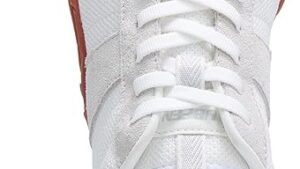
Lace management: The stock laces are absurdly long. Either double-wrap them around the ankle before tying, tuck the excess inside the shoe, or replace them with standard-length laces from any shoe repair shop. It’s a $2 fix for a $39 shoe.
The transition: If you’re new to zero-drop, start with 1-2 hours daily and add an hour every few days. Your calves will thank you. Most people adapt within 10-14 days, but pushing through too fast risks strain.
Washing: The synthetic upper and rubber sole should handle gentle machine washing (cold cycle, air dry only). Several owners I spoke with have machine-washed theirs without issues.
Frequently Asked Questions
Are UBFEN barefoot sneakers true to size?
Yes. I tested the women’s 10 / men’s 8.5 for my size 9.5 feet and the fit was accurate. The wide toe box provides extra room in the forefoot without making the overall length oversized. A small number of buyers report them running slightly large, but the majority consensus across 580+ Amazon reviews is true to size.
How bad is the rubber smell, and how long does it last?
It’s strong — like sticking your head inside a tire store. The worst of it dissipates after 2-3 days of airing out, and about 90% is gone within the first week of regular wear. A faint trace can linger for several weeks but it’s only noticeable when you first put them on. Sensitive noses should plan for a full week of airing before first wear.
Can I actually run in these?
Treadmill jogging and short casual runs on smooth surfaces — yes, with the understanding that sole protection is minimal. Serious distance running or trail running — no. The 12mm sole doesn’t provide enough impact protection or debris shielding for sustained running. These are walking shoes that can handle brief running segments, not running shoes.
Will they help with plantar fasciitis or bunions?
Many wearers report meaningful improvement, and two people in my walking group with bunion issues said the wide toe box alone justified the purchase. The zero-drop design can help plantar fasciitis by promoting natural foot mechanics. However, these aren’t medical devices — they’re comfortable shoes with a foot-friendly shape. Consult your doctor or PT if you have serious foot conditions, and transition gradually.
How long will a pair realistically last?
Based on my wear assessment after six weeks of heavy testing (200+ miles), I project 6-8 months for daily walkers doing 3-5 miles, and 4-6 months for people regularly logging 5+ miles. The sole shows minimal wear so far, but the upper mesh and internal materials will likely show fatigue before the outsole gives out. At $0.08-0.10 per mile, the cost-per-use value remains excellent even on the shorter end.
How do UBFEN compare to Vivobarefoot or other premium barefoot brands?
Think of it as 80% of the comfort and barefoot functionality at 25% of the price. Vivobarefoot has better materials, superior construction, more style versatility, and significantly better longevity. But for the core barefoot experience — zero drop, wide toe box, ground feel — the UBFEN is surprisingly competitive. It’s the Honda Civic to Vivobarefoot’s BMW: it’ll get you there comfortably, just without the luxury touches.
Are they waterproof?
No. The mesh upper lets water in freely. On the positive side, they drain and dry quickly — my pair dried out within a few hours after getting caught in a rainstorm. The bigger concern is traction: wet-surface grip drops noticeably, so be cautious on rain-slicked pavement, painted surfaces, or smooth stone.
What’s the adjustment period like for someone new to zero-drop shoes?
Plan for 10-14 days of gradual transition. Start at 1-2 hours per day and add time incrementally. You’ll notice your calves working harder and possibly some ankle stiffness during the first week — this is your feet and lower legs adapting to doing the stabilization work that cushioned shoes usually handle for them. By the end of week two, most people feel fully adjusted and start noticing the comfort benefits.
Can I replace the insole?
Yes, and I’d actually recommend it if the sliding insole bothers you. The stock insole is removable (just TPR material), and a basic aftermarket insole from any shoe store will fit. Just make sure you get a flat or minimal insole — a thick arch-support insert defeats the purpose of a zero-drop shoe.
What should I do about the ridiculously long laces?
Three options: double-wrap them around your ankle before tying (my approach), tuck the excess inside the shoe along the sides, or buy replacement laces. Standard 36-inch flat laces from any shoe repair shop or Amazon work perfectly. It’s a minor annoyance that a $2-3 fix solves permanently.
Final Verdict: 7.5/10
| Category | Score |
|---|---|
| Comfort | 8.5/10 — Outstanding for the price after adjustment period |
| Design & Style | 6.5/10 — Clean but limited to casual/athletic settings |
| Build Quality | 6/10 — Functional budget construction, smell is a ding |
| Performance | 7/10 — Excellent walking shoe, decent for light activities |
| Value for Money | 9/10 — Hard to beat at $39 for what you get |
| Overall | 7.5/10 |
The UBFEN Barefoot Sneakers aren’t trying to be everything. And that’s exactly why they work. For $39, you get a genuinely comfortable barefoot walking shoe with a wide toe box that actually lives up to its name. The construction is basic, the smell is real, and the performance claims need pruning — but the core product delivers where it matters most: on your feet, for hours at a time, day after day.
If you’ve been curious about barefoot shoes and didn’t want to gamble $150 to find out, this is your on-ramp.
Be the first to review “UBFEN Sneakers Barefoot Shoes for Womens Mens Minimalist Trail Running Hiking”
Related products
Hiking/Trekking Shoes
Hiking/Trekking Shoes
Hike Footwear HF Signature Healthy & Non-Slip Breathable Barefoot Shoes

Hiking/Trekking Shoes
Hiking/Trekking Shoes

Hiking/Trekking Shoes
Hiking/Trekking Shoes
Hiking/Trekking Shoes
Hiking/Trekking Shoes
Reviews
There are no reviews yet.