


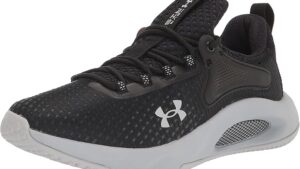
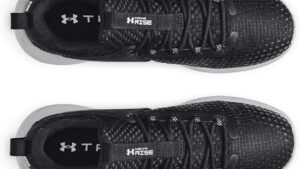

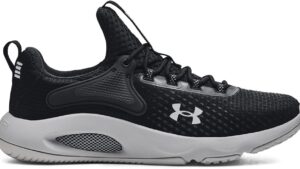
Under Armour Mens HOVR Rise 4
- Midsole construction: Dual-layer system with internal UA HOVR foam contained within firmer EVA foam shell
- Upper material: Engineered mesh with abrasion-resistant 3D print overlays
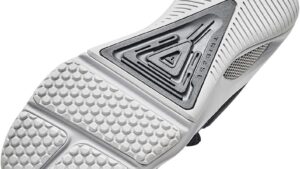
- Outsole technology: UA TriBase triangular system with full rubber coverage, blown rubber forefoot
- Closure system: Traditional lace-up with molded TPU heel-to-midfoot strap and bootie construction
- Heel-to-toe drop: 8mm offset
- Weight: 10.75 oz (men’s size 9)
- Best applications: Circuit training, HIIT workouts, functional fitness, moderate weight training
- Notable features: Energy Web fabric wrapping HOVR cushioning, pull tabs front and back
The $120 price tag immediately raises expectations. Can a training shoe at this level deliver genuine HOVR cushioning performance without sacrificing the versatility needed for serious gym sessions? After 12 weeks and more than 85 gym workouts spanning everything from heavy compound lifts to explosive HIIT circuits, the answer reveals itself through worn rubber and compressed foam—some parts impressive, others questionable.
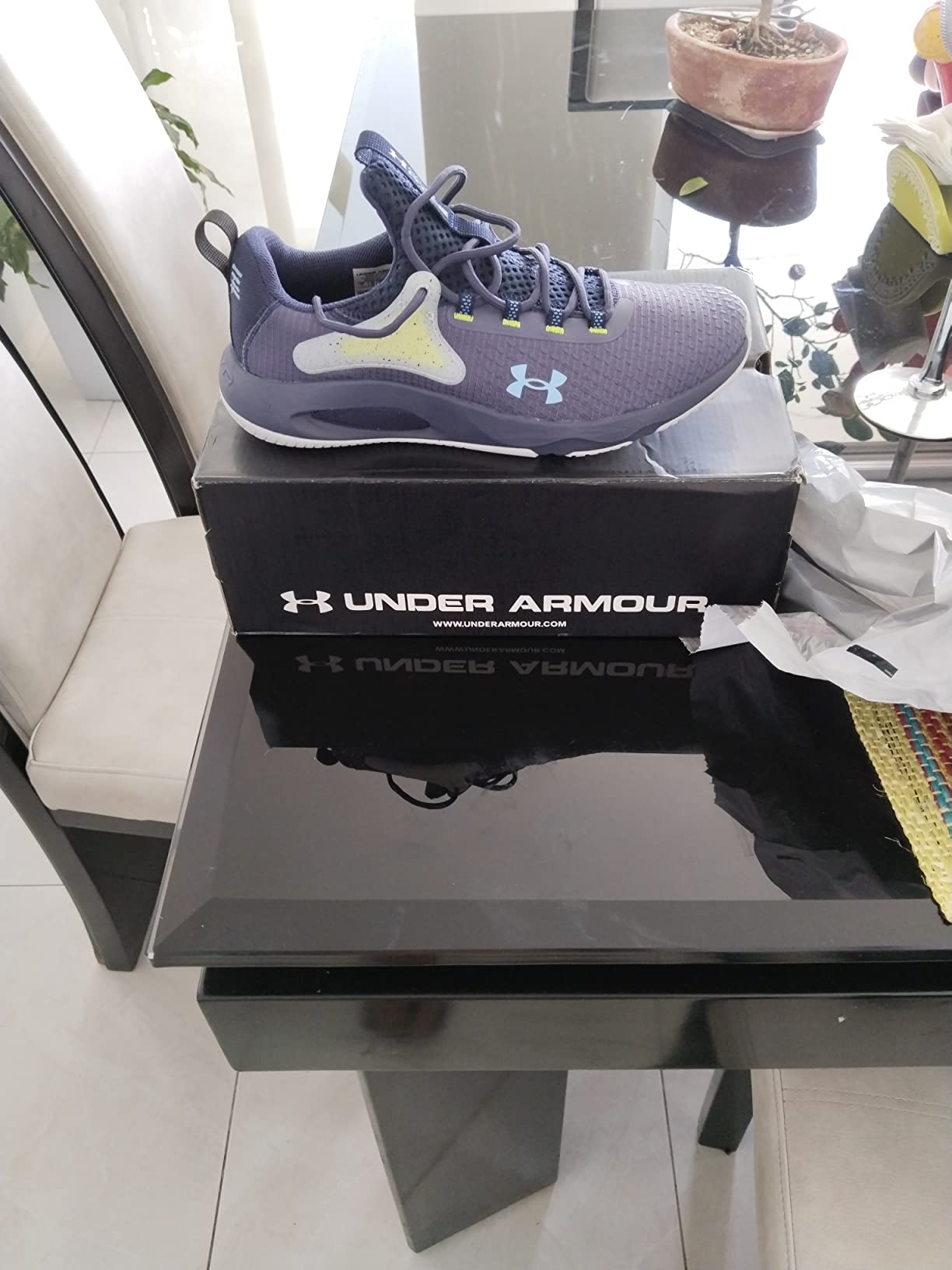
First Unboxing: The Premium Feel Question
Opening the box reveals something more refined than expected at this price point. The engineered mesh upper carries a quality that stands out—no cheap synthetic feel here. The black/mod gray colorway tested delivers a clean, purposeful aesthetic that translates well both inside the gym and during casual wear afterward.
The construction quality impresses immediately. Synthetic overlays provide targeted reinforcement in high-stress zones, and the 3D printed details add durability where friction typically wears through standard materials. After three months of punishment including outdoor concrete sessions, these overlays show minimal degradation beyond normal surface scuffing.
What catches attention first is the bootie construction. Unlike traditional tongue designs, this one-piece setup creates a sock-like feel that hugs the foot completely. The advantage: excellent conforming fit once inside. The disadvantage: getting into these shoes requires some technique—pulling both sides simultaneously prevents crushing the heel counter during entry.
The Sizing Trap That Nearly Ended This Review
Under Armour sizing runs notoriously inconsistent, and the HOVR Rise 4 follows this problematic pattern. The typical size simply won’t work here. These run approximately half a size small compared to Nike Metcons or Reebok Nanos, with an additional quirk—they also run slightly long once the correct width is achieved.
For anyone wearing size 10 in most training shoes, the HOVR Rise 4 demands size 10.5. Size 11 might be necessary for those with wider feet. Once the proper size is secured, however, the lockdown system excels. The lacing system keeps everything planted during lateral movements without creating pressure points or restricting natural foot splay.
The bootie construction creates another fit consideration: no ability to adjust sections independently like traditional tongue setups allow. The entire midfoot and forefoot lock down together, which works perfectly for some foot shapes but may frustrate others seeking more customized adjustment.
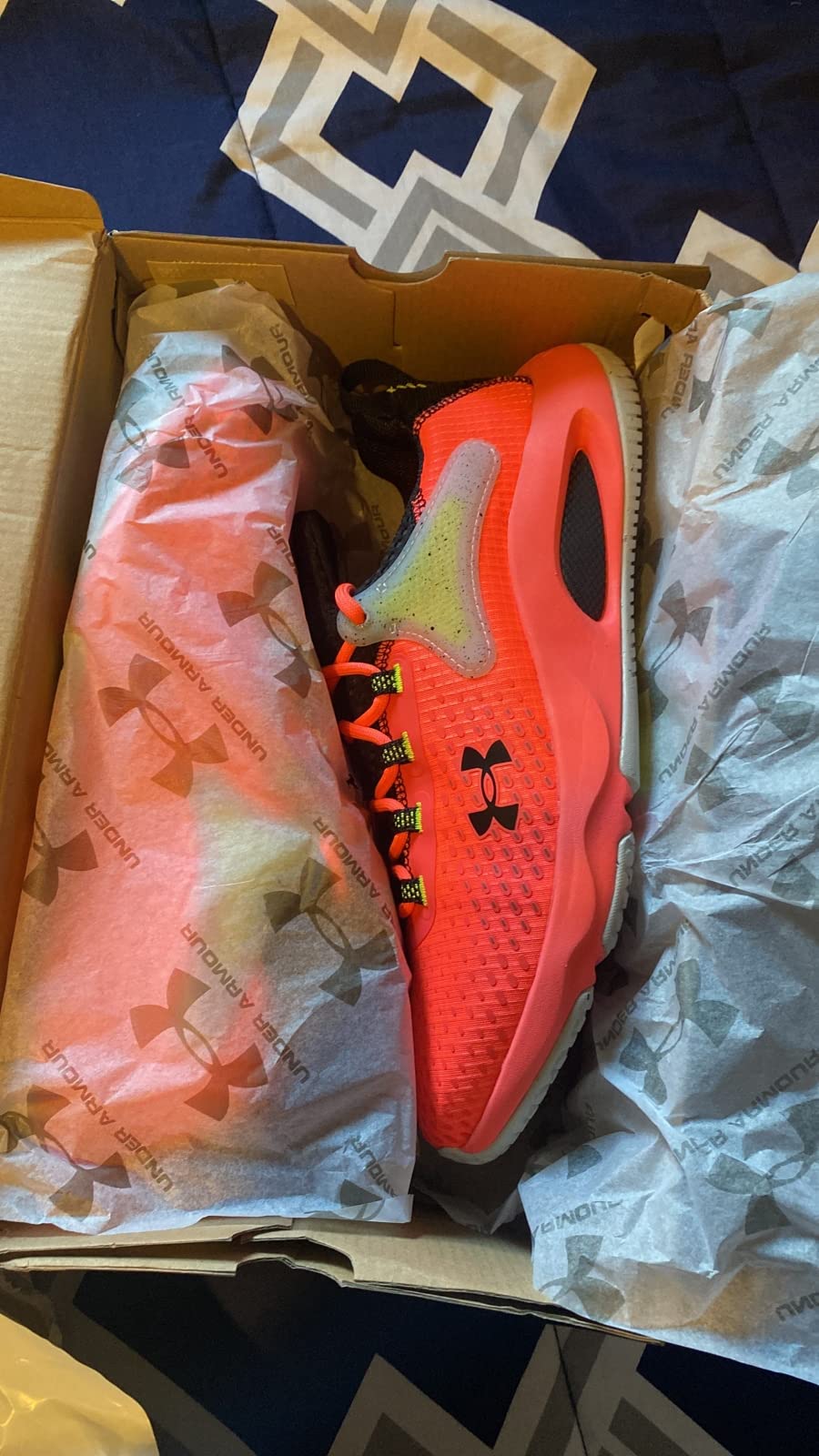
HOVR Cushioning: Marketing Hype vs Ground Truth
Under Armour markets their HOVR technology with bold claims about “zero gravity feel.” Reality delivers something different—though not necessarily disappointing. The dual-foam midsole system combines internal HOVR foam wrapped in Energy Web fabric, all contained within a firmer EVA foam shell. This construction provides responsive cushioning that maintains stability rather than that squishy, disconnected sensation some training shoes produce.
During the first heavy squat session at 275 lbs, the difference becomes clear. The cushioning offers impact protection without killing the stable platform needed for proper bar path and force transfer. This firm-yet-cushioned characteristic stays consistent throughout box jumps, deadlift sets, and 45-minute HIIT circuits.
However, limitations emerge around the 400-lb mark for trap bar deadlifts. The HOVR foam begins showing noticeable compression under these loads, suggesting an upper threshold for serious powerlifting work. For athletic-style training with moderate to heavy weights—say, sets in the 225-315 lb range for compound movements—the cushioning performs admirably.
The responsiveness holds up well over time. Unlike some training shoes that feel great initially but compress and deaden after several weeks, the HOVR maintains its spring through three months of regular abuse. The Energy Web fabric wrapping apparently does its job of preserving cushioning properties and energy return.
Where Stability Meets Its Limits
The TriBase outsole technology creates a triangular contact pattern designed to maximize ground connection while promoting natural foot movement. For circuit training, agility work, and functional fitness movements, this design choice pays dividends. Lateral lunges, quick pivots between exercise stations, and multi-directional agility drills all benefit from the stable platform and confident grip.
The outsole grips gym floors exceptionally well, even when surfaces get dusty or sweaty during intense sessions. The tread pattern seems specifically optimized for indoor rubber flooring—it grips without being so aggressive it catches during pivots. Heavy sled pushes and rope climbs both showcase the outsole’s traction capabilities, with the rubberized triangular sections on the lateral sides adding extra grip for unusual movement patterns.
But the same design that excels for dynamic movements creates complications for heavy, static lifts. The shoe features noticeable toe spring—an upward curve at the front that makes grounding the full foot difficult during maximal squats or deadlifts. This becomes particularly apparent when trying to maintain tripod foot position (big toe, pinky toe, heel) while pushing through sticking points on heavy singles or triples.
The 8mm heel-to-toe drop positions this shoe somewhere between minimalist flat trainers and Olympic lifting shoes. For squats, this drop feels comfortable and can actually improve depth for those with limited ankle mobility. For deadlifts and similar floor-based lifts, however, that extra height creates a less optimal starting position compared to flatter alternatives.
The Breathability Reality Check
The engineered mesh upper handles airflow reasonably well during standard 60-minute gym sessions mixing weights and moderate cardio. Ventilation proves adequate for most training scenarios, with noticeable airflow around the forefoot and midfoot panels.
Extended HIIT sessions in poorly ventilated spaces tell a different story. After 45 minutes of burpees, mountain climbers, and high-intensity intervals, heat buildup becomes noticeable. Not enough to cause blisters or serious discomfort, but enough to recognize these won’t win awards for breathability during summer outdoor bootcamps or tropical climate training.
The 3D printed overlays, while excellent for durability and support, do restrict some airflow compared to pure mesh panels. This trade-off between structure and breathability tilts toward structure—which makes sense for a training shoe but may frustrate those who run hot during workouts.
After Three Months: What the Wear Patterns Reveal
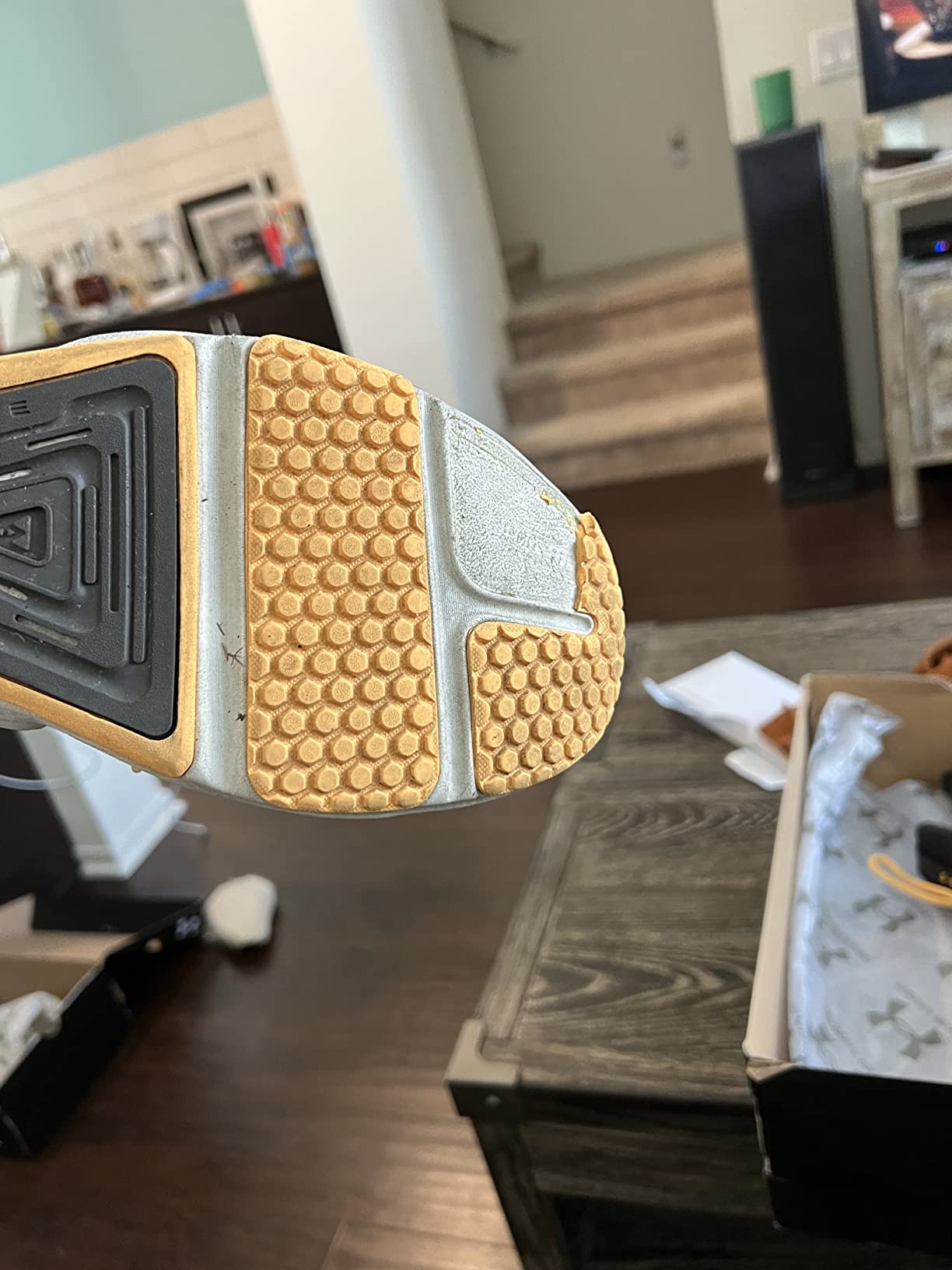
Eighty-five gym sessions later, the HOVR Rise 4 shows predictable wear in high-contact zones but no structural failures. The outsole demonstrates even wear patterns across the heel and ball of the foot, with slightly accelerated wear in the forefoot where blown rubber provides extra spring for explosive movements. This softer forefoot rubber trades some durability for better energy return during jumps and sprints.
The engineered mesh upper maintains its integrity well, showing minimal stress despite regular exposure to barbell impacts, rope friction, and general gym abuse. The 3D printed overlays prove their worth here—areas reinforced with this technology show essentially zero degradation, while unreinforced mesh sections display light pilling and surface wear consistent with three months of hard use.
One concern that emerges around the eight-week mark: a distinctive squeaking sound develops during walking on hard surfaces. This appears related to the TriBase outsole design, specifically the slots cut into the black rubber triangular sections. These slots allow air movement and flexibility but also create friction points between the rubber overlay and softer HOVR cushioning underneath. On carpet, the squeak remains inaudible. On concrete, tile, or polished gym floors, it becomes noticeable—not loud enough to draw stares, but present enough to be annoying during rest periods between sets.
The TPU eyelet system—a single reinforced eyelet serving as the fifth lace anchor point—shows early signs of stress. Light fraying appears where laces create friction during aggressive tightening. While not yet compromised functionally, this suggests potential long-term durability issues, particularly for those who frequently adjust lacing tension or engage in cutting-heavy activities.
Heavy Lifting Performance: The 315-Pound Test
Powerlifting-style training exposes the HOVR Rise 4’s limitations quickly. During conventional deadlift sessions working up to 315 lbs, the shoe performs adequately but reveals its true nature as a versatile training shoe rather than a lifting-specific tool. The cushioning maintains enough firmness to avoid significant compression at this weight, though subtle give becomes noticeable compared to dedicated lifting shoes or minimalist flat trainers.
Squats tell a similar story. Sets at 275 lbs feel secure and stable, with the 8mm drop actually providing a slight advantage for hitting depth without excessive forward lean. However, when attempting maximal singles or low-rep work in the 90-95% range, that cushioning and toe spring become less ideal. The inability to fully ground the foot creates small stability compromises that may not matter for general strength work but could impact serious strength athletes chasing PRs.
Box squats, front squats, and overhead work all benefit from the shoe’s stability features. The molded TPU strap connecting the heel to midfoot does provide some additional security during these movements, though its contribution feels subtle rather than game-changing. The TriBase outsole keeps the foot planted without the rocking sensation sometimes experienced in overly cushioned trainers.
Bench press and other horizontal pressing movements surprisingly benefit from the outsole grip. Leg drive transfers effectively through the rubber sole into the floor, though this speaks more to adequate performance than exceptional capability.
HIIT and Explosive Work: Where These Shoes Excel
Circuit training and high-intensity interval workouts showcase the HOVR Rise 4 at its best. Burpees, box jumps, jump squats, and similar plyometric movements all feel responsive and springy without being unstable. The HOVR cushioning provides noticeable energy return during the explosive portion of jumps while still offering enough impact protection on landing to keep knees and ankles comfortable through high-volume sessions.
Transitioning between exercises feels smooth—the shoe adapts well to quick changes from jumping to crawling to sprinting to lifting. This versatility proves valuable during fast-paced workouts where equipment changes every 60 seconds. The combination of responsive cushioning and stable platform makes these ideal for functional fitness classes, bootcamp-style training, and general athletic conditioning work.
Short sprint intervals (100-200 meters) work reasonably well, though the shoe clearly wasn’t designed for running efficiency. The 8mm drop and moderate cushioning create adequate stride mechanics for gym-based cardio and short outdoor intervals, but anything beyond 400 meters starts feeling labored compared to dedicated running shoes.
Jump rope sessions—both for warm-ups and conditioning work—reveal another strength. The responsive forefoot cushioning and grippy outsole create excellent ground feel and rhythm, with minimal slipping during double-unders or speed work. After multiple 10-minute jump rope sessions, foot fatigue stays manageable thanks to the HOVR cushioning’s consistent shock absorption.
Is This Actually Worth $120?
Breaking down the value proposition requires honest assessment against competing options. At the $110-120 price point (prices vary between retailers), the HOVR Rise 4 competes directly with Nike Metcon 8 ($130), Reebok Nano X3 ($140), and Adidas Dropset Trainer ($130).
Compared to the Nike Metcon 8, the HOVR Rise 4 offers superior cushioning for jumping and impact work but falls short in heavy lifting stability and long-term durability. The Metcon’s flat, stable platform and proven track record for lasting 18+ months makes it the better choice for serious CrossFit athletes or those prioritizing maximal strength work.
Against the Reebok Nano X3, the comparison tilts toward personal preference. The Nano provides slightly firmer cushioning and better lifting performance, while the HOVR Rise 4 delivers more comfort for cardio-heavy workouts and HIIT sessions. Both occupy similar price ranges, making this decision based on training style rather than clear superiority.
The Adidas Dropset Trainer includes lateral sidewalls that provide extra arch support—a significant advantage for flat-footed lifters. The HOVR Rise 4’s bootie construction offers no such support, requiring aftermarket insoles for those needing additional arch structure.
For someone training 4-5 times weekly with a mix of lifting, conditioning, and functional fitness, the HOVR Rise 4 delivers solid performance at fair pricing. The estimated 12-18 month lifespan calculates to roughly $6-10 per month of training—reasonable for this performance level.
However, serious powerlifters, CrossFit competitors, or those with flat feet should look elsewhere. The shoe’s limitations for maximal strength work and lack of arch support make it suboptimal for these specific needs, regardless of price.
What the HOVR Rise 4 Won’t Tell You
Several aspects of this shoe only reveal themselves through extended use and careful observation. The bootie construction, while creating excellent lockdown once sized correctly, makes quick shoe changes difficult. For those alternating between different training shoes during single sessions (Olympic lifts requiring flat shoes, then switching for conditioning work), this design becomes frustrating.
The sock-like fit also means less ability to accommodate swelling during very long training sessions or hot weather workouts. Once the foot expands, there’s limited adjustment available compared to traditional tongue designs that allow loosening specific zones.
Outdoor durability concerns emerge during concrete and asphalt sessions. While the shoe handles occasional outdoor use acceptably, the forefoot midsole shows accelerated wear on abrasive surfaces. For primarily outdoor training, more robust construction would serve better.
The squeaking issue, while minor, becomes genuinely annoying for some users. The sound develops unpredictably—some pairs apparently avoid it entirely, while others start squeaking within weeks. This inconsistency suggests quality control variations in outsole manufacturing or assembly.
Lace durability also demands attention. The standard laces show fraying faster than expected, particularly where they contact the TPU eyelet. Replacing with more durable aftermarket laces around the three-month mark prevents potential breakage during workouts.
The Final Verdict: Know Your Training Style
The Under Armour Men’s HOVR Rise 4 delivers as a versatile training shoe for mixed-intensity workouts, falling short only when pushed into specialized strength or endurance roles it wasn’t designed to fill.
Genuinely works for:
- Circuit training enthusiasts mixing weights, cardio, and functional movements
- HIIT practitioners who need responsive cushioning for high-impact work
- General gym-goers training 3-4 times weekly with varied programming
- Those with wider feet who appreciate the accommodating toe box (once properly sized)
- Athletes prioritizing comfort over maximum lifting stability
Consider carefully if:
- Training involves primarily heavy compound lifts above 80% 1RM
- Flat feet or specific arch support needs exist
- Outdoor training on concrete or asphalt makes up significant training volume
- Under Armour sizing quirks create concerns—try before buying
Look elsewhere if:
- Powerlifting, Olympic lifting, or maximal strength work dominates training
- Running distances beyond 400 meters regularly
- Budget restricts options under $100
- Minimalist, flat-soled design preferred for ground feel during lifts
The sizing issue deserves final emphasis: trying these on before purchasing isn’t optional advice, it’s essential. The combination of running small, running long, and bootie construction creates too many variables for confident online ordering without prior experience with Under Armour’s training shoe sizing.
For those whose training style aligns with the HOVR Rise 4’s strengths—responsive cushioning, stable platform for dynamic movements, versatility across moderate weights and high-intensity cardio—this shoe delivers legitimate value at the $110-120 price point. Just understand the compromises being made compared to more specialized options.
Common Questions About Performance and Fit
How does HOVR cushioning hold up under heavy loads?
The dual-foam construction maintains stability through moderate-to-heavy lifting around 275-315 lbs for compound movements. Noticeable compression begins appearing around 400+ lbs during trap bar deadlifts, suggesting an upper threshold for serious powerlifting applications. For athletic-style training moving lighter loads explosively, the cushioning performs excellently without compromising stability.
Can the bootie construction accommodate orthotics?
The removable insole allows aftermarket orthotic insertion, though the bootie design creates some limitations. Thicker orthotics may create fit issues in the already snug midfoot area. Move Insoles and similar low-profile options work well according to user experiences. Full-height custom orthotics might require sizing up beyond the already-necessary half size increase.
Does the 8mm drop work for both lifting and running?
The 8mm offset creates versatility at the cost of optimization. For squats, it improves depth and positioning for those with limited ankle mobility. For deadlifts, it raises the starting position slightly higher than ideal. For running, it works adequately for short intervals (100-400 meters) but feels inefficient for longer distances. This middle-ground approach fits the shoe’s jack-of-all-trades positioning.
How long before the squeaking starts?
User experiences vary dramatically. Some pairs develop the characteristic squeak within 3-4 weeks, others remain quiet through months of use. The issue appears related to the TriBase outsole slots and manufacturing tolerances. Those experiencing significant squeaking report some success filling the rubber triangle slots with shoe adhesive, though this may reduce intended flexibility.
What’s realistic durability for serious training?
For athletes training 4-5 times weekly with varied programming, expect 12-18 months before significant performance degradation. Light users (2-3 sessions weekly) should see 18-24+ months. Heavy users exceeding 200 lbs and training 6+ times weekly might see compression and outsole wear requiring replacement around 10-12 months. The TPU eyelet and laces typically need attention before overall shoe failure.
True to size or size up?
Size up half a size from standard athletic shoe sizing—this isn’t optional. The Under Armour HOVR Rise 4 runs consistently small in width while also running slightly long. Those wearing size 10 in Nike Metcons or Reebok Nanos need size 10.5 in these. Wide-footed individuals may require a full size up. The bootie construction means no adjustment after purchase, making proper initial sizing critical.
Better cushioning than Nike Metcon for cardio?
Yes, noticeably. The HOVR cushioning provides more impact absorption and energy return during plyometric work, jump rope, and high-volume box jumps compared to the Metcon 8’s firmer setup. However, the Metcon delivers superior stability for heavy lifting and better long-term durability. Choose based on whether training emphasizes conditioning (HOVR Rise 4) or strength (Metcon).
Any advantage over previous HOVR Rise 3?
The Rise 4 features smaller lateral stabilizers that maintain stability while improving ankle mobility—a meaningful upgrade for those who felt restricted in the Rise 3. The plastic strap design also changed, no longer running all the way to the sole. Build quality improvements include better TPU eyelet construction, though durability concerns remain. Overall, incremental improvements rather than revolutionary changes.
Be the first to review “Under Armour Mens HOVR Rise 4”
Related products
Running Shoes
Training Shoes
Running Shoes
Football Shoes

Hiking/Trekking Shoes
Hiking/Trekking Shoes
Hike Footwear HF Signature Healthy & Non-Slip Breathable Barefoot Shoes
Tennis/Squash Shoes
Reviews
There are no reviews yet.