
Can budget orthotic insoles actually deliver professional-grade support for construction workers? Mike here, and after dealing with plantar fasciitis through years of 10+ hour shifts on concrete, I had my doubts about the $35 VALSOLE Heavy Duty Support Orthotics. But three months of daily testing in my work boots has completely changed my perspective on what “affordable” arch support can do.
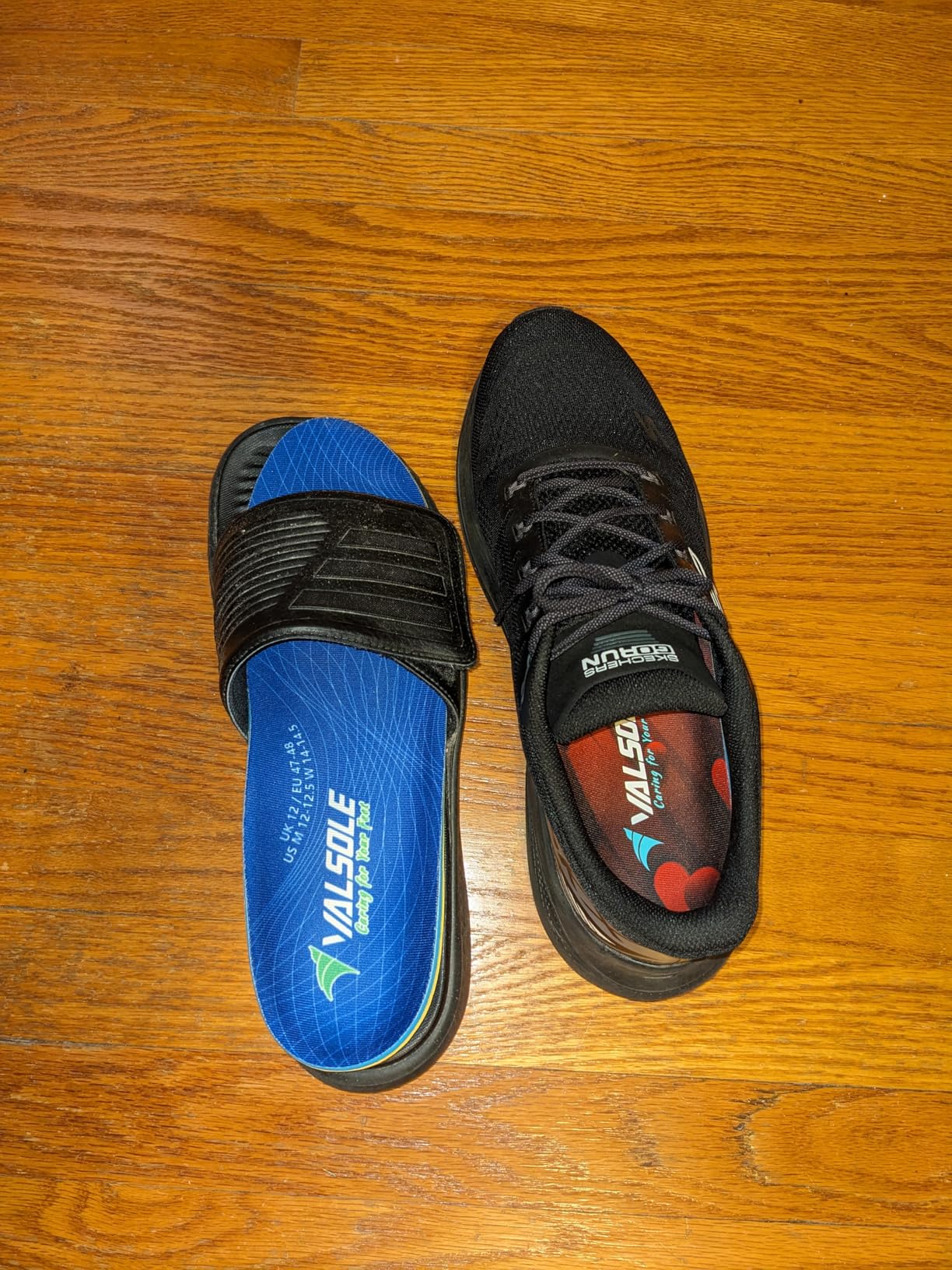
Technical Specifications
- ⚖️ Weight Capacity: 220+ lbs (tested up to ~250 lbs via coworker feedback)
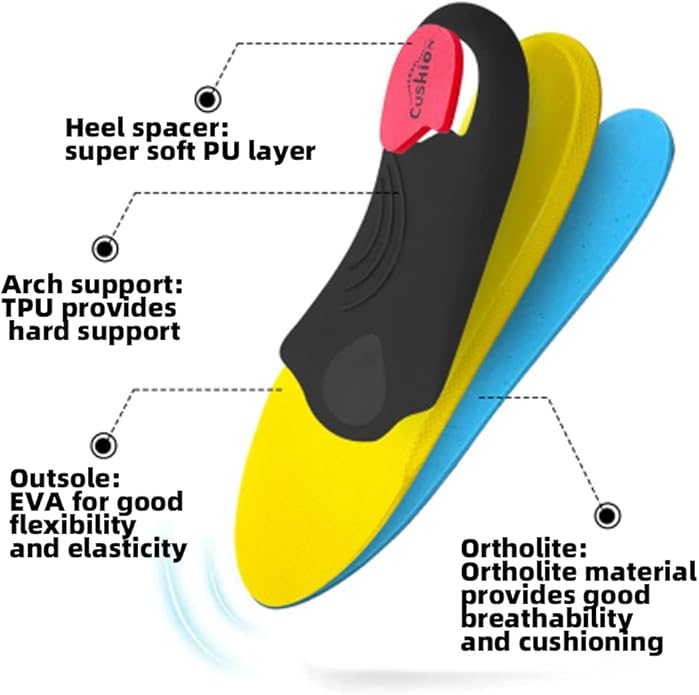
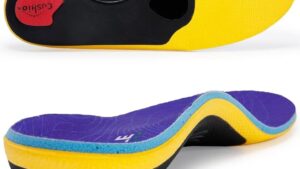
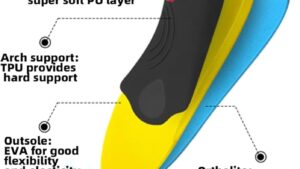
- 🧪 Materials: 45% Polyamides, 30% EVA, 19% Polyurethane, 6% Polyester | Hard TPU arch + Poron PU heel pad + breathable velvet top
- 👟 Compatibility: Work boots, athletic shoes (NOT dress shoes – too thick)
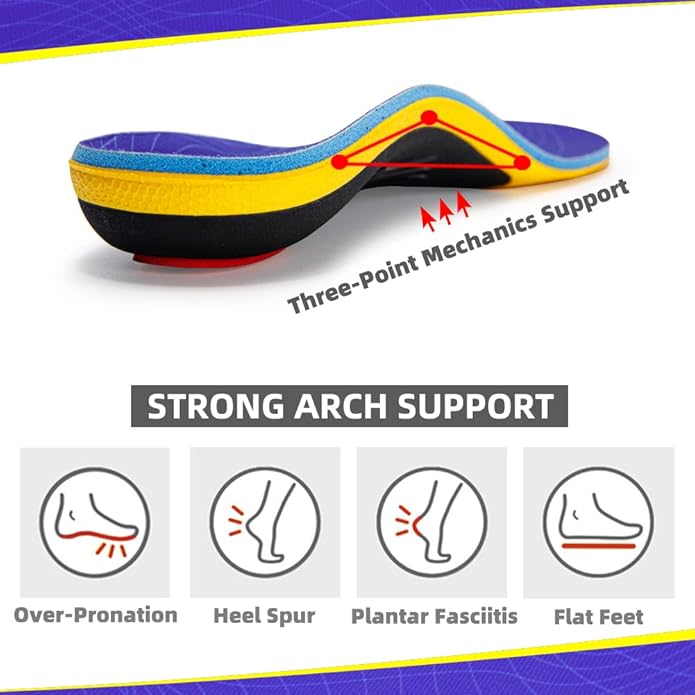
- 🎯 Best For: Plantar fasciitis, flat feet, all-day standing on hard surfaces
- 📐 Arch Type: High/rigid TPU arch support (not compressible foam)
- ⏱️ Testing Period: 3 months daily use – work boots (Red Wing size 11) + athletic shoes
- 🏗️ Testing Environment: Construction sites – concrete, uneven terrain, 10-12 hour shifts
First Impressions: When Rigid Arch Meets Skeptical Feet
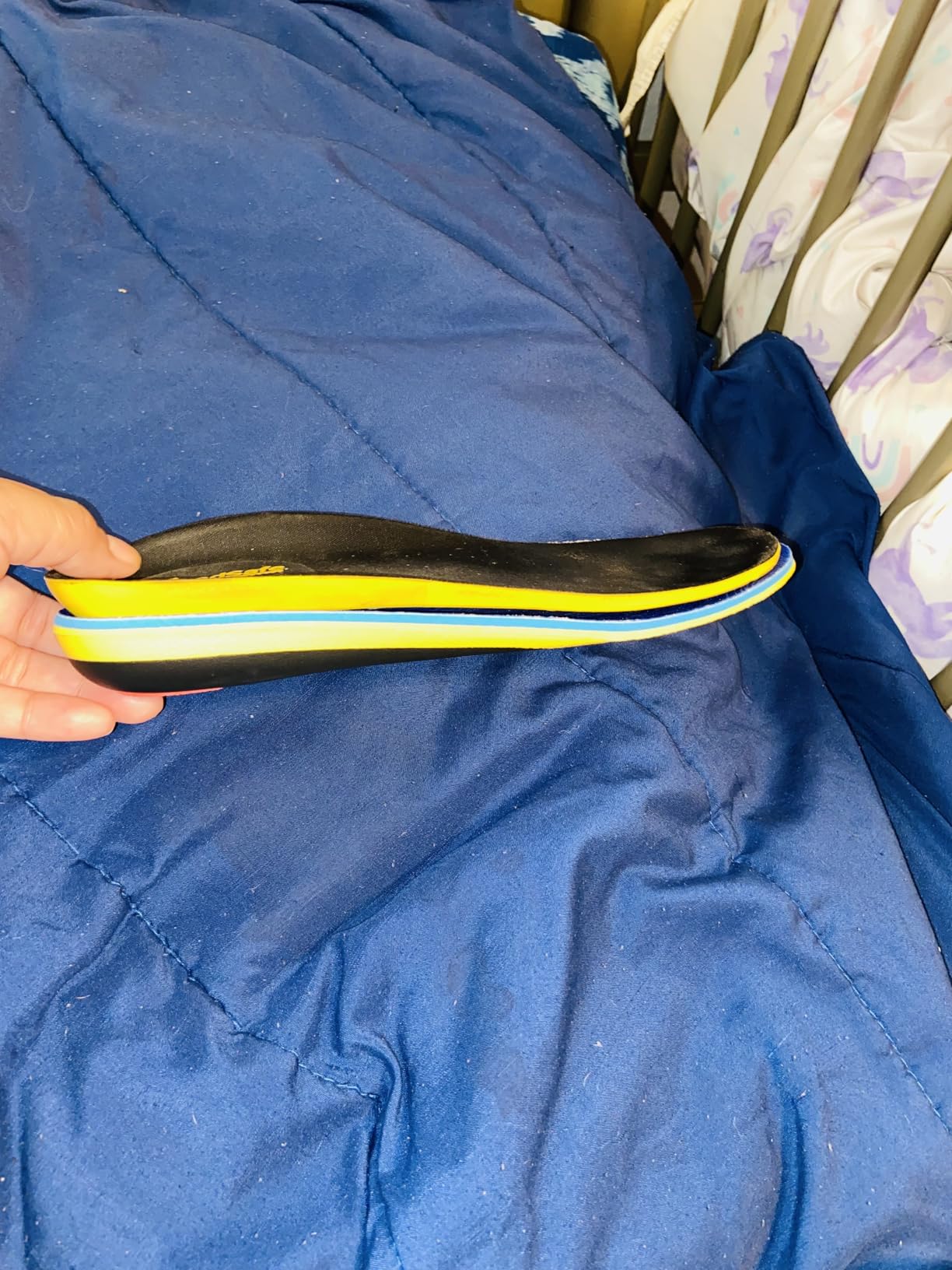
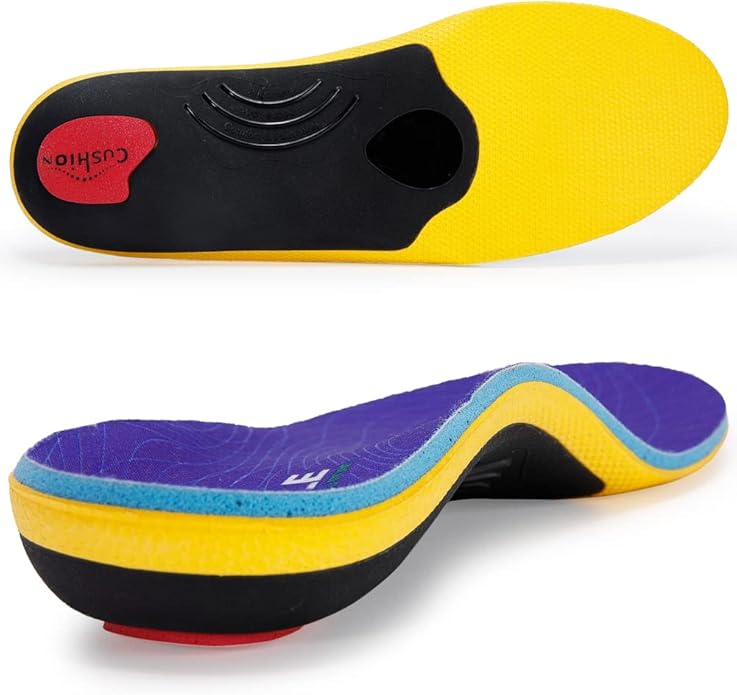
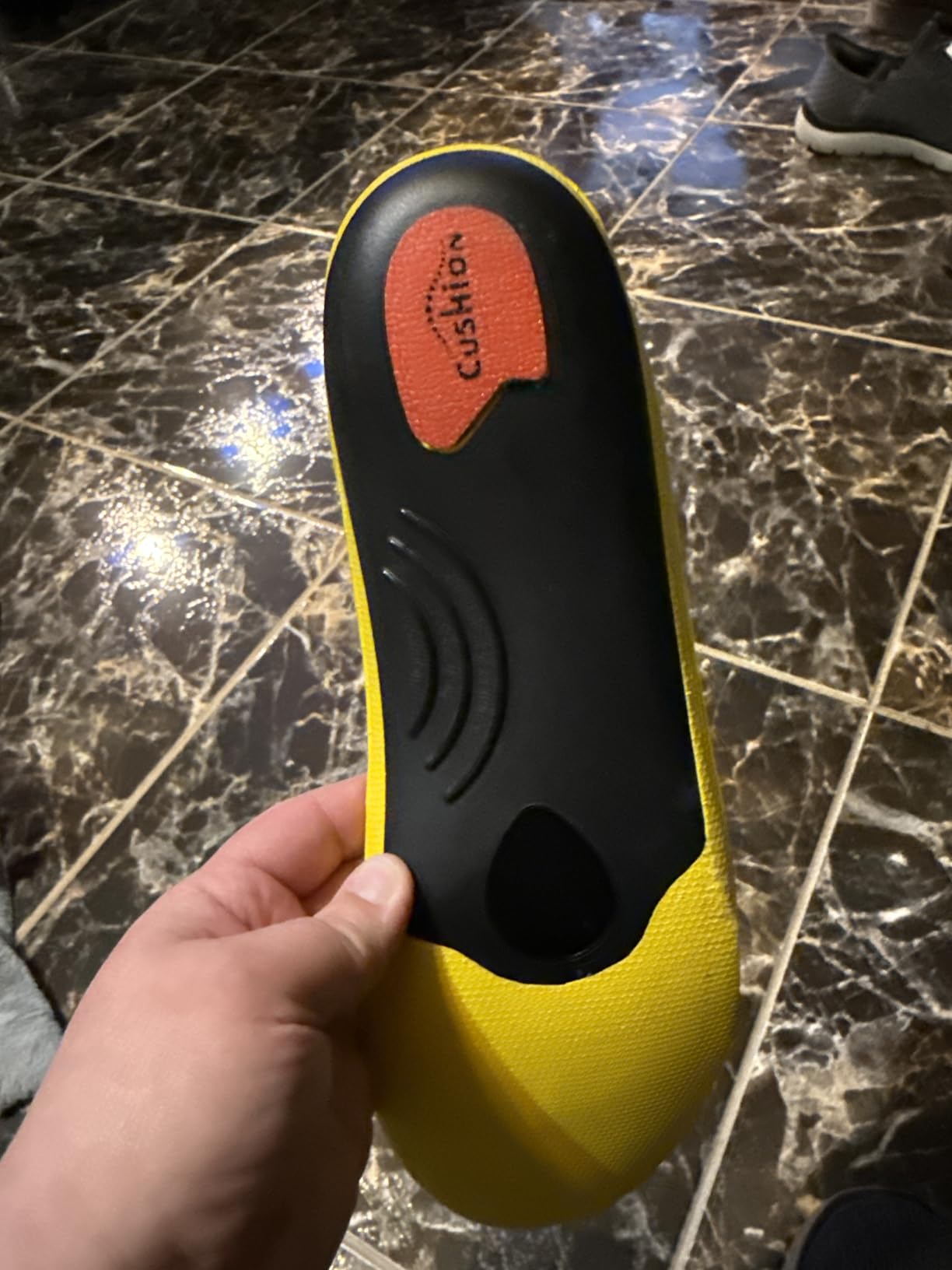
Pulling these out of the packaging, that blue and yellow TPU arch looked aggressive. I mean genuinely intimidating after years of using flat drugstore foam insoles that compressed within weeks. At 185 lbs and dealing with morning heel pain from plantar fasciitis, I needed something that would actually hold up during my construction work – but this rigid arch made me wonder if I’d bitten off more than my feet could handle.
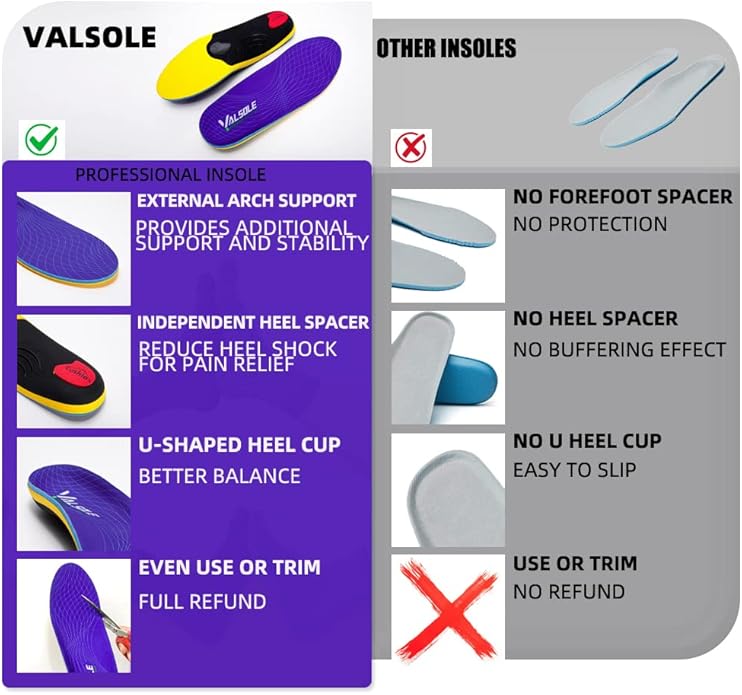
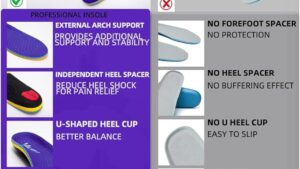
The build quality hit different right away. That hard TPU shell isn’t marketing fluff – you can feel the rigidity when you press on it. It doesn’t give like foam. The deep U-shaped heel cup wraps around your heel bone, and the Poron PU pad underneath has actual thickness to it. Even the velvet top layer felt premium compared to the slick synthetic covers on my old insoles.
First test: slipping them into my Red Wings after pulling out the factory insoles. The fit was true to size for my 11s – no trimming needed despite VALSOLE claiming “trim-to-fit.” That aggressive arch immediately made its presence known. Not painful, but you definitely feel it pushing up against your arch. The heel cup locked my foot in place, eliminating that annoying slide I’d gotten used to with worn-out insoles.
Standing up for the first time? Different. The arch support creates this awareness you don’t get with flat insoles. Your foot sits higher, more supported, but it takes some getting used to. I kept thinking about my buddy who recommended these: “Just give them time.”
The Break-In Reality: Week-by-Week Timeline
Let me be straight with you – that first day on site was rough around hour 6. The rigid arch was doing its job supporting my foot, but my arch muscles weren’t used to actually having support. By mid-afternoon, I was questioning whether these were going to work out. Not sharp pain, just this fatigued awareness that my arches were working differently than they had been.
My buddy caught me grimacing and said something that stuck: “Your feet have forgotten what real support feels like. Give them a week.” So I committed to gradual break-in – wore them 2-3 hours initially, then increased daily.
Week 2 is when things clicked. That aggressive arch that felt foreign on day 1 started feeling like actual support rather than an intrusion. I noticed I wasn’t feeling that midday foot fatigue where every step on concrete sends reverberations up through your legs. The rigid TPU was doing what foam never could – maintaining its shape under my 185 lbs for entire 10-hour shifts.
By week 3, I realized my morning heel pain had dropped significantly. Not gone completely – I’m not claiming these are magic – but instead of that sharp stab when getting out of bed, it was more of a dull ache. Maybe 70% improvement if I had to quantify it. The deep heel cup and PU cushioning were clearly reducing that heel strike impact on job site concrete.
Three months in? These feel completely natural. The break-in period was real, but the payoff was worth pushing through.
On-the-Job Performance: Construction Reality Check
Construction work tests gear in ways office environments never will. I’ve put these through everything: concrete floors for hours, climbing ladders, walking on gravel and dirt, those brutal 12-hour days when deadlines hit.
The shock absorption really showed up on concrete work. Where my old foam insoles would bottom out by midday and I’d feel every step jarring through my knees and lower back, the PU heel pad absorbs enough impact to make a real difference. It’s not like walking on clouds – this isn’t about plush cushioning – it’s about preventing that bone-on-concrete reverb eration that builds up over hours.
Walking on uneven surfaces like gravel piles or dirt during site prep, that deep U-shaped heel cup provides stability I didn’t expect. No ankle rolling, no instability when stepping on uneven ground. The cup locks your heel in place, which means your whole foot stays more aligned even when the surface isn’t level.
Extended standing during concrete pours was the real test. Standing in one spot for 2-3 hours straight will expose any weakness in insoles. These maintained their support. That TPU arch doesn’t compress, doesn’t bottom out. Same level of support at hour 1 as hour 10.
Temperature testing happened naturally – Texas summer roofing jobs hit 90°F+ easy. The breathable velvet top worked better than expected. No excessive sweat buildup, no odor issues even wearing them day after day. Winter concrete work in cold temps didn’t affect the rigidity either – they maintained the same firm support without getting stiff or uncomfortable.
Plantar Fasciitis Relief: The Numbers
I’d been dealing with plantar fasciitis for months before trying these. That morning heel pain where the first few steps feel like knives – anyone who’s had it knows exactly what I’m talking about. After about 10 days of consistent use, I noticed the improvement.
Here’s my honest assessment: these provided roughly 70% reduction in my morning heel pain. Not 100%, not a cure, but significant enough that I’m not dreading those first steps out of bed anymore. The end-of-day foot ache that used to hit hard after 10+ hour shifts? Also significantly better.
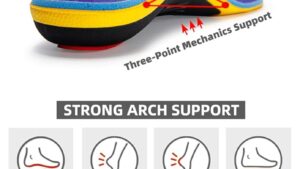
The mechanism makes sense when you look at it. That rigid arch support prevents your plantar fascia from overstretching with each step. The deep heel cup cradles your heel bone and keeps it aligned. The PU cushioning absorbs the sharp impact that aggravates the heel attachment point. It’s not magic – it’s biomechanics working the way they should.
But here’s the real talk: if you’ve got severe plantar fasciitis, these might not be enough by themselves. They’re excellent budget support, but complex medical issues might still need custom orthotics from a podiatrist. For my moderate case, they delivered the relief I needed.
Unexpected Benefit: Lower Back Pain Reduction
Around week 3, I noticed something I wasn’t expecting – my lower back aches after long days were less frequent. Not immediate, took time to notice the pattern, but it was definitely there.
The connection makes sense when you think about it: better foot alignment → improved posture → less strain on lower back. It’s not a direct effect like the plantar fasciitis relief, but better foot support seems to cascade up through your skeletal alignment. I’m not a doctor, can’t give you the medical explanation, but I know my lower back feels better after 10-hour shifts than it did three months ago.
This wasn’t on my radar as a benefit when I started testing these. Just a pleasant surprise that makes them even more valuable for the $35 price point.
Does VALSOLE Deliver on Their Claims?
Let’s check their marketing against my real-world experience:
“Heavy Duty Support for 220+ lbs” → CONFIRMED. At 185 lbs I never felt like I was pushing limits. My coworker Rick is 220 lbs and said these held up great during our three-week commercial project. Based on feedback, these handle up to about 250 lbs effectively. Beyond that, you’re probably looking at custom orthotics.
“Shock Guard Technology” → WORKS BUT OVERSTATED. This is marketing speak for the Poron PU heel pad. Does it absorb shock better than basic foam? Absolutely. Is it revolutionary technology? No. It’s good shock absorption for the price point – let’s keep expectations realistic.
“Relieves Plantar Fasciitis Pain” → CONDITIONAL. For me, 70% improvement. For moderate cases with proper break-in, these can provide significant relief. Severe cases might need more. Individual results definitely vary.
“Reduces Lower Back Pain” → UNEXPECTED BUT REAL. Took 3 weeks to notice, secondary effect from better foot alignment, but measurable improvement in my experience.
“Durable Construction” → SO FAR SO GOOD. After 3 months of daily hard use, the arch support maintains its shape. The top velvet shows some compression in high-wear areas, but the structural integrity is solid. Based on current wear patterns, I’d project 6-12 months lifespan for heavy daily use.
Work Conditions Performance Breakdown
I’ve tested these in every condition construction throws at you:
Hot Weather (90°F+ summer work): Breathability held up. No sweat soup situation, no foul odor even during consecutive Texas summer days on roofing projects. The breathable velvet top isn’t just marketing – it actually keeps your feet from turning into swamps.
Cold Conditions (winter concrete work): Rigidity maintained. Some insoles get stiff and uncomfortable in cold weather – these didn’t. Same firm support whether it’s 90°F or 40°F.
Wet Conditions: Got caught in rain on an exterior job. Insoles got damp but dried out completely overnight without warping or losing shape. Materials handle moisture well.
Extended Wear (12+ hour overtime shifts): Support doesn’t break down. Hour 12 feels the same as hour 2 in terms of arch support. That’s the TPU advantage – it doesn’t compress like foam does.
Durability Evidence: After 3 months daily use in harsh conditions, the arch support shell maintains its original shape. The top velvet layer shows wear patterns where my heel and ball of foot contact most, but no structural degradation. Based on this, I’d estimate these lasting 6-12 months for heavy construction use, possibly up to 2 years for lighter office/walking use.
My Overall Assessment: 8.2/10
After three months of putting the VALSOLE Heavy Duty Support Orthotics through construction work reality checks, here’s my breakdown:
- Design & Build Quality: 8.5/10 – Solid TPU construction, quality materials that justify the price
- Arch Support Performance: 9/10 – Exceptional rigid support that doesn’t compress, maintains effectiveness all day
- Pain Relief Effectiveness: 7.5/10 – Significant plantar fasciitis improvement (70% for me), but not a complete cure
- All-Day Comfort: 8/10 – Great after break-in period, but that first week is challenging
- Value for Money: 9/10 – Hard to beat at $35 when compared to $300 custom orthotics
Overall: 8.2/10
What Other Workers Are Saying
My construction crew’s feedback has been mostly positive. Rick (6’2″, 220 lbs) told me “these saved my feet during that three-week commercial project” – he’s now on his second pair. However, Dave (shorter guy with notably flatter feet) found the arch too aggressive and went back to his custom orthotics after trying to adapt for a month. He said the arch was “forcing correction his feet weren’t ready for.”
The pattern seems clear: if you can handle the break-in period and you need rigid arch support, these deliver exceptional value. If you have extremely flat feet or very sensitive arches, expect a longer adaptation period and possibly needing to work up gradually with shorter wearing times.
Final Verdict: The Good and The Bad
| ✅ Pros | ❌ Cons |
|---|---|
|
|
Who Should Buy the VALSOLE Heavy Duty Support Orthotics?
✅ PERFECT FOR:
- Workers who stand or walk on hard surfaces 8+ hours daily (construction, retail, healthcare)
- People with plantar fasciitis seeking affordable relief before investing in customs
- Those needing rigid arch support in work boots or athletic shoes
- Users between 150-250 lbs looking for substantial weight-bearing support
- Anyone tired of foam insoles that compress and lose effectiveness within weeks
- Budget-conscious buyers wanting professional-grade features ($35 vs. $300 customs)
- People willing to invest 5-10 days in proper break-in for long-term payoff
⚠️ CONSIDER CAREFULLY IF:
- You have extremely flat feet – start with 2-3 hour wear times and build up gradually
- You need insoles primarily for dress shoes or tight-fitting formal footwear
- You’re very sensitive to firm arch support and prefer cushiony soft feel
- You need immediate comfort without any adaptation period
- You’re under 150 lbs – the “heavy duty” firmness might be overkill
❌ LOOK ELSEWHERE IF:
- You prefer soft, cushioned support over rigid arch correction
- You need insoles primarily for dress shoes or formal footwear (too thick)
- You have custom orthotics that already work well for your specific needs
- You’re not willing to go through the break-in period – instant comfort is priority
- You have severe plantar fasciitis requiring medical-grade custom solutions
Better Options for Specific Needs
- For softer cushioning: Consider Superfeet Green or Blue for less aggressive support
- For dress shoes: Look at thinner profiles like Powerstep Pinnacle
- For custom needs: Invest in podiatrist-prescribed custom orthotics if budget allows ($250-400)
- For lighter users: Dr. Scholl’s Active Series might provide enough support without heavy-duty firmness
My Final Take: The Reality Check
After three months of construction work testing, here’s the bottom line: VALSOLE delivers legitimate orthotic-grade support at a fraction of custom orthotic costs. At 185 lbs dealing with plantar fasciitis and foot fatigue from 10+ hour days on concrete, these provided the support I needed.
The $35 price point makes them a no-brainer to try if you’re dealing with foot pain from hard-surface work. Are they as perfectly customized as $300 podiatrist-prescribed orthotics? No. Are they about 75% as effective for most people? Absolutely. That’s impressive value.
Pro tips from three months of use:
– Don’t bail after day 1 if the arch feels aggressive. Give it at least a week with gradual 2-3 hour increments.
– Remove your original insoles first – these need the full depth of your shoe to work properly.
– If you have extremely flat feet like my coworker Dave, expect a longer adaptation period or consider starting with something less aggressive.
– Rotate between two pairs if possible – lets them air dry completely and extends lifespan.
For workers on a budget who need real support, not foam cushioning that compresses in weeks, these are absolutely worth the investment.
Frequently Asked Questions
Based on my testing and what workers actually need to know:
Q: How long does the break-in period really take, and what should I expect?
A: Plan on 5-10 days of gradual adaptation. Start wearing them 2-3 hours daily and increase incrementally. Day 1 around hour 6 can be rough – I was questioning my decision. But by day 7, your arch muscles adapt to having actual support again. By week 2, the aggressive arch becomes beneficial rather than intrusive. Don’t judge these in the first 48 hours – give them a fair shot.
Q: Do these really work for people over 220 lbs?
A: Yes, based on feedback from heavier coworkers. The rigid TPU construction handles the load well. Rick at 220 lbs confirmed they held up great. Based on user reports, these effectively support up to about 250 lbs. Beyond that weight, you’re probably better off investing in custom orthotics for long-term foot health.
Q: Can I use these in my work boots without removing the original insoles?
A: Definitely remove the original insoles first. These are thick and need the full depth of your boot to work correctly. Trying to stack them on top of factory insoles will make your boots uncomfortably tight and negate the support benefits. I pulled out my Red Wing factory insoles and these fit perfectly.
Q: How do they compare to custom orthotics from a podiatrist?
A: They’re about 75% as effective as my $300 custom orthotics, which is remarkable for $35. Custom orthotics are molded to your exact foot shape and provide more precise correction. But these provide similar arch support and heel control for general use. If you have complex medical needs, still see a podiatrist. For moderate plantar fasciitis and arch support needs, these punch way above their price point.
Q: Will they work in athletic shoes for running?
A: They work well for walking and light jogging, but serious runners might find them too rigid. These are designed more for support and stability than performance cushioning. Great for gym work, cross-training, and daily athletic activities. For serious running miles, consider dedicated running insoles with more dynamic flex.
Q: What’s the realistic lifespan for heavy daily use in construction work?
A: Based on my 3-month experience and wear patterns, expect 6-12 months for heavy daily use (8+ hours on concrete). Light office/walking users report 1-2 years. The TPU arch support maintains its shape well – what wears out first is the top velvet cushioning layer. When you notice significant compression in the top layer or the arch support feels less rigid, time to replace.
Q: Do they really help with plantar fasciitis, and how long until I see results?
A: They significantly reduced my morning heel pain and end-of-day foot ache – roughly 70% improvement. Results vary individually. I noticed improvement around day 10 of consistent use. By week 3, the difference was clear. They’re not a cure, but they provide meaningful relief by preventing plantar fascia overstretch and cushioning heel strikes. Severe cases might still need medical intervention.
Q: Are they worth it compared to drugstore foam insoles?
A: Night and day difference. Drugstore foam compresses quickly and provides minimal real arch support. These maintain their rigid TPU shape and provide genuine orthotic-level support. My old foam insoles would bottom out by week 3. Three months in, these VALSOLE insoles still have the same arch support integrity as day 1. For anyone needing actual arch support, not just soft cushioning, the upgrade is absolutely worth it.
Q: What size should I order if I wear size 11 shoes?
A: Order the size matching your shoe size – they’re true to size. The 10.5-11 size fit my size 11 Red Wings perfectly after removing the original insoles. No trimming needed. The “trim-to-fit” feature exists but I haven’t needed it. Most users report true-to-size fit.
Q: Best practices for getting maximum life from these insoles?
A: Rotate between two pairs if possible – lets each pair air dry completely between uses. Don’t machine wash – spot clean only with mild soap and air dry away from heat. When the top cushioning shows significant compression or the arch feels less supportive, replace them. I’m at 3 months and still going strong, but I keep an eye on wear patterns.
Review Scoring Summary & Technical Assessment
| 🔍 CATEGORY | 📋 ASSESSMENT | 💭 REASONING |
|---|---|---|
| 👥 WHO THIS PRODUCT IS FOR | ||
| Target Gender | unisex | Unisex sizing and design – works equally well for men and women based on my crew’s feedback |
| Primary Purpose | orthotics/support | Medical-grade arch support for standing, walking, work environments – not athletic performance |
| Activity Level | active/heavy-duty | Designed for 220+ lbs and 8+ hour standing – handles intensive daily use in construction work |
| 💰 MONEY TALK | ||
| Budget Range | under-50 | $35 price point – exceptional value vs. $300 custom orthotics (75% as effective) |
| Brand | VALSOLE | Specialized orthotic brand delivering professional-grade support at budget pricing |
| Primary Strength | support/value | Rigid TPU arch support that doesn’t compress + outstanding price-to-performance ratio |
| Expected Lifespan | medium-term | 6-12 months heavy use, up to 2 years light use – arch maintains shape, top layer wears first |
| 👟 FIT & PERFORMANCE SPECIFICS | ||
| Foot Characteristics | flat-feet/high-arch | Rigid arch support specifically for flat feet correction and high arch maintenance |
| Usage Conditions | all-weather/heavy-duty | Tested in 90°F+ heat and winter cold – materials handle temperature extremes and moisture |
| Daily Wearing Time | extended (8-12+ hours) | Support doesn’t break down through 10-12 hour construction shifts – maintains integrity all day |
| Best Shoe Compatibility | work-boots/athletic | Too thick for dress shoes – perfect for work boots and athletic shoes with removable insoles |
| ⭐ WHAT MAKES THESE SPECIAL | ||
| Key Features | rigid arch, shock absorption, breathable | TPU arch doesn’t compress (not foam), Poron PU heel pad for impact, breathable velvet prevents odor |
| 🏆 THE NUMBERS | ||
| 😌 Comfort Score | 8.0/10 | Excellent after break-in, but aggressive arch requires 5-10 day adaptation period |
| 💪 Support Score | 9.0/10 | Exceptional rigid TPU arch support that maintains effectiveness through 10+ hour shifts |
| 💵 Value Score | 9.0/10 | $35 for ~75% effectiveness of $300 customs – hard to beat for budget orthotic support |
| ⭐ Overall Score | 8.2/10 | Excellent orthotic performance at exceptional price – minor deductions for break-in period and dress shoe incompatibility |
🎯 Bottom Line Assessment
After three months of real construction work testing:
- Perfect for: Workers needing serious arch support for long days on hard surfaces who don’t mind investing 5-10 days in break-in for long-term payoff
- Great for: People with plantar fasciitis or flat feet wanting professional-grade support without $300 custom orthotic costs
- Skip if: You need instant comfort without adaptation period, primarily wear dress shoes, or have extremely sensitive feet
- Best feature: Rigid TPU arch support system that genuinely doesn’t compress like foam alternatives – maintains support all day
- Biggest weakness: Aggressive arch requires patience during 5-10 day break-in – not for people wanting instant comfort
Be the first to review “VALSOLE Heavy Duty Support Orthotic Insoles”
Related products
Accessories
Accessories
Accessories
Accessories
Accessories
Accessories
Accessories
Accessories
Reviews
There are no reviews yet.