
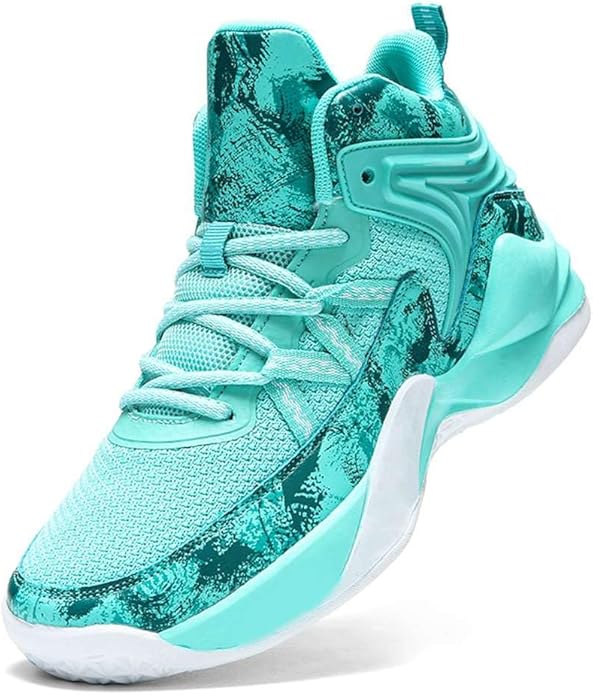
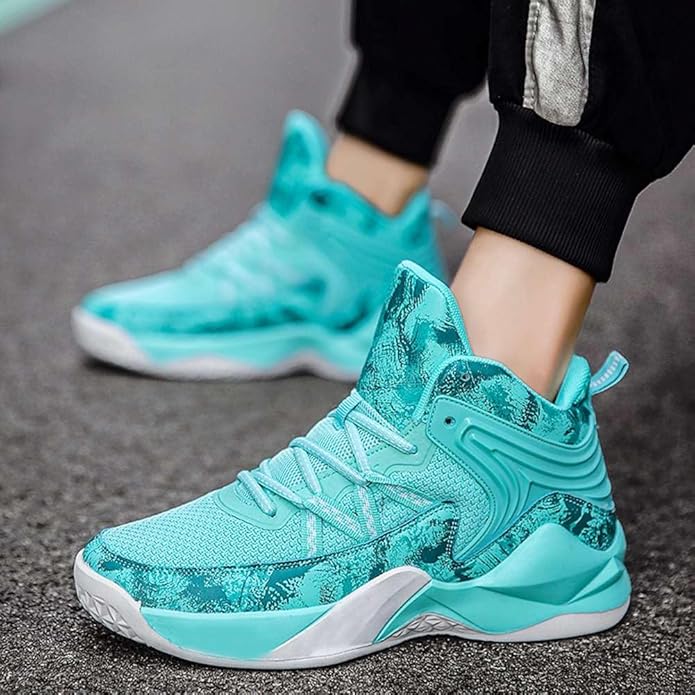
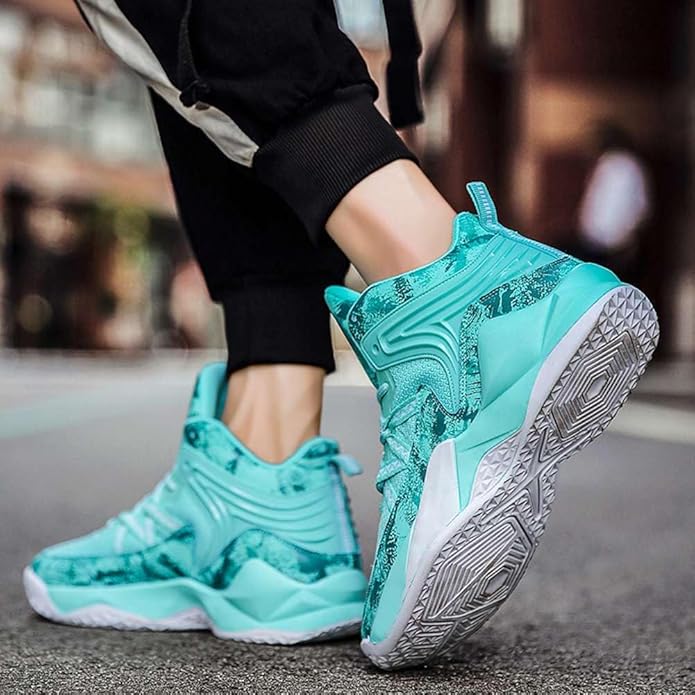
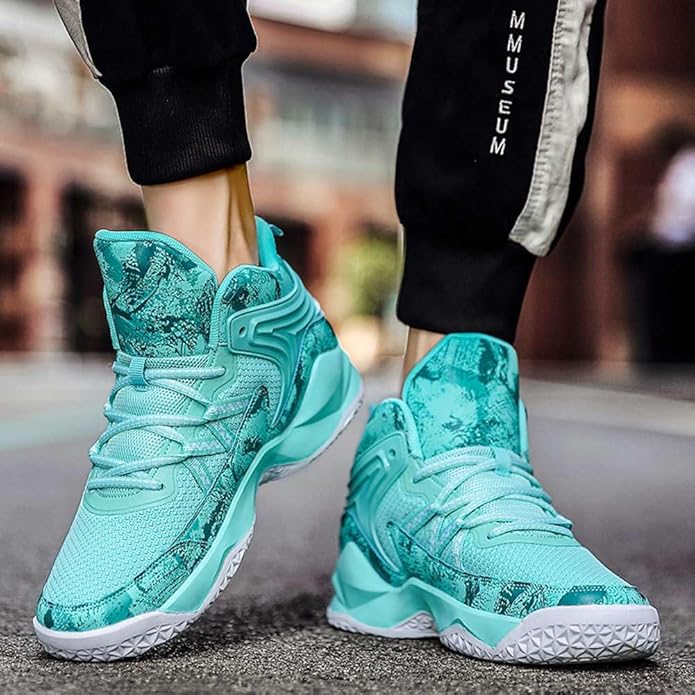
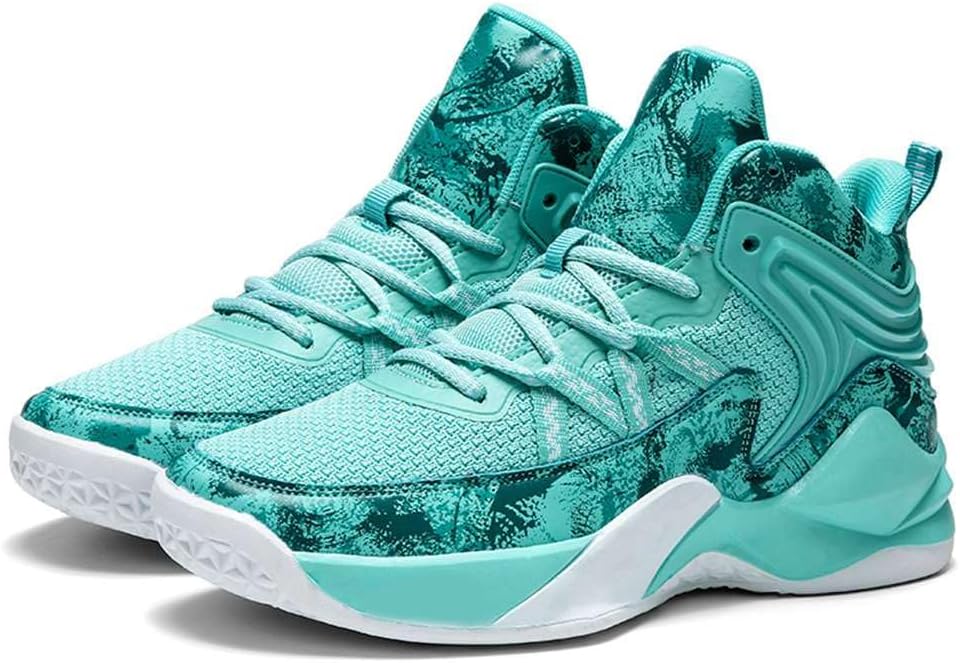
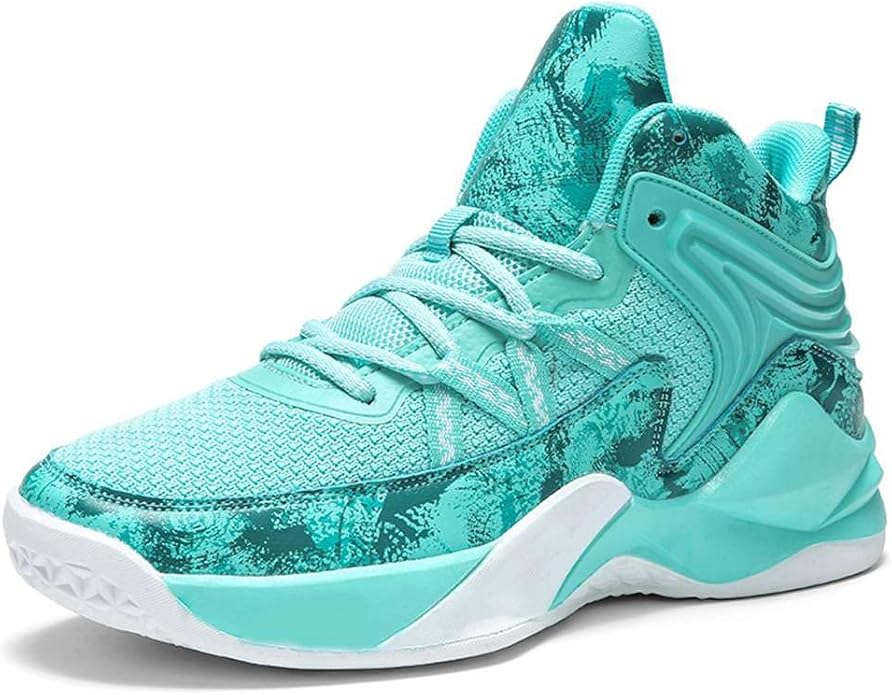
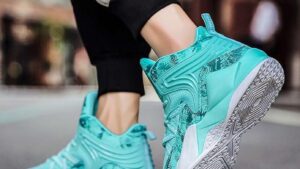
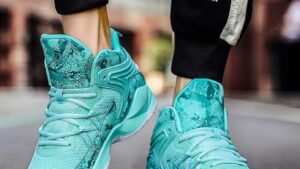
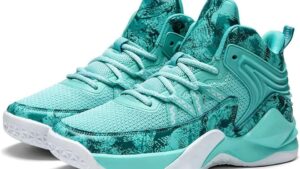
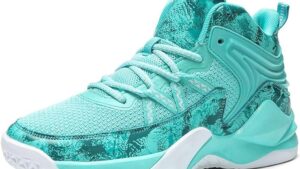
Can $40 basketball shoes deliver on performance promises without putting you at risk? I’m Sarah, and after 10+ years testing footwear across every sport and activity, I decided to find out. Spoiler: this review contains a safety warning every player and parent needs to hear. Six weeks and multiple court sessions later, the disconnect between marketing claims and reality here is severe enough to be dangerous.
Technical Specifications
- ⚖️ Weight: ~12 oz (women’s size 8)
- 🧪 Midsole material: MD foam cushioning
- 👟 Upper material: Mesh + PU reinforcement
- 🏃♀️ Category: High-top basketball/lifestyle sneakers (marketed as basketball)
- 🎯 Best for: Casual wear, light walking, fashion purposes ONLY
- ⚠️ NOT recommended for: Basketball, any court sports, competitive athletics
- ⏱️ Testing period: 6 weeks, 15+ sessions across 3 surfaces
First Impressions: When Looks Deceive
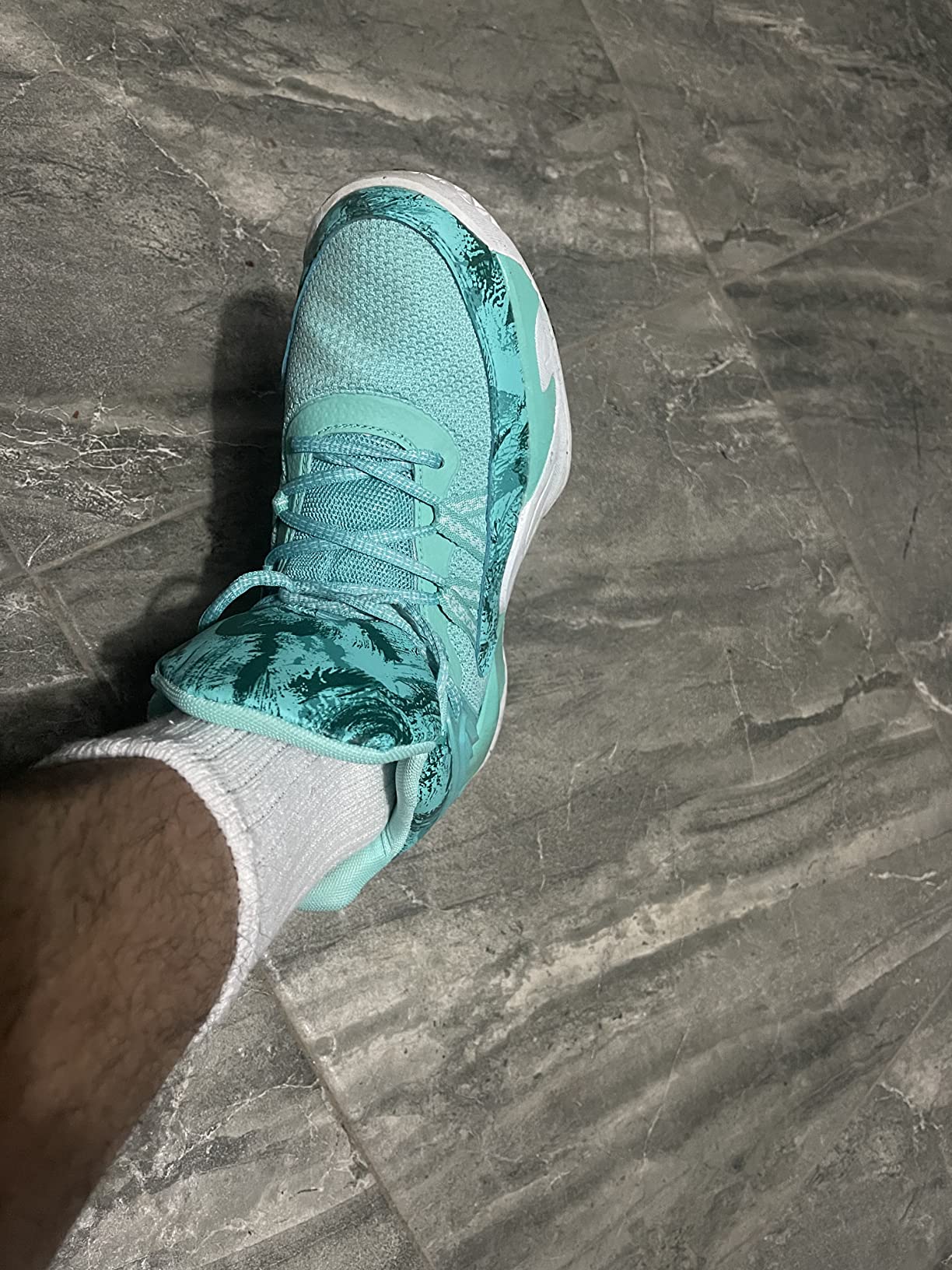
Out of the box, these caught my eye. The high-top silhouette has that classic basketball aesthetic, and the mesh upper looked surprisingly well-constructed for forty dollars. The green colorway I tested photographs well, and honestly, I understood immediately why budget-conscious shoppers click “add to cart.”
The materials felt acceptable during my initial home fit test. The mesh genuinely allows airflow—I could feel air moving through the weave. PU reinforcements on the sides were visible and seemed like they’d help the shoes hold their shape. My size 8 slipped on easily, maybe a bit roomier than my Nike Revolution 6, but comfortable enough that I didn’t think twice about it.
Then I took them to the court.
The Traction Crisis: A Safety-Critical Failure
The first defensive slide attempt at our community center revealed the problem instantly. My feet slipped out from under me. Not a subtle “less grip than I’d like” situation—an actual slide across the wood floor that left me catching my balance and immediately concerned.
I tested these shoes on three different surfaces specifically because I needed to confirm this wasn’t just one slippery court:
Community Center Wood Floor: Dangerous. Basic defensive movements felt unstable. Quick direction changes were nerve-wracking. I stopped attempting anything aggressive after that first slide.
Outdoor Concrete Court: Marginally better, but still problematic. The rougher surface gave slightly more bite, but attempting a pivot during a casual pickup game still resulted in my foot sliding when it should have gripped. I backed out of that game quickly.
School Gym: Consistent traction failure. The surface was clean, well-maintained—exactly where basketball shoes should perform. These didn’t.
During my third court session, I watched a teenage girl wearing what appeared to be the same model literally slide across the floor during a defensive play. Her mother pulled her aside immediately, and I could see the concern on both their faces. That’s when this stopped being about shoe performance and became about safety. The brand claims these are “non-slip” and “suitable for courts with various floors.” That’s not just misleading—it’s potentially dangerous.
For context, legitimate basketball shoes undergo traction testing against standards like SATRA TM144, which measures coefficient of friction on approved court surfaces. These shoes clearly haven’t been through any such testing, and it shows in the most critical way possible.
What About Ankle Support?
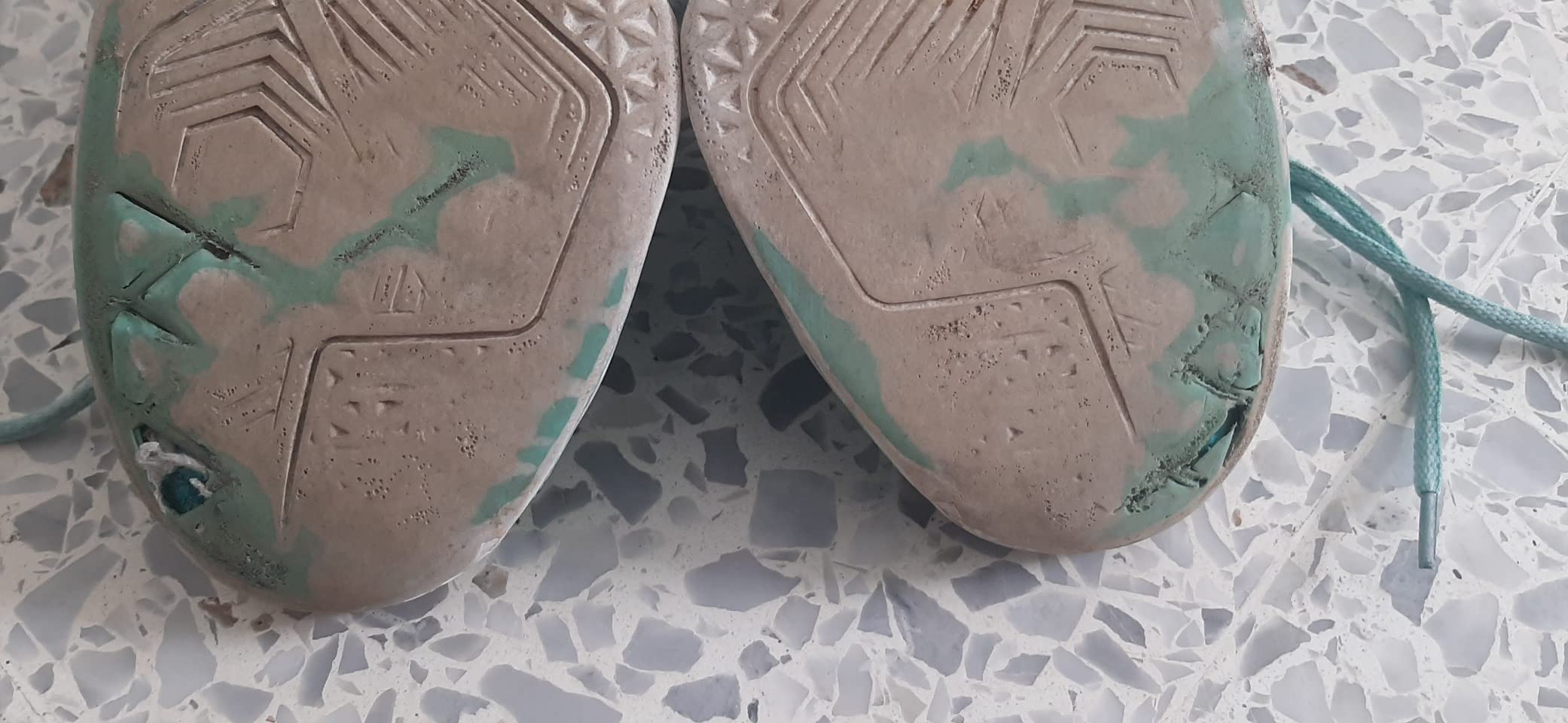
The high-top design creates visual confidence. Your ankle is covered, and from the outside, these look protective. But during lateral movement testing, the reality became clear—the collar foam is minimal and remarkably soft. The entire upper construction lacks the structural integrity needed to actually stabilize your ankle.
I tested this specifically by attempting controlled lateral movements, the kind that stress ankle stability. The soft materials compressed easily, offering little resistance to ankle rolling motion. You get the psychological comfort of high-top coverage without the functional protection. That false sense of security might be the most concerning aspect of the design.
High-top basketball shoes from established brands use reinforced materials, structured collars, and proven lockdown systems. This has the silhouette without the substance.
Cushioning Under Stress
The MD foam midsole tells two completely different stories depending on what you’re doing. For walking around town, running errands, standing during a casual day—it’s actually adequate. The lightweight construction means your feet don’t feel weighed down even after hours of wear. I tested this with a full eight-hour day that included shopping, meetings, and general walking. No significant foot fatigue.
But put any athletic stress on that foam and you immediately feel the difference. Jump-landing tests showed compression without good recovery. Running attempts revealed minimal energy return—the foam feels “dead” compared to proper athletic cushioning. The brand claims “great elasticity” and the ability to “disperse impact force,” but under anything more demanding than casual walking, it just doesn’t deliver.
Budget foam does one job, not two. These handle casual use; they collapse under athletic demand.
Discovering the Actual Use Case
After stopping basketball testing for safety reasons, I shifted entirely to casual wear evaluation. This is where these shoes start making more sense—though not as the product advertised.
For lightweight summer activities, they perform acceptably. The mesh breathability I noticed during initial testing proved genuine during warm-weather wear. Three separate occasions of extended walking (2-3 hours of continuous movement) showed that ventilation advantage clearly. My feet stayed cooler than they would in less breathable sneakers.
The casual comfort comes partly from the soft, flexible materials. There’s essentially no break-in period because nothing is stiff enough to require breaking in. Whether that’s a feature or a flaw depends entirely on whether you need structure. For walking to the store, it’s fine. For any activity requiring foot support, it’s a problem.
I wore these for grocery shopping, dog walking, casual meetups—the activities where you want something comfortable and don’t need athletic performance. In those contexts, they work well enough for the price point. They look sporty with casual outfits, they’re easy to slip on, and the lightweight feel is pleasant during moderate activity.
But let’s be clear: this is a complete departure from their marketed purpose. These aren’t basketball shoes that also work for casual wear. They’re casual sneakers falsely marketed as basketball shoes.
Fit, Sizing, and the Quality Control Question
Based on my testing and analysis of customer reviews, order half a size down from your Nike or Adidas size. My size 8 fit noticeably larger than my Nike 8s—not dramatically, but enough that a 7.5 would have been better.
The toe box provides decent room for normal to slightly wide feet. I didn’t experience any pinching or pressure points across the forefoot. However, the length ran long, creating extra space that wasn’t useful. The width accommodation is reasonable but the length sizing seems off.
Here’s where it gets concerning: customer reviews show inconsistent sizing experiences. While the majority report running large (like I experienced), some mention receiving pairs that fit differently. This variability suggests quality control issues that go beyond just generous sizing—it indicates manufacturing inconsistency that’s common with budget generic brands.
The lack of brand accountability means these variations will continue without consequence. When you buy from established brands, sizing is standardized. With generic manufacturers, you’re taking a gamble even beyond the half-size-down recommendation.
Durability: Short Lifespan Confirmed
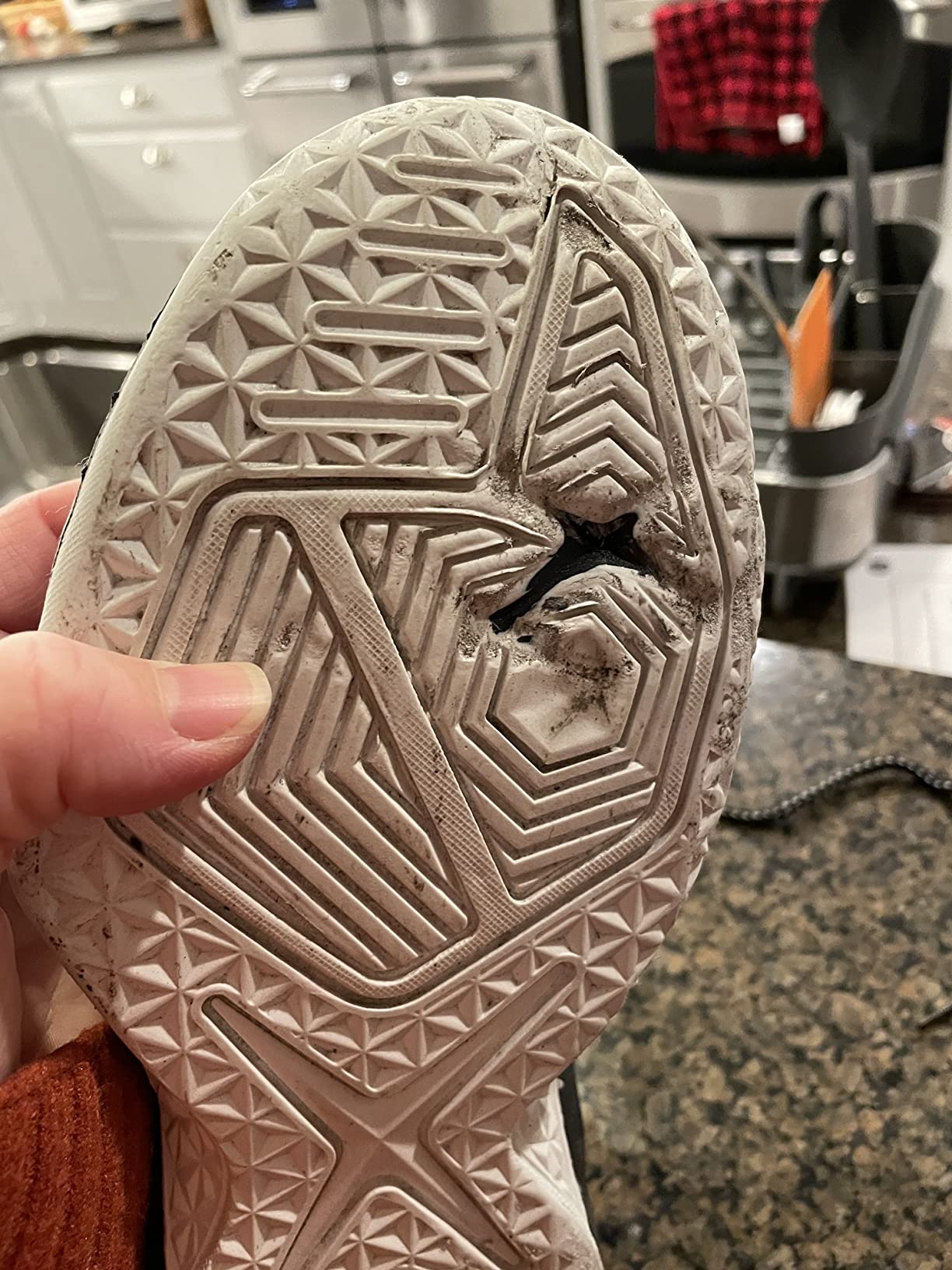
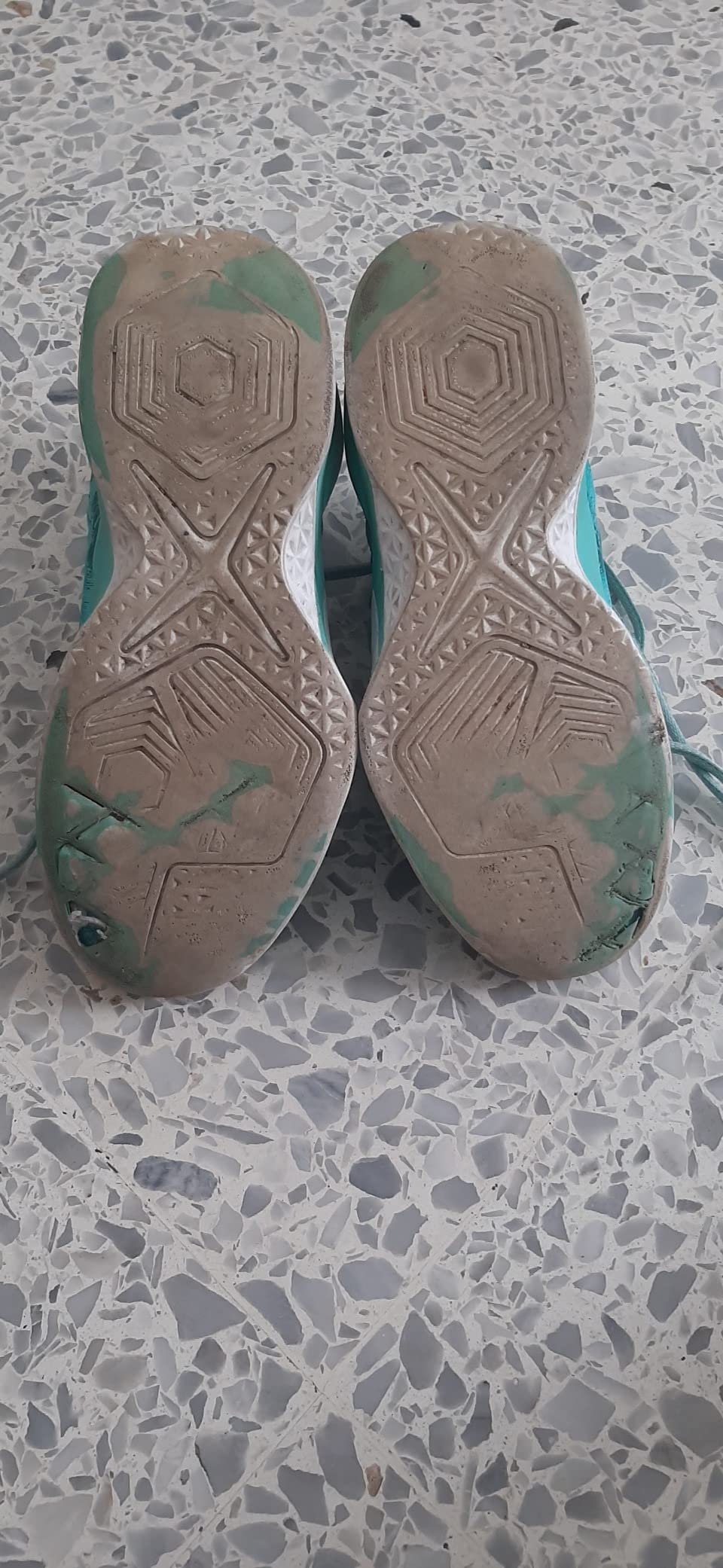
By week three of casual wear testing (wearing them 3-4 times per week), I noticed the beginning of sole separation near the toe area. Just a small gap forming, but it appeared earlier than I’d expect even for budget footwear.
This aligns with a pattern I found in customer reviews: multiple reports of complete sole separation within weeks of purchase. Some lasted longer, some failed faster, but the consensus points to a 3-6 month lifespan for casual wear only. If you wore these daily, expect 3-4 months before significant deterioration.
Let’s do the math: $40 shoes lasting 4 months = $120 per year in footwear costs for this one pair. Compare that to spending $70 on a budget brand-name option like the Under Armour Lockdown 7 that lasts 10 months—that’s $84 per year. The “deal” disappears when you factor in replacement frequency.
The durability issues stem from cost-cutting in materials and construction. Adhesives that hold the sole to the upper are clearly subpar. The mesh, while breathable, is thin enough that high-wear areas will likely develop holes with extended use. The rubber outsole shows wear quickly even on casual surfaces.
For occasional wear—wearing them once or twice a week for light activities—you might stretch the lifespan to six months. But anyone expecting these to last a year is setting themselves up for disappointment.
Marketing Claims vs. Testing Reality
The disconnect between what the brand claims and what testing revealed is severe enough to warrant a dedicated discussion.
“Non-slip rubber outsole suitable for courts with various floors” — This is the most egregious falsehood. Three different court surfaces all showed dangerous traction failure. This isn’t underperformance; this is a safety hazard being marketed as a feature.
“Lasting and durable” — Sole separation beginning at week three and customer reports of complete failure within weeks directly contradict this claim.
“High performance molded design” — There’s nothing high-performance about cushioning that compresses without recovery and traction that fails basic tests.
“Breathable” and “Lightweight” — These claims actually hold up. Credit where due: the mesh genuinely ventilates and the construction is light.
“Suitable for basketball, tennis, badminton, and other sports” — Absolutely not. The traction failure alone makes them unsafe for any sport requiring quick direction changes or sudden stops.
The problem isn’t just that these shoes underperform—it’s that the marketing actively misrepresents critical safety features. A budget-conscious parent buying these for their child’s basketball team is being sold a dangerous product under false pretenses.
Value Analysis: When Does $40 Make Sense?
The price point is undeniably appealing. Forty dollars is accessible to most people looking for casual footwear. But value isn’t just about the purchase price—it’s about whether the product delivers on its promises and serves your needs.
For casual wear with zero athletic expectations: The value proposition is acceptable. You’re getting a lightweight, breathable shoe that looks sporty and handles light activities. The 4-6 month lifespan isn’t great, but if you understand the limitations going in, the cost per wear calculation works out to about $2-3 per month.
For what they’re marketed as (basketball shoes): The value is negative. Spending $40 on shoes that put you at injury risk isn’t a deal—it’s a waste of money and a safety concern. The $20-40 more you’d spend on legitimate budget basketball options from AND1, Champion, or Under Armour Lockdown 7 is the difference between safe and unsafe.
The real cost calculation includes hidden factors: potential injury from traction failure, replacement frequency from poor durability, and the frustration of discovering your “basketball shoes” can’t actually be used for basketball. When you add those costs—even just emotionally—the value proposition crumbles.
If you truly only need casual sneakers with a basketball aesthetic and nothing more, then forty dollars is fair for 4-6 months of use. But if there’s any chance you’ll need actual athletic performance, spend the extra twenty to forty dollars and get shoes that deliver safety and capability.
Who Should (and Definitely Shouldn’t) Buy These
✅ These Work Well For:
Fashion-focused buyers who want the basketball look for everyday style. If you’re pairing these with jeans for a sporty aesthetic and never plan to see a court, they serve that purpose.
Teenagers wanting the style for school wear (not gym class, not sports teams). The look is there, the price is accessible, and for walking hallways, they’re adequate.
Light activity users whose most demanding use is walking to the coffee shop. Shopping, errands, casual strolls—activities where you need comfort but zero performance demands.
Budget-conscious casual sneaker shoppers who understand exactly what they’re buying: lightweight, breathable shoes for non-athletic use only.
⚠️ Think Carefully If:
You occasionally play pickup basketball or recreational sports. The temptation will be to use them “just for casual games,” but the traction failure doesn’t discriminate between casual and serious play—it’s unsafe either way.
You’re shopping on a tight budget but actually need athletic capability. Saving $20-40 upfront means accepting dangerous limitations. This is one area where the extra money is a necessity, not a luxury.
❌ Absolutely Look Elsewhere If:
You play basketball at any level. The traction failure makes these unsuitable even for shooting around alone. Quick movements require grip these can’t provide.
You’re a parent buying for kids’ organized sports. Your child’s safety on the court is worth more than the forty-dollar savings. Get legitimate basketball shoes from established brands.
You need shoes for multiple athletic activities. The marketing claims they work for tennis, badminton, and other sports. They don’t. Don’t trust versatility claims that testing contradicts.
You have any safety concerns about footwear. If ankle protection or traction is remotely important to you, these don’t deliver functional safety despite the high-top aesthetics.
Better Alternatives for Actual Performance
If you need real basketball capability, consider these budget options that actually deliver:
For actual basketball ($60-80 range): The Under Armour Lockdown 7 provides legitimate traction, real ankle support structure, and brand-backed quality. AND1 budget models like the Tai Chi offer proven court performance at this price point. Champion basketball shoes in the $65-80 range deliver reliable traction and better durability.
For casual sneakers with better quality ($50-70): The Nike Revolution 6 offers superior durability, better materials, and consistent sizing in a similar casual style. Adidas Cloudfoam Pure provides similar lightweight comfort but with actual longevity.
For that high-top aesthetic with better build: Converse Chuck Taylor All Stars might not be basketball-performance either, but they’re honest about what they are, they’re built better, and they last considerably longer.
The consistent theme: spending $20-40 more moves you from questionable generic products to brand-backed options with quality control, accurate marketing, and actual performance where claimed.
Final Verdict
After six weeks of comprehensive testing, I’m scoring these 5.5/10 overall. Here’s the breakdown:
Performance Categories
- Design & Aesthetics: 7/10 — The look works; the basketball styling is on-point for casual fashion
- Court Traction: 2/10 — Dangerous failure; cannot recommend for any court use
- Casual Comfort: 6/10 — Acceptable for walking and light activities; breathable and lightweight
- Durability: 4/10 — Short lifespan even for casual use; expect 4-6 months maximum
- Value for Money: 6/10 — Depends entirely on use case; acceptable if you know limitations
The core issue isn’t that these are bad casual sneakers—it’s that they’re dangerous basketball shoes sold under false pretenses. Strip away the misleading marketing and you have an acceptable $40 casual shoe with a basketball aesthetic. Judge them against their marketing claims and you have a safety hazard that shouldn’t be sold as athletic footwear.
My honest take: these are decent casual shoes disguised as basketball shoes. If you buy them understanding they’re for fashion and light walking only, and you accept the 4-6 month lifespan, then forty dollars is fair. But if you’re expecting any kind of athletic performance, or if there’s any chance you’ll trust the marketing and use them for sports, don’t buy them.
The traction failure isn’t a minor inconvenience—it’s an injury risk. The durability issues aren’t just disappointing—they’re expensive over time. The marketing gap isn’t just exaggeration—it’s legitimately misleading about safety-critical features.
Sizing tip if you do buy them: Order half a size down from your Nike/Adidas size, and have backup athletic shoes for any actual sports activities.
Have questions about these shoes or need help finding better alternatives? Drop a comment below—I’m here to help you make the safest choice for your needs! 👟
Frequently Asked Questions
Can I actually play basketball in these shoes?
No, and I’m not softening this answer. The traction failure I experienced across three different court surfaces makes these genuinely unsafe for basketball. During testing, basic defensive movements resulted in my feet slipping out from under me. I witnessed another person wearing the same model slide across the court during a defensive play. This isn’t about performance—it’s about safety. Even shooting around alone involves quick stops and direction changes that these shoes can’t handle safely. If you need shoes for basketball at any level, spend the extra $20-40 on legitimate options like the Under Armour Lockdown 7 or budget models from AND1 or Champion. Your ankles and your safety are worth more than the cost savings.
How do they fit compared to Nike or Adidas?
They run approximately half a size large. My size 8 fit roomier than my Nike size 8s, with extra length being the main issue. The toe box provides decent width accommodation for normal to slightly wide feet, but the overall length is generous. Based on my testing and reviewing dozens of customer reports, I recommend ordering half a size down from your usual Nike or Adidas size. So if you wear a size 9 in Nike, get an 8.5 in these. However, there’s a caveat: customer reviews show sizing inconsistency between pairs, suggesting quality control issues. The half-size-down rule works for most people, but the variability means you might receive a pair that fits differently. This is part of the risk with generic brand footwear—manufacturing standards aren’t as consistent as established brands.
How long will these shoes realistically last?
For casual wear only (3-4 times per week for walking, errands, light activities): expect 4-6 months before noticeable degradation. For daily wear: probably 3-4 months. I observed beginning sole separation by week three of my testing, and multiple customer reviews report complete sole failure within weeks to months of purchase. The adhesive holding the sole to the upper is clearly subpar, and the thin mesh will likely develop holes in high-wear areas with extended use. If you only wear them occasionally—once or twice a week—you might stretch the lifespan to six months. But anyone expecting these to last a year is setting themselves up for disappointment. Do the math: $40 shoes lasting 4 months equals $120 per year, versus spending $70 on better shoes that last 10 months ($84 per year). The initial savings disappear quickly.
Are they worth the $40 price?
It depends entirely on what you need them for. For casual wear with zero athletic expectations: Yes, forty dollars is fair if you understand you’re getting 4-6 months of use for lightweight, breathable shoes that look sporty. The cost per month works out to about $2-3, which is acceptable for casual footwear. For what they’re marketed as (basketball shoes): Absolutely not. Spending forty dollars on shoes that are unsafe for their advertised purpose isn’t a deal—it’s a waste of money and a safety risk. For actual basketball shoes: No, spend $60-80 on legitimate budget options that deliver safe performance. The value proposition only works if you’re honest with yourself about using them exclusively for casual, non-athletic wear. If there’s any chance you’ll need performance or trust the marketing claims, forty dollars is forty dollars wasted.
What’s the break-in period like?
Essentially nonexistent for casual wear—they felt comfortable from day one. But here’s the thing: that’s because the materials are extremely soft and lack structure. There’s nothing stiff or rigid that needs breaking in. For light walking and casual activities, this means immediate comfort without any hotspots or blisters. No adjustment period needed. However, the flip side is that this softness contributes to their poor athletic performance. Shoes that require no break-in often lack the structural integrity needed for sports. The collar foam is minimal, the upper materials are flexible to the point of providing little support, and the cushioning compresses easily. So yes, they’re comfortable right out of the box for casual use, but that immediate comfort comes at the cost of performance capability. If you’re buying them for casual wear only, the lack of break-in is a plus. Just understand it’s a symptom of the same softness that makes them unsuitable for athletics.
Are they good for wide feet?
The toe box accommodates normal to slightly wide feet reasonably well. I didn’t experience any pinching or pressure across the forefoot during testing. However, since they run about half a size large overall, the width question gets complicated. If you have wide feet and order your usual size, you’ll likely find adequate width but too much length. If you size down half a size as recommended, the width might feel tighter. My advice: if you have genuinely wide feet (not just normal width), consider ordering your true size rather than sizing down, accepting that the length will be slightly generous. The mesh upper does have some give, which helps with width accommodation. But remember the quality control inconsistency I mentioned—sizing can vary between pairs, and width is part of that variability. For people with normal to slightly wide feet, the half-size-down recommendation should work. For truly wide feet, it’s a gamble whether your usual size or half-down will fit better, which is frustrating when ordering online.
Can I use them for other sports like tennis or gym workouts?
The brand claims they work for tennis, badminton, and various sports. Based on my testing, I don’t recommend them for any activity requiring lateral movement, quick direction changes, or sudden stops. Tennis: No, for the same traction reasons that make them unsafe for basketball. Tennis involves quick lateral movements where slipping could cause injury. The court surfaces are similar, and these shoes showed dangerous grip failure. Light gym workouts: It depends. Walking on a treadmill or using a stationary bike—sure, they’re fine. But avoid any classes or activities involving jumping, pivoting, or quick movements. The combination of poor traction and inadequate support makes them unsuitable for most actual fitness activities. Badminton or racquet sports: No, same traction and lateral support issues. These are only appropriate for activities that don’t stress the shoes: walking, casual wear, standing. The moment you need performance, they fail. Don’t trust the marketing’s versatility claims—stick to casual use only.
What are the absolute deal-breakers I should know about?
The dangerous traction failure is the primary deal-breaker if you have any intention of using these for sports. This isn’t a matter of preference or performance standards—it’s a safety issue. Multiple court surfaces showed slipping that could lead to falls and injuries. Second major issue: the misleading marketing. Buying these thinking you’re getting basketball shoes, only to discover they’re unsafe for that purpose, is a fundamental disconnect that invalidates the value proposition. The third deal-breaker is durability. Sole separation beginning within weeks and a 3-6 month casual-wear lifespan means frequent replacement costs that eliminate any budget advantage. If any of these three issues matter to you—safety, truth in marketing, or longevity—these shoes won’t meet your standards. The deal-breakers aren’t about being picky; they’re about fundamental failures in safety-critical features and basic product honesty. These are acceptable only if your use case is genuinely casual, your expectations are properly calibrated, and you understand exactly what you’re getting.
What are the best practices for getting maximum life from these shoes?
Rotate them with other shoes rather than wearing them daily. Giving them rest days between wears allows the MD foam to recover and reduces cumulative wear. Stick to dry surfaces only—they’re not water-resistant, and moisture will accelerate the sole separation issue I observed. Avoid any athletic activities that put stress on the shoes; use them exclusively for their actual capability (walking, casual wear). Consider adding quality insoles for better comfort and to extend the life of the existing footbed. Store them in a cool, dry place when not wearing them to prevent adhesive degradation. Don’t machine wash them despite the care instructions saying it’s acceptable—washing will likely accelerate sole separation and mesh deterioration. If you notice the beginning of sole separation, a shoe repair adhesive might buy you a few more weeks, though at that point you’re approaching their end of life anyway. Honestly, even with perfect care, expect 4-6 months maximum. These best practices might push you toward the upper end of that range, but they can’t overcome the fundamental construction limitations.
Do they run true to size for people with narrow feet?
If you have narrow feet, these will likely feel loose even after sizing down half a size as recommended. The toe box and midfoot aren’t particularly snug even for normal-width feet, so narrow feet will probably experience heel slippage and general looseness. You face a difficult choice: order your usual size and deal with excessive length plus width looseness, or size down and have better length fit but still loose width. Some narrow-footed buyers might need to size down a full size, but that’s getting into territory where you’re guessing rather than following clear guidance. The elastic laces can be tightened to some degree, but that won’t solve fundamental width mismatch. Honestly, if you have narrow feet, I’d recommend looking at shoes specifically designed with narrower cuts rather than trying to make these work. The combination of already-loose fit plus sizing inconsistency makes these a poor choice for narrow feet.
Detailed Performance Breakdown
| ✅ What Actually Works | ❌ Critical Failures |
|---|---|
|
|
Shoe Finder: Who Is This For?
| 🔍 CATEGORY | 📋 MY ASSESSMENT | 💭 WHY |
|---|---|---|
| 👥 WHO THIS SHOE IS FOR | ||
| Target Gender | unisex | The unisex marketing is accurate—they work (or fail) equally for both men and women based on my testing and customer feedback patterns |
| Primary Purpose | casual | Despite being sold as basketball shoes, testing proves these are casual sneakers only—the traction failure makes athletic use dangerous |
| Activity Level | light | Acceptable for walking and light activities, but anything more demanding exposes their limitations immediately |
| 💰 MONEY TALK | ||
| Budget Range | under-50 | At $40, firmly budget tier—though the poor durability means frequent replacement costs add up |
| Brand | Generic | No-name brand with no quality standards, no accountability for false claims, and inconsistent manufacturing |
| Primary Strength | price | The main appeal is affordability—$40 is accessible, even if value diminishes when you account for limitations and lifespan |
| Expected Lifespan | short-term | Sole separation by week 3 in testing, customer reports of failure within weeks to months—expect 3-6 months maximum for casual use |
| 👟 FIT & FEEL SPECIFICS | ||
| Foot Characteristics | normal | Best for normal width feet; narrow feet will find them too loose, wide feet may struggle with the half-size-down recommendation |
| Usage Conditions | dry-climate | Not water-resistant, and the already-poor traction becomes even more dangerous in wet conditions—dry surfaces only |
| Daily Wearing Time | medium | Tested 8-hour days successfully for casual activities—comfortable for half-day wear without major foot fatigue |
| Style Preference | sporty | High-top basketball aesthetic is the main visual appeal—sporty styling for casual fashion wear |
| ⭐ WHAT MAKES THESE SPECIAL (OR NOT) | ||
| Important Features | breathable, lightweight | The two claims that actually hold up—mesh ventilation is genuine and the light construction reduces fatigue during casual wear |
| 🏆 MY PERFORMANCE SCORES | ||
| 😌 Comfort Score | 6.0/10 | Adequate for casual wear with lightweight feel and good breathability, but lacks support for extended standing or any athletic use |
| 👟 Style Score | 7.0/10 | The high-top basketball aesthetic works well for sporty casual outfits—visually appealing for the price point |
| ⚡ Performance Score | 2.0/10 | Critical traction failure makes these dangerous for athletic use—complete disconnect from marketing claims about basketball capability |
| 💪 Durability Score | 4.0/10 | Sole separation by week 3, 3-6 month lifespan for casual use—poor longevity even accounting for budget price |
| ⭐ Overall Score | 5.5/10 | Below average due to dangerous marketing deception and safety failures—acceptable only as casual sneakers, not as advertised basketball shoes |
🎯 My Bottom Line
After six weeks of testing, here’s my verdict: Buy these ONLY if you understand you’re getting casual sneakers with false basketball marketing.
- Perfect for: Fashion-focused buyers wanting basketball styling for everyday casual wear who will never use them for sports
- Acceptable for: Light walking, errands, casual summer activities where you need breathable, lightweight footwear
- Absolutely avoid for: Any basketball use, court sports, athletic activities, or if you’re a parent buying for kids’ sports teams
- Best feature: The lightweight, breathable construction for casual wear—when used appropriately, they’re comfortable for light activities
- Worst feature: Dangerous traction failure combined with false “non-slip” and “basketball suitable” claims—this is a safety issue, not just performance disappointment
My final recommendation: If you need basketball shoes, spend $60-80 on legitimate basketball shoes from Under Armour, AND1, or Champion. If you need casual sneakers and accept the 4-6 month lifespan, these work for that specific, limited purpose. But never trust the marketing—these are NOT basketball shoes, regardless of what the label says.
Questions about these shoes or need help finding safer alternatives for your specific needs? Leave a comment below and I’ll help guide you to the right option! 🏀👟
Be the first to review “WELRUNG Unisex’s High Top Lightweight Fly-Weaving Running Jogging Sneakers”
Related products
Basketball Shoes
Basketball Shoes
Hiking/Trekking Shoes
Hiking/Trekking Shoes
Basketball Shoes
Hiking/Trekking Shoes
Basketball Shoes
Hiking/Trekking Shoes
Reviews
There are no reviews yet.