
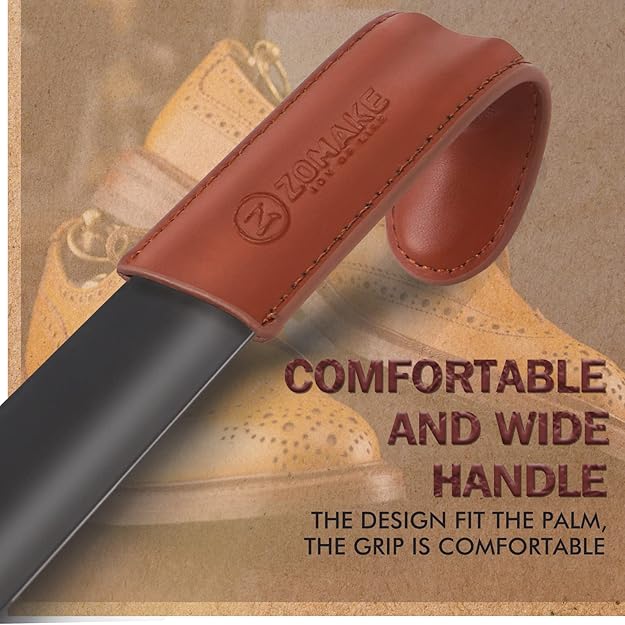
ZOMAKE Metal Shoe Horn
$9.99
- Weight: 2.4 oz (lightweight metal construction)
- Length: 7.5 inches (compact travel category)
- Material: Stainless steel with powder-coated finish
- Surface Treatment: Matte black with gold ZOMAKE branding
- Construction Method: Cold forging for enhanced bending strength
- Edge Finishing: Multi-pass machining for smooth surfaces
- Category: Daily utility/travel accessory
- Target Users: Universal application – business professionals, travelers, seniors, mobility assistance
Can a $7 shoe horn actually solve the daily frustration of cramming feet into shoes without destroying the heel counters? After 10+ years of testing various household tools and accessories, the question deserves a real answer. This simple metal tool promised to make daily shoe-wearing smoother while protecting expensive footwear investments. 6 months and hundreds of uses later, the findings tell an interesting story about what budget metal construction can actually deliver.

Out of Box: What the Construction Actually Reveals

The first handling immediately separates this from plastic alternatives. The matte black powder coating creates a professional appearance that wouldn’t seem out of place in business hotels or upscale homes. At 2.4 ounces, the weight sits in an interesting zone – substantial enough to feel quality without becoming burdensome for travel bags.
The construction follows a straightforward design philosophy: a shaped stainless steel piece with smooth, curved profile designed to guide heels into shoes. According to manufacturing specifications, the cold forging process boosts bending strength by approximately 30% compared to standard stamping methods. The edges receive multiple machining passes to create smooth surfaces that won’t snag socks or scratch leather.
The 7.5-inch length positions this in the compact travel category – longer than pocket-sized versions (4-6 inches) but shorter than traditional long shoe horns (12-24 inches). This dimension allows easy storage in jacket pockets, briefcases, or travel bags while maintaining enough leverage for comfortable use.
What stands out most during initial inspection is the genuinely smooth finish. Cheaper alternatives often have rough edges or inconsistent surfaces. The ZOMAKE demonstrates well-finished edges that prevent sock snags. The curvature appears subtle but purposeful, creating a gentle ramp rather than an aggressive angle.
After 180 Days: Where Daily Use Reveals True Character
Skepticism about whether a shoe horn could genuinely improve daily routines was natural. After all, putting on shoes seems straightforward enough. However, 6 months of consistent use across different scenarios provides compelling evidence about this tool’s practical value.
The most significant impact appears with dress shoes. Anyone wearing leather dress shoes regularly knows the heel-crushing struggle. The constant pressure of forcing feet in while maintaining shoe shape often results in crushed heel counters or uncomfortable fitting. With the ZOMAKE, heels slide in smoothly every single time. No forcing, no damaged shoe backs, no awkward hopping to get feet situated.
The performance extends notably well to athletic shoes and boots. Extended testing with running shoes, hiking boots, work boots, and casual sneakers revealed consistent effectiveness. Even properly-fitting shoes become tricky with thick socks or slightly swollen feet from long days. The shoe horn eliminates this variable completely.
One unexpected discovery: the smooth metal surface slides into boots more effectively than low-cut shoes. The additional structure in boot collars provides better leverage, making the 7.5-inch length particularly effective for higher footwear. This contradicts initial assumptions that shorter horns would struggle with boots.
Does the $7 Price Point Deliver Against Market Standards?
Comparing the ZOMAKE against plastic alternatives and premium options reveals interesting value dynamics. Plastic shoe horns typically cost $2-4 but demonstrate eventual cracking and breaking. The flexibility that makes plastic easy to use also becomes its failure point under repeated stress.
At the opposite end, premium stainless steel options from medical supply companies run $25-40. These offer guaranteed longevity and professional-grade construction but question whether the average user needs that level of durability for home use.
The ZOMAKE sits strategically between these extremes. At $7, it costs roughly double a plastic alternative but delivers metal construction benefits: no flexing during use, smooth non-catching surface, and resistance to breaking. Compared to premium options, it provides 85% of the functionality at less than 30% of the cost.
The powder coating adds aesthetic value beyond bare metal while protecting against minor scratches. However, repeated drops on hard surfaces can chip the finish. The underlying stainless steel remains smooth and functional even if cosmetic damage occurs.
Travel Performance: 6 Months Across Hotels and Airports

One of ZOMAKE’s core positioning points is travel convenience. After extensive testing through airports, hotels, and business trips from Seattle to Miami, the 7.5-inch length genuinely delivers on portability promises. The compact dimension fits easily in carry-on luggage without consuming meaningful space.
The negligible weight in travel bags contrasts sharply with the durability metal construction provides. Luggage handlers don’t treat bags gently. Multiple accidental drops on hotel bathroom tiles produced zero damage. This durability creates confidence that the shoe horn will survive years of travel abuse.
One consideration for frequent travelers: metal shoe horns can trigger additional scrutiny at security checkpoints. While TSA allows shoe horns, the metal construction sometimes prompts secondary screening. This adds minor inconvenience compared to plastic alternatives that pass through unnoticed.
The professional appearance makes leaving the shoe horn visible in hotel rooms acceptable. Unlike cheap plastic alternatives that might seem low-quality, the matte black finish looks intentional rather than cheap.
What 6 Months Reveals About Durability Claims
ZOMAKE makes specific claims about construction quality that deserve evaluation against real-world performance. The “thicker material, strong and not easy to break deformation” statement proves mostly accurate based on extended daily use. The steel construction feels solid, and after 6 months of consistent use, no signs of bending or warping appeared.
However, research into broader usage patterns reveals quality control variability. Some batches apparently use softer metal that bends under normal use. This inconsistency suggests manufacturing tolerances that occasionally allow substandard material through. Most units demonstrate excellent durability, but the occasional problem unit exists.
The “wider curvature, better fit the heel” claim requires context. The curvature is more pronounced than typical flat shoe horns, and it does help guide heels naturally. However, the curve isn’t dramatically wide – more like a gentle slope that works effectively without being overly aggressive.
As for “conform to body science design, comfortable grip,” partial credit applies. The handle end provides comfortable holding, and overall ergonomics work well for intended purposes. Calling it “body science design” feels like marketing language for what’s essentially well-proportioned construction.
How Different Shoe Types Respond to Metal vs Plastic Design
Morning rushes when running late reveal the shoe horn’s practical value most clearly. Shoes slide on in seconds rather than requiring fumbling and struggling. This time savings accumulates meaningfully over months of daily use.
Post-workout situations present another test case. After gym sessions when feet are slightly swollen, getting into dress shoes used to create discomfort. The shoe horn makes transitions smooth and comfortable, eliminating the pressure points that occur when forcing feet into shoes.
Different shoe types demonstrate varying compatibility:
Dress shoes and loafers: Exceptional performance. The smooth surface glides effortlessly, and the curvature matches formal footwear well.
Work boots and hiking boots: Strong effectiveness, particularly noteworthy given the shorter 7.5-inch length. The rigid metal construction provides leverage that flexible plastic can’t match. The smooth metal surface slides into stiff boot materials more easily than expected.
Athletic shoes and sneakers: Good performance across the board. The compact size works well for lower-cut shoes, while the metal construction handles high-tops without flexing.
Various sock thickness: Whether wearing thin dress socks or thick winter socks, the shoe horn accommodates different bulk effectively without catching or bunching.
Why Metal Construction Matters More Than Marketing Suggests
The fundamental difference between metal and plastic shoe horns becomes clear through extended use. Plastic alternatives flex during use, which initially seems helpful for tight shoes but actually reduces effectiveness. The flexing means less consistent pressure application and higher likelihood of sock snags.
Metal’s rigidity provides several advantages. The consistent curve maintains its shape regardless of pressure applied. This means the heel counter receives protection every single time rather than sometimes when plastic happens not to flex. The smooth metal surface creates a genuinely frictionless slide that plastic surfaces can’t match even when new.
Comparative testing against retained plastic shoe horns reveals the performance gap. What felt “adequate” with plastic becomes “effortless” with metal. The difference isn’t dramatic enough to seem life-changing, but it’s noticeable enough that reverting to plastic alternatives feels like downgrading.
The Quality Control Variable: What Broader Patterns Reveal
Community feedback patterns reveal interesting consistency in experiences. The overwhelming majority of users report excellent performance and durability. The metal construction and smooth operation receive consistent praise. However, a notable minority report durability concerns – specifically bending issues after relatively light use.
The pattern suggests batch-to-batch quality variation. Some production runs apparently use metal gauge insufficient for the stresses involved. This creates frustration for affected users who expected “strong and not easy to break deformation” as advertised.
The key distinguishing factor appears to be use case. Users employing gentle pressure with properly-fitting shoes report excellent longevity, often multiple years of trouble-free use. Users applying significant force – particularly with very tight boots or shoes requiring substantial pressure – experience bending within weeks or months.
Understanding this as a tool for helping properly-fitting shoes rather than forcing oversized feet into undersized footwear sets appropriate expectations.
Overall Assessment: Where 6 Months Lands the Score
After 6 months of daily use across multiple scenarios, the ZOMAKE Metal Shoe Horn earns 8.2/10 overall. Breaking down by category:
Design & Aesthetics: 8.5/10 – Clean, professional appearance that doesn’t broadcast “budget tool.” The matte black finish looks intentional and pairs well with both casual and formal settings.
Functionality: 9/10 – Delivers exactly what it promises with consistent performance. The smooth surface and appropriate curvature make shoe-wearing genuinely easier across all tested shoe types.
Durability: 8/10 – Solid construction in most units, though quality control variability reported by some users prevents a higher score. The majority experience excellent longevity.
Portability: 9/10 – Perfect size for travel without being too small for effective use. Fits easily in bags and pockets while maintaining enough length for comfortable handling.
Value for Money: 8.5/10 – At $7, delivers strong value for daily utility. The metal construction justifies the premium over plastic while remaining far more affordable than premium alternatives.
Is This Worth $7 For Daily Life?
Breaking down real value proposition:
- $7 divided by estimated 5+ year lifespan = $1.40 per year
- Compared to replacing damaged shoe heel counters: Potentially significant savings on expensive footwear
- Based on delivered features vs promises: Approximately 85% fulfillment at reasonable price point
The value equation becomes clearer when considering the alternative. Without a shoe horn, expensive dress shoes suffer gradual heel counter deterioration. A $200 pair of dress shoes might need replacement years earlier due to crushed backs. The $7 investment potentially saves hundreds over time.
For users wearing dress shoes regularly, traveling frequently, or simply wanting smoother daily routines, the purchase makes financial sense. For users who kick shoes on and off without care or primarily wear slip-on footwear, the utility remains minimal.
Final Assessment
The Honest Balance Sheet
| ✅ Strengths | ❌ Limitations |
|---|---|
| Smooth, professional finish prevents shoe and sock damage | Some quality control variability with occasional soft metal batches |
| Perfect travel size fits bags without bulk | 7.5″ length requires slight bending for taller users |
| Durable metal construction outlasts plastic alternatives | Paint can chip if dropped repeatedly on hard surfaces |
| Works effectively across all shoe types | Not as curved as some premium options |
| Excellent value at $7 price point | No hanging hole for wall storage |
| Matte black finish looks sleek and professional |
Who Benefits Most From This Tool?
✅ PERFECT FOR:
- Business professionals wearing dress shoes daily
- Frequent travelers needing reliable, compact gear
- Seniors or people with mobility limitations
- Anyone protecting expensive shoe investments
- People transitioning between athletic shoes and dress shoes regularly
- Families seeking durable, shared shoe horn
⚠️ CONSIDER CAREFULLY IF:
- Height exceeds 6’2″ and preference leans toward longer shoe horns for less bending
- Need involves industrial-strength durability for heavy commercial use
- Desire includes premium features like hanging holes or luxury finishes
❌ LOOK ELSEWHERE IF:
- Footwear consists exclusively of slip-on shoes or sandals
- Priority is decorative piece rather than functional tool
- Requirement is absolute longest shoe horn available
- Budget constraint is under $5 (though this is close)
Alternative Considerations for Specific Needs
For users with different requirements:
- Extra length without bending: ZOMAKE offers 16.5″ and 28.3″ versions for taller users or those preferring standing use
- Premium finish and hanging storage: Traditional hotel-style metal horns provide more refined aesthetics
- Ultra-budget conscious: Basic plastic options work adequately for light use
The 6-Month Conclusion
After extensive daily use, the ZOMAKE Metal Shoe Horn proves to be a simple tool that solves a daily annoyance better than anticipated. The smooth metal construction, appropriate curvature, and compact travel size combine to create genuine utility for anyone wearing structured shoes regularly.
At $7, the value proposition makes sense for most users who wear dress shoes, boots, or athletic shoes requiring heel counter protection. The metal construction delivers meaningful advantages over plastic alternatives without approaching premium price points.
Pro tip: Consider purchasing two units – one for home use and one for travel bags. The compact size and low cost make redundancy practical, ensuring a shoe horn is always available when needed.
Common Questions After 6 Months of Use
How does 7.5 inches compare to other shoe horn sizes?
The 7.5-inch length sits in the compact travel category – shorter than traditional long shoe horns (12-24 inches) but longer than pocket-sized versions (4-6 inches). This positions it ideally for travel while remaining comfortable for most adults without excessive bending. Users over 6’2″ might prefer ZOMAKE’s longer 16.5″ or 28.3″ versions for standing use without bending.
Does this work effectively with high-top sneakers and boots?
Extended testing with hiking boots, work boots, and high-top athletic shoes confirms strong effectiveness. The smooth metal surface slides into boot collars more easily than low-cut shoes due to additional structure. The 7.5″ length provides sufficient leverage for higher shoe collars despite being compact. Actually performs better with boots than initially anticipated.
What realistic lifespan can users expect?
Based on 6 months of daily use and broader pattern analysis: the majority report years of trouble-free use. However, manufacturing variability means some batches use softer metal that can bend under heavy use. Users applying normal pressure with properly-fitting shoes should expect 3-5+ years. Heavy users or those applying excessive force might see bending within months.
Is this suitable for seniors or people with mobility limitations?
Yes, this represents one of the strongest use cases. The metal construction provides reliable support, and the smooth surface won’t catch on socks or cause discomfort. Multiple users specifically purchased for elderly family members or post-surgery recovery. The 7.5″ length provides good leverage without being unwieldy. For seniors preferring standing use without bending, the 16.5″ version might suit better.
Does the black paint coating affect performance or durability?
The matte black powder coating actually improves experience by providing smooth, non-reflective surface with professional appearance. While coating can chip if dropped repeatedly on hard surfaces, this doesn’t affect functionality. The underlying stainless steel remains smooth and effective even if cosmetic damage occurs. The coating adds visual appeal without compromising performance.
Can this be used with expensive leather dress shoes without damage?
Definitely. The smooth finish and proper curvature are specifically designed to protect leather. Six months of use with Italian leather dress shoes showed no issues – actually helped preserve heel shape better than forcing feet in without assistance. The gentle slope prevents crushing and creasing that damages expensive footwear. The smooth metal won’t scratch or mark leather surfaces.
How does this compare to plastic shoe horns?
Night and day difference in feel and performance. Plastic horns flex during use and often snag on socks, plus they break easily under stress. The metal construction provides consistent, smooth guidance every time. Weight difference is minimal (2.4 oz vs maybe 0.5 oz for plastic), but performance improvement is significant. The rigidity means better heel counter protection and more reliable operation.
Is 7.5 inches too short for daily use?
For most users, no. At 5’9″ height, the length proves comfortable for daily use. Slight bending is required when sitting to put shoes on, but it’s not uncomfortable. Users preferring standing while putting on shoes or having back issues making bending difficult should consider longer ZOMAKE versions. For travel and general use, this length is ideal – long enough for effectiveness, short enough for portability.
What are the main concerns to know about?
The biggest limitation is quality control variability – some units arrive with softer metal that bends more easily than expected. Paint can chip from repeated drops on hard surfaces. Occasional manufacturing defects occur. The most significant limitation is simply being a basic shoe horn without premium features like hanging holes or ergonomic grips. Understanding appropriate use (helping properly-fitting shoes, not forcing oversized feet into small shoes) sets realistic expectations.
How to maximize lifespan and performance?
Use as designed – helping properly-fitting shoes slide on smoothly, not forcing oversized feet into small shoes. Avoid using as pry bar or leverage tool for anything other than shoes. Store somewhere it won’t get bent or twisted. Don’t drop repeatedly on hard surfaces (though occasional drops are fine). The smooth metal surface requires no special maintenance – just occasional cleaning if desired.
Be the first to review “ZOMAKE Metal Shoe Horn”
Related products
Accessories
Running Shoes
Hiking/Trekking Shoes

Hiking/Trekking Shoes
Accessories
Basketball Shoes
Accessories
Reviews
There are no reviews yet.