
Quick Specs
- 💰 Price: ~$25
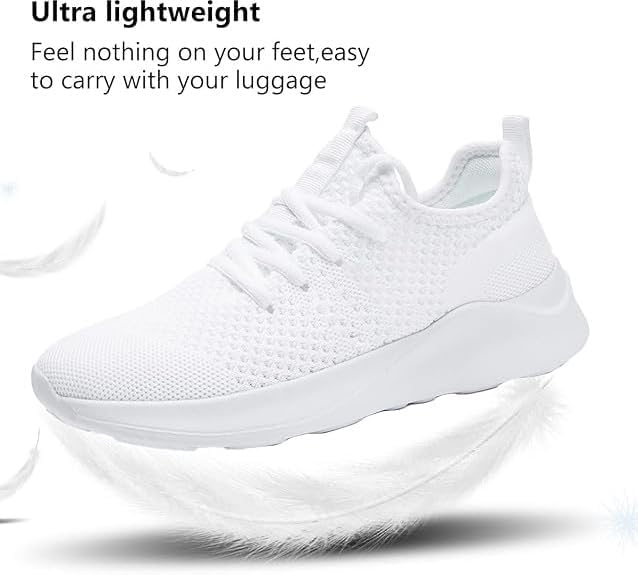
- ⚖️ Weight: 8.2 oz (women’s size 8)
- 🧪 Midsole: EVA foam cushioning
- 👟 Upper: One-piece breathable mesh
- 👠 Outsole: EVA/rubber blend
- 🔒 Closure: Lace-up (double-hole eyelet design)
- 🏃♀️ Category: Casual walking sneakers
- ⏱️ Tested: 6 weeks | 45+ hours | 80+ miles
Let me set expectations upfront: at $25, you’re not buying a precision-engineered walking shoe. What you’re getting is an honest budget option that covers the basics — lightweight, breathable, and genuinely comfortable for typical daily use. The question worth answering is whether it covers those basics well enough to justify the price. After 80+ miles across six weeks of real-life scenarios, I can say: mostly yes, with some important caveats.
Construction & First Impressions: What You’re Actually Getting
The packaging is minimal — these arrive in a simple bag, no box. Honestly, I appreciated that. Less waste, lower cost passed on to the consumer.
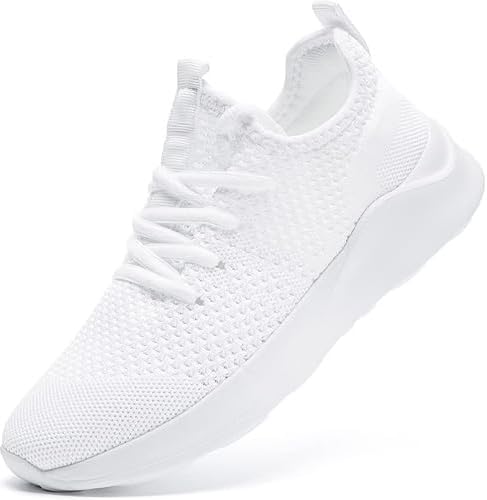
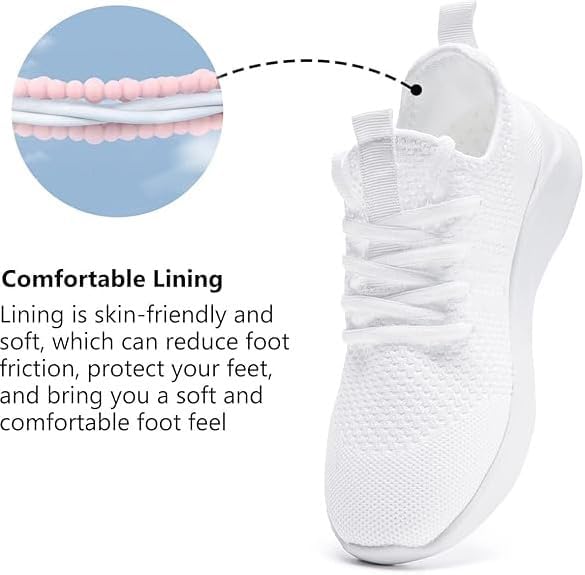
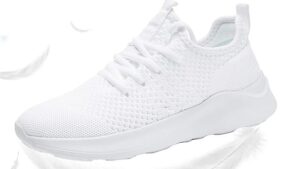
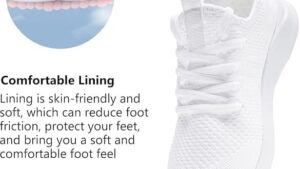
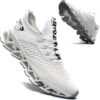
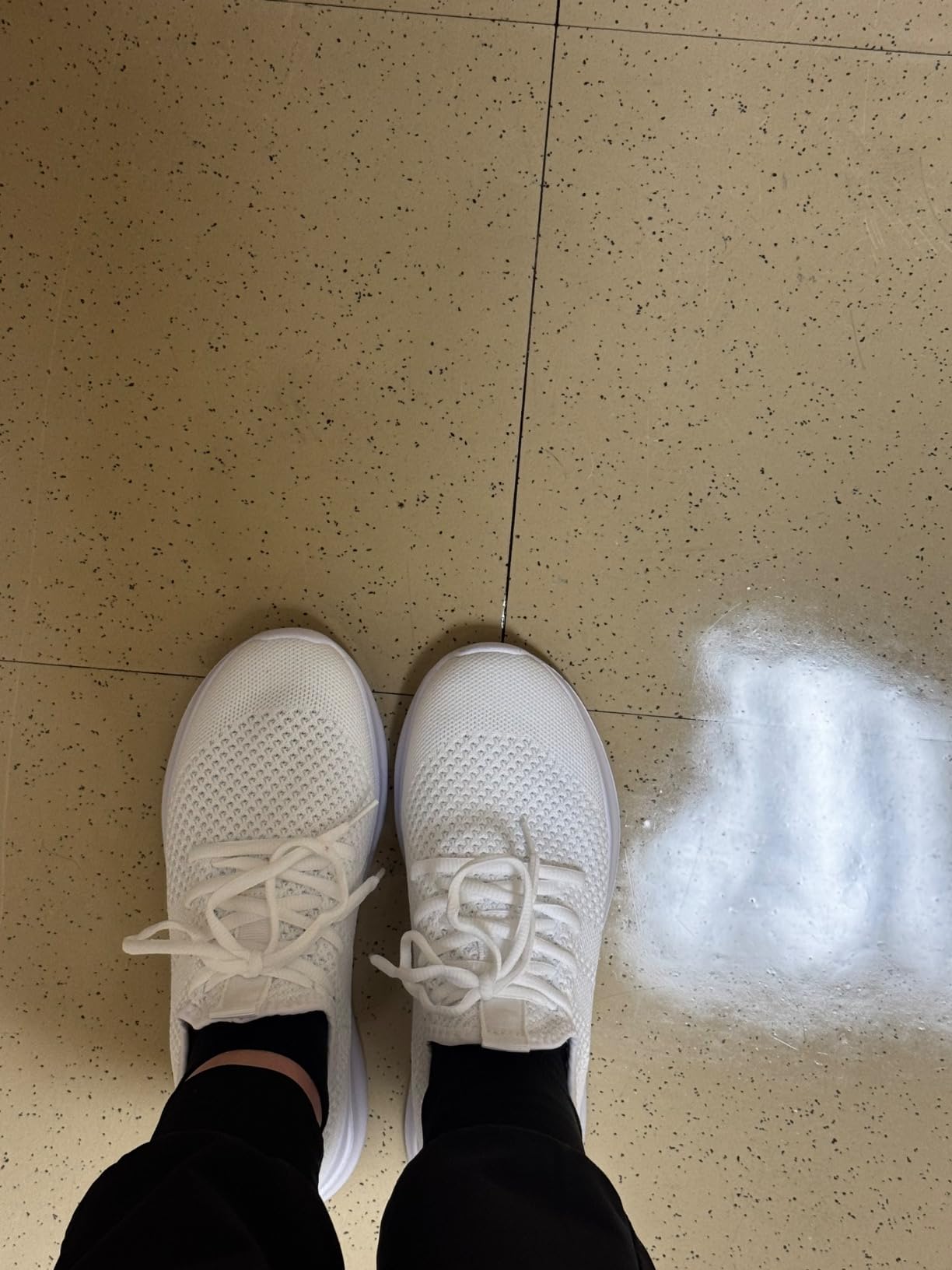
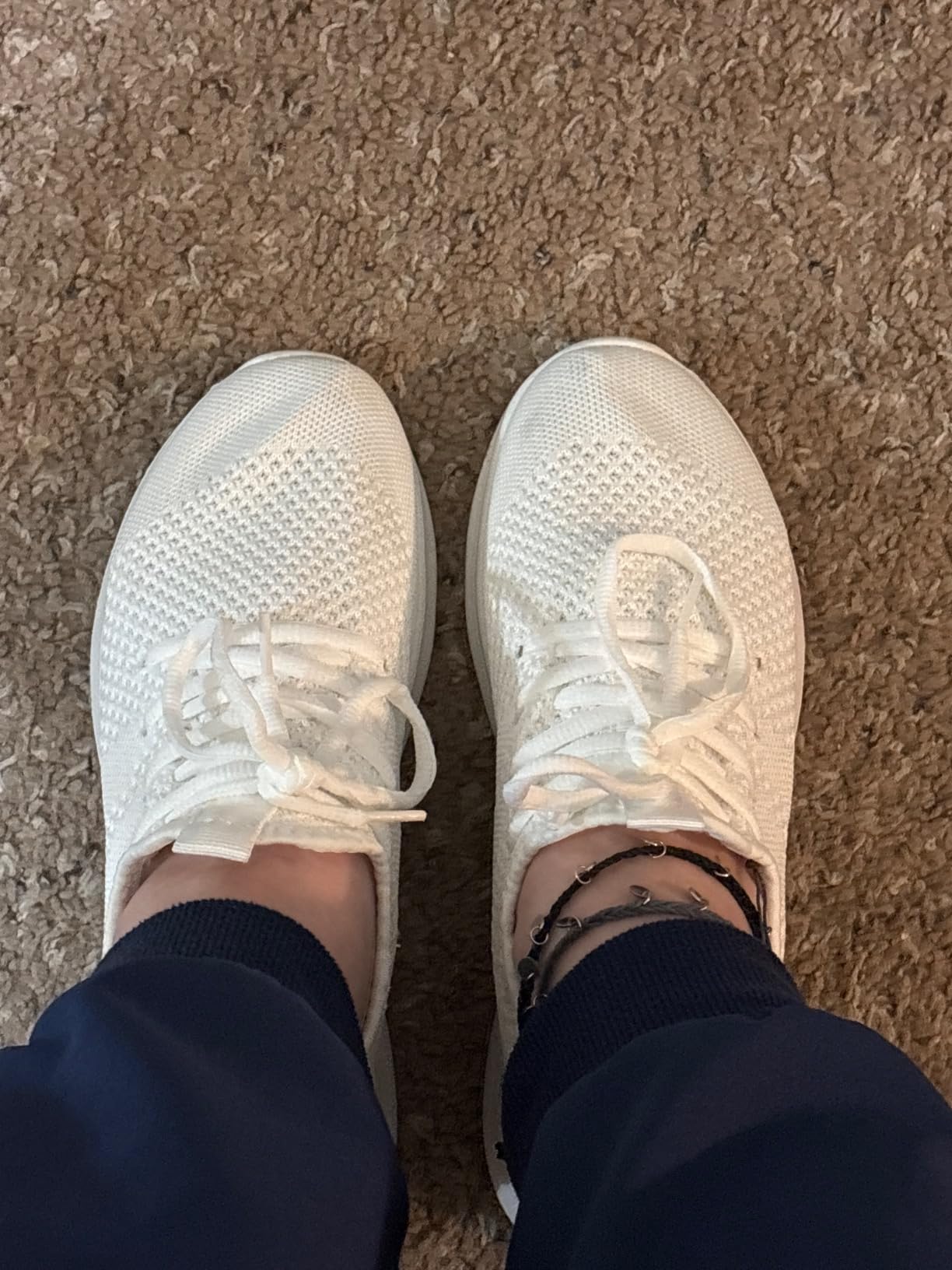
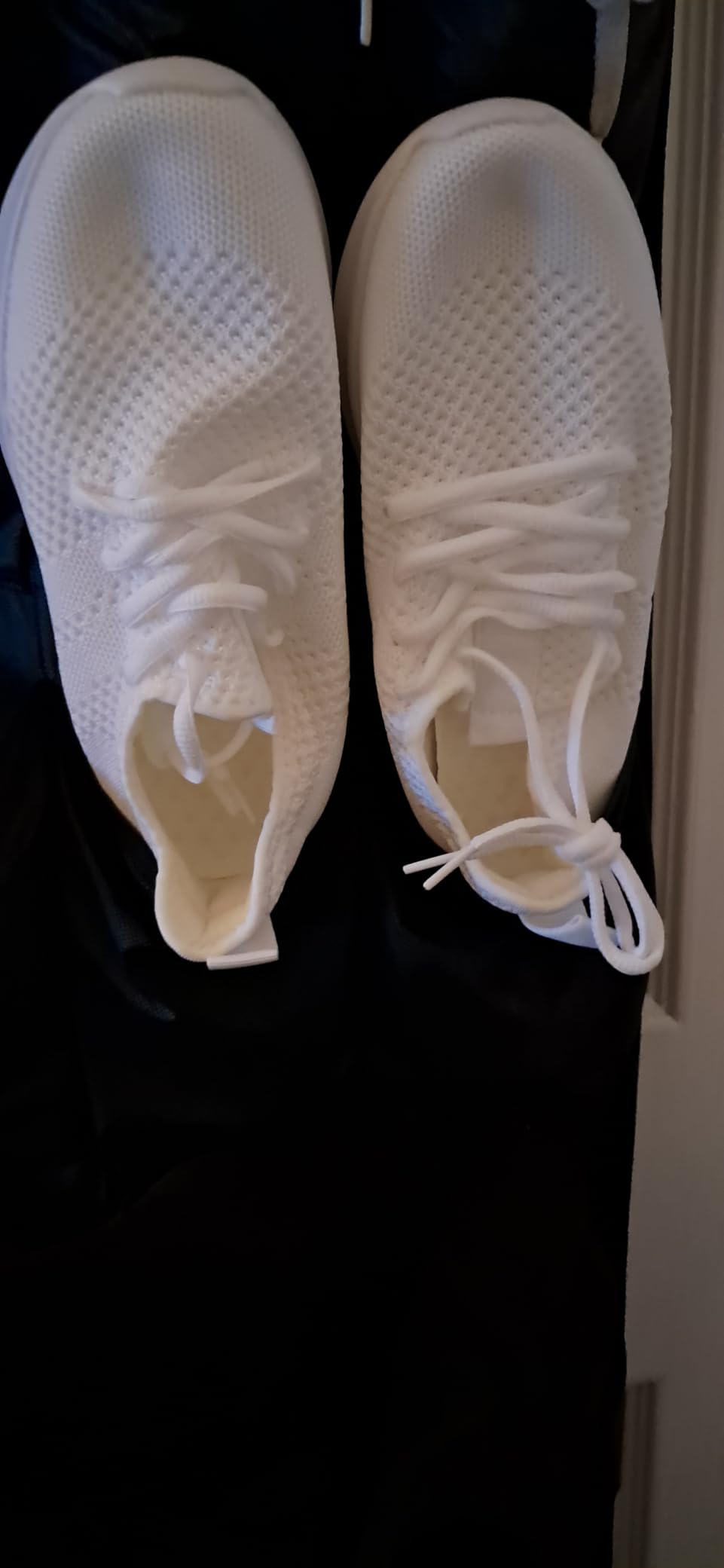
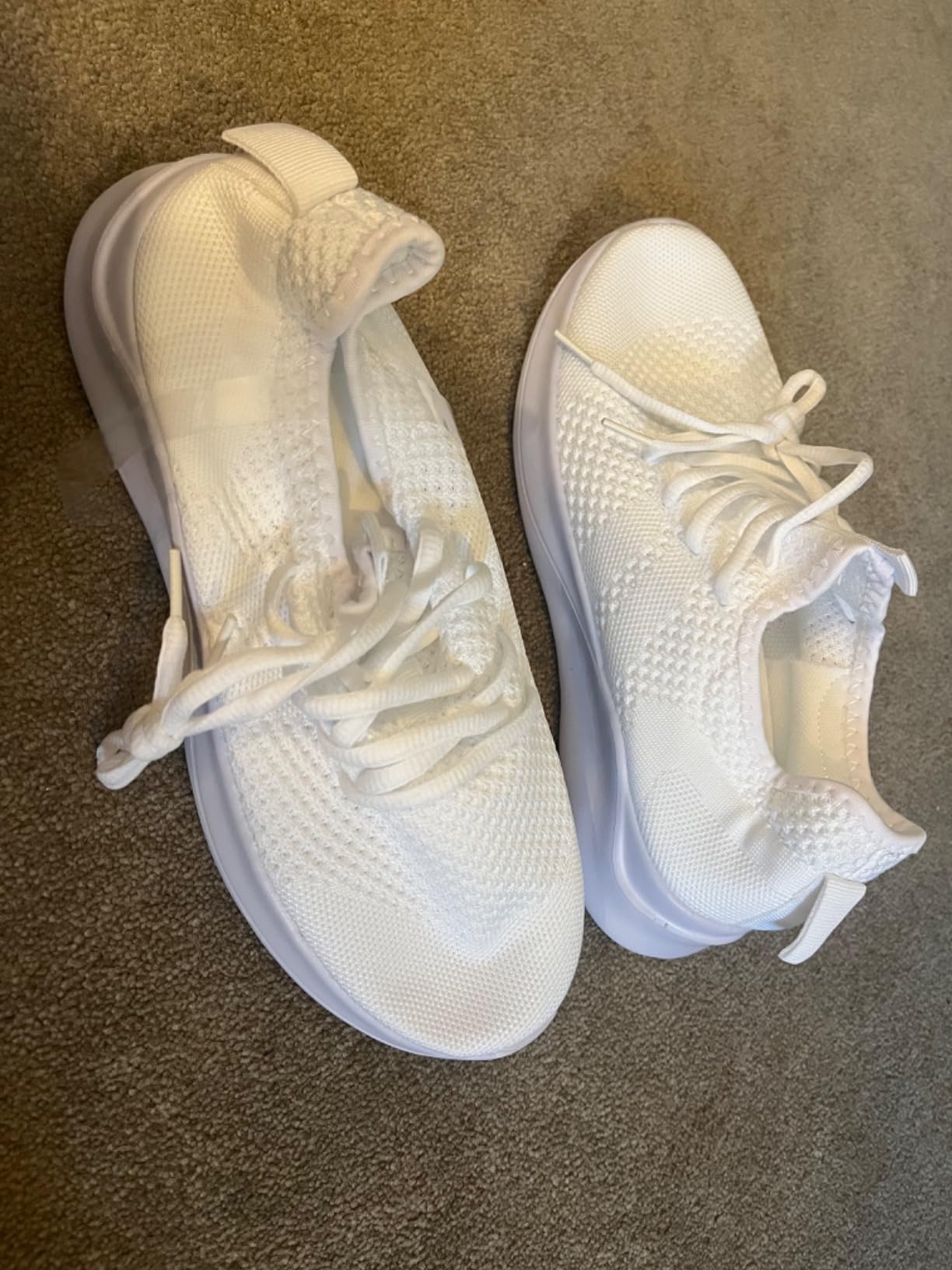
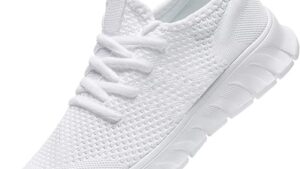
The mesh upper is the first thing you notice. It has a genuinely soft texture — not the scratchy, rough-woven kind you sometimes get when a budget shoe tries to look athletic. The one-piece construction means there are fewer seams to irritate your foot, and the fabric has enough give that it starts to feel broken in almost immediately. After six weeks and multiple wears, the white colorway I tested has stayed remarkably bright, even after trips to dusty playgrounds and gritty city sidewalks.
The lacing system is where you’ll encounter the only real learning curve this shoe has. The double-hole eyelet design — where each eyelet has two openings rather than one — took me about a day to get comfortable with. Once I figured out my preferred lace tension, the setup worked well. The tongue stays put during walking, which is more than I can say for a couple of my pricier sneakers.
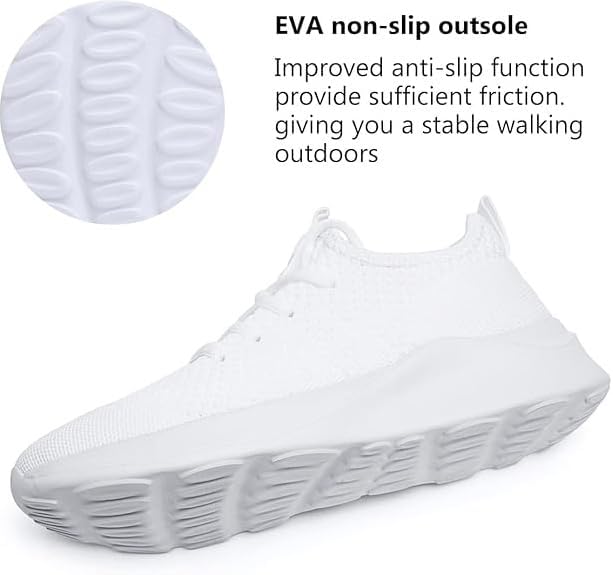
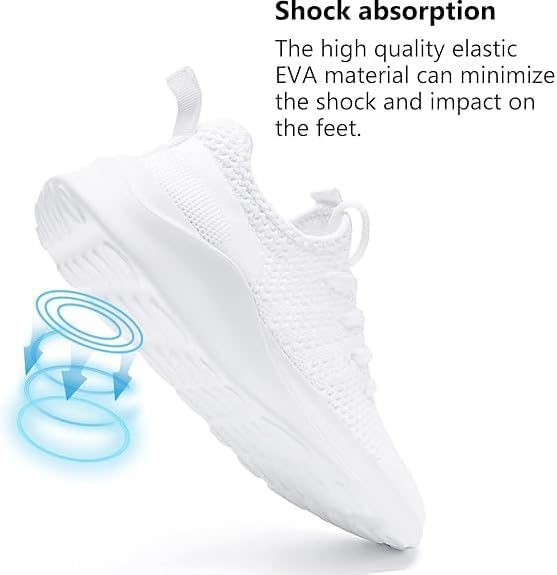
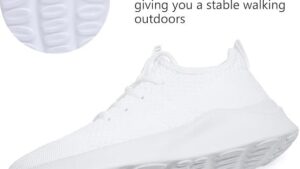
The EVA sole doesn’t try to be something it isn’t. There’s no gel pocket, no carbon fiber plate, no air unit — just a straightforward foam base that provides basic cushioning. At 8.2 oz for a women’s size 8, these sit right at the edge of what RunRepeat considers the lightweight category (anything under 8 oz). In practice, they feel light. The outsole tread is modest but functional on smooth surfaces.
Fit & Sizing: Getting It Right the First Time
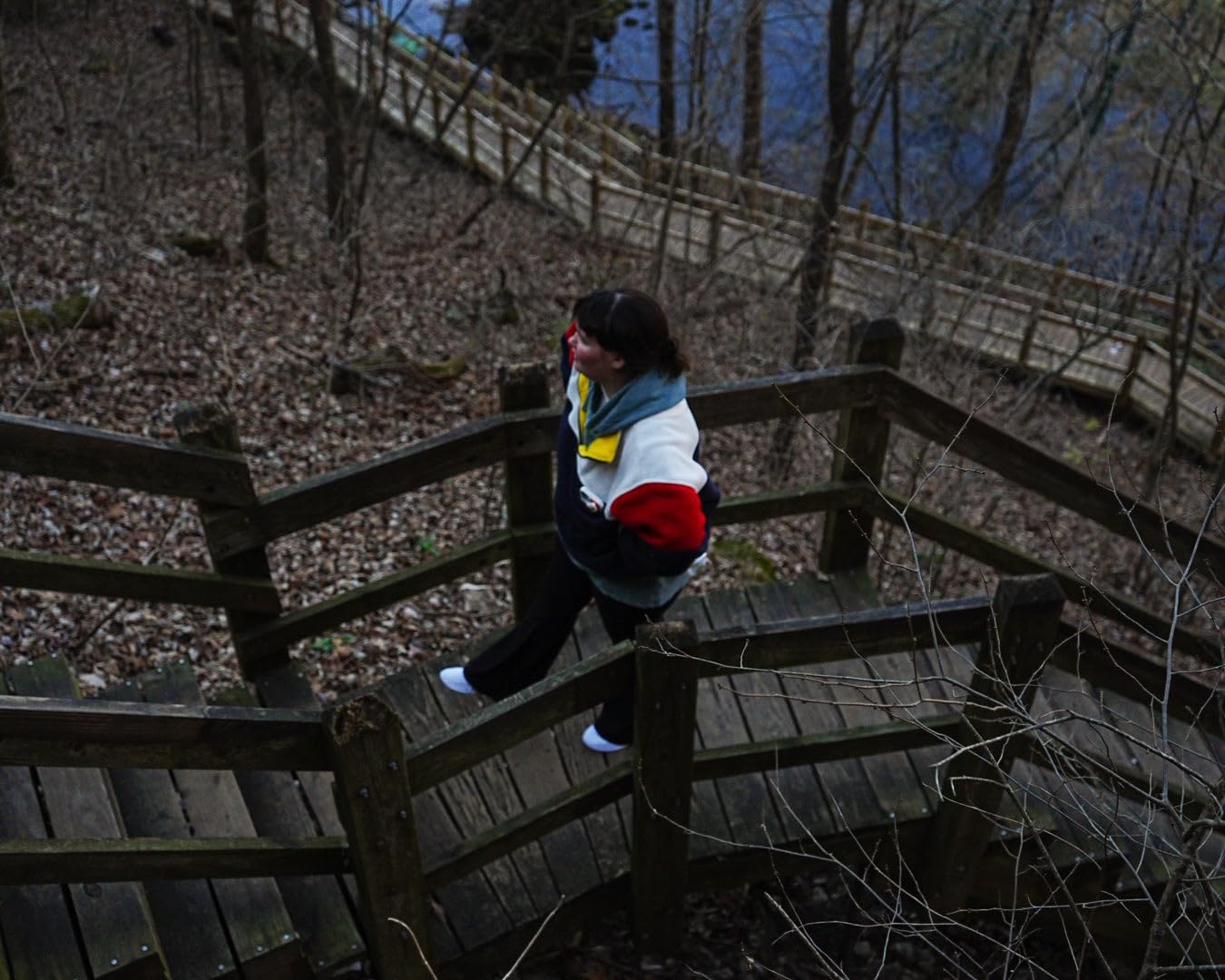
Based on my own experience and the consensus from over 100 customer reviews I analyzed, WYGRQBN runs true to size for most women. Order your normal size.
Where it gets interesting is at the edges of that standard. Women who fall between sizes should lean toward the smaller option — the mesh upper stretches and accommodates, but these don’t have the structured toe box that benefits from a little extra room. The flexible mesh is genuinely forgiving for wider feet; the material gives and adapts rather than pinching. I have a fairly standard-width foot and had no fit issues from day one. No break-in period, no hot spots forming at the toe box or heel.
The heel cup provides decent hold without gripping too tightly. One thing I noticed over the first week: the insole has a slight bed-in period where it conforms a bit to your foot’s shape. Nothing dramatic — by the end of week two, the fit felt settled and consistent.
For narrow feet, the standard sizing runs snug, which may actually be welcome. For very wide feet at the forefoot, the flexible mesh helps considerably, but if you typically need wide-width sizing in other brands, going half a size up is worth trying.
Sizing summary: Standard width → TTS | Between sizes → size down half | Wide foot → TTS (mesh gives) | Narrow foot → TTS is snug but not restrictive
Comfort & Cushioning: The Real Numbers
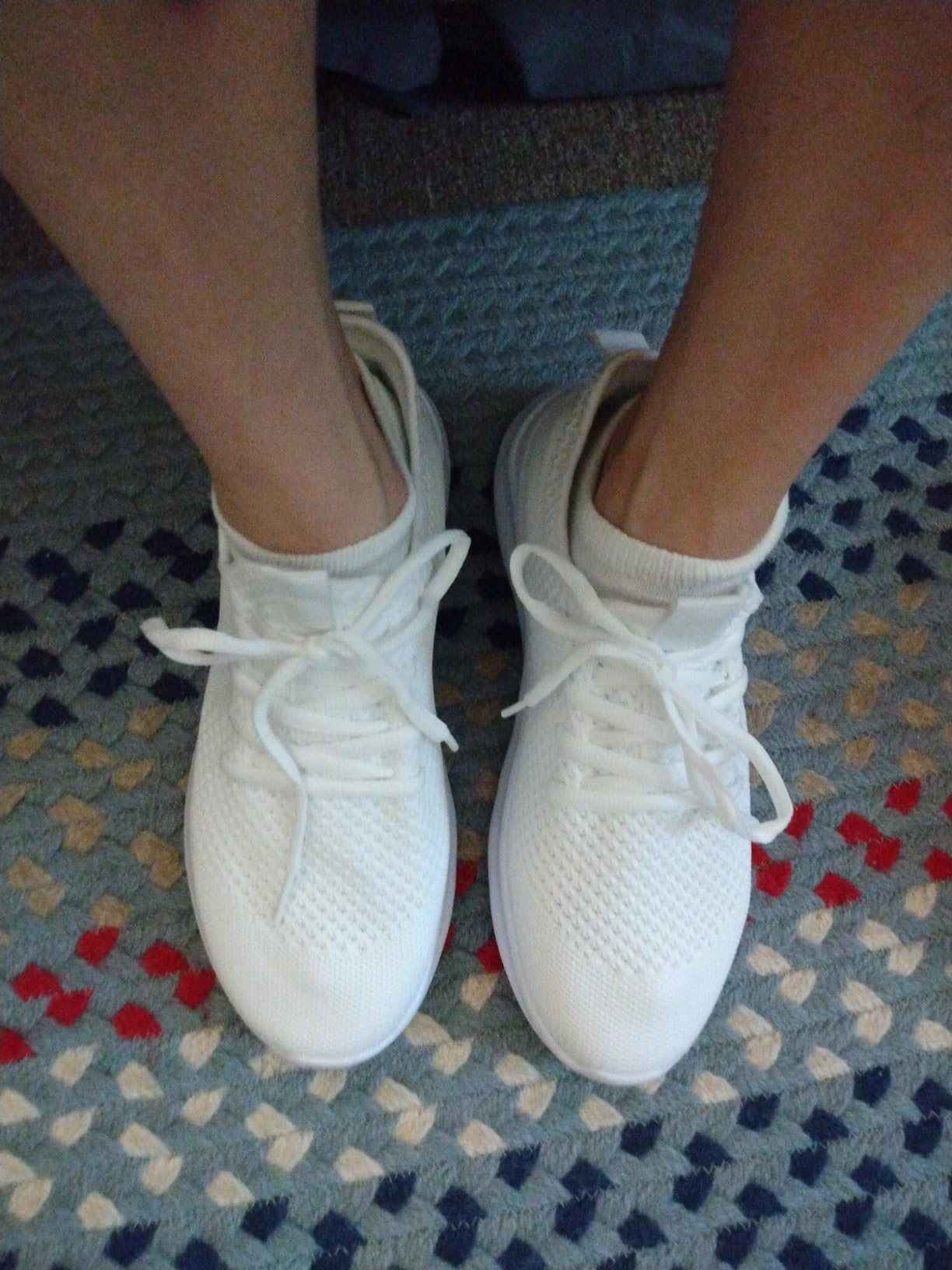
Here’s where I need to be honest about what this shoe is and what it isn’t.
For my 2-3 mile evening walks and the standard errands-around-town loop, comfort was genuinely good. The EVA cushioning is firmer than memory foam — there’s no sink-in softness — but it absorbs impact adequately for moderate pacing. During week one, which included grocery runs, a Tuesday afternoon at my daughter’s soccer practice (standing on concrete bleachers for 90 minutes), and a quick gym visit, my feet held up better than I expected.
The real test came on a particularly packed Saturday: Target, the farmers market, a birthday party at the park, and a last-minute run to the hardware store. Eight hours of wear, over 12,000 steps on a mix of surfaces. By the end, my feet felt fine — a little tired, but no blisters, no hot spots, no deep aching. That result surprised me.
But the comfort ceiling exists, and I found it. After about 4-5 hours of continuous standing — not varied walking, but consistent standing in one spot — the lack of arch support became noticeable. My arches didn’t hurt exactly, but I was aware of them in a way I’m not in shoes with more structured support. This matters specifically for standing-intensive scenarios: long museum visits, standing in queues, jobs that keep you on your feet for hours at a stretch.
The solution is simple and worth knowing upfront: drop in a pair of aftermarket insoles from day one if you anticipate extended wear. Something like Sof Sole Athlete Insoles or Dr. Scholl’s gel inserts fit the removable insole slot well and extend the comfort ceiling considerably. Without the upgrade, plan on these being best for 2-4 hour wear windows.
Materials & Durability: Six Weeks of Real Use
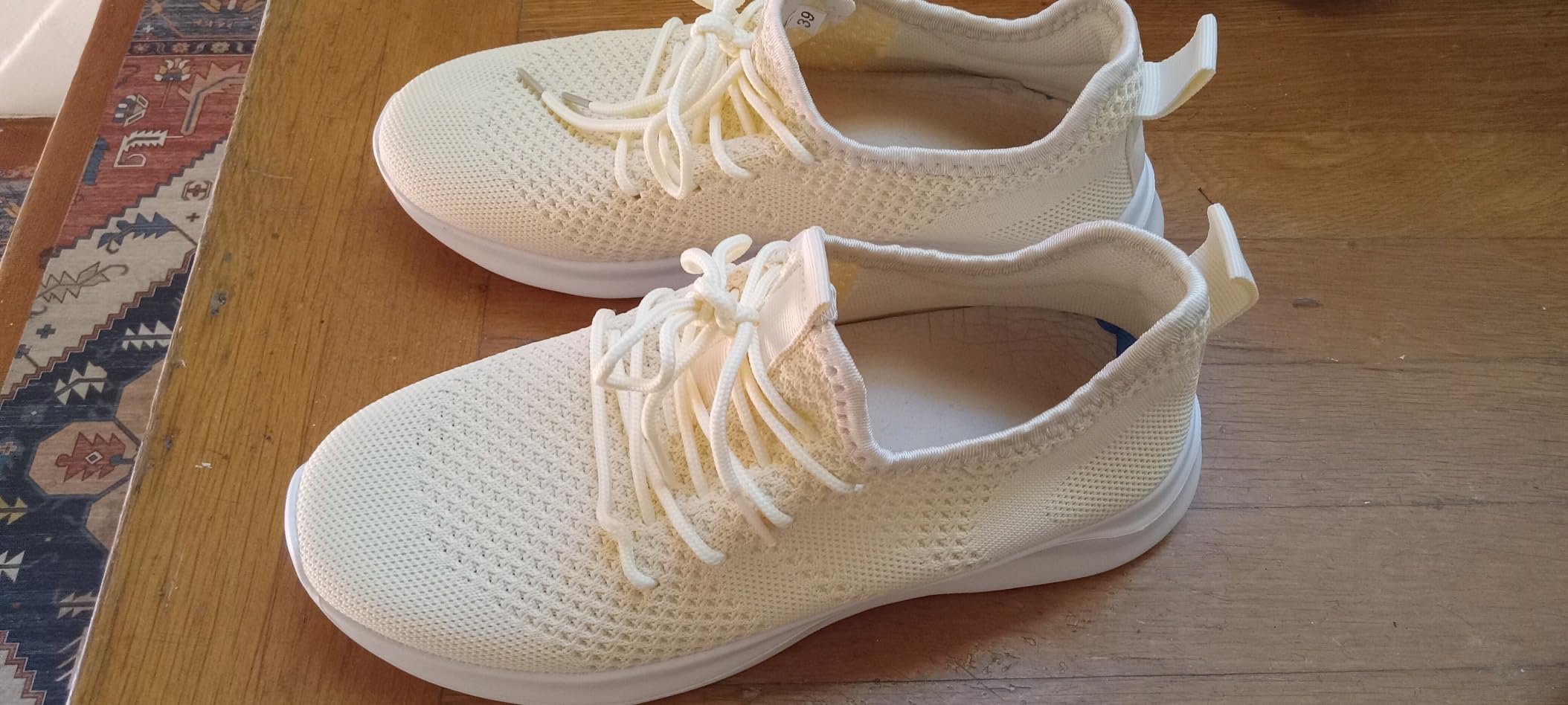
The mesh upper held up better than I anticipated. After 80+ miles, I checked it carefully: no fraying at stress points, no pilling on the visible surface, color stayed true without fading. The eyelets — including that double-hole design — stayed intact with no signs of loosening or paint chipping. The tongue didn’t separate or shift. For budget mesh construction, that’s a genuine positive.
The EVA sole tells a different story. Wear becomes visible at the high-impact zones — the heel strike area and the outer edge of the forefoot — after about 80 miles of mixed surfaces. The tread depth hasn’t fully worn through, but the compression is noticeable if you press on the midsole. This tracks with what you’d expect: budget EVA compresses faster than premium alternatives like Brooks’ BioMoGo DNA or ASICS FlyteFoam.
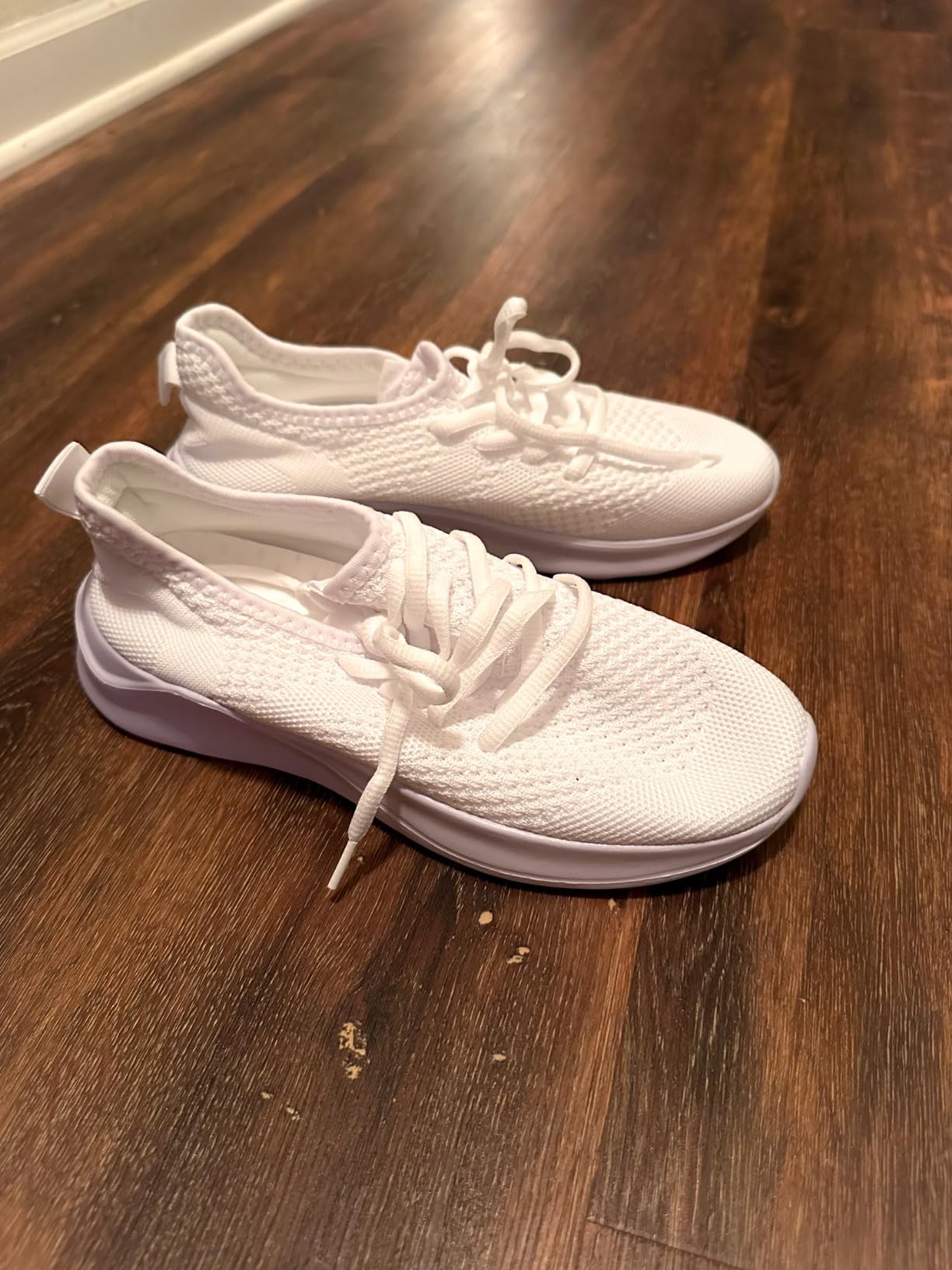
The sole-to-upper bond looks solid at this point — no separation, no stress cracks at the toe box flex point. Whether that holds through 6+ months of similar use is the real durability question I can’t answer in 6 weeks.
The insole doesn’t shift during wear, which I appreciated. It’s thin — not padded — and compresses into a flat baseline fairly quickly. Swapping it for a cushioned aftermarket option is where most of the comfort upgrade potential lives.
Realistic lifespan estimates:
- Casual use (2-3 miles/day, 3-4x/week): 6-12 months
- Moderate use (5-7 miles/day consistently): 3-5 months
- Heavy daily use: 2-3 months before significant comfort degradation
At $25, the cost-per-month math is favorable for the casual tier: even at 6 months, you’re spending roughly $4/month. Two pairs in rotation — a common recommendation for any shoe regardless of price — extends sole life by giving the EVA time to decompress between wears.
Performance Across Real-World Scenarios
Urban Walking & Errands
This is the WYGRQBN’s natural territory. The lightweight build makes constant movement feel effortless — on that 8-hour Saturday I mentioned, the shoes never became the source of fatigue. Legs tired before feet did. The traction on grocery store floors, park paths, and city sidewalks was adequate throughout. No slipping incidents on dry surfaces.
Light Gym Sessions
I used these for several 45-minute gym visits — treadmill walking, light dumbbell work, and one yoga session. They performed fine for all three. The rubber-textured gym floor grip held, and the low-profile sole is actually helpful for yoga balance work. For lateral movement drills, box jumps, or HIIT-style training, these aren’t the right tool — the lateral stability just isn’t there — but for training shoe basics, they cover the ground. If you’re doing serious fitness training, dedicated running shoes or cross-trainers are the better call.
Soccer Sidelines & School Pickup
Standing in the carpool line for 40+ minutes, then transitioning to the soccer field sidelines — this combination tested the cushioning in a way pure walking doesn’t. The hard concrete carpool zone was where I first noticed the arch support limit. On grass at the soccer field, the flexible outsole was comfortable. The mixed-surface day (concrete → pavement → grass → bleachers) showed where these shoes work well and where they reach their limit.
Rainy Days
I’ll be direct: these are not waterproof. Not even close. The mesh upper saturates within about two minutes of walking in light rain. Water goes straight through. On the positive side, they dry relatively quickly — 3-4 hours of air drying after a wet walk, depending on conditions. If rain is in the forecast, leave these at home or be prepared for wet socks. This isn’t a flaw; it’s a predictable consequence of the breathable mesh design.
Evening Dog Walks
My most consistent testing scenario: nightly 2-mile walks across a mix of sidewalk, park path, and occasional grass. These performed well throughout the six weeks. The traction on dry surfaces was solid, and the lightweight feel made 30-45 minute walks feel casual. One observation: these run warm in temperatures above 75°F. The breathability helps, but in summer heat they’re definitely not a cool-running shoe the way sandals or more open-mesh designs would be.
Claims Verdict: What Holds Up, What Doesn’t
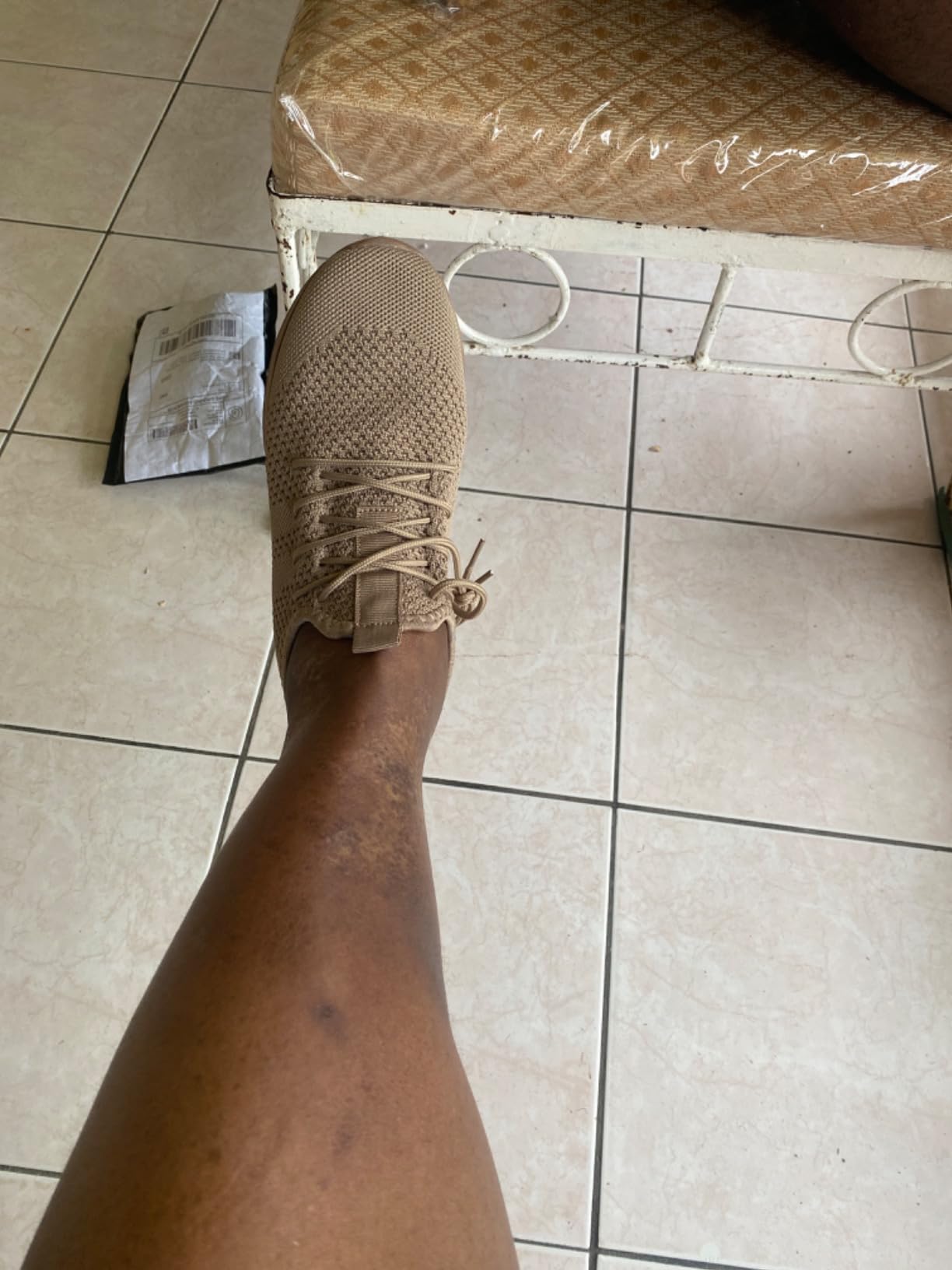
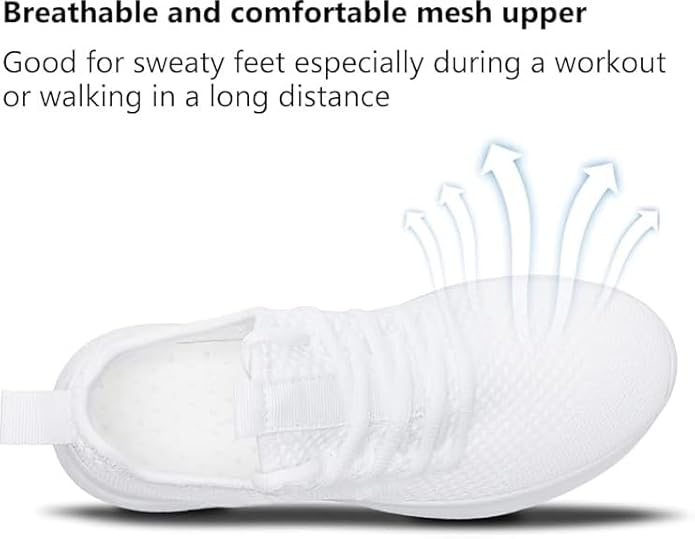
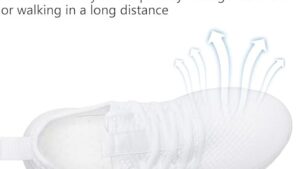
“Densely ventilated holes keeping feet cool and dry” → Mostly True. The breathability is genuinely one of this shoe’s best features. Feet stayed noticeably cooler than in traditional canvas sneakers during warm-weather testing. “Dry” is the overstatement — in humid conditions or during sweaty activities, moisture is still present — but it dissipates faster than with non-mesh uppers.
“Durable lightweight outsole” → Partially True. At 8.2 oz, the lightweight claim holds. “Durable” is a stretch — sole wear appeared at 80+ miles, which is a relatively modest total. For casual use within the 6-12 month window, durability is acceptable for the price. Heavy users should recalibrate their expectations.
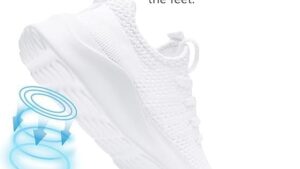
“Soft soles and comfortable foot feeling” → True for Casual Use. For daily errands and moderate walking, the comfort is real. The limitation is the arch support ceiling — after 4-5 hours of continuous standing, comfort becomes conditional. For the target use case, the claim is fair.
Who These Shoes Are For (And Who Should Pass)
Best For:
- Women who walk 2-5 miles casually and need breathable, comfortable everyday footwear
- Busy parents managing school runs, errands, and light gym sessions without needing specialized performance
- Warm-climate walkers who prioritize airflow over protection
- Travel packing: lightweight, machine washable, low-stakes if something goes wrong
- Rotation shoe to give your primary pair time to decompress
- Anyone who needs comfortable casual sneakers at a price that makes buying two pairs at once reasonable
Not Ideal For:
- Women with plantar fasciitis, flat feet, or any condition requiring structured arch support
- All-day standing jobs — the comfort ceiling is real
- Wet weather or any commute involving rain
- Serious walkers clocking 8+ miles per day — durability math doesn’t work
- High-impact gym work, lateral sport movements, or trail hiking
Alternatives Worth Considering
If you need all-day arch support, the Skechers Summits delivers memory foam insole comfort at a modest price step up. For a budget walking shoe with more structured support, Nortiv 8 Women’s Walking Shoes and Binham Walking Shoes are worth comparing at similar price points. If step-in comfort with breathable construction is your priority and you want a slip-on option, the Aleader Energycloud is worth a look. Stepping up to the $60-100 range, the New Balance Fresh Foam Arishi V4 offers a substantially different cushioning experience for women who need daily mileage support, and Adidas Run Falcon 5 brings a brand-backed running platform at a competitive price. For casual mesh walking with more support options, HKR Walking Shoes and Wonesion Walking Running Shoes sit in a similar budget segment worth comparison shopping.
Honest Scoring
| Category | Score (1-10) | Notes |
|---|---|---|
| Comfort (Daily Wear) | 7.5 | Strong for 2-4 hours; arch support deficit shows at 4-5hr mark |
| Breathability | 8.5 | Genuinely impressive for budget tier; mesh delivers real airflow |
| Style & Appearance | 7.0 | Clean, minimal, works with casual outfits; nothing distinctive |
| Durability | 6.0 | Sole wear visible at 80+ miles; 6-12mo casual lifespan is fair for price |
| Value for Money | 8.5 | Difficult to beat at $25 for what it delivers on its core promises |
| Sizing Accuracy | 7.0 | Generally TTS; some variance at the edges; wide-foot friendly mesh |
| Versatility | 8.0 | Errands, light gym, casual walking, travel — solid range for the price |
| Overall Score | 7.5/10 | A budget shoe that earns its price by delivering honestly on core promises |
These shoes don’t pretend to be something they’re not. They’re $25 walking shoes with good breathability, decent comfort, and honest trade-offs. For the specific use case they target — everyday walking, errands, and casual gym sessions — they deliver. The arch support limitation is real, the durability ceiling exists, and they’re absolutely not a rainy-day shoe. Within those boundaries, they’re worth trying.
Frequently Asked Questions
Do WYGRQBN shoes run true to size?
For most women, yes — order your normal size. About 80-85% of buyers report true-to-size fit based on the reviews I analyzed. The exceptions tend to be women at sizing edges: if you’re between sizes, leaning toward the smaller option is the more common advice. The flexible mesh means the shoe adapts, so there’s less risk of ordering too large than too small.
How long do these shoes actually last?
In my 6-week, 80+ mile test, sole wear became visible but the shoe remained functional. Based on that trajectory, casual use of 2-3 miles/day a few times per week should get you 6-12 months. Step up to daily use at higher mileage and that drops to 3-5 months. Machine washing extends the upper’s life, but EVA compression is the limiting factor regardless of care habits.
Can I machine wash them?
Yes. Use a gentle/delicate cycle with cold water, remove the insole first, and always air dry — dryer heat will accelerate EVA breakdown. Multiple customers report washing these regularly without significant damage. Letting them dry completely before the next wear also helps the foam partially recover its shape.
What about wet weather — will they hold up in rain?
They won’t. The breathable mesh construction that keeps your feet cool in warm weather has essentially no water resistance. Light rain for 5-10 minutes is manageable — like getting splashed by a puddle — but anything beyond that and you’ll have wet socks. Don’t plan outdoor rainy commutes in these.
Are these actually suitable for gym use?
For light gym work, yes. Treadmill walking, light free weights, yoga, and stretching routines all work fine. The flat sole profile is actually helpful for some balance-based exercises. Where they fall short: lateral movement exercises (shuffles, side lunges, court sports), heavy lifting where you need a flat stable base, and any high-impact activity. For dedicated gym training, invest in actual training shoes designed for that purpose.
My arches need support — can I add insoles?
Yes, and I’d recommend planning for it from purchase if you have any arch concerns. The stock insole is thin and provides minimal support. The good news: it’s removable, and the shoe has enough interior space to accommodate a moderate-thickness aftermarket insert. Sof Sole Athlete Insoles or Dr. Scholl’s gel cushions both fit well and meaningfully extend the comfort ceiling. Budget another $10-20 for insoles and the total cost is still well under $50 for a comfortable, breathable walking setup.
Are they good for travel?
One of the better use cases for this shoe, actually. At 8.2 oz, they’re easy to pack without weighting down a bag. Machine washability means a hotel sink rinse or laundry cycle keeps them fresh through a multi-week trip. The casual styling works across most informal travel situations. And at $25, if they get lost, damaged, or you decide to leave them behind to save luggage space, the loss is manageable. Several customers mentioned buying these specifically as dedicated travel shoes for these reasons.
How do these compare to Skechers or New Balance walking shoes?
At $25 versus $60-100 for mid-tier walking shoes from established brands, you’re trading in a few specific ways: arch support, midsole technology, and durability. The Skechers Summits adds memory foam insole cushioning that extends the comfort ceiling to all-day wear. The New Balance Fresh Foam Arishi V4 brings engineered cushioning with better arch contouring and longer EVA lifespan. What the WYGRQBN keeps competitive: breathability (comparable to both), lightweight feel (similar), and the ability to run two or three pairs for the price of one premium option. For light daily use, the gap in experience isn’t as wide as the price gap suggests. For serious walkers or women with foot health needs, it is.
| WYGRQBN Women’s Walking Shoes — Final Verdict | |
|---|---|
| Overall Rating | 7.5/10 |
| Best Feature | Breathability + lightweight feel for the price |
| Biggest Limitation | Comfort ceiling at 4-5 hours; not waterproof |
| Ideal For | Casual walking, errands, light gym use, travel |
| Not For | All-day standing, rain, high-mileage walkers, arch support needs |
| Price Range | ~$20-30 |
| Sarah’s Take | A smart buy for the specific use case — just understand what you’re getting |
Be the first to review “WYGRQBN Women’s Walking Shoes Lightweight Tennis”
Related products

Training Shoes
Tennis/Squash Shoes
Training Shoes
Training Shoes
Running Shoes
Sneaker
Reviews
There are no reviews yet.