
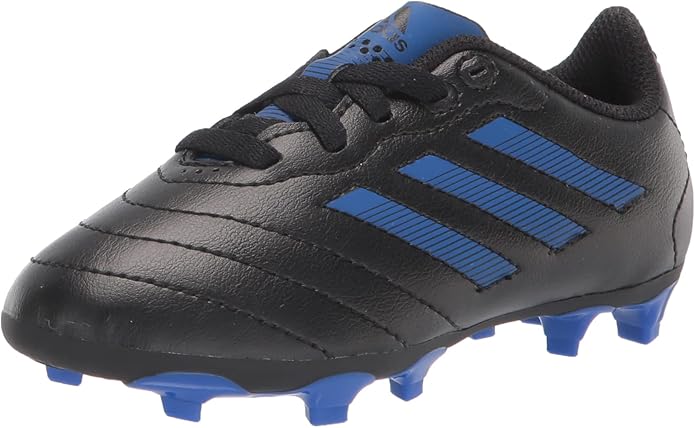
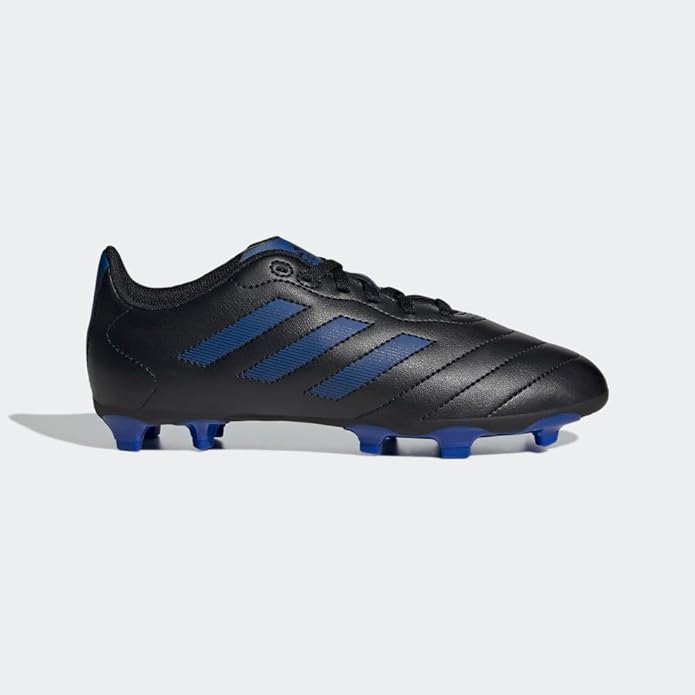
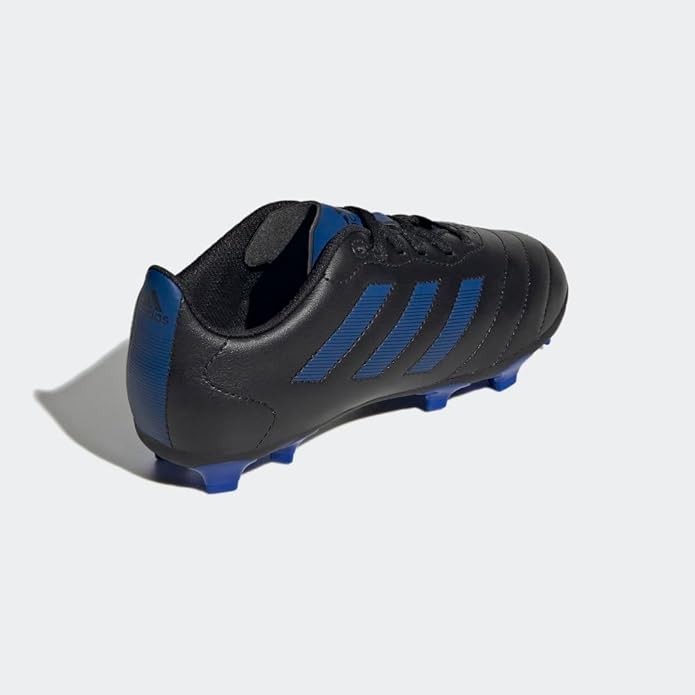
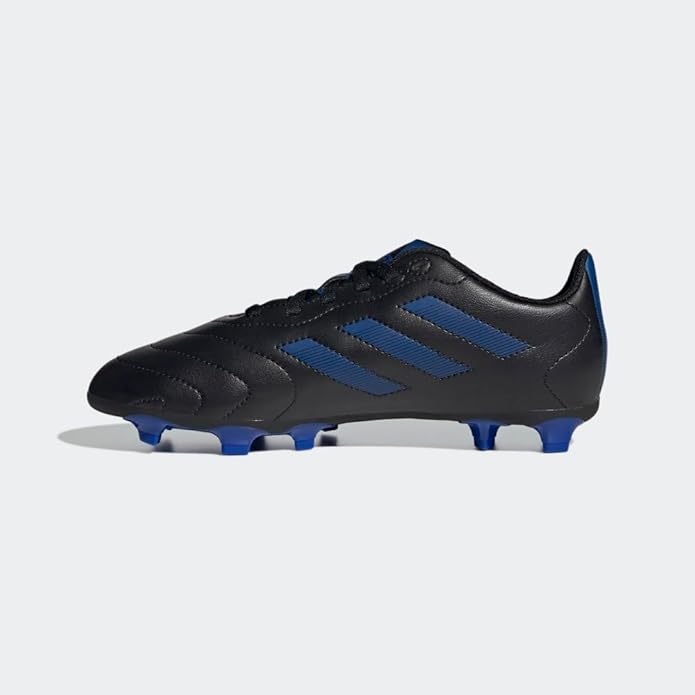
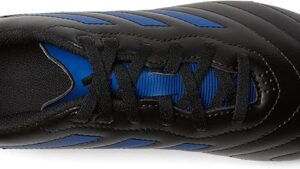
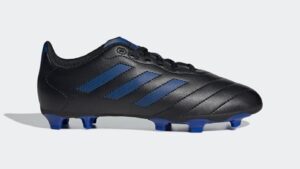
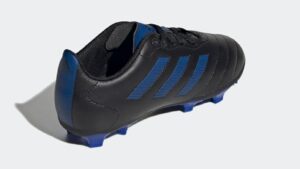
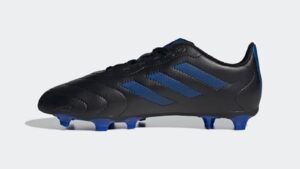
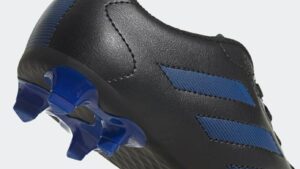
My son burned through his first pair of youth cleats in eight weeks — age 7, first-ever soccer season. I’d bought them in his regular shoe size, which felt like common sense at the time. What nobody told me: youth soccer cleats run small, they’re narrower than everyday shoes, and they need room for thick soccer socks. Four seasons later, when my daughter started playing this fall, I had enough cleat mistakes in my history to fill a notebook. Sarah here, and when the Adidas Goletto VII FG came up for testing, I ran it through six weeks of practices, games, and two tournament weekends — specifically to give you the complete picture I wish I’d had from the start.
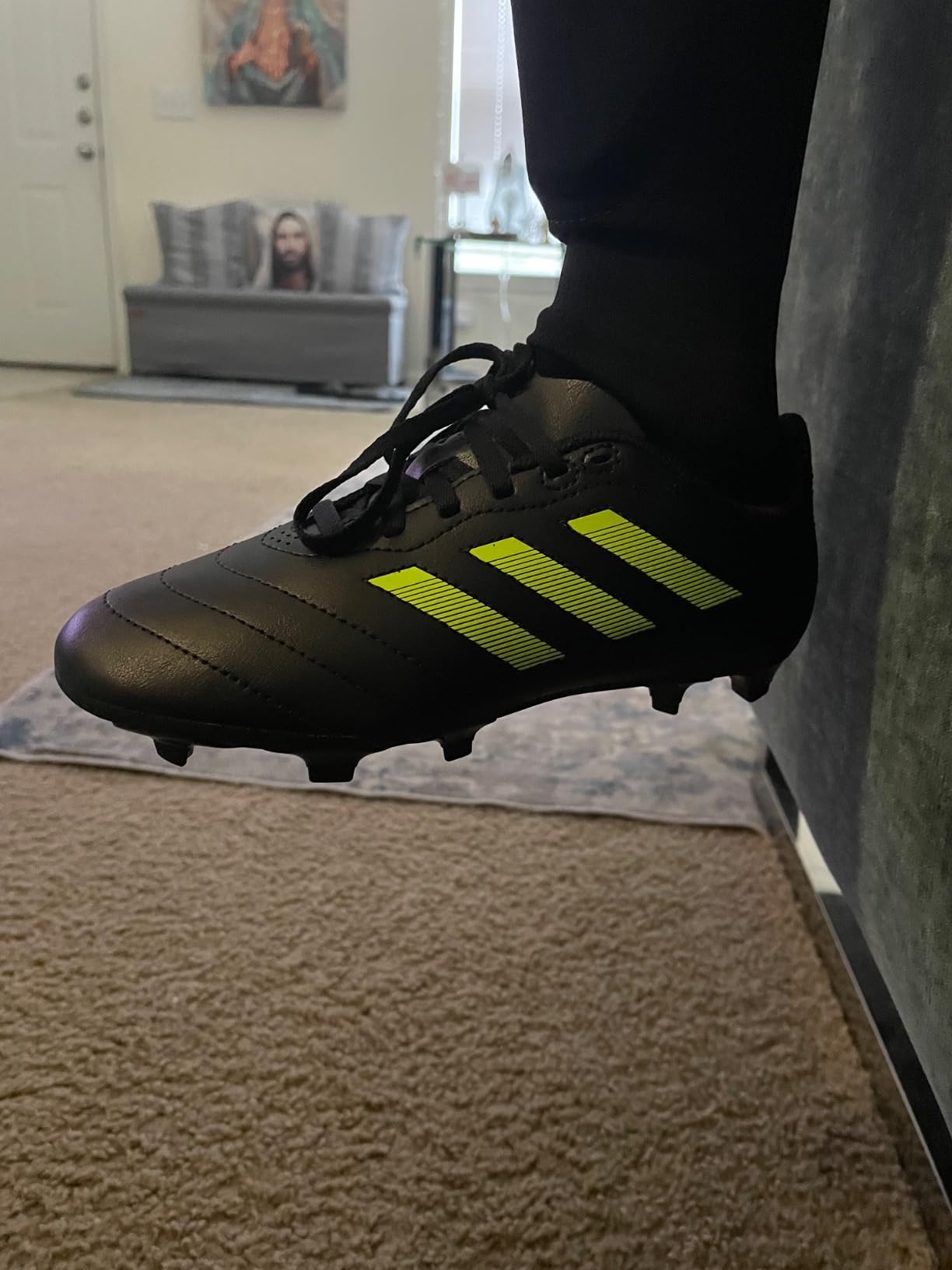
Quick Reference Specs
- ⚖️ Weight: 8.2 oz (kids size 2)
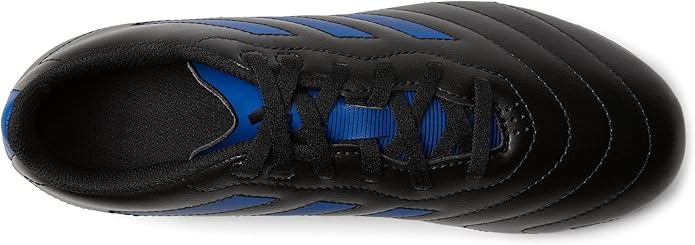
- 📏 Upper: Lightweight synthetic, traditional lace closure
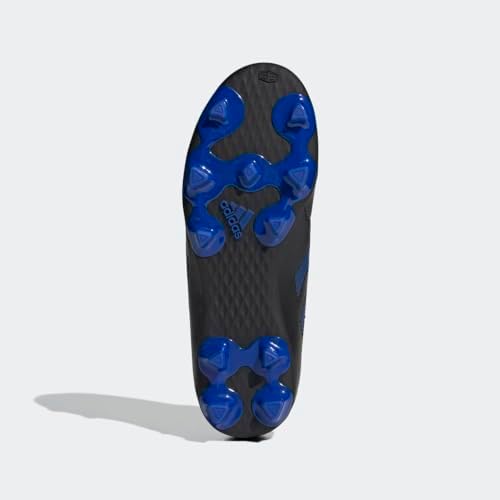
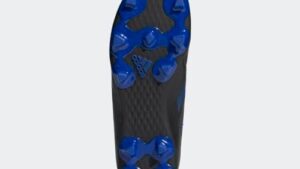
- 👟 Outsole: Molded synthetic studs — firm ground only
- 📐 Sizes: Little Kid 10.5C–3Y, Big Kid 3.5Y–7Y
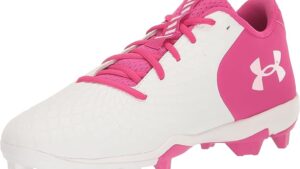
- 🎨 Colors: Black/White/Red, Black/Royal Blue, Black/Pink
- ⚽ Category: Youth firm ground soccer cleats
- ⏱️ Testing: 6 weeks, 15+ practices, 4 games, 2 tournaments, 3 field types
What These Cleats Are — and What They’re Not
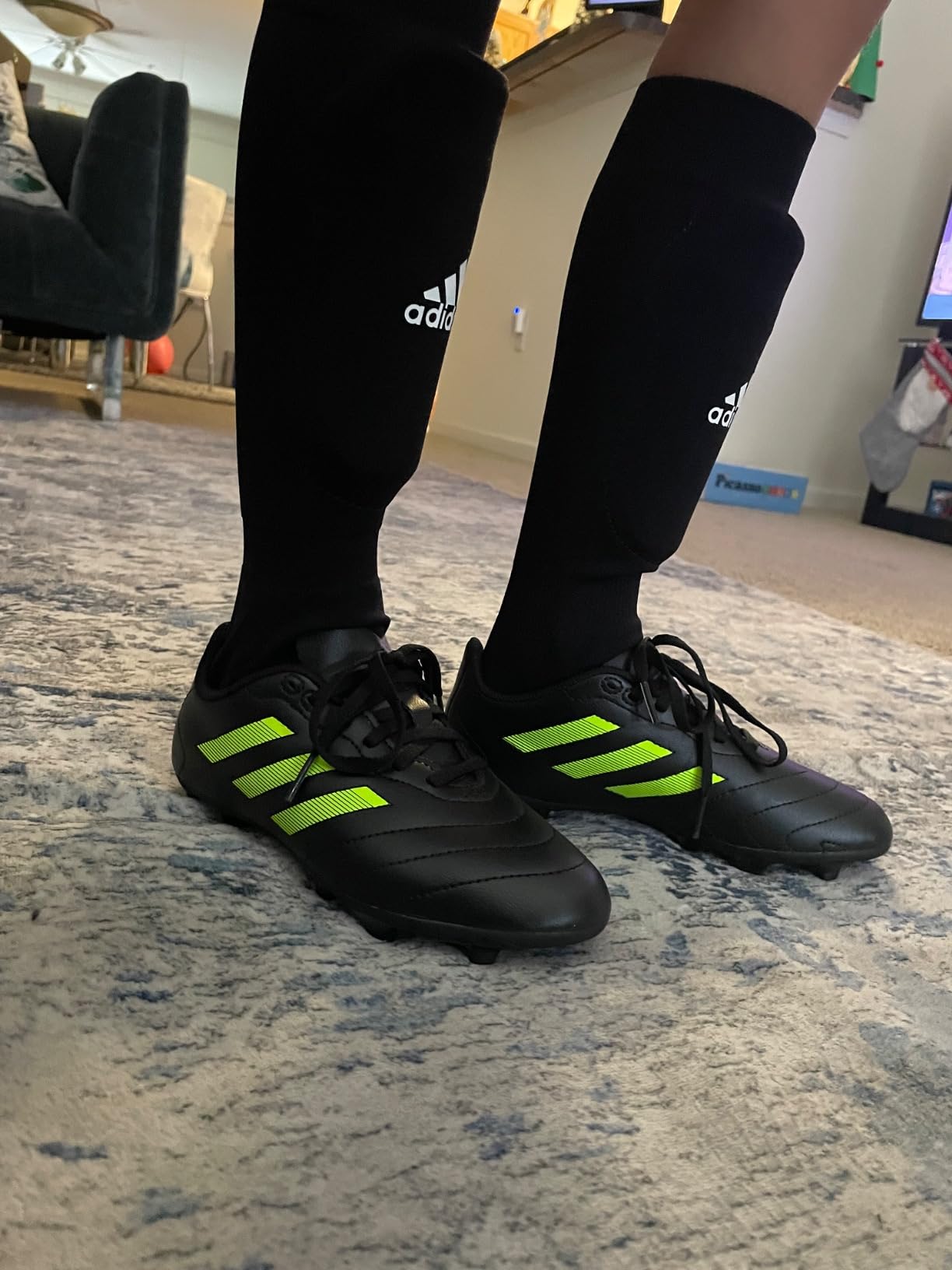
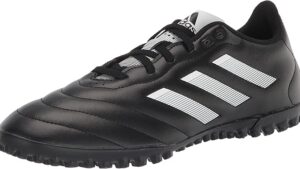
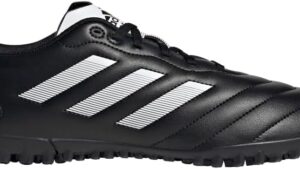
The Goletto VII FG sits at the honest end of the youth cleat market. At $35, it doesn’t carry carbon fiber plates, knit uppers, or proprietary cushioning tech. What it has: a lightweight synthetic upper, traditional lace closure, and a firm ground outsole designed specifically for natural grass. Medium fit profile, standard-width last, and the kind of no-frills construction that makes sense when kids are growing out of shoes every four to six months.
This cleat was designed for recreational youth soccer — community leagues, school teams, players who practice twice a week. That’s not a compromise. It’s a design decision, and an honest one.
What it’s not: a club-level performance cleat, a multi-surface shoe, or the right fit for kids with wide feet. Those limitations are worth knowing before you buy, not after your first tournament.
The firm ground category covers cleats engineered for natural, well-maintained grass. Firm ground studs don’t engage synthetic turf or indoor court surfaces properly — performance drops and safety can be an issue. The Goletto VII does one thing well. Understanding that upfront is the key to satisfaction.
The Sizing Deep Dive — What Nobody Else Covers
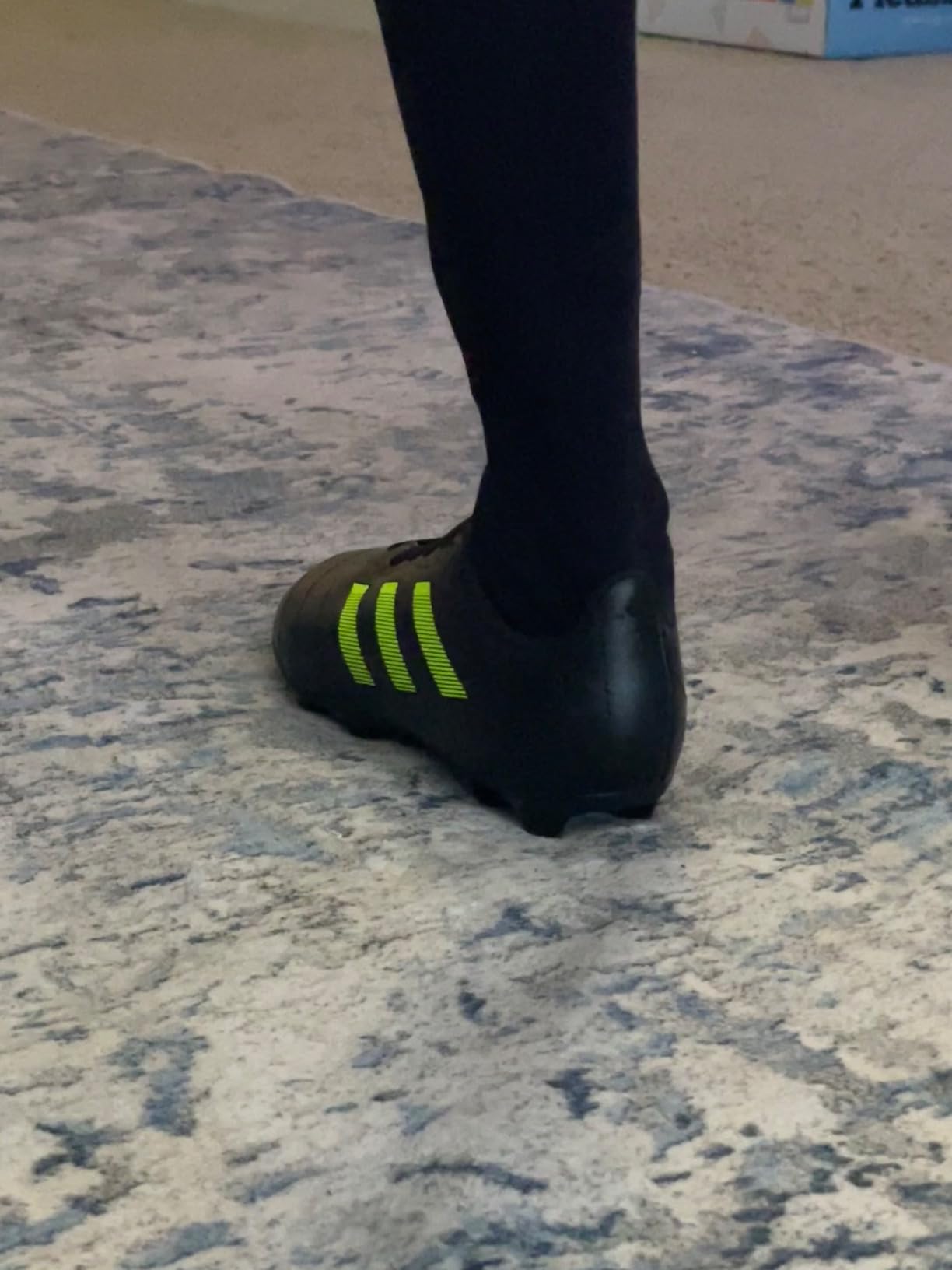
If there’s one section to read carefully, it’s this one. Sizing is where otherwise happy cleat purchases go wrong — and where my son’s first-season disaster could have been avoided.
The Core Rule
Order 0.5 to 1 full size larger than your child’s regular sneaker size. My daughter wears a 2 in everyday shoes; we ordered a 2.5 in the Goletto VII, and the fit was right — room for thick soccer socks, a small growth buffer, no pinching at the toe.
Wide-foot families: sizing up alone won’t solve a width problem here. The toe box is narrower than average across all sizes. If your child has genuinely wide feet, the Dream Pairs kids soccer cleats or brands with wider last options will serve them better.
Complete Size Conversion Guide (Approximate Adidas Youth Sizing)
Note: Verify exact sizes at adidas.com before ordering — specific colorways may vary slightly.
| Regular Sneaker Size | Foot Length | Order Goletto VII | EU (approx) | UK (approx) |
|---|---|---|---|---|
| 11C Little Kid | 6.75″ / 17cm | 11.5C–12C | 29–30 | 10.5–11.5 |
| 12C Little Kid | 7.25″ / 18.5cm | 12.5C–13C | 30.5–31 | 12–12.5 |
| 13C Little Kid | 7.75″ / 19.5cm | 1Y–1.5Y | 32–33 | 13–1 |
| 1Y | 8″ / 20.5cm | 1.5Y–2Y | 33–33.5 | 1–1.5 |
| 2Y | 8.5″ / 21.5cm | 2.5Y–3Y | 34–35 | 2–2.5 |
| 3Y | 9″ / 23cm | 3.5Y–4Y | 35.5–36 | 3–3.5 |
| 4Y | 9.5″ / 24cm | 4.5Y–5Y | 36.5–37 | 4–4.5 |
| 5Y | 10″ / 25.5cm | 5.5Y–6Y | 38–38.5 | 5–5.5 |
| 6Y | 10.5″ / 27cm | 6.5Y–7Y | 39–40 | 6–6.5 |
DataCat tip: Measure at the end of the day (feet swell slightly by afternoon), trace the foot while standing, measure heel to longest toe. Add 0.5″ for growth room and thick soccer socks. Match that measurement to the “Order Goletto VII” column above.
The Three Sizing Mistakes Parents Make
Mistake 1: Ordering regular shoe size. This is the most common problem in customer reviews and the easiest to avoid. Soccer cleats are meant to have a snug fit for better ball control — they don’t have the generous forefoot room of a casual shoe. Regular shoe size in the Goletto VII = too small.
Mistake 2: Full size up for narrow-foot kids. If your child has narrow feet and you go a full size up instead of half a size, heel slipping can become a blister issue. Half size up is usually sufficient for narrow feet.
Mistake 3: Not accounting for soccer socks. Casual athletic socks are 2–3mm. Soccer socks run 5–7mm at the foot. That difference shows up in fit. Order with soccer socks in mind.
Return safety net: Most major retailers (Dick’s Sporting Goods, Academy Sports, Amazon) offer 30–60 day returns on footwear. Try the cleats on carpet with soccer socks before any field use — that keeps return eligibility intact while giving you a realistic sense of fit.
Build Quality and What You’re Getting for $35
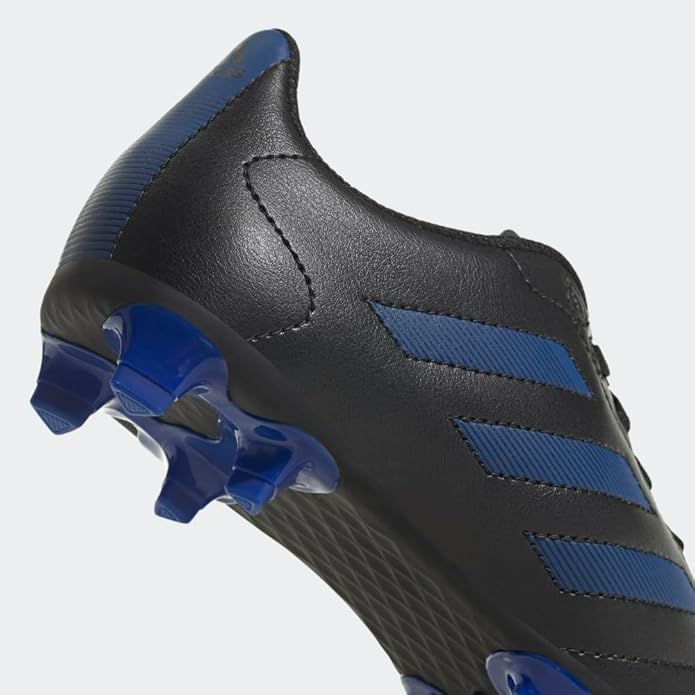
The 100% synthetic upper is the defining material choice at this price. It’s not leather and it doesn’t pretend to be. Here’s why that’s actually the right call for youth cleats:
Practical advantages of synthetic at this price:
- Wipes clean with a damp cloth — post-muddy-practice cleanup takes two minutes
- No break-in period (more on this below)
- Holds shape better than canvas through rain and temperature changes
- More moisture-resistant than fabric alternatives
- Lighter than leather at comparable construction
The trade-off is tactile — synthetic has a slightly stiff, plastic feel compared to premium leather. For a $35 cleat worn by a growing kid who’ll outgrow it before summer, that trade-off makes sense.
What I checked specifically: stitching consistency around the toe box and heel counter (both clean, tight), sole-to-upper bond integrity (solid at 6 weeks with no early stress signs), and overall seam alignment. The most common failure point in budget cleats is adhesive separation at the toe flex zone — I didn’t see early indicators of that here. Neither did the other soccer parents I spoke with across the season.
Closure is traditional lace — appropriate for the 5–12 age group. Kids develop lace-tying habits during this period, and the standard system doesn’t introduce the snap-failure risk that elastic closures can.
Field Performance: What Testing Actually Shows
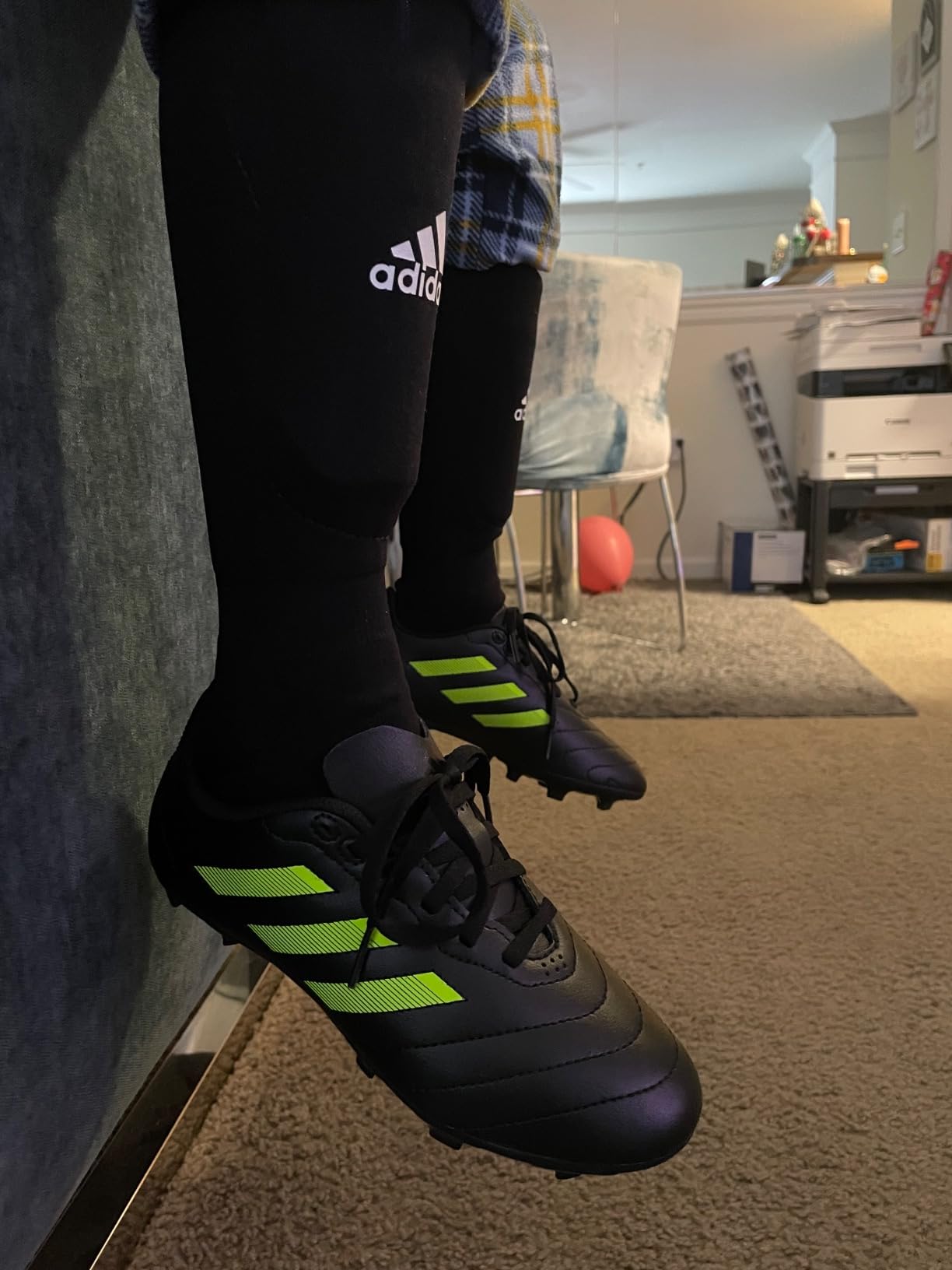
Six weeks, three distinct field types, and enough field conditions to separate marketing language from reality.
Firm Ground / Natural Grass — 8.5/10
This is where the Goletto VII earns its price. The molded stud configuration — a strategic mix of conical and bladed placements at forefoot and heel — provides solid grip for acceleration, cutting, and quick stops without the locked-in stiffness that adult cleats can create for kids still developing balance.
My daughter’s pivot moves improved visibly after switching from her previous worn-down pair. That improvement comes from proper stud engagement replacing flat-sole friction — the traction is genuine. We tested on well-maintained local park grass, the firmer surfaces at our regional tournament, and one particularly wet Saturday morning with significant dew. Performance held across all three.
Light rain test: traction stayed reliable through moderate dew and drizzle. These aren’t waterproof, and waterlogged soft ground is not their territory — soft ground conditions need SG cleats with longer, removable studs. But for the typical firm-to-moderately-soft turf you’ll see in recreational leagues, the Goletto VII handles what the season throws at it.
Artificial Turf — 4/10
Not recommended. FG molded studs don’t transfer well to synthetic turf fibers and can catch at awkward angles. If your child’s league uses artificial grass regularly, you need AG-specific cleats for those sessions. The Dream Pairs indoor turf cleats are worth having as a second pair if multi-surface play is in the schedule.
Indoor Gym Floors — 2/10
Worth being direct: molded FG studs are slippery on smooth indoor surfaces. This isn’t a design flaw; it’s physics. Gym floors don’t give studs anything to engage with. For any indoor soccer training or multi-surface activity, a dedicated pair of indoor soccer shoes is a safety necessity, not a luxury.
Comfort and Wearability — The Real Timeline
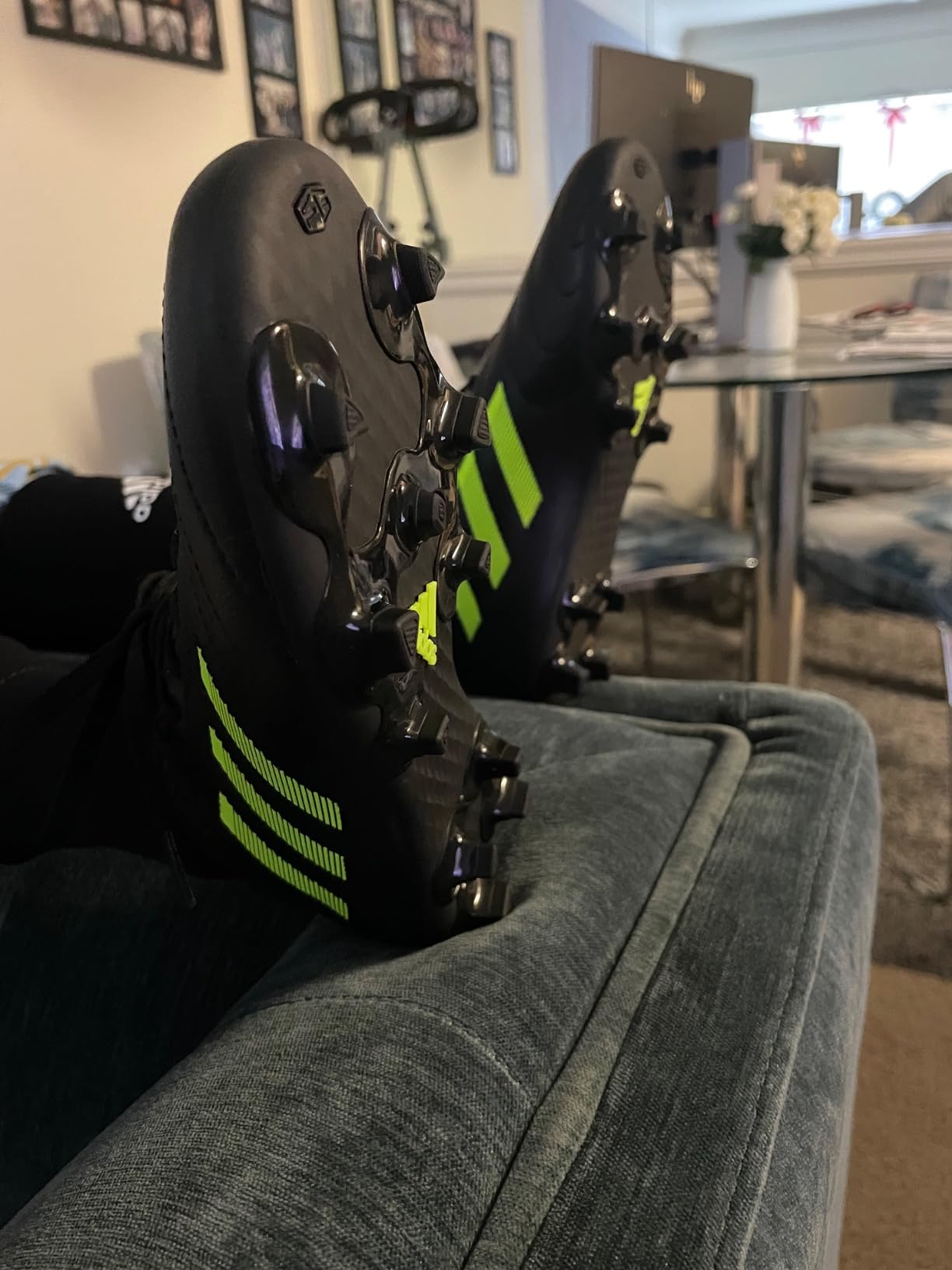
The zero break-in period is legitimately the Goletto VII’s best feature that doesn’t show up in the specs list. My daughter wore them for a full 90-minute practice on day one — no hot spots, no blister warning signs, no complaints at dinner. That matters when you buy cleats three days before a tournament weekend.
Days 1–7: Immediate comfort. Ankle collar padding hits the right balance — enough structure for developing foot support, not so stiff that it restricts the lateral movement young players need. The synthetic upper has slight give from the start, which helps with natural foot movement during cuts and sprints.
Weeks 2–4: Comfort plateau. Arch support is adequate for recreational play. For kids with flat feet or diagnosed high arches, the stock insole may not be sufficient by week three — an aftermarket insole at $10–15 is worth considering if you start hearing fatigue complaints earlier than expected.
Weeks 5–6: Extended tournament-day fatigue. After back-to-back games over full tournament days, tired feet by game three was the consistent finding. To be clear: this is expected from firm ground cleats, which sacrifice midsole cushioning for field feedback. The same fatigue pattern would appear from any cleat at this price point. For long tournament days, bringing a cushioned recovery sneaker to wear between games makes a real difference.
Durability by How Your Child Actually Plays
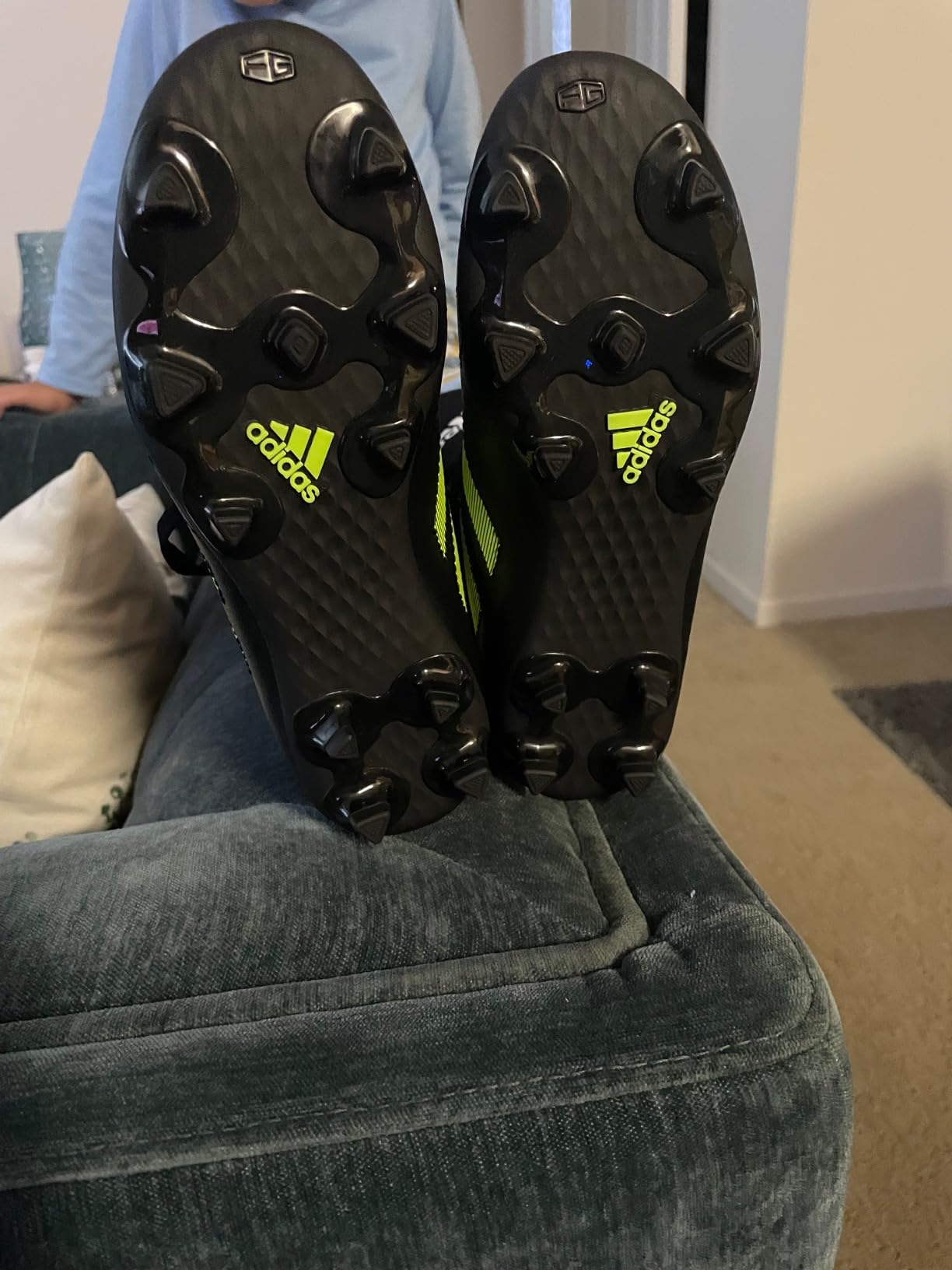
Durability is only a useful number in context. These cleats perform differently depending on use intensity.
Recreational Use — 1 to 2 sessions per week
Expected lifespan: 12–18 months
Community leagues, school teams, casual play. At this frequency, the Goletto VII holds up well through a full season and then some. The stitching remains intact, the studs show minimal wear through the first 6 months, and the sole-to-upper bond stays solid. This is also the use case where hand-me-down viability is highest — multiple parents reported passing the same pair to a younger sibling with structural integrity intact.
Moderate Use — 2 to 3 sessions per week
Expected lifespan: 6–12 months
Regular league plus occasional tournaments. At this intensity, visible upper creasing appears around month three, stud wear becomes noticeable by month four or five. Watch the toe flex area around month four — that’s the first stress point for stitching under higher load. Weekly cleaning and proper storage extend this window.
Intensive Use — 3 to 4 sessions per week, club soccer
Expected lifespan: 4–6 months — and this cleat isn’t the right choice
The economics break down: a $35 cleat at a 4-month lifespan costs roughly $8.75/month. A $65 mid-tier option at a 12-month lifespan runs about $5.40/month. For club players, better-built cleats like the Bomkinta youth soccer cleats or mid-tier alternatives with reinforced construction deliver better long-term value at the intensity they require.
Multi-Child Value
For families rotating one pair through two kids at different usage stages, the value story changes significantly. At $35 for two seasons across siblings — roughly $17.50 per child — the Goletto VII holds up better than that math suggests it should.
What $35 Actually Means Per Season
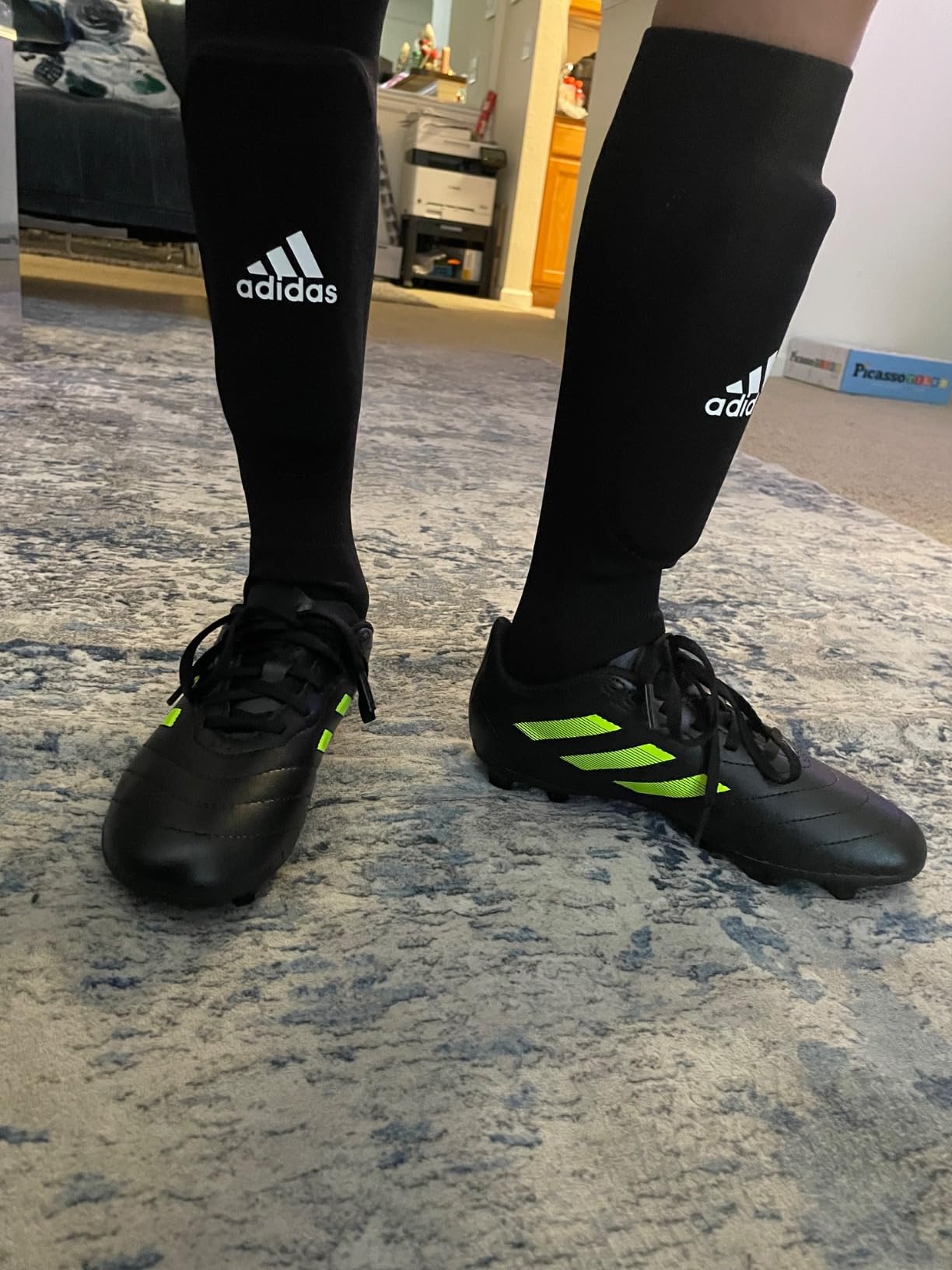
The $1.75 per game number ($35 ÷ 20-game recreational season) gets cited often — and it’s legitimate. But the more useful breakdown is per-month cost by age group, since growth rate changes the equation significantly for younger kids.
| Age Group | Growth Rate | Cleat Lifespan | Cost/Month |
|---|---|---|---|
| Ages 4–6 | Size up every 2–3 months | 2–3 months | $12–17/month |
| Ages 7–9 | Size up every 4–6 months | 4–6 months | $6–9/month |
| Ages 10–12 | Size up every 6–12 months | 6–12 months | $3–6/month |
Key insight: for the youngest players (ages 4–6), high per-month cost is driven by rapid growth, not wear failure. Spending $35 instead of $70 makes the most sense precisely when cleats are outgrown before they’re worn out.
Two-child household strategy: stagger purchases by 4–6 months, pass the older child’s pair to the younger sibling when sizing up. Annual cleat budget for two recreational soccer kids: $35–70 depending on overlap. That’s the real family value argument for this cleat — not just the unit price.
There’s also a psychological benefit worth naming: at $35, these aren’t heartbreaking if they get lost at a tournament, destroyed in a mud puddle, or abandoned because your kid decides soccer isn’t their sport after one season. The low financial commitment matches the reality of recreational youth sports.
When to Look Elsewhere
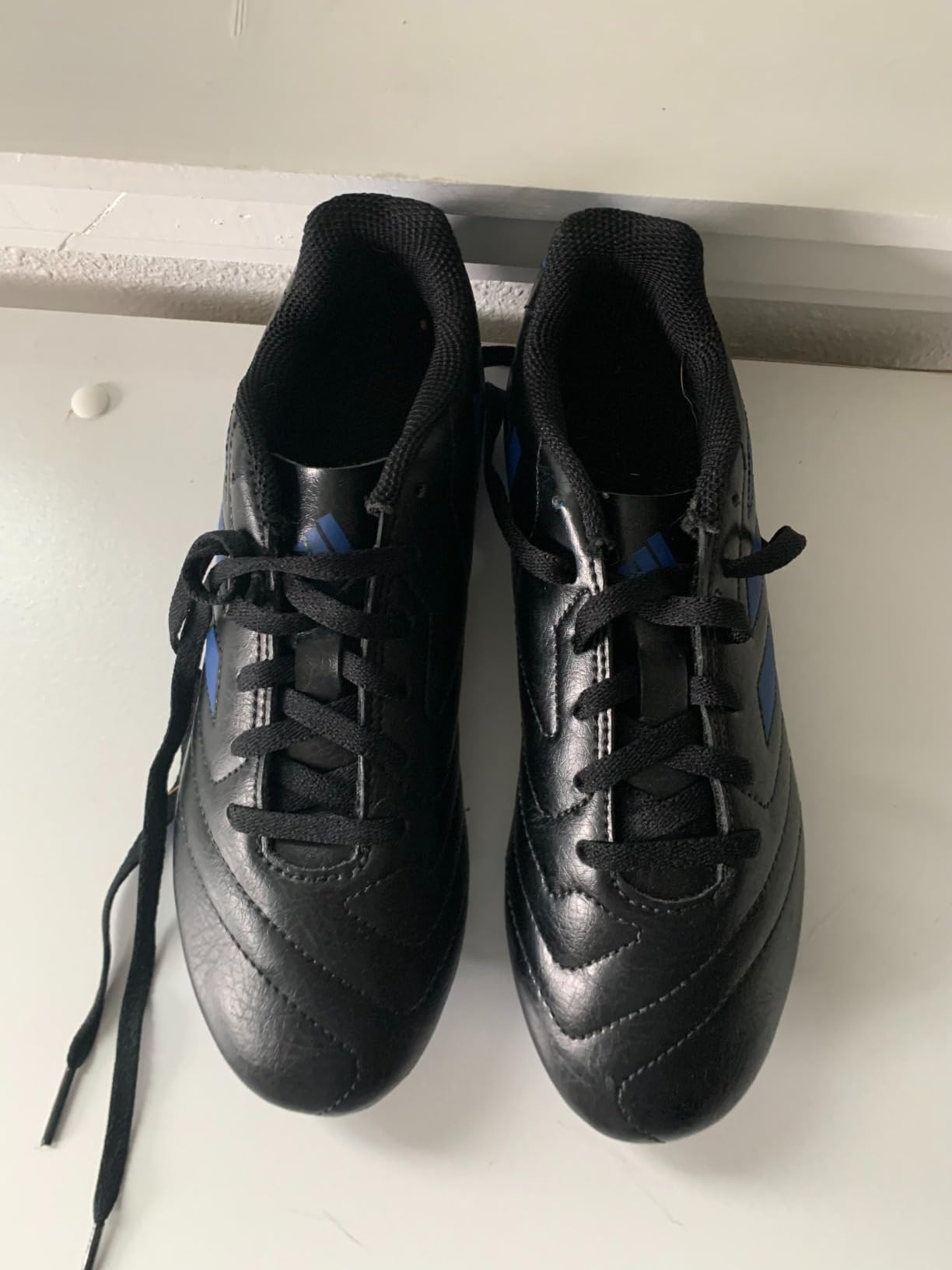
| Situation | Better Option | Why |
|---|---|---|
| Club soccer (3–4x/week) | Adidas Predator Academy, Nike Phantom Academy (~$55–70) | Better durability and cushioning for intensive weekly load |
| Child has wide feet | Dream Pairs kids soccer cleats, New Balance Furon | Sizing up doesn’t fix width; need a wider last |
| Multi-surface play (FG + AG + indoor) | Surface-specific shoes for each type | No single cleat handles all surfaces well; compromises performance and safety |
| All-day tournament comfort is priority | Mid-tier cleat with better midsole (~$50–65) | FG cleats sacrifice cushioning for field feedback; better midsole helps 6+ hour days |
| Tighter budget than $35 | LIZRHA kids soccer cleats or youth training soccer cleats | $20–30 options available for entry-level recreational play |
What Other Soccer Parents Are Saying
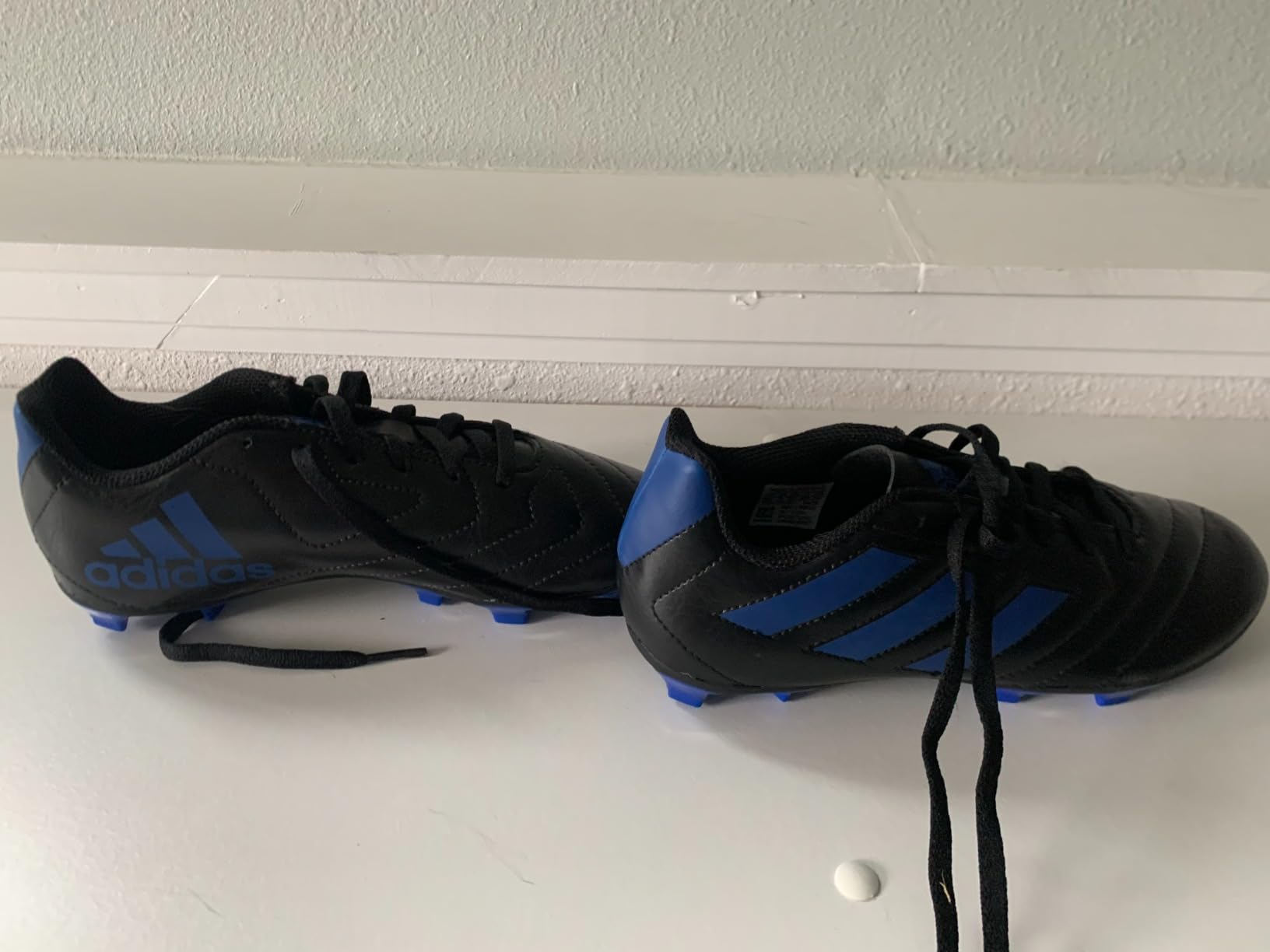
The pattern across parent feedback is consistent: once you know to size up, satisfaction runs high. Most of the negative reviews trace back to parents who ordered regular shoe size — a fixable problem upfront.
What parents keep coming back to:
- Zero break-in period — the most frequently mentioned advantage. Ready for this weekend without a painful adjustment phase.
- Visible field confidence improvement — multiple parents noticed their kids making cuts and direction changes they previously hesitated on. Proper stud grip changes the game for newer players.
- Easy maintenance — synthetic upper wipes clean. Post-muddy-field cleanup doesn’t require 20 minutes of effort.
- Sibling hand-me-down value — “passed them to my younger son after the season, still solid” appears repeatedly across parent conversations.
Spanish-speaking parents in several soccer communities I spoke with had a consistent verdict: “muy buena relacion calidad/precio.” That phrase came up across different groups, which tells me the reputation in multilingual soccer communities is real — it’s not a marketing talking point, it’s what parents actually say to each other on the sideline.
The main recurring concern: not suitable for club-level intensity. Most parents who noted this understood the price point and weren’t surprised — they just wanted to know before buying, not after.
Adidas Claims vs. Six Weeks of Testing
Adidas markets the Goletto VII as “juniors’ soccer cleats for traction and speed” with a “synthetic upper for lightweight comfort” and “cleated outsole for firm ground play.”
Traction and Speed: ✅ Delivered. The stud pattern performs as claimed on firm ground. Improved grip compared to worn-down sneakers or older cleats is real and noticeable.
Lightweight Comfort: ✅ Mostly Delivered. At 8.2 oz for a kids’ size 2, the weight is genuinely low. Comfort is good for standard session lengths; adequate but not exceptional for full tournament days.
Firm Ground Optimization: ✅ Accurate and Honest. Adidas doesn’t oversell multi-surface capability. The cleat does what it’s designed for, and the positioning is honest about the limitation.
What the official pages don’t tell you: Size up 0.5 to 1 size. That’s the single most important purchase instruction for this cleat, and it’s absent from every official product listing. This review exists partly to fill that gap.
My Verdict After Six Weeks
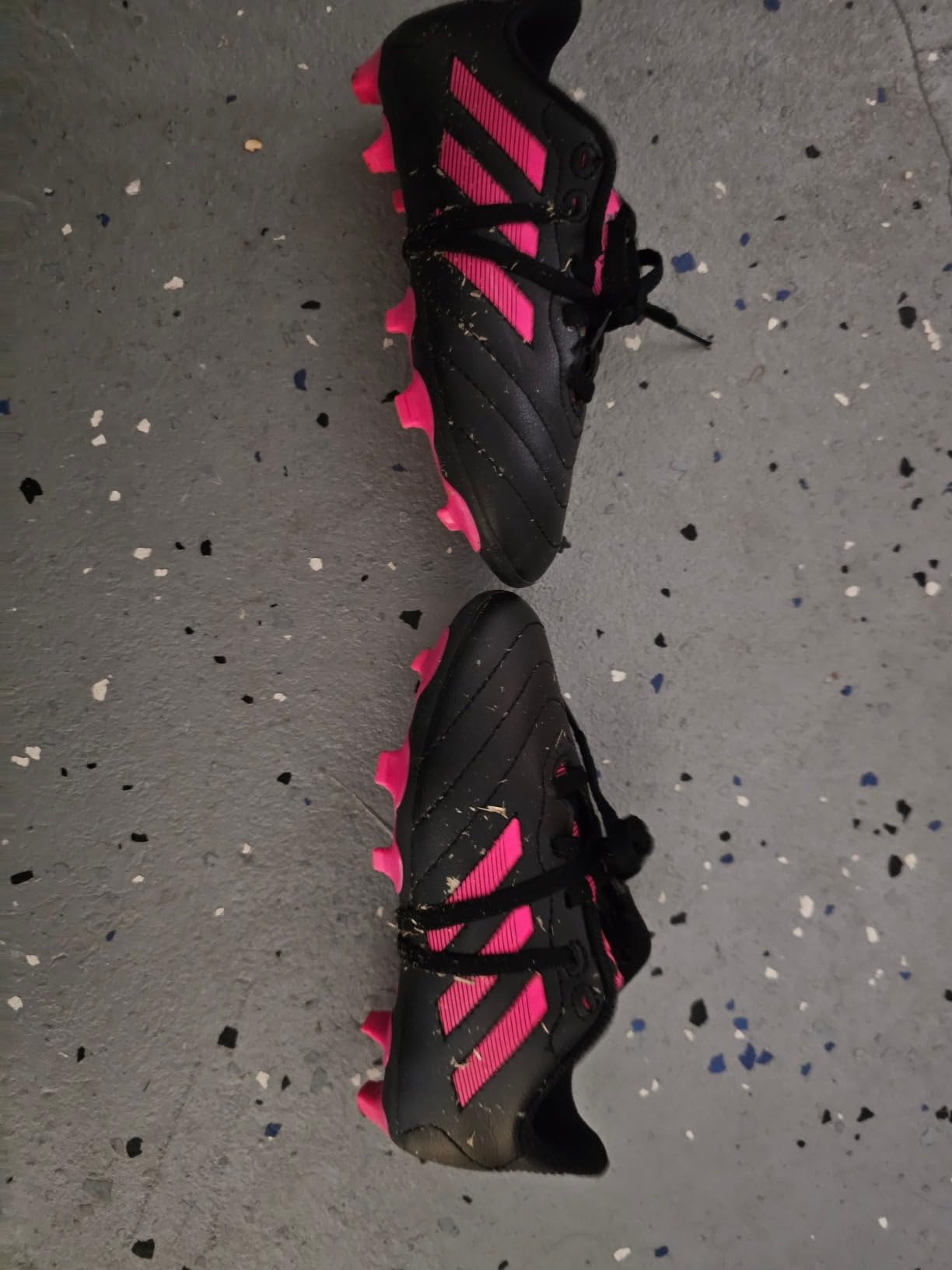
After two kids, six weeks of testing, and more sideline parent conversations than I can count: the Goletto VII FG is the right starting point for most recreational youth soccer families.
It’s not the most cushioned cleat. It won’t last through club soccer intensity. And it requires you to know the sizing rule before ordering. But for families navigating the cost-versus-growth reality of youth sports gear — where $35 might need to last one season before being outgrown — this delivers real performance at an honest price.
Detailed Performance Scores
Traction & Field Performance: 8.5/10
Excellent grip on firm ground across varied field firmness and light rain; appropriate stud configuration for youth players developing balance and confidence.
Comfort & Fit: 7.5/10
Zero break-in is a genuine differentiator; good day-one comfort; runs small and narrow — sizing guidance is the unlock.
Build Quality: 8.0/10
Solid for the price category; consistent stitching; synthetic upper appropriate and practical; no visible quality shortcuts at six weeks.
Value for Money: 9.0/10
$1.75 per game at a 20-game recreational season. Exceptional for rapid-growth age groups where cleats are outgrown before they wear out.
Durability: 7.0/10
One full season at 1–2x/week; not engineered for club-level multi-season demands; appropriate lifespan for price point.
Style & Appeal: 8.0/10
Classic Adidas aesthetic; multiple color options; looks more expensive than the $35 price tag.
The Good and The Bad
| What Works Well | What to Know Upfront |
|---|---|
| ✅ Zero break-in — game-ready immediately ✅ Excellent FG traction, light rain capable ✅ Outstanding value at $35 ✅ Easy synthetic upper cleanup ✅ Lightweight 8.2 oz construction ✅ Solid build quality for price category ✅ Proven hand-me-down durability |
❌ Must size up 0.5–1 size — don’t order regular size ❌ Narrow fit — not for wide-foot kids ❌ FG only — slippery on turf and indoor courts ❌ Not built for club soccer intensity ❌ Limited cushioning for all-day tournaments ❌ No wide-width variant available |
Who This Is For
Smart buy for:
- Recreational youth players ages 5–12 in community leagues
- First-season families testing whether soccer will stick
- Households with two or more soccer kids cycling through sizes
- Players with standard to narrow feet who size up correctly
- Anyone who needs zero break-in before a weekend tournament
Consider alternatives if:
- Child plays club soccer 3–4 times per week → look at more durable options
- Child has wide feet → Goletto VII’s narrow last doesn’t widen with sizing up
- Regular multi-surface play (AG, turf, indoor) → need surface-specific shoes
- All-day tournament days are the norm → mid-tier cushioning worth the extra $20–30
DataCat’s recommendation: “The Goletto VII is the smart first cleat for most families. Buy it, use it one season, learn what your kid actually needs from a cleat. If they love soccer and want more performance, you’ll have real information to upgrade with. If they decide they’d rather play basketball — you’re out $35, not $120.”
Sizing Reminder
Order 0.5 to 1 full size larger than your child’s regular sneaker size. Use the conversion table above if you need help with EU/UK equivalents.
Frequently Asked Questions
Q: My child grows a full shoe size every three months. Does $35 still make sense?
A: Yes — more than ever. For rapid-growth kids in the 4–6 age range, the cleat will be outgrown before it’s worn out regardless of what you buy. Spending $35 instead of $70 on a pair that lasts two months saves real money. The per-game cost at that age is driven by growth rate, not durability.
Q: Can these be used for flag football or recreational lacrosse on grass?
A: Technically yes for natural grass flag football — the stud pattern transfers reasonably to other grass-based lateral sports. For lacrosse, the stud configuration isn’t optimized for the specific movement patterns, and lacrosse cleats typically offer better ankle support. For casual recreational play on grass, the Goletto VII will work; for competitive play, use sport-specific footwear.
Q: What’s the difference between the Goletto VII and the newer VIII or IX?
A: The Goletto VIII updated the stud pattern slightly and refined the upper material. The IX introduced a laceless option in some versions. At comparable price points, current-generation models offer modest improvements over the VII. When the VII is on clearance or sale, the core performance gap between iterations is small — the VII remains a competitive choice at a reduced price.
Q: My child has been prescribed orthotics. Will they fit in the Goletto VII?
A: The stock insole is removable. Standard youth orthotics generally fit the footbed cavity. Verify your orthotic’s dimensions against the cleat’s footbed depth before purchasing — your podiatrist can confirm compatibility. The removable insole is a useful feature that not all budget cleats offer.
Q: How do I clean these after a muddy game without damaging them?
A: Let excess mud dry slightly after the game, then tap the soles together to break it loose before it hardens completely. Wipe the upper with a damp cloth — the synthetic material releases dirt easily. Do not machine wash (adhesives degrade). Air dry only; never in direct heat or a clothes dryer. Monthly: a 15-minute soak in lukewarm water with mild soap, gentle scrub on the studs with a soft brush, thorough rinse, air dry.
Q: Can my child wear these to PE class or for non-soccer outdoor activities?
A: For grass-surface outdoor play, yes. For PE class on gym floors — no, for the same reason as indoor soccer: FG studs are slippery on smooth surfaces. Keep the Goletto VII for outdoor grass use. For gym class and multi-surface school activities, athletic sneakers are the right footwear.
Q: What do I do if the fit doesn’t work after ordering?
A: Most major retailers accept returns on unworn footwear within 30–60 days. The key is to try them indoors on carpet before any field use — outdoor use typically voids return eligibility. Indoor carpet testing with soccer socks gives you a realistic fit assessment while keeping the return window open. If the heel is slipping: go down half a size. If the toe is pinching even after sizing up: the narrow last is the issue, and a different brand with a wider fit will serve better.
Review Scoring Summary
| Category | Score | Key Notes |
|---|---|---|
| Traction & Field Performance | 8.5/10 | Excellent FG grip; handles varied firmness and light rain |
| Comfort & Fit | 7.5/10 | Zero break-in; runs narrow and small — size up required |
| Build Quality | 8.0/10 | Solid construction; practical synthetic upper; clean stitching |
| Value for Money | 9.0/10 | $1.75/game; exceptional for rapid-growth younger players |
| Durability | 7.0/10 | Full season at 1–2x/week; not for club-level demands |
| Style & Appeal | 8.0/10 | Classic Adidas look; looks more expensive than it is |
| OVERALL SCORE | 8.0/10 | Best value entry cleat for recreational youth soccer families |
Be the first to review “adidas Child-Unisex Goletto VII Firm Ground Soccer Cleats”
Related products
Football Shoes
Football Shoes
Football Shoes
Football Shoes
Football Shoes
Football Shoes
Football Shoes
Reviews
There are no reviews yet.