
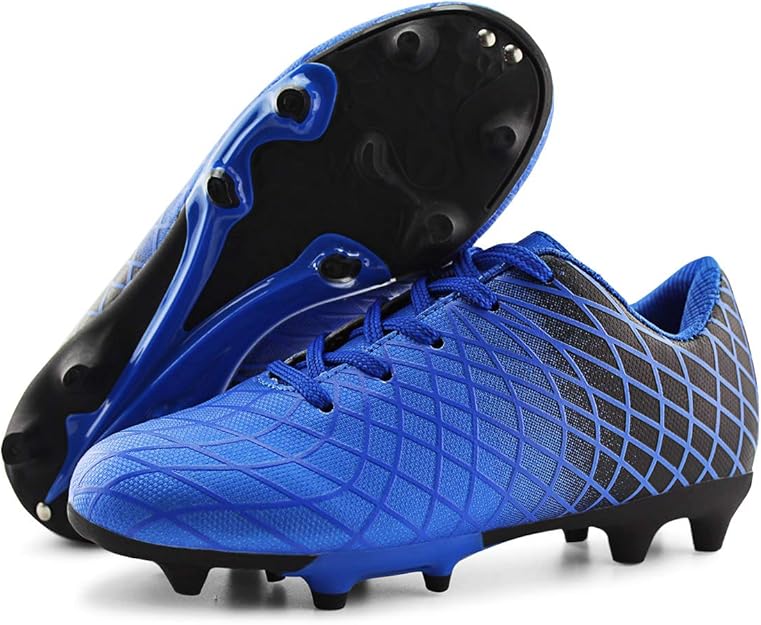
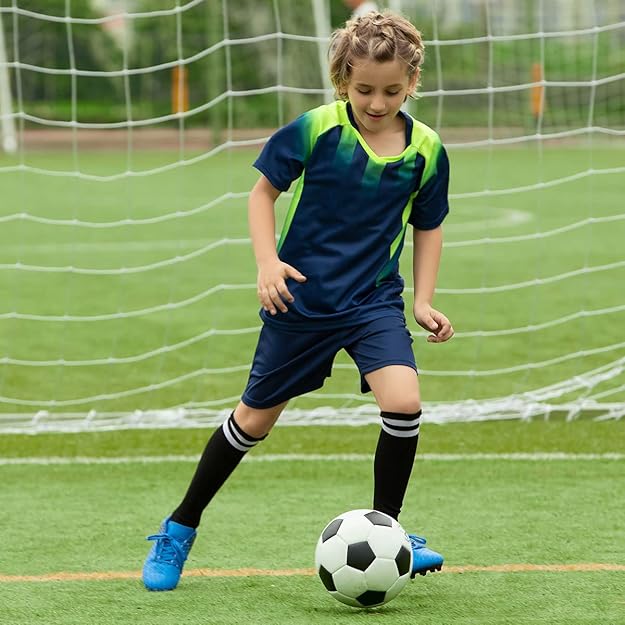
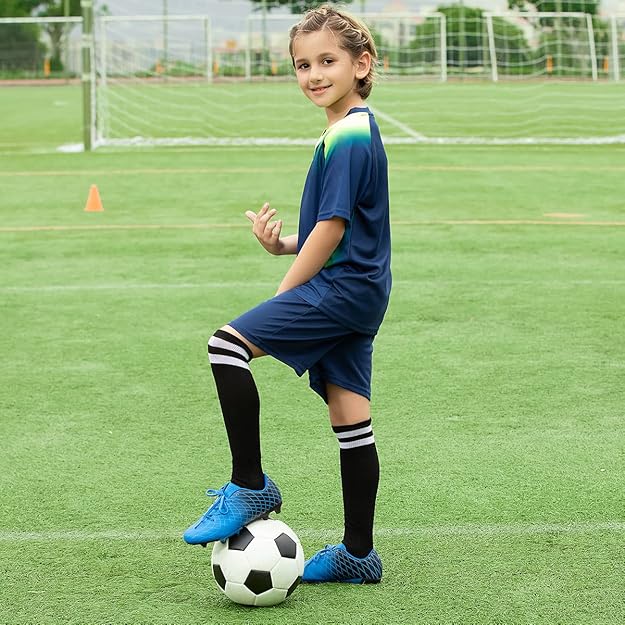
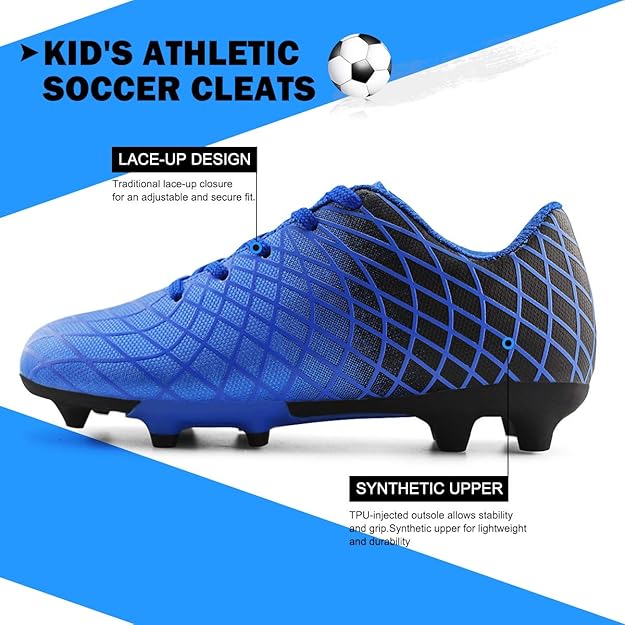
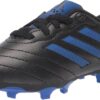
Technical Specifications
| Specification | Details |
|---|---|
| Category | Kids firm-ground (FG) soccer cleats, unisex |
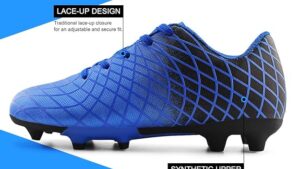
| Closure | Lace-up (center lacing) |
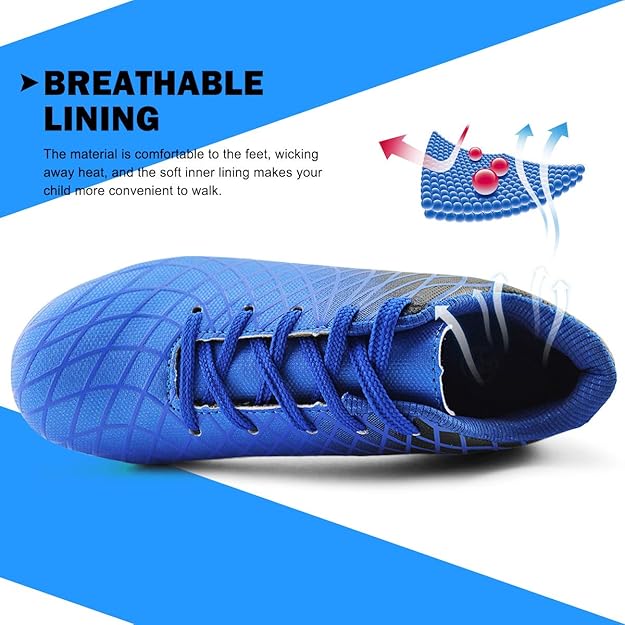
| Upper Material | Synthetic fabric (lightweight focus) |
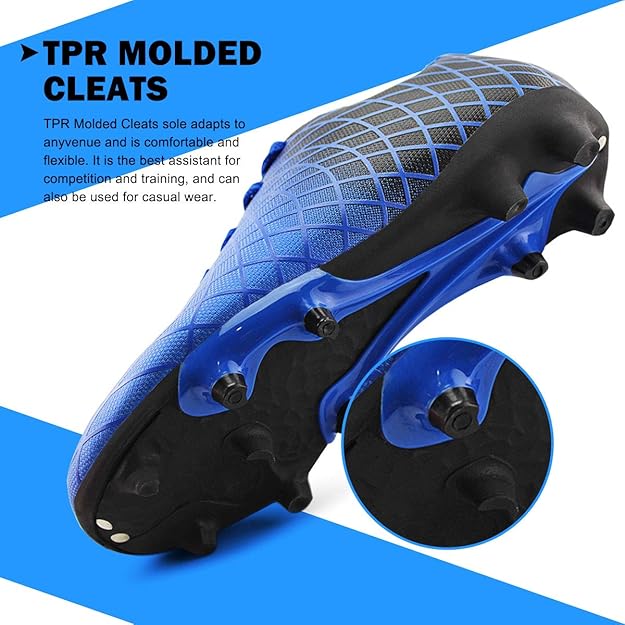
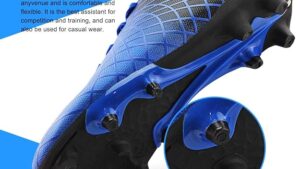
| Outsole | Molded rubber with TPR (thermoplastic rubber) studs |
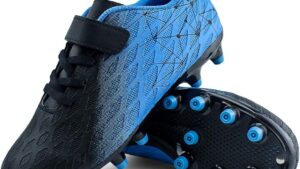
| Stud Type | Rotational/crescent pattern for FG use |
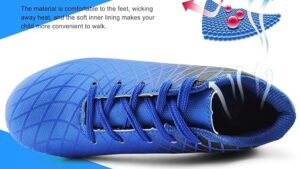
| Padding | Padded tongue and toe box |
| Size Range | Little Kid to Big Kid (10 sizes) |
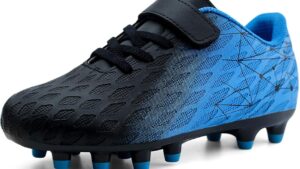
| Colorways | Blue/Pink, multiple bright options |
| Customer Rating | 4.32 out of 5 (151+ Amazon reviews) |
| Price | Budget tier; varies by size/color |
Design, Build Quality & Real-World Performance
Upper & First Impressions
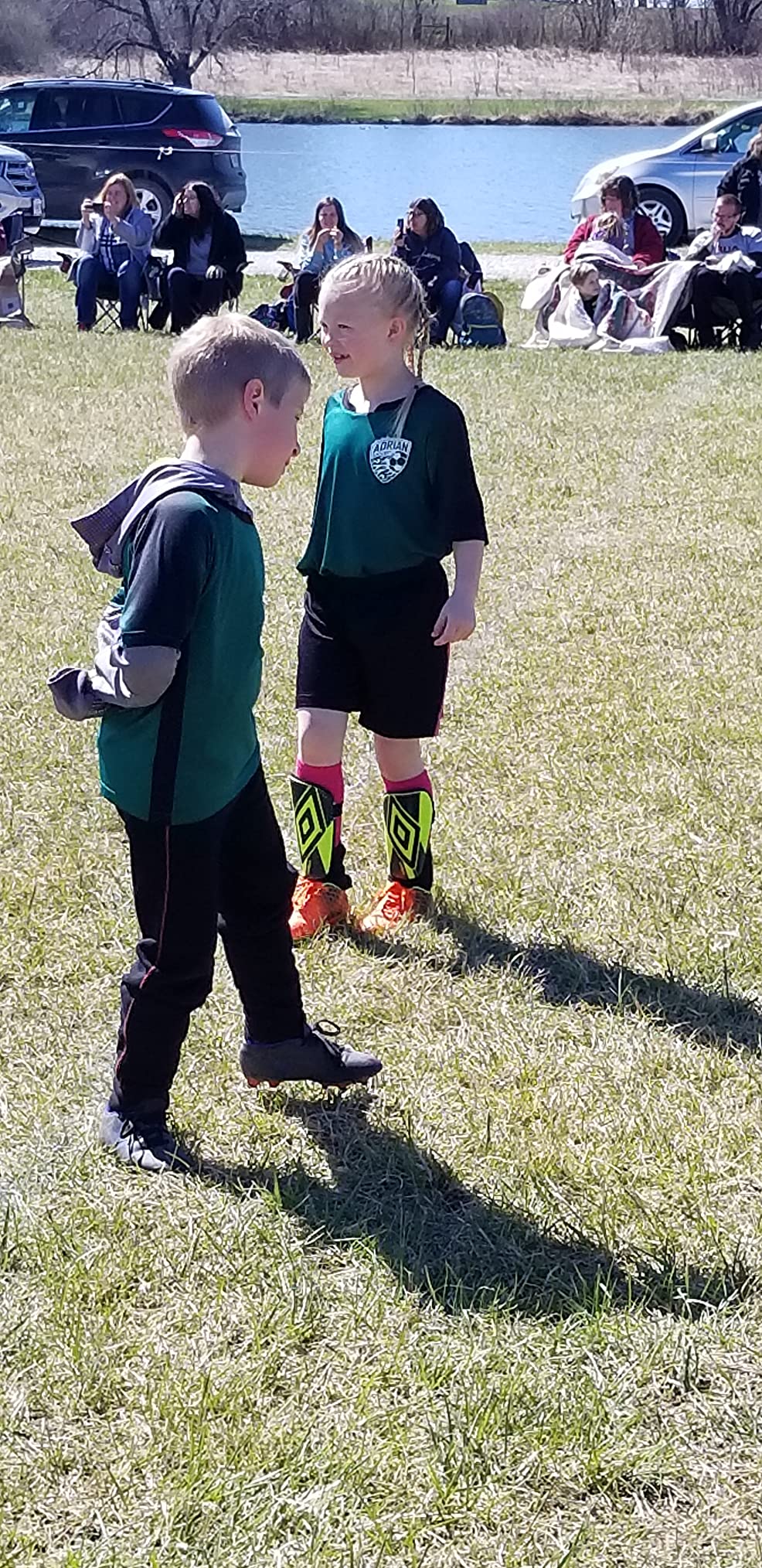
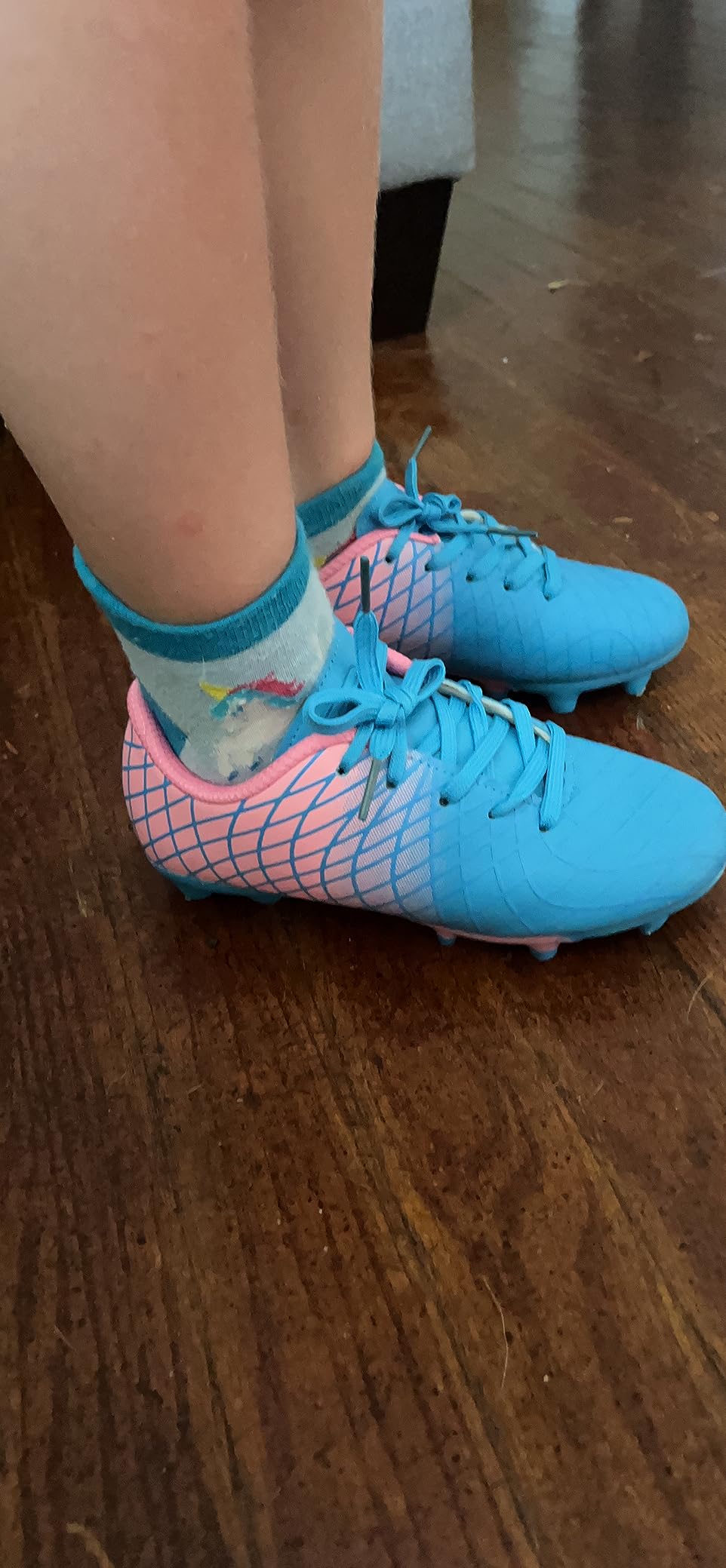
The lightweight synthetic upper is where JABASIC delivers on its “instant comfort” promise for most kids. Parents consistently mention quick break-in—kids wore them straight from the box through practices without developing hot spots. Multiple reviews land on “true-to-size,” with comfortable lockdown through a full game.
There are two caveats worth flagging upfront.
Width: The fit runs narrow. This shows up again and again across reviews. One grandparent bought a pair thinking they’d ordered “wide width,” only to find them uncomfortably snug for their grandkid’s wider foot. If your child has wide feet, this is a potential dealbreaker—consider sizing up half a size or exploring Brooman Kids Soccer Cleats or other models known for accommodating wider profiles.
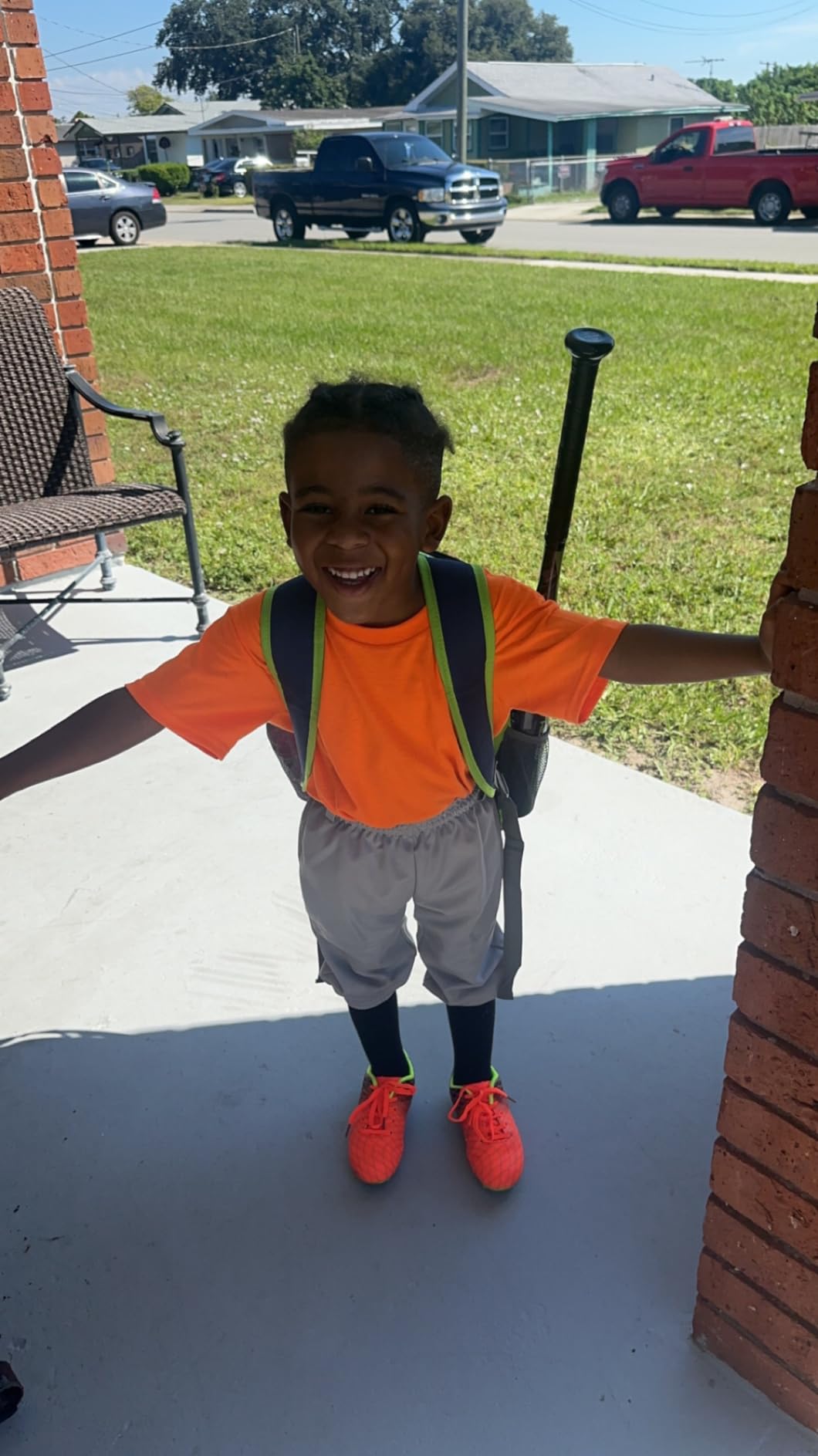
Laces: Feedback splits here. Some parents say lace length is “perfect for a double knot.” Others—especially with smaller sizes like 12 Little Kid—report laces are short enough to make tying tough for younger children learning to manage their own gear. If you’re in this boat, aftermarket 54-55″ flat laces are an easy $5-8 fix.
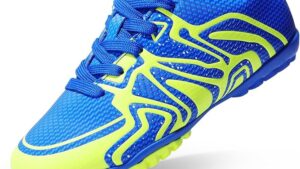
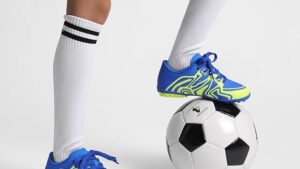
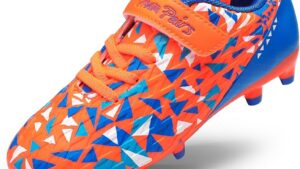
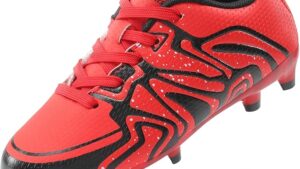
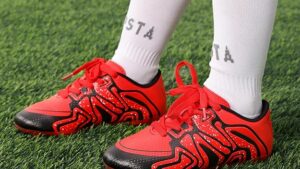
Visually, the color pop is a winner. Kids who gravitate to “loud” cleats love these bold colorways, and parents appreciate how easy it is to pick their child out during scrimmages. Several reviews mentioned reordering the same model for the next season simply because the colors were such a hit.
Field Feel, Cushioning & Protection
Comfort feedback leans positive overall: “comfortable,” “no weird rubbing,” and “held up through the season” are common themes. But set your expectations to match the price bracket. The upper is thin by design—which helps kids move freely—but that also means less protection if they get stepped on during aggressive play.
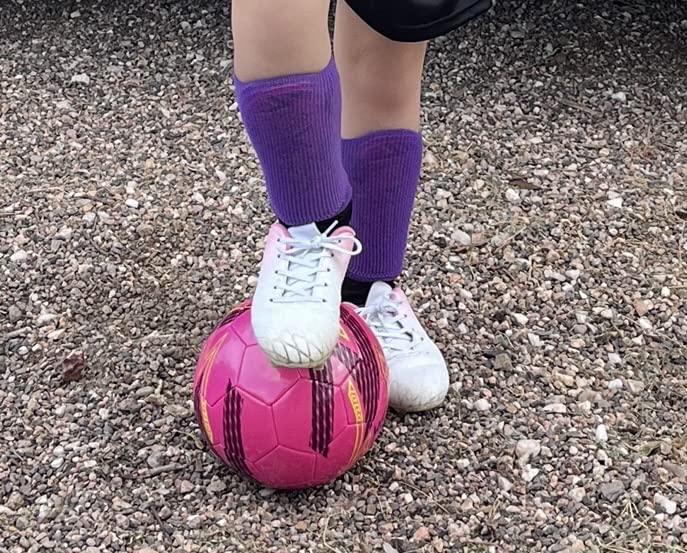
A couple of reviewers wished for more padding or support. One noted the shoes felt “more plastic than expected.” For rec-level youth play (U6 through U10 recreational leagues), the comfort-to-protection balance works fine. For higher-intensity leagues where rough tackling or frequent contact is the norm, you might want to budget for a more protective option.
Traction on Firm Ground
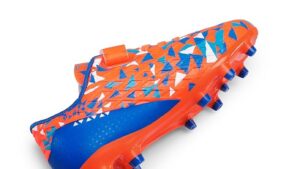
The molded stud pattern gets broadly positive feedback for grip and quick starts. One parent specifically highlighted the crescent-shaped studs performing better on a wet field than the simple round studs on their child’s previous pair—a nice detail that shows the traction design isn’t purely cosmetic.
Where complaints show up is off the field. A few parents say the bottoms feel “hard plastic” and get slippery on smooth indoor floors—gym tiles, school hallways, that sort of thing. This is typical FG cleat behavior, not a design flaw. Critical reminder for safety: Have kids change into sneakers before heading indoors. FG studs aren’t designed for smooth floors and can lead to slips.
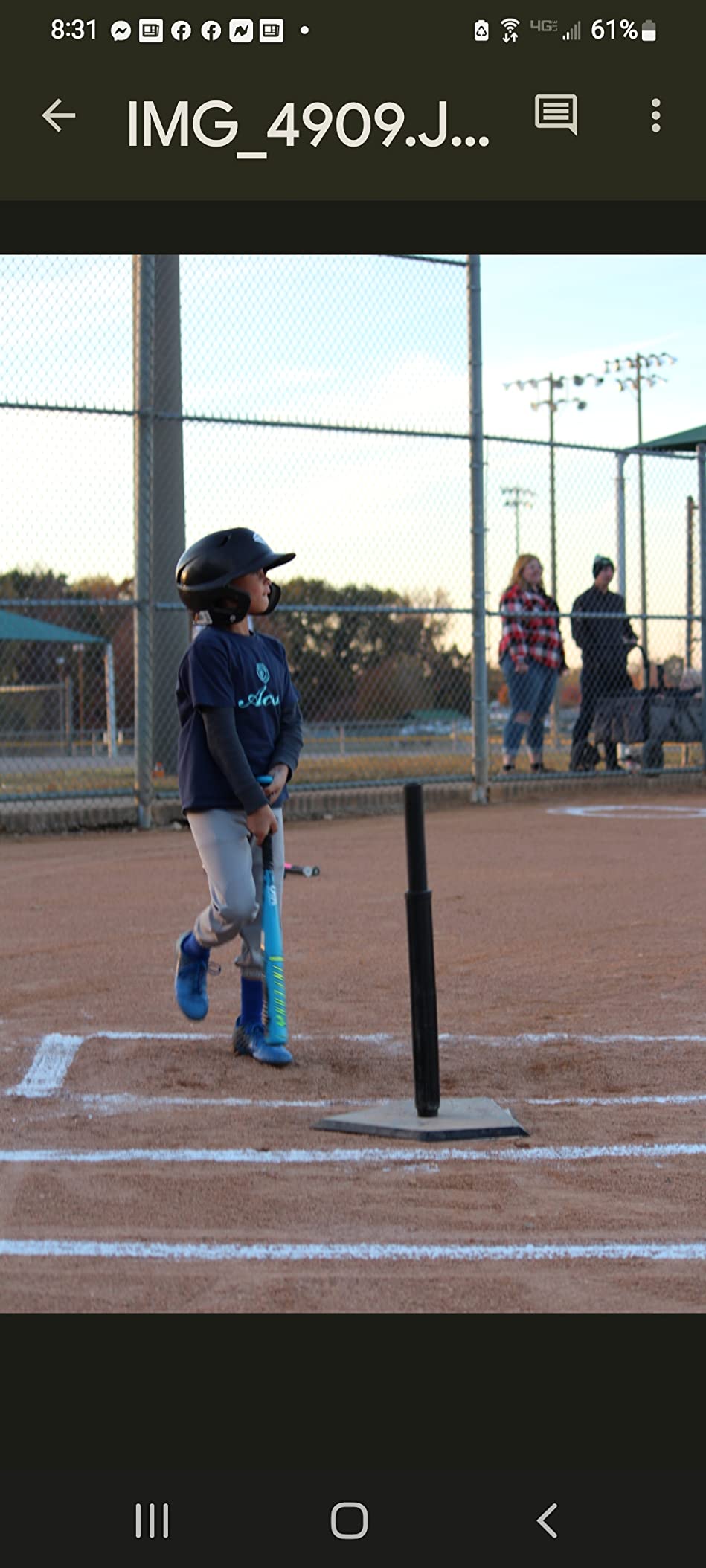
For natural grass firm-ground play—the intended use case—traction is solid. Kids feel quick, confident cuts work, and the studs bite well even in light rain. Just stick to the field.
Durability: The Honest Picture
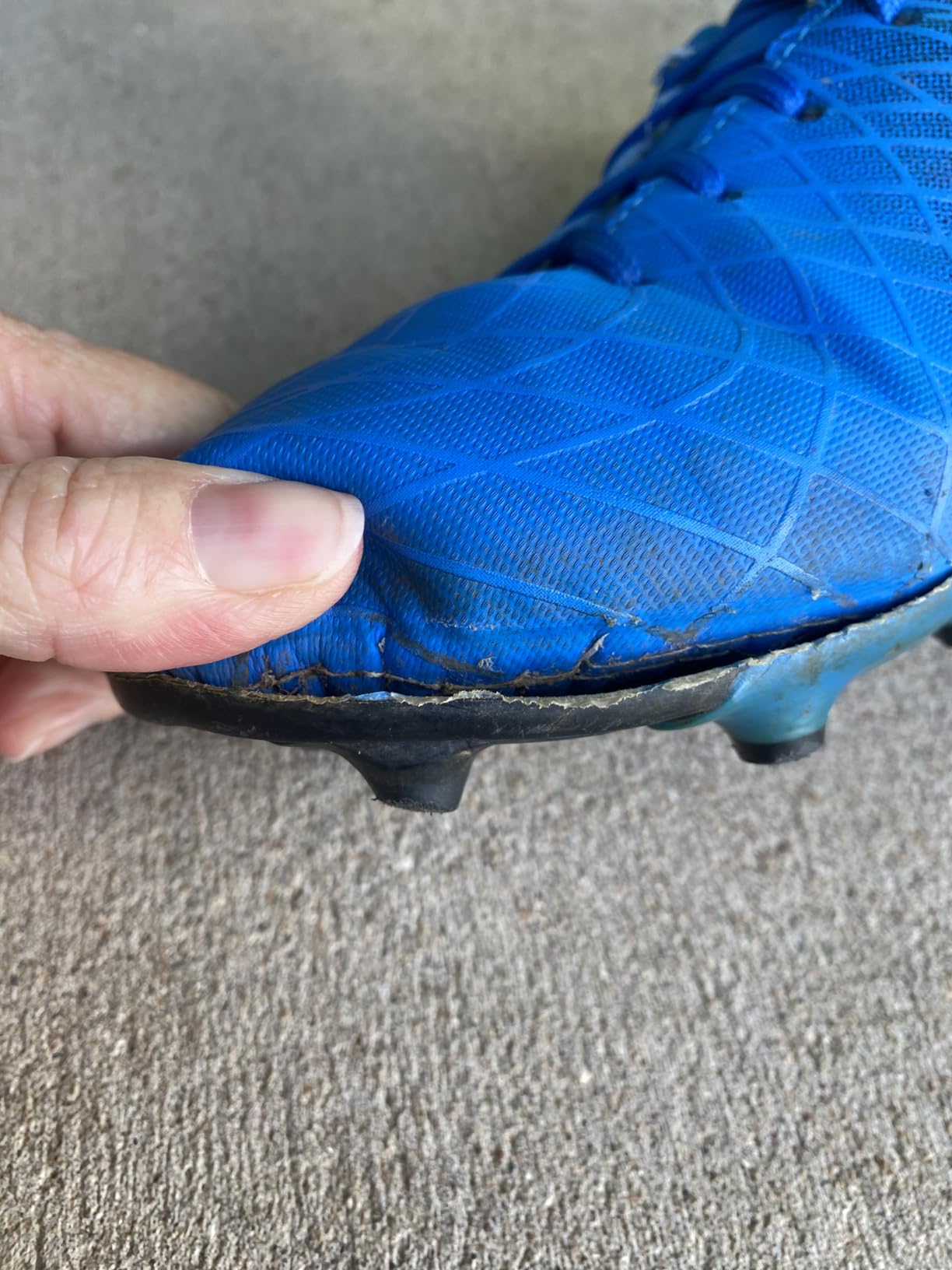
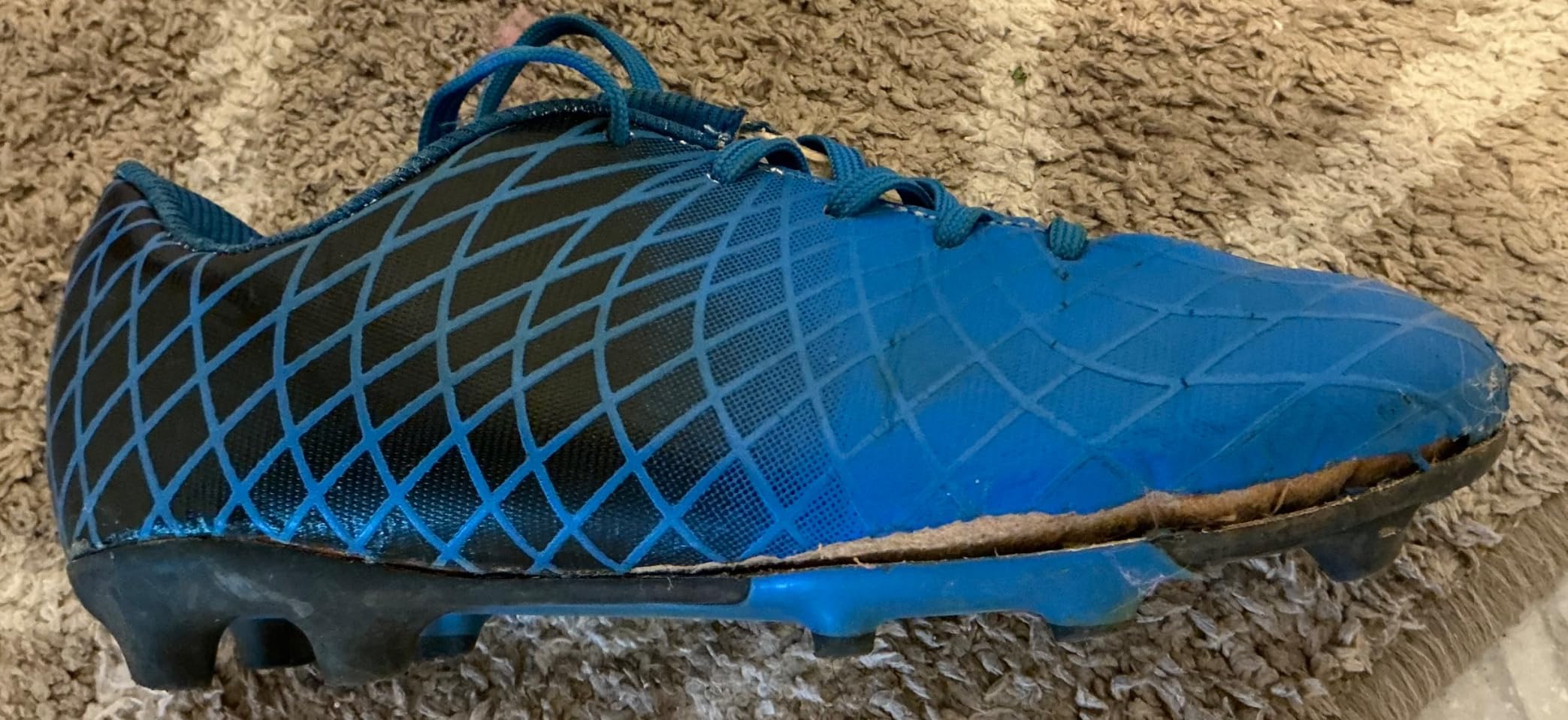
Here’s where the range gets wide. Parent reports span from “lasted two full seasons” (lighter use, field-only) to “fell apart after a few practices” (heavy use, gravel walking, hard surfaces). The good news: durability isn’t a design mystery—it’s heavily dependent on usage patterns.
Many families report solid durability for a full season—ten-plus weeks of practices and games. Some even stretch these to two seasons when the cleats are used lightly and exclusively on grass. The pattern is clear: if your child sticks to the field and avoids walking on gravel, asphalt, or other hard surfaces, you’re more likely to land in the “season or two” camp.
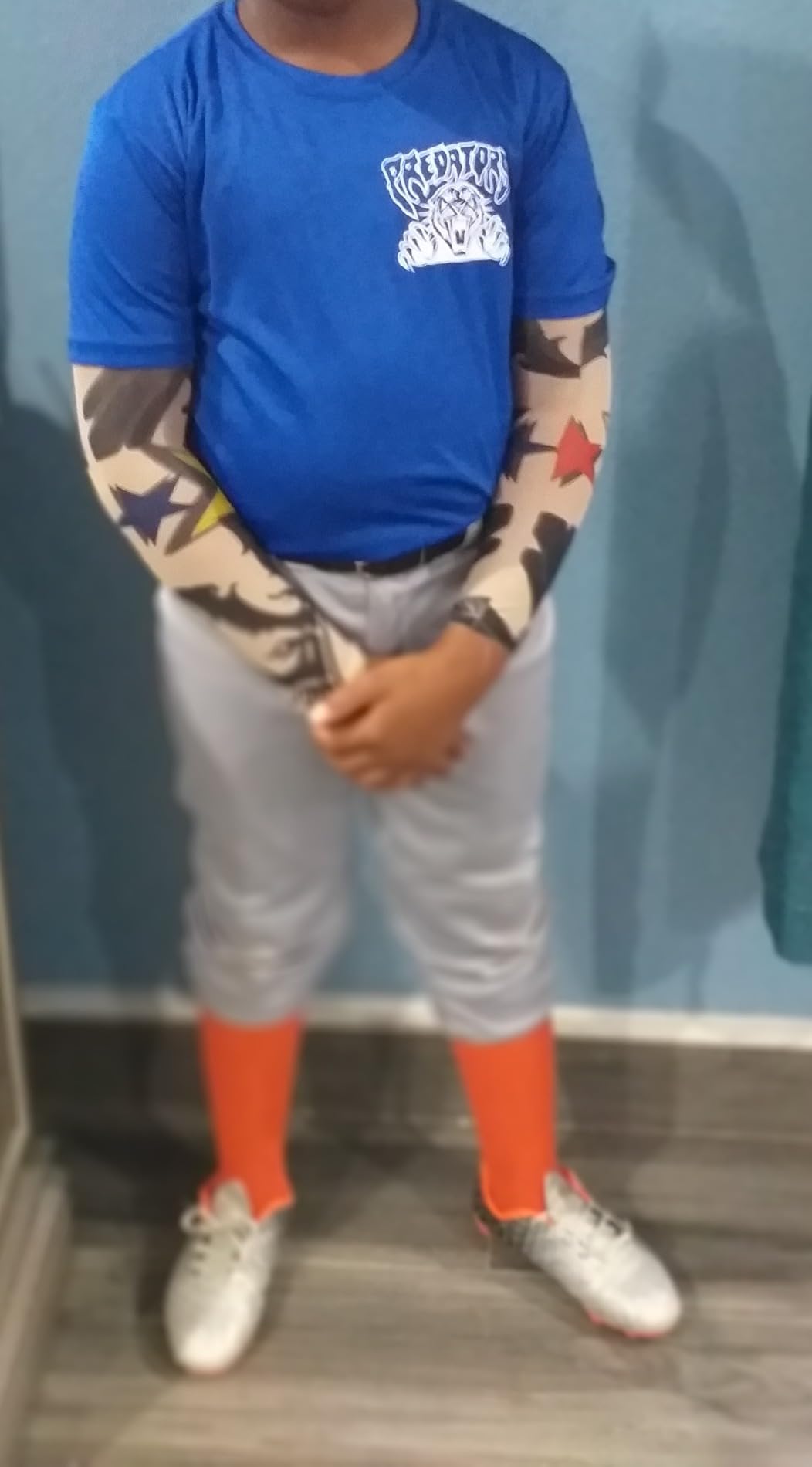
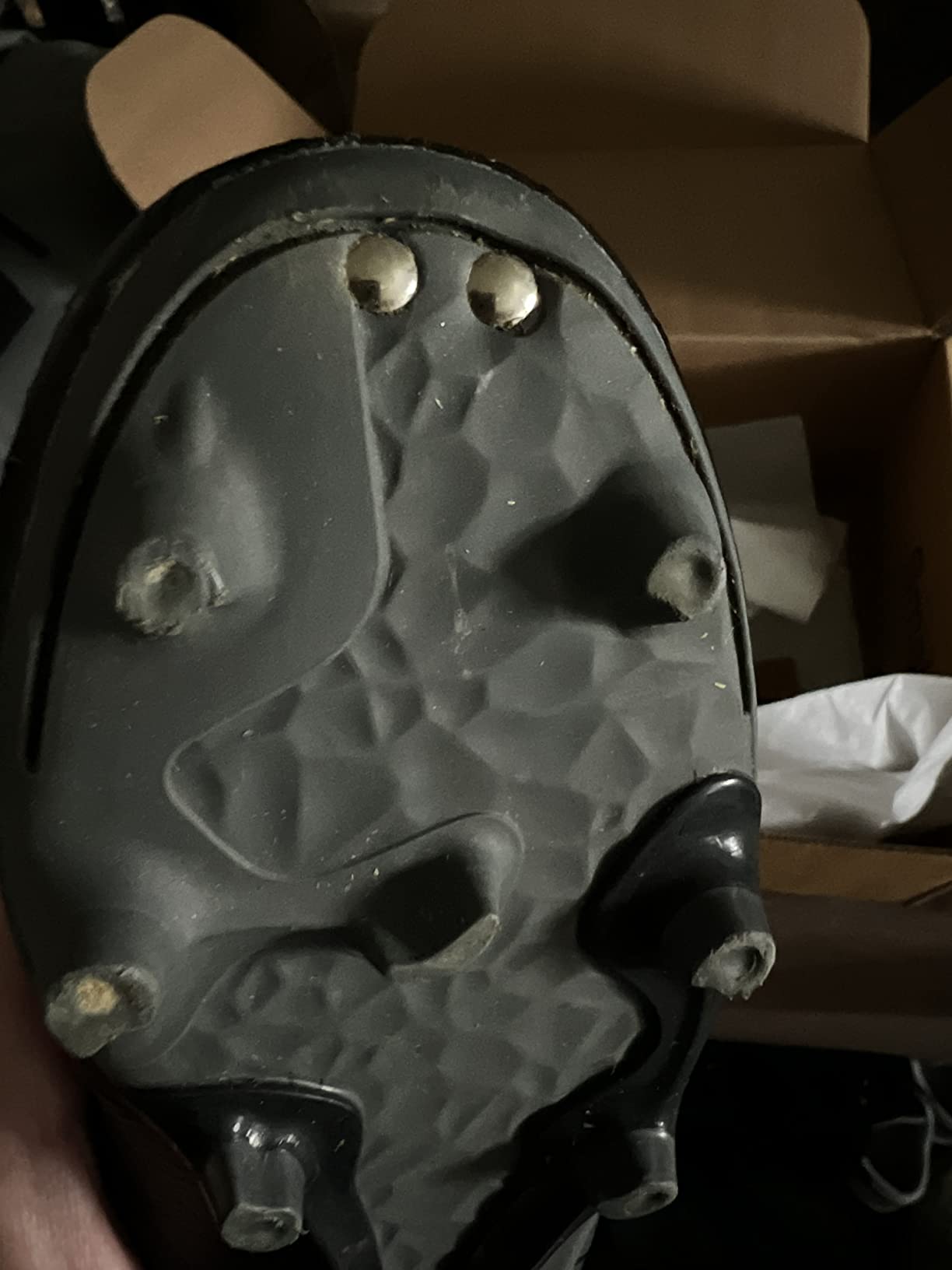
On the flip side, a minority report issues like stud wear from walking on gravel, aglets falling off, or upper separation after only a handful of sessions. There are also scattered quality-control complaints: pairs arriving with grass on the sole, a “used” appearance, visible scuffs, or odors straight out of the box. If you receive a pair in questionable condition, initiate an exchange or return right away—Amazon’s return process makes this straightforward.
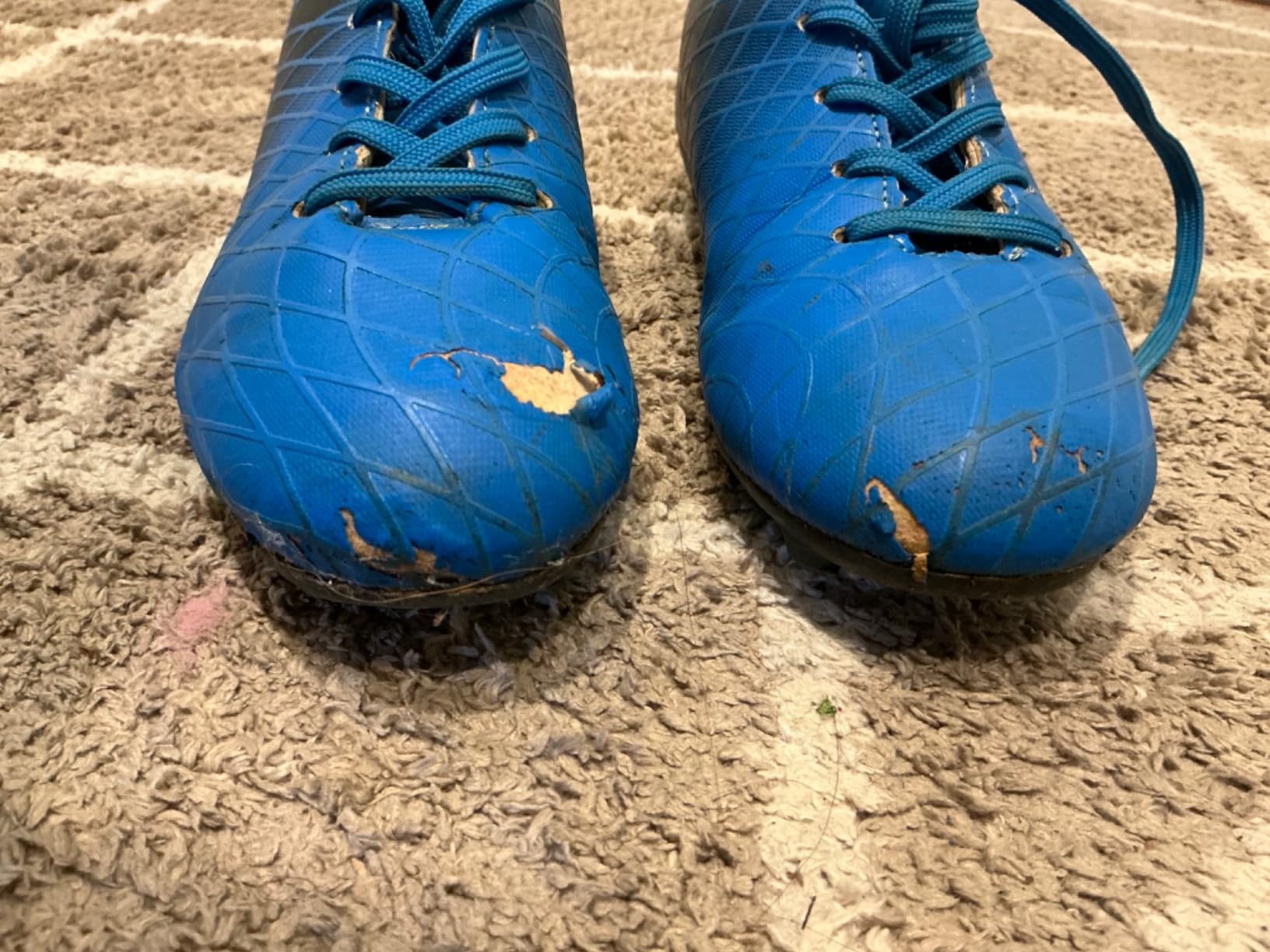
Bottom line: treat these as field-only cleats. Walking to the car in them? Fine. Wearing them on the playground gravel or gym floors? That accelerates wear significantly. Manage usage expectations and you’re more likely to hit the full-season mark or beyond.
Performance in Various Youth Soccer Conditions
- Dry natural grass (FG): Consistently good traction for rec play. Kids feel quick and confident making cuts.
- Wet grass: The rotational/crescent stud pattern gets specific praise from at least one parent for better bite than simpler round studs. Traction holds, though remind kids to step carefully—wet conditions are always slicker.
- Turf/indoor: Not recommended. FG studs are slippery on smooth floors and aren’t built for turf. Switch to turf-specific or indoor shoes when needed.
- Walking to the field (gravel/asphalt): Avoid. Several complaints center on studs wearing down fast when kids wear cleats off the grass. Keep a pair of sneakers in the bag for transitions.
Sizing & Fit: Decision Tree
Overall sizing consensus lands on “true-to-size for most”—but the narrow fit is the consistent caveat. Here’s a practical breakdown:
| Foot Type | Recommendation |
|---|---|
| Standard width, average foot | True-to-size (TTS) works comfortably |
| Wide feet | Size up 0.5 or AVOID; consider wide-fit alternatives |
| Narrow feet | TTS fine; may feel slightly loose but lockdown still secure |
| Between sizes | Stick with TTS if possible; half-size up may be too roomy given narrow design |
The lace-length issue surfaces specifically in smaller sizes (12 Little Kid and below). If double-knotting is part of your pre-game ritual and the factory laces fall short, aftermarket 54-55″ flat laces solve the problem for under ten bucks.
Heel fit is generally snug—slippage isn’t a widespread complaint. The narrow profile works great for kids with typical-to-narrow feet. Wide-foot kids, though, face a fit cliff. One grandparent’s experience sums it up: bought them thinking “wide width,” found them too narrow and uncomfortable. If your child has wide feet, seriously consider whether this is worth the sizing gamble or if a known wide-fit model is the smarter move.
Does JABASIC Deliver on Their Promises?
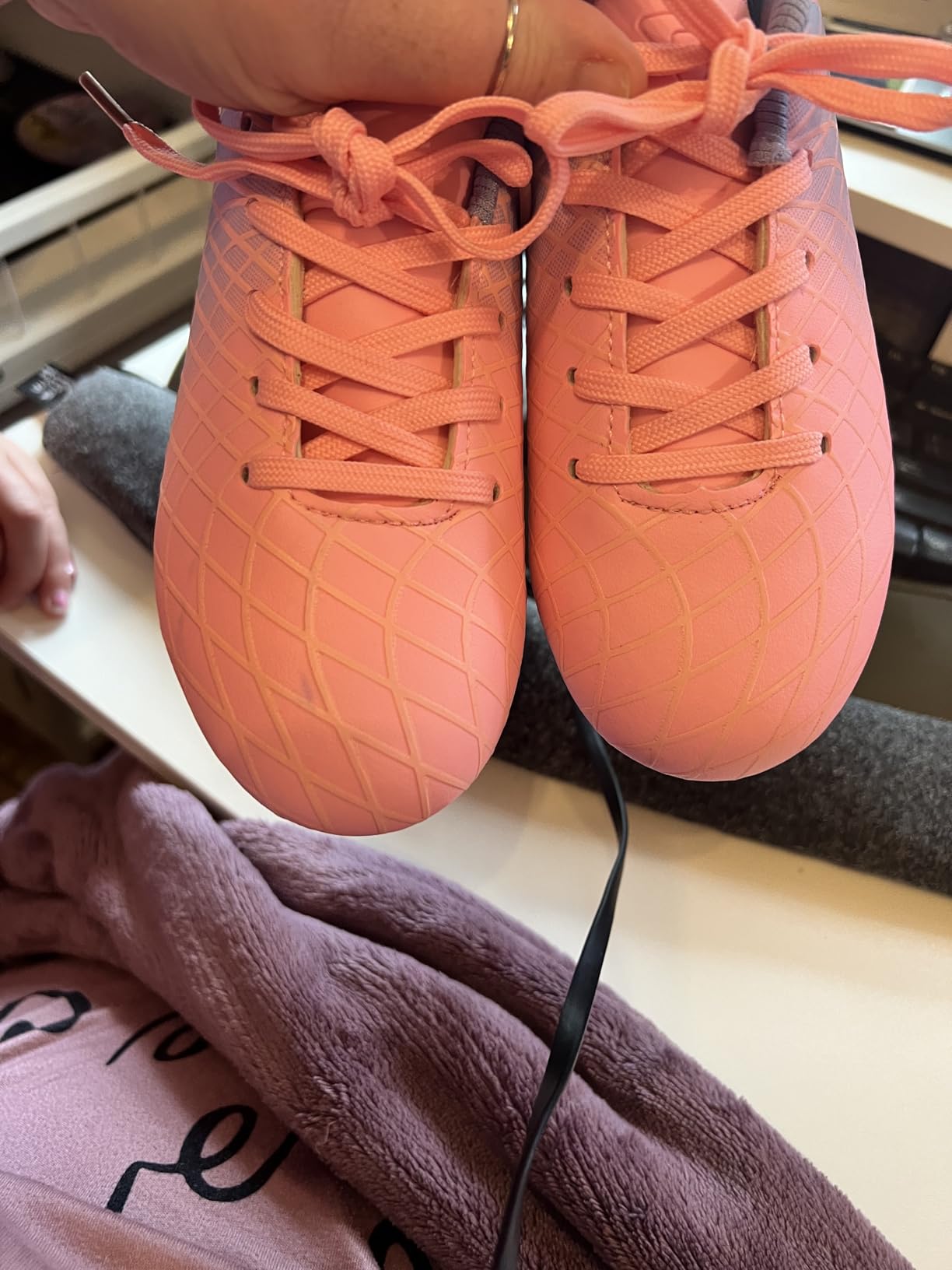
- “Synthetic Fabric For Light Weight And Comfort” — Mostly true. Many kids report immediate comfort and light feel. A few found the upper too thin or “plastic-y,” but those are the minority.
- “Fully Adjustable Lace-Up Closure… Secure Fit” — Mixed. Lockdown is fine for most, but lace length can be short in smaller sizes. Teach a tight single knot if double-knotting becomes a struggle.
- “Rubber Molded Cleats… Reduce Friction” — On grass, yes. Parents like the grip. On smooth indoor floors? Expect slipperiness (typical for FG cleats, not a defect).
- “Padded Tongue and Toe Box… Reduce Impact” — Light padding at best. Adequate for rec play; not ideal if your child is frequently stepped on or plays in rough, competitive leagues.
- “Great for Football Court, Rugby Field, Sports Hall and Road” — Overstated. These are FG cleats designed for natural grass. “Sports hall” and “road” use is inappropriate—expect slippage and accelerated wear.
Category Scores
| Category | Score (out of 10) | Notes |
|---|---|---|
| Traction (FG grass) | 8.0 | Confident bite; praised even in wet by some parents. Crescent stud design works. |
| Comfort | 7.0 | Generally comfy and light; thin upper means less padding. |
| Fit & Lockdown | 7.0 | True-to-size for many, but narrow. Laces may be short in smaller sizes. |
| Durability | 5.5 | Ranges from two seasons to early failure. Usage patterns and surfaces matter. |
| Ball Touch/Control | 6.5 | Thin upper = light touch but not a control-focused boot. |
| Versatility Across Surfaces | 5.0 | FG only. Avoid indoor floors, turf, and gravel/asphalt. |
| Appearance/Colors | 9.0 | Kids love the bright, bold looks. High parent approval for field visibility. |
| Value | 8.0 | Budget-friendly for growing kids and first seasons. |
| Overall | 7.1/10 | Great starter choice for rec kids on natural grass; trade-offs clear for advanced needs. |
What Parents Are Actually Saying
Positives: “True to size,” “my kid loves the colors,” “held up for the season,” “easy to clean,” “good grip,” “great for first season.”
Negatives: “Narrow fit,” “laces too short,” “felt cheap/thin,” “arrived scuffed or used,” “fell apart after a few practices,” “slippery on floors,” “aglets came off.”
Key Strengths & Weaknesses
| Pros | Cons |
|---|---|
|
|
Final Verdict & Recommendations
The Good and The Bad
- Buy if: You need an affordable, bright FG cleat for a first season or casual rec play, and your child has average or narrow feet.
- Skip if: Your child has wide feet, plays at higher intensity, or needs indoor/turf traction. Also skip if you’re looking for protective padding for rough competitive leagues.
Who Should Buy the JABASIC Kids Outdoor Soccer Cleats?
- First-time players ages ~4–10 in recreational leagues
- Families on a budget who prioritize look + basic performance
- Kids who love bold colors and want to feel fast and light on the field
Better Options for Specific Needs
- Wide feet: Consider models like Brooman Kids Soccer Cleats or other brands known for accommodating wider profiles.
- Indoor/turf: Get TF (turf) or IC (indoor court) shoes. FG studs aren’t safe on smooth floors.
- Advanced play: Upgrade to a more protective, structured kids model from major brands. Check out options in our football shoes category.
Frequently Asked Questions
Do these run true to size?
Many parents say yes, but width runs narrow. If your child is between sizes or has a wider foot, consider trying two sizes or choosing a wider-fit model to avoid discomfort.
Are the laces long enough?
Mixed feedback. Some sizes have short laces that make double-knotting tricky for little hands. If this is a concern, you can swap in longer laces—54-55″ flat laces work well and cost under $10.
How long do they last?
Reports range from one full season (10+ weeks) to two seasons for lighter use—but some outliers failed early. The key: keep cleats off gravel and smooth indoor floors to extend life. Field-only use gives you the best shot at hitting the season-or-two mark.
Are they good for wet fields?
Yes—one parent specifically praised the crescent-style studs on wet grass, noting better grip than simple round studs. Overall traction feedback is positive for natural grass. Still, remind kids to step carefully; wet conditions are always slicker.
Can my child wear these indoors?
No. FG studs can be slippery on smooth floors and may mark surfaces. Have your child change into turf shoes or training shoes before heading indoors.
What if my pair arrives scuffed or used?
A few parents reported QC issues—grass on the studs, odor, or scuffs straight out of the box. If this happens, initiate an exchange or return right away. Buying via Amazon simplifies the return process.
Do they need a break-in period?
Most kids report immediate comfort with zero break-in. A small percentage experienced minor discomfort in the first week or two, but that’s the minority. Generally, you can go from box to field without drama.
Are they better than other budget brands?
JABASIC holds its own as a solid budget option. For specific comparisons (e.g., Brooman Kids Soccer Cleats or other budget FG models), check competitor reviews or weigh price, durability, and fit trade-offs for your kid’s specific needs.
What’s the sizing difference between JABASIC and other brands?
No official cross-brand data exists, but feedback suggests JABASIC runs true-to-size compared to major brands—with the consistent narrow fit across all sizes. If your child wears a 2Y in Nike, a 2Y in JABASIC will likely work lengthwise but feel narrower in the toe box.
Will these shoes work for my kid’s wide feet?
Unlikely. Multiple reviews confirm the narrow fit, even in sizes parents thought were tagged as wide. If your child has genuinely wide feet, this is a risky bet. Better alternatives exist—check our football shoes category for wide-fit options, or go with brands known for roomier toe boxes.
Reviews
There are no reviews yet.