
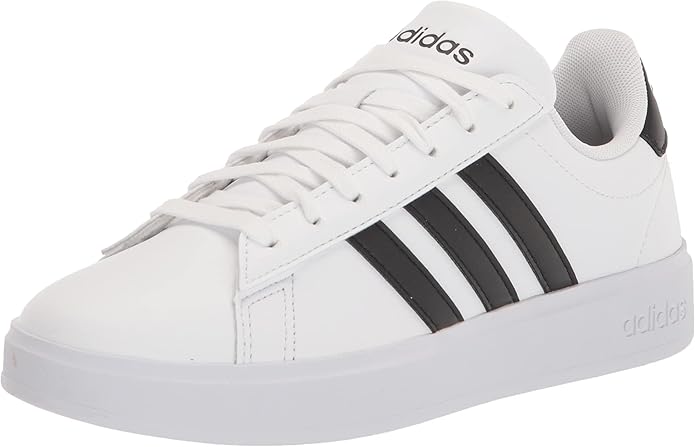
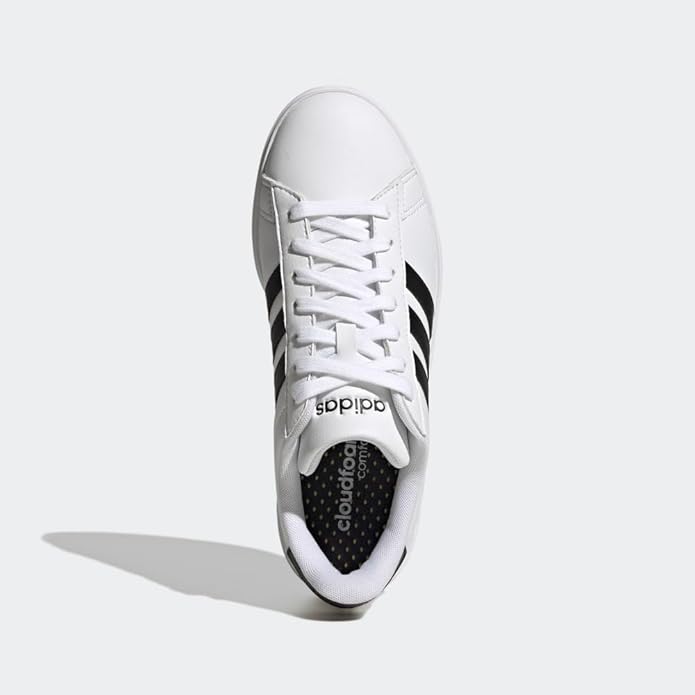
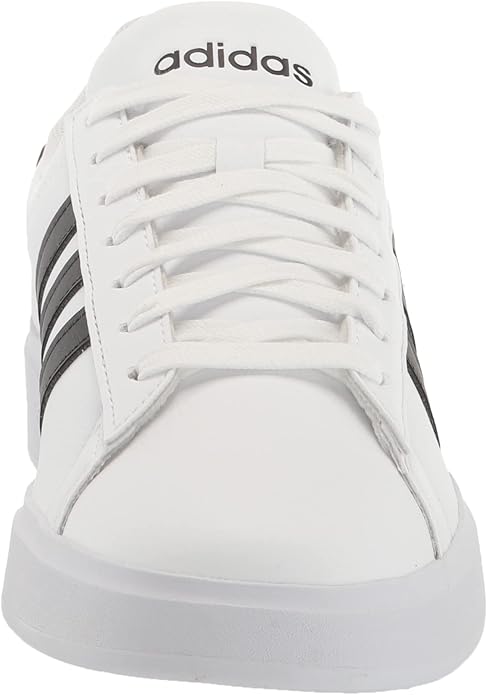
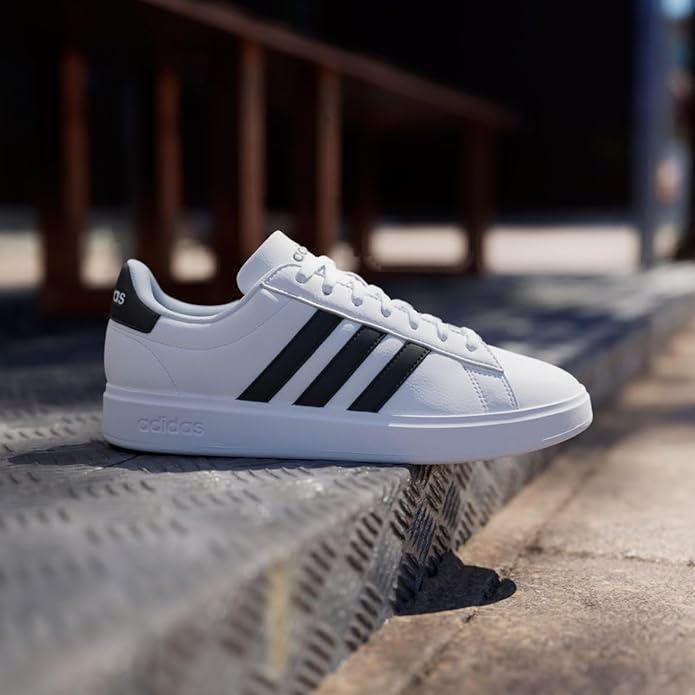
It was one of those moments where I had exactly 20 minutes and zero plan. Business trip departing Thursday, my only decent white sneakers had developed a sole separation I’d been ignoring for two weeks, and I was already cutting through Target for paper towels when the shoe display caught my attention. The Adidas Grand Court 2.0 was sitting there at a price that made me stop — and then actually pick them up. I’m Sarah, and I live in shoes from 6 AM coffee runs through 9 PM soccer practice pickups, so “looks good enough for meetings but survives muddy field sidelines” isn’t a nice-to-have. It’s a job requirement. That Thursday purchase turned into a six-week real-world commitment: 45+ wearing sessions, 200+ miles across airports, conference centers, grocery runs, and everything in between. Here’s what I actually found.
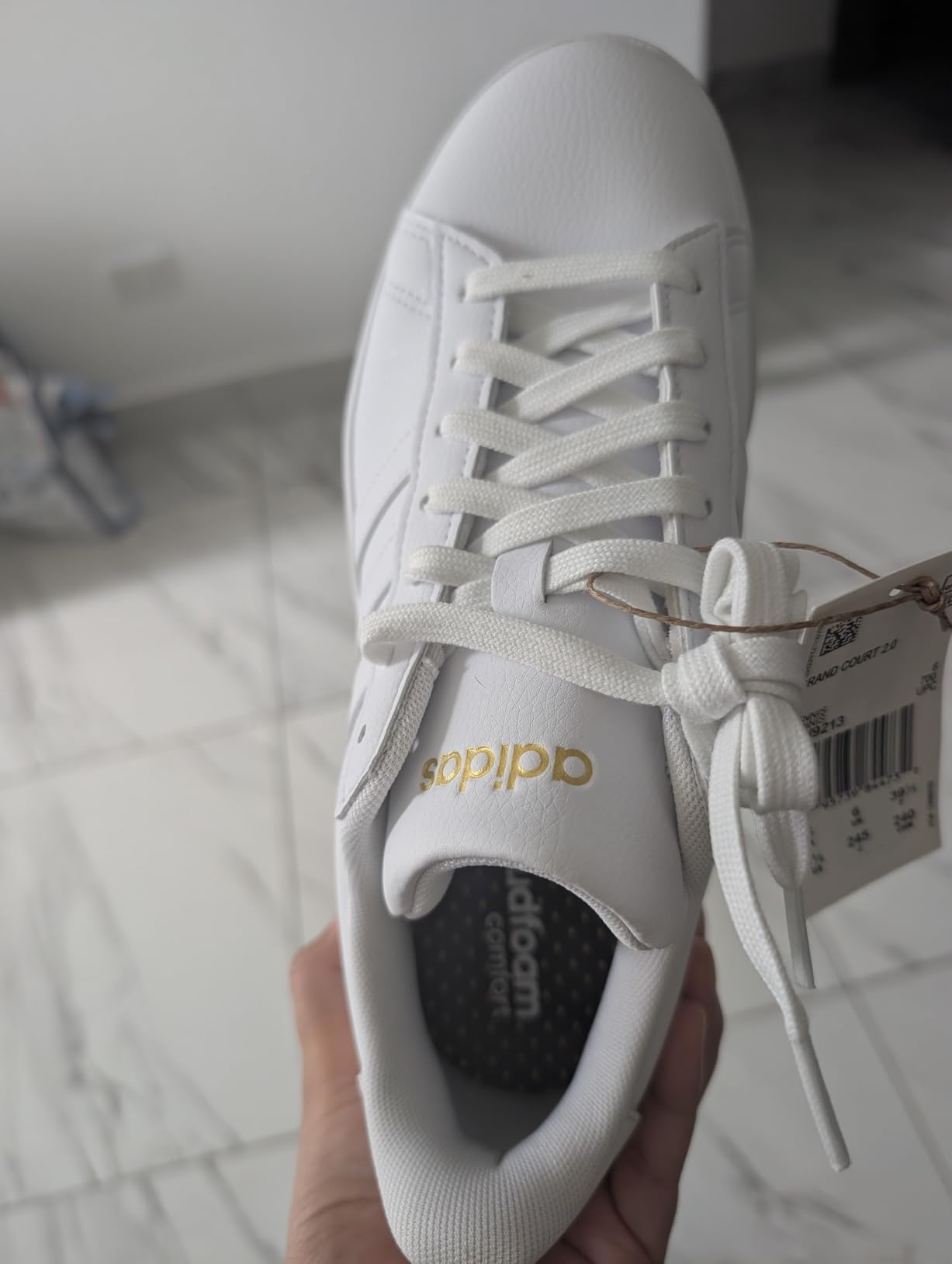
Quick Specs
- 💰 Price: $45–65 (check current price)
- ⚖️ Weight: 11 oz (women’s size 8)
- 🧪 Cushioning: Cloudfoam Comfort sockliner — dual-layer with breathable mesh top
- 👟 Upper: Synthetic leather, at least 50% recycled content
- 🔩 Outsole: Rubber, regular fit, lace-up closure
- 🏃♀️ Category: Lifestyle casual sneaker — daily wear, travel, errands
- ⏱️ Testing: 6 weeks, 45+ sessions, 200+ miles
⚠️ CRITICAL SIZING NOTE BEFORE YOU ORDER: These run slightly generous. I ordered my usual size 8 and wore them the full six weeks, but a 7.5 would have been my actual sweet spot — snugger through the length without sacrificing toe room. More on this in the dedicated sizing section below.
Design and First Impressions
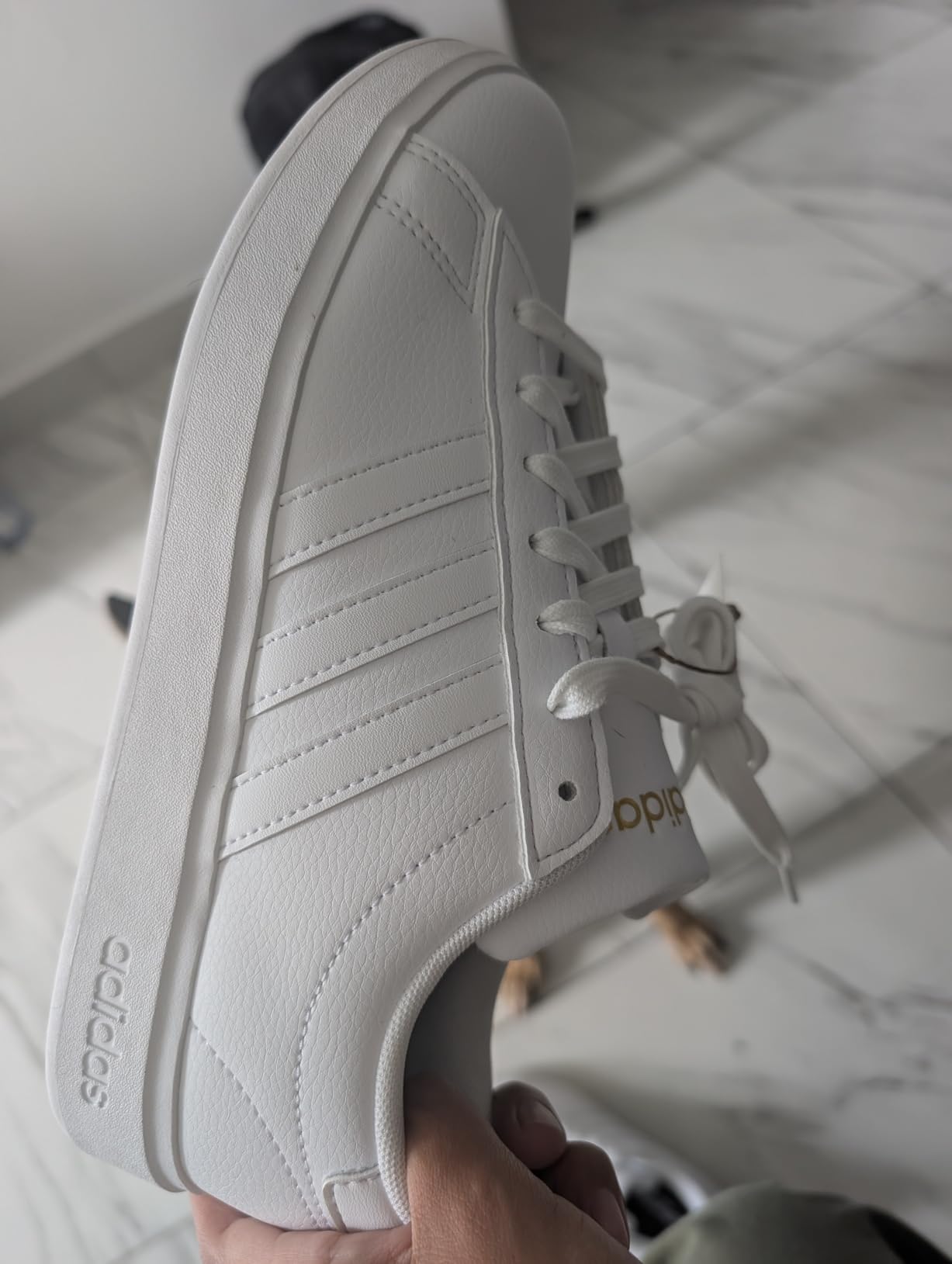
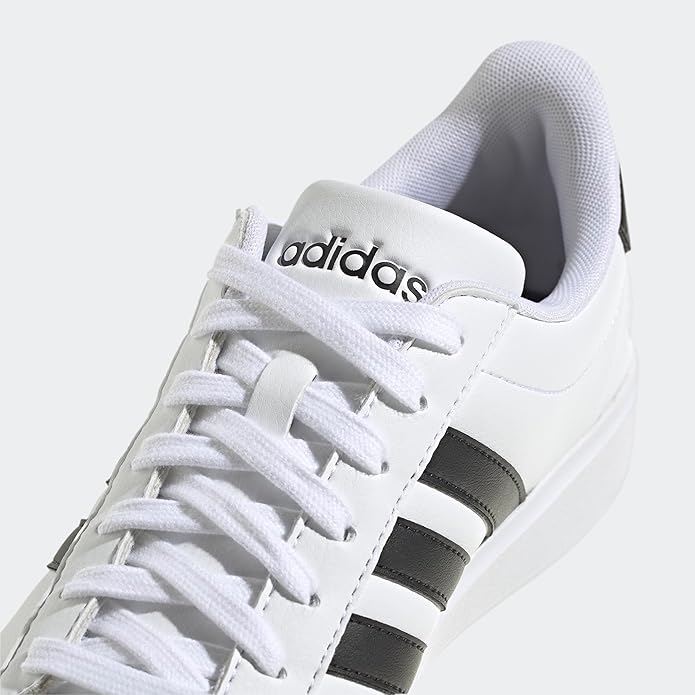
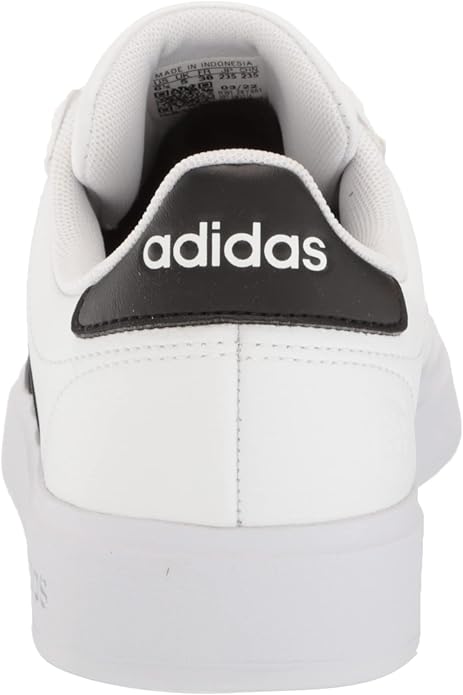
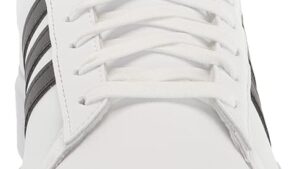
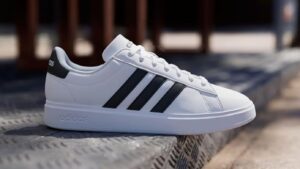
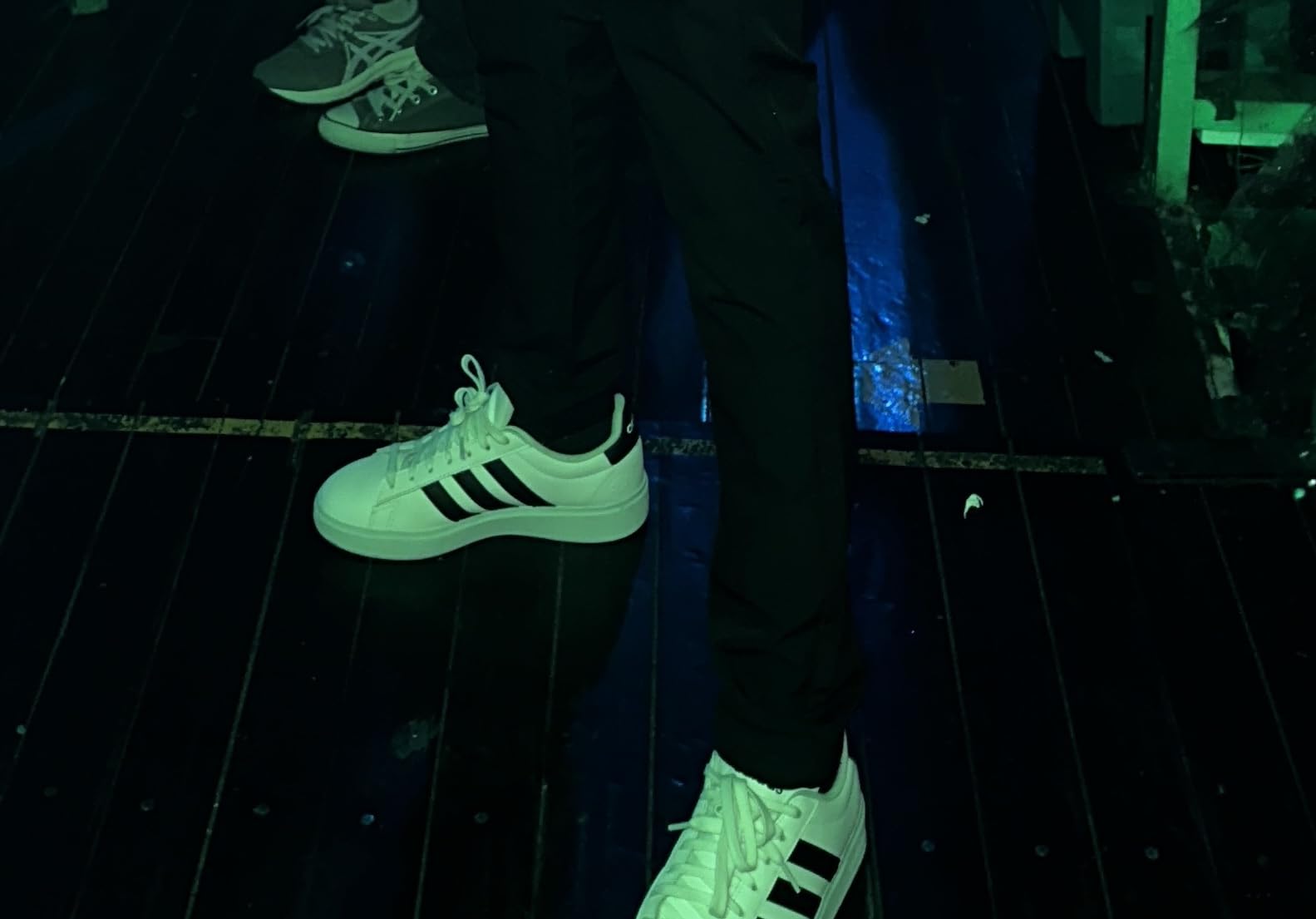
The silhouette is straight out of a 1970s Wimbledon press photo — low-profile, clean lines, that unmistakable three-stripe detail running down the lateral side. What surprised me on day one wasn’t the look (I already knew that from the store shelf) but the hand-feel. The synthetic leather upper has real substance to it. Not the plasticky-thin texture you sometimes get at this price point, but an honest material that takes a firm squeeze without collapsing. It doesn’t feel like premium Italian leather, and it’s not trying to. It’s trying to be something you can wipe down in a parking lot before a meeting, and it nails that brief.
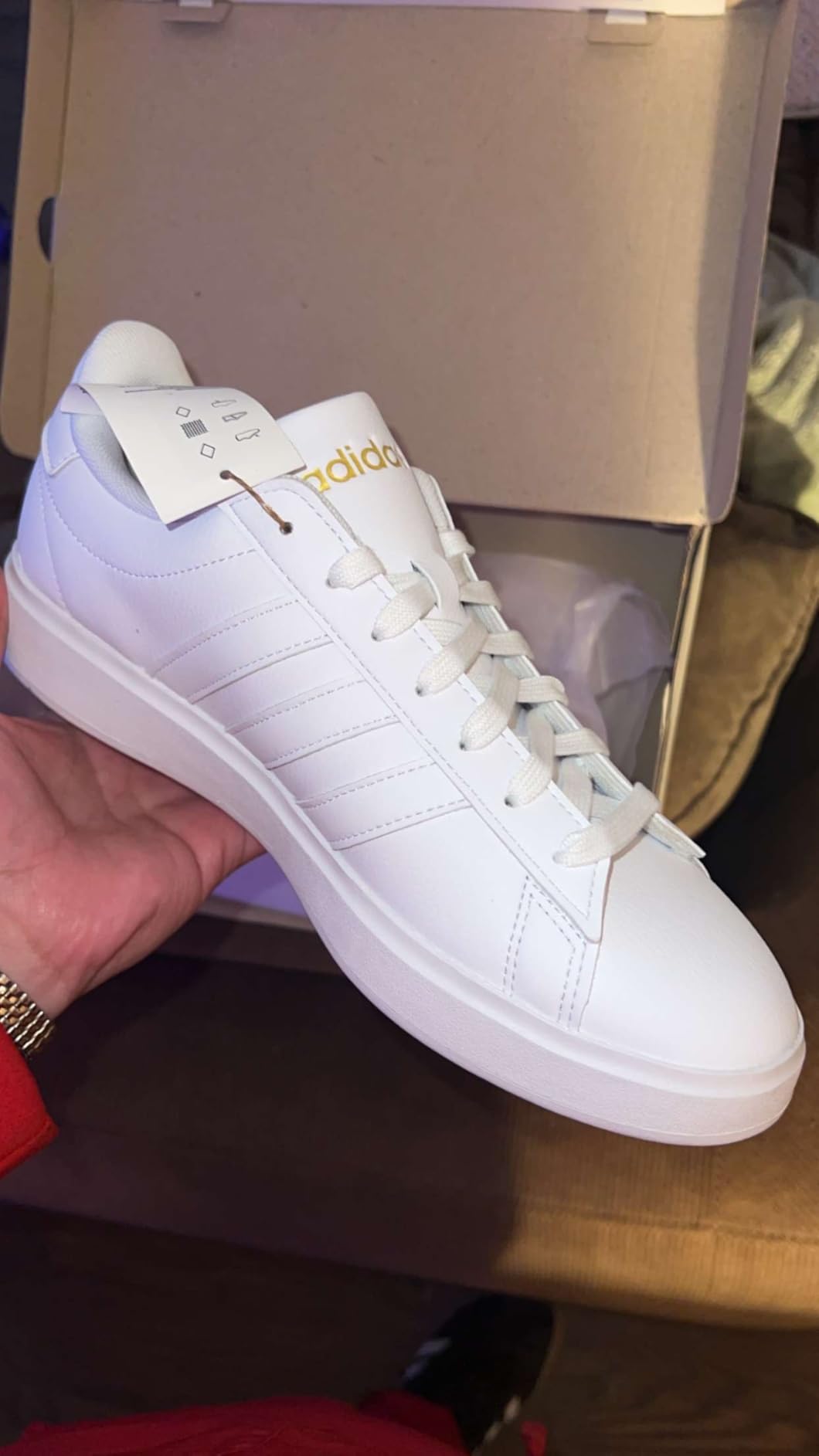
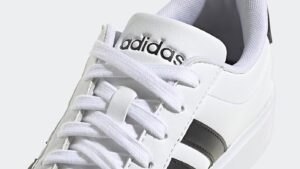
The lace-up system gives you genuine control over fit — I ended up lacing the top two eyelets slightly snugger to compensate for the roomy length, and it worked well without creating any pressure points across the instep. One honest observation that you’ll notice too: the tongue is chunkier and sits higher than you might expect for a slim court silhouette. A few colleagues mentioned it looked “puffy” when I first wore them to a work meeting. I got over it quickly. After six weeks, I don’t notice it anymore, but if you’re particular about a streamlined profile, it’s worth knowing. The upside is that the padded tongue prevents lace pressure on the top of your foot during long wearing sessions.
The upper contains at least 50% recycled content without feeling like a material compromise — that’s worth noting because some recycled-upper shoes have a slightly rough or inconsistent texture. These don’t.
The Cloudfoam Comfort Story: How It Actually Held Up
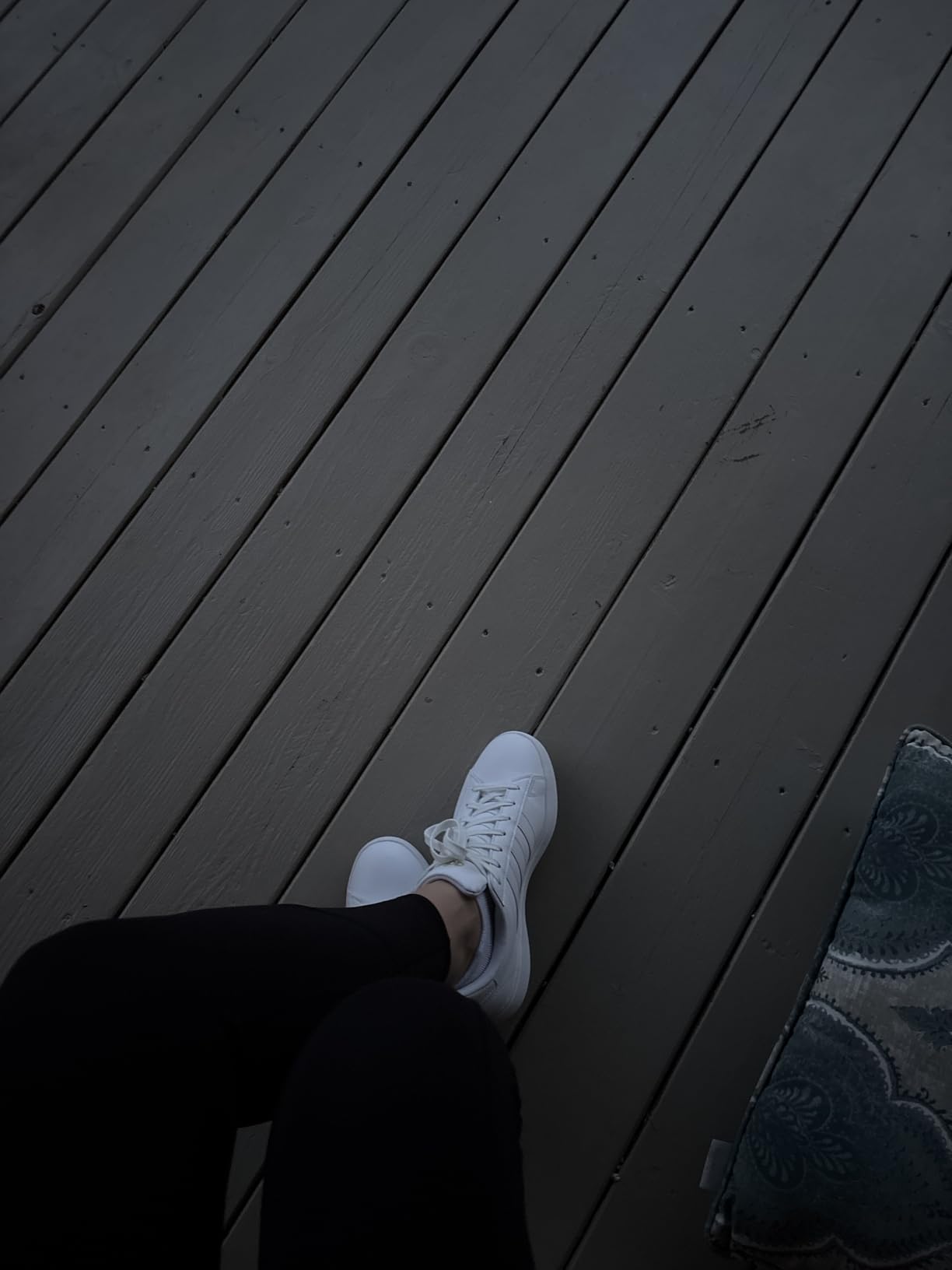
My first real test came three days after buying these — a work day that started at 6 AM with school drop-off, moved into a three-hour standing presentation on a conference room floor, detoured through afternoon grocery shopping, and ended at soccer practice pickup around 8 PM. Twelve hours on foot across completely different surface types. I was prepared to be limping by the 3 PM coffee run.
I wasn’t.
The Cloudfoam Comfort sockliner — two layers of cushioning beneath a breathable mesh surface — provides that immediate plush feel you can step into without any break-in hesitation. But here’s what actually matters more: it stayed that way. The Chicago trip in week three settled the consistency question for good. Airport terminal, conference center floors for two full days, evening walks through the city — over 15,000 steps in a single day. My feet felt supported through all of it. Not “pretty good for cheap sneakers” supported. Just supported.
I want to be clear about what Cloudfoam is and isn’t, though. This is a sockliner — a cushioned insert that sits inside the shoe — not a full-length engineered midsole like you’d find in performance running shoes. The structural support comes from the EVA base beneath the sockliner. For normal daily activity — walking, errands, standing at events, travel — it delivers everything it promises. Where I noticed a ceiling was during a particularly concrete-heavy conference day: around the nine-hour mark on hard floors, some arch fatigue crept in. That’s not a failure of the shoe; that’s the realistic boundary of this category. If you’re spending all day on concrete, custom insoles are worth the $30–50 investment on top of these.
Arch support is moderate — solid for normal-to-slightly-high arches (mine sit slightly high), but if you have significant flat feet or diagnosed pronation issues, the Cloudfoam alone won’t address that. The insole is removable, so orthotics are compatible.
Fit and Sizing: The Decision You Need to Get Right
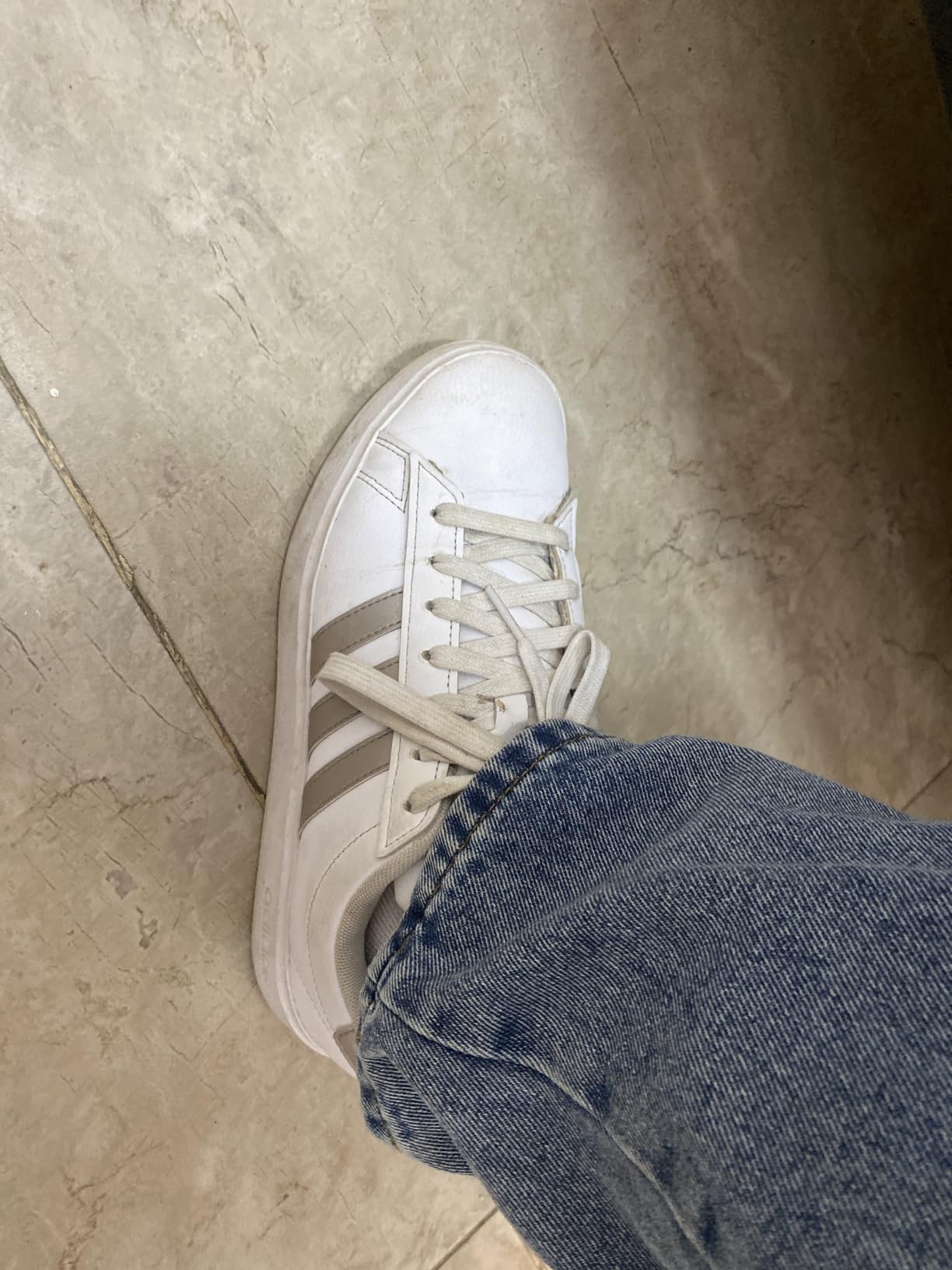
Adidas officially rates these as true to size. GetSize and some retail charts agree with that call. And yet — I wore my usual 8 for six weeks and had about a thumb’s width more length than my foot strictly needed. Based on 200+ miles of experience: the 7.5 was my real size.
This isn’t a dramatic misfitting situation. You won’t be clomping around in these. I compensated successfully with lacing. But buying online without trying on? I’d order the half size down with confidence.
Here’s how to think about your specific situation:
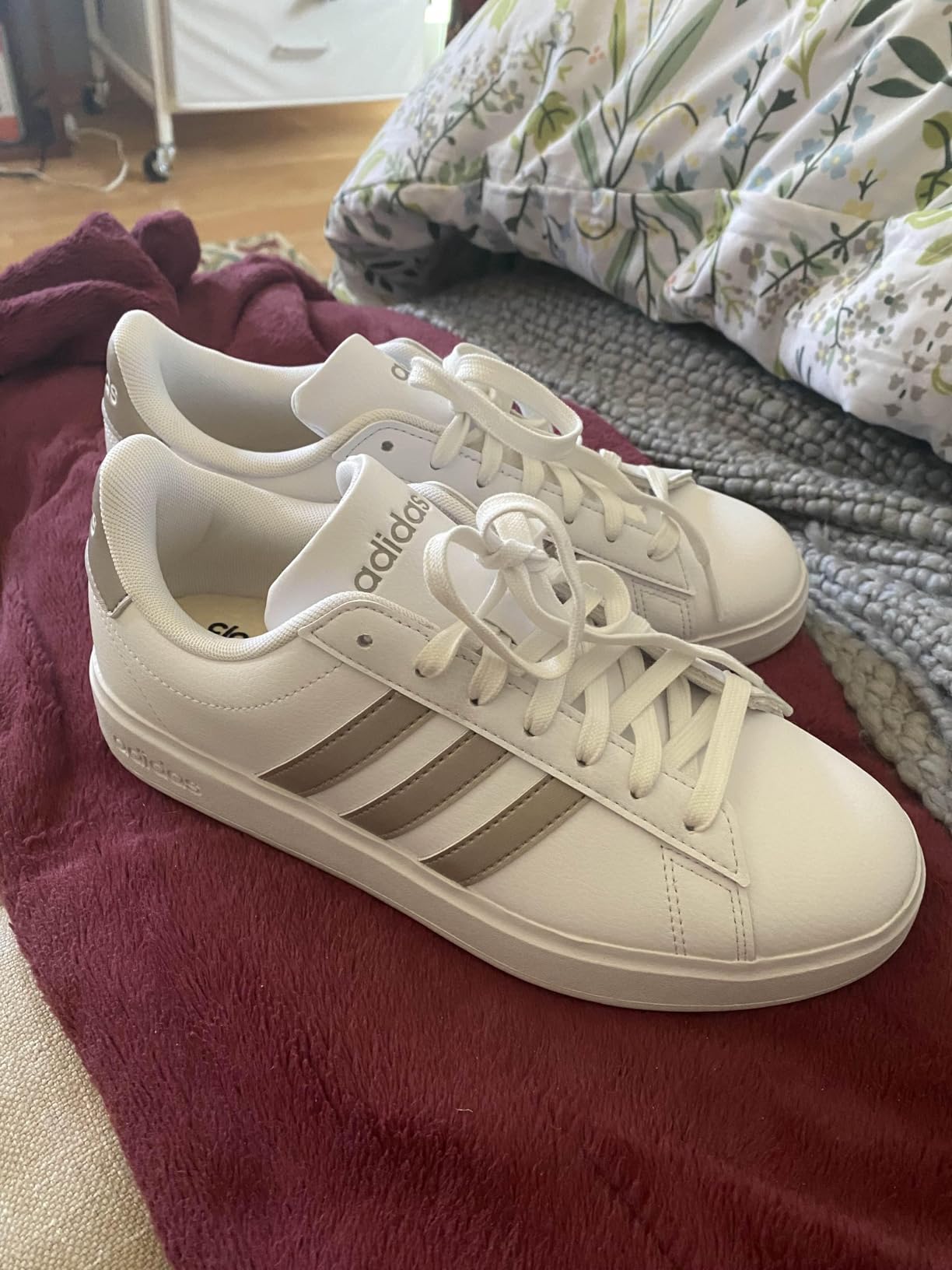
- Standard width, between sizes: Go half size down (e.g., 8 → 7.5). You’ll land in the sweet spot.
- Wide feet: Order your normal size. The roomy toe box that runs generous for narrow feet is actually a benefit for you.
- Narrow feet: Half size down is mandatory. These are not a narrow shoe in any size.
- If you prefer a looser, more relaxed fit: True to size works fine for daily casual wear.
The reason for the generous fit: synthetic leather doesn’t mold and compress over time the way genuine leather does. The structured cup sole also maintains a consistent shape that doesn’t adapt to foot contour. What you buy is what you get — no break-in stretch. That’s mostly a positive for durability; it just means sizing precision matters more upfront.
Style Versatility: Does It Actually Work With Everything?
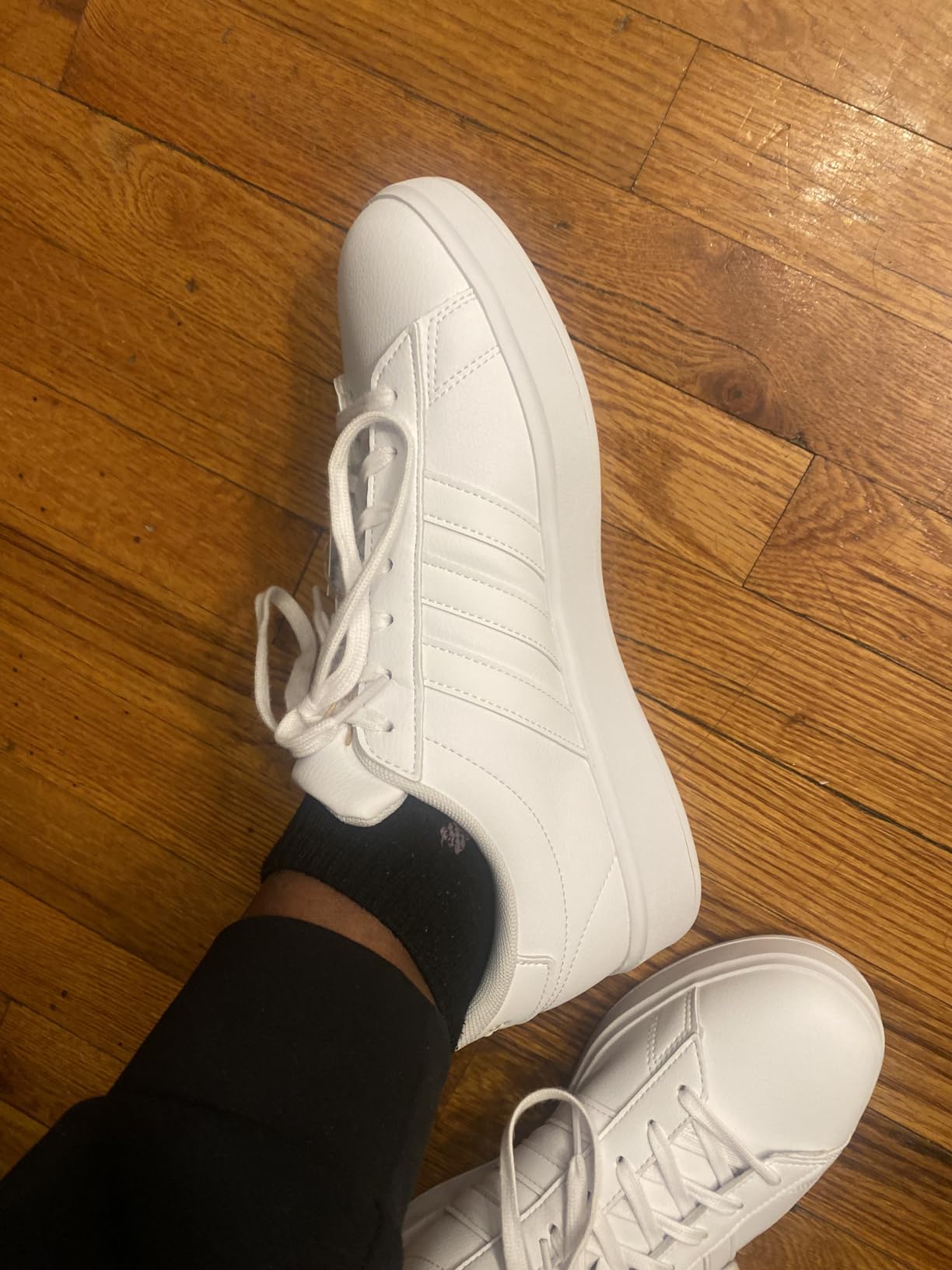
That question gets asked about almost every white sneaker. For most of them, the honest answer is “most things.” For these, the answer is genuinely closer to “most things you own.” The clean white body with that subtle off-white three-stripe detail creates a neutral that doesn’t compete with whatever you’re wearing above the ankle.
Over six weeks, I wore these with dark jeans and a blazer to a client presentation and got zero “are those too casual?” looks. Cropped wide-leg trousers on a Friday — looked intentional. Weekend coffee runs in leggings — obviously fine. Saturday soccer-sideline duties in jeans and a quarter-zip — appropriate to the environment. There’s a specific “dressed-up casual” ceiling they hit naturally — one notch below business formal — that covers probably 80% of real daily life.
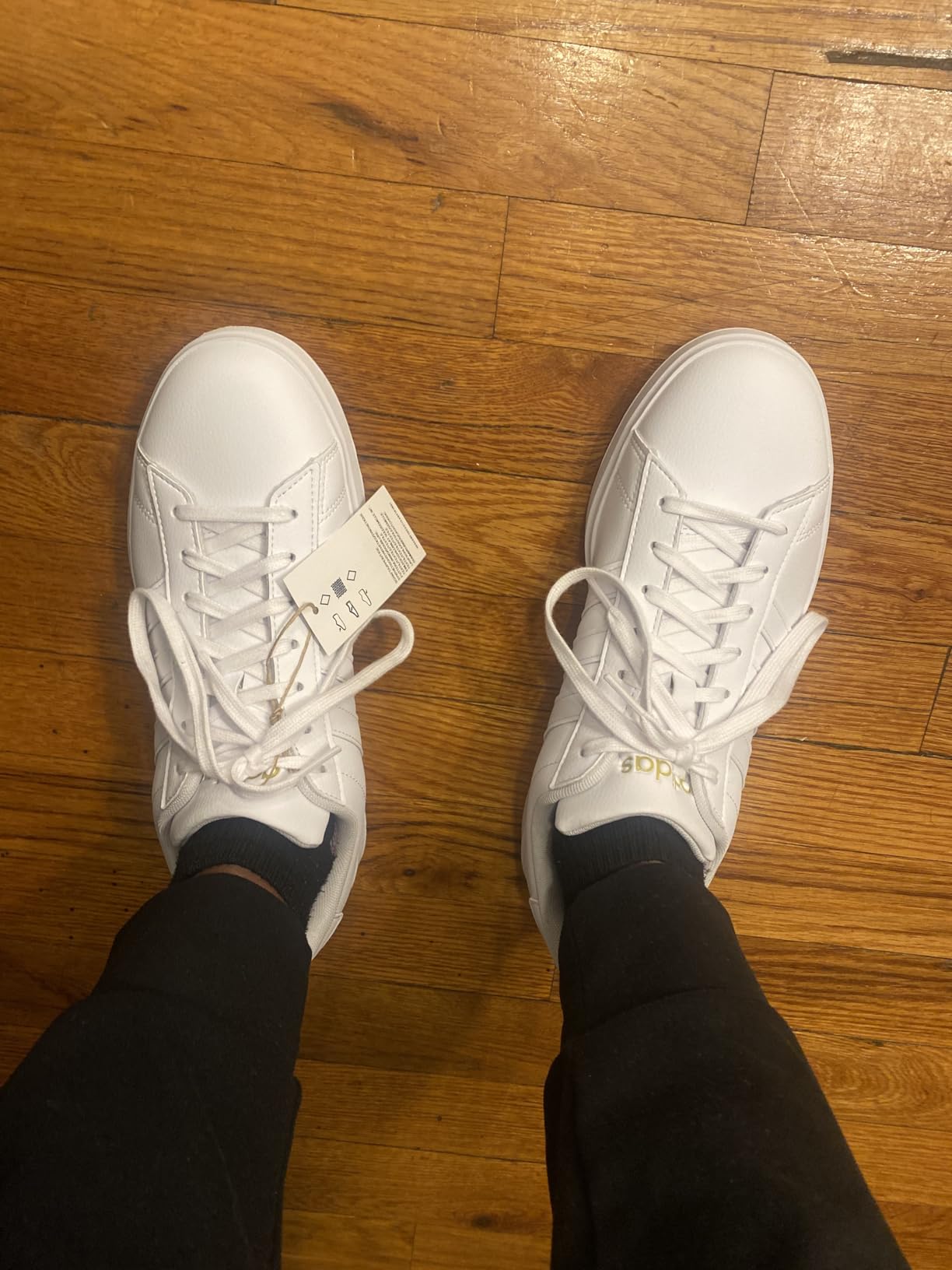
The synthetic leather upper is the maintenance game-changer compared to canvas sneakers. Dirt on canvas means a dedicated cleaning session. Dirt on these means thirty seconds with a damp cloth. I had coffee drip on the toe during a commute week two. Wiped it clean in the elevator before walking into my meeting. That’s the practical value of synthetic leather for busy schedules.
Where they don’t work: formal events requiring dress shoes, anything where you’d wear heels or leather loafers. These aren’t trying to be that. If you want a slightly dressier Adidas court silhouette, the Adidas VL Court 3.0 has a marginally more refined profile, and the Adidas Breaknet Sleek offers a slimmer, more dressed-up court look for the same price tier. But for most of what busy women actually do day to day, these Grand Court 2.0s punch well above their weight class.
Real-World Performance: Six Weeks of Everything I Could Throw at Them
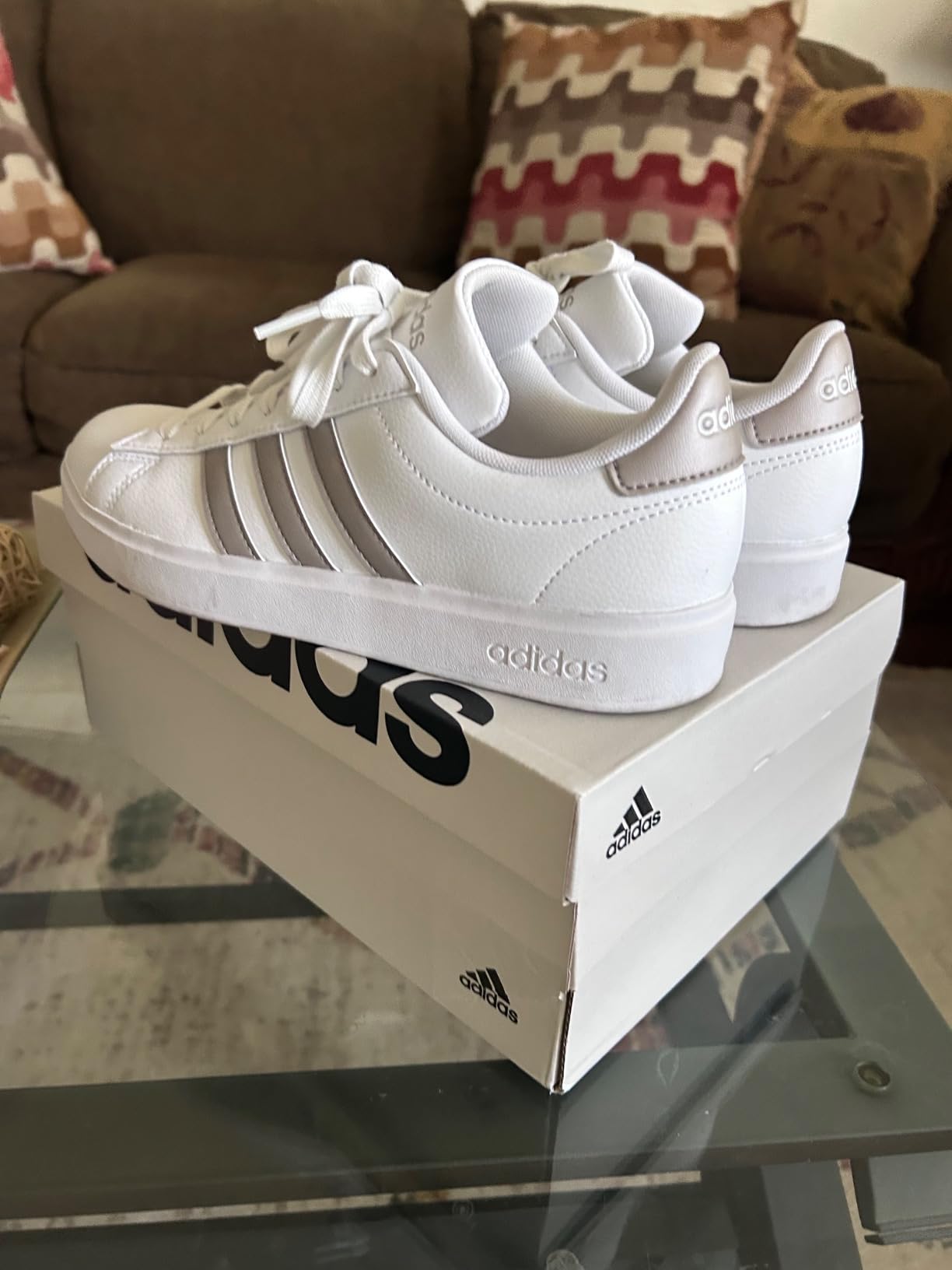
Travel (the Ultimate Stress Test)
Three days into the Chicago trip, I’d clocked 12,000+ steps each day and was still choosing these over the running shoes I’d packed as backup. Airport terminals are where cheap lifestyle shoes reveal themselves — the combination of polished hard floors, long straight corridors, and bag weight stressing your gait separates genuine comfort from wishful-thinking cushioning. The rubber outsole provided reliable grip from the slick airport concourse through to the uneven city sidewalks of the evening walk back. No heel slippage throughout.
Weather and Surfaces
The synthetic leather handled morning dew and light rain without drama during the weeks I did school drop-offs on wet pavement. These aren’t waterproof — a sustained downpour will eventually seep through — but they’re far more moisture-resistant than canvas alternatives in this price range. I got caught in light rain twice; both times the shoes dried normally and showed no water staining or material damage.
Traction on wet pavement was confidence-inspiring rather than grippy-shoe-level impressive. I never second-guessed a step on a damp surface, but I also wouldn’t push them into heavy rain deliberately.
Durability Progression
Week one through two: indistinguishable from day one, aside from the shoe taking my exact footprint shape in the sockliner. Week three: the Chicago test, no compression issues noticed. Week four and five: a couple of small creases appeared in the synthetic leather at the usual flex point across the vamp — normal and expected. Week six: the upper still passes what I’d call the coffee-shop first-impression test. No outsole separation, no fraying at stress points, no material failure. For a $55 shoe, that’s a genuinely good six-week report.
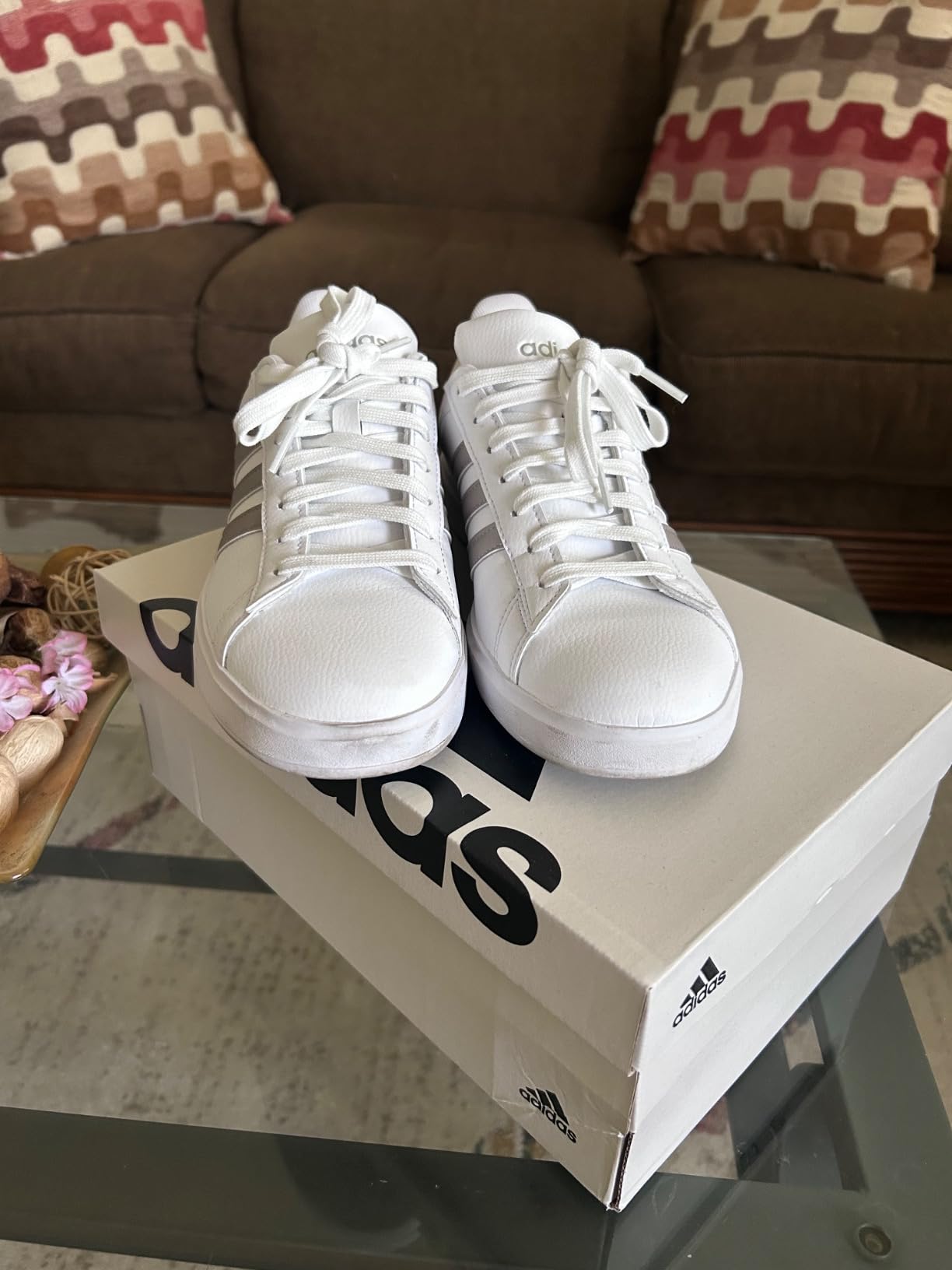
One reported issue worth addressing: some women have mentioned intermittent squeaking, particularly in early wear. I didn’t experience a single squeak through 200+ miles. Based on the pattern of complaints, it seems batch-dependent and tends to resolve within the first few weeks as materials settle. It’s not a widespread endemic problem, but worth knowing exists.
Who These Are For (and Who Should Look Elsewhere)
These will likely become your most-reached-for pair if you are:
- A professional who needs a shoe that reads “polished” in a meeting and still handles 10,000 steps back home afterward
- An active parent whose footwear gets tested across school drop-offs, sports sidelines, and grocery runs on the same day
- A traveler who needs a single pair that transitions from airport comfort to city exploration to casual dinner without looking obviously athletic
- Someone with normal to slightly high arches who doesn’t need medical-grade support
- Anyone who wants classic white sneakers that genuinely go with most of their wardrobe
You’ll be better served elsewhere if:
- You need serious arch support: The Cloudfoam sockliner covers moderate daily comfort. Significant pronation or flat feet will need custom orthotics added, or a more supportive built-in midsole to start with.
- You want something ultralight: At 11 oz, these are heavier than minimalist-leaning options. The Adidas Swift Run 1.0 runs lighter if weight is your primary concern.
- You actually want to play tennis in these: They’re inspired by court shoes but built for the street. For real lateral-movement court play, look at dedicated tennis shoes — the Adidas Avacourt is purpose-built for court performance.
- You run hot or live in extreme summer heat: Synthetic leather breathes less than mesh. Above 85°F in direct sun, these run warm — plan accordingly.
- You have very narrow feet: The roomy toe box that benefits wide feet is a challenge for narrow profiles even after sizing down.
If you’re drawn to the Grand Court family but want a slightly different silhouette, the Adidas Grand Court Alpha 00s offers a more retro-updated profile in the same comfort family. For a completely different aesthetic at a similar price point, the Adidas Run 70s 2.0 brings a sporty runner silhouette with comparable daily comfort. If you’re cross-shopping outside the Adidas family, the New Balance 574 competes directly in this versatile casual court category with a slightly heavier suede construction and broader heel.
Frequently Asked Questions
Do these run true to size?
Adidas officially says true to size, and their size chart reflects that. Real-world experience skews slightly generous — I’d describe them as running a quarter to half size large for most feet. If ordering online without trying on, go half a size down from your usual sneaker size. Wide feet can trust true to size; narrow feet should definitely size down.
How’s the arch support for someone who stands all day?
The Cloudfoam Comfort sockliner handles mixed-activity days (walking + standing + movement) well through 8–9 hours. Pure standing on hard concrete for a full shift — you’ll likely want to add aftermarket insoles by hour 9 or 10. The insole is removable, so custom orthotics fit without issue.
Are these vegan and sustainable?
Yes on both. No animal-derived materials. The synthetic leather upper contains at least 50% recycled content — a meaningful figure for a $55 shoe. The sole materials also include recycled components per Adidas’s sustainability commitments for this line.
Can I actually wear these to play tennis?
No — and Adidas is straightforward about this positioning. These are lifestyle sneakers inspired by tennis court aesthetics, not lateral-support court performance shoes. They’ll handle casual rallying or hitting a few balls around, but structured court play requires dedicated lateral support you won’t find here. For actual court sessions, dedicated tennis footwear built for the movement patterns is worth the investment.
How do you clean the synthetic leather?
Damp cloth for surface dirt and scuffs — works on most things immediately. For deeper cleaning, mild soap solution on a soft cloth, rinse with clean damp cloth, air dry. Avoid harsh cleaners, soaking, or machine washing. White stays bright surprisingly well with regular wipe-downs; I didn’t notice yellowing through six weeks of daily wear.
What’s the realistic lifespan with daily wear?
Based on my six-week test and broader community reports: 12–18 months for regular daily wear. Heavy daily use on rough surfaces (gravel, uneven terrain) will compress that toward 10–12 months. The upper will outlast the Cloudfoam cushioning in most cases — when the sockliner compresses noticeably, that’s your replacement signal. At $55 average, replacing annually is still $4.50/month — hard to argue with.
Are these good for women with wide feet?
Actually, yes. The generous fit that causes sizing confusion for standard-width feet is a genuine advantage for wider feet. Most reviewers with wide feet ordered their true size and reported comfortable, non-constricting fit. A few with particularly wide feet went half a size up for additional room.
Do these work for travel?
This is where they genuinely shine. Lightweight relative to leather sneakers, easy to pack, transition seamlessly from airport to city exploration to casual dinner. The synthetic leather handles the varied conditions of travel (different flooring, light weather exposure, extended walking) without the maintenance demands of real leather. My Chicago trip — three days, 12,000+ steps daily — is the strongest endorsement I can give.
Final Verdict
Performance Scores
| Category | Score (1-10) | Notes |
|---|---|---|
| Comfort | 8.5 | Zero break-in, Cloudfoam delivers from day one through week six |
| Style & Versatility | 9.0 | Genuinely pairs with 80% of a real wardrobe; classic silhouette ages well |
| Durability | 8.0 | Synthetic leather held up through coffee spills, muddy sidelines, six weeks of daily wear |
| Value for Money | 9.5 | $55 ÷ 18-month daily lifespan = ~$0.15/wear; hard to beat at any price point |
| Sizing & Fit | 7.5 | Runs slightly generous; sizing-down guidance resolves the issue, but requires informed buying |
| Support | 7.0 | Adequate for daily wear and travel; concrete marathon days benefit from added insoles |
| OVERALL SCORE | 8.3/10 | Excellent daily wear value for busy women |
The Honest Summary
✅ What Earns the 8.3
|
❌ What Holds It Back
|
The Target shelf-grab that started as a Thursday emergency has been in regular rotation for six weeks. Three pairs of other sneakers have been worn less. At $55 amortized over what I expect will be an 18-month daily lifespan, that’s roughly $0.15 per wear for a shoe that survived 200+ miles, two business trips, one Chicago conference, and more soccer field sidelines than I care to count. Size down half a step, and you’ve got your new daily go-to.
Be the first to review “adidas Women’s Grand Court 2.0 Tennis Shoe”
Related products

Running Shoes


Tennis/Squash Shoes
Tennis/Squash Shoes
Tennis/Squash Shoes
Tennis/Squash Shoes
Tennis/Squash Shoes
Hiking/Trekking Shoes
Tennis/Squash Shoes
Reviews
There are no reviews yet.