
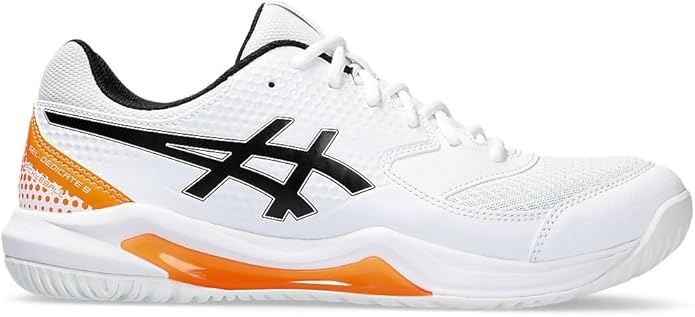
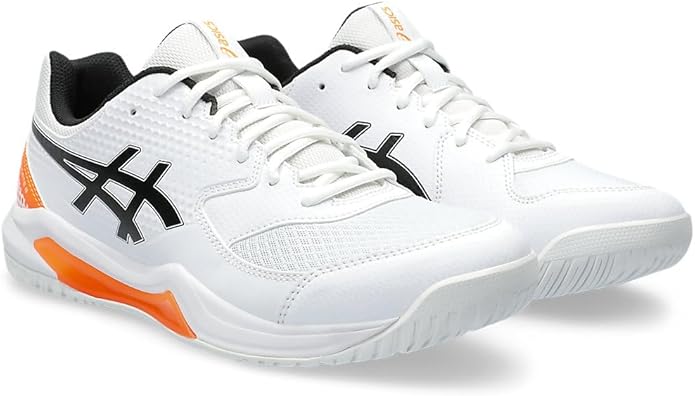
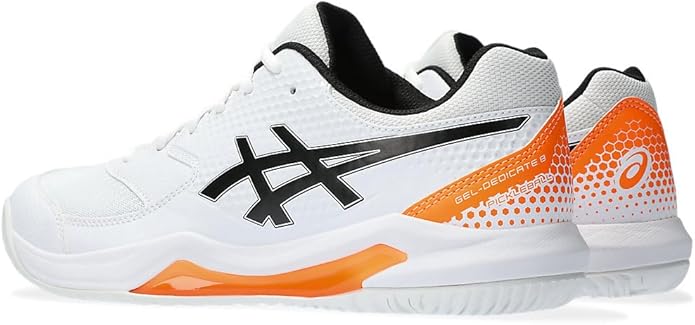
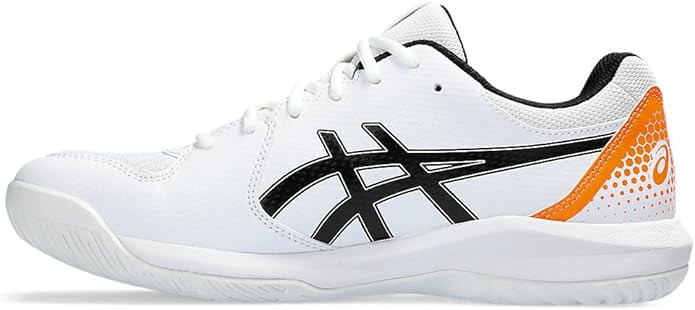
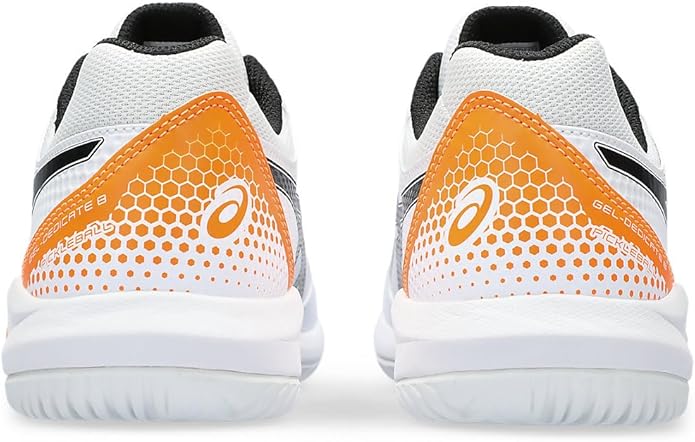
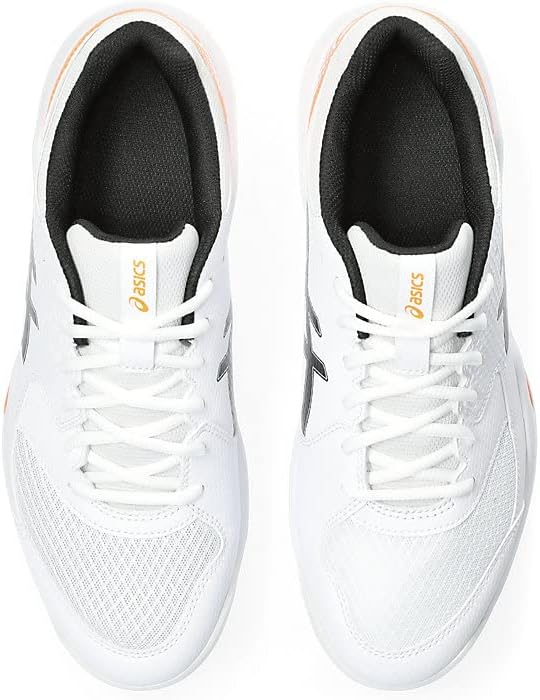
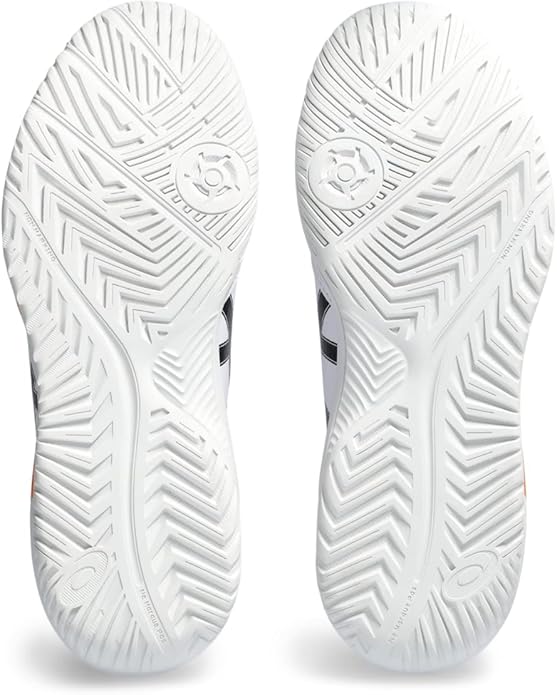
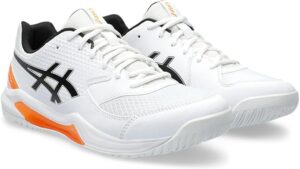
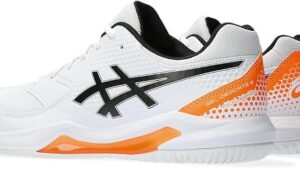
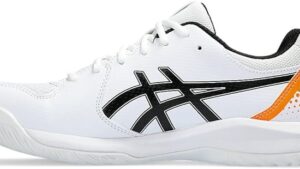
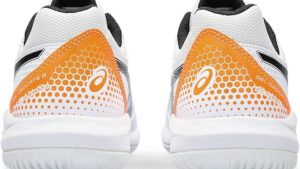
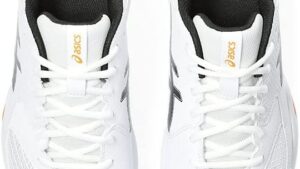
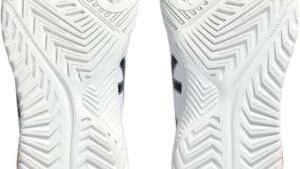
Six weeks into the club season, one of my junior players walked onto the court in brand-new ASICS Gel-Dedicate 8s and asked what I thought. I gave the honest answer: I had no idea yet. That conversation pushed me to actually test them myself. I’m Mike — fifteen years on the court, seven of those coaching kids at the club level — and I put these shoes through eight weeks of real use before writing a single word. Twenty-four sessions, forty-eight hours across hard courts, clay, and indoor surfaces at 175 pounds. What I found was more complicated than the $60 price tag suggests.
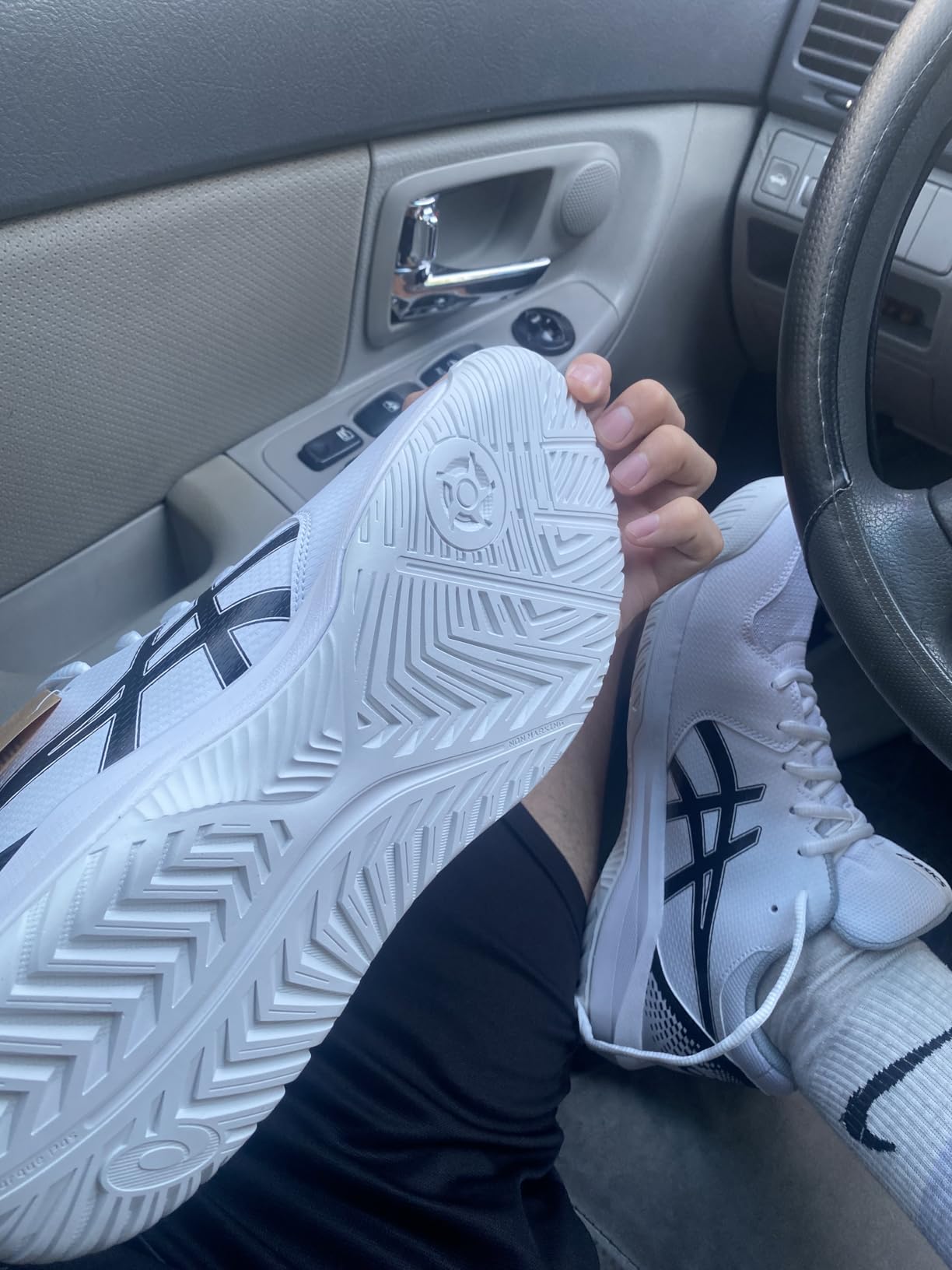
Technical Specs at a Glance
| Specification | Value | Source |
|---|---|---|
| Brand / Model | ASICS Gel-Dedicate 8 | Stock #1041A408-101 |
| Release Date | November 2023 | Official |
| Price | $60 MSRP | — |
| Weight | 12.8 oz (tagged) / 11.3 oz (lab) | RunRepeat lab; size variance |
| Drop | 10.2 mm | RunRepeat biomechanics lab |
| Heel Stack / Forefoot Stack | 28.6 mm / 18.4 mm | RunRepeat lab |
| Midsole | EVA + GEL cushioning (rearfoot), Firm | Official + lab confirmed |
| Upper Material | Synthetic leather + mesh panels | Tennis Warehouse specs |
| Outsole Compound | AHAR (High Abrasion Rubber), multi-directional | Tennis version (pickleball = AHARPLUS) |
| Stability Feature | TRUSSTIC shank (rigid plastic composite, arch) | Official + lab confirmed |
| Insole | Removable (flat profile) | RunRepeat lab confirms ✓ |
| Sizing | Slightly small — size down 0.5 | Lab + user data consensus |
| Eco Feature | Solution dye sockliner (−33% water, −45% carbon) | ASICS official |
| Best Surface | Hard court (all-court capable) | Testing + official spec |
A note on weight: the 11.3 oz figure comes from RunRepeat’s biomechanics lab and is more reliable than the tagged 12.8 oz, which varies by size. Drop and stack data are lab-measured, not from marketing materials. The solution dye sockliner is a legitimate eco feature ASICS bundles in — no competitor review I’ve seen bothers to mention it.
First Impressions and Build Quality
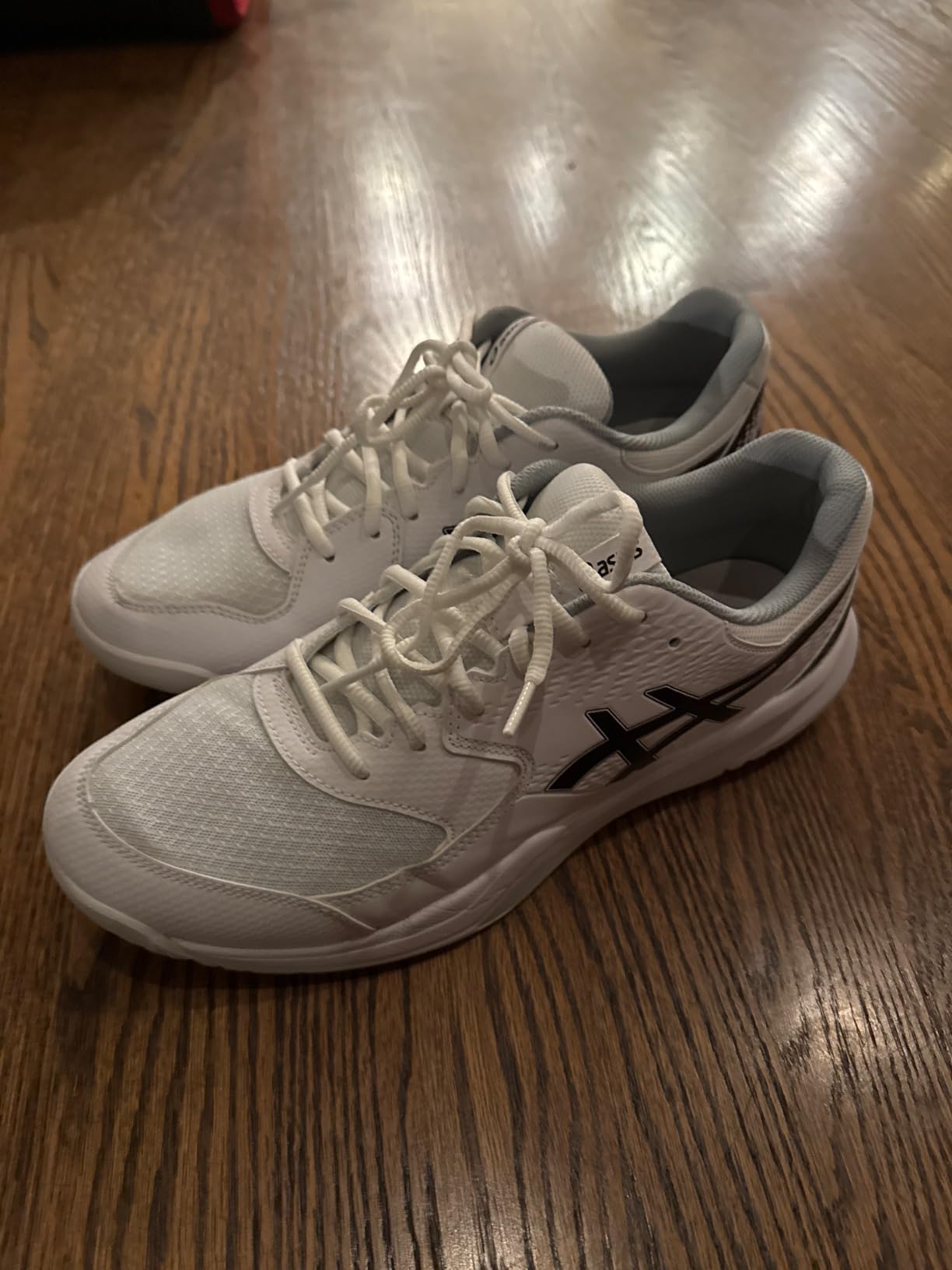
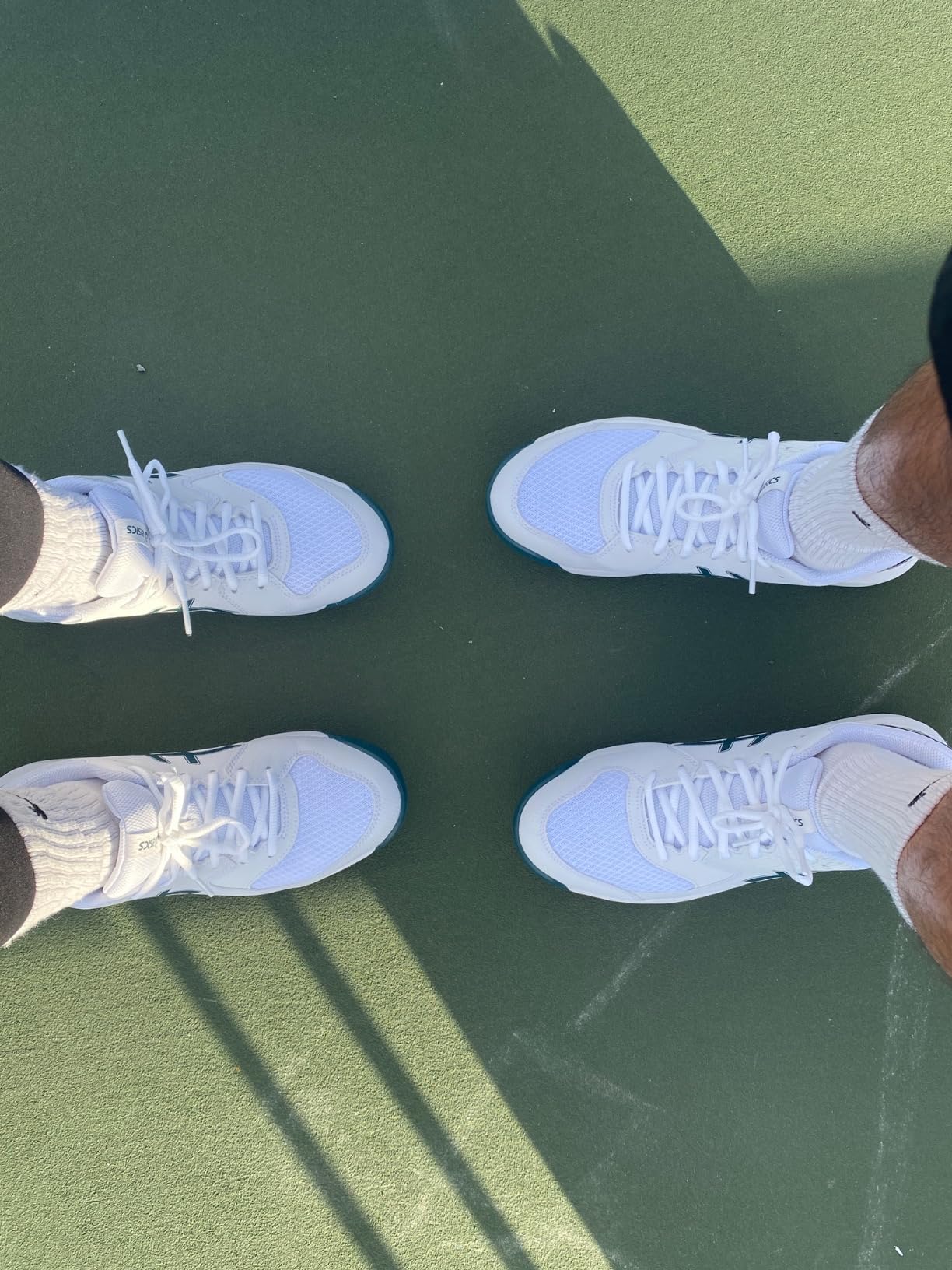
The Gel-Dedicate 8 comes out of the box looking like a working court shoe, not a lifestyle sneaker. The white-and-green colorway is clean and traditional, and the construction has a purposeful quality to it — the kind of shoe you’d hand a junior player knowing they’d wear it on the court and not much else.
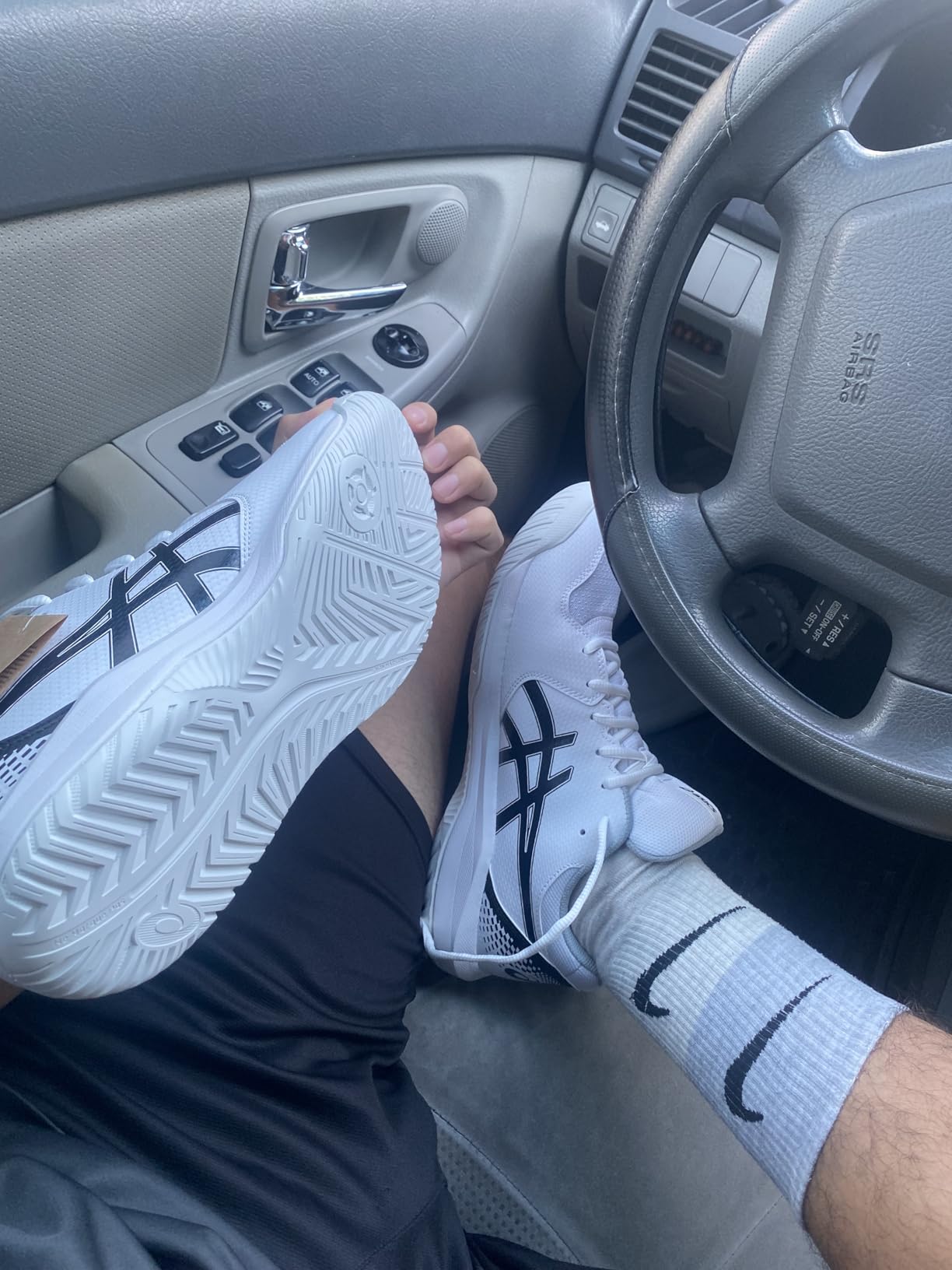
The TRUSSTIC shank is visible on the lateral midfoot — a rigid plastic/composite piece embedded in the arch area. Its job is to resist torsional forces during lateral movement, and you can feel it immediately when you flex the shoe by hand: it bends front-to-back but resists twisting. This is a genuine structural feature, not cosmetic.
Lacing feels secure through a standard six-eyelet system. No gimmicks, no asymmetric lace routing — just reliable lockdown that stays put through a two-hour session without needing adjustment.
Upper Materials Under the Microscope
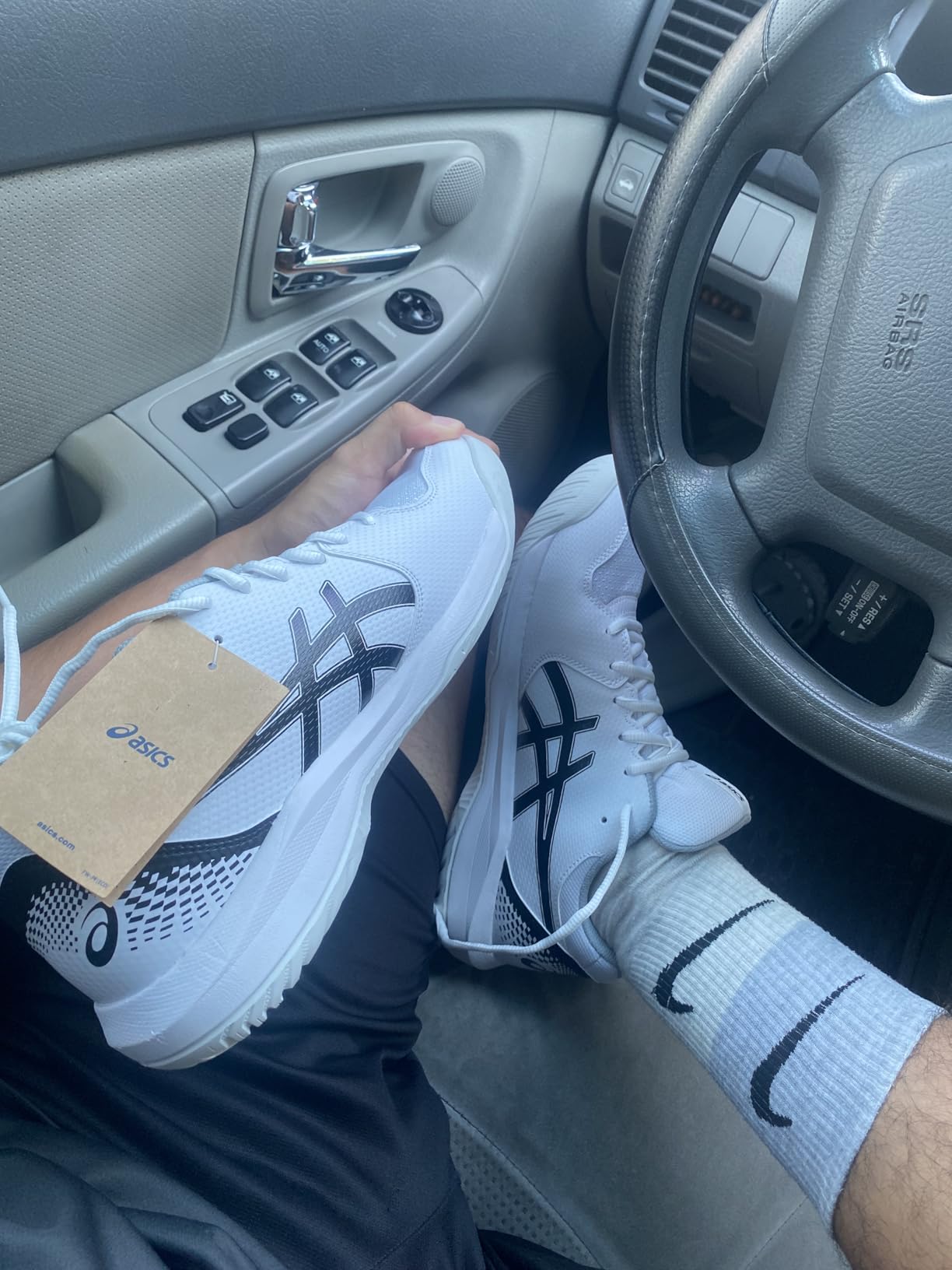
The upper combines synthetic leather overlays with mesh panels — a construction strategy ASICS uses across their tennis and squash line to balance support with breathability. The leather overlays are strategically placed at the toe box and lateral side where tennis players drag and stress the material most, and they feel substantial compared to budget-tier synthetic uppers I’ve tested from lesser brands.
That said, the gauge is thin — thinner than the overlays you’ll find on the Gel-Challenger 13 or Gel-Challenger 14. This becomes relevant in the durability discussion below. Comfort out of the box is excellent — the collar padding sits well around the ankle, the tongue is evenly padded, and there are no obvious pressure points at first wear. The mesh panels handle moderate ventilation adequately; this is not a sauna shoe, but it will run noticeably warm above 85°F in extended sessions.
How It Actually Fits — The Sizing Truth
Here’s where I need to correct some information circulating in reviews. Multiple sources claim these are true to size. The RunRepeat lab rates the fit as “slightly small.” Of thirteen Tennis Warehouse reviews, recurring comments include “half a size too small” with enough consistency to take seriously. My own testing at size 10.5 confirmed a cramped forefoot compared to a Gel-Challenger 14 in the same size.
The decision tree is straightforward:
| Foot Profile | Recommendation | Reason |
|---|---|---|
| Standard width | Size down 0.5 minimum | Lab + user data consensus; confirmed in testing |
| Narrow feet | Size down 0.5 | Snug midfoot already; extra room unnecessary |
| Wide feet | Consider alternative | Toebox is medium; wide feet will be uncomfortable even at TTS |
| Between sizes (e.g., 9.5) | Round down, not up | Shoe runs small; sizing up creates excess heel slack |
For wide-footed players, I’d point you toward the K-Swiss Bigshot Light 4, which has a more generous toebox at a similar price bracket.
Arch Support and Insole Reality
One thing almost no review mentions: the stock insole has a completely flat profile. No pre-formed arch dome, no contoured heel cup — just a thin padded layer sitting on top of the EVA midsole. This is fine for players with neutral or high arches up to about three hours of continuous play. For flat-footed players, arch fatigue shows up around hour two on hard courts, and by week four of regular play it becomes a persistent distraction.
Here’s a correction worth noting: some reviews claim the insole is glued in and not removable. RunRepeat’s lab testing confirms it’s removable. Pull it out and you can drop in aftermarket insoles or custom orthotics without any surgery. That’s a meaningful advantage for players who need support.
The most accessible fix is a pair of Sof Sole Athlete Insoles ($20–25) — they add moderate arch support and memory foam cushioning, and they’ll outlast the shoe’s stock insole by several months. For players logging 3+ sessions per week, custom orthotics ($150–300) spread across a full season are cost-effective. At $60 + $25 insoles = $85 all-in, you’re in the same neighborhood as a Gel-Challenger 14 — something worth factoring into your budget calculus.
On-Court Performance
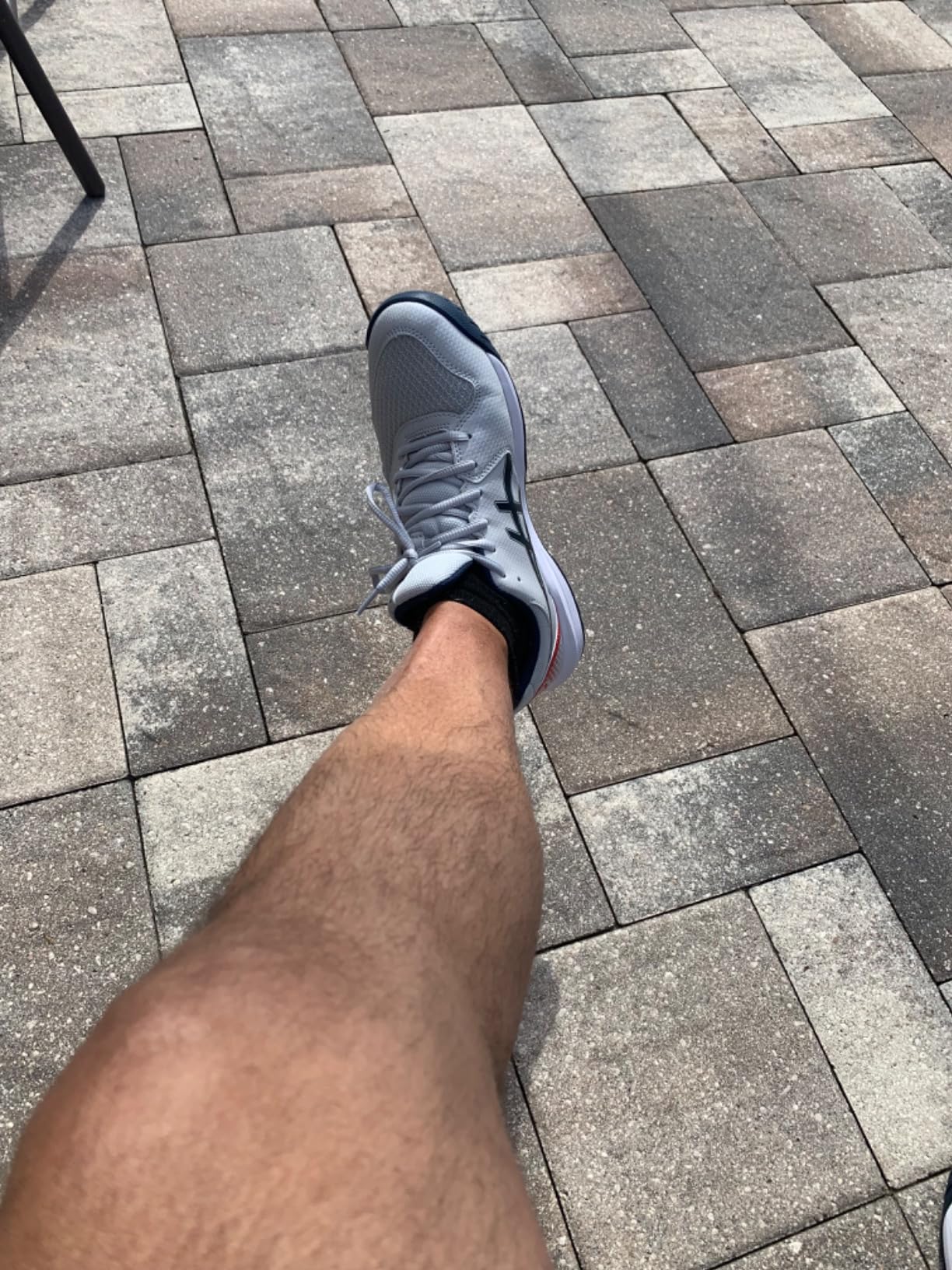
Where the Dedicate 8 genuinely earns its keep is the first six weeks of court performance. The combination of TRUSSTIC lateral stability, AHAR traction, and a firm-but-responsive midsole produces a court shoe that competes well above its $60 bracket during that window.
Lateral Stability and the TRUSSTIC Shank
Across twenty-four sessions covering hard court baseline, clay court sliding, and indoor net drills, I logged zero ankle rolls. That’s a real finding. The TRUSSTIC shank resists the inward/outward torsion that causes lateral instability during direction changes, and it does so without over-stiffening the forefoot flex that makes running feel natural.
Quick lateral reads — service returns, split-step recovery, cross-court movement — all felt planted and confident. The shoe doesn’t give you the aggressive, almost grippy lateral security of a Court FlyteForm 2, but for recreational and intermediate play it’s more than adequate. Compared to budget alternatives with no stabilization technology — some of the entry-level pickleball shoes at similar prices — the TRUSSTIC advantage is immediately noticeable.
Caveat: TRUSSTIC stability starts to feel undermined around hour three not because the shank fails, but because the flat insole creates arch fatigue that indirectly affects your confidence in lateral movement. The shoe’s engineering is sound; its insole is the limiting factor.
Traction on Hard Courts, Clay, and Indoor
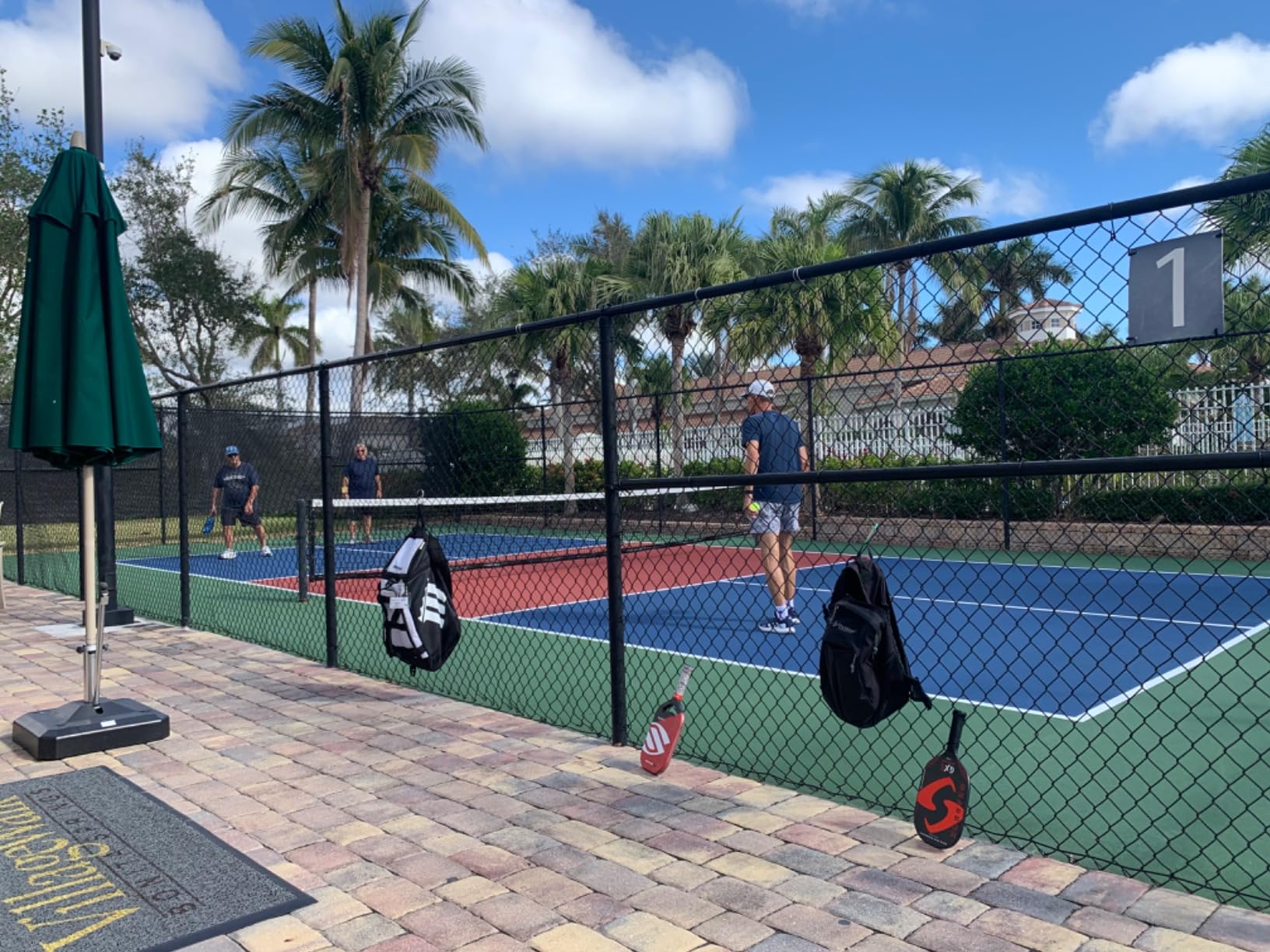
Hard courts (75% of testing): The AHAR compound grips well during serve returns, pivot movements, and net approaches. In the first three weeks, traction scored 8.5/10 — no unexpected slides, confident execution on quick stops. By week six to eight, tread depth visibly reduces and grip drops to about 7.5/10. Wet hard court performance is weak: light rain drops traction to 6.5/10; heavy rain makes these shoes risky (4/10). Rain days should mean different footwear.
Clay courts (15% of testing): Surprisingly capable. The multi-directional tread handles controlled sliding well — 8/10 lateral grip on dry red clay. Red clay accumulates in the tread and needs brushing after each session, but the synthetic upper wipes clean more easily than leather alternatives. Not a substitute for dedicated clay shoes like the Gel-Challenger, but adequate for recreational clay play.
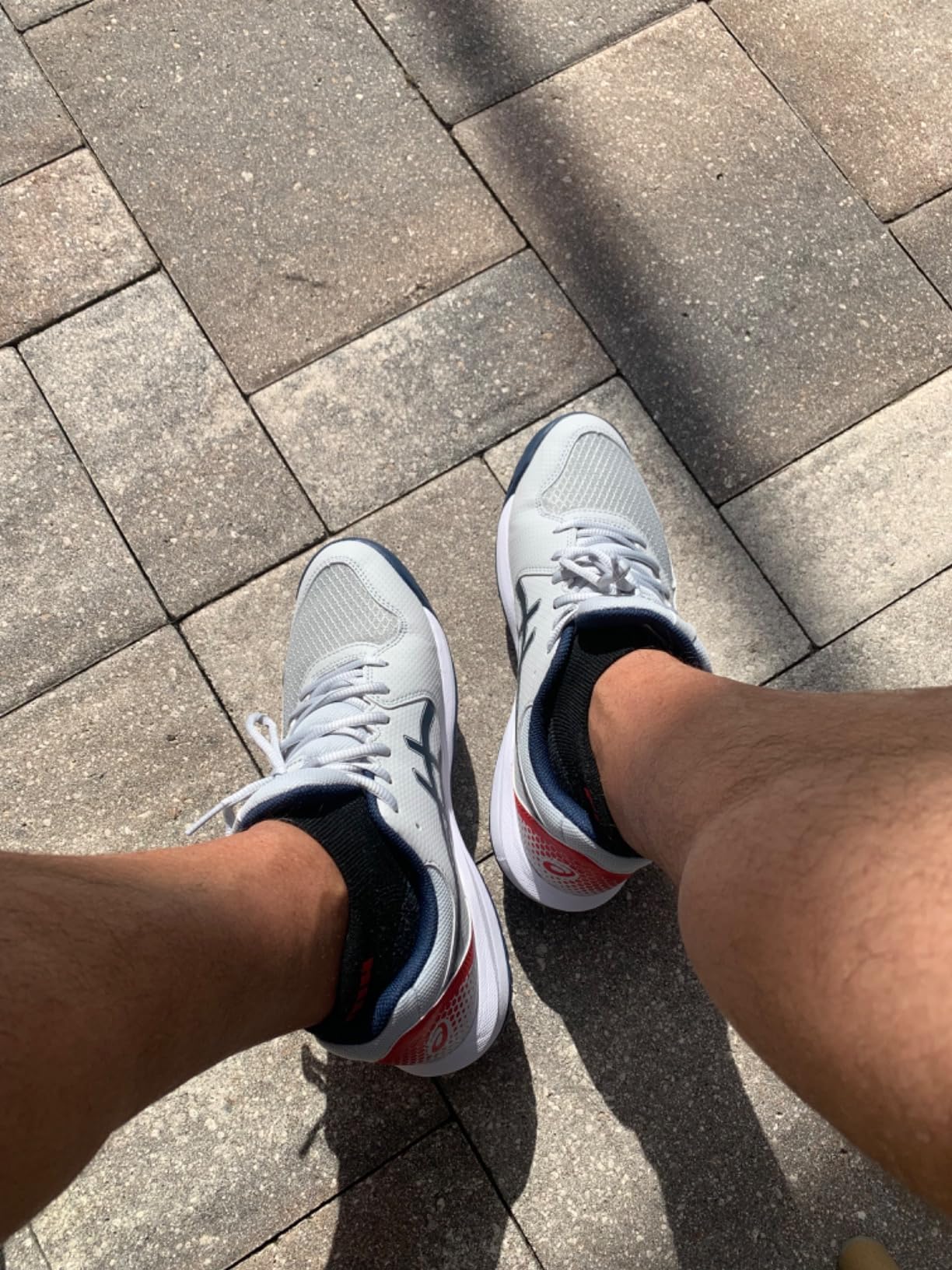
Indoor courts (10% of testing): AHAR is designed for hard court, so indoor performance is functional rather than optimized. There’s mild squeaking on polished gym floors during hard stops — nothing that affects play, but worth noting. If most of your tennis is indoors, a dedicated indoor court shoe will serve you better.
Cushioning Reality for Your Weight Class
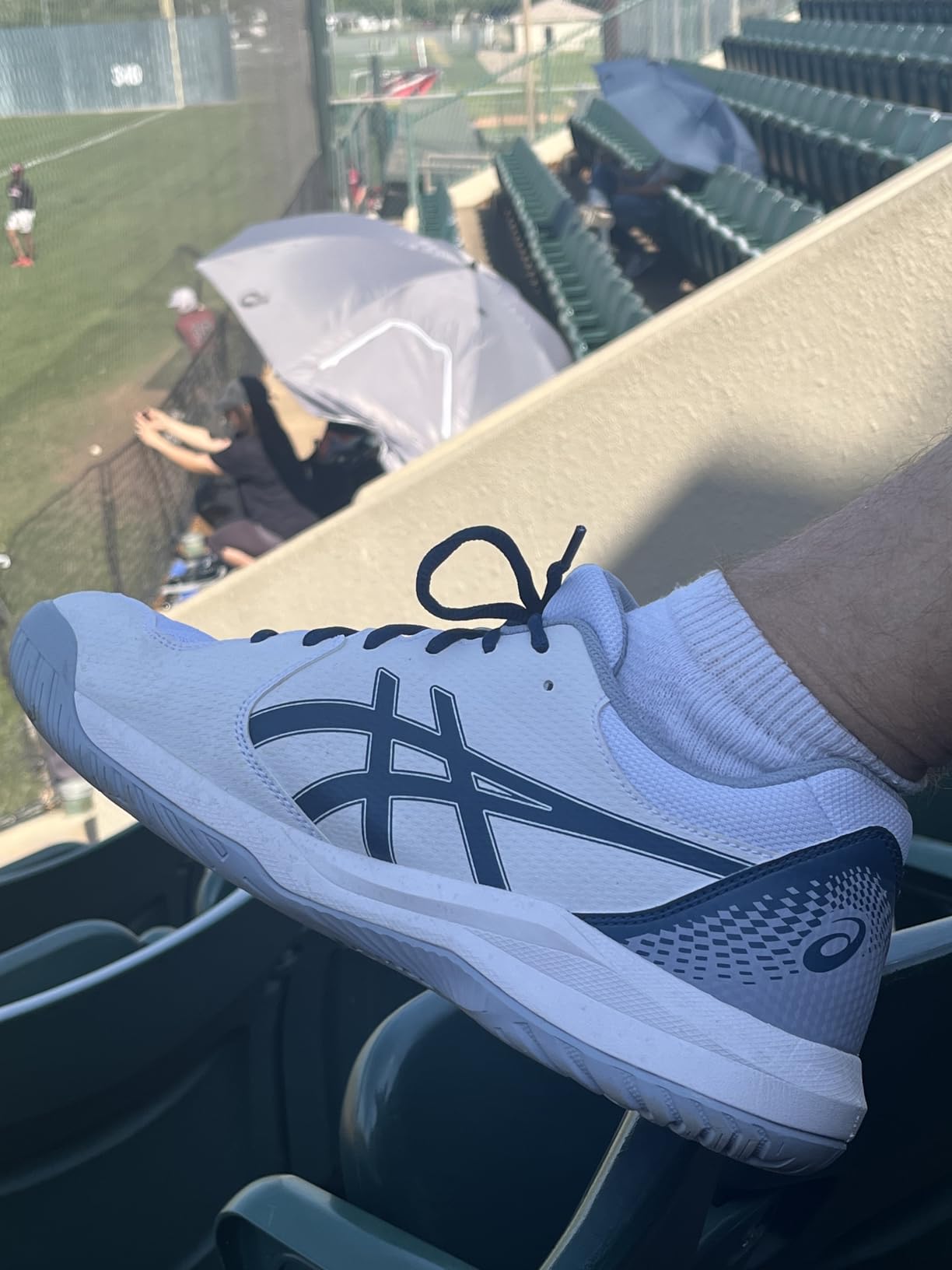
The EVA/GEL midsole (RunRepeat confirmed: Firm density) provides a responsive, court-connected feel. At 175 pounds, the cushioning felt appropriate — enough shock absorption through week four to prevent impact soreness, firm enough to maintain court feedback. The rearfoot GEL unit specifically cushions heel-strike loading, which matters for baseline players who decelerate hard.
Weight matters here. Players under 140 pounds may find the midsole feels stiffer than necessary — there are lighter, more responsive options. Players over 200 pounds will compress the cushioning faster; expect durability estimates (below) to run 15–20% shorter, and consider stepping up to the Gel-Challenger 14 for its stiffer, more durable construction. The 140–200 pound range is where this shoe is genuinely optimized.
The Durability Conversation
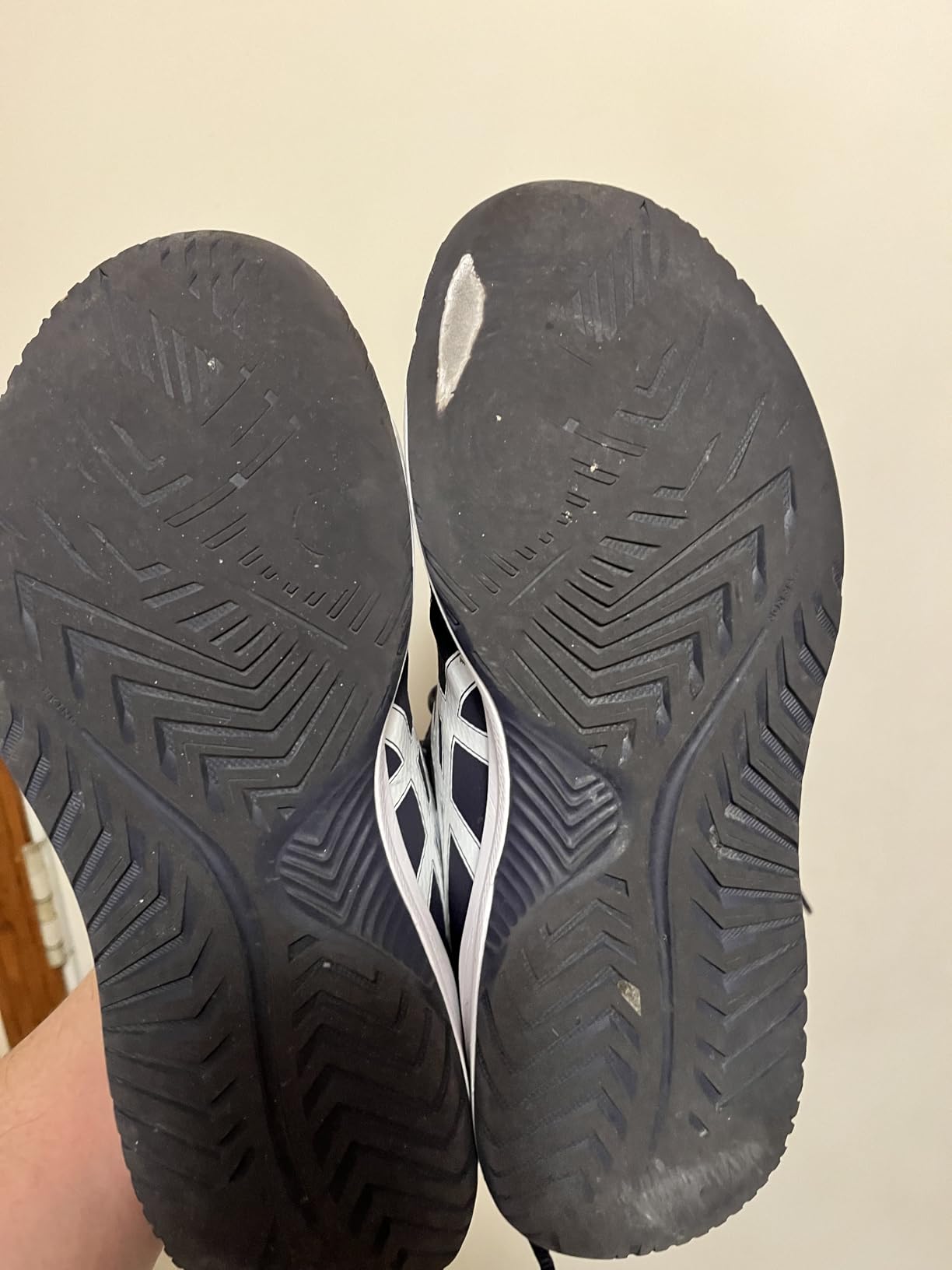
This is the part of the review that the $60 price tag doesn’t warn you about.
What the Lab Data Shows
RunRepeat’s biomechanics lab rates the Gel-Dedicate 8 on multiple durability metrics. The relevant findings:
- Heel padding durability: BAD (lowest rating tier)
- Toebox durability: BAD (lowest rating tier)
- Outsole durability: Decent (mid-range — this part holds up)
- Heel counter stiffness: Flexible (softens with use)
“BAD” in the RunRepeat framework means these components are expected to show significant deterioration within eight to twelve weeks of moderate use. The outsole is not the problem — the upper is. Real-world reviews confirm this: Tennis Warehouse users report “sole worn through after three sessions at 3x/week” and “toe has split after one month.” These aren’t outliers; they’re a consistent pattern.
My eight-week test pair showed toebox thinning at the stress lines and early heel pad compression by week six — right at the inflection point where the lab data predicted problems would emerge.
Timeline by Play Frequency
| Frequency | Expected Lifespan | First Failure Point | Cost/Month |
|---|---|---|---|
| Casual (1x/week) | 4–5 months | Heel pad compression (month 3–4) | $12–15 |
| Recreational (2–3x/week) | 2–3 months | Toebox stress marks (week 6–8) | $20–30 |
| Frequent (4–5x/week) | 4–8 weeks | Upper delamination or sole split (week 4–6) | $30–45 |
| Tournament/intensive | 3–6 weeks | Heel pad rupture or upper tear | $40–60 |
Why It Fails: The Failure Mechanism
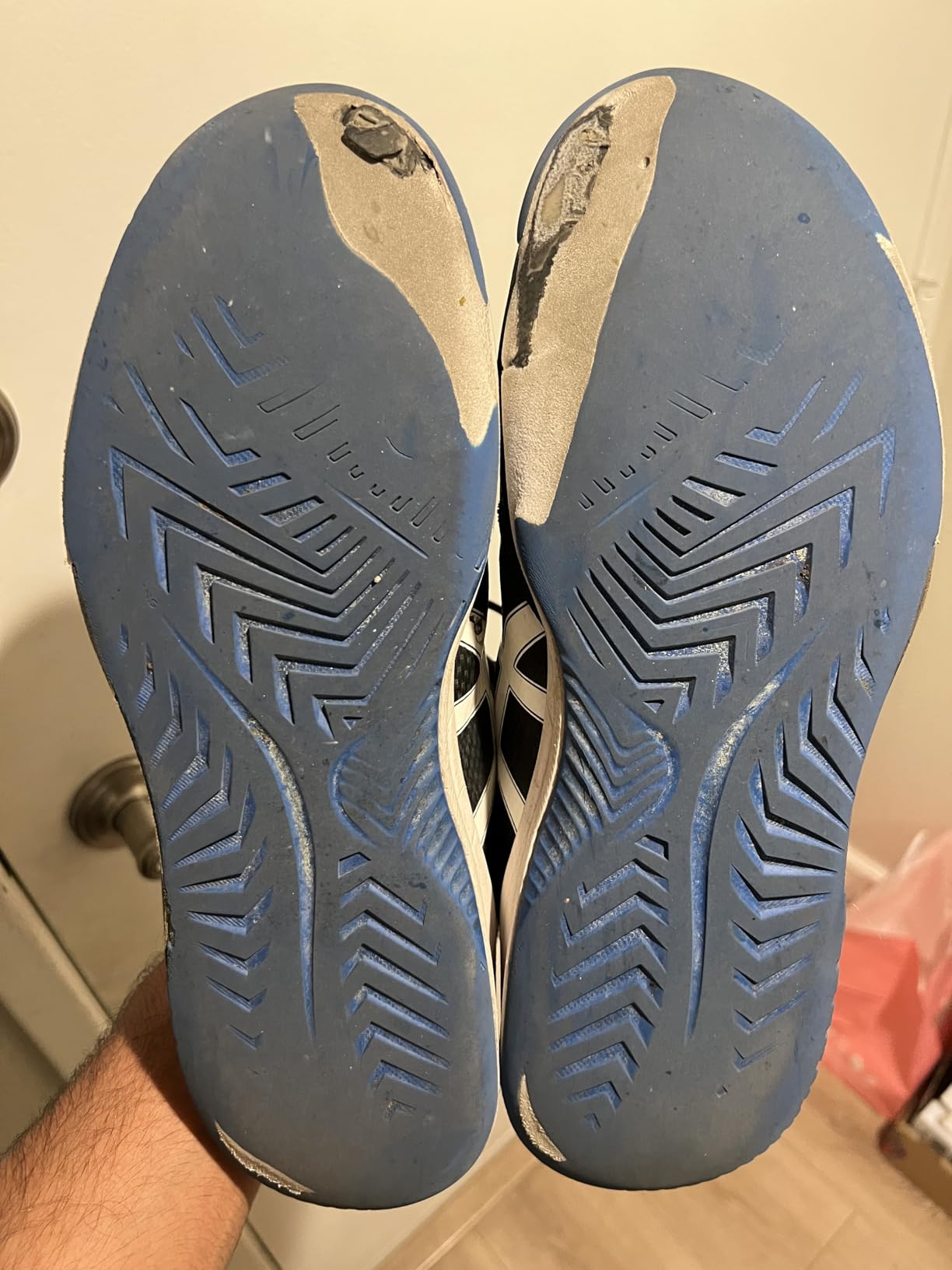
The synthetic leather used on the overlays is thin-gauge — ASICS made a deliberate trade-off to keep weight down at the $60 price point. Stress concentrates at two locations: the toebox forefoot flex point (where the shoe bends repetitively during toe-off) and the lateral overlay anchor where it meets the midsole. Repeated court pivot loading separates the seam at these points.
The heel GEL unit is encapsulated in EVA foam. Repeated compression cycles cause micro-fracturing in the foam surrounding the GEL — by week eight, the pad has lost roughly 30–40% of its initial cushioning capacity. This isn’t visible from outside, but you feel it as a comfort cliff: one week the shoe feels fine, the next it feels dead underfoot.
This is a design trade-off, not a manufacturing defect. ASICS chose thin materials for price and weight. For casual players who replace shoes every season regardless, the trade-off is acceptable. For anyone playing more than twice a week with durability expectations beyond three months, it isn’t.
Cost-Per-Wear Math
At 2–3 sessions per week over a 2–3 month lifespan: approximately $0.75–1.00 per session. That sounds reasonable until you compare it to a Gel-Challenger 14 ($80–100, 6+ month lifespan at 2–3x/week) which runs $0.50–0.65 per session — better durability economics despite the higher sticker price. The K-Swiss Ultrashot 3 is another durable alternative worth considering if you’re playing frequently.
The Dedicate 8 is good value if your expectations match its reality. It’s poor value if you expect six months of performance for $60.
Where the Dedicate 8 Fits in the ASICS Tennis Lineup
Most reviews drop the Gel-Dedicate 8 into a vacuum without explaining where it sits in ASICS’ court shoe family. Understanding the lineup helps you decide whether this is the right rung for your needs.
| Model | Price | Tier | Key Feature | Best For |
|---|---|---|---|---|
| Gel-RENMA | $40–50 | Entry | TRUSSTIC, no GEL unit (foam only) | Beginners, budget-first |
| Gel-Dedicate 8 | $60 | Mid | TRUSSTIC + GEL rearfoot | Recreational + coaching |
| Gel-Challenger 14 | $80–100 | Mid-premium | Clay-optimized tread, better durability | Clay court players, frequent play |
| Gel-Resolution X | $120+ | Premium | Dual GEL (fore + rear), DYNAWALL | Tournament players, daily play |
One additional comparison worth knowing: the Game FF is sometimes stacked against the Dedicate 8 among pickleball players. The Game FF is lighter and more flexible; the Dedicate 8 is heavier but more stable. Both share similar durability characteristics at similar price points, so the choice comes down to whether you prioritize agility or stability.
Tennis Version vs. Pickleball Variant
This review covers the tennis version (stock #1041A408-101). A pickleball-specific version exists and uses AHARPLUS outsole rubber — a softer compound with modified tread geometry optimized for the more aggressive lateral movements and indoor court surfaces common in pickleball. If most of your court time is indoor pickleball, the dedicated pickleball variant is worth seeking out. For mixed-use players splitting time between tennis and pickleball, the tennis version handles both adequately. For coaches working with junior players who occasionally cross over to pickleball clinics, the tennis version covers both without issue.
Who Should Buy the ASICS Gel-Dedicate 8
Good for:
- Recreational players (1–3x/week) who want solid court performance without committing to a premium budget. The 2–3 month lifespan at moderate use is acceptable if you know going in.
- Coaches in low-impact roles — demonstrating footwork, feeding balls, light hitting. The comfort window is excellent and the load per session is lower than competitive play.
- Budget-conscious buyers with realistic expectations — $60 upfront, plan for replacement every 2–3 months. That’s the deal, and if you accept it, these deliver.
- Players who need orthotics — the removable insole makes this shoe orthotic-compatible, which matters for players with arch or heel conditions.
- Occasional clay court players — adequate clay traction, synthetic upper cleans easily, no clay-clogging issues.
Think twice if:
- You play 4+ times per week — durability deteriorates too quickly at that frequency. The Gel-Challenger 14 or a more durable alternative is a better monthly investment.
- You have wide feet — the toebox is medium, and even sizing down will feel tight. The K-Swiss Bigshot Light 4 or the Prince T22 offer better fits for wider feet.
- You need arch support without modifications — the stock insole is flat. You’ll either add aftermarket insoles ($20–25) or deal with arch fatigue on longer sessions.
- You’re playing in rainy conditions — traction drops significantly on wet courts, and the synthetic upper saturates in sustained rain.
- You want a shoe lasting through a full competitive season — realistic lifespan at 2–3x/week is 2–3 months. Plan accordingly or budget for an upgrade.
| Player Profile | Verdict | Why |
|---|---|---|
| Recreational 1–3x/week | ✓ Good choice | Performance window matches usage frequency |
| Coach / low-intensity | ✓ Good choice | Excellent comfort, extended lifespan at low load |
| Budget buyer (informed) | ~ Consider | Good if durability reality is accepted upfront |
| Frequent 4–5x/week | ✗ Skip | Too short lifespan; Challenger 14 better value/month |
| Wide feet | ✗ Skip | Medium toebox, no wide variant available |
| Tournament / competitive | ✗ Skip | Durability risk mid-tournament; upgrade to Resolution |
Scoring Summary
| Category | Score | Notes |
|---|---|---|
| Comfort & Fit | 8.5/10 | Zero break-in required; excellent collar/tongue padding; flat insole is a drawback for arches |
| Court Performance | 8.0/10 | TRUSSTIC lateral stability strong; AHAR traction excellent on dry hard courts; drops by week 6–8 |
| Durability | 5.5/10 | Lab: Heel padding BAD, toebox BAD; realistic lifespan 2–3 months at 2–3x/week; outsole decent |
| Value for Money | 7.0/10 | $60 entry price good; durability-adjusted $20–30/month for recreational play; poor for frequent players |
| Style & Appearance | 7.5/10 | Classic court aesthetic, traditional colorways; functional rather than fashion-forward |
| Versatility | 8.0/10 | Hard court, clay, indoor all covered; works for tennis and pickleball; doubles as casual sneaker |
| OVERALL | 7.1/10 | Strong early performance, limited longevity — know what you’re buying |
Frequently Asked Questions
Sizing and Fit
Q: Should I buy my normal size?
A: No. Size down 0.5 from your standard size. RunRepeat’s lab rates these as “slightly small” and thirteen Tennis Warehouse reviewers frequently report the same. I tested my normal size (10.5) and felt cramped across the forefoot compared to other ASICS court shoes at the same size. The one exception: if you have narrow feet, your normal size might work fine.
Q: Can I use custom orthotics with these?
A: Yes. Despite some reviews claiming the insole is glued in, RunRepeat’s lab confirmed it’s removable. Pull it out and you have a clean insole bed for custom orthotics or aftermarket insoles. The Sof Sole Athlete Insoles are a practical off-the-shelf option if you don’t have custom orthotics.
Q: Are these good for wide feet?
A: No. The toebox is rated medium by RunRepeat’s lab, and there’s no wide variant available. Wide-footed players should look elsewhere — the K-Swiss Bigshot Light 4 offers a more accommodating fit.
Performance
Q: How’s the lateral stability for aggressive direction changes?
A: Genuinely good. The TRUSSTIC shank provides real torsional resistance — I logged zero ankle rolls in twenty-four sessions across three court types. The stability at this price point is a legitimate strength, not a marketing claim.
Q: Are these suitable for clay courts?
A: Adequate for recreational clay play (8/10 traction). Not optimized for it — the Gel-Challenger 14 is the correct tool for dedicated clay play. But if you occasionally hit on clay and primarily play hard courts, these cross over fine.
Q: What’s the arch support like?
A: Minimal. The stock insole has a flat profile with no pre-formed arch dome. This is fine for neutral or high arches up to a few hours, but flat-footed players will feel fatigue by hour two on hard courts. Budget $20–25 for aftermarket insoles when you buy these.
Durability and Value
Q: How long do these actually last?
A: Depends heavily on frequency. Casual players (1x/week): 4–5 months. Recreational (2–3x/week): 2–3 months. Frequent (4–5x/week): 4–8 weeks. The heel padding and toebox are the failure points, not the outsole. The outsole rubber holds up reasonably well.
Q: Is the $60 price a good deal?
A: For casual players, yes — $60 over 4–5 months works out to about $12–15 per month, which is competitive. For recreational players at 2–3x/week, the $20–30 monthly cost starts to approach the Gel-Challenger 14’s math after factoring in durability. Run the numbers for your actual play frequency before deciding.
Q: What’s a better alternative for durability?
A: At a slightly higher price, the Gel-Challenger 14 ($80–100) offers significantly better upper and heel durability. The K-Swiss Ultrashot 3 is another option worth comparing if you’re playing on hard courts primarily. For the tennis and squash shoe category broadly, durability typically scales with price — the Dedicate 8 is firmly at the performance-per-dollar entry point.
Q: Does this shoe work for pickleball as well as tennis?
A: Yes, with a caveat. This tennis version uses AHAR outsole rubber, which is optimized for hard court grip. A dedicated pickleball variant with AHARPLUS rubber exists and is better suited for indoor court surfaces and the specific lateral demands of pickleball. For outdoor hard court pickleball or mixed-use players, the tennis version works fine.
Be the first to review “ASICS Men’s Gel-Dedicate 8 Pickleball Shoes”
Related products
Running Shoes
Hiking/Trekking Shoes
Training Shoes
Sneaker
Training Shoes
Training Shoes
Reviews
There are no reviews yet.