
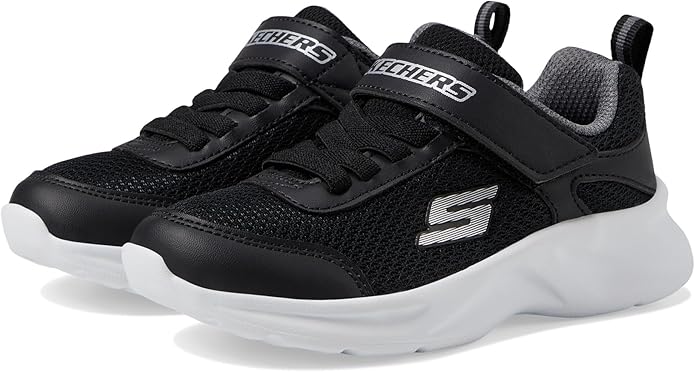
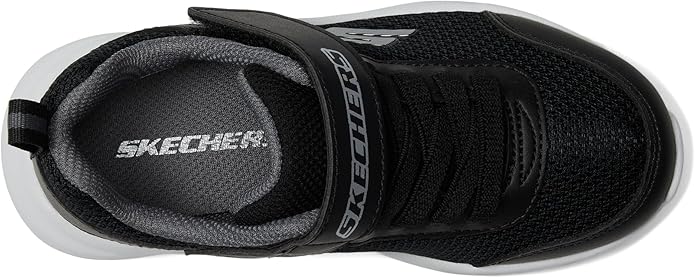
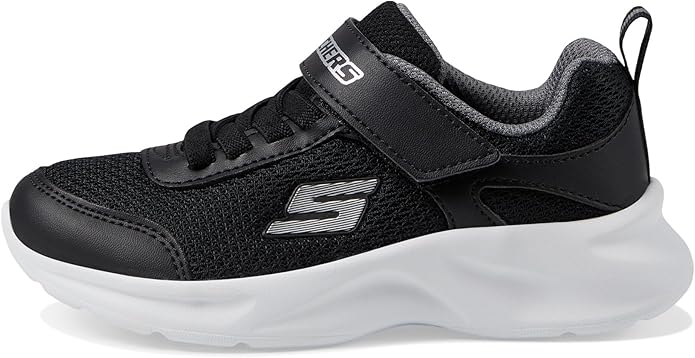
Back-to-school season hit, my 7-year-old’s feet grew a full size in six weeks, and I found myself at 11:23 PM scrolling Amazon with the quiet determination of someone who really does not want to repeat this exercise in three months. The Skechers Dynamatic kept coming up — hook-and-loop closure, machine washable, $39. At that hour, those three facts felt like a sign. Eight weeks, daily school wear, four washing machine cycles, and more playground dirt than I’d like to recount: here’s what actually happened.
Specs + Sizing Before Anything Else
Parents make better decisions with numbers in front of them, so let’s start there.
| Specification | Details |
|---|---|
| Brand / Model | Skechers Dynamatic (303552L) |
| Price | $39 USD |
| Weight | 4.2 oz (size 1 Little Kid) |
| Upper | Mesh and synthetic blend |
| Lining | Textile |
| Midsole | Shock-absorbing cushioned midsole |
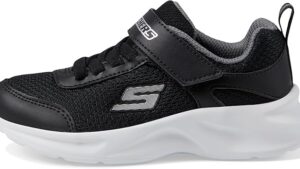
| Closure | Stretch laces + hook-and-loop strap |
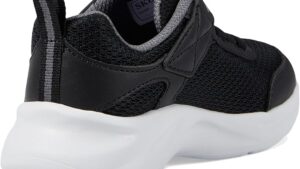
| Heel Height | 1¼ inch |
| Width | Regular (no wide variant) |
| Care | Machine washable — cold water, gentle cycle, air dry |
| Testing Period | 8 weeks, daily school wear + weekend use |
Sizing: The Full Picture
The Dynamatic runs true to size — I ordered the same size my kid wears in other brands, and it landed spot-on. But sizing kids’ shoes involves more than just “right or wrong,” so here’s the practical breakdown:
Toddler range (ages ~3-6): US 4T through 10T, with EU sizing running from 20 to 26. The 0.3″ increments between sizes are small, so measure before ordering if your child is in-between.
Little Kid range (ages ~6-9): US 10.5 through 11.5, EU 27 to 28. Our size 1 Little Kid tested fine at the lower end of this range.
Wide feet note: There’s no wide-width variant. The mesh upper does have some give, but it’s modest. If your child needs a genuinely wide fit, I’d size up half a size and accept a slightly roomier length. It’s not a perfect solution, but it works for mildly wide feet.
One thing worth knowing: the toe box has decent room — enough for growing feet without the shoe being sloppy. We didn’t size up for growth room, and at the end of eight weeks, there was still comfortable space at the toe.
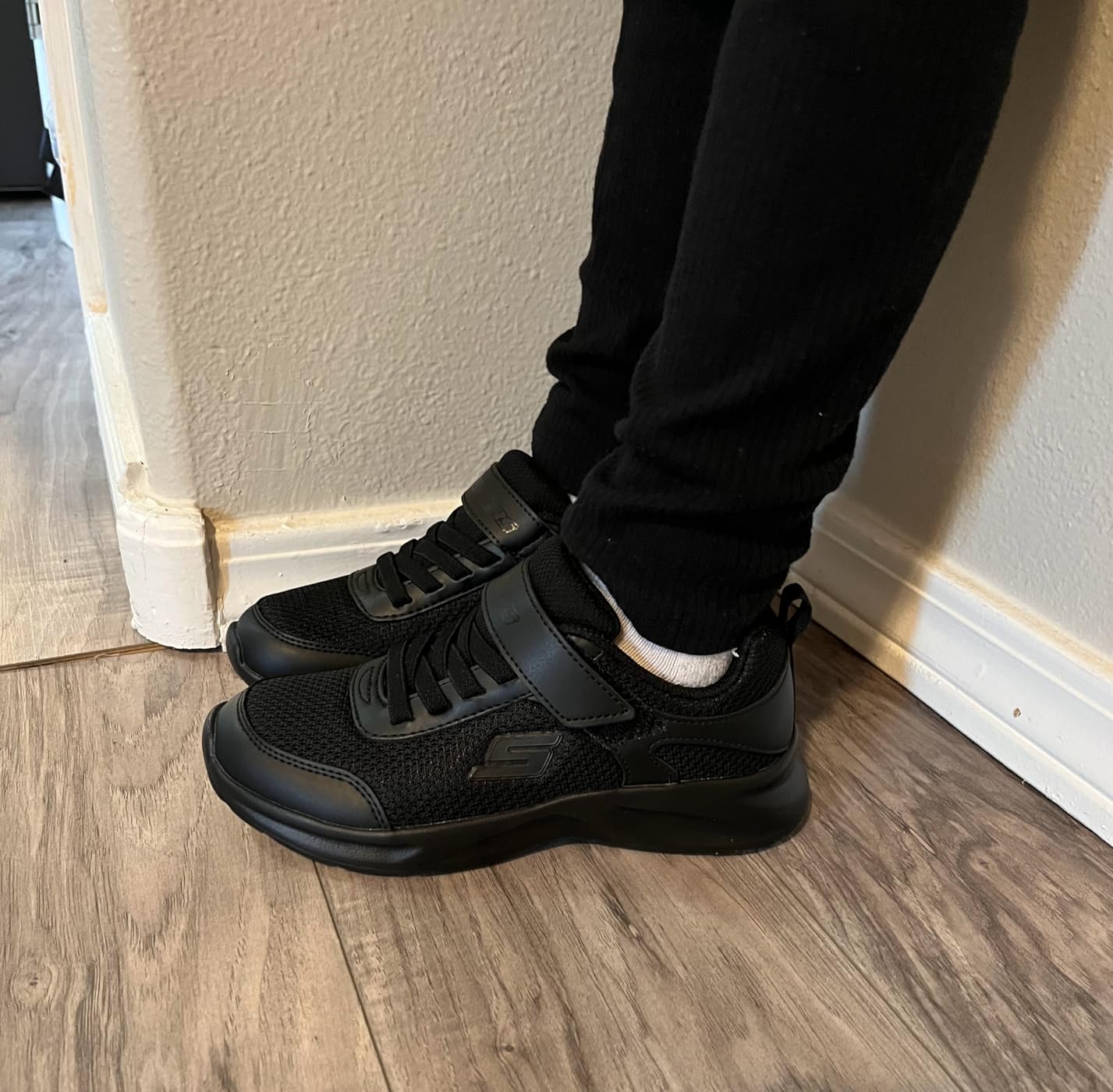
The Closure System: Why This Shoe Gets a Second Look
Most kids’ shoes at this price have one or the other — either velcro or elastic laces. The Dynamatic combines both, and the combination is actually what made me click Add to Cart.
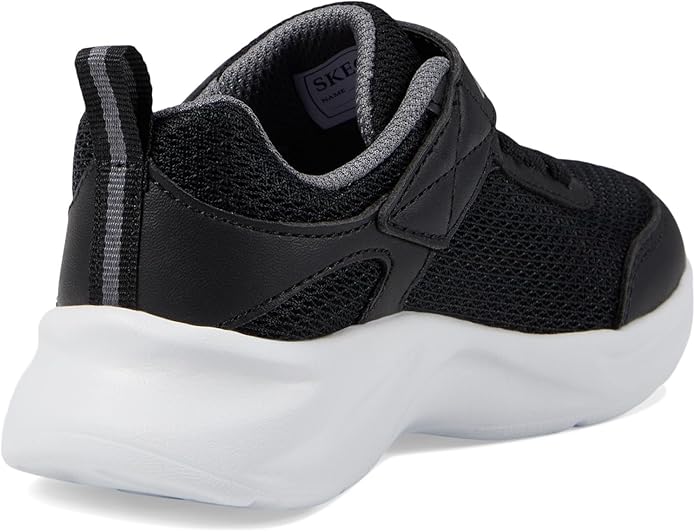
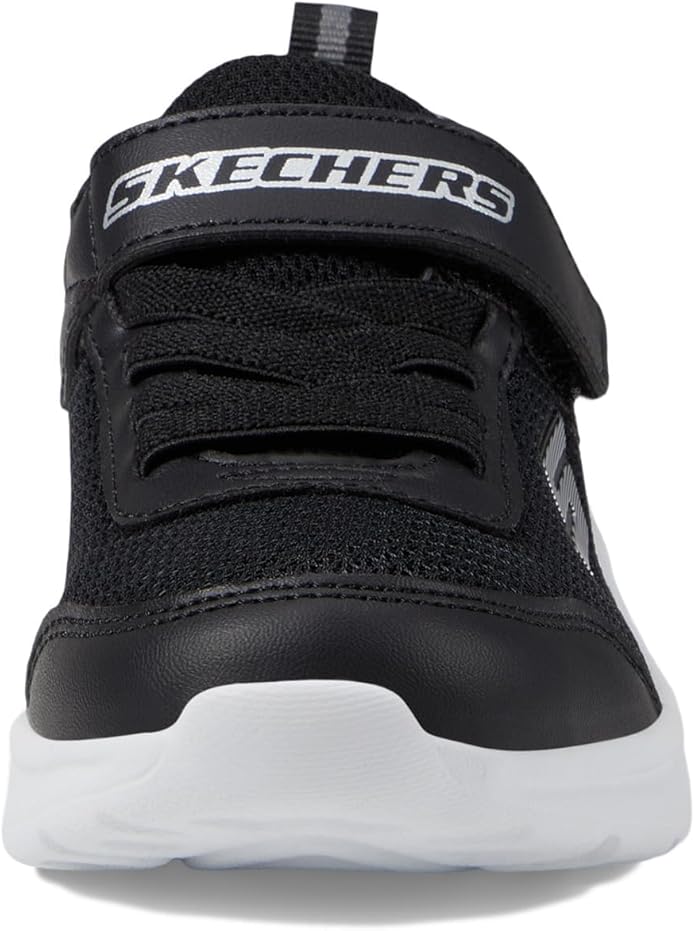
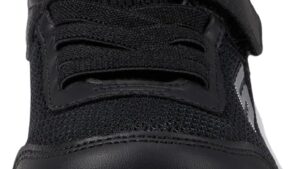
The stretch laces run across the front and stay in place without tying. They’re not decorative — they function as the primary lace system, holding the shoe snugly while still allowing a foot to slide in easily. No bunny ears required. For morning school routines, this matters more than it sounds.
The hook-and-loop strap sits over the top of the foot and cinches down for a secure fit. After eight weeks, my kid hasn’t had a single shoe come off during recess or PE class. That’s the job. Done.
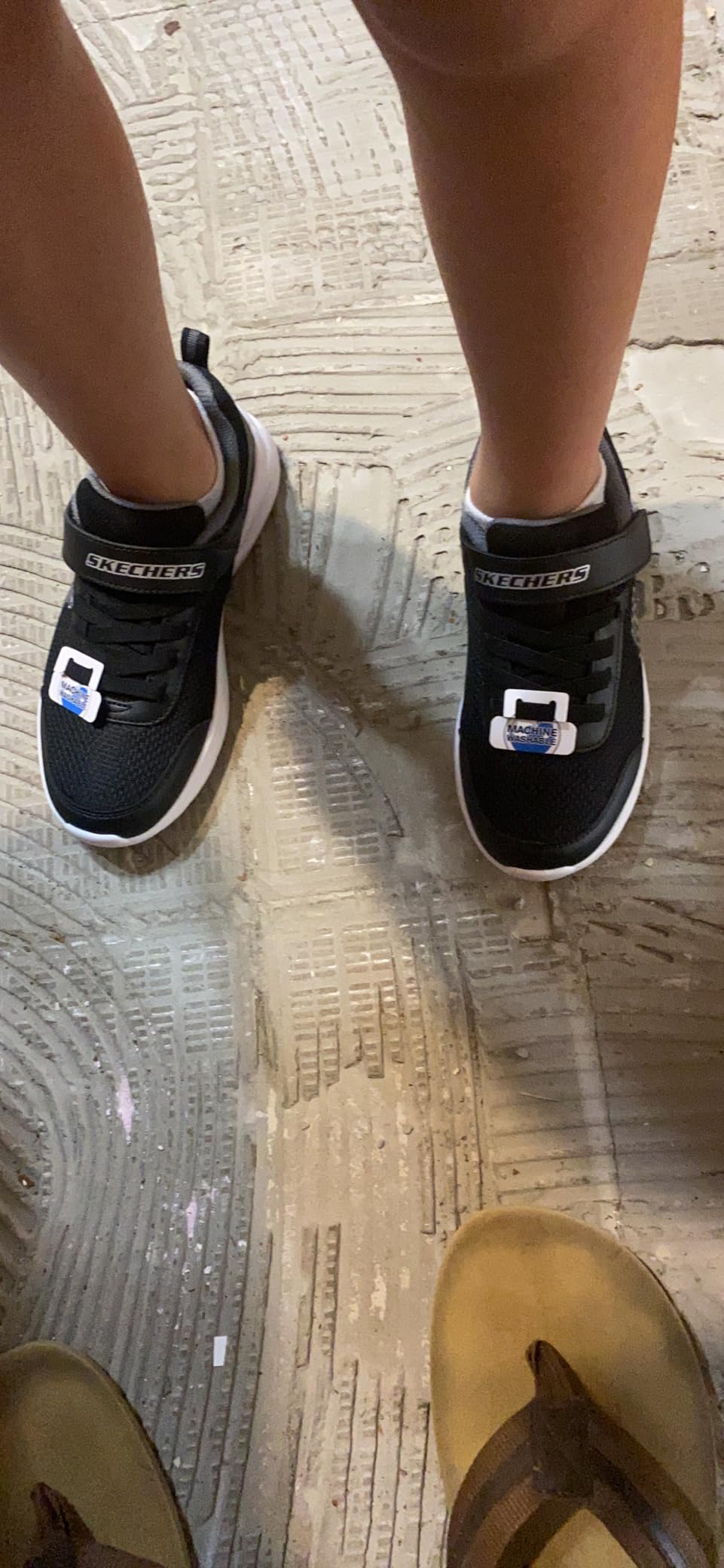
The mesh upper — monochromatic, neutral-toned — is the most budget-visible part of the shoe. It’s not going to fool anyone into thinking this is a $90 sneaker. But it breathes reasonably well, and the synthetic overlays give enough structure that the shoe doesn’t feel floppy. My kid described the first try-on as “really light,” which, unprompted, is about the best endorsement you’re going to get from a seven-year-old.
Comfort Through a Full School Day
Eight weeks of weekday wear means roughly 40 school days of data. The cushioned insole did its job through all of them. No foot pain complaints after classroom sitting, no protests after PE, no “my feet hurt” at pickup time — which, if you’ve ever had a kid with uncomfortable shoes, you know is the exact sentence you’re dreading.
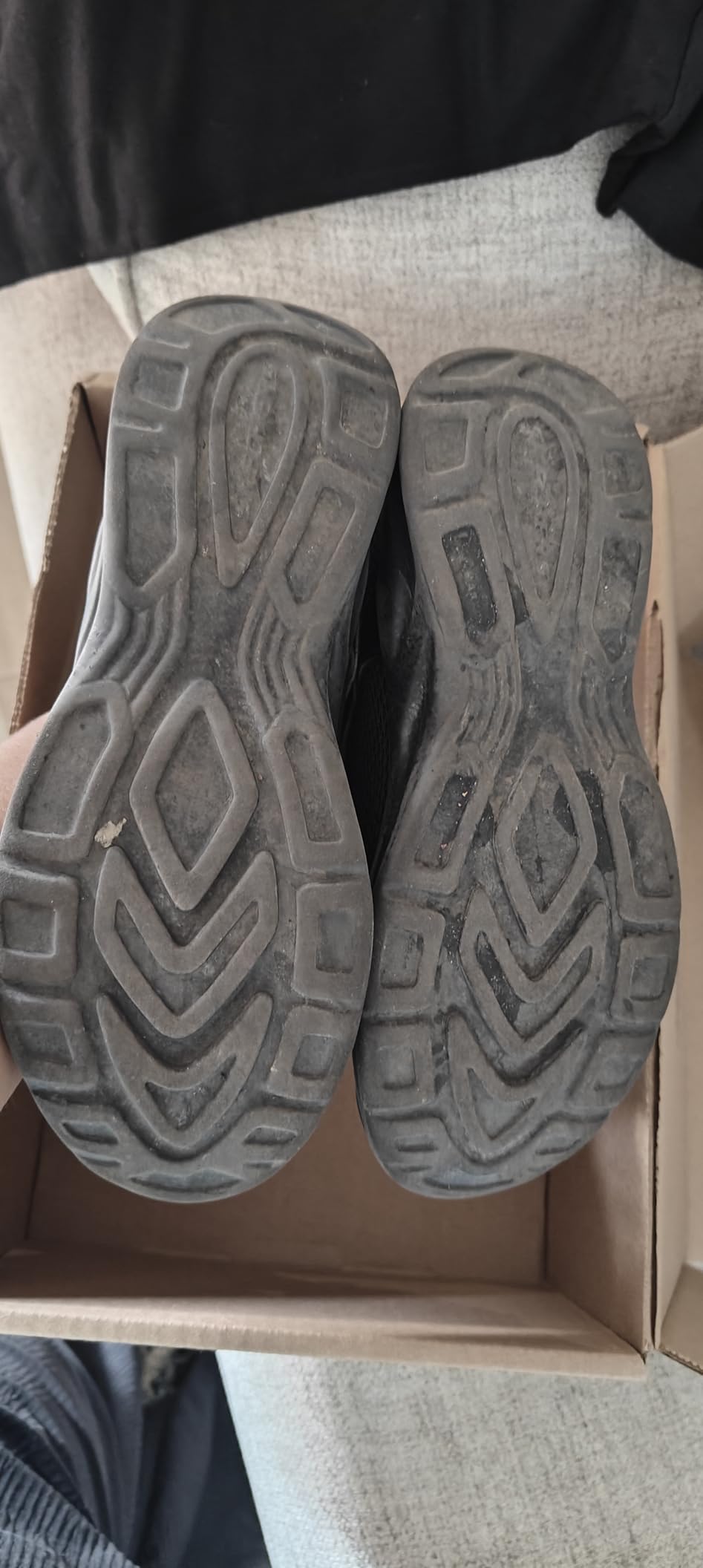
The 1¼-inch heel is modest — it provides a little lift without changing how a kid naturally walks. For growing feet, that’s the right call. There’s nothing here that’s going to alter gait or create issues down the line.
Where comfort starts to show its limits is on very long outings. A typical school day is fine. Three hours of wandering around a fair or a museum? By hour three, my kid was ready to sit down. That’s not unusual for a shoe in this tier — the midsole cushioning is school-appropriate, not marathon-grade. Set expectations accordingly: these are daily school shoes, not all-day adventure footwear.
On hot days, the mesh breathes — it’s noticeably cooler than a full synthetic. But “breathes” has limits when a kid is sprinting at recess in August. They’re not swimming in sweat, but they’re not wearing ventilated hiking shoes either.
Playground, PE Class, and Everything In Between
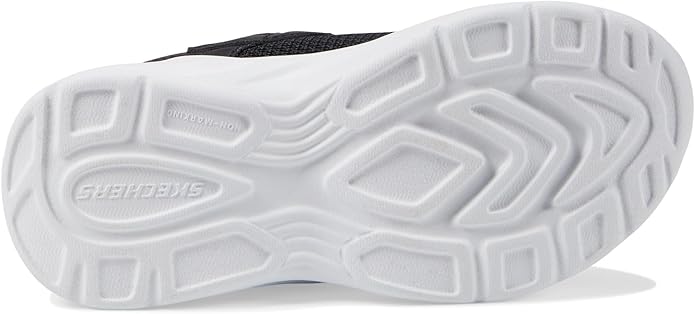
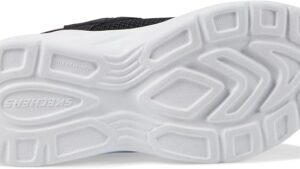
The rubber outsole handles the range of surfaces a school day throws at a shoe: linoleum hallways, gymnasium floors, blacktop, mulch playgrounds, grass, concrete. Traction is adequate across all of these. It’s not premium grip — wet pavement or rain-slicked playground equipment gets slippery — but for dry conditions, it’s reliable.
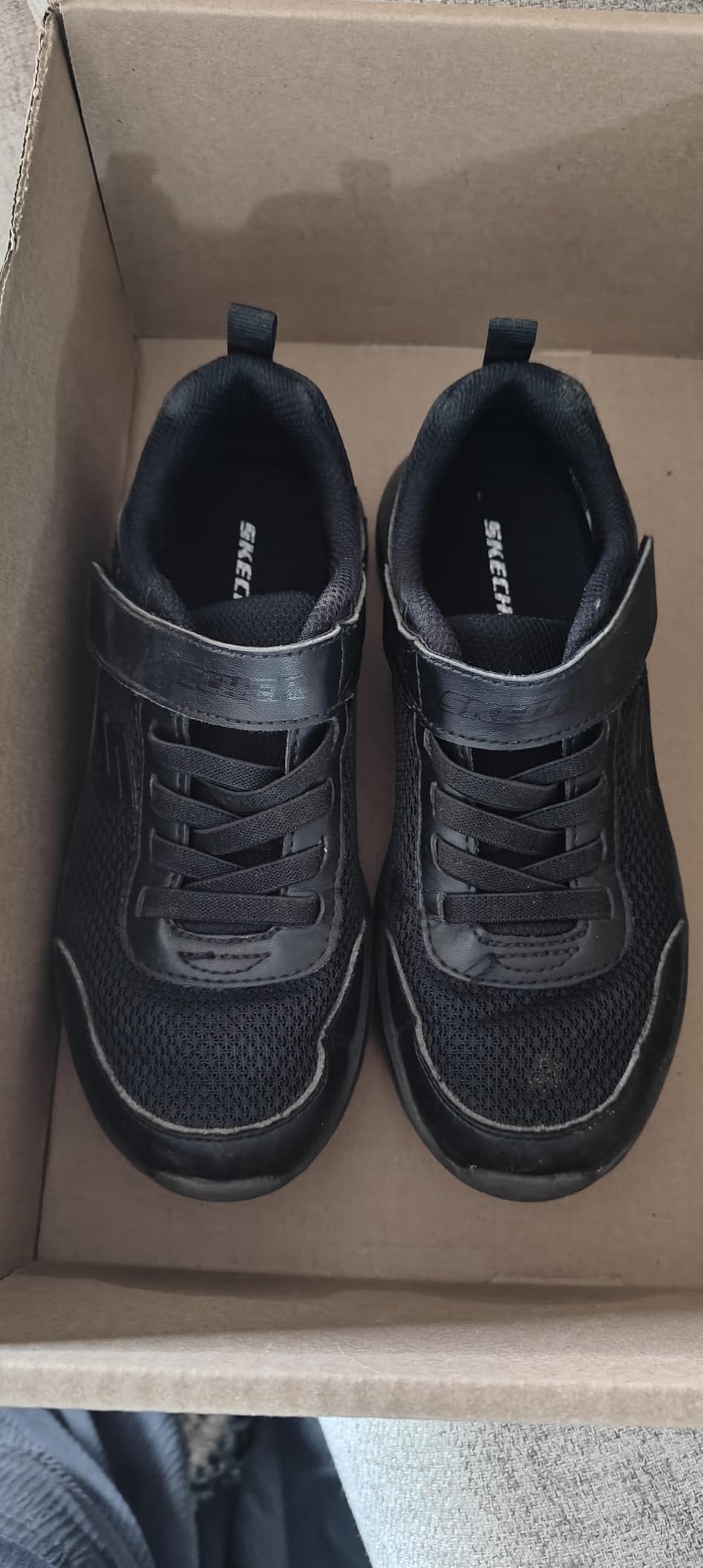
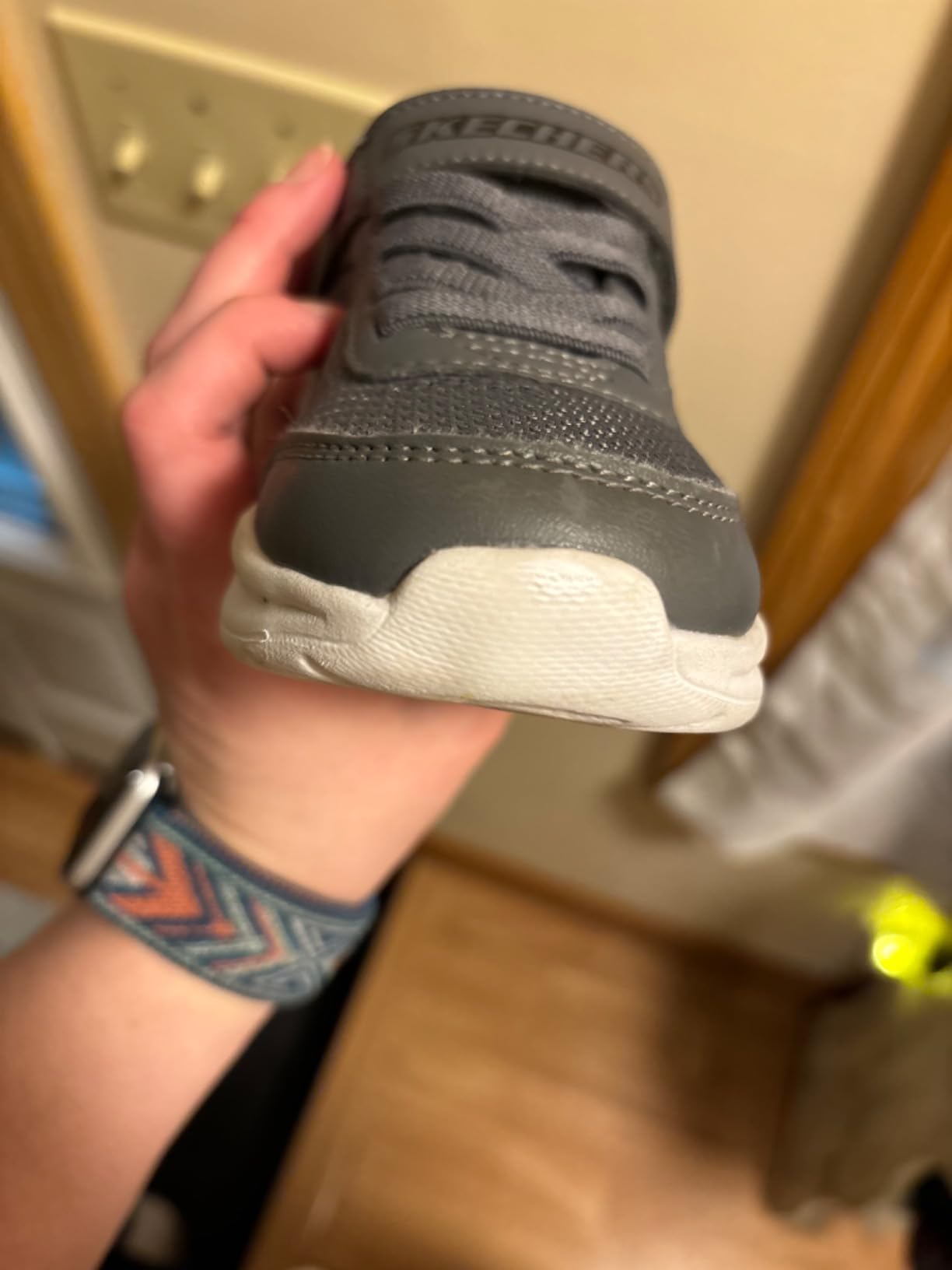
Eight weeks of playground use held up better than I expected for the price. The mesh upper shows light dirt accumulation after heavy use but no tearing. The overlays are still intact. The sole hasn’t started peeling away from the upper — which is one of the failure modes that tends to show up early in budget shoes.
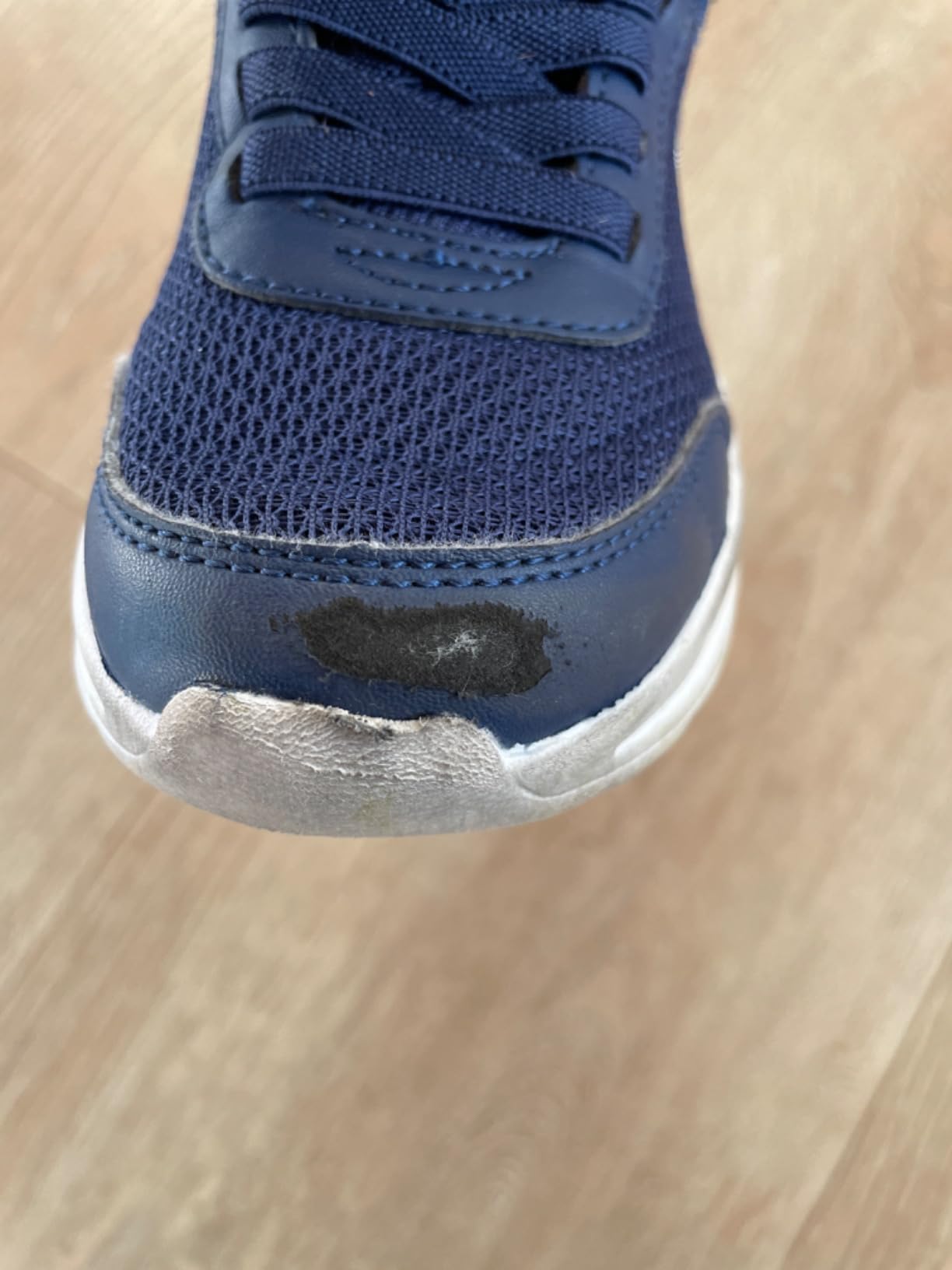
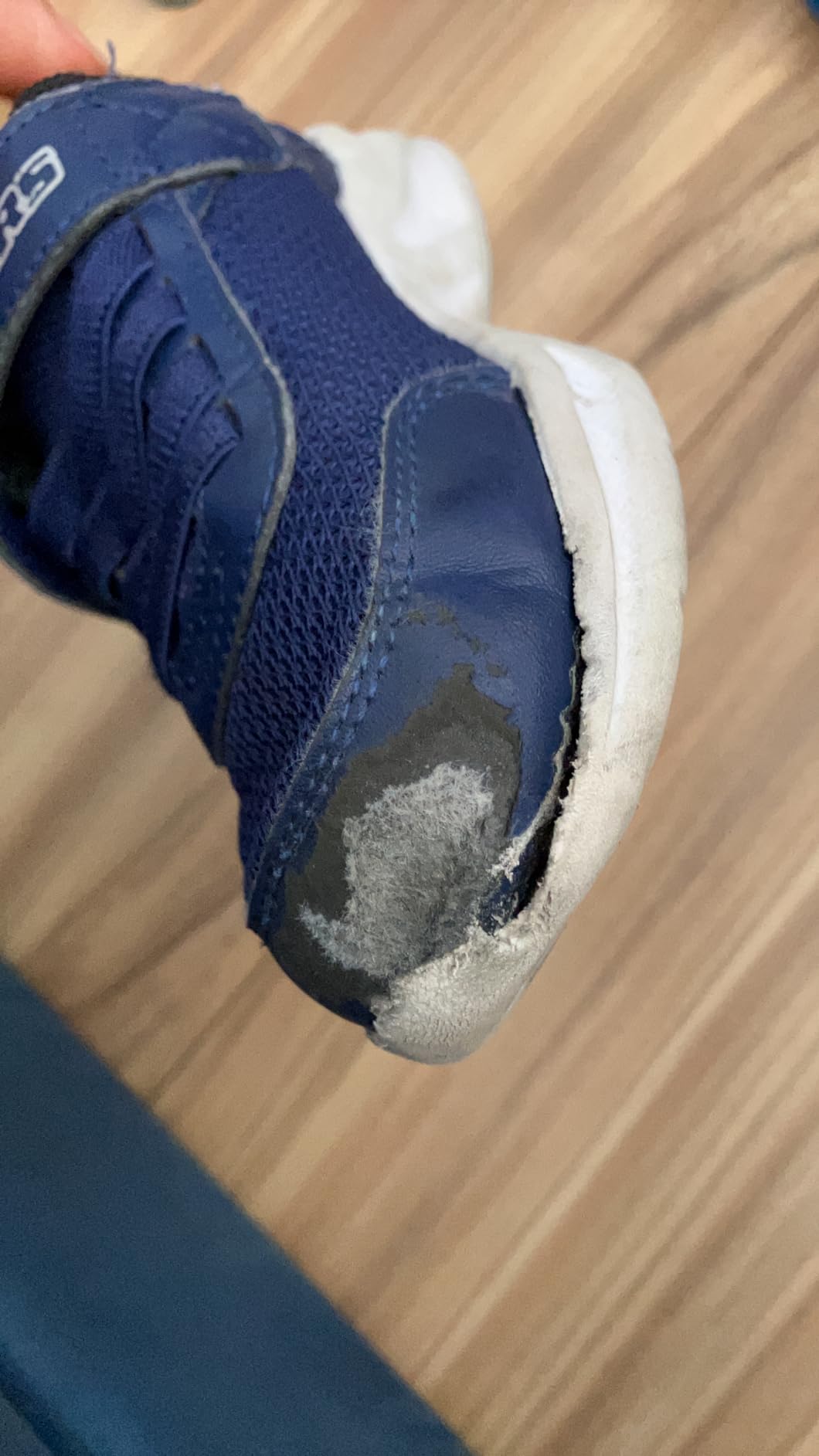
That said, there’s a specific failure mode worth knowing: toe separation. Multiple Amazon reviews reference the toe area separating from the upper after intensive playground use. Our pair didn’t experience this during testing, but the reports are consistent enough that they’re not flukes. The pattern points to kids who are harder on shoes — scuffing toes on climbing equipment, running intensively on concrete daily, that kind of wear. If your child is particularly rough on shoes, this is a legitimate concern.
These aren’t basketball shoes or soccer cleats — the construction isn’t built for lateral cuts or stud pressure. For everyday school activities and casual athletics, they work. For kids enrolled in weekly sports practices where they’re using these as their primary athletic shoe, look at something sport-specific.
The Washing Machine Reality Check
This is where the shoe earns its price.
Four washes over eight weeks. Cold water, gentle cycle, left on a drying rack overnight. Each time, the shoes came out looking visibly cleaner — the mesh brightened up, the synthetic overlays shed the grime, and by morning they were dry and ready. The structural integrity didn’t change between washes: no delamination, no seam separation, no warping.
The protocol matters. Cold water only — hot water can cause glue adhesion issues and potentially warp the midsole. Gentle cycle — the more aggressive the cycle, the more stress on stitching and the sole bond. And critically: air dry, not a dryer. The heat from a dryer will break down the adhesive that keeps the sole attached. Give it overnight on a towel or drying rack and it’s fine by morning.
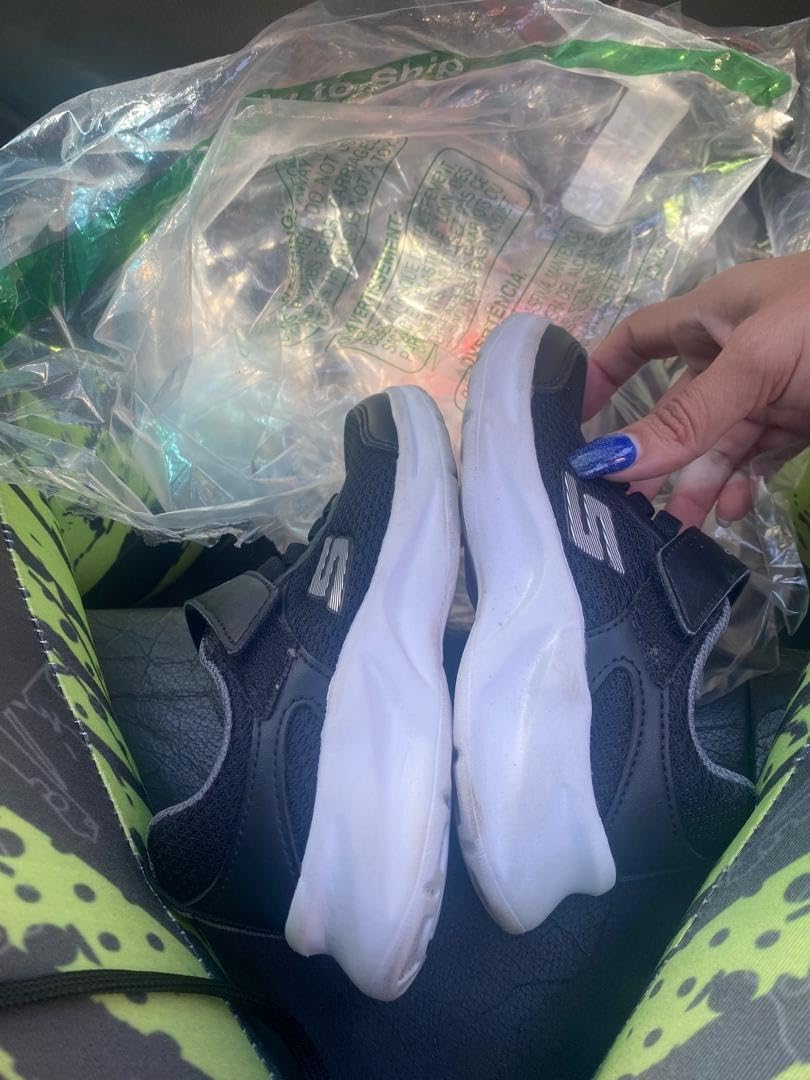
One thing I can’t tell you with confidence: what four washes per month looks like at month six. Our test covered four washes over eight weeks. If you’re washing these weekly — which is completely reasonable for a school shoe — the cumulative effect on the velcro adhesion and the midsole foam is unknown beyond the test window. Community feedback suggests the velcro starts losing stickiness somewhere in the month 4-5 range, and frequent washing is likely a contributing factor. It’s not a dealbreaker, but it’s worth knowing.
For parents buying these as the primary school shoe, the machine-washable feature is genuinely one of the best things about them. For families with two or three pairs in rotation, it’s even more valuable — wash one pair while the other is in use.
Durability: The Honest Timeline
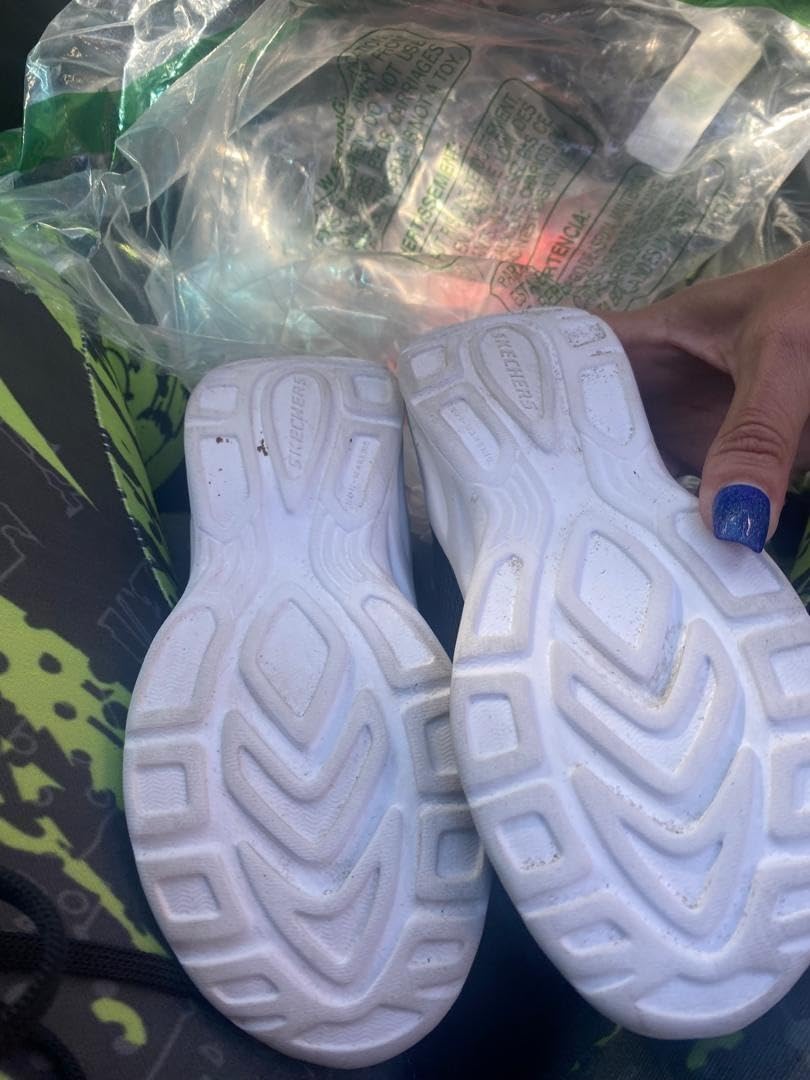
Let’s set realistic expectations for a $39 kids’ shoe, because unrealistic ones lead to disappointment, and this shoe doesn’t deserve that.
After eight weeks of daily school wear, the Dynamatic is holding up well. No major concerns. The mesh is intact, the overlays are attached, the sole adhesion is solid. Normal signs of use — light scuffing, some compression in the insole — but nothing that signals imminent failure.
The honest forecast, based on our testing and broader community feedback:
Typical school use (5 days/week classroom + PE + playground): 6-9 months. Some pairs push to a full school year. This is the most common experience parents report.
Light use (school + careful kid, or rotation pair): 10-12 months possible.
Heavy use (sports practice + playground + daily + energetic kid): 3-5 months. The toe separation risk is most active here.
The midsole starts to compress noticeably around month 4. It doesn’t become uncomfortable overnight, but the cushion support profile at month 8 is not the same as month 1. For most school-age kids who are growing fast anyway, this isn’t the binding constraint — their feet will outgrow the shoe before the cushion completely gives out.
Cost math: Two pairs per school year at $39 = $78. One pair of premium kids’ athletic sneakers at $80-100 might last the same 9 months at the same activity level — and kids’ feet are going to grow out of them regardless. The Dynamatic’s real value proposition isn’t “this lasts forever.” It’s “this costs $39 and gets through most of a school year without drama.”
What Other Parents Are Reporting
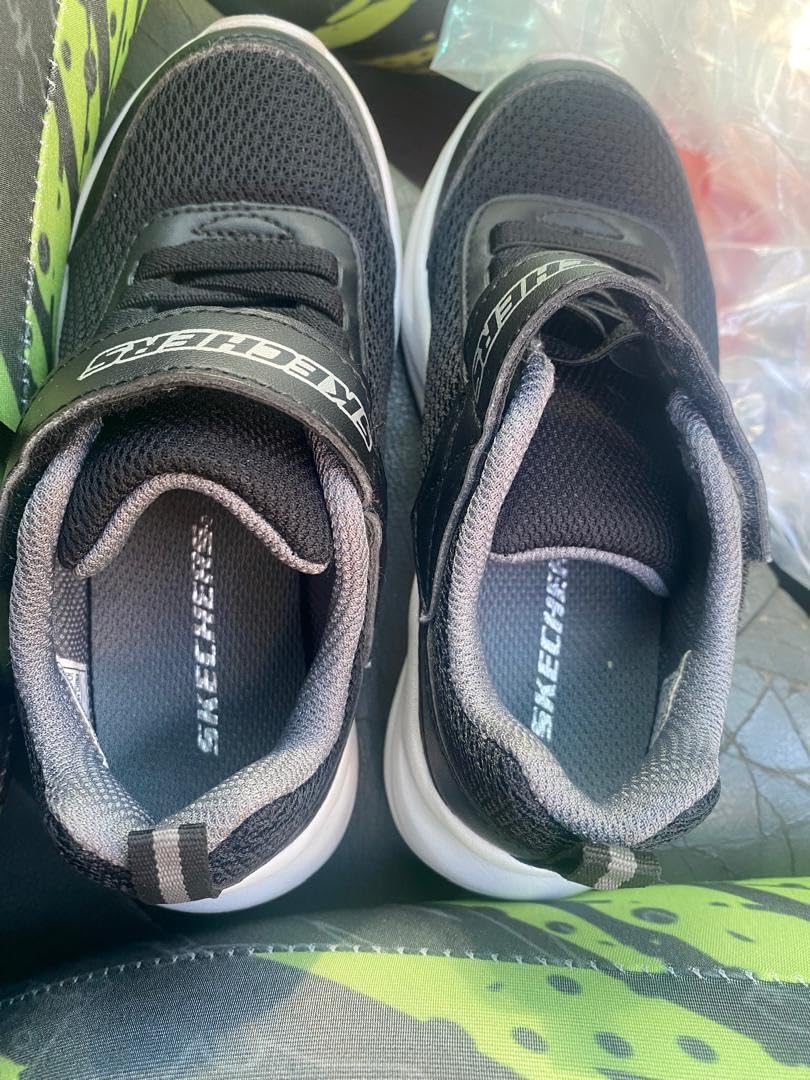
The consistent theme across hundreds of parent reviews: kids don’t want to take these off. That’s probably the most practical endorsement available. A shoe a 6-year-old voluntarily selects over others is a shoe that’s doing something right in the comfort department.
Positive feedback clusters around three things: the lightweight feel, the easy on/off convenience (especially for younger kids who haven’t mastered laces), and the machine-washable feature. Spanish-speaking parents in the review pool repeatedly mention muy cómodos — very comfortable — which tracks with our experience.
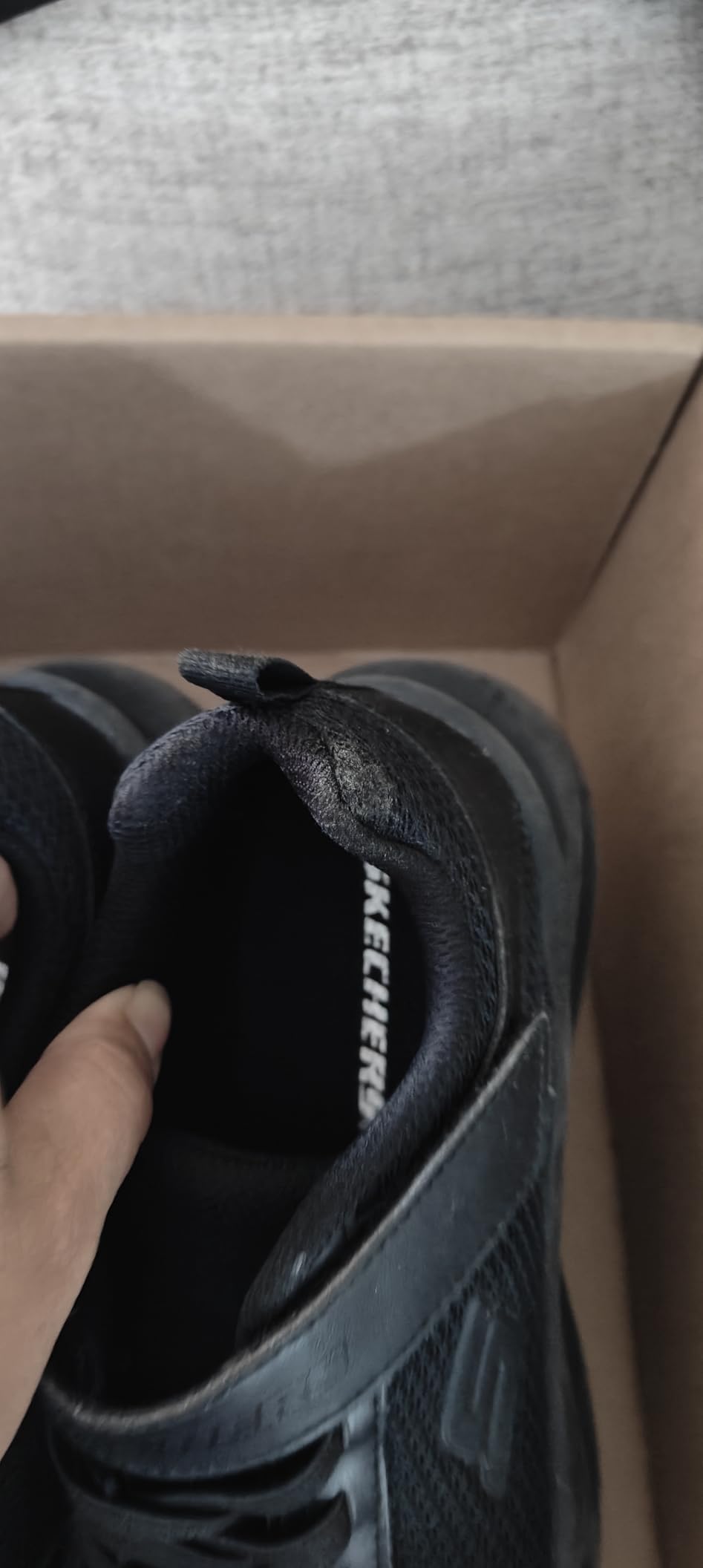
The negative feedback splits into two buckets. The first is durability for high-intensity users — the toe separation issue mentioned above, plus reports of sole wear starting around month 3-4 for kids who are particularly hard on shoes. The second bucket is quality control: a small number of parents received shoes that arrived used or damaged through Amazon fulfillment. Buying from a reputable seller rather than a random third-party Amazon merchant is worth the attention.
One pattern worth flagging: parents who rotate two pairs consistently report longer lifespan from both pairs. The alternating-day approach gives the midsole time to decompress and extends velcro life. If these are the everyday school shoe and the budget allows, it’s worth buying two pairs.
Scores & Overall Assessment
| Category | Score | Notes |
|---|---|---|
| Comfort | 8.5/10 | Full school days no complaints; comfort ceiling around 3+ hours of continuous walking |
| Durability | 7.0/10 | Solid for typical school use (6-9 months); toe separation risk for very active kids |
| Value for Money | 9.0/10 | $39 for 6-9 months school use; excellent at this tier; budget allows 2 pairs/year |
| Style/Appearance | 8.0/10 | Neutral, monochromatic design matches most school outfits; looks fresh through month 3 |
| Convenience | 9.5/10 | Machine washable + dual closure = best-in-class at this price; morning routine impact is real |
| Fit/Sizing | 8.5/10 | TTS confirmed; adequate toe box; no wide-width variant limits options for wider feet |
| FINAL SCORE | 8.3/10 | Best daily school shoe for the money; set realistic durability expectations |
The 8.3 reflects what this shoe is: an excellent budget-tier daily school shoe that does exactly what most parents need it to do. It’s not competing with $80 athletic sneakers. Within its category — affordable, practical, daily school wear for ages 4-12 — it’s above average.
Buy if: Your child needs comfortable daily school shoes, you value convenience (machine-washable, no lace-tying), your child’s feet are at standard width, and you’re buying at the $35-45 tier. Also if your child is still in the growth phase where shoes get outgrown before they wear out — spending $39 makes a lot more sense than $90 in that context.
Consider alternatives if: Your child is involved in weekly sports practice and needs a shoe that doubles as athletic footwear. For dedicated training or sport-specific use, look at sport-dedicated options — the Dynamatic isn’t built for that load. Also consider alternatives if your child has documented wide feet (no wide variant exists) or foot support needs that require a specific insole.
Parent FAQ
Do these run true to size?
Yes, order your child’s normal size. If your child is between sizes or has slightly wider feet, half-size up. The mesh has minimal stretch so don’t rely on it to absorb a full size.
How long will they actually last?
For typical school use (5 days/week, classroom + PE + playground), expect 6-9 months. Light-use kids sometimes get a full school year. Very active or rough-on-shoes kids may see 3-5 months. The insole starts compressing noticeably around month 4, and velcro grip typically fades somewhere in the month 4-5 window.
Machine washable — what’s the actual protocol?
Cold water, gentle cycle, air dry. Not the dryer — heat breaks down the adhesive. Not hot water — can warp the midsole. Leave overnight on a drying rack and they’re ready by morning. We ran four washes over eight weeks with no damage.
My child has wide feet. Will these fit?
The mesh does accommodate slightly wider feet, but this shoe only comes in regular width. For genuinely wide feet, go half a size up. For medium-wide, it’s usually fine. For very wide, consider a shoe with an official wide variant.
Can my kid wear these for soccer practice?
As sideline shoes or walking to practice, yes. As actual soccer practice footwear, no — these aren’t designed for lateral cuts, turf, or cleated fields. For actual practice, look at kids’ soccer cleats designed for the task.
What about basketball or gym activities?
Light gym class and PE, yes — the school-appropriate rubber outsole works fine on gymnasium floors. Actual basketball with court cuts and jumps, no. For serious court play, kids’ basketball shoes with proper ankle support are the right call.
Are the insoles removable?
Yes, the insoles are removable and compatible with aftermarket orthotics. If your child’s podiatrist recommends a specific insole, these can accommodate it.
How does velcro hold up over time?
Strong through our 8-week test. Community reports suggest some grip loss starts around month 4-5, especially with frequent washing. If you’re machine-washing weekly, expect the velcro timeline to be on the shorter end.
Should I buy one pair or two?
If budget allows, two pairs and rotate them. Alternating daily extends the midsole life and gives velcro time to recover. Two pairs at $39 each = $78, which is still less than many single pairs of kids’ shoes.
What age range is this best for?
Skechers offers Toddler (4T-10T, roughly ages 3-6) and Little Kid sizes (10.5-11.5, roughly ages 6-9), with Big Kid sizes continuing higher. The hook-and-loop closure is particularly useful for younger kids still learning to manage laces. Older kids who prefer lace-up shoes might want something with traditional laces for that reason.
Final Thought
There’s a specific kind of parent guilt that comes with buying a $39 shoe when you know your kid is going to be doing real things in it. Let me save you that guilt: there’s nothing wrong with this shoe for what it is. It’s a practical, comfortable, machine-washable school shoe that handles daily kid life for most of a school year without drama.
Kids outgrow shoes. Shoes get muddy. The machine-washable feature alone probably saves you an hour of scrubbing over the shoe’s lifetime. The hook-and-loop closure saves you two or three lace-tying arguments per week. The comfort held up through 40+ school days without a single complaint.
You’re not cutting corners by buying this. You’re being smart about a product category where spending more doesn’t always mean lasting longer — especially when the growth rate means you’re shopping again in six months anyway.
Be the first to review “Skechers Boys’ Dynamic Sneaker”
Related products
Sneaker
Sneaker
Sneaker
Running Shoes
Sneaker
Reviews
There are no reviews yet.