
My friend wouldn’t stop talking about a $25 pair of “running shoes” at a coffee shop. Six weeks and 45+ wear sessions later, I can tell you exactly what they are — and it’s not what the label says.
Technical Specifications
- 💰 Price: ~$25
- ⚖️ Weight: 5.95 oz per shoe (OutdoorGearLab lab measurement)
- 📏 Drop: 15mm (30mm heel stack / 15mm toe stack — OutdoorGearLab lab data; brand claims ~4mm)
- 🧪 Midsole/Outsole: Ultra-light EVA foam throughout (no rubber reinforcement)
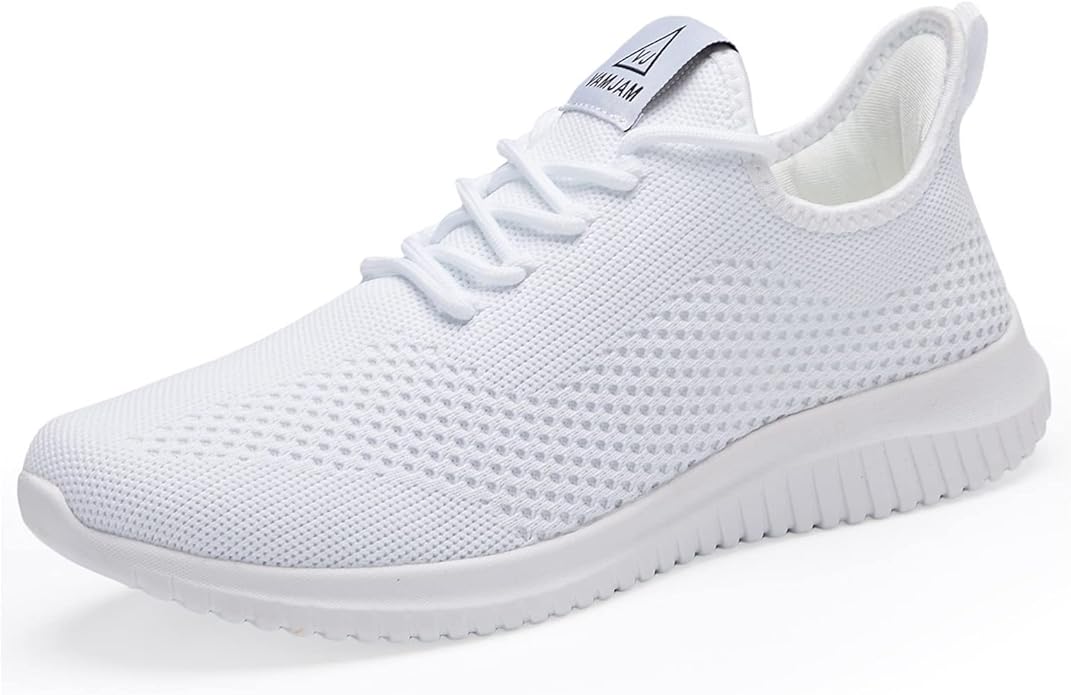
- 👟 Upper: Single-piece knitted mesh fabric, no tongue
- 🔒 Closure: Decorative laces (slip-on functionality in practice)
- 📐 Width: Regular width only — no wide variant available
- 🏃♂️ Category: Casual lifestyle slip-on (marketed as running shoes)
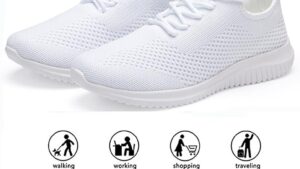
- 🎯 Best for: Work-from-home wear, travel, house shoes, light errands
- ⏱️ Testing: 6 weeks, 45+ sessions, deliberate indoor focus (~2-3 miles outdoor total)
Not a Running Shoe. But Maybe That’s Fine.
Marcus mentioned these at a coffee shop in February. He’d been wearing one of the pairs right there at the table, which I noticed only after he pointed at his feet and said “twenty-five bucks.” I went home that night and ordered a pair mostly out of curiosity and a vague frustration with how much real running shoes cost.
Six weeks later: mixed feelings about the name, zero mixed feelings about what these actually are.
I’m Mike. I work from home five days a week, weigh about 175 lbs, and my shoes spend the vast majority of their life on carpet, hardwood, and occasional tile. I’m not a runner — I wasn’t testing these as one. What I wanted to know was whether a $25 knit mesh shoe could survive real daily life without falling apart, and whether it would actually be comfortable enough to forget it was on my foot.
The answer is yes to both — but only for certain versions of “daily life.”
The short version: VAMJAM made a legitimately good casual slip-on and put “running shoes” on the label. For indoor wear, travel, and light errands, they’re hard to beat at this price. For actual running, outdoor durability, or all-weather use, they’re the wrong shoe entirely. If you buy them knowing what they are, you’ll probably like them. If you buy them expecting running performance, you’ll be disappointed within two weeks.
What You’re Actually Buying
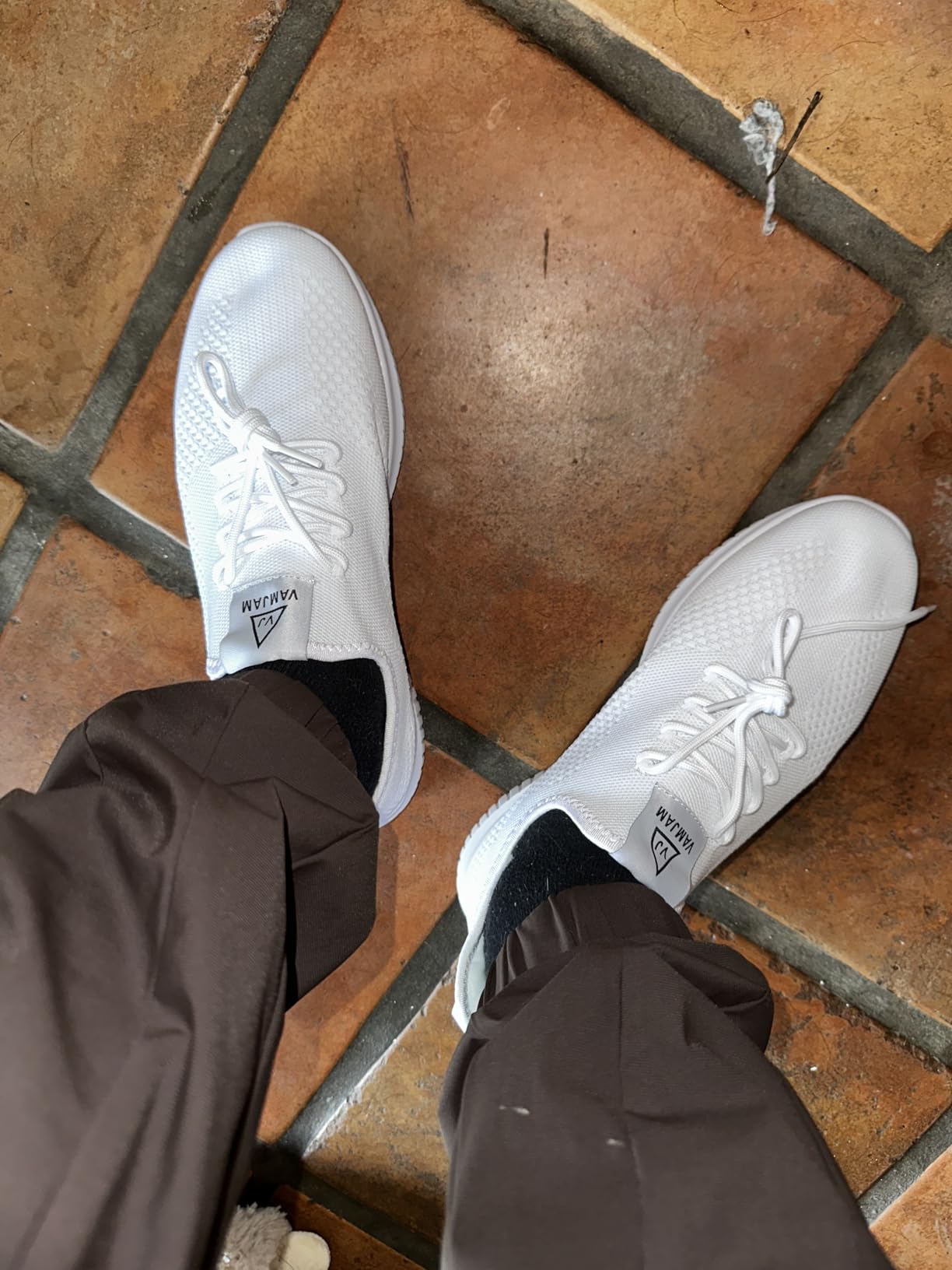
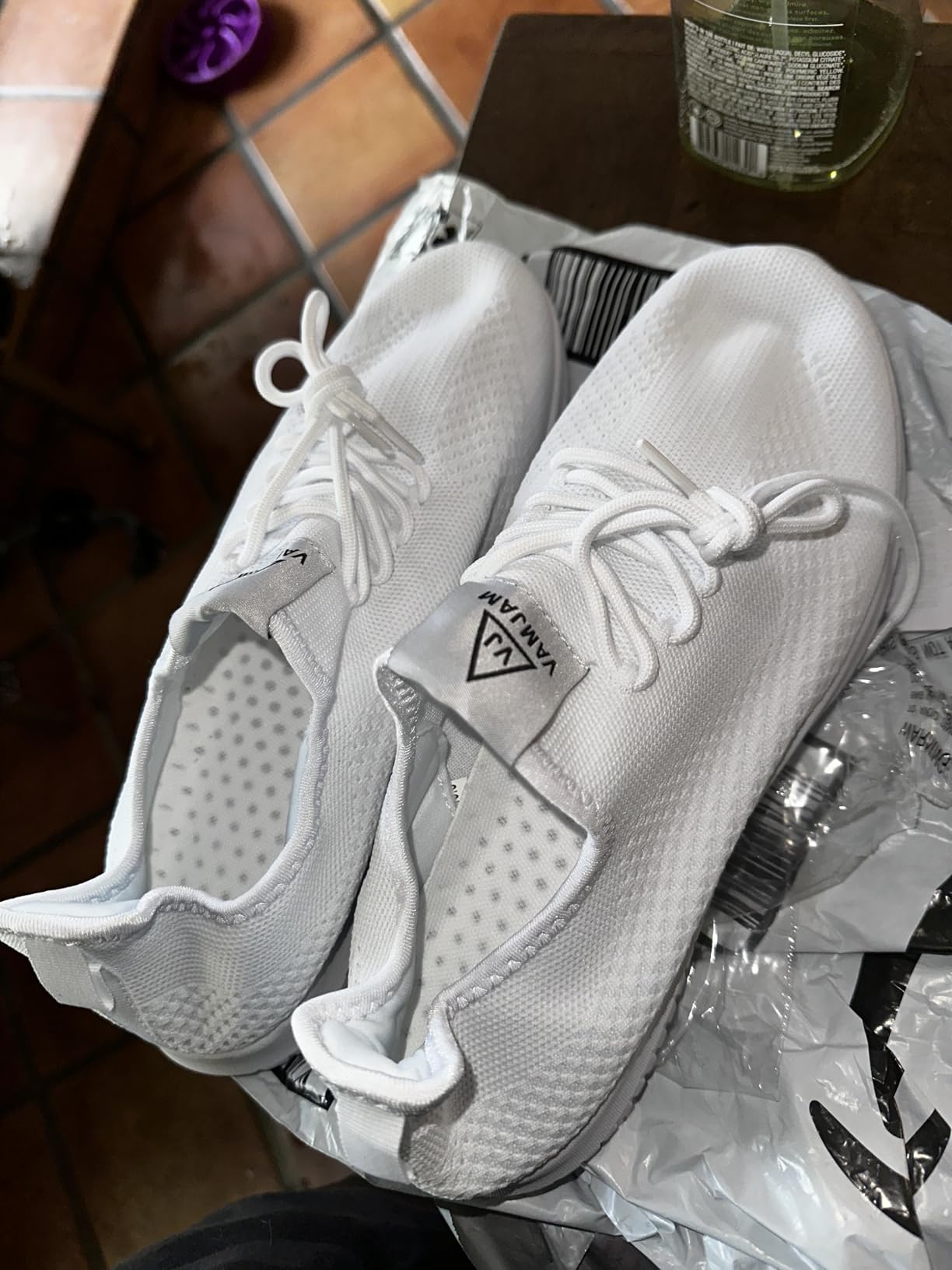
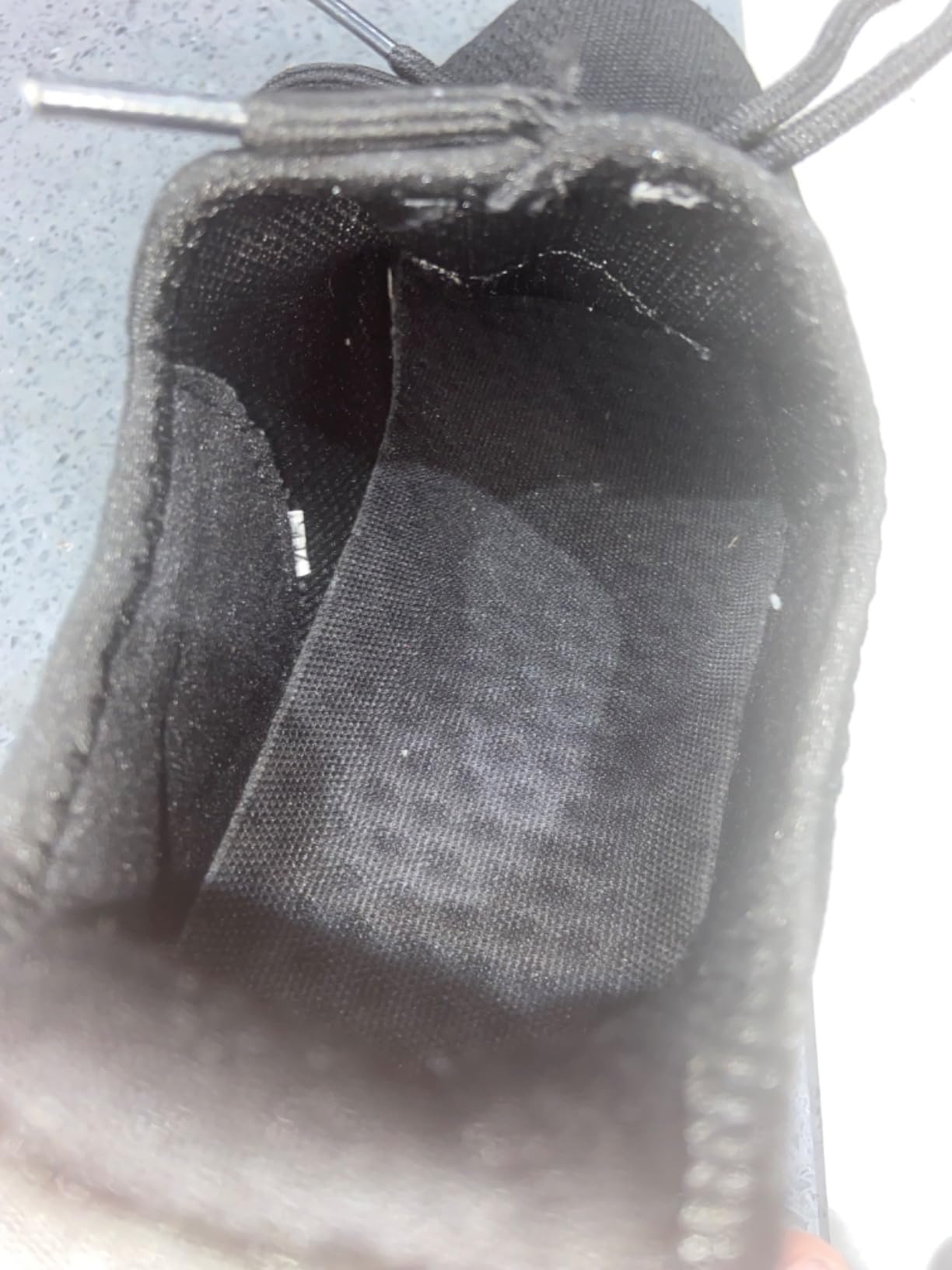
The box experience sets the tone. VAMJAM ships these vacuum-packed, which compresses the knit upper into whatever shape the packaging wanted. My pair arrived slightly deformed at the toe box. It bounced back after a couple of hours sitting on a shelf, but several user reports describe pairs that never fully recovered. Check the toe shape before assuming the shoe is defective.
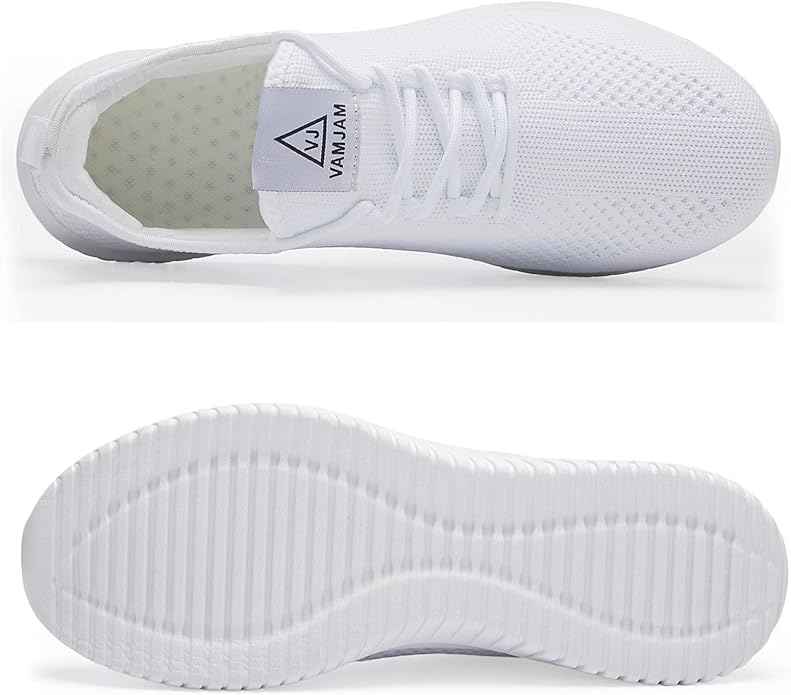
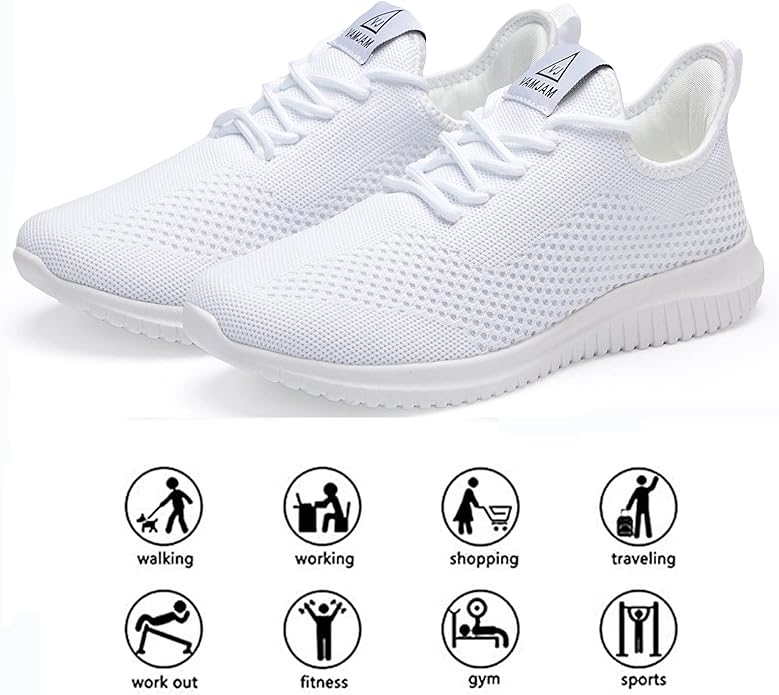
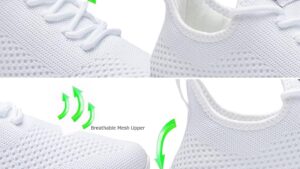
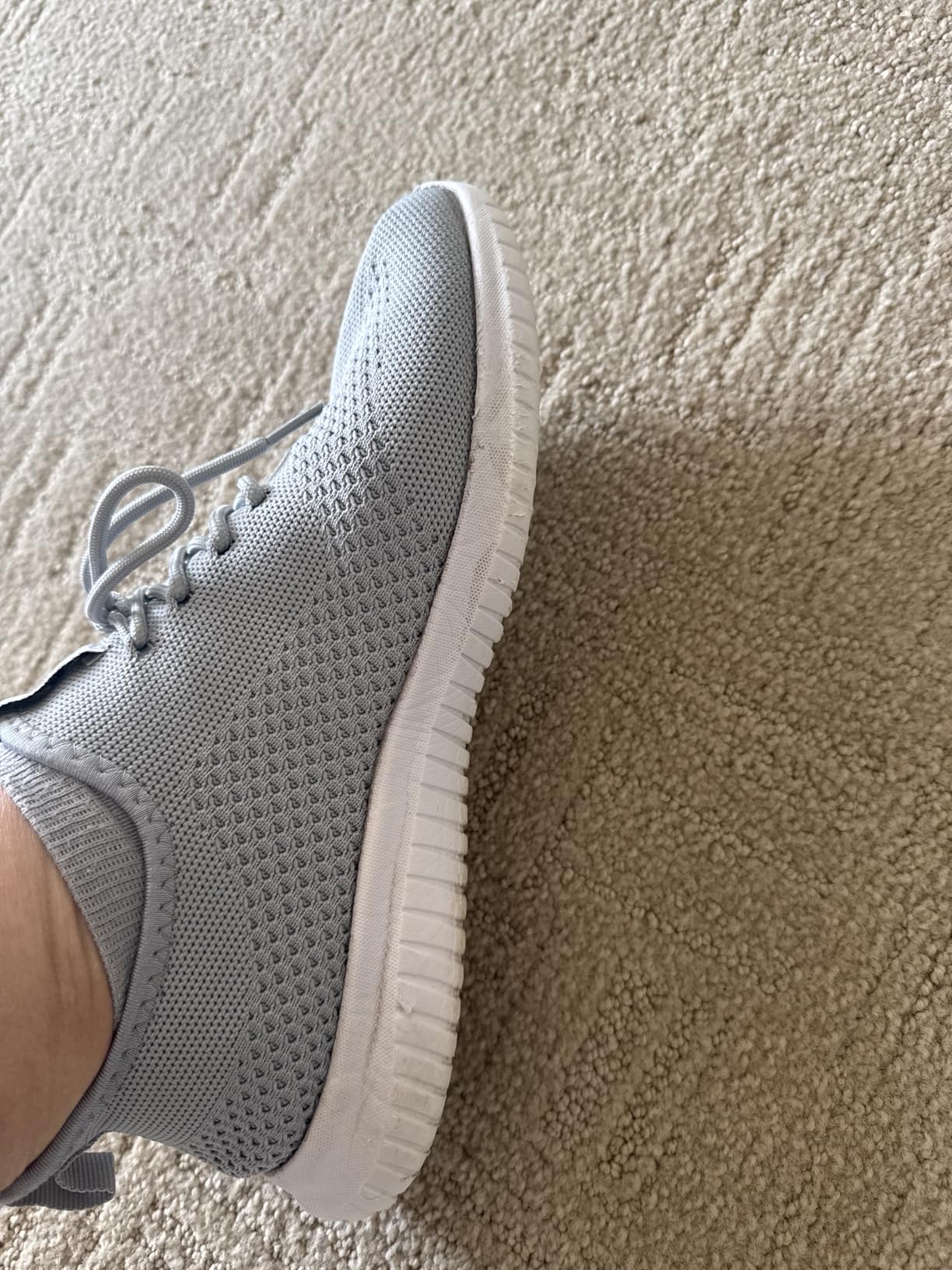
What’s inside: single-piece knitted mesh upper, no tongue (the mesh functions as one), decorative laces across the top, and a soft EVA foam sole. That last part is worth emphasizing. The outsole is 100% EVA foam — no rubber reinforcement, no separate outsole layer. OutdoorGearLab, who ran proper lab testing on these, measured the heel stack at 30mm and the toe at 15mm, giving a 15mm drop. The listing claims approximately 4mm. Whether the measurement is human error or deliberate vagueness, the gap is significant — the brand’s spec accuracy on this shoe is unreliable.
For what it’s worth: the drop discrepancy matters less than it would on an actual running shoe, since the construction rules these out for running entirely. OutdoorGearLab ran a torsion test. The shoe failed — it twisted side to side without resistance, indicating minimal lateral support. For casual indoor wear, that doesn’t matter. For running, cutting, or anything athletic, it rules them out completely.
The construction also tells you something about durability before you’ve even worn them: when midsole and outsole are the same piece of foam, both cushioning and ground protection degrade together. There’s no rubber layer absorbing the abrasion so the midsole can keep cushioning. They wear simultaneously.
Fit, Sizing, and the Lace Situation
Sizing is reliably true to size — this is one area where the brand delivers. I ordered a 10, got a 10 that fit correctly. OutdoorGearLab confirmed the same, and the consensus across multiple sources is consistent. No unusual half-sizing required.
Width is the limitation. There’s no wide variant. The mesh stretches enough to accommodate minor foot width differences, but if you wear 2E or 4E, these aren’t going to work regardless of the size you order. OutdoorGearLab specifically noted “regular width only.” Wide-footed buyers should look elsewhere.
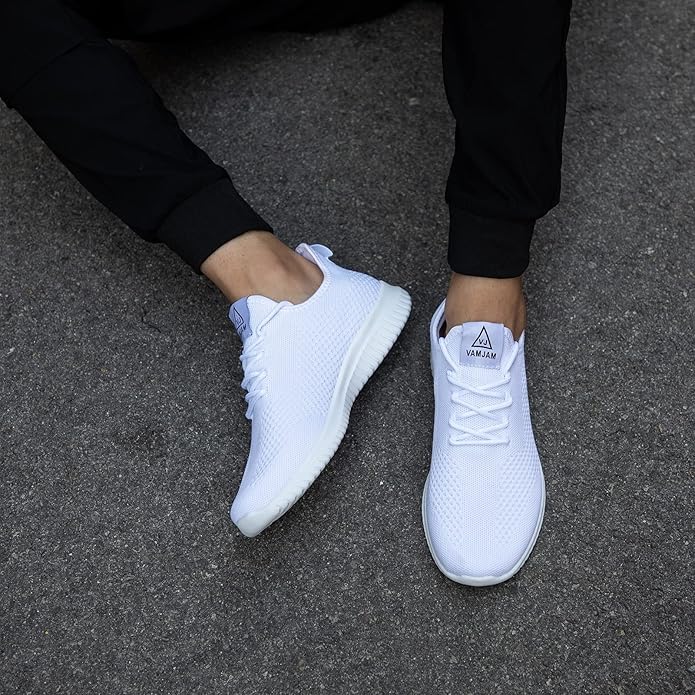
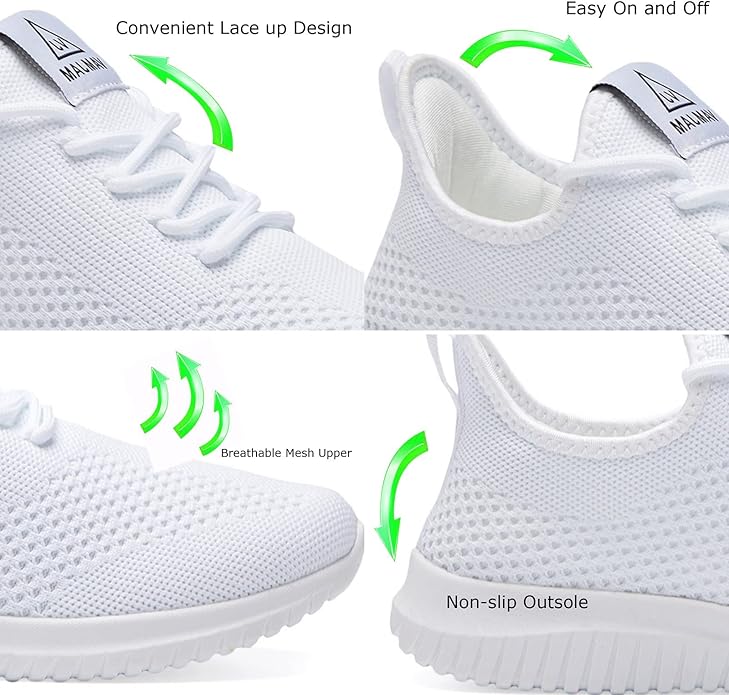
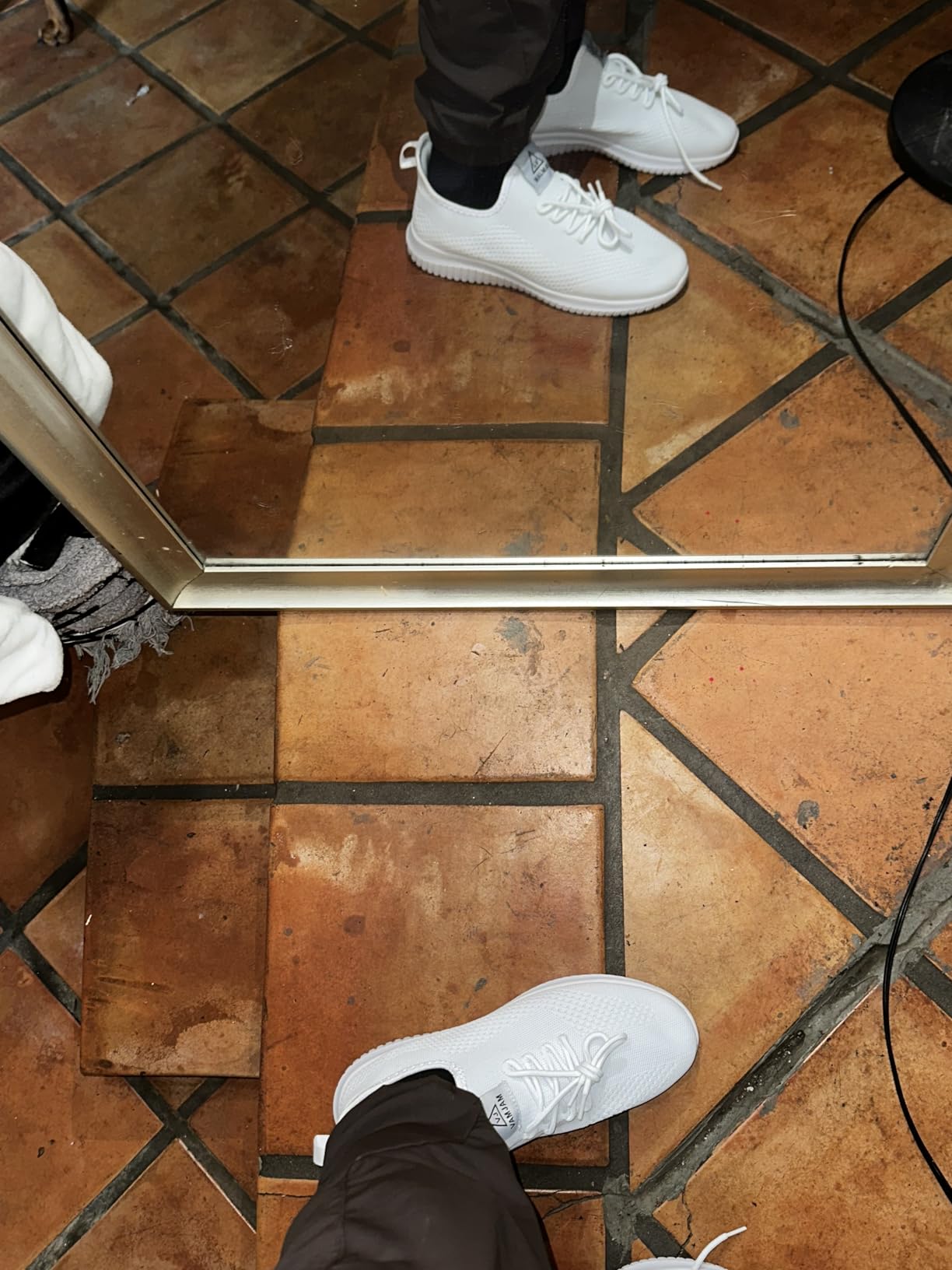
Entry is its own thing. Without a tongue, you’re essentially sliding your foot into a knit sock that has a sole attached. It feels awkward the first few times — you’re compressing the heel and rolling the foot in rather than slipping forward. By day three, you stop thinking about it. The heel loop at the back helps, and the mesh stretches enough that getting in doesn’t require significant effort.
The laces are decorative. I want to be clear about this because not a single competitor review mentions it: when I tried to cinch the laces to tighten the fit, the mesh bunched horizontally across the top instead of pulling the sides together. There’s no tongue to press against. The laces sit across the surface rather than threading through a structure. The fit comes entirely from mesh elasticity, not the lacing system.
If you want replacement laces for cosmetic variety, VSUDO Flat Shoe Laces are compatible with this upper style — though you’ll still be using them as decoration rather than function.
Comfort for the Right Context
For indoor casual wear, these are genuinely good. The EVA foam compresses to your foot shape almost immediately — no break-in period, no friction periods. I wore them for full 8-hour WFH days during the six-week test, and the comfort held well through hour six. By hour seven, I noticed mild arch fatigue. Not pain, just the absence of enough support for that duration. For a 4-6 hour use case, the comfort is consistently excellent.
The breathability is the standout — 9/10. The single-piece knit mesh functions like a ventilated sock, and the difference is noticeable. During testing in 80°F+ weather, my feet stayed significantly cooler than they do in canvas or synthetic sneakers. No heat buildup, no noticeable sweat accumulation over an 8-hour day. This is the thing that makes these actually useful for WFH professionals in warm climates or during summer months.
That same open mesh construction comes with a hard trade-off: zero water resistance. Light rain soaks through within a few minutes. I tested this — about three minutes in a light drizzle and my socks were visibly wet. They dry fast (hanging them overnight worked fine), but if you’re in a wet climate or need anything resembling all-weather protection, this isn’t the shoe.
At 5.95 oz per shoe, they’re light enough to forget you’re wearing them. That sounds like marketing copy, but it’s accurate for indoor wear — the weight is genuinely close to the feel of thick socks with grip.
The Durability Problem
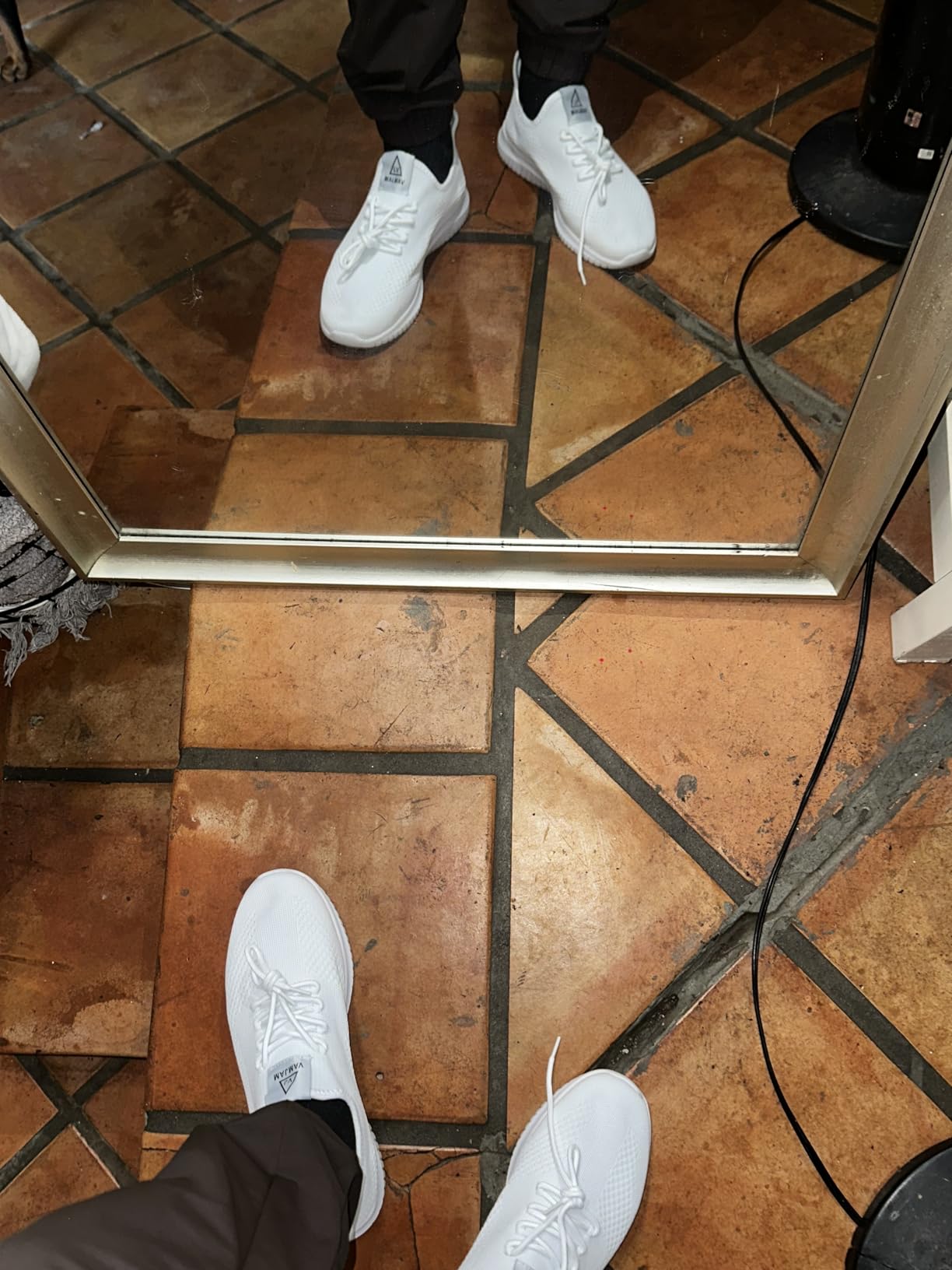
The durability score is 3/10. Here’s the specific reason: foam-only construction means the material absorbing your impact and the material meeting the ground are the same piece. Standard walking shoes use a rubber outsole to absorb abrasion while the EVA midsole absorbs impact. VAMJAM uses foam for both. The ground degrades them simultaneously — there’s no protective layer buying the cushioning more time.
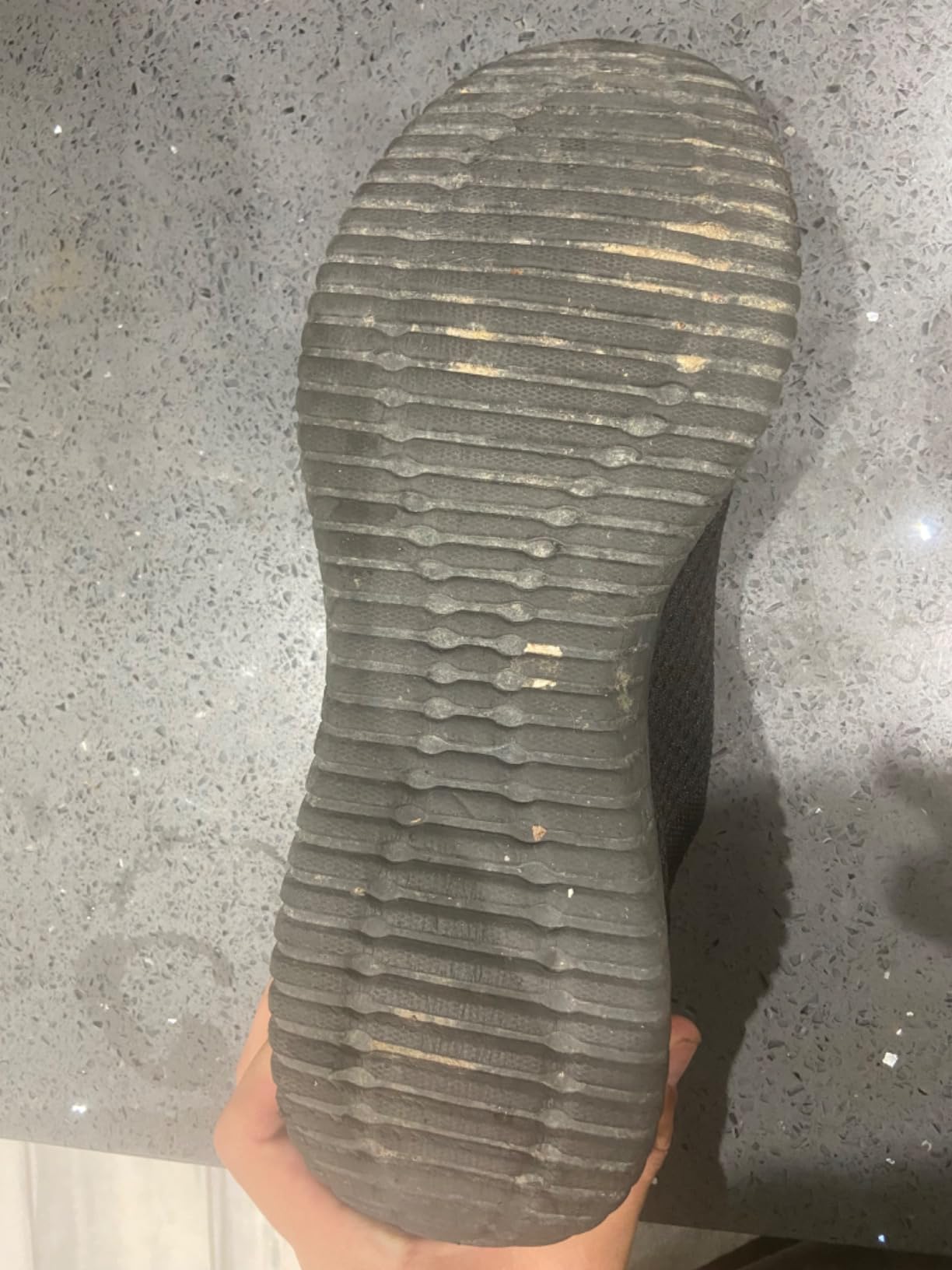
OutdoorGearLab tested 10,000 steps on a pair. At the end of that test, the tread was tearing apart at the heel and forefoot. That’s roughly 4-5 miles of walking. For daily outdoor use, some users report visible outsole wear within 3 days on concrete.
Here’s what the lifespan looks like across different use patterns:
Indoor only (carpet/hardwood):
Weeks 1-4 feel like new — no visible degradation. Around weeks 5-8, heel compression becomes noticeable. By weeks 9-12, the cushioning is noticeably reduced and the outsole has started developing flex creases. Month three and beyond: the midsole has bottomed out at impact points.
Mixed indoor with occasional concrete/pavement:
Week 1-2 fine. Week 3-4: wear patterns forming at outsole contact points. Week 6-8: accelerated degradation. You’ll feel it before you see it.
Daily outdoor use on concrete:
Days 3-7: visible wear. Weeks 2-3: significant degradation. Some users report complete sole separation at the toe box before the end of month one.
I deliberately kept outdoor testing to about 2-3 miles total over six weeks. By week 4, I could already see compression forming at the heel on carpet. By week 6, the outsole had visible crease lines at the forefoot flex point. This is honest documentation, not scare tactics.
The cost math: $25 for a 10-12 week indoor lifespan works out to roughly $2.00-$2.50 per week. As a house shoe or WFH shoe you replace a few times a year, that’s defensible. As a replacement for outdoor-rated footwear, the economics break down fast.
Surface-by-Surface Performance
The difference between indoor and outdoor surfaces is significant enough to treat separately.
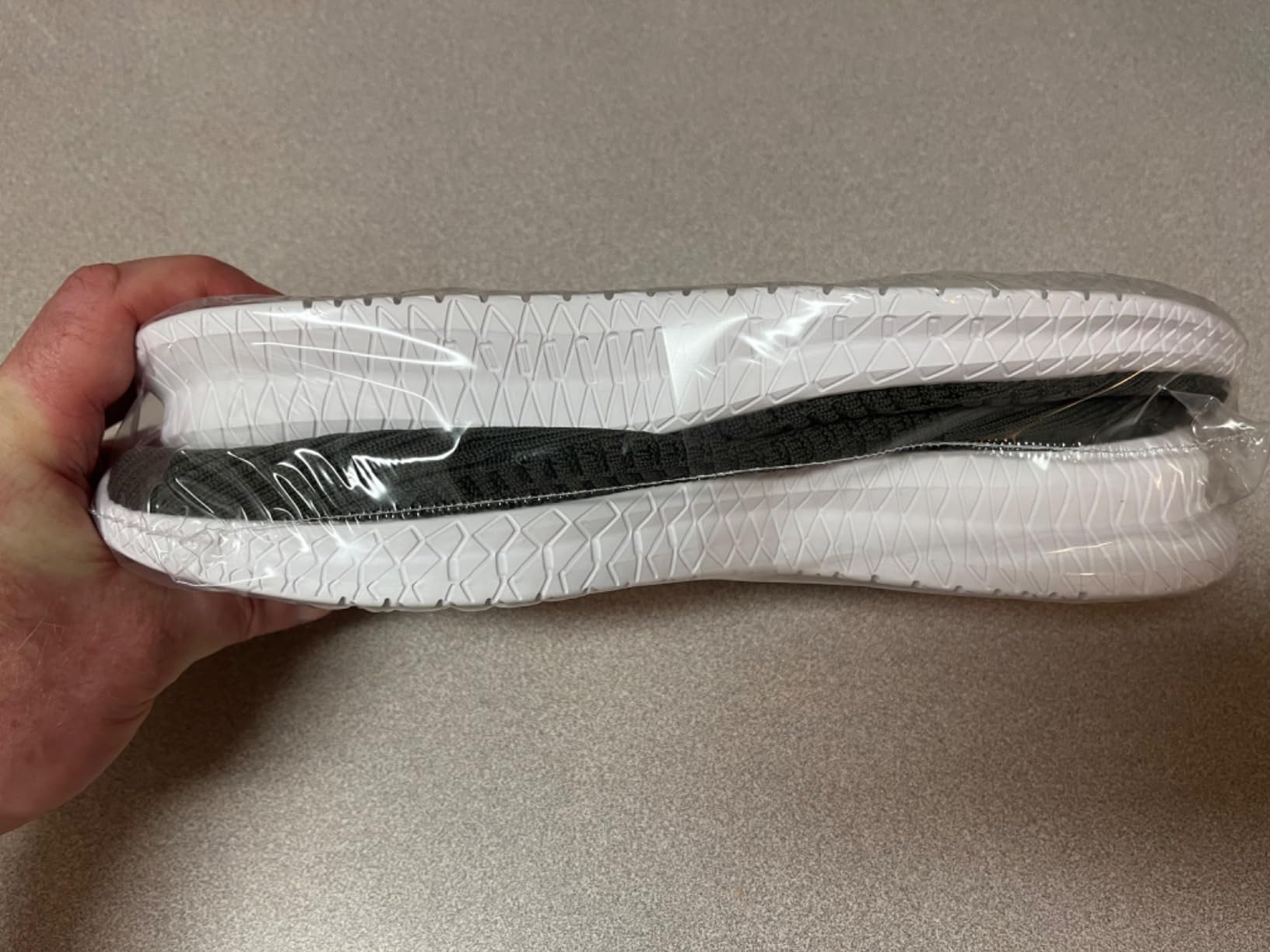
Indoor surfaces that work: Carpet is excellent — the foam outsole grips well, it’s quiet, and wear is minimal compared to hard surfaces. Hardwood is very good, though fast lateral movements produce some slippage. Dry tile is adequate for normal walking; OutdoorGearLab flagged occasional slip risk on dusty or dirty tile, which matches what I found. Smooth concrete indoors (garage, basement) is fine for light walking.
Surfaces to avoid: Outdoor concrete and asphalt accelerate outsole wear dramatically. The foam picks up small pebbles in the tread gaps on gravel — annoying for any extended outdoor walking. Wet tile or linoleum is a slip risk. OutdoorGearLab specifically noted the shoe sliding on these surfaces. Wet outdoor surfaces combine the poor traction with the mesh that soaks through immediately.
If you need a slip-on with a rubber outsole that handles mixed terrain, the Jackshibo Slip On Walking Shoes are worth comparing — the rubber outsole handles outdoor surfaces the VAMJAM foam can’t sustain.
Travel: Their Hidden Strength
For business trips and light travel, these are genuinely useful in ways that aren’t obvious from the listing.
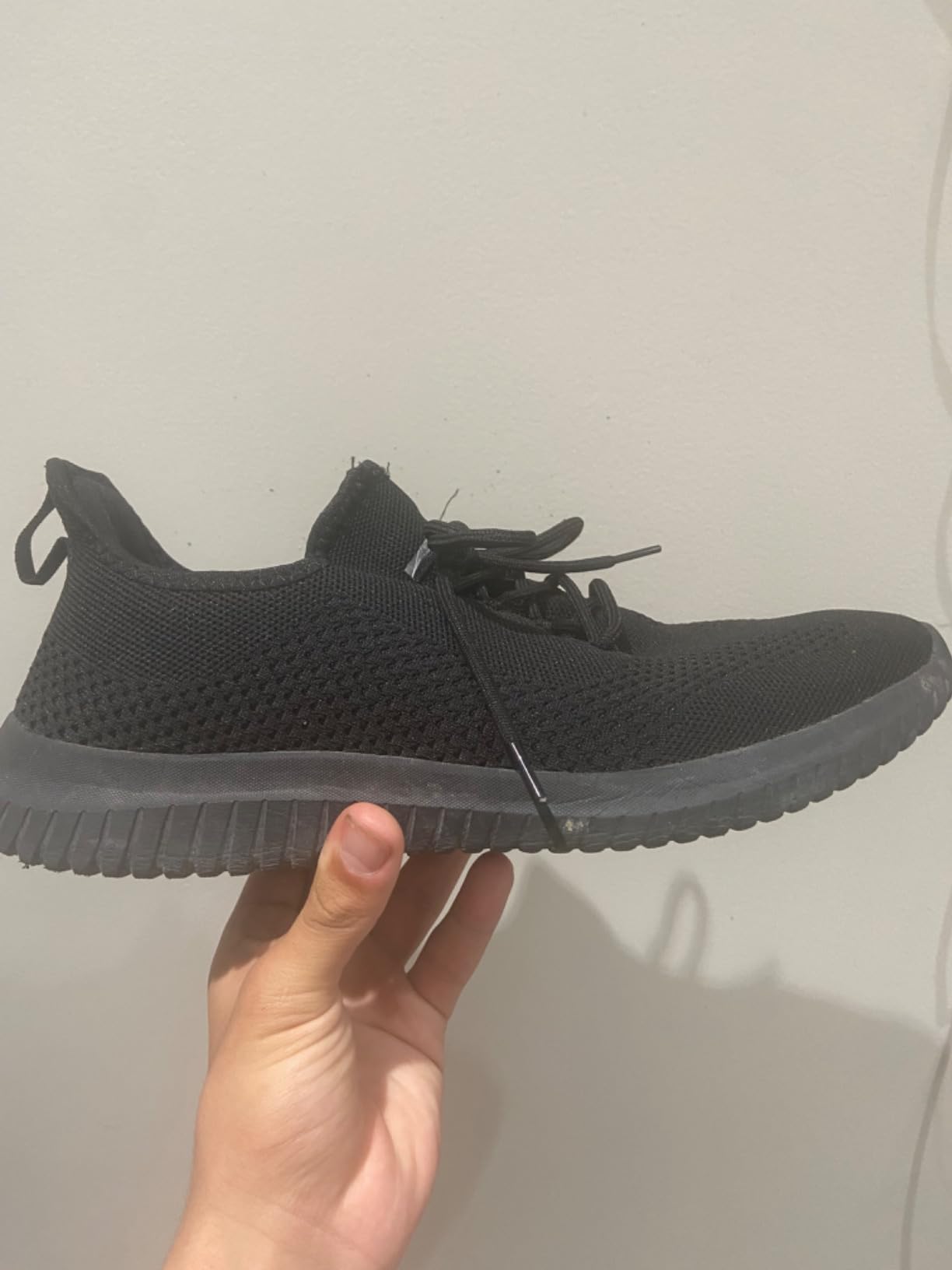
At 5.95 oz per shoe, a pair weighs under 12 oz combined. The single-piece mesh construction folds flat without permanent creasing — these go into a carry-on side pocket or compress into a packing cube and spring back to shape when unpacked. For airport security, the slip-on design means shoes off and back on in seconds without managing laces while half-asleep at 6am.
For hotel room wear, conference-room days, and casual indoor exploring on smooth surfaces, the comfort ceiling holds. I’d use these on any business trip where my “real” shoes are handling the actual walking and these are handling hotel mornings and light conference center days.
The limitation travels with them: flat, dry indoor surfaces only. A trip with significant outdoor walking, cobblestones, or long days on varied terrain will accelerate wear quickly. Know the use case before you pack them.
The $25 price also changes the calculus. A dedicated travel shoe at $25 that you eventually wear out is a reasonable expense. You’re not protecting a significant investment.
Marketing Claims vs. Reality
| Claim | What Testing Showed | Verdict |
|---|---|---|
| “Running Shoes” | Failed torsion test; foam-only sole; no lateral support; OutdoorGearLab sole wear at 10k steps | ❌ Misleading |
| “~4mm Drop” | OutdoorGearLab measured 15mm (30mm heel / 15mm toe) | ❌ Inaccurate |
| “Ultra Lightweight” | 5.95 oz per shoe confirmed by lab measurement | ✅ Accurate |
| “Breathable” | 9/10 breathability in 80°F+ testing; genuine standout | ✅ Accurate |
| “Non-Slip” | Adequate on dry concrete; poor on wet tile/linoleum (OutdoorGearLab confirmed) | ⚠️ Partial |
| “True to Size” | TTS confirmed across all sources | ✅ Accurate |
| All-weather implied | Zero water resistance; mesh soaks through in minutes of rain | ❌ Not true |
The weight and breathability claims are the honest ones. The running shoe framing is the most consequential misleading element — it sets expectations the shoe can’t meet and leads to disappointed buyers who’d have been perfectly happy with the actual product.
Who Should Buy These (and Who Shouldn’t)
✅ These work well for:
Work-from-home professionals. All-day indoor comfort is this shoe’s core strength. Eight-hour days on carpet and hardwood are genuinely comfortable, and the breathability in warm home environments is real. If you’re tired of wearing house slippers that offer no ground protection for quick outdoor trips, VAMJAM is a significant upgrade at $25.
Frequent travelers with controlled itineraries. Hotel rooms, conference centers, airport terminals — any trip where you’re mostly on flat, dry indoor surfaces benefits from a packable $25 secondary shoe. These fold flat and weigh almost nothing.
House shoe replacements. Better ventilation and actual ground protection versus slippers, with the convenience of a slip-on. Replace every 2-3 months as the cushioning compresses.
Casual errand runners. Grocery runs, mail pickups, quick outdoor trips — fine as long as you’re not logging real mileage.
If you need arch support, aftermarket insoles help significantly. Valsole Orthotic Insoles fit well in this style and extend the comfort ceiling for people with flat feet or arch issues.
❌ Skip these if you need:
Actual running shoes. For real running at any pace or distance, look at the ASICS Gel-Venture 10, Nike Air Winflo 10, Adidas Run Falcon 5, or the Under Armour Charged Assert 9 — all have rubber outsoles, lateral support, and proper midsole structure in the $50-80 range.
A slip-on with real support. The Skechers Bounder 2.0 Slip-In offers the same slip-on convenience with significantly better structure, support, and outdoor durability.
Wide feet. Regular width only, no exceptions.
All-weather or outdoor walking shoes. Wonesion Men’s Breathable Walking Shoes and similar options handle outdoor terrain with a rubber outsole that the VAMJAM foam can’t match.
Training shoes for gym work or lateral-movement activities. The torsion failure makes these unsuitable for any court sport, gym training, or workout that involves direction changes.
Frequently Asked Questions
Can I actually run in VAMJAM shoes?
No. OutdoorGearLab’s torsion test showed the shoe fails lateral stability testing, and the foam-only sole wears through in 2-4 weeks of outdoor use. Despite the product name, these aren’t designed for running mechanics. For running, invest in purpose-built footwear — Nike, Adidas, ASICS, or New Balance all offer proper running shoes under $80.
How long do they realistically last?
Indoor-only (carpet/hardwood): 10-14 weeks of regular wear before noticeable cushioning compression. Mixed indoor with occasional outdoor: 6-10 weeks. Daily outdoor use on concrete: 2-4 weeks before significant outsole degradation. The foam-only construction is the hard ceiling on lifespan regardless of care.
Are they true to size?
Yes, consistently. Order your normal size. Regular width only — there’s no wide variant. If you need 2E or wider, these won’t work.
What’s the actual heel-to-toe drop?
VAMJAM claims approximately 4mm. OutdoorGearLab’s lab measurement shows 15mm (30mm heel stack, 15mm toe stack). The brand’s spec data on this shoe isn’t reliable. Since they’re not suitable for running, the practical impact is minimal — but it’s worth knowing the listing accuracy is questionable.
Can I use aftermarket insoles?
Yes, and it makes a real difference for extended wear. The stock footbed is minimal foam. Standard-size aftermarket insoles fit well. For flat feet, plantar fasciitis, or anyone wearing these 8+ hours, insoles are worth adding — they extend the comfort ceiling noticeably and add arch support the stock footbed doesn’t provide.
Are they machine washable?
Yes. Cold water, gentle cycle, air dry only. Heat can warp the EVA foam. Washing doesn’t appear to significantly accelerate the wear timeline in my experience.
Good for travel?
Yes, specifically for hotel and airport wear. They fold flat, weigh almost nothing, and handle indoor smooth surfaces well. Not for trips that involve significant outdoor walking or varied terrain — the durability limitations travel with the shoe.
Final Verdict
VAMJAM named these running shoes and probably sold more of them because of it. The actual product is a 21st-century moccasin — ultra-breathable, near-weightless, genuinely comfortable for indoor casual wear, and packable enough to justify as a dedicated travel shoe. At $25, that’s legitimately good value for what it is.
The 3/10 durability score isn’t a manufacturing flaw — it’s a design consequence. Foam-only construction is lighter and cheaper to produce, but it degrades fast on hard outdoor surfaces. If you buy these understanding they’re an indoor shoe you’ll cycle through every few months, the cost math works. If you’re expecting running shoe longevity, you’ll be disappointed before the first month is out.
Marcus was right about the comfort. He just neglected to mention the context required.
✅ Key Strengths
- Genuinely lightweight — 5.95 oz per shoe, feels like socks with a sole
- Exceptional breathability — 9/10 in real-world warm conditions
- True-to-size fit — consistent, no sizing surprises
- Zero break-in — immediate comfort from first wear
- Slip-on convenience — on and off in seconds
- Packable for travel — folds flat, barely adds luggage weight
- Machine washable — easy to maintain
- $25 price — unbeatable for indoor comfort at this level
❌ Key Weaknesses
- Durability 3/10 — foam-only outsole; weeks outdoors, months indoors
- Not running shoes — failed torsion test; misleading product name
- Regular width only — excludes wide-footed buyers entirely
- Zero water resistance — mesh soaks through in minutes of rain
- Minimal arch support — insoles needed for flat feet or arch issues
- Decorative laces — don’t function as a tightening system
- QC variance — vacuum packing can deform some pairs on arrival
Scoring Breakdown
| Category | Score | Weight | Notes |
|---|---|---|---|
| Comfort (Indoor Use) | 8.5/10 | 25% | Excellent through 6-8 hours; minor arch fatigue after 8hrs |
| Durability | 3.0/10 | 20% | Foam-only outsole; 10-14 weeks indoors, 2-4 weeks outdoors |
| Value for Money | 7.0/10 | 15% | Strong if used indoors; poor if worn outdoors expecting longevity |
| Breathability | 9.0/10 | 10% | Outstanding mesh ventilation; tested in 80°F+ conditions |
| Fit & Sizing | 8.0/10 | 10% | True to size; regular width only limits wider feet |
| Build Quality | 6.0/10 | 10% | Clean mesh construction; decorative laces; QC variance on vacuum packing |
| Versatility | 5.0/10 | 10% | Excellent indoors; wrong for outdoor, athletic, or all-weather use |
| OVERALL SCORE | — | 100% | 6.5/10 |
“Exceptional $25 indoor slip-on. Buy the shoe, ignore the running shoe name.”
Be the first to review “VAMJAM Men’s Running Shoes Ultra Lightweight”
Related products
Hiking/Trekking Shoes
Running Shoes


Hiking/Trekking Shoes
Running Shoes
Running Shoes
Running Shoes
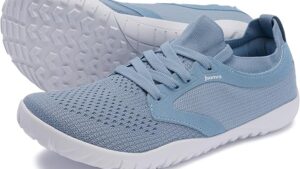
Hiking/Trekking Shoes
Running Shoes
Reviews
There are no reviews yet.