
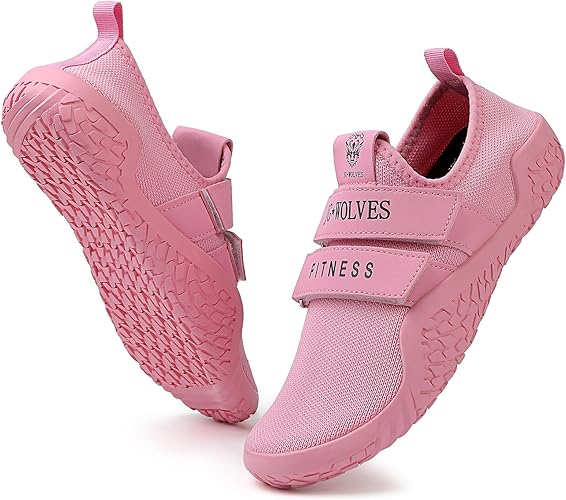
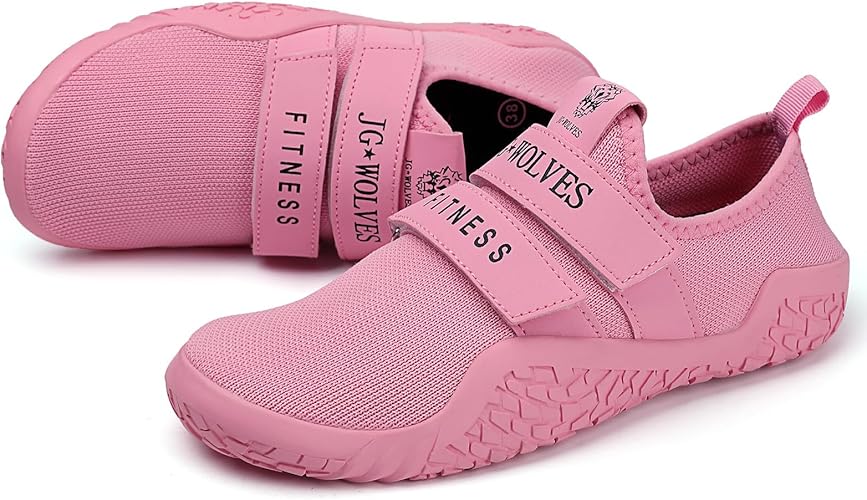
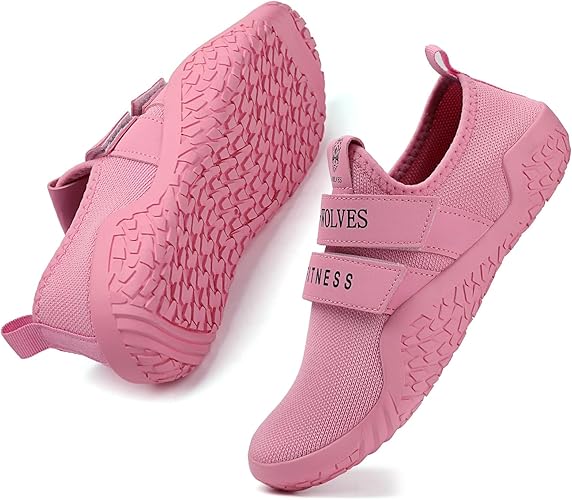
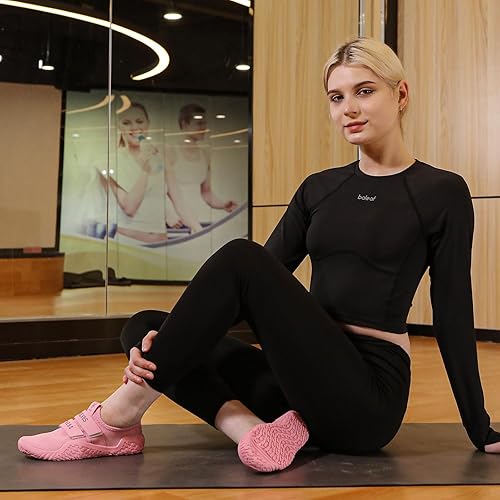
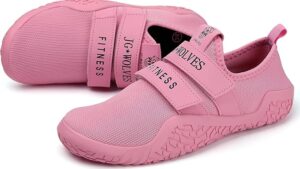
Skerxut Fitness Shoes Deadlift Cross-Trainer Sneakers for Men and Women
$18.99
- ⚖️ Weight: 6.2 oz (women’s size 8)
- 🧪 Upper material: Stretchy fabric blend with spandex
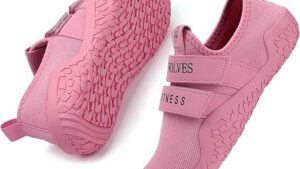
- 👟 Sole material: Rubber with anti-slip grip pattern
- 🔗 Closure: Dual velcro straps
- 🏋️♀️ Category: Barefoot training shoes
- 🎯 Best for: Deadlifts, squats, powerlifting, cross-training (indoor only)
- 💧 Water resistance: None
Six weeks. Twenty-four training sessions. One $20 shoe that looks suspiciously like a water shoe. I’m Sarah, and after a decade-plus of testing footwear across every gym scenario I could think of, I had to know: can something this cheap actually deliver real barefoot stability for heavy lifting? Here’s what happened.
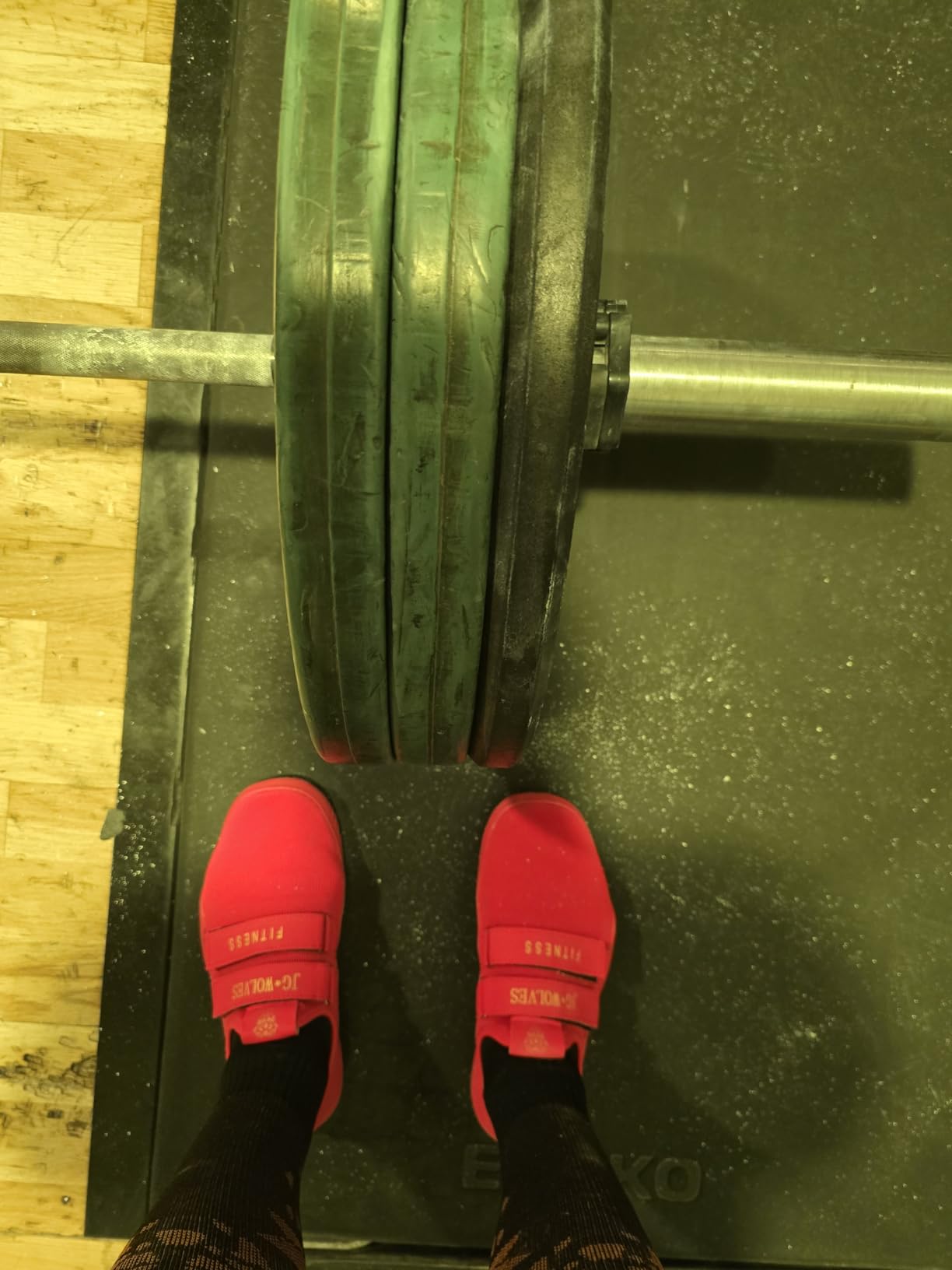
Quick verdict: 7.8/10. For $20, these nail the one thing that matters most for powerlifting — ground connection — while cutting corners on breathability, durability, and versatility. If you deadlift, squat, and train mostly indoors, these punch well above their price tag. Read on for what you’re actually signing up for.
First Impressions: The Water Shoe Problem
When I pulled these out of the box, my immediate reaction was: are these aqua socks? The stretchy, slightly shiny fabric had that same thin, clingy feel you’d expect from a beach water shoe, not a training shoe designed for 185-pound deadlifts.
I genuinely second-guessed my decision for about thirty seconds. Then I put them on.
The first thing I noticed was how flat they sat against the floor — not just “low-profile” flat, but completely flush, like the sole barely exists. Standing in them felt oddly grounded in a way that normal cross-trainers don’t. And that stretchy upper, rather than being the liability I expected, wrapped around my foot without any pressure points. My toes could move. My forefoot could spread.
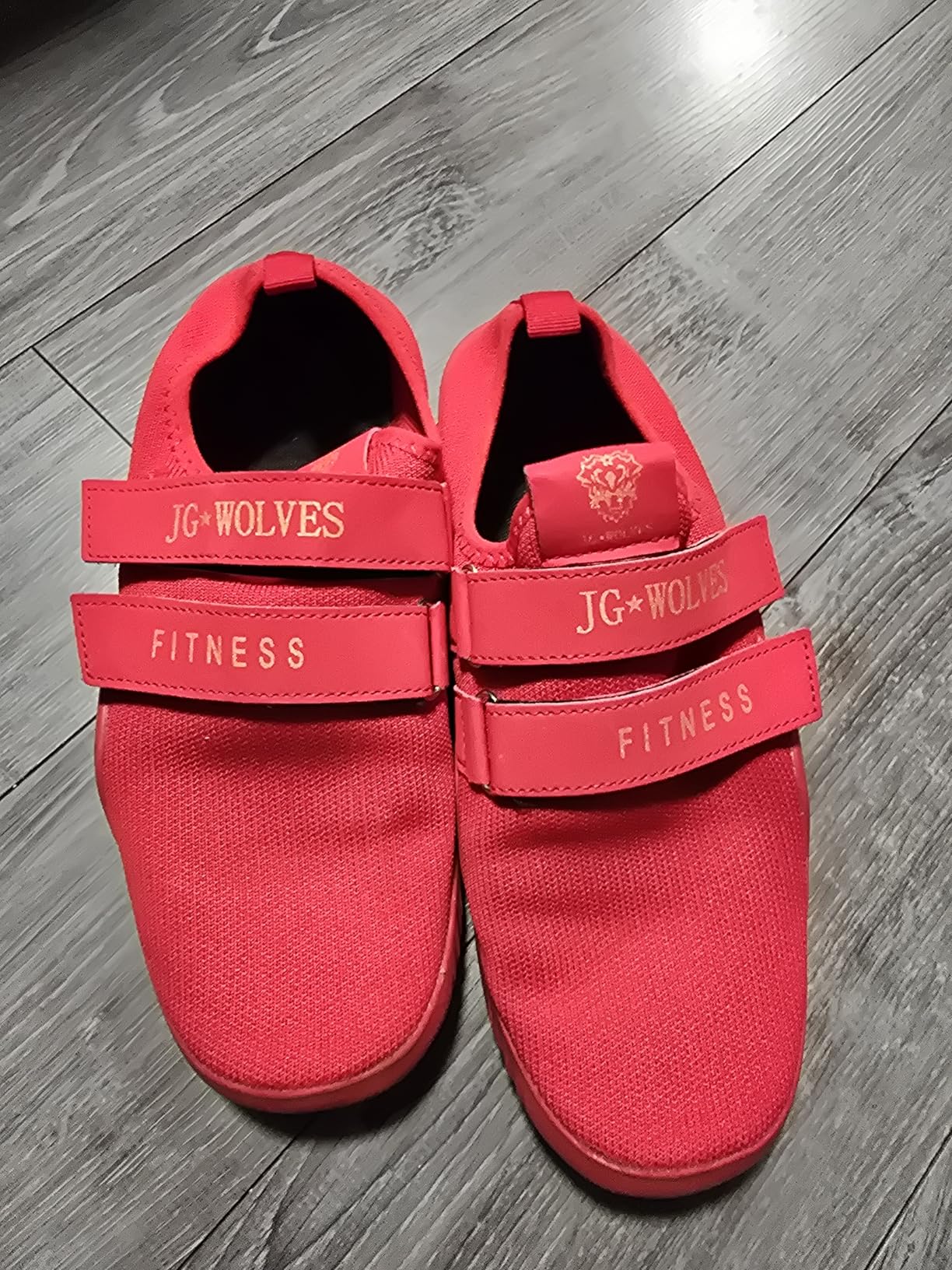
The dual velcro straps took about two seconds to learn. One strap across the midfoot, one higher toward the ankle — together they create a surprising amount of hold without squeezing. The on/off speed is genuinely useful when you’re alternating between barefoot mobility work and loaded exercises.
By the time I finished warming up on that first session, the water shoe concern was mostly gone. The stretchy build that had worried me was doing real work — keeping the shoe close to my foot without the rigid pressure of a traditional trainer’s lace-up system. Whether it would last was a different question. But as an initial impression, I was surprised.
The Ground Connection — Where These Justify Their Existence
This is what it all comes down to for barefoot training shoes, and these genuinely deliver.
The first heavy deadlift session clarified it immediately. Standing over the bar, I felt planted in a way that my old cross-trainers never provided — those had a spongy, slightly elevated heel that I’d adapted to without realizing it was affecting my pull mechanics. With these on, there’s literally no gap between your foot and the floor. Zero heel elevation. The bar path felt more direct. My setup position felt tighter.
Science backs up why this happens: cushioned midsoles absorb somewhere in the range of 10-15% of applied force, and even a small heel-to-toe drop shifts your center of gravity slightly forward, which changes your bracing mechanics in deadlifts and squats. Barefoot-style shoes eliminate those variables. The human foot has over 200,000 nerve endings, and when you’re not muffling them with thick foam, the proprioceptive feedback loop during a heavy lift is noticeably more responsive.
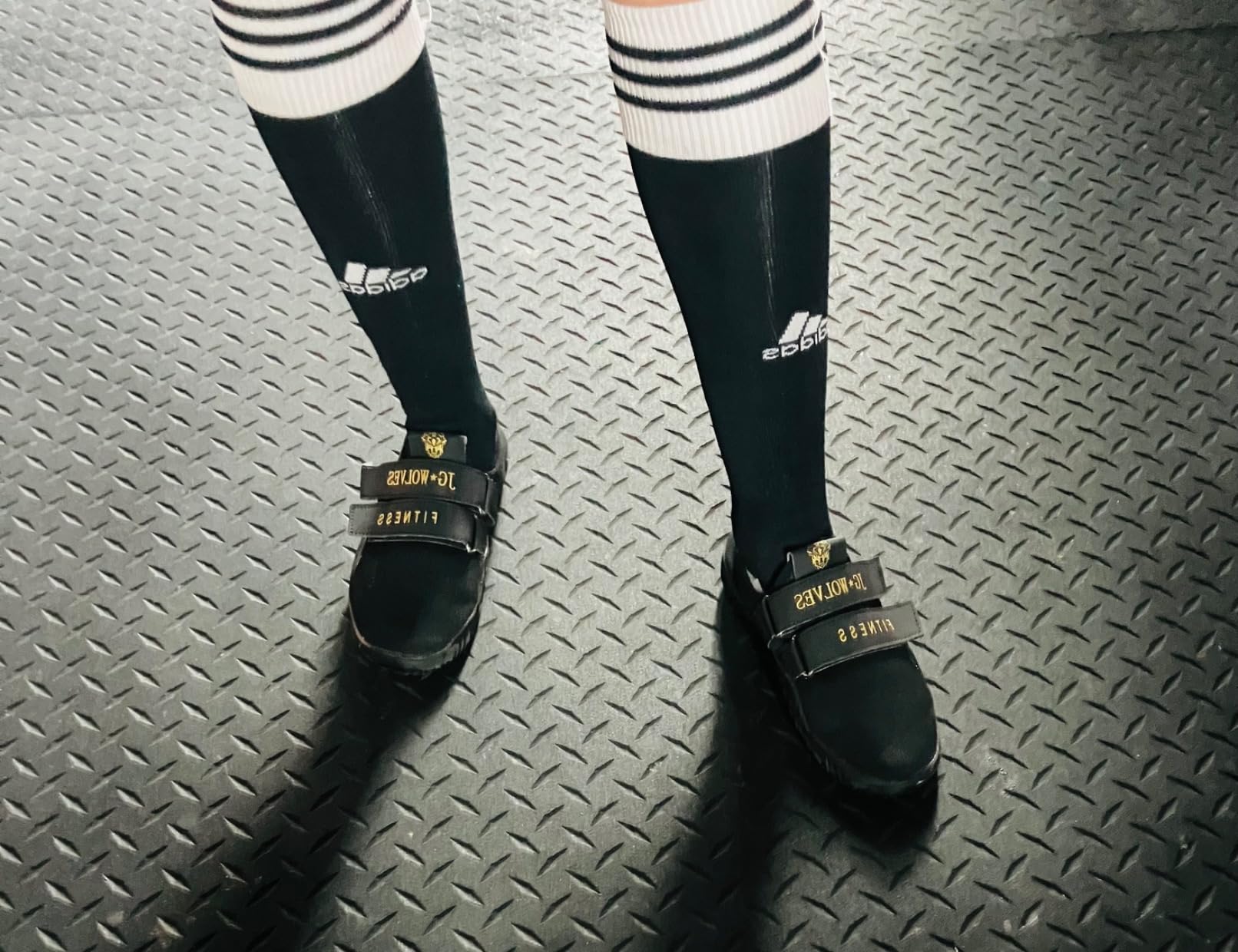
That said, “better ground feel” isn’t magic. What it does is give you more accurate feedback — you can feel when your weight shifts incorrectly, when your feet aren’t equally loaded, when your setup isn’t quite right. Acting on that feedback is still your job. But after 24 sessions in these, my squat depth felt slightly more consistent, and I stopped cueing myself to “push the floor away” because the connection was already there without effort.
One note for anyone coming from heeled lifting shoes or high-cushion trainers: there’s a short adaptation period. Not a break-in period for the shoe itself — the shoe is comfortable immediately — but your ankles and posterior chain need a session or two to settle into the zero-drop position. Nothing dramatic, just worth knowing.
24 Sessions of Real-World Testing
I deliberately put these through a variety of training contexts, not just heavy lifting, to understand the full picture.
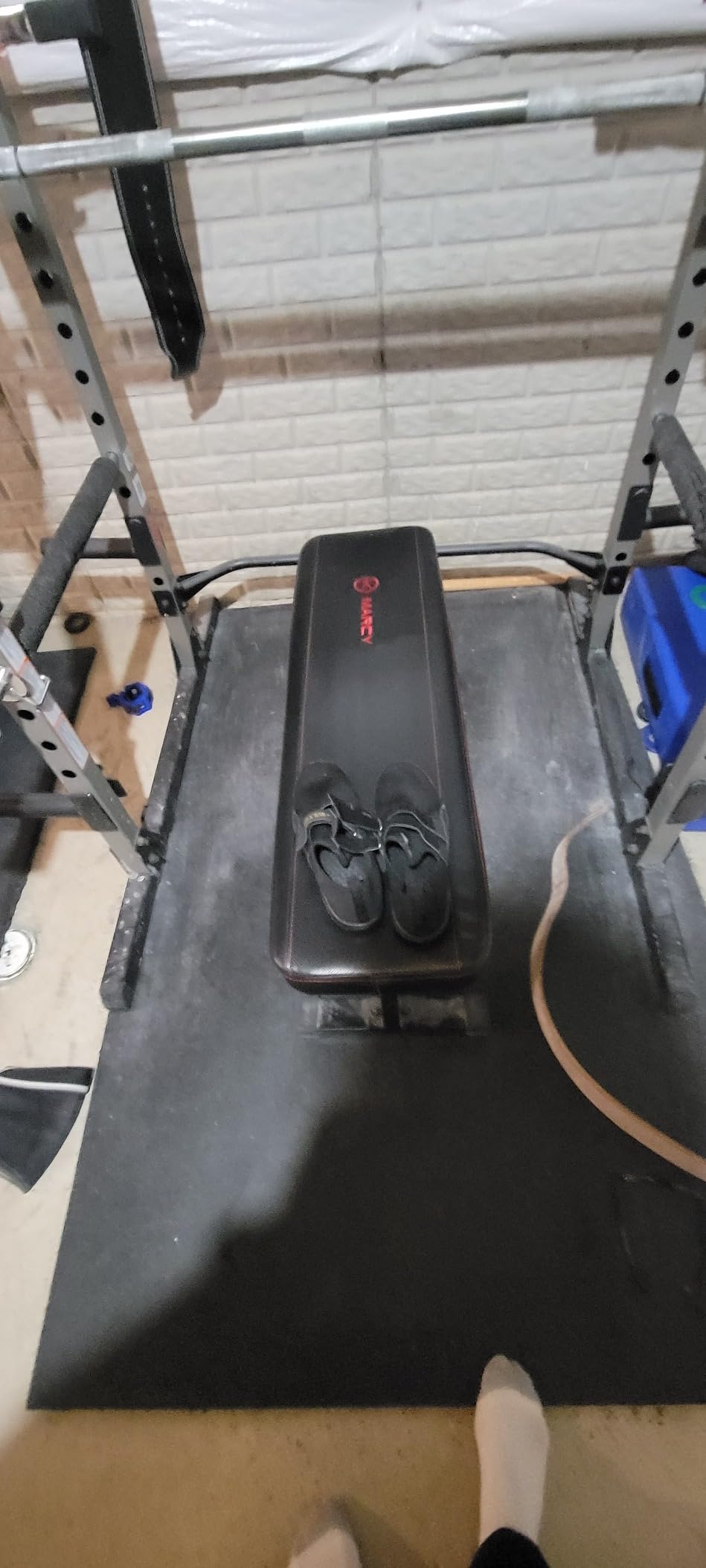
Heavy lifting days were where these shone most. Deadlifts, squats, Romanian deadlifts, hip thrusts — the flat sole kept me properly positioned over the bar through all of it. I never felt my feet shift or roll. Grip on both rubber gym mats and concrete was solid; not once did I feel the threat of a slip even on heavier sets where ground contact matters most.
HIIT and circuit work was more mixed. The 6.2-oz weight means you barely notice these during explosive movements — burpees, mountain climbers, lateral shuffles all handled reasonably well. But the thin sole means any significant box jump or high-impact landing sends a sharper feedback signal than a cushioned trainer would. Not painful, exactly, but not as comfortable as a dedicated HIIT shoe. These tolerate cardio; they don’t excel at it.
Machine work was quietly one of the better use cases. Leg press, calf raises, hack squats — the flat base keeps your foot from sliding on the platform and lets you feel the loading pattern more clearly. Nothing revolutionary, just consistently solid.
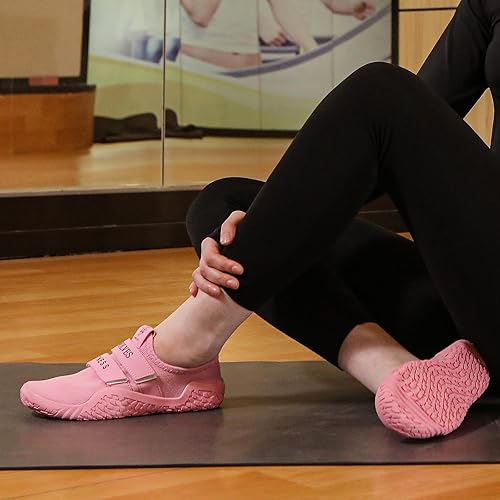
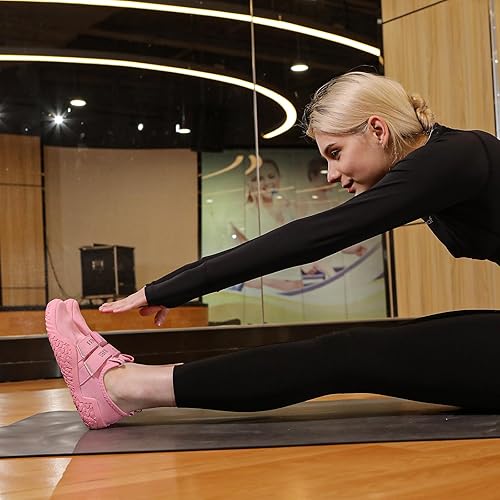
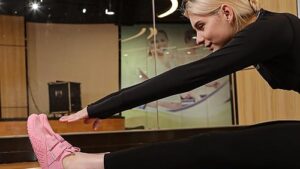
Flexibility and mobility work surprised me. The stretchy upper allows a full range of motion that most training shoes block — I could point my toes completely, do deep pigeon pose without any restriction from the shoe’s structure. For people who integrate mobility work into their lifting sessions, this is a legitimate plus.
During a steamy July afternoon session at my gym (85°F+), the limited breathability became impossible to ignore past the 75-minute mark. My feet were genuinely warm. The grip never suffered, but comfort did. For shorter sessions this isn’t much of a factor; for extended training it’s worth planning around.
Durability: What to Expect After Six Weeks
I noticed velcro seam wear at about four weeks of regular use — the stitching around the strap attachment points showed some loosening. It hasn’t affected function at all; the straps still hold exactly as they did on day one. But it’s a visible sign of where this shoe will eventually give up.
The sole itself showed no meaningful wear after six weeks of training on rubber mats, tile, and occasional concrete. The rubber grip pattern held up well.
My estimate for lifespan: 8-12 months with moderate use (3-4 sessions per week), maybe 6-8 months if you’re training more intensively. At $20, that works out to roughly $1.50-2.50 per month of gym use. For comparison, a premium barefoot Airhas Barefoot Zero Drop or purpose-built lifting flat from a specialty brand runs $80-150+. These deliver a meaningful percentage of the same zero-drop benefit for a fraction of the cost.
One gym buddy who’s been in a similar shoe for three months said her velcro lost meaningful holding power around the 4-month mark. Replacing a $20 shoe every 6-12 months is very different math than replacing a $120 shoe every 2-3 years.
The Trade-offs You Need to Know About
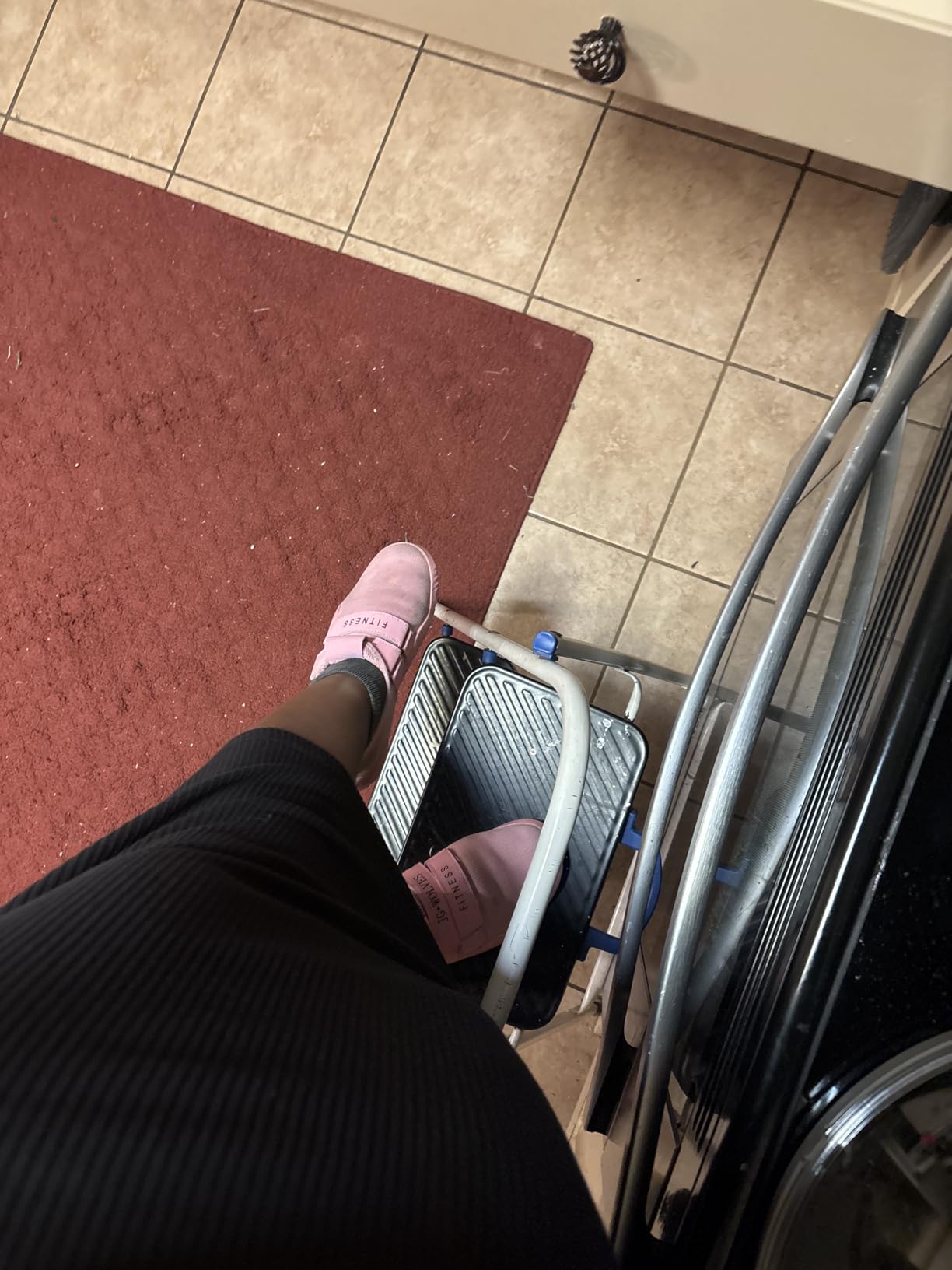
Breathability is the real limitation. The stretchy spandex-blend upper traps heat. For sessions under 75 minutes, most people won’t notice. At 90+ minutes, especially in a warm gym, your feet will feel it. If you run hot or have naturally sweaty feet, build in moisture-wicking socks and ideally keep these sessions under 90 minutes.
They’re strictly indoor shoes. I accidentally found this out when I stepped on a parking lot pebble and felt it clearly through the sole. Not painful enough to cause a problem, but enough to confirm that any outdoor surface with grit or texture is uncomfortable. These belong in the gym, period.
Zero arch support is by design. Barefoot training philosophy is built on letting your foot’s natural structure do the work, which means these offer no built-in arch support. For most people in a strengthening context, this is fine or even beneficial. If you have a medical condition requiring arch support, these are the wrong choice entirely.
Sizing runs slightly inconsistent. I found true-to-size worked well for my foot shape. Several women I train with needed to go half a size down for a secure lifting fit. Order your normal size first, but know that if you prefer a tighter, more locked-in feel during heavy lifts, a half-size down may serve you better.
Who Should Actually Buy These
✅ These Make Sense If:
- You’re primarily focused on powerlifting movements — deadlifts, squats, hip thrusts — and you train indoors
- You’re curious about barefoot training and don’t want to invest $80-150+ to test the concept
- You have a home gym and want a reliable, no-fuss indoor training shoe
- You do relatively short sessions (60-90 minutes) where breathability won’t become an issue
- You appreciate velcro for quick transitions between exercises or between barefoot and shod work
⚠️ Think Carefully If:
- Your sessions regularly exceed 90 minutes — breathability will frustrate you
- You have naturally sweaty feet or train in hot, poorly ventilated spaces
- You need a shoe that transitions from gym to anywhere else
❌ Look Elsewhere If:
- You need running or high-impact cardio capability
- You require arch support for medical reasons
- You want a single pair to last 2+ years — the durability isn’t there at this price
- You train regularly on outdoor surfaces
Budget alternatives worth considering: Converse Chuck Taylor All Stars (~$44) offer similar zero-drop mechanics with considerably better durability and more versatility beyond the gym. For premium barefoot experience, brands like Vivobarefoot start around $100 and deliver far better breathability and longevity.
Do the Brand Claims Hold Up?
I tested each major claim directly.
“Barefoot feeling for better stability” — 90% accurate. The zero-drop design and thin sole genuinely produce that connected, grounded sensation. The 10% gap is around the fact that “better stability” depends on training adaptation; it’s an enabler, not an instant fix.
“Anti-slip grip pattern” — 100% accurate. Tested on rubber mats, tile, gym carpet, and concrete across 24 sessions. Never slipped once during heavy lifts, explosive movements, or lateral footwork.
“Suitable for various exercises” — about 70%. Excellent for the core lifting use case. Workable for basic circuit training. Not well-suited for running, outdoor activities, or sustained high-impact cardio.
“Comfortable lightweight design” — about 80%. The 6.2-oz weight is real and beneficial. Comfort holds well through 60-90 minutes. The breathability limitation starts affecting comfort beyond that, especially in warm conditions.
Overall Assessment
| ✅ What Works | ❌ What Doesn’t |
|---|---|
|
|
Scores
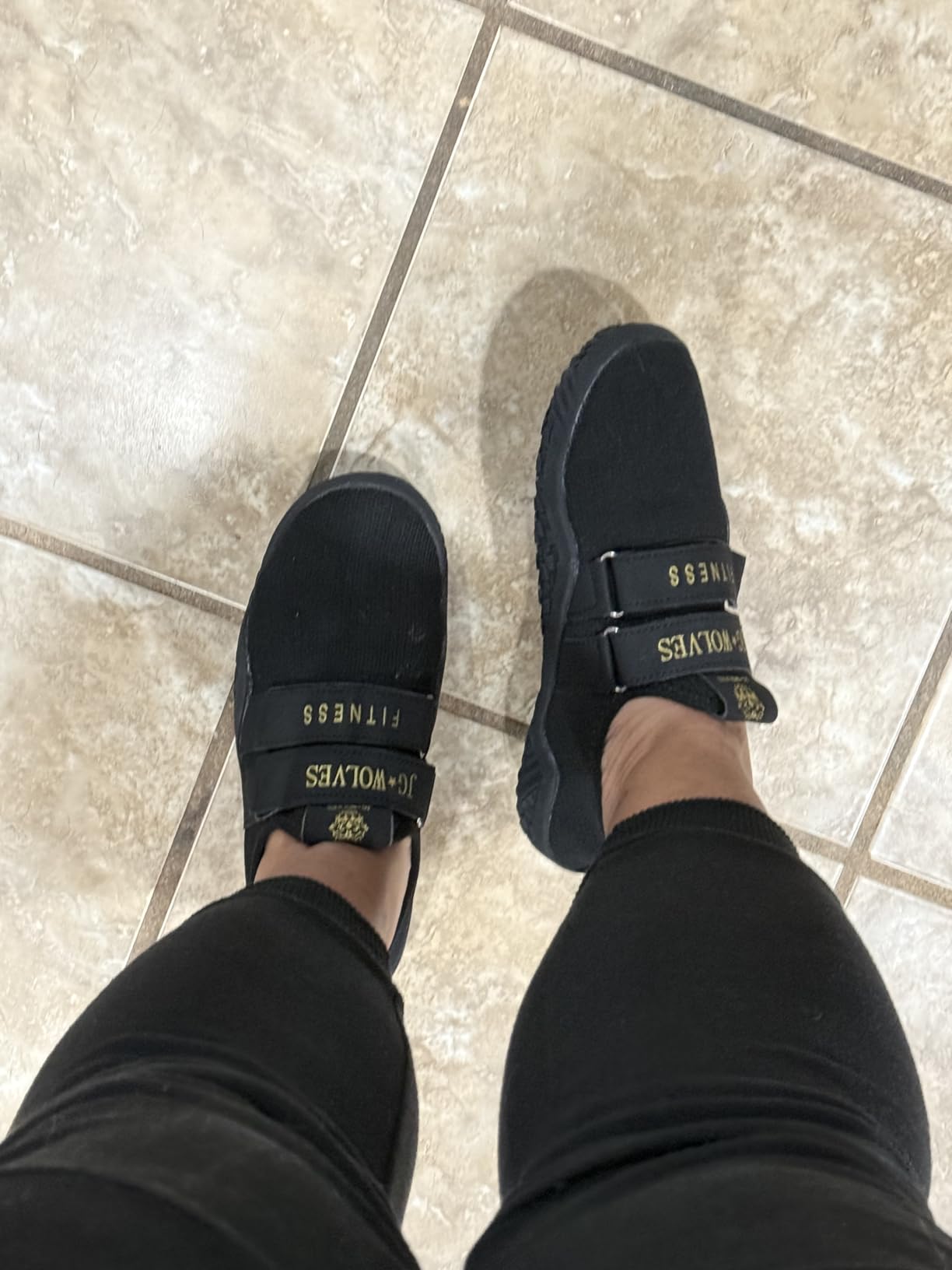
- Design & Aesthetics: 8/10 — Clean, sporty, the pink colorway is fun without being obnoxious
- Training Stability: 9/10 — Best feature by far; the ground connection is real
- Versatility: 6/10 — Solid for lifting, limited for everything else
- Comfort: 7/10 — Good for typical sessions, gets warm in longer ones
- Value for Money: 9/10 — At $20, hard to argue with the cost-per-use math
- Overall: 7.8/10
Frequently Asked Questions
How do these fit compared to Nike or Adidas training shoes?
They run slightly larger than Nike in my experience. Against Adidas, they’re closer to true-to-size. My recommendation: start with your normal size. If you want a very snug fit for heavy lifting security, consider going half a size down. The stretchy upper can accommodate some width variation, which helps if you’re between sizes.
Is there a break-in period?
Not for the shoe itself — it’s comfortable right out of the box. But if you’re transitioning from cushioned trainers or heeled lifting shoes, plan a few sessions for your ankles and calves to adapt to the zero-drop position. Nothing dramatic, but don’t jump into your heaviest squat day on the first wear.
How long will these realistically last?
For 3-4 sessions per week, expect 8-12 months. Train 5+ days weekly and you’re looking at 6-8 months before the velcro or sole shows meaningful wear. At $20, that’s still exceptional value — roughly $2 per month of gym use.
Can I use these for running?
I wouldn’t. The thin, non-cushioned sole provides zero shock absorption for impact-heavy activities. They’re designed for floor-based stability, not forward propulsion. Use a proper running shoe for cardio days.
Do these work for sumo deadlifts as well as conventional?
Yes — both stance styles benefit from the same zero-drop, flat-base platform. The ground connection and foot stability are equally useful whether your feet are hip-width or wide-stance. The stretchy upper may actually feel more comfortable in sumo stance since it doesn’t restrict the lateral foot flare.
What’s the best way to handle the breathability issue?
Moisture-wicking athletic socks make a real difference. I also found that sessions under 75-80 minutes were fine without much thought; it’s the longer training blocks where planning matters. If your regular sessions run 90+ minutes and you tend to run warm, this might not be the right shoe for your needs.
Are these appropriate for someone with flat feet or plantar fasciitis?
I’d recommend consulting a healthcare provider before making the switch to any zero-drop, zero-support shoe if you have diagnosed foot conditions. These follow barefoot training philosophy, which advocates for foot-muscle strengthening over artificial support — but that transition requires gradual adaptation and isn’t appropriate for everyone.
How do I get the most mileage out of them?
Keep them strictly for indoor gym use. Let them fully air dry between sessions — the stretchy upper holds moisture and can break down faster if stored damp. If you train daily, rotating with a second pair extends both shoes’ lifespan significantly. Replace them when the velcro stops holding reliably or the sole shows visible wear through the grip pattern.
Final Verdict
After six weeks and 24 sessions, here’s where I landed: these Fitness Deadlift Cross-Trainer Sneakers do one thing exceptionally well, and everything else adequately or not at all.
That one thing — ground connection and stability for heavy lifting — is the thing that actually matters if you’re a powerlifter, a deadlifter, or someone exploring barefoot training without wanting to spend premium prices. The zero-drop flat base delivers real, palpable improvements in how grounded you feel during compound movements, and the grip is bulletproof across indoor surfaces.
The trade-offs are real but manageable: limited breathability for long sessions, a lifespan measured in months rather than years, and no versatility beyond the gym. None of those feel like failures for a $20 training flat — they feel like reasonable constraints on a product that’s honest about what it is.
My honest recommendation: if heavy lifting is your primary gym activity and you’re buying on a budget, try these. The worst-case scenario is you spend $20, dislike them after one session, and learn something about your preferences. The more likely scenario is you discover that barefoot-style shoes genuinely change how your lifts feel — and you’ve made that discovery for the price of two coffee drinks.
One sizing note before you order: if you’re between sizes or prefer a very secure fit for lifting, consider going half a size down. And pack moisture-wicking socks for your longer sessions.
Review Scoring Summary
| 🔍 CATEGORY | 📋 ASSESSMENT | 💭 REASONING |
|---|---|---|
| 👥 WHO THIS SHOE IS FOR | ||
| Target Gender | Women | Pink colorway, women’s sizing listed first, community feedback reflects female gym users primarily |
| Primary Purpose | Sport/Training | Zero-drop design built for powerlifting and strength training performance — not casual wear |
| Activity Level | Active | Suited for regular gym training; durability reflects active but not elite-level daily volume |
| 💰 VALUE | ||
| Budget Range | Under $50 | $20 price point — exceptional entry-level value for barefoot training concept |
| Primary Strength | Price + Stability | Delivers barefoot ground connection at fraction of premium alternatives’ cost |
| Expected Lifespan | 6-12 months | Velcro seam wear appears early; realistic cycle for moderate gym use at this price |
| 👟 FIT & FEEL | ||
| Foot Characteristics | Normal to wide | Stretchy upper adapts well; wide toe box accommodates natural foot spread during lifts |
| Usage Conditions | Indoor only | Thin sole confirmed painful on outdoor surfaces; designed exclusively for gym environments |
| Session Length | Up to 90 min | Comfort holds well through typical sessions; heat accumulation becomes issue beyond that |
| ⭐ KEY SCORES | ||
| 😌 Comfort Score | 7.0/10 | Solid for 60-90 min sessions; limited breathability is real constraint for longer training |
| 🏋️♀️ Stability Score | 9.0/10 | Best-in-class for this price range; zero-drop ground connection genuinely improves heavy lifts |
| ⭐ Overall Score | 7.8/10 | Exceptional value for its specific purpose — outstanding ground connection for powerlifters on a budget |
🎯 Who Should Grab These
- Best fit: Budget-conscious women focused on deadlifts, squats, and powerlifting who train primarily indoors
- Also great for: Beginners testing barefoot training, home gym users wanting a no-fuss lifting flat
- Skip if: You need shoe-to-street versatility, train sessions over 90 minutes regularly, or require any arch support
- Standout strength: The ground connection during heavy compound lifts — it’s a genuine functional improvement at this price
- Honest limitation: Single-purpose indoor design; don’t expect this shoe to do anything outside the gym well
Have questions about whether these fit your specific training setup? Drop them in the comments — happy to help you figure out if these are worth adding to your gym bag.
Be the first to review “Skerxut Fitness Shoes Deadlift Cross-Trainer Sneakers for Men and Women”
Related products
Running Shoes
Running Shoes
Sneaker

Sneaker
Sneaker
Reviews
There are no reviews yet.