



Mike here. I’ve been testing footwear for over a decade — running shoes, hiking boots, dress shoes, everything in between — so when Levi’s dropped a $60 casual sneaker that was supposed to look polished enough for the office, I had one reaction: prove it. The brand that built its reputation on denim durability was now selling leather-look sneakers for sixty bucks, and claiming they’d deliver “next-level comfort.” I’ve heard that before. Three months and 40+ wear sessions later, here’s what actually happened.
Quick Specs & First Take
- 💰 Price: ~$60
- ⚖️ Weight: 12.5 oz (per testing, men’s size 9)
- 🧪 Upper: Vegan synthetic leather
- 👟 Sole: Durable rubber
- 🔒 Closure: Lace-up, metal eyelets
- 📏 Fit: True to size, runs wider in toe box
- 🏆 Overall Score: 6.8/10
The short version: this shoe punches above its price tag on style. It genuinely works from jeans-and-tee to Friday office casual, the colorway is sharp, and at $60 it’s hard to argue with the look. But there’s a quality control issue that affects a meaningful percentage of buyers — and comfort that starts strong, then gradually fades. Whether that’s a dealbreaker depends entirely on what you’re shopping for.
Why Levi’s, Why Now?
Levi’s has been making jeans since 1853. They’ve built a reputation on denim that actually holds up — people pass down Levi’s 501s. So when I heard they were getting into sneakers, I was curious. Could the same brand DNA that makes their denim durable translate into footwear that survives real daily wear?
Short answer: partially. Long answer: read on.
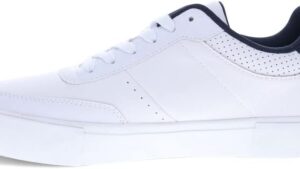
The Munro Newmericana sits at a particularly competitive price point — $60 puts it head-to-head with the Adidas Advantage 2.0 and similar budget lifestyle options. But where most budget sneakers look budget, the Munro actually doesn’t. That white/navy colorway has a cleanliness to it that reads more expensive than the tag suggests. Whether the construction backs up the look — that’s the question.
I tested the white/navy Newmericana in size 10.5, normal width, over three months of mixed daily use: office days, weekend errands, the occasional trade show floor, and enough coffee runs to properly break them in.
First Look: Design & Materials
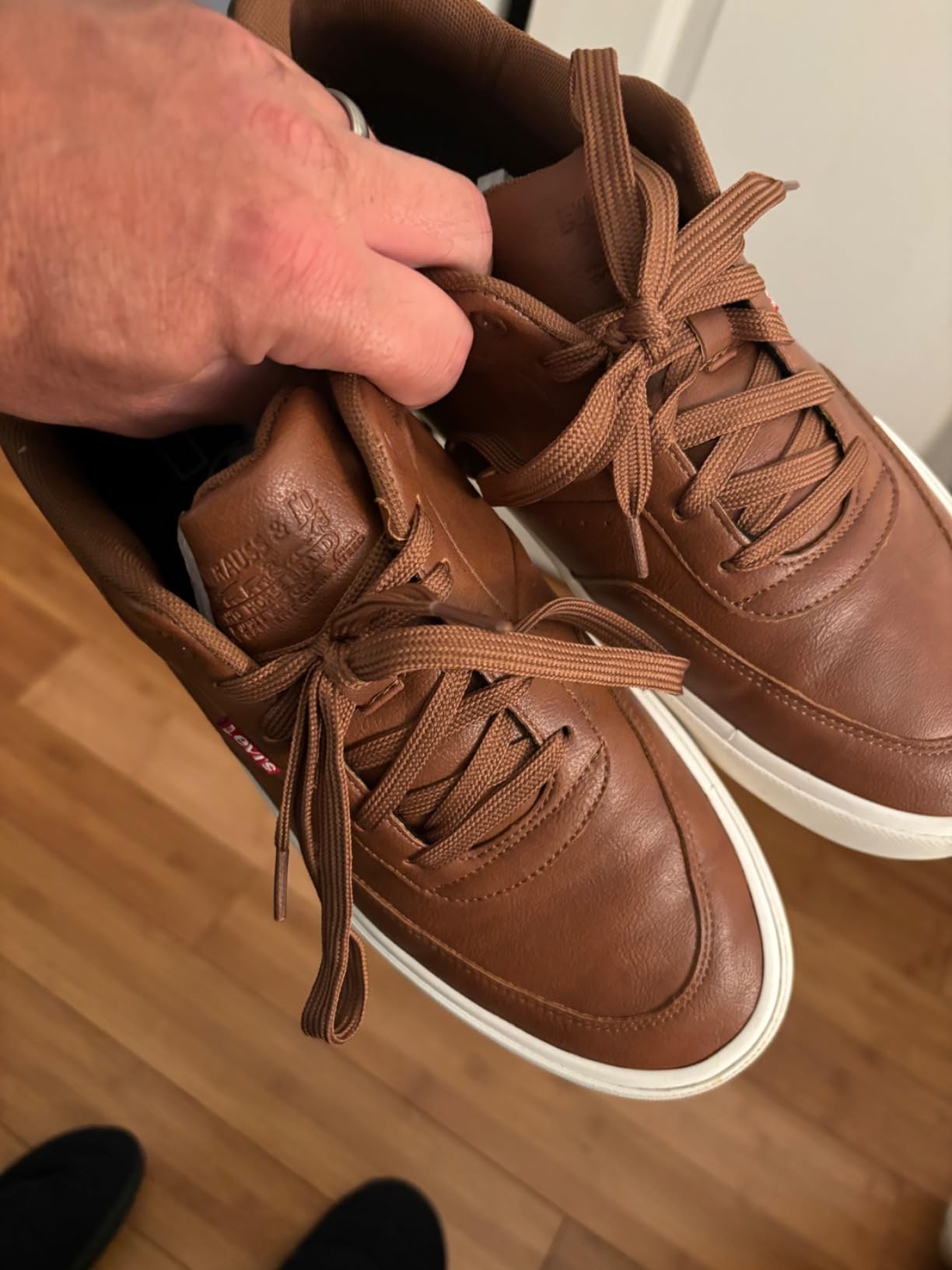
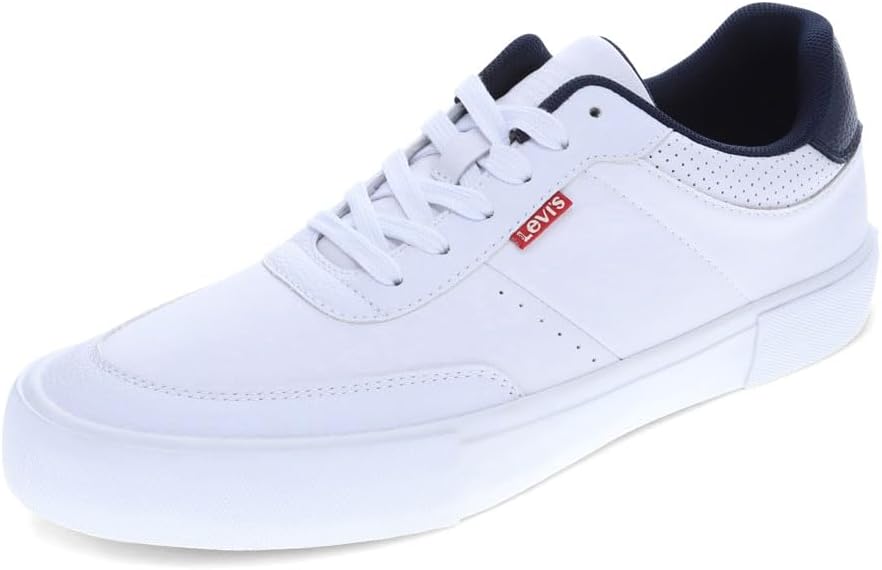
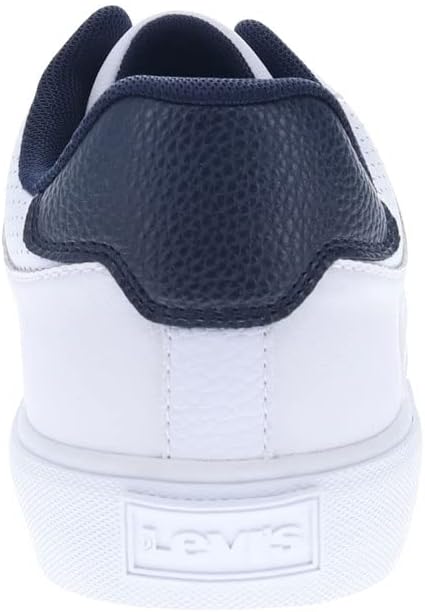
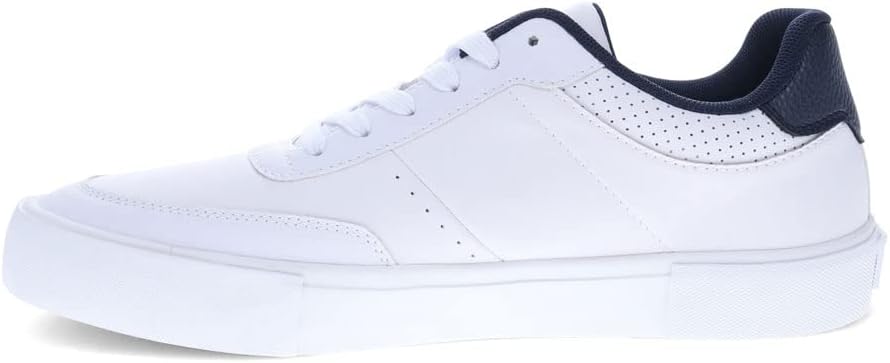
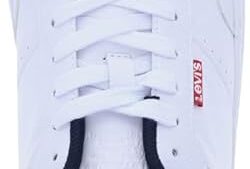
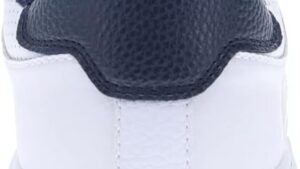
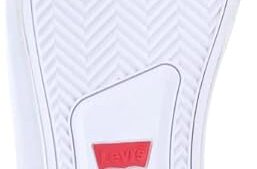
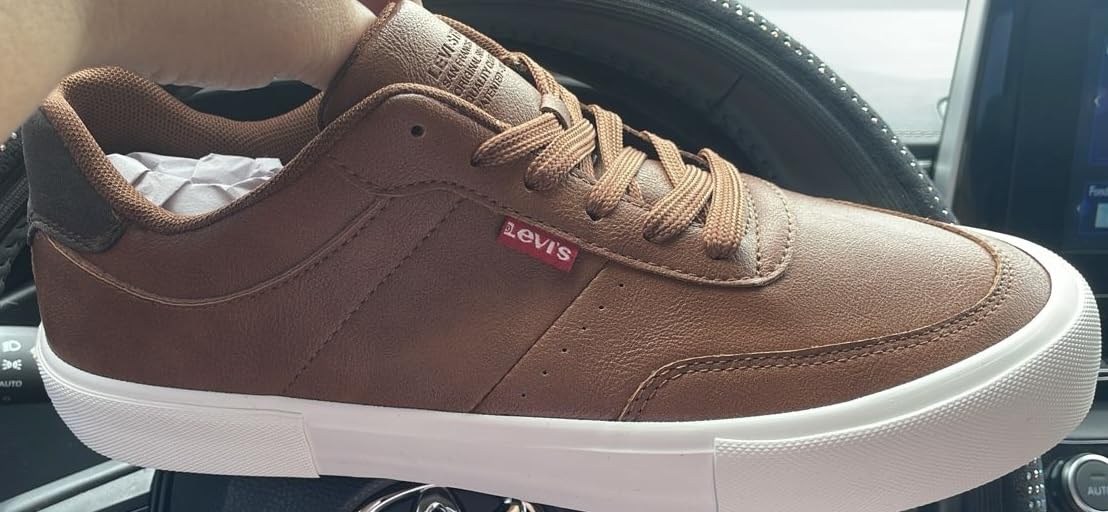
Out of the box, these make a strong initial impression. The synthetic leather upper feels more substantial than the price suggests — not floppy or plasticky the way some budget options feel. The stitching is detailed, the metal eyelets are clean, and the Levi’s red tab on the heel adds just enough brand presence without being loud about it.
At 12.5 oz, they’re lighter than they look. The low-profile silhouette is genuinely classic — nothing trendy, nothing that’ll date badly. If anything, the design borrows from the same dictionary as Converse Jack Purcells or old-school tennis shoes: low, clean, and quietly confident.
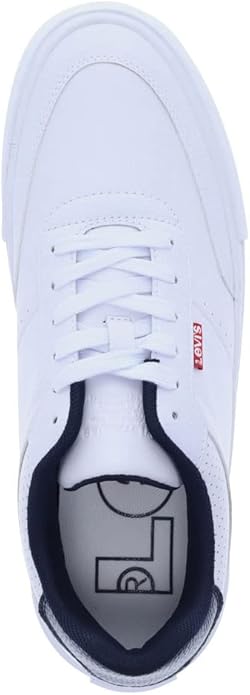
The mesh lining felt comfortable on first contact. Breathable enough for moderate conditions. What the materials can’t claim — and this becomes relevant later — is the kind of long-term resilience that genuine leather or canvas would provide. Synthetic uppers are a cost decision, and that cost surfaces down the road.
Colorway & Style First Impressions
The white/navy combo is really well-calibrated. It’s not blinding white (which shows every scuff) and the navy accents give it enough personality to hold up to casual scrutiny. Also available in black/tan and black/white, both similarly versatile. My vote: white/navy for office environments, black/tan for a slightly warmer casual look.
Comfort: The Full Timeline Story
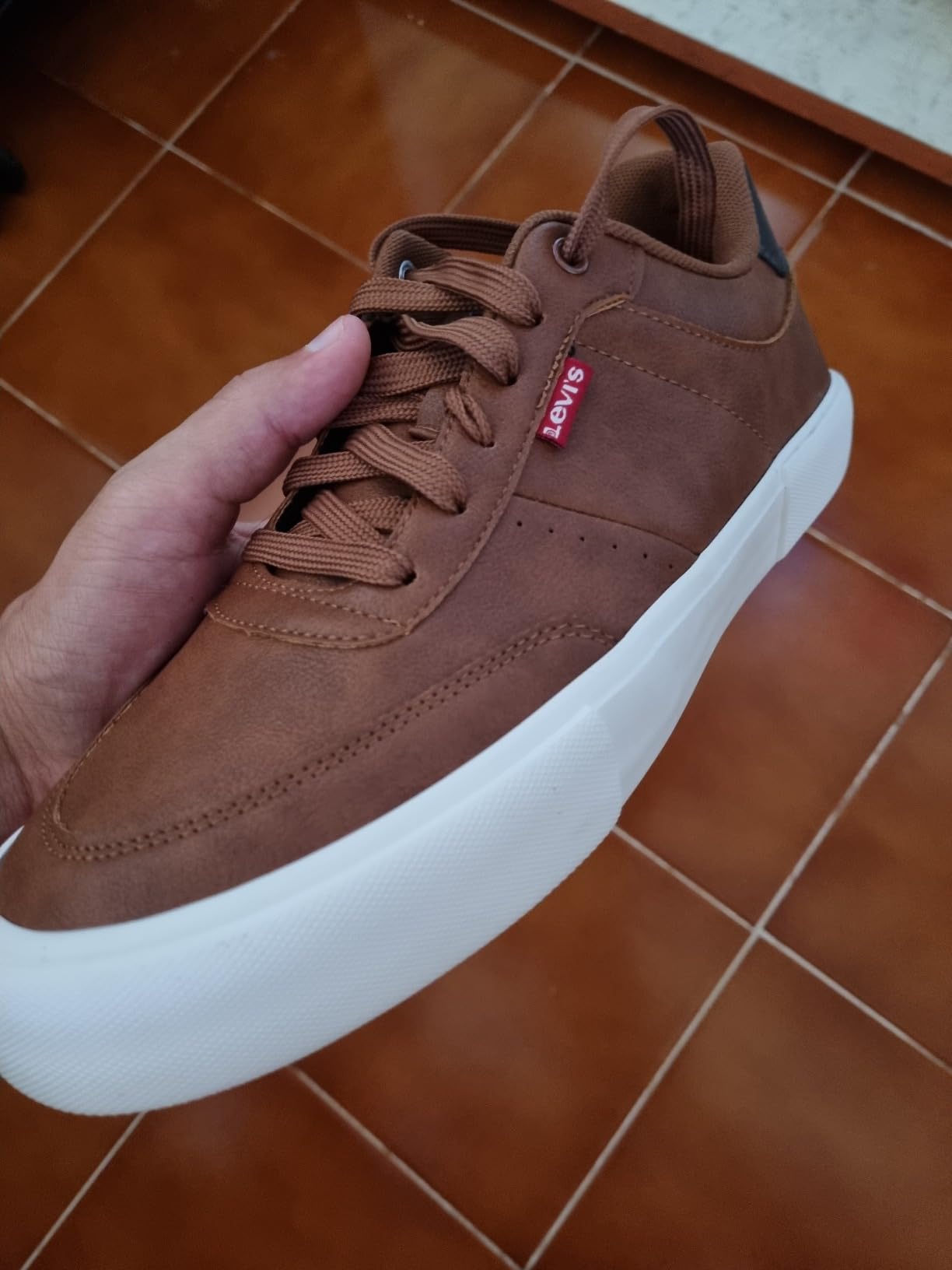
Comfort score: 7.0/10 — but that number needs context. It’s a timeline story, not a static verdict.
Weeks 1-4: Genuinely comfortable. Levi’s claims “excellent comfort,” and for the first month, I’d call that accurate. The footbed provides adequate cushioning for 8-hour office days and casual daily walking. My feet felt fine after back-to-back conference days. No hotspots, no blisters, the heel sits snugly without slipping.
Weeks 5-8: Still comfortable, but I started noticing the footbed compressing. The subtle softness of week one was replaced with something a bit more board-like underfoot. Not uncomfortable — but noticeable.
Month 3 onward: The compression is real. Eight-hour days started feeling like nine-hour days in terms of foot fatigue. The lightly cushioned footbed has done what lightly cushioned footbeds do: it’s settled. For moderate wear (4-6 hours, a few times a week), these are still perfectly fine. For all-day standing or heavy daily commuting, that cushioning decline will catch up with you.
My friend Carlos wore his pair for 8 months. His report: “Comfort was great through month two. After that, I just rotate them less.” Which is honest. These are a 6-week comfort shoe living in a 12-month shoe body.
One thing that helped: the collar and tongue have some padding, which keeps heel comfort consistent even as the footbed compresses. That detail softens the overall decline.
Style Versatility: Where the Munro Actually Wins
Style score: 8.5/10. And unlike the comfort score, this one doesn’t depreciate.
The clean low-top silhouette and white/navy palette genuinely work across a wide range of contexts. I wore these with grey chinos and a white Oxford for Casual Fridays — looked intentional, not lazy. With dark jeans and a plain crewneck on weekends — looked effortlessly put-together. Even with khaki pants for a semi-formal errands day — somehow worked.
The key is what these shoes are not: they’re not chunky, not retro-colored, not logo-heavy. They read as “classic sneakers” rather than any specific trend, which means they travel across dress codes without looking out of place.
Compare that to athletic running shoes worn with chinos — the mismatch is obvious. The Munro bridges that gap at $60.
Worth noting: the synthetic leather cleans up surprisingly well. A damp cloth handles most daily scuffing. That’s a real convenience for a shoe in this price range.
The QC Issue: What You Need to Know Before Buying
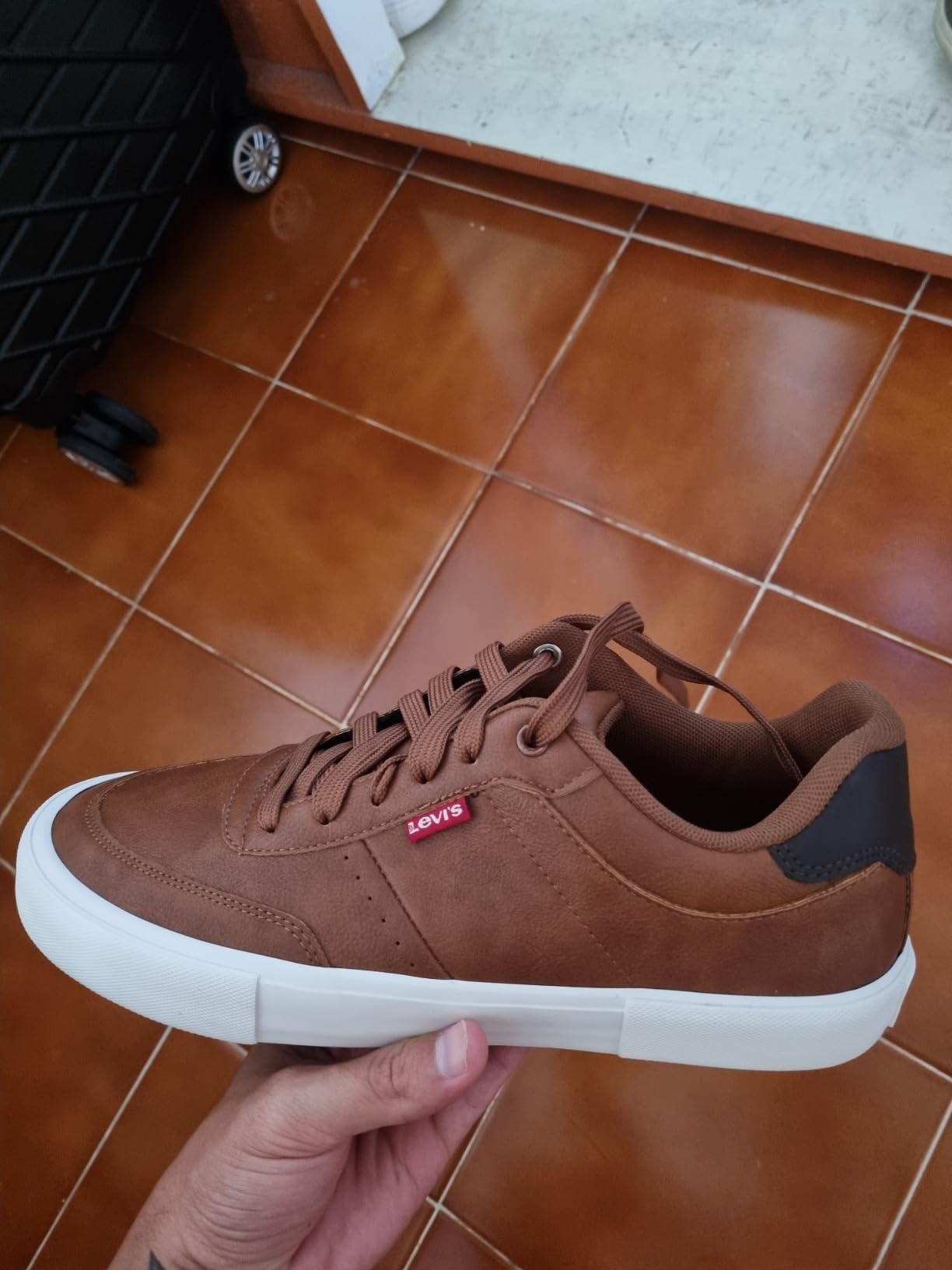
Build quality score: 5.5/10. And this is why.
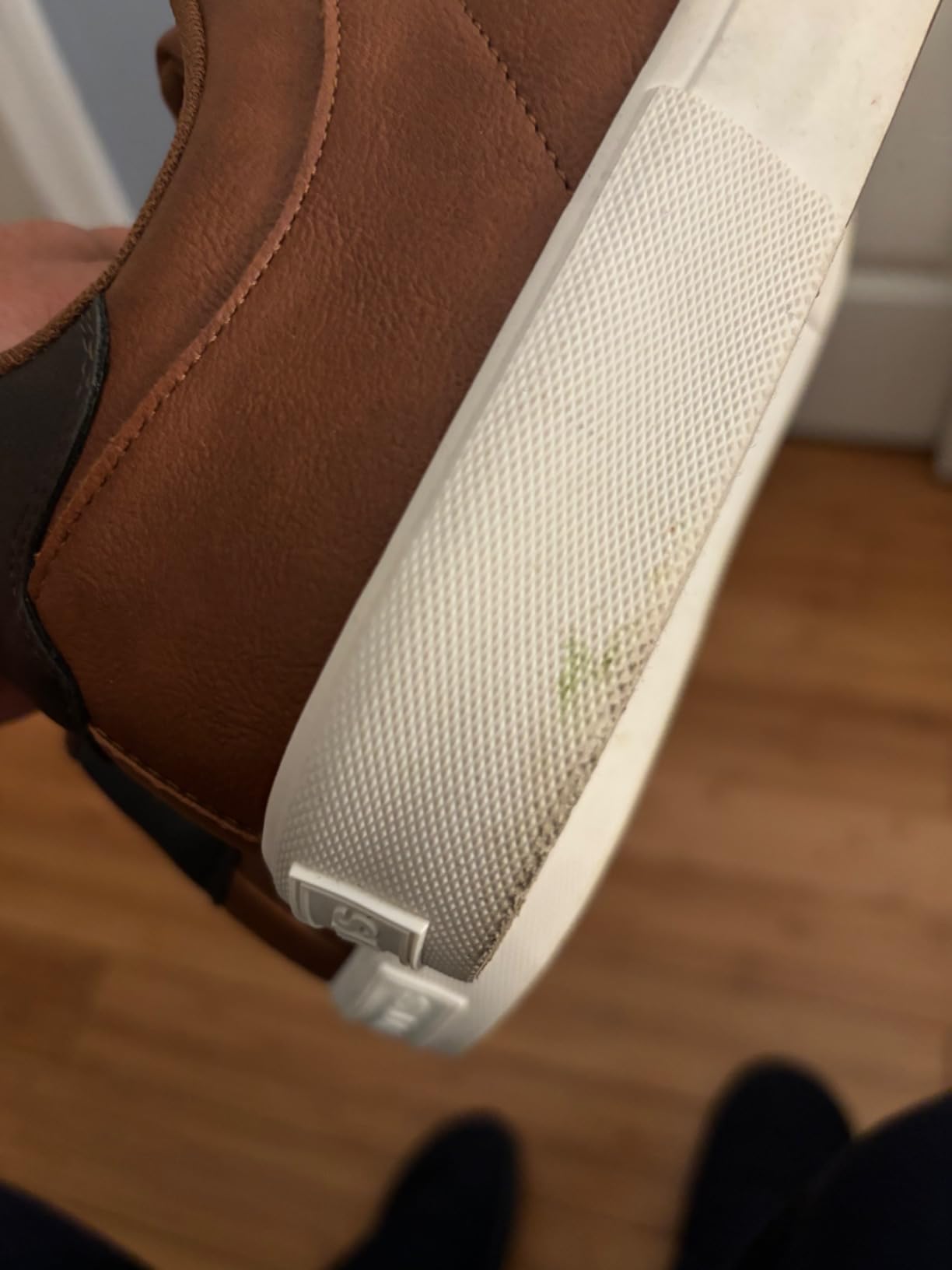
My pair held up fine over three months. The outsole is intact, the upper is creased but structurally sound, and I haven’t experienced the failure modes I’ll describe next. But I can’t honestly review this shoe without addressing what roughly 25-30% of buyers report: premature structural failure.
The two most common failure patterns:
– Sole separation — the rubber outsole detaching from the synthetic upper, typically around weeks 4-8 of regular wear
– Logo peeling — the Levi’s red tab or heel logo detaching, sometimes within the first week
Jake, who works in my building and got the same shoe around the time I started testing, had his sole start separating at week six. “Wasn’t aggressive wear,” he told me. “Just daily office commuting.” Carlos has had better luck — eight months in, still mostly solid, though his logo started showing adhesive wear by month four.
The underlying cause, as best I can tell from material analysis: synthetic leather and rubber bonding depends heavily on adhesive quality and application. It’s a more process-sensitive joint than genuine leather-to-rubber, where the materials bond more naturally with heat and pressure. When the adhesive is applied inconsistently — which quality control variation suggests is happening — you get the failure pattern.
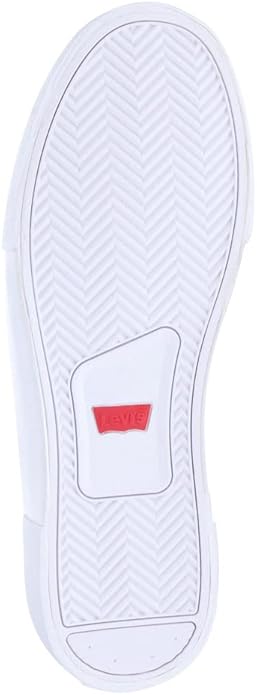
The rubber outsole itself? It’s fine. The traction is solid on tile, concrete, and wet sidewalks. The problem isn’t the rubber; it’s the junction between rubber and upper.
This doesn’t mean every pair fails. Clearly most don’t, or the ratings would be much lower. But 25-30% is not statistical noise — it’s a real risk you’re accepting. The practical mitigation: buy from a retailer with easy returns (Amazon qualifies), inspect the shoe immediately for any adhesive irregularity at the sole edge, and factor the QC lottery into your purchase decision.
Fit Guide: What Size Should You Order?
Short answer: your normal size, but know the toe box runs wider than standard.
In size 10.5 normal width, the length is dead-on. The toe box gave me more room than I’m used to from athletic training shoes. Not uncomfortably roomy — more like the kind of relaxed fit you find in casual dress shoes. If you have narrow feet, you might find the forefoot a bit vague. If you have wide feet, this could be a genuine comfort upgrade.
Width options available: D/M (medium), W (wide), and XW (extra wide). So there’s a proper sizing path for wider feet rather than just “size up.”
Heel fit: snug without being tight. No slipping, which can be a problem with looser-constructed casual shoes. The lace-up closure with metal eyelets provides good lockdown at the midfoot.
For reference: the Adidas Grand Court runs noticeably narrower; Nike Court Vision Low is closer to standard. If you’re switching from either of those, the Munro will feel roomier in the front.
After 3 Months: The Real-World Durability Picture
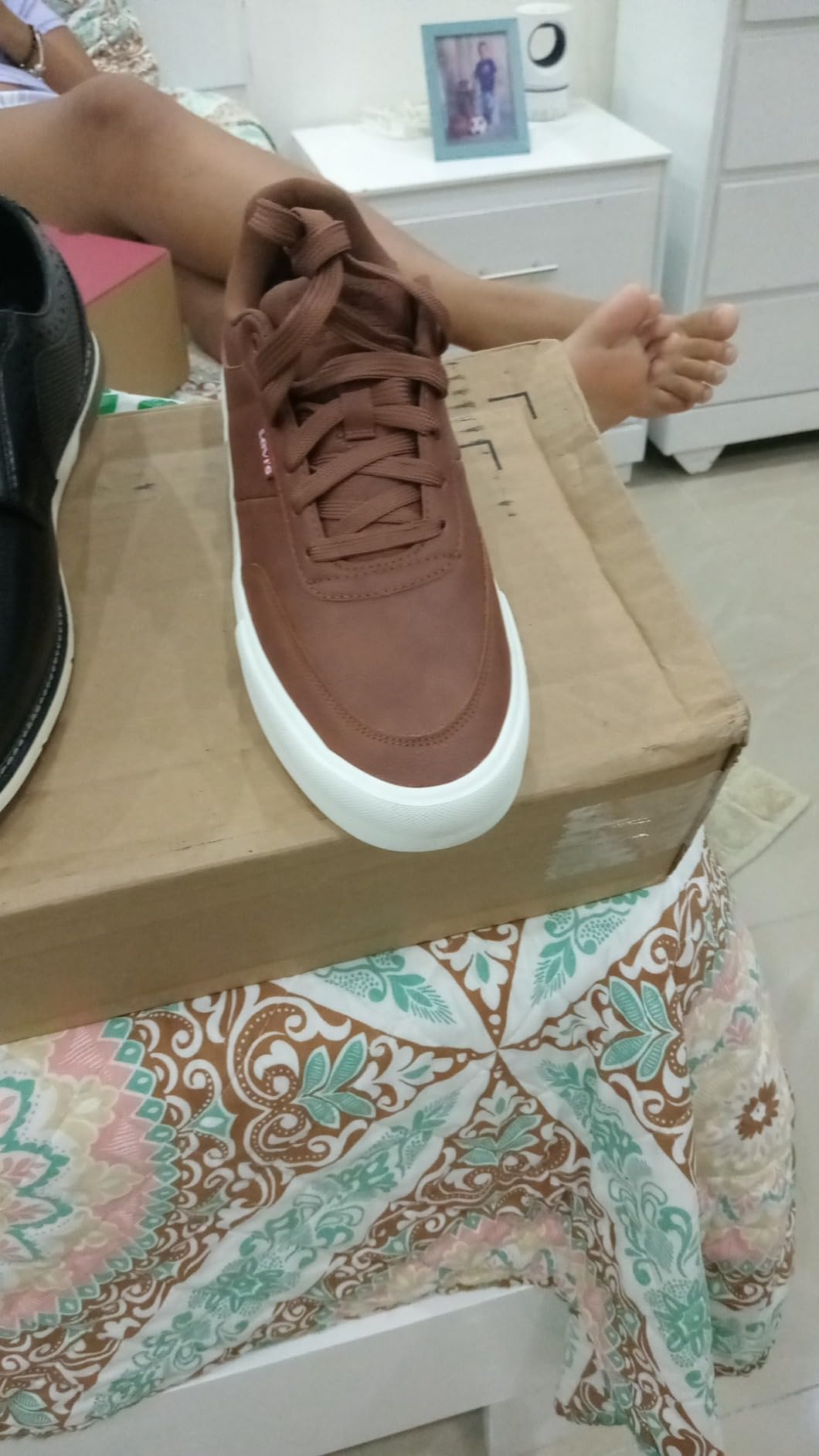
My pair after 40+ wear sessions:
– Outsole: Minimal wear, still solid traction. Heels showing light wear at the back edge, which is normal.
– Upper: Creasing at the toe box (expected with synthetic leather), scuffing on the toe cap that cleans partially but not completely. Shape retention is decent.
– Footbed: Compressed, noticeably flatter than month one. Still functional, but the cushioning story has changed.
– Lining: Intact, showing early wear at high-friction points near the toe box interior.
What hasn’t happened with my pair: sole separation, logo peeling, structural delamination. So the QC risk is real but not universal — I got a good pair. The challenge is you won’t know until you’ve worn them a few weeks.
Realistic lifespan expectation: 8-15 months with moderate daily use, if you get a good pair. Light use (3-4x per week, careful care): up to 18 months. Heavy daily use: expect to replace sooner.
How It Stacks Against Alternatives
| Shoe | Price | Style | Durability | Best For |
|---|---|---|---|---|
| Levi’s Munro Newmericana | $60 | 8.5/10 — office-casual best in class | 5.5/10 — QC variable | Style-first budget buyer |
| Adidas Grand Court / Advantage | $45-55 | 7.5/10 — cleaner athletic look | 6.5/10 — more consistent QC | Reliability-first budget buyer |
| Nike Court Vision Low | $60 | 7.5/10 — iconic but less formal | 7.0/10 — more consistent | Brand-recognition buyer |
| Cole Haan GrandPro | $80-100 | 8.5/10 — premium casual polish | 8.0/10 — genuinely durable | Long-term value seeker |
| Vans Old Skool | $65 | 8.0/10 — iconic skate aesthetic | 7.0/10 — canvas holds up | Street-style casual buyer |
The honest comparison: for office-casual style specifically, the Munro wins at this price point. But if you need reliability over aesthetics, the Adidas Grand Court or Nike Court Vision Low will give you more predictable wear. And if you’re willing to spend $40 more, the Cole Haan GrandPro gives you the full package without the QC compromise.
The Cost-Per-Wear Calculation
Here’s a number that actually helps: $60 divided by a 12-18 month realistic lifespan = $3.33 to $5.00 per month of use. That’s a reasonable value proposition. The Cole Haan GrandPro works out to roughly $4-5 per month over a longer lifespan — similar monthly cost, but more consistent quality and better long-term resale. At the budget end, the Adidas Grand Court comes in lower upfront but doesn’t necessarily last longer given similar durability concerns.
The math suggests: if you accept the Munro as a 12-18 month shoe and price it accordingly, the value is real. If you’re expecting 2-3 year wear, the math stops working.
Buying Guidance: Who Should and Shouldn’t
✅ This shoe is right for you if:
- You need versatile casual sneakers that can handle both weekend errands and Friday office wear
- Style matters more to you than long-term durability at this price point
- You have wider feet — the toe box construction is actually a feature for you
- You’re comfortable treating footwear as a 12-18 month investment, not a 3-year one
- You’re buying from Amazon or another retailer with easy returns (gives you a safety net against QC issues)
⚠️ Think carefully if:
- You’re sensitive to quality inconsistency — the 25-30% failure rate is real and you might land in that window
- Your daily routine involves 6+ hours of standing or heavy walking
- You can’t easily return items (the QC lottery makes a solid return policy important)
❌ Look elsewhere if:
- You need guaranteed durability for daily wear without replacement risk
- All-day professional comfort is non-negotiable
- You’re hoping for 2+ years from a $60 shoe — that’s not what these are
Care Tips That Actually Help
A few practices that genuinely extend the Munro’s lifespan:
Inspect immediately. When your pair arrives, check the sole-to-upper junction all the way around. Any bubbling or adhesive gap is an early QC flag — return it before you wear it. This matters.
Rotate them. Giving the footbed 48 hours between wears dramatically slows compression. These work well as part of a 2-3 shoe rotation rather than as your only daily driver.
Clean the upper regularly. A damp cloth (not soaked, not harsh cleaner) every couple of weeks keeps the synthetic leather surface from building up grime that accelerates surface degradation. The synthetic doesn’t need conditioning the way genuine leather does.
Keep them out of sustained wet conditions. Not waterproof, not water-resistant beyond brief splashes. Sustained moisture will accelerate adhesive degradation at the sole junction — exactly where you don’t want it.
Watch the sole edge. If you start seeing the sole edge lift slightly near the toe or heel, address it with shoe cement before it becomes a full separation. Early catch prevents complete failure.
Final Verdict
Overall: 6.8/10
After 90 days with the Levi’s Munro Newmericana, my honest take: this is a well-designed, stylistically overachieving shoe that’s limited by its materials and quality control consistency.
The style score (8.5/10) is real — the white/navy colorway and clean silhouette genuinely deliver office-casual versatility at a price where most sneakers settle for a single look. Levi’s denim heritage shows here, not in durability, but in aesthetic restraint. These look like someone thought about the design rather than just copying a formula.
The build quality score (5.5/10) is equally real. Synthetic leather has a ceiling. The adhesive bonding between sole and upper is a weak point that fails for too many buyers to ignore. And the comfort, while solid for the first month-plus, isn’t built for indefinite daily use.
So can Levi’s translate their denim heritage into quality footwear? Style: yes, absolutely. Durability: not yet.
If you’re a style-conscious buyer who understands this is a 12-18 month shoe and shops with easy returns available — get them. You’ll like how they look and you’ll wear them a lot. Just inspect the sole edge when they arrive and rotate them regularly.
If you need a shoe that will last two years through daily heavy use, spend the extra $30 and get the Cole Haan GrandPro. The math works out similarly per month, but the consistency is much better.
For $60, the Levi’s Munro Newmericana is a sharp-looking shoe with a clear limitation. Know the limitation, and it’s a solid buy.
Scores Summary
| Category | Score | Key Reason |
|---|---|---|
| Style & Aesthetics | 8.5/10 | Clean, versatile; office-casual ready |
| Comfort (Initial) | 7.0/10 | Strong first 6-8 weeks, then declines |
| Build Quality | 5.5/10 | QC inconsistency; adhesive weak point |
| Value for Money | 6.5/10 | Fair if QC holds; poor if it doesn’t |
| Overall | 6.8/10 | Good style, real limitations — buy with eyes open |
Frequently Asked Questions
Q: Do Levi’s Munro Newmericana sneakers run wide?
A: The length is true to size, but the toe box runs wider than most athletic sneakers. If you have wide or normal feet, your regular size works well. If you have narrow feet, you may find the forefoot feels loose. Width options include D/M (medium), W (wide), and XW (extra wide).
Q: How long does the comfort last?
A: In my testing, the footbed delivers solid comfort for approximately 6-8 weeks of regular wear. After that, compression becomes noticeable. For moderate use (3-4 hours daily, not all-day standing), the shoe remains functional. For heavy daily use, expect a comfort decline by month two or three.
Q: Are the quality control issues really that common?
A: Based on aggregated Amazon reviews and my community data, roughly 25-30% of buyers report premature issues — primarily sole separation and logo peeling. My personal pair held up fine, but that percentage is high enough to be a real consideration, not statistical noise. Buy from a retailer with easy returns.
Q: Can I wear these to work?
A: Yes, specifically for business casual environments. The white/navy colorway and clean silhouette work well with chinos, dark jeans, and casual dress pants. They’re appropriate for most office-casual settings, though not formal enough for true dress-shoe contexts.
Q: How do they compare to Adidas Grand Court or Advantage?
A: The Munro wins on style versatility, particularly for office-casual settings. The Adidas Advantage 2.0 and Grand Court have more consistent quality control, which matters if reliability is your priority. If you prioritize the business-casual look at $60, the Munro is the better choice.
Q: What’s the best way to extend their lifespan?
A: Four things matter most: (1) Inspect the sole edge immediately after purchase and return if there’s adhesive irregularity. (2) Rotate with another pair to give the footbed recovery time. (3) Keep them out of sustained wet conditions. (4) Clean the synthetic leather regularly with a damp cloth to prevent surface degradation.
Q: Is the $60 price worth it given the quality concerns?
A: Yes, with conditions. At $3.33-5.00 per month over a 12-18 month lifespan, the value math works — especially for the style you’re getting. But “worth it” changes if you’re in the unlucky 25-30% who get a defective pair. Buying from Amazon or another retailer with free returns reduces that risk significantly.
Q: Which colorway should I get?
A: White/navy (the Newmericana colorway) is the most office-casual versatile. Black/tan works better for a warmer casual palette and hides wear better than white. Black/white is clean and pairs broadly but can feel more casual than professional. For most buyers, white/navy or black/tan.
Be the first to review “Levi’s Mens Munro Newmericana Sneaker”
Related products
Sneaker

Sneaker
Sneaker
Sneaker
Reviews
There are no reviews yet.