
Three months ago, I was standing in my garage staring at $347 worth of hiking boots that had all let me down within a year. At that point, I almost skipped the SHULOOK entirely — another budget brand promising waterproof performance and lightweight comfort. But the sub-$60 price and some unusually specific Amazon photos nudged me into giving them a real test. Here’s what 156 miles across 47 sessions actually revealed.
Quick Specs at a Glance
| Spec | Detail |
|---|---|
| Price | ~$55 |
| Weight | 1.25 lbs (men’s size 10) |
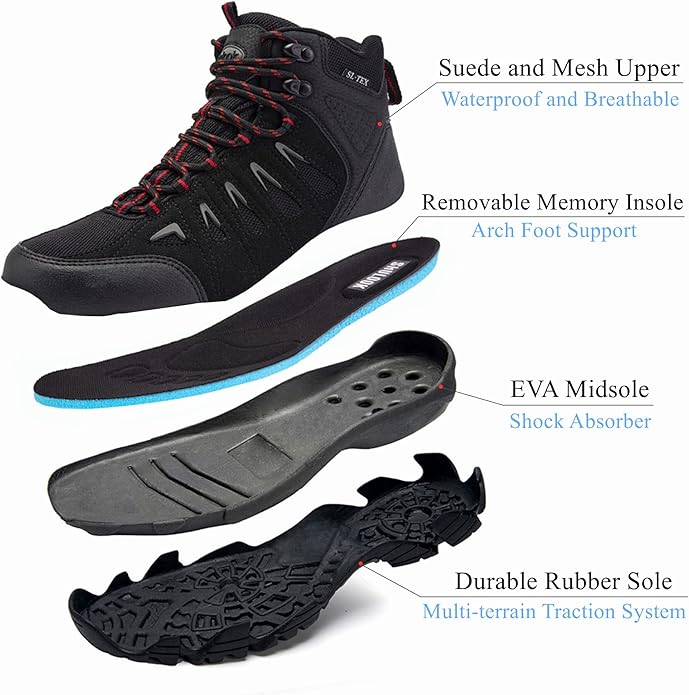
| Upper | Synthetic suede + SL-TEX membrane |
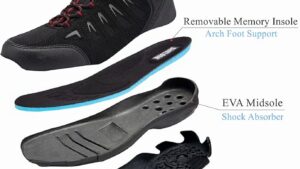
| Midsole | EVA foam |
| Outsole | Multi-directional traction rubber, 4mm lugs |
| Type | Mid-top ankle boot |
| Best For | Day hikes, light outdoor work, casual trails |
| Not Ideal For | Sustained wet conditions, serious backpacking |
| Overall Rating | 6.8/10 |
First Impressions: Unboxing the SHULOOK
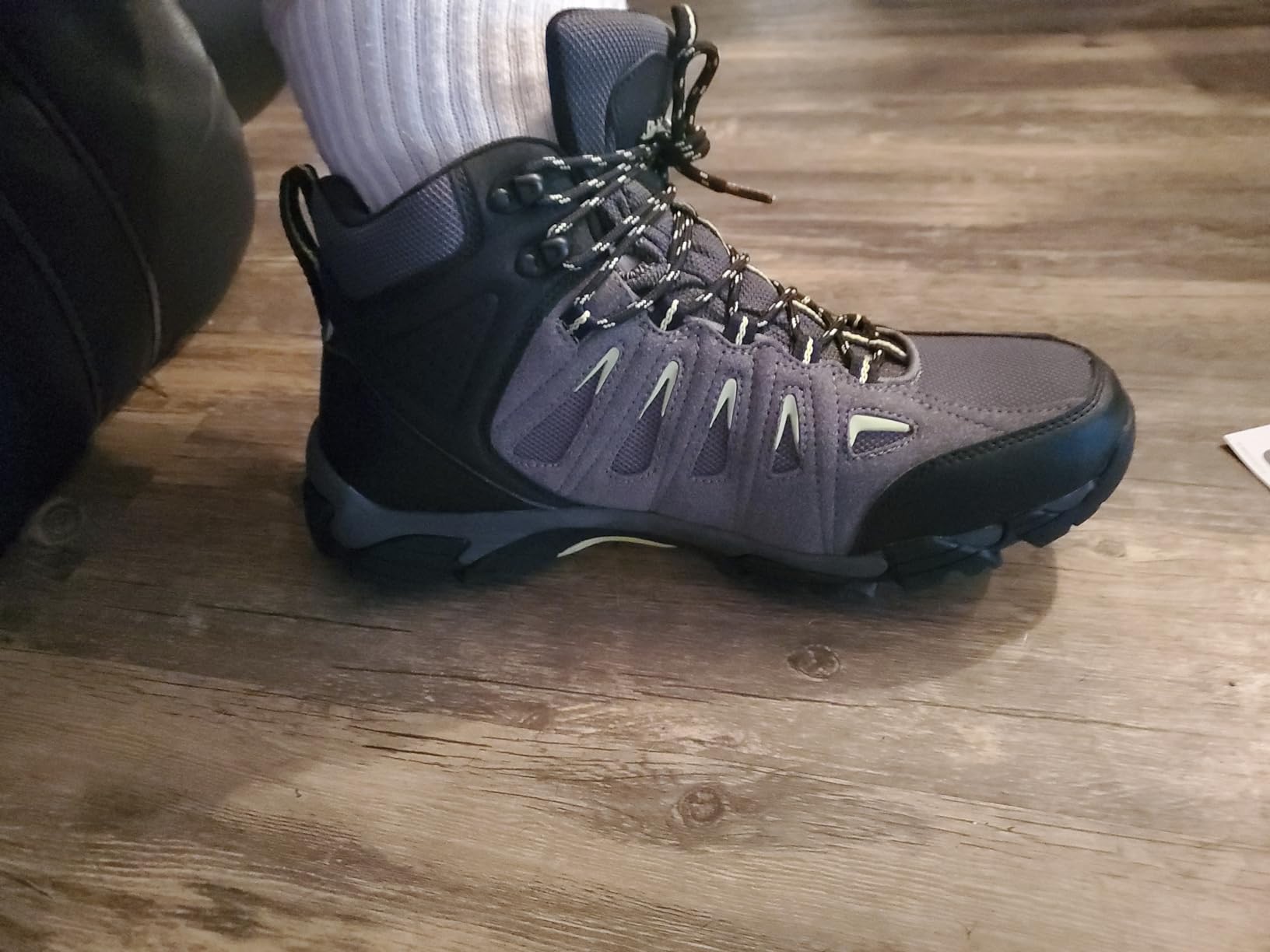
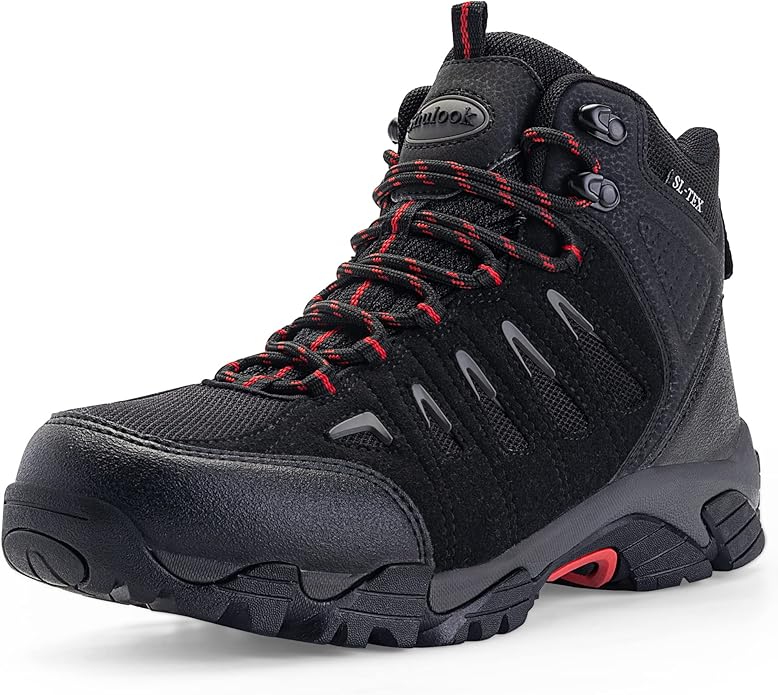
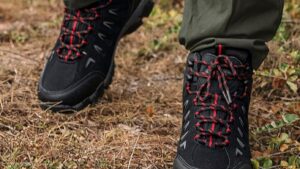
Opening the box, my first thought was: these don’t look like $55 boots. The black/red colorway is clean, the synthetic suede feels more substantial than you’d expect, and the stitching is even throughout. Two things stood out immediately — the extra set of laces included in the box (a smart touch that tells you SHULOOK knows their boots have some durability concerns) and the lace hooks at the top.
Those hooks. They look like solid metal. Chromed, sturdy, the kind you’d find on a boot costing twice as much. Except they’re not metal — they’re plastic with a metal finish. I found this out later, after they failed, and I wasn’t alone. This is the boot’s single most frustrating design choice, and I’m putting it upfront because it’ll matter to you.
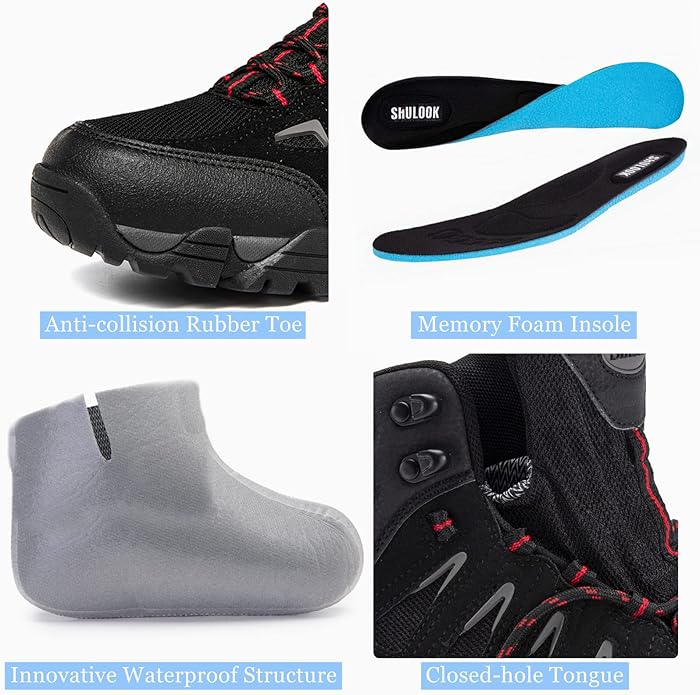
Otherwise, the construction presents well. The ankle collar is padded and sits comfortably without any pressure points, and the closed-cell tongue design keeps debris out effectively. At 175 lbs wearing a size 10 with normal-width feet, the fit was right on target — adequate toe room, secure through the midfoot, no heel slippage. Wide-foot buyers should go half a size up.
Comfort, Fit, and the Insole Story
The ankle support is where these boots earn their strongest marks. Locking your foot down without feeling constrictive is a balance a lot of hiking boots in this price range get wrong — SHULOOK gets it right. I put 156 miles on these across rocky Shenandoah trails, loose gravel near riverbeds, and 8-10 hour shifts doing construction work, and I never once rolled an ankle. That’s a real accomplishment at any price.
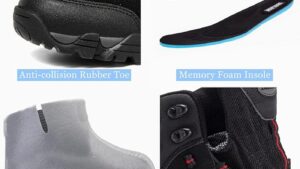
The EVA midsole delivers adequate cushioning for the first month and a half or so. Not plush, not revolutionary — adequate. The memory foam insole helps that initial impression along considerably, which is why the compression timeline stings. After about six weeks, I started noticing the insole packing down. By week eight, I’d swapped it out for an aftermarket option, and the boot felt significantly better again. If you buy these, build that insole upgrade into the equation.
Break-in time is minimal. I wore these on a full construction shift within the first week with zero discomfort — that’s not nothing for a hiking boot.
Build Quality: What Holds, What Doesn’t
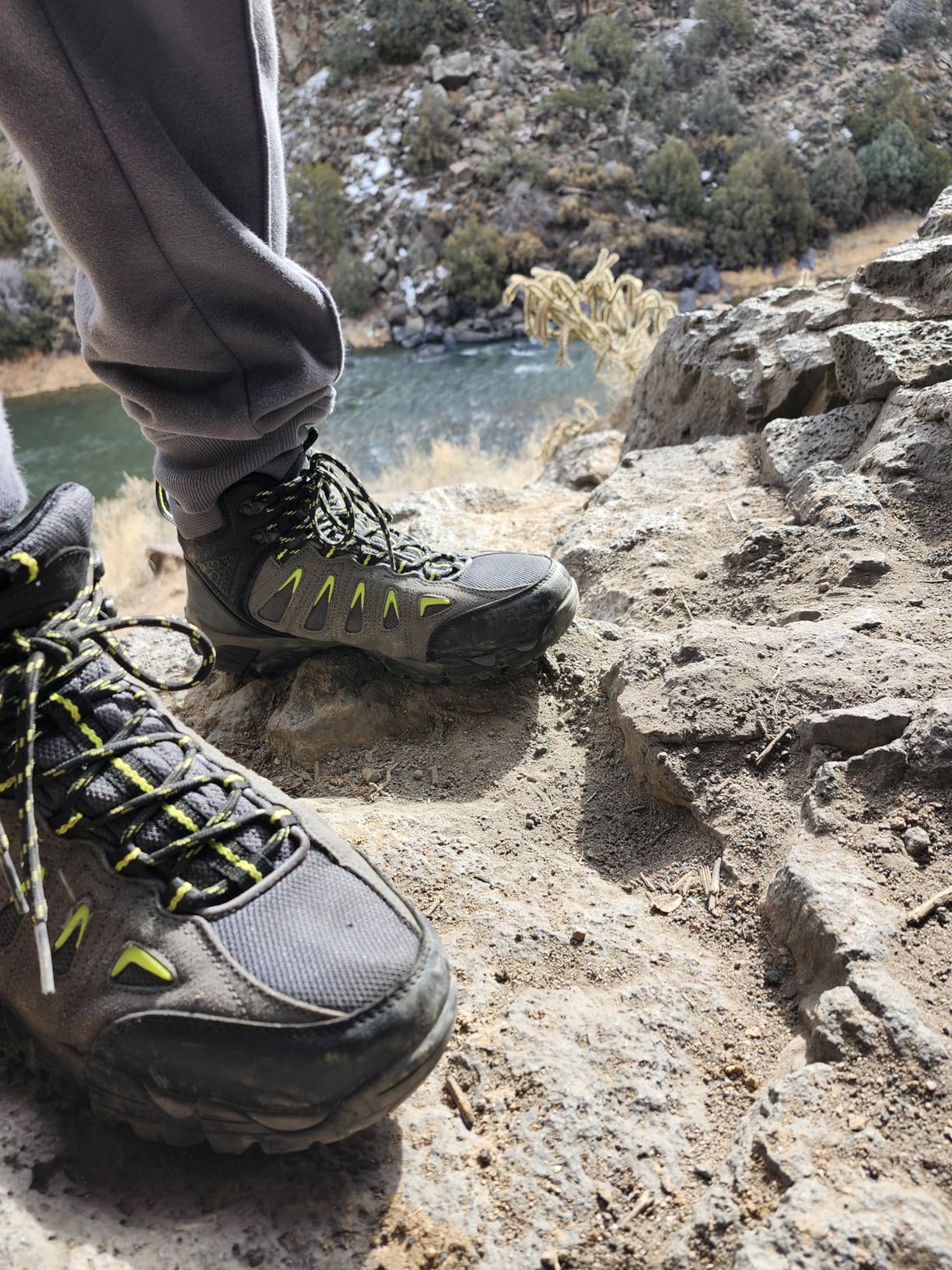
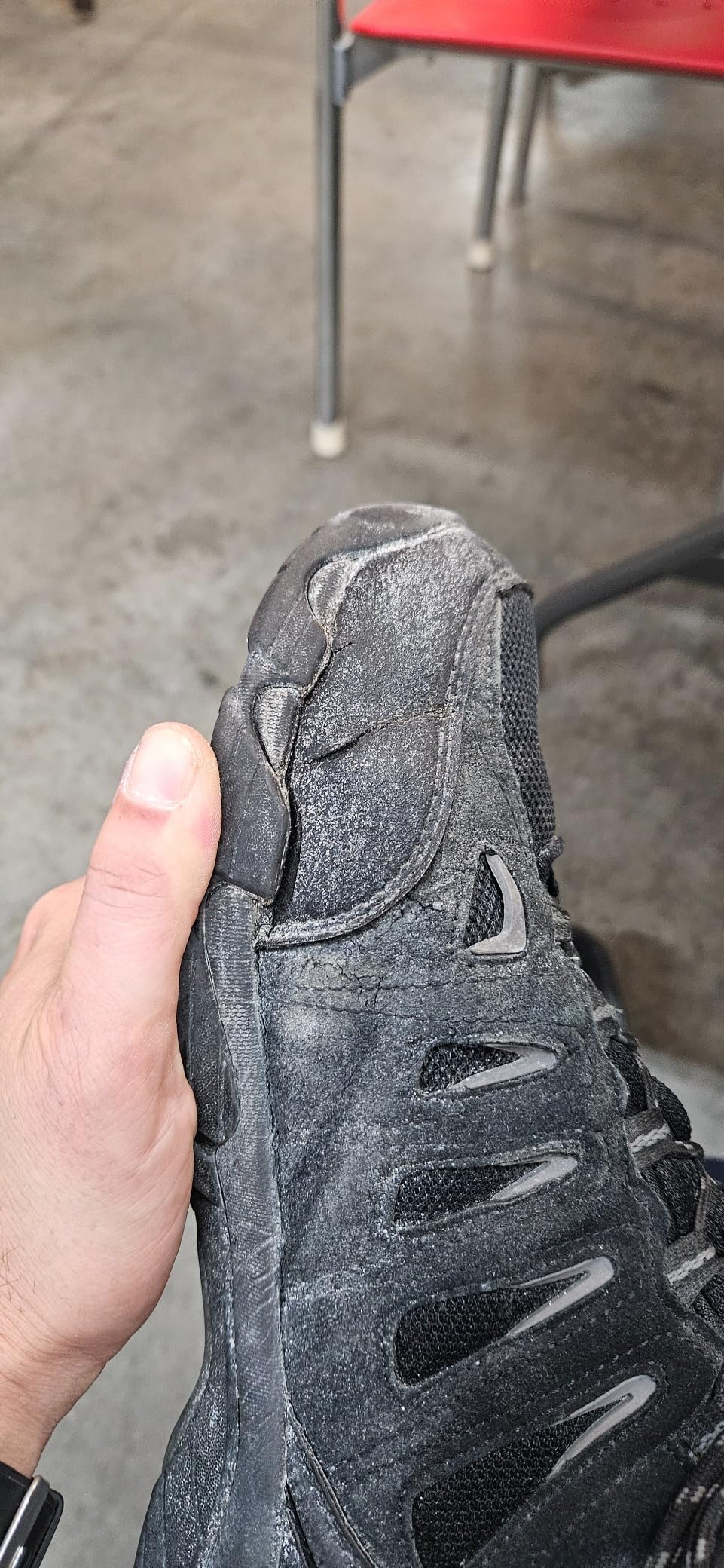
The upper construction is genuinely solid for the price. The synthetic suede holds up to trail abuse — muddy roots, sharp rocks, gravel — without showing dramatic wear. I noticed some minor glue residue at the sole junction when I first got them, nothing structural, just a cosmetic tell that quality control isn’t at Merrell-level.
Then there are those lace hooks. They look metal. They are not metal. Two hooks at the ankle of each boot, chrome-finished plastic that carries the weight and tension of your laces every time you lace up. Multiple reviewers have reported failures. I experienced it myself during a heavy construction day, not on a trail. After that, the extra set of included laces made a lot more sense.
The overall boot structure gives you probably 1-2 years of casual weekend use, or 6-12 months of heavier daily wear — assuming you’re not relying on the lace hooks as a primary closure. That’s a realistic lifespan for a $55 boot if you manage expectations correctly.
The Waterproofing Reality Check — What SL-TEX Actually Does
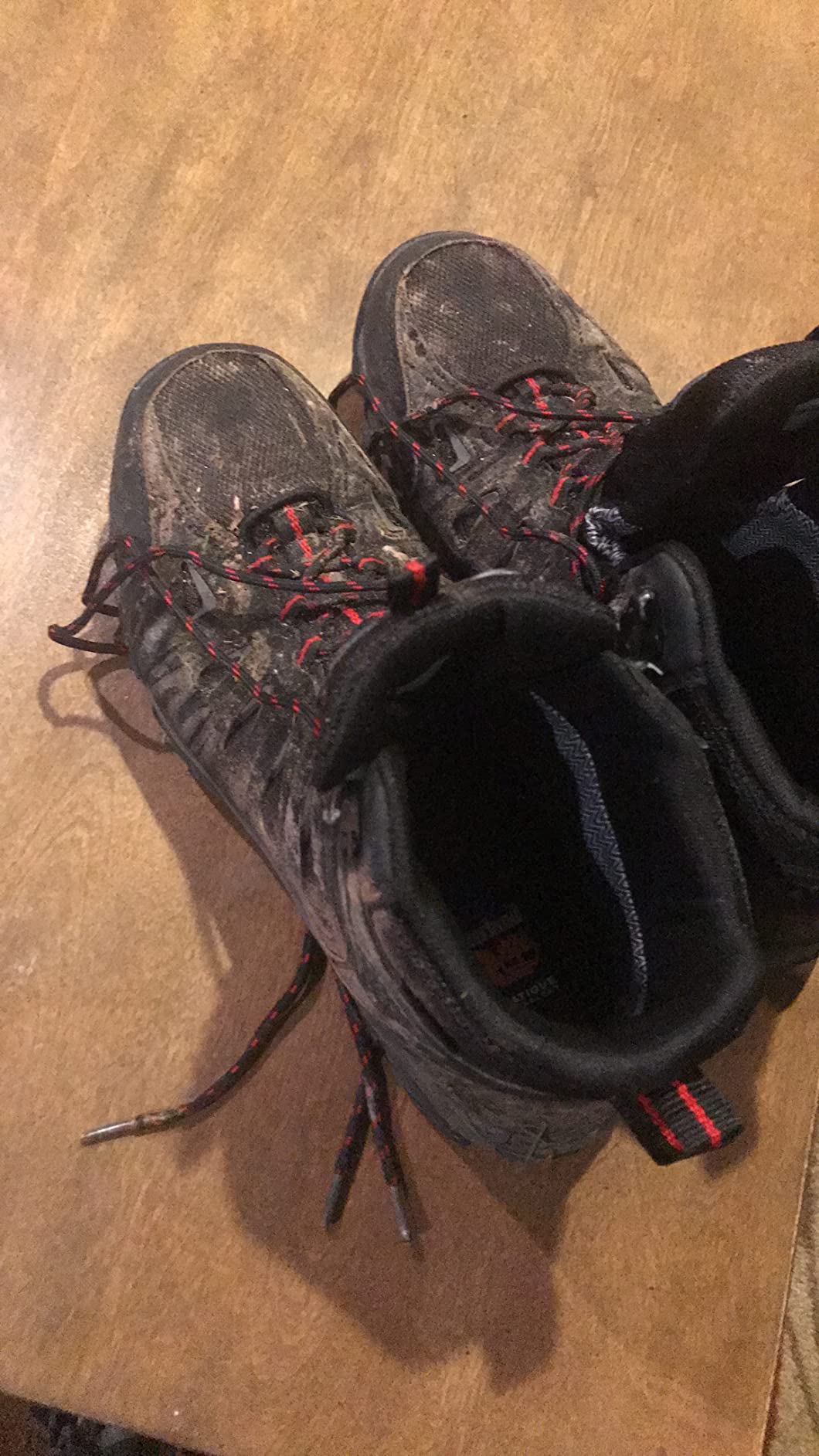
This is the conversation that needs to happen before you decide whether to buy these boots.
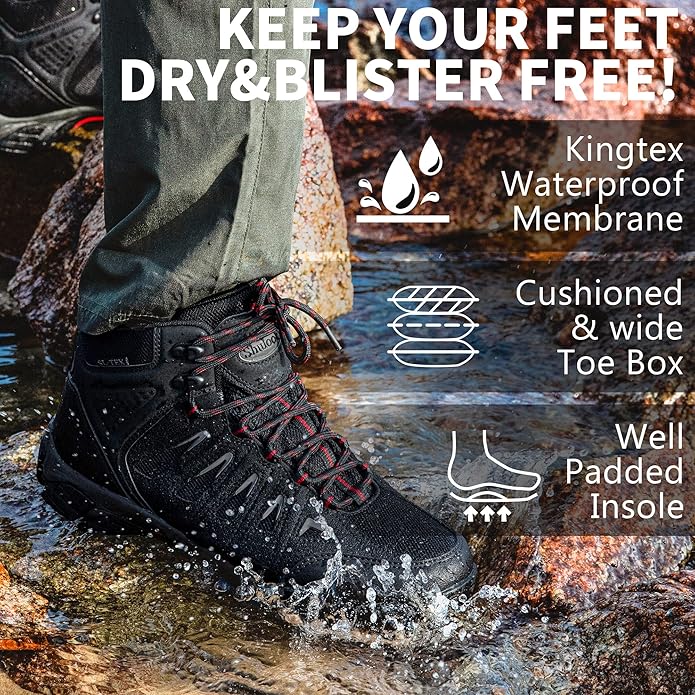
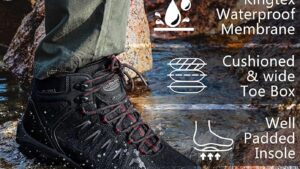
SHULOOK markets the SL-TEX membrane as waterproof technology. The technical description sounds credible: the membrane’s pores are 1/20,000th the size of a liquid water droplet, which theoretically blocks water while allowing vapor to escape. That’s the same general principle behind Gore-Tex and other genuine waterproof membranes.
Here’s what the theory misses: the membrane is only as good as the entire system. Seams, eyelets, the tongue junction — each is a potential entry point. And in practice, the SHULOOK system doesn’t hold.
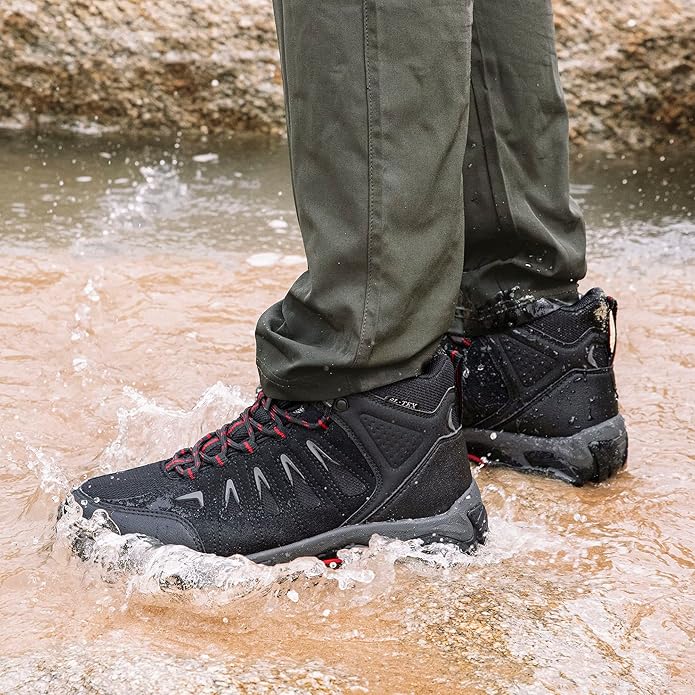
During a rainy afternoon hike — no stream crossings, no puddles, just ambient rain — my socks were noticeably damp at the 45-minute mark. That’s not a one-off. Multiple buyers on Amazon report water infiltration anywhere from 30 minutes to a couple of hours in wet conditions. The Amazon listing itself qualifies this quietly, describing the boot as keeping your feet dry “in light rain” — acknowledging the performance ceiling without calling it out directly.
What SL-TEX actually delivers:
- Morning dew, light drizzle — handles it fine
- Puddle splashes, brief wet patches — probably okay
- Sustained rain, stream crossings, extended wet terrain — fails
The breathability, oddly, is genuinely good. Better than a lot of boots that prioritize waterproofing. But there’s a reason for that — the same permeable structure that lets vapor out eventually lets water in under sustained pressure.
If you hike the Pacific Northwest, wade through morning-wet meadows regularly, or count on staying dry in monsoon conditions, these aren’t your boots. If you mostly hike in dry weather with occasional drizzle, and you know the limits, the performance gap becomes a lot less critical.
Trail Performance: Traction Across Terrain
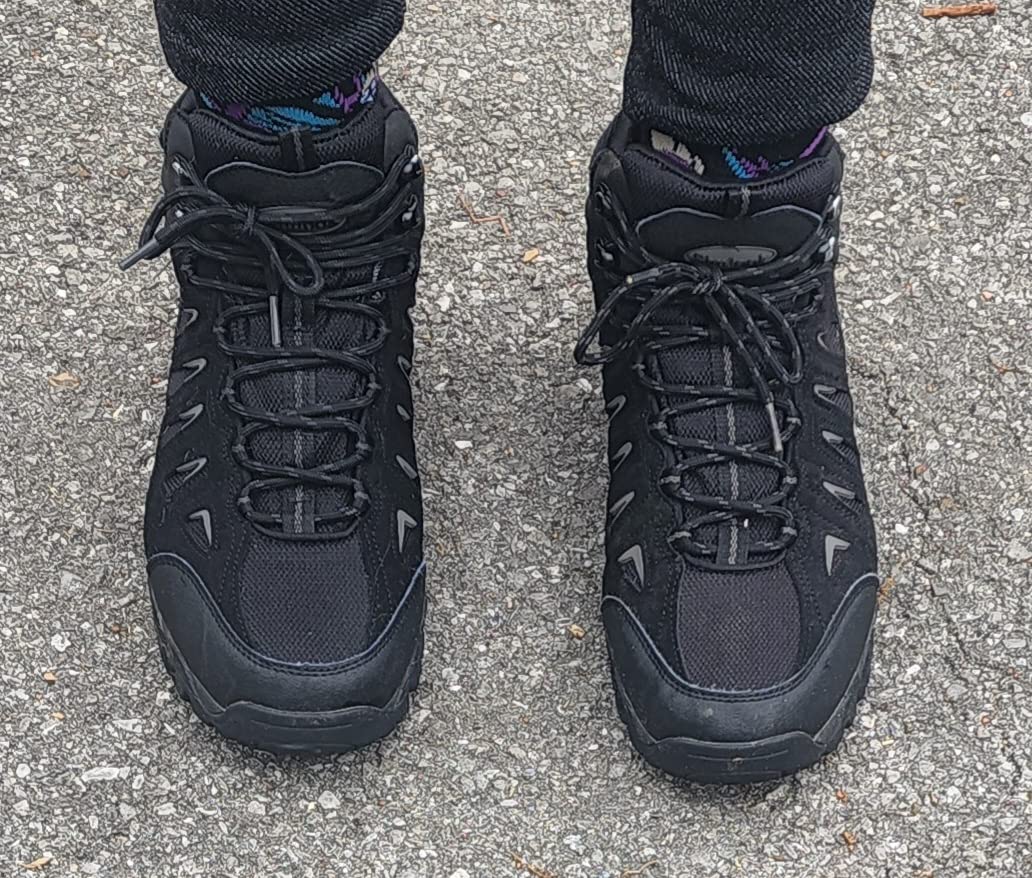
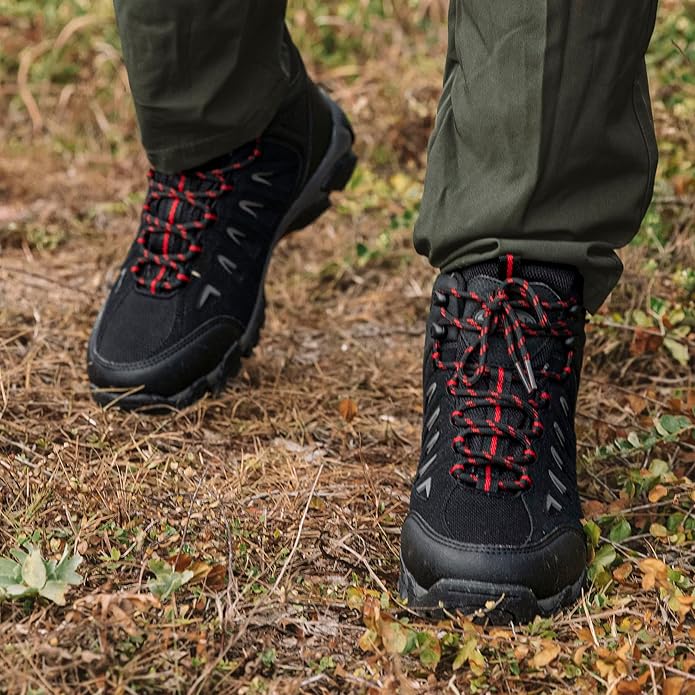
The rubber outsole is one of the more pleasant surprises here. On dry terrain, these boots move confidently. The 4mm lugs engage well in soft earth and loose gravel, and the rubber compound grips dry rock better than I expected from a budget hiking boot.
Terrain testing over three months covered:
Rocky trails — The Shenandoah eight-miler with exposed rock sections came back with solid results. The toe cap protects well, and I never felt rocks through the sole plate.
Loose gravel — Actually where the lugs shone most. Good lateral stability, no drama.
Muddy paths — Grip holds, though mud packs into the tread. Easy enough to clean; just don’t expect self-cleaning.
Smooth rock faces — Adequate, not great. The rubber compound isn’t specialized for technical terrain.
Wet conditions — Traction holds reasonably well even when the waterproofing doesn’t. This is where the boots outperform their wet-weather reputation.
Temperature management is better than typical “waterproof” options in this price range. Summer hiking gets warm, but I didn’t experience the miserable swampy buildup that killed some of my previous budget boots. The D01 lining is doing its job even if the SL-TEX isn’t fully doing its.
Do the Marketing Claims Hold Up?
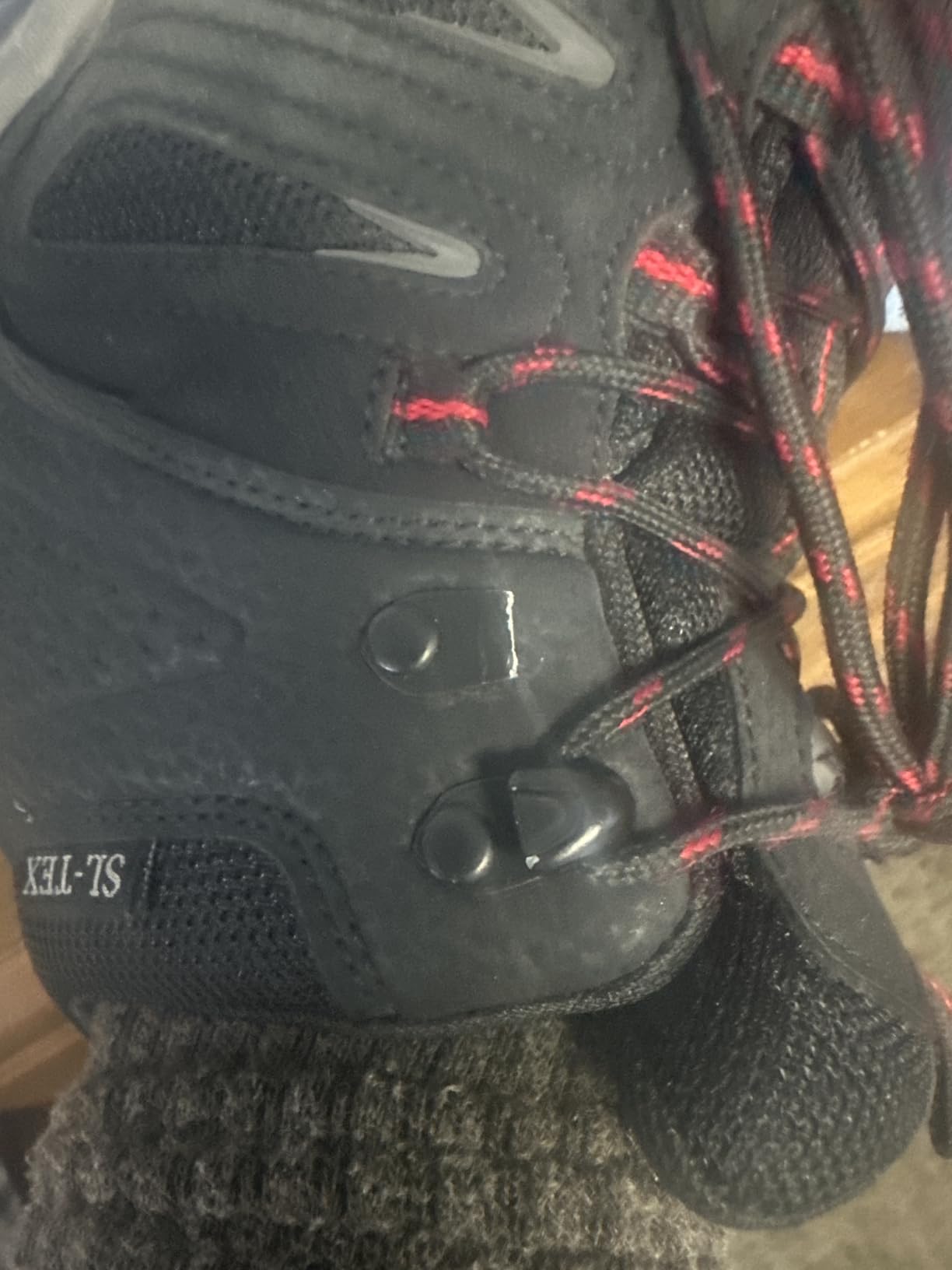
- ✅ “Ultra-light weight: 1.25 lbs” — Accurate. This claim holds across all sources including my own testing. The weight advantage is real.
- ⚠️ “SL-TEX waterproof membrane” — Misleading. Water-resistant for brief exposure; not waterproof for sustained wet conditions. Works for light rain, fails at 30-45 minutes in ambient wet.
- ✅ “Breathable and skin-friendly lining” — True. Ventilation is genuinely better than many “waterproof” competitors.
- ❌ “Durable construction” — Mixed. The upper holds up reasonably; the plastic lace hooks are a meaningful failure point.
- ✅ “Ankle support” — One of the strongest claims and one of the few that fully delivers. Excellent lockdown without restriction.
- ⚠️ “All-day comfort” — Valid early on, needs insole swap at ~6 weeks for extended sessions.
Scorecard: Where SHULOOK Wins and Where It Stumbles
| Category | Score | Key Finding |
|---|---|---|
| Comfort | 7.5/10 | Excellent out-of-box; insole compresses at ~6 weeks |
| Durability | 6.0/10 | Solid upper; plastic lace hooks are the critical failure |
| Waterproofing | 4.0/10 | Water-resistant only; fails at 30-45 min sustained wet |
| Traction | 7.0/10 | Confident on most casual terrain; limited on technical surfaces |
| Value | 7.5/10 | Strong at $55 if waterproof expectations are calibrated |
| Style | 8.0/10 | Looks more expensive than it is; clean black/red execution |
| Overall | 6.8/10 | Solid budget casual boot — with real limits |
After 156 miles over three months, the takeaway is straightforward: these are genuinely good boots for a specific use case, and a poor choice for another. Which one applies to you depends almost entirely on whether waterproofing is critical to your hiking scenario.
Who Should Buy These — And Who Shouldn’t
Buy the SHULOOK if you:
- Primarily hike in dry or lightly damp conditions
- Want serious ankle support without spending $100+
- Need a comfortable boot for light outdoor work or construction
- Are building a backup pair or occasional-use boot
- Hike groomed urban trails or day trips on well-maintained paths
- Don’t mind swapping insoles at the 6-week mark
Look elsewhere if you:
- Regularly hike in rain, near streams, or in wet-climate regions
- Need durability for 5+ days per week of hard use
- Are planning multi-day backpacking trips
- Require premium materials and serious construction for technical terrain
- Want genuine, tested waterproofing — not water-resistant marketing
Better alternatives at different price points:
- Merrell Moab 2 (~$100–$120): Proven waterproofing, significantly better durability
- Columbia Newton Ridge (~$80): Better real-world waterproofing, slightly heavier
- Timberland White Ledge (~$90): More rugged construction for daily work use
- Salewa Mountain Trainer Lite: Higher-tier trail performance for technical terrain
Frequently Asked Questions
Are SHULOOK hiking boots actually waterproof?
The short answer: no, not in any meaningful sense for hiking. The SL-TEX membrane provides water resistance against light moisture — morning dew, brief drizzle, the occasional splash. But sustained rain exposure breaks through relatively quickly. Multiple testers, myself included, experienced wet socks within 45 minutes of ambient rain with no puddle contact. If waterproofing is a hard requirement, these boots will disappoint.
How long do they last with regular use?
For casual weekend hiking — 1-2 times per week — you’re likely looking at 1.5 to 2 years before significant breakdown. For heavier daily use (work shifts, daily hiking), expect 6-12 months. The lace hooks are typically the first failure point. If you’re careful with those and willing to swap insoles at six weeks, you’ll extend the lifespan noticeably.
Is the sizing accurate?
Yes, for standard-width feet. I tested size 10 at 175 lbs with normal-width feet and found the fit true to size with comfortable room for thick socks. If you have wide feet, go half a size up — the width runs a bit narrow through the midfoot.
Can I replace the insoles?
Yes, they’re removable. In fact, I’d recommend planning for it — the memory foam insole starts to pack down around the 6-week mark. A decent aftermarket insole from Sof Sole or similar brings the comfort back up considerably. Factor in that $15-25 upgrade when comparing against pricier options.
Do they work for construction or work sites?
Reasonably well for light construction and landscaping work in dry conditions. The ankle support and toe cap provide solid protection. The main limitation is durability — the lace hooks can fail under heavy physical stress, and they’re not rated for true work boot scenarios. For serious job site use, consider purpose-built work boots instead.
How do they handle cold weather?
Acceptable for dry winter conditions. The breathable lining doesn’t provide any real insulation, so cold temperatures without moisture aren’t comfortable for long. Wet winter conditions are a hard no — the waterproofing issues make them unsuitable for snow or slush.
How do they compare to Merrell or Timberland?
The comfort and ankle support are genuinely competitive. Where they fall short is durability and especially waterproofing — both Merrell and Timberland deliver on water resistance claims in a way the SL-TEX system doesn’t. If the $55-$90 price difference matters to your budget, SHULOOK makes sense for casual, dry-weather hiking. If you’re spending on one pair for serious use, spend up.
What’s included in the box?
The boots and an extra set of laces. The extra laces are a thoughtful add — given the lace hook issue, they’re practically a warranty acknowledgment that you might need them.
Final Verdict
After spending $347 on hiking boots that let me down, I came into this test with a high bar and low expectations. The SHULOOK lands somewhere between both.
What they do well — ankle support, lightweight design, initial comfort, value styling — is genuine. These aren’t boots that overstate their strengths. What they do poorly — waterproofing, long-term insole durability, the plastic-hook deception — is equally real, and the waterproofing gap in particular is hard to overlook when that’s the headline claim.
At $55, if you’re a casual weekend hiker working in mostly dry conditions, the hiking boot category doesn’t offer much better at this price. The ankle support alone justifies the purchase for someone who’s been rolling through budget sneakers on trails.
But if wet conditions are part of your regular hiking picture, or if you’re counting on durability for daily wear, the SHULOOK asks you to trust a marketing claim it can’t back up. In that case, save a bit longer and look at options that actually deliver on waterproofing — the Merrell Moab 2 at around $100 is a meaningful step up that won’t leave your socks wet at the 45-minute mark.
Overall: 6.8/10 — a legitimate budget option for the right type of hiker. Know what you’re buying.
Review Scoring Summary
| Category | Score | Notes |
|---|---|---|
| Comfort | 7.5/10 | Strong ankle support; insole compresses after ~6 weeks |
| Durability | 6.0/10 | Solid upper; plastic lace hooks are the main failure point |
| Waterproofing | 4.0/10 | Water-resistant only; fails in sustained rain at 30-45 min |
| Traction | 7.0/10 | Good on casual terrain; 4mm lugs work well in varied surfaces |
| Value | 7.5/10 | Solid at $55 with calibrated expectations |
| Style | 8.0/10 | Clean black/red design; looks more expensive than it is |
| Overall Rating | 6.8/10 | Capable budget boot for dry-condition casual hiking |
Be the first to review “SHULOOK Men’s Waterproof Hiking Boots Non-Slip”
Related products

Hiking/Trekking Shoes

Hiking/Trekking Shoes
Hiking/Trekking Shoes
Hiking/Trekking Shoes
Hiking/Trekking Shoes


Hiking/Trekking Shoes
Hiking/Trekking Shoes
Hiking/Trekking Shoes
Reviews
There are no reviews yet.