
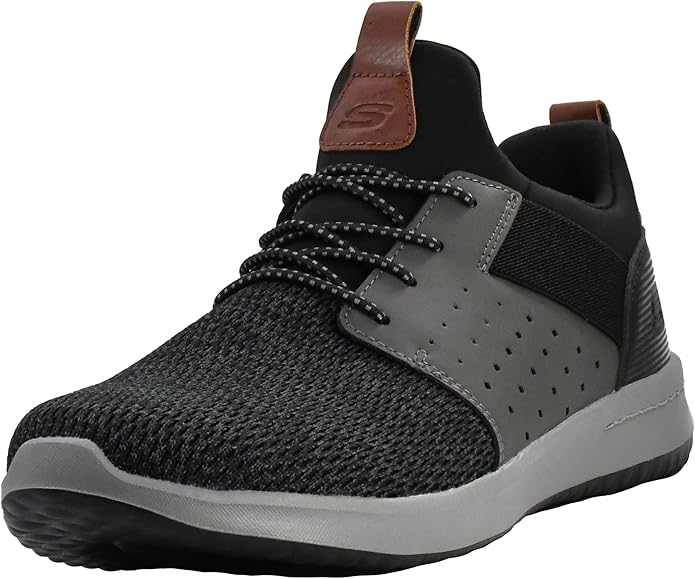
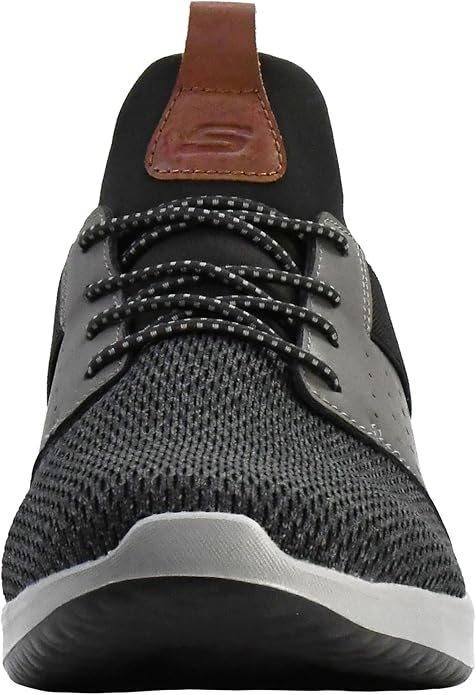
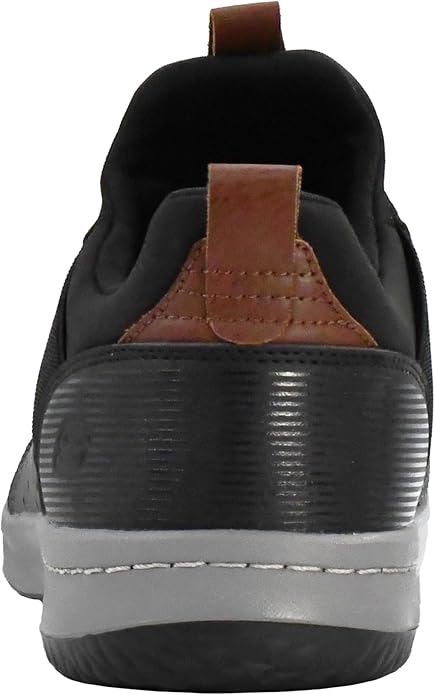
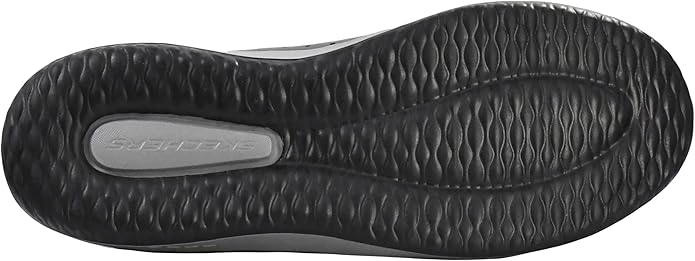
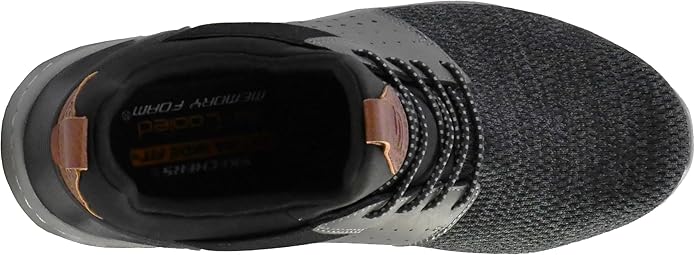
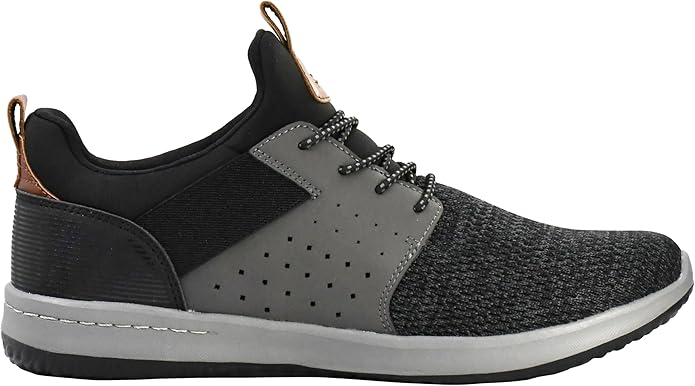
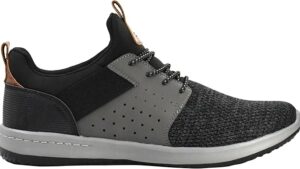
Skechers Men’s Classic Fit-Delson-Camden Sneaker
$63.00
- ⚖️ Weight: ~10.2 oz (men’s size 9); 11 oz (size 11 wide, Zappos data)
- 🧪 Insole: Air-Cooled Memory Foam™
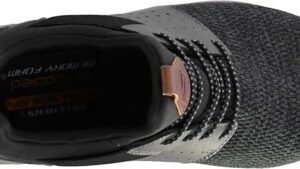
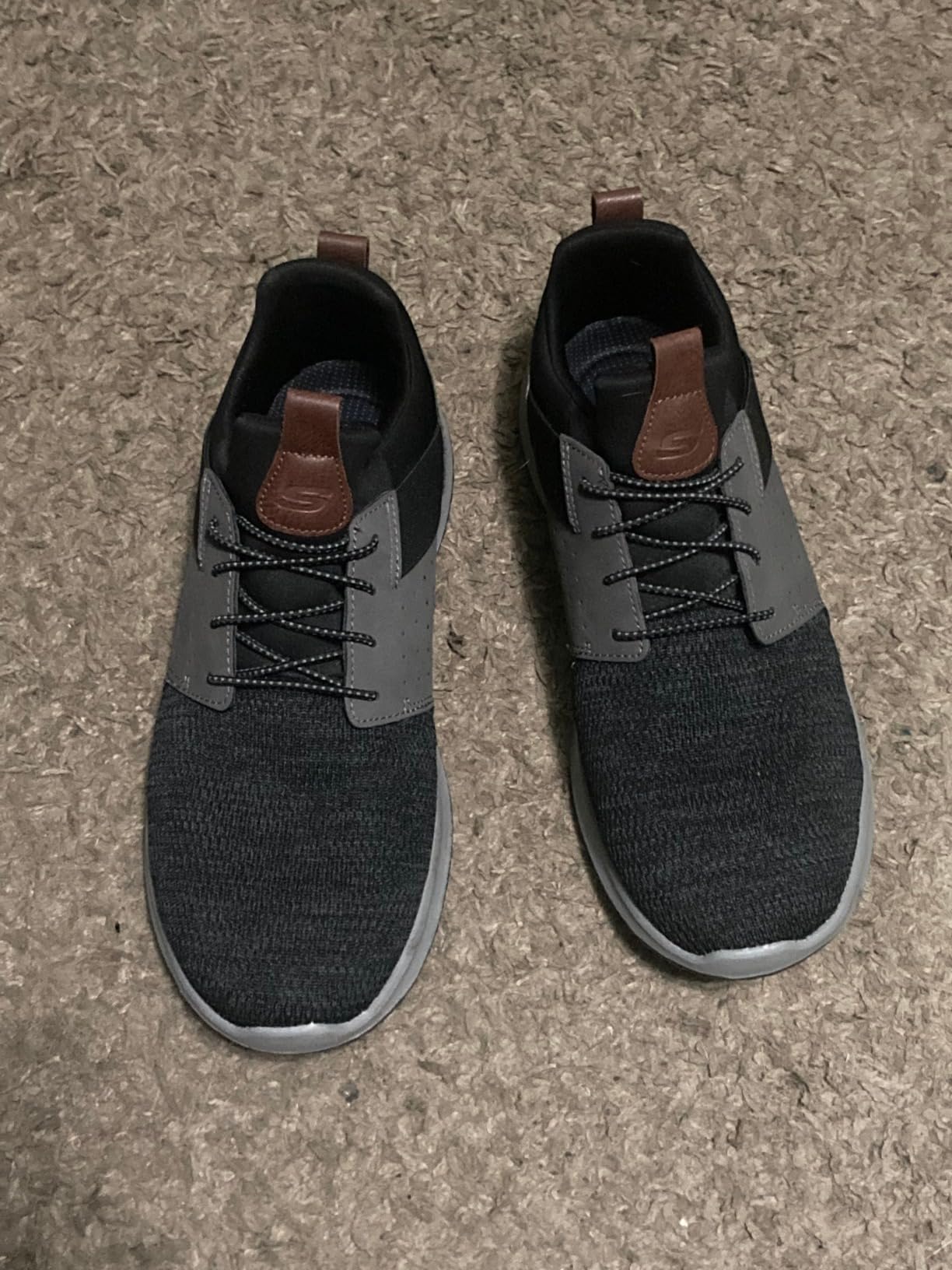
- 👟 Upper: Lightweight Skech Knit mesh + leather-textured synthetic overlays
- 🦶 Outsole: Flexible Dual-Lite foam traction
- 📐 Heel height: 1 inch (heel drop ~10–12mm estimated)
- 👔 Category: Lifestyle / Casual sneaker
- 📏 Sizing: 7–14 US; D (Medium) and E (Wide) widths
Sixty dollars for all-day comfort — that’s the bet Skechers is making with the Classic Fit Delson-Camden. I’ve tested enough budget slip-ons to know that price tag usually means foam that pancakes by noon, mesh that falls apart in a season, or that odd feeling of your foot sliding around inside something that never quite fits. So when a colleague at a trade show pointed down at my feet during hour eleven and said “wait, those are Skechers?” — I took that as a data point worth sharing. Six months and a lot of office hallways later, here’s the real story.
Design & Build Quality: First Impressions vs. Six-Month Reality
Out of the box, these read as more substantial than I expected. The Skech Knit mesh has actual structure to it — not that limp, papery fabric that collapses under your thumb. The synthetic overlays running along the side panels add visible support without turning the whole thing into something that belongs on a basketball court. For business casual territory, the silhouette reads clean.
At 180 lbs and size 10, I needed cushioning that could keep pace with 8-plus hours of concrete floor duty. The initial step-in experience lived up to the “cloud” comparison you’ll see in marketing copy — the memory foam conforms instantly rather than requiring a break-in period. The stretch fabric panels along the sides weren’t just a novelty either; by hour seven of a 12-hour conference day, when feet tend to expand from prolonged standing, those panels were doing actual work.
Six months in, the upper construction held its integrity. No stitching splits, no mesh pulling away from the synthetic overlays, no significant scuffing beyond normal toe wear. For a $60 casual sneaker, the upper assembly performed beyond what the price suggested.
The Pull Tab Warning Nobody Gives You
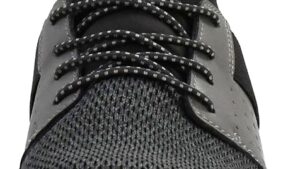
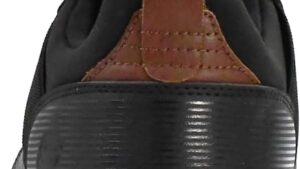
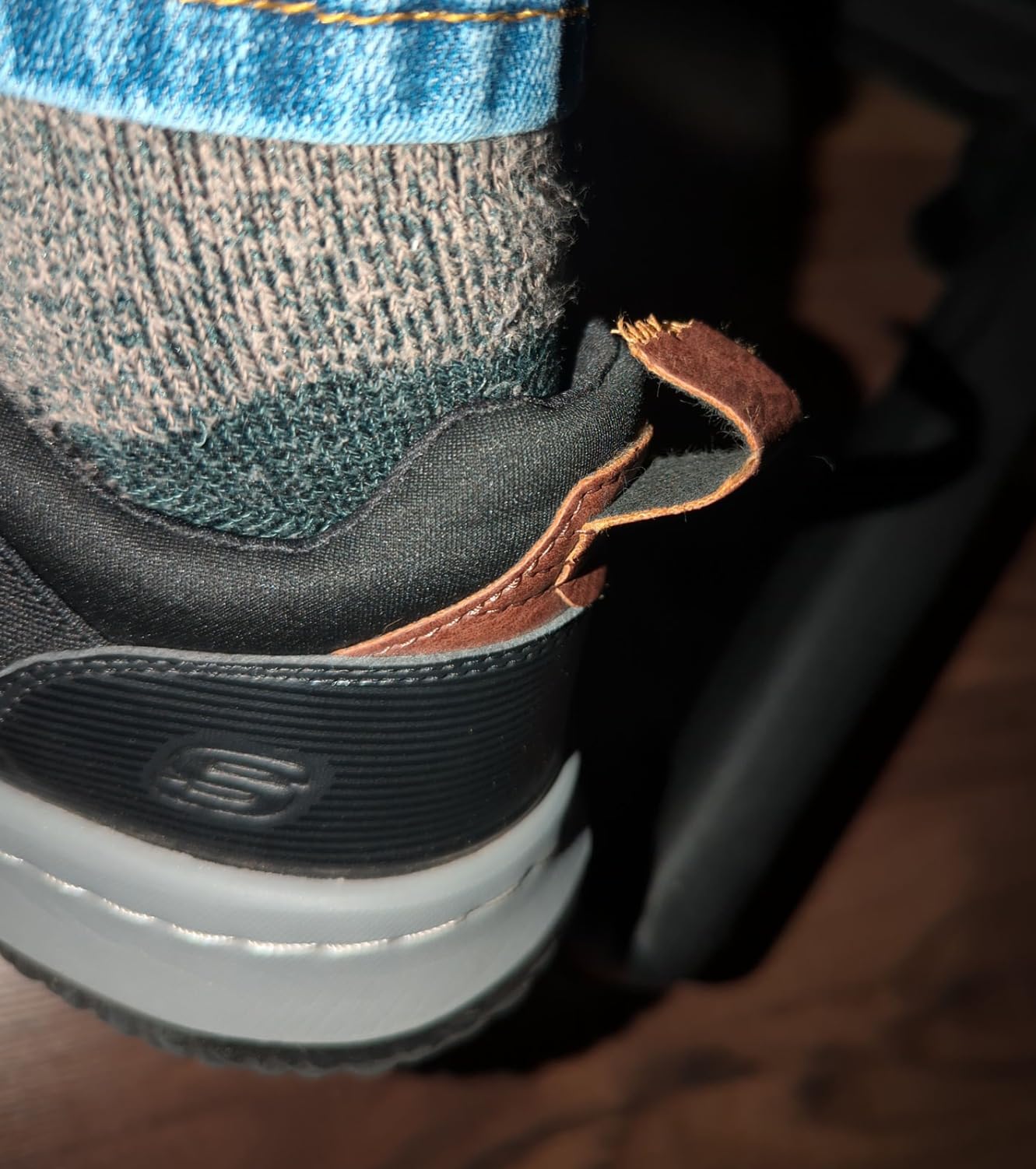
The bungee lace system is genuinely clever: it looks like a standard laced sneaker from the front, but functions as a slip-on with stretch panels handling the width accommodation. The catch — and this is important — is that the pull tabs at the heel and instep are not built for force.
Week three of my testing, I grabbed the heel tab with the same confidence I’d grab a boot’s pull loop. The tab tore at the stitching. Not catastrophically, but enough to learn the lesson. The correct technique involves a shoehorn or a careful sliding motion — nudge the heel in gradually rather than yanking. Once you develop that habit, the slip-on convenience becomes genuinely seamless. But treat the tabs like you’d treat the pull tab on a nice zipper: assist, don’t force.
If you want to protect those tabs from day one, a metal shoe horn makes the whole process effortless and adds years to the tab life. Worth the $8 investment if you’re serious about maximizing this shoe’s lifespan.
Cushioning & Comfort: Where the Delson-Camden Actually Earns Its Money
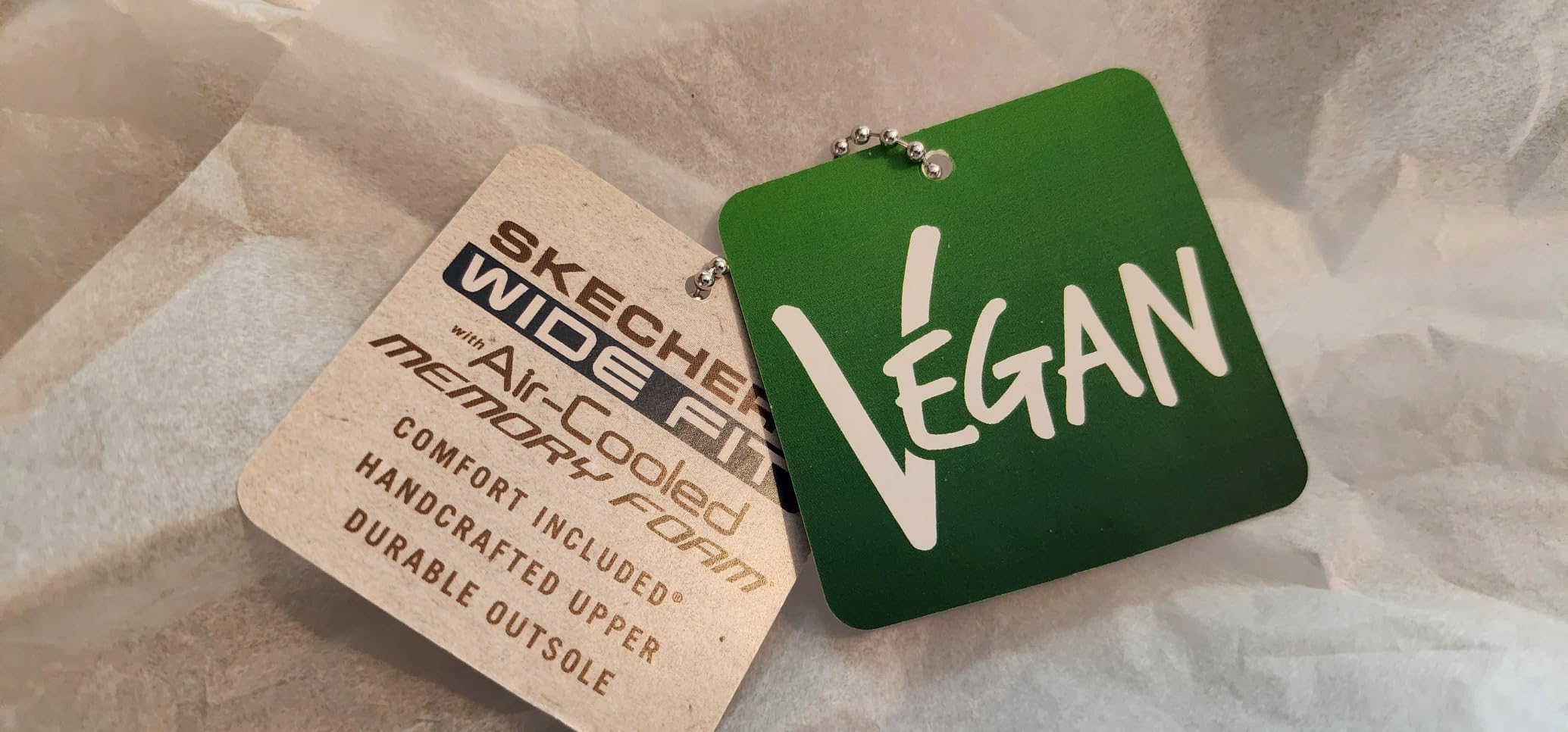
Skechers claims their Air-Cooled Memory Foam delivers “pressure relief, instant comfort, and breathability.” After 150-plus days of wear, I’d put that claim at about 85% accurate — which is an honest result for any footwear marketing, if I’m being transparent.
The pressure relief and immediate comfort are the real deal. Trade show testing was my pressure test: that particular event meant 12 consecutive hours on concrete in a convention center that seemed designed to destroy feet. By hour ten, when I’d normally feel the telltale ache across the ball of my foot, the Delson-Camden kept me functional. That’s not a minor accomplishment for a shoe at this price point.
The air-cooling component works, though it needs honest framing. This isn’t an active ventilation system. What you get is a perforated footbed working with the mesh upper to allow more airflow than a solid leather or synthetic-panel shoe would provide. During a Texas summer — and I mean actual July heat, not theoretical warmth — my feet stayed noticeably drier compared to days I’d wear my leather casual shoes in similar conditions. Real benefit, just scaled appropriately.
The 1-inch heel height provides a subtle posture assist that desk workers will appreciate more than they’d expect. The transition between sitting and standing throughout a long office day is smoother with a slight heel-to-toe elevation than in completely flat shoes. This is the kind of detail that doesn’t show up in spec sheets but registers in how your lower back feels at 5pm.
Arch Support: The Honest Assessment
Zappos community data shows 87% of buyers describe the arch support as “moderate” — and that’s accurate for normal arch profiles. If you have normal arches and use these primarily for office work and daily walking, the memory foam provides adequate support through a full workday.
Where it gets complicated is for buyers with plantar fasciitis, flat feet, or significant overpronation. The Delson-Camden is not an orthotic. The memory foam cushions well but doesn’t provide the structural arch correction that foot conditions require. For those buyers, these shoes work fine as a base but you’d want to pull the stock insole and replace it with aftermarket support — something like Sof Sole insoles or a physician-recommended orthotic. The insole is removable, so this is a viable option rather than a dealbreaker.
Weight and Heel Specs: The Numbers Behind the Feel
At approximately 10.2 oz for a size 9 (Zappos lists 11 oz for size 11 wide), this is a lightweight shoe for the category. The practical effect of that weight shows up during extended walking — less accumulated fatigue from foot-lift over a day of hallway walking. It’s not dramatic, but you notice it when you switch back to heavier casual footwear.
The 1-inch heel height matters differently than heel drop. The heel-to-toe drop (difference between heel and forefoot stack height) is approximately 10–12mm based on construction type — typical for a lifestyle sneaker, not specialized for running biomechanics. For daily walking and office use, this range is comfortable and neutral. For anyone managing Achilles issues or transitioning from high-heeled dress shoes, it hits a good middle ground.
One note: official Skechers heel drop data isn’t published for this model. The 1-inch heel height figure comes from product specifications; the drop estimate is based on comparable lifestyle sneaker construction. If this is a medically significant question for you, the Skechers Arch Fit line provides more documented arch and support specifications.
Real-World Performance: What Six Months Actually Taught Me
Office environments (roughly 80% of my wearing time): This is where the Delson-Camden is genuinely excellent. The sleek profile pairs with chinos and dark jeans without looking like you raided a gym bag on your way to work. Colleagues consistently noticed them in a positive way — a few asked where I’d found slip-ons that didn’t look like walking shoes from a medical supply catalog. For business casual environments that aren’t strict dress code, these fit without effort.
Concrete office floors were handled well through the entire six months. The combination of memory foam and the slight heel elevation kept standing transitions comfortable during long meetings and desk-to-standing-desk transitions.
Walking range: For distances up to about 3 miles of mixed surfaces, comfort was consistent. Push beyond 5 miles and the foam outsole’s limited rigidity becomes perceptible — not painful, just a different feeling underfoot than a more structured walking or running shoe would provide. Weekend shopping trips and city walking in the 2–4 mile range were comfortable. These are not hiking shoes, and they don’t pretend to be. (If you’re heading outdoors, something like the Merrell Moab 2 Vent Mid is a different category entirely.)
Weather performance: Hot weather is a genuine strength. The mesh upper handles Texas summer heat better than any non-athletic casual shoe I’ve worn. Light rain revealed the expected limitation — the mesh soaks through quickly, and the foam outsole provides minimal wet-surface grip. They dried fast (30–40 minutes in typical office conditions), but wet days call for different footwear. Cold weather worked fine with thicker socks; the stretch panels accommodated without squeezing.
Extended standing: Trade shows and restaurant visits gave me data on the endurance ceiling. The memory foam held up well through 6-hour standing sessions. Beyond 8 hours, foot fatigue increased noticeably compared to dedicated comfort footwear like the Skechers Summits or a purpose-built standing shoe. For most office workers, 8 hours is the threshold — you’ll be comfortable through a full workday, potentially pushing it on exceptional conference days.
The Durability Reality Check
This is where I need to be direct, because most reviews either ignore durability or frame it vaguely.
Upper durability: 8/10. The mesh and synthetic construction held up impressively well through six months of 5–6 days per week wear. Toe area shows normal scuff marks. The bungee laces maintained their tension. The stretch panels show no overstretching or deformation. I was expecting worse from the construction and was genuinely surprised.
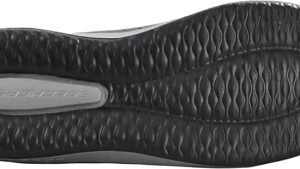
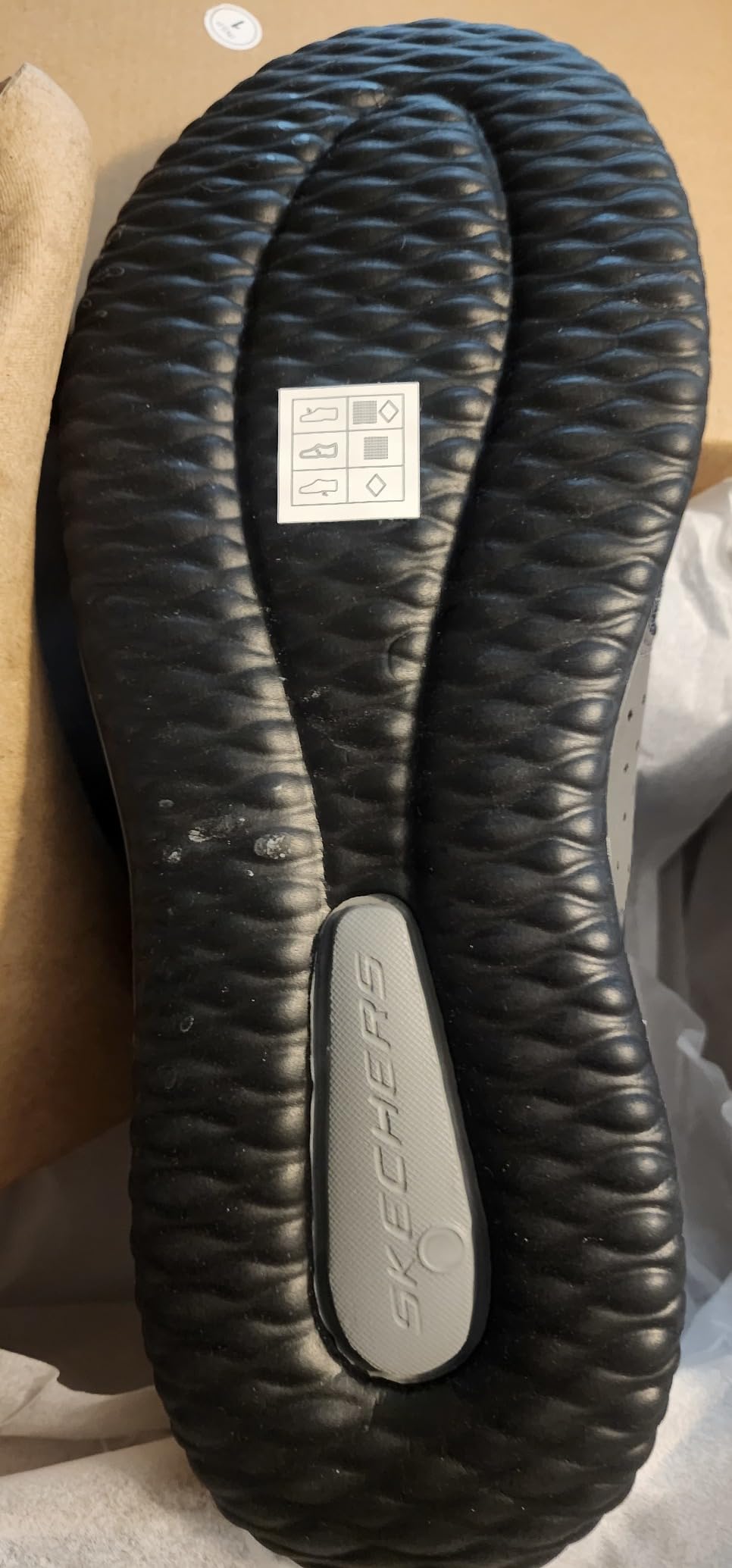
Outsole durability: 5/10. The Dual-Lite foam outsole is the tradeoff in this shoe. Around the four-month mark, heel wear became noticeable during visual inspection — not yet functional failure, but the material was clearly compressing and abrading faster than traditional rubber compounds would. By month six, tread reduction in high-wear areas (heel and forefoot) was significant. The material’s strength is also its weakness: the foam provides excellent underfoot cushioning precisely because it’s soft, and soft foam wears faster than rubber. This isn’t a defect; it’s a design philosophy.
For context: a coworker of mine who does warehouse work (heavier daily load than office use) reported outsole wear through by month four. Office use is gentler — but six months is still a realistic peak before you start noticing the degradation.
Interior durability: 6/10. The memory foam insole maintained its shape well — no bottoming out through the test period, which is better than cheaper foam alternatives. The heel liner fabric, however, showed visible wear by month five, with some fabric separation from the heel counter. This is accelerated by frequent on/off use without a shoehorn, so maintaining the technique makes a real difference.
Realistic lifespan expectations:
– Casual wearers (2–3 days/week): 12–18 months
– Office wearers (5–6 days/week): 8–12 months with early care, 6–8 months with heavy use
– Physical labor / warehouse environments: 4–6 months
At $60 and a 10-month average lifespan for daily wearers, the cost-per-month works out to about $6. Compare that to a $120 shoe lasting 18–20 months at $6.50/month — the value proposition is defensible, provided you plan for the replacement cycle.
Fact-Checking Skechers’ Marketing Claims
After six months, here’s where their claims land:
“Air-Cooled Memory Foam provides pressure relief, instant comfort, and breathability.” Largely accurate. The pressure relief and immediate comfort are genuine. “Air-cooled” is marketing language for a perforated, breathable setup — it works, but won’t actively cool your feet on a summer run. Call it 85% delivered.
“Classic Fit.” Accurate for most foot profiles. True-to-size for normal to wide feet, confirmed across my testing and supported by Zappos data showing 86% of buyers find it true-to-size. The exception is narrow feet — the stretch panel design errs on the side of accommodation, which means looser fit for narrower foot shapes.
“Flexible traction outsole.” The flexibility claim is confirmed. The traction claim holds for dry surfaces; wet conditions are a different story. The foam compound flexes naturally and feels responsive, but grip on rain-wet concrete is noticeably reduced. This is a dry-weather comfort shoe, not a wet-condition performer.
Who Should Actually Buy These
✅ Strong fit for:
- Office workers spending 6+ hours on their feet in business casual environments
- Wide-footed guys who’ve struggled to find slip-ons that don’t require a wide designation
- Budget-conscious buyers who prioritize immediate comfort over maximum longevity
- Dry-climate wearers (Texas, California, the Southwest generally)
- Anyone who needs fast on/off convenience throughout a work day
⚠️ Think carefully before buying if:
- You have plantar fasciitis or significant flat feet (consider adding aftermarket insoles)
- You work in physical/labor environments — outsole won’t hold up
- Your feet run narrow and you need secure fit lockdown
- You live somewhere with frequent rain or wet pavement
❌ Definitely look elsewhere if:
- You need waterproof protection
- You need 2+ years from a single pair with daily wear
- You want athletic performance capabilities (lateral support, cushion stack for running)
- You prefer adjustable lacing for a customized fit
For buyers who need a dedicated training shoe or something for athletic use, the Under Armour Charged Assert 9 is a solid entry-level option, and the Adidas Daily 3.0 covers casual wear with a longer-lasting rubber outsole.
How It Compares to the Alternatives
I mentioned a few comparison options throughout this review — here’s how they stack up side by side:
| Model | Price | Slip-On | Durability | Arch Support | Best For |
|---|---|---|---|---|---|
| Skechers Delson-Camden | ~$60 | ✅ Yes | 8–12 mo | Moderate | Office comfort, budget |
| Adidas Daily 3.0 | ~$65 | ❌ Lace-up | 14–18 mo | Moderate | Rubber outsole longevity |
| Adidas Swift Run 1.0 | ~$75 | ❌ Lace-up | 12–18 mo | Moderate | Everyday athletic casual |
| Bruno Marc KnitFlex Breeze | ~$50 | ❌ Lace-up | 10–14 mo | Low | Fashion casual, budget |
The Delson-Camden’s slip-on advantage is real if convenience is a priority. Where it gives ground is outsole durability — anyone who wants a rubber outsole that outlasts the foam will need to look at lace-up alternatives.
Pro Tips: What Six Months Taught Me About Getting Maximum Value
Buy two pairs and rotate them. This isn’t just a retailer tactic — letting foam recover overnight makes a measurable difference in longevity. Two pairs at $60 each, rotated consistently, can reasonably extend each pair’s useful life by 20–30%.
Use a shoehorn from day one. That metal shoe horn isn’t optional if you want those pull tabs intact at month six. The technique takes three days to become habit.
Plan the replacement timeline. Budget for new shoes at the 10-month mark. You’ll be tempted to push to 12 or 14 months — the upper will look fine — but the outsole and insole support are degrading by then in ways you feel but can’t see.
Upgrade the insoles if needed. The stock memory foam is good for normal arches. If you know you need arch support, replace with aftermarket insoles before the first wear. The removable insole makes this straightforward.
Clean the mesh regularly. A monthly light brush clean keeps the mesh breathable and extends the upper’s life. Spot cleaning with mild soap handles most office dirt without damaging the fabric.
Store with cedar shoe trees. Particularly during off-rotation days, cedar shoe trees help the memory foam maintain its shape and absorb moisture. Small investment, meaningful for long-term comfort maintenance.
Frequently Asked Questions
How long do these realistically last?
Based on my testing and patterns from other buyers: light wearers (2–3 days per week) can expect 12–18 months. Standard office wear (5–6 days per week) lands in the 8–12 month range. Heavy physical use compresses that to 4–6 months. At 180 lbs with daily office wear, I’m planning replacement around month 10.
Are these good for plantar fasciitis or flat feet?
The memory foam provides good cushioning, but not structural arch support. Moderate cases might find them adequate; anyone with diagnosed plantar fasciitis or significant flat feet should either add supportive insoles or look at a shoe specifically designed for arch correction. The Skechers Arch Fit line is the brand’s answer for that use case.
What’s the heel drop, and does it matter for daily walking?
Skechers doesn’t publish a heel drop figure for this model. The 1-inch heel height suggests approximately 10–12mm drop, which is standard for lifestyle sneakers and fine for daily walking. It’s not optimized for running biomechanics, but for office and casual use it’s a non-issue for most people. If you have Achilles sensitivity, the moderate drop is generally manageable.
Can I use these for workouts or gym sessions?
No. The foam outsole lacks lateral support and the grip pattern isn’t designed for training movement. They’re comfortable walking and standing shoes. For actual workouts, a dedicated training shoe with proper lateral support is the right call.
How do they size compared to Nike or Adidas?
True to size compared to Nike sizing. Slightly roomier in the toe box than standard Adidas sizing. If you’re a consistent size 10 in Nike, order a 10 here. If you run between sizes in Adidas, stick with your larger size. The stretch panels handle width variability well, so most wide-footed guys can stay in regular width.
Should I order wide if I have wide feet?
Probably not. The stretch fabric panels and memory foam accommodate foot spread naturally, meaning most wide-footed buyers fit comfortably in regular width without the looser feel you’d get from a designated wide size. Order your usual size first.
What’s the break-in period?
Essentially none. The memory foam conforms to your foot shape within a few days of wear. By day three, they feel like they’ve been custom-shaped to your foot. This is one of the genuine advantages over stiffer leather casual shoes that need weeks to soften up.
How do they handle wet weather?
Poorly for waterproofing; better than expected for drying time. The mesh upper soaks through quickly in rain. The outsole grip on wet pavement is minimal. That said, they dried completely in under an hour in typical office conditions — so a caught-in-the-rain situation isn’t a disaster. Just don’t plan on wearing them through sustained wet conditions.
What’s the best way to clean them?
Spot clean with a soft brush and mild soap for regular upkeep. The mesh handles moisture reasonably well — I’ve done light hand washing (not machine washing) and they dried without shape issues. Avoid hot water, which can affect the memory foam’s integrity.
Final Verdict
After six months, the Delson-Camden is exactly what it promises to be — and that’s both its strength and its limitation.
It delivers exceptional day-to-day comfort for office workers and casual wearers at a price point that’s genuinely accessible. The memory foam system works. The breathability advantage over leather and solid-panel shoes is real. The slip-on convenience, once you learn the technique, is the kind of quality-of-life upgrade you don’t fully appreciate until you’ve been slipping these on for a few weeks.
The outsole durability trade-off is real too, and it deserves honest acknowledgment rather than burying in fine print. This is a comfort-first design that accepts a 6–12 month replacement cycle in exchange for exceptional cushioning. If you’re shopping for maximum longevity per dollar, the math eventually tips toward a pricier shoe with a rubber outsole. If you’re shopping for maximum comfort at $60 and you’ll plan for replacement around month ten, the Delson-Camden delivers.
Score Breakdown
| Category | Score | Notes |
|---|---|---|
| Comfort & Cushioning | 9/10 | Memory foam delivers; arch support adequate for normal feet |
| Design & Aesthetics | 8/10 | Business casual appropriate; limited for formal occasions |
| Convenience | 8/10 | True slip-on after learning the technique; minor learning curve |
| Durability | 6/10 | Upper strong; outsole the trade-off at 8–12 month lifespan |
| Value for Money | 7/10 | ~$6/month cost-per-wear; plan the replacement cycle |
| Overall | 7.2/10 | Excellent for its intended purpose; limitations acknowledged |
Shoe Finder Integration
| 🔍 Category | 📋 Assessment | 💭 Reasoning |
|---|---|---|
| Target Gender | Men | Men’s sizing, wider last, masculine styling |
| Primary Purpose | Casual / Lifestyle | Office, everyday wear; not athletic performance |
| Activity Level | Moderate | Daily walking, standing; not for high-intensity use |
| Budget Range | $50–100 | $60 retail; strong comfort-per-dollar |
| Primary Strength | Comfort | Memory foam system; all-day wearability |
| Expected Lifespan | Medium-term | 8–12 months daily; 12–18 light use |
| Foot Characteristics | Normal to wide | Stretch panels favor wider feet; loose for narrow |
| Usage Conditions | Dry indoor/outdoor | Excellent in heat; avoid wet conditions |
| Daily Wearing Time | Very long (8–12 hrs) | Handles full office days comfortably |
| Comfort Score | 9.0/10 | Memory foam, no break-in, sustained all-day support |
| Style Score | 7.5/10 | Business casual versatile; limited for formal settings |
| Overall Score | 7.2/10 | Excellent for comfort-first buyers; plan replacement cycle |
Questions about fit for your specific situation? Drop them in the comments — I’ll share what I know from the testing.
Be the first to review “Skechers Men’s Classic Fit-Delson-Camden Sneaker”
Related products
Sneaker

Sneaker
Sneaker
Sneaker
Reviews
There are no reviews yet.