
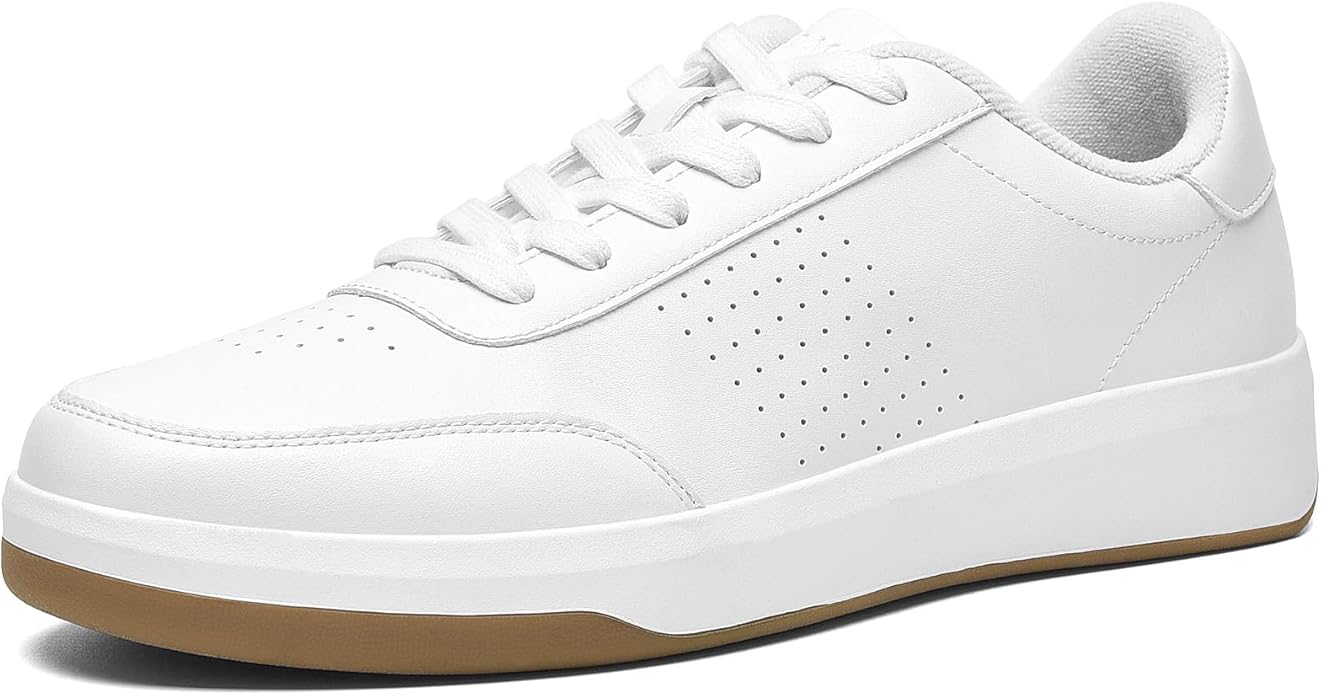
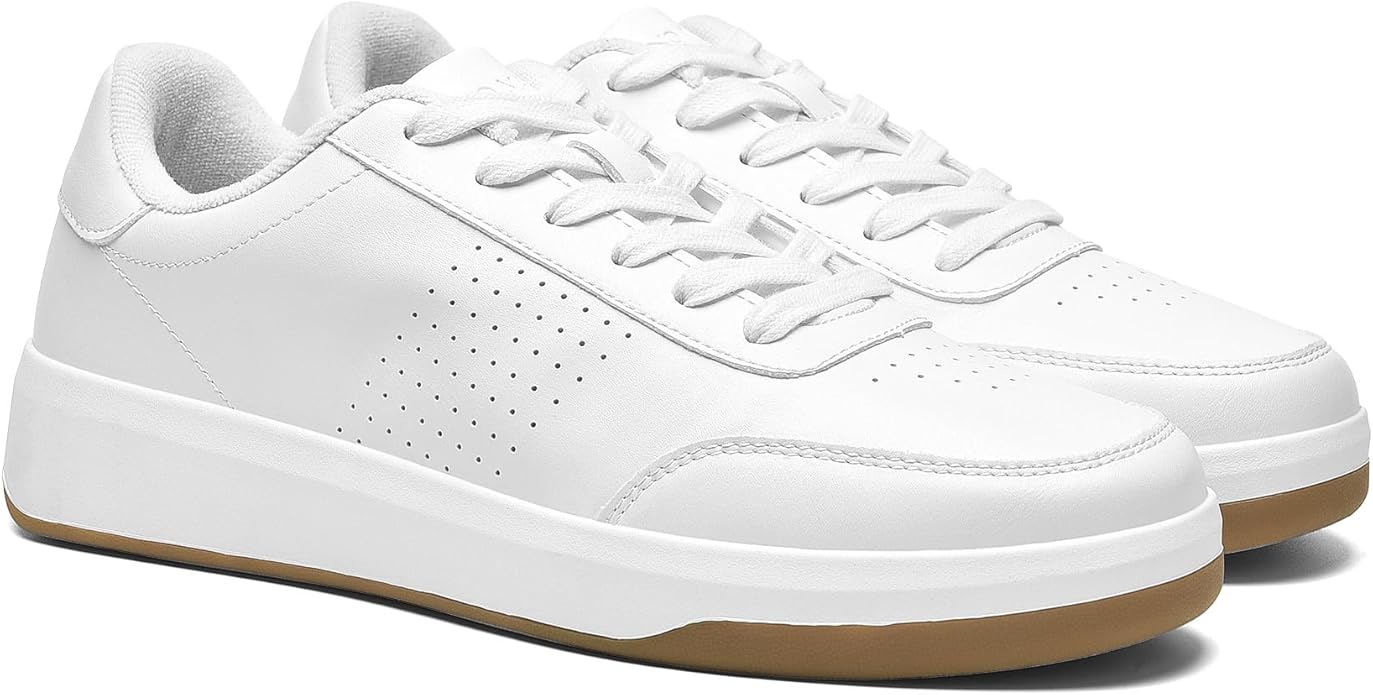
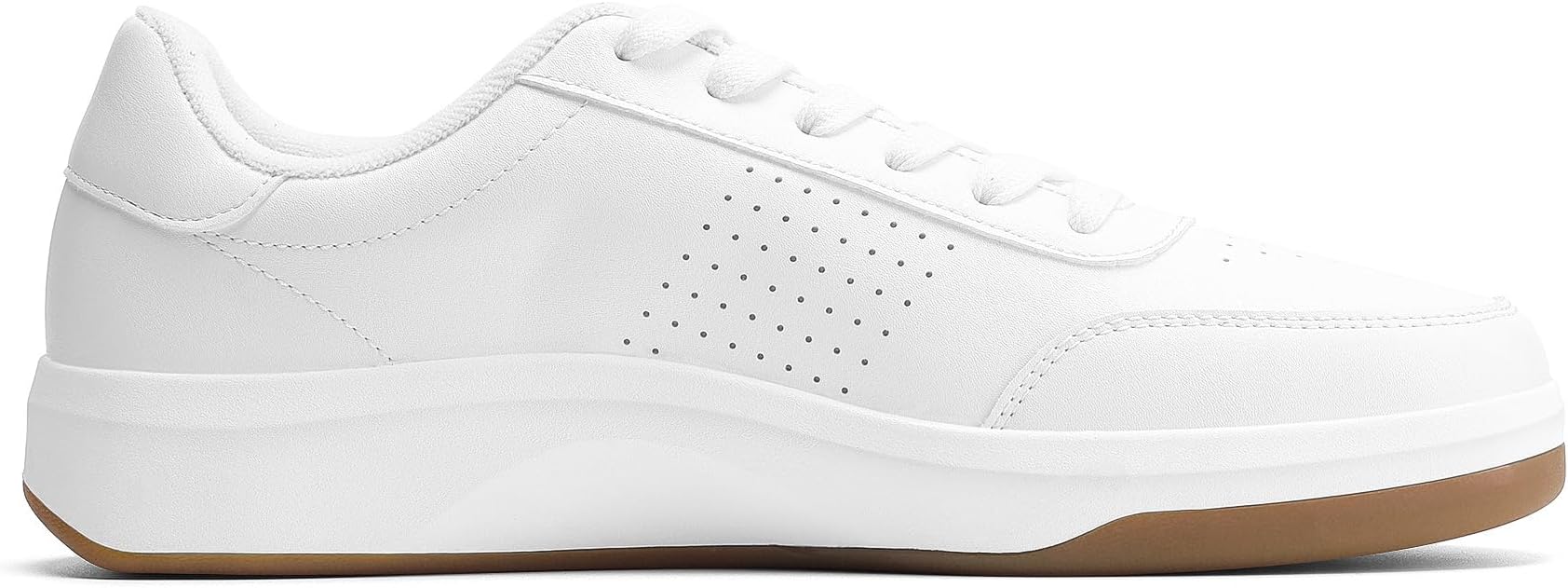
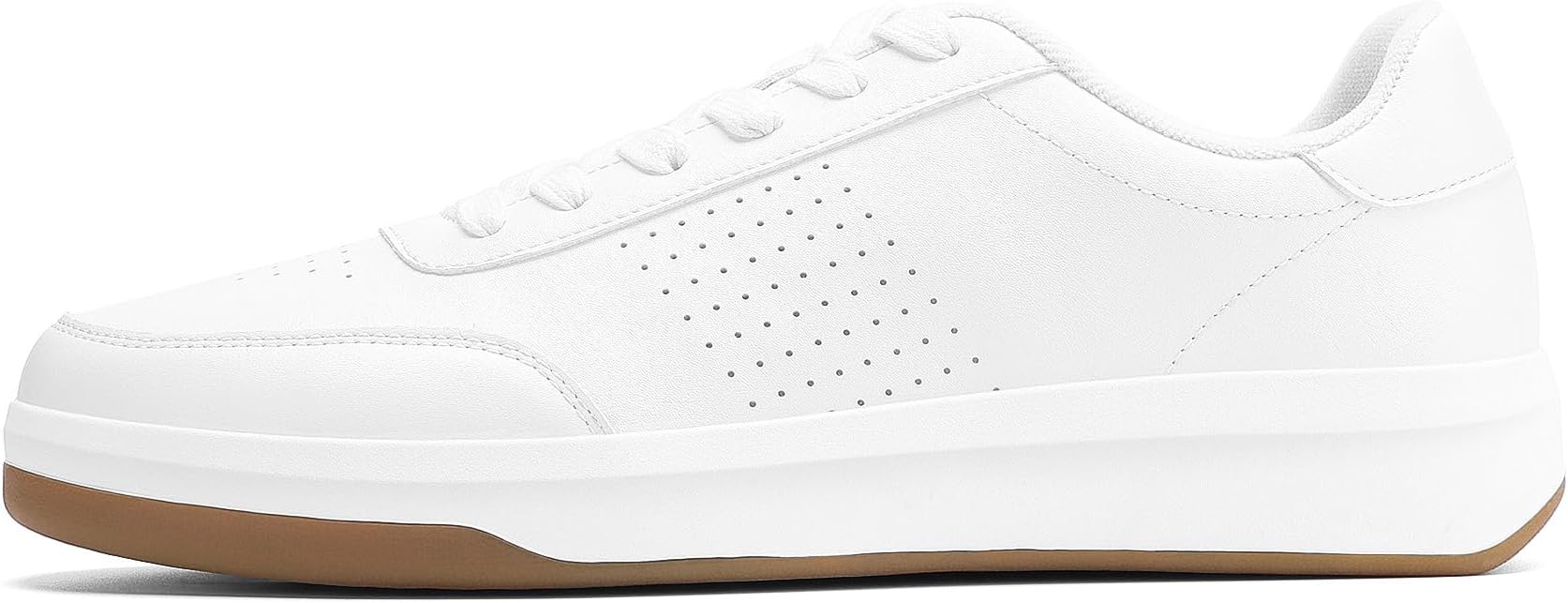
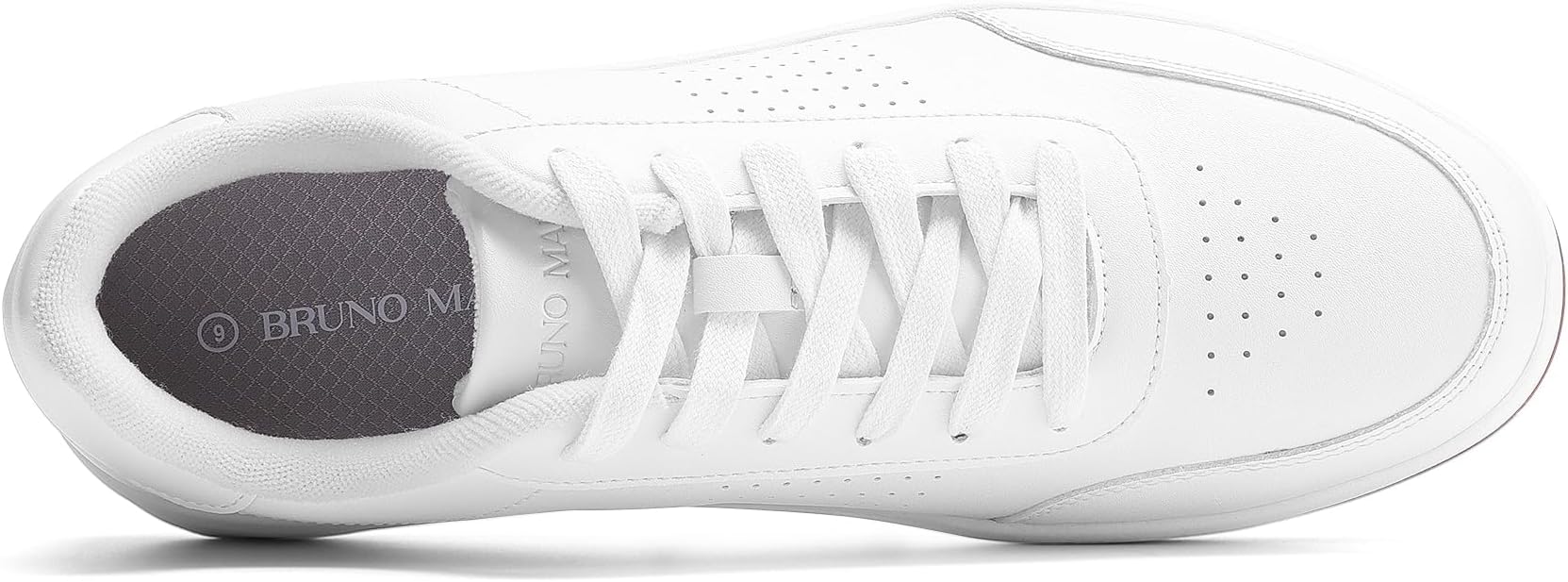
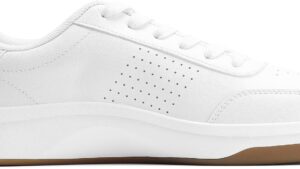
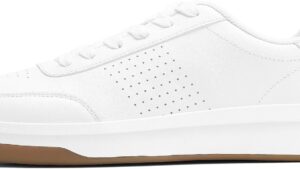
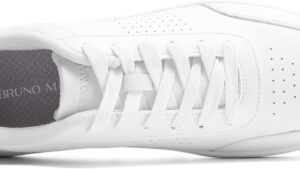
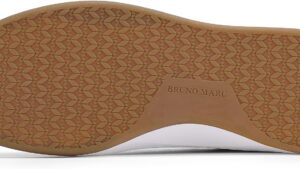
Most budget shoes fail in one of two predictable ways: they look presentable but turn your feet into a pain management project by midday, or they’re comfortable enough to get through the day but look exactly like what they cost. At $40, the Bruno Marc Men’s Casual Arch Support Fashion Sneaker is pitching itself into the gap between those two failure modes — real underfoot support paired with styling that doesn’t announce “budget shoe” the moment you walk in the door. After 8 weeks and 40+ wear sessions, at 180 lbs — a weight that pressure-tests cushioning more honestly than lighter wearers — I’ve got a clear read on where this shoe earns its price and where the $40 reality shows through.
Overall rating: 7.8/10. Solid daily wear value, genuine arch support, versatility that punches above its bracket. Not a performance shoe, not a premium material story. Just an honest casual sneaker that does what it says.
Technical Specifications
- Price: ~$40 (as low as $23.99 on promotion; Walmart ~$32.99)
- Model: SBFS2322M
- Weight: 12.5 oz (men’s size 9)
- Upper: Perforated PU (polyurethane) synthetic leather
- Midsole: EVA foam with built-in arch support
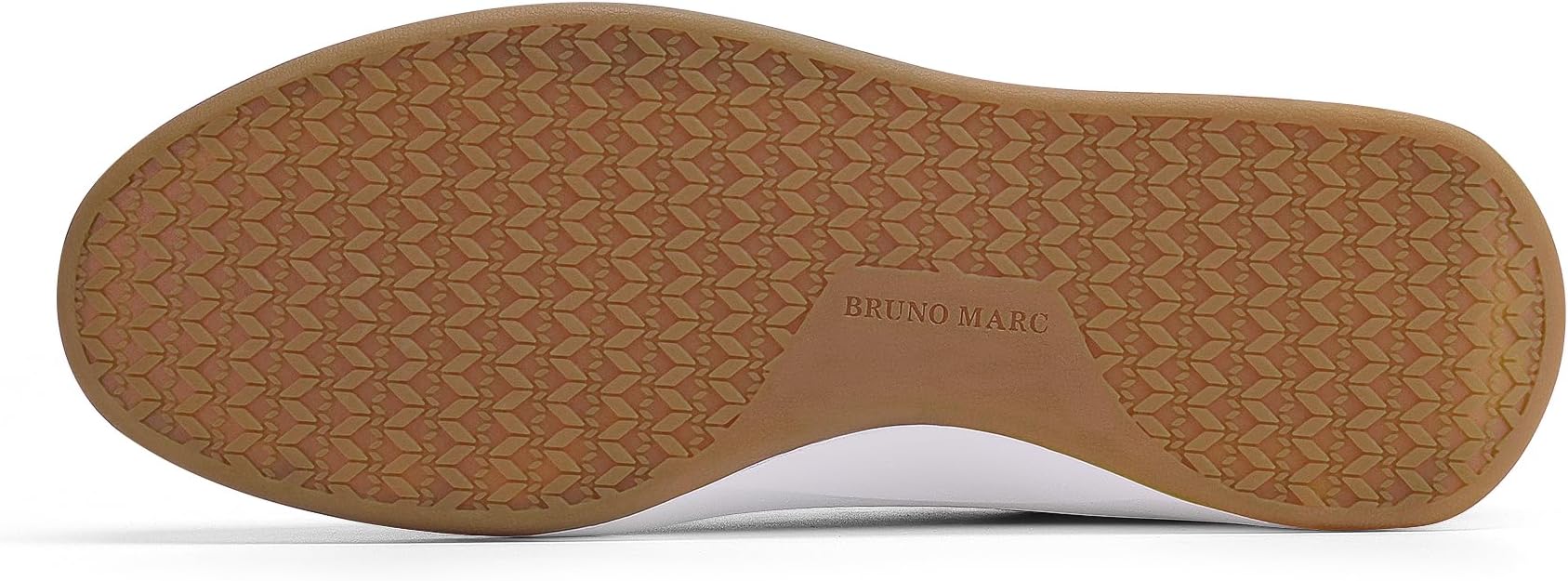
- Outsole: Rubber + EVA combination
- Insole: Removable EVA footbed with arch contour
- Lining: Mesh interior
- Width: Standard D
- Sizing range: US 6.5–15
- Colors: White, Black, Brown, Dark Brown
First Look: Design and Build Quality
Let’s get the construction baseline out of the way, because this is where the $40 price point either establishes credibility or collapses immediately.
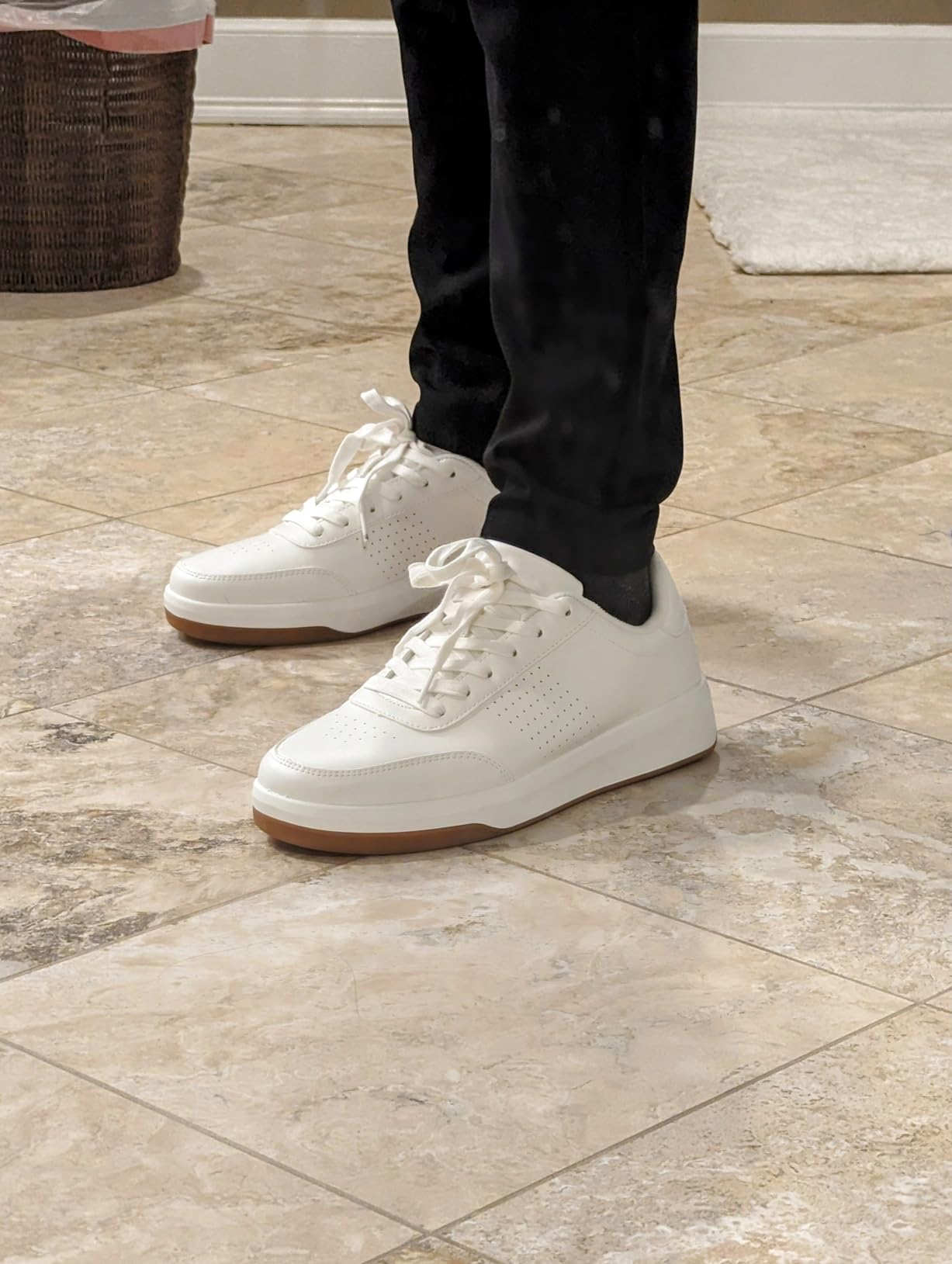
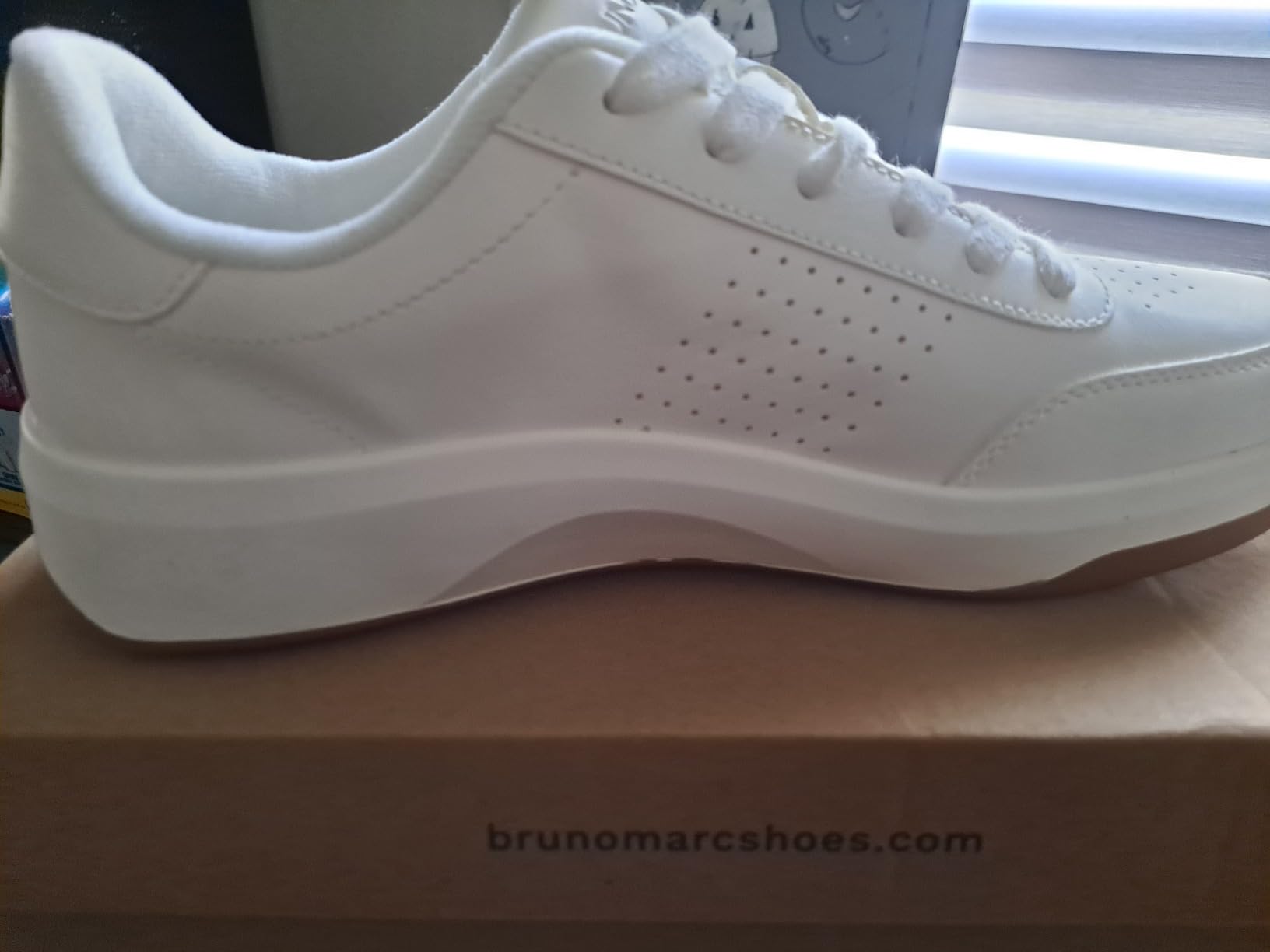
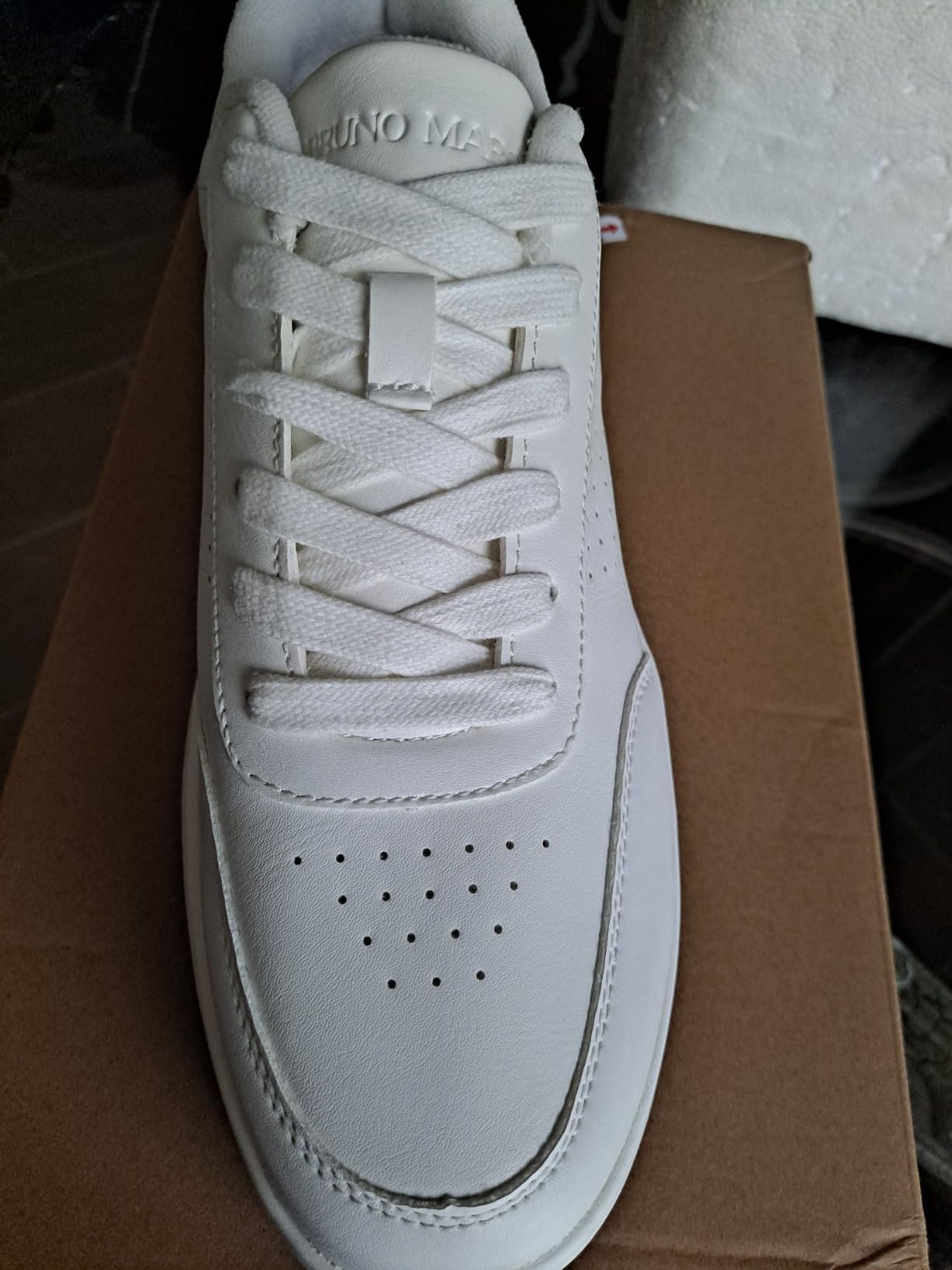
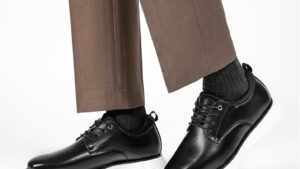
The perforated PU upper is cleanly executed — no excessive logo placement, no contrast stitching that reads as a distraction from the materials. The silhouette is proportionate in a way that suggests actual design intent rather than a generic factory template. Toe box volume is standard D, with enough room for natural toe splay without excess slop at the end.
Collar padding is the first thing I test on any dress-casual sneaker. I’ve worn through three pairs of formally adjacent shoes in the past two years that destroyed heels within the first week — none of them were in this price range, which should tell you something. The Bruno Marc collar has enough foam backing to distribute contact across the heel cup evenly. No narrow seam pressure. Tongue padding is thinner — functional, but if you lace these tight or wear thin dress socks, you’ll feel the lacing hardware more than you would in a dedicated athletic shoe.
One small detail that signals thoughtful production: Bruno Marc includes spare original laces in the box. At $40, most brands don’t bother. It’s a minor thing, but it matters.
The outsole is visually honest — you can see the rubber contact zones bonded to the EVA midsole from the side profile. Flex points sit in the forefoot and toe box, which aligns with where daily walking motion actually loads the shoe. Nothing exotic, but nothing incorrectly placed either.
Fit and Sizing — What You Actually Need to Know
Order half a size down from your standard. If you normally wear a 10 in Nike or Adidas, get a 9.5 here. These run approximately half a size large — consistently enough that it’s a recommendation, not a hedge.
I learned this the slightly inconvenient way: ordered a 10 (my standard across most athletic and casual shoes), noticed the heel had a few extra millimeters of slip by the end of week one. Not enough to cause blistering, but enough to confirm the half-size guidance that was already showing up in user reviews before I started testing.
Width is standard D throughout. For normal-width feet, the midfoot fit is firm and supportive without being constrictive. For wide feet — EE or beyond — the toe box narrows enough in the forefoot to create pressure points during extended wear. This isn’t the shoe for wide-foot buyers; the Cosidram Casual Loafers offer a wider fit profile if that’s your situation.
Break-in is essentially nonexistent. These are comfortable on day one. The insole molds slightly to your arch geometry across the first week — not a dramatic shift, but perceptible by week two when the shoe has settled into your specific foot shape.
Comfort and Arch Support: The Core Question
When a $40 shoe claims arch support, experienced buyers have two reasonable responses: skepticism, or resigned acceptance that “arch support” means a foam contour impression that compresses flat within a month. These are neither.
The EVA footbed has genuine structural depth under the arch — not a subtle raised curve, but actual underfoot foundation that you feel immediately when you pick up the insole and press it. The material holds its form. After 8 weeks of use at 180 lbs, the arch structure hasn’t compressed noticeably.
The evidence that matters: I wore these for a full-day conference — 15,000-plus steps across standing presentations, floor-to-floor venue walking, and extended networking receptions, starting at 7 AM and ending around 9 PM. By hour 8, my feet had no meaningful fatigue signal. That’s the test that separates real support from packaging copy.
The padded heel collar earns its own recognition. Eight weeks of wear, including sessions with thin dress socks that would normally require protective padding in dress-adjacent shoes, produced zero heel abrasion incidents. The collar foam is wide enough in coverage that there’s no contact pinch at the back seam — a comfort failure that’s surprisingly common even in much more expensive footwear.
Two features that the marketing undersells:
The insole is removable. If you use over-the-counter orthotics — Sof Sole Athlete Insoles or Superfeet, for example — you can swap them in. The insole depth accommodates a standard 4mm OTC orthotic without the shoe feeling stuffed. Thicker prescription orthotics may vary depending on your foot volume.
The interior mesh lining makes short sockless sessions workable. I wouldn’t run these sockless for a full day, but an evening out without socks for three to four hours produced no significant friction points.
One important calibration that any honest review owes buyers: the EVA arch support is meaningful for daily wear fatigue management — commuting, office work, extended standing. It is not a clinical solution. If you’re managing active plantar fasciitis, posterior tibial tendon issues, or significant flat foot mechanics, you need prescription or clinic-grade orthotics regardless of what’s in the shoe. The Bruno Marcs support healthy feet through long days; they don’t treat existing conditions.
Breathability and Upper Materials
Testing synthetic upper breathability is an exercise in calibration rather than discovery. The relevant benchmarks: perforated PU is better than solid PU. It is not mesh. Those two reference points define the performance range.
In the first week of testing — 85°F outdoor temperatures, full office days — the perforations moved enough air to prevent the surface heat accumulation that makes solid synthetic uppers miserable by midday. My feet stayed at a tolerable temperature. Not fresh, not cool, but not uncomfortable. In a mesh running shoe, the same conditions would feel meaningfully better. In a solid PU shoe, worse.
Cold weather addendum: PU leather stiffens below 50°F. These are not winter shoes. In cold conditions, the upper loses flexibility and the supple break-in feel disappears until body heat warms the material — typically 10 to 15 minutes of walking. If your daily routine includes meaningful outdoor walking in cold weather, factor in that initial stiffness phase.
White upper maintenance: if you buy white, you need a monthly care routine. A damp microfiber cloth with a small amount of mild dish soap handles general cleaning. For surface scuffs, Gripexx Sneaker Wipes or a dry Magic Eraser on PU surface works well. Avoid bleach — it degrades the PU surface coating over time. Black is lower maintenance; it hides minor scuffing and doesn’t require the same routine attention.
Outsole Traction and Durability Realities
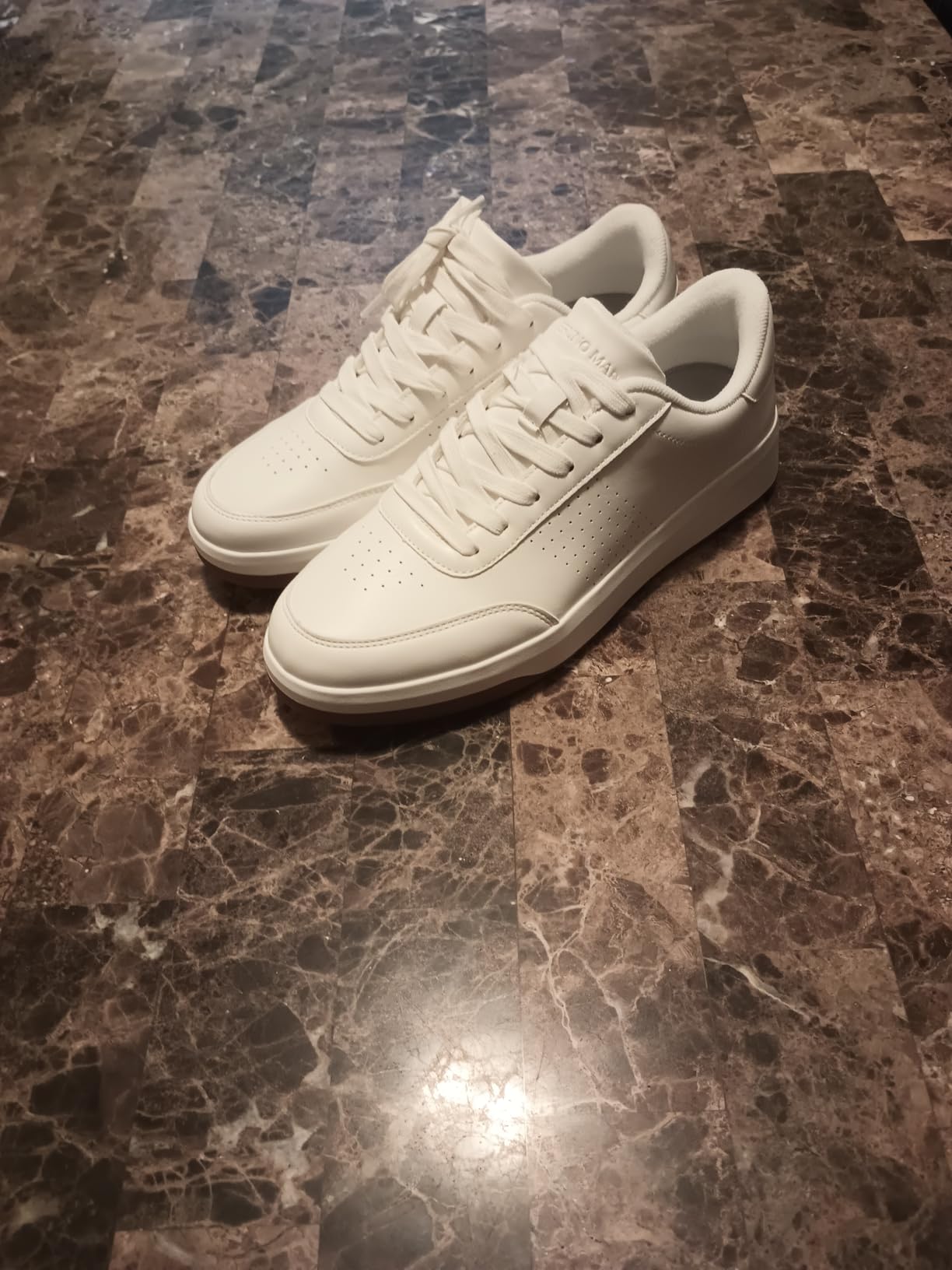
The rubber outsole provides what I’d describe as surface-agnostic daily traction — not optimized for any specific terrain, but reliably non-slip across the surfaces daily life actually puts you on. Conference center floors (among the most treacherous surfaces for any non-athletic sole), wet concrete, polished lobby tile, office carpet — no slip incidents across 8 weeks of mixed conditions.
Light rain: manageable for short exposures. The PU upper is splash-tolerant but not sealed. Ten minutes of walking in light rain left no interior moisture; standing in a puddle at a bus stop for several minutes would eventually soak through.
Durability timeline — based on my week-8 wear patterns and broader user data, broken down by use intensity:
- Occasional wear (3–4x per week, office/lifestyle use): 12–18 months before meaningful outsole wear
- Regular daily wear (5x per week): 8–12 months
- High-step-count jobs (service industry, extended outdoor use): 6–9 months
The primary failure mode reported across user reviews is interior heel lining wear, typically appearing around month 6–8 of daily use. The rubber outsole tends to outlast the interior lining — so the shoe’s functional life usually ends from the inside, not the bottom.
One quality control variable worth flagging: a small percentage of buyers have reported glue separation at the outsole seam and material defects in the upper. I didn’t encounter these issues in my pair, but the pattern is consistent enough across reviews to be a real $40-tier production reality rather than isolated complaints. If you receive a pair with visible construction defects, return and exchange immediately — this isn’t a single-unit problem.
Versatility: What These Shoes Can Actually Do
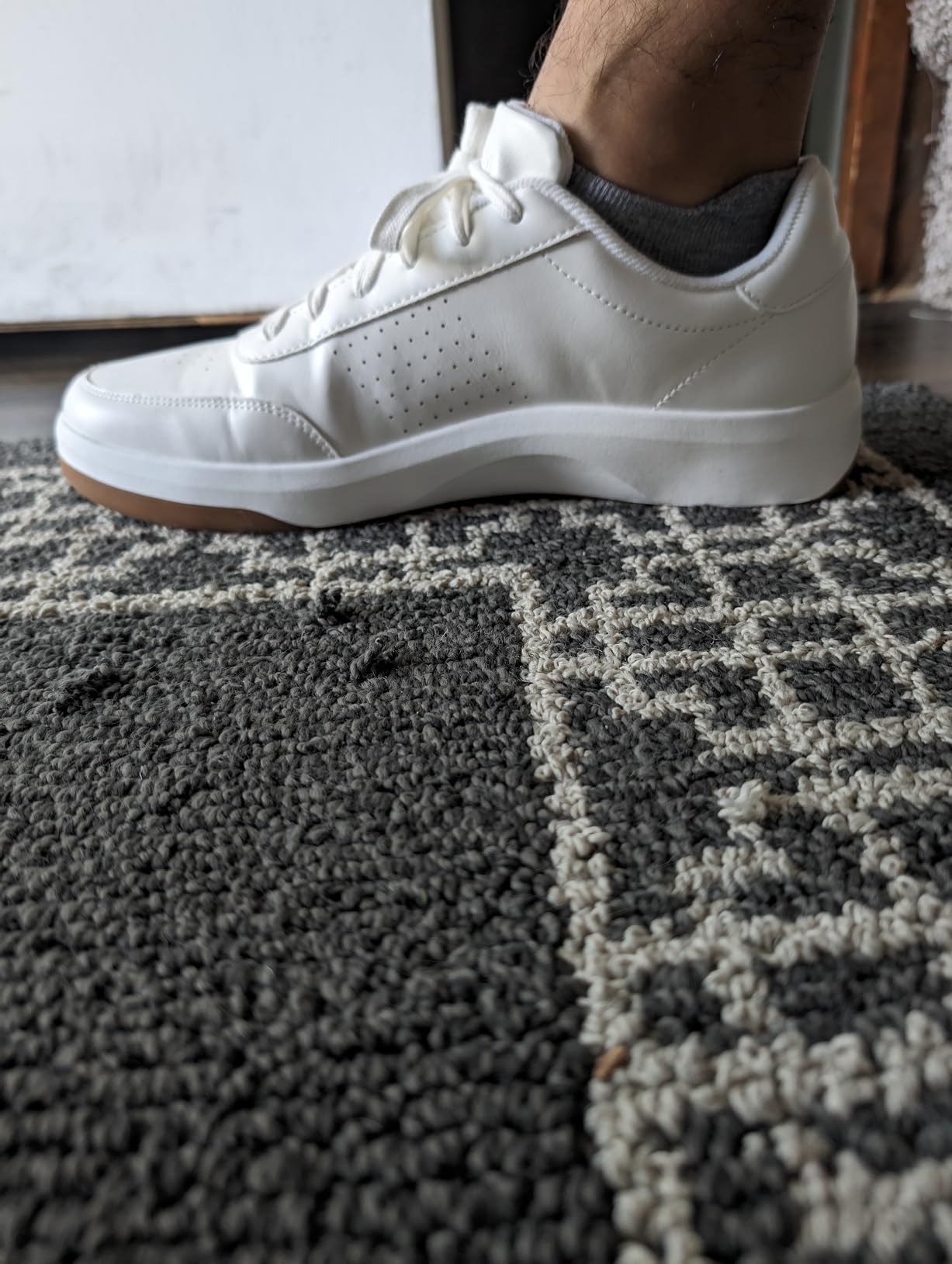
This is where the Bruno Marc outperforms its price bracket most convincingly.
Over 8 weeks I wore these to: four office days per week (business casual environment), three evening dinners at mid-range restaurants, two outdoor weekend events, and a smart-casual wedding. They worked in all of these without outfit conflicts or second-guessing.
Outfit combinations that cleared every social threshold I tested:
- Navy chinos + white OCBD button-down: business casual, conference-appropriate
- Dark wash jeans + casual blazer: elevated evening, smart-casual restaurant
- Tan chinos + polo shirt: outdoor events, summer casual
- Charcoal trousers + tucked shirt: approaching the business professional ceiling for this shoe
The ceiling: these are recognizably sneakers. In formal professional environments — law firms, finance interviews, black tie events — you need leather-soled dress shoes. No PU synthetic crosses that line credibly. The Bruno Marc Waveflex Coreneat is a step closer to formal dress territory if you need to push further into professional environments.
Between colorways, black is the most practical year-round pick — it hides surface scuffing and pairs cleanly with the widest range of outfit colors. White is the most versatile for warm weather and lighter outfits; brown works best with earth tones and khaki-adjacent clothing.
Performance Across Daily Conditions
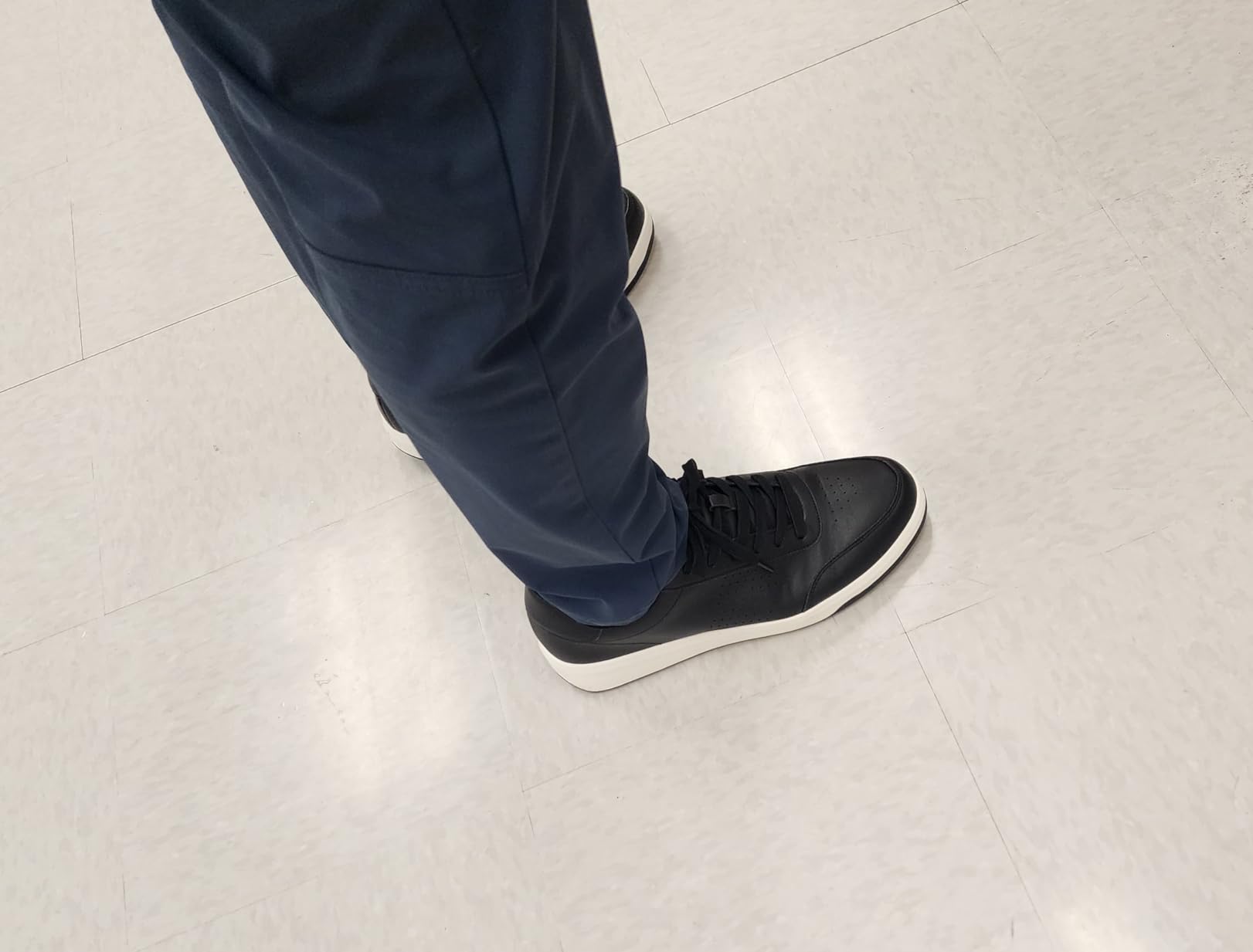
Extended office days (8–12 hours): The arch support holds without degrading mid-day. The critical measure for me is the hour-6 to hour-8 range — when cheaper insoles start feeling like flat foam. These maintain a consistent underfoot sensation through the full workday.
Weekend active use: The 12.5 oz weight is relevant over long-distance daily walking. Standard Oxford dress shoes run 14–16 oz — that 2 to 3 oz difference compounds across 10,000-plus steps into noticeable calf and ankle fatigue with the heavier shoe. The Bruno Marcs don’t create that accumulated load.
Weather exposure: Light rain — manageable. Heavy rain — avoid. Hot weather (85°F+) — adequate, not exceptional. Cold weather (below 50°F) — the PU stiffens initially; plan for a short warmup period.
Surface variety: No slip incidents across polished floors, concrete, carpet, and light outdoor surfaces throughout the 8-week period.
Do Bruno Marc’s Claims Hold Up?
“Arch Support Insoles” — Accurate. There is real EVA structure in the footbed, not a molded foam impression. The support is perceptible and durable across extended testing.
“Comfortable Dress Shoes” — Mostly accurate, with a vocabulary note. These are dress-adjacent sneakers. In comfort terms, they deliver. In dress code terms, “dress shoes” overstates their formal range. If you’re buying a smart-casual sneaker with elevated aesthetics, you’ll be satisfied. If you need actual dress shoes, look at the Yolark Casual Dress Shoes for a more formal silhouette.
“Perforated Design keeping feet cool” — Partially accurate. The perforations help compared to solid synthetic uppers. The claim implies more breathability than perforated PU can physically deliver. Better calibration: “meaningfully better than solid PU, significantly less breathable than mesh.”
“Versatile and Practical” — Fully accurate. This is the shoe’s most defensible claim and arguably its strongest actual feature.
Overall Assessment and Score
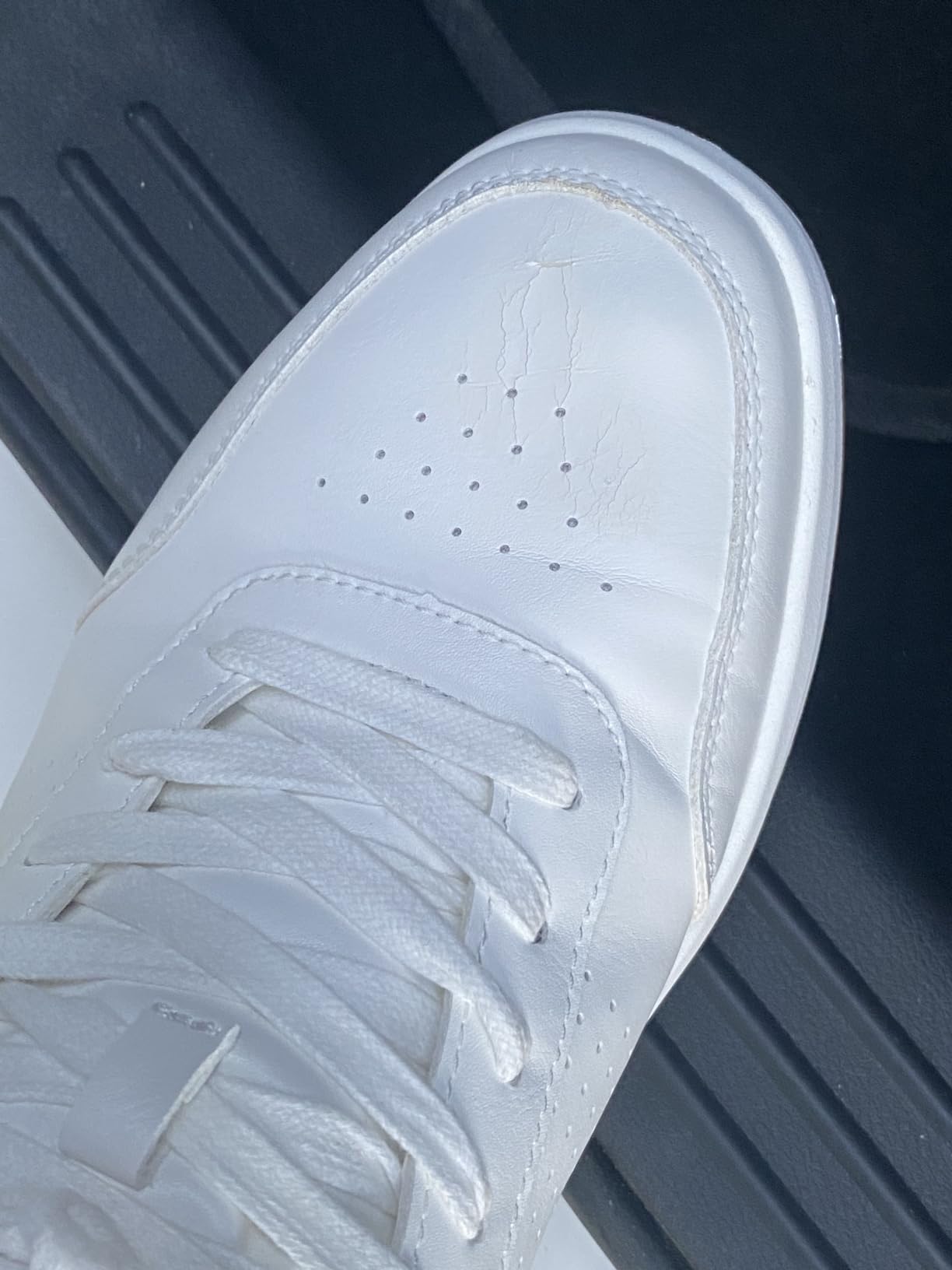
After 8 weeks of consistent daily rotation, here’s how it breaks down:
| Category | Score | Notes |
|---|---|---|
| Design & Aesthetics | 8/10 | Understated, dress-code adaptable |
| Comfort & Arch Support | 8.5/10 | Genuine EVA structure; top performer at price point |
| Build Quality | 7/10 | Solid but QC variance is a real factor |
| Versatility | 9/10 | Crosses more dress codes than any other shoe at this price |
| Value for Money | 8/10 | $0.13/wear at 300 sessions; hard to beat at this bracket |
| Overall | 7.8/10 | Recommended for daily casual wear |
The value equation: $40 over a conservative 300-wear lifespan puts you at $0.13 per session. Cole Haan GrandPro starts at $120 for meaningfully better materials and longer lifespan — but you’re paying 3x upfront. If the budget ceiling is $40, the Bruno Marc is the benchmark to beat in this category, not the consolation prize.
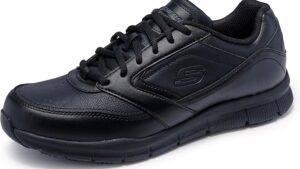
One additional data point: my friend Dave (6’2″, 210 lbs) has been running these in rotation with a pair of Skechers Nampa Food Service shoes for service work. His assessment: the Bruno Marcs are considerably more outfit-versatile, but the Skechers hold up better under the specific demands of a high-step-count service shift. That tracks with my own durability findings and the pattern in broader user data.
Purchasing note: if you might need to return these, buy through Amazon or Walmart rather than directly from the Bruno Marc brand site. The direct brand return policy includes a 30% restocking fee — something worth knowing before your first order.
Who Should Buy These (and Who Should Skip Them)
Perfect for
- Office workers who stand or walk 6–10 hour shifts and need arch support without spending over $80
- Young professionals building a practical wardrobe on a tight budget
- Guys who want one shoe that crosses from weekend casual into business casual without carrying two pairs
- Anyone with mild arch fatigue who can’t justify premium orthopedic footwear
Think twice if
- You have wide feet — the standard D width creates forefoot pressure during extended wear
- Your job involves sustained heavy use — you’ll hit the durability ceiling before typical office wearers do
- You need shoes to last two or more years — budget for replacement at 8–12 months of regular use
Skip entirely if
- You need fully waterproof footwear
- Your primary environment is formal professional (finance, law, formal events)
- You plan to use them for athletic activities — these are lifestyle sneakers, not training shoes
Better options for specific needs
- More durability at the budget tier: Skechers Nampa Food Service — rated for heavy standing, slip resistance
- Dressier Bruno Marc: Bruno Marc Maxflex Dress or Waveflex Coreneat for more formal environments
- Breathable mesh version: Bruno Marc KnitFlex Breeze — same brand, mesh upper for warmer climates
- More athletic versatility: Adidas Daily 3.0 — slightly more cushioning responsiveness, lower arch structure
Final Verdict
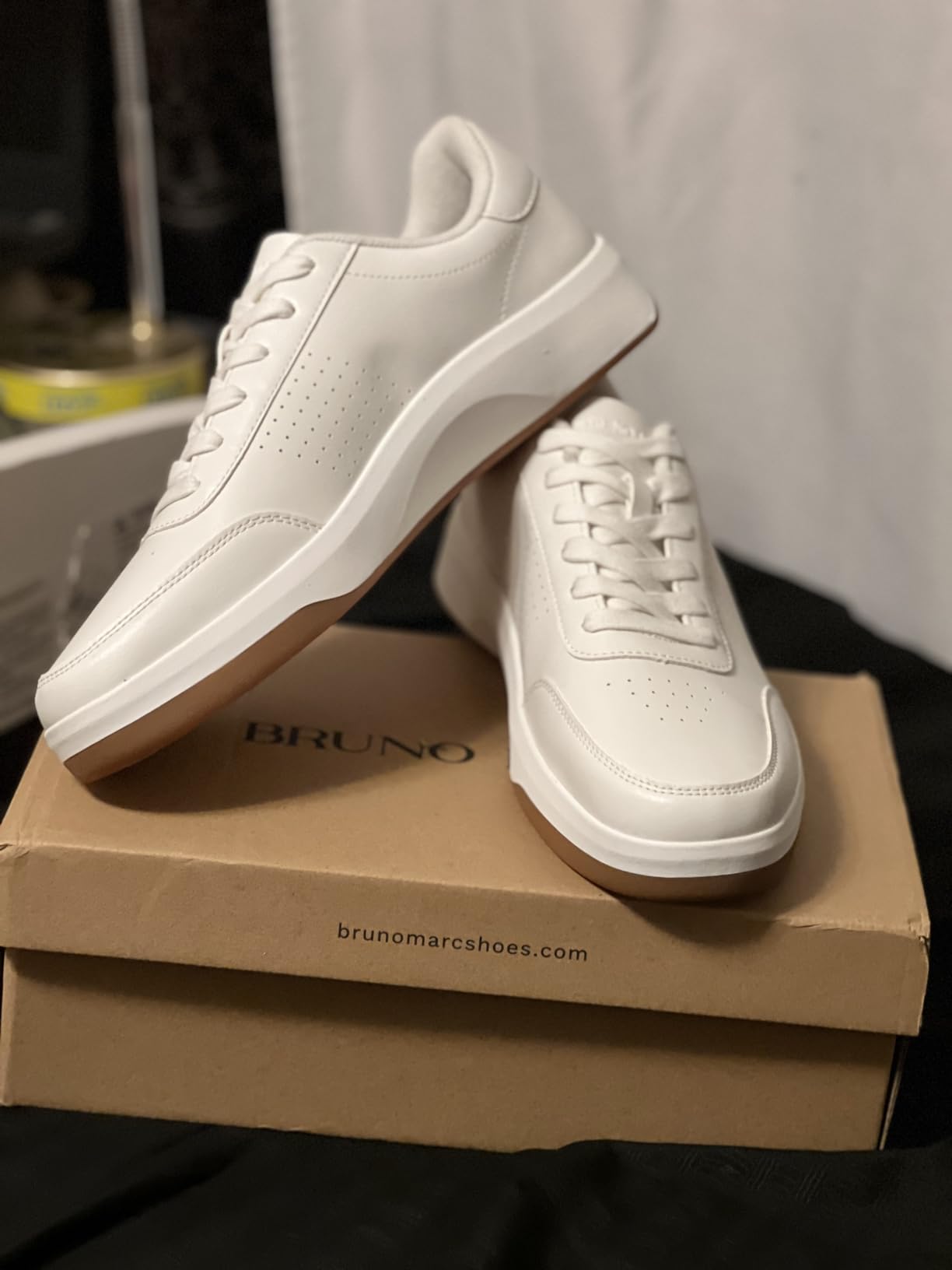
| What Works | What Doesn’t |
|---|---|
|
|
The Bruno Marc Arch Support Fashion Sneaker is a reliable, honest performer at a price point that earns its place in a practical everyday rotation. It doesn’t overclaim. The arch support is real, the versatility is real, and the durability trade-offs are exactly what the price suggests — not worse, not better.
Size down half if you’re between sizes. Buy through Amazon or Walmart for return flexibility. Treat these as lifestyle footwear — not athletic shoes, not formal dress shoes — and they’ll carry you through 8 to 12 months of consistent daily wear without complaint.
For a wider look at casual sneaker options across price points, browse the FootGearUSA sneaker collection. If you need more structural support for office longevity, the Bruno Marc Dress Sneakers line also offers arch-support models worth comparing at a similar price tier.
Frequently Asked Questions
How does Bruno Marc sizing compare to Nike and Adidas?
These run approximately half a size large relative to both Nike and Adidas in their most common models. Size 10 in Nike Free Run or Adidas Daily? Order 9.5 in these. The width is standard D — consistent with Nike standard width and Adidas standard build. Not recommended for EE or wider feet.
Is the arch support enough for plantar fasciitis or flat feet?
The EVA insole provides genuine structural support for daily wear fatigue — a meaningful step up from flat foam insoles common in budget shoes. But it is not a medical-grade solution. If you’re managing active plantar fasciitis or significant flat foot mechanics, you need prescription or clinical-grade orthotics regardless of what the shoe contains. The insole is removable, so you can add Sof Sole Athlete Insoles or similar OTC options for additional targeted support.
How long will these last with daily wear?
Based on testing and extended user data: 8–12 months of regular 5x-per-week office use. Lighter use patterns (3–4x per week) typically reach 12–18 months. The primary wear indicator is interior heel lining degradation — once that starts feeling rough, the shoe’s useful life is ending. Use FootFitter Cedar Shoe Trees between wears to maintain shape and extend the upper’s useful life.
Can I wear these to a business casual workplace?
Yes, in most business casual environments — tech companies, consulting, creative agencies, education, casual corporate. They work without drawing attention. In traditional professional settings (finance, law, formal banking), these are recognizably sneakers and may not meet dress code expectations. The Bruno Marc Waveflex Coreneat has a more formal-adjacent profile if you need to push closer to business professional.
How do I keep the white PU upper clean?
Monthly wipe-downs with a damp cloth and a small amount of mild soap handle general surface cleaning. For targeted scuff removal, Gripexx Sneaker Wipes work well on PU surfaces. Avoid bleach — it degrades the PU coating over time. Between wears, cedar shoe trees help the upper maintain shape and prevent creasing at the toe box.
Can I swap in my own orthotics?
Yes — the insole is removable and the depth accommodates a standard 4mm OTC orthotic without making the shoe feel cramped. Thicker prescription orthotics may fit depending on your foot volume; it’s worth testing the fit with your specific orthotics before committing.
Are these suitable for restaurant or service industry workers?
They work for shorter shifts (4–6 hours) in a service context. For full-day service industry use — 8-plus hours, continuous standing, slip-hazard environments — you’d be better served by a dedicated work shoe rated for slip resistance and heavy use, like the Skechers Nampa Food Service. The Bruno Marcs aren’t safety-rated, and their durability ceiling is lower under high-step-count daily conditions.
What happens if I need to return them?
If you buy through Amazon or Walmart, standard return policies apply — usually 30 days, no restocking fee. If you buy directly from the Bruno Marc brand site, be aware that their return policy includes a 30% restocking fee on non-defective returns. Buy from a retailer with a standard return window if you’re unsure about fit or colorway.
Be the first to review “Bruno Marc Men’s Casual Arch Support Fashion Sneaker”
Related products
Sneaker
Sneaker
Running Shoes
Running Shoes

Sneaker
Reviews
There are no reviews yet.