
Standing in the pickleball equipment aisle two months ago, I faced a decision that probably sounds familiar: drop another $120 on the ASICS Gel-Game 9 I’d been using, or take a chance on these FitVille shoes everyone at the club kept mentioning. Mike here, 180 pounds and dealing with the kind of foot cramping that makes you question whether pickleball is worth it. Twelve weeks and 48 games later, I’ve learned something important about these wide pickleball shoes — and it’s not what the marketing materials want you to believe.
Technical Specifications
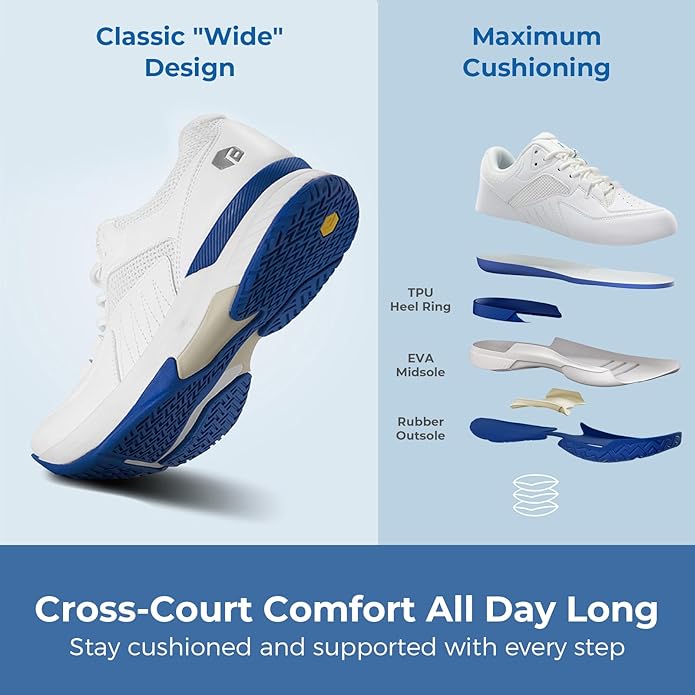
- ⚖️ Weight: 13.5 oz (men’s size 9)
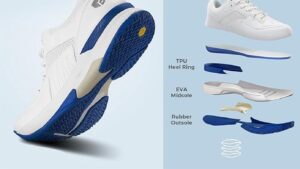
- 🧪 Midsole material: Dual density EVA with Ortholite insole
- 👟 Upper material: Mesh and microfiber combination
- 🏃♂️ Category: Wide court shoes (2E/4E options)
- 🎯 Best for: Players with wide feet, foot conditions requiring extra room
- ⏱️ Testing period: 12 weeks, 48 games, 96 hours court time
What You Get for $70: Build Quality & First Impressions
Opening the Box
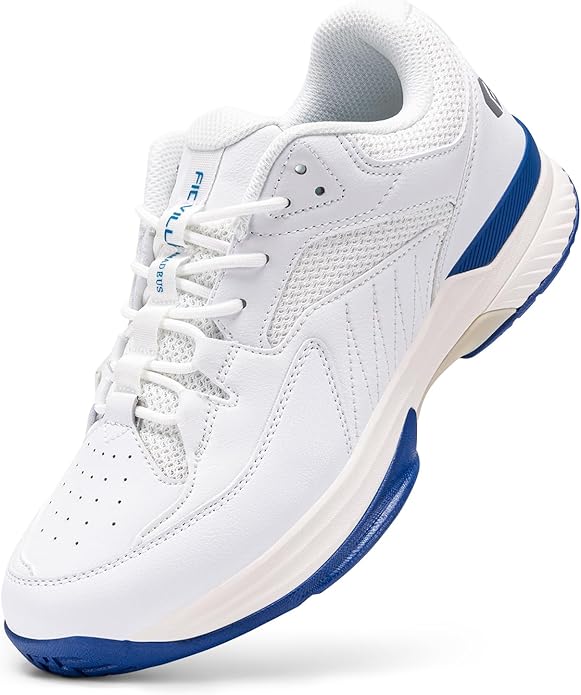
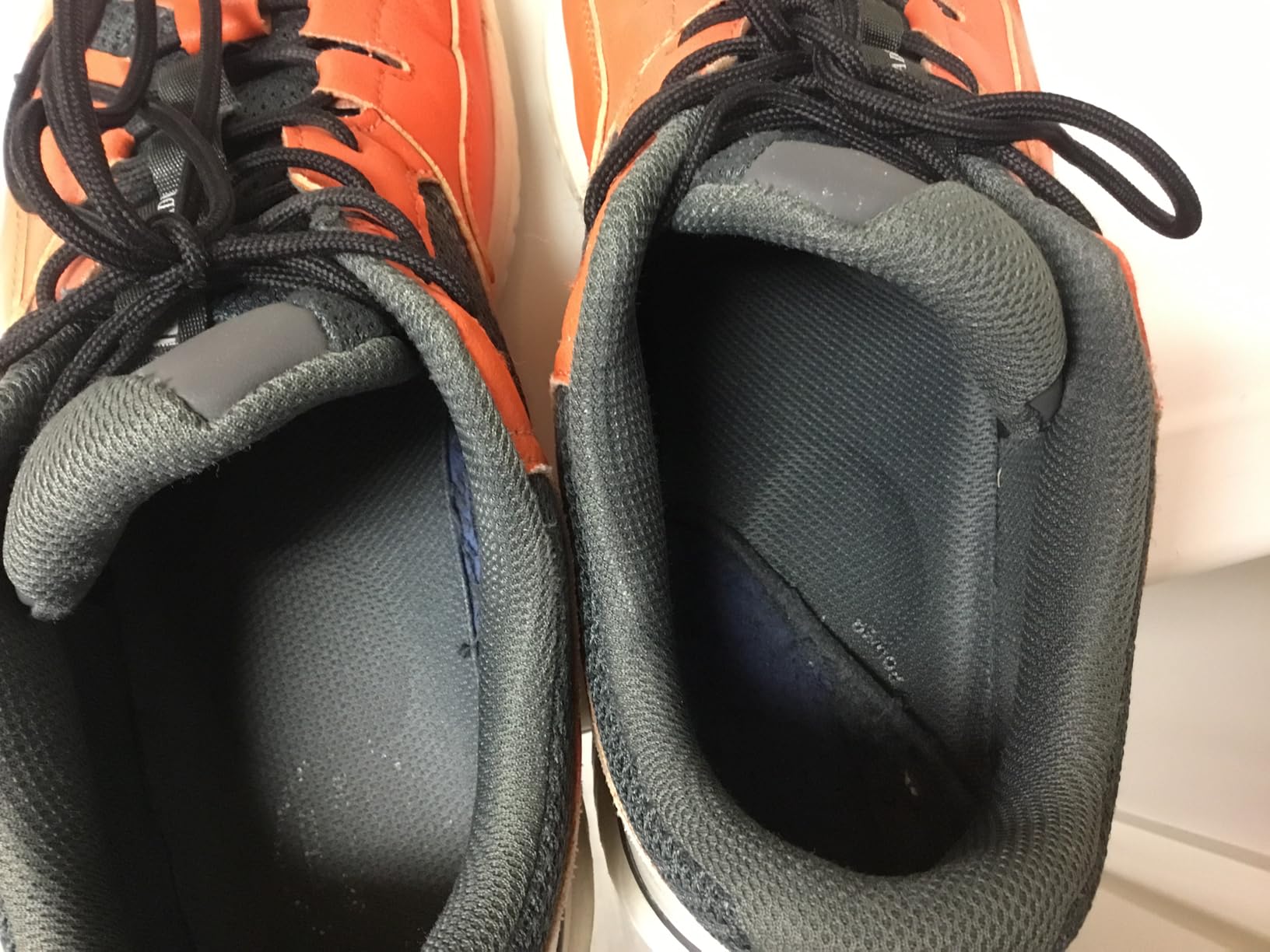
These shoes surprised me before I’d taken a single step. The mesh and microfiber upper felt heavier than I expected at 13.5 ounces per shoe — noticeably more substantial than my previous tennis court shoes. But the stitching caught my attention for the right reasons. Clean. Tight. The kind of construction that made me wonder if someone had accidentally put a $100 shoe in a $70 box.
Then I pulled out the laces.
Look, I’ve tested a lot of shoes over the years, but I’ve never seen anything like this. They included laces that had to be 60 inches long. For a standard court shoe. After I laced them up normally, I had enough excess to… I don’t even know what. Wrap around my ankle twice? The absurdity made me laugh, but it also told me something: I’d need to budget for replacement laces immediately. Standard 52-inch laces solved the problem for about $4.
The Wide Toe Box Reality
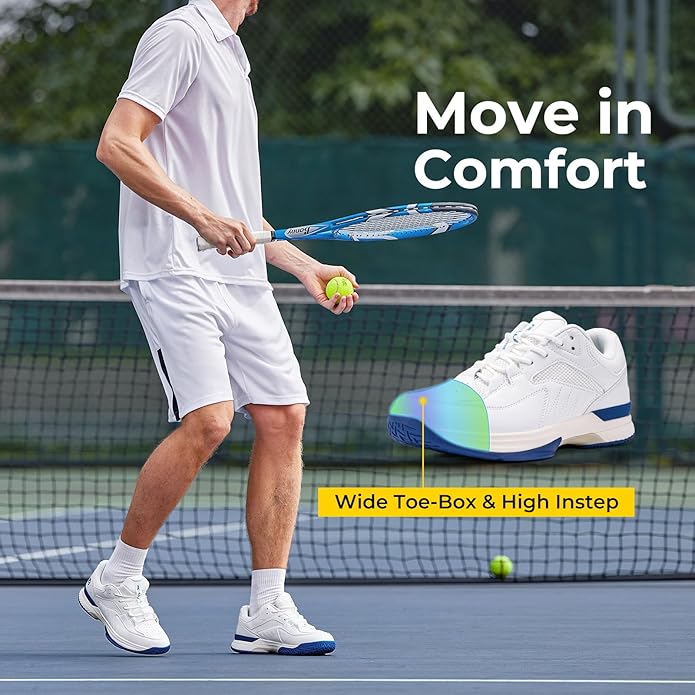
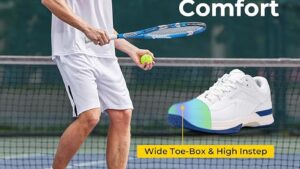
Here’s where these shoes justify their existence. I wear a size 10 medium in most brands, went with my normal size in the 2E width, and the fit was revelatory. Not “a little roomier than usual.” Actually spacious. My toes spread naturally during play without any of the pinching I’d gotten used to accepting as normal with running shoes repurposed for court sports.
The difference matters more than you’d think. After two-hour sessions in my old shoes, I’d developed this habit of sitting on the bench between games and flexing my toes just to restore circulation. With the FitVilles, that ritual became unnecessary. Week three, I realized I’d stopped thinking about my feet during games — which is exactly what you want from court shoes.
First Game: Performance & Court Feel
Immediate Traction & Stability
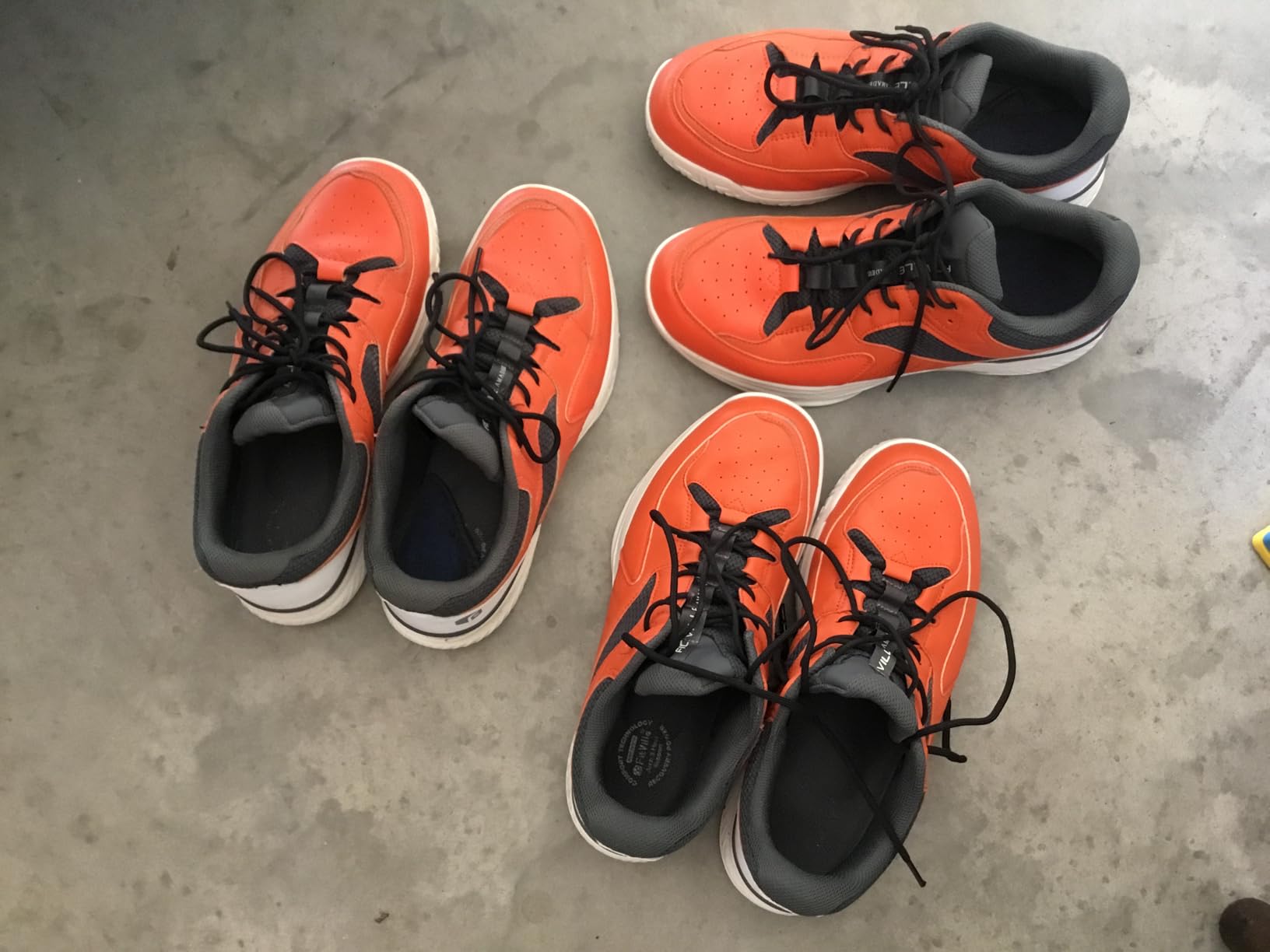
Walking onto our indoor court for the first time in these shoes, I expected a break-in period. There wasn’t one. The Ortholite insole felt cushioned enough for recreational play right away, absorbing impact during volleys without any hot spots forming. At 180 pounds, the dual-density EVA midsole gave me adequate support during baseline rallies, though I could feel it wasn’t quite as responsive as the premium shoes I’d been comparing it to.
What stood out was stability. The wide platform created this planted feeling during quick lateral movements. Court shoes with narrow profiles sometimes feel unstable when you’re shuffling side to side at the net — like you’re balancing on stilts. These did the opposite. Confident. Grounded. The kind of feel that lets you focus on the ball instead of your footwork.
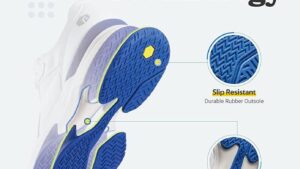
Traction on the indoor gym floor exceeded my expectations for a $70 shoe. The rubber compound gripped well during direction changes, though I noticed it wasn’t quite as sticky as premium alternatives when I really pushed it during competitive points. For recreational to intermediate play, it delivered what I needed.
Twelve Weeks of Testing: Indoor vs. Outdoor Performance
Indoor Court Results
Over 48 games, roughly half indoors and half outdoors, I tracked how these shoes held up in different conditions. Indoor performance stayed consistent throughout testing. The traction never degraded noticeably on polished gym floors, and the comfort level remained excellent even during three-hour sessions. I played without foot pain, cramping, or the hot spots that usually develop around my arch after extended wear.
The arch support deserves its own comment. It’s adequate. That’s the most honest way to put it. For recreational players, adequate works fine. But several people I play with — particularly those dealing with plantar fasciitis — mentioned they’d upgraded to aftermarket insoles within the first month. Something like Dr. Scholl’s or a dedicated arch support insole transforms these from “decent” to “comfortable enough for medical-grade relief.”
Outdoor Testing: Where Problems Emerged
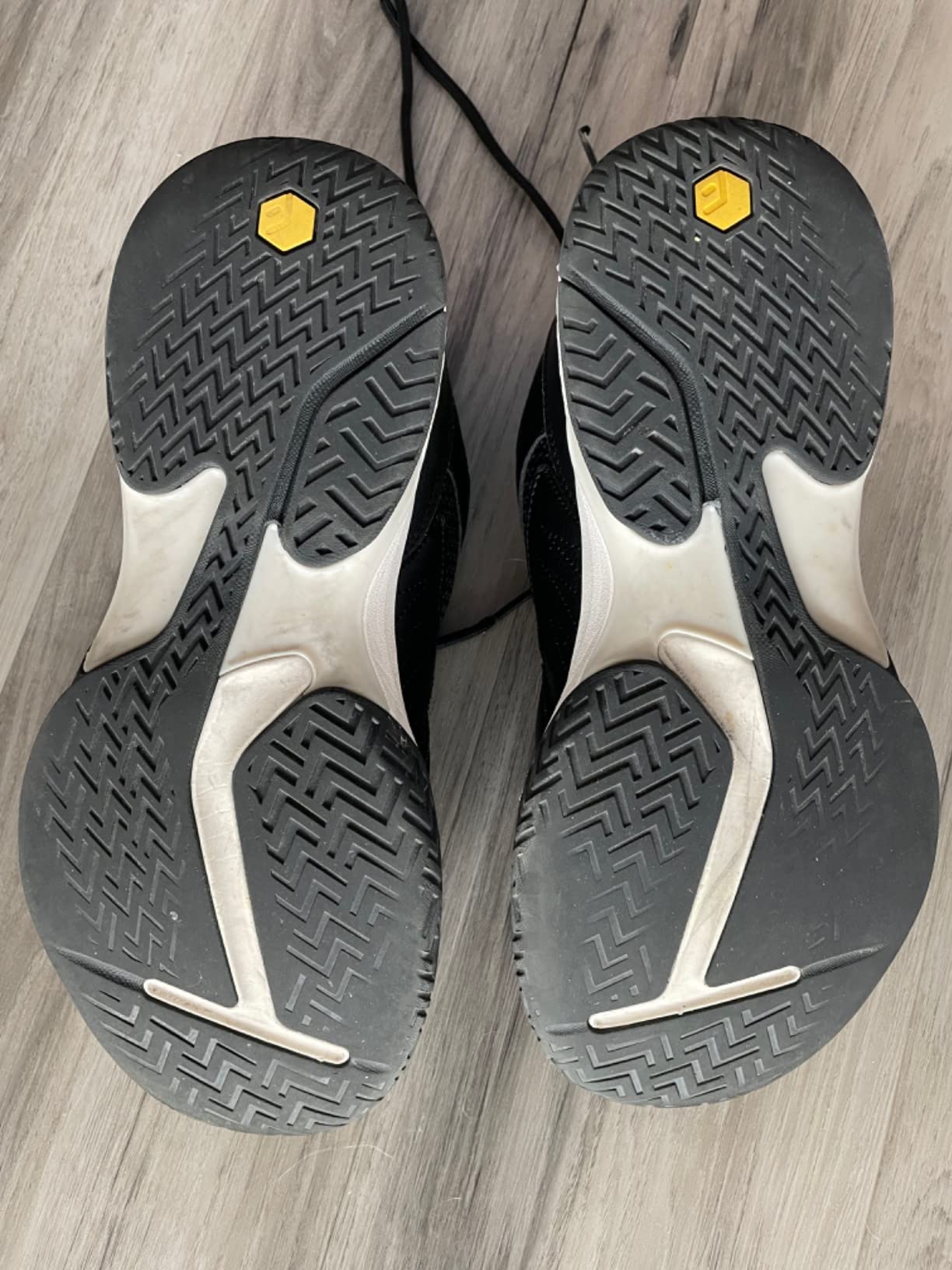
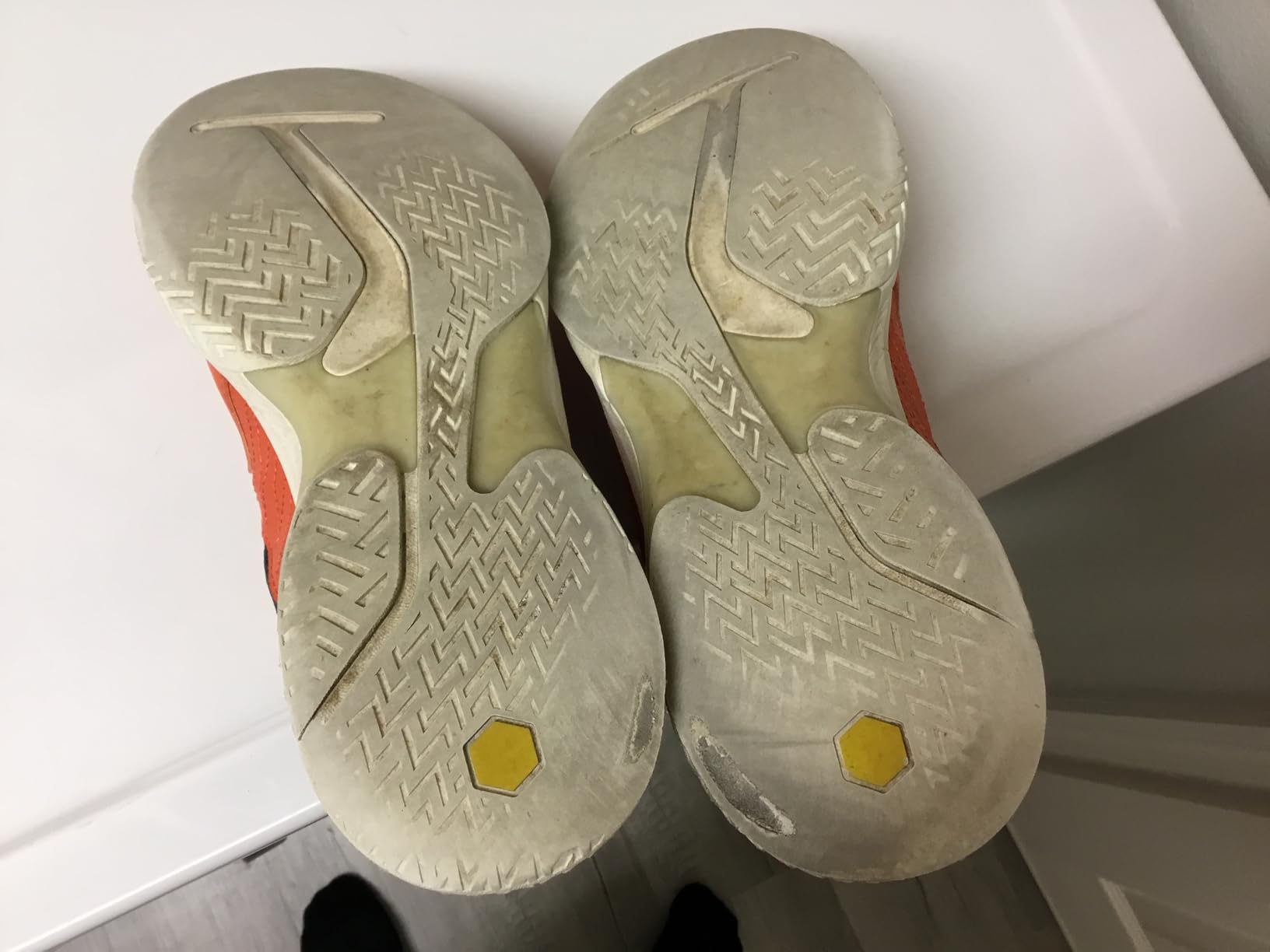
Our club plays outdoors twice a week on concrete courts, and this is where the FitVille shoes started showing their limitations. Six weeks in — playing three times weekly for about two hours per session — I noticed visible sole wear. Not minor scuffing. Actual tread loss. Some areas on the ball of the foot showed complete wear-through to the midsole.
The traction stayed reliable on outdoor courts, handling concrete and the occasional dusty surface without major issues. But the durability gap between what FitVille’s marketing suggested and what I was actually experiencing became impossible to ignore.
Marketing Claims vs. Testing Reality
Verifying Brand Specifications
FitVille makes specific claims about these shoes. After three months of testing, here’s how they held up:
**”Wide & Extra Wide for those with wider feet”**
✅ Absolutely delivers. This is their strongest selling point. The 2E and 4E width options aren’t marketing speak — they’re genuinely accommodating. Even players with bunions and foot conditions found relief they hadn’t gotten from standard “wide” options from other brands.
**”Ortholite material for cushioning and support”**
⚠️ Partially delivers. The Ortholite insole provides decent cushioning for recreational play. But “support” oversells it. The arch support is basic. Adequate for some players, insufficient for others. Context matters here — if you need medical-grade arch support, plan on insole upgrades.
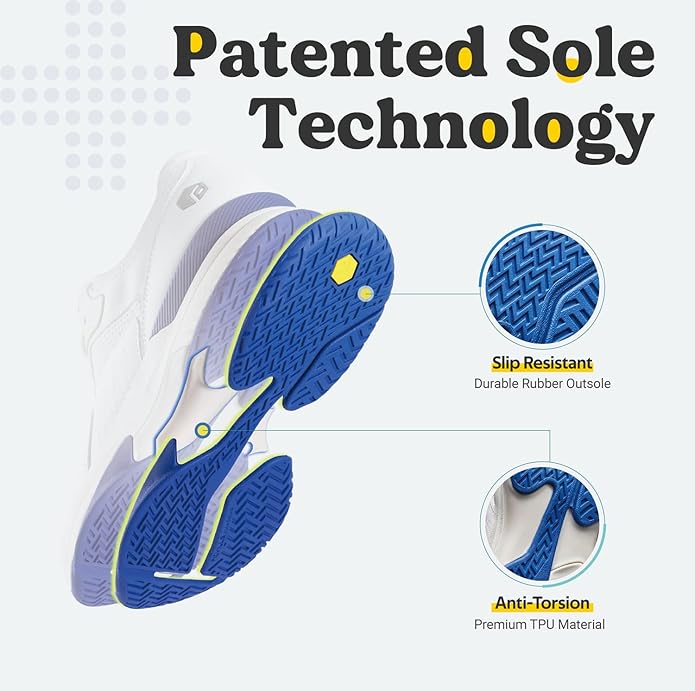
**”Durable dual density EVA and anti-torsion TPU rubber”**
❌ This is where reality diverges from marketing. The materials exist. They perform adequately. But calling them “durable” in any premium sense misleads buyers. Regular players should expect 4-6 month lifespans, not the year-plus you’d get from a $120-150 New Balance court shoe.
**”Enhanced non-slip design for all surfaces”**
✅ Traction performs solidly across indoor and outdoor courts. The “all surfaces” claim is mostly accurate for court sports, though the outdoor durability caveat applies — it grips well until the tread wears down faster than you’d prefer.
Quality Control Issues
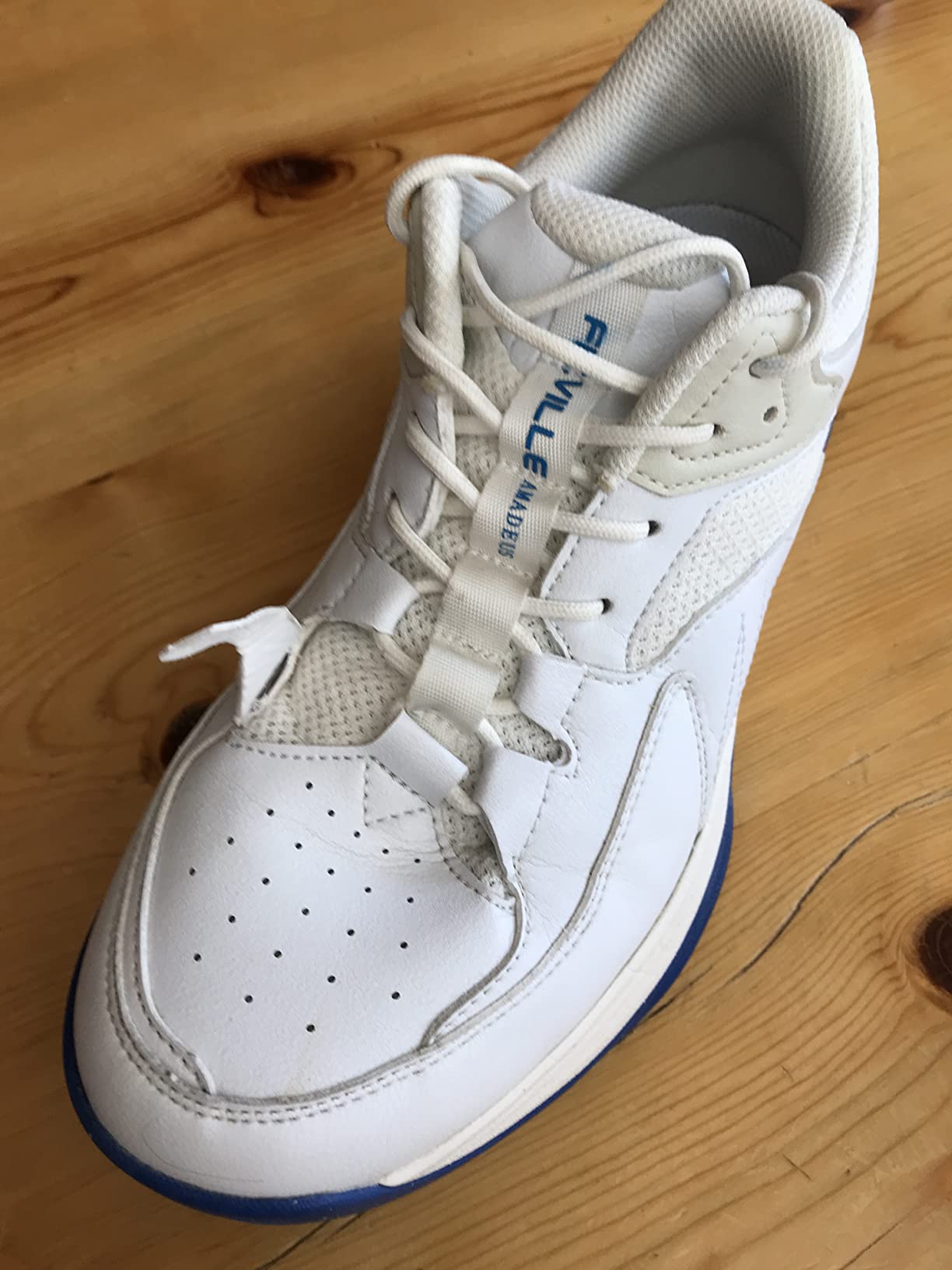
Around week ten, I noticed an eyelet starting to separate from the upper. Not catastrophically, but enough to affect lacing tension on that side of the shoe. When I mentioned it to other FitVille users at the club, three of them had experienced similar QC issues — stitching separation, sole detachment in high-stress areas, inconsistent build quality between identical pairs.
For a $70 shoe, minor QC variance feels more acceptable than it would at $150. But buyers should know it’s a possibility.
The Durability Story: The Central Trade-Off
Sixteen Weeks and the Math
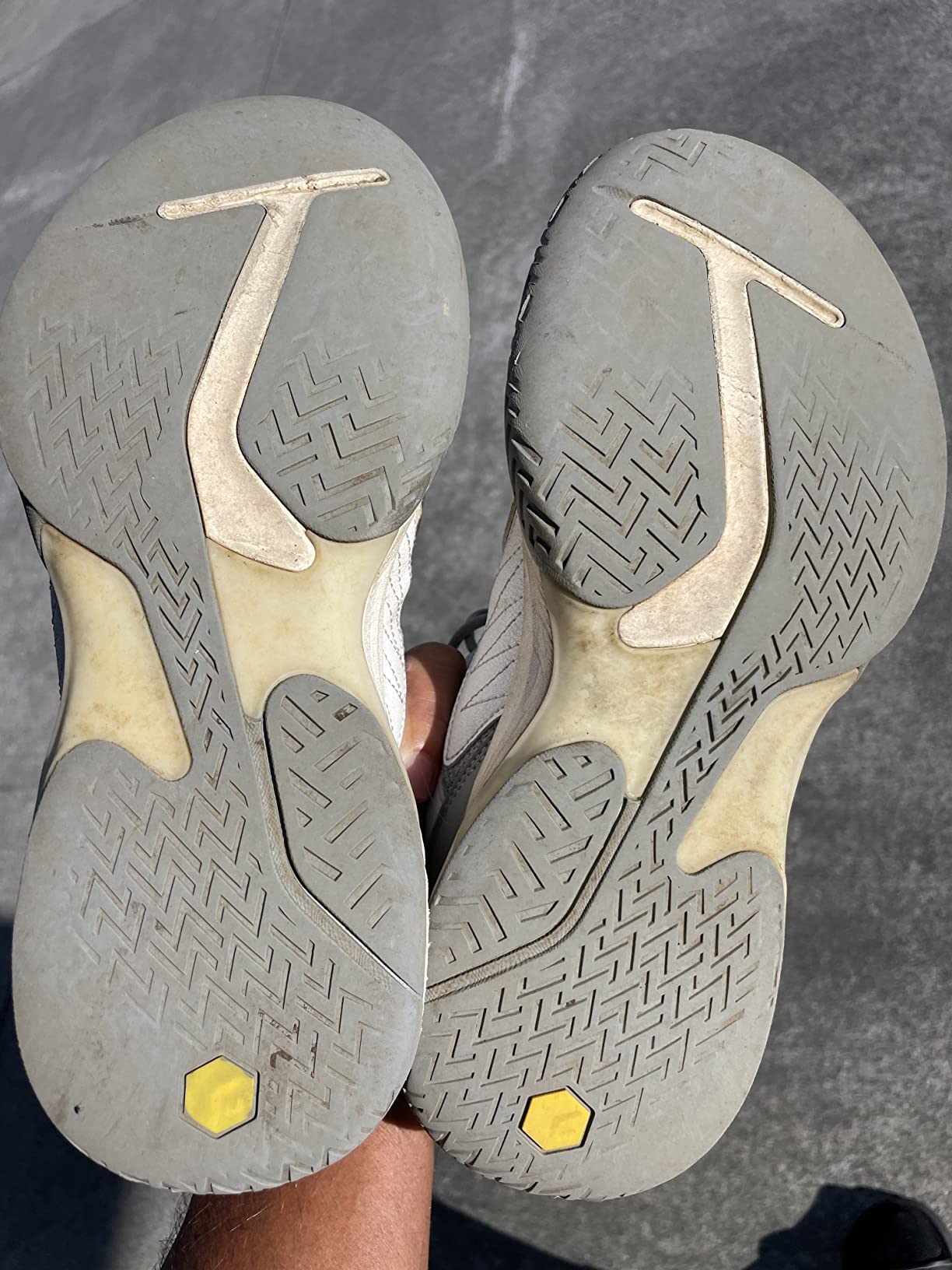
By week sixteen, the sole degradation had accelerated. Tread patterns visibly diminished. Areas of complete wear-through expanded. The shoes remained functional, but I could feel the cushioning starting to compress and lose responsiveness.
This isn’t a design flaw — it’s a price point reality. When I calculated the actual cost, the numbers surprised me:
– FitVille at $70, lasting 4-5 months with regular play = **$15-18 per month**
– Premium shoes at $150, lasting 8-12 months with similar use = **$12-19 per month**
The gap is smaller than the upfront price suggests. For recreational players using these shoes once or twice weekly, that 4-5 month window stretches to 6-8 months. The math works differently depending on your play frequency.
Who This Matters For
If you play daily or primarily on abrasive outdoor courts, the durability limitation becomes a dealbreaker. You’re looking at replacement cycles that may actually cost more per month than investing in premium shoes upfront.
But for recreational players — the ones playing pickup games a couple times a week — the math tilts in FitVille’s favor. Especially if you’ve struggled to find basketball shoes or court shoes that accommodate wide feet without causing pain.
Comfort, Breathability & Seasonal Considerations
During summer sessions in 90-degree heat, the limited breathability became noticeable. My feet felt warmer than they did in more ventilated mesh designs. The microfiber upper isn’t optimized for maximum airflow — it prioritizes durability and structure over cooling. Not unbearable, but worth considering if you play in consistently hot conditions.
Cooler weather flipped that script. The slightly thicker construction provided welcome warmth during autumn games, and the materials didn’t stiffen in cold temperatures the way some budget alternatives do. The shoe performed better in shoulder seasons than peak summer.
Damp court conditions highlighted another trade-off. The upper materials handled moisture well without feeling soggy, but they took noticeably longer to dry than synthetic mesh alternatives. If you play in humid climates or rainy conditions, plan for extended drying times between sessions.
Who Should Buy These (and Who Shouldn’t)
Ideal Buyers
These shoes solve specific problems for specific players:
– **Wide-footed players struggling with traditional brands** — If you’ve been cramming your feet into standard “wide” options that still pinch, the 2E and 4E widths deliver genuine relief
– **Recreational players (1-2 times weekly)** — Lower play frequency extends the 4-6 month lifespan into acceptable territory
– **Players with bunions, plantar fasciitis, or foot conditions** — The spacious toe box provides room that medical-grade support needs
– **Budget-conscious players transitioning from sneakers to dedicated court shoes** — Better than repurposing running shoes, more affordable than premium options
– **Players in moderate climates** — Performs well in spring and fall; acceptable in summer and winter
Wrong Fit For
Equally important to understand when these shoes don’t make sense:
– **Daily players or competitive athletes** — Durability limitations mean frequent replacements that eliminate cost savings
– **Outdoor-heavy users** — Abrasive court surfaces accelerate sole wear to unacceptable rates
– **Players with normal or narrow feet** — Numerous better options exist without the wide-specific design compromises
– **Hot climate exclusive play** — Limited breathability becomes problematic in consistently high temperatures
– **Players requiring 8+ month shoe longevity** — You’ll be disappointed; premium durability requires premium investment
Alternative Recommendations
If the durability concerns outweigh the wide-foot advantages for your situation, consider these alternatives:
**ASICS Gel-Game 9** — Better durability for regular players, though the wide options aren’t as accommodating as FitVille’s 4E width. Expect to pay $120-130 but get 8-12 months of consistent performance.
**New Balance 696 V5** — Strong wide sizing with proven durability. Premium price ($130-150) but excellent build quality. Better for players who need both width and longevity.
**Wilson Rush Pro Ace Pickler** — If competitive performance matters more than budget, Wilson’s dedicated pickleball line delivers premium traction and responsiveness. Not particularly wide-foot-friendly, but worth considering if durability trumps fit concerns.
The Honest Final Verdict
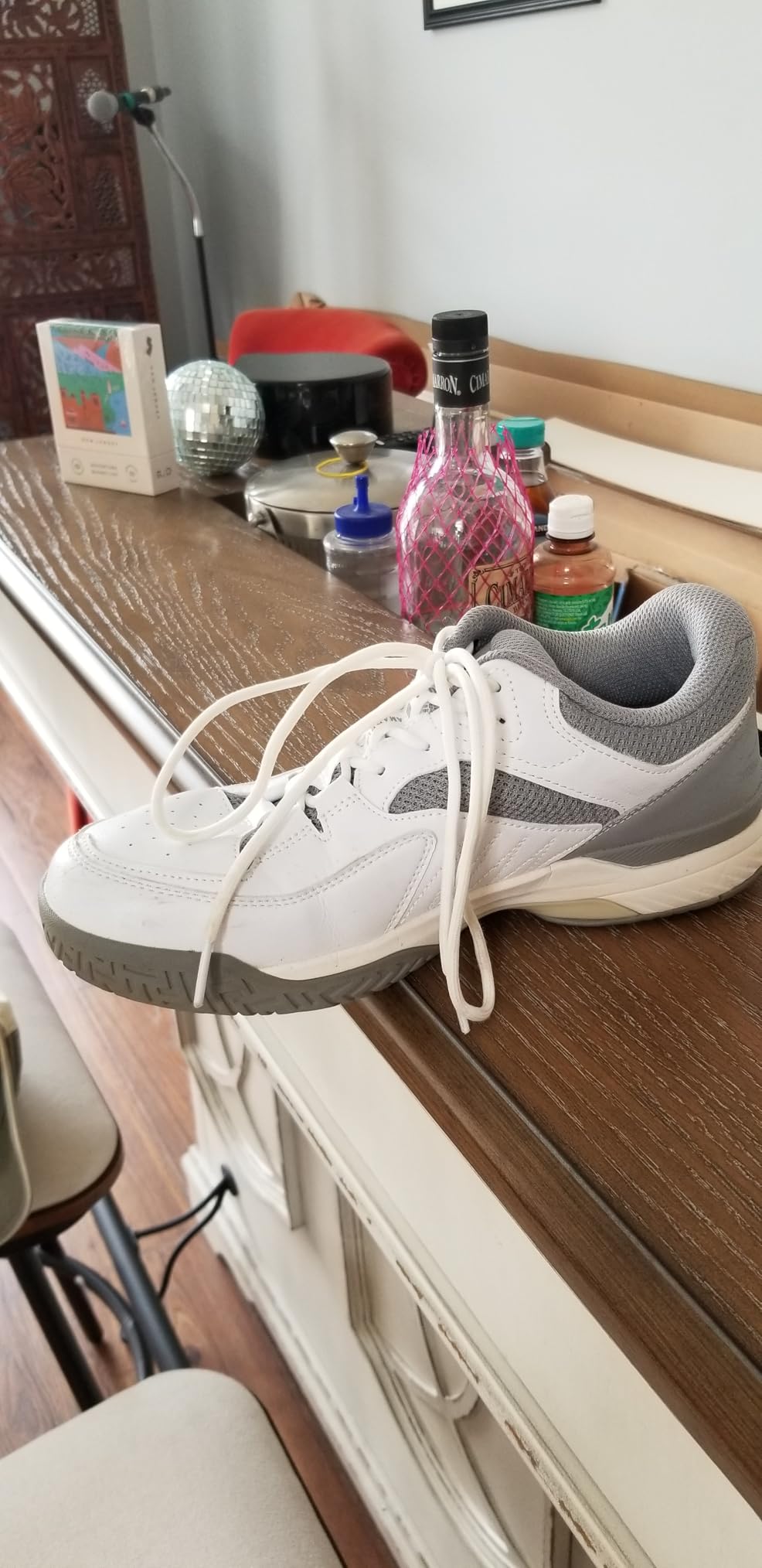
After twelve weeks and 48 games, I’ve landed on this: FitVille Men’s Wide Pickleball Shoes solve a real problem for players with genuinely wide feet, but they require you to accept a trade-off about durability that not every player can or should accept.
| Performance Category | Score (1-10) | Comments |
|---|---|---|
| Comfort | 8.5 | Excellent for wide feet, immediate comfort, no break-in |
| Court Traction | 7.5 | Solid grip on multiple surfaces for recreational play |
| Stability | 8.0 | Wide platform provides confident lateral movement |
| Durability | 5.0 | Major weakness — 4-6 month lifespan with regular play |
| Breathability | 6.0 | Limited ventilation, feet can get warm in hot weather |
| Value | 7.0 | Good for recreational wide-foot players when context understood |
| Overall Performance | 7.0 | Solid choice with important limitations |
Who Should Try These
Recreational wide-foot players stand to benefit most. If you’re playing once or twice weekly and have struggled to find court shoes that don’t cause pain, the comfort advantage likely outweighs the durability concerns. Budget the replacement cost into your decision — these won’t last a year, but they’ll feel better during the months you have them.
For daily players or those primarily on outdoor courts, I’d recommend investing in more durable options upfront. The cost-per-month calculation works against you when you’re replacing shoes every three to four months.
Frequently Asked Questions
How long do FitVille pickleball shoes typically last?
Based on my testing and feedback from other players, expect 4-6 months with regular play (three or more times weekly). Recreational players using them once or twice per week may see 6-8 months. Outdoor play accelerates wear significantly — some outdoor-only players reported needing replacement after just three months of heavy use.
Do these shoes run true to size?
Generally yes, with some context. I wear a size 10 medium in most brands and went with my normal size in the 2E width — the fit was perfect for length. The width is accurately described as genuinely wide. If you’re between sizes, some players recommend going up a half size, but most find true-to-size works well.
Can I use these for tennis as well as pickleball?
Yes, they work fine for recreational tennis. The sole pattern and lateral support translate well to tennis courts. However, dedicated tennis shoes typically offer better durability for regular tennis play, so if you’re playing tennis three or more times weekly, consider tennis-specific options from K-Swiss or Wilson.
Should I replace the insoles?
Many players do, particularly those dealing with plantar fasciitis or requiring enhanced arch support. The stock Ortholite insoles provide adequate cushioning but basic arch support. Players have had success with Dr. Scholl’s athletic series insoles or dedicated orthotic inserts. Budget about $20-40 for quality aftermarket insoles if needed.
Are these suitable for outdoor courts?
They function on outdoor courts, but wear noticeably faster than on indoor surfaces. The traction remains reliable on concrete and asphalt, but the sole degradation accelerates. If you play primarily outdoors, expect the lower end of the lifespan range (3-4 months with frequent play).
What about those absurdly long shoelaces?
Yeah, they really do come with 60+ inch laces. I have no explanation for this design choice. Plan to replace them with standard 52-inch laces immediately — you can find them online or at any sporting goods store for about $4-6.
How do these compare to ASICS or New Balance wide shoes?
The FitVille toe box is more generous than most ASICS or New Balance wide options, making them better for truly wide feet or specific foot conditions. However, ASICS and New Balance typically offer superior durability and may be worth the higher price ($120-150) for regular players. The trade-off is comfort/fit advantage versus long-term durability.
Can I get them resoled when they wear out?
At this price point, resoling isn’t cost-effective. Shoe repair services typically charge $40-60 for resoling, which approaches the cost of a new pair. Plan to replace the entire shoe when the sole wears out rather than attempting repair.
Do they need a break-in period?
No. This is one of their genuine advantages. I experienced immediate comfort on the first game without any break-in required. The Ortholite insole and spacious design eliminate the typical adjustment period most court shoes require.
What’s the real cost-per-month compared to premium shoes?
The math is closer than you’d expect:
– FitVille at $70, lasting 4-5 months = $15-18 per month
– Premium shoes at $150, lasting 8-12 months = $12-19 per month
The gap is small. For recreational players with wide feet, FitVille’s upfront savings and superior comfort may justify slightly higher monthly cost. For daily players, premium options actually become more economical over time.
| Comprehensive Scoring Summary | |
|---|---|
| Comfort Score | 8.5/10 |
| Performance Score | 7.5/10 |
| Durability Score | 5.0/10 |
| Value Score | 7.0/10 |
| Overall Score | 7.0/10 |
Be the first to review “FitVille Men‘s Wide Pickleball Shoes All Court”
Related products
Tennis/Squash Shoes
Tennis/Squash Shoes
Tennis/Squash Shoes
Tennis/Squash Shoes
Tennis/Squash Shoes
Tennis/Squash Shoes
Tennis/Squash Shoes
Tennis/Squash Shoes
Reviews
There are no reviews yet.