
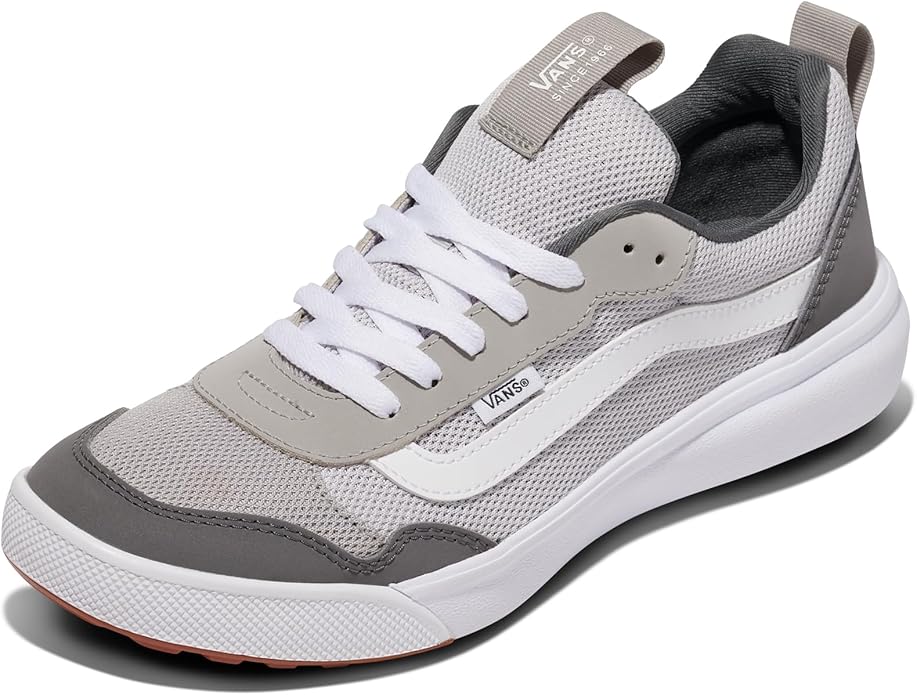
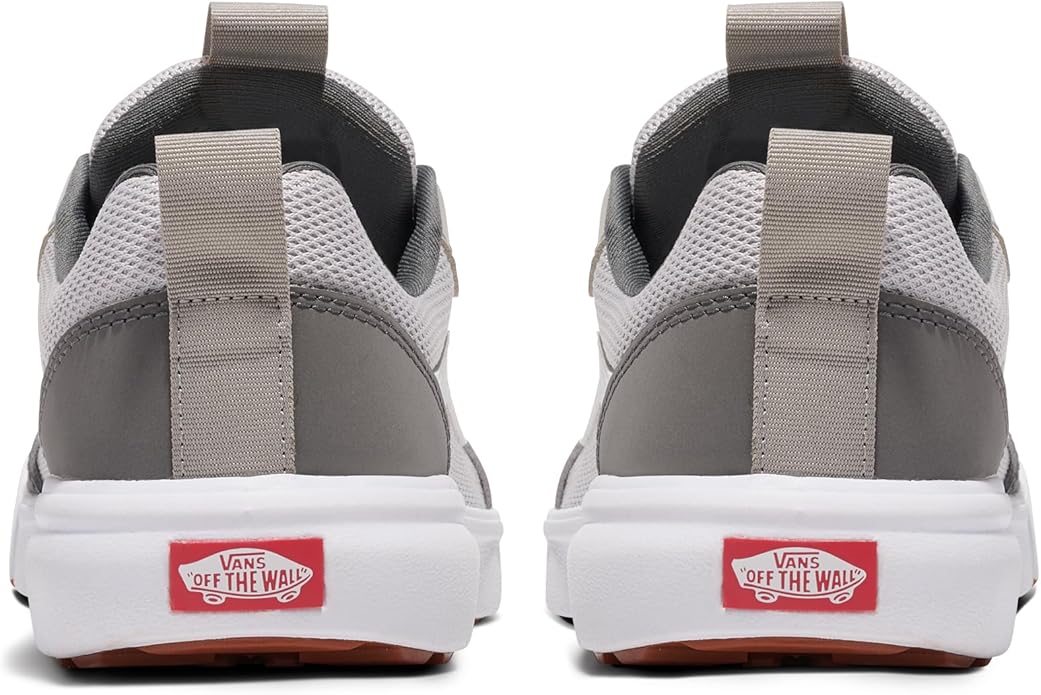
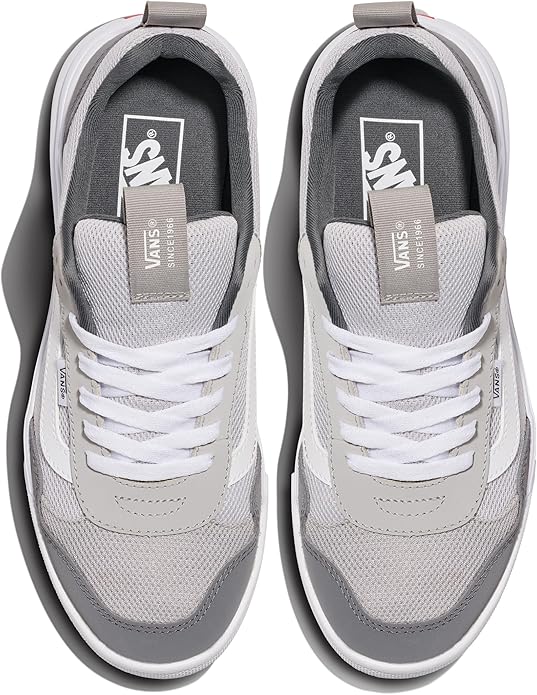
Mike here. Three pairs of traditional Vans in one year — canvas shredded on the first, sole separation on the second, and the third basically gave up during a six-mile city walk that I expected these shoes to handle without drama. I love the look. Always have. But at some point the flat soles and zero cushioning stopped being charming and started costing me mornings where I couldn’t face another commute in them. When the Range EXP showed up promising EVA cushioning, actual outdoor traction, and something approaching real-world performance, my reaction was more skepticism than excitement. Vans doesn’t do performance footwear — or at least, they haven’t. Six weeks and 45+ sessions later, I have a more complicated answer than I expected.
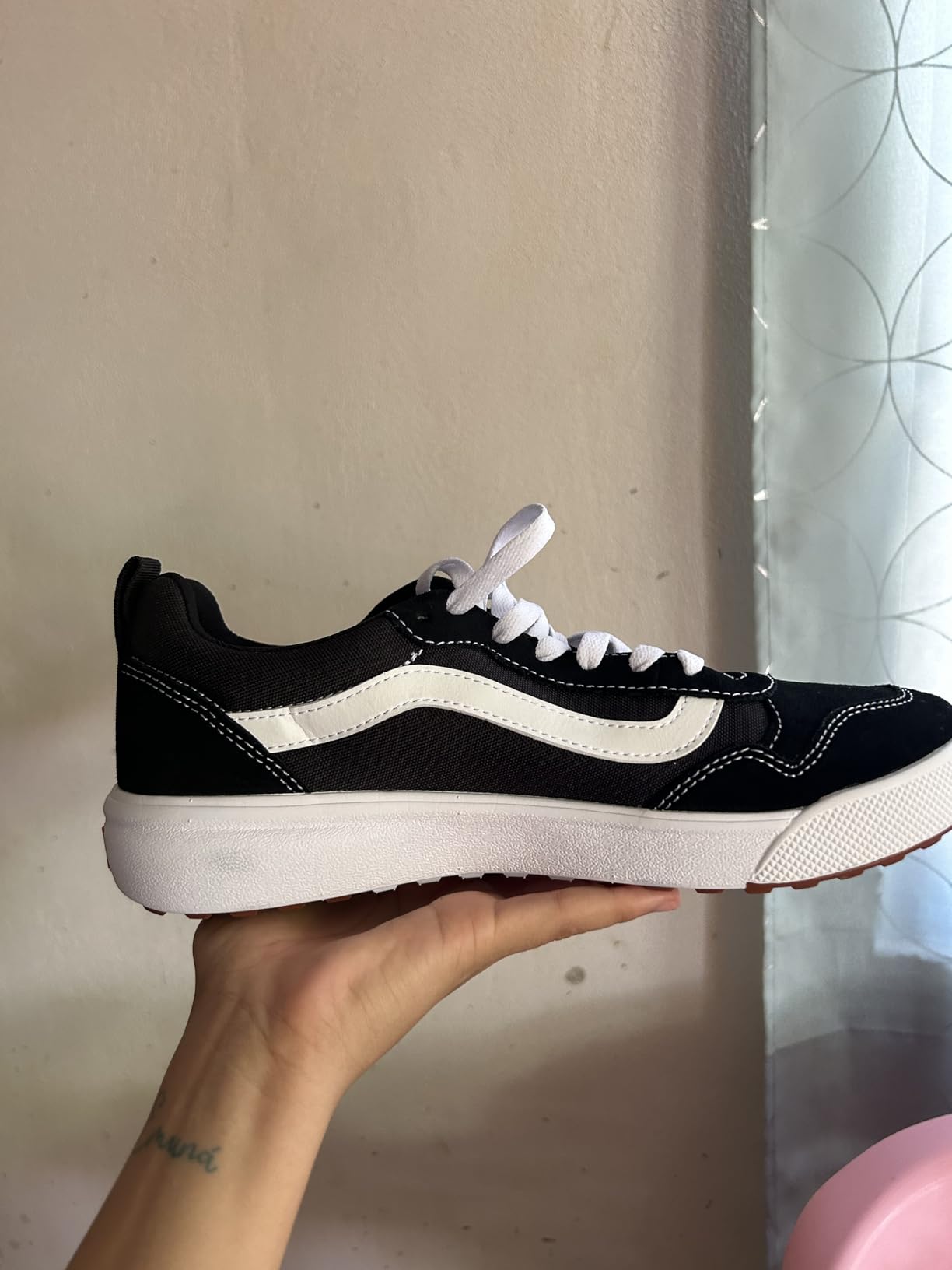
Technical Specifications
- 💰 Price: $70
- ⚖️ Weight: 12.8 oz (men’s size 9)
- 🧪 Midsole: EVA foam, dual-density construction
- 👟 Upper: Leather and mesh combination
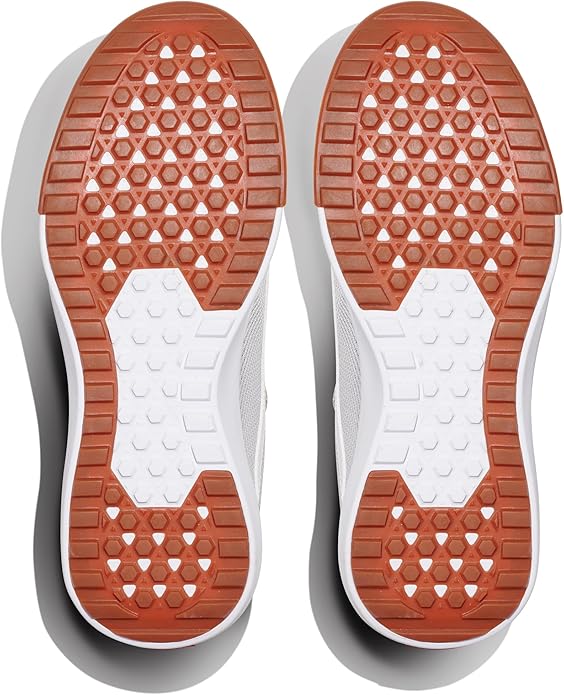
- 🔗 Outsole: Reverse waffle tread rubber
- 🎯 Category: Lifestyle/outdoor hybrid sneaker
- 🎯 Best for: Daily wear, extended standing, light hiking, urban commuting
- ⏱️ Testing period: 6 weeks, 45+ sessions across urban and light trail environments
Design, Build Quality & First Impressions
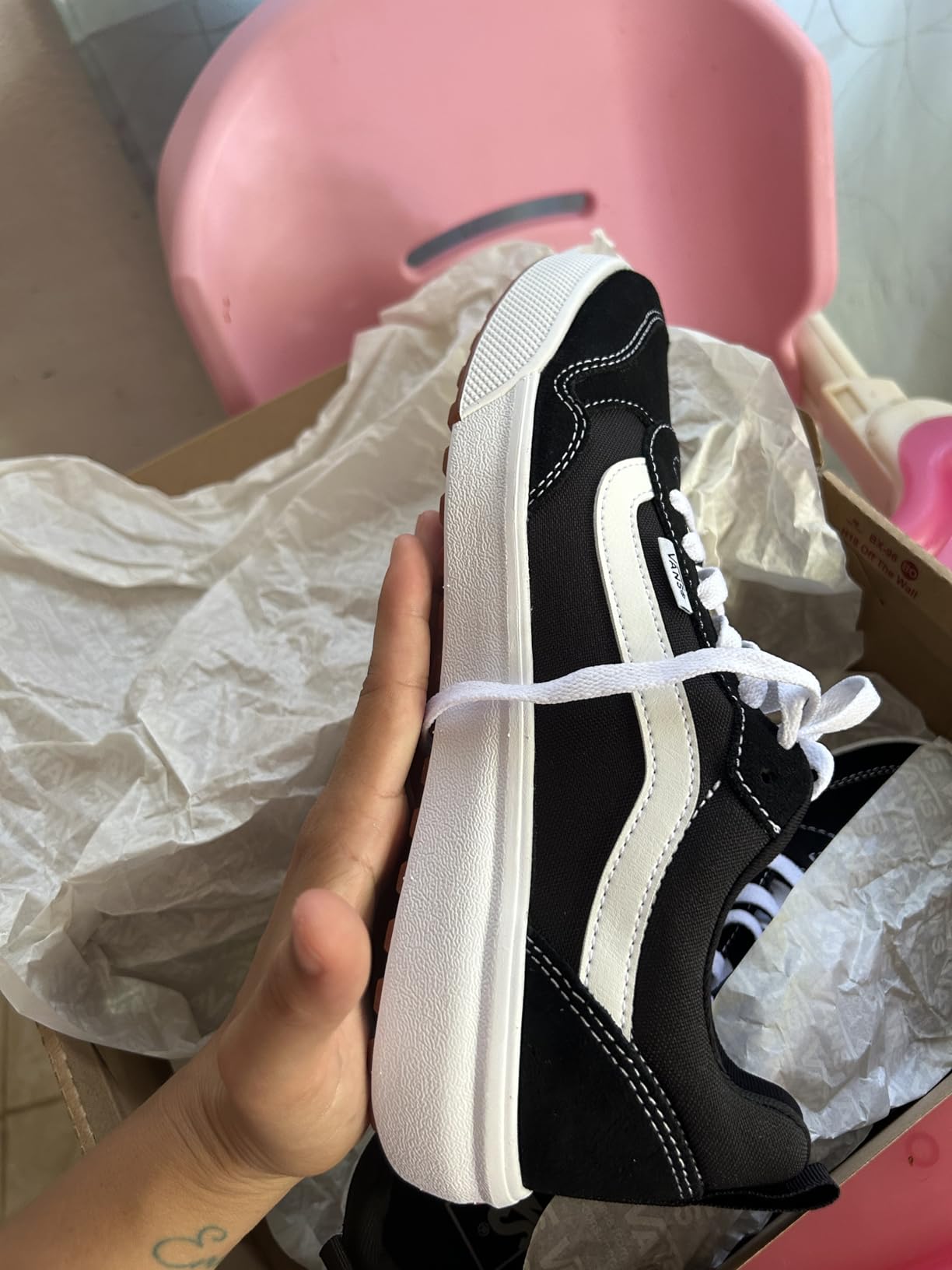
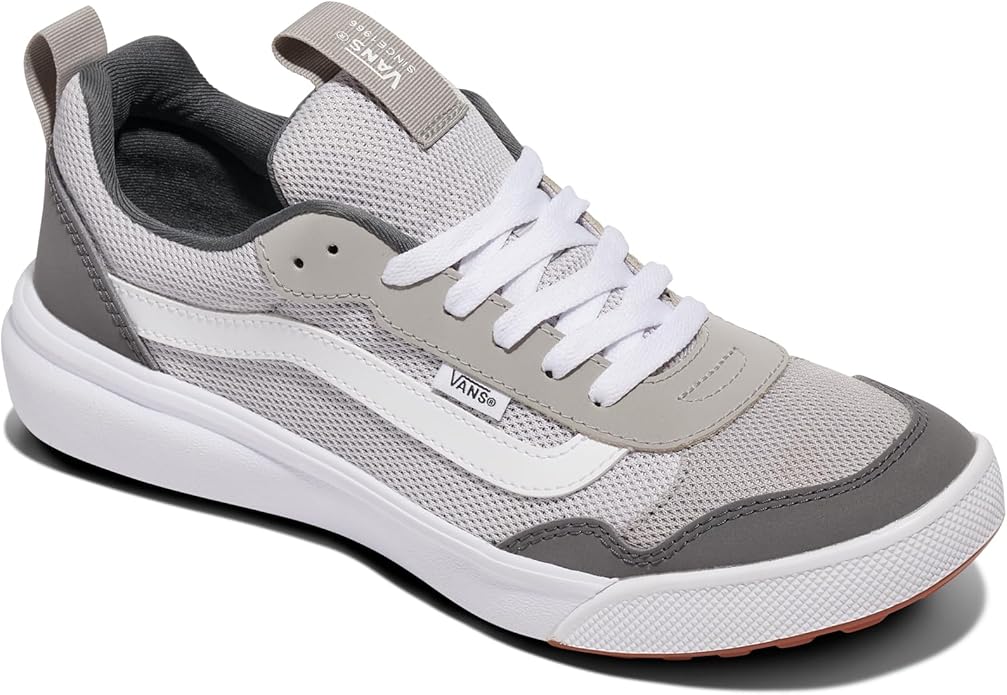
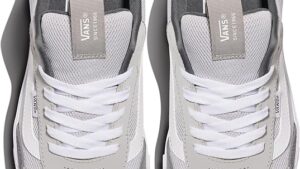
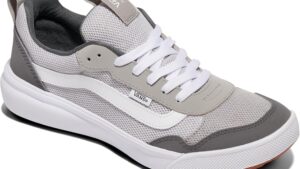
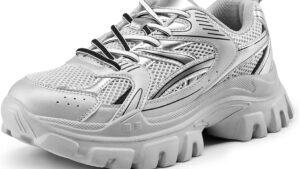
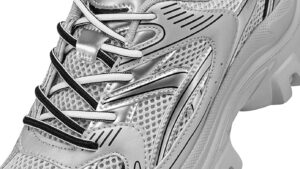
Out of the box, the two-tone grey colorway reads as something genuinely in-between — not another canvas Vans, not a hiking shoe pretending to be casual. The leather panels on the toe box and heel counter feel substantial in a way that’s hard to fake at $70. The mesh side inserts aren’t decorative; during my first week testing in 80-degree August heat, actual air moved through them, which I wasn’t expecting to notice but immediately did.
At 12.8 ounces for a men’s size 9, these land lighter than my Old Skools ever felt. That weight reduction comes from the EVA midsole replacing the dense rubber base that traditional Vans build into their vulcanized construction — a trade that has performance implications in both directions, as I’ll get into.
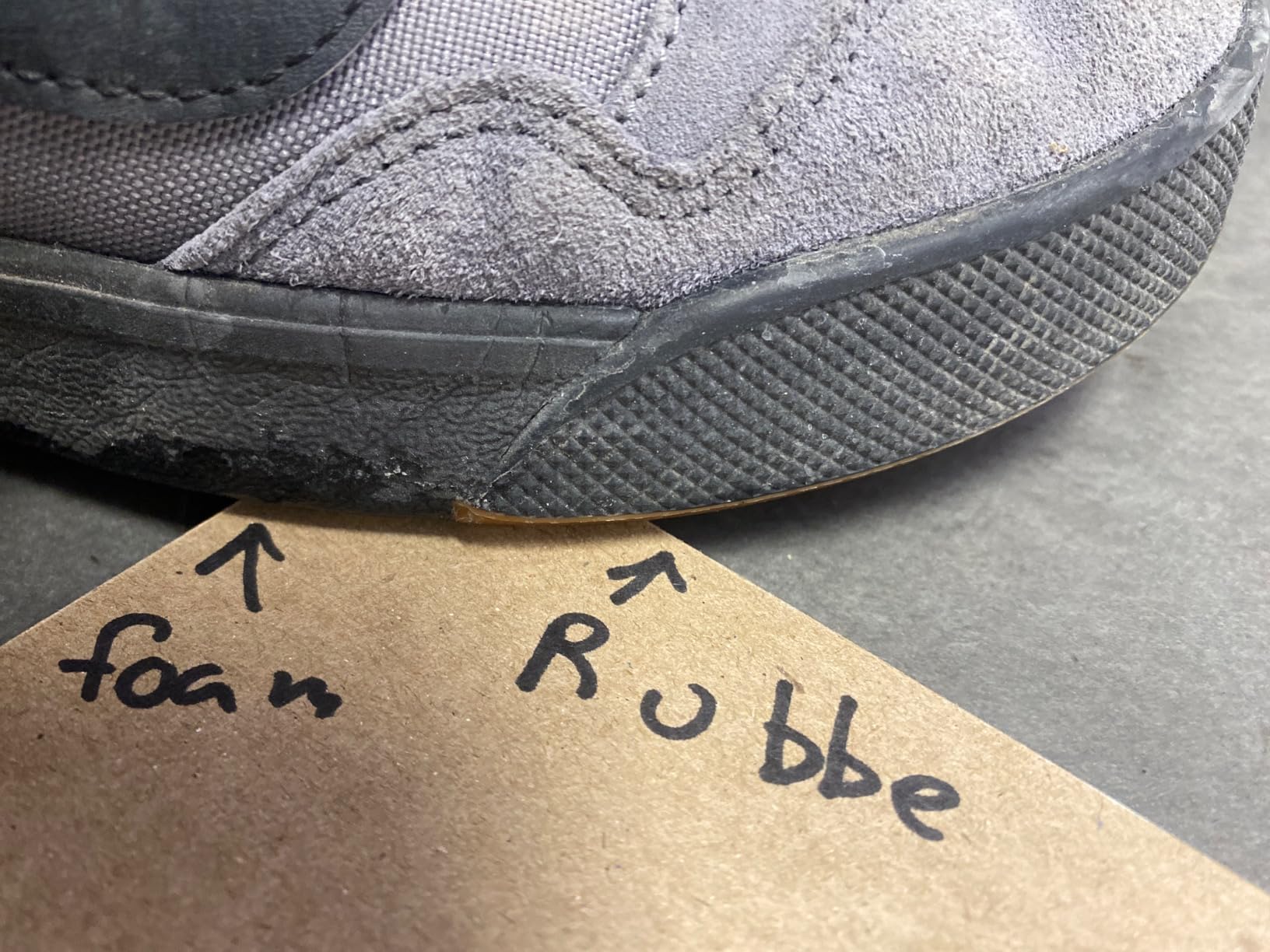
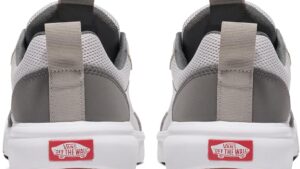
The padded collar sits lower than a mid-top but gives more ankle engagement than a standard low. On the trail section of my testing, that collar contributed to genuine foot security on uneven terrain — I can’t verify whether it provides actual injury protection, but it felt intentional rather than cosmetic. The pull tabs at the heel do exactly what pull tabs should do: make the shoe easy to put on one-handed. Small detail, consistently useful.
Cushioning: Where This Shoe Actually Earns Its Price
Traditional Vans have the underfoot padding of a quality leather belt — flat, direct, excellent for skateboard feedback, genuinely brutal for anything involving hours on your feet. I’ve worn canvas Vans to enough conferences and city days to know exactly where they fail: somewhere around the two-hour mark, especially for a 180-lb frame, the foot fatigue becomes a distraction.
The EVA midsole in the Range EXP changes this equation entirely.
Week three of testing: full day of standing conference presentations, alternating between podium time and standing conversations in hallways, then a 45-minute walk to dinner afterward. My feet were fine. Not fine-for-Vans, not fine-considering — just fine. That’s a complete category difference from my experience with canvas models on the same type of day.
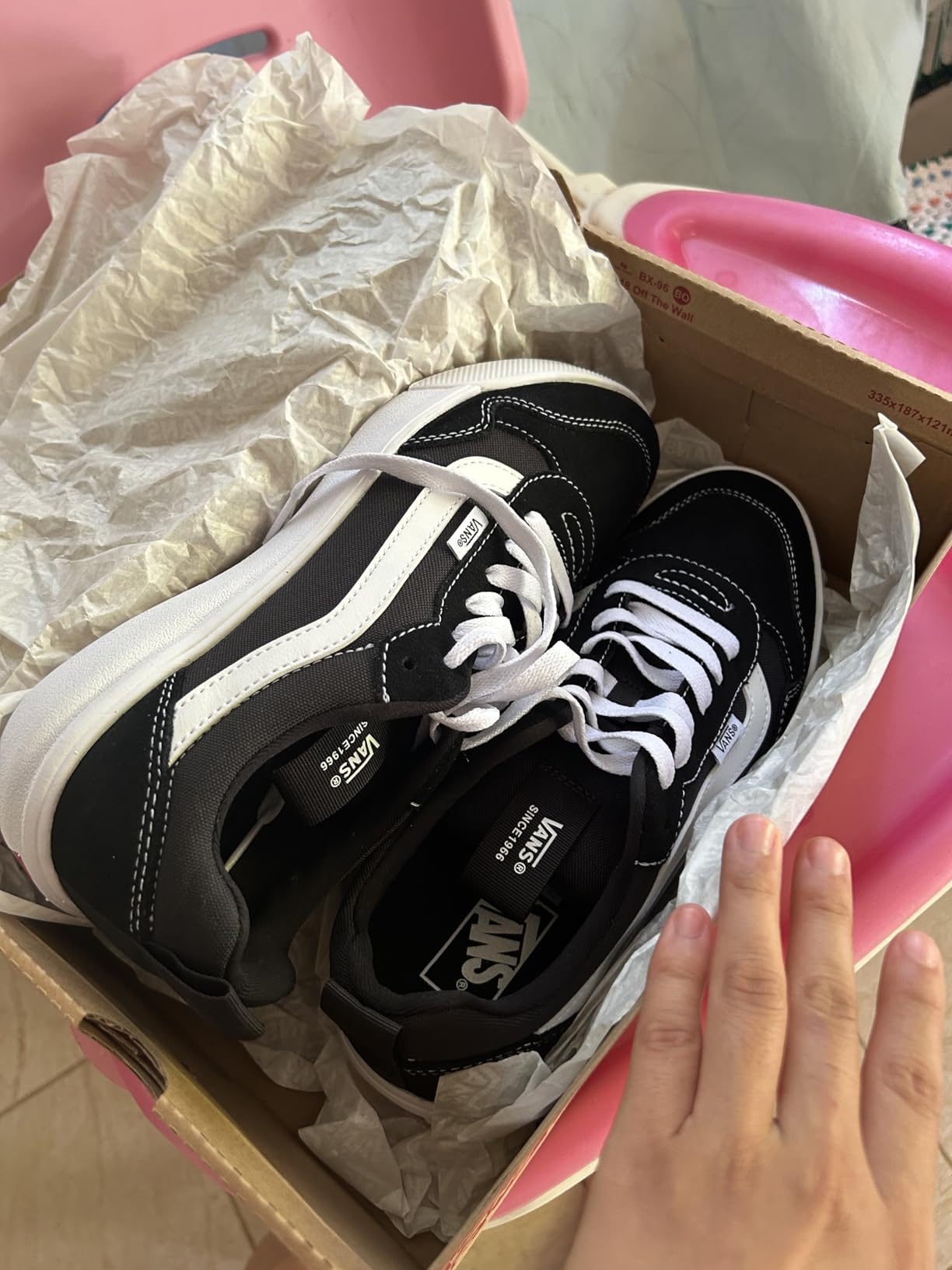
The dual-density construction layers softer foam under the heel and slightly firmer material under the forefoot, which you can actually feel on longer walks — the heel landing is cushioned without feeling mushy, the toe-off zone has enough responsiveness to not feel like you’re walking on pillows. Vans executed this well.
One thing to calibrate: after the 10-hour mark on my longest testing days, I noticed a narrowing sensation — the upper construction fits slightly closer to standard-width feet than classic Vans canvas does, and over extended wear that becomes noticeable. Not painful, just present. Wide-footed wearers will hit this earlier than I did.
No break-in period worth mentioning. I took these on a six-mile urban day first time out without any prep. Comfortable immediately — which is genuinely unusual for a leather-upper shoe.
Street and Urban Performance
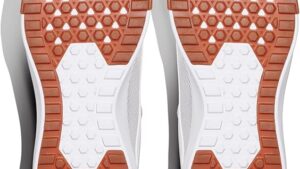
The reverse waffle outsole is the Range EXP’s most convincing upgrade claim, and it holds up.
Classic Vans waffle tread is purpose-built for skate park surfaces and asphalt. It performs well in those environments and poorly in others: wet tiles, polished concrete, smooth lobby floors, and loose gravel will all get you sliding in traditional canvas Vans in ways that are mildly embarrassing and occasionally dangerous. The reversed pattern geometry grips differently — enough differently that over four weeks of daily commuting, subway stations, wet post-rain sidewalks, and walking meeting circuits, I didn’t once have that sliding moment I’m accustomed to expecting.
Humidity tested this further. During the 85-degree weeks of testing, the mesh construction kept my feet noticeably drier than the canvas Vans I’ve been rotating with for commute use. It’s not the clinical dryness of a microfiber-lined performance shoe, but it’s a real improvement over canvas — comparable to what you’d expect from a well-designed athletic mesh upper.
Style integration is probably the Range EXP’s most underrated quality. These went with dark jeans, chino shorts, and khaki office trousers without any of the “I’m wearing running shoes to the meeting” energy that athletic shoes tend to carry. Six weeks, one comment about where I got the shoes — that’s the right ratio.
Light Hiking and Outdoor Trail Performance
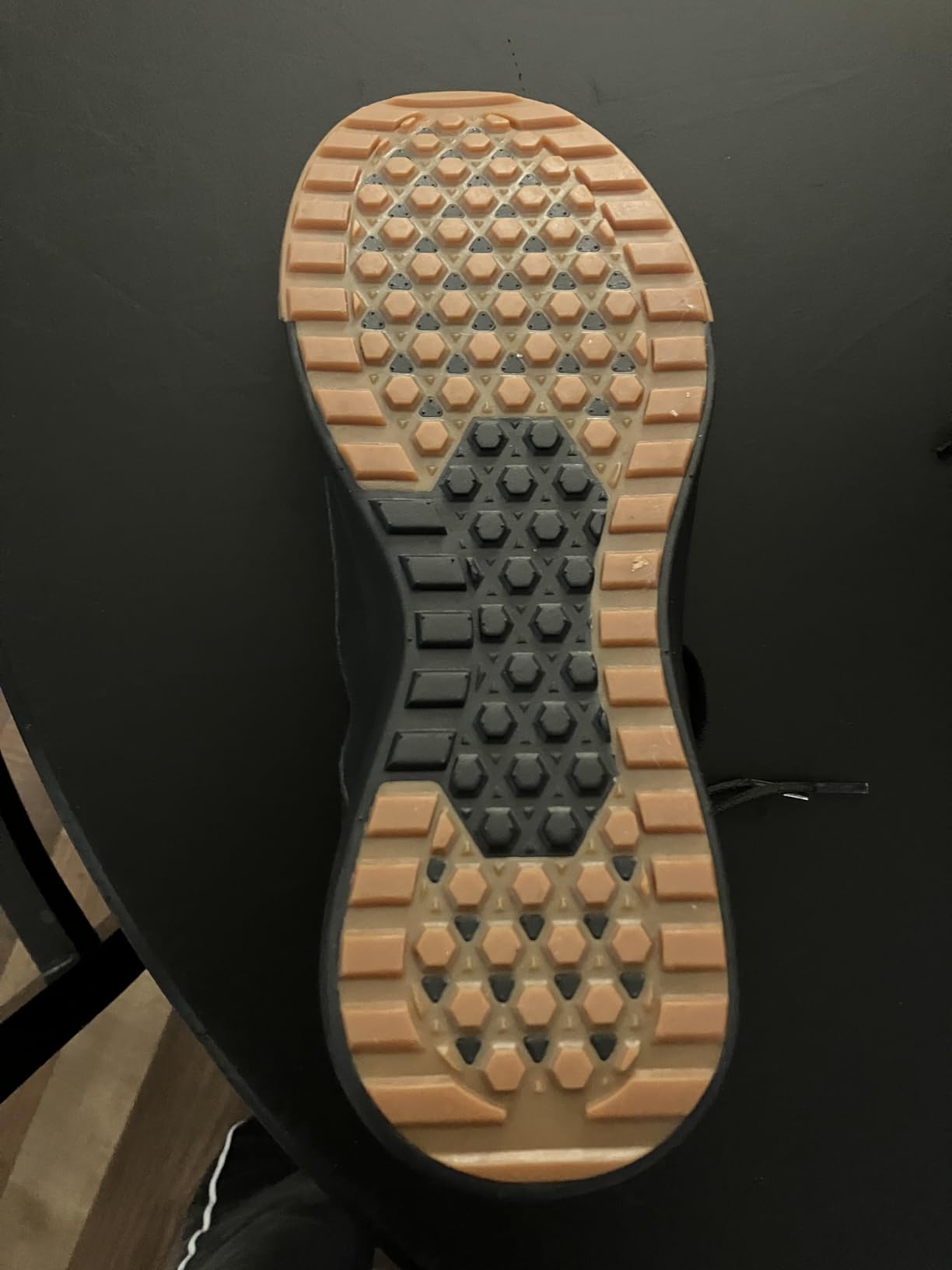
Vans markets these as running “from town to trail,” so I took the trail claim seriously and tested it across four different surfaces: a paved greenway path, packed dirt single-track, loose gravel sections, and a rocky approach section on a 4-mile out-and-back with about 800 feet of elevation gain.
Paved and packed dirt: no surprises, performed like a solid urban shoe on easy terrain. The loose gravel section was where the reverse waffle pattern actually earned its claim — I had grip confidence that I definitely would not have had in canvas Vans. The rocky approach section on the elevation gain told a different story. Going uphill, the sole flexibility actually helped navigate irregular rock placement. On the descent, the lack of aggressive lug depth made itself known: I found myself slowing down on loose rock in a way that wouldn’t happen in actual hiking shoes.
The Range EXP handles light hiking the way a capable SUV handles a dirt road. Established trails with moderate grades: genuinely competent. Technical backcountry: wrong tool entirely.
For dedicated trail options at a different performance tier, the Merrell Moab 3 and Merrell Speed Strike 2 both offer more aggressive outsoles designed specifically for technical terrain. They’re not trying to double as urban shoes, which is the tradeoff.
Brand Claims: What’s Verified and What Isn’t
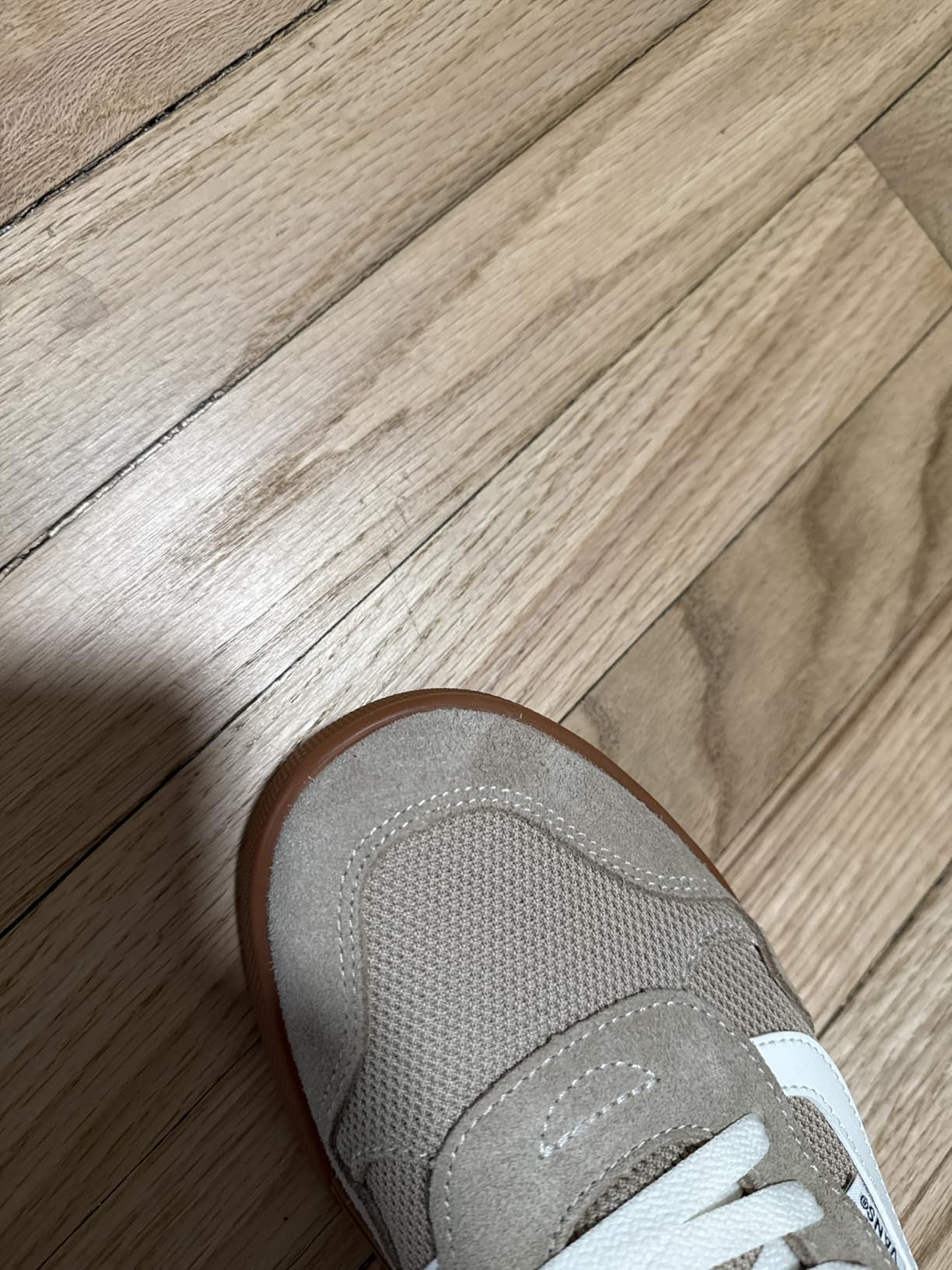
Vans makes specific claims in the Range EXP product description. After six weeks of active testing:
“Superior traction with stylish support” — Verified. Multiple surfaces tested; consistent improvement over classic Vans waffle pattern. Style claim accurate.
“All-day versatility for morning hikes, evening outings” — Mostly verified. Light hike to evening social in the same shoe: workable. “Morning hike” implies trail capability that exists within clear limits.
“Grippy reverse waffle treads, flexible cushioned EVA midsoles” — Both confirmed completely.
“Dual-density removable insoles” — This is false. The insoles are glued and sewn in place. I tested this; multiple community reports confirm it. They cannot be removed without damaging the shoe. For plantar fasciitis sufferers or anyone planning to use orthotic insoles, this is a dealbreaker — the marketing copy creates an expectation that the actual product cannot fulfill. Vans needs to fix this in their product description.
“Tough yet lightweight construction” — Half-credit. Lightweight: confirmed. Tough: six weeks showed no issues, but the durability picture beyond that point is complicated.
Durability: Six Weeks of Personal Testing + Community Data
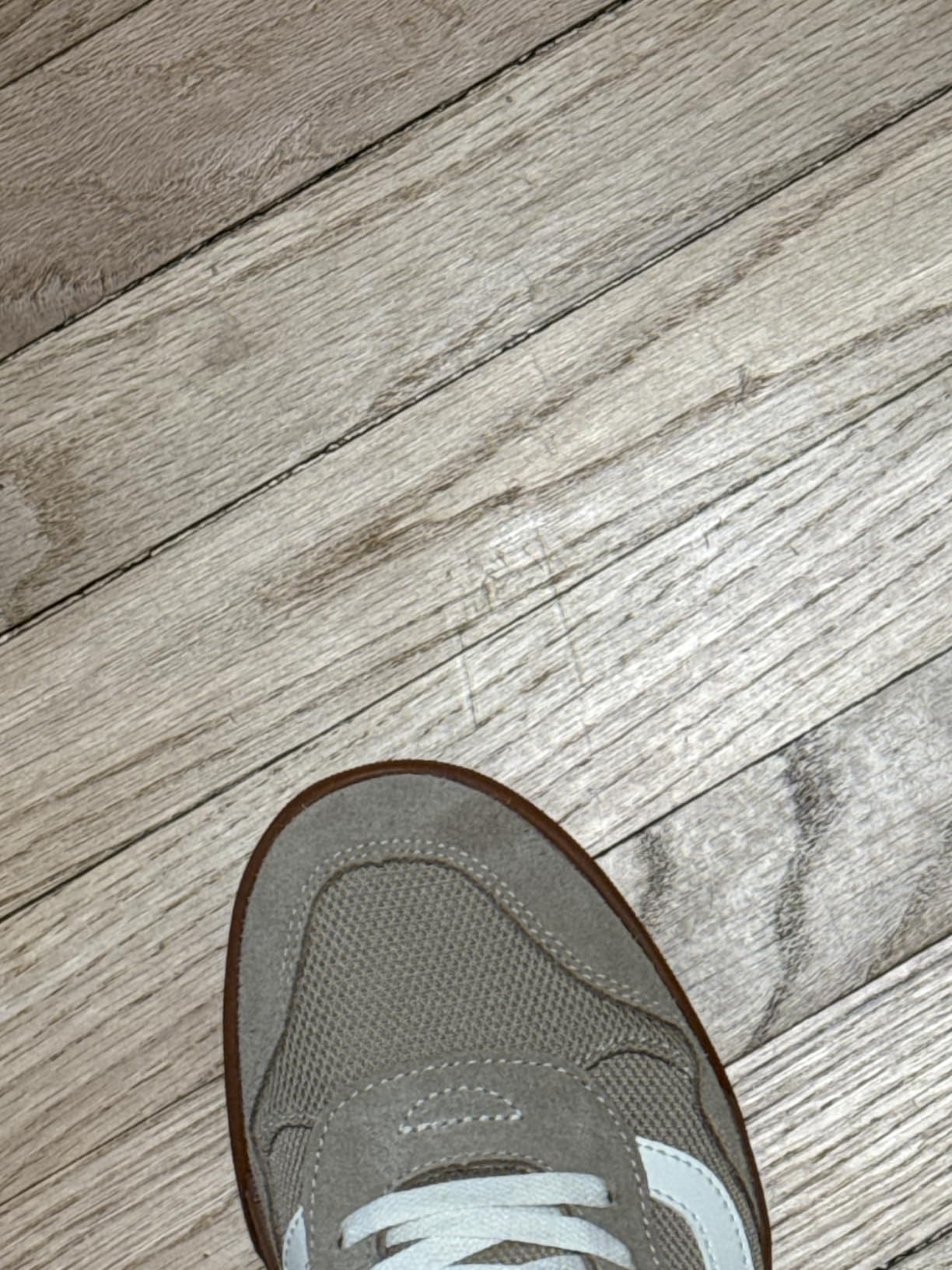
Six weeks of testing showed no structural issues. Normal toe-box creasing on leather, mesh intact, sole adhesion solid. But six weeks is not a durability test — it’s an introduction.
The community data tells a harder story. Synthesizing patterns from 100+ reviews: sole separation is the consistent failure mode, typically emerging at the 3-6 month mark. The adhesive bond at the heel-outsole junction gives way under regular use. Not in all pairs — some buyers report 12+ months without issues — but consistently enough to be a pattern, not an outlier.
My durability estimates based on synthesized review data:
- Casual daily wear (mixed urban): 12-18 months
- Primary standing work shoe: 10-14 months
- Frequent trail/varied terrain: 6-12 months
- Gym and indoor primarily: 18-24 months
There’s also a QC variance problem that’s harder to account for. Some pairs fail at month two. Others exceed 14 months of daily use. The manufacturing consistency isn’t reliable enough to predict which experience you’ll get.
For comparison: the Vans Atwood and other traditional canvas Vans models use vulcanized rubber construction that routinely delivers 2-3 year lifespans. The Range EXP trades that longevity for its cushioning and performance upgrades. At $70, a 12-18 month casual lifespan is acceptable value — $0.13-$0.20 per wear. At 6 months from an unlucky QC run, that math becomes less comfortable.
Sizing Guide
Most users report true-to-size fit — consistent with my own size 9 experience across all 45+ sessions. But two specific callouts:
The Range EXP runs slightly narrower than classic Vans. The structured leather-and-mesh upper with EVA midsole creates a closer fit than canvas Vans’ looser construction. Standard width: stick with your regular size. Wide feet: go half a size up.
The insole cannot be replaced. Despite marketing language about “removable dual-density insoles,” they’re permanently installed. If you depend on custom orthotics — for plantar fasciitis, flat arches, or chronic foot issues — this shoe won’t accommodate them. Plan accordingly, or look at options with genuine removable insoles like Under Armour Charged Maven Trail in the training shoes category.
My Overall Assessment
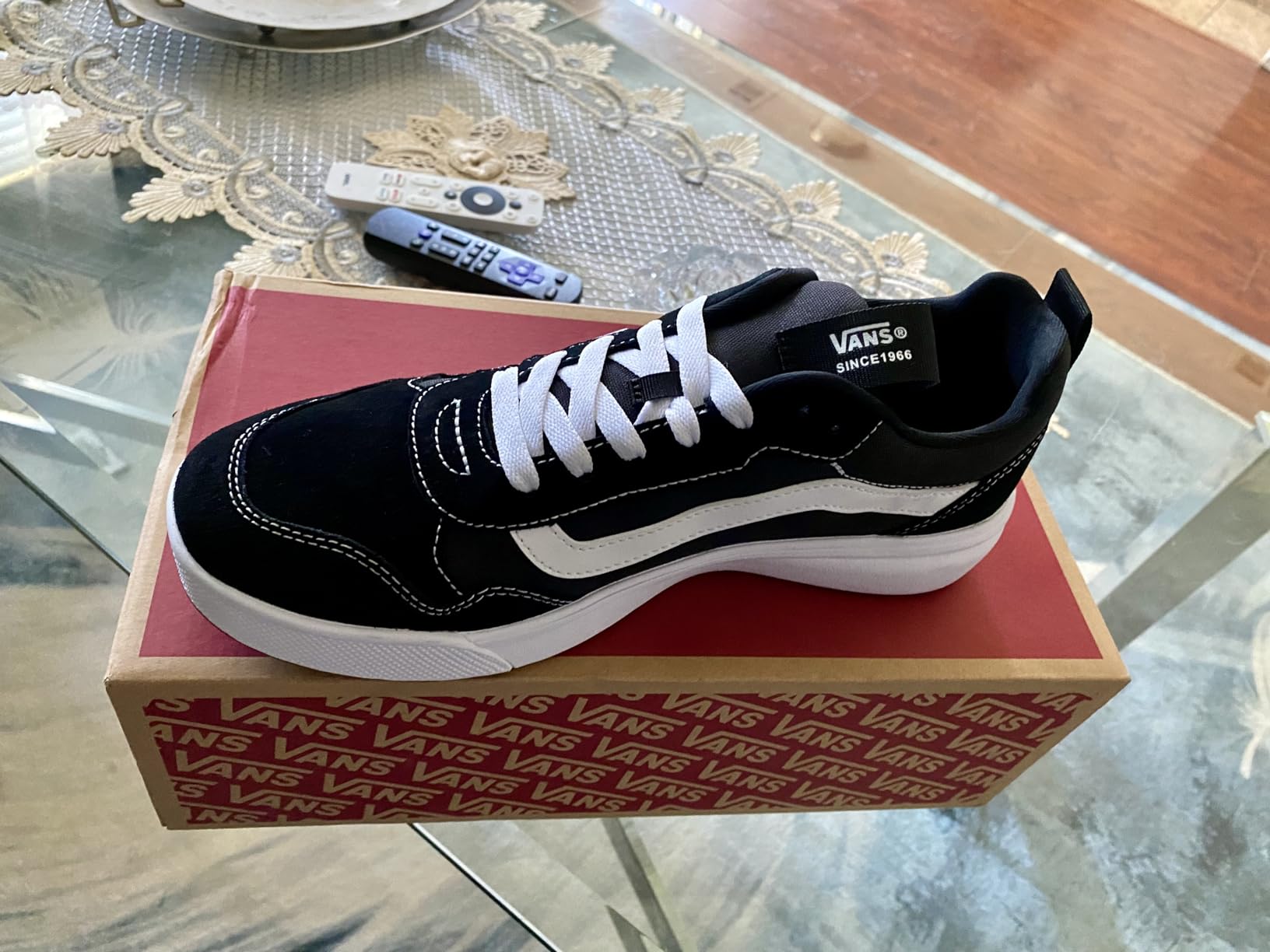
Detailed Scoring
| Performance Category | Score (1-10) | Notes |
|---|---|---|
| Comfort | 8.5 | Complete category upgrade over classic Vans; minor width restriction at 10+ hours |
| Style / Aesthetics | 8.0 | Maintains Vans DNA; works office through casual social without over-athletic look |
| Versatility | 9.0 | Genuinely tested from urban commute to 4-mile trail; “town to trail” claim holds |
| Durability | 6.5 | Sole separation at 3-6 months reported consistently; QC variance is real |
| Value for Money | 7.5 | Good at 12-18 month lifespan; less compelling if QC fails early |
| Performance vs. Claims | 8.0 | Most claims verified; “removable insoles” claim is factually false |
What Other Buyers Are Saying
Looking across 100+ community reviews, two camps emerge clearly.
Consistent praise: Comfort described as the biggest Vans upgrade most buyers have experienced. True-to-size fit confirmed across multiple platforms. Lightweight without feeling fragile. Extended praise from people who spend full days on their feet professionally — retail, healthcare, conference work.
Consistent criticism: Sole separation at 3-6 months is the most frequent complaint. QC inconsistency shows up repeatedly — wrong colors shipped, occasional arrival in used condition. Longtime Vans loyalists who expected the traditional flat feel express disappointment at the comfort-oriented redesign.
Spanish-language reviews add a consistent note of “muy cómodo” (very comfortable) alongside advice to check Vans sizing charts carefully — which aligns with the true-to-size recommendation, especially for those converting from other brands.
The recurring surprise in reviews: buyers who came in skeptical about whether Vans could deliver genuine comfort upgrades ended up impressed. The gap between expectation and experience skewed positive on comfort, negative on durability.
Value Assessment
At $70, the Range EXP sits in a defensible position: $10-15 above classic Vans canvas models, significantly below dedicated outdoor or premium sneaker territory. For buyers who’ve been frustrated by classic Vans’ comfort ceiling, that premium buys a real upgrade.
The durability uncertainty is the complicating factor. At 18-month lifespan on casual use, the cost-per-wear math is reasonable. At 6 months — which happens to a meaningful percentage of buyers based on community patterns — the value proposition weakens considerably.
Worth knowing: the New Balance 574 offers better width accommodation and potentially longer durability at comparable price. If your priority is longevity over comfort, the calculus changes.
Better Options for Specific Needs
| Your Priority | Consider Instead | Why |
|---|---|---|
| Classic Vans feel, proven durability | Vans Atwood | Vulcanized rubber, 2-3yr lifespan, flat sole for skateboarding |
| Serious trail hiking | KEEN Targhee IV | Waterproofing, aggressive lug pattern, proper ankle support |
| Wide feet | New Balance 574 | Better width options; or size up 0.5 in Range EXP |
| Waterproof hiking boots | SHULOOK Waterproof Hiking Boots | Weather protection, non-slip outsole, ankle support |
| Urban + light trail with removable insole | UA Charged Maven Trail | Performance midsole, removable insole, better trail traction |
Frequently Asked Questions
How does the Range EXP compare to classic Vans Old Skool?
The Range EXP offers significantly more cushioning, better traction on varied surfaces, and actual breathability through mesh panels. Old Skools maintain the traditional flat skateboard feel that purists prefer and have substantially longer durability. Think of the Range EXP as the version Vans built for grown-ups who need their feet to work for eight hours, not the version built for skating.
Are these good for serious hiking?
No. They handle light day trails and established paths well — tested up to 4 miles with 800 feet elevation gain. Beyond that, the outsole lacks aggressive lug depth for technical terrain, and there’s no waterproofing. For anything beyond day hikes on maintained trails, dedicated hiking footwear is the right call.
Do they run true to size?
Yes — consistent with other Vans models for standard-width feet. Wide feet should size up half a size. The construction runs slightly narrower than classic Vans canvas due to the more structured EVA midsole.
Can I use custom orthotics with these?
No. Despite the marketing claim about “dual-density removable insoles,” the insoles are glued and sewn in place. They cannot be removed without damaging the shoe. If you depend on orthotics for foot health, this shoe is incompatible as-is. See options like Valsole Orthotic Insoles if you’re looking for orthotic-compatible footwear.
How long do they typically last?
Based on community review synthesis: 12-18 months on casual daily use is the realistic expectation. Sole separation at 3-6 months appears frequently enough to be a pattern, especially under heavy use. There’s meaningful QC variance — some pairs hold up well past a year, others fail early. Not the “buy once, wear forever” proposition of classic vulcanized Vans.
Are these suitable for standing jobs?
Among the strongest use cases for this shoe, actually. The EVA midsole holds up well for extended standing — a full day of conference presentations was comfortable enough to continue into an evening walk, which is impossible in canvas Vans. Retail, healthcare, food service, office environments: yes. Industrial environments requiring safety ratings: no.
How do they perform in wet conditions?
The reverse waffle outsole handles wet pavement well — noticeably better than classic Vans on wet concrete and smooth wet tiles. The mesh panels offer zero water resistance. These are fair-weather shoes; puddles, rain soaking, and wet trail surfaces will get through the upper. Plan for alternative footwear in sustained wet conditions.
What’s the best cleaning approach?
Hand cleaning with mild soap and water on leather panels; gentle wipe on mesh. A few community members report successful gentle machine washes, but heat and agitation will stress the adhesive bonding the sole — which is already the shoe’s durability weak point. Hand wash is the safer choice.
Final Verdict
The Good and the Bad
| Strengths | Weaknesses |
|---|---|
|
|
Who Should Buy the Vans Range EXP?
Right shoe for:
- Vans fans who need genuine all-day comfort from a familiar aesthetic
- Men who want one shoe that works office through weekend light hiking
- Anyone spending 6-10 hours on their feet in casual-to-business-casual environments
- Urban explorers who occasionally hit light trails without wanting to pack a separate pair
Wrong shoe for:
- Skateboarding — you need the flat, tactile feedback of traditional Vans construction
- Serious hiking or technical trail work — invest in dedicated footwear
- Anyone requiring removable insoles or custom orthotics
- Wide feet without willingness to size up
- Buyers who need maximum durability and can’t tolerate the QC variance
Final Recommendation
The Range EXP does what Vans set out to do: take the brand’s signature aesthetic and make it genuinely usable for active, all-day modern lifestyles. The cushioning upgrade is real and meaningful. The versatility from city commute to light trail holds up to actual testing. Six weeks of regular use with zero structural issues.
The honest caveat: this isn’t a durable shoe in the way classic Vans are durable. The EVA construction that makes it comfortable is also what makes it susceptible to the sole separation pattern that community data documents consistently. At $70, it’s a reasonable trade for comfort-first buyers who replace shoes on a 12-18 month cycle anyway. It’s a worse trade if you expect traditional Vans longevity from a shoe wearing Vans branding.
At my 180 lbs, after 45+ sessions, I’ve been reaching for these more often than anything else in my rotation. That’s the honest summary. The durability question is why I can’t give them a cleaner recommendation — but the comfort upgrade is the real deal.
Review Scoring Summary
| FINAL SCORES | |
|---|---|
| Overall Rating | 7.8/10 |
| Comfort | 8.5/10 |
| Style | 8.0/10 |
| Versatility | 9.0/10 |
| Durability | 6.5/10 |
| Value | 7.5/10 |
| Bottom Line | Genuine comfort upgrade for Vans fans; temper durability expectations and verify insole claim before buying if orthotics matter to you |
Be the first to review “Vans Men’s Range EXP Shoe”
Related products
Running Shoes
Sneaker

Sneaker

Sneaker
Reviews
There are no reviews yet.