
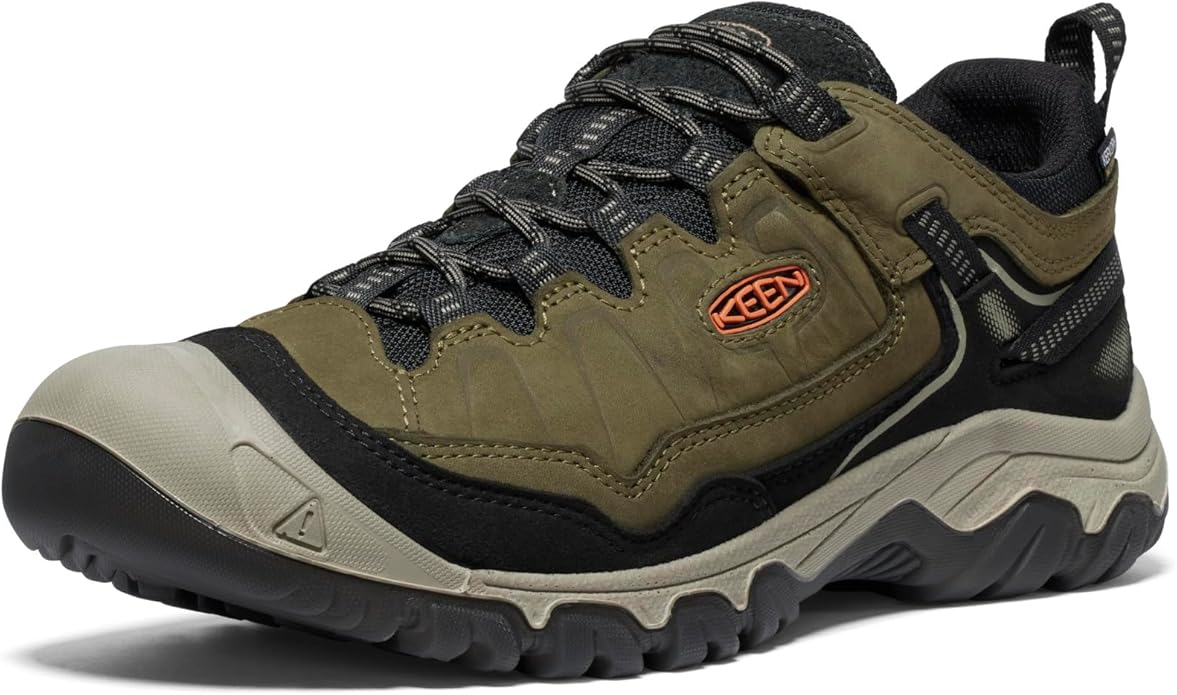
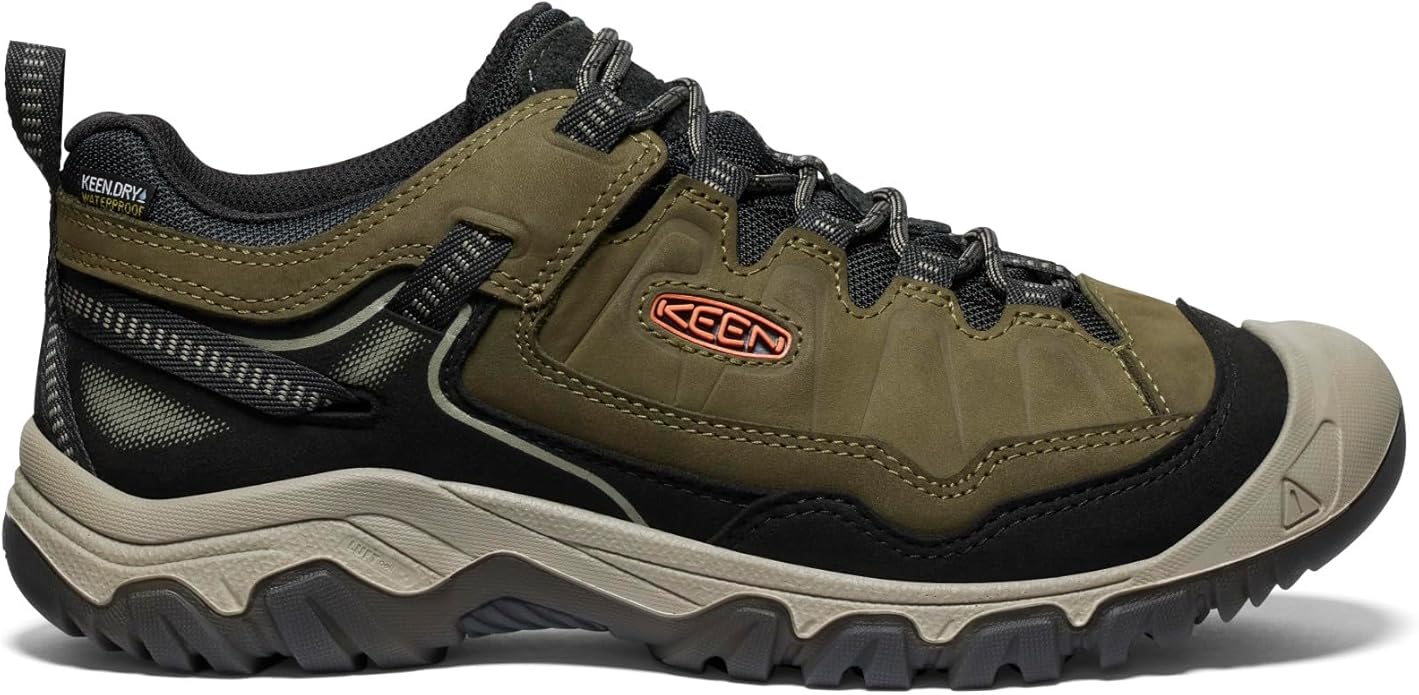
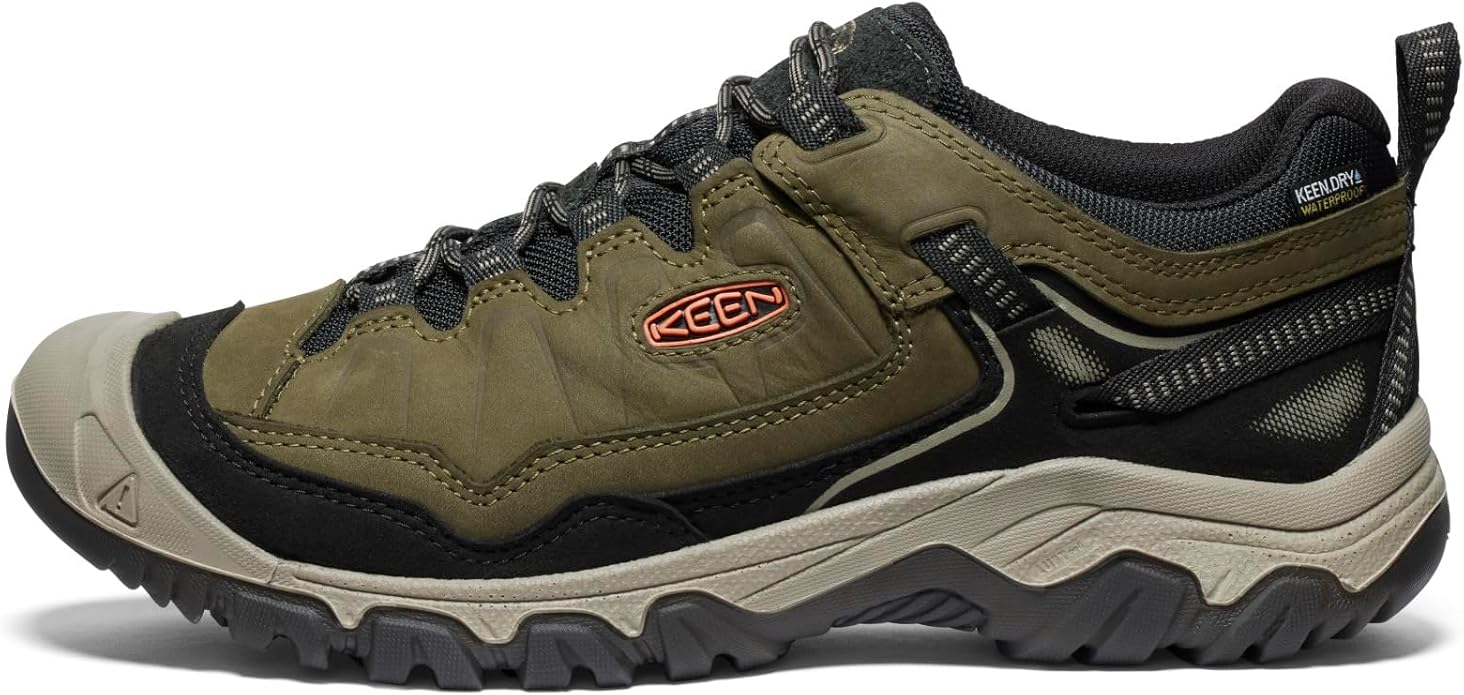
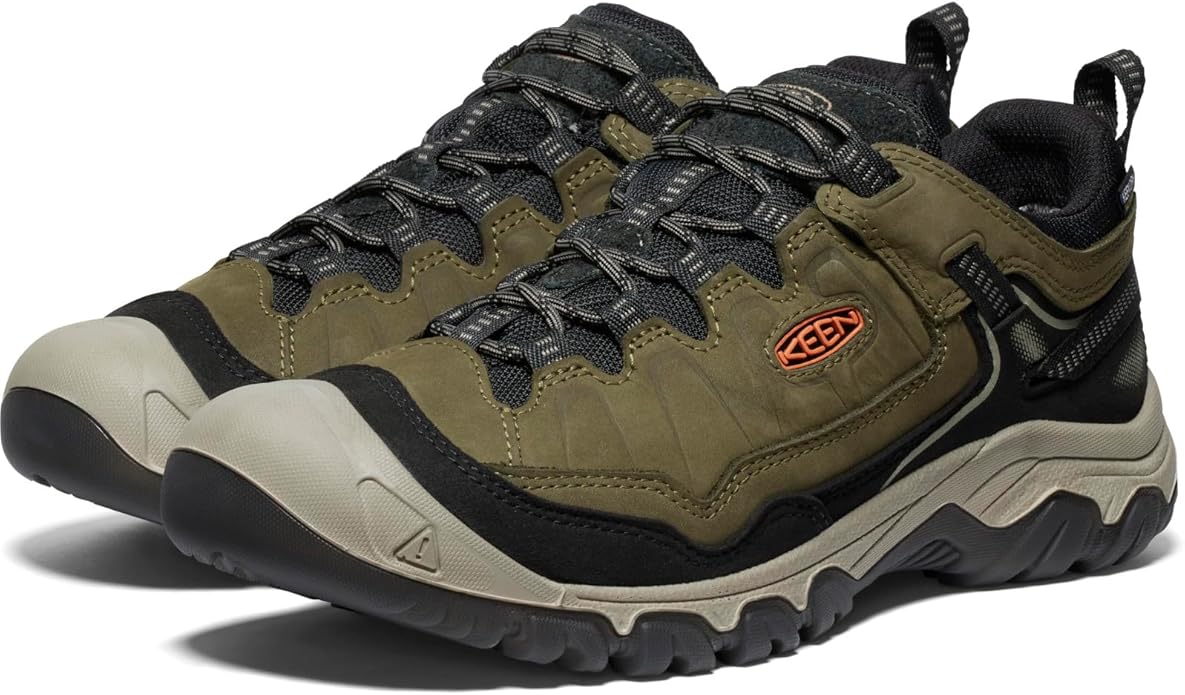
Three months ago, a friend bet me the KEEN Men’s Targhee IV would start delaminating before I hit 200 miles. His reasoning? He’d watched two pairs of Targhee IIIs peel apart at the sole after heavy use. I took that bet — and here’s what happened.
Mike here. I’ve been testing hiking footwear professionally for over a decade, and I’ve watched manufacturers make increasingly bold claims about construction and durability while actual quality sometimes headed the opposite direction. So when KEEN launched the Targhee IV with their new glue-free KEEN.FUSION technology and the promise of “everlasting construction,” I was equal parts intrigued and skeptical. Three months, 40+ hiking sessions, and more than 200 trail miles later, I’m ready to give you the full picture — including a few surprises I didn’t expect.
Quick Specs: What You’re Looking At
- ⚖️ Weight: 19.5 oz per shoe (men’s size 9)
- 🧪 Midsole: Luftcell air-injected PU foam
- 👟 Upper: LWG-certified nubuck leather + KEEN.DRY membrane
- 🦶 Outsole: KEEN.RUGGED rubber compound
- 🏃 Category: Low-cut waterproof hiking shoe
- 🎯 Best for: Day hiking, trail walking, wet-condition adventures
- 📐 Heel-to-toe drop: 0.55 in / 14mm
Build Quality: The Part KEEN Was Betting Everything On
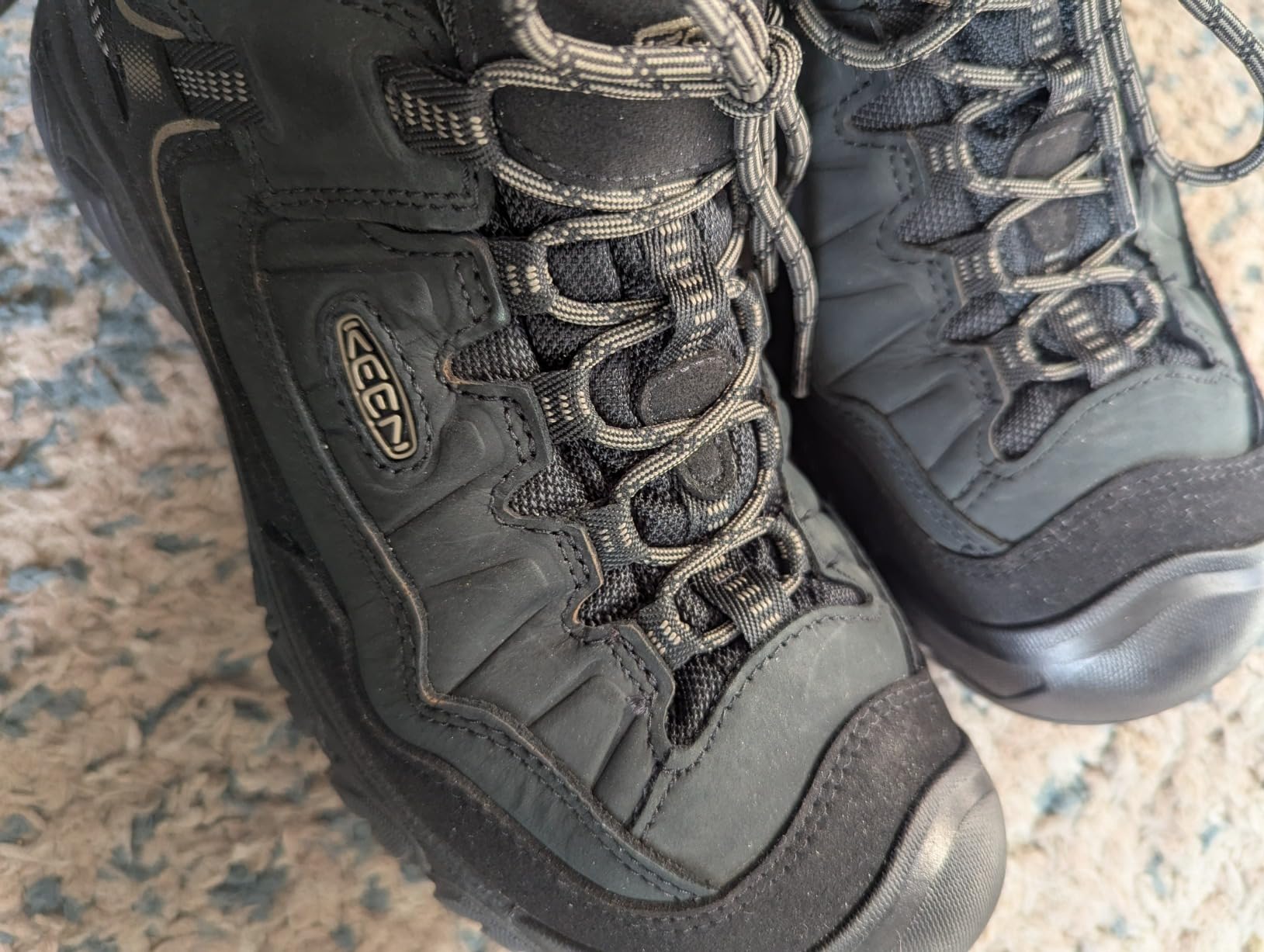
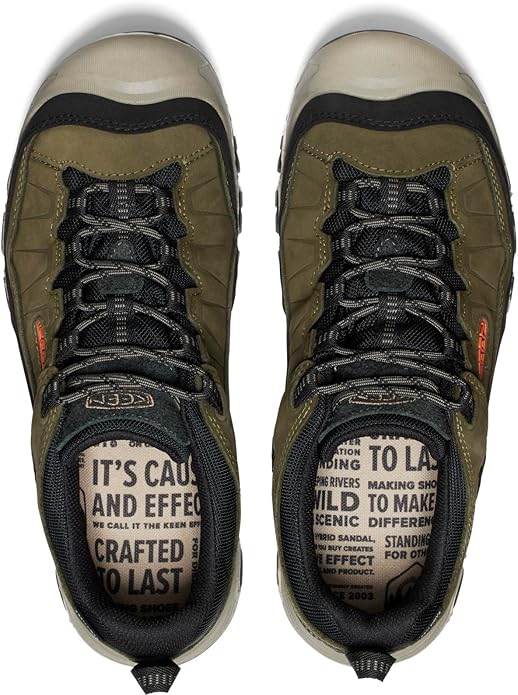
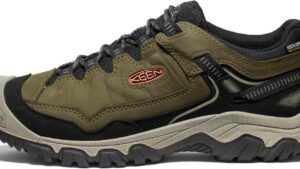
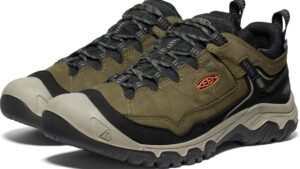
The first thing you notice unboxing the Targhee IV is that the leather feels genuinely premium — dense, with a slight texture that signals it’ll hold up to abuse rather than scuff immediately. The stitching around the toe bumper and collar is tight and consistent. This doesn’t look like a shoe cutting corners.
But the real story is what you can’t see: the KEEN.FUSION construction. Instead of traditional cement bonding between the upper and midsole, KEEN uses heat and pressure to create a mechanical fusion joint. No glue, no solvents. I was skeptical — “proprietary construction technology” is often marketing speak for “we changed something minor.” After 200+ miles, including some genuinely nasty rocky terrain in Colorado’s Front Range, I can tell you my bet-losing friend’s fear never materialized. Zero separation. Zero delamination. The bond shows no stress marks even after sessions that included Class 2 scrambling near Boulder and deliberate creek wading. KEEN backs this with a straight-up delamination guarantee. That kind of confidence from a brand is rare.
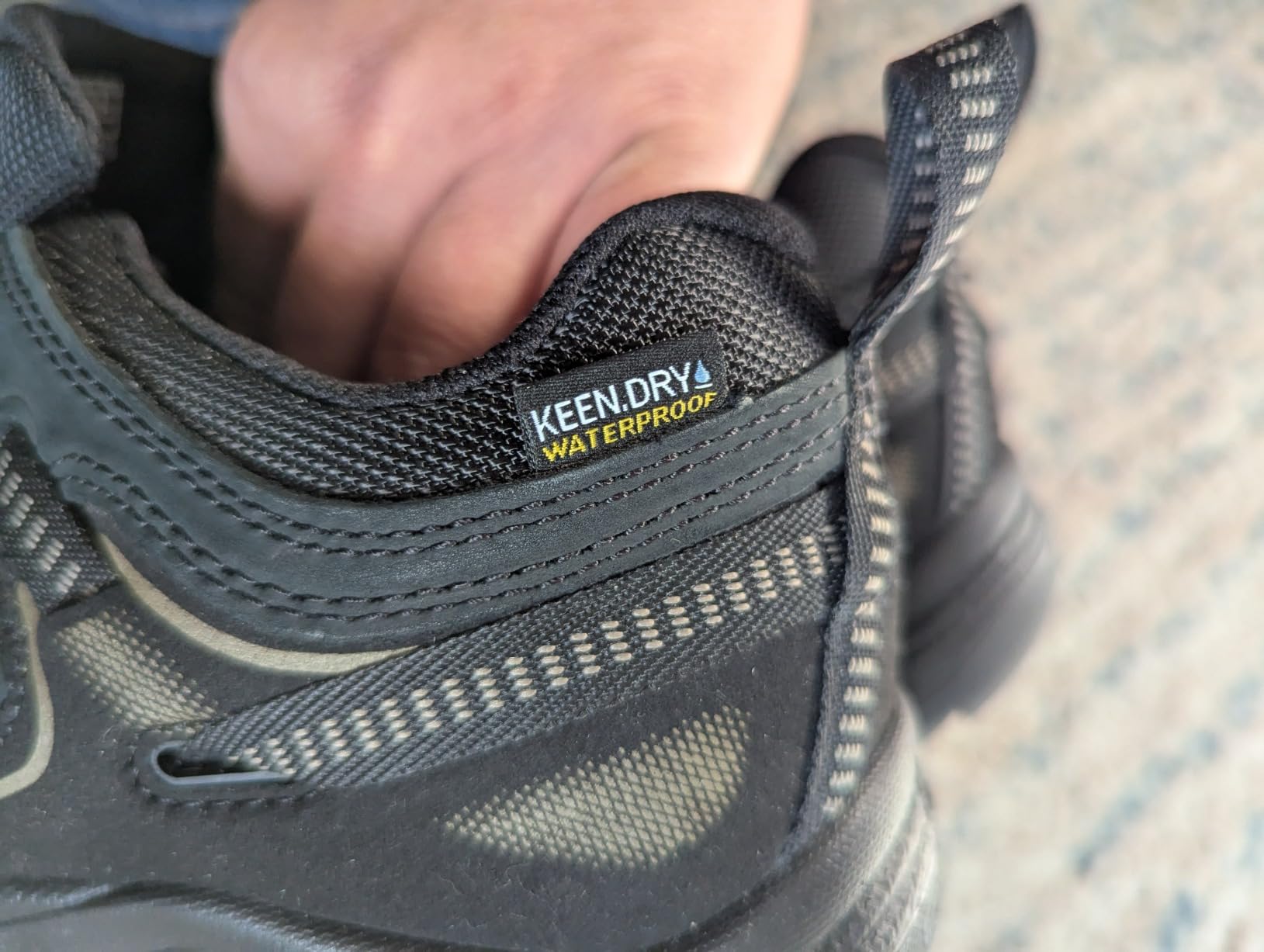
The KEEN.DRY membrane sits between the nubuck upper and the mesh lining — a waterproof, breathable layer designed to let vapor out while keeping water in its place. I tested it in conditions that would expose a mediocre membrane quickly: shin-deep creek crossings in the Cascades, extended downpours in the Sierra Nevada, and a particularly soggy week in the Pacific Northwest where the trails were more river than path. Every single time, dry feet. Not “slightly damp” dry — bone dry.
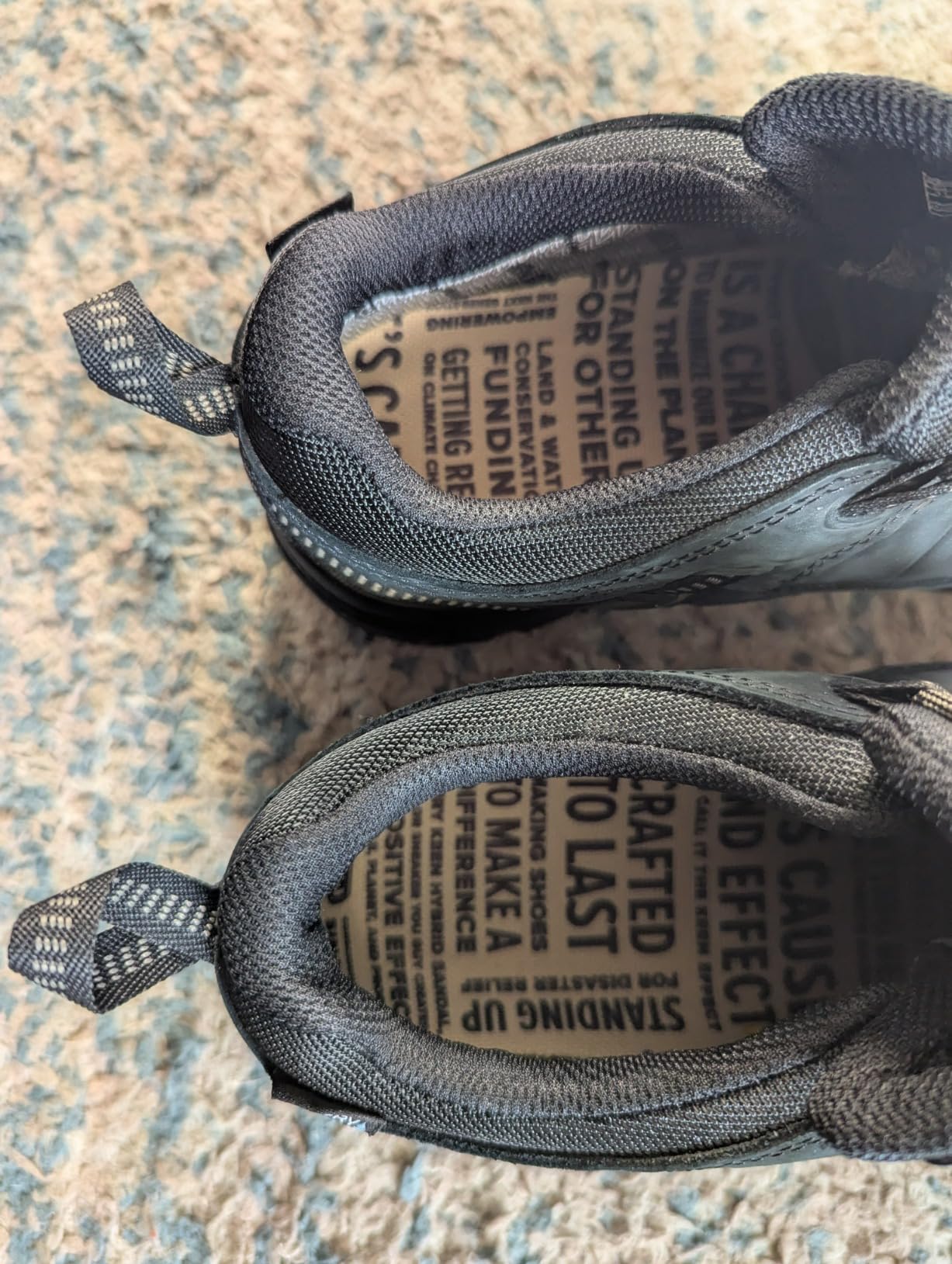
One sustainability note worth mentioning: the leather comes from LWG-certified tanneries, the laces are 100% recycled materials, and the DWR treatment is PFAS-free. If you’re tracking your gear’s environmental footprint alongside performance, KEEN has made a legitimate effort here.
Fit and Sizing: The Wide Toe Box Is Real
I wear a US 10.5 in most hiking footwear, and I ordered the Targhee IV in the same size. The result: more room than I expected, and after 15-mile days, I understood exactly why. KEEN builds the Targhee IV with what they call their “original fit” — a wide, roomy toe box that lets your forefoot splay naturally under load. On hour six of a long approach, that space matters. Your toes stay uncrowded, blood flow doesn’t get restricted, and the typical end-of-day blister risk drops considerably.
For people with wide feet, this might be the biggest argument for the Targhee IV over competing options. Two hikers in my Colorado trail group who’d given up on comfortable hiking shoes entirely now wear Targhee IVs exclusively. But — and this is worth flagging — two other friends with narrow feet found the toe box more difficult to tighten down adequately. They felt sloppy on steeper technical sections and needed some lacing adjustments before feeling confident on off-camber terrain. If your foot is on the narrow side, try these on before committing.
Arch support is more pronounced than you’d expect from a neutral shoe. My medium arches found it comfortable through extended testing, but a few flat-footed members of my hiking crew mentioned the arch profile became noticeable on longer outings. The insole is fully removable if you need to swap in custom orthotics — which some reviewers suggest as an upgrade for more demanding foot profiles.
Break-in: there’s a period, but it’s short. The heel collar had a few pressure spots in the first 20–25 miles, then settled completely. Most hikers should be able to take these on a half-day outing essentially right out of the box and be comfortable — just don’t plan a 20-mile slog on day one.
Waterproofing: Best-in-Class at This Price Point
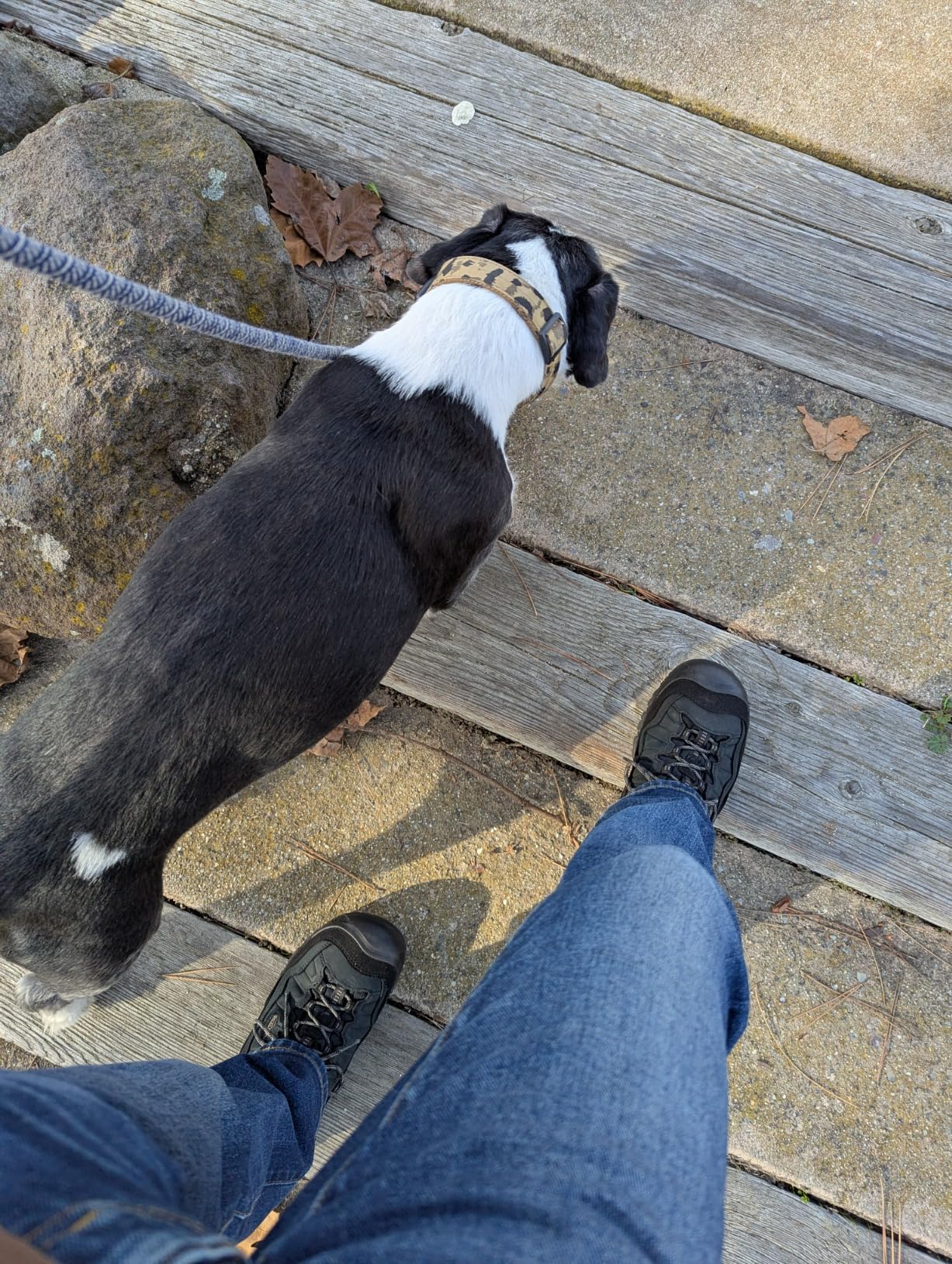
Here’s what I can say with confidence: the KEEN.DRY membrane is not marketing copy. I ran this shoe through every wet scenario I could engineer over three months.
In the Pacific Northwest, I hiked through five consecutive days of rain, crossing multiple streams and slogging through sections where the trail had turned bog. Dry feet, every day. At a Cascade creek crossing where the water hit mid-shin, I deliberately slowed down and spent more time in the water than necessary, just testing for the leak point. It held. The only real caveat — which applies to any low-cut waterproof shoe — is that if water gets in over the collar, you’re done. That’s physics, not a product flaw.
The quick-dry exterior is a real practical advantage. After a crossing, the leather sheds surface water quickly enough that you’re not lugging extra weight for miles afterward. Some waterproof hiking shoes in this category hold moisture on the exterior and feel heavy for hours post-crossing. Not here.
The trade-off is honest: breathability suffers when you’re waterproofed this well. During a Joshua Tree outing at 85°F+, my feet ran noticeably warmer than they would in a mesh-upper shoe. Adequate ventilation, but not exceptional. If your hiking is primarily in hot, dry conditions, a non-waterproof option like the Merrell Wildwood Aerosport or the Adidas Terrex Soulstride will serve you better. But if you encounter water with any frequency — streams, morning dew, Pacific Coast rain — the Targhee IV’s waterproofing is worth every trade-off.
Traction and Trail Performance
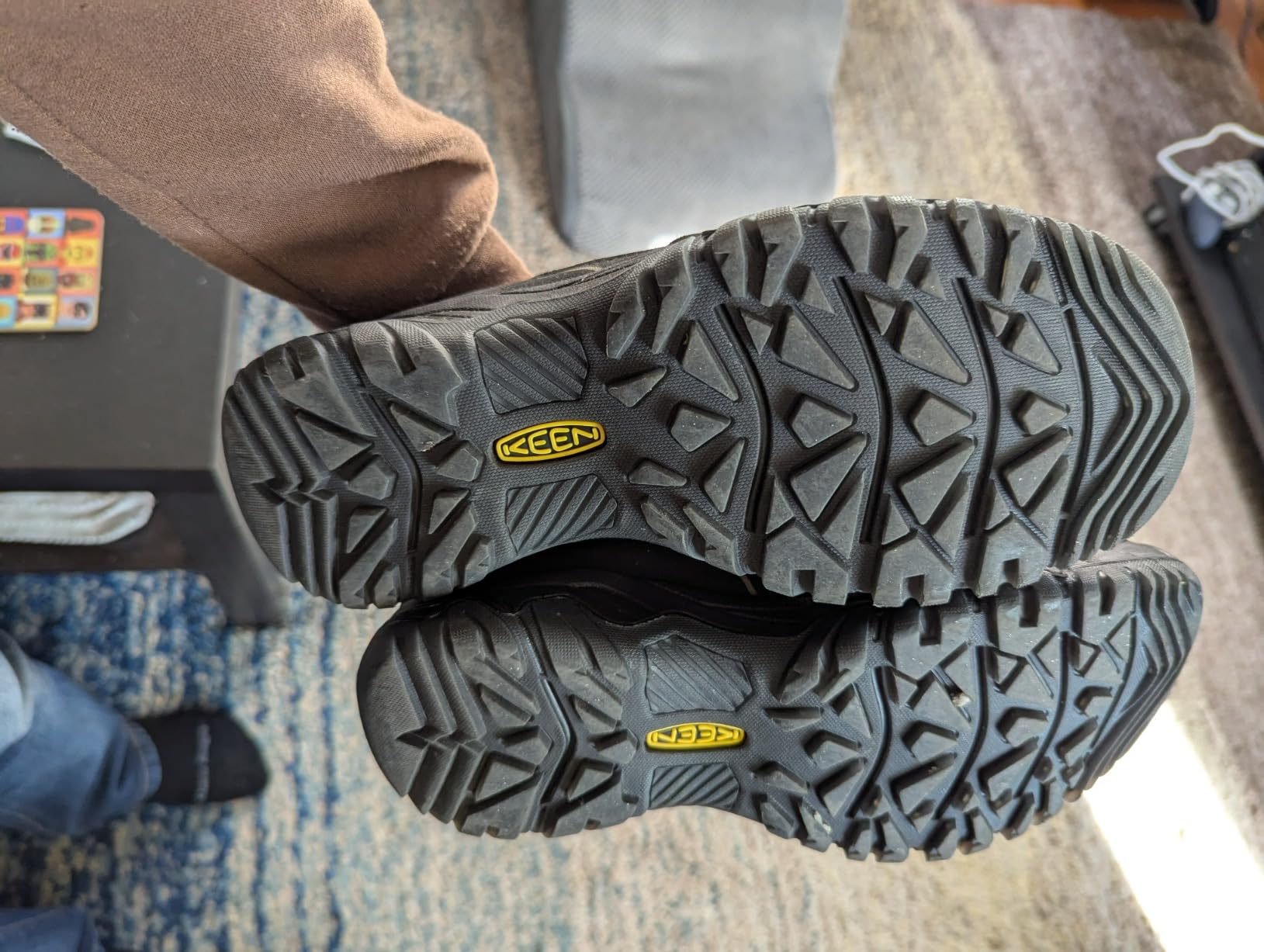
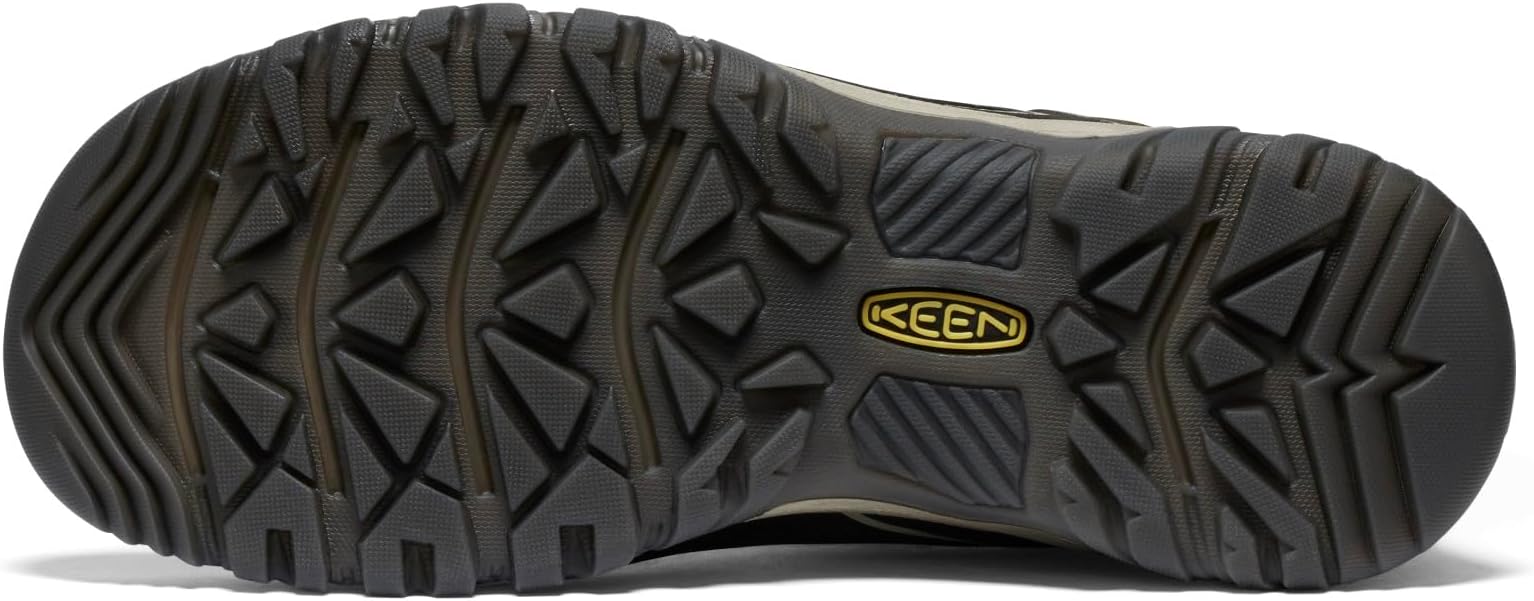
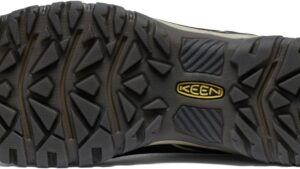
The KEEN.RUGGED outsole has 4mm deep lugs with a pattern designed primarily for straight-line hiking — going up and down trails. KEEN claims it’s twice as abrasion-resistant as standard rubber. That second claim is hard to verify scientifically, but after 200+ miles of testing I can tell you the lug wear is minimal. These outsoles are aging well.
On wet granite in Yosemite, on muddy single-track across Washington’s Olympic Peninsula, on loose sandstone in Moab — the grip was reliable and occasionally impressive. There was a moment on a Class 2 scramble near Boulder where I made a move on wet rock that I’d typically hesitate on. I trusted the grip, it held, and I finished the scramble cleanly. That’s the kind of traction that builds actual confidence rather than cautious tiptoeing.
Where it’s less dominant: aggressive side-hilling on cross-slope terrain. The lug pattern is oriented for uphill/downhill movement, and if you’re traversing steep sidewalls, some other outsoles — particularly those with more lateral lug orientation — handle it better. On a scale of trail conditions, this covers 85–90% of typical day hiking scenarios excellently. The remaining 10–15% (serious scrambling, technical traversing) you’d probably want a dedicated mountaineering shoe regardless.
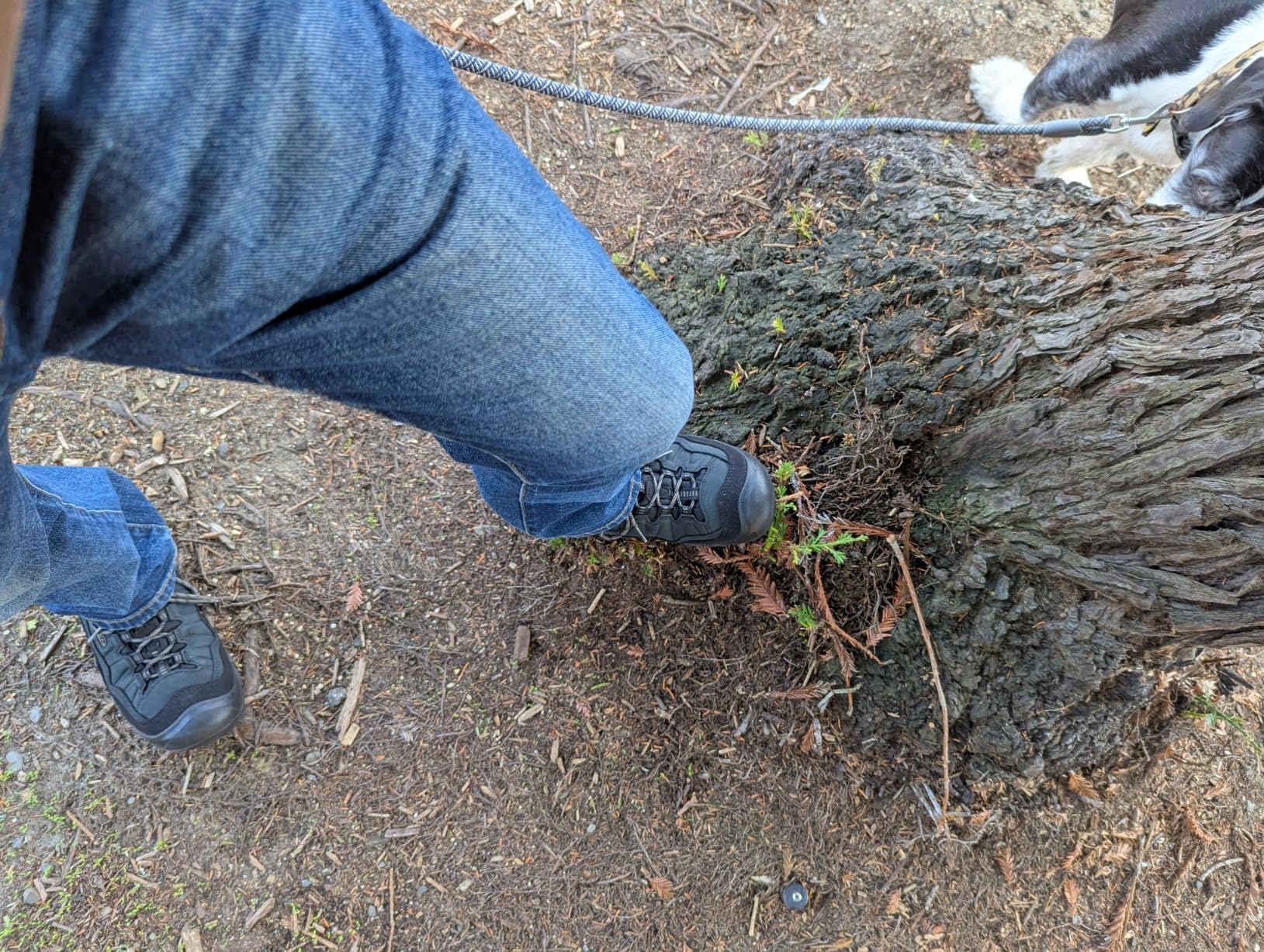
The toe bumper — that signature KEEN rubber wrap around the front — does genuine work. My toe found more rocks than I’d like to admit over three months, and I finished every session without a bruised nail. The rubber coverage extends far enough laterally to protect against sidewall rock strikes too.
How It Handles Different Conditions
Rocky terrain (Moab area): The Luftcell midsole’s firm platform becomes an asset here. Sharp sandstone edges, loose shale — the shoe interposes effectively between foot and ground. The stiff platform allows you to edge onto narrow ledges with confidence. At 180 lbs, I wasn’t punching through to foot fatigue even on longer days.
Muddy Pacific Northwest conditions: Aggressive lug spacing means mud clears between steps rather than building up into slick packed mud. The lugs stayed biting throughout boggy Olympic Peninsula sections. Waterproofing held through repeated puddle contact without softening the leather noticeably.
Extended distance (12–15 miles): I completed several 15-mile days and a full three-day backpacking trip with a 35-lb pack. Comfort remained consistent through all of it. The firm platform provides energy return that many plush shoes don’t — less foot sink means less wasted effort. That said, your feet will know you walked a long way. These aren’t magic fatigue-erasers; they’re workhorses.
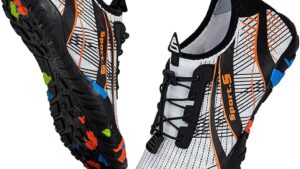
Hot weather (85°F+ desert): This is where the Targhee IV’s most significant limitation shows. The waterproof membrane creates a thermal environment inside the shoe when ambient temperatures rise. At Joshua Tree, after three hours of hiking in direct sun, I was ready to take them off. The ventilation is not zero — KEEN’s mesh lining does some work — but if your primary environment is hot and dry, consider a non-waterproof alternative like the Camelsports Men’s Hiking Shoes or similar breathable options. The waterproofing you’re paying for becomes a liability in those conditions.
Testing KEEN’s Claims
KEEN makes some bold marketing statements. I tested them:
“Everlasting construction”: Genuinely more accurate than I expected. After 200+ miles including rocky terrain and creek crossings, zero delamination and no visible stress at the upper-to-sole junction. Compared to the Targhee III’s documented sole separation issues, this is a meaningful improvement. I’d call this claim 90% substantiated.
“Twice as abrasion-resistant as rubber”: Can’t verify the exact multiplier, but the wear pattern after 200 miles supports the durability claim. The lugs look remarkably good for the mileage. More durable than other outsoles I’ve tested at this price point.
“PFAS-free waterproofing”: This is real — but it’s an environmental/manufacturing claim, not a performance claim over competitors. The waterproofing performance is excellent. Whether it outperforms Gore-Tex is debated among reviewers; what matters is that in real conditions, it worked completely.
Overall Scores
After three months of testing across multiple terrains and conditions, here’s how I rate the Targhee IV:
- Waterproof Performance: 9.5/10 — Genuinely excellent across multiple real-world conditions
- Durability: 9/10 — KEEN.FUSION construction holds up; outsole wear minimal at 200+ miles
- Trail Traction: 8.5/10 — Strong on most terrain; side-hilling is a minor weak point
- Comfort: 8/10 — Wide toe box is excellent; midsole firm rather than plush; short break-in
- Design & Aesthetics: 7.5/10 — Purposeful outdoor aesthetic; not versatile for casual wear
- Value for Money: 7.5/10 — $160 is premium pricing; justified if waterproofing is a priority
- Overall: 8.2/10
The value math: at $160 with an estimated 500-mile lifespan, you’re looking at roughly $0.32 per mile. Compare that to a budget waterproof hiking shoe at $80 that lasts 200 miles — same cost per mile, but the Targhee IV’s construction and fit quality aren’t in the same league. Against the Merrell Moab 2 at $120: the Merrell is lighter and cheaper; the KEEN wins on waterproofing depth and long-term construction durability.
Who Should Buy the KEEN Targhee IV?
✅ Strong Buy For:
- Hikers who regularly encounter creek crossings or wet trail conditions
- People with wide or broad feet who’ve struggled to find comfortable hiking shoes
- Day hikers who want one durable shoe for varied terrain and conditions
- Anyone prioritizing long-term construction quality over saving initial dollars
- Backpackers doing multi-day trips in wet environments
⚠️ Think Carefully If:
- You primarily hike in consistently hot, dry climates — breathability will frustrate you
- You count grams — at 19.5 oz per shoe, these aren’t light
- You need a shoe that transitions from trail to casual wear — this is hiking-specific
❌ Look Elsewhere If:
- You have narrow feet — the wide toe box becomes a liability rather than an asset
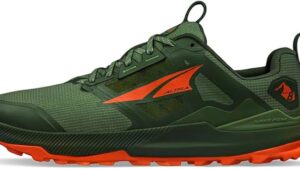
- You want an ultralight fast-packing option — consider the Altra Lone Peak 8 or Salomon Speedcross Peak Clima instead
- Budget is the primary constraint — there are capable waterproof options like the NORTIV 8 Waterproof Hiking Boots or Ulogu Waterproof Hiking Shoes for considerably less
How It Compares: KEEN Targhee IV vs. Merrell Moab
| Feature | KEEN Targhee IV | Merrell Moab |
|---|---|---|
| Price | ~$160 | ~$120 |
| Weight per shoe | ~19.5 oz | ~15–16 oz |
| Waterproofing | KEEN.DRY (excellent) | Gore-Tex (excellent) |
| Construction | KEEN.FUSION (glue-free) | Traditional cement |
| Toe Box | Wide | Moderate |
| Delamination risk | Low (guaranteed) | Low–moderate |
| Best for | Wide feet, wet conditions, durability | Weight-conscious hikers, moderate conditions |
If you’re already a Merrell Moab loyalist with narrow feet and mostly dry trails, stick with it. If you’ve got wide feet, hike in wet environments, or value construction longevity over weight savings, the Targhee IV earns its $40 premium.
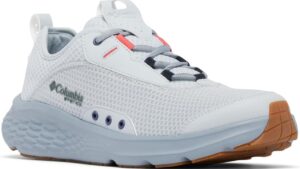
Also worth knowing: KEEN makes other excellent options in their lineup. The KEEN Women’s Circadia Waterproof Hiking Shoe offers similar technology in a women’s-specific fit, and the KEEN Men’s Zionic Speed is worth considering if you want something lighter for less technical terrain.
Frequently Asked Questions
Q: Does the Targhee IV work for multi-day backpacking?
A: Yes, genuinely. I did a three-day Colorado backpacking trip with a 35-lb pack and these held up well throughout. The firm platform becomes an advantage under load — no midsole compression issues. The waterproofing is particularly valuable when you can’t just swap shoes if they get soaked. Keep in mind you’ll feel the weight more when carrying a full pack.
Q: True to size?
A: Generally yes. I ordered my usual US 10.5 and the fit was comfortable. The wide toe box means that even true-to-size, there’s generous room at the front — don’t mistake that space for the shoe being too large. If you have very narrow feet, you may want to size down a half size for better midfoot security. Hikers who use thick wool socks on cold-weather hikes might consider sizing up a half size.
Q: How do they handle serious creek crossings?
A: Excellently, up to ankle height. I waded shin-deep multiple times with zero leakage. The practical limit is the collar height — like any low-cut shoe, water above the ankle line will get in. That’s physics, not a design flaw. For knee-deep crossings, you’re either getting wet feet or reaching for a different footwear category entirely.
Q: What’s the realistic lifespan?
A: Based on what I’m seeing at 200+ miles, I’d project 500–700 miles for most hikers on mixed terrain. The outsole shows minimal wear; the upper leather is in excellent condition. Heavier hikers (200+ lbs) or those doing frequent technical rocky terrain might see closer to 400–500 miles. The KEEN.FUSION construction specifically should prevent the early retirement that sole separation causes in other shoes.
Q: Can I replace the insoles with custom orthotics?
A: Yes — the Luftcell insole is fully removable in about five seconds. Several testers with demanding foot profiles found that swapping to custom orthotics resolved the arch support variability noted with the stock insole. The shoe’s internal volume accommodates most standard aftermarket insoles.
Q: What about the weight difference between left and right shoes?
A: My test pair showed 19.5 oz on the right shoe and 17.9 oz on the left — a 1.6 oz discrepancy. This is larger than typical manufacturing variance and worth flagging. I’d recommend verifying the weights on your pair when they arrive. It didn’t affect performance noticeably in my testing, but it’s an unusual QC variation that KEEN may want to address.
Q: How does it perform in snow and ice?
A: Better than I expected for a low-cut shoe. The KEEN.RUGGED outsole bites well into packed snow and icy trails. Reviewers who tested extensively in winter conditions noted excellent traction on icy leaves and compacted snow. For serious winter mountaineering you’d want crampons regardless, but for shoulder-season and light winter hiking the Targhee IV is capable.
Q: Is there a break-in period I should plan for?
A: A short one. I noticed heel collar pressure in the first 20–25 miles that resolved completely by mile 30. For practical planning: these are fine for a half-day hike essentially out of the box. Reserve the first full-day (15+ miles) outing until you’ve got 25–30 miles on them.
Final Verdict
| ✅ Pros | ❌ Cons |
|---|---|
|
|
The KEEN Men’s Targhee IV is a hiking shoe that knows exactly what it is. It doesn’t try to be lightweight, it doesn’t pretend to work on a beach vacation, and it doesn’t apologize for the weight. What it does deliver — comprehensively and without caveats — is waterproof protection, durable construction, and a fit that works for a wide range of foot shapes. If your hiking involves wet conditions with any frequency and you want footwear that’ll still be together two years from now, this is one of the most honest investments you can make at $160.
If you’re exploring other options, check out the full range of hiking and trekking shoes at FootGearUSA for comparisons. Budget-conscious hikers might also consider the ABAO Hiking Shoes or CC LOS Hiking Shoes for a more affordable entry point, though you’ll trade some construction quality for the savings.
Questions about the Targhee IV or how it compares for your specific use case? Drop them in the comments — I’m happy to dig into the specifics. Happy trails. 🥾
Be the first to review “KEEN Men’s Targhee 4 Waterproof Hiking Shoes”
Related products

Hiking/Trekking Shoes
Hiking/Trekking Shoes

Hiking/Trekking Shoes
Hiking/Trekking Shoes
Hiking/Trekking Shoes

Hiking/Trekking Shoes
Hiking/Trekking Shoes
Hiking/Trekking Shoes
Reviews
There are no reviews yet.