
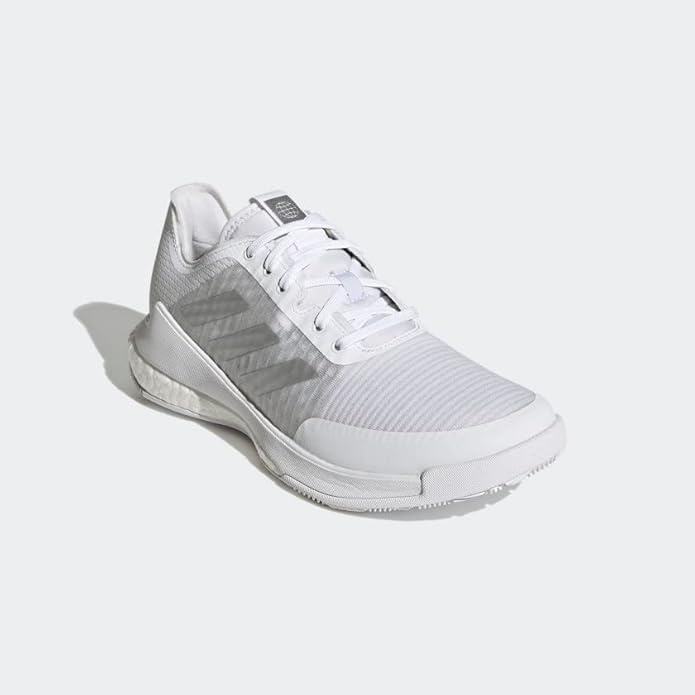
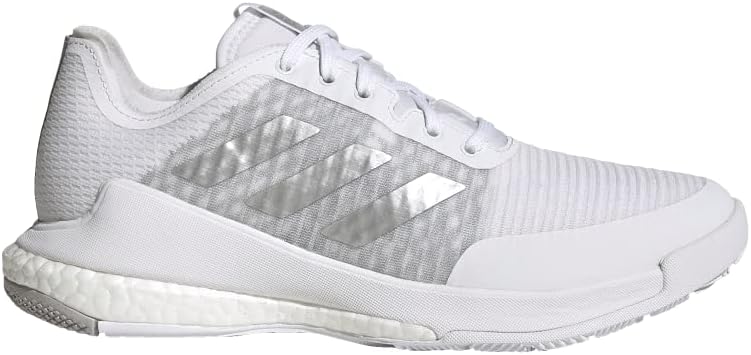
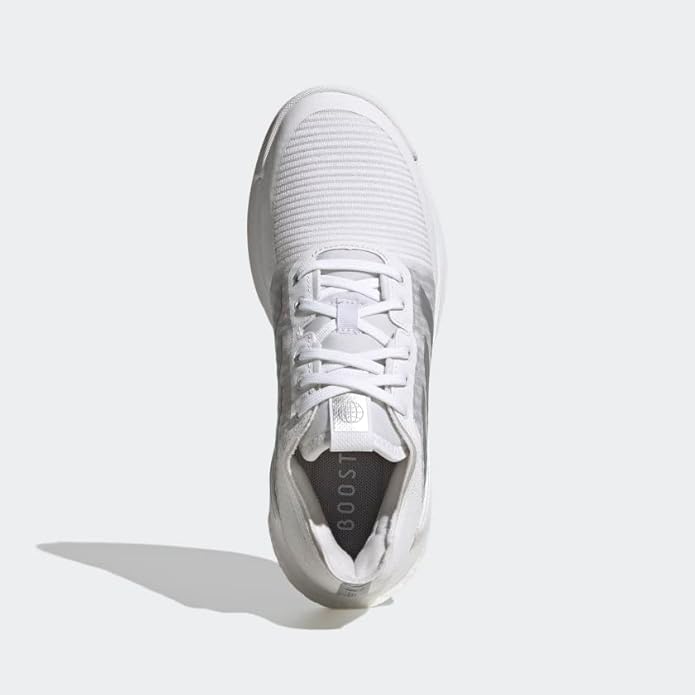
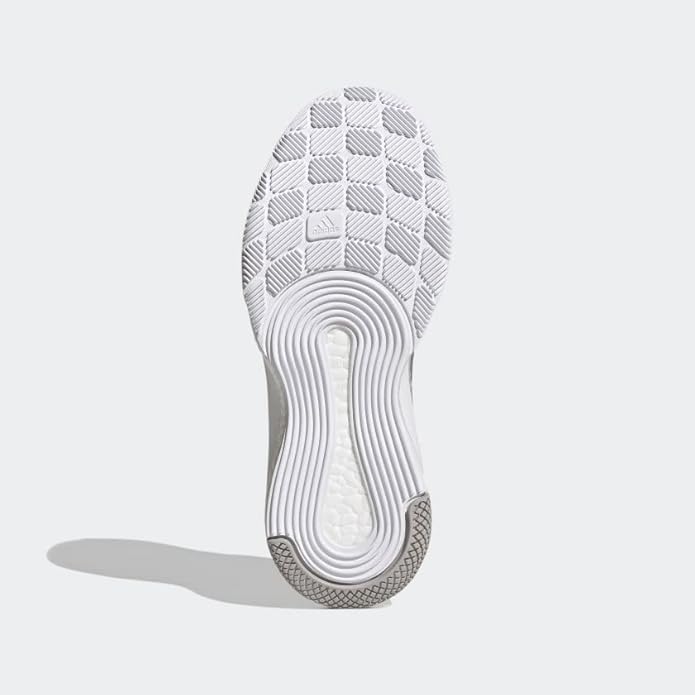
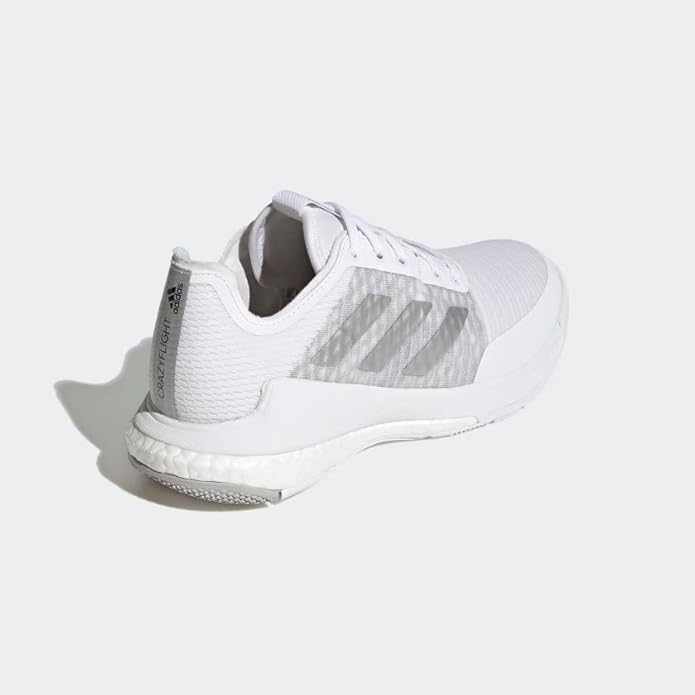
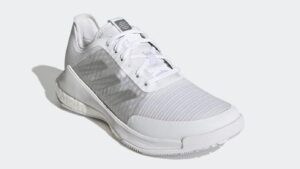
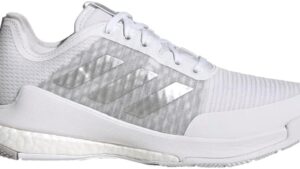
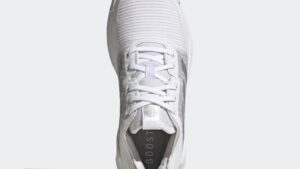
Three volleyball moms cornered me after pickup last month. Each one had the same recommendation: “Sarah, you have to try the Adidas Crazyflight.” Given that I’d been nursing chronic ankle support frustrations through two seasons of coaching my daughter’s team while playing in a recreational league myself, I figured the universe was sending a message. Eight weeks, 24 practice sessions, and 12 competitive games later, I’ve got a nuanced answer — and one finding about these shoes that none of those three moms warned me about.
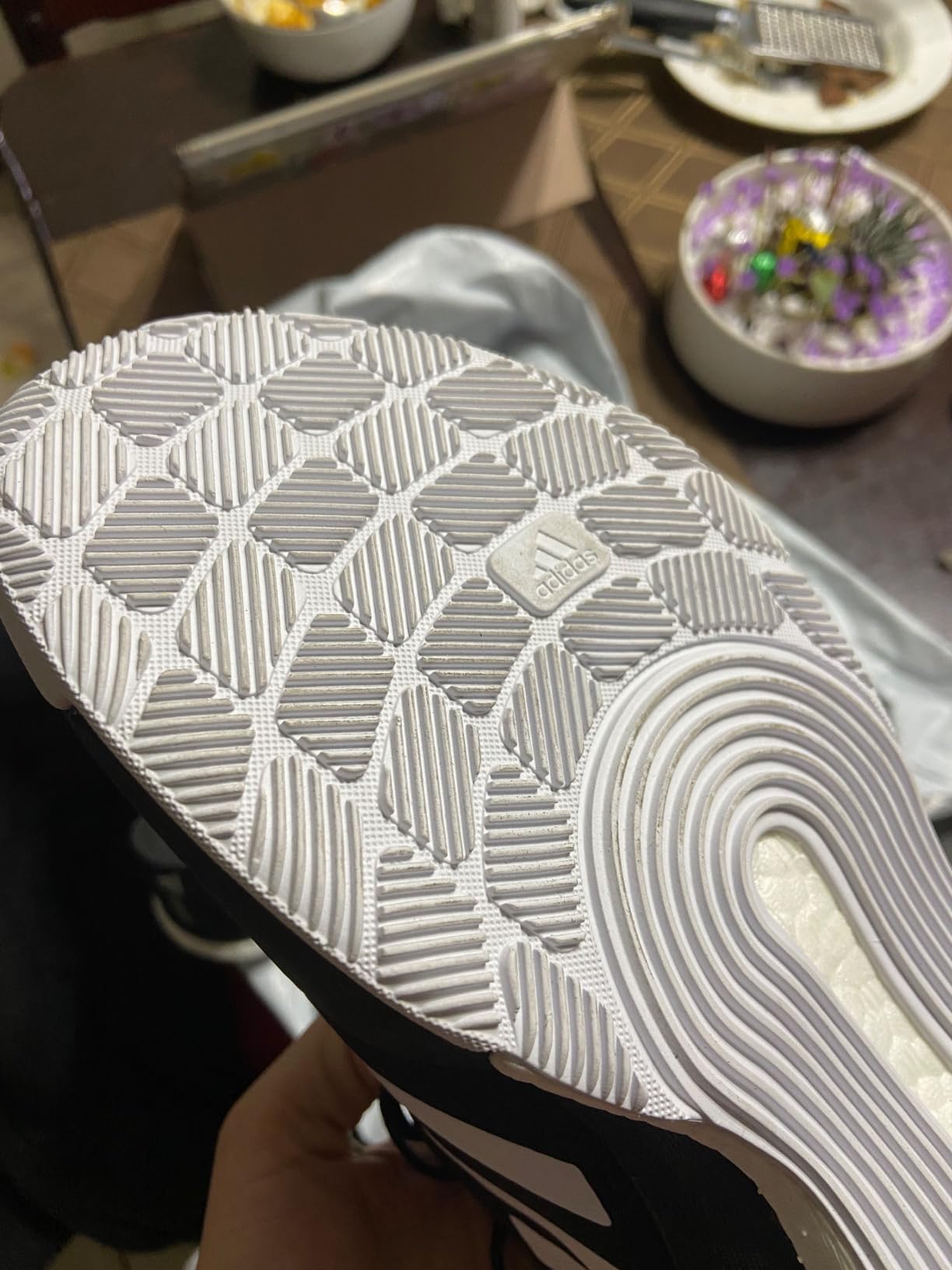
Quick Specs Overview
At size 8 with a normal-width foot and 150 lbs on the scale, here’s what I was working with:
- 💰 Price: $114 (tested model; current gen runs $129–$150)
- ⚖️ Weight: 8.2 oz (women’s size 8)
- 🧪 Midsole: Three-quarter-length BOOST cushioning framed by stabilizing EVA
- 👟 Upper: Stretch mesh with integrated TPU fibers + ADITUFF toe reinforcement
- 🏐 Category: Women’s indoor volleyball
- 📏 Height: Mid-cut design
- 🌱 Sustainability: 50%+ recycled content in upper
Eight weeks of testing across community center hardwood, a league synthetic court, and the pristine floors at our regional tournament facility. That’s the context behind every claim below.
Design, Build Quality & First Impressions
What You Notice on Day One
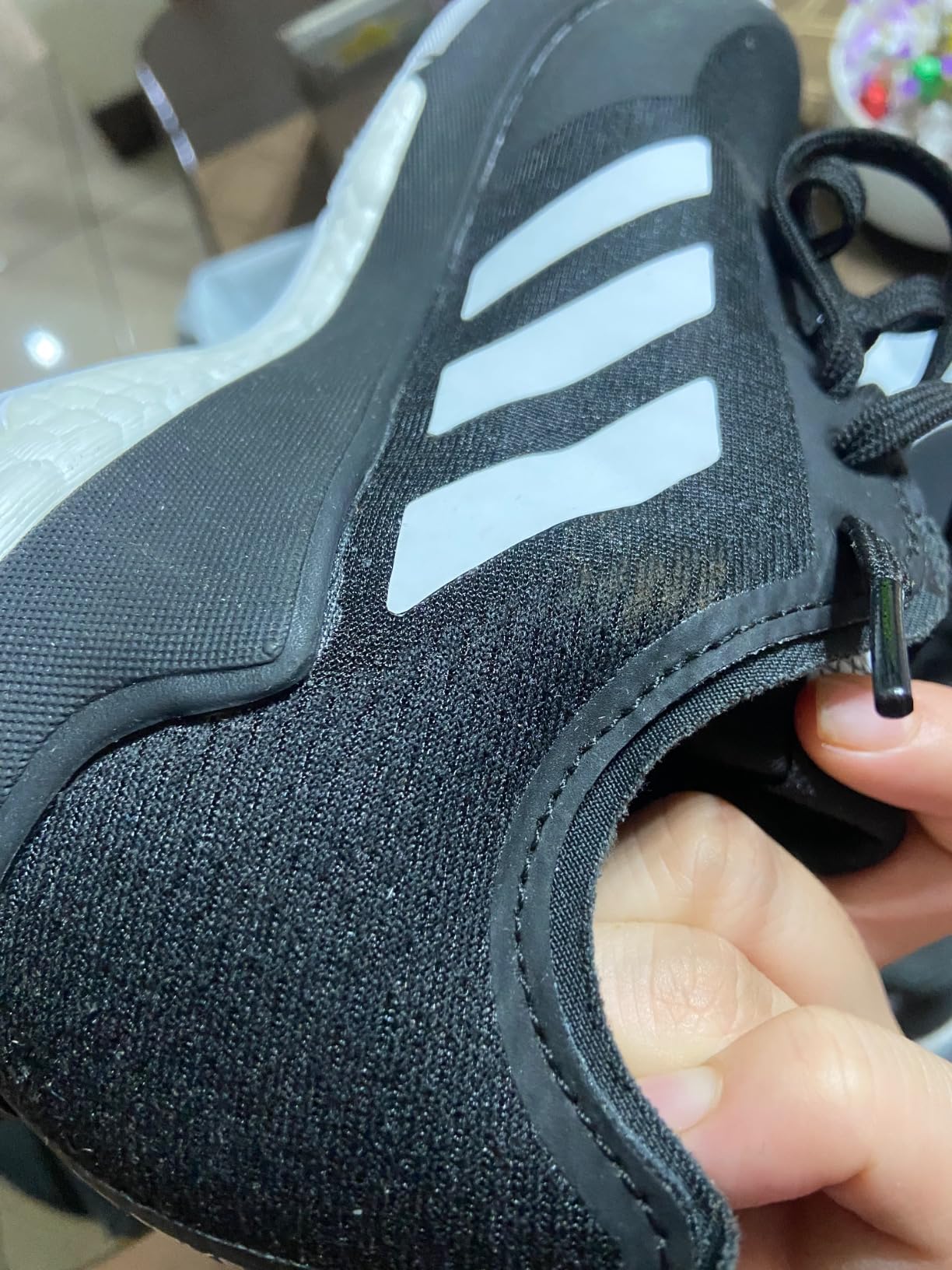
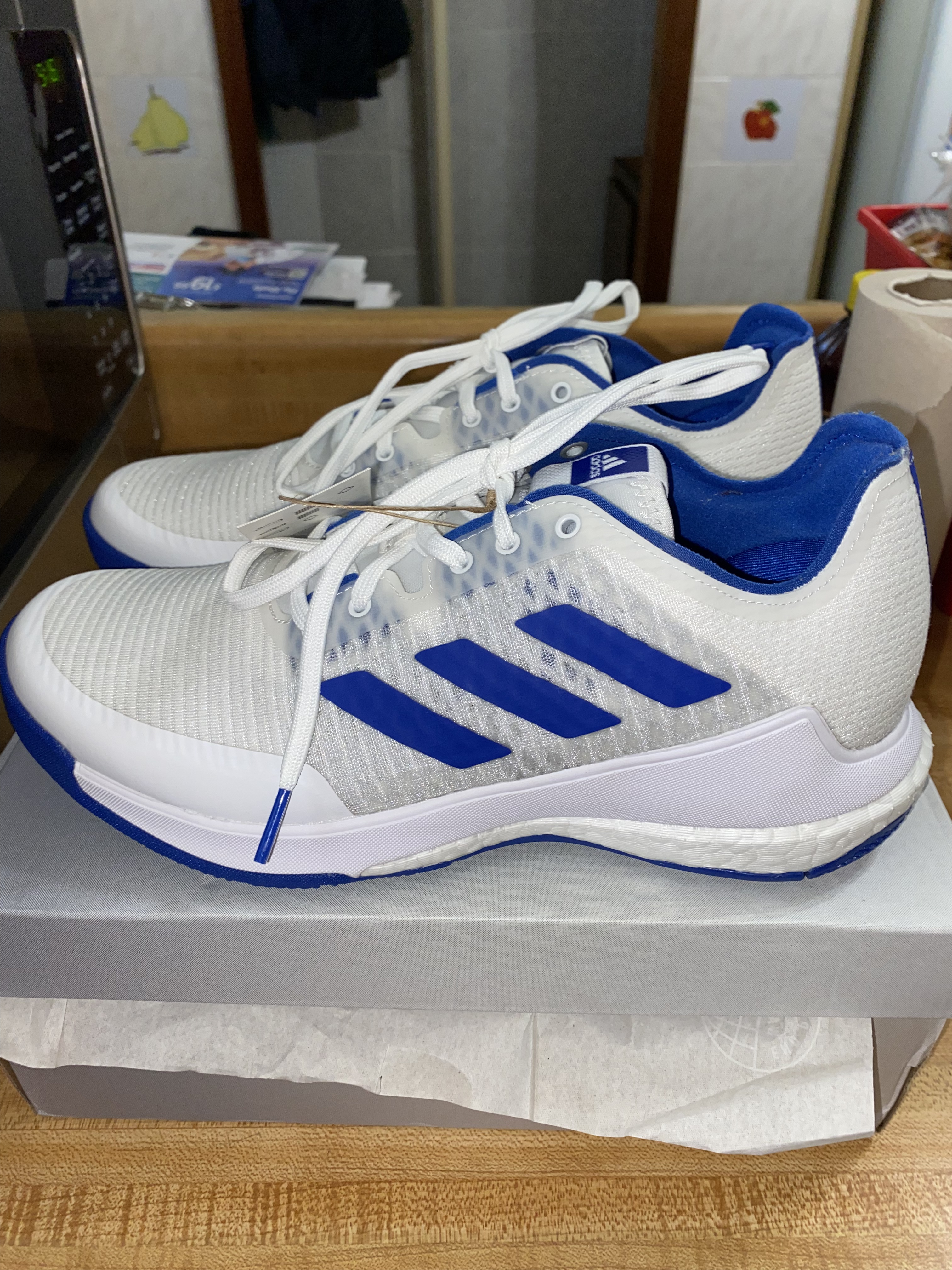
The first thing that struck me wasn’t the look — it was the weight. At 8.2 ounces, these feel genuinely featherlight compared to the pair I’d been wearing, which sat in the 10-plus-ounce range typical of most volleyball shoes. Picking them up in the store, you get that slightly suspicious sensation of “is something missing?” Nothing is. That’s just how light they are.
Slip them on and the stretch mesh does exactly what engineered mesh promises: it wraps your foot with a snug, almost sock-like embrace that doesn’t require breaking in. No stiffness period, no hotspot waiting to develop. The synthetic overlays and integrated TPU fibers give structure where it matters — around the midfoot and lateral zones — without adding that boxy rigidity you feel in shoes with heavier reinforcement panels.
One small quirk I noticed: the top eyelet sits at a slight angle that can occasionally press against the ankle bone during sharp, aggressive lateral cuts. Not a constant annoyance, but something I felt a handful of times across the 24 practice sessions. Players with more pronounced ankle bones might notice it more.
As for the recycled content — Adidas uses 50%+ recycled materials in this upper, and the integration is genuinely seamless. I wouldn’t have known without reading the label. No compromise in texture, no weird stiffness. That’s how sustainability features should work.
BOOST Cushioning — The Star of the Show
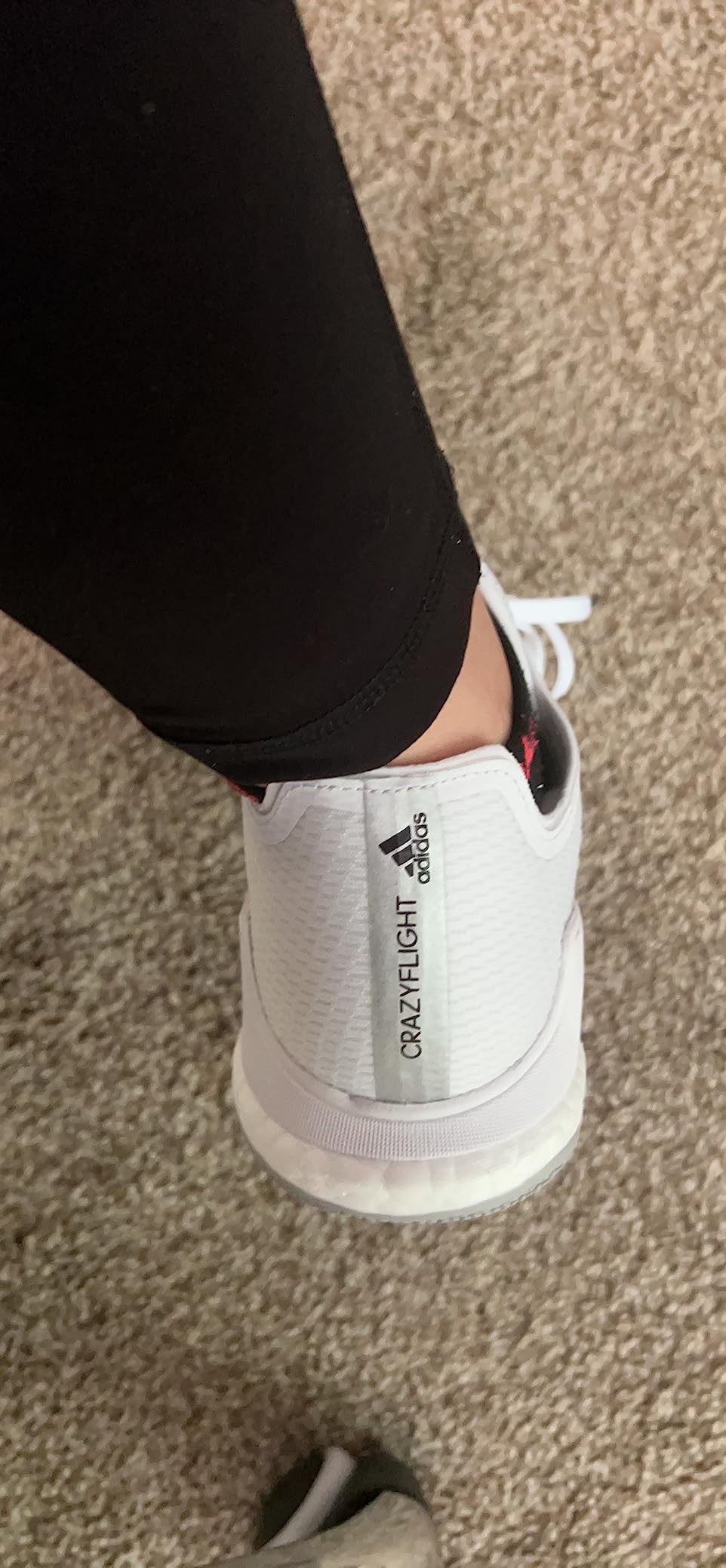
BOOST technology uses thermoplastic polyurethane foam capsules that store and return energy — the idea being that each landing feeds the next push-off. In practice, for volleyball, this matters most during approach jumps and explosive transition movements.
At 150 lbs, the three-quarter-length BOOST (framed by an EVA stabilizer) delivers what Adidas promises: energy return that feels substantial without being mushy. During my first full practice with these, the sensation was noticeably different from standard EVA foam midsoles. Approach jumps felt snappier. The cushioning absorbed landing impact without that dead, flat feeling where your energy just… stops.
That said, there’s a nuance worth naming. Reviews from WearTesters flagged that the BOOST layer is “way too thin” in their assessment, noting bottoming-out concerns on particularly hard landings. I didn’t experience that at 150 lbs, but players significantly heavier or landing with more force on harder gymnasium floors may push through the cushioning layer differently. The stabilizing EVA frame helps, but it’s worth considering if you’re a power attacker taking big landing impacts repeatedly.
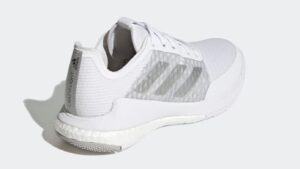
The heel support is a separate highlight. The S-shaped molded counter cradles the Achilles well and keeps the heel pocket secure during direction changes — one of the key factors I was watching given my ankle history. No slippage during any of the 12 games I tested. Worth noting, though: that same heel cushioning makes these feel slightly bulky when you’re wearing them outside of volleyball context. Fine for a competitive court session; less ideal for walking around all day.
Traction Across Three Courts
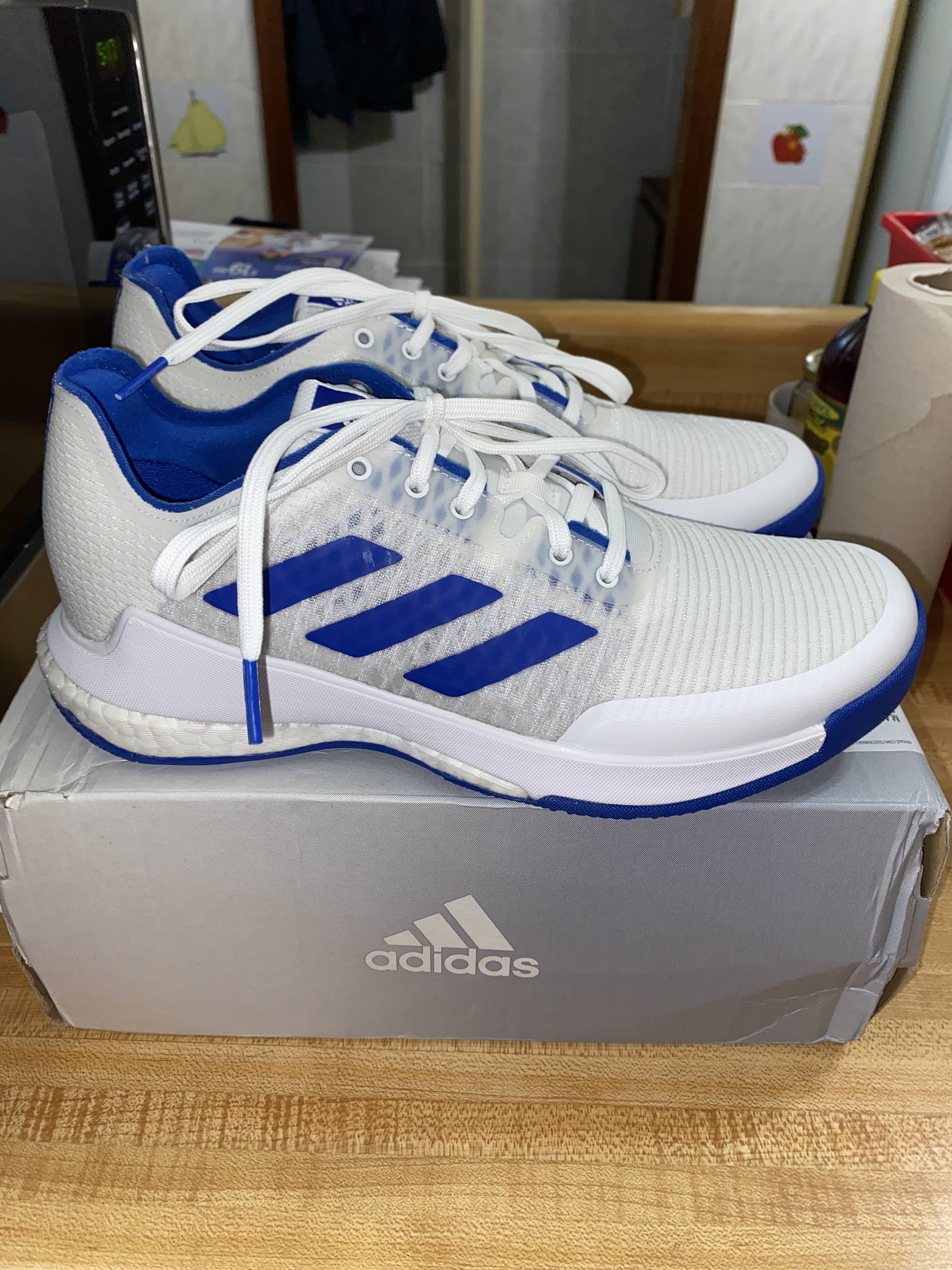
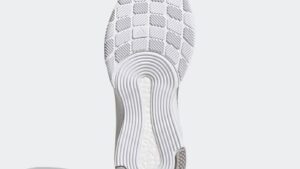
The Top Grip rubber outsole is asymmetric by design, which helps with the multidirectional demands of volleyball — lateral defensive slides, forward approach steps, quick pivot serves. Across our local community center’s older hardwood (which can get slippery, especially near the service line), the grip held reliably. Not aggressive to the point of dragging your feet, but predictable and controlled. That balance matters a lot when you’re reading a dig and need to slide slightly before planting.
The regional tournament facility had the most pristine courts I played on during testing — synthetic material, recently cleaned. The Crazyflight gripped excellently there without being tacky. One quick sole wipe when dust accumulated on the older community center floor, and performance snapped back. For typical indoor volleyball conditions, the outsole claim checks out.
What I’d add: I didn’t test on genuinely wet surfaces, and the marketing claim of “excellent grip on all indoor surfaces” probably doesn’t mean gym floors after a spill. Plan accordingly.
Volleyball-Specific Performance
Practice vs. Tournament — Different Demands, Same Shoe
In practice, these held up across 2–3 hour sessions without the cushioning dying on me. The BOOST maintains its responsive feel even as your legs fatigue, which matters more in hour two than hour one. The mesh breathability is genuinely good — even during back-to-back tournament games, I didn’t get the intense moisture buildup I’ve experienced in shoes with less ventilated uppers.
Tournament play is where the lightweight advantage becomes most tangible. Twelve competitive games over the testing period, some of those back-to-back. The 8.2-ounce weight means the shoe isn’t adding to your fatigue. During long rallies, you’re not fighting dead weight at the end of your legs. For a tournament player going through multiple games in a day, that cumulative lightness matters.
One note for players with wider feet: several players in our league experienced midfoot pressure points during extended practice sessions. The snug mesh that works well for normal-width feet doesn’t expand much for wider foot shapes. If you’re on the wider end, try these on before buying, or consider sizing up half a size.
Position Context: Does Foot Type Matter Here?
Setters and liberos, who prioritize lateral quickness and touch, tend to respond well to the lightweight responsiveness. Hitters and blockers — who take harder landing impacts more frequently — may run into that BOOST layer question faster. The mid-cut height provides adequate ankle support for most positions, and the foot lockdown during jumping movements is reliable. But if you’ve got significant ankle instability history, “adequate” may not be the qualifier you’re looking for.
Sizing: The Conflicting Reports Explained
Here’s what I found: at size 8, normal width, these fit true to size for me — spot-on in length with the stretch mesh accommodating my foot naturally. Adidas’ official guidance is TTS, and my testing agrees.
The “runs large” reports you’ll see in some reviews appear to come primarily from the mid-cut version, which has a slightly different last. Standard Crazyflight: size as you normally would. If you’re between sizes or have wider feet, lean toward half a size up. For wide feet specifically, that’s less about length and more about the midfoot fit — the snug mesh can create pressure points in the 6–8-week mark if you’re on a wider foot.
Does Adidas Deliver on the Marketing?
Claim-by-Claim Reality Check
“Lightweight volleyball shoes made to jump” — Confirmed. The 8.2-ounce weight and BOOST energy return genuinely deliver on this. This is the shoe’s strongest selling point and the marketing claim it earns most clearly.
“BOOST provides superior cushioning” — Confirmed with nuance. The cushioning quality is excellent for the majority of players at moderate weight. Heavier players or those making hard landings repeatedly may find the thin BOOST layer starts to feel less responsive over time.
“Excellent grip on all indoor surfaces” — Mostly confirmed. Performance was consistent across three different court types in my testing. “All surfaces” is probably overselling it — genuinely wet floors are a wildcard I didn’t test.
“Snug fit for stability” — True for normal-width feet. The stretch mesh delivers genuine lockdown. Wide-foot players experience a different story.
Now the part Adidas doesn’t mention in the marketing:
The Durability Problem
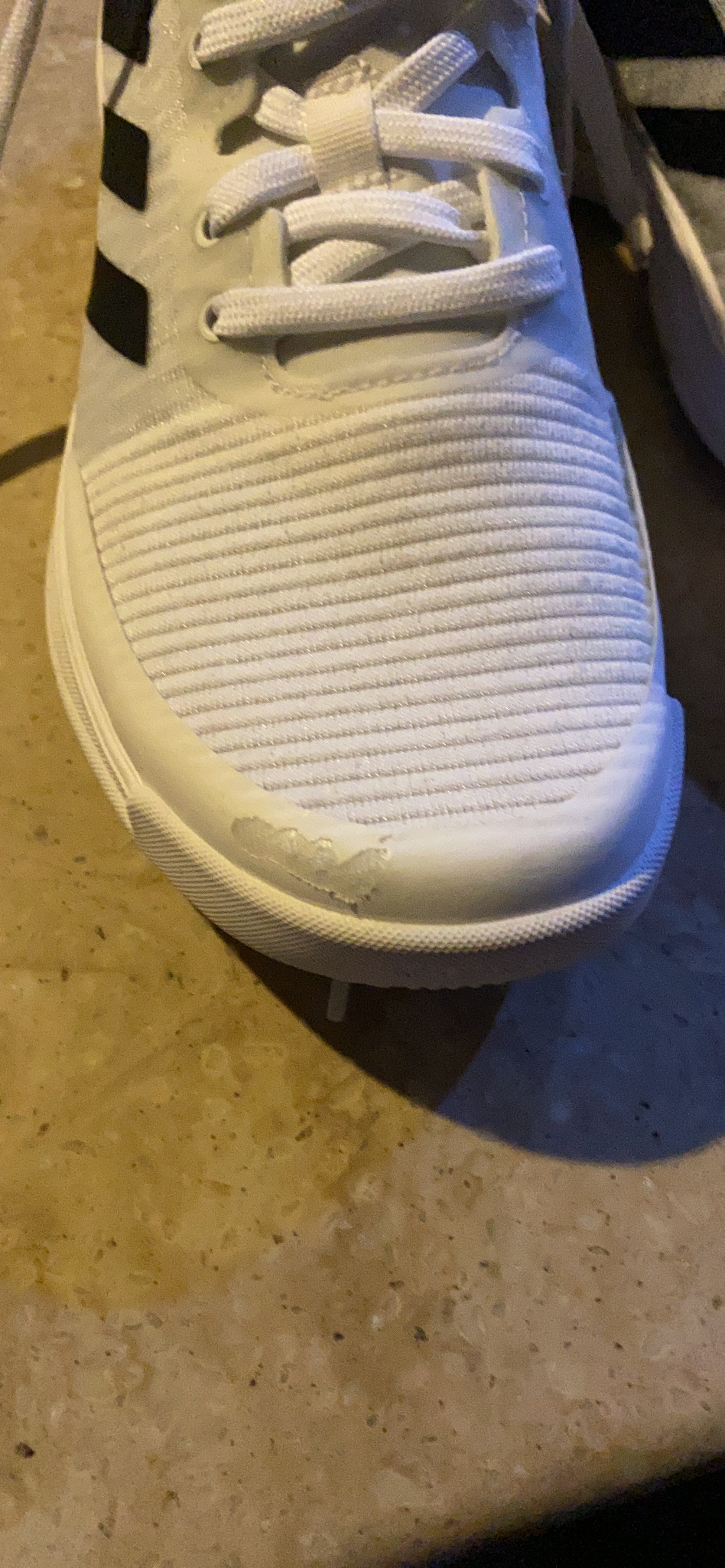
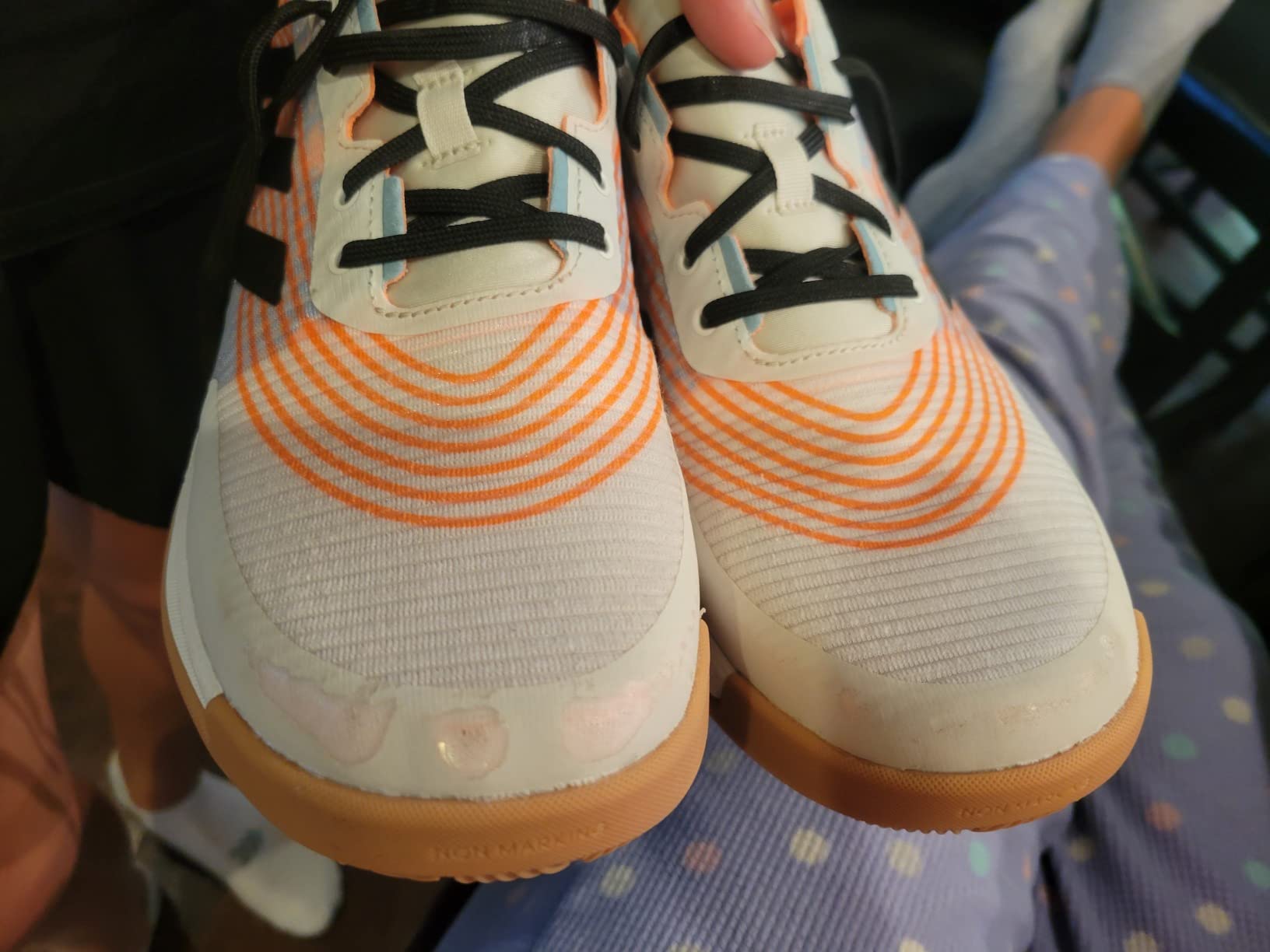
The shoe has ADITUFF reinforcement at the toe — a dual-layered abrasion zone with TPU underlay and foil overlay, specifically designed to reduce wear at that contact point. That feature is real, and Adidas built it into the shoe for a reason.
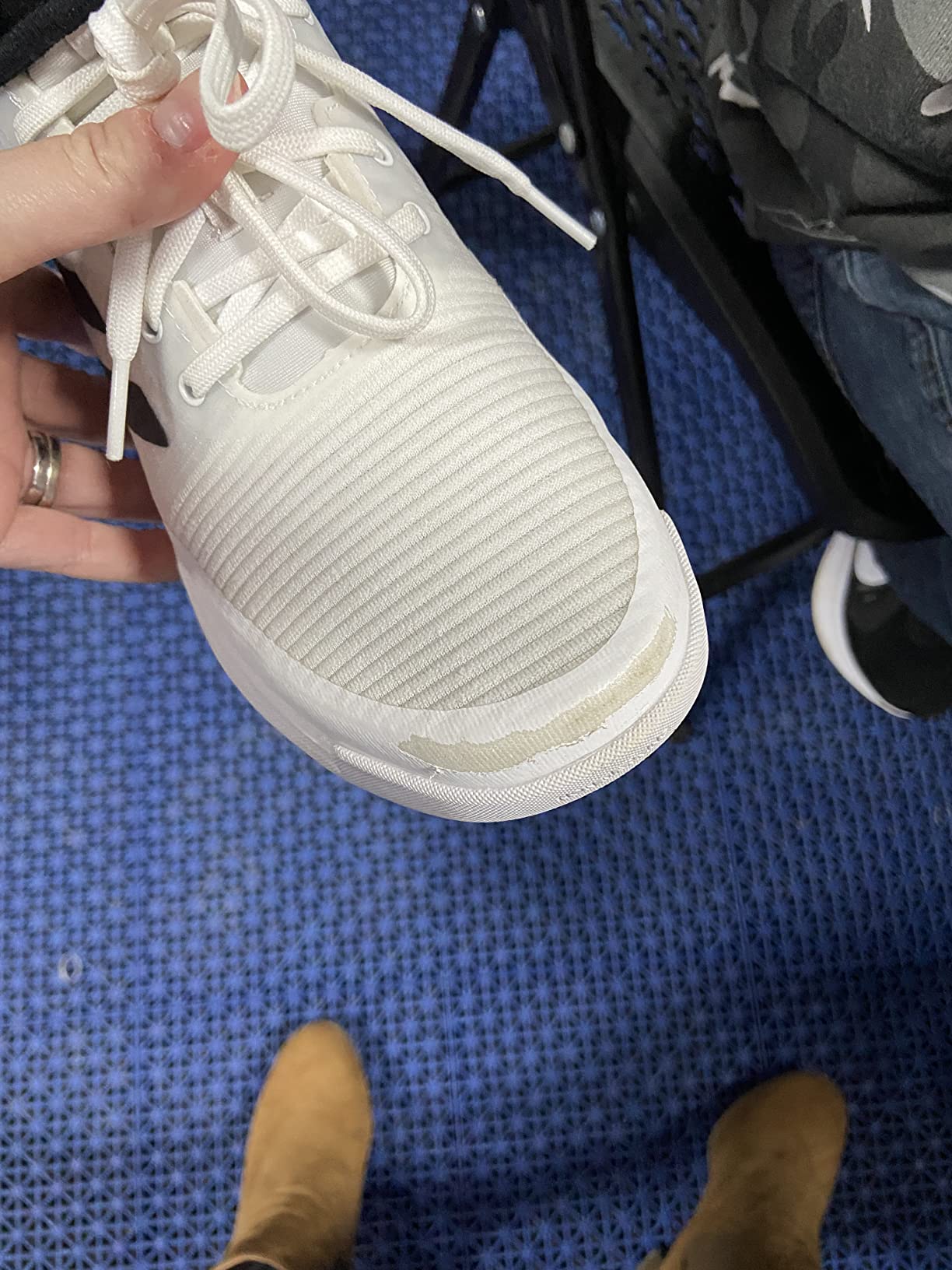
Here’s the problem: the mesh above the ADITUFF protection zone is significantly thinner than the rubber cap itself. What players are reporting — and what’s backed by enough community documentation to take seriously — is that the thin mesh fabric above and around the ADITUFF reinforcement gives out before the toe rubber does. Peeling, separation, white material discoloration. In the worst-case reports, this happens within 1–3 weeks of regular use. Some players have worn these daily for nearly two years with no issues. That variance tells you something about quality control consistency.
My test pair made it through eight weeks without visible separation, but I noticed early material stress around the toe area by week six — the kind of thing you file away and watch. Whether that becomes a real failure at week ten or week forty, I can’t say. But league players who purchased these at the same time I was testing showed the failure pattern clearly. Same purchase window, different wear outcomes.
At $114 for the tested model (and up to $150 for current generation), this durability lottery is a real concern. Players who replace shoes every season and prioritize performance will likely get full value. Players looking for multi-season longevity are taking on meaningful risk.
Overall Assessment
Scoring Breakdown
Comfort & Fit: 8.5/10
Immediate comfort, no break-in required, excellent BOOST cushioning for normal-width feet. The sock-like stretch mesh and S-shaped heel counter earn this score. Minor deductions for the top-eyelet ankle contact and wider-foot pressure points.
Court Performance: 9.0/10
The combination of 8.2-ounce weight, BOOST energy return, and Top Grip traction across multiple surfaces is genuinely excellent. For volleyball-specific movements — approach jumps, lateral defensive slides, quick pivots — this shoe performs at a high level. Few shoes at this price point combine all three performance elements this well.
Design & Style: 8.0/10
Clean, modern aesthetic. The three-stripe detailing works, and multiple colorways are available. The white version looks sharp on a clean court; it shows every scuff and starts yellowing with extended use. Subjective, but worth noting if aesthetics matter to your choice.
Durability: 5.0/10
The score reflects the QC lottery reality: some pairs last under two months before significant failure, others run two years of daily use. The ADITUFF reinforcement exists, but the material above it is the vulnerability. For a $114–$150 shoe, this is unacceptable variance. Players who get a good unit will feel this score is too low. Players who get a bad unit will feel it’s too generous.
Value for Money: 6.0/10
If these last you 18–24 months as expected, the performance justifies the price. If they fail at 6–8 months (which a meaningful portion of users experience), you’re paying $15–$20+ per month for what should be a multi-season investment. The math shifts significantly based on which side of the QC lottery you’re on.
Overall Score: 7.2/10
What the Volleyball Community Reports
The pattern that emerges from broader community feedback is consistent: strong enthusiasm for the on-court feel — “súper acolchonado” (super cushioned) and “muy cómodas” (very comfortable) appear frequently in Spanish-language reviews, mirroring English-language comfort findings. The durability concerns cross language barriers too. Multiple team-purchase scenarios show similar results: great performance in the first phase of use, followed by material issues that create frustration proportional to what the shoes cost.
Final Verdict
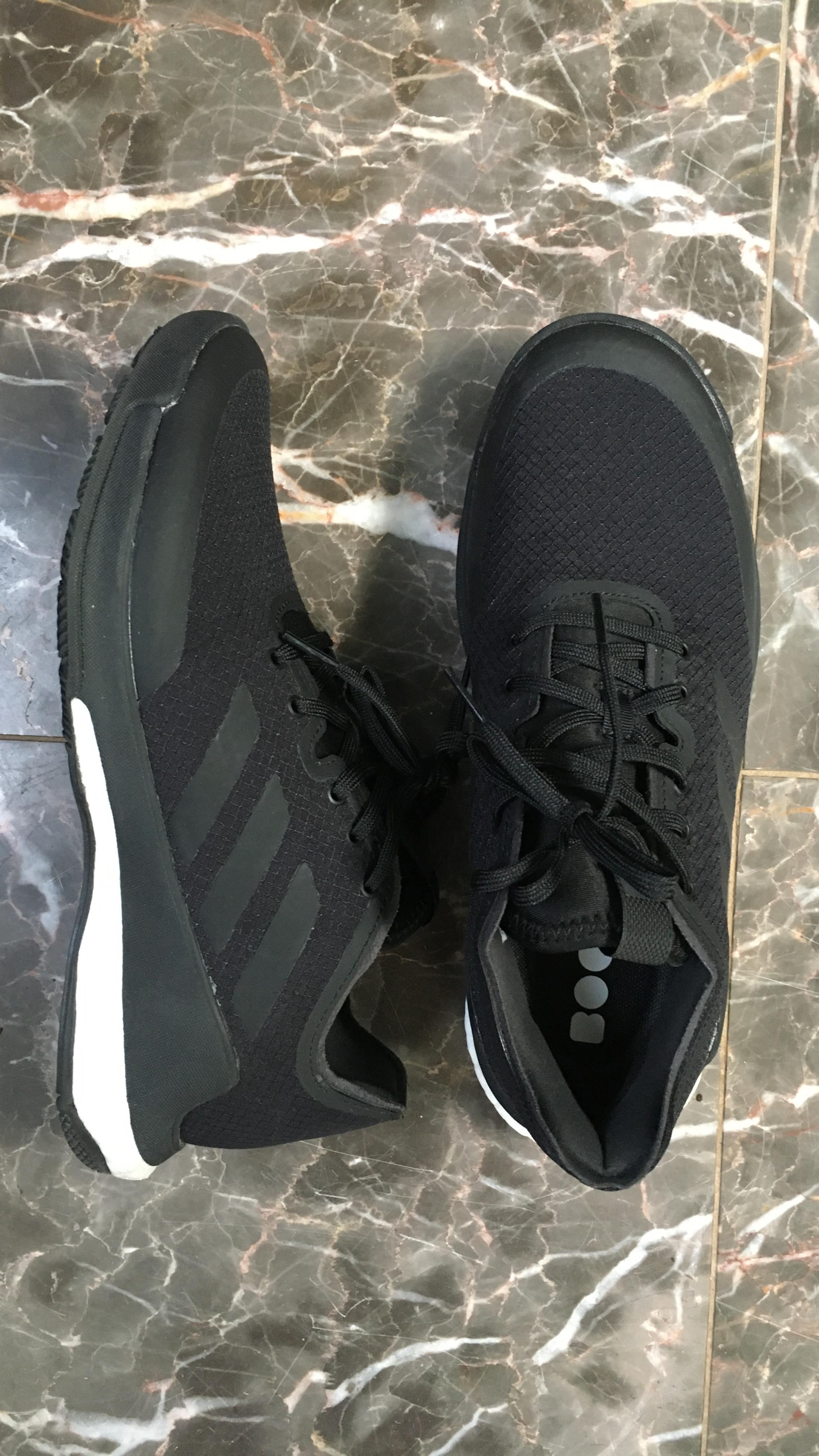
Strengths and Weaknesses
What Works:
- Genuine BOOST energy return for jump-focused volleyball movements
- 8.2 oz lightweight advantage — noticeable across long tournament sessions
- Reliable Top Grip traction across different indoor court types
- Immediate comfort, no break-in phase
- Secure heel lockdown, good for players managing ankle instability
- Seamlessly integrated recycled upper content
What Doesn’t:
- Durability: QC variance is too high for a premium-priced shoe
- Thin mesh above ADITUFF zone is the failure point — protection is partial
- White colorway shows wear quickly, prone to yellowing
- Top eyelet angle creates occasional ankle bone contact
- Wide feet need sizing attention — not a universally accommodating fit
Who Should Buy These
Strong fit if you:
- Replace volleyball shoes every season regardless
- Prioritize court performance (energy return, lightweight, traction) above all
- Have normal-width feet
- Play at competitive or tournament level where performance edges matter
- Can tolerate some QC uncertainty in exchange for best-in-class feel
Look elsewhere if you:
- Need multi-season durability (18+ months of regular play)
- Play multiple times per week year-round and need reliable longevity
- Have wider feet that need more accommodating construction
- Are buying on a tight budget where every month of shoe life counts
Alternatives Worth Considering
For durability-focused players, the Mizuno Women’s Cyclone Speed 3 offers solid court performance with a more consistent build quality record — less thrilling cushioning, but fewer QC surprises. The Mizuno Women’s Wave Momentum 2 sits at the higher end but delivers the kind of multi-season durability that makes the per-use math work out better. For training shoes that cross over into court use, there are also lighter-budget options worth exploring.
If performance-first at any cost is your priority and you replace annually, the Crazyflight is hard to match. If you’re solving for value over time, the Mizuno Wave Momentum 3 — or even stepping back to the Wave Momentum 2 — will stretch further across seasons.
The Adidas Women’s Crazyflight represents what the best volleyball shoes should feel like on your feet. The frustration is that not enough of them consistently back up that on-court experience with the build quality the price demands.
Frequently Asked Questions
Do the Adidas Women’s Crazyflight run true to size?
For standard-width feet, yes — true to size. I tested size 8 and found the fit spot-on for length. If you have wider feet or are between sizes, consider going half a size up. The “runs large” reports appear to be primarily associated with the mid-cut version, which has a slightly different fit profile than the standard model.
How long do these shoes typically last with regular volleyball use?
This is the core question — and the honest answer is: it varies widely. Some players report significant toe area separation within 6–8 weeks. Others have worn the same pair daily for nearly two years. The inconsistency itself is the problem. For planning purposes, budget for 6–12 months of moderate use, and consider it a bonus if your pair lasts longer.
Is the BOOST midsole worth it for volleyball?
For approach jumps and explosive lateral transitions, yes — the energy return is tangible. At moderate player weights (around 150 lbs), the BOOST layer delivers on its promise. Heavier players or those making very forceful landings may find the cushioning less impactful over time, as the BOOST layer is thinner than in some other BOOST-equipped shoes.
Are these good for players with ankle support needs?
The mid-cut design provides adequate support — it won’t solve significant ankle instability on its own, but it adds meaningful structure compared to low-top volleyball shoes. The S-shaped heel counter also helps prevent slippage during direction changes. Players with serious ankle concerns should consider whether “adequate” is sufficient for their needs, or look for designs with more aggressive lateral support structures.
Can I use these for other court sports?
Yes — the court traction and lateral support translate well to badminton, pickleball, and recreational basketball. The durability concerns apply regardless of the sport, so the QC uncertainty follows you into non-volleyball use as well.
How do these compare to other Adidas volleyball shoes?
The Crazyflight represents Adidas’ performance-first volleyball line — BOOST cushioning and maximum lightweight construction. Other Adidas volleyball and court training options in the lineup tend to prioritize durability over cushioning sophistication — the Adidas Amplimove Training is one example of their more durability-oriented court approach. If BOOST energy return isn’t your priority, those represent more consistent build quality.
What’s the best way to extend these shoes’ lifespan?
Keep them court-only. Wearing volleyball shoes on pavement, outdoor surfaces, or in everyday settings accelerates outsole wear and upper stress significantly. Rotate with a second pair during intense training periods to reduce per-session strain. Store away from direct sunlight to slow the yellowing process on white colorways.
Is the white colorway worth choosing?
Visually sharp on a clean court — the white-on-white three-stripe aesthetic looks genuinely premium. Practically, white shows every scuff, court dust, and player impact mark. It’s also the colorway most prone to visible yellowing as the mesh ages. If aesthetics after six months of use matter to you, the darker colorways age more gracefully.
Review Score Summary
| Category | Score | Key Finding |
|---|---|---|
| Comfort & Fit | 8.5/10 | Immediate comfort, no break-in; wider feet may need half size up |
| Court Performance | 9.0/10 | BOOST energy return + lightweight + Top Grip traction = best-in-class on-court feel |
| Design & Style | 8.0/10 | Clean, modern look; white colorway shows wear and yellows over time |
| Durability | 5.0/10 | QC lottery: ADITUFF present but mesh above it fails; weeks to 2 years depending on unit |
| Value for Money | 6.0/10 | $114–$150 justified only if shoe delivers 12+ months; 6-month failure = poor value |
| Overall | 7.2/10 | Outstanding court performance undercut by durability inconsistency |
The Adidas Women’s Crazyflight is genuinely one of the better-performing volleyball shoes on the market when it works as intended. The durability problem is real, documented, and disproportionate to the price. If you go in knowing that — and knowing you might get one of the lucky pairs — the on-court experience is worth it. Go in expecting Mizuno-level longevity and you’ll likely be disappointed.
Be the first to review “Adidas Womens Crazyflight Volleyballs shoes”
Related products
Tennis/Squash Shoes
Tennis/Squash Shoes
Tennis/Squash Shoes
Tennis/Squash Shoes
Tennis/Squash Shoes
Tennis/Squash Shoes
Tennis/Squash Shoes

Tennis/Squash Shoes
Reviews
There are no reviews yet.