
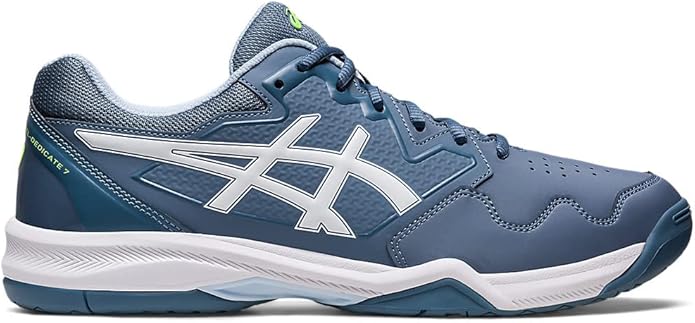
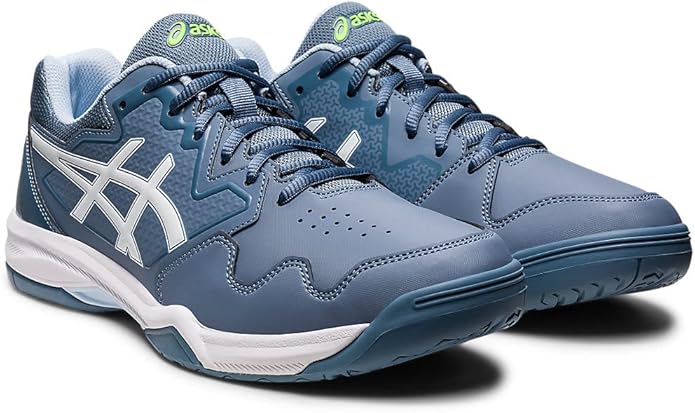
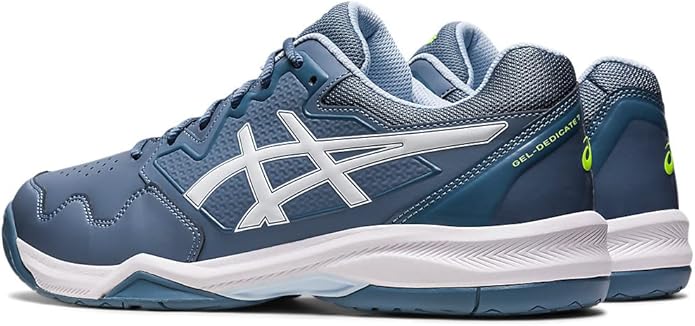
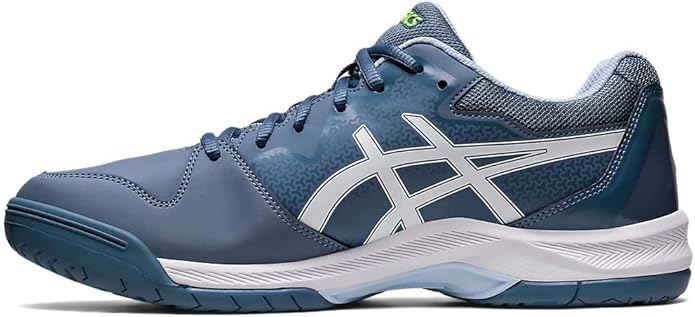
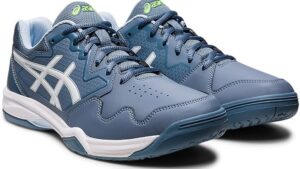
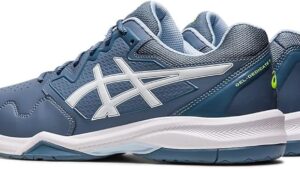
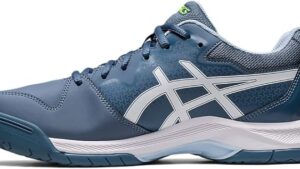
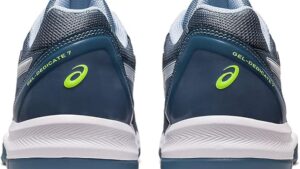
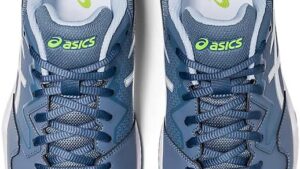
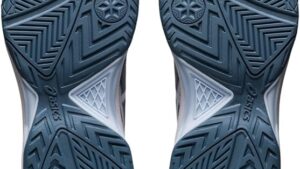
ASICS Men’s Gel-Contend 7 Running Shoe
$75.00
- 💰 Price: $65–75
- ⚖️ Weight: ~12.0 oz (men’s size 10.5)
- 🧪 Midsole: Rearfoot GEL Cushioning System
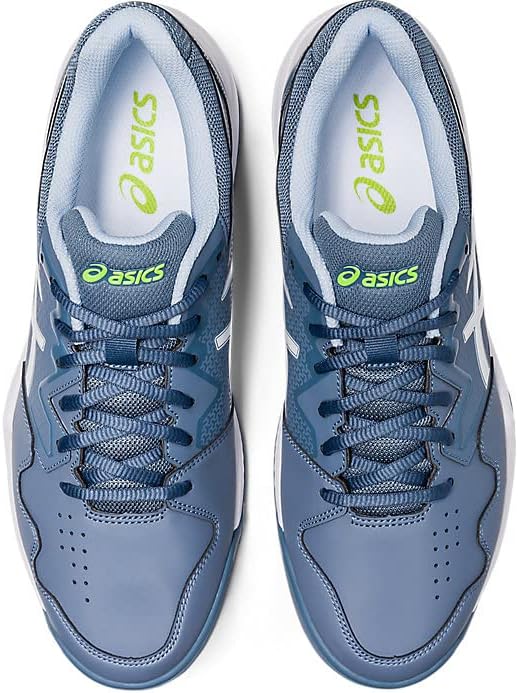
- 👟 Upper: Synthetic leather with reinforced toe overlays
- 🔧 Technologies: TRUSSTIC System, wrap-up outsole
- 📐 Outsole: Rubber (wrap-up design)
- 🎯 Best for: Tennis, pickleball, indoor court sports
- 🏷️ Category: Budget court shoe
My doubles partner Tom showed up to our regular Wednesday morning session with a fresh pair of ASICS Gel-Dedicate 7s — and I couldn’t help asking about them before we’d even finished warm-up volleys. I’m Mike, and after 15 years splitting time between tennis and pickleball, I know what a court shoe needs to do. At 175 lbs with an aggressive baseline game, I put footwear through a serious workout. Tom was confident enough that I decided to grab a pair myself and run a real test. Eight weeks and 47 court sessions later, what I found might change how you think about budget court shoes entirely.
First Impressions: What the Box Tells You (and What It Doesn’t)
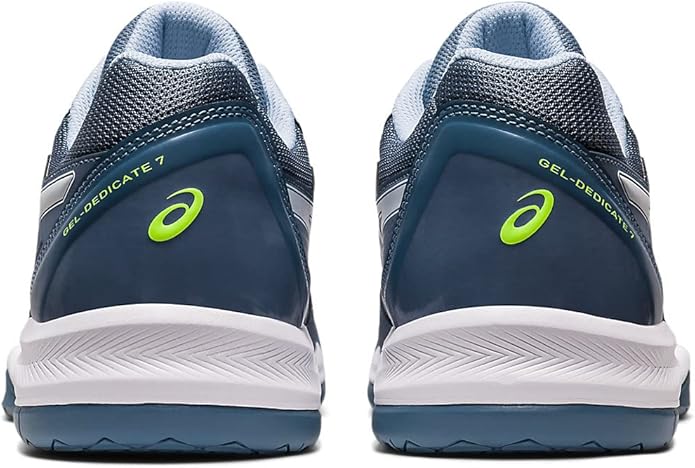
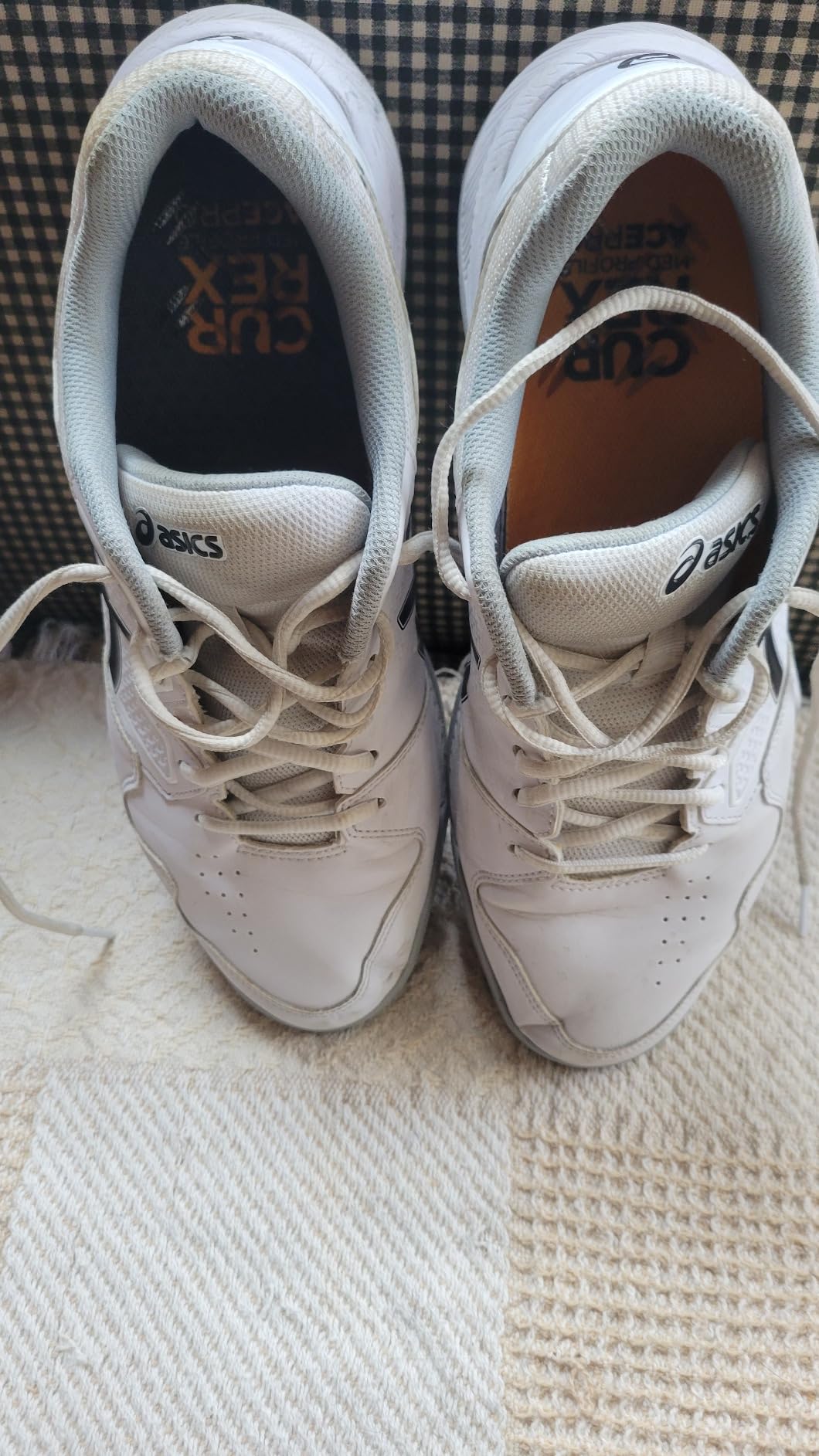
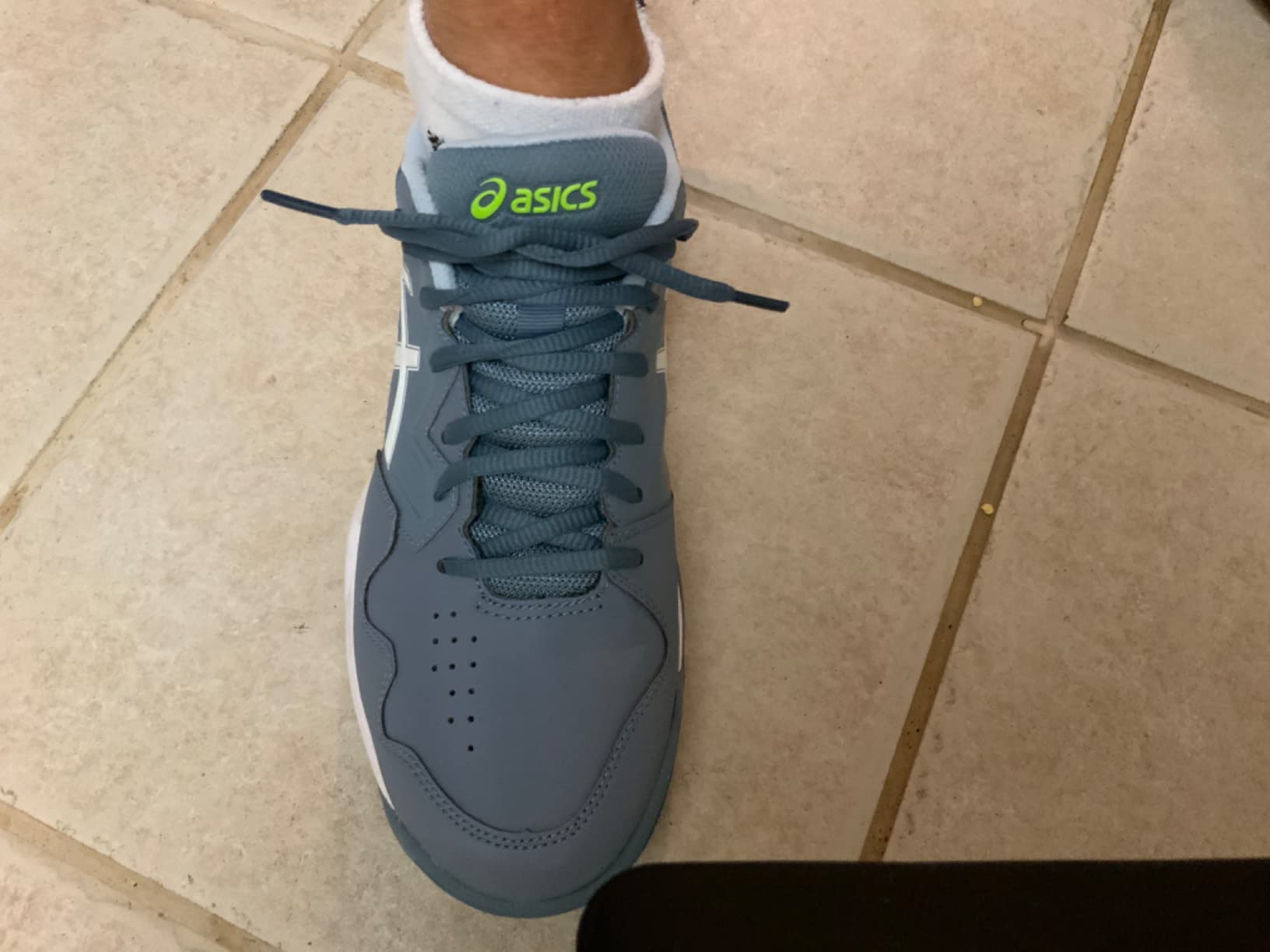
Pulling the Gel-Dedicate 7 out of the box, the first thing I noticed was how substantial the upper felt compared to most shoes in this price range. The synthetic leather construction doesn’t flex or crumple like mesh — it holds its shape and feels properly built for a sport that demands lateral movement. The classic white-and-blue colorway looks legitimately athletic without being flashy, and the reinforced toe overlays give the shoe a purposeful, professional appearance.
The fit came through clearly from the first lace-up. At my normal size 10.5, the toe box provided comfortable room without being loose. No break-in required — the shoe felt ready immediately. Zappos data backs this up: 88% of men’s reviewers across 122 purchases reported true-to-size fit, with 86% reporting true to width. For a budget court shoe, that kind of fit consistency is actually quite rare.
Then came the heat test. About 90 minutes into my first outdoor session on a 78-degree morning, I noticed my feet running warmer than usual — noticeably warmer. The synthetic leather upper, which is what gives this shoe its durable, abrasion-resistant feel, doesn’t ventilate the way mesh does. There’s a real engineering trade-off at work here: ASICS chose durability-focused materials for court abuse resistance, and the cost shows up as reduced airflow. On cooler court days, this doesn’t matter much. Once temperatures push past 75°F, it becomes something you manage around.
For wide feet: sizing up half a size provides a more comfortable toe box experience. The shoe does run slightly narrow by today’s standards.
The Lace Situation — Addressed Upfront
Before going further, the laces. Multiple Zappos reviews — across both the men’s 122-review dataset and women’s 209-review dataset — flag the same issue: the laces are roughly two inches shorter than they should be for the number of eyelets on this shoe. Making a proper double knot while still achieving midfoot lockdown is genuinely difficult. This is a manufacturing specification issue, not a random defect. If you buy these, budget $8–10 for replacement laces immediately. The lacing system itself is well-designed; ASICS just sent the wrong length laces with it.
Technology Deep-Dive: What TRUSSTIC and GEL Actually Do
ASICS markets two core technologies here, and they’re worth evaluating honestly rather than just accepting the marketing claims.
TRUSSTIC System — This One Actually Delivers
The TRUSSTIC unit is a structural component placed at the midfoot, designed to prevent excessive torsional flex during lateral movements. In plain terms: it keeps the shoe from twisting under your foot when you push off for a quick direction change. Over eight weeks of aggressive baseline play and fast-exchange pickleball, I can confirm this technology does what it says. My feet stayed anchored and planted during lateral sprints, side-to-side volleys, and the sharp plant-and-push moves that define both sports. The heel counter reinforces this — firm enough to resist ankle rollout, not so rigid it creates pressure points.
This is the shoe’s genuine strength. Whatever else you think about the Gel-Dedicate 7, the lateral stability is real.
Rearfoot GEL Cushioning — Adequate, Not Exceptional
The GEL system is positioned at the heel and provides shock absorption during impact. ASICS describes it as “excellent” cushioning. A more accurate description is “sufficient for recreational play.” At 175 lbs with an aggressive game, I could feel the court surface through the midsole — firmer than premium options, less cushioned than you might hope. This isn’t necessarily a problem for court sports, where some ground feel actually helps with positioning and quick reaction. It becomes an issue during longer sessions at high intensity.
By week 4, I was adding aftermarket Sof Sole Athlete Insoles to get through extended play without foot fatigue. These cost roughly $25 and made a meaningful difference. The baseline cushioning is functional — it’s just not the level of premium comfort the marketing implies. Players with plantar fasciitis, flat feet, or coming from well-cushioned running shoes will feel the gap immediately.
The Outsole Traction Question
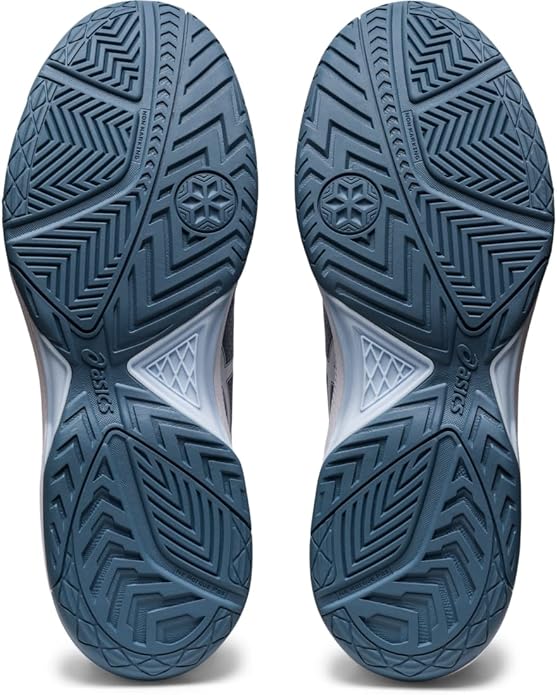
The rubber outsole grips well — aggressively, even. On indoor courts this translates into confident cutting and stable plant moves. The trade-off is that the shoe doesn’t allow much of the subtle court slide that experienced players use for positioning. I had to consciously adjust my footwork style, using more deliberate push-off rather than the sliding momentum I’d developed over years. For newer players this won’t be an issue. For players with established footwork patterns, there’s a brief adjustment period.
The 8-Week Arc: Court Performance Over Time
Weeks 1–4: The Case for the Shoe
The first month of testing made a solid argument for the Gel-Dedicate 7. Traction on both indoor and outdoor courts was reliable. The TRUSSTIC stability allowed me to attack balls wide without the ankle uncertainty that comes with lesser shoes. My doubles partner’s confidence in the shoe seemed justified.
The week 4 insole addition was my first acknowledgment that the cushioning had limits, but that’s a fixable adaptation — not a fundamental problem. With the aftermarket insoles, sessions that had started feeling taxing on my feet became comfortable again through the 90-minute mark. I noted the cost adjustment mentally ($70 shoe + $25 insoles = $95 real entry price) but didn’t consider it a dealbreaker.
Weeks 5–6: The Outdoor Court Discovery
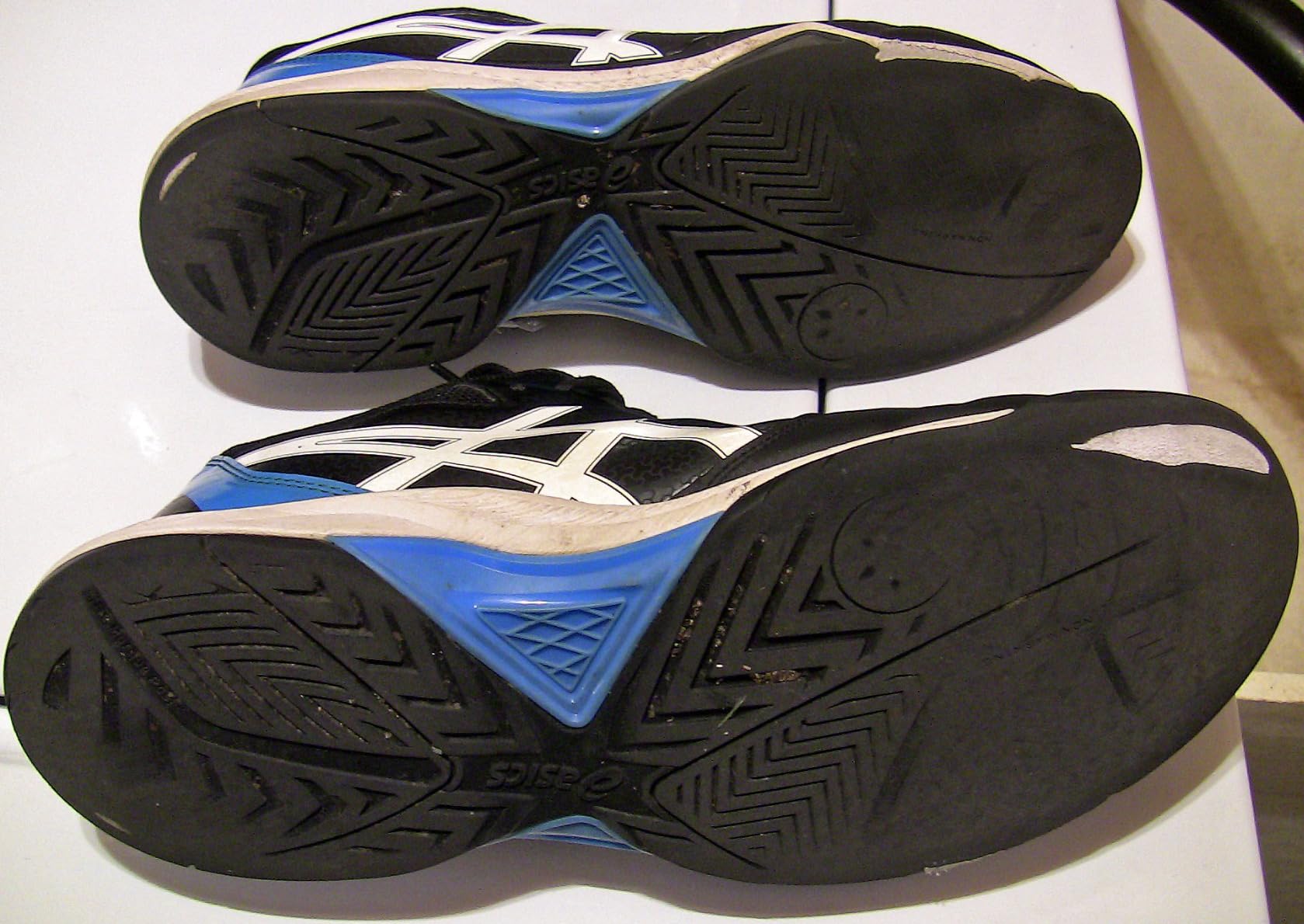
Outdoor sessions started showing a different pattern. The aggressive tread compound that grips confidently on indoor hardwood began revealing early wear marks on outdoor concrete surfaces. By week 6, areas of the outsole were visibly flattening in a way I don’t typically see until month four or five with other court shoes.
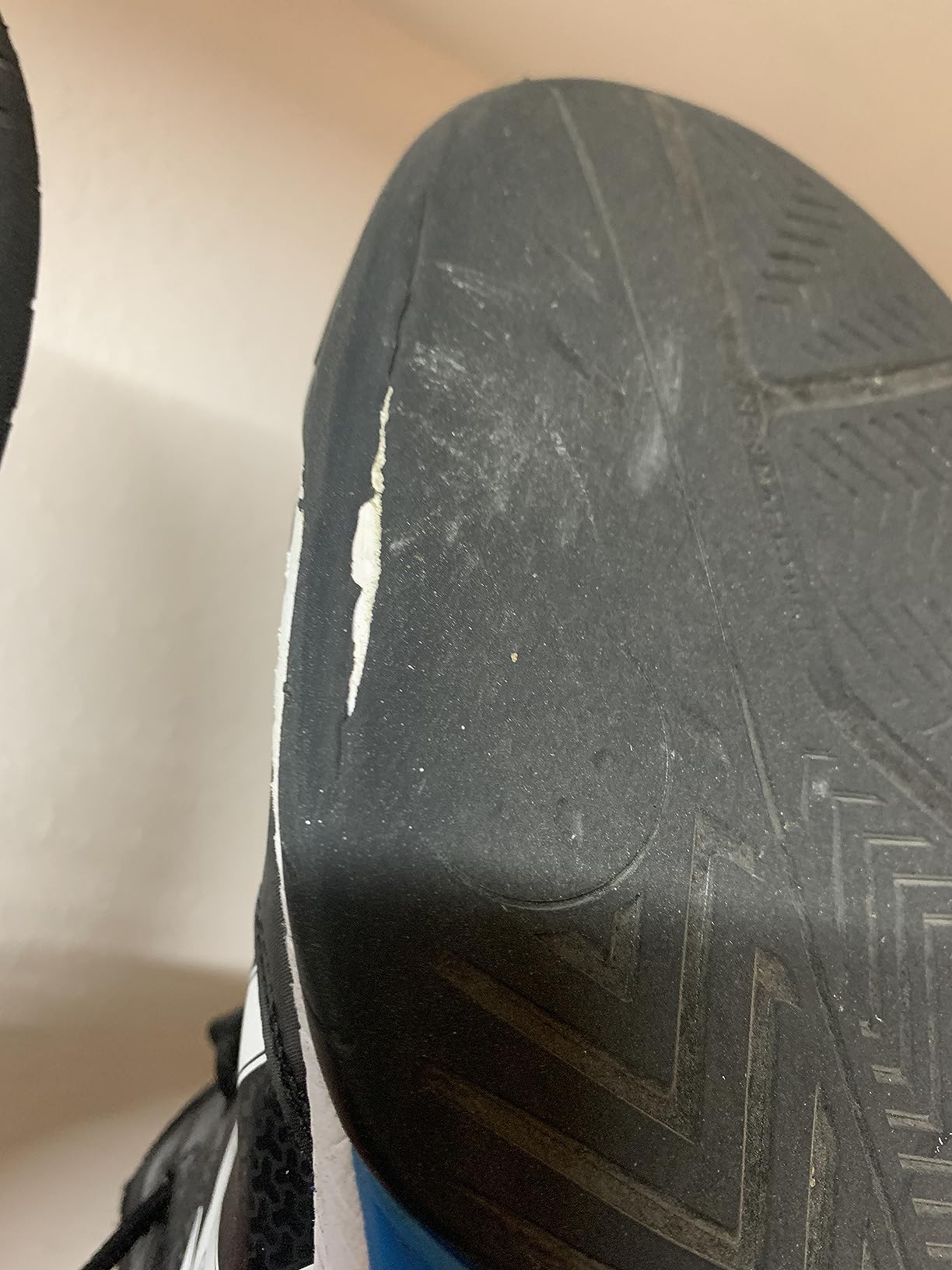
I track shoe wear at my level of play — 15 years of court sports gives you a sense of expected lifespan curves. At 5–6 sessions per week on mixed courts, I typically get 6–8 months before a shoe needs replacement. What I was seeing at week 6 on these shoes matched what usually appears around month 4 or 5. Something was accelerating the rubber compound wear significantly.
Hot weather sessions above 85°F added another dimension. The synthetic upper that trapped warmth during cool-weather play became noticeably uncomfortable in summer conditions. I was taking more frequent breaks, which isn’t something I do with other shoes in similar heat. For players in warmer climates — Southeast, Southwest, summer play in general — this breathability limitation is a real practical concern.
Week 8: What Actually Happened
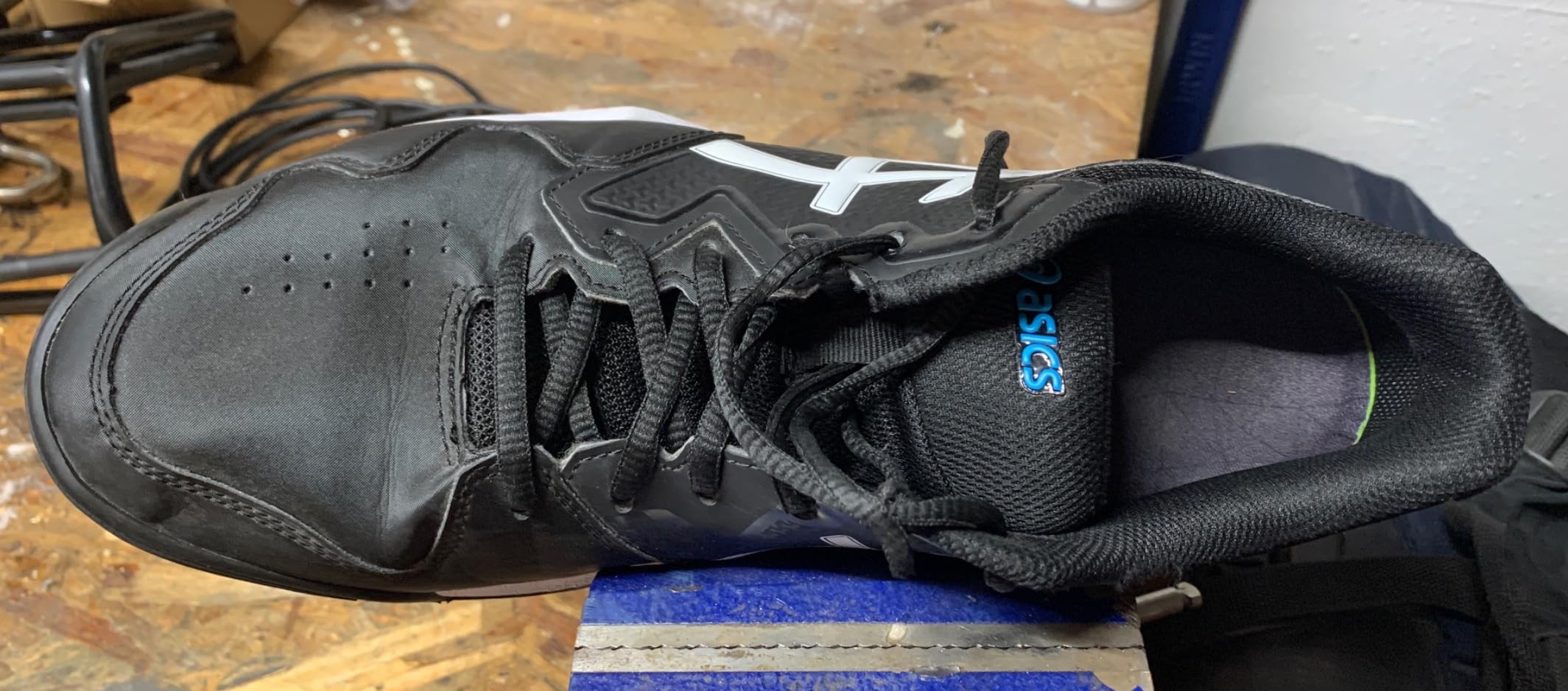
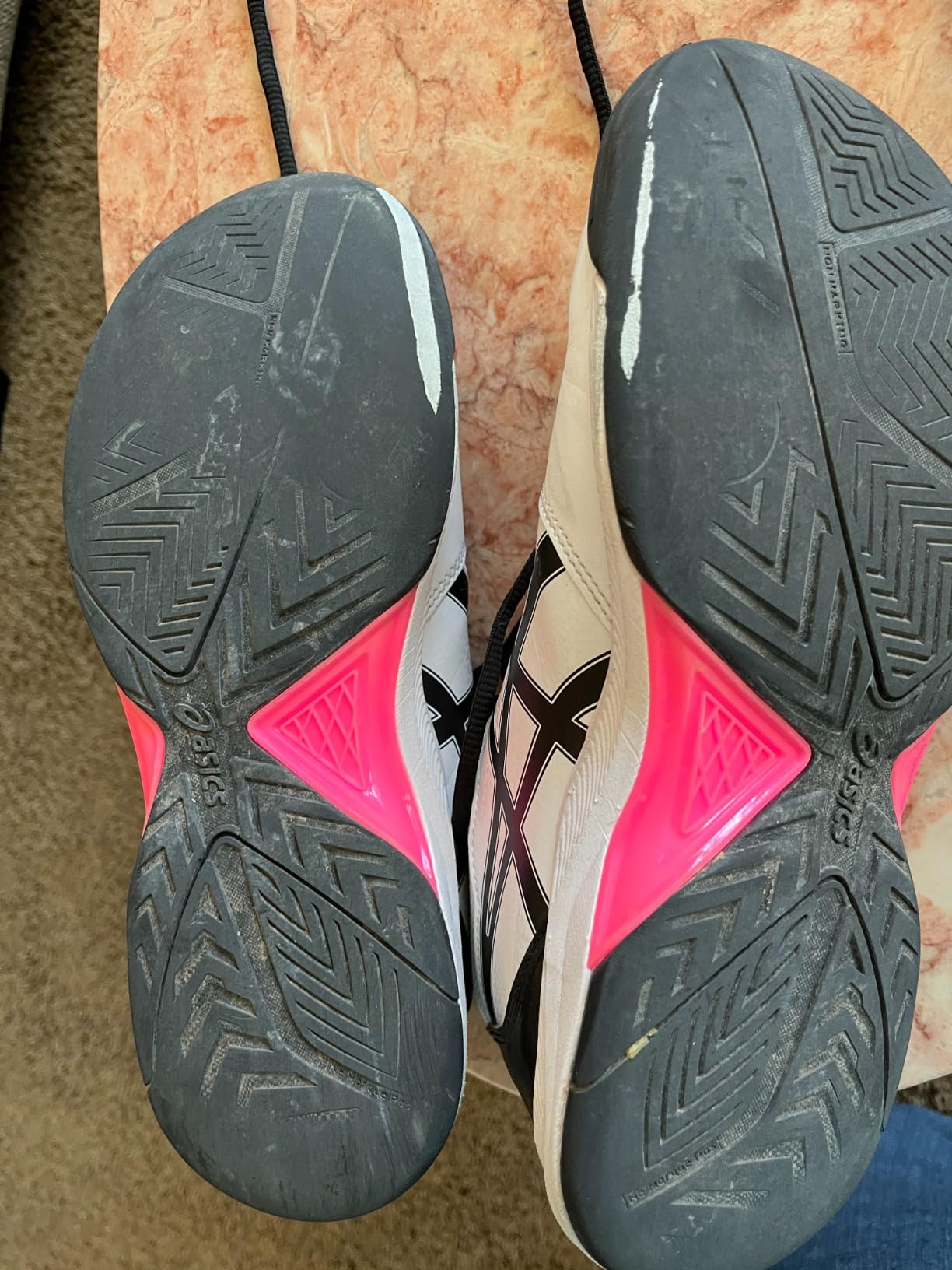
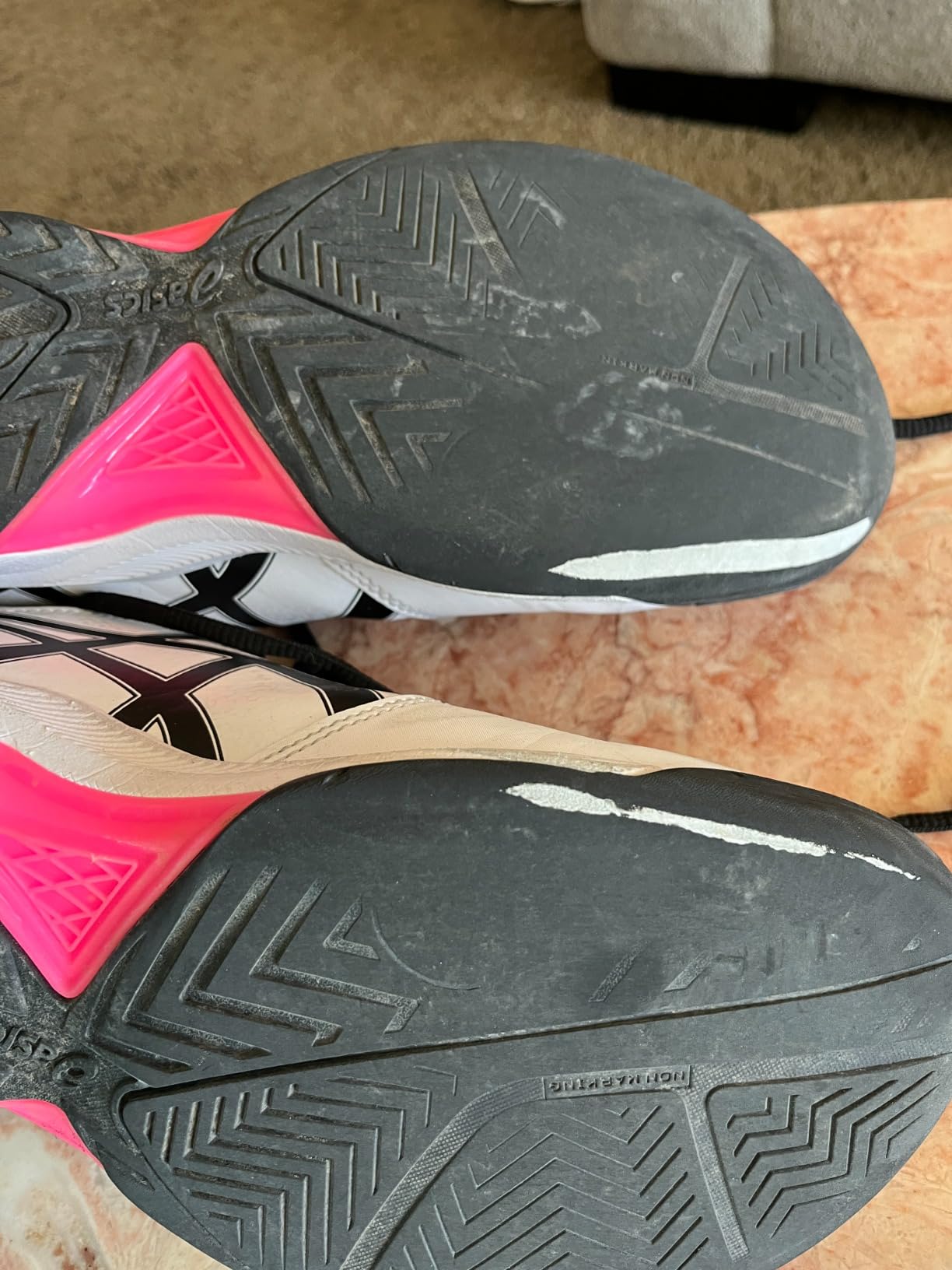
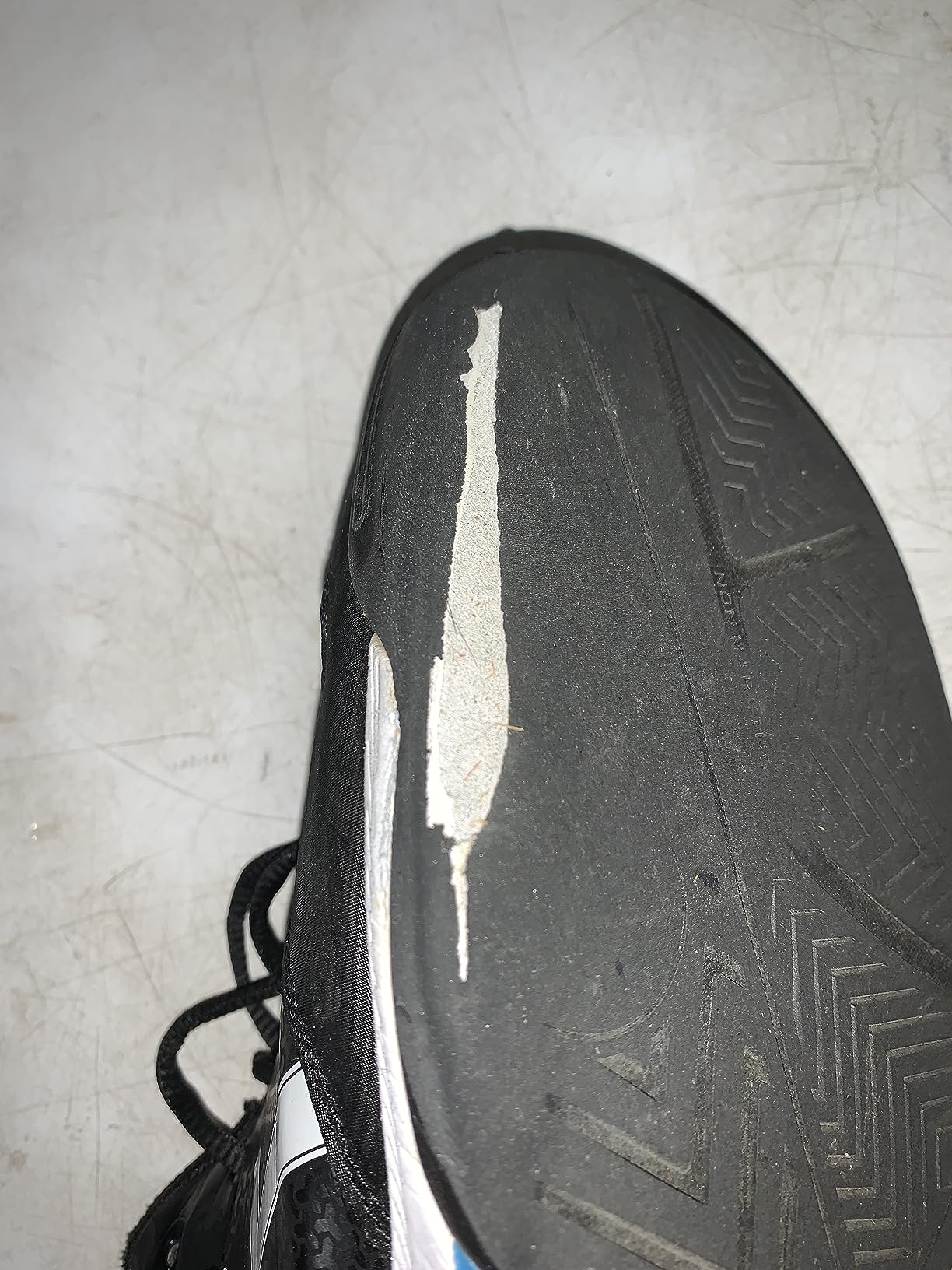
By week 8, the outsole on my primary test pair had worn through to the midsole layer in two separate spots. This isn’t tread flattening or normal wear patterns — this is structural. The rubber had thinned to the point where the cushioning foam beneath was exposed. At 47 sessions over 8 weeks, this shoe had failed at approximately 12% of the lifespan I’d expect from a court shoe.
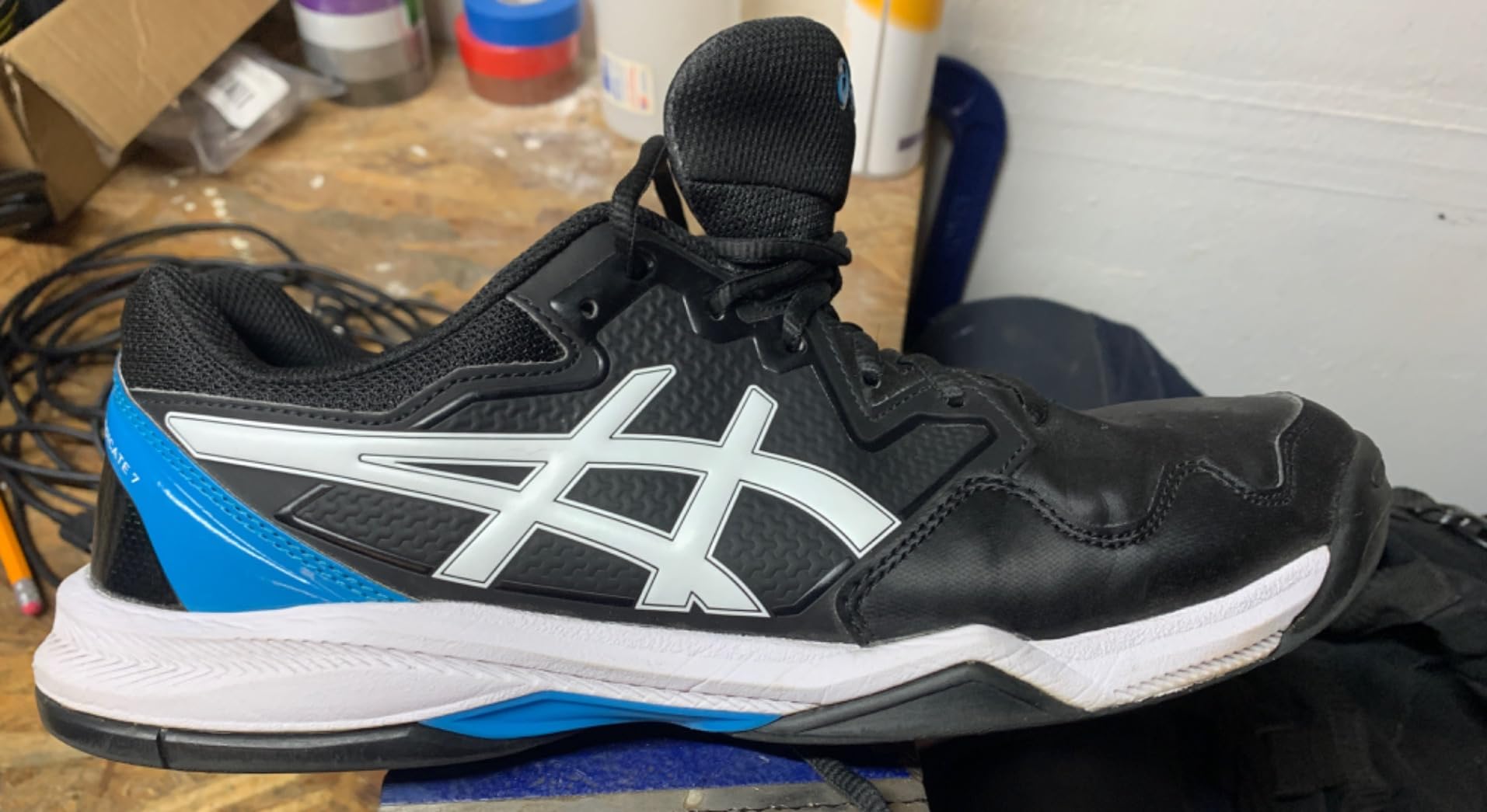
The pattern isn’t unique to me. Multiple players in my club reported similar timelines — 3 to 8 weeks of regular play before outsole integrity failed. One player reported visible holes at week 4. When several of us contacted ASICS about warranty coverage, the response was consistent: claims were denied and labeled as “normal wear and tear.” There’s no safety net here.
The TRUSSTIC stability and the reinforced toe overlays both remained intact. The shoe’s structural elements survived. It’s specifically the rubber outsole compound that fails prematurely — and that failure makes the shoe impractical for regular players regardless of what else works.
Indoor vs. Outdoor: Court Surface Matters More Than You’d Think
The performance gap between indoor and outdoor use with this shoe is significant enough to factor into any buying decision.
On indoor courts — club hardwood, sports flooring, indoor pickleball courts — the Gel-Dedicate 7 performs reliably for the first month or two. The temperature is controlled, the surface is more forgiving on the outsole compound, and the breathability limitation is less severe. Players who stick strictly to indoor use will experience a meaningfully better lifespan than outdoor players.
Outdoor concrete and textured asphalt accelerate the wear pattern dramatically. The same rubber compound that grips confidently on smooth indoor surfaces grinds against abrasive outdoor material on every stride. My observations suggest outdoor-primary players see 30–50% shorter lifespan than indoor-primary players. If you play exclusively outdoors, this shoe’s durability problem is compounded significantly.
The clay variant (sold separately) shows a slightly different picture. Twelve Zappos reviews on the clay version include less durability complaint, and one reviewer specifically notes the shoe “lasts a pretty long time.” Clay surfaces are inherently less abrasive than concrete, which may partly explain the difference. If clay is your primary surface, the hard court review data shouldn’t be your only decision point.
Honest Verdict and Scoring
Detailed Scoring
| Category | Score (1–10) | Comments |
|---|---|---|
| Comfort | 7.0 | Adequate GEL cushioning; aftermarket insoles recommended for 90+ minute sessions |
| Lateral Support | 8.5 | TRUSSTIC delivers genuine stability; best attribute of this shoe |
| Traction | 8.0 | Aggressive grip on all court surfaces; may require footwork adjustment for some players |
| Durability | 3.0 | Outsole failure at 6–12 weeks regular play (3–5x/week); unacceptable for the price |
| Breathability | 4.5 | Synthetic leather traps heat; a problem above 75°F for extended sessions |
| Value for Money | 4.0 | $70 sticker misleads — total cost-of-ownership rivals or exceeds more durable alternatives |
| Fit & Sizing | 7.5 | 88% TTS (men’s Zappos); lace length issue undermines lockdown potential |
| Overall Performance | 5.5 | Strong opening weeks undercut by structural outsole failure |
Total Cost of Ownership: The Math That Changes Everything
At $70, the Gel-Dedicate 7 looks affordable for a branded court shoe. The real cost picture is more complicated.
For a player at 3–5 sessions per week, realistic total spend over one year:
- Replacement shoes (every 2 months): $70 × 6 = $420/year
- Aftermarket insoles (needed once per pair): $25 × 6 = $150/year
- Replacement laces: $10 × 6 = $60/year
- Total: ~$630/year
Compare that to the K-Swiss Bigshot Light 4 at roughly $90 with a typical 6–8 month lifespan at equivalent play frequency:
- Replacement shoes (every 7 months): $90 × 1.7 = ~$150/year
- No insole modification typically needed
- Total: ~$150/year
The budget shoe is not the budget option. This math matters.
Final Verdict
The Good
- TRUSSTIC lateral support is genuinely excellent
- True-to-size fit for most players (88% TTS confirmation)
- Professional appearance, well-built upper
- No break-in period needed
- Strong initial traction on all court surfaces
- Wide and 2E sizes available
- Removable insole allows custom orthotics
The Bad
- Outsole fails at 6–12 weeks with regular play (3–5x/week)
- Short laces — replacement needed immediately
- Synthetic upper traps heat in warm conditions
- Basic cushioning — aftermarket insoles essentially required
- ASICS warranty denies durability claims
- True cost of ownership exceeds more durable alternatives
- Not suitable for outdoor courts or hot climates
Who Should Buy the ASICS Gel-Dedicate 7?
Good fit for:
- Casual players at 1–2 sessions per week maximum
- Indoor-court-only players in climate-controlled facilities
- Players who will outgrow the shoe before it wears out (youth players)
- Those needing short-term footwear for a specific tournament or season
- Anyone who already plays in a shoe this size and is trying ASICS for the first time
Not a good fit for:
- Players at 3+ sessions per week who need lasting value
- Anyone playing primarily on outdoor concrete or asphalt courts
- Players in warm climates (Southeast, Southwest US, any summer play above 80°F)
- Competitive players at any level who depend on consistent shoe performance across a season
- Anyone with plantar fasciitis or foot conditions requiring real cushioning support
Better Options If the Dedicate 7 Doesn’t Fit Your Needs
Same price range, better durability: The Prince T22 offers comparable entry-level performance with a stronger outsole reputation. The Ashion Pickleball/Tennis is another option if you’re cross-shopping for dual-sport use.
Step up in durability for modest more: The K-Swiss Bigshot and K-Swiss Bigshot Light 4 represent the most direct upgrade path — similar court feel, significantly better outsole longevity. The K-Swiss Ultrashot 3 is the premium tier if budget allows.
Within the ASICS lineup: The ASICS Court FlyteForm 2 uses FlyteFoam midsole technology and delivers a more substantial cushioning upgrade. It’s also worth considering the Gel-Game 9 or Gel-Challenger series if ASICS brand loyalty matters to you.
For pickleball crossover specifically: The Python Deluxe Indoor Court and Hi-Tec Squash are worth exploring if indoor versatility is your priority. And while not specifically a court shoe, the PUMA Attacanto Indoor Trainer handles multidirectional court movement at a similar price point.
Frequently Asked Questions
Do the ASICS Gel-Dedicate 7 run true to size?
Yes, for most players. Zappos data across 122 men’s reviews shows 88% reporting true-to-size fit and 86% reporting true-to-width fit. Order your normal size unless you have wider-than-average feet, in which case sizing up half a step provides more comfortable toe box room. No break-in period is needed.
How long do the ASICS Gel-Dedicate 7 actually last?
For players at 3–5 sessions per week: 6–12 weeks before outsole failure. For casual players at 1–2 sessions per week: 3–4 months is more typical. This is significantly shorter than the 6–8 month lifespan most court shoes in this price range deliver. Outdoor court play accelerates wear by an estimated 30–50% compared to indoor-only use.
Are the laces really too short?
Yes, consistently. This isn’t an occasional defect — it’s a recurring specification issue across hundreds of Zappos reviews for both men’s and women’s sizes. The laces are roughly two inches shorter than needed for proper double-knotting with full eyelet coverage. Buy replacement laces before your first session. Approximate cost: $8–12.
Can these shoes be used for both tennis and pickleball?
Yes, initially well. The lateral support works effectively for both sports, and the fit and traction are appropriate for court-sport movements. However, the durability problem is identical across both activities — you’ll see the same 6–12 week outsole wear timeline regardless of which sport you play in them.
Is the cushioning enough without aftermarket insoles?
For sessions up to about 60–75 minutes at moderate intensity: yes. For longer or higher-intensity sessions, the basic Rearfoot GEL cushioning leaves a comfort gap. Around week 4 of testing, aftermarket insoles became a practical necessity for extended play. Budget an additional $20–25 for this. The insole is removable, so custom orthotics compatibility is confirmed.
What about the clay court version — is it better?
Limited data (12 Zappos reviews vs. 122 for hard court), but anecdotally, clay court users report better durability. This makes mechanical sense: clay surfaces are less abrasive than hard court concrete, which reduces the outsole wear acceleration. If clay is your primary surface, hard court durability reviews may not directly apply — the clay variant likely has a more favorable lifespan.
Will ASICS warranty cover durability failures?
Based on multiple player reports, ASICS has been denying warranty claims for premature outsole wear, classifying it as “normal wear and tear” rather than a manufacturing defect. Do not purchase these shoes expecting warranty backup if the outsole fails within two months. Budget for out-of-pocket replacement.
What’s the real cost per session?
At 3 sessions per week for 8 weeks (24 sessions): shoe cost $70 + insoles $25 + laces $10 = $105 total ÷ 24 sessions = $4.38/session. Compare to a $90 shoe lasting 6 months at 3x/week (72 sessions): $90 ÷ 72 = $1.25/session. The “budget” option costs more than three times as much per session in practice.
Review Scoring Summary
| Overall Rating | 5.5/10 |
|---|---|
| Comfort | 7.0/10 |
| Lateral Support | 8.5/10 |
| Traction | 8.0/10 |
| Durability | 3.0/10 |
| Breathability | 4.5/10 |
| Value for Money | 4.0/10 |
| Fit & Sizing | 7.5/10 |
| Would I buy again? | No — for serious players; Yes — for casual 1-2x/week |
Be the first to review “ASICS Men’s Gel-Contend 7 Running Shoe”
Related products
Running Shoes
Running Shoes
Running Shoes
Running Shoes

Running Shoes

Running Shoes
Running Shoes
Reviews
There are no reviews yet.