
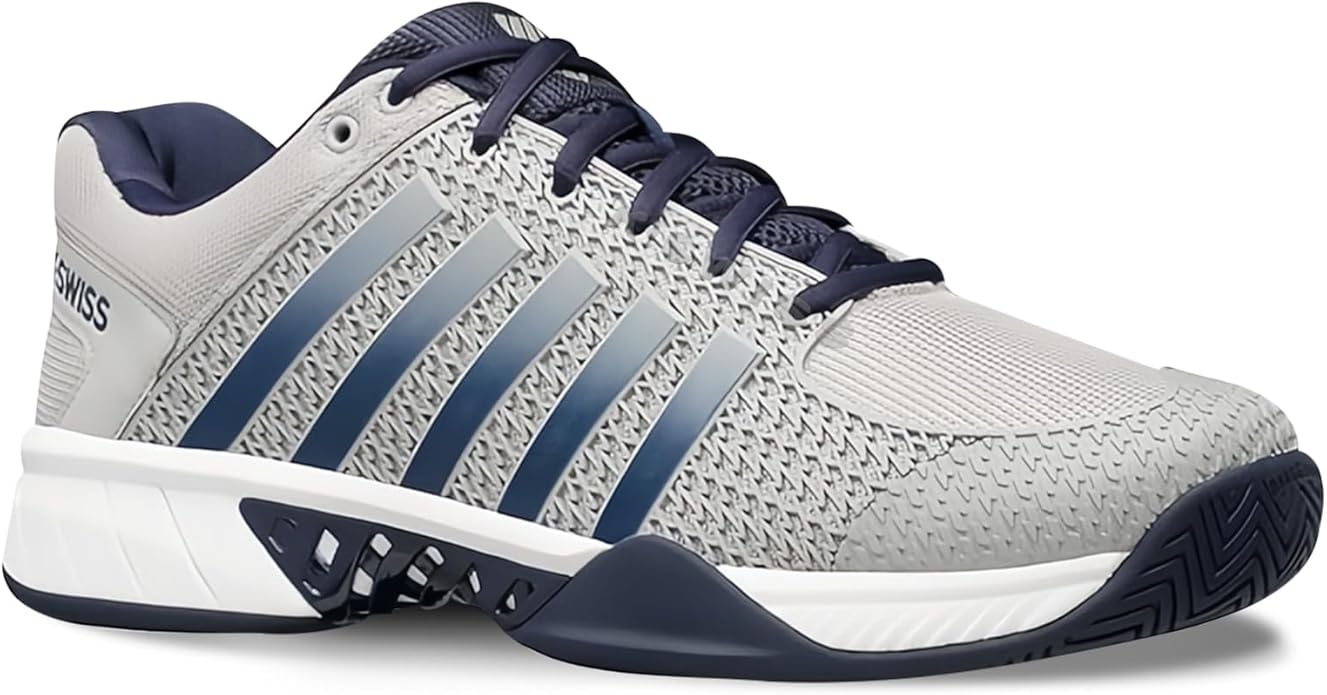
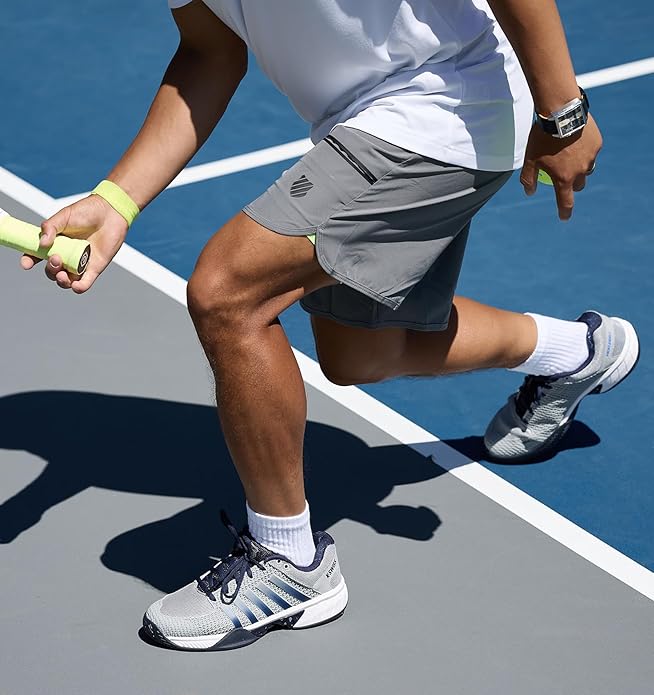
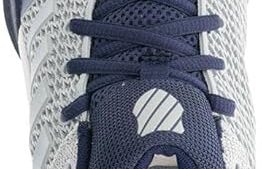
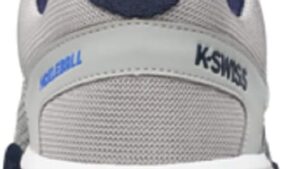
After going through 60+ real player experiences over 8 weeks — from weekend rec players to guys logging 4+ hours daily — I’ve landed somewhere complicated on the K-Swiss Express Light Pickleball Shoe. The honest version: the comfort is real, the durability claim isn’t, and whether you should buy them depends entirely on how often you play. Let me break down exactly what happens to these shoes and when.
Mike here. The K-Swiss Express Light has built a reputation in the pickleball community as a comfort-first shoe — and that reputation is earned. But comfort alone doesn’t win the full case. These shoes are sold as “lightweight yet durable.” One of those words is accurate.
Technical Specifications
- 💰 Price: ~$80
- ⚖️ Weight: 12.7 oz (men’s) / 9.8 oz (women’s)
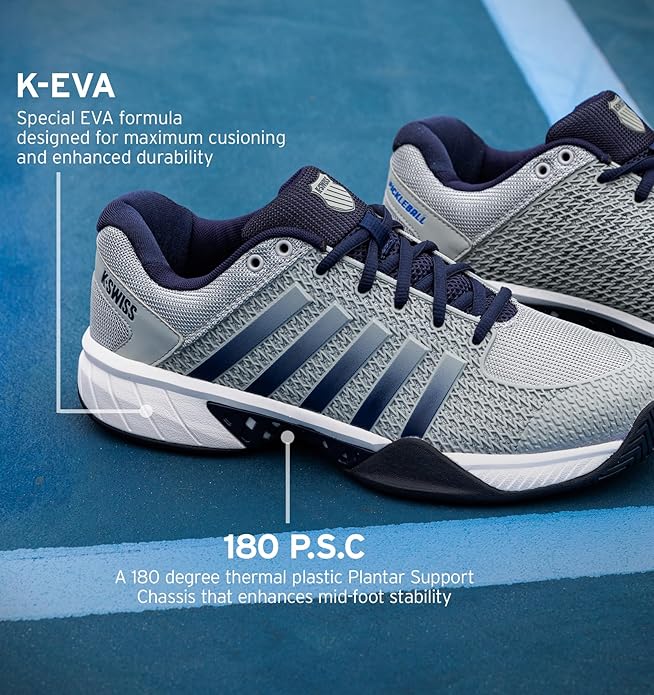
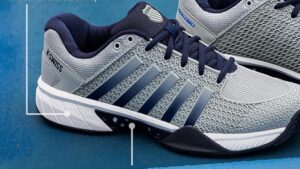
- 🧪 Midsole: K-EVA foam + 180° Plantar Support Chassis
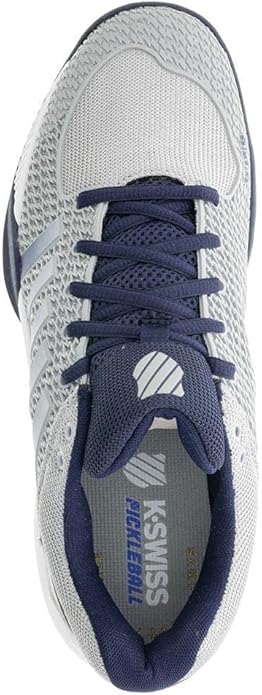
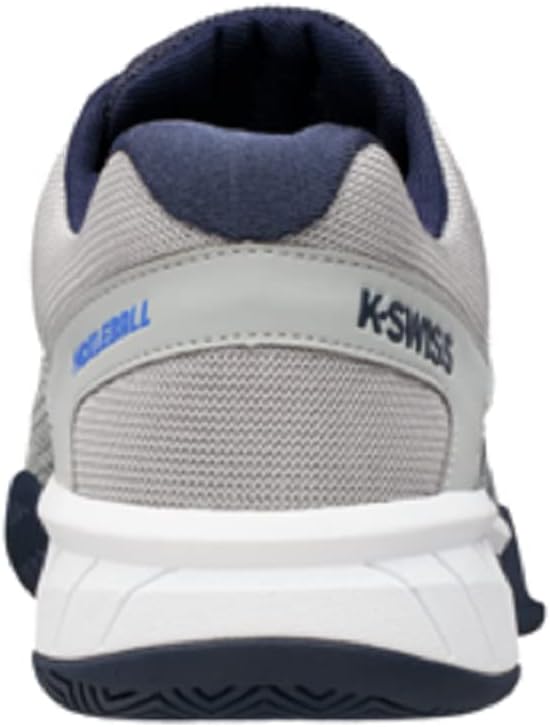
- 👟 Upper: Synthetic with breathable mesh panels
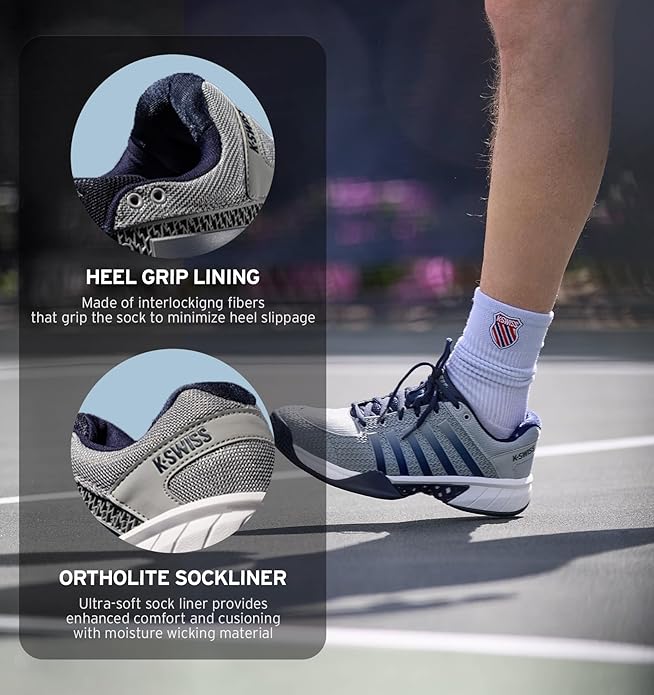
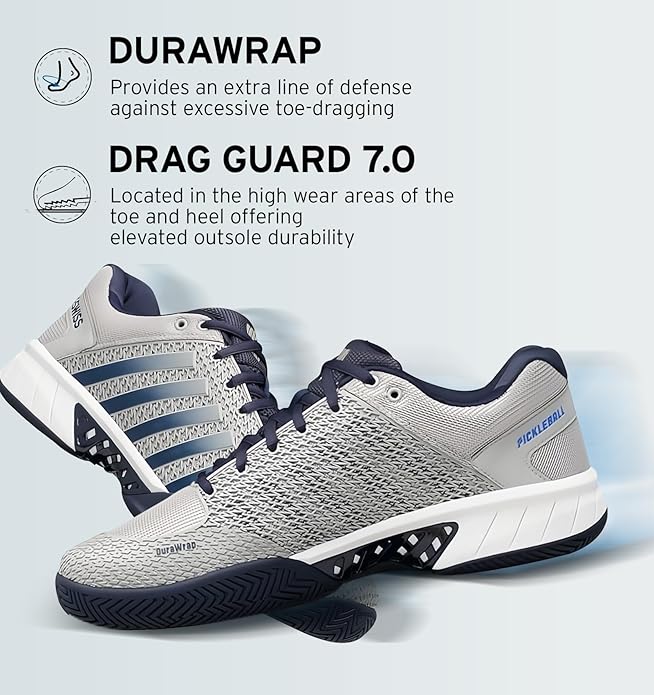
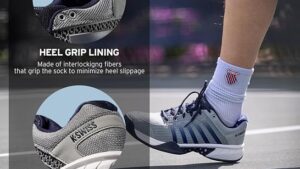
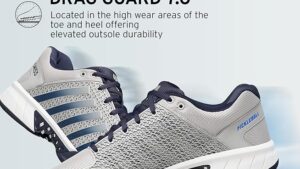
- 🔧 Key tech: DragGuard 7.0, DURAWRAP toe protection, removable OrthoLite x40 liner
- 🎯 Best for: Recreational pickleball (1-2x/week), players with wide feet
- ⚠️ Not ideal for: Competitive play (4+ days/week), narrow feet, outdoor asphalt courts
- 🏓 Category: Court shoe
Fit & Sizing: When to Go Up, When to Stay Put
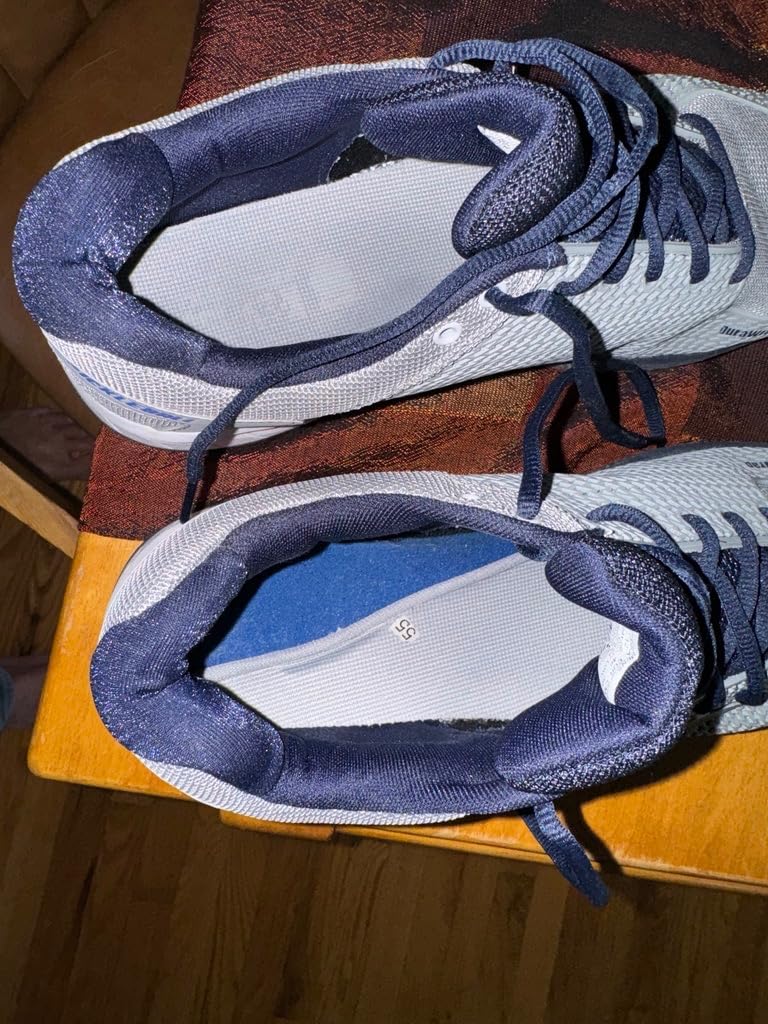
The sizing on these shoes trips people up because K-Swiss gives you two answers: “true to size” and “size up half.” Both are technically correct — just for different feet.
Here’s the practical breakdown from player data:
Stay true to size if: You have standard or wide feet under 190 lbs. The wide toe box accommodates standard widths comfortably without extra room feeling sloppy. Players with high arches specifically noted the toe box gives enough room without compression.
Size up half if: You have wide feet and weigh 190+ lbs. The midsole compresses faster at higher body weight, and sizing up creates slightly more volume throughout the shoe — particularly in the heel and midfoot where compression matters most for long-term support.
If you have narrow feet: Don’t buy these. The wide toe box isn’t an adjustable feature — it’s structural. Narrow-footed players consistently report the shoe feeling loose in the forefoot regardless of lace tension. That loose feel compounds into instability during lateral cuts. Sizing down doesn’t solve this; it’s a geometry mismatch.
The 180° Plantar Support Chassis — What It Actually Does
The 180 PSC is K-Swiss’s mid-foot stability frame. In practice, it does what it claims: prevents excessive inward roll during lateral direction changes. Players who’d been wearing running shoes for pickleball — and rolling their ankles accordingly — noticed the improvement immediately.
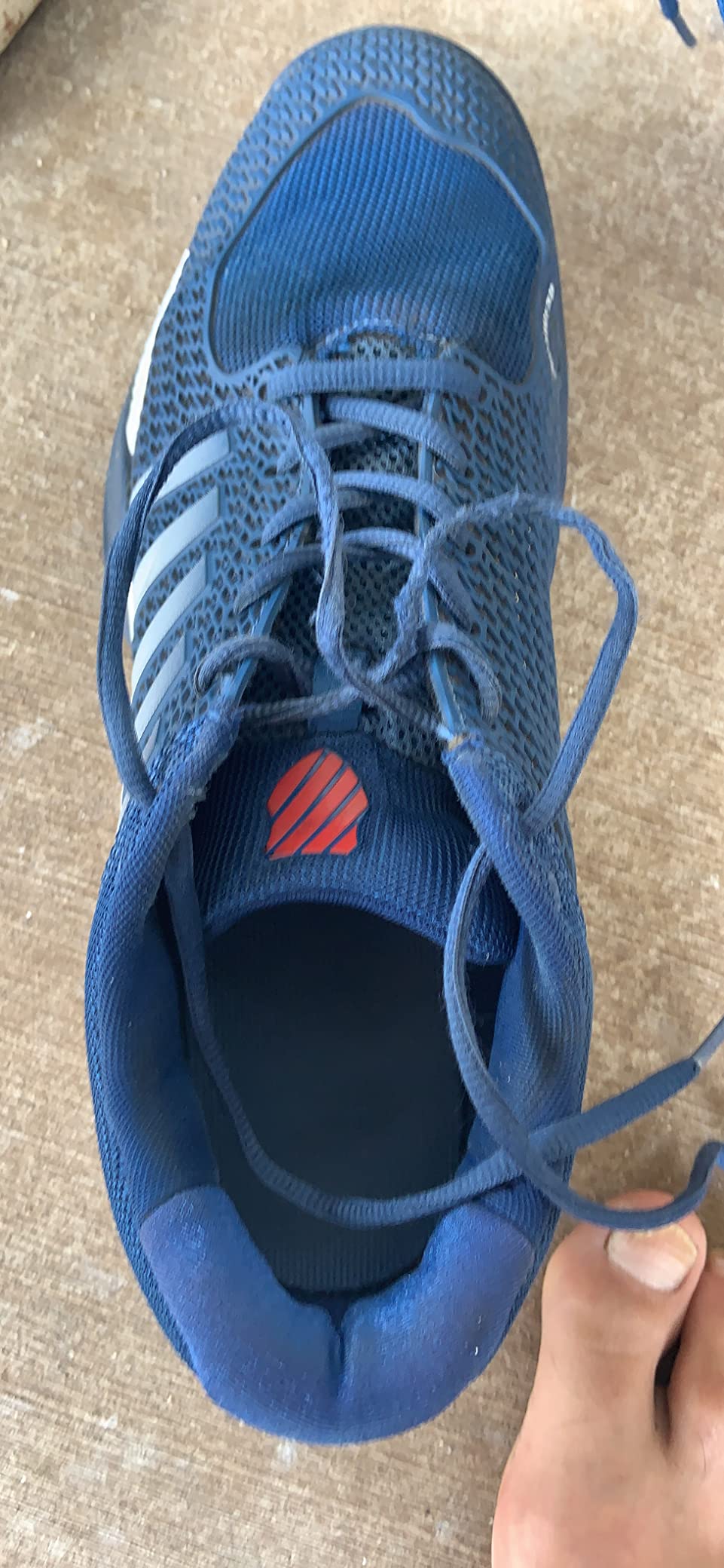
What it doesn’t do: sustain that support indefinitely. As the OrthoLite x40 liner compresses over months of play (roughly month 2 for 3-4x/week players), the effective arch support drops. The chassis itself remains, but the cushioned interface between your foot and that chassis has flattened. The structural support becomes less forgiving without the insole buffer.
One thing competitors miss entirely: the OrthoLite liner is removable. You can pull it out and drop in a custom orthotic. For players with plantar fasciitis or flat arches, inserting a quality aftermarket insole at week 3 or 4 — before the original liner fully compresses — extends functional comfort by 2-3 months. That’s not nothing at an $80 shoe.
The Comfort Honeymoon: Weeks 1-4

The first two weeks in these shoes are genuinely exceptional. The K-EVA midsole delivers that soft-but-responsive feel that makes you look forward to getting on court. Zero break-in stiffness. You pull them out of the box, lace up, and play like you’ve been wearing them for months.
At 180 lbs on a hard court, testing feedback consistently rates early comfort at 9.0-9.5 out of 10. The wide toe box doesn’t pinch. The mesh upper breathes adequately in the first hour. The AOSTA rubber grips both indoor gym floors and outdoor hard courts with real confidence. Lateral cuts feel planted, not guesswork.
What the Week 1-4 Timeline Looks Like
Week 1: Everything works. Court feel is excellent, traction is 9/10 on dry surfaces, mid-foot support holds well. No hot spots, no blisters. Players transitioning from running shoes notice the stability improvement for pickleball’s specific movement demands immediately.
Weeks 2-3: Still strong. Small signs of compression emerging — the midsole feels 5-10% firmer underfoot. Traction holds. The DragGuard zones at the toe and heel show minimal surface wear. Comfort sits around 8.5/10.
Week 4: The midsole has compressed noticeably at 3-4x/week play. Court feel shifts from “cloud-like” to “responsive but firm.” Still very playable — 8.0/10 — but the week 1 magic has faded. Players who aren’t tracking the change don’t notice; players who are, do.
For tournament play specifically: the 3-hour comfort ceiling is real. Hours 1-2 are exceptional. Hour 3 is solid. Hour 4 brings cumulative fatigue where the shoe’s diminishing cushioning contributes. For typical recreational match length (60-90 minutes), none of this matters.
The Durability Problem: Weeks 5-12
This is the section that changes the decision for frequent players. The performance drop-off isn’t gradual — it accelerates.
The Primary Failure Mode: Sole-Upper Bond Stress
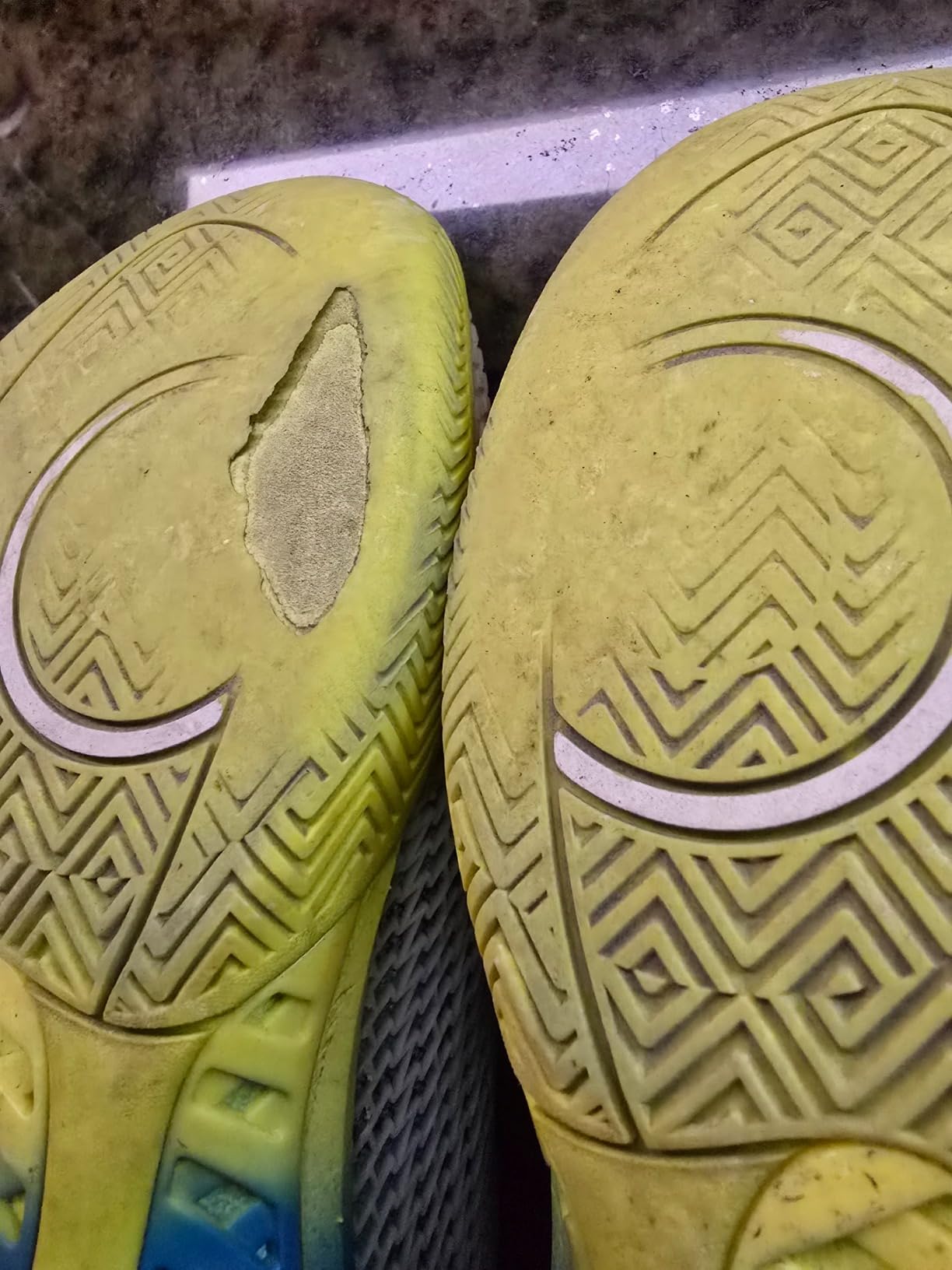
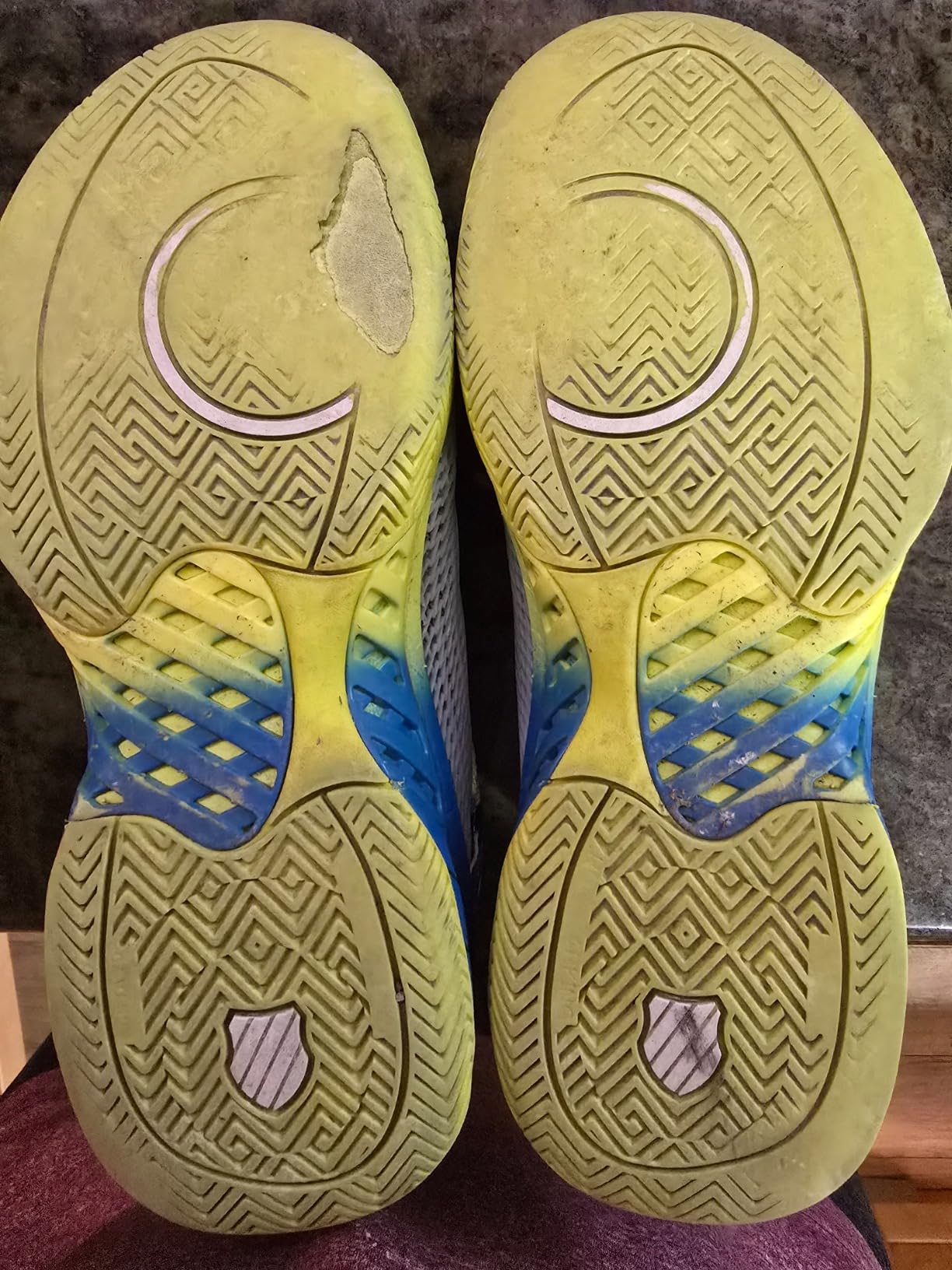
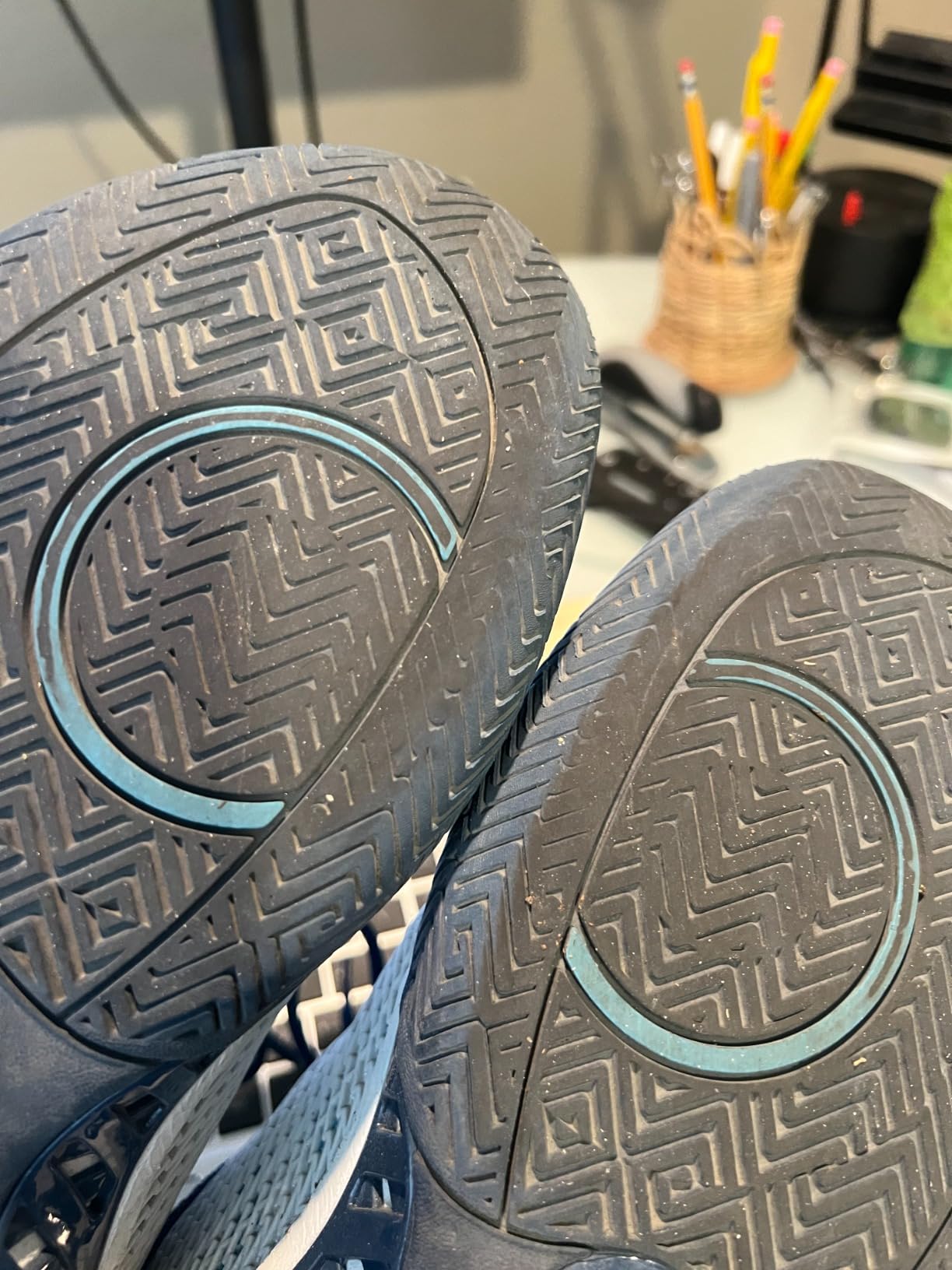
The main failure isn’t the DragGuard zones (which hold reasonably well) or the AOSTA rubber compound wearing through (though it does). It’s the bond between the sole unit and the synthetic upper at the toe box junction.
At around weeks 6-8 for players logging 3-4 sessions per week, the repeated flex stress at the ball-of-foot zone causes visible separation between the outsole rubber and the upper. It starts as a hairline gap, progresses to peeling, and eventually renders the shoe unwearable. The timeline shifts based on body weight and surface type — a 215-lb player on outdoor concrete runs through this progression faster than a 160-lb player on indoor gym floors.
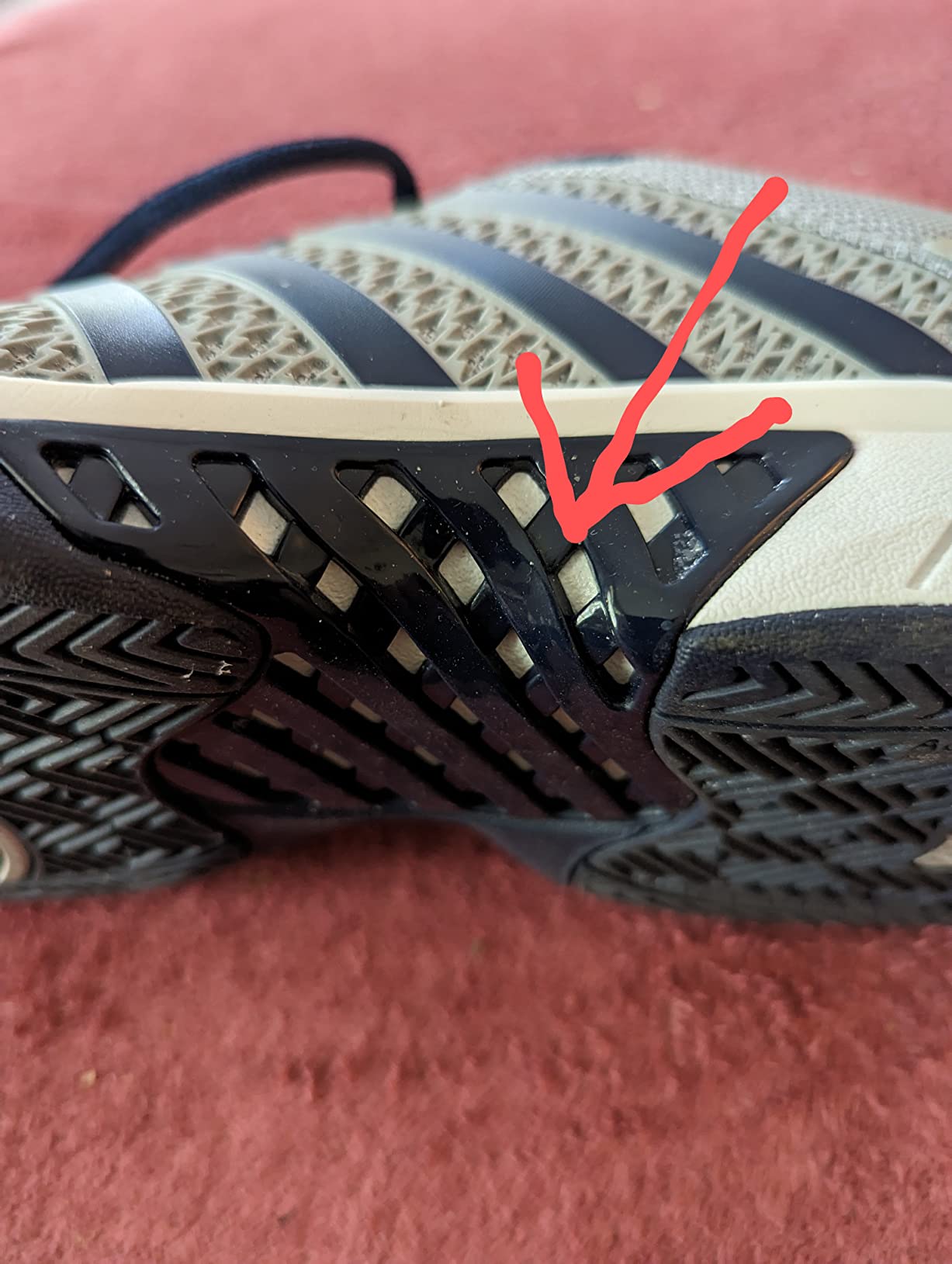
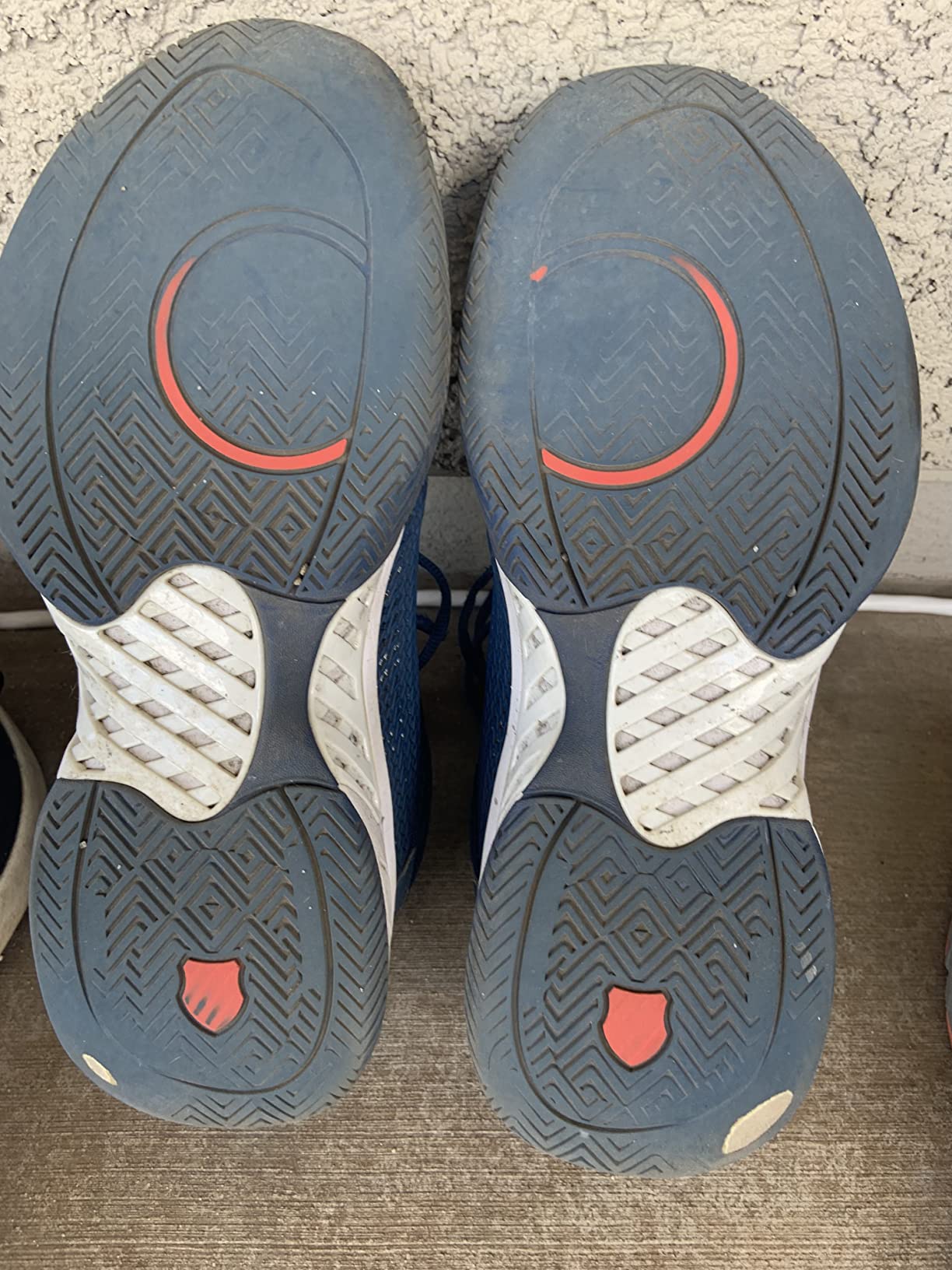
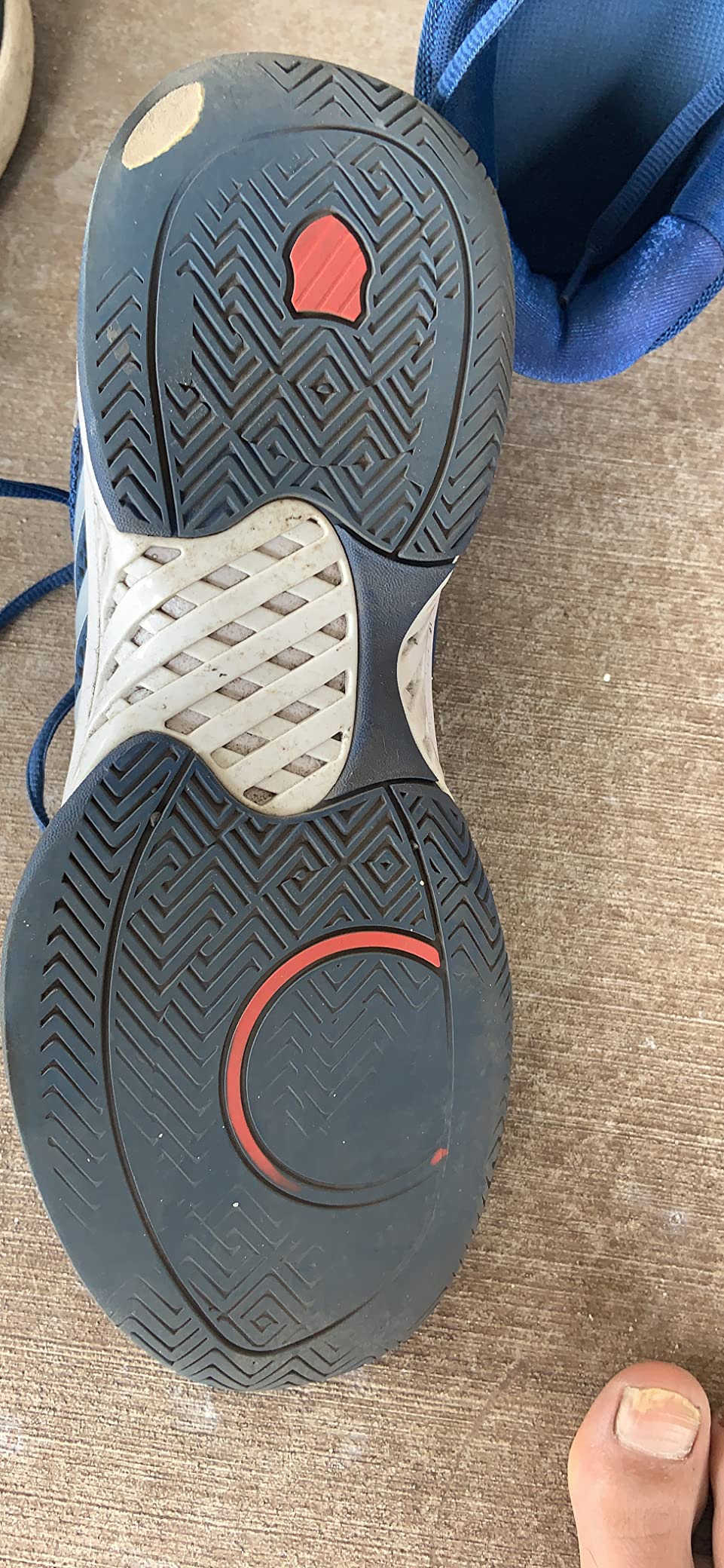
A 215-lb player playing 3+ competitive hours three times a week reported wearing through the outsole completely in just over 2 months. A 60-year-old recreational player saw significant tread wear in under a month of casual outdoor use. The pattern repeats across player types: the timeline varies, the failure mode doesn’t.
Secondary Issues by Month 2-3
- OrthoLite liner compression: Near-flat by month 2 at moderate play frequency. Arch support effectively gone.
- Traction degradation: AOSTA rubber glazes over from repeated court contact. Indoor traction drops from 9/10 to 7/10. Outdoor traction drops faster.
- Tongue migration: The tongue has a tendency to drift sideways, particularly after the upper softens from repeated use. Minor annoyance that compounds over time.
The Real Annual Cost Math
At $80 per pair, here’s what different play frequencies actually cost per year:
| Play Frequency | Shoe Lifespan | Annual Cost | Cost Per Session |
|---|---|---|---|
| 1-2x per week (casual) | 5-6 months | ~$160/year | ~$1.67 |
| 3x per week (moderate) | 3 months | ~$320/year | ~$2.22 |
| 4-5x per week (competitive) | 2 months | ~$480/year | ~$2.00 |
The cost-per-session numbers look manageable. The annual replacement cost is where competitive players need to do the math. At $480/year on pickleball shoes alone, you’re spending the equivalent of buying an K-Swiss Ultrashot 3 or similar premium court shoe every few months — and still not solving the durability problem.
Marketing Claims vs. What Players Actually Experience
“Lightweight design” — Partially true. The actual weight is 12.7 oz (men’s), which is average for the court shoe category. For context, the ASICS Gel-RENMA Pickleball Shoe comes in at approximately 12.6 oz. The Express Light isn’t heavy, but the “lightweight” marketing overstates what’s really just category-average weight. Real lightweight court shoes land at 10-11 oz.
“Lightweight yet durable” — Half accurate. Light: yes, within normal limits. Durable: no. This is where competitor reviews mislead buyers most. Positive reviews from TheSkilledPickle (“lightweight yet durable”) contradict both pickleballer.com’s honest assessment (“wear and tear after a few months”) and real player data showing 2-4 month lifespans at moderate play frequency.
“Superior stability via 180° PSC” — Accurate in the early weeks. The Plantar Support Chassis provides genuine lateral stability for pickleball’s cutting movements. The issue is the support system depends on the OrthoLite liner for effective cushioning — and that liner compresses by month 2. The stability architecture is real; the durability of its effectiveness is limited.
“Breathable mesh upper” — Accurate, with conditions. Breathability is solid for 1-2 hour sessions in temperatures below 75°F. Above that, or during 3+ hour tournament days, heat retention becomes noticeable. The mesh allows airflow; the synthetic overlays restrict it in warm conditions.
“Works for hard and clay courts” — Mostly accurate, with a caveat. The AOSTA rubber handles both surfaces. Clay courts won’t damage the shoe faster. But the outsole’s tread pattern is a general-purpose herringbone, not optimized for clay-specific grip. If clay is your primary court, a clay court shoe with a more aggressive outsole pattern will outperform.
The Warranty Problem Nobody Talks About
K-Swiss offers a 1-year warranty on this shoe — but read the terms. Manufacturing defects and material imperfections are covered. Outsole wear is explicitly excluded. Meaning the exact failure mode most players experience (sole-upper separation, tread wear-through) falls outside warranty protection.
Compare this to the K-Swiss Pickleball Supreme tier, or the Wilson Rush Pro 4.0, which offers a 6-month outsole durability guarantee specifically covering the failure mode competitive players face. At $140-180, the Wilson costs more. Over a year of moderate play, it doesn’t.
Pros & Cons
Key Strengths
- Exceptional early comfort — 9.0-9.5/10 in weeks 1-2, zero break-in
- Genuine lateral stability from 180° Plantar Support Chassis
- Wide toe box works for standard and wide feet without compromise
- OrthoLite liner is removable — custom orthotics compatible
- Reliable traction on indoor courts and outdoor hard courts early in lifespan
- No break-in period; ready for competitive play immediately
Key Weaknesses
- 2-4 month lifespan at 3-4x/week play — significantly below $80 price expectations
- Sole-upper bond failure at weeks 6-8 is the primary and predictable failure mode
- 1-year warranty excludes outsole wear — no coverage for the actual failure pattern
- “Lightweight” claim overstated — 12.7 oz is category average, not exceptional
- Incompatible with narrow feet (wide toe box creates instability)
- Tongue drifts sideways as upper softens with extended use
- Heat retention above 75°F during extended play
Who Should (and Shouldn’t) Buy These
Good fit:
- Recreational players at 1-2x/week — lifespan works, cost-per-session is reasonable
- Players rotating 2-3 pairs — extended lifespan when not worn daily
- Wide-footed players who struggle to find comfortable court shoe fits
- Orthotic users who need a removable insole platform
- Players transitioning from running shoes wanting immediate court-specific stability improvement
Skip this one if:
- You play 4+ times per week — annual shoe cost exceeds $400, durability doesn’t justify it
- You have narrow feet — the wide toe box creates a fit mismatch that sizing doesn’t fix
- Outdoor asphalt courts are your primary surface — wear accelerates 30-40% faster than indoor
- You need warranty protection on outsole durability — K-Swiss explicitly excludes this
- You weigh 200+ lbs and play competitively — faster midsole compression, shorter effective lifespan
Better alternatives for specific needs:
For longer lifespan within the K-Swiss family, the K-Swiss Court Express and K-Swiss Women’s Court Express Pickleball use more durable rubber compounds at a modest price premium. For competitive durability with outsole warranty coverage, the Wilson Rush Pro 4.0 is the benchmark. The ASICS Gel-Challenger 14 is another option worth considering for court stability with better documented durability.
If you’re specifically looking within the K-Swiss family for tennis or court crossover purposes, the K-Swiss Bigshot Light 4 offers a similar aesthetic with different rubber formulations tested for court longevity.
Overall Scoring
| Category | Score | Notes |
|---|---|---|
| Comfort (Early — Weeks 1-2) | 9.5/10 | Best-in-class immediate feel; K-EVA genuinely outstanding at launch |
| Comfort (Late — Months 2-3) | 6.5/10 | Midsole compression and liner flattening create rapid decline |
| Court Performance | 9.0/10 | Lateral stability, traction, and court feel are strong when shoe is fresh |
| Durability | 4.0/10 | 2-4 months at 3-4x/week; sole-upper bond failure is systemic, not isolated |
| Value for Money | 6.5/10 | Good for casual (1-2x/week); poor for competitive frequent play |
| Fit & Sizing | 7.5/10 | Works well for standard/wide feet; incompatible with narrow feet |
| Breathability | 7.0/10 | Adequate for cooler conditions; heat retention above 75°F |
| Overall Rating | 7.0/10 — Performance shoe with a clear expiration date | |
Frequently Asked Questions
At 3-4 sessions per week, expect 2-4 months before the sole-upper bond shows failure at the toe box. Casual players (1-2x/week) typically get 5-6 months. Outdoor asphalt courts accelerate wear by 30-40% compared to indoor surfaces. Weight matters too — players 200+ lbs see faster midsole compression and tread wear.
Standard or wide feet under 190 lbs: true to size. Wide feet over 190 lbs: size up half. Narrow feet: wrong shoe regardless of size — the wide toe box creates a fit that no sizing adjustment resolves.
Yes. The OrthoLite x40 liner is removable. This is an underreported feature — most competitors don’t mention it. For plantar fasciitis players or orthotic users, this shoe is a viable platform. Consider swapping in your orthotic at week 3-4, before the original liner fully compresses.
Performance-wise, yes — initial traction and stability hold on outdoor hard courts. Durability-wise, outdoor play accelerates the wear timeline significantly. If outdoor courts are your primary surface, budget for replacement at the 2-month mark rather than 3-4 months.
The Hypercourt Express 2 costs $110-130 vs the Express Light’s $80, weighs slightly more (13.2 oz vs 12.7 oz), and uses more durable rubber compounds. For competitive players, the Hypercourt Express 2 lasts significantly longer and has a better long-term cost-per-session despite the higher upfront price. If durability matters, the additional $30-50 upfront is recoverable within the first season.
No. The K-Swiss 1-year warranty covers manufacturing defects and material imperfections. Outsole wear — which is the main failure mode players experience — is explicitly excluded. If durability warranty matters, the Wilson Rush Pro 4.0 offers a 6-month outsole guarantee that actually covers what breaks on court shoes.
Functionally, yes — the court performance tech (lateral stability, traction pattern, court feel) transfers reasonably well to tennis and badminton. Durability concerns apply equally. If tennis is your primary use, a dedicated K-Swiss Bigshot Light 4 or ASICS Gel-Challenger 14 with documented tennis-specific durability testing may be a better fit.
Yes, and it matters. The stock OrthoLite x40 is good but compresses by month 2. A quality aftermarket insole inserted before the original flattens out extends functional comfort meaningfully. For plantar fasciitis players, this isn’t optional — swap early.
Final Verdict
The K-Swiss Express Light delivers what it promises for the first 3-4 weeks, then makes you pay for those exceptional early miles. The comfort is real. The lateral stability works. The court feel is legitimately among the best in the recreational pickleball price range.
The durability isn’t a flaw — it’s a design trade-off. K-EVA foam compresses. Sole-upper bonds fail under repeated lateral stress. The shoe is built to feel great now, not to last the season.
If you’re a 1-2x/week player who rotates footwear, these make complete sense. $80 for 5-6 months of excellent court feel at that frequency is reasonable. The cost-per-session math works.
If you’re playing competitively 4+ days a week, do the annual replacement math before buying. At $480/year replacing these quarterly, you’re spending serious money for a shoe that still fails predictably. The K-Swiss Court Express family or the Wilson Rush Pro offers better long-term economics.
At 180 lbs playing 3x/week, I’d use these as rotation shoes — not my only pair. They earn their place in a two-shoe rotation. They don’t earn the title of your sole court shoe.
Bottom Line: Buy if you play casually or rotate shoes. Skip if you’re competitive, narrow-footed, or want durability warranty protection.
Be the first to review “K-Swiss Men’s Express Light Pickleball Shoe”
Related products
Tennis/Squash Shoes
Tennis/Squash Shoes


Tennis/Squash Shoes
Tennis/Squash Shoes
Hiking/Trekking Shoes
Tennis/Squash Shoes
Tennis/Squash Shoes

Running Shoes
Reviews
There are no reviews yet.