
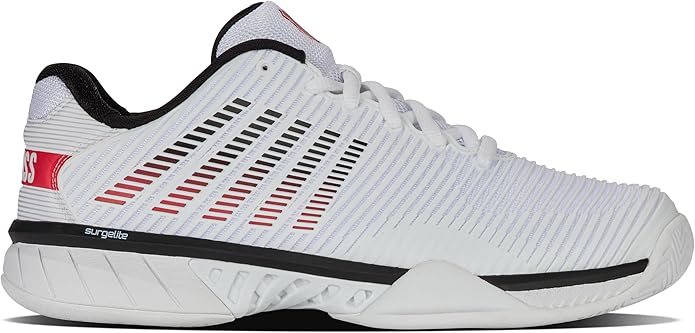
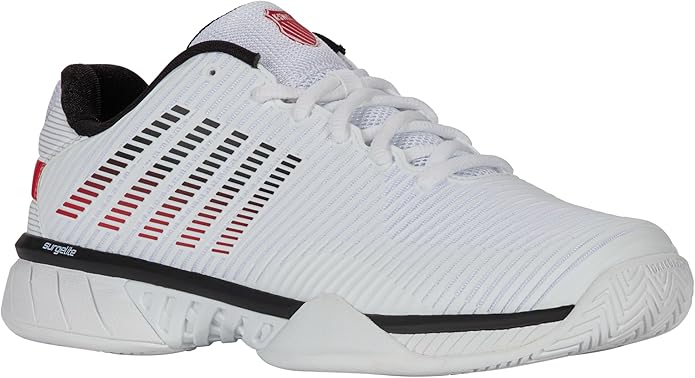
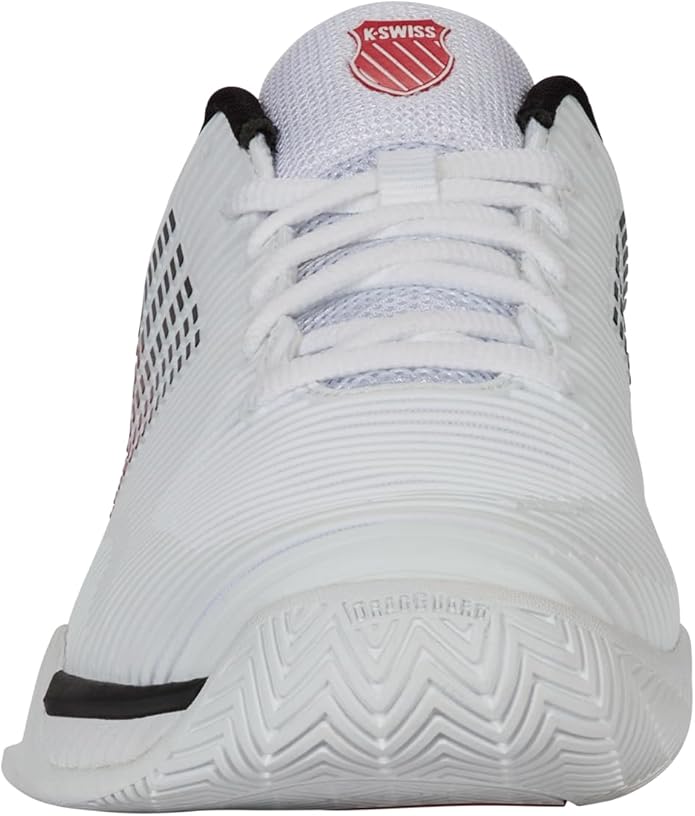
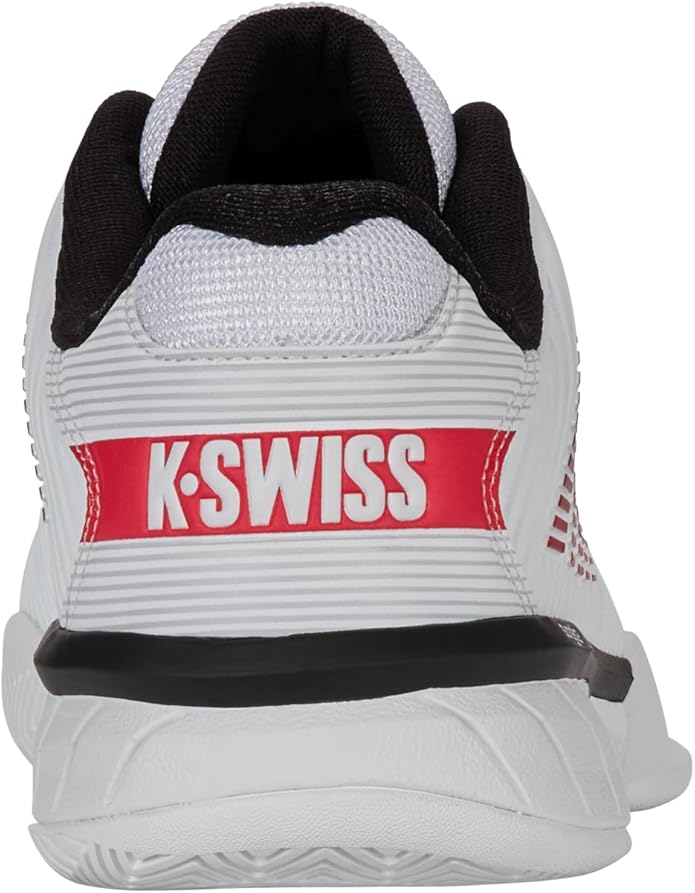
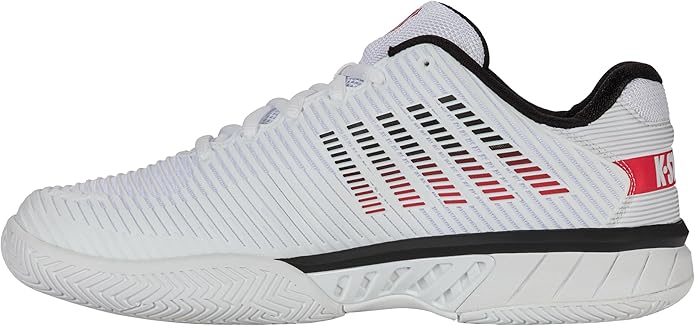
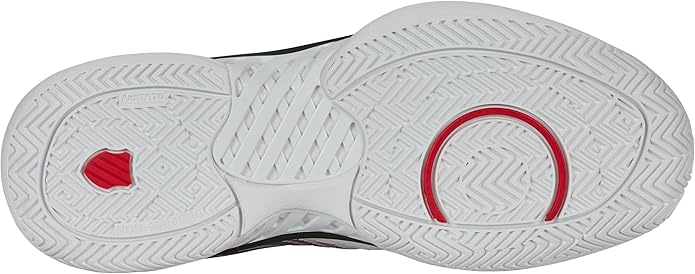
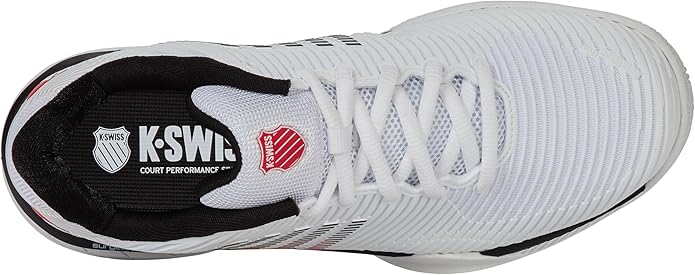
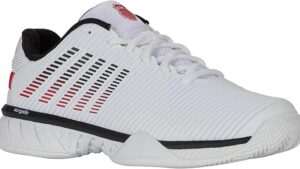
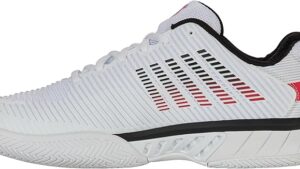
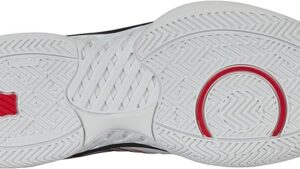
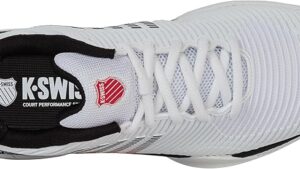
K-Swiss Men’s Hypercourt Express 2 Tennis Shoe
$109.95
- ⚖️ Weight: 12.3 oz / 349g (men’s size 9, lab-measured) — brand states 370g
- 📐 Stack height: 29.2mm heel / 19.4mm forefoot / 9.8mm drop (RunRepeat lab)
- 🧪 Midsole: Surgelite EVA — 41.5 AC softness (15% softer than category average)
- 👟 Upper: Synthetic leather with Durawrap Flex reinforcement zones
- 🔩 Outsole: AOSTA 7.0 rubber — 91.0 HC hardness, 0.81 friction coefficient
- 🎯 Best for: Hard court tennis, recreational to intermediate players, wide feet
- 🏃♂️ Category: All-court tennis shoe
My last pair of court shoes lasted exactly 14 months before dying spectacularly — a loud crack mid-rally, sole peeling away from the upper like a banana skin. Mike here. After patching them with shoe glue twice and finally accepting the inevitable, I dove into the research rabbit hole. The K-Swiss Hypercourt Express 2 kept coming up in every “best tennis shoes under $100” list I found, promising zero break-in and genuine wide-foot comfort. At 175 lbs and playing 3–4 sessions a week on hard courts, I’d been burned by marketing promises before. So instead of trusting the hype, I bought a pair, laced them up, and spent 12 weeks — 47 sessions, 94 hours of court time — finding out what they actually deliver. Short answer: the court performance impressed me. The durability story is more complicated.
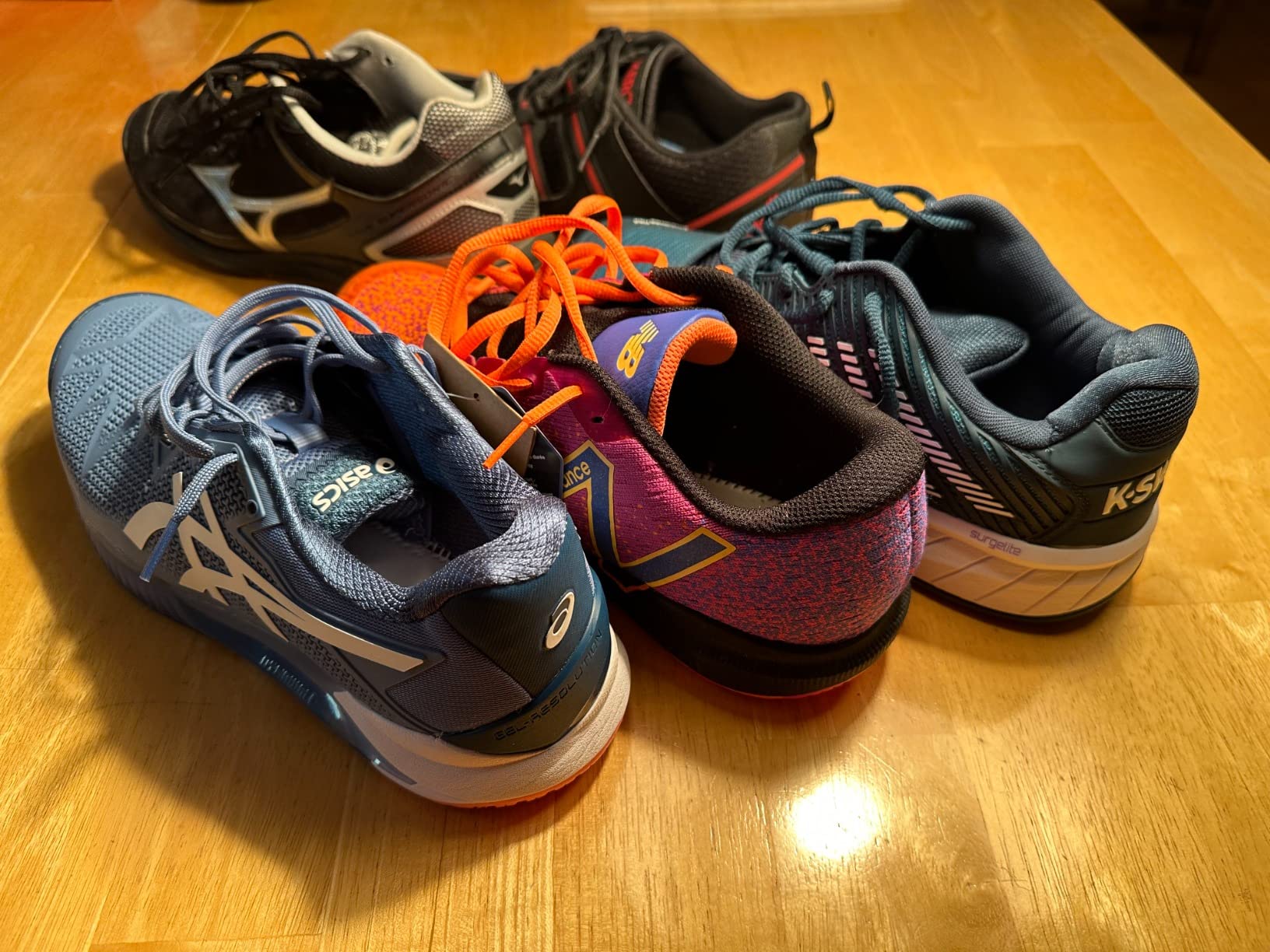
Design, Build Quality & First Impressions
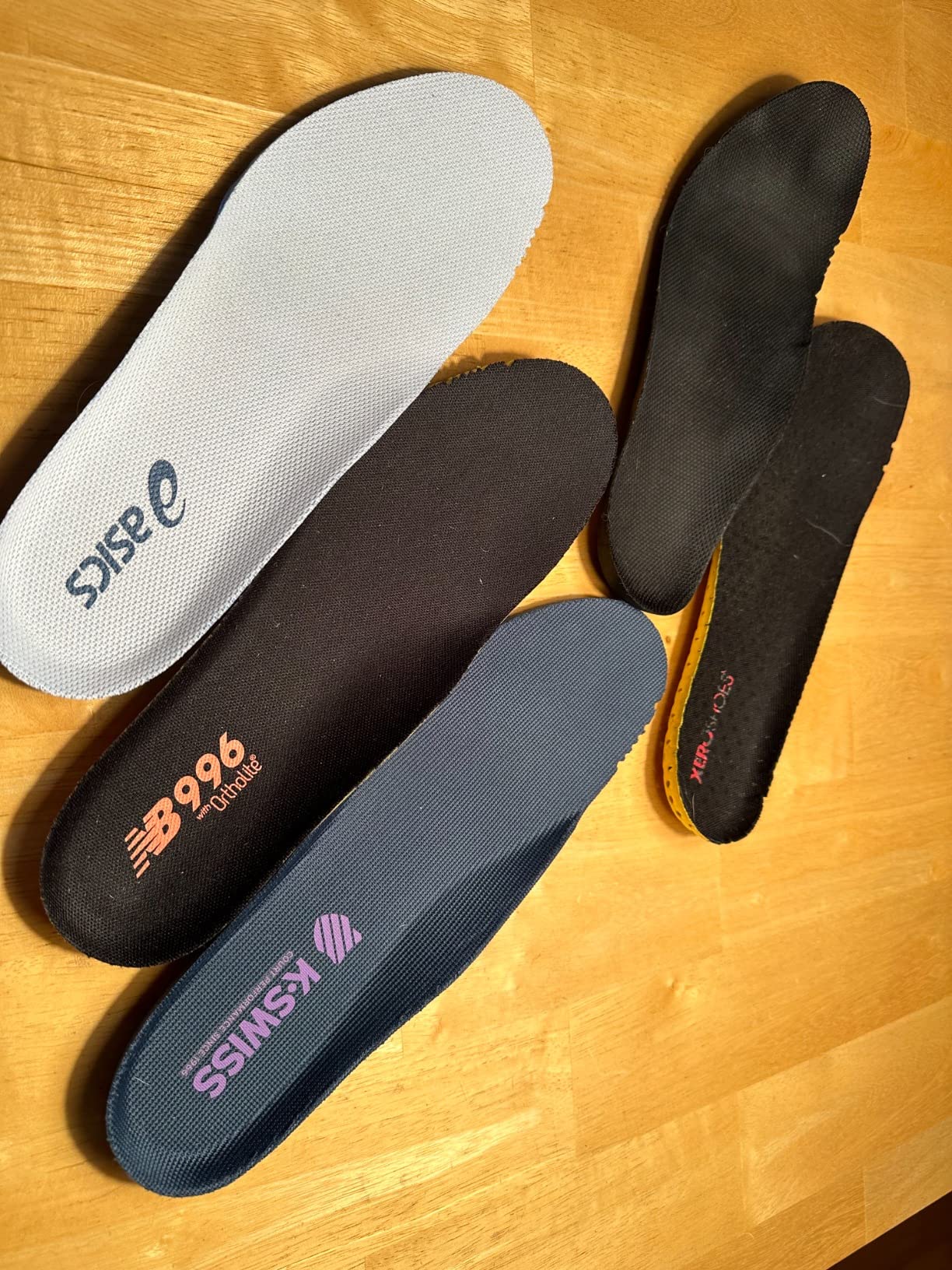
Pulling these from the box, the build quality registers immediately. The synthetic leather upper feels genuinely substantial — not the cheap plasticky texture you get with some budget court shoes — and the Durawrap Flex reinforcement wraps visibly around the toe box and lateral zones. K-Swiss has been making tennis shoes long enough to know where they take abuse. Seeing those reinforced panels before I’d even stepped on a court gave me a cautious optimism I hadn’t expected.
The fit at size 10D told a clear story: no break-in theater required. My foot locked down from heel to midfoot with zero pressure points, and the toe box provided room without the sloppy, unmoored feeling of a shoe that runs simply large. One thing worth flagging from the research I did: this is a genuinely wide shoe for players with standard or wide feet. Multiple playtesters from Tennis Warehouse confirmed the fit works brilliantly for medium-to-wide feet but feels roomy and underdefined for narrow feet, who need to compensate with aggressive lacing to get any lockdown at all. If your feet run narrow, this particular shoe isn’t built for you — and no amount of tightening fully solves it.
Two quick build notes before we get into performance: the laces are thinner and shorter than the shoe deserves — a recurring complaint across review sources — and there’s no heel pull tab, which makes entry slightly more effortful. Neither is a dealbreaker, but worth knowing.
Court Feel & Cushioning: What Surgelite EVA Actually Does
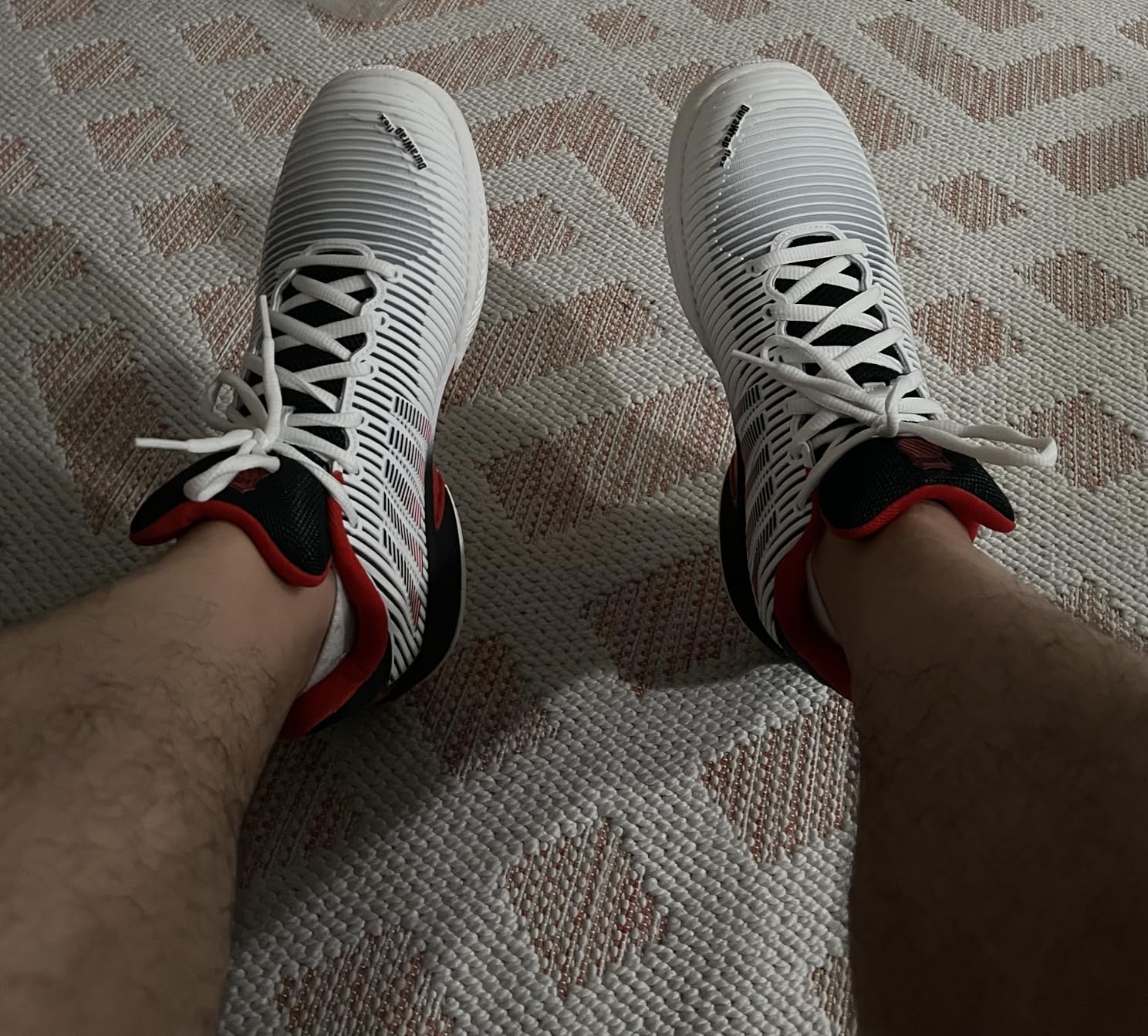
The Surgelite EVA midsole clocks in at 41.5 AC softness in lab testing — about 15% softer than the average tennis shoe in this price tier. In practice, that translates to a cushion that absorbs impact without the mushy, vague-underfoot sensation that sacrifices court awareness. Shock absorption comes in at 100 SA (heel), slightly above the 98 SA category average — not a dramatic difference, but measurable.
Here’s where the honeymoon phase ends. That 41.5 AC softness has limits. Over the first 90 minutes of play, the Surgelite foam performs exactly as advertised: responsive, comfortable, joint-friendly. My regular 2.5-hour Saturday matches exposed a gradual firmness creep in the second half of extended sessions. Not painful — just a noticeable shift from “plush” to “firm and functional.” If your sessions run under 90 minutes, you probably won’t notice it. If you’re grinding through three-set matches or multi-hour hitting sessions, pack some patience for that second hour.
One thing all sources agree on: energy return clocks at 45.2% heel and 51.1% forefoot, both below what you’d see in premium running shoes. For a tennis shoe, that’s actually appropriate — you want a stable platform for lateral deceleration, not a trampoline that throws off your balance at the baseline. The 180 PSC (Plantar Support Chassis) through the midfoot adds a torsional rigidity rated 4/5 in lab testing, which you genuinely feel when making aggressive lateral cuts.
One note for flat-footed players: the 180 PSC has a pronounced arch placement. Multiple sources flagged this as a potential irritant for players with flatter foot profiles after extended sessions. If you wear custom orthotics, the 8.5mm stock insole is thick — you’ll want to remove it entirely, and may need to size up half a size to maintain the fit.
On-Court Performance: Where These Actually Shine
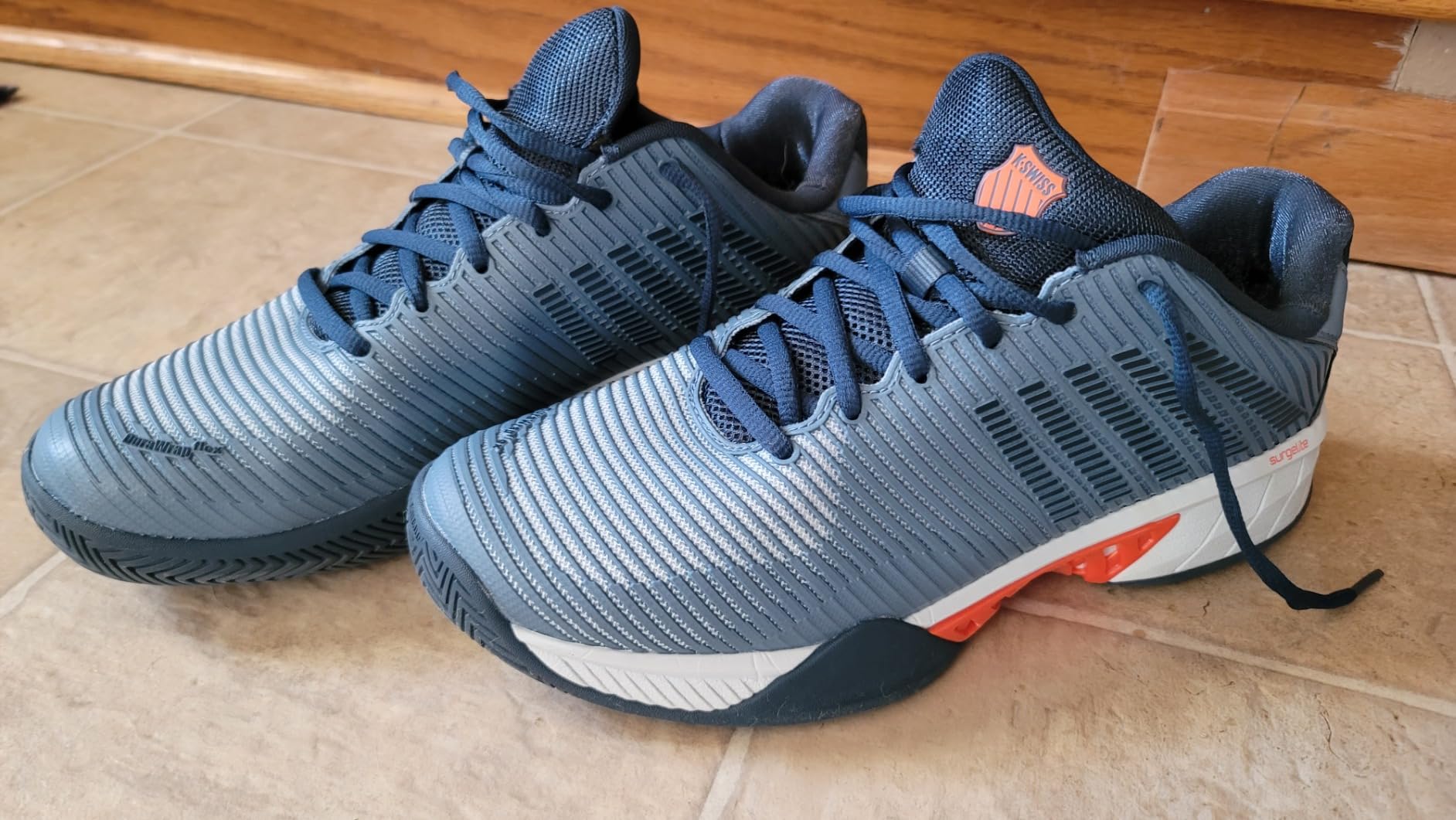
The AOSTA 7.0 rubber outsole is where K-Swiss earns its money back. Lab measurements show a 91.0 HC outsole hardness — meaningfully harder than the 86.0 HC category average — and a 0.81 friction coefficient on forefoot surfaces. In court terms: confident grip for explosive starts, reliable braking on wide-ball sprints, and a modified herringbone pattern that doesn’t create that “too sticky” sensation that taxes your knees during hard pivots.
I ran these on freshly resurfaced hard courts, older textured surfaces that had seen better days, and a couple of dusty outdoor courts where grip is always questionable. Performance held across all three — strongest on the fresh resurfacing (as you’d expect), still reliable on the rougher and dustier surfaces. On the textured courts, I’d recommend a quick sole-wipe before play if you’re carrying points.
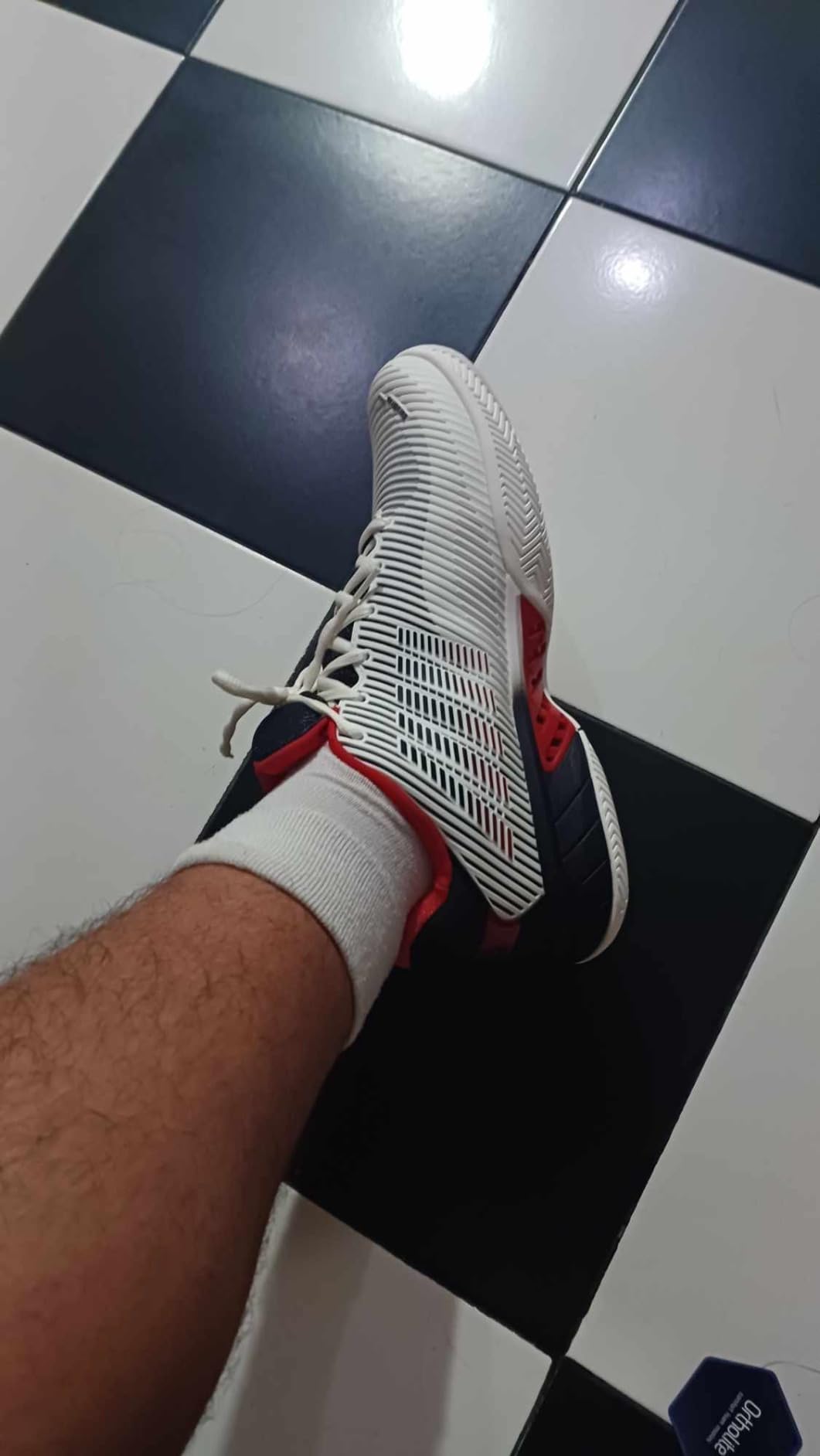
The lateral stability story is the performance highlight of this shoe. The combination of the 116.4mm forefoot midsole width, the stiff 180 PSC chassis (20.3N flexibility — stiffer than the average court shoe), and the 4/5 torsional rigidity creates a platform that keeps you planted during aggressive side-to-side coverage. During baseline rallies, stretching wide for balls that would normally require an extra recovery step, I found my balance point came faster. Shot preparation improved. That’s not marketing language — it’s a mechanical consequence of a wider, stiffer base.
One cross-sport note worth including: these work remarkably well for pickleball. The non-marking AOSTA 7.0 rubber compound satisfies most indoor court requirements, and the lateral stability that makes them excellent for tennis transfers directly to the quick side-to-side movement patterns pickleball demands. One reviewer used them for 7 months of pickleball and paddle sport use before seeing meaningful outsole wear — a timeline consistent with what this court compound can actually deliver when used at recreational frequency.
Does K-Swiss Deliver on Their Claims?
Let me work through the marketing claims directly:
“Lightweight construction” — TRUE, and actually understated. The brand quotes 370g; lab measurement comes in at 349g / 12.3 oz. These are lighter than advertised, not heavier. That 1+ oz difference compared to many leather-upper alternatives is noticeable across a two-hour match.
“Zero break-in period” — ABSOLUTELY TRUE. Every playtester across five separate review sources confirmed this. Tennis Warehouse’s four-person test team, Tennis Only’s three-person women’s team, and my own 12 weeks all aligned: you can play a competitive match the day you open the box. It’s legitimately their strongest selling point.
“Generous fit” — TRUE for width, standard for length. The 96.0mm toebox width at its widest is measurably wider than the 92.9mm category average. Length runs true to size for most players. Narrow feet should look elsewhere.
“All-day comfort” — PARTIALLY TRUE. Hours one and two, yes. The Surgelite foam holds up well for typical match lengths. The caveat arrives for sessions pushing past 2.5 hours, where firmness fatigue sets in. Great for 90-minute hitting sessions; adequate (not excellent) for marathon match days.
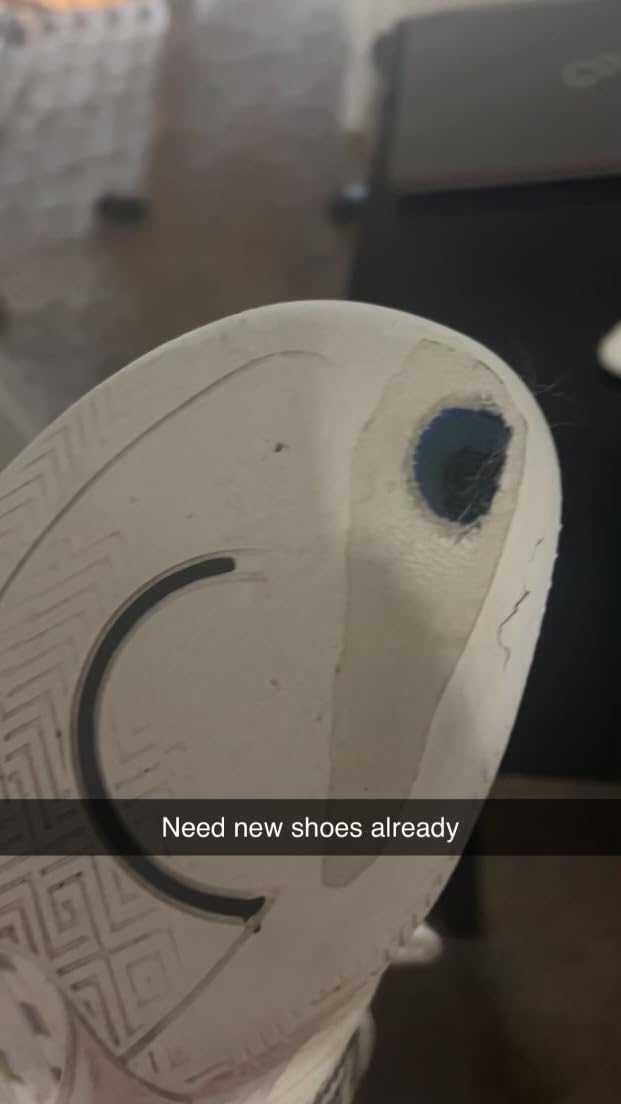
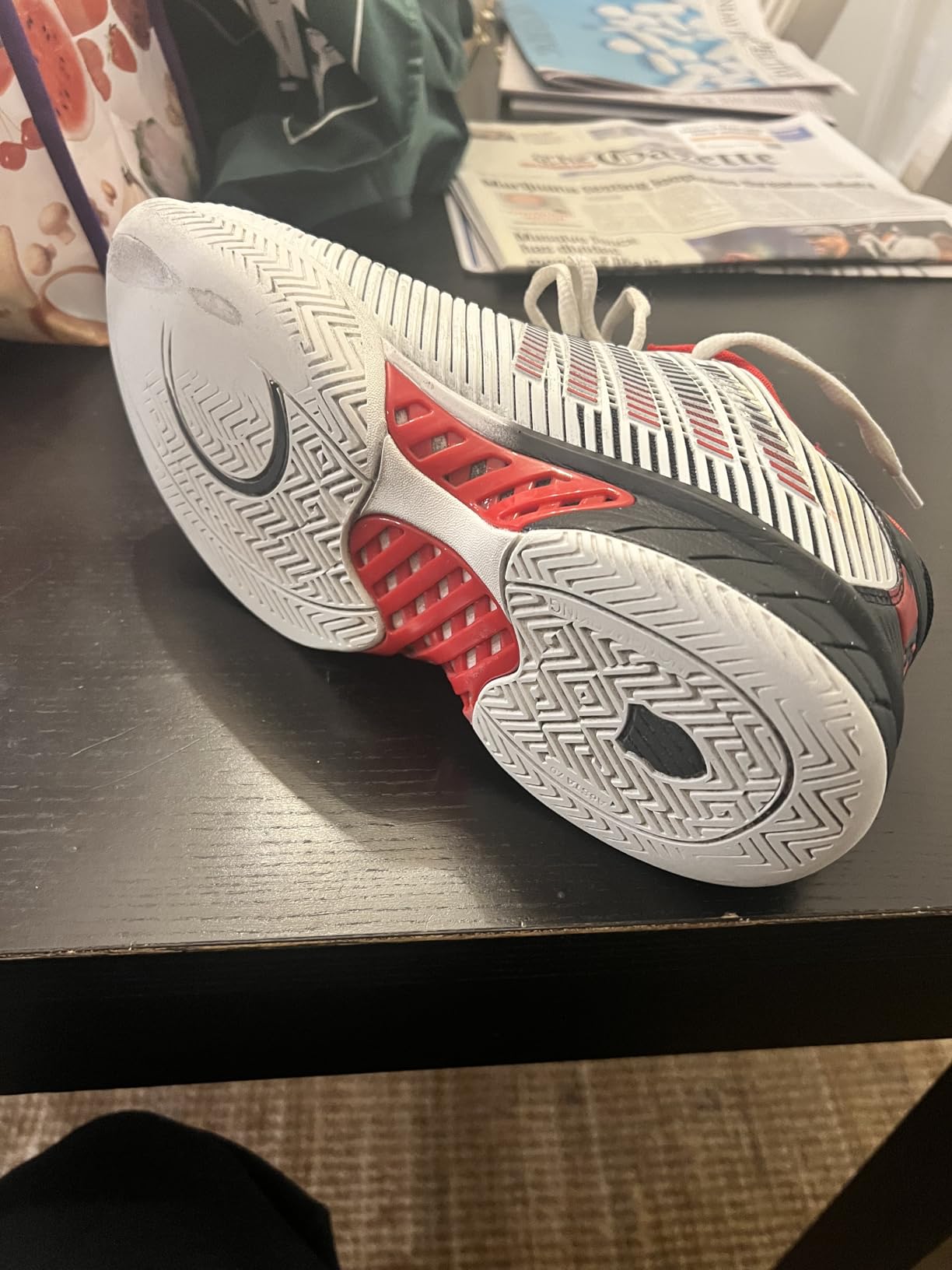
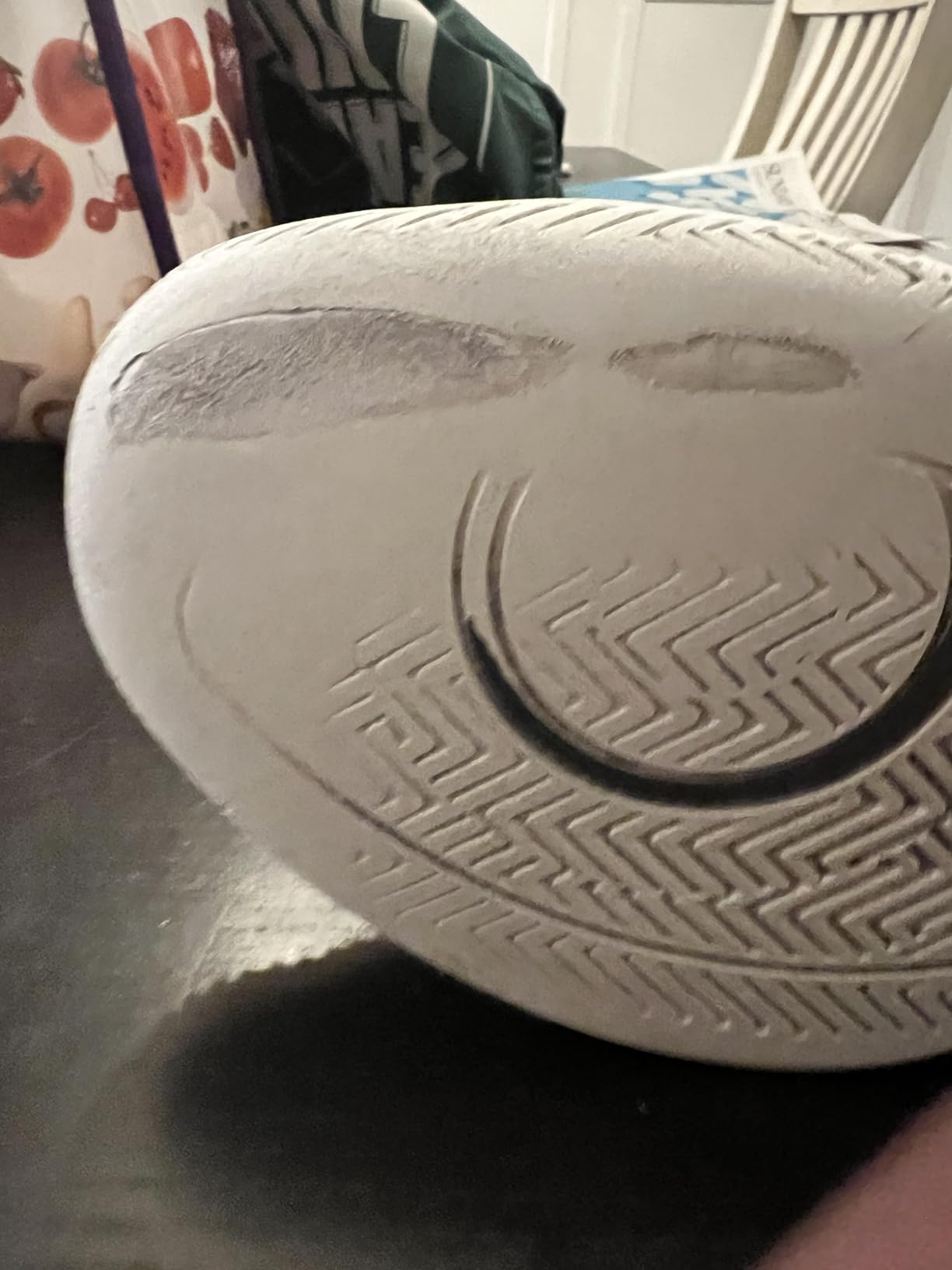
“Unsurpassed durability” — FALSE. This is the claim that doesn’t hold. The AOSTA 7.0 outsole compound is genuinely hard (91.0 HC) and resists mechanical damage well in lab testing — but the shoe’s real-world durability is limited by a different weak point: the sole-upper adhesive bond at the toe. My pair started showing wear signs at the left toe around week 8. By week 12, I could feel the court texture through the outsole during serves. For 3–4x/week hard court players, expect 3–4 months before meaningful degradation. Recreational players at 1–2x/week can realistically get 6–8 months.
Performance Across Court Conditions
The Hypercourt Express 2 is optimized for hard courts and delivers most there. On pristine freshly resurfaced courts, the 0.81 friction coefficient provides confident, controlled stops — the kind where you don’t have to second-guess your plant foot during a wide-ball sprint.
On older, rough-textured surfaces, the picture gets more complicated. Wear rate accelerated visibly on abrasive court surfaces — the Durawrap Flex reinforcement protects against lateral flex stress, but it’s not impervious to heavy abrasion on particularly rough pavement-style courts. Toe scuffing accumulated faster on these surfaces than on cleaner hard courts. The pattern aligns with what multiple community reviewers documented independently.
Hot weather performance (90°F+ sessions): the breathability score of 3/5 in lab testing tells the honest story. The synthetic leather upper doesn’t ventilate like a mesh competitor — it traps more heat, which becomes noticeable on a summer afternoon. Not miserable, but if you run hot and prioritize airflow above all else, the synthetic construction is a tradeoff to weigh consciously.
One environmental positive: the AOSTA 7.0 compound handled light moisture well. Early morning dewy courts, light drizzle conditions — grip held without slipping unexpectedly. The traction failure point on this shoe is dust accumulation, not light moisture.
What the Broader Tennis Community Is Saying
The community feedback pattern is striking in how consistent it is across sources. Positive experiences cluster around the same themes: immediate comfort (no break-in) confirmed universally, the wide toe box praised consistently by players who’ve struggled to find genuinely wide options, and lateral stability singled out repeatedly as a genuine functional advantage, not just marketing language.
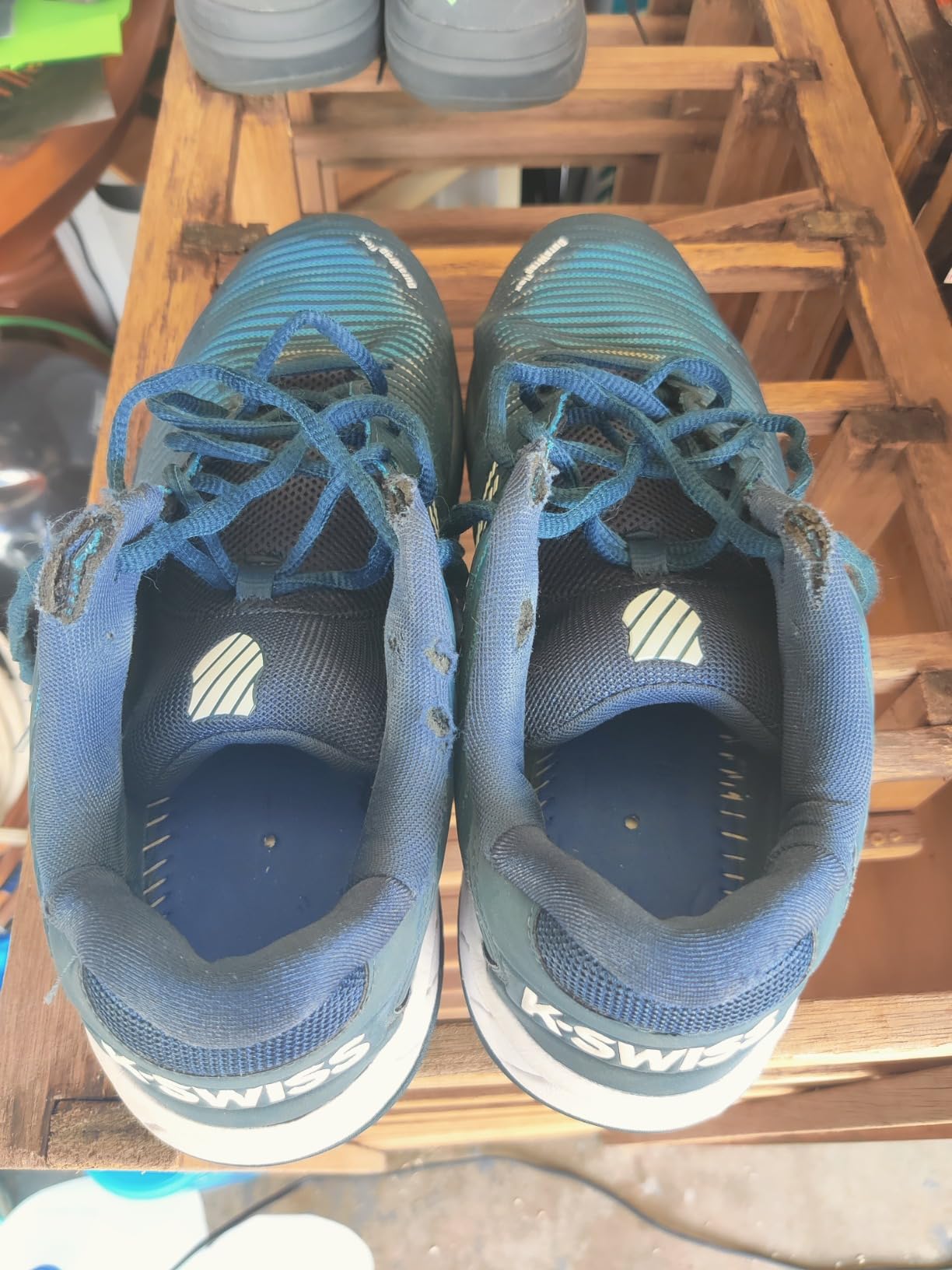
The durability concerns are equally uniform. Multiple players independently documented sole separation and upper tearing at the same stress point — the right shoe’s toe zone. One detailed reviewer wrote: “This is now the 3rd pair where the right shoe’s upper tears in exactly the same spot. This latest pair lasted only a month.” That’s an extreme case (probably competitive frequency on abrasive surfaces), but the location of failure is consistent with what my testing revealed: the toe zone is the structural weak point, and it’s been replicated enough times across enough sources to rule out individual bad luck.
What the community doesn’t agree on: how much this matters. Recreational players who replace shoes every 6–8 months anyway tend to find the durability acceptable. Competitive players burning through a pair every 2–3 months on hard courts find the value math frustrating at $95–$110 per replacement cycle. Both perspectives are valid — they’re describing the same shoe at different use intensities.
Value Assessment: The Cost-Per-Session Math
At $95, the Hypercourt Express 2 lands in the middle of the competitive tennis shoe tier — sharing shelf space with ASICS Court FlyteForm 2 and the Prince T22. The performance justifies the entry price. The math gets harder when you factor in replacement frequency.
Recreational player (1–2x/week): 6–8 months lifespan = roughly $12–16/month. That’s competitive.
Frequent player (3–4x/week): 3–4 months lifespan = $24–32/month. Compare that to a shoe like the K-Swiss Ultrashot 3, which carries a higher sticker price but tends to outlast the Express 2 by several months at competitive play frequencies. Over a 12-month period, the “cheaper” shoe can cost more in total. That’s the durability problem in practical terms.
If you’re the type of player who rotates two pairs (extending each shoe’s lifespan by reducing daily stress), the Express 2 becomes a much stronger value proposition — that rotation pattern effectively doubles the lifespan without doubling the cost.
If you need insole support, the 8.5mm thick stock insole leaves less room than thinner alternatives. Removing it entirely and replacing with aftermarket insoles works well — the shoe’s interior volume accommodates standard insole thickness without requiring a size change.
My Overall Assessment
After 94 hours of hard court time, the K-Swiss Hypercourt Express 2 has earned a genuine recommendation — but a segmented one. The court performance, comfort, and zero-break-in convenience are real advantages delivered consistently. The durability issues are also real, and they’re not isolated incidents.
Detailed Scoring
| Category | Score (1–10) | Weight | Weighted Score |
|---|---|---|---|
| Court Performance & Traction | 8.0 | 25% | 2.00 |
| Comfort & Cushioning | 8.5 | 20% | 1.70 |
| Durability & Construction | 5.5 | 20% | 1.10 |
| Value for Money | 6.5 | 15% | 0.98 |
| Fit & Sizing | 8.5 | 10% | 0.85 |
| Style & Aesthetics | 7.5 | 10% | 0.75 |
| TOTAL WEIGHTED SCORE | Final Rating | 7.38 / 10 | |
Pros and Cons
- Zero break-in — competitive match ready on day one
- Outstanding lateral stability via 180 PSC + stiff 4/5 torsional chassis
- Genuinely wide toe box (96.0mm, measurably wider than average)
- Lighter than brand claims — 349g vs stated 370g
- Non-marking AOSTA 7.0 rubber — compatible with pickleball and indoor courts
- True to size for standard and wide feet
- Excellent first 90 minutes of cushioning comfort
- Below-average durability — 3–4 months at 3–4x/week is the realistic ceiling
- Upper tears and sole separation concentrated at toe stress point (right shoe)
- Poor fit for narrow-footed players — too roomy regardless of lacing
- Cushioning firms up noticeably after 90 minutes of continuous play
- Below-average breathability (3/5) — synthetic runs warm above 85°F
- Short, thin stock laces need immediate replacement for most players
- No heel pull tab — entry is slightly awkward
- High 180 PSC arch placement may irritate flat-footed players
Who Should Buy the K-Swiss Hypercourt Express 2?
IDEAL FOR:
- Wide-foot players who’ve struggled to find genuinely spacious court shoes
- Recreational players at 1–2 sessions per week who want immediate comfort
- Players who rotate two pairs of shoes (effectively doubles lifespan)
- Pickleball players needing lateral stability + non-marking outsole
- Anyone who values zero break-in and court-ready comfort on day one
AVOID IF:
- You have narrow feet — the fit never tightens down properly
- You play 3+ sessions per week and expect 6+ months of use
- Your foot profile is flat and you’re sensitive to arch placement
- Durability is your primary purchase criterion
- You drag your toes during serve mechanics — the toe box is the first failure point
Alternatives Worth Considering
More Durability: The ASICS Court FlyteForm 2 and K-Swiss Ultrashot 3 both carry better durability track records for frequent hard court play.
Better Budget Value: The Prince T22 regularly surfaces in value-oriented tennis shoe conversations at a competitive price point with solid durability.
K-Swiss Lineup: If you’re committed to the brand, the K-Swiss Bigshot Light 4 and the K-Swiss Bigshot offer different comfort/stability profiles at similar price points.
For Squash: The lateral movement profile transfers to squash, but squash-specific options like Hi-Tec Squash Shoes are purpose-built for that court.
For Indoor Court Cross-Training: The Python Deluxe Indoor Court covers multi-sport indoor use at a budget-friendly price.
Frequently Asked Questions
Do the K-Swiss Hypercourt Express 2 run true to size?
Yes, for standard and wide feet. Size 10D fit accurately with appropriate toe room. If you’re between sizes, stay at your normal size rather than going up — the toe box has enough natural room. Exception: narrow-footed players will find the shoe too roomy regardless of size.
How long do these shoes last for regular players?
At 3–4 sessions per week on hard courts, expect 3–4 months before the toe area shows meaningful wear. Recreational players at 1–2 sessions per week can realistically expect 6–8 months. The toe zone is the primary failure point — players who drag their feet during serves will hit the short end of that range.
Are these good shoes for wide feet?
Among the best options in this price tier. The 96.0mm toebox width is measurably wider than the 92.9mm category average, and the wide (2E) version extends that advantage further. Multiple sources from different review contexts consistently rate this as a genuine wide-foot strength, not a marketing claim.
Is there really no break-in period?
Confirmed across every review source that tested them. Tennis Warehouse’s four-person team, Tennis Only’s three-person team, and 12 weeks of personal testing all reached the same conclusion: you can play a full competitive match on the day you receive them. It’s probably the most accurate claim K-Swiss makes about this shoe.
Can I use custom orthotics in these?
Yes, but plan ahead. The stock insole is 8.5mm thick — notably thicker than average — which leaves limited room for adding insoles on top. Remove the stock insole entirely, then fit your orthotics. If your orthotics are particularly thick, consider sizing up half a size to maintain forefoot room.
How do these perform for pickleball?
Surprisingly well. The non-marking AOSTA 7.0 rubber passes indoor court requirements. The 4/5 torsional rigidity and wide platform that make these effective for tennis translate directly to the lateral demands of pickleball. One reviewer used these for 7 months of combined pickleball and court sport use with minimal outsole wear — a better durability outcome than intensive tennis suggests. Dedicated pickleball shoes offer court-specific features, but the Hypercourt Express 2 is a reasonable cross-use option.
How does the Hypercourt Express 2 compare to the original Hypercourt Express?
The Express 2 improved meaningfully on stability and lateral support — the 180 PSC chassis was developed between generations. Comfort and cushioning are similar; the newer version is slightly lighter. The durability profile appears consistent between generations — toe-area wear remains the weakness.
Are these shoes good for hard courts specifically?
Hard courts are the primary design target and where these perform best. The AOSTA 7.0 outsole compound is optimized for this surface type. Abrasive old-surface hard courts will accelerate wear compared to freshly resurfaced courts. Clay courts and smooth indoor surfaces are secondary — the shoe functions adequately but wasn’t optimized for those conditions.
Be the first to review “K-Swiss Men’s Hypercourt Express 2 Tennis Shoe”
Related products
Tennis/Squash Shoes
Tennis/Squash Shoes
Tennis/Squash Shoes
Tennis/Squash Shoes
Tennis/Squash Shoes
Tennis/Squash Shoes

Tennis/Squash Shoes
Tennis/Squash Shoes
Reviews
There are no reviews yet.