
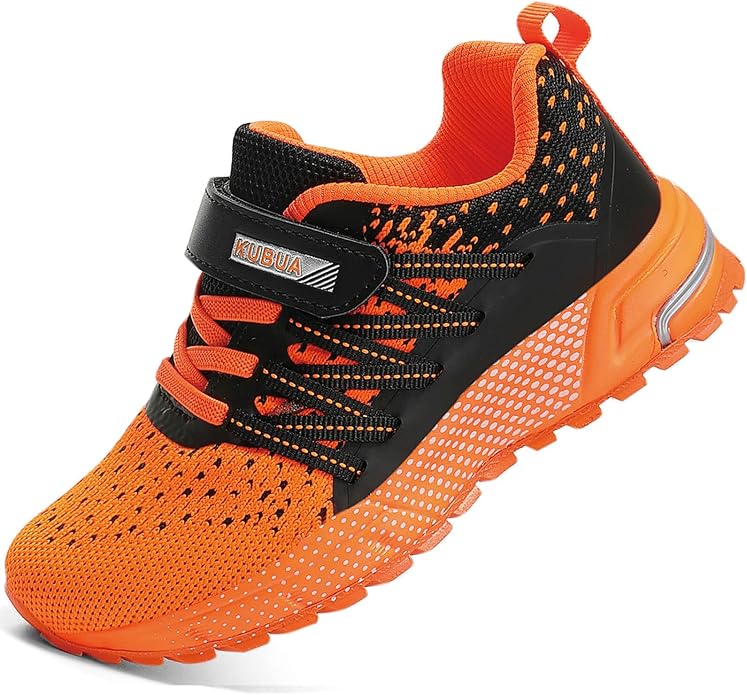
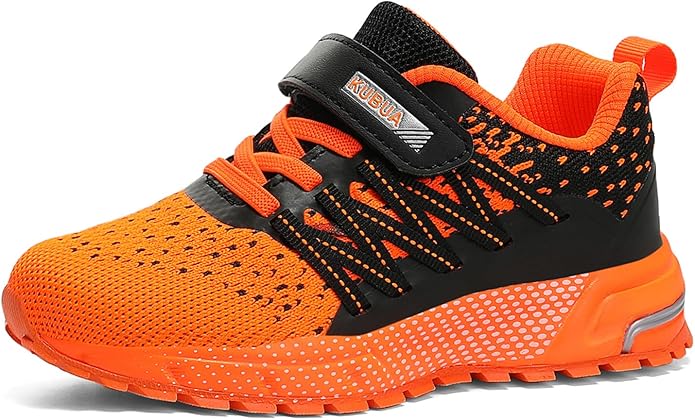
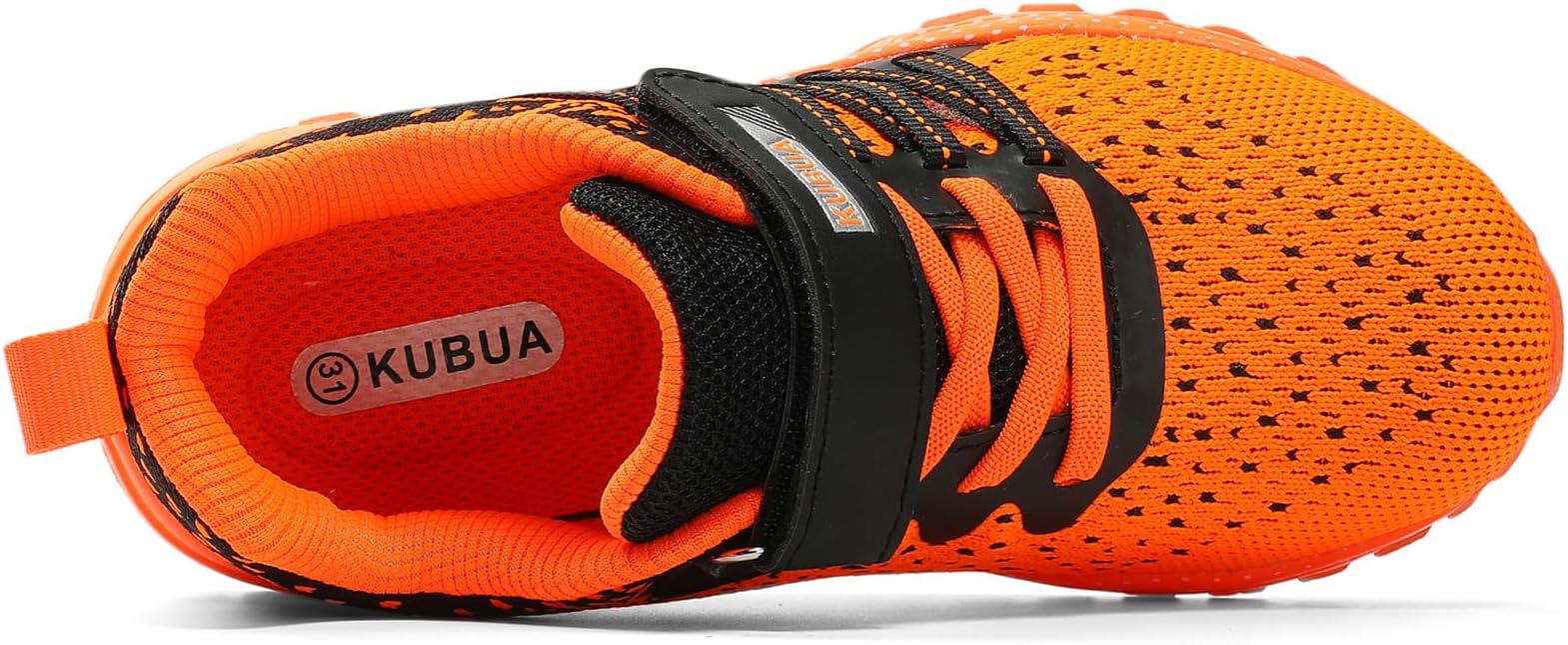
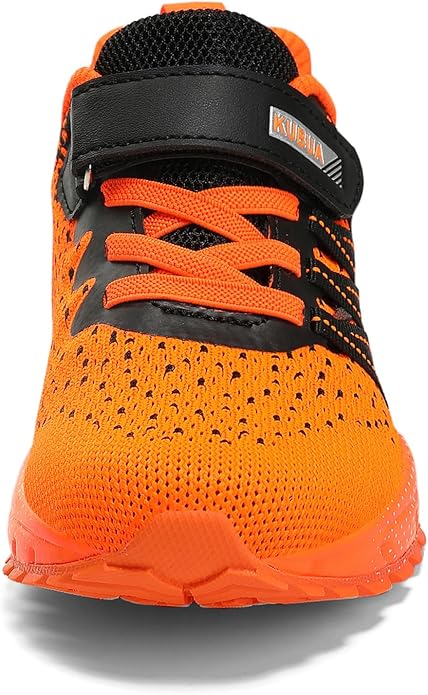
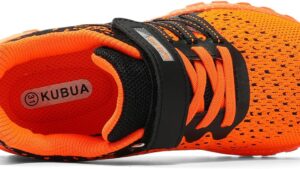
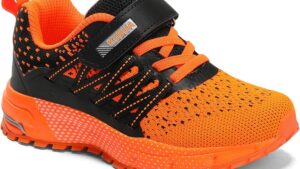
KUBUA Kids Sneakers for Boys Girls Running Tennis Shoes
$49.99
- ⚖️ Weight: 8.2 oz (size 4 Big Kid, measured)
- 🧪 Midsole: EVA foam with shock absorption
- 👟 Upper: Breathable mesh fabric
- 👶 Category: Kids athletic sneakers (unisex)
- 🎯 Best for: Daily school wear, playground activities, light sports
- 👣 Closure: Hook & loop (Velcro) straps
- 📐 Platform height: 0.5 inches
Soccer practice pickup at 4:15, homework by 5, dinner by 6 — and somewhere in between, my son managed to destroy three pairs of shoes in four months last year. So when a few moms in my neighborhood group started raving about KUBUA sneakers as the “finally, something that holds up” pick at the $40 mark, I paid attention. Sarah here, and I went in with healthy skepticism. Six months of daily school wear, summer playground chaos, and weekend family adventures later, here’s what I actually found.
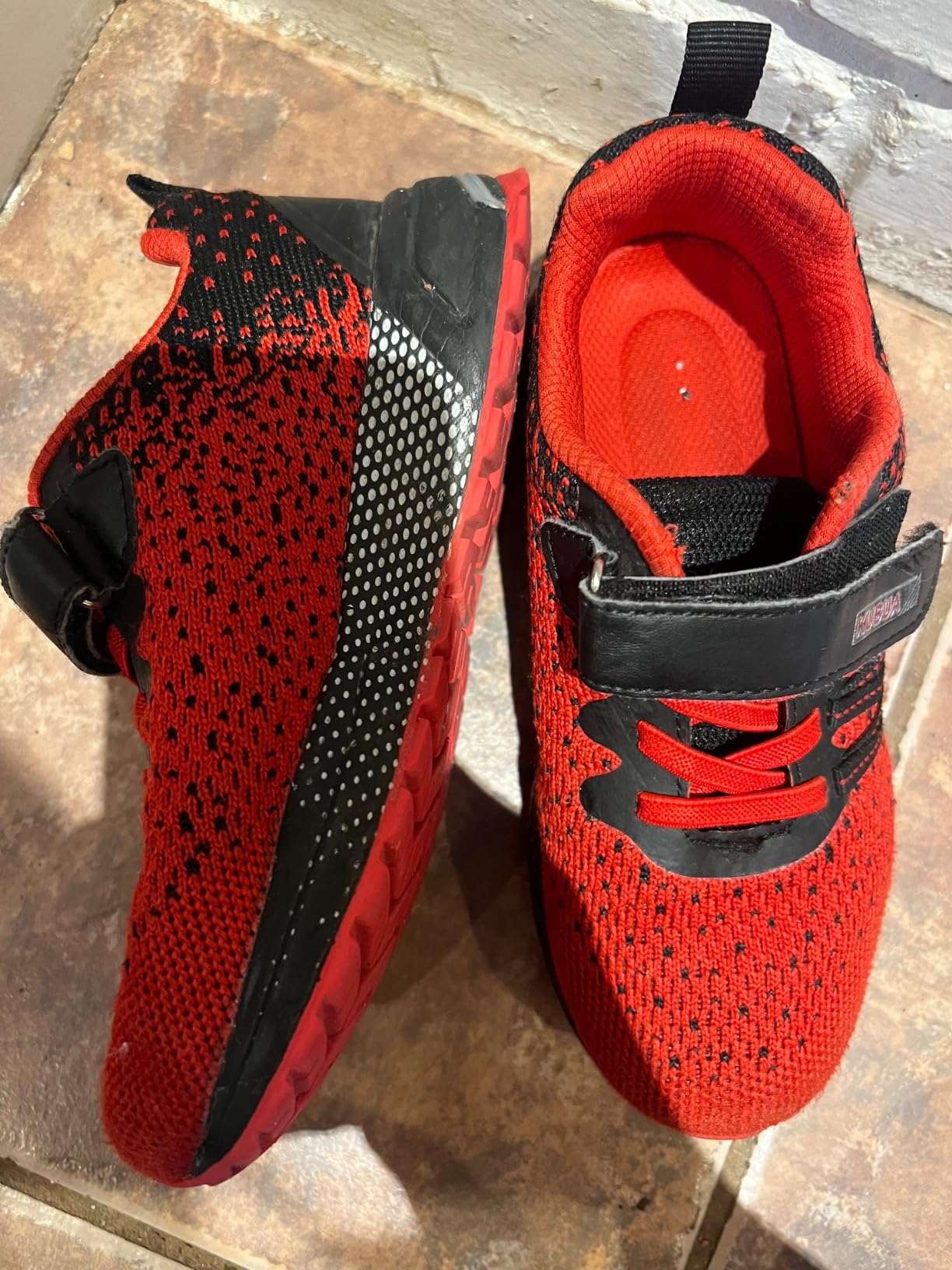
Why I Put KUBUA to the Test
My son has slightly wider feet, which makes shoe shopping its own kind of adventure. Most budget athletic sneakers in the $35-50 range run narrow, and we’ve had more than a few pairs that created hot spots within the first week. When other parents specifically called out KUBUA’s wide toe box, I figured it was worth a proper run-through — not a weekend trial, but real daily wear through a full school season.
I documented the experience week by week, paying attention to what changed and when. What follows isn’t a glowing endorsement or a takedown — it’s a month-by-month account of where these shoes held up and where they didn’t.
Design, Build Quality & First Impressions
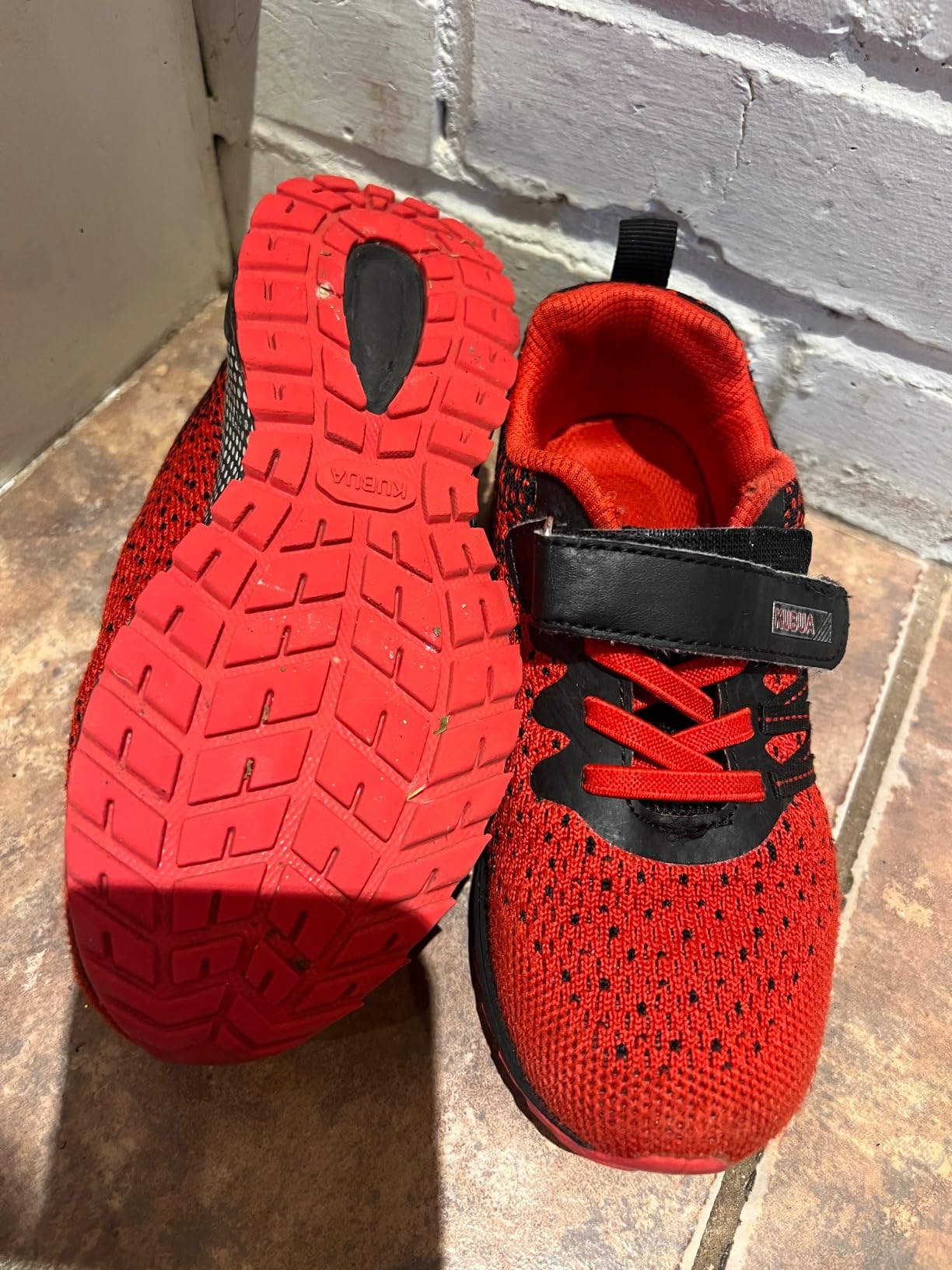
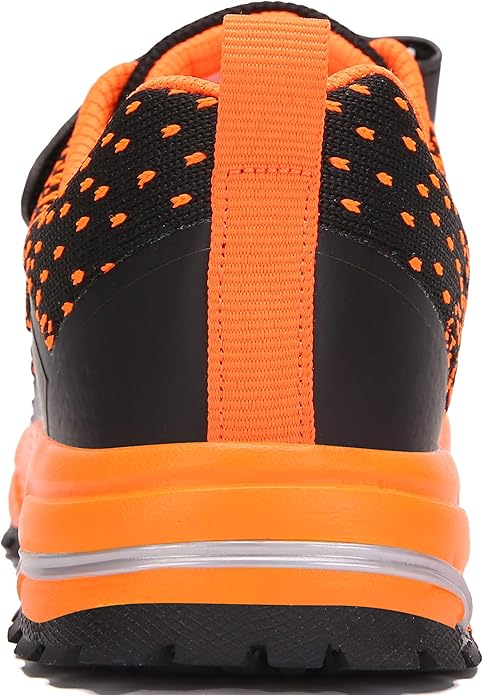
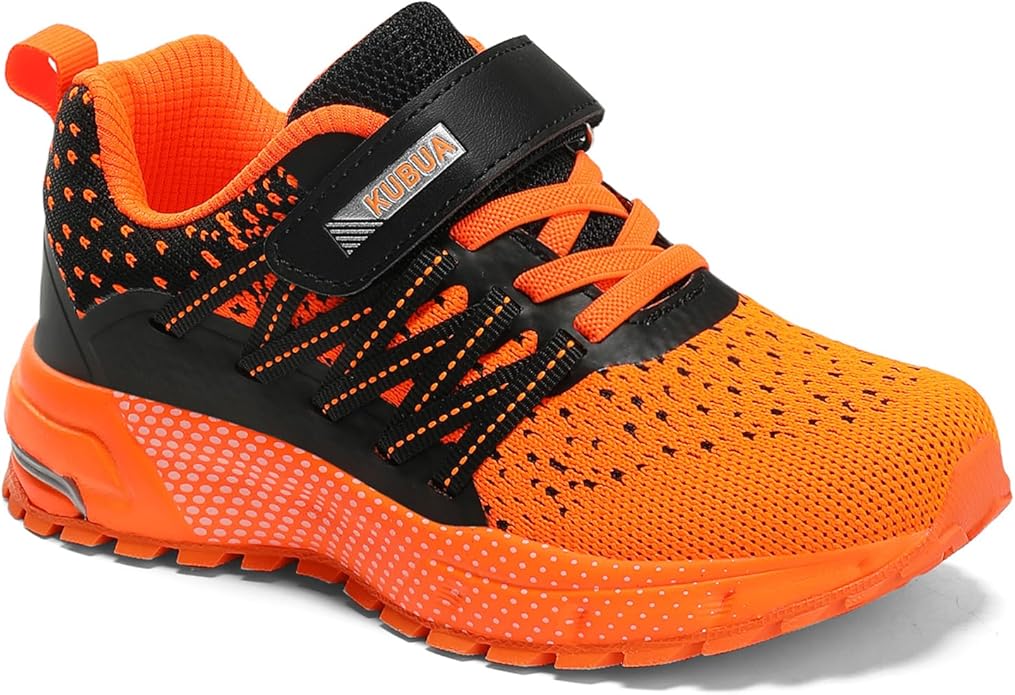
Right out of the box, the black and orange colorway caught my son’s attention before I even finished unwrapping them. That matters at age seven — half the battle is convincing your kid to actually wear the shoes you bought. These passed that test immediately.
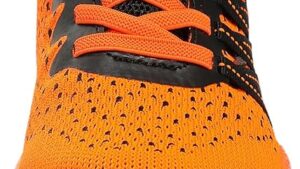
The mesh upper has a pleasant hand-feel: substantial enough to suggest durability, open enough that you can tell airflow will actually happen. No overwhelming chemical smell, which I appreciated after a recent budget purchase that aired out for three days before my son would go near it. The hook-and-loop closure system — two wide Velcro straps across the midfoot — looked well-positioned and appropriately grippy at first touch.
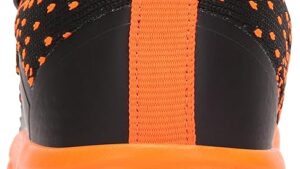
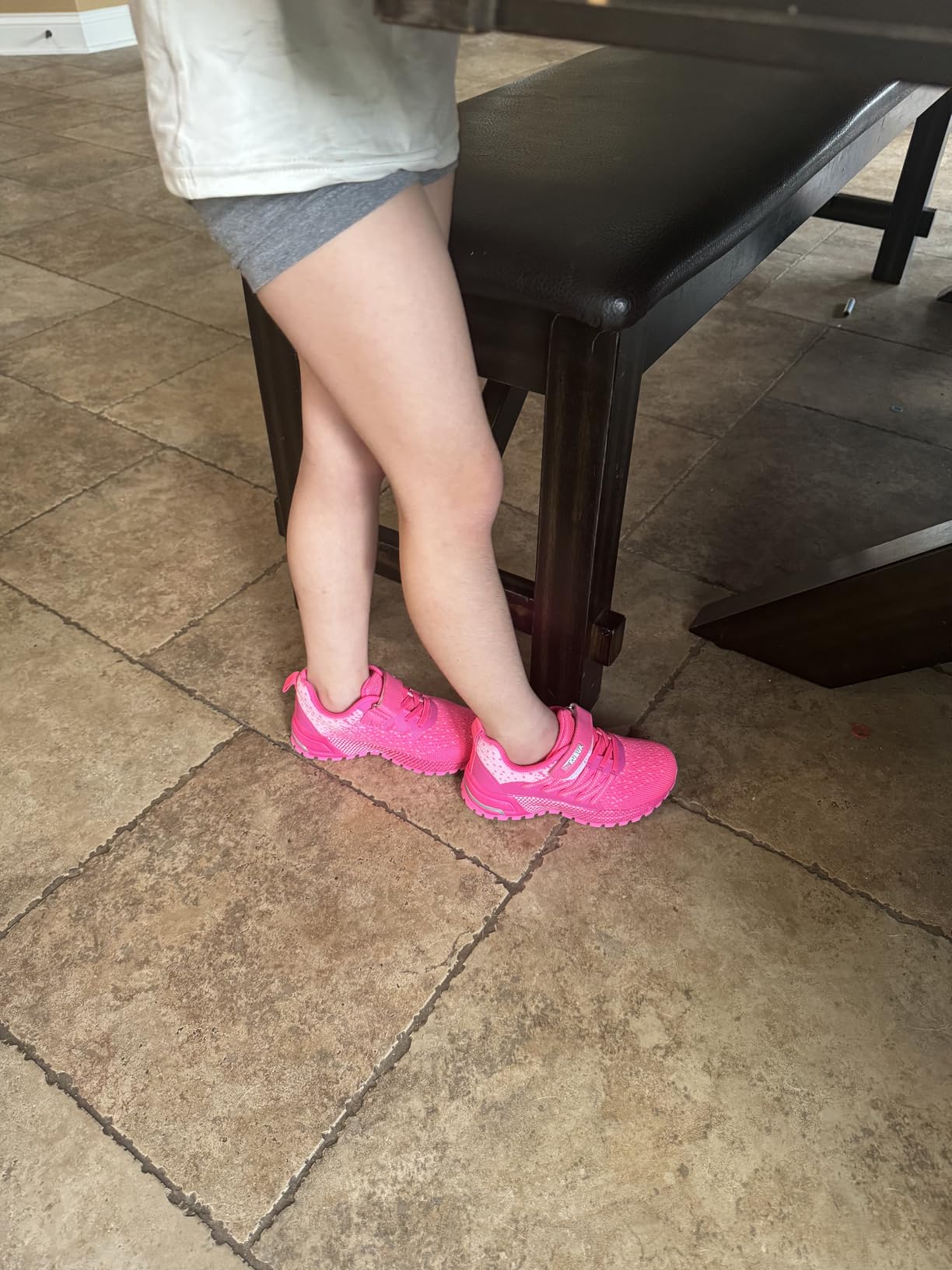
Construction-wise, the EVA outsole felt solid with a defined tread pattern across the forefoot and heel. The cushioned insole had decent rebound when pressed, and the padded collar gave the ankle opening a comfortable frame without adding unnecessary bulk. Most notably, the toe box. On my son’s foot — slightly wider than average — there was real breathing room across the forefoot without the shoe looking cartoonishly wide. That’s genuinely hard to find at this price.
First try-on verdict from my 7-year-old: “These are actually comfy.” Which, for the record, is the highest endorsement I get from him.
Comfort & Cushioning: The Early Weeks
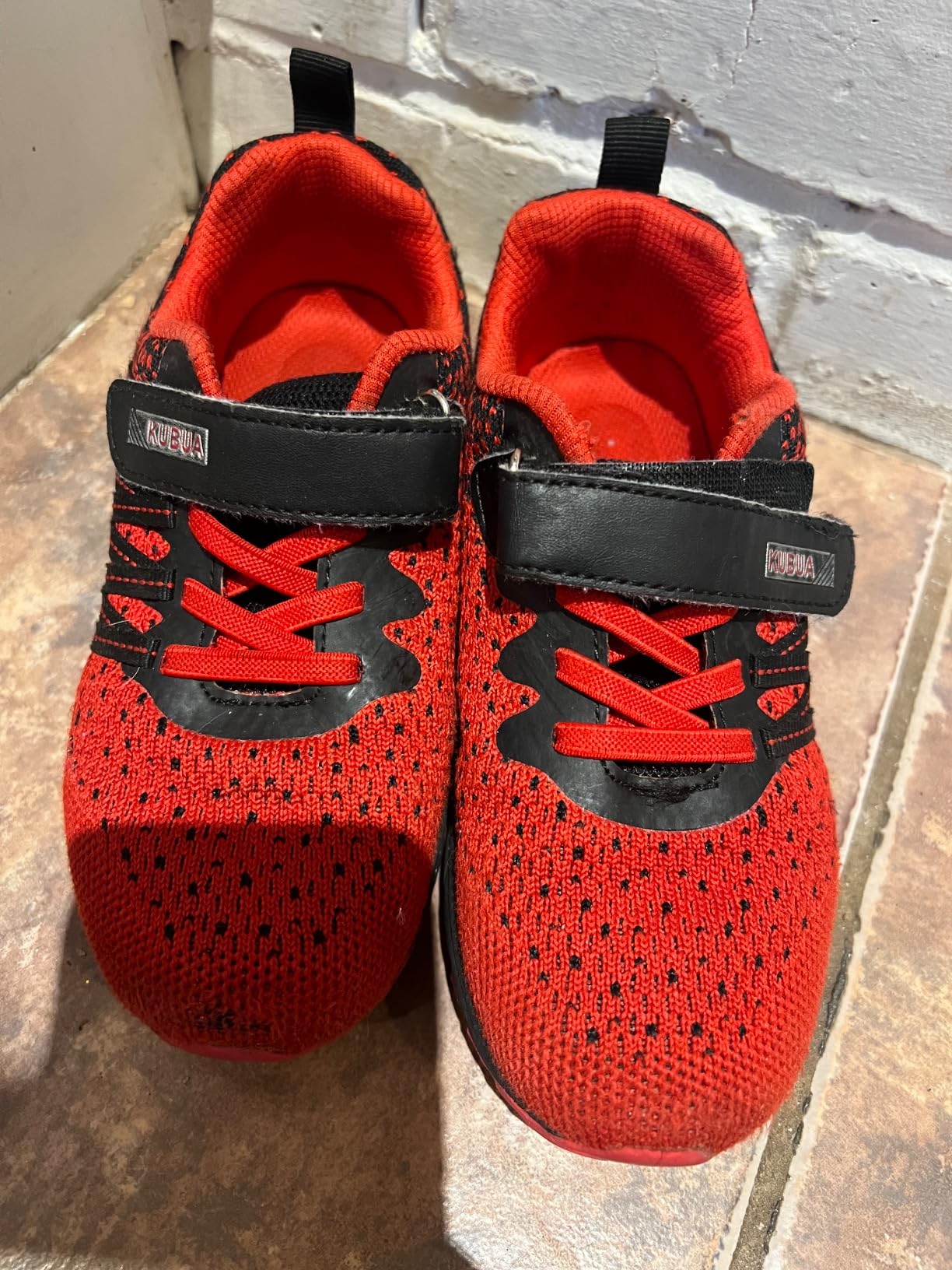
The first month was genuinely impressive. The EVA midsole absorbed playground impact well — my son runs hard, climbs everything, and generally treats every outdoor surface like an obstacle course. No foot fatigue complaints after full school days, which had been a recurring issue with his previous shoes. The padded collar kept things comfortable around the ankle without requiring any break-in period.
Breathability was the standout. We got these right at the start of a humid stretch in late July, and his feet stayed dry through full days of wear in a way that his previous synthetic pair never managed. By afternoon with the old shoes, his socks were uncomfortably damp. With the KUBUAs, that stopped being a problem. The mesh construction earns its claim here — it genuinely keeps air moving.
The wide toe box worked exactly as advertised for his foot shape. Natural splay, no cramping, no hot spots on the inner edge that wider-footed kids often get from narrower designs. A few parents in my mom group with kids who have standard-width feet noted the shoe feels a bit roomier than expected, which is worth keeping in mind if you’re shopping for a narrower foot.
Then came week six.
The 6-Week Shift
Nothing catastrophic — just early signals. The inner lining of the left shoe started showing a rubbed, matted appearance where the heel sits. The Velcro straps still held fine, but required an extra firm press to set. Most noticeably, the insole had lost some of its initial springiness when compressed. Still functional for school and playground use, still comfortable enough that my son wasn’t complaining. But the trajectory was becoming clear.
Performance by Activity: Where These Shoes Thrive (and Where They Don’t)
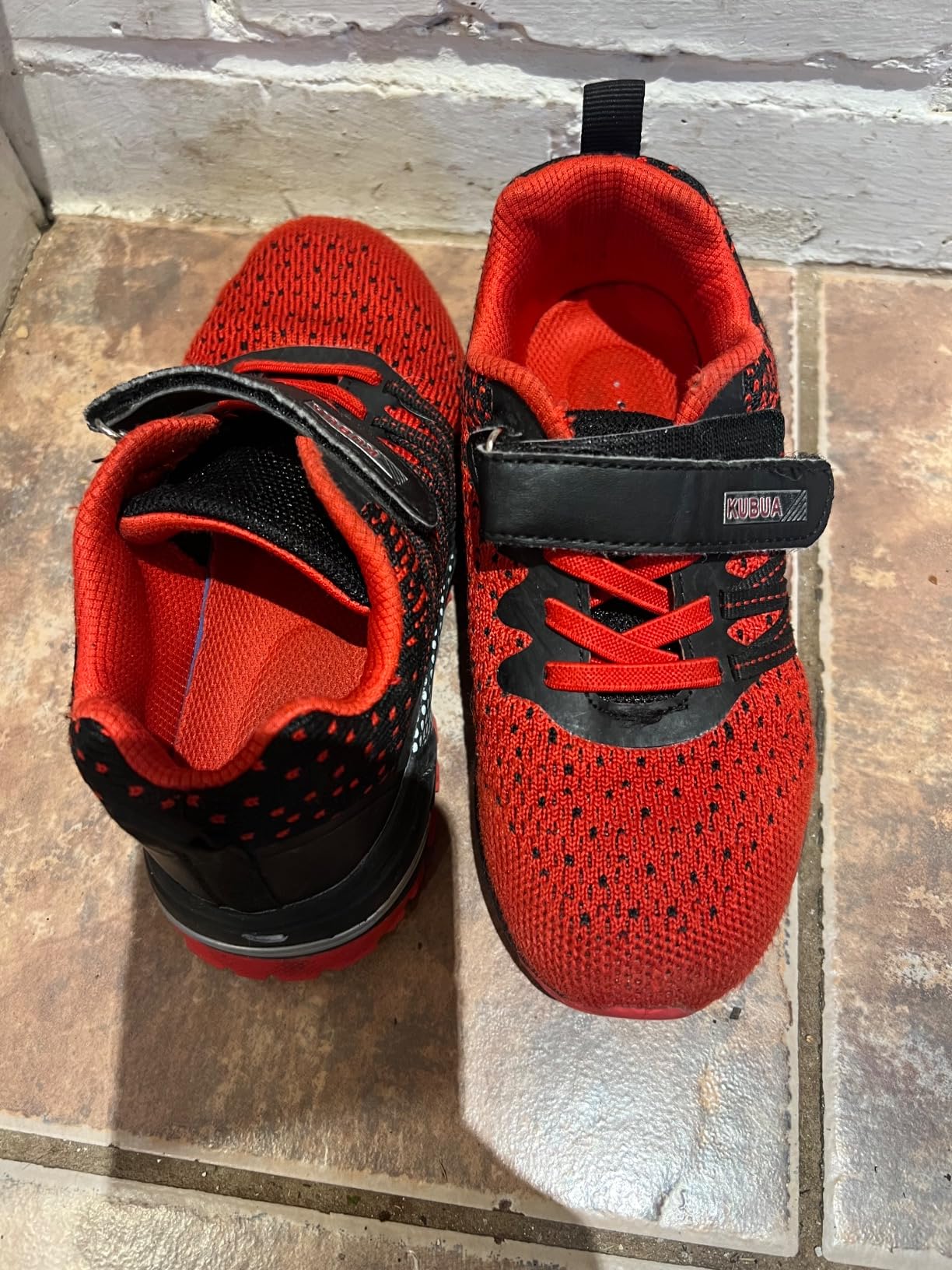
School Environment
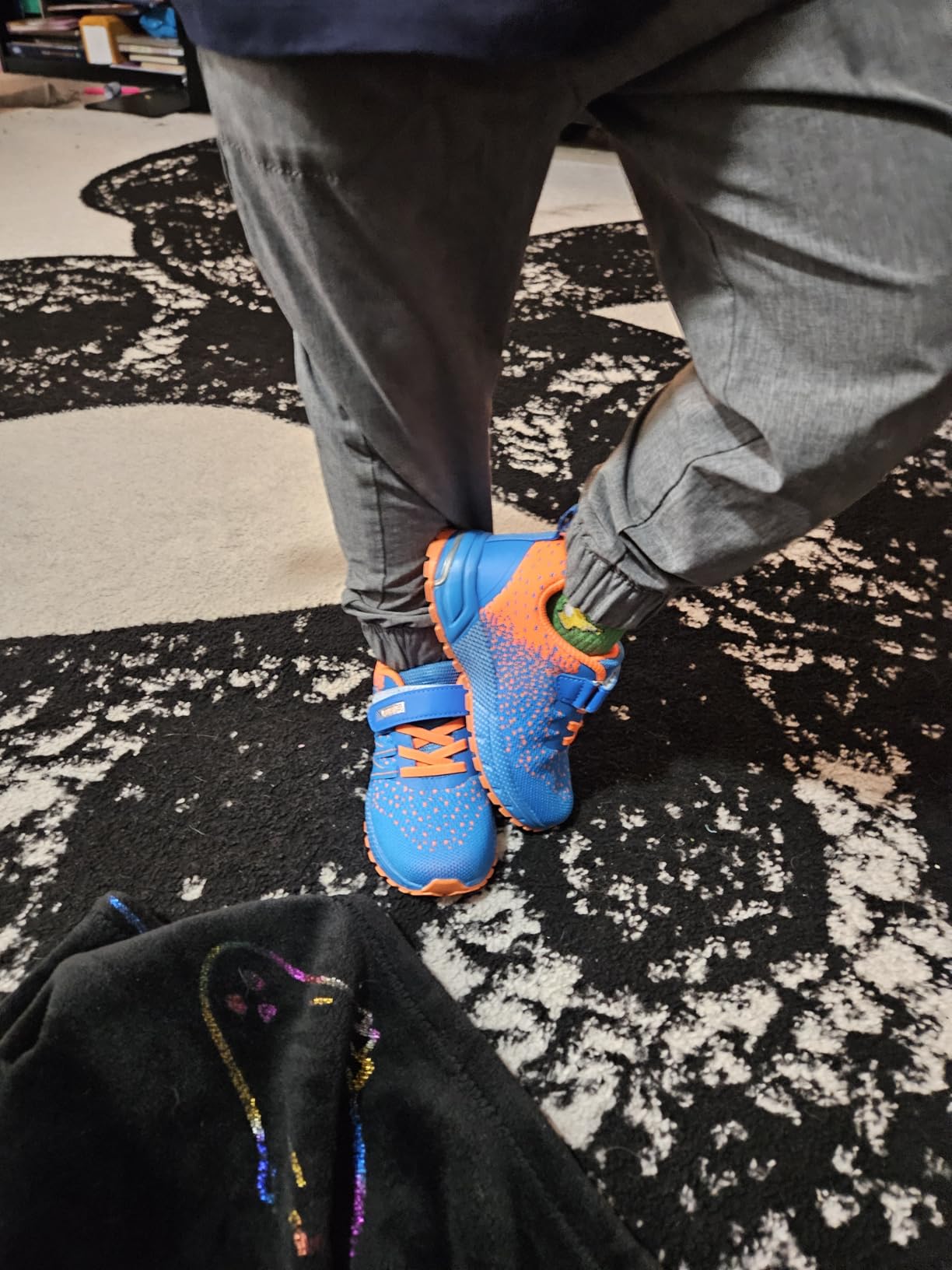
Inside school, these performed without complaint. Non-marking outsole on the gymnasium floor — the PE teacher didn’t flag them, which is the practical test that matters. Classroom comfort held through long seated periods, transitions between rooms, and the start-stop of a typical school day. The Velcro closure made PE class changes genuinely quick — in the early months, my son could handle both strap fastening and loosening completely independently, which is exactly what the marketing promises.
Outdoor Playground
This is where the KUBUAs earn their keep. The flexible EVA sole provides solid grip on metal slides, rubber playground mats, and grass — surfaces that see a lot of kid traffic. My son moved confidently across climbing structures without hesitation. The reinforced toe area took the hits from sandbox digging and swing-set foot-dragging without visible damage through month three.
At 8.2 ounces, they’re light enough that a kid notices the difference. My son mentioned they made him feel “fast” during his first recess run in them, which is the kind of unprompted feedback you can’t manufacture. That’s genuine.
Weather resistance was mixed but realistic: light rain and dewy morning grass didn’t immediately soak through, and the mesh dried out reasonably quickly when they did get damp. These are not waterproof — don’t expect them to be — but they’re not useless in light moisture either.
Extended Family Activities
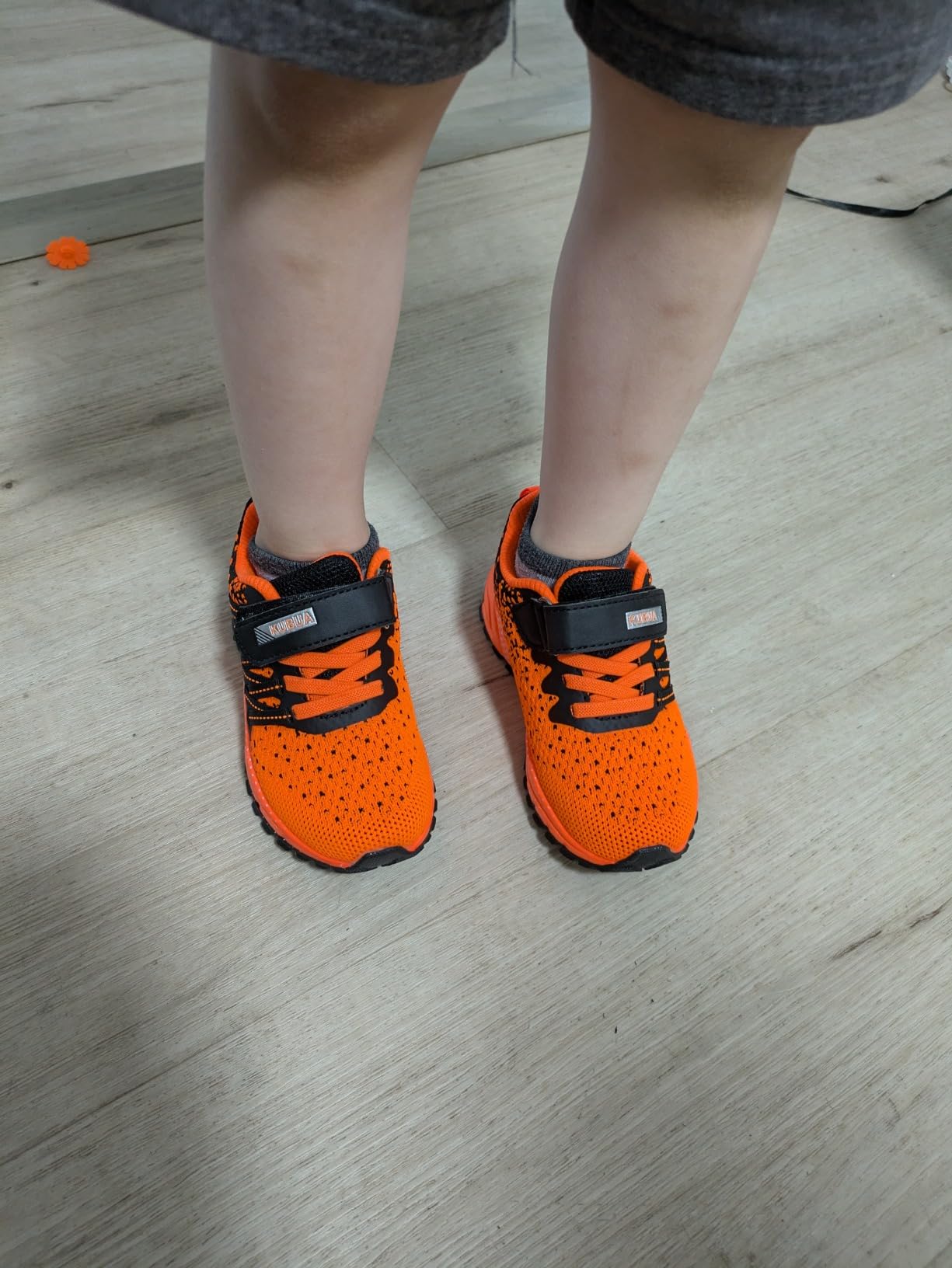
Weekend use told a more nuanced story. Farmers market walks, neighborhood nature paths, concrete sidewalks — these handled all of it without issue through the first three months. Cushioning held adequately for extended walking sessions, and the lightweight design prevented the foot fatigue I’ve seen with heavier kids’ shoes on longer outings.
But push toward more demanding terrain and the limitations appear quickly. A beach day exposed the mesh’s susceptibility to sand infiltration — small particles worked their way into the shoe easily, and while they mostly shook out, some stayed lodged under the insole. A rocky trail section during a weekend hike revealed the upper wasn’t built for rough-edge contact. The mesh fabric showed micro-abrasion after that outing. These are everyday sneakers doing sneaker work, not trail shoes. Using them beyond that expectation is the user’s mismatch, not the shoe’s failing — but it’s worth saying clearly.
If your family does regular hiking with kids, something like the Merrell Moab Speed Low Kids is a more appropriate tool.
Durability: The Month-by-Month Reality
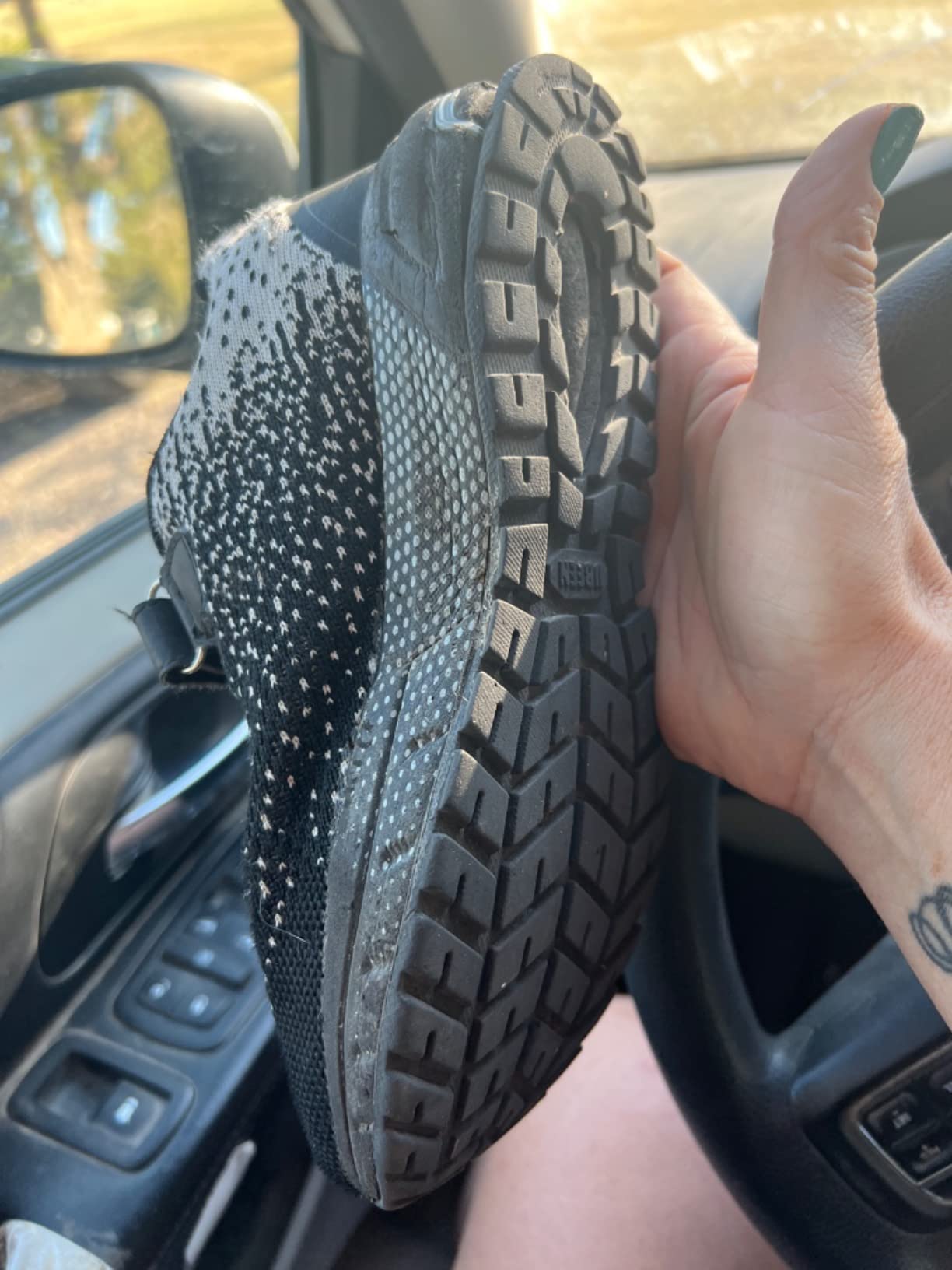
This is the section that matters most for $40 shoes, and it’s where the KUBUA picture gets complicated.
Month 3: Cushioning Decline
By month three, the EVA midsole had compressed noticeably. Press the insole and the bounce-back was still there, but softer — flatter than the initial feel. My son didn’t volunteer complaints, but when I asked directly about foot comfort after longer school days, the response shifted from enthusiastic to neutral. Still functional, but the cushioning was no longer doing the same work it had done in September.
The Velcro straps had also crossed a threshold. They still held, but required more conscious pressing to set firmly. Throughout the school day, they occasionally needed readjusting — something that hadn’t happened in the first two months.
Months 4–6: Outsole Wear and Structural Concerns
Month four brought more visible changes. The heel and forefoot — the highest-impact zones for an active seven-year-old — showed distinct wear patterns. Not through-to-the-midsole thinning, but enough that the tread depth had reduced meaningfully. By month five, the rubber in the heel strike zone was noticeably thinner under my thumb.
By the end of month six, the sole had thinned in critical areas to a point I wouldn’t call acceptable for continued intensive wear. The shoes still held together — no separation events during our testing period — but the structural margin was slim.
A few parents in our group reported metal loop detachment from the Velcro strap assembly around this same timeframe. I saw early stress on one loop but no failure. It’s worth checking periodically if you’re approaching month four or five.
Does KUBUA Deliver on Its Promises?
Lightweight & Breathable — ✅ DELIVERED
8.2 ounces is genuinely light for this category. The mesh breathability held through the full six months — the upper didn’t collapse or lose its airflow properties even as other elements degraded. Summer school wear stayed comfortable in a way cheaper synthetic shoes can’t match. This promise was kept.
Shock Absorbing Technology — ⚠️ PARTIALLY DELIVERED
The EVA midsole worked well for the first eight to ten weeks of wear. Impact absorption during playground running and jumping was solid during that window — no fatigue, no joint complaints from my son. But EVA foam compresses with use, and by month three the cushioning had flattened enough to change the experience. The shoe still provides some impact protection, but the performance arc is steep. Strong at the start, noticeably diminished by month four.
Wear-Resistant Outsole — ❌ OVERPROMISED
This was the biggest gap between claim and reality. Traction was reliable through month three — I’d give the outsole grip a genuine thumbs up for playground and school use in that window. But “wear-resistant” implies longevity that the outsole doesn’t have. Month four shows real wear. Month six shows thinning that suggests the outsole’s useful life is approaching its end on a daily-wear schedule. At $40, I don’t expect Vibram-grade rubber. But the “wear-resistant” label set expectations the shoe can’t meet.
Easy Hook & Loop Closure — ✅ Delivered Initially / ⚠️ Degrades
For the first two months, the Velcro straps were exactly what I needed for a first-grader’s morning independence. He could put them on, adjust the fit, and manage them completely on his own. That’s valuable. But the holding power began declining noticeably around the two-to-three-month mark. More pressing, more adjusting mid-day. The functionality remained, but the quality of the hold slipped faster than expected.
My Overall Score
Overall Rating: Solid short-term shoe with real durability limitations — worth buying if your expectations match the 3–4 month lifespan
Detailed Scoring Breakdown
| Category | Score | Notes |
|---|---|---|
| Comfort | 7.5/10 | Excellent initial cushioning; wide toe box genuine strength; comfort declines noticeably by month 3 |
| Durability | 4.5/10 | Multiple failure modes by month 4–6: outsole thinning, Velcro decline, inner lining wear — primary weakness |
| Value | 7.0/10 | Good short-term value at $35–45 for 3–4 months; cost-per-month math weakens if expecting year-round wear |
| Design & Style | 8.0/10 | Kids genuinely respond to the colorways; elementary-school-appropriate aesthetic without being gaudy |
| Ease of Use | 8.5/10 | Hook-loop independence early on is the real deal; machine washable and color-stable through multiple cycles |
| Performance | 6.0/10 | Excellent for school and playground through month 3; degraded performance months 4–6; not for intensive sports |
| OVERALL SCORE | 6.5/10 | Good choice for the right use case; plan for replacement around month 4 |
What Other Parents Found
After comparing notes with families in our area who’d also tested these shoes, the experiences landed in a remarkably consistent pattern. Initial comfort wins — the wide toe box and lightweight feel came up again and again as the reason parents kept recommending them. Then durability concerns surface around month three or four, which is where the enthusiasm fades.
A few Spanish-speaking parents I know specifically mentioned “muy cómodos” — very comfortable — while also flagging concerns about “duración,” longevity. The sentiment cut across different family use patterns: some kids lighter-use, some heavier, some in sports leagues. The timeline shifted a little, but the shape of the experience stayed the same.
Parents of kids with wide feet were the most consistently satisfied, and for the right reasons. If your child has struggled with narrow athletic shoes causing pressure on the outer toes or inner edge, this wide toe box genuinely helps.
The Honest Cost Calculation
At $40 with a realistic lifespan of 3–4 months of daily wear, you’re looking at roughly $10–13 per month of usable shoe. That’s not terrible for families in growth-spurt territory, where kids might outgrow a shoe in that same window anyway. If your child is between sizes and you need a 3–4 month bridge, the math works.
But if you’re hoping to get through a full September-to-May school year on one pair — around 9 months — the picture changes. A single KUBUA purchase won’t make it. Two purchases would run $80, which puts you in Skechers or New Balance kids’ territory with significantly better construction. The Skechers GoRun Consistent line, for instance, consistently shows better outsole durability than budget alternatives at a similar price per month of wear.
The KUBUA value equation makes sense when you’re buying with clear eyes about the lifespan. It doesn’t hold up when you’re expecting year-round performance.
Final Verdict
✅ STRENGTHS
- Genuine lightweight feel at 8.2 oz — kids notice the difference
- Wide toe box that actually accommodates wider feet without going sloppy
- Mesh breathability delivers through summer heat and humid school days
- Hook-loop closure gives younger kids real morning independence (months 1–2)
- Machine washable and color-stable — tested through multiple cycles
- Kids respond to the colorways — high buy-in from the start
- Non-marking outsole approved for gymnasium floors
❌ CONCERNS
- Outsole thinning accelerates significantly after month 4 — “wear-resistant” claim doesn’t hold
- Velcro holding power declines month 2–3; daily adjustments increase
- Inner lining shows early wear by week 6 on active kids
- EVA cushioning compresses noticeably by month 3 — performance arc is steep
- Not appropriate for intensive sports or challenging trail terrain
- Sand infiltration issue on beach — mesh lets particles in easily
- ~15% of buyers report slightly large sizing; wide toe box amplifies this perception
Who Should Buy KUBUA Kids Sneakers
PERFECT FOR:
- Kids with wider feet who hit constant pressure points in standard-width athletic shoes
- Budget-conscious families who need decent shoes for a defined 3–4 month window
- Children in growth spurts who’ll outgrow the shoe before it wears out anyway
- Parents prioritizing convenience — the morning independence and machine-wash combination is genuinely useful
- Backup shoe situations where you need a quick, functional replacement without a large investment
CONSIDER ALTERNATIVES IF:
- You need the shoes to survive a full school year (8+ months of daily wear)
- Your child plays soccer or other intensive field sports — purpose-built kids soccer cleats will serve better
- Your child plays court sports regularly — sport-specific options like the AND1 Kids Basketball Shoes or Lackblue Kids Basketball Sneakers are better choices for the court
- Durability is the top priority — Skechers and New Balance kids’ lines consistently outlast budget alternatives
- Your child has narrow feet — the wide toe box may feel loose and cause rubbing on the outer edge
Better Options for Specific Needs:
For Maximum Durability: Look at the New Balance Fresh Foam or Skechers kids’ lines. Higher upfront cost, but the per-month math often works out better for full-year wear.
For Court Sports: The ASICS Upcourt 3 Kids is purpose-built for indoor court activities and will hold up under the lateral movement that KUBUA sneakers aren’t designed to handle.
For Active Runners: Kids who run regularly at recess or in youth running programs would be better served by the Salewa YTRXM Boys Running Sneakers for durability under higher mileage.
For Growth-Spurt Transitions: KUBUA actually works well here. If you’re buying a shoe your child will outgrow in 3–4 months regardless, the price point and comfort features make sense for the window.
Frequently Asked Questions
How long do these shoes realistically last with daily wear?
Based on six months of testing and consistent community feedback, expect 3–4 months of comfortable daily use before significant durability concerns emerge. The cushioning decline around month 3 and outsole wear by month 4–5 are the reliable markers. Some families with less active kids report up to 6 months. If your child is active — daily recess running, after-school sports, playground climbing — budget for the shorter end of that range.
Are these shoes true to size?
Generally yes. Around 85% of parents report accurate sizing. About 15% noted the shoes ran slightly large, particularly in smaller sizes. The wide toe box also creates a perception of extra room that can throw off the mental sizing estimate if your child has a narrower foot. When in doubt, go by length measurement and check the brand size chart — the width will likely accommodate whatever you put in there.
Are these good for kids with wide feet?
This is genuinely one of the best features of these shoes. The wide toe box provides real room for natural toe splay without the shoe being structurally too wide elsewhere. If your child has struggled with narrow athletic shoes causing pressure points or cramping across the forefoot, this design addresses that consistently. Multiple parents in our group specifically bought them for this reason and were satisfied.
What happens to the Velcro over time?
The hook-and-loop closure works excellently for the first two months — kids can manage it independently, the hold is firm, and adjustment range is adequate for different sock thicknesses. Around months two to three, holding power begins declining noticeably. More frequent pressing to set the straps, occasional mid-day readjustment. A subset of parents also reported metal loop attachment stress or failure around month four to five. Check the hardware periodically if you’re in that window.
Can you machine wash them?
Yes, and it works. I ran these through a standard wash cycle multiple times with towels, and the colors held up without bleeding or fading. The materials stayed intact. Air drying is strongly recommended — dryer heat can affect the EVA sole adhesion and accelerate the cushioning compression. Machine washability is a genuine convenience feature, especially after muddy playground sessions. It doesn’t extend the lifespan, but it keeps them presentable for their working life.
Can these handle playground activities and casual sports?
Playground use is exactly what these were designed for, and they deliver well through month three. Rubber mats, metal climbing structures, grass, concrete — traction holds across all of it in that window. For casual recess sports and light athletic activity, they’re appropriate. Where they’re not appropriate: intensive team sports, sustained court sports like basketball or tennis, or challenging trail terrain. For soccer, use actual kids soccer cleats on firm ground rather than all-purpose sneakers.
How do these compare to Skechers or New Balance at similar price points?
In the first two months, KUBUA holds its own on comfort — sometimes beats them on initial cushioning feel and breathability. The wide toe box is often better than comparable options in the $40-50 range. But in durability terms, established brands like Skechers and New Balance consistently outlast budget alternatives by two to four months. If you’re doing the cost-per-month math over a full school year, the gap closes. For short-term use or growth-spurt transitions, KUBUA competes. For long-term value, the established brands pull ahead.
What colors are available, and do they match the photos?
Multiple colorways are available — black/orange, blue/orange, pink options, and others depending on retailer inventory. Most parents report color accuracy to product photos. One notable exception: the orange accent tends to appear more neon and fluorescent in person than in many product images. If your child specifically wants a particular colorway, it’s worth checking recent buyer photos rather than relying solely on the official listing images.
Be the first to review “KUBUA Kids Sneakers for Boys Girls Running Tennis Shoes”
Related products

Sneaker
Running Shoes
Sneaker
Sneaker
Reviews
There are no reviews yet.