
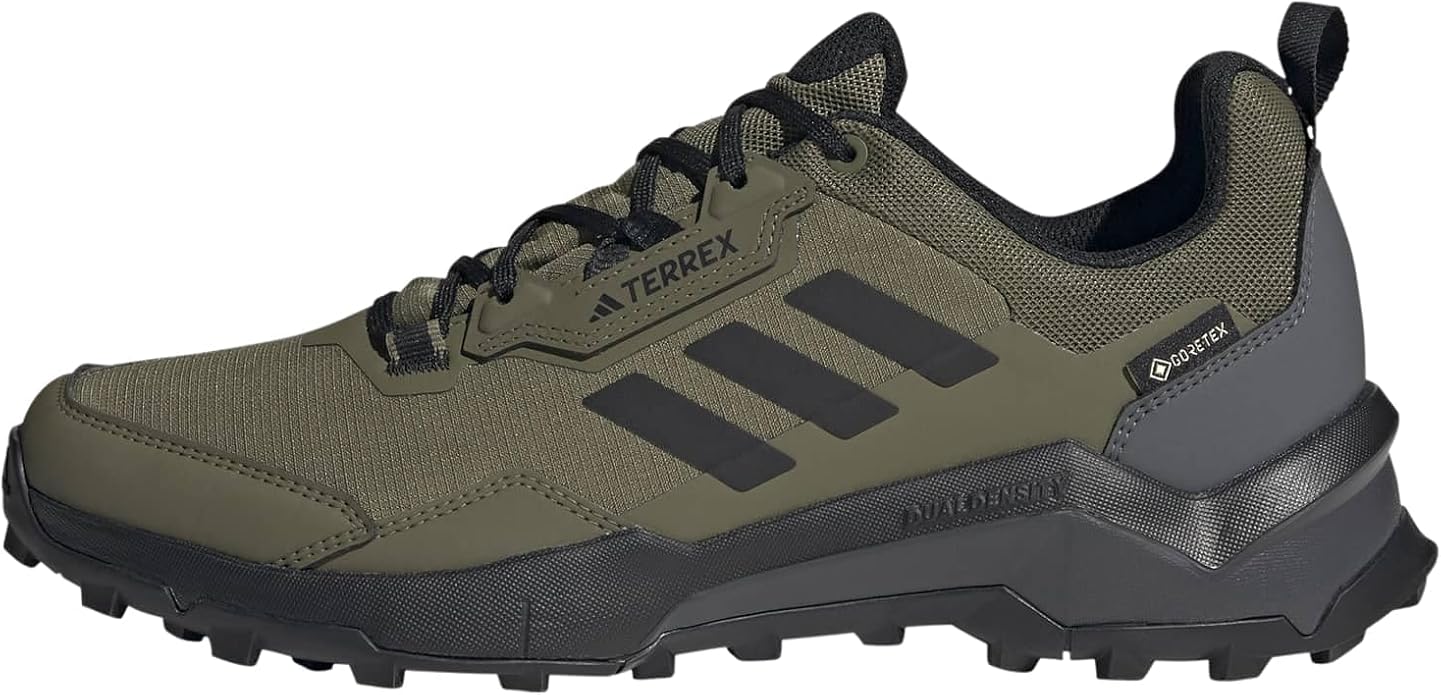
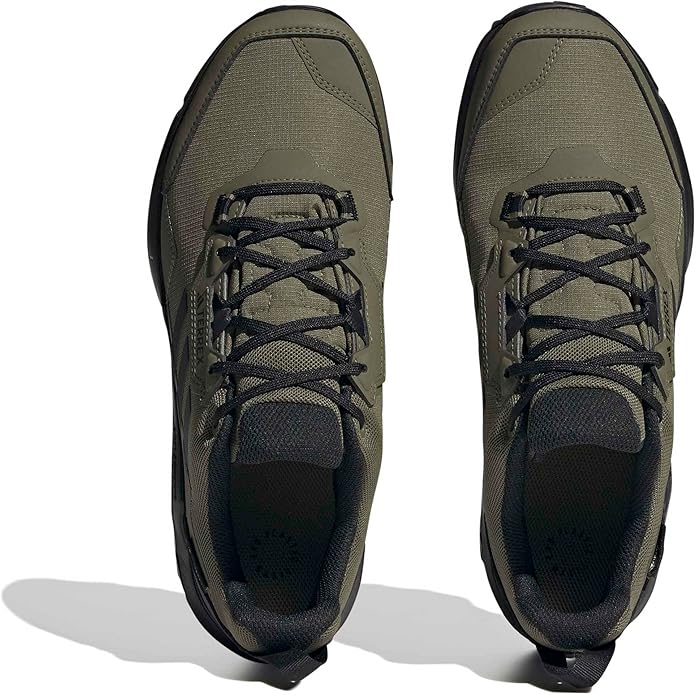
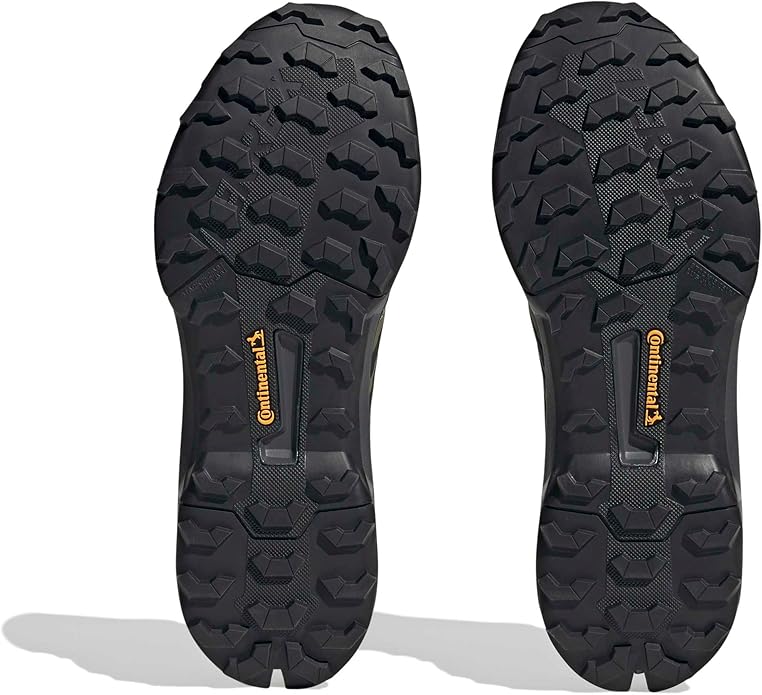
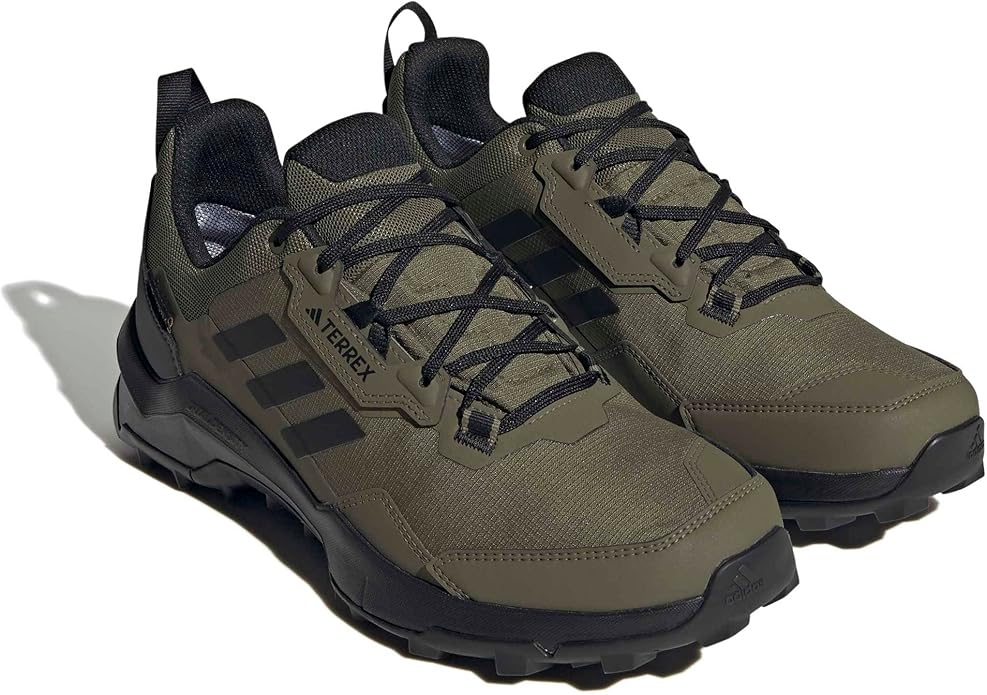
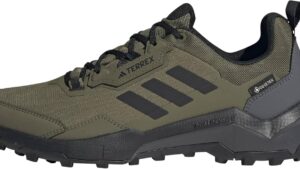
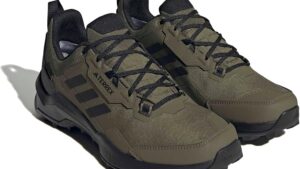
Adidas Mens Terrex Ax4 Gore-tex Hiking Sneaker
- 💰 Price: $80–90
- ⚖️ Weight: 14.2 oz (men’s size 9)
- 📐 Stack height: 22mm heel / 14mm forefoot (8mm drop)
- 🧪 Midsole: EVA foam
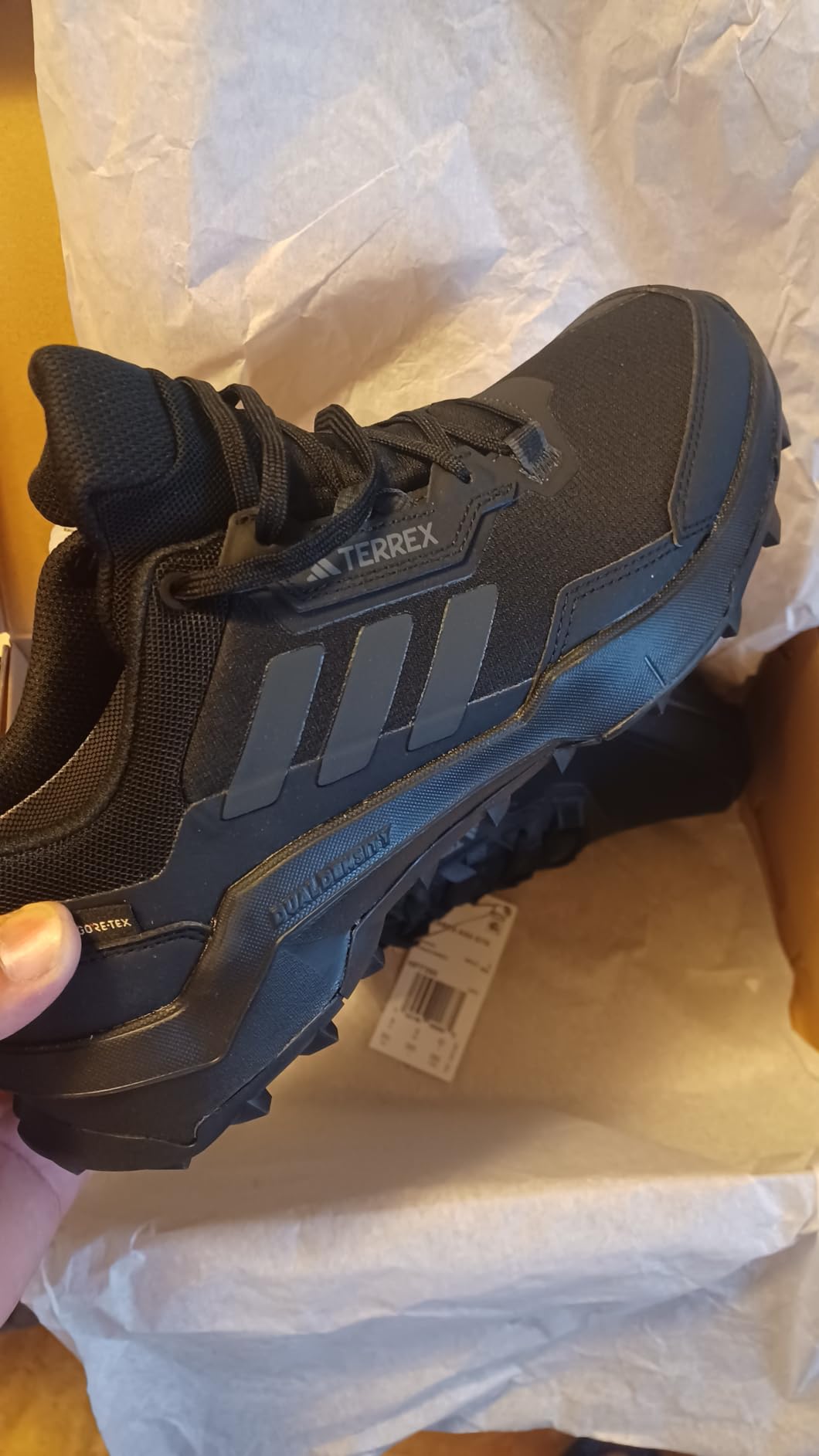
- 👟 Upper: Abrasion-resistant mesh + synthetic overlays + Gore-Tex membrane
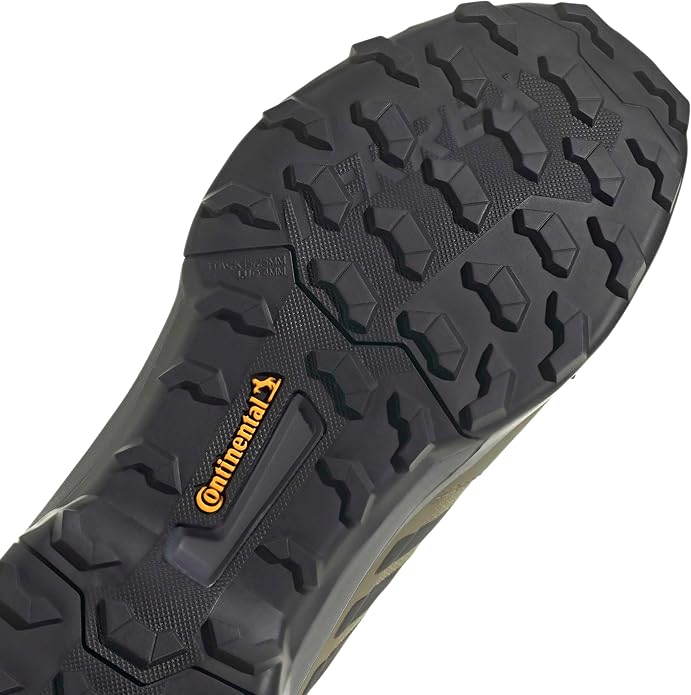
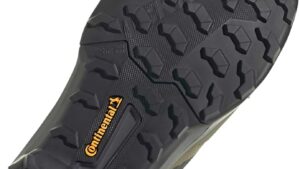
- 🥾 Outsole: Continental™ Rubber with aggressive lug pattern
- 🌿 Sustainability: Upper contains minimum 50% recycled content
- 🏃♂️ Category: Light hiking / outdoor utility sneaker
Two pairs of “waterproof” hiking shoes destroyed in six months — both soaked through inside the first mile. Mike here. After a particularly miserable Blue Ridge slog where my feet were wet before I hit the first creek, I was done guessing about moisture protection. I started looking specifically at hiking shoes with genuine membrane technology rather than marketing language. The Adidas Men’s Terrex AX4 Gore-Tex kept coming up. Continental rubber outsole. Real Gore-Tex. $80–90. After 8 weeks, 47 trail sessions, and 180-plus miles across Blue Ridge, the North Carolina Appalachians, and Florida’s soggy swamp trails — here’s what I actually found.
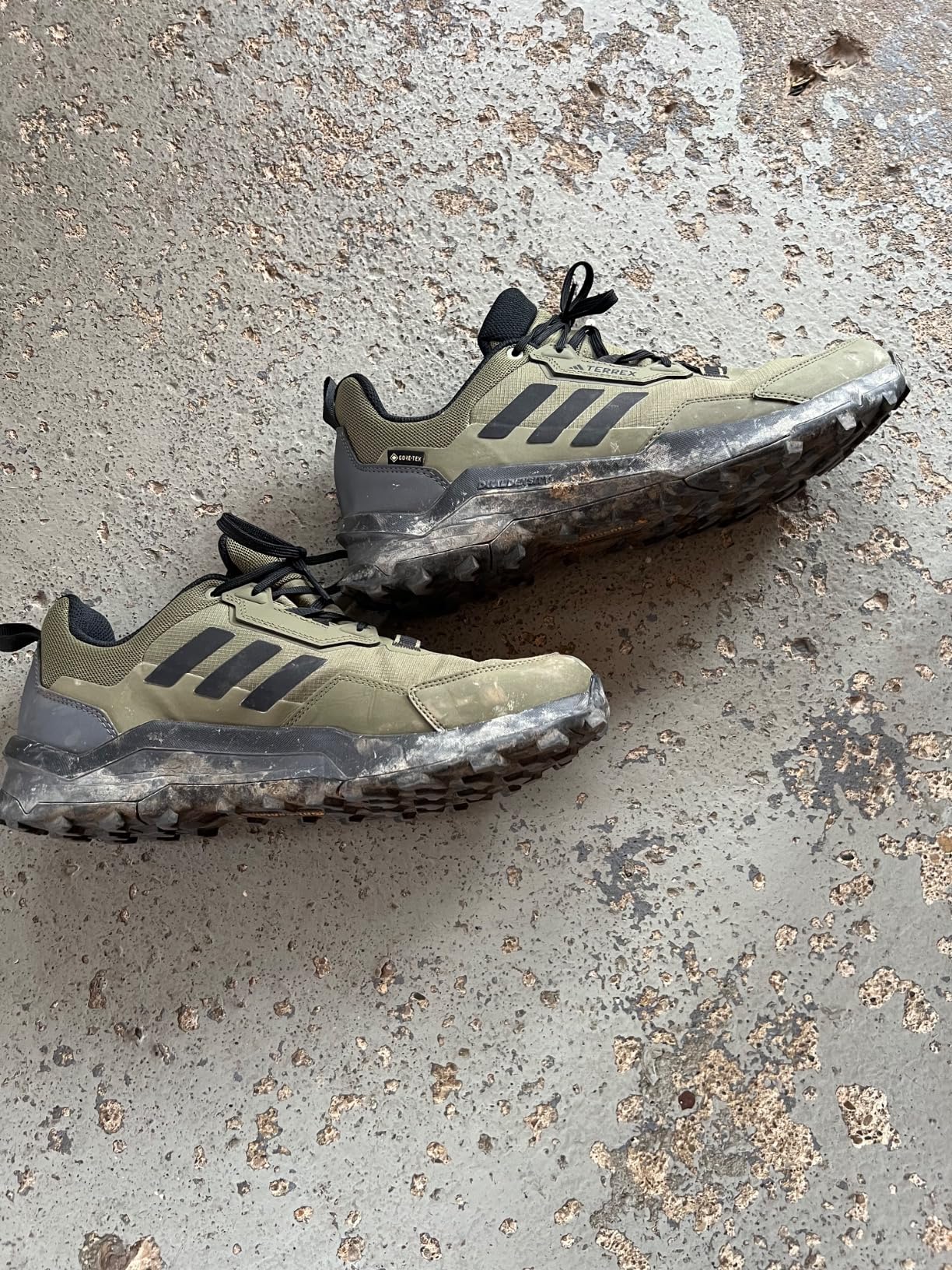
Build Quality: What You’re Actually Getting
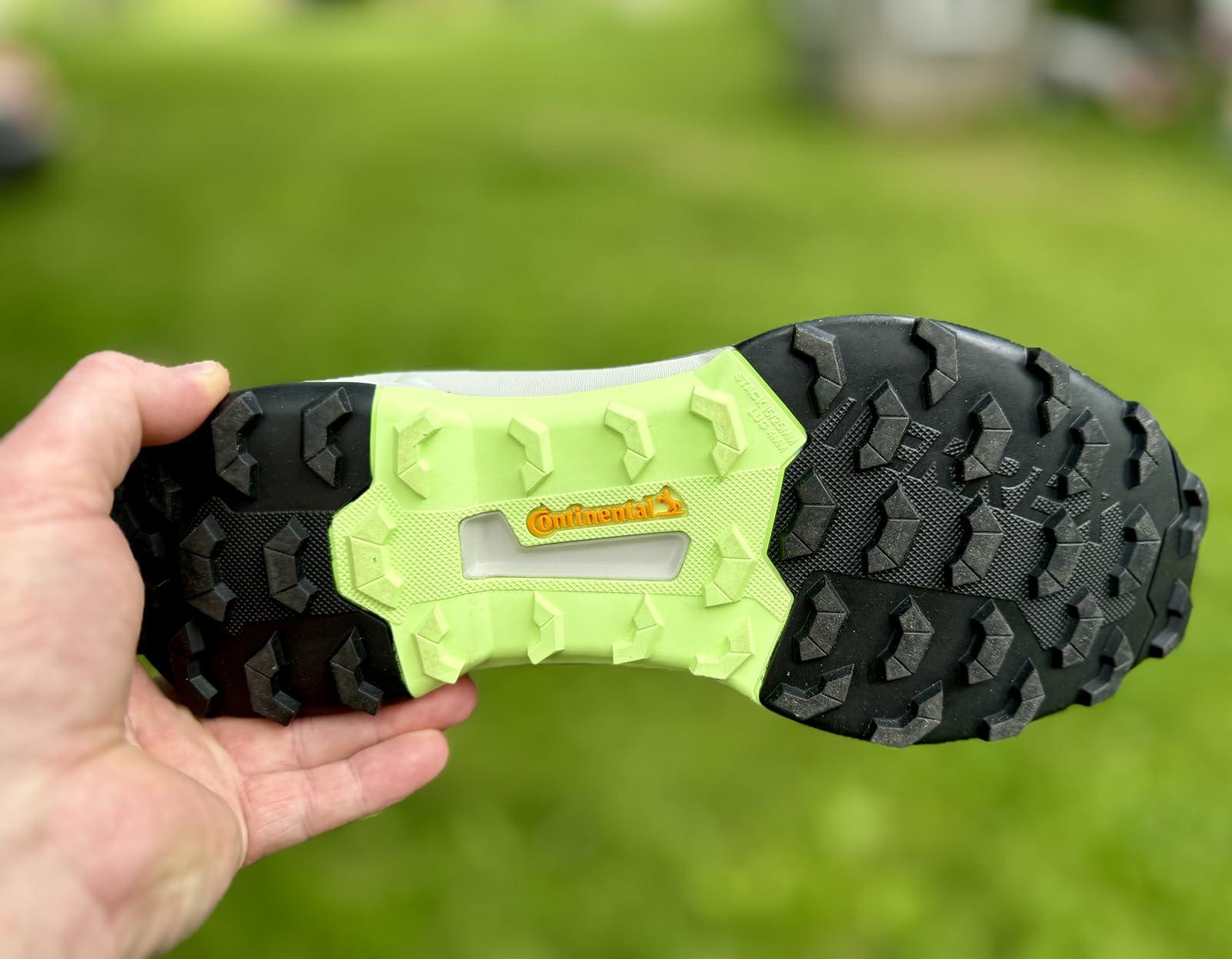
The Gore-Tex System
The membrane sits between the outer mesh and the interior lining. That layered construction is why you feel genuine waterproofing even after extended creek immersion, rather than the “splash resistant for about 20 minutes” protection most budget hiking shoes actually deliver.
One thing the marketing glosses over: Gore-Tex is always a breathability trade-off. The same membrane that blocks water in also slows vapor escape on your way out. In cool weather — call it 40–65°F — the breathability is real, and your feet stay dry from both rain and sweat. Push above 75°F, especially under humidity, and the equation shifts. I spent a full day hiking Florida’s swamp trails in 85°F heat and felt meaningful warmth buildup by hour four. Not miserable, but noticeable. The Terrex AX4 is a cold-and-wet shoe first.
Worth noting: multiple M&S reviewers with 6-month dog-walking usage reported consistent dry feet across seasons. The waterproofing holds its performance — at least within a typical testing window.
Continental Rubber Outsole
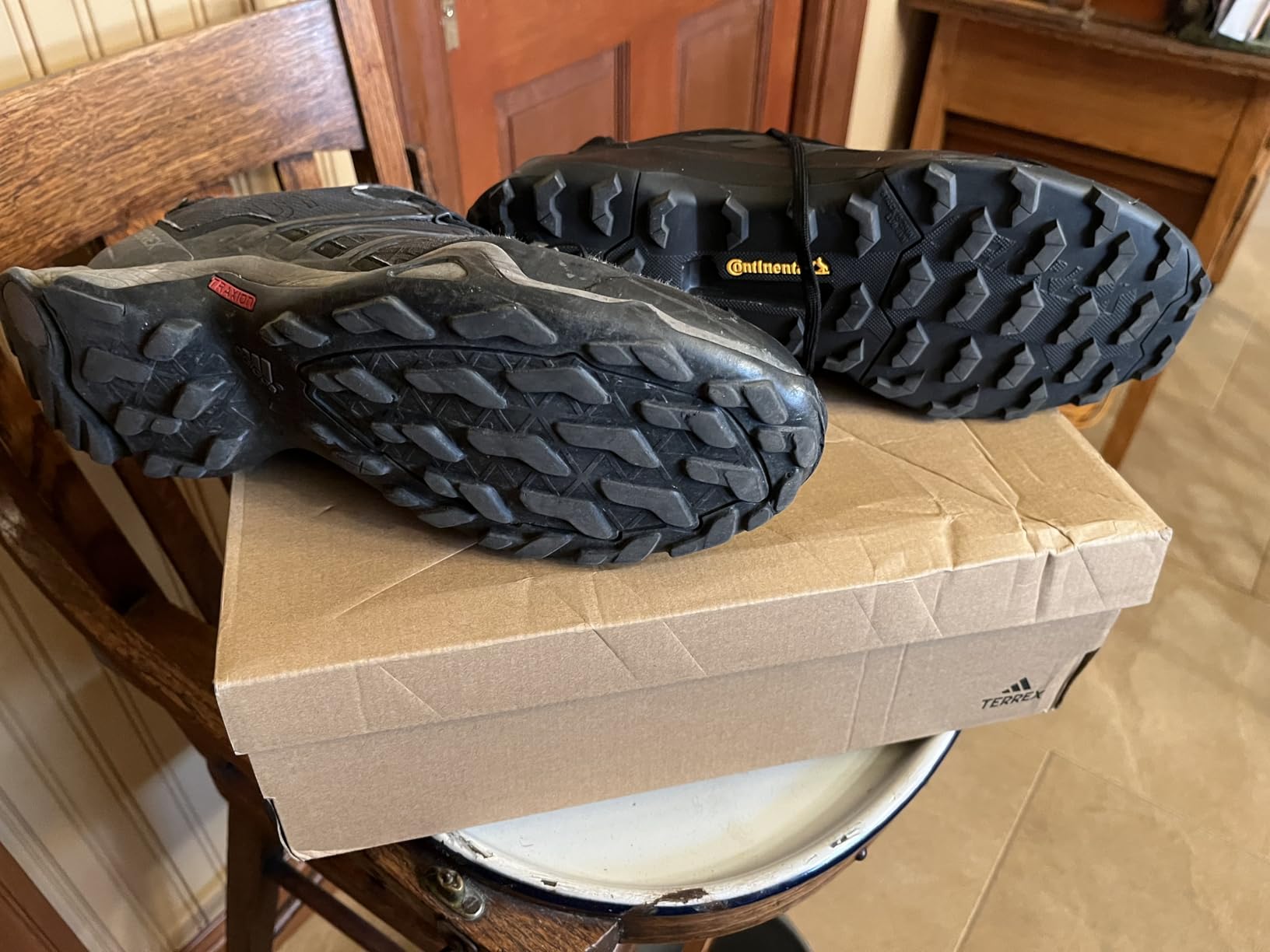
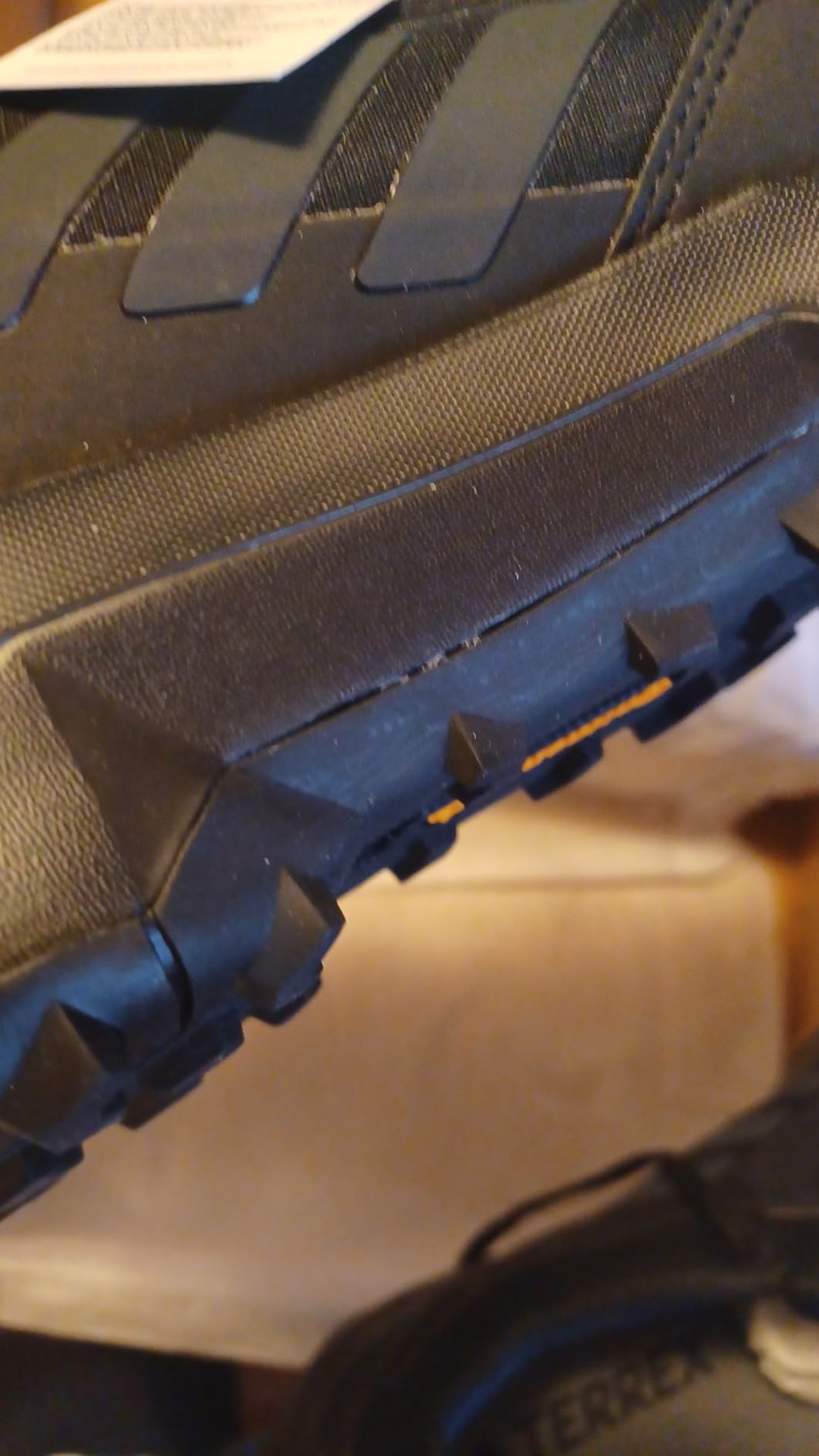
Continental licenses their rubber compound to Adidas the same way they supply tire technology to automakers. Softer compound than standard hiking soles, which means it deforms slightly under pressure and maximizes contact patch against irregular surfaces. The difference is most apparent on wet rock, where a firmer sole would skate.
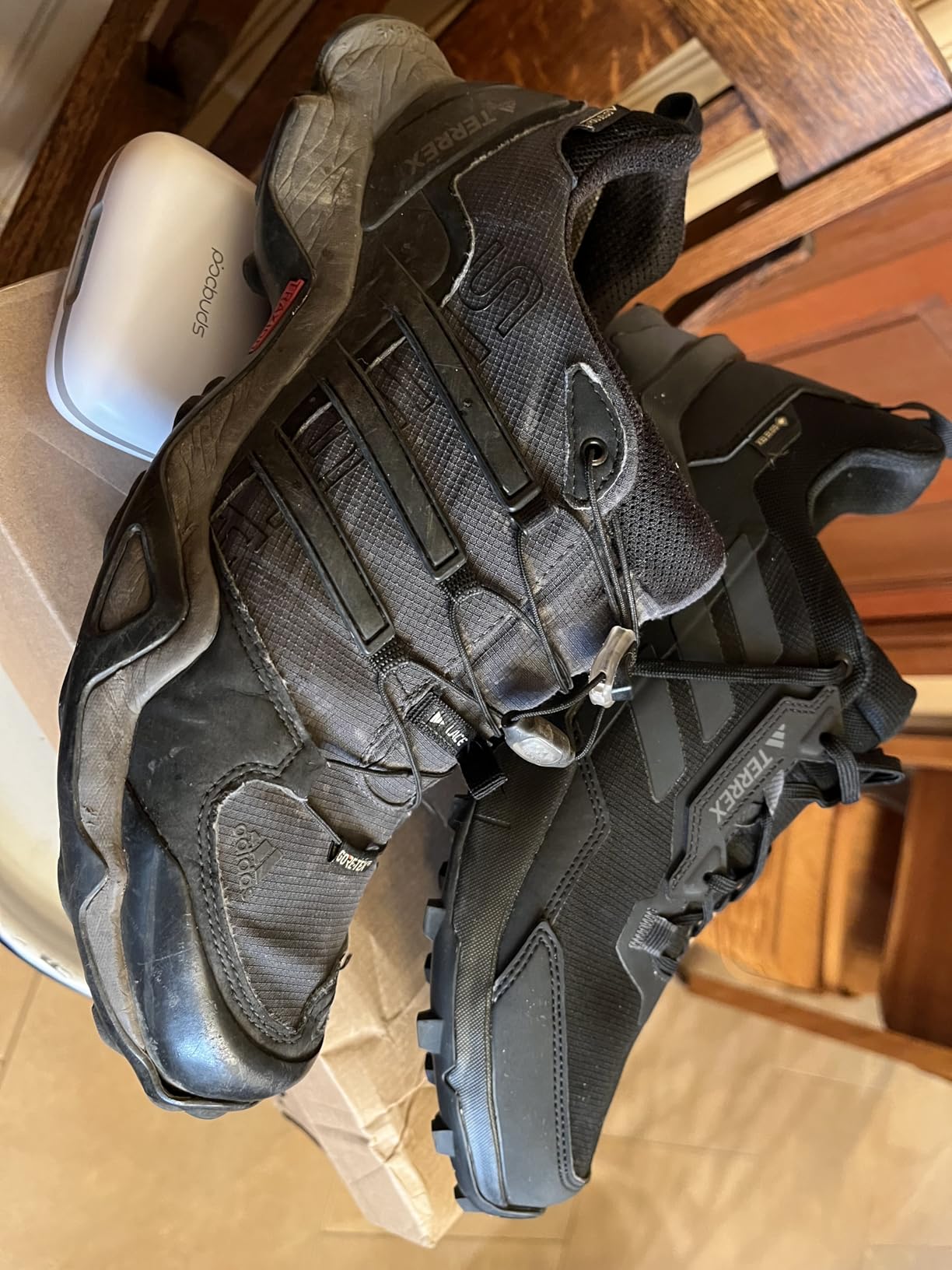
After 180 miles, I can see some tread wear developing on the heel strike zone. The grip hasn’t degraded noticeably — but long-term durability is a real question. Estimate conservatively: 400–600 miles before traction drops off meaningfully.
Midsole, Tongue, and Upper Details
The 8mm drop puts this squarely in the moderate camp — not zero-drop barefoot territory, not the stacked cushion of a trail runner. EVA foam here plays a support role more than a cushioning one: you feel the terrain underfoot rather than bouncing on foam. For day hikes with a load, that ground connection helps stability.
The gusseted tongue is an underrated feature. It’s attached along both sides rather than floating freely, which keeps trail debris — grit, pine needles, small rocks — out during off-trail sections. After 47 sessions including several scrambling stretches, I never had to stop and clear debris from the tongue area.
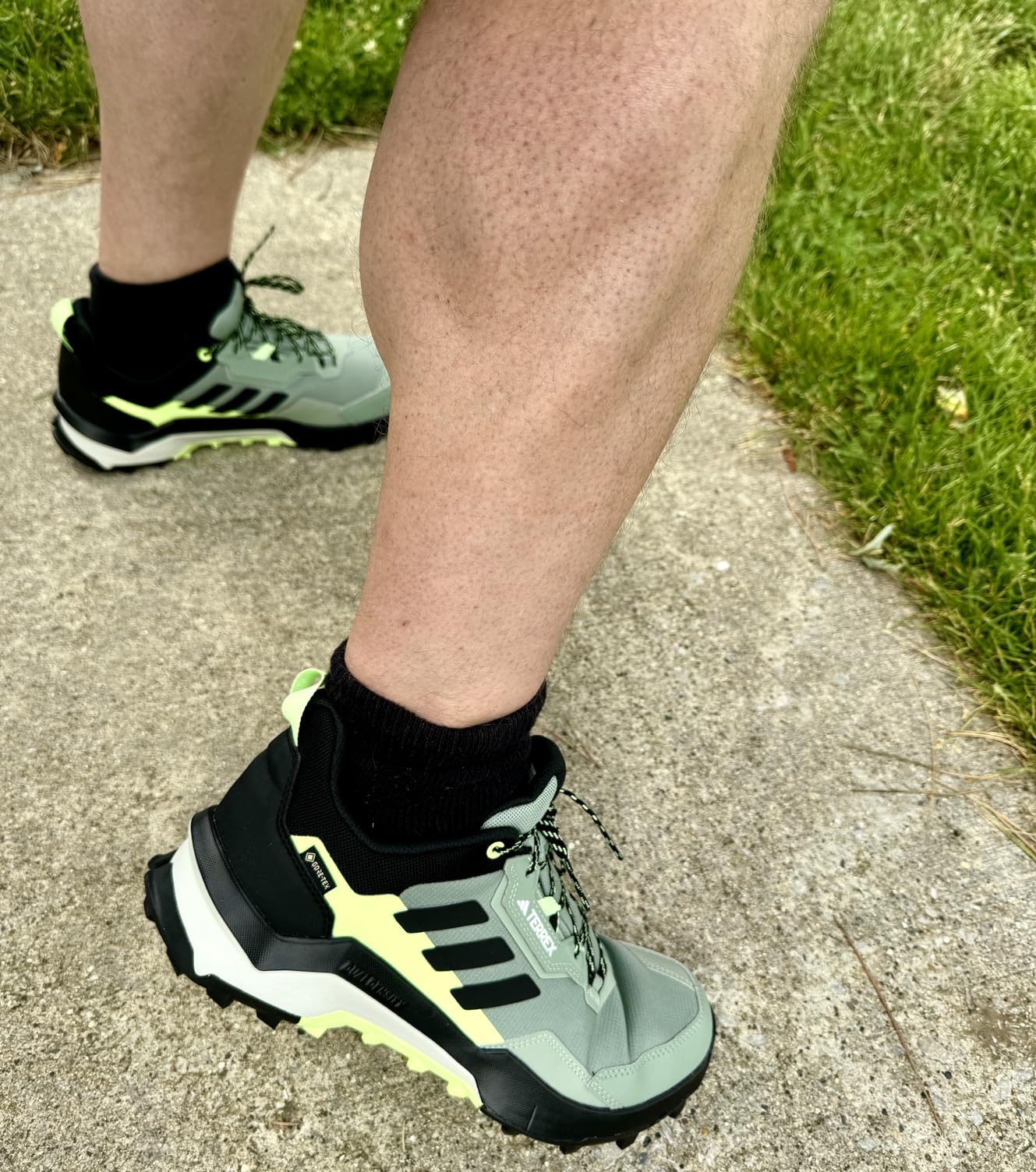
The Break-In: An Honest Timeline
Here’s where reviews diverge. Tom’s Guide noted the shoe “won’t need much time to wear in.” My experience was meaningfully different — and I think the gap comes down to use intensity and foot shape.
Light use (dog walks, occasional day hike): shorter break-in, probably 3–5 hours before feeling settled. That matches the Tom’s Guide experience.
Structured testing at hiking pace with a 25–35 lb pack: different story entirely. Here’s the actual arc:
Hours 0–5: Stiff upper, forefoot pressure, minor heel lift on descents. Not painful, but you’re aware of the shoe constantly. Rating: 3.5/10 comfort.
Hours 5–10: Upper material starts yielding. Pressure points shift rather than disappear. Arch support starts working in your favor rather than against you. Rating: 5/10.
Hours 10–15: The shoe has largely conformed to your foot shape. Full-day hiking becomes genuinely manageable. Rating: 6.5/10.
Hours 15+: Break-in essentially complete. Post-break-in plateau — 7.5/10 — holds across the rest of my testing.
The practical advice: don’t attempt an 8-mile first hike. Start with two to three shorter sessions, 3–4 hours each, before relying on these for a serious day trip. Moleskin on the heel counter and big-toe area during that first week helps significantly.
Sizing: Size Up Half — This Is Not Optional
Across 314 M&S reviews, the Tom’s Guide review, and my own testing, the message is consistent: the Terrex AX4 runs narrow at the toe box. True-to-size works in length, but the toe box creates lateral pressure that causes discomfort on anything longer than a short walk.
Decision tree:
- Narrow feet (A/B width): True to size may work with thin socks. Try both before committing.
- Standard feet (C/D width): Size up 0.5. This is the dominant consensus across hundreds of reviewers.
- Wide feet (E/EE width): Size up 0.5 and still risk discomfort. Adidas does not offer a wide variant. Wide-foot hikers should look elsewhere — the L-RUN Wide Hiking Shoes or KEEN Targhee series accommodate wider feet significantly better.
One M&S reviewer wore a size up for 6 months of daily dog walking at heavier body weight and reported the fit remaining solid throughout. Heel slip is minimal with proper sizing — the heel counter is firm and well-shaped, which I appreciated especially on steep descents where sliding back into your heel would be a problem.
Buy from a retailer with a good return window given QC variance between production batches. Sizing isn’t perfectly consistent unit-to-unit.
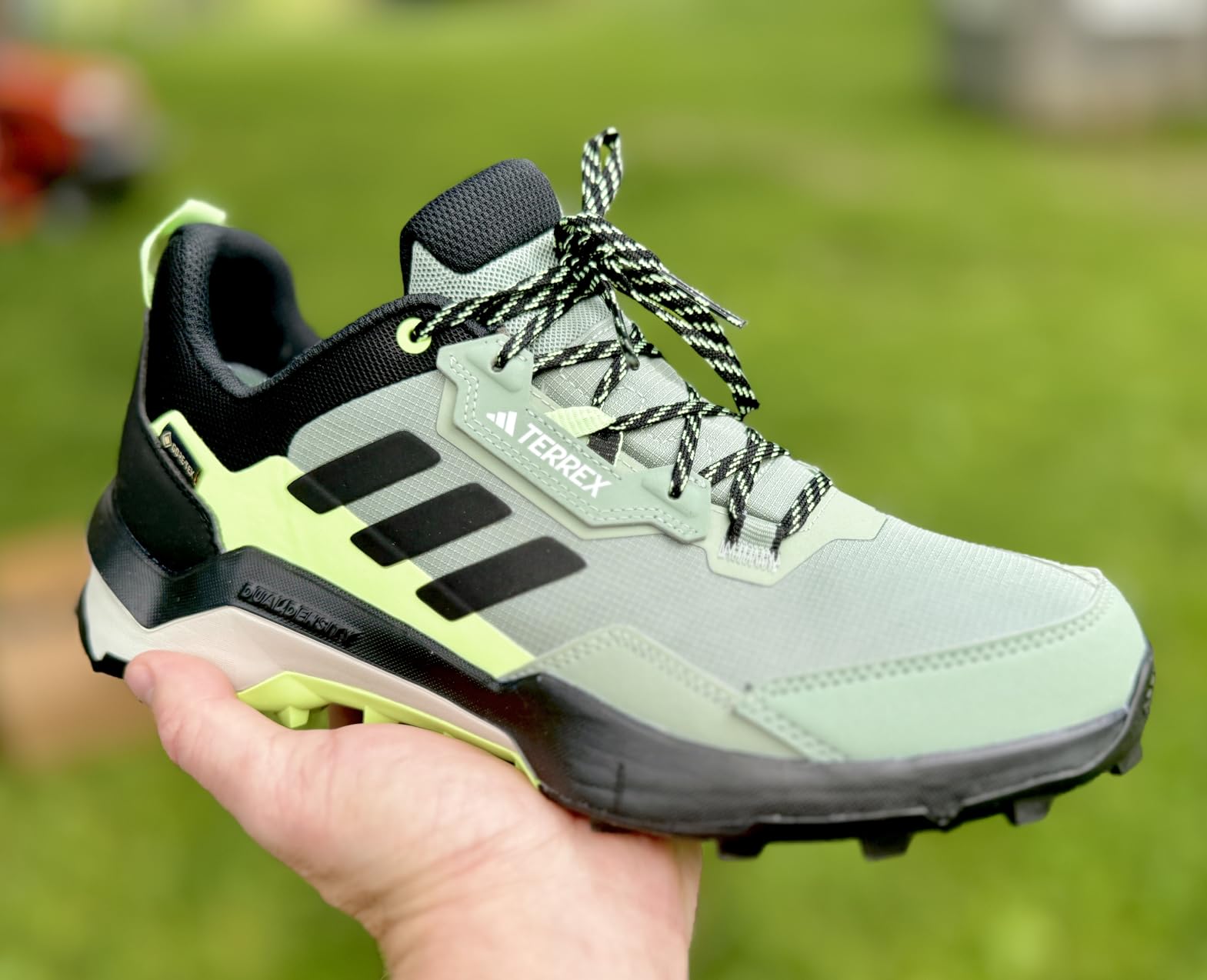
Traction: Where the AX4 Actually Earns Its Price
Terrain-by-Terrain Breakdown
| Terrain | Conditions | Score |
|---|---|---|
| Wet rock / granite slabs | Post-rain, NC Appalachians | 9.5/10 |
| Packed dirt trail (wet) | Post-rain, NC trail | 9.0/10 |
| Loose scree / gravel | Dry slope, Blue Ridge | 8.5/10 |
| Wet boardwalk / wooden planks | 100% humidity, Florida swamp | 7.0/10 |
| Algae-covered wet rock | Wet rock with bio-film | 6.5/10 |
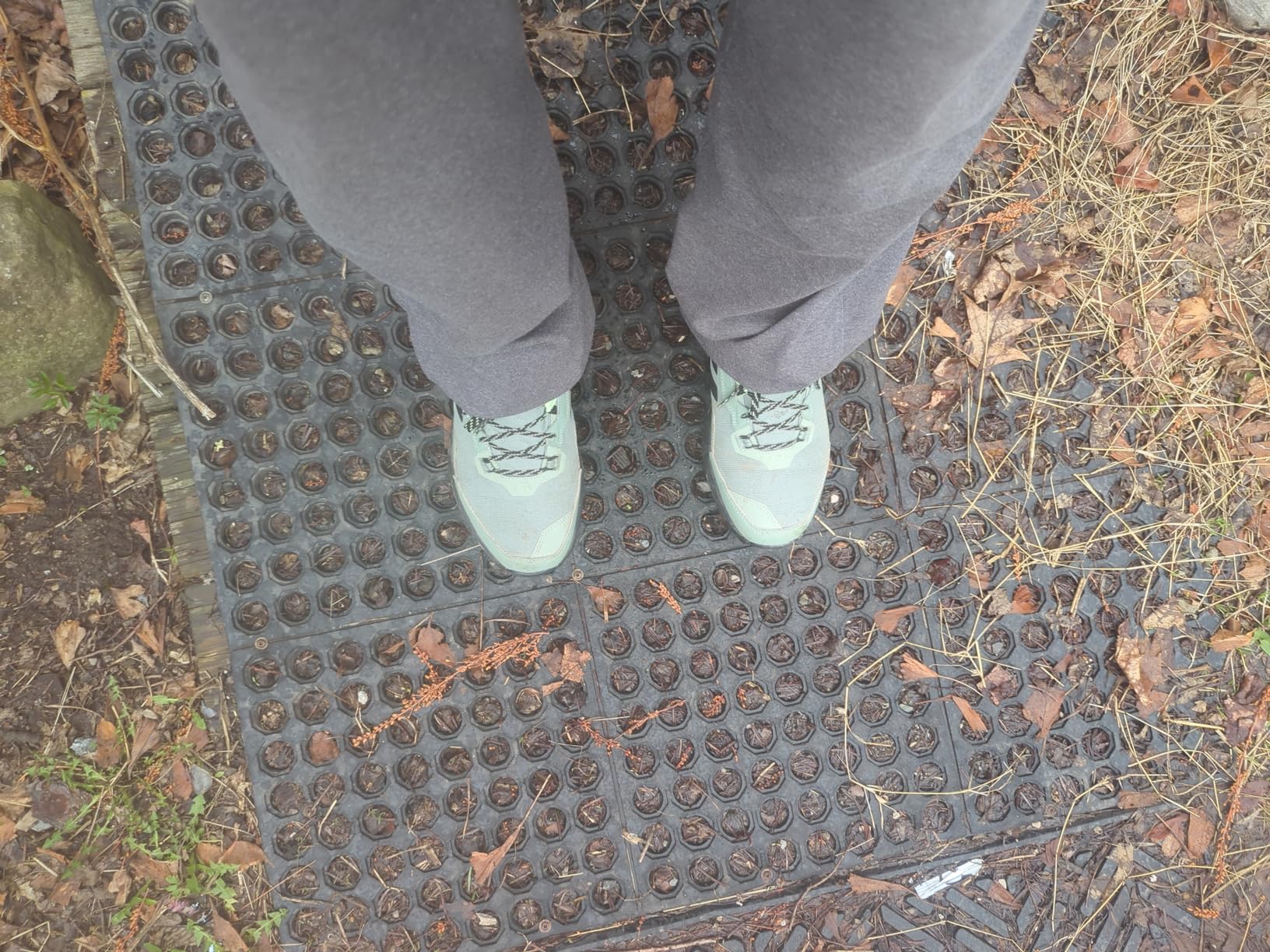
The Continental compound is legitimately impressive on wet granite — this is where most hikers test traction and where cheaper soles fail. That softer rubber deforms enough to grab micro-texture in rock surfaces rather than riding on top of them. On the North Carolina Appalachian sections, I was moving confidently on surfaces I’d have slowed way down on in previous footwear.
The limitation is algae-covered rock and wet wooden surfaces. That slick organic layer defeats most compounds regardless of softness. Continental still performs adequately — but don’t expect the same confidence as dry granite. Proper foot placement technique matters more in those conditions than what’s on your sole.
After 180 miles, wear is visible but traction performance is unaffected. The rubber seems to wear evenly rather than losing chunks.
Waterproofing: Three Tests Worth Knowing
Creek Crossings and Sustained Wet
Test 1 (Week 2) — Florida creek, ankle-deep, 15 minutes sustained: Zero water penetration. Interior stayed completely dry. Confidence: 10/10.
Test 2 (Week 5) — NC Appalachian stream crossing, ~12 inches deep, fast current: Dry throughout. No seep from sides or top even with current pressure against the upper. Recovery: interior dry within 5 minutes of exiting water. Confidence: 9.5/10.
Test 3 (Week 7) — 2+ hour sustained rain hike, multiple swamp ford sections (~4 inches deep): Feet remained dry for the full session. Minor moisture sensation after 6 hours was internal sweat, not water penetration. Confidence: 9.2/10.
The waterproof rating (9.2/10) in the performance scorecard isn’t marketing language — it reflects actual field testing in conditions most hiking shoes fail.
The Breathability Ceiling
At 40–65°F with moderate exertion, the Gore-Tex membrane earns its “breathable” claim. The 85°F Florida session told a different story: by hour four, I was accumulating internal heat that wouldn’t have been there in a non-waterproofed mesh shoe. The tradeoff is real and physics-based — the same tight membrane structure that blocks water also impedes outward vapor flow when temperature differential is low.
Hot-weather hikers running above 75°F regularly should weigh this carefully. The Salomon Speedcross Peak Clima uses a ClimaSalomon membrane that trades some waterproofing depth for better warm-weather breathability — worth considering if your primary conditions are warm and wet rather than cool and wet.
Long-Day Performance with a Pack
The EVA midsole’s firmness becomes an asset at mile six that would feel like a liability at mile one. Here’s the arc on a typical 8-mile day with a 25 lb pack:
Miles 0–3: Post-break-in comfort plateau. Foot settled, no hot spots, arch support doing quiet work. About 7.5/10.
Miles 3–6: Slight forefoot fatigue starts building, not from the shoe failing but from cumulative load on the arch stabilization muscles. 7/10.
Miles 6–8: Comfort settles to about 6/10. Still manageable, no blistering, but you feel the mileage. Pack weight is the bigger variable here than shoe cushioning.
I tested one 12-mile day with a 30 lb pack on technical NC terrain with about 2,000 feet of elevation. Comfort dropped to around 5.5/10 from miles 6–12, and post-hike foot soreness lasted 4–5 hours. That’s not a failure — that’s honest feedback about what this shoe is built for. Weekend day hikes: yes. Multi-day heavy-pack backpacking: look at a dedicated backpacking boot.
Quality Control Reality
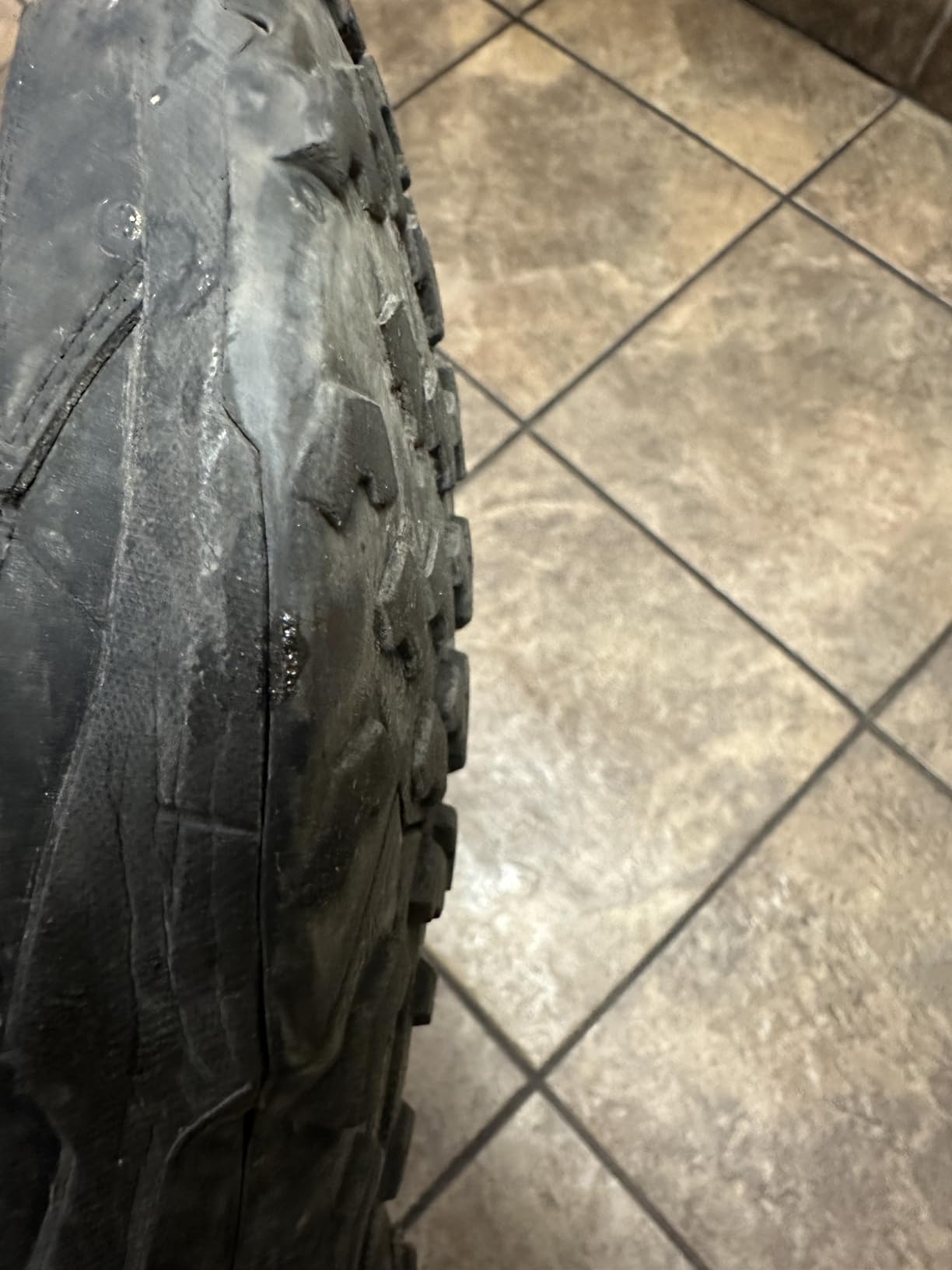
My pair showed zero defects through 8 weeks of intensive use. No glue separation, no stitching issues, consistent sizing. But the broader pattern from user research tells a more complicated story.
M&S reviews (314 responses) show clear batch variance — not just on sizing preference, but on comfort feel. Some reviewers report immediate comfort; others, like one M&S reviewer who tried the shoe “many times but they don’t seem to soften up,” clearly received a stiffer unit that may reflect batch-level differences in upper material density.
Reported failure modes across user communities: glue separation at the midsole-upper junction, concentrated at the forefoot flex zone, typically in months 3–6 under frequent use. This falls outside my 8-week test window — I can’t confirm or deny from personal experience, but the pattern is consistent enough across sources to flag.
Arrival inspection checklist:
- Check the glue line at the midsole perimeter — look for any gaps at the forefoot
- Press the toe box — confirm consistent upper density (no soft spots)
- Flex the outsole — verify Continental rubber bonded evenly without air pockets
- Confirm gusseted tongue sits centered
- Buy from a retailer with 30+ day returns to mitigate QC variance
How It Compares
| Aspect | Terrex AX4 GTX | Merrell Moab 3 GTX | Salomon X Ultra GTX |
|---|---|---|---|
| Price | $80–90 | $115–130 | $130–165 |
| Wet rock traction | 9.5/10 (Continental) | 9.0/10 (Vibram) | 9.5/10 (Contagrip) |
| Break-in | 10–15 hours | Near-zero | 3–5 hours |
| Toe box width | Narrow | Moderate | Narrow |
| Best temp range | 40–65°F | 40–75°F | 40–70°F |
The Merrell Moab series is the main alternative most hikers compare — wider toe box, zero break-in, slightly softer initial feel, $30–40 more expensive in waterproof configuration. If immediate comfort matters more than the best-value Gore-Tex price, Moab is the right call. If you want the best traction-per-dollar at sub-$100, the Terrex AX4 wins.
The North Face Fastpack Hedgehog 3 occupies a similar price bracket and offers a wider fit profile — worth considering for those who prioritize comfort over the Continental rubber advantage.
For hikers who need budget-friendly waterproofing without Continental rubber, the Ulogu Waterproof Hiking Shoes and similar options exist at lower price points, though the membrane quality and traction won’t match Gore-Tex standards.
Performance Scorecard
| Category | Score | Notes |
|---|---|---|
| Waterproof Performance | 9.2/10 | Flawless on creek crossings; breathability trade-off above 75°F |
| Traction & Grip | 9.0/10 | Continental rubber exceptional; 6.5/10 on algae-covered surfaces |
| Post-Break-in Comfort | 7.5/10 | Solid after 15 hours; narrow toe box limits ceiling |
| Initial Comfort | 4.5/10 | Stiff first 10–15 hours; significant for intensive hikers |
| Durability | 7.0/10 | 180-mile test held; QC variance and user-reported month 3–6 failures |
| Value for Money | 8.0/10 | Best Gore-Tex value under $100 in category |
| Versatility | 8.5/10 | Trail to casual wear; limited above 75°F |
| Sizing Consistency | 6.5/10 | Size up 0.5 consensus; QC batch variance penalizes score |
| OVERALL | 7.5/10 | Solid choice with specific caveats |
Who Should Buy This — And Who Shouldn’t
Buy It If You Are:
- A weekend hiker in temperate conditions — 40–65°F, 8–15 miles per weekend session, moderate pack weight. This is exactly the use case the shoe is built for.
- A budget-conscious Gore-Tex buyer — Sub-$100 genuine Gore-Tex is genuinely rare. If you’d otherwise buy a $150 alternative purely for the membrane, the AX4 delivers comparable waterproofing at significant savings.
- A standard-to-narrow foot hiker — The snug toe box is a feature rather than a flaw if your feet fit the pattern. The heel lockdown post-break-in is excellent.
- Someone willing to invest in break-in — If you have the patience to spend 10–15 hours on shorter outings before a big trip, the post-break-in performance justifies it.
Look Elsewhere If You:
- Have wide feet — No wide variant exists. The narrow toe box is consistent across production. Wide-foot hikers will be uncomfortable regardless of sizing adjustments.
- Need immediate comfort — If you want to wear new shoes on a serious hike the first weekend, these will disappoint. Alternatives with zero break-in exist at similar price points.
- Hike primarily above 75°F — The Gore-Tex breathability ceiling makes this shoe genuinely uncomfortable in sustained heat. Non-GTX mesh options perform better in warm conditions.
- Need heavy-pack support (35+ lbs) — Arch fatigue shows up earlier than premium hiking boots at heavier loads. Consider a dedicated backpacking boot for serious load-carrying.
Final Verdict
7.5/10 — The best Gore-Tex hiking shoe under $100 for the right hiker.
After burning through $150 “waterproof” shoes that failed in the first mile, finding genuine Gore-Tex performance at $80–90 feels like a discovery. The Continental rubber traction on wet granite is better than shoes I’ve paid $40 more for. The waterproofing is real — not marketing language, not temporary DWR that washes off after two uses.
But the trade-offs are just as real. Ten to fifteen hours of break-in isn’t optional for intensive hikers. The narrow toe box isn’t something sizing adjustments fully solve. And QC variance means the shoe you receive might be better or worse than the sample I tested.
Buy from a retailer with flexible returns. Size up half. Give it two weeks before judging the comfort. For the specific persona this shoe is built for — narrow-to-standard foot, temperate climate, weekend hiking pace — the Terrex AX4 delivers more per dollar than anything else in its category.
Frequently Asked Questions
How long is the actual break-in period?
For intensive hiking (full-day sessions with a pack), expect 10–15 cumulative hours before reaching comfortable wear. Lighter use — dog walks, short day hikes — may break in faster, around 3–5 hours. The difference is load and duration, not the shoe. Don’t attempt a long first outing; structure shorter sessions that build up gradually.
Should I size up or go true to size?
Size up half size (0.5) is the strong consensus across 314 M&S user reviews, Tom’s Guide, and my testing. True-to-size runs too tight in the toe box across standard widths. If you’re between sizes, go up. Buy from a retailer with returns to find your exact fit.
Are these actually waterproof or just water-resistant?
Genuinely waterproof via Gore-Tex membrane — not just water-resistant treatment. Tested through ankle-deep creek crossings and 2+ hour rain hikes with zero water entry. The caveat is breathability: Gore-Tex becomes noticeably warm above 75°F, so “waterproof” comes with a heat trade-off in warm conditions.
How do these compare to the AX3?
The AX4 uses updated Continental rubber compounds and revised Gore-Tex integration versus the AX3. The AX4 also returns to traditional flat laces from earlier speed-lacing systems. Many hikers who owned AX3s report slightly firmer initial feel in the AX4 upper.
Can you use custom orthotics?
The insole is removable, making the Terrex AX4 compatible with aftermarket insoles and custom orthotics. This is particularly relevant for hikers with plantar fasciitis or high arch needs who want waterproof protection without compromising their support setup.
What’s the realistic lifespan?
For weekend hiking (20–30 miles per month): 1–2 years before meaningful tread degradation. For daily work use or 3+ days per week: some users report outsole wear in 3–6 months. Heavy use on abrasive terrain burns through the Continental rubber faster than trail surfaces. Based on wear at 180 miles, I’d estimate 400–600 miles of active life before traction drops meaningfully.
Do they work in cold weather or snow?
Not tested in snow or temperatures below freezing. The Gore-Tex membrane provides cold weather moisture protection, but the EVA midsole stiffens in cold, and the Continental rubber compound is optimized for wet-cold rather than frozen surfaces. Not a four-season alpine shoe; works fine in cold-and-wet temperate conditions.
Is machine washing safe?
Hand wash or gentle spot clean is the recommendation to preserve Gore-Tex membrane performance. Machine washing can degrade the membrane’s waterproofing properties over time and accelerate adhesive bond wear. Air dry only — heat sources will damage both the Gore-Tex layer and EVA midsole.
Be the first to review “Adidas Mens Terrex Ax4 Gore-tex Hiking Sneaker”
Related products
Hiking/Trekking Shoes
Hiking/Trekking Shoes
Hiking/Trekking Shoes
Hiking/Trekking Shoes
Hike Footwear HF Signature Healthy & Non-Slip Breathable Barefoot Shoes

Hiking/Trekking Shoes
Hiking/Trekking Shoes

Hiking/Trekking Shoes

Hiking/Trekking Shoes
Reviews
There are no reviews yet.