
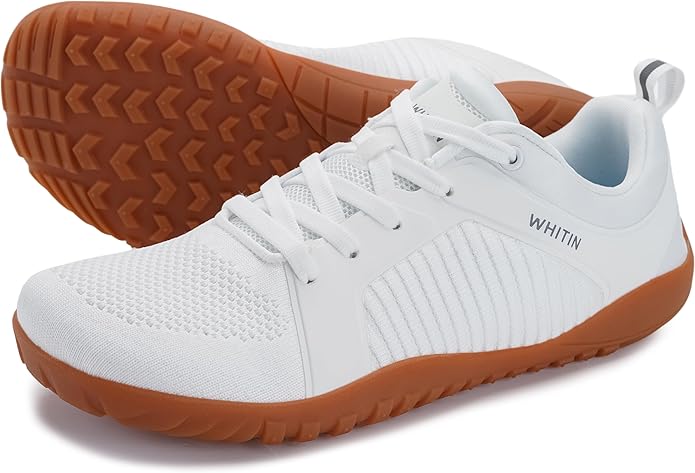
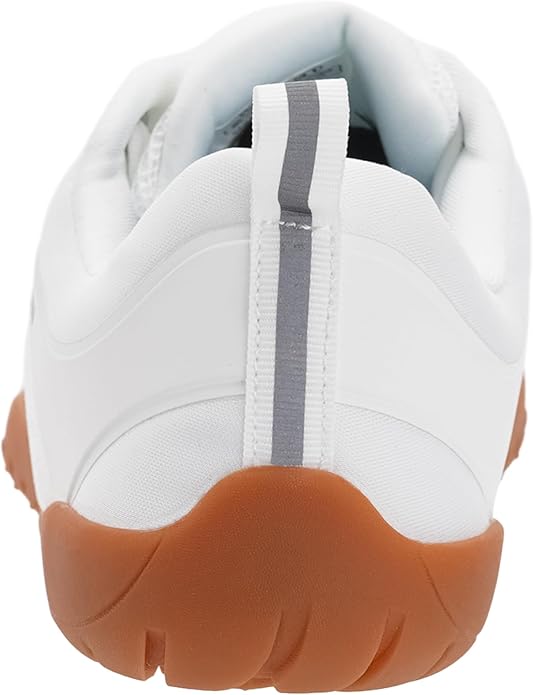
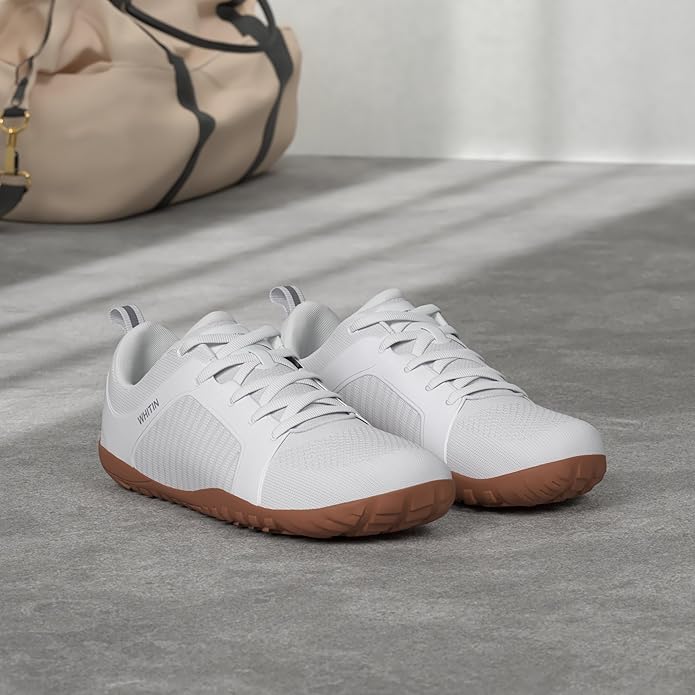
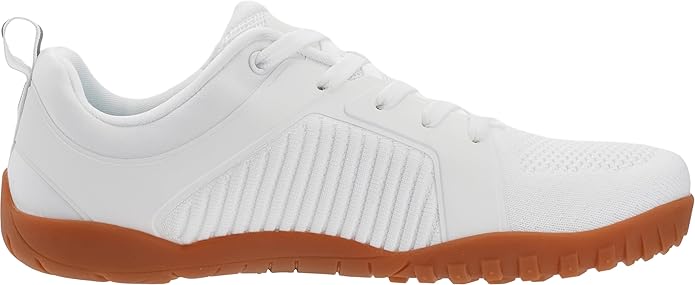
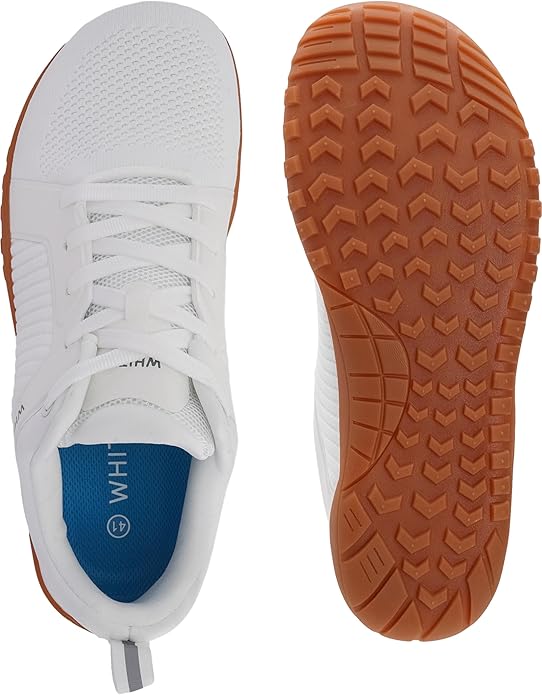
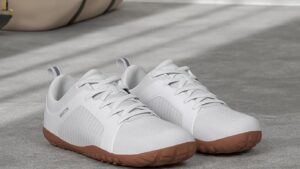
My Merrell trail runners delaminated at mile 4 of an 8-mile loop last month — sole peeling away like bad wallpaper, right in the middle of South Mountain. After burning through over $400 on trail shoes this year alone, between pairs that cramped my wide toes into submission and others that dissolved faster than a chocolate bar in a Phoenix summer, I was genuinely done with the premium tax. That’s how I ended up ordering the WHITIN Men’s Barefoot Trail-Running Shoes for $47. I expected budget. I got something more complicated than that — and eight weeks, 85 miles, and a dozen trail systems later, here’s what that looks like.
Technical Specifications
- 💰 Price: $40–55
- ⚖️ Weight: 8.2 oz (men’s size 11)
- 📏 Heel-to-toe drop: 0mm (true zero-drop without insole; included insole creates slight heel bias)
- 📐 Stack height: 11mm heel / 11mm forefoot
- 🧪 Midsole: Minimal EVA foam
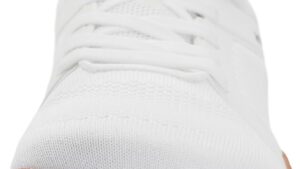
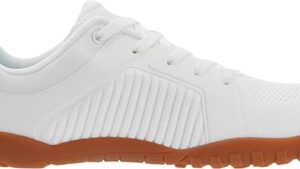
- 👟 Upper: Trail-specific mesh with TPU overlays
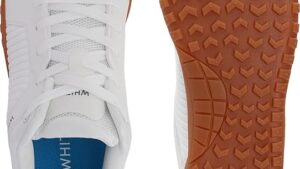
- 🔩 Lug depth: 3mm aggressive pattern
- 📦 Sizing: European (EU 36–46)
- 🎯 Best for: Budget-conscious trail runners, barefoot beginners, wide-footed hikers
- ⏱️ Testing period: 8 weeks, 85+ trail miles, 12 trail systems
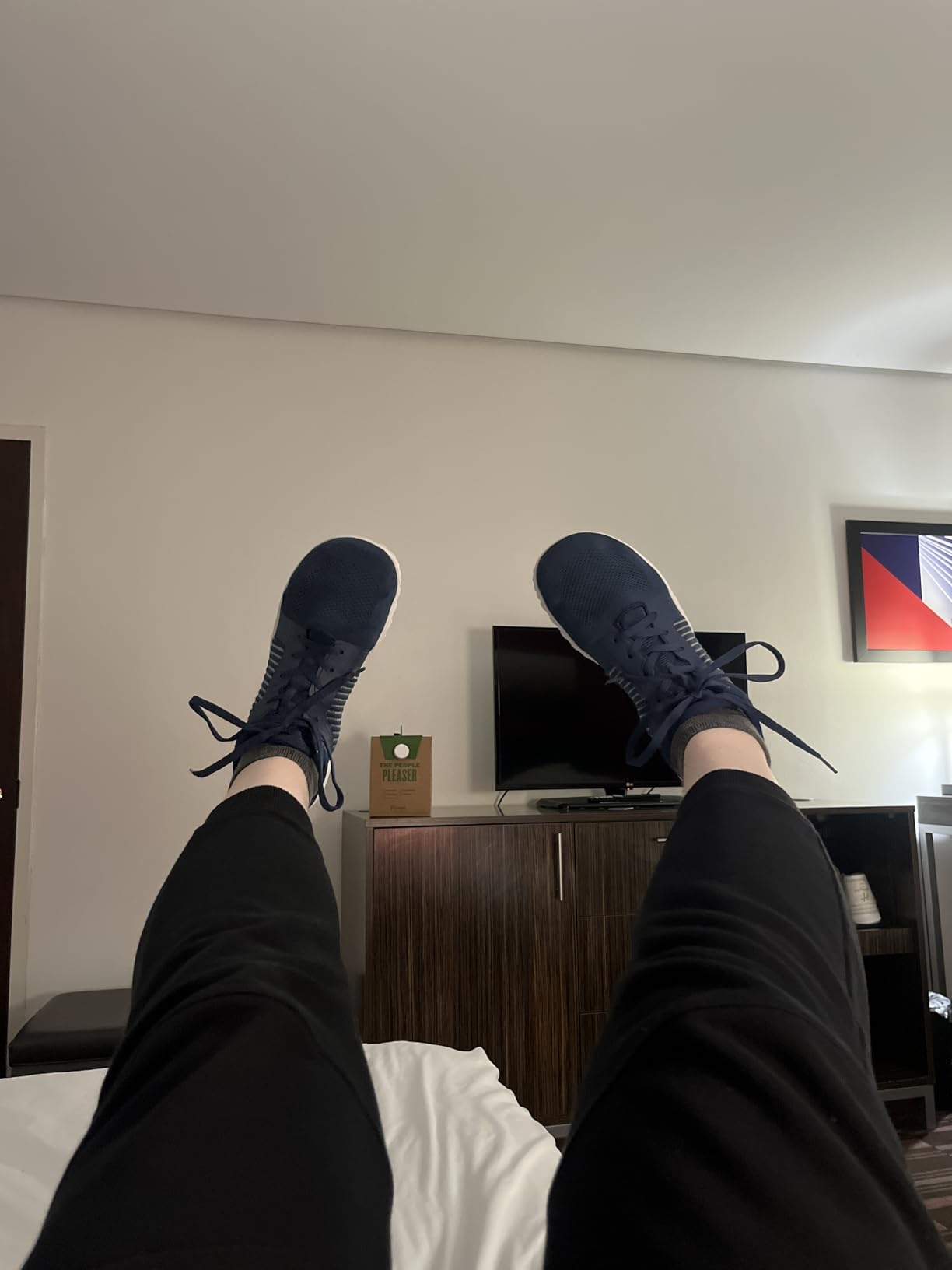
Before getting into the trail performance, one thing worth flagging right away: a notable portion of buyers have reported receiving pairs with mismatched laces or shoes that arrived looking pre-worn. My pair came out of the box clean and properly matched — but the QC variance is real, documented across multiple sources, and worth factoring into your purchasing decision. Buy through a retailer with a solid return window.
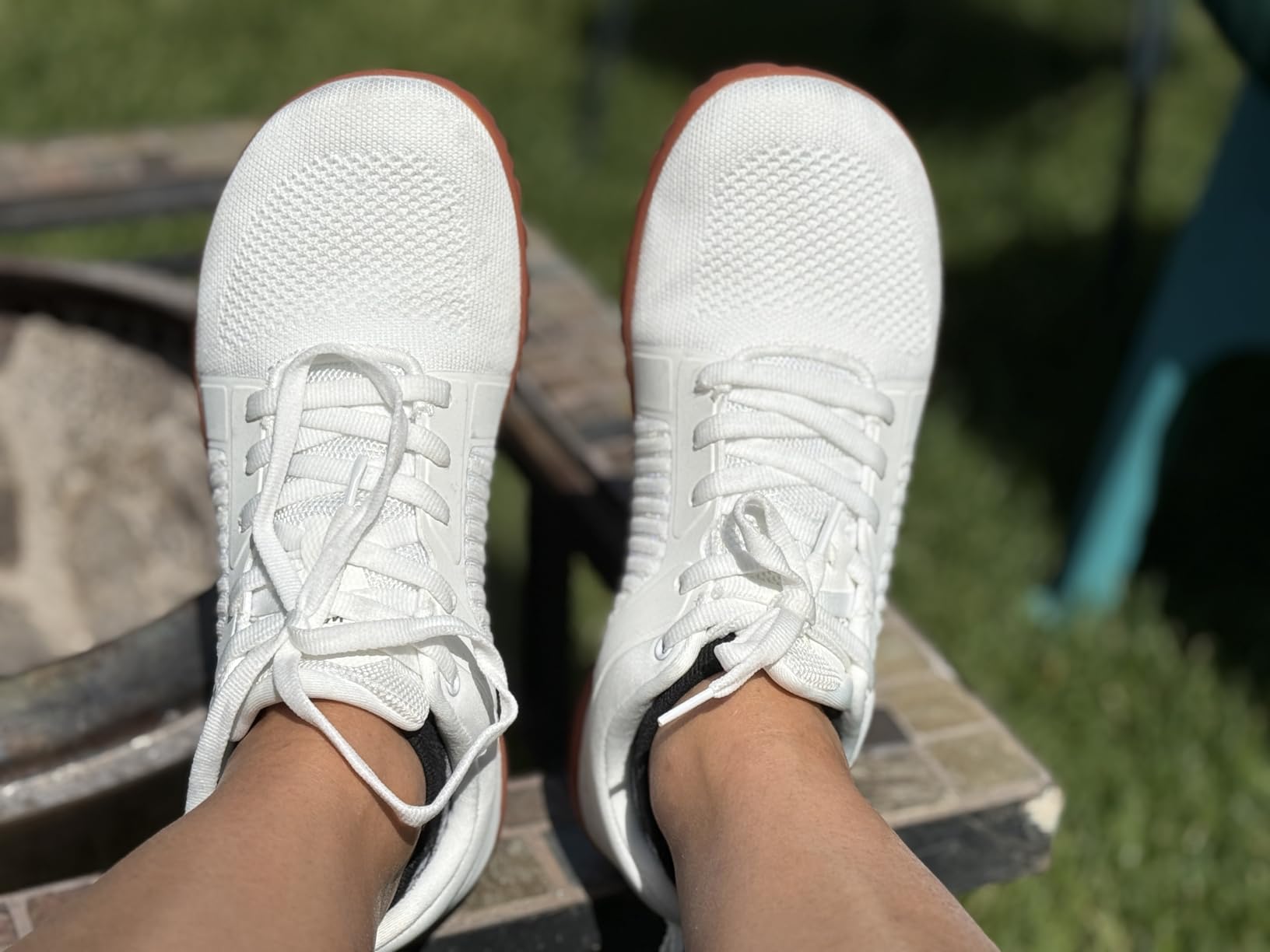
Fit, Sizing, and the Wide Toe Box Question
WHITIN uses European sizing, which creates an extra translation step most buyers skip — and then wonder why their fit feels off. The safer approach: measure your foot length in centimeters, match against WHITIN’s size chart, and trust the chart over any US-size conversion logic. About 70-75% of buyers report true-to-size fit when doing this correctly. The remaining 20-25% generally benefit from going up half a size, particularly those with higher-volume feet or wide feet that sit on the borderline of their EU size.
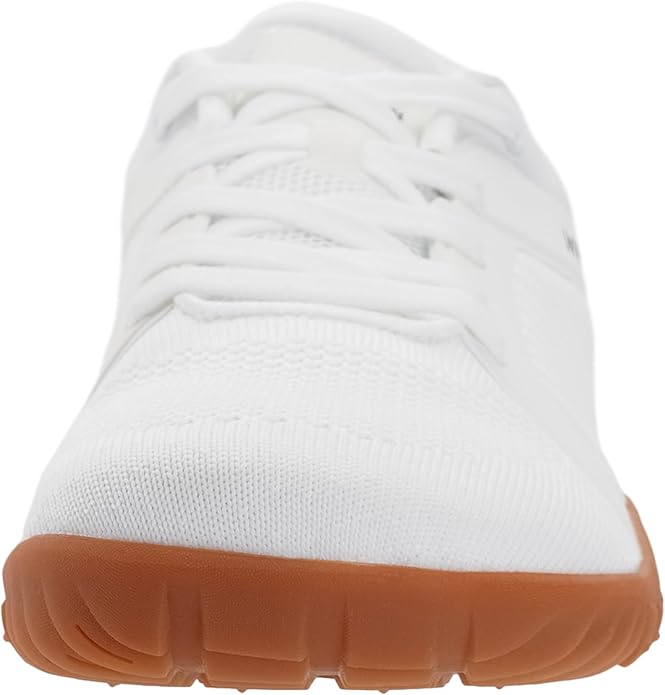
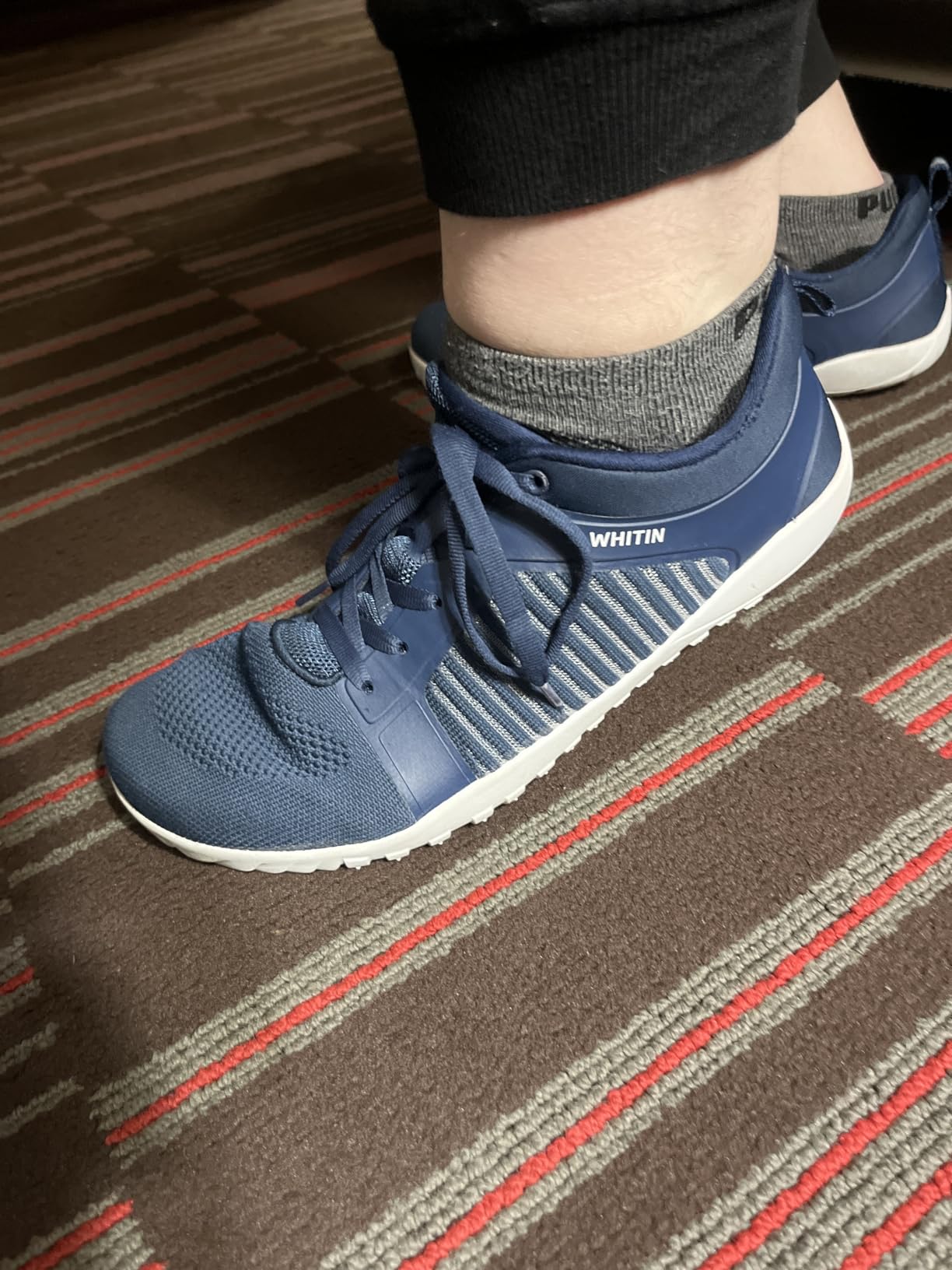
The toe box deserves its own paragraph because it’s genuinely exceptional. During steep descents at South Mountain — the kind where your toes normally slam forward and compress against the shoe cap — my toes had actual room to spread. Not “a little more room than usual.” Room. The foot-shaped design accommodates natural toe splay in a way that none of my previous trail shoes at any price point did consistently.
Worth noting for foot-shape context: mountain-shaped feet (where the first and second toes are longest) tend to fit best. Square-shaped feet, where the outer toes are similar in length, may find that those outer toes feel slightly less supported at the edge of the box. One female reviewer who switched from Columbia hiking boots confirmed zero toe discomfort across a technical rocky trail, which aligns with what I experienced over 85+ miles of descents and climbs.
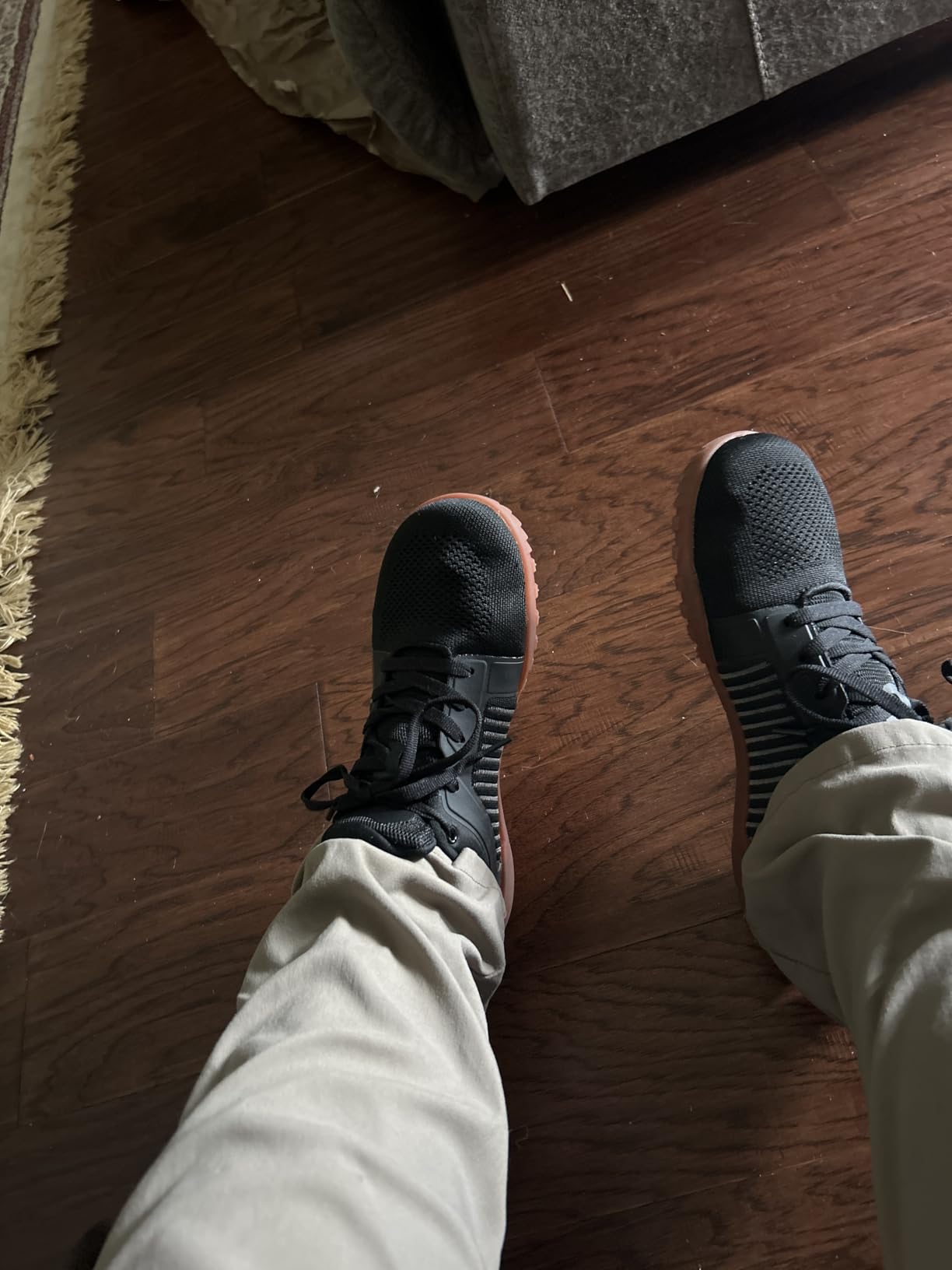
For anyone new to barefoot trail shoes: the EU sizing confusion is worth spending 3 minutes resolving before you order. The shoes are correct — the conversion assumption is where people go wrong.
Zero-Drop Reality: The Adjustment Period Is Real
There’s a version of this review that glosses over the first two weeks with a line like “minimal break-in required.” That’s not wrong, exactly, but it misses the more honest story.
Coming from traditional trail shoes with 8-12mm heel elevation, my calves spent the first ten days reminding me of their existence every morning. Not injury-level soreness — more like the kind you get after a squat session when you’ve taken a week off. My stride mechanics were relearning how to distribute ground contact across my whole foot rather than landing heel-heavy. That adjustment is normal, expected, and documented consistently across dozens of users who made the same transition.
Here’s where it gets interesting, though. By week three, something shifted. On a technical single-track section that normally would have had me watching the ground half the time, I was naturally picking better lines — my feet were reading the terrain in real time instead of just absorbing it through foam padding. Think of it like the difference between driving in thick ski gloves versus actual grip: the feedback loop changes everything. The 11mm stack height isn’t a compromise — it’s the mechanism.
At 180 lbs, genuinely sharp rocky sections still required more attention than I’d need in padded trail shoes. I’m not going to pretend otherwise. Technical scrambles with exposed granite edges aren’t where these shoes show their best qualities. But on established single-track, loose gravel descents, and moderate elevation gains? The ground connection was an actual performance advantage.
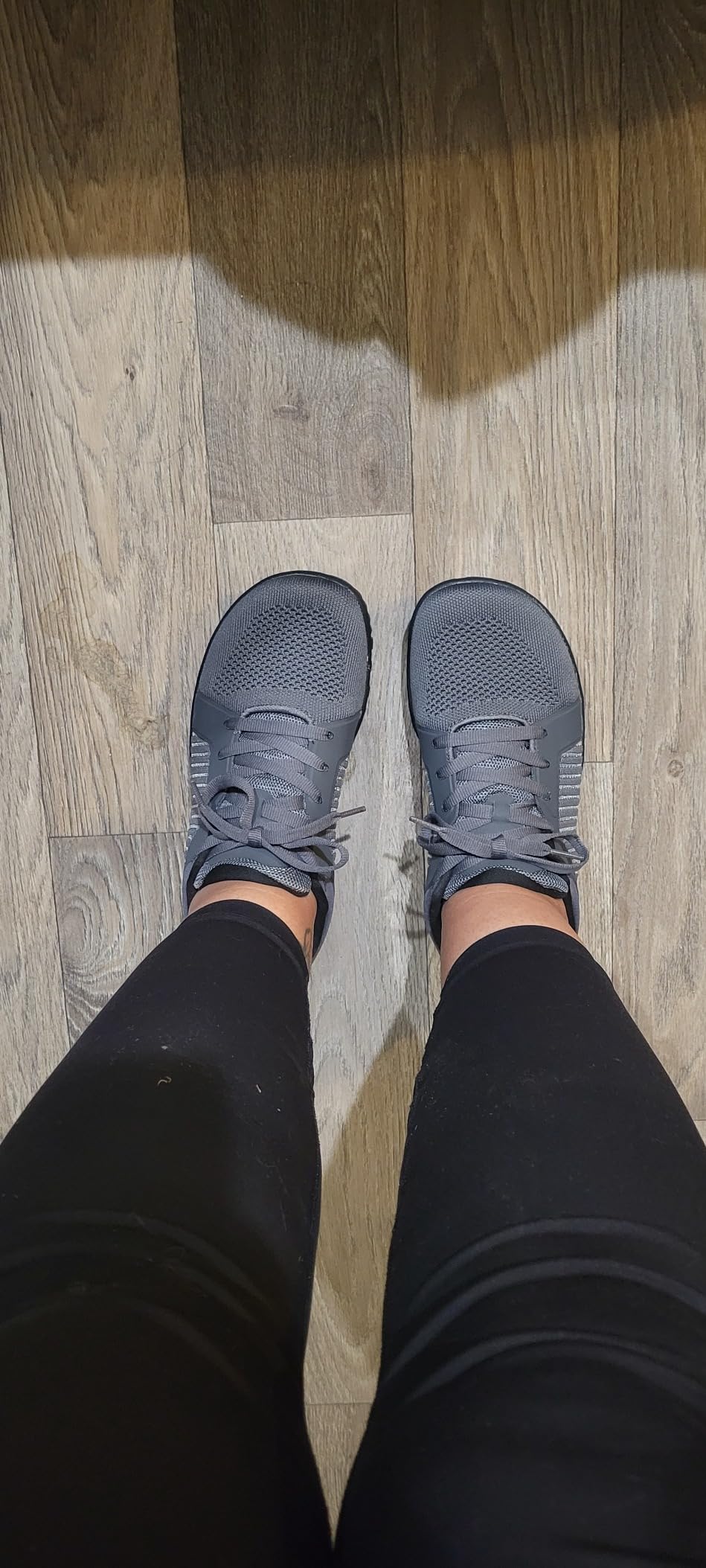
Trail Performance: Where These Work and Where They Don’t
Eight weeks across 12 different trail systems gives a decent spread of conditions. Here’s what I found.
Dry Trails: The WHITIN’s Natural Habitat
On dry dirt, loose gravel, established single-track, and dry granite — which describes most Phoenix-area trail running conditions — the 3mm aggressive lug pattern performed consistently well. The grip held on moderate inclines, the flexible sole let my foot conform to terrain irregularities, and the wide toe box prevented the toe-cramping on steep descents that I’d been fighting all year. Multiple people who’ve taken these on 15-20 mile dry-terrain hikes report the same: the traction holds, the comfort holds, and the foot fatigue from toe jamming disappears.
Wet Conditions: This Is Not a Pacific Northwest Shoe
This section is important enough that I want to be direct: the WHITIN Men’s Barefoot Trail-Running Shoes are not suitable for wet terrain. Not “slightly reduced traction.” Not “exercise more caution.” Genuinely poor grip on wet hard surfaces — wet rock, wet logs, wet concrete near water.
During testing, I hit a section of creek crossing where the approach involved stepping across wet granite. The rubber compound didn’t engage the way the tread geometry suggests it should. I made it across, but with considerably more uncertainty than I’m comfortable with on trail. Independent testing from OutdoorGearLab on a comparable WHITIN model confirmed the same finding: “extremely slippery on wet hard surfaces.” Multiple reviewers warned specifically about wet logs and smooth wet surfaces. If you trail run in Washington, Oregon, Northern California, or anywhere with regular precipitation, this is a genuine dealbreaker.
Technical Rocky Terrain: Mixed Results
The thin stack height becomes the most relevant factor on sustained rocky scrambles. Occasional rocky sections — crossing talus fields, navigating roots, boulder-hop approaches — are manageable. Extended technical terrain at pace, especially for runners over 180 lbs, will put your feet in direct communication with every sharp edge underfoot. The TPU overlays protect the upper adequately. The midsole doesn’t offer much protection from below.
This isn’t a defect. It’s the defining characteristic of minimalist footwear. But it matters for the use-case decision.
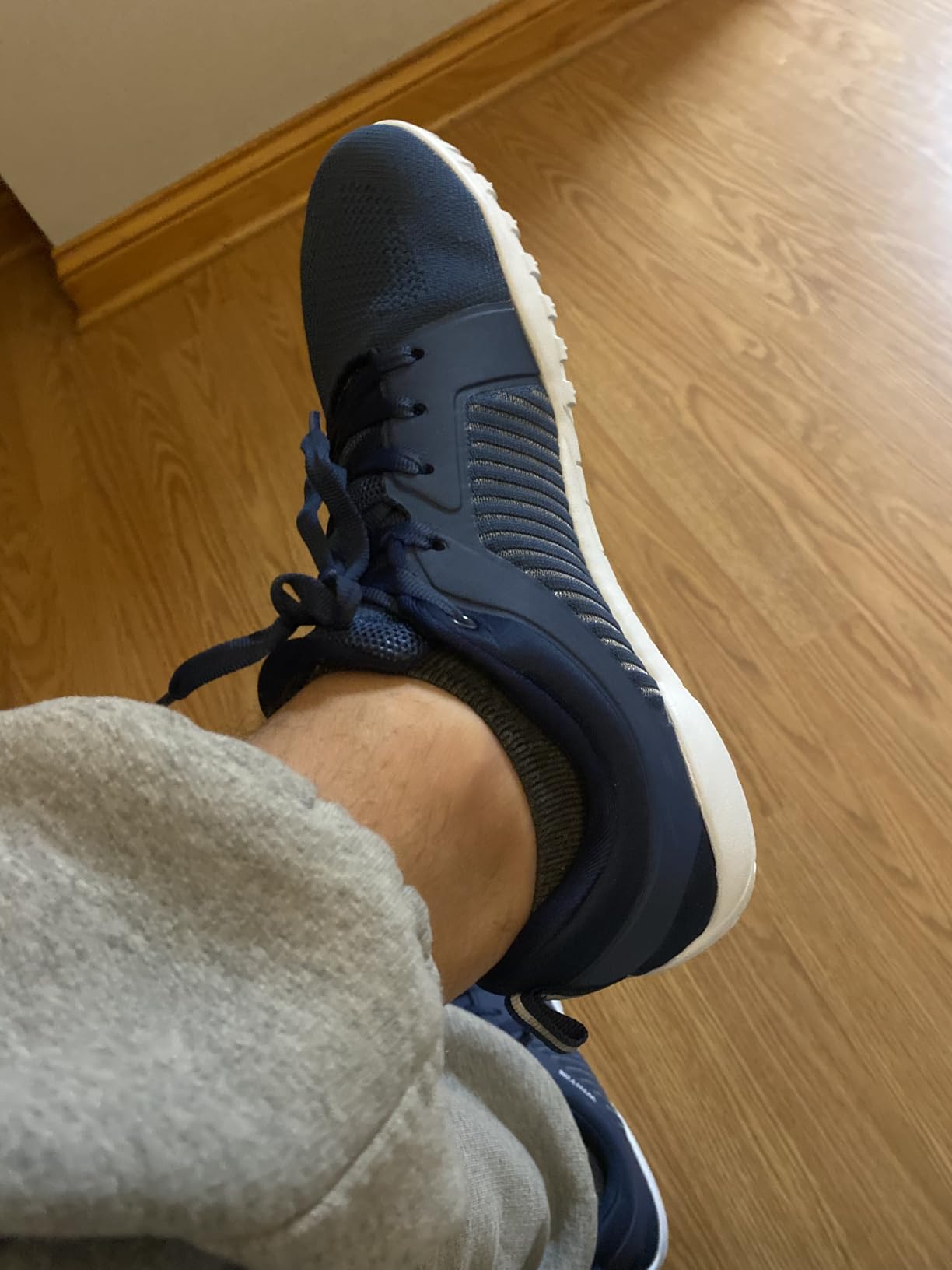
Multi-Day and Long-Distance Hiking
Several users have completed multi-day trips in these shoes, including one extended travel test across cobblestone streets in Mexico. The breathable mesh upper prevents the heat buildup that kills comfort on long trail days — tested in Phoenix summer heat above 90°F, the foot temperature stayed manageable. The minimal cushioning becomes more noticeable as daily mileage climbs, but the design works reasonably well for moderate-distance hiking when you’re not carrying a heavy pack.
Durability: The Math Matters More Than the Months
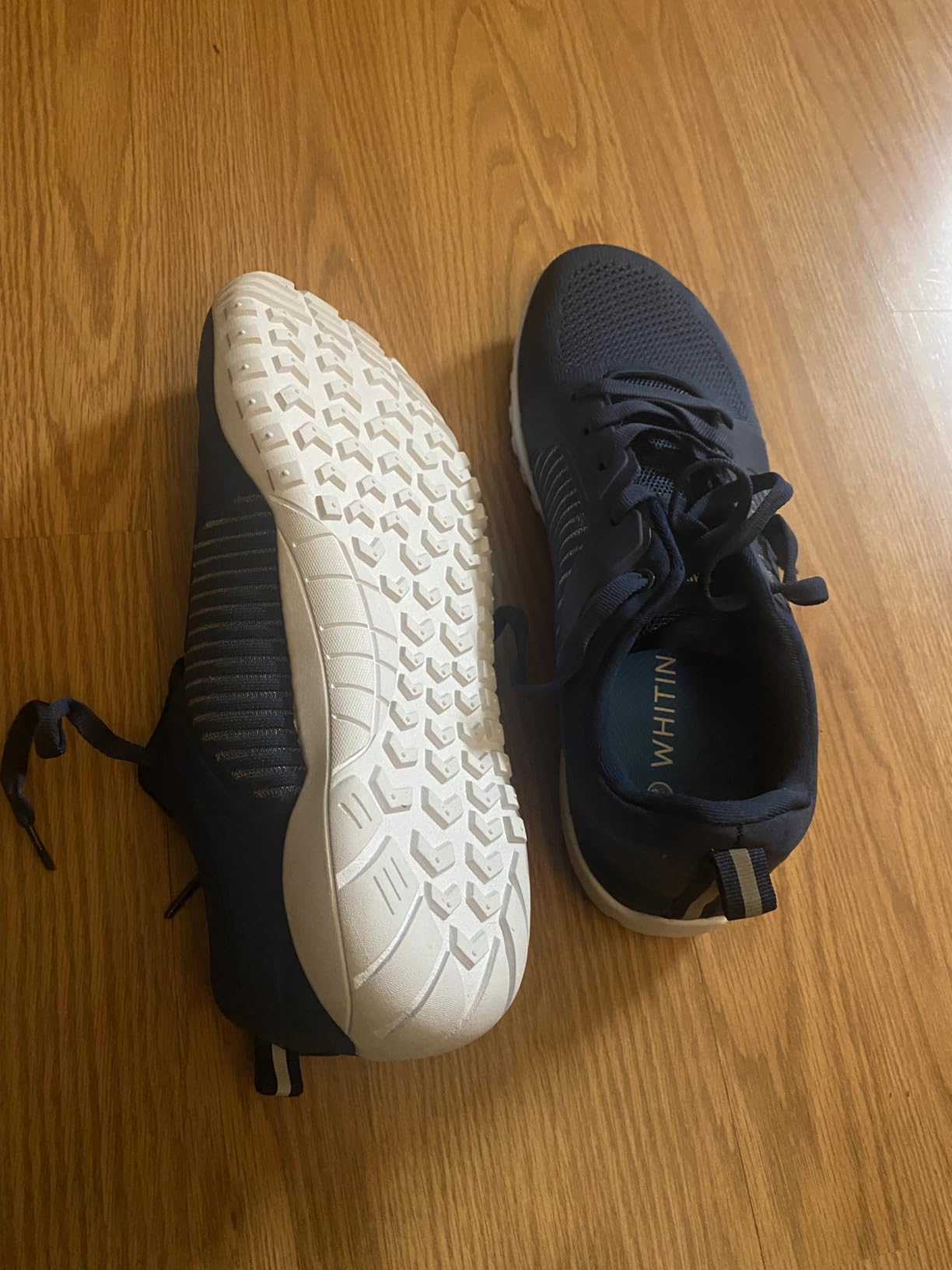
Six to eight months with regular trail use — 15-30 miles per week — is the realistic expectation based on extensive community data. Heavy users logging 50+ miles per week should expect 2-4 months. Light users rotating with other shoes can stretch these to 12-18 months or longer. The primary failure point is sole separation at the upper-to-sole bond, usually beginning at the toe-box flex zone.
At 8 weeks into my testing, the shoes showed normal wear patterns but no separation — the adhesion held through everything I threw at them. I can’t personally validate the 6-8 month figure yet, but the community data on this is consistent enough to be reliable.
Here’s what changes the calculus, though: the cost-per-week math. At $47, even with a 6-month lifespan, you’re looking at roughly $1.80 per week for trail-ready barefoot performance. Compare that to the Altra Lone Peak 8 at $130-150 lasting 14 months — that’s about $2.30-2.50 per week. The Merrell Speed Strike 2 at roughly $100-120 over 12 months runs about $2.00-2.30 per week. WHITIN is actually competitive on cost-per-use even against brands that last twice as long.
The catch: you’ll need to track when the sole adhesion starts going, because once it begins, the deterioration accelerates. Several users mentioned buying two pairs at once to rotate, which extends individual pair lifespan while keeping the total annual cost favorable.
Gym Use: An Underrated Secondary Application
The flat, level platform that makes zero-drop trail shoes work also makes them excellent for lifting. The 11mm stack provides enough protection for gym floor use while keeping your heel at the same height as your forefoot — which matters considerably for squat mechanics, deadlifts, and leg press. Several users cited these specifically as their preferred lifting shoe. As a secondary use case, these work genuinely well as cross-training shoes — stable, lightweight, and flexible enough for agility work without the instability that comes from thick foam midsoles.
Who These Are For (And Who Should Look Elsewhere)
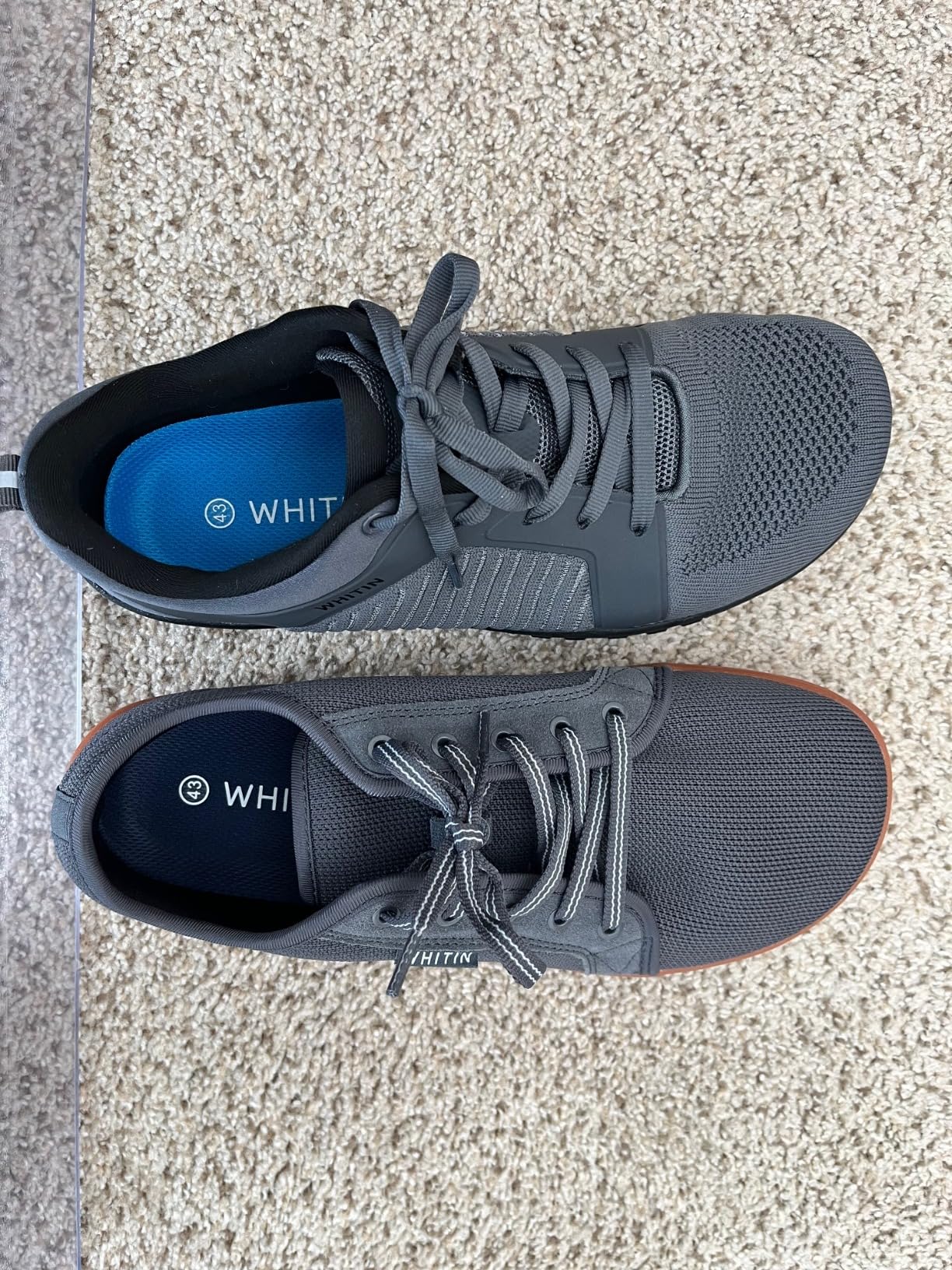
Buy these if:
- You’re transitioning to minimalist or barefoot-style footwear and want a low-cost entry point
- Your feet are wide or standard-width, and traditional trail shoes consistently cramp your toes
- You trail run or hike primarily in dry climates and conditions
- You want a stable lifting platform that doubles as a casual hiking shoe
- You’re a weekend warrior doing 10-25 miles per week who doesn’t need premium-tier durability
Look elsewhere if:
- You regularly run or hike in wet conditions — the wet traction issue is serious, not minor
- You’re over 200 lbs and tackling sustained technical rocky terrain
- You need 12+ months of consistent durability for high-mileage training
- You have joint pain or conditions that require significant cushioning and shock absorption
- Narrow feet — you’ll find excess width without the structure to compensate
How WHITIN Compares to the Alternatives
vs. Altra Lone Peak 8 ($130–150): Altra delivers superior cushioning (significant stack height vs. WHITIN’s minimal 11mm), better wet traction, and proven 14+ month durability. On dry trails, performance gap is smaller than the price gap suggests. Cost-per-week calculation narrows considerably when you factor in WHITIN’s lower price.
vs. Merrell Speed Strike 2 (~$100): Merrell brings better grip technology, stronger construction, and longer verified lifespan. If you’re committing to regular trail running beyond casual weekend use, the Merrell will reward the investment. For casual hikers doing 1-2 outings per month, WHITIN’s math works.
vs. Other Budget Barefoot Options: The barefoot shoe market at this price point includes options like the Airhas Barefoot Zero Drop, UBFEN Barefoot Minimalist, and JMZB Barefoot Shoes — all in a similar price range with similar trade-offs. WHITIN’s specific advantage over many of these is the trail-specific upper with TPU overlays, which provides better debris protection than pure canvas or knit barefoot models designed primarily for casual use. If you want more options in the category, Barezoey Hike Barefoot and Titype Hike Barefoot are worth considering for trail use. For heavier-cushioned barefoot alternatives to transition more gradually, Hike Barefoot Shoes offers a slightly different balance point.
WHITIN also makes a WHITIN Men’s Minimalist Trail Running Shoes variant with a wider toe box orientation that some buyers prefer for pure road running contexts where the trail-specific upper isn’t necessary.
Frequently Asked Questions
Do these run true to size?
European sizing requires one extra step: measure your foot length in centimeters and compare to WHITIN’s chart rather than relying on US size conversion. About 70-75% of buyers find accurate fit following this method. Wide or high-volume feet: consider sizing up 0.5 EU. Narrow feet: TTS or possibly down 0.5 if you find them too wide.
How long do they actually last?
Based on community data across dozens of users: 6-8 months at 15-30 miles per week (regular trail use). Light users doing 5-8 miles per weekend rotation can extend to 12-18 months. Heavy users at 50+ miles per week should plan on 2-4 months. Primary failure mode is sole separation at the upper-to-sole bond near the toe-box flex zone.
Are these good for barefoot running beginners?
Yes — better than many more expensive options, actually, because the cost of the learning curve is lower. Expect 1-2 weeks of notable calf soreness as your stride adapts to zero-drop. Ease in: start with 2-3 mile runs for the first week, not your normal training volume. The adaptation is real but manageable.
What about gym and lifting use?
Surprisingly good. The flat platform works well for squats, deadlifts, and leg press — zero heel elevation means your mechanics work as intended without foam compression under load. Several longtime users cite these specifically for gym rotation. Solid secondary use case that most reviews miss.
Are they waterproof?
No. The mesh upper saturates quickly in rain and stays wet. Not suitable for wet weather trail use beyond brief moisture exposure. Quick-drying once removed — about 30-45 minutes in direct sunlight — but don’t rely on these for creek crossings or rainy season trails.
Wide feet — will these actually fit?
This is genuinely where WHITIN delivers. The toe box is foot-shaped rather than artificially widened-standard, meaning your toes have room to splay naturally throughout the stride. Users with wide feet who’ve struggled with every other trail shoe they’ve tried consistently report this as their best-fitting option at any price point.
Can I use these for multi-day hiking trips?
With appropriate expectations: yes, for moderate terrain and dry conditions. The breathable upper manages heat well on long days. The minimal cushioning becomes more noticeable as daily mileage climbs — if you’re covering 15+ miles per day with a loaded pack, the protection gap will be felt. Better for day hiking and light multi-day trips than technical backpacking.
What’s the break-in period?
The shoe itself requires minimal break-in — it’s your foot and calf musculature that need adjustment, not the shoe. Plan for 2-4 weeks of adaptation if coming from traditionally cushioned trail shoes. Once the adaptation completes, the ground connection becomes an advantage rather than a challenge.
Overall Assessment
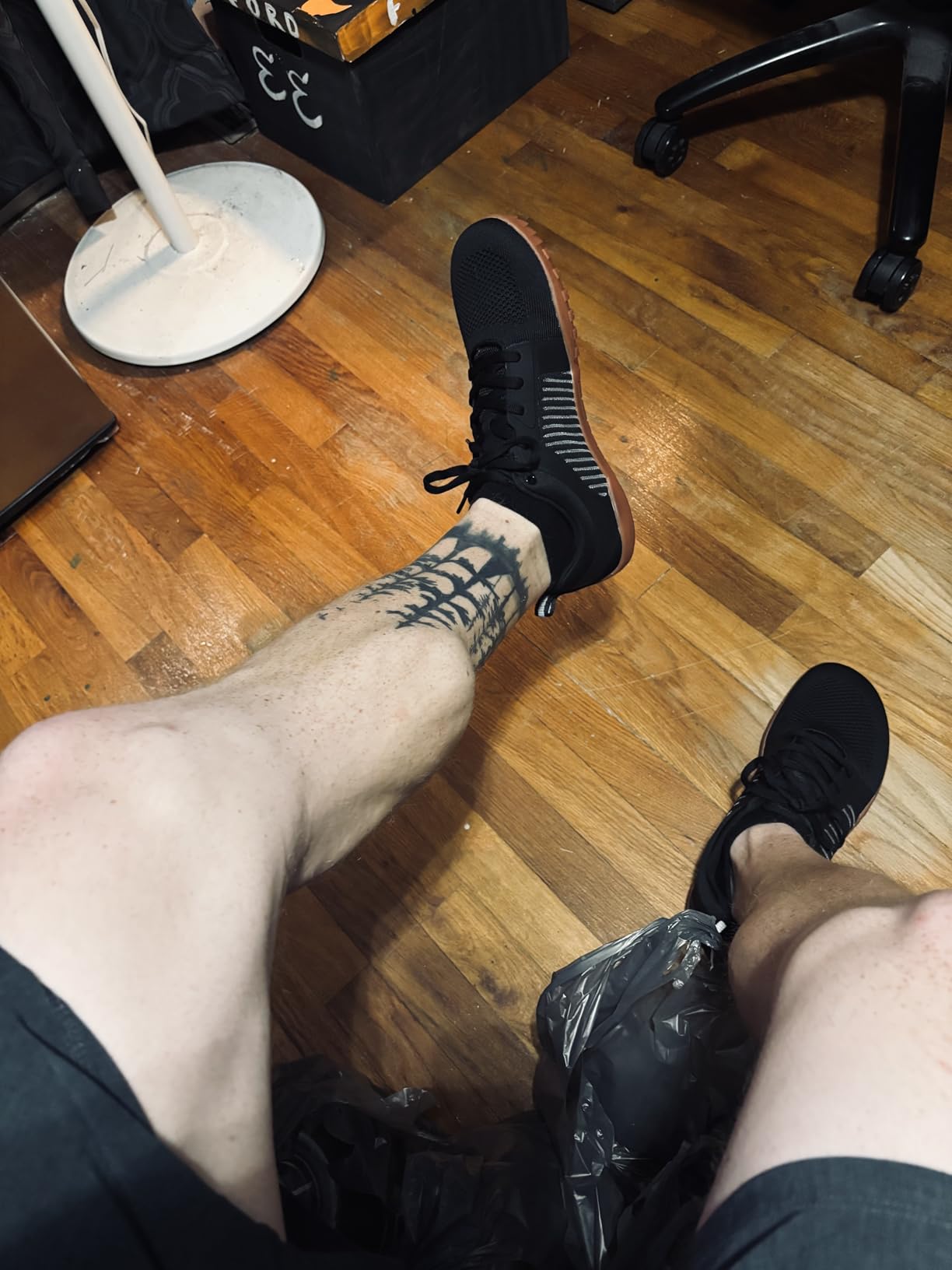
After 8 weeks and 85+ miles across South Mountain, Usery, and nine other Phoenix-area trail systems, here’s where I land.
| WHITIN Men’s Barefoot Trail-Running Shoes — Final Scores | |
|---|---|
| Comfort | 8.5/10 — Wide toe box eliminates the pressure points I’ve fought all year. Adjustment period is real but finite. |
| Trail Performance | 7.0/10 — Excellent on dry trails; genuinely poor on wet surfaces. Conditions-dependent score. |
| Durability | 6.0/10 — 6-8 months realistic at moderate use. Budget-level adhesion, not a defect — it’s priced accordingly. |
| Value | 9.0/10 — $1.80/week at realistic lifespan. The cost-per-use math holds up against shoes costing 3x more. |
| Versatility | 7.5/10 — Trail, gym, casual, and light hiking. Less suited for technical terrain or wet climates. |
| Sizing & Fit | 8.0/10 — European sizing requires attention; wide toe box is best-in-class at any price point. |
| Overall Score | 7.8/10 |
| Pros | Cons |
|---|---|
| • Best-in-class toe box at any price point • True zero-drop construction • Excellent dry trail traction • Lightweight and breathable • Cost-per-use competitive with premium options • Works well as a gym lifting shoe • Immediate comfort, no stiff break-in |
• Dangerous wet traction — not suitable for wet climates • 6-8 month lifespan at moderate use • QC lottery on some units (mismatched laces, pre-worn appearance) • Minimal protection on sharp rocky terrain • European sizing requires extra attention • Not for narrow feet • 1-2 week calf adaptation for traditional shoe users |
The WHITIN Men’s Barefoot Trail-Running Shoes earn their 7.8/10 by delivering on the one thing that matters most for their target buyer: genuine barefoot trail performance at a price point that makes the inevitably shorter lifespan a non-issue. If you trail run in dry conditions, have wide feet, and want to try minimalist footwear without committing $130+ to the experiment — these are the right shoe. If you run in rain, need maximum durability, or tackle sustained technical terrain, they’re the wrong one.
My Merrell situation last month would have been equally frustrating at $47 as it was at $130. What’s different is what I lost when they failed. At the WHITIN’s price point, you can keep a backup pair without the decision feeling like a financial commitment. That changes the risk calculation entirely.
For other trail running shoes in different categories, consider the Adidas Terrex Soulstride for more cushioned trail performance, or the Saucony Endorphin Edge for a more structured trail shoe with better wet-weather capability. But for budget barefoot specifically — at $40-55, WHITIN has figured out what matters.
Be the first to review “WHITIN Men’s Barefoot Trail-Running Shoes”
Related products
Running Shoes
Running Shoes
Hiking/Trekking Shoes
Running Shoes

Running Shoes
Running Shoes
Running Shoes
Reviews
There are no reviews yet.