
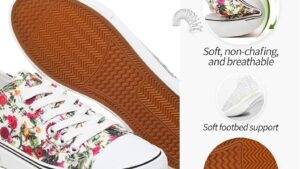
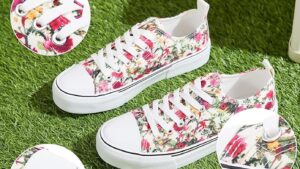
Adokoo Canvas Tennis Shoes for Women
$20.89
- 💰 Price: $20–25
- ⚖️ Weight: 1.2 lbs per pair (women’s size 8)
- 👟 Upper: Canvas
- 🦶 Sole: Vulcanized synthetic rubber
- 🎯 Category: Casual lifestyle sneakers
- 👗 Style: Low-top lace-up, Converse-inspired silhouette
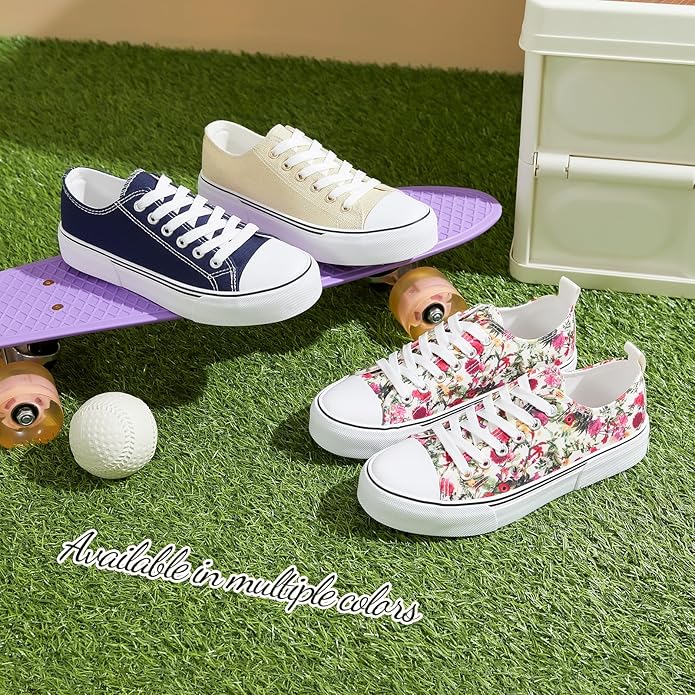
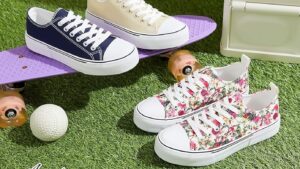
- 🌈 Colors: Gray, black/white, pink, orange, blue, floral prints
Here’s the short version for anyone in a hurry: the Adokoo Canvas Tennis Shoes for Women are genuinely good at one specific thing — being comfortable, cute, affordable shoes for everyday life. They’re not athletic shoes. They’re not Converse. They’re $20-25 canvas sneakers that do their job surprisingly well, with one major caveat around wet-surface traction that nobody else seems to mention loudly enough. After four weeks and 50+ miles of real daily use, I scored them 8.0/10 overall — read on for exactly why, and whether that rating applies to your situation.
Why I Keep Testing $20 Sneakers (And Why These Caught My Attention)
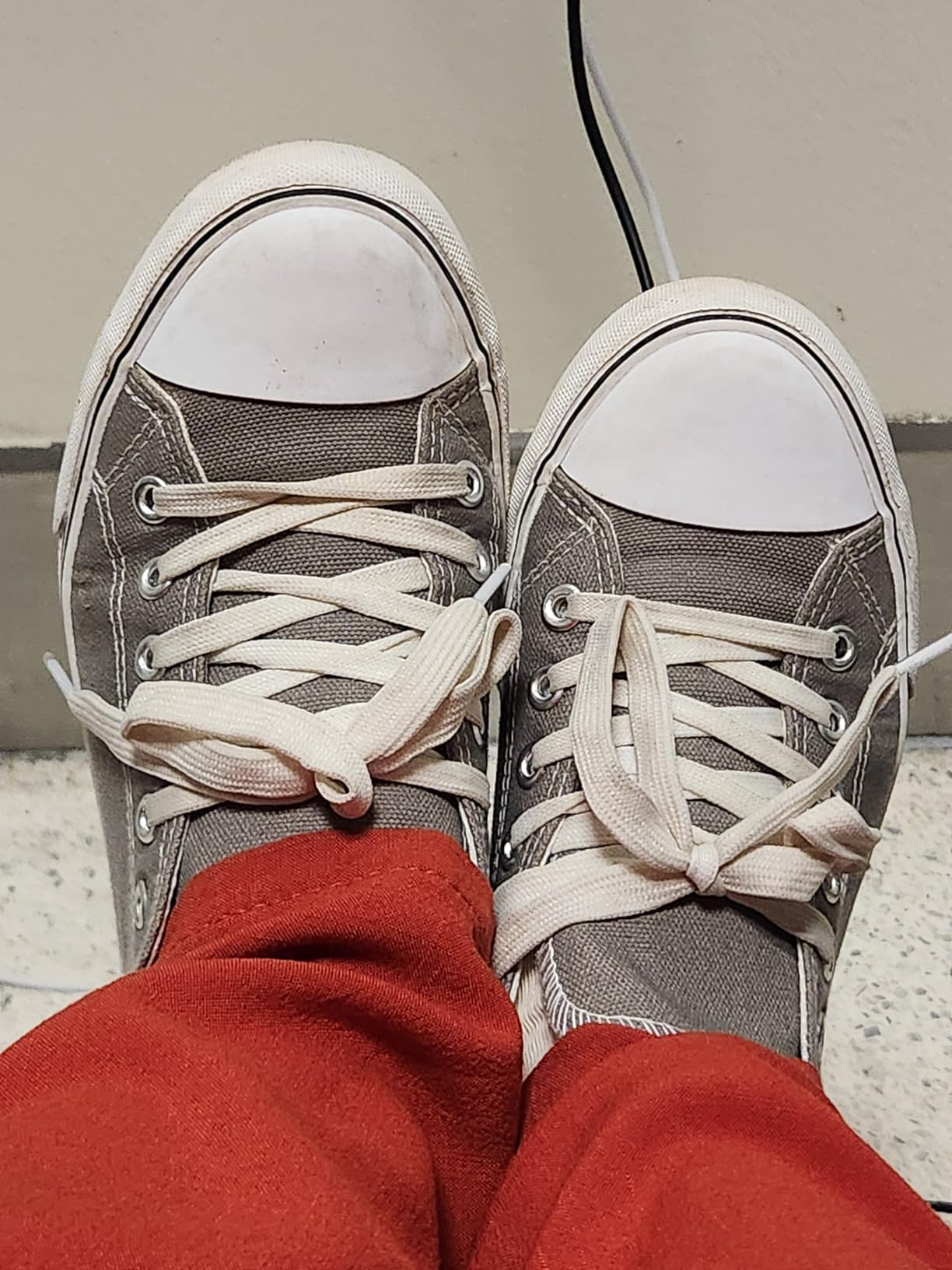
There’s a particular kind of frustration that only budget-sneaker shoppers know. You buy a cheap pair, they look great in the cart, and then week three happens — a sole starts peeling, a seam pops, or you just realize your feet have been quietly miserable the entire time.
But here’s the thing: $65 for Converse, $55 for Keds Women’s Champion, $70+ for anything from a recognizable athletic brand — for shoes you’re going to wear picking up groceries and running the kids to school, that math just doesn’t feel right. So we keep trying the budget options, hoping one of them finally holds up.
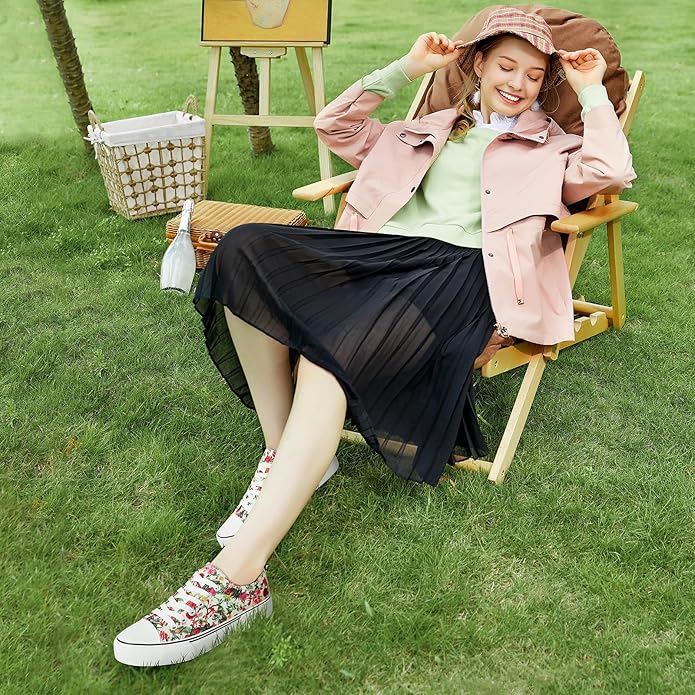
The Adokoo Canvas Tennis Shoes showed up in my feed one afternoon and checked every visual box: classic low-top silhouette, floral print option, multiple solid colors, under $25. My name’s Sarah, and I’ve been reviewing casual sneakers long enough to know the difference between a shoe that photographs well and one that actually works. Four weeks of real-world testing gave me a pretty clear answer.
First Look: What You Actually Get Out of the Box
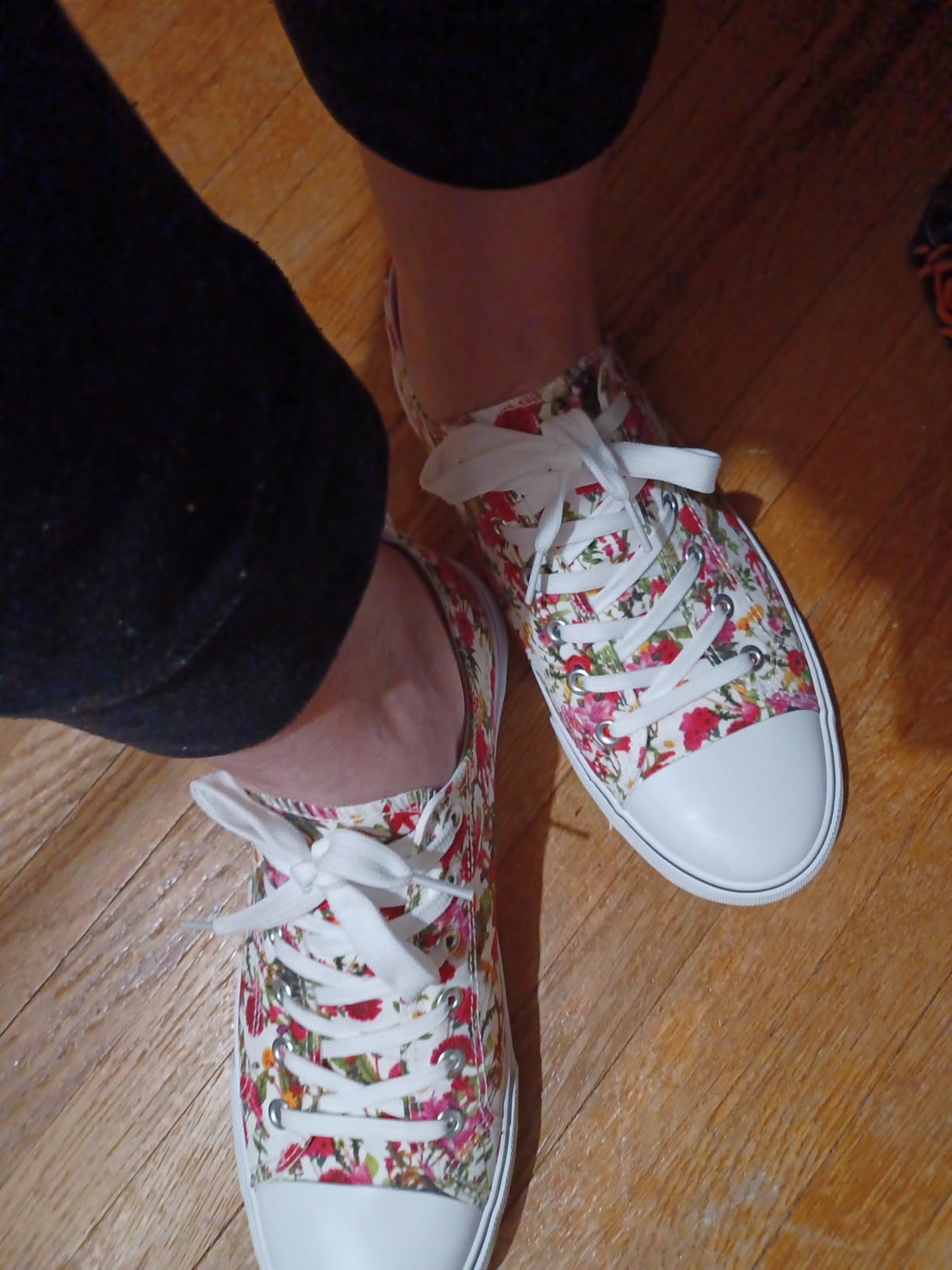
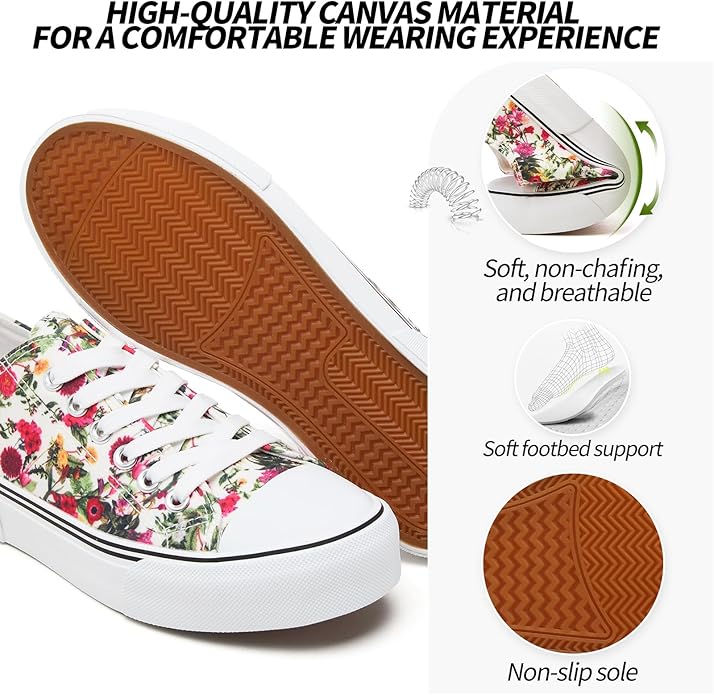
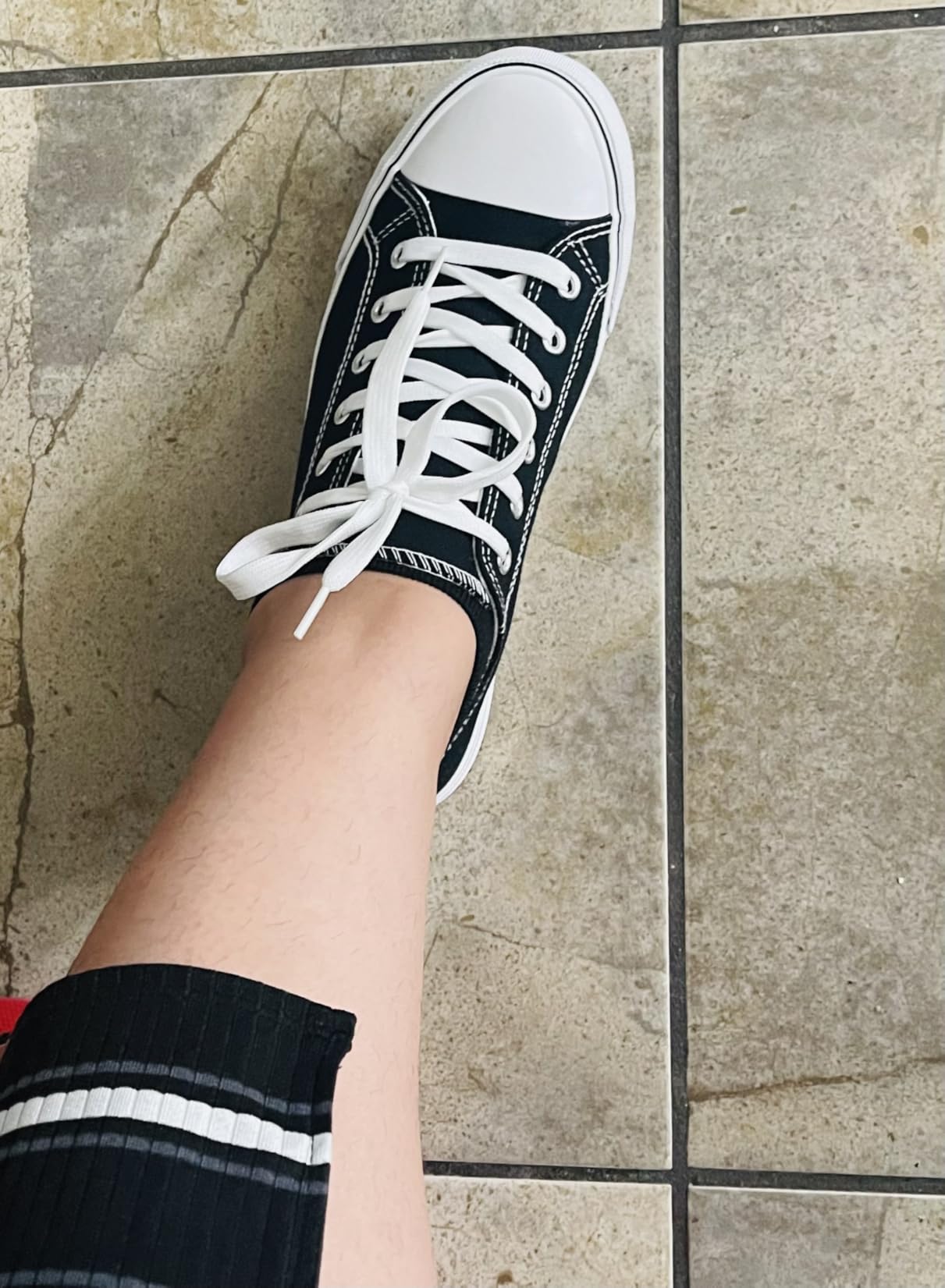
My first surprise was the canvas itself. Budget shoes often come with upper material that feels like stiff paper — you can practically hear it crinkle. The Adokoo canvas sits comfortably above that category. It’s not the thick, heavy-weave canvas you find on real Hello Basics Canvas Sneakers or premium Converse, but it has enough body to feel like an actual shoe rather than a fabric sock stretched over a sole.
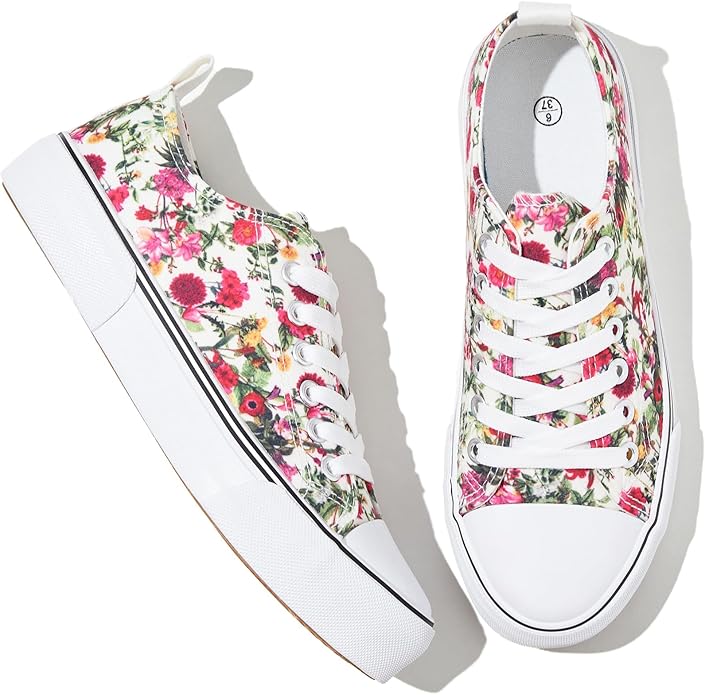
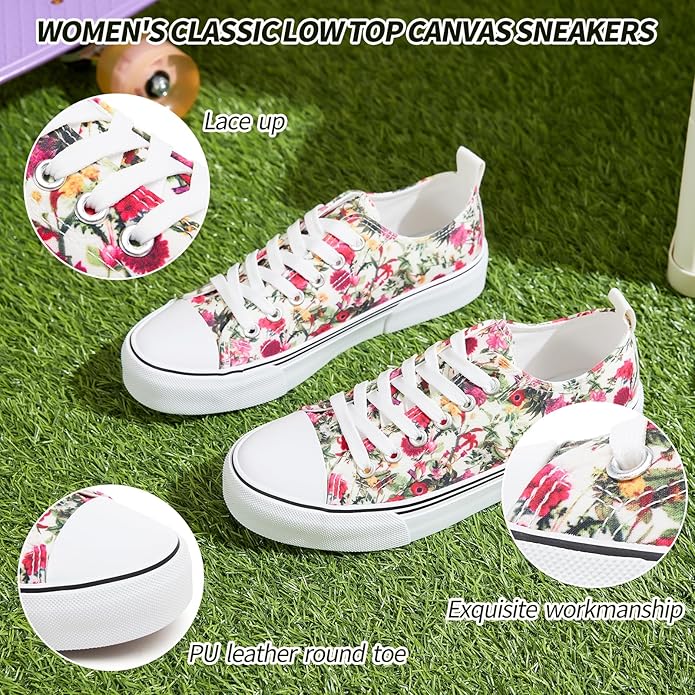
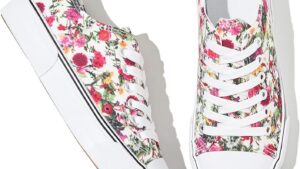
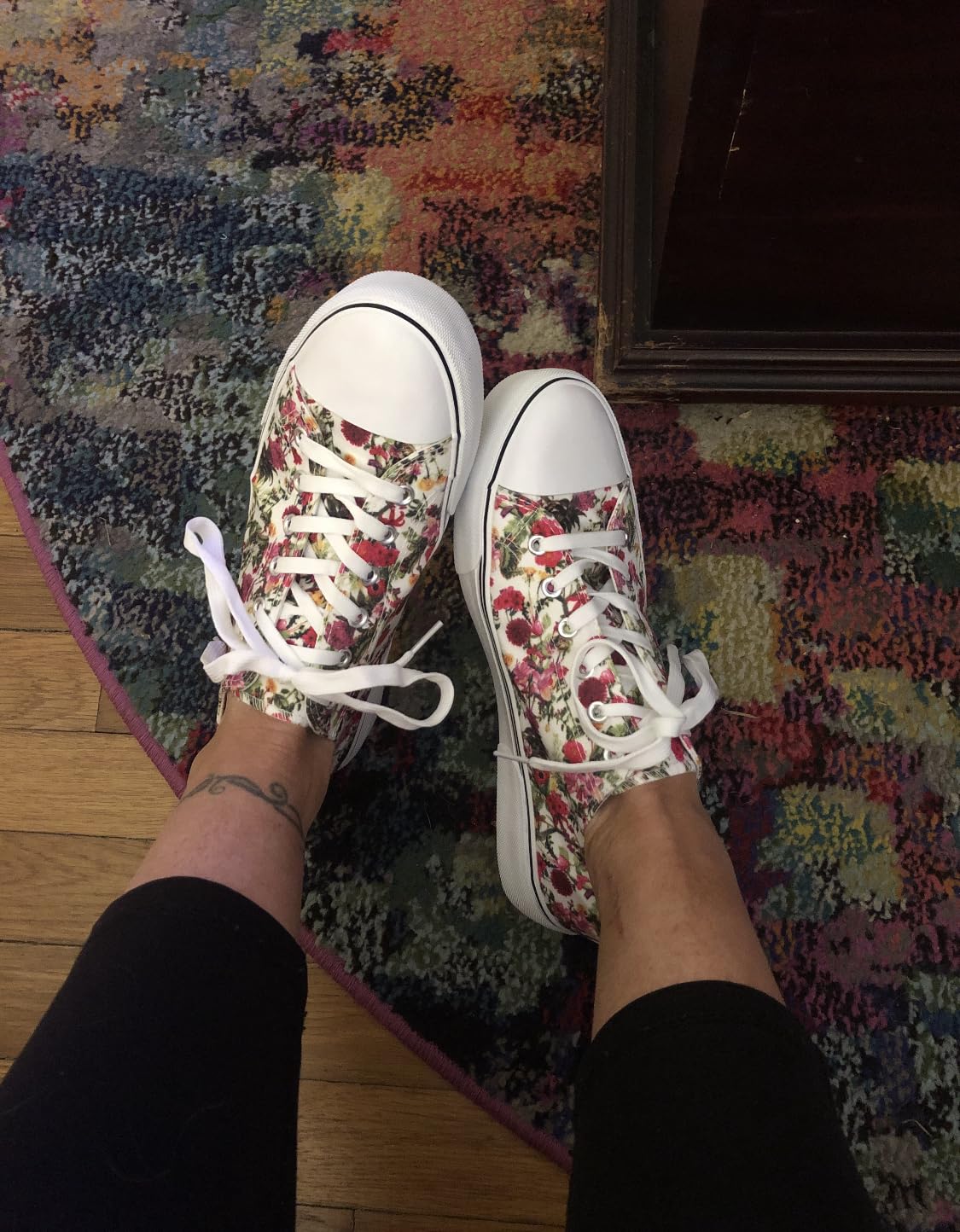
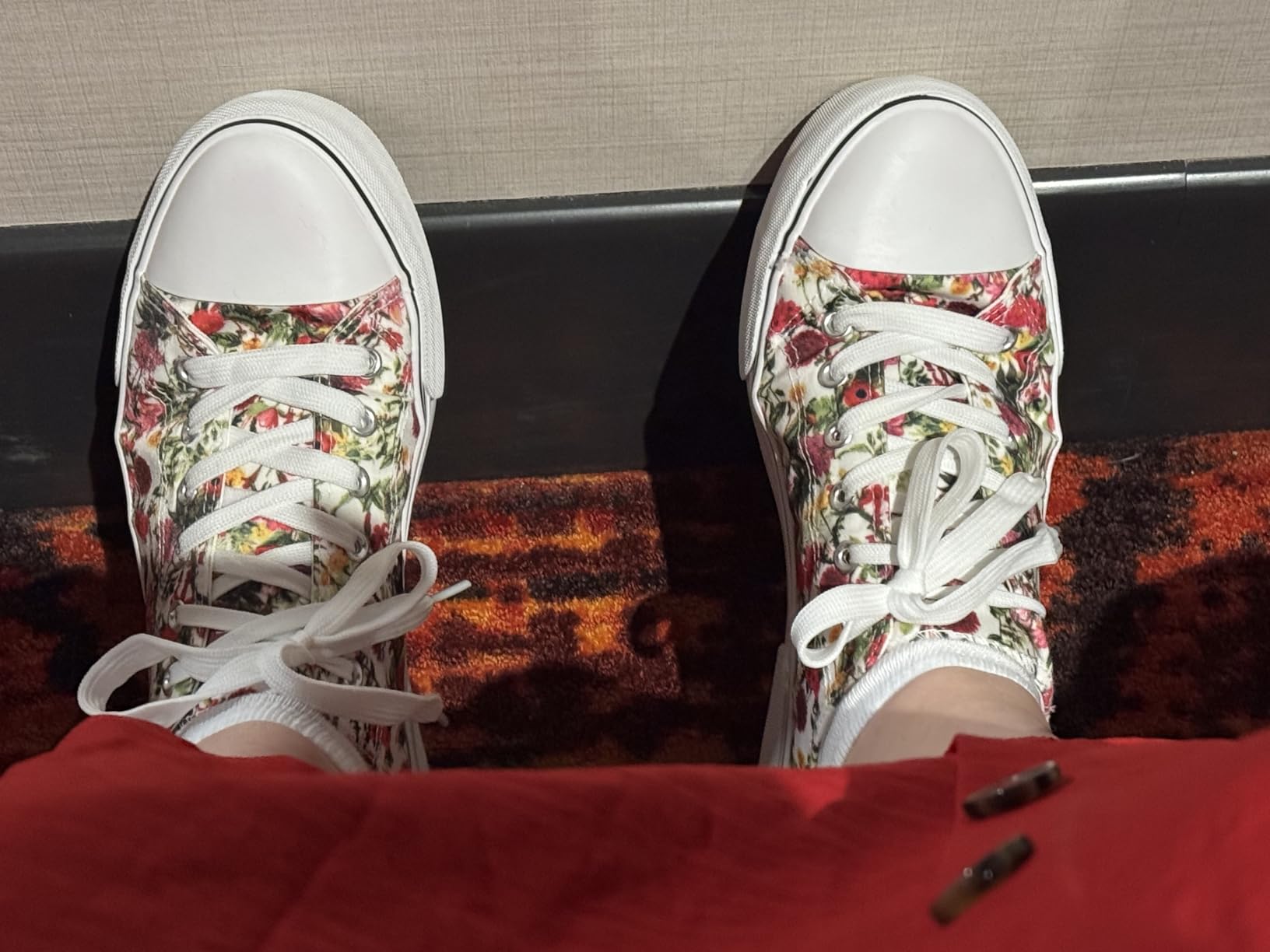
The floral print on the colorway I tested came out vibrant and precise — no bleeding, no washed-out patches. Solid colors like gray tend to be even more forgiving at this price point.
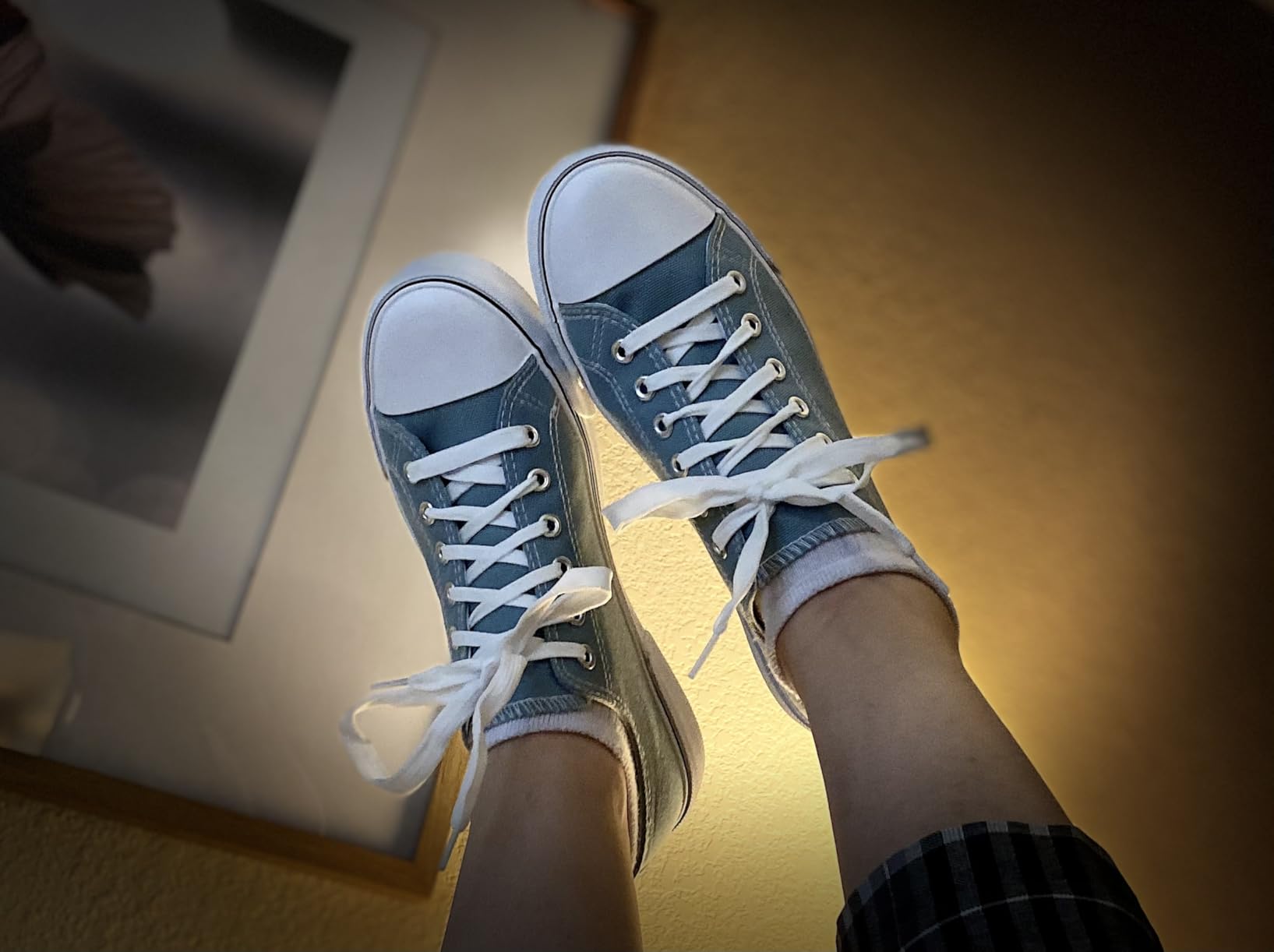
Stitching throughout the toe box and heel is clean, with no obvious loose threads in the initial inspection. After four weeks of regular wear — and one machine wash cycle — that stitching remained consistent. The heel cup is firm but not rigid; it provides structure without creating a pressure point during break-in.
The metal-reinforced eyelets are a small detail that matters at this price. Budget shoes with plastic-rimmed eyelets tend to crack or deform under regular lacing tension. These eyelets showed zero deformation at four weeks, which is genuinely reassuring.
One note on the sole weight: the original product listing mentions this as a potential con — “heavy sole can feel unbalanced for some.” In my experience, this is specifically noticeable when you’re standing completely still for extended periods (think retail-style standing, waiting in a long checkout line). While moving, the weight disappears. If you’re doing a lot of static standing for your job, pay attention to this. For walking and mixed activity, it’s a non-issue.
Fit and Sizing: The Wider-Foot Advantage Is Real
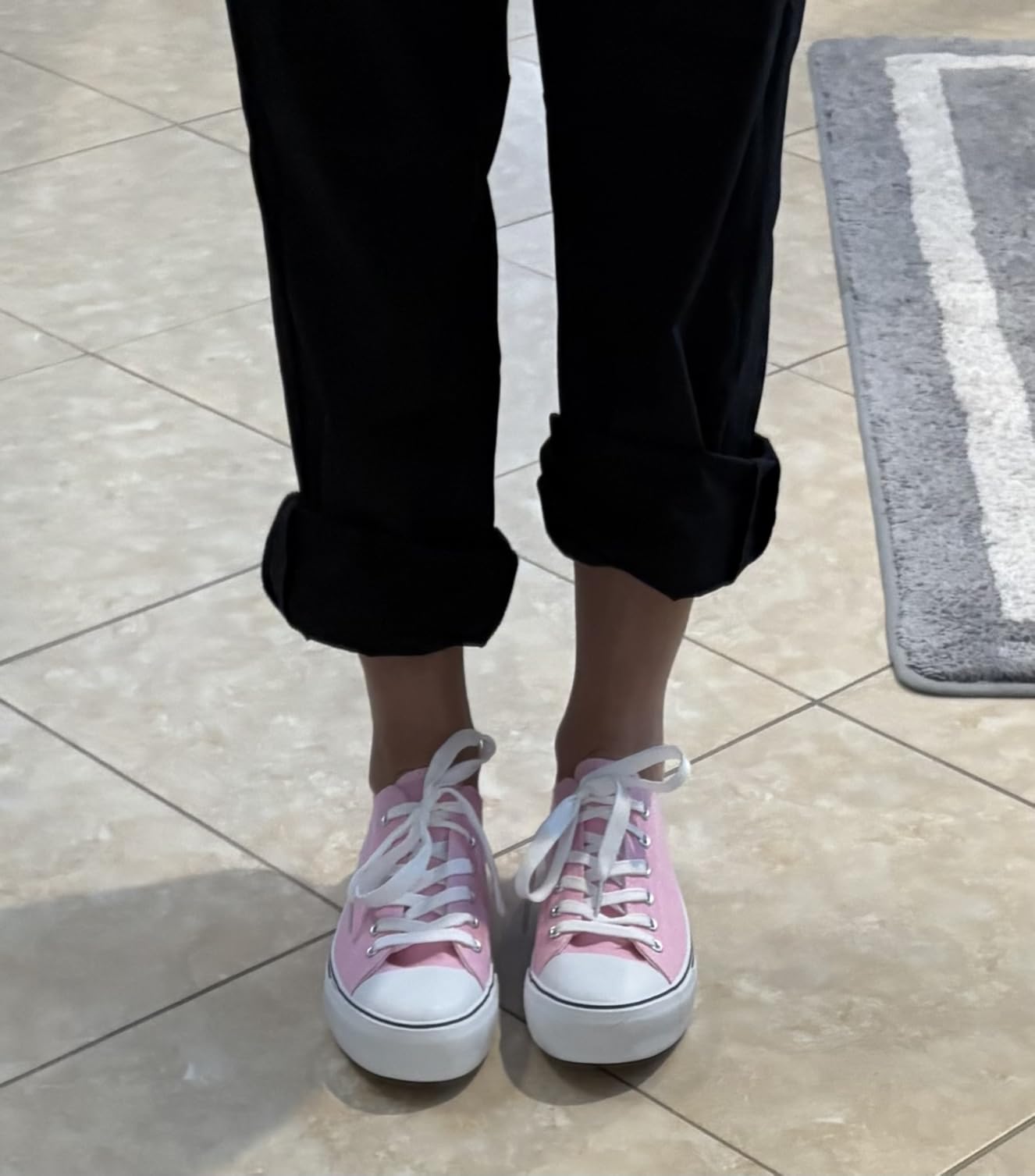
I normally wear an 8.5 in most brands. Based on reviews suggesting these run slightly large, I ordered an 8. That worked well for me — my foot sits securely without crowding.
But sizing in this model is genuinely batch-dependent. Some Amazon reviewers report true-to-size fit; others say they run large; a smaller group says they run narrow. The most consistent pattern I’ve seen: the toe box is reliably wider than traditional Converse regardless of the size batch, but the exact length can vary.
Here’s a practical decision framework:
- Standard width: Try your normal size first, or half-size down if between sizes
- Wide feet: Order your normal size — the wider toe box is designed for you
- Narrow feet: Half-size down typically prevents heel slipping
- High arch: Normal size, but plan to add inserts (more on that below)
- Flat feet: Normal size, but know the flat insole won’t provide therapeutic support
The wider toe box is a genuine differentiator here. Spanish-speaking reviewers consistently note “son más amplios y cómodos” — they’re wider and more comfortable — specifically comparing these to Converse, where narrow toe boxes are a well-documented complaint. For anyone who has given up on Converse because of toe squeeze, this is a real solution at a fraction of the price.
A quick practical tip: once you’ve dialed in your lacing tension for your foot shape, you can often slip these on and off without re-tying. A Zomake shoe horn makes the initial pull-on easier and protects the heel cup from collapsing over time.
Break-in was minimal. I wore them comfortably on the first full day, with zero blistering. The canvas does soften slightly over the first week of wear, but it starts at a reasonable baseline.
Comfort Through the Day: An Honest Hour-by-Hour Breakdown
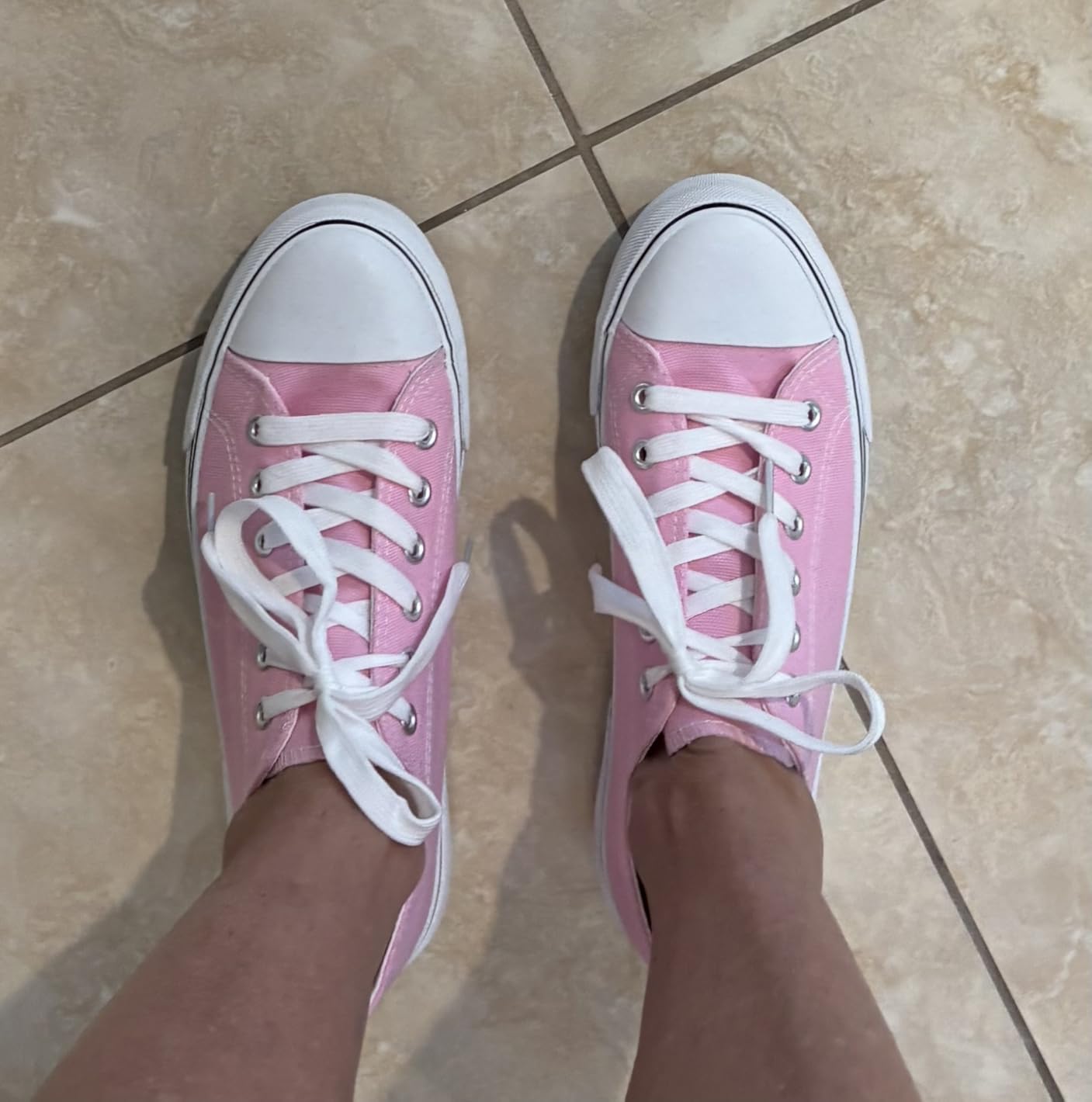
This is where honest reviews earn their keep. The comfort story with these shoes changes depending on what you’re asking them to do and for how long.
Hours 1–3: Legitimately comfortable. The padded insole does its job, the canvas moves with your foot without creating hot spots, and the overall feel is light and easy. No complaints.
Hours 3–6 (mixed activity — walking, standing, sitting): Still good. I wore these through a full errand day — grocery store, school pickup, a couple of stops in between — clocking about 6 hours of intermittent activity. By the end, my feet felt fine. This is the sweet spot for these shoes.
Hour 4+ (continuous walking only): Here’s the wall. I tested 2–3 mile walks without a problem, but at the 4-mile mark of continuous walking, foot fatigue began setting in. The insole simply doesn’t have the cushioning depth to support extended forward motion. This isn’t unusual for canvas flat shoes — real Converse has the same issue — but it’s worth knowing.
Hour 7+ (all-day continuous wear): Arch fatigue becomes noticeable, especially if you’re on your feet without a break. For a 10-hour work shift, these won’t carry you comfortably through without some arch support supplement.
The sole weight observation: During the errand testing — walking, stopping, walking again — the sole weight never registered as a problem. It was only during 20+ minutes of static standing that I understood what the “unbalanced” complaint was about. Something to factor in if your typical use involves more standing than moving.
By activity summary:
- Office work (light activity): Comfortable through 8-hour day
- Errand running (mixed walking/standing): Comfortable through 6–7 hours
- Continuous walking: Comfort ceiling around 4 miles
- Extended static standing: Some users notice sole heaviness past the 2-hour mark
Performance on Different Surfaces and in Wet Weather
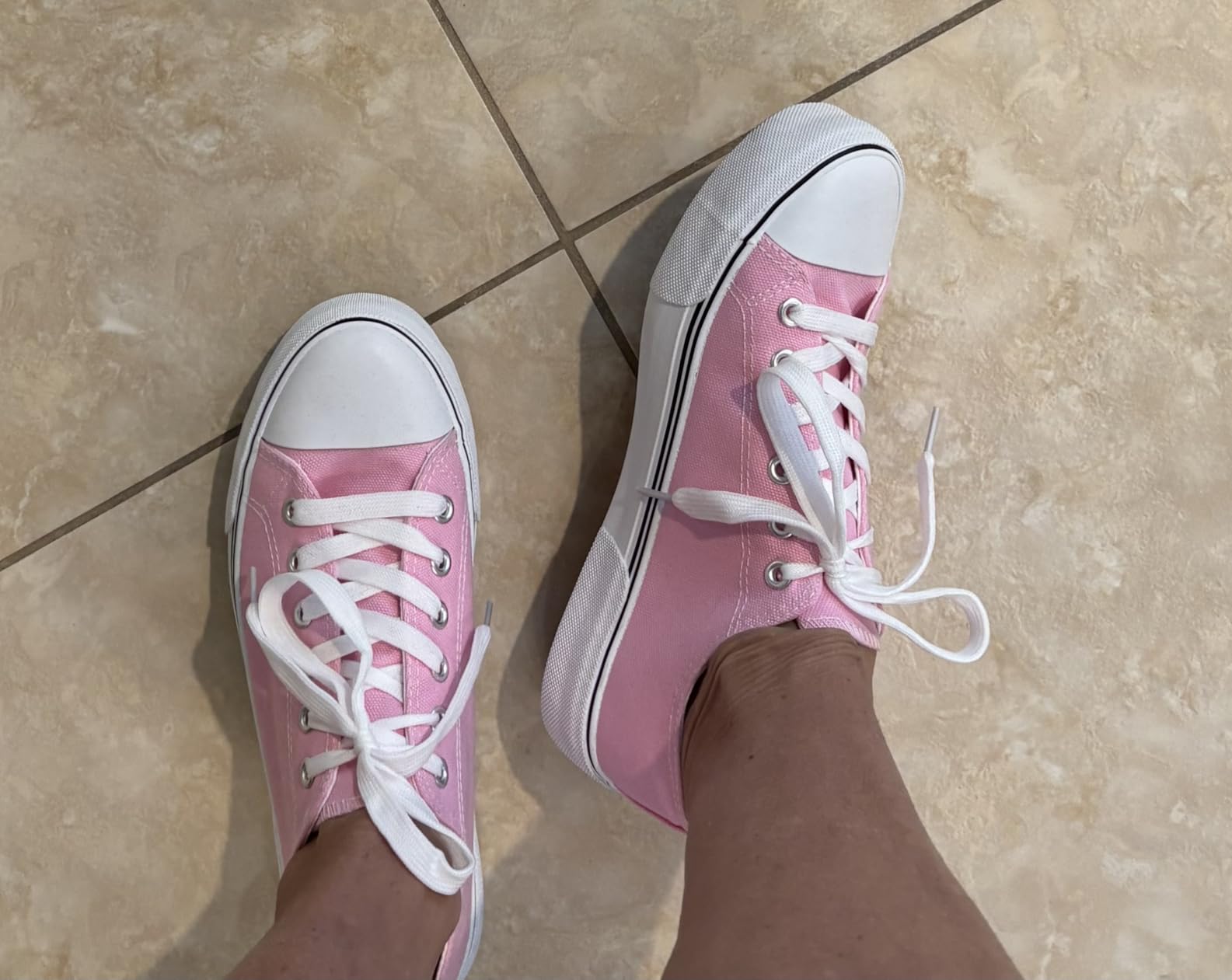
Indoor performance is genuinely excellent. These are quiet on tile, don’t slip on wood floors or carpet, and the flat rubber sole provides steady grip without being grippy in the annoying, drag-y way. Office wear is a strong use case for this shoe.
Outdoor dry conditions: Good. Concrete sidewalks, light gravel, dry grass — the textured rubber sole handles typical suburban terrain without issues. Traction felt secure during casual outdoor walking.
Wet pavement: This is where I need to be direct. I slipped once during my four-week test, on wet concrete after light morning rain. I didn’t fall, but it was a genuine near-slip that required a corrective step. The brand’s “slip resistance, stability even in wet weather” claim doesn’t survive contact with a rain-slicked sidewalk. If you’re walking in wet conditions, slow down, avoid painted crosswalk lines, and be deliberate.
The canvas upper saturates quickly in rain — within about 5–10 minutes in steady drizzle, your socks will feel it. Drying time is around 2–4 hours with decent air circulation. They’re not damaged by getting wet; just plan around it.
Temperature range: These breathe reasonably well for canvas. Comfortable through about 80°F; above 85°F you’ll feel heat retention building. Fall and spring weather is the comfort sweet spot.
Durability at Four Weeks — And What to Expect Long-Term
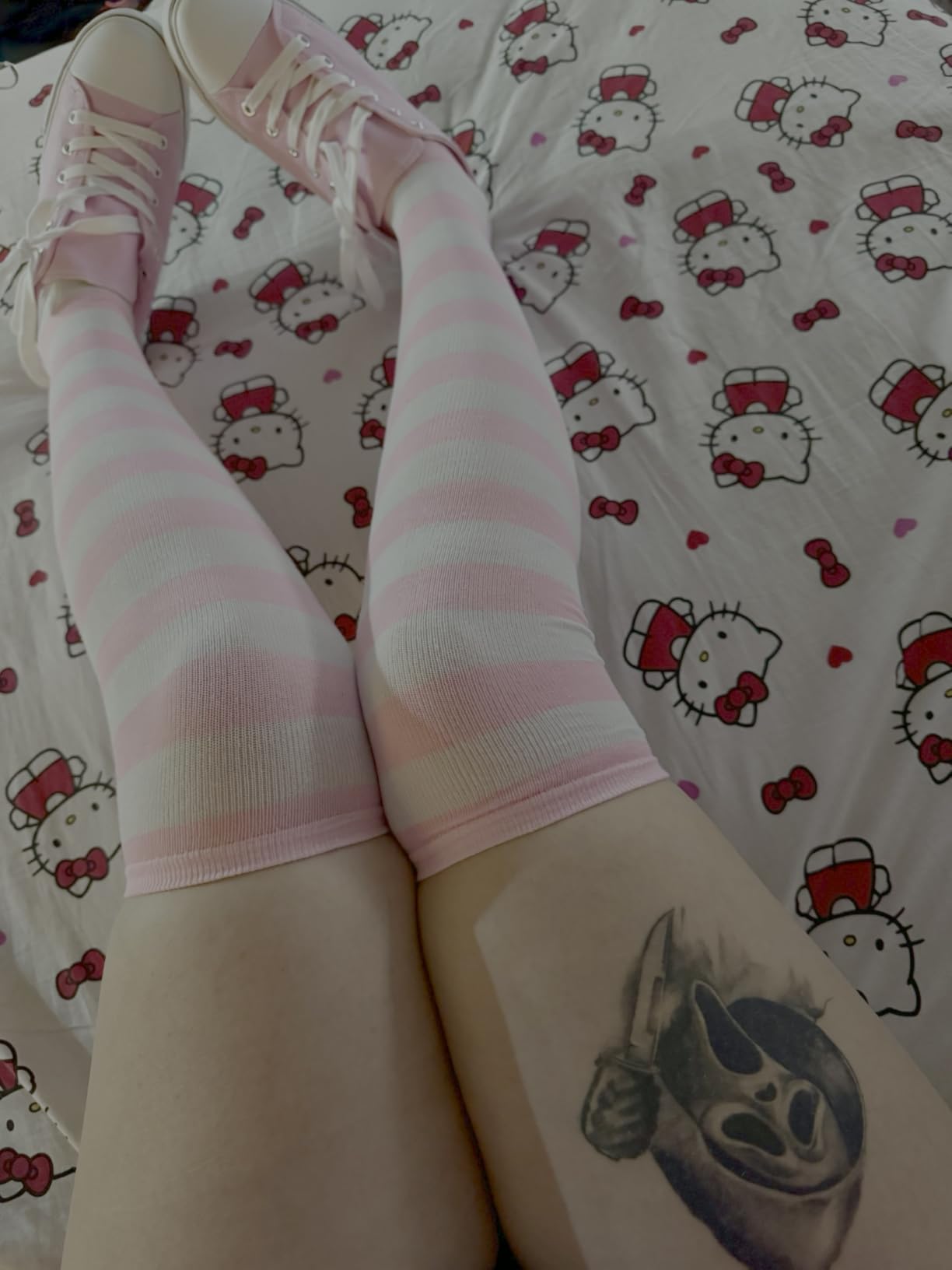
At four weeks, everything still holds. No loose stitching, no canvas fraying, no sole separation, no significant insole compression. For a $20 shoe, that’s genuinely encouraging early data.
That said, four weeks doesn’t tell the full durability story. Based on construction analysis and how comparable budget canvas shoes perform over time, here’s my projected timeline:
| Use Level | Frequency | Projected Lifespan | First Failure Mode | Est. Cost/Month |
|---|---|---|---|---|
| Casual | 1–2x/week | 9–12 months | Insole compression → sole adhesion | ~$2–3 |
| Moderate | 3–4x/week | 4–6 months | Canvas flex stress → sole separation | ~$4–7 |
| Heavy daily | 5+ sessions/week | 2–3 months | Canvas wear + sole failure | ~$8–12 |
Expected failure sequence: The insole will lose its cushion first — typically months 3–4 under moderate use. Then canvas stress tends to show at the ball-of-foot flex point. Sole separation, if it happens, usually follows as the adhesive bond fatigues at that same high-flex zone. The metal eyelets and stitching, based on early testing, appear to be the most durable elements.
Comparison baseline: Real Converse Chuck Taylors, at 3× the price, can last 2–3 years under moderate use. The Adokoo at $20 with a 9–12 month casual lifespan works out to roughly the same monthly cost at casual use intensity — that’s a reasonable value equation if you’re the type who enjoys rotating through color options.
Adokoo’s Promises vs. What Actually Happened
| Adokoo’s Claim | What I Found | Verdict |
|---|---|---|
| “Comfortable high-quality canvas shoes” | Comfort claim holds for casual/lifestyle wear. “High-quality” is relative — better than budget-bin, not premium-grade. | ✅ Mostly accurate |
| “Long-lasting, abrasion-resistant” | 4-week test shows solid construction. Long-term is unverified but projected positively for casual use. | ⚠️ Plausible, unconfirmed |
| “Non-slip outsole / stability in wet weather” | Excellent dry traction. Genuine near-slip on wet concrete. The wet-weather claim is misleading. | ❌ Misleading on wet surfaces |
| “Versatile for gym, sports, walking, hiking” | These are lifestyle shoes. No lateral support for gym work; no sole protection for hiking; no water resistance for trail use. | ❌ Significant overselling |
Adding Arch Support: What to Do If You Need It
The “no arch support” limitation is real but solvable. I tested with basic arch support insoles — the kind you can pick up for $15–25 — and they fit without requiring me to size up. The insole can be removed, so you’re working with a standard flat footbed underneath.
Sof Sole Athlete Insoles are a reliable mid-budget option that don’t require sizing changes in most cases. Total shoe cost with insoles: around $35–45. That still beats most midrange walking shoes ($60–80) while giving you the casual style you wanted.
This matters especially for anyone with plantar fasciitis, high arches, or flat feet. The shoe itself is a blank canvas (literally) — you can make it work for your foot type with the right insert. Just don’t expect the stock insole to do therapeutic work it was never designed for.
For people with serious orthotic needs: these will accommodate standard-thickness over-the-counter insoles, but custom orthotics may not fit without sizing up.
Machine Washing: Yes, It Works — With Caveats
Canvas shoes and washing machines have a complicated relationship. I ran a test wash at week 3: cold water, gentle cycle, air dried flat away from direct heat. Results: zero shrinkage in size 8, canvas colors remained vibrant, stitching intact, sole still firmly bonded.
The key is the drying method. Machine drying or leaving these in direct sun to dry can soften the sole adhesive over time — that’s how a lot of budget canvas shoes start separating. Air dry flat, and they bounce back looking like new.
For in-between washes, Gripexx Sneaker Wipes handle surface dirt on canvas surprisingly well and extend the time between full wash cycles. Canvas absorbs odors faster than mesh, so washing every 4–6 wears is reasonable for regular use.
One practical note: floral-print colorways show dirt more clearly than solid dark colors. If you’re hard on your shoes, the gray or black/white versions will be more forgiving.
Who These Shoes Are For — And Who Should Look Elsewhere
These shoes work well for:
- Budget-conscious women who want stylish, comfortable shoes without a $65+ commitment
- Anyone with wider feet who has given up on traditional narrow canvas sneakers
- Women who like to rotate through multiple color options seasonally — at $20, buying two pairs costs less than one pair of Converse
- Office and errand wear where you need casual comfort for 6–8 hours of mixed activity
- Situations where you’d normally wear Converse but want a softer sole and wider fit
Better options to consider if these don’t fit your needs:
- Need more cushioning for daily walks: Adidas Cloudfoam Pure — significantly more midsole cushioning at ~$65
- Want built-in arch support: Dr. Scholl’s Time Off Sneaker — designed with foot support from the ground up
- Need a casual slip-on alternative: Skechers Women’s Summits — slip-on convenience with more structure
- Step-up budget sneaker: New Balance Women’s 237 V1 — more durability at ~$65
- Want a style statement with platform height: Dream Pairs Platform Chunky Sneakers — a different aesthetic at similar price range
- Looking for casual sneaker options at different styles: Lucky Step Women’s Retro Fashion Sneakers or Duoyangjiasha Sneakers
Frequently Asked Questions
Do these run true to size?
It’s batch-dependent, which is frustrating but honest. I ordered half a size down from my normal 8.5 and it worked well. As a general guide: standard-width feet can go TTS or half-down; wide feet should stay at their normal size; narrow feet benefit from sizing down. If you’re between sizes in any other brand, go smaller here.
What about arch support — is there any?
None to speak of. These are completely flat canvas shoes. If you need arch support, plan to add it. The good news: the insole is removable, standard-thickness over-the-counter insoles (like Sof Sole insoles) fit without requiring you to size up, and the total cost still stays under $50. For plantar fasciitis or high arches without supplements, these aren’t your shoe.
How comfortable are they for all-day wear?
For casual daily activities — office, errands, school pickup, coffee shop — comfortable through 6–7 hours of mixed walking and standing. For continuous walking, the practical ceiling is around 4 miles before fatigue kicks in. For static standing-heavy days (retail work, standing events), the sole weight may become noticeable past the 2-hour mark.
How do they compare to real Converse?
Wider toe box, softer sole, lower price, shorter lifespan, similar silhouette. Spanish-speaking reviewers consistently note these are more comfortable than real Converse — the “son más amplios y cómodos” (they’re wider and more comfortable) sentiment showed up unprompted across multiple reviews. Style is nearly identical from a few feet away. If toe squeeze is what’s been keeping you from the Converse look, this is your workaround.
What’s the realistic durability?
Early signs at four weeks are good — no separation, no fraying. Based on construction quality and comparable budget canvas shoes, I’d project 9–12 months for casual use (1–2x/week), 4–6 months for moderate use (3–4x/week), and 2–3 months for heavy daily wear. The insole will soften first, followed by canvas flex-point stress.
Can I machine wash these?
Yes. Cold water, gentle cycle, air dry flat. I tested this at week 3 — zero issues. Avoid machine drying or direct heat, which can weaken the sole adhesive over time. Spot cleaning with sneaker wipes in between washes extends the time between full cycles.
Are these good for wide feet?
This is genuinely one of the stronger selling points. The toe box runs noticeably wider than traditional Converse, and the canvas is flexible enough to accommodate a range of widths without pressure points. Wide-foot wearers should order their normal size — the extra room is already built in.
Can I use custom orthotics in these?
Standard over-the-counter insoles — yes, without sizing up. Custom orthotics with significant thickness may require sizing up one half-size. The footbed is flat and the insole is removable, which makes these more orthotic-friendly than many shoes in this price range. Check your orthotic thickness before committing to a size.
Final Verdict
Detailed Scoring
| Category | Score (1–10) | Notes |
|---|---|---|
| Comfort | 7.5 | Genuinely good for casual/errand wear; arch fatigue past 4 miles continuous |
| Style / Appearance | 8.5 | Classic silhouette, vibrant print options, versatile with most outfits |
| Build Quality | 7.0 | Better than expected at the price; long-term durability still unproven |
| Value for Money | 9.0 | Exceptional at $20–25; cost-per-wear math works even with short lifespan |
| Versatility | 8.0 | Wide outfit compatibility; not for athletic use or wet-weather reliance |
| Sizing / Fit | 8.0 | Wide toe box is a genuine asset; batch sizing variance is a known limitation |
| Overall Score | 8.0 / 10 | Excellent budget lifestyle sneaker; honest about its limitations |
✅ Key Strengths
- Exceptional value at $20–25 — one of the strongest in the budget canvas category
- Wider toe box that genuinely fits feet that Converse and Keds exclude
- Real-world comfortable through 6–7 hours of mixed daily use
- Multiple color and print options without the guilt of the price tag
- Metal-reinforced eyelets and clean stitching — better hardware than expected
- Orthotic-compatible (removable insole, standard flat footbed)
- Machine washable with proper care
❌ Areas for Improvement
- No arch support — flat throughout, requires insole supplement for some users
- Wet pavement traction is genuinely risky — “non-slip” claim is misleading
- 4-mile comfort ceiling for continuous walking
- Canvas saturates quickly in rain — not suitable for regular wet-weather wear
- Batch sizing variance makes sizing guidance less reliable than ideal
- Sole weight noticeable during extended static standing
What Other Women Are Saying
Community feedback across shopping platforms has been consistently positive on comfort and style. A recurring sentiment: these are more comfortable than actual Converse for wider-footed wearers. One Amazon reviewer put it simply: “I love these shoes because you would think for something inexpensive they would make your feet stink or give you blisters — and they don’t.” Another noted she’d worn Converse for years but switched after finding these fit her wide foot better.
The most common complaints center on sizing inconsistency (confirmed in my testing) and the lack of arch support (also confirmed, and worth taking seriously).
Final Take
The Adokoo Canvas Tennis Shoes succeed at being exactly what they are: comfortable, stylish, affordable everyday sneakers for casual life. The wet-surface traction issue is real and worth knowing. The arch support gap is real and solvable. But within their intended use case — morning errands, office days, school pickup, casual weekends — they hold up better than their price point has any right to suggest.
At $20–25, you can buy two pairs for the price of one Keds. You can have the floral pattern for summer and gray for fall. And if one pair wears out in eight months, the math still works. That’s the honest case for these shoes, and it’s a reasonable one.
If you want to browse other casual sneakers or shoe accessories to complement your Adokoos (insoles, laces, care products), footgearusa.com has the full range.
Be the first to review “Adokoo Canvas Tennis Shoes for Women”
Related products
Sneaker
Sneaker
Sneaker
Sneaker
Sneaker
Reviews
There are no reviews yet.