
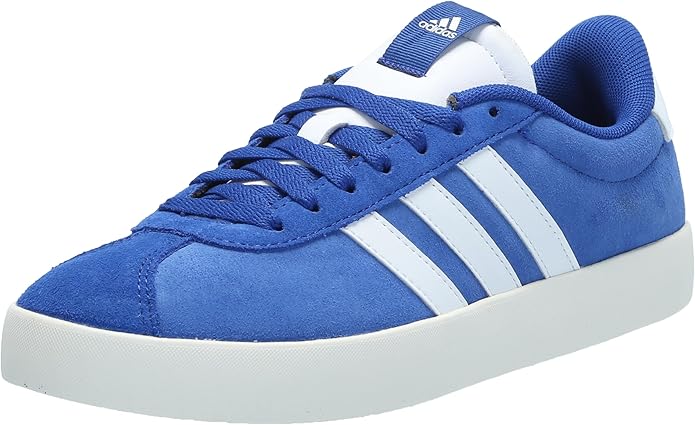
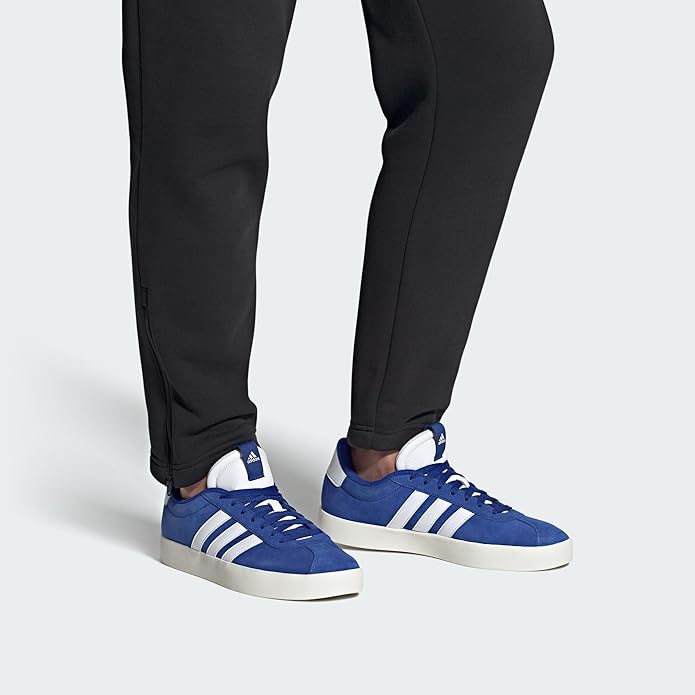
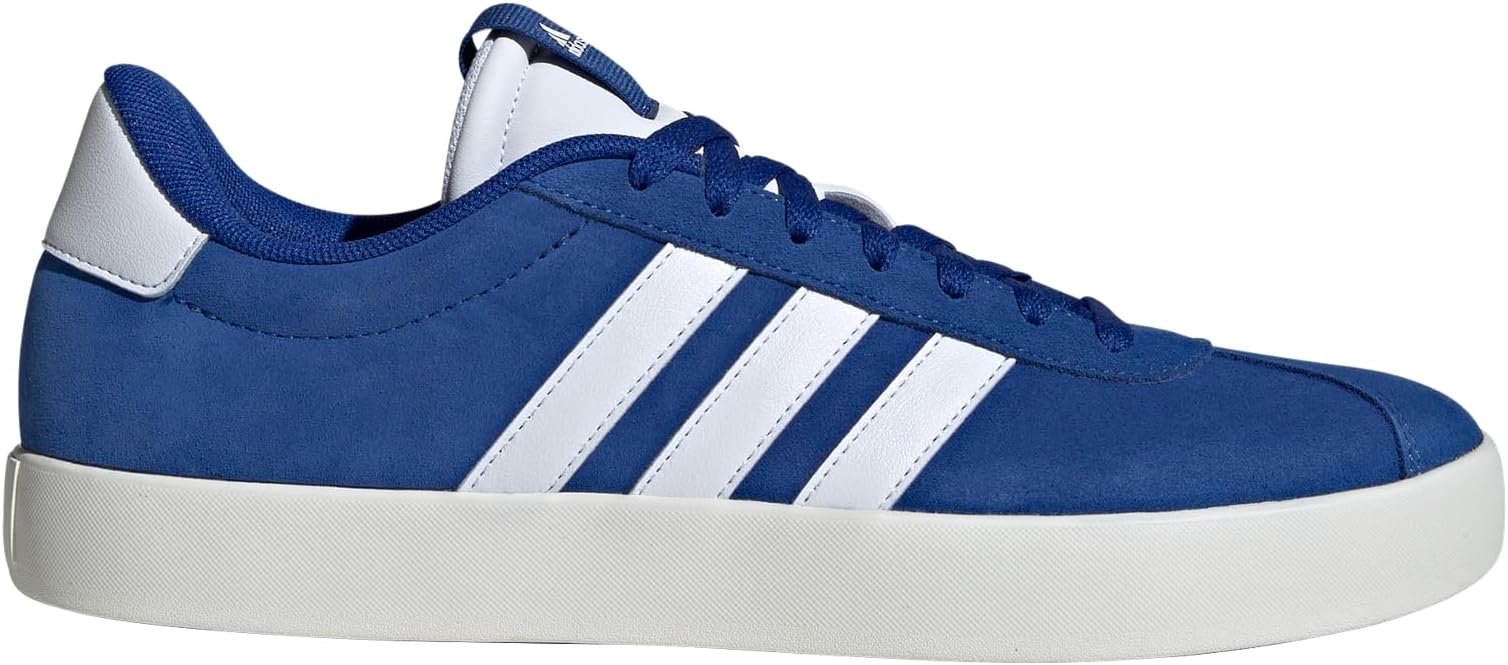
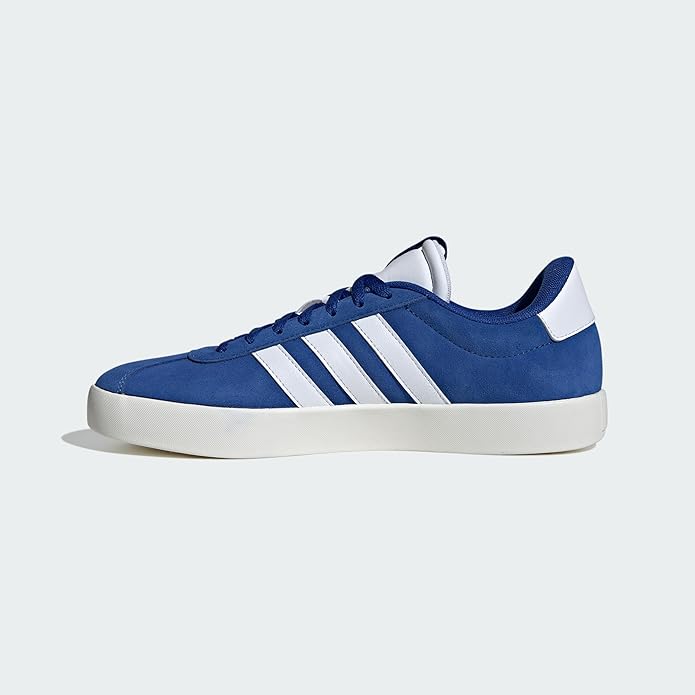
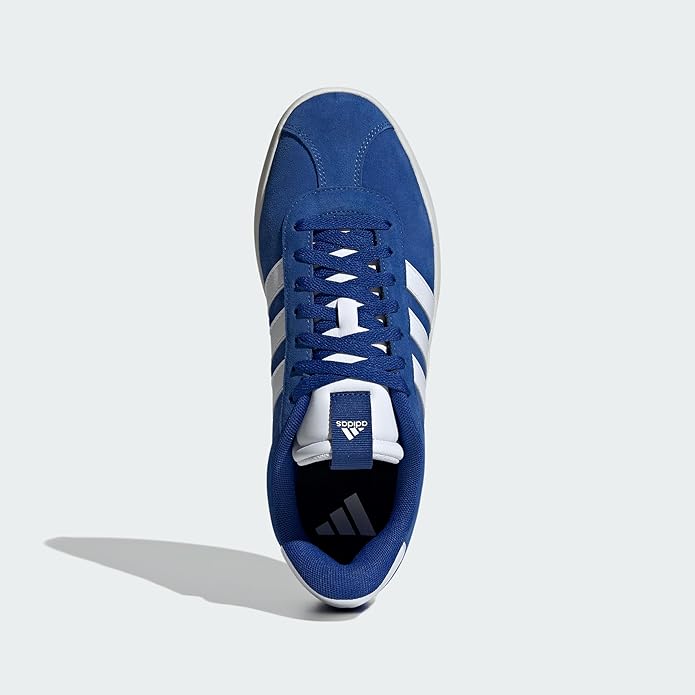
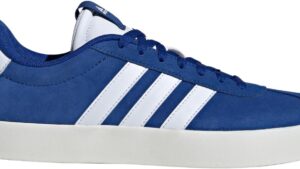
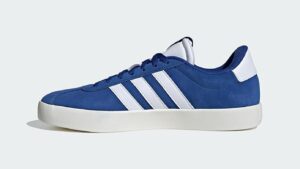
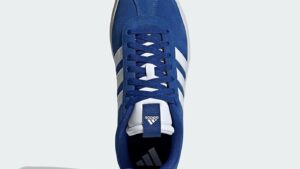
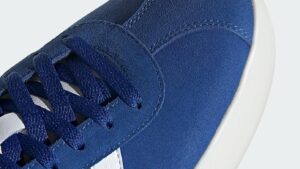
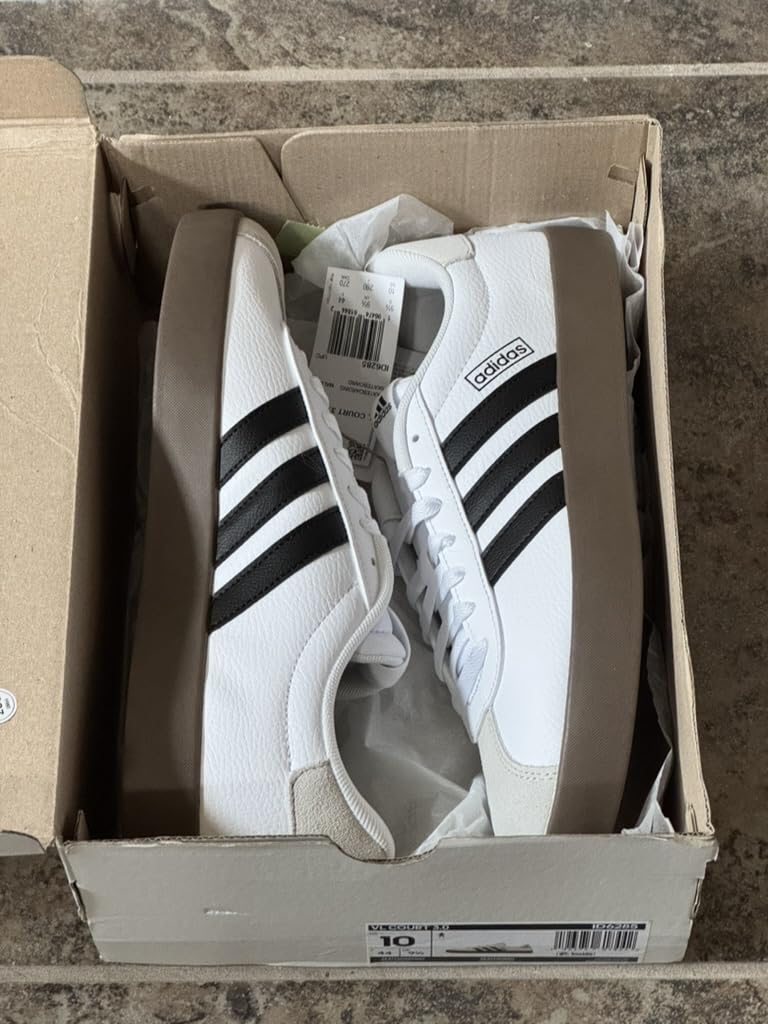
My buddy Jake has pretty strong opinions about sneakers. So when he showed up to weekend basketball pickup raving about his adidas VL Court 3.0s, I paid attention. I’d been rotating through pairs that either looked good for two months then fell apart, or cushioned my feet well but made me look like I was about to run a marathon to the grocery store. Seven weeks later, 45+ wear sessions deep — here’s my honest take on whether these deliver.
Quick Verdict
The VL Court 3.0 is a reliable daily casual sneaker that punches above its price class on style and comfort — with real limits you need to know before buying.
Score: 8.4/10
- ✅ Solid daily comfort for 6-8 hours of casual wear
- ✅ Vulcanized construction that actually flexes and grips
- ✅ Versatile styling that works with most casual outfits
- ⚠️ Runs narrow — wide feet need to size up or look elsewhere
- ⚠️ “Full grain leather” claims on some listings are inaccurate — it’s synthetic
- ❌ Non-removable insole rules out orthotics
Full breakdown below.
What Is the adidas VL Court 3.0?
The VL Court line sits in adidas’s lifestyle category — skateboarding-inspired court shoe heritage, positioned as a budget-accessible alternative to the Samba or Gazelle. Think clean silhouette, retro proportions, classic three-stripe branding. It’s not trying to be a performance shoe and doesn’t pretend otherwise.
Technical Specifications
| Spec | Value |
|---|---|
| Price | $60-75 (MSRP $75; street price varies) |
| Upper | Synthetic tumbled leather + suede at toe and heel |
| Sole | Vulcanized rubber cupsole |
| Cushioning | Non-removable EVA sockliner (no foam midsole) |
| Lining | Textile |
| Drop | ~0mm (flat vulcanized construction) |
| Category | Lifestyle / Casual |
| Best for | Daily wear, errands, light walking |
| Testing | 7 weeks, 45+ sessions |
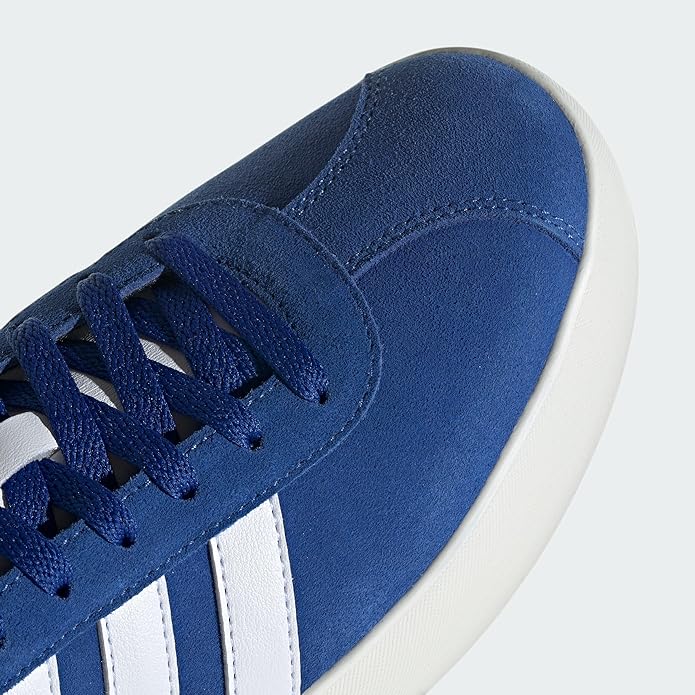
One thing to flag immediately: several Amazon listings and some older reviews describe this as having a “full grain leather upper.” That’s inaccurate. The upper is synthetic tumbled leather with suede detailing at the toe box and heel tab — nice-looking material that holds up well, but not genuine leather. This matters if you were sold on the leather story.
Fit & Sizing — The Narrow Reality
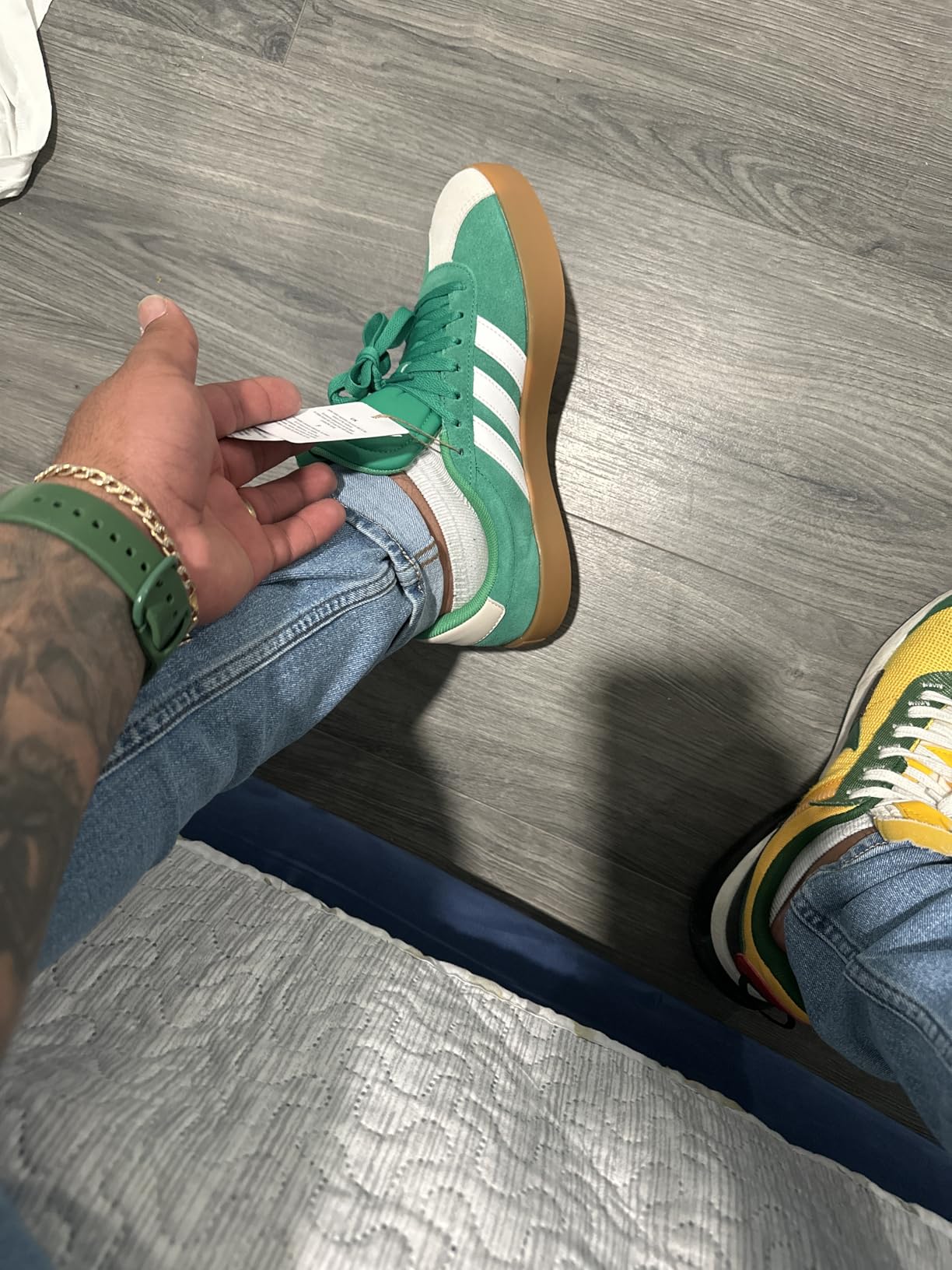
Sizing is where most people have questions, and the data tells an interesting story. Zappos’s fit survey from 1,423 reviews shows 56% report true to size — but nearly half had some experience of fit issues, almost always with width rather than length. The consistent finding across Spanish-language reviews (“un poco apretadas”), English reviews, and my own 7 weeks: this shoe runs narrow.
| Foot Type | Recommendation | Notes |
|---|---|---|
| Standard width | TTS or down 0.5 | Snug initially, breaks in over 7-10 days |
| Narrow feet | TTS | May feel slightly roomy at sides; laces compensate |
| Wide feet | Size up 0.5-1 OR consider alternatives | Consistent pressure on sides — not a temporary tightness |
For me (standard-to-average width), the fit was snug out of the box but never uncomfortable — more like the shoe was learning my foot shape. By day 10 it felt completely dialed in. If you’re in the wide camp, this snugness doesn’t go away the same way; it’s structural.
The break-in itself is gradual rather than painful. You’re not white-knuckling through blisters — the synthetic leather and textile lining are smooth from day one. It’s more that the shoe gets noticeably more comfortable over the first two weeks as the materials conform to your foot’s specific contours.
Comfort & All-Day Wearability
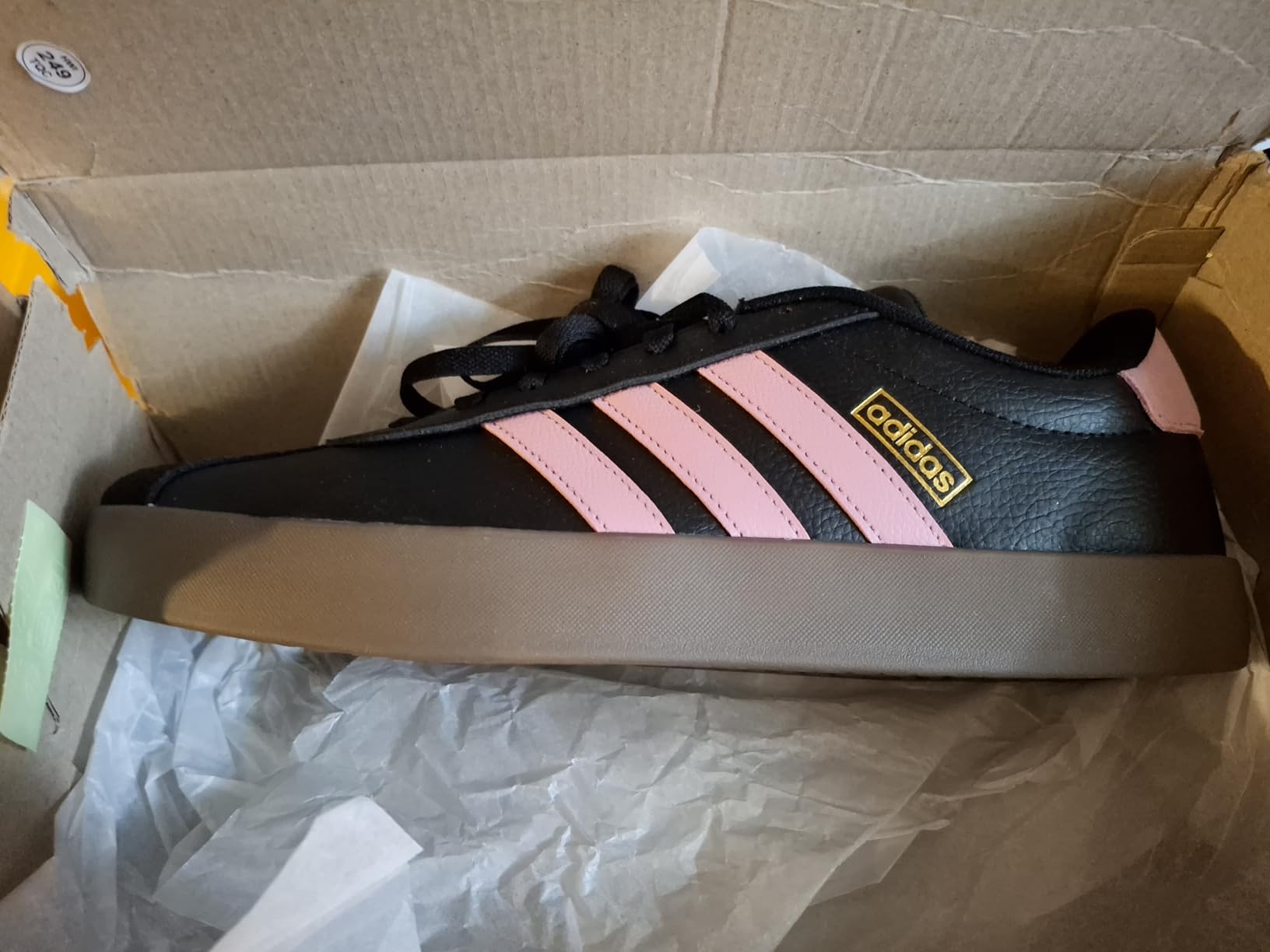
Here’s what matters for a daily driver: can you put these on at 8am and not regret it by 3pm? For the most part, yes.
The cushioning setup is simple — a non-removable EVA sockliner sitting inside a vulcanized rubber cupsole. No foam midsole, no air unit, nothing fancy. What you get is a moderate impact dampening that’s well-suited to casual impact (walking, standing, light errands) but reaches its ceiling under sustained load.
Over 7 weeks, I wore these for:
- Morning coffee walks of 1-2 miles — comfortable throughout
- Grocery runs and errands — no complaints
- A 3-hour baseball tournament standing on concrete — adequate, feet not dead at the end
- Weekend city trip: subway stairs, 4-hour restaurant hang, late-night walking — feet stayed comfortable
The honest comfort timeline: hours 1-6 feel fresh, hours 7-8 are still comfortable, 9-10 is manageable. Past 10-11 hours you’re going to feel the flat sole. This isn’t a shoe designed for healthcare workers on 12-hour shifts — the EVA sockliner just doesn’t have enough depth for that demand.
The textile lining deserves a specific mention. It stays smooth against skin all day — no scratchiness even sockless, no hotspot development, no odor buildup in the usual problem zones. Small detail that adds up over multiple wears.
Build Quality & Materials
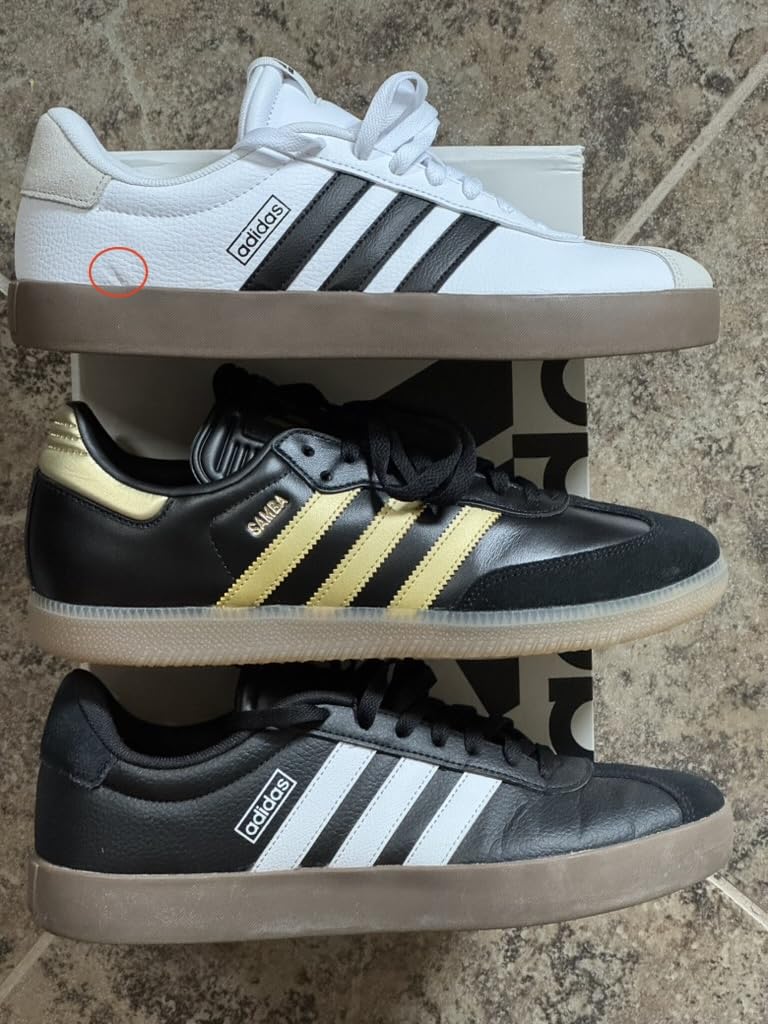
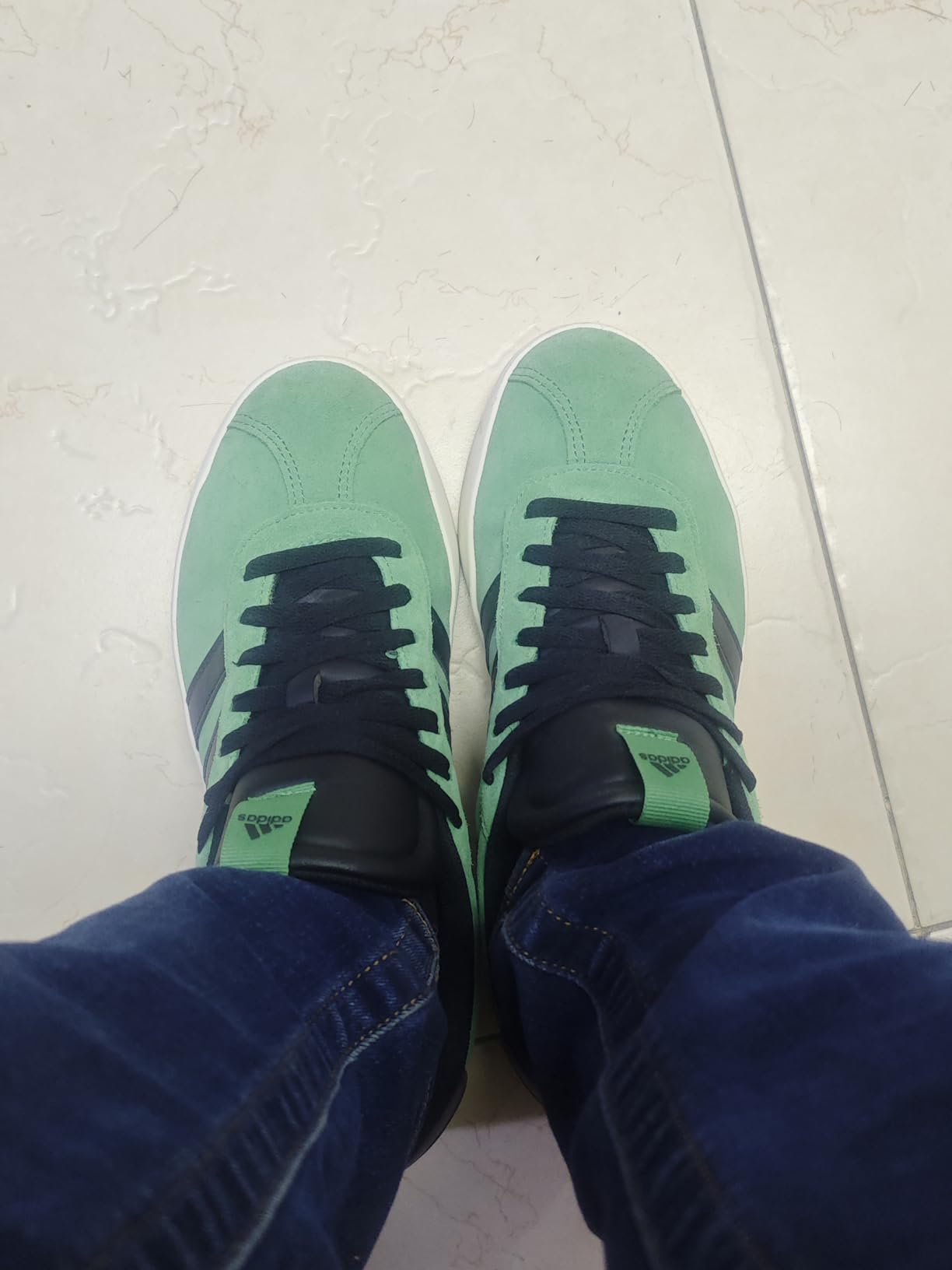
After 45+ wear sessions, the construction is holding up. The synthetic tumbled leather has developed a bit of character — small creases at the toe flex point, some subtle sheen where the material’s broken in. It doesn’t look worn out; it looks worn in, which is different.
The vulcanized cupsole is the structural anchor here. Unlike glued-on soles that eventually separate at the bond, vulcanized rubber is fused to the upper under heat — it’s how classic skate shoes achieve longevity. At 7 weeks of regular wear, zero separation issues, no peeling, no delamination. The tread pattern is simple but holds grip well across city surfaces.
The lacing system locks down cleanly without hotspots over the instep. One thing I noticed: you can loosen the laces slightly and slip the shoe on after tying — the synthetic leather gives enough while still maintaining lateral hold once properly laced.
One flag: the insole is non-removable. It’s glued into the shoe as a structural EVA insert. If you rely on custom orthotics or aftermarket insoles for plantar fasciitis or arch support, this is a dealbreaker. The footbed you get is the footbed you keep.
Performance Testing — Weather & Surfaces
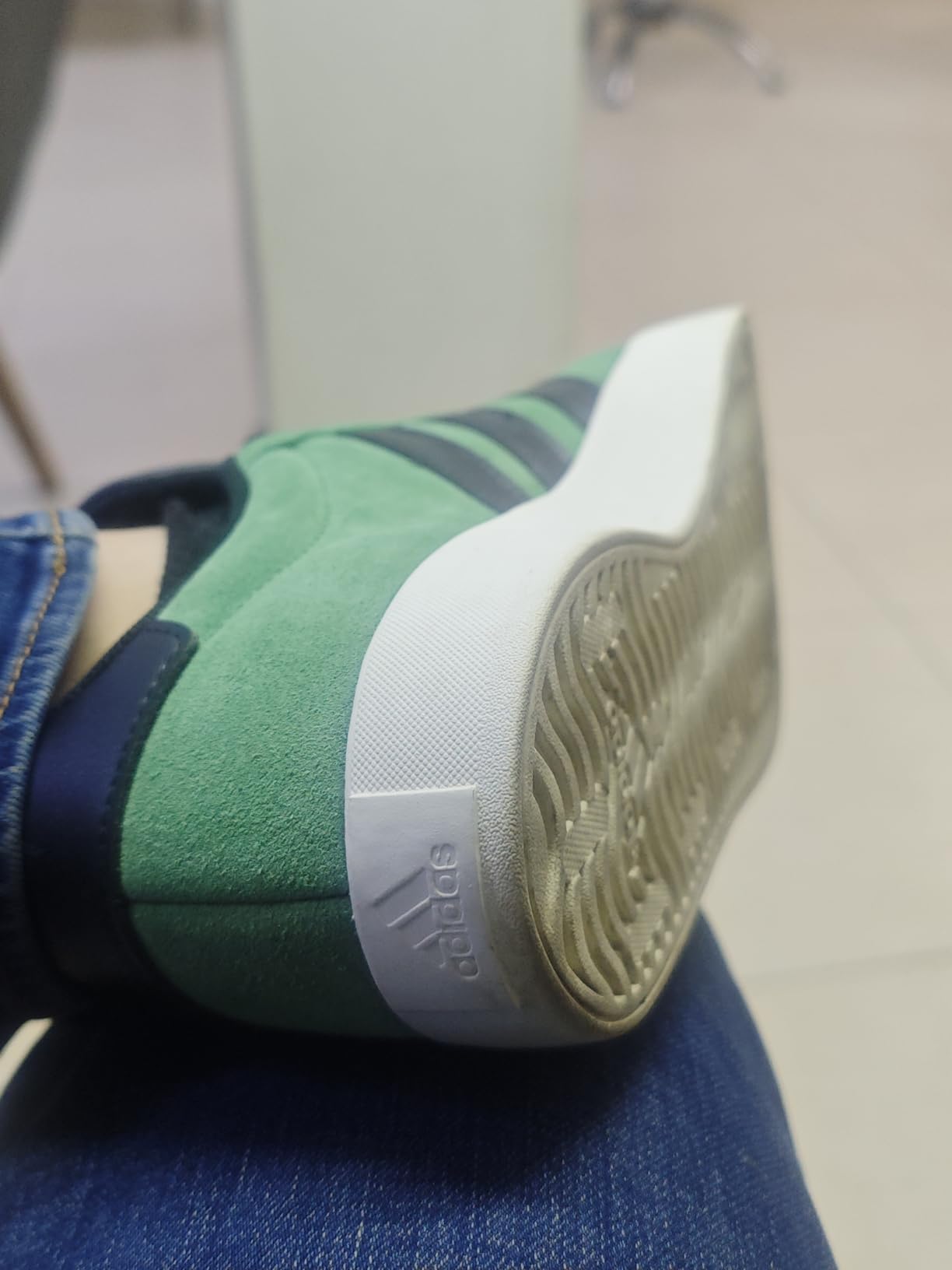
Deliberately testing in varied conditions over 7 weeks gave me a solid picture:
Temperature Performance
| Condition | Performance | Notes |
|---|---|---|
| 85°F+ humid | 7/10 | Warmer than mesh; manageable, not unbearable |
| Light rain | 7/10 | Brief exposure fine; not waterproof for sustained rain |
| 40-50°F cold | 9/10 | Textile lining provides just enough insulation |
Surface Testing
Urban walking: Outstanding. On 5+ mile city days — mixed concrete, stone pavers, subway gratings — no pressure points developed and I never felt unstable. The vulcanized sole’s flexibility means the shoe bends naturally with your stride rather than fighting it.
Polished mall floors and wet pavement: The traction held. I tested on slippery mall tiles deliberately walking faster than normal — no slips. Wet pavement after a drizzle was equally fine for walking pace.
Light jogging: Not recommended. The flat sole and minimal EVA cushioning aren’t engineered for the repeated impact of running. A few blocks in, you feel the difference from a proper running shoe. This is a casual sneaker, full stop.
Do adidas Deliver on Their Claims?
Let’s run through the main marketing claims honestly:
“Lightweight cushioning for step-absorbing, durable comfort” — MOSTLY TRUE. The EVA sockliner does provide adequate step absorption for daily casual use. “Durable comfort” is fair for 6-8 hours. But calling it “all-day” cushioning is generous — it has a real ceiling. Also, adidas’s marketing and some third-party listings call this “full grain leather,” which is simply inaccurate. It’s synthetic.
“Vulcanized soles offer authentic retro look” — TRUE AND FUNCTIONAL. This isn’t just an aesthetic choice. Vulcanized construction delivers real flexibility and grip durability. The flat profile is by design — it connects the shoe to the heritage of court sneakers like the Vans Old Skool and Vans Atwood. The tread may be simple, but it works.
“Textile lining provides soft, comfortable feel” — VERIFIED. No issues here. Comfortable from day one, stays comfortable, no irritation.
“Full grain leather upper” (Amazon listings) — INACCURATE. The upper is synthetic tumbled leather with suede accents. This is worth knowing because some buyers are specifically looking for genuine leather, and the VL Court 3.0 doesn’t have it at this price point.
Value Assessment — What $60-75 Actually Gets You
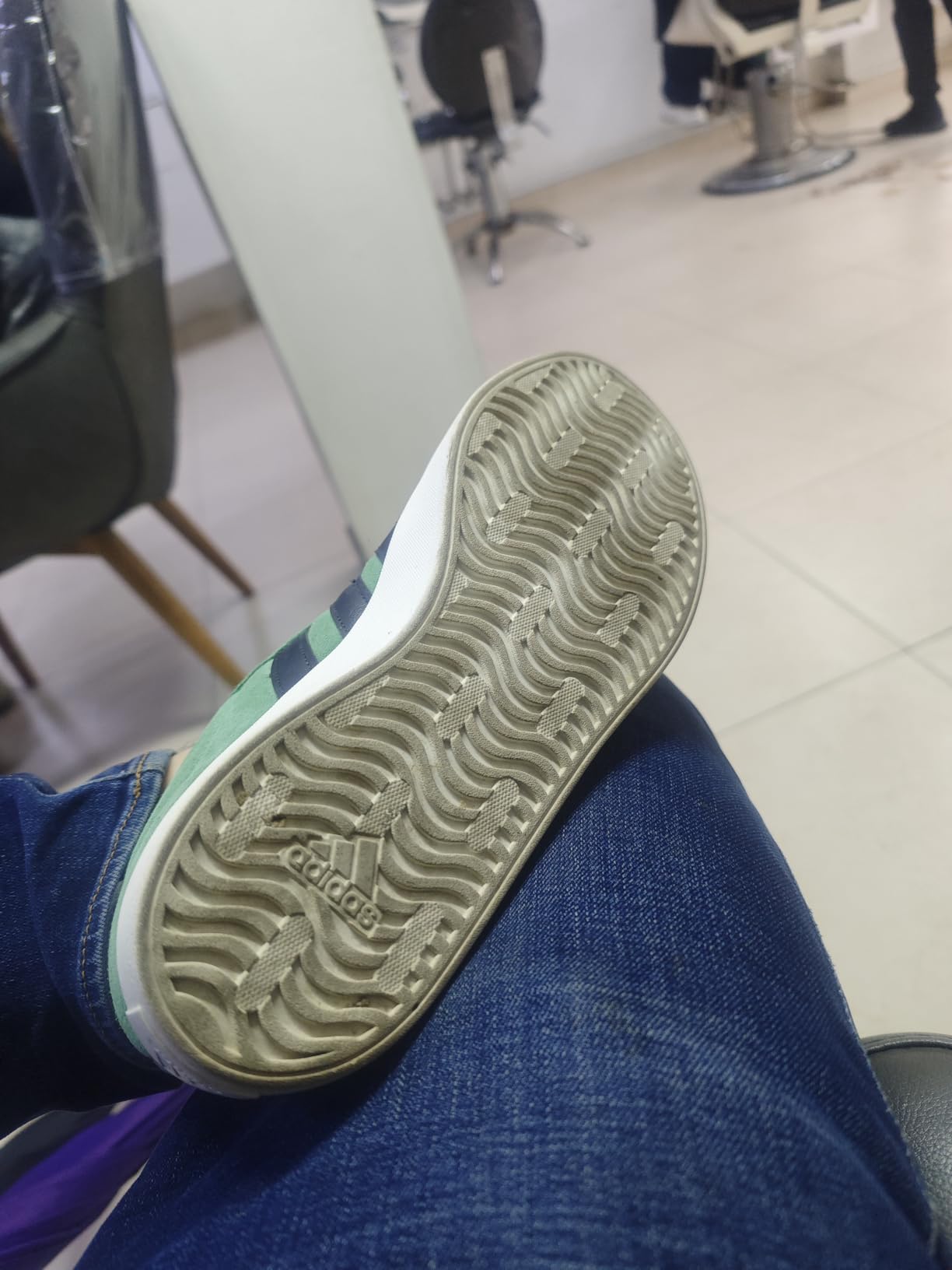
At street prices of $60-75, the cost-per-wear math works out nicely for most casual buyers. Assuming 200 wears over roughly two years of rotation — not daily, but regular — you’re looking at $0.30-0.38 per wear. For a pair that holds its shape and still looks presentable well past the 45-session mark, that’s solid.
Where the value is clear: construction durability at this price point. The vulcanized sole isn’t going to delaminate the way cheaper cemented soles often do. The synthetic upper may not be genuine leather, but it resists creasing better than budget knit materials and cleans up easily.
| Shoe | Price | Key Advantage | Key Disadvantage |
|---|---|---|---|
| adidas VL Court 3.0 | $60-75 | Vulcanized durability, versatile style | Narrow width, synthetic (not genuine leather) |
| Stan Smith | $80-100 | Clean minimal heritage design | Less cushioning, similar synthetic at same price tier |
| Gazelle | $100+ | Stronger heritage fashion positioning | Significant price premium for styling, not construction |
| Converse Chuck Taylor | $55-70 | Icon status, wide last | Minimal cushioning, reputation for foot fatigue |
The VL Court wins the value comparison handily over the Gazelle. Against the Stan Smith, it’s closer — the VL Court has marginally more cushioning and similar synthetic quality. Adidas Advantage 2.0 is worth considering if you want something with slightly more cushioning in the adidas casual lineup.
Who Should Buy (and Who Shouldn’t)
Buy if you:
- Want a reliable casual daily sneaker under $75 with proven construction
- Walk 3-7 miles per week in city/urban settings
- Have standard or narrow feet
- Need versatile styling for campus, casual work, or weekends
- Value durability over trend-driven design
Skip if you:
- Have wide feet — the narrow last creates persistent, not temporary, tightness
- Need athletic performance: running, sports, court play — look at actual training shoes
- Require orthotics or custom insoles — insole is non-removable
- Do 10+ hour standing shifts daily — EVA-only cushioning isn’t sufficient
- Specifically wanted genuine leather (these are synthetic)
Consider alternatives:
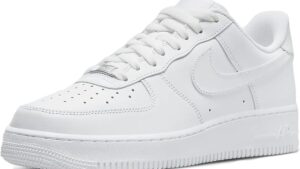
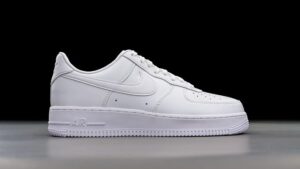
For wide feet: Nike Air Force 1 offers a roomier toe box at a comparable price tier. For the adidas casual family with better cushioning, the adidas Daily 4.0 adds a foam midsole. For the kids’ version, adidas Grand Court 2.0 Kids is worth a look. Women’s version available at adidas Women’s VL Court 3.0.
Community Feedback — What Repeat Buyers Say
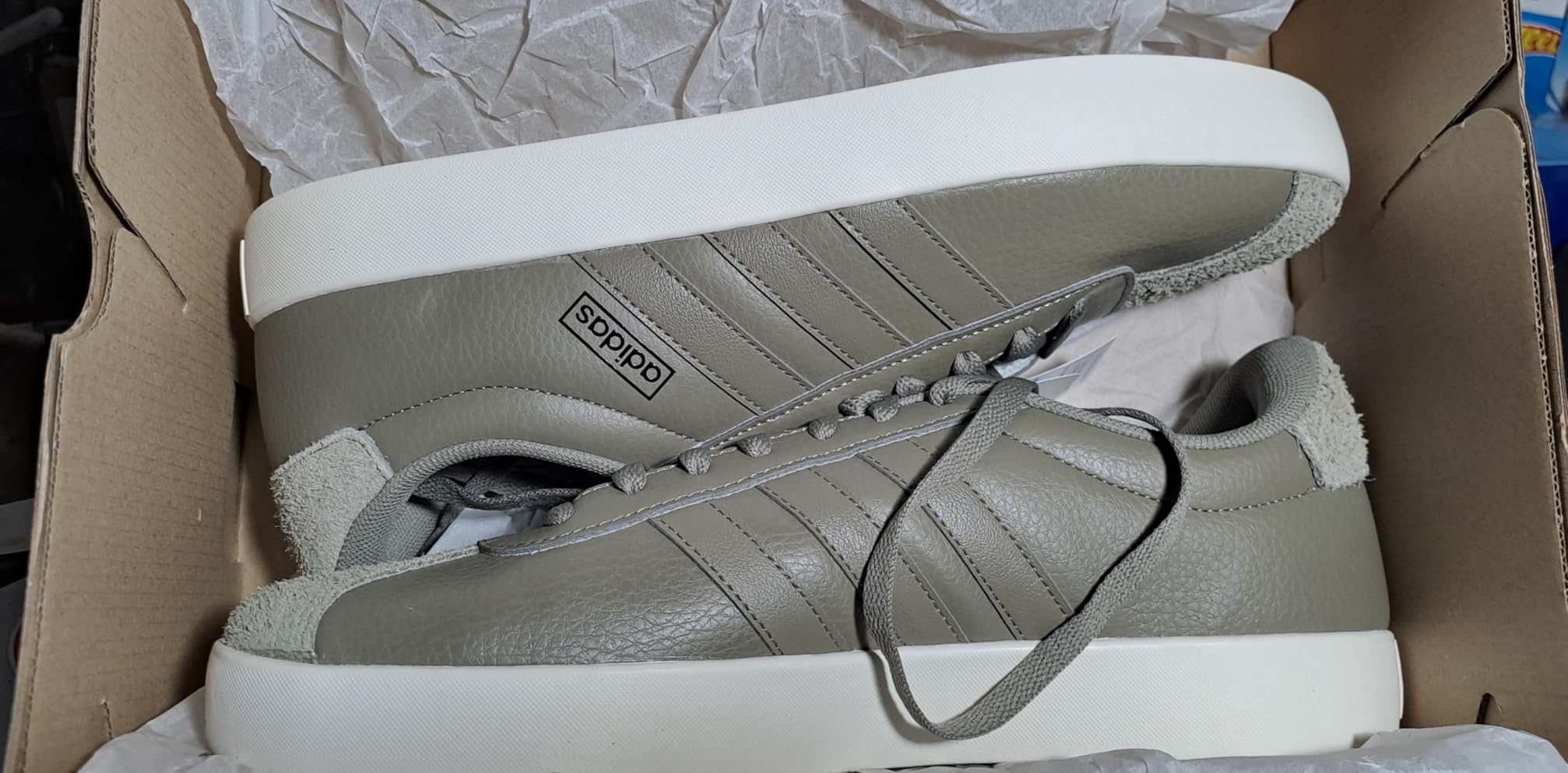
The 1,423 Zappos reviews (81% five-star) align closely with my testing. What stood out in the qualitative feedback:
Repeat buyers are real. Several reviewers mentioned buying their second or third pair — one noted wearing “the same model for a couple of years before getting another.” That’s not something people do for shoes they regret. The reliability factor is genuine.
The comfort floor holds up over time. One community member documented 40,000 steps at Disney World — that’s an extreme test for a flat-soled casual shoe, and they reported manageable comfort throughout. That tracks with my 3-hour baseball practice experience.
The narrow width is the dividing issue. Positive reviews overwhelmingly come from standard-to-narrow feet. The critical reviews — including the “un poco apretadas” Spanish reviews — reliably point to width, not comfort or durability. If you’re in the wide camp and go true to size, you’ll likely join the critical minority.
Quality control is generally good for Amazon-fulfilled orders. Third-party seller fulfillment has had some documented issues (wrong sizes, visually used pairs) — worth filtering to Amazon-fulfilled or buying from Zappos/adidas directly.
Final Verdict
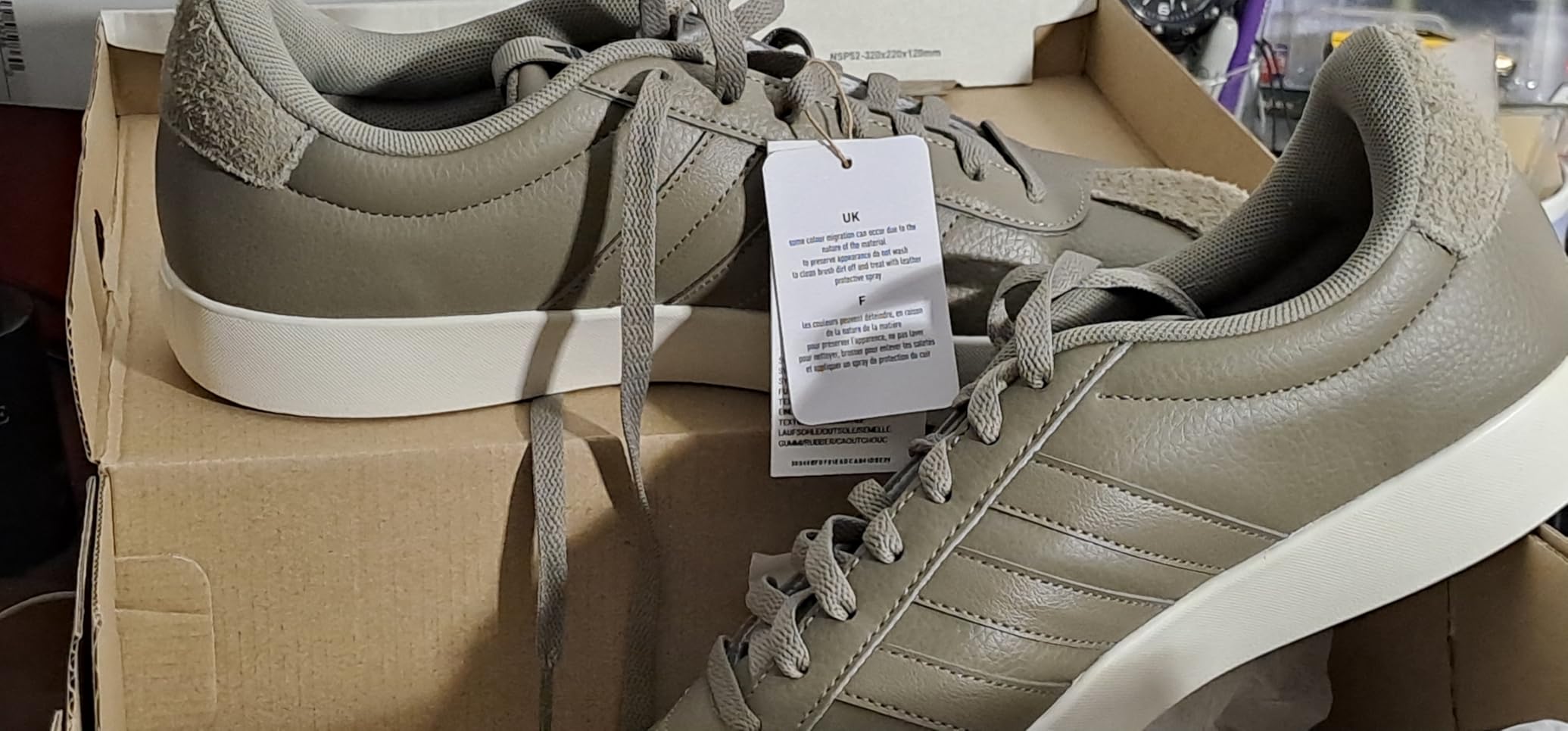
Performance Scoring
| Category | Score | Comments |
|---|---|---|
| Comfort | 8.5/10 | Solid for 6-8hrs; manageable to 10hrs; EVA ceiling past that |
| Style/Versatility | 9.0/10 | Works with jeans, chinos, casual — genuinely versatile |
| Build Quality | 8.0/10 | Vulcanized sole excellent; synthetic (not leather) as claimed |
| Value | 8.5/10 | $0.30-0.38/wear; strong construction at price; slightly docked for leather claim |
| Durability | 7.5/10 | Vulcanized sole built for longevity; EVA wears eventually |
| Fit/Sizing | 7.5/10 | TTS or down 0.5; narrow width excludes wide-foot buyers |
✅ What Works
- Vulcanized sole construction — genuine durability advantage
- Comfortable for typical daily casual wear (6-8 hours)
- Textile lining — smooth and non-irritating all day
- Versatile styling across casual contexts
- Consistent adidas sizing (once you know your width situation)
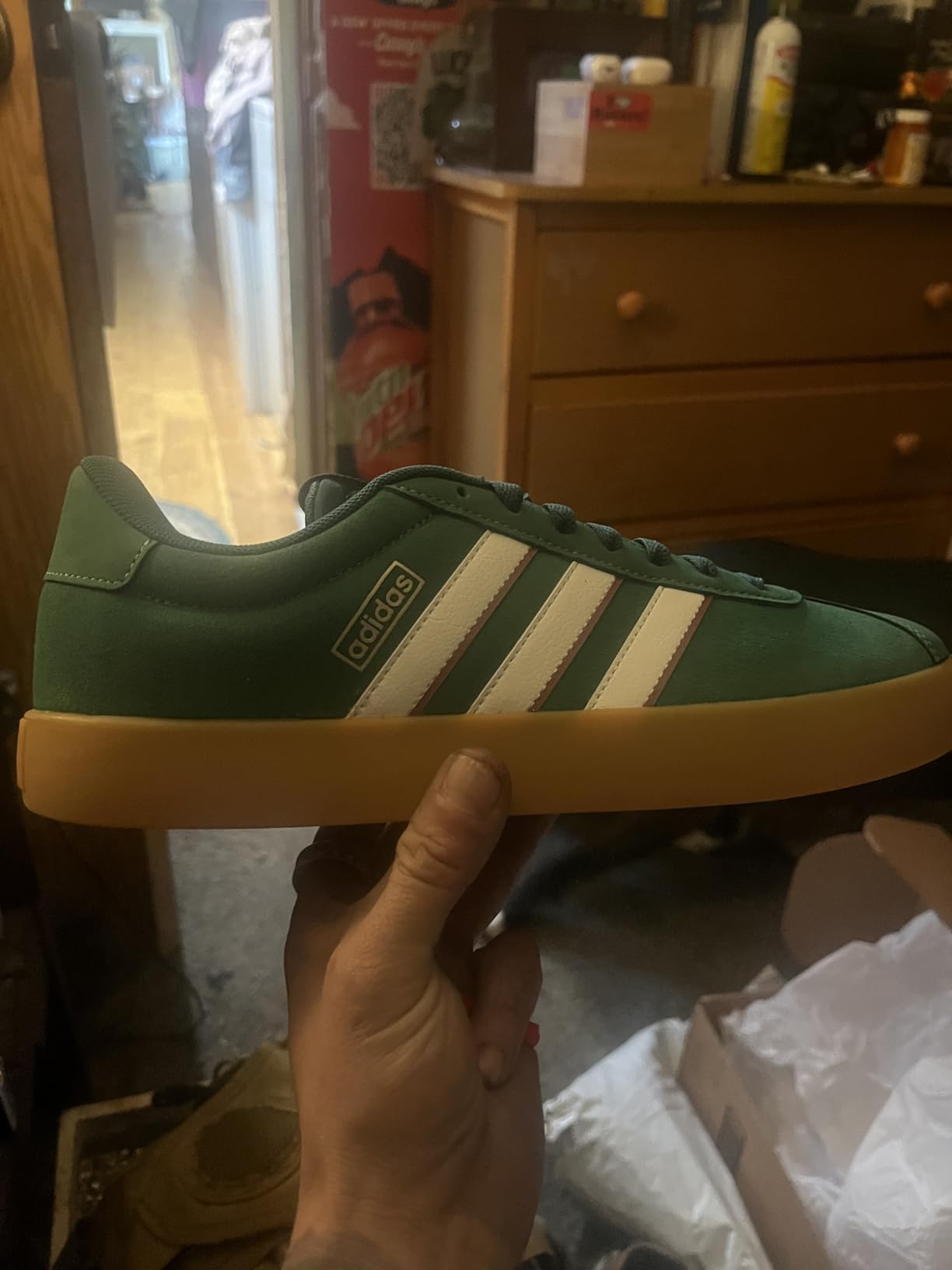
- Multiple colorway options with equivalent quality
❌ What Doesn’t
- Synthetic leather — “full grain” claims are inaccurate
- Non-removable insole — no orthotic compatibility
- Narrow fit — wide feet need to size up or avoid
- Comfort ceiling at 8-10 hours for extended wear
- Not for athletic activities or running
- 7-10 day break-in for standard-width feet
After 7 weeks, I still reach for these more than any other pair in my casual rotation. Jake’s recommendation held up — not because the VL Court 3.0 is perfect, but because it’s honest about what it’s designed to do and delivers on that consistently. For most guys who want clean casual sneakers that don’t fall apart, don’t cost $120, and don’t look like they belong in a gym — this is a smart choice.
Overall Score: 8.4/10 — Recommended for casual buyers with standard/narrow feet. Skip if you need wide fit, orthotics, or genuine leather.
Frequently Asked Questions
Are these true to size?
For most buyers, yes — but it’s nuanced. Length runs true to size for about 56% of Zappos reviewers; some find it runs slightly large (down 0.5). The consistent issue is width: this shoe runs narrow regardless of length. Standard and narrow feet typically fit well at TTS; wide feet should size up 0.5-1 or consider a different last shape. The break-in over 7-10 days helps with the snugness but doesn’t resolve structural width limitations for wide-foot buyers.
What’s the arch support like?
Minimal. The VL Court 3.0 has a flat EVA sockliner inside a vulcanized cupsole — similar cushioning architecture to Vans or classic Converse. For everyday casual walking and errands, it’s adequate. For people with plantar fasciitis, high arches, or flat feet that need support, it won’t provide therapeutic intervention. The insole is also non-removable, so you can’t swap in aftermarket orthotics as a workaround.
Can I wear these for long-distance walking?
Yes, for casual city walking — I did multiple 5+ mile days without issues. Community feedback includes a 40,000-step Disney World day. The flat vulcanized sole actually provides good ground feedback for walking. Where it struggles is sustained impact or very long days: past 9-10 hours the minimal cushioning makes itself felt. For actual hiking, look at dedicated hiking shoes with proper midsole support.
How do these compare to Stan Smiths or Gazelles?
vs. Stan Smith: The VL Court 3.0 has slightly more cushioning and similar synthetic-leather quality at a lower price. Stan Smiths have a cleaner, more minimal silhouette and slightly wider last. For daily comfort, VL Court edges ahead; for iconic minimalism, Stan Smith wins. vs. Gazelle: The Gazelle costs $40-60 more for positioning in the heritage suede market. The VL Court is better value unless the Gazelle’s specific heritage story matters to you. Both use similar flat-soled casual construction.
What’s the break-in period?
Plan for 7-10 days of regular wear. The synthetic leather starts slightly stiff and gradually conforms to your foot. It’s not painful break-in — you won’t get blisters from the lining. It’s more that the shoe gets noticeably more comfortable around day 8-10 as the materials settle. After two weeks, the fit feels dialed in.
Are these good for teenagers and young adults?
Yes — the clean retro styling translates well to campus and casual social contexts without looking either juvenile or overdressed. The durability is suitable for active teen wear. The main consideration is foot width: teens with wide feet tend to notice the narrow last more. If width is a concern, sizing up 0.5 or opting for the adidas Grand Court 2.0 (which has a roomier fit) are both worth considering.
How do I clean and maintain them?
For the synthetic upper: a damp cloth handles most surface dirt well. Avoid machine washing — the vulcanized bond and synthetic material aren’t designed for it. The synthetic leather can be wiped clean in a way genuine leather can’t, which is actually a care advantage. For the sole, soap and water handles grime effectively. Some users apply a light sneaker protector spray to the upper for light rain resistance. The textile lining can develop odor over time with heavy use — removable insole would solve this, but since it’s glued in, rotating between pairs helps.
What colors are most versatile?
White and black both earn the “buy first” recommendation. White pairs with almost everything casual but shows scuffs more visibly — though the synthetic material wipes clean reasonably well. Black hides wear better and works across a wider range of clothing colors. Navy and burgundy colorways are excellent accent options if you have a wardrobe that accommodates them. Quality is consistent across colorways; this isn’t a case where certain colors use different materials.
Be the first to review “adidas Mens Vl Court 3.0 Sneakers Shoes”
Related products
Sneaker
Sneaker
Running Shoes
Reviews
There are no reviews yet.