

My last pair of daily drivers gave up mid-commute — sole flapping on the subway platform like some kind of sad farewell wave. That’s how I ended up impulse-researching the New Balance 574 Core at 11 PM on a Tuesday. Eight weeks and 120-plus miles later, I can tell you this shoe is both exactly what you’d hope for and a bit of a gamble. Here’s what I found.
Quick Specs
- Price: $85 MSRP (frequently under $90 on sale)
- Weight: ~12.8 oz (men’s size 9)
- Midsole: ENCAP — EVA foam core with polyurethane rim
- Upper: Suede and mesh (vamp, collar, tongue mesh = 100% recycled polyester)
- Outsole: Rubber with 5% recycled content
- Drop: 13.0 mm (RunRepeat lab)
- Widths: D (Standard), 2E (Wide), 4E (Extra-Wide)
- Category: Lifestyle sneaker / casual daily wear
- Testing: 8 weeks, 40+ days, 120+ miles — urban terrain, rain, 14-hour max day
Pulling Them From the Box — First Impressions
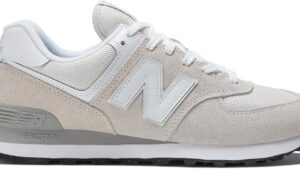
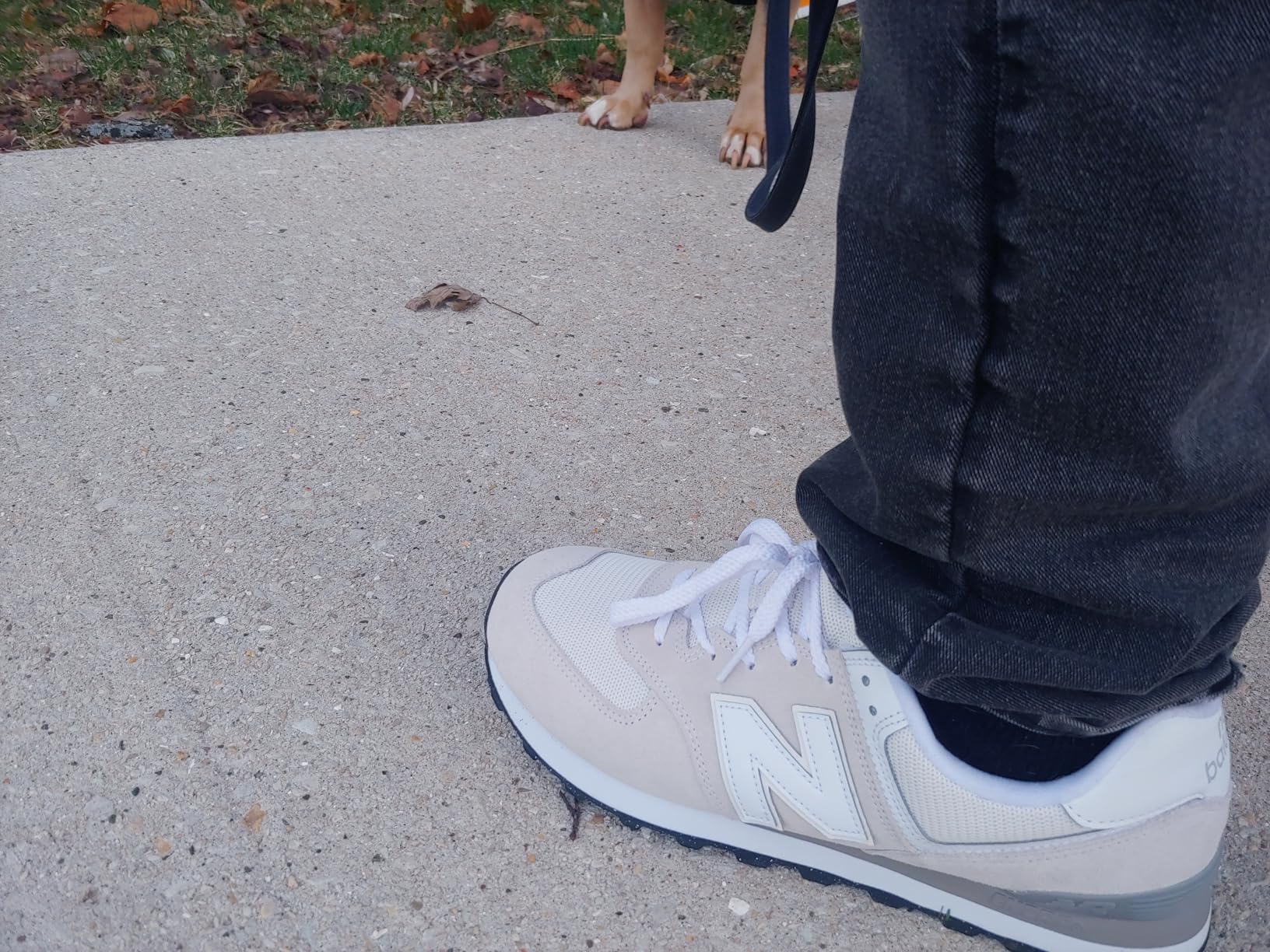
The 574 has been around since 1988, and it still looks like it belongs. There’s a reason this silhouette became a wardrobe default for an entire generation of guys who just needed something that works with jeans, chinos, and the occasional pair of shorts without looking like they’re trying too hard.
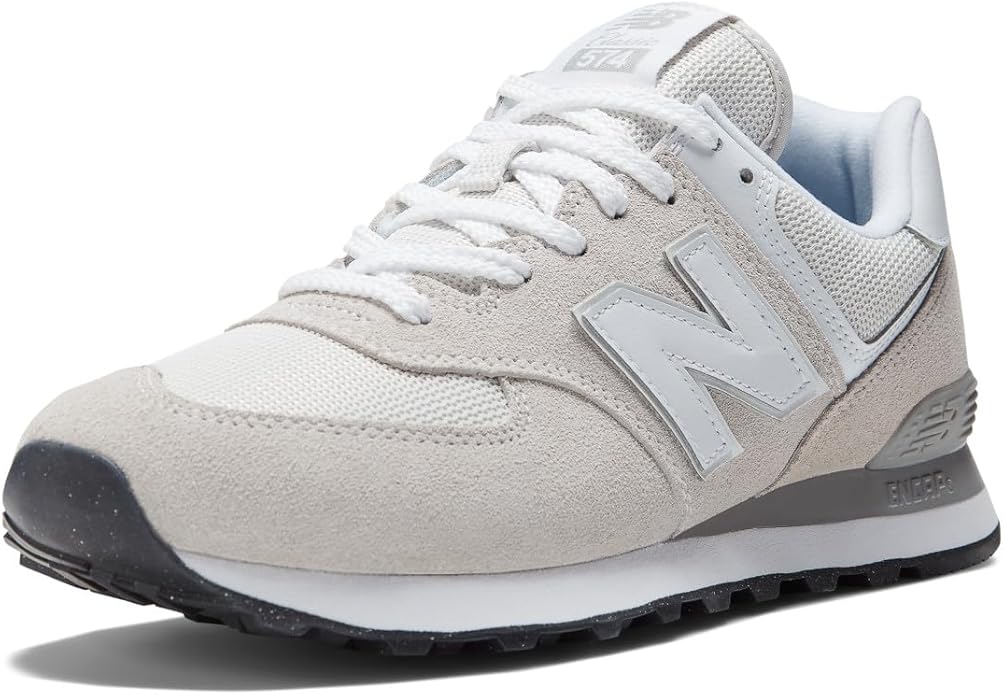
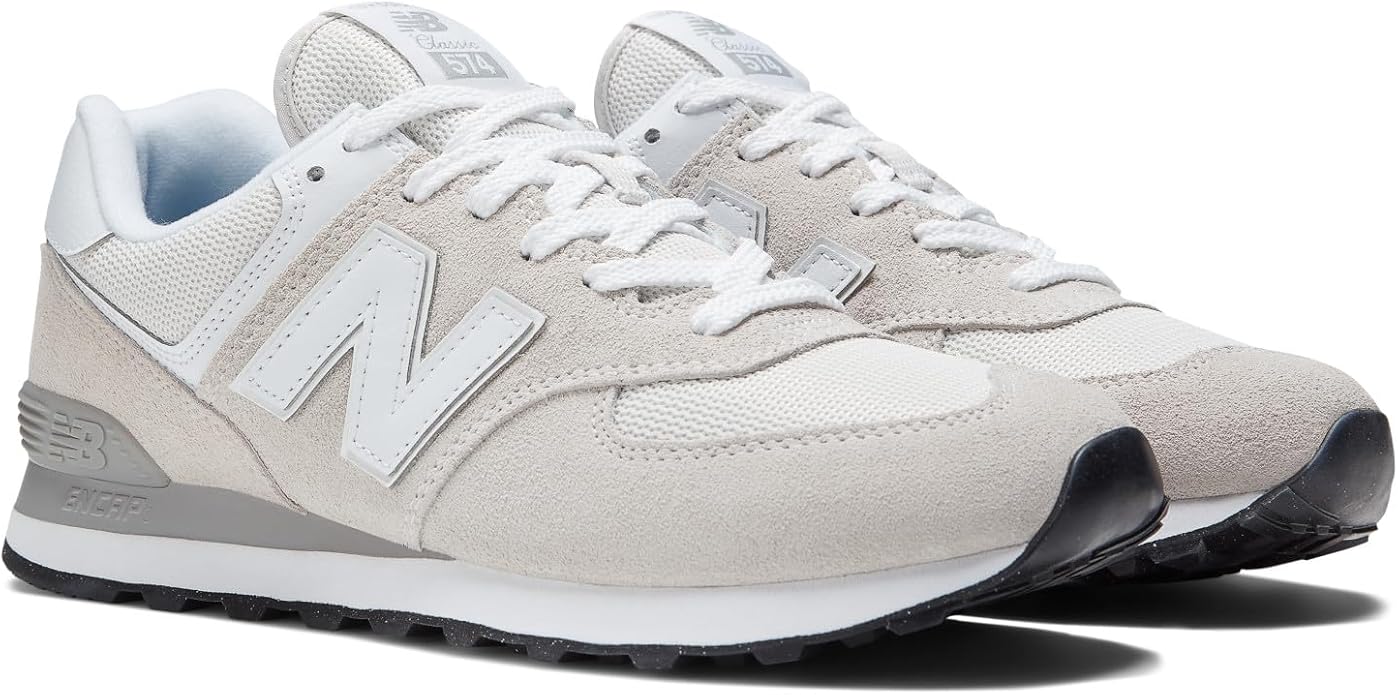
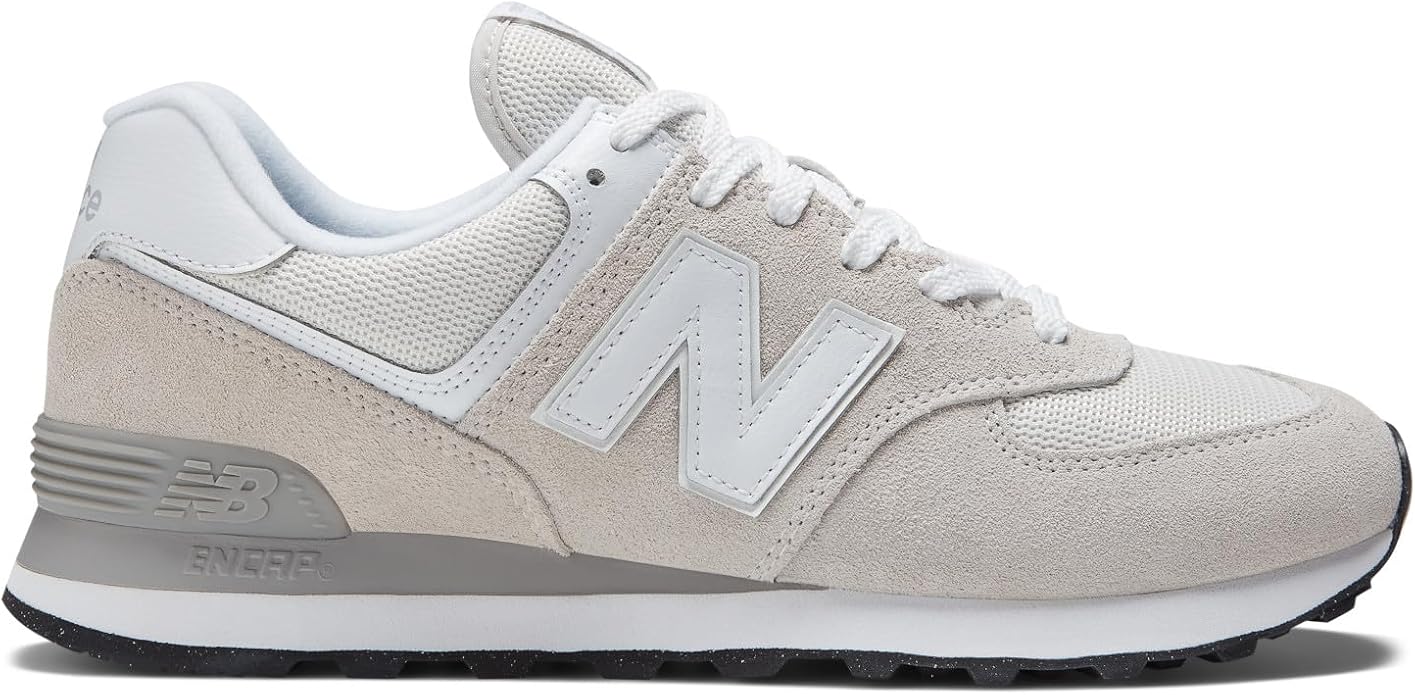
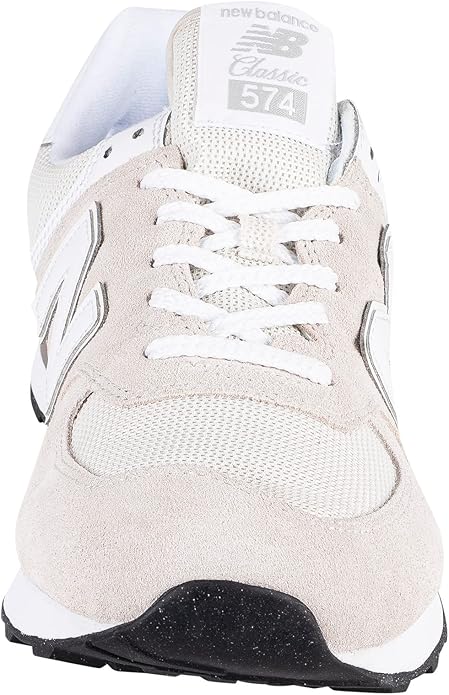
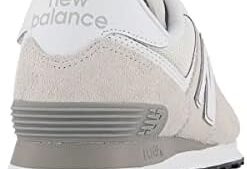
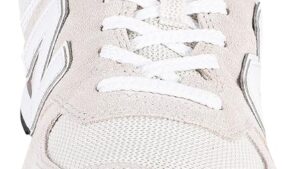
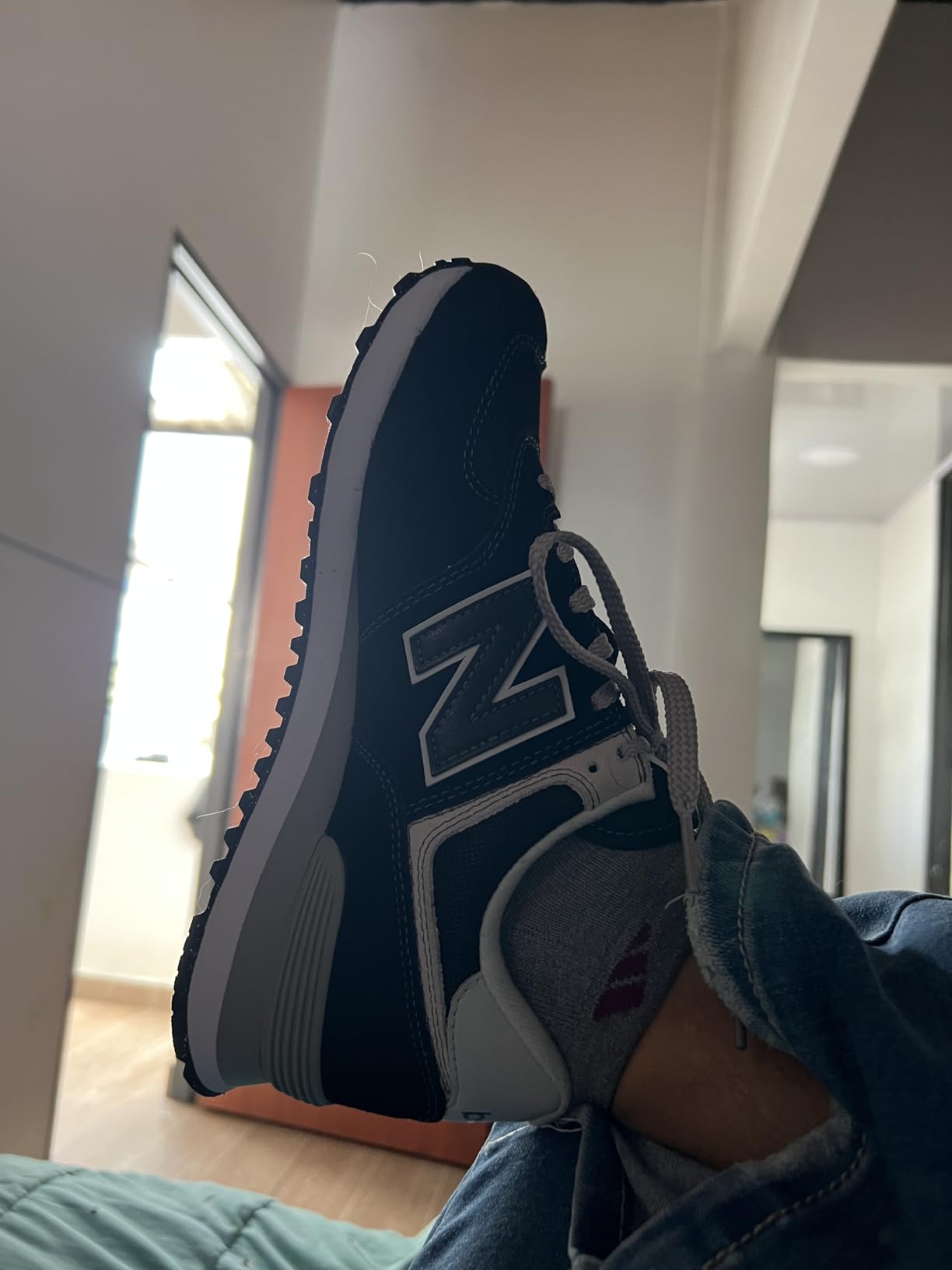
Out of the box, the build felt reassuring. Clean stitching along the suede overlays. No excess glue visible around the midsole join. The iconic N on the side was properly aligned — small detail, but if you’ve ever received a sloppy pair of budget sneakers, you know alignment matters. The suede has a matte finish that photographs well but will absolutely collect every scuff and water droplet it encounters. Worth knowing upfront.
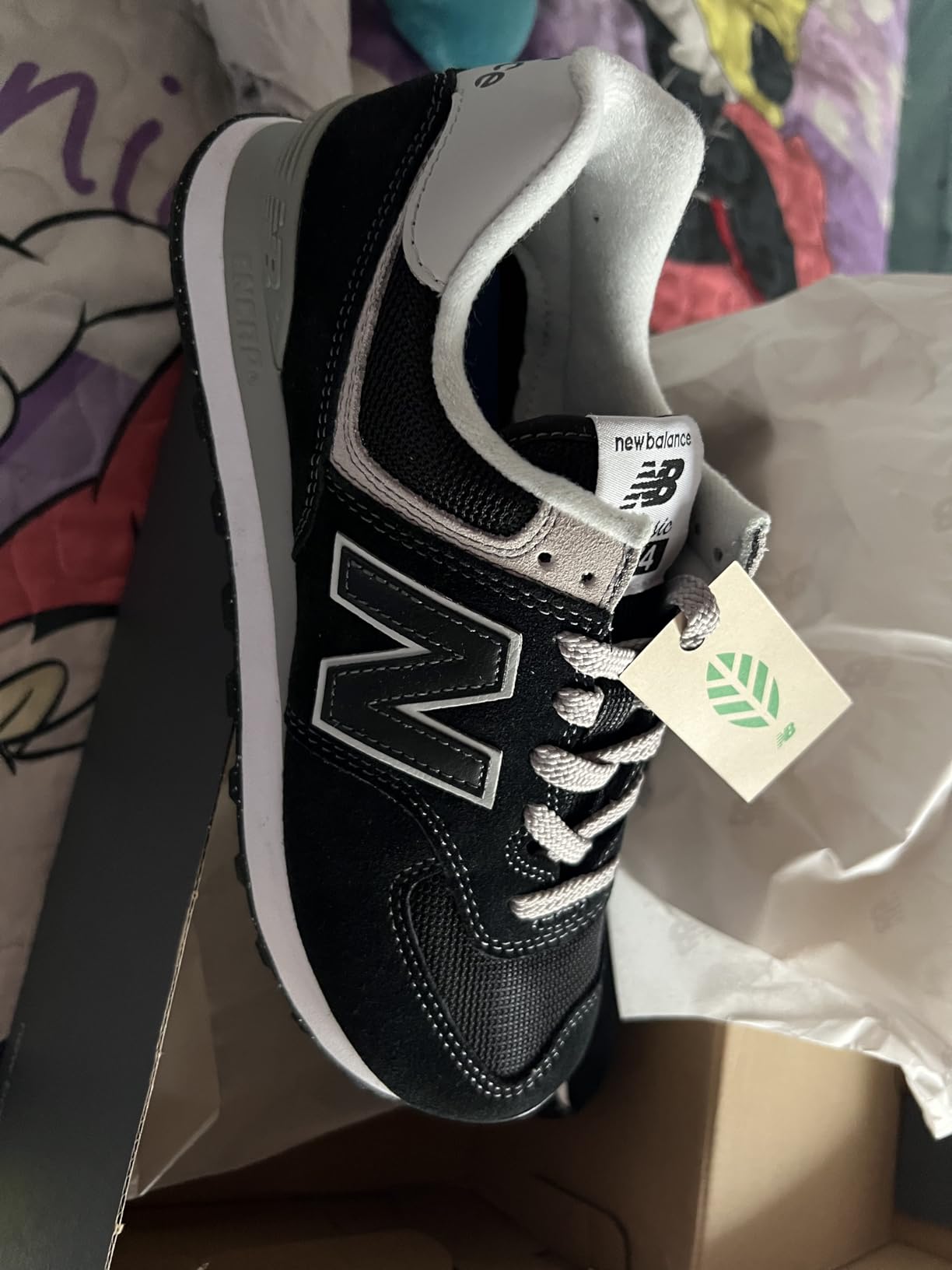
The recycled polyester mesh across the vamp and tongue feels identical to standard mesh — I wouldn’t have known it was recycled without reading the spec sheet. That’s a compliment. New Balance also uses 3% bio-based content in the midsole foam and 5% recycled rubber in the outsole. These aren’t headline numbers, but they’re genuine. No greenwashing here, just incremental progress.
Fit and Sizing — Read This Before Ordering
At 175 pounds with standard-width feet, my usual size 9 fit well right away. No break-in needed — I wore these straight to a full day of walking and meetings without a single blister or pressure point. A New Balance 574 women’s version tester on Today.com reported the same zero-break-in experience during a three-day theme park marathon, so this isn’t a fluke.
But here’s the nuance: RunRepeat’s lab measured the toebox at 74.1 mm — that’s a full 5 mm wider than the average sneaker. Sounds roomy, right? In practice, the suede upper creates a stiffer wrap than pure mesh shoes, so the initial feel can be snugger than the numbers suggest. After a few days, the suede relaxes and the space opens up.
About 30% of reviewers across 2,081 ratings on SneakerLens recommended sizing up by half. My take: standard-width feet can go true to size. If you’re between sizes, wide-footed, or prefer a relaxed fit, go up half. New Balance offers the 574 Core in 2E (Wide) and 4E (Extra-Wide), which is more width options than most competitors bother with.
One thing that surprised me — the toe box feels noticeably narrower than older 574 models I’ve owned. Whether that’s a deliberate design refresh for a sleeker profile or cost-driven, I can’t say. But if you’re upgrading from a pre-2020 pair, expect a tighter forefoot until break-in.
All-Day Comfort — Where This Shoe Earns Its Reputation
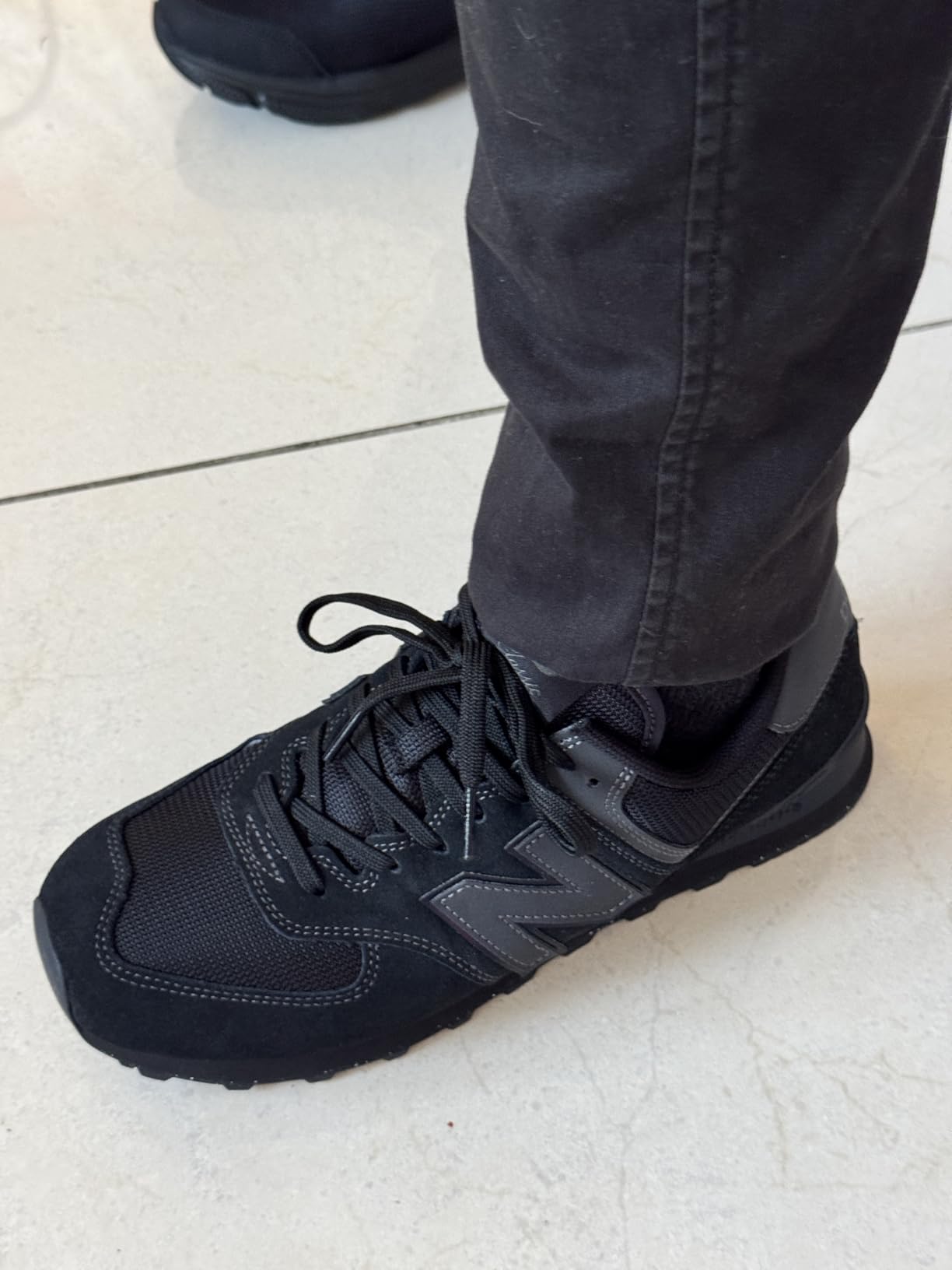
The ENCAP midsole is the reason people keep buying the 574, and it deserves the reputation. The technology pairs a soft EVA foam core with a harder polyurethane rim around the perimeter. Think of it as a firm platform with a cushioned center — supportive enough that your arch doesn’t collapse after hour six, soft enough that you’re not feeling every sidewalk crack.
RunRepeat’s durometer clocked the primary foam at 62.3 on the Asker C scale, which is actually quite firm compared to most sneakers. But the shock absorption hit 92 SA — well above average. Those two numbers seem contradictory until you wear them. The firmness comes from the PU rim providing structure, while the EVA core handles impact. The result isn’t plush or bouncy like modern foam running shoes. It’s more like a reliable platform that maintains its shape hour after hour.
My longest single-day test was 14 hours — a Saturday that started with errands, rolled through a long lunch, and ended at a friend’s birthday thing across town. No hot spots. No arch fatigue. The cushioning still felt responsive walking home at midnight, which genuinely impressed me. For context, my previous daily drivers (a pair of canvas sneakers I won’t name) would leave my feet throbbing by hour five.
The arch support hits that middle ground where most guys won’t notice it — and that’s the point. It’s enough to prevent fatigue without feeling like you’re standing on an orthotic. If you have flat feet or high arches, you’ll probably want to swap in aftermarket insoles. The stock insole is thin at roughly 3.7 mm, so there’s room for customs. A healthcare worker validated 12-hour shift comfort in the SneakerLens review aggregation, which lines up with my experience.
Materials and Build — The Good, The Concerning
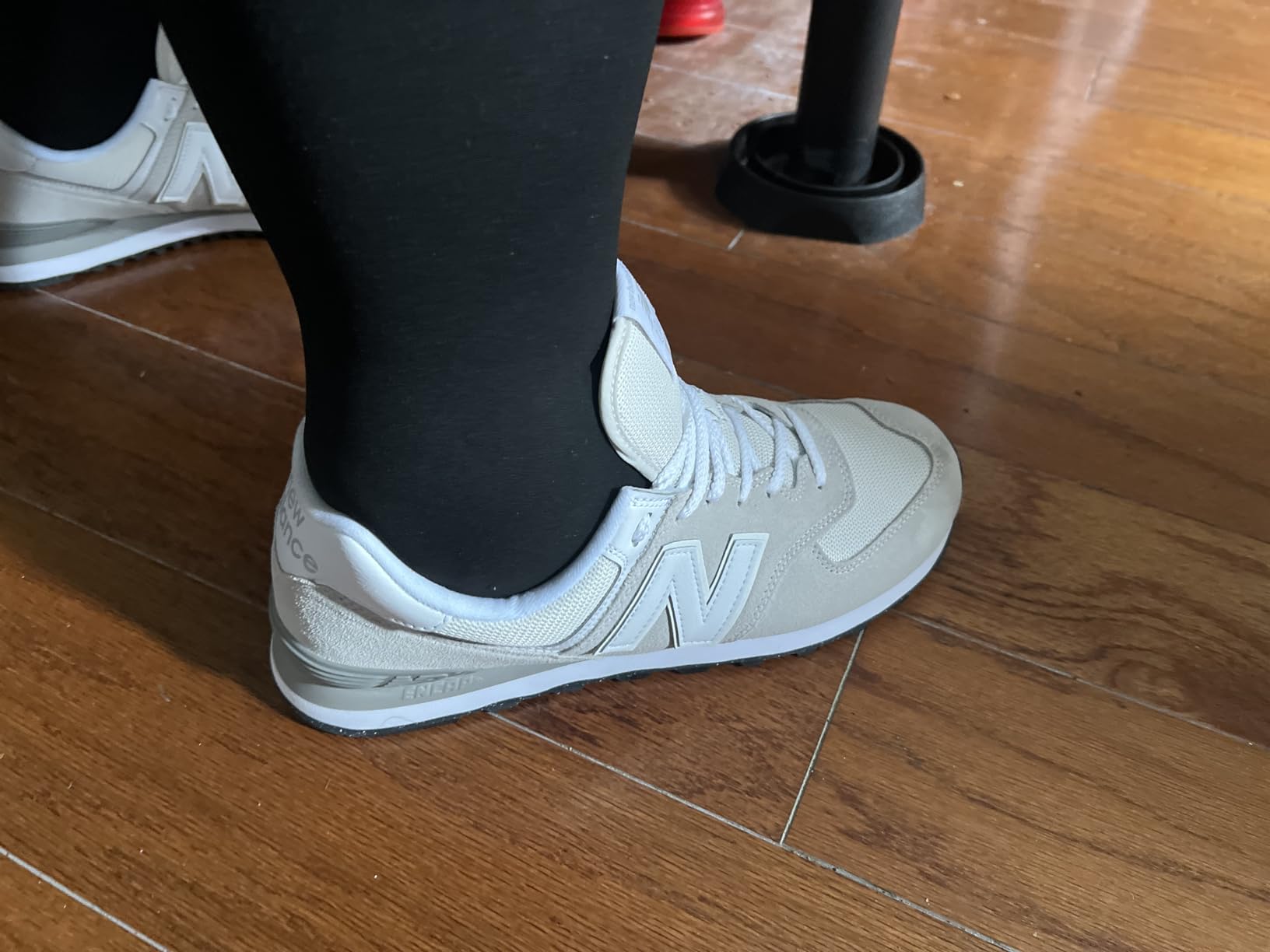
The upper combines suede overlays with that recycled polyester mesh. Suede gives the shoe its classic aesthetic but comes with the obvious downside — water and suede are not friends. A light drizzle will darken the panels, and a real downpour will soak through in minutes. Keep a suede protector spray handy if you live anywhere that rains more than occasionally.
Breathability from the mesh panels was better than I expected. Humid August days in the city didn’t leave my feet swampy, though they ran warmer than something like a full-mesh Bruno Marc KnitFlex Breeze. The trade-off between style and airflow is real — suede looks better, mesh breathes better. The 574 splits the difference.
The ENCAP midsole maintained its cushioning properties through all 8 weeks without any noticeable compression or dead spots. No collapse, no asymmetric wear. The outsole rubber showed minimal tread wear even on abrasive sidewalks. When the shoe is built right, it’s built well.
The Quality Control Question
And that qualifier — “when built right” — is the uncomfortable part of this review.
Across 2,081 verified reviews aggregated by SneakerLens, 11% are 1- or 2-star ratings. The recurring complaint is sole separation at the toe flex point — the spot where the outsole curves up to meet the upper. Some buyers report this happening within weeks. Others have pairs lasting well over a year. The inner heel lining tearing from friction is another documented pattern, though less severe.
My test pair? Flawless through 8 weeks and 120-plus miles. Zero separation, zero lining issues. But I can’t dismiss a pattern reported by hundreds of buyers. New Balance’s own FAQ addresses sole deterioration, noting that improper storage in damp conditions can accelerate adhesive breakdown. That suggests the issue is at least partially recognized.
The practical takeaway: buy from authorized retailers (New Balance direct, established Amazon sellers, brick-and-mortar stores). Inspect the shoe thoroughly when it arrives. Test it within your return window. The risk isn’t huge — 80% of reviews rate durability positively — but it exists.
Street Performance — Where It Works and Where It Doesn’t
Dry pavement is this shoe’s natural habitat. The rubber outsole posted a 0.55 friction coefficient in RunRepeat’s lab — above average for fashion sneakers. Walking on concrete, asphalt, tile floors, and wooden decks felt secure without any slippage moments. The tread pattern is simple but effective for its intended use.
Wet surfaces tell a different story. Walking through a rain-soaked subway platform, I noticed the grip drop significantly on polished tiles. Puddles on smooth concrete weren’t much better. This isn’t unusual for a lifestyle shoe — the Vans Atwood and most canvas sneakers behave the same way — but it’s worth noting if your commute involves a lot of wet surfaces.
I took these on a couple of light gravel trails during weekend walks. Adequate for flat, well-maintained paths. Anything with loose rocks or inclines, and you’ll want actual hiking shoes. The 574 Core isn’t pretending to be something it’s not.
The Styling Factor — Why People Actually Buy This Shoe
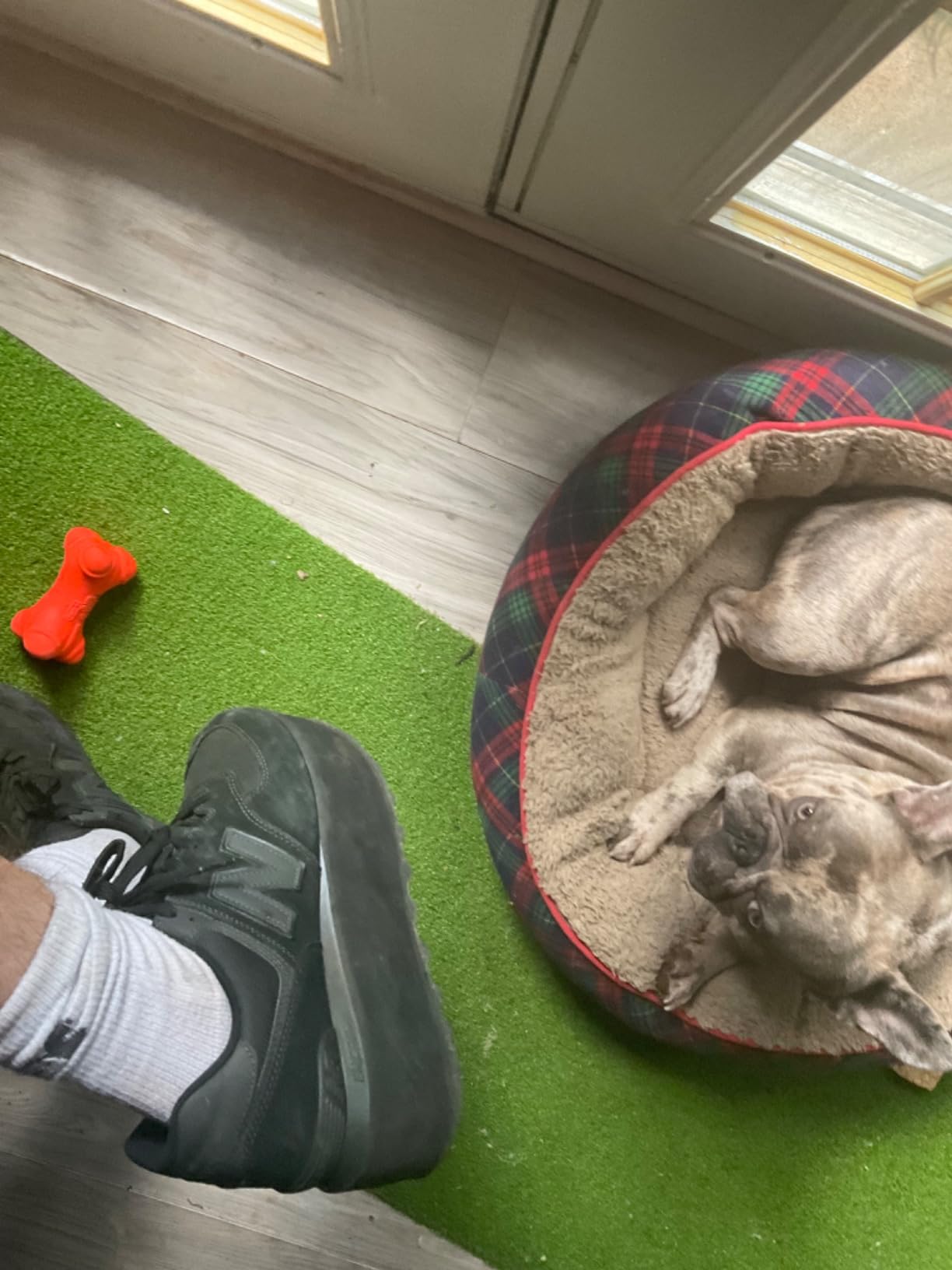
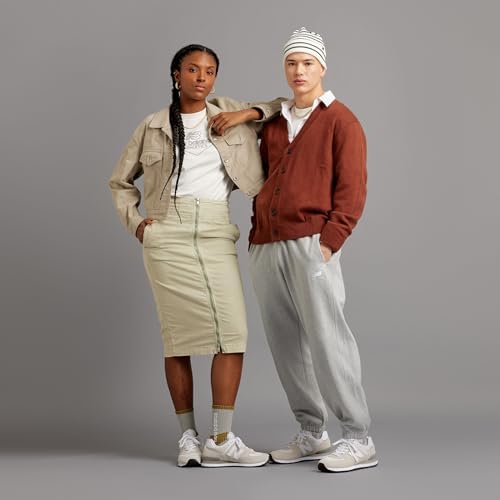
Let’s be honest — half the people buying the 574 Core are buying it because of how it looks. And it delivers. The retro silhouette hasn’t changed meaningfully in nearly four decades because it doesn’t need to. It pairs with dark jeans for a casual Friday look, shorts for weekend errands, and chinos for anything in between.
I wore these to coffee shops, a couple of casual dinners, a friend’s backyard thing, and my daily commute. Not once did they feel out of place. That’s the real value proposition for a lifestyle sneaker — it disappears into your wardrobe. You stop thinking about what’s on your feet.
The colorway selection is broad enough that you can find something for most aesthetics. Neutral tones for the minimalists, bold colors if you want the shoe to be the statement piece. The 574 Core occupies similar territory to the Reebok Club C 85 Vintage and the PUMA Club II Era — retro sneakers that bridge casual and slightly dressed-up without committing to either.
Does New Balance Deliver on the Marketing?
New Balance calls the 574 Core an “icon” offering “reliable comfort and stylistic versatility.” Based on 8 weeks of wearing these as my primary daily shoe, that’s accurate — with a significant asterisk.
The comfort promise holds up. ENCAP midsole technology delivers consistent support that doesn’t break down over weeks of daily use. The 14-hour day, the weekend errands, the commute grinding — the cushioning performed. The all-day support claim isn’t empty marketing; it’s backed by both my testing and the 75% positive cushioning rating across thousands of verified reviews.
The styling versatility claim is the easiest to validate. This is a shoe that genuinely works across contexts without looking wrong anywhere.
The “reliable” part is where the asterisk applies. When you receive a properly manufactured pair, it’s reliable. The QC pattern means “reliable” is conditional, not guaranteed.
Scoring Breakdown
| Category | Score | Notes |
|---|---|---|
| Comfort | 8.5/10 | ENCAP platform delivers through 14-hour days; firm but effective |
| Style | 9.0/10 | Nearly four decades of design validation speaks for itself |
| Build Quality | 6.5/10 | Solid when manufactured correctly; QC inconsistency docks points |
| Value | 7.5/10 | $85 is fair for the comfort tech; QC risk tempers the math |
| Durability | 6.0/10 | 80% positive durability ratings, but that 11% failure rate is notable |
| Traction | 6.5/10 | Above-average dry grip (0.55 coefficient); wet surfaces are the weak point |
| OVERALL | 7.3/10 | A genuinely comfortable classic — conditional on getting a well-made pair |
Who Should Buy the New Balance 574 Core
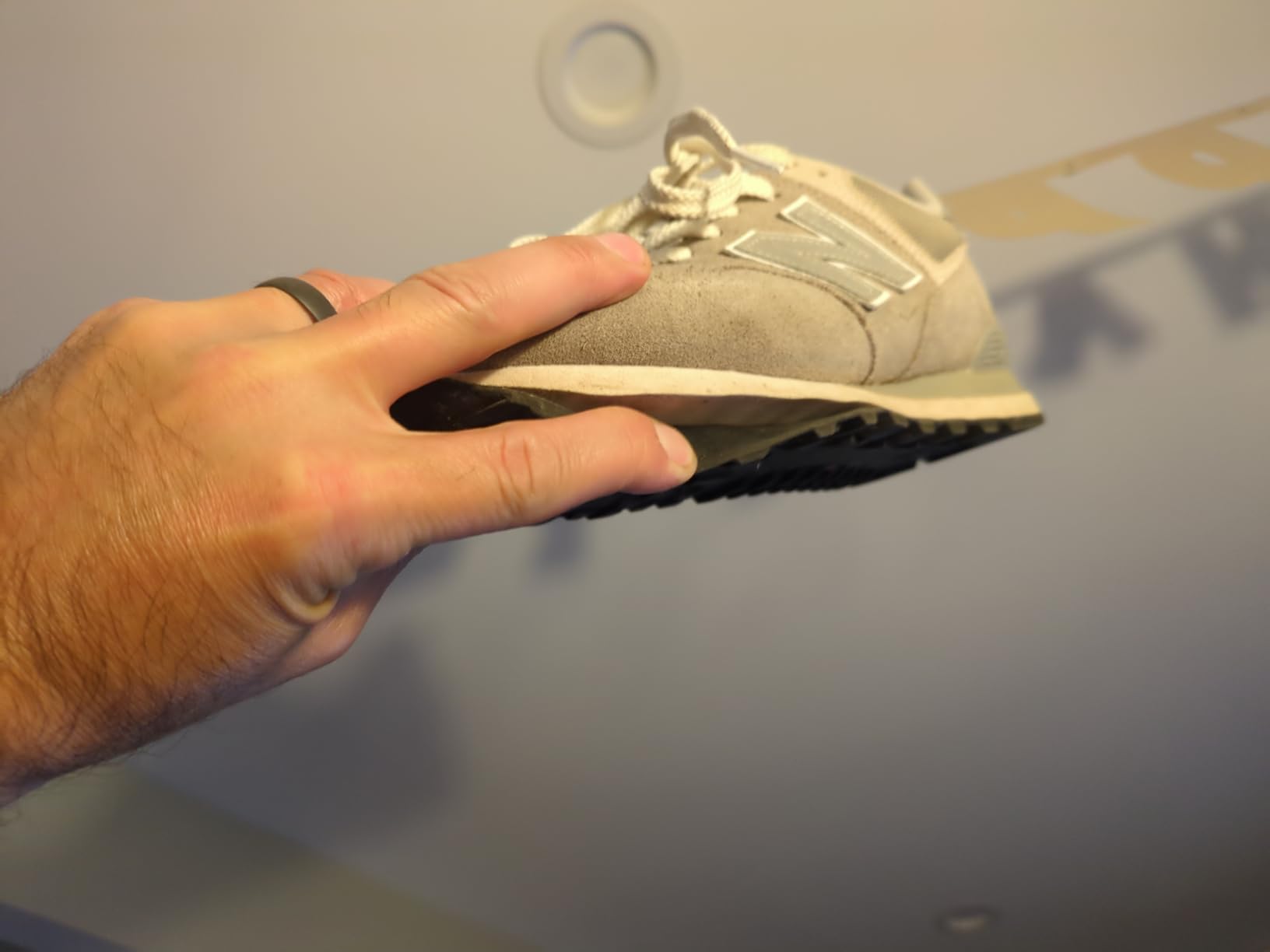
This shoe makes sense if you:
- Want a reliable daily shoe for walking, commuting, and casual wear
- Value proven all-day comfort over trendy cushioning technology
- Need a shoe that pairs with most of your wardrobe without effort
- Have standard or wide feet (2E and 4E widths available)
- Prefer buying from authorized retailers with return protection
- Care about sustainability touches without paying a premium for them
Look elsewhere if you:
- Need dependable wet-weather traction — this shoe gets slippery on smooth wet surfaces
- Want zero quality-control risk — the failure pattern is real even if not universal
- Need athletic performance — this isn’t a training shoe or a runner
- Hate maintaining suede — expect scuffs, water spots, and periodic cleaning
- Prefer plush, bouncy cushioning — ENCAP is firm and supportive, not soft
Alternatives Worth Considering
If the QC concern is a dealbreaker, or your priorities lean differently:
For proven durability: The Nike Air Force 1 07 costs more (~$115) and weighs more (~14 oz), but its build consistency is well-documented. Similar retro styling, different cushioning philosophy.
For tighter budget: The Adidas Grand Court Alpha comes in around $70 with Cloudfoam cushioning. Less heritage, simpler design, but solid for daily casual wear.
For more cushioning: If you want softer underfoot feel, the New Balance Fresh Foam Roav V1 stays within the NB family while offering a more modern foam ride at a similar price point.
For maximum walking comfort: The Skechers GoRun Consistent prioritizes walking ergonomics over style. Less versatile visually, but purpose-built for all-day foot comfort.
Frequently Asked Questions
Do New Balance 574 Core sneakers run true to size?
For standard-width feet, yes — true to size works for most buyers. About 30% of reviewers across 2,000+ ratings recommend going up half a size, typically those with wider feet or who prefer a relaxed fit. At 175 lbs with normal-width feet, my usual size 9 fit well from day one. New Balance offers wide (2E) and extra-wide (4E) if standard width feels tight.
How long do they last with daily wear?
Variable — and that’s the honest answer. My pair showed no wear issues through 8 weeks and 120+ miles. Across aggregate reviews, 80% rate durability positively, but documented sole separation at the toe flex point affects a minority of pairs within months. Moderate daily use should yield 6-12 months. Heavy daily wear compresses that to 4-8 months. The QC factor makes lifespan somewhat unpredictable.
Are they good for people with wide feet?
The 574 Core is one of the better options for wider feet in the lifestyle category. Lab measurements show a 74.1 mm toebox — 5 mm wider than the average sneaker. Plus, New Balance offers 2E (Wide) and 4E (Extra-Wide) versions, which is more width options than Nike or Adidas typically provide in this price range.
Can I wear them for gym workouts or running?
Not recommended. The 574 Core is a lifestyle sneaker designed for walking and casual wear. The ENCAP midsole lacks the energy return and lateral support needed for gym work, and the 13 mm drop and firm platform aren’t optimized for running mechanics. For gym sessions, consider a dedicated training shoe. For running, look at the New Balance Fresh Foam X 880 V14.
How do they handle wet weather?
Poorly. The suede upper has zero water resistance — light rain darkens the panels, heavy rain soaks through. The rubber outsole loses grip on smooth wet surfaces like polished tile or wet concrete. These are dry-weather shoes. If your climate involves regular rain, either apply suede protector spray and accept the risk, or choose a different shoe.
Is there a break-in period?
Virtually none. I wore them for a full day of walking on day one without any discomfort, blisters, or pressure points. A Today.com reviewer wore them for three consecutive theme park days — 15,000+ steps daily — right out of the box with no break-in issues. The suede may feel slightly stiff initially but relaxes within the first few wears.
How do they compare to older 574 models?
The silhouette and ENCAP technology remain consistent with the heritage design. The main difference I noticed is a slightly narrower toe box compared to pre-2020 models, which gives a sleeker profile but may feel tighter if you’re used to the older fit. The recycled materials (mesh, outsole rubber) are new additions. Build quality perception varies — some long-time fans feel current construction is less robust than vintage pairs.
Are the sustainability claims legitimate?
Yes — modest but genuine. The vamp, collar, and tongue mesh uses 100% recycled polyester. The outsole incorporates 5% recycled rubber. The midsole foam includes roughly 3% bio-based content from renewable sources. These aren’t transformative numbers, but they represent real material changes, not marketing-only claims. The recycled mesh performs identically to standard polyester in terms of breathability and durability.
Final Verdict
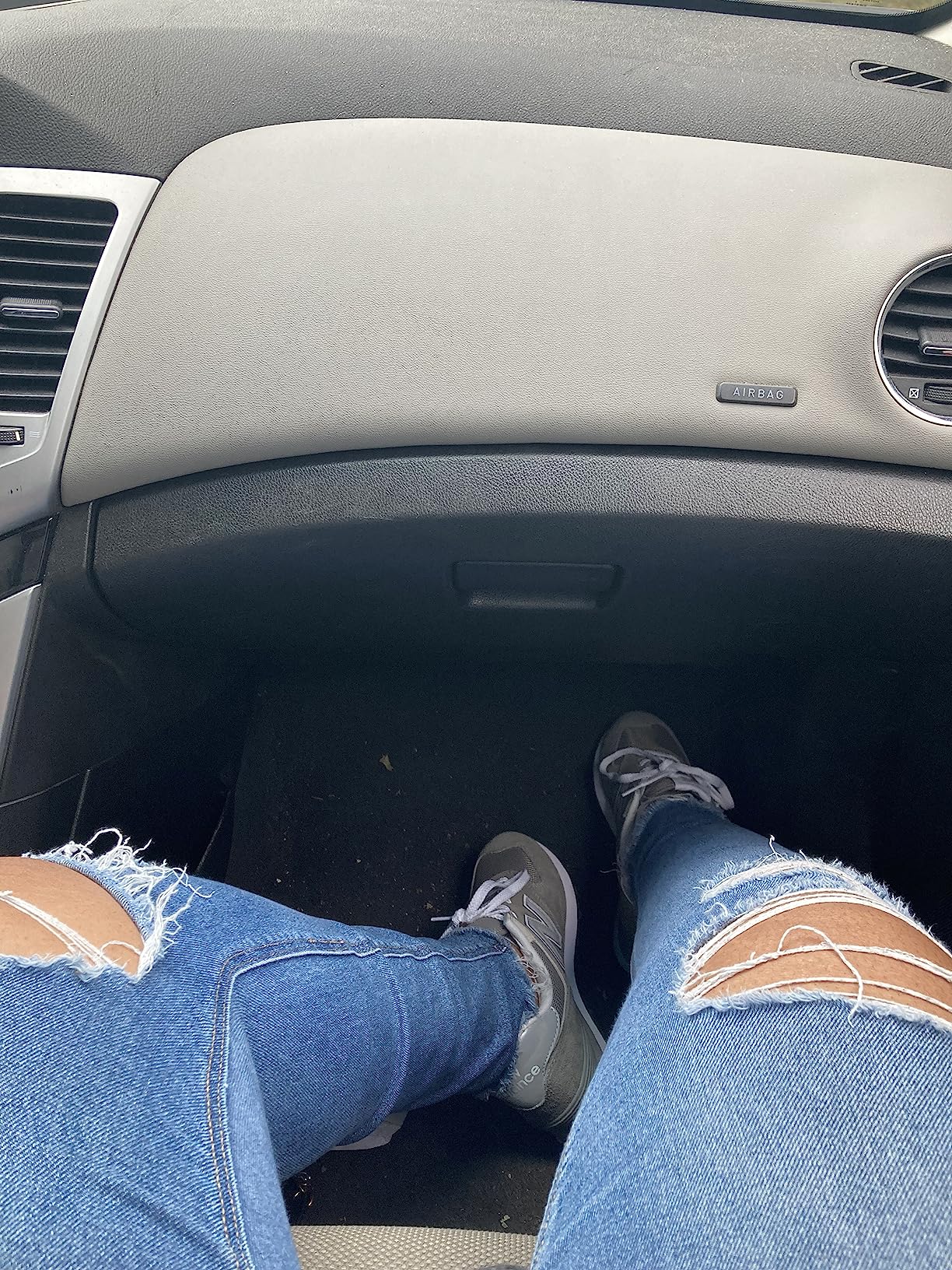
The New Balance 574 Core is what happens when a proven design meets inconsistent manufacturing. When you get a well-made pair — and statistically, you probably will — it’s one of the better lifestyle sneakers under $100. The ENCAP midsole genuinely earns its comfort reputation through extended days. The styling has survived nearly four decades because it just works. And at $85, you’re not overpaying for what you get.
The QC question is real but manageable. Buy from reputable sources with solid return policies. Inspect the toe-sole junction when your pair arrives. Wear them within the return window before committing. That 80% positive durability rating means the odds are in your favor — but the 11% who had problems aren’t making it up.
For me, after 8 weeks as my daily driver, the 574 Core did exactly what I needed when my last pair died: it showed up, stayed comfortable, looked good with everything, and didn’t complain about the 120-plus miles I put on it. That’s all I asked for. Your mileage — literally — may vary.
Scoring Summary
| Category | Score |
|---|---|
| Comfort | 8.5/10 |
| Style | 9.0/10 |
| Build Quality | 6.5/10 |
| Value | 7.5/10 |
| Durability | 6.0/10 |
| Traction | 6.5/10 |
| OVERALL | 7.3/10 |
Bottom Line: A genuinely comfortable, timelessly styled daily sneaker that delivers on its core promises — with the caveat that quality control isn’t as consistent as New Balance’s reputation suggests. Buy smart, inspect on arrival, and you’ll likely end up with a shoe worth keeping.
Be the first to review “New Balance Men’s 574 Core Sneaker”
Related products
Sneaker

Sneaker
Sneaker
Running Shoes
Sneaker
Reviews
There are no reviews yet.