
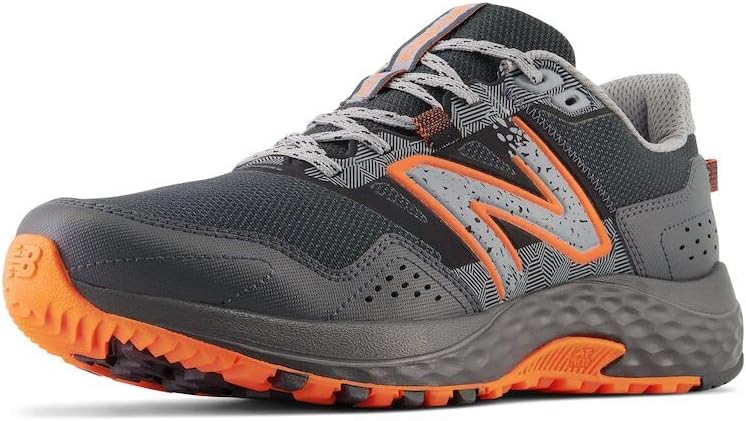
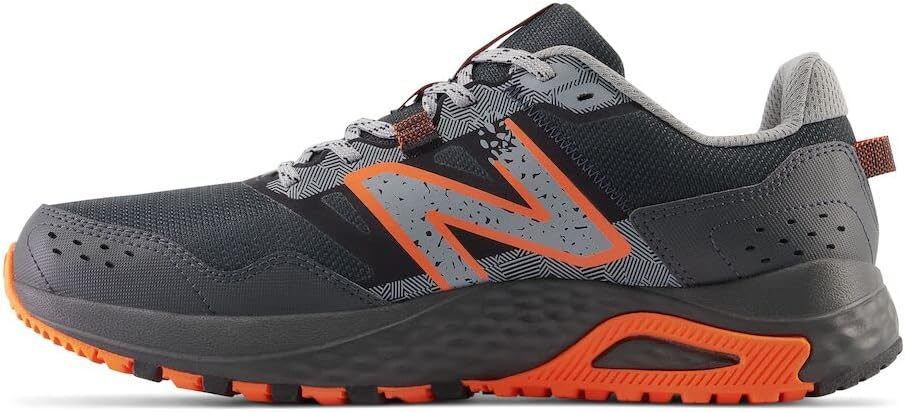
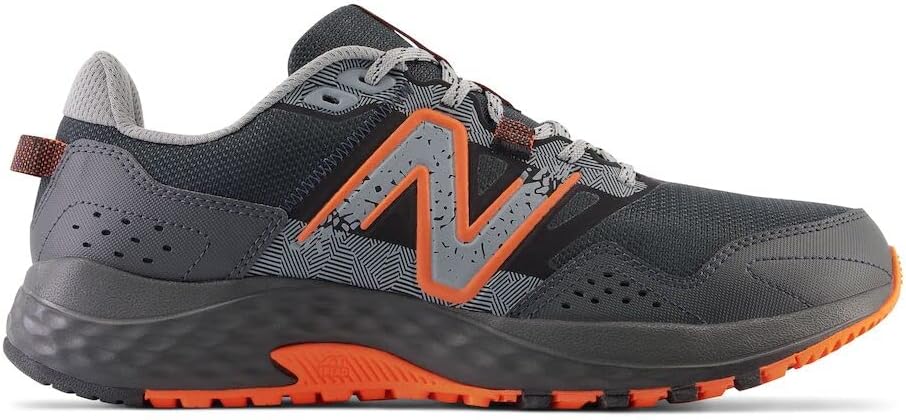
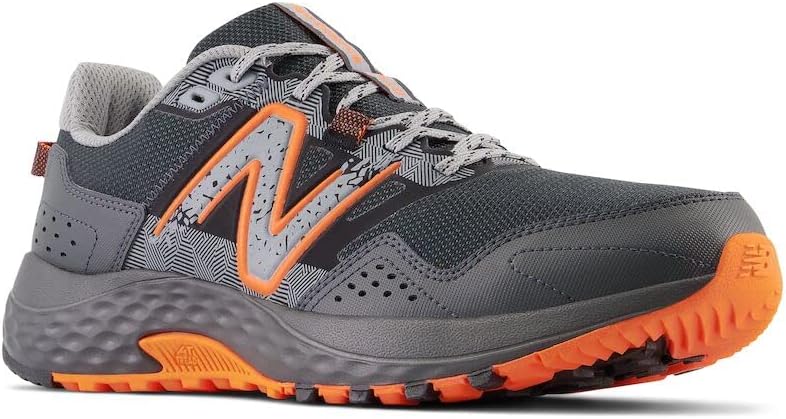
Budget trail shoes present a specific gamble. Pay too little and you get a road shoe with lug tread glued on. Pay the right amount and you get something that genuinely works on moderate terrain without the premium price tag. At $65-75, the New Balance MT410 V8 promises to land in that second category. I’m Mike — weekend warrior, 185 pounds, and someone who’s burned through enough mid-range trail shoes to spot the difference. After 8 weeks and 45 trail miles across Harriman State Park and Bear Mountain, I can tell you whether that promise holds up — and where it doesn’t.
Technical Specifications
- 💰 Price: $64.95–$74.95 MSRP (street price often $50–$65)
- ⚖️ Weight: Approximately 10.3–10.6 oz (men’s size 9; not officially published by New Balance)
- 📏 Heel-to-toe drop: Approximately 8mm (commonly reported; not officially confirmed)
- 🧪 Midsole material: BIO Foam — New Balance’s bio-based EVA with ~3% sugarcane content
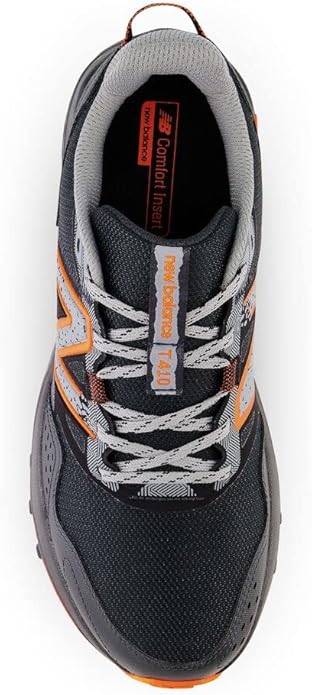
- 👟 Upper material: Breathable mesh-knit with TPU overlays at toe, midfoot, and heel; removable NB Comfort Insert
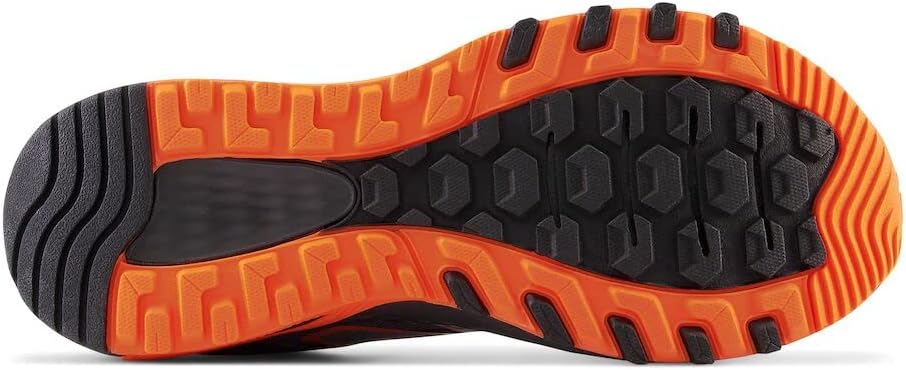
- 🏔️ Outsole: AT Tread rubber (dual on/off-road design)
- 📐 Available widths: Men’s: D, 2E, 4E | Women’s: B, D
- 🏃♂️ Category: Trail Running / All-terrain
- ⏱️ Testing period: 8 weeks, 45 trail miles, 12 hiking sessions
Note: New Balance does not publish official weight or drop figures for the MT410 V8. Specs above reflect retailer listings and independent measurement. No RunRepeat lab review exists for this model.
First Look: What You Actually Get for $65
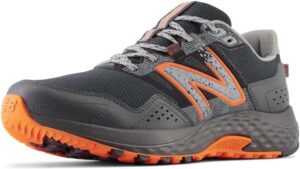
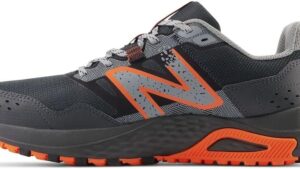
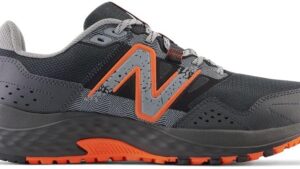
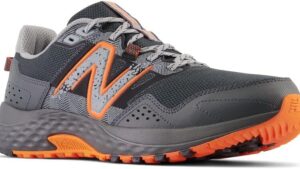
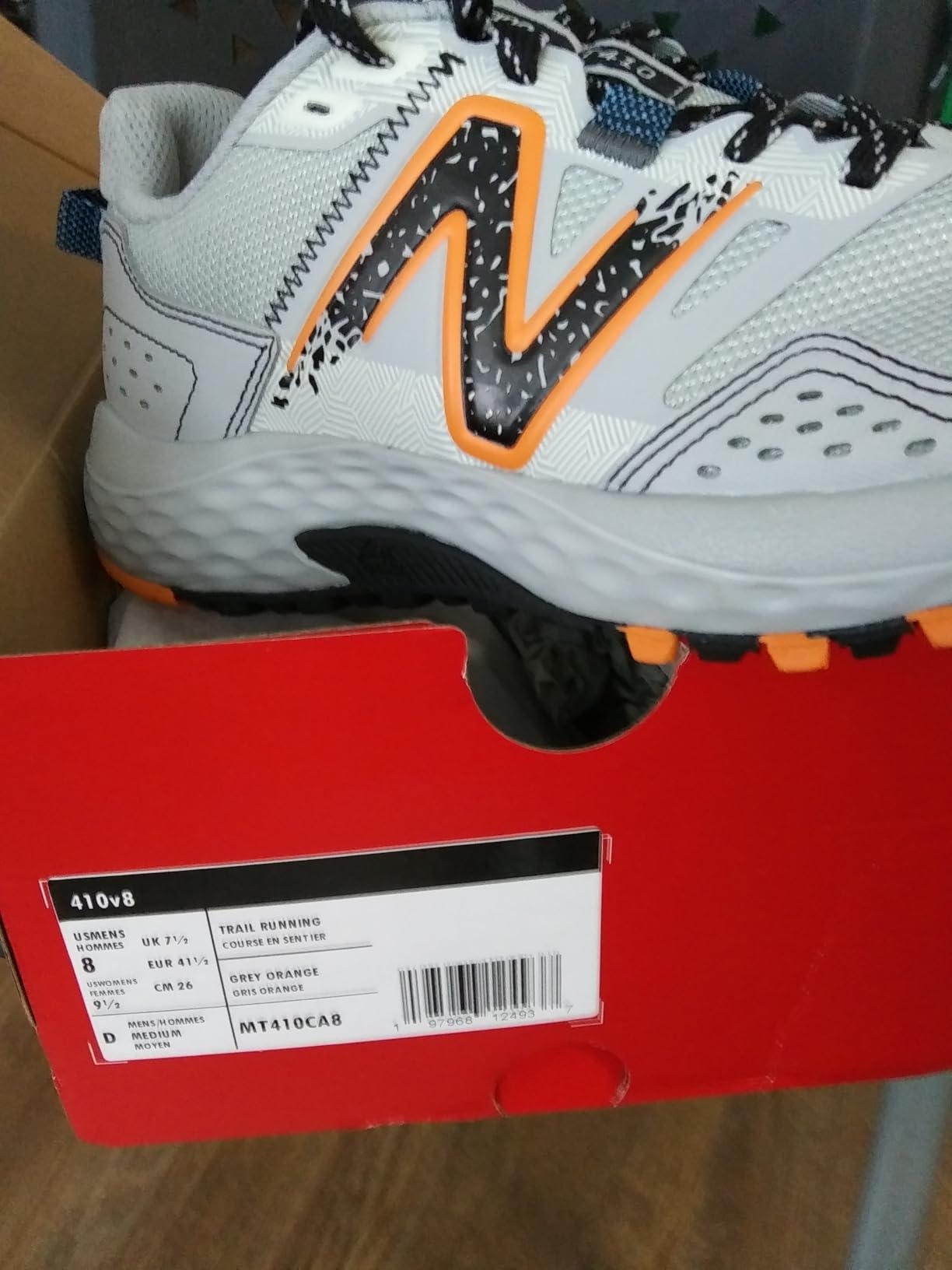
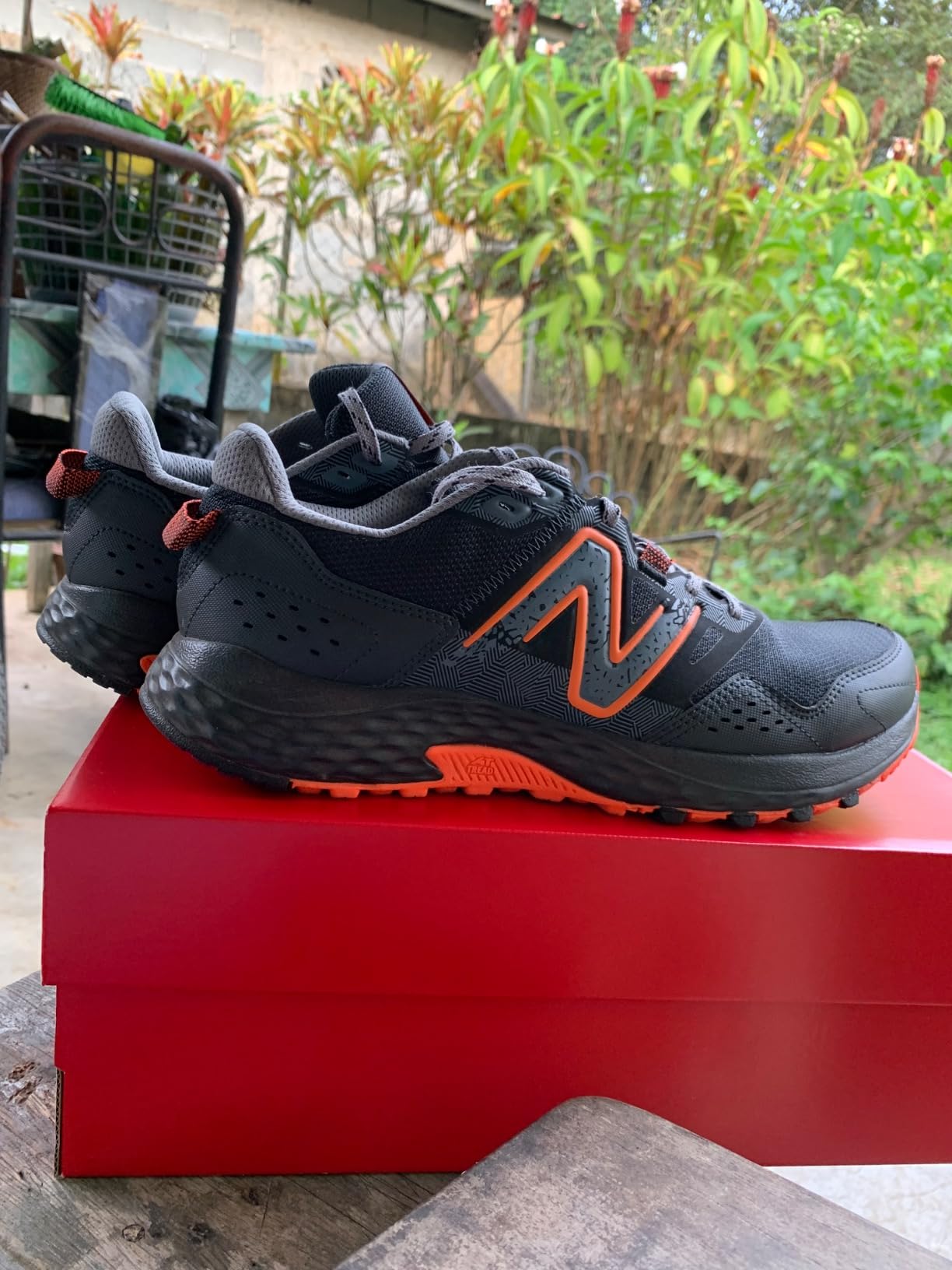
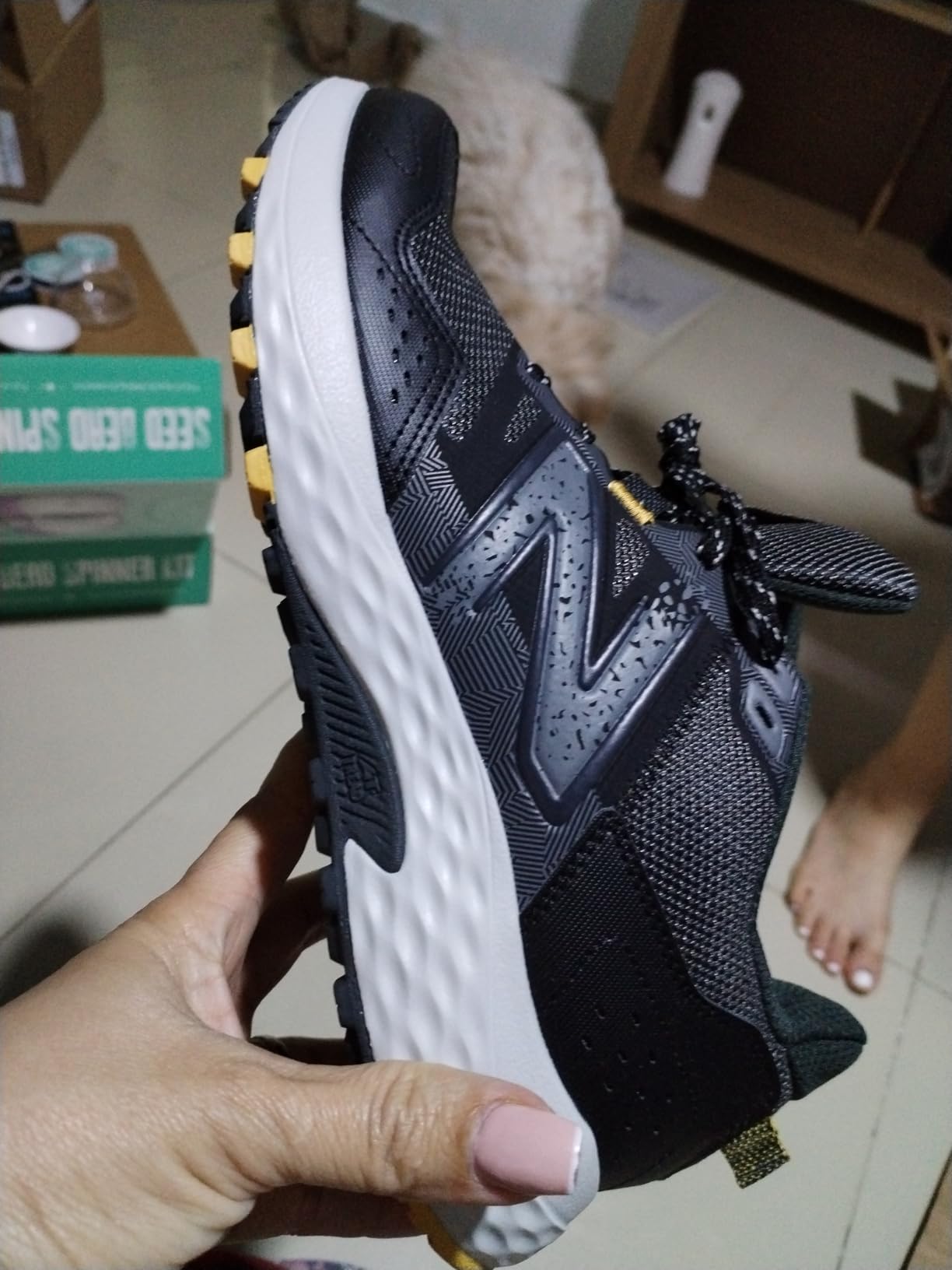
Pull the MT410 V8 out of the box and the construction tells you exactly what you paid for — in mostly good ways. The synthetic upper has real structure. The TPU overlays at the toe box, midfoot sides, and heel collar aren’t decorative; they’re the same panels that take the hits when you clip a root or brush against granite. The mesh between those overlays is breathable enough for summer trail running without being fragile.
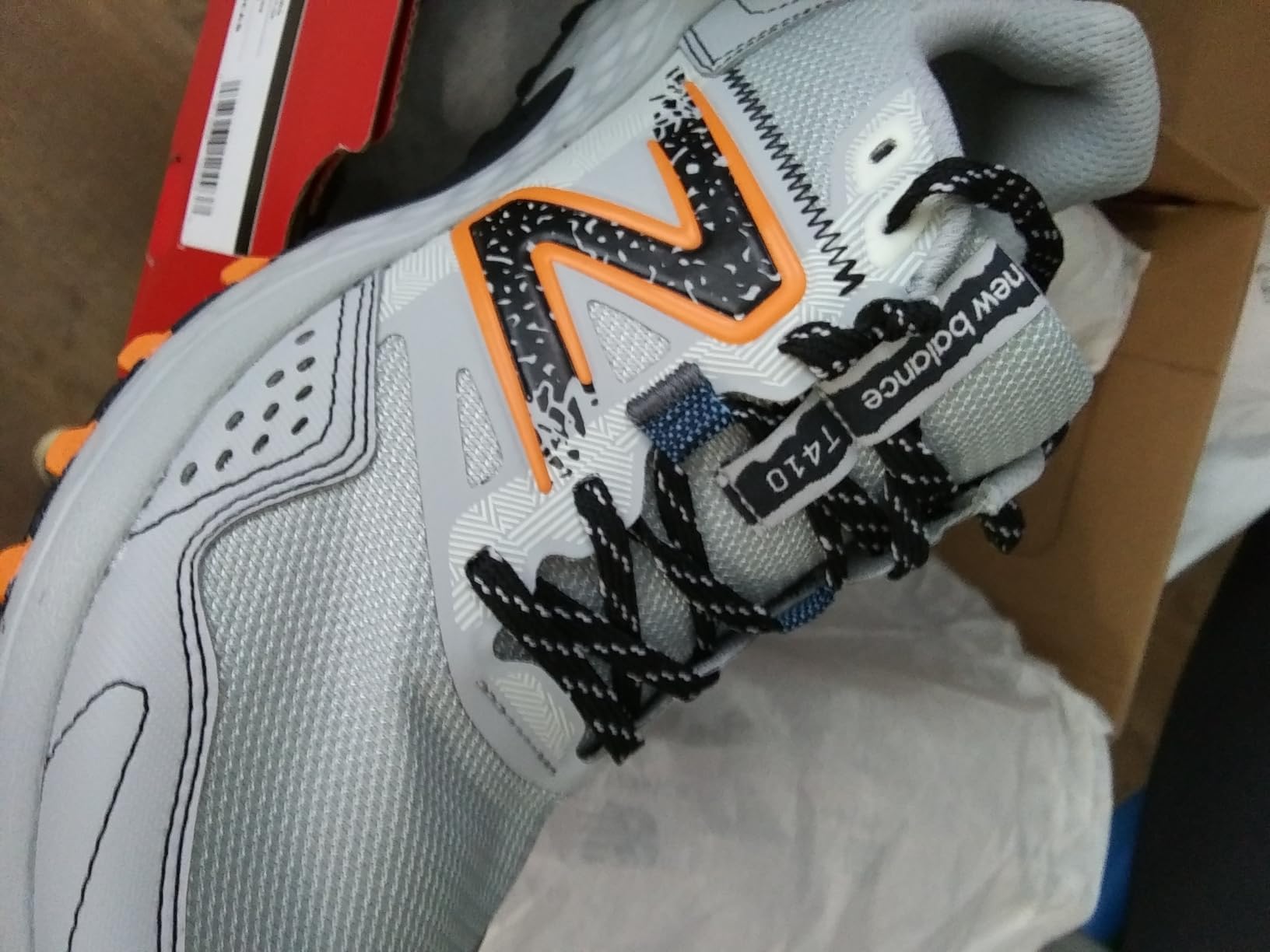
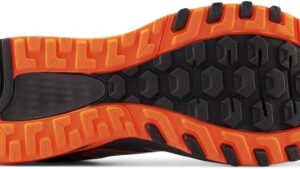
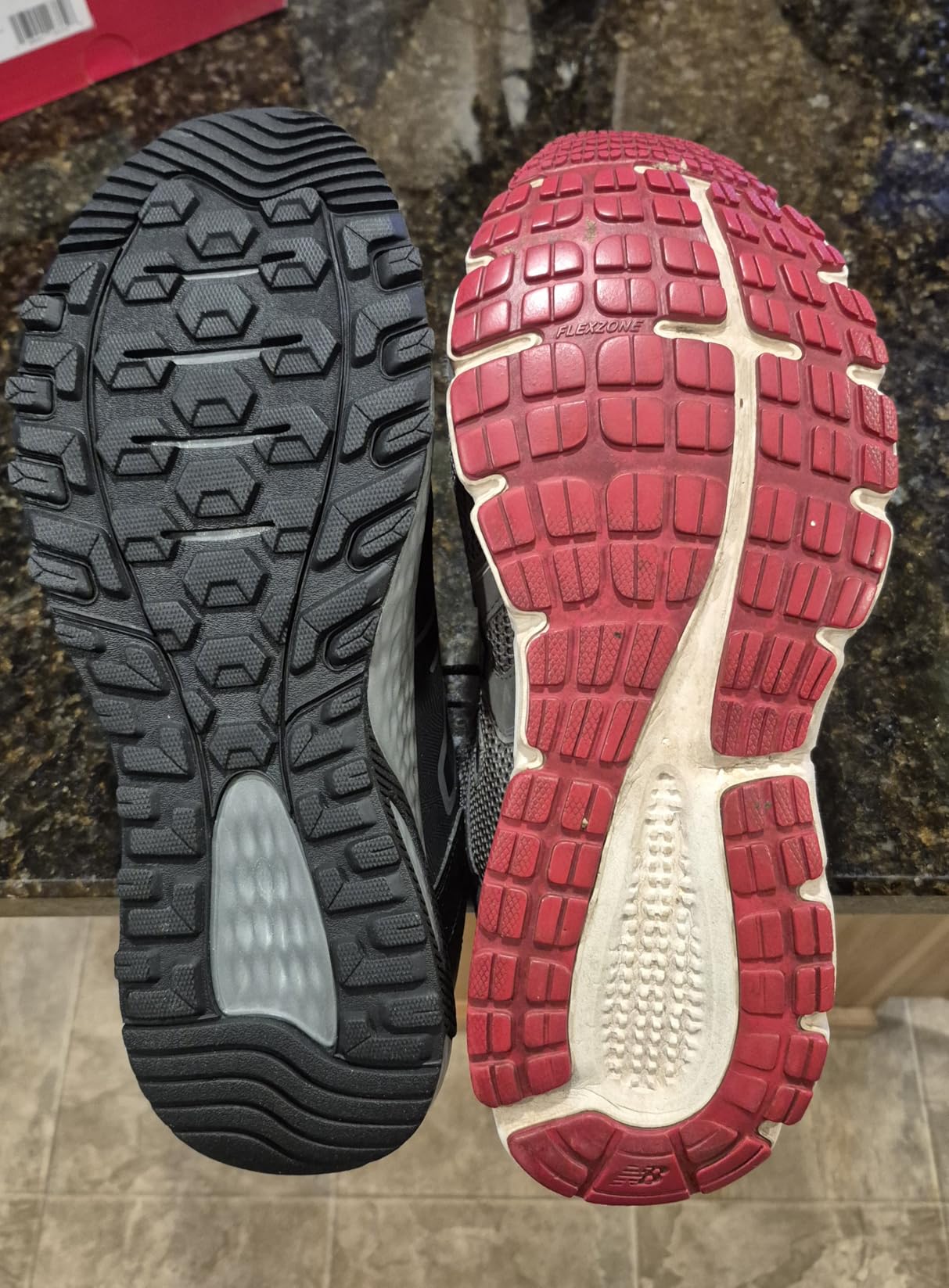
The AT Tread outsole looks modest compared to dedicated trail shoes like the Salomon Speedcross with its aggressive cross-lug pattern. The shallower lugs aren’t a weakness here — they’re what makes the shoe work on pavement without feeling like you’re wearing hiking cleats. Transitioning from the parking lot to a fire road to singletrack happens naturally, without that distinctive clomping you get from full trail lugs on hardpack.
BIO Foam: What It Actually Is
BIO Foam is New Balance’s marketing name for a bio-based EVA that incorporates roughly 3% sugarcane-derived content. To be clear: this is not Fresh Foam X. It’s not a proprietary PEBA compound. It’s EVA — durable, predictable, and appropriate for a $65 shoe.
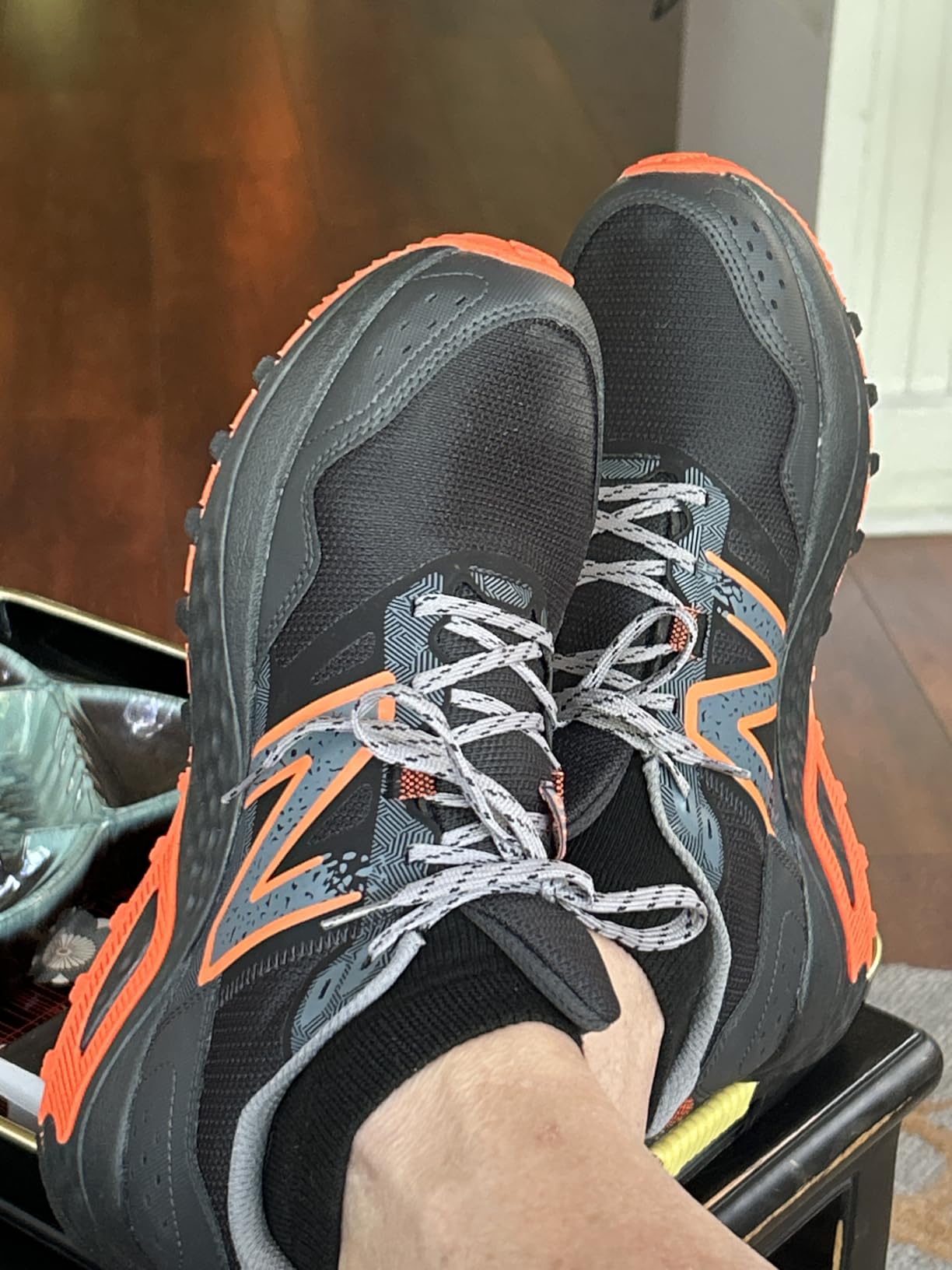
What EVA delivers: a firm, responsive ride without the dead feeling of cheap foam. What it doesn’t deliver: the plush, sink-into-the-midsole sensation that New Balance’s marketing word “soft” might lead you to expect. On my first trail run at Bear Mountain, the midsole felt appropriately firm for moderate terrain — the kind of responsive feedback that actually helps when you need to feel the trail underfoot on technical sections. By mile 7 at 185 pounds, that firmness was noticeable in a different way.
Performance Testing Across Real Terrain
Eight weeks, 45 trail miles, 12 hiking sessions. The terrain ranged from maintained fire roads at Harriman to technical singletrack with root exposure, a post-rain wet rock section at Bear Mountain, and a handful of day hikes where I wasn’t running at all. Here’s the honest breakdown.
Dry Conditions: The MT410 V8’s Best Day
On dry, packed dirt and well-maintained singletrack, this shoe genuinely works. During a 6-mile loop through Harriman — fire road, singletrack, one moderate climb — I held an 8:30/mile pace without a single moment of instability or grip concern. The AT Tread tracks well on this terrain, and the shoe feels predictable through corners and descents.
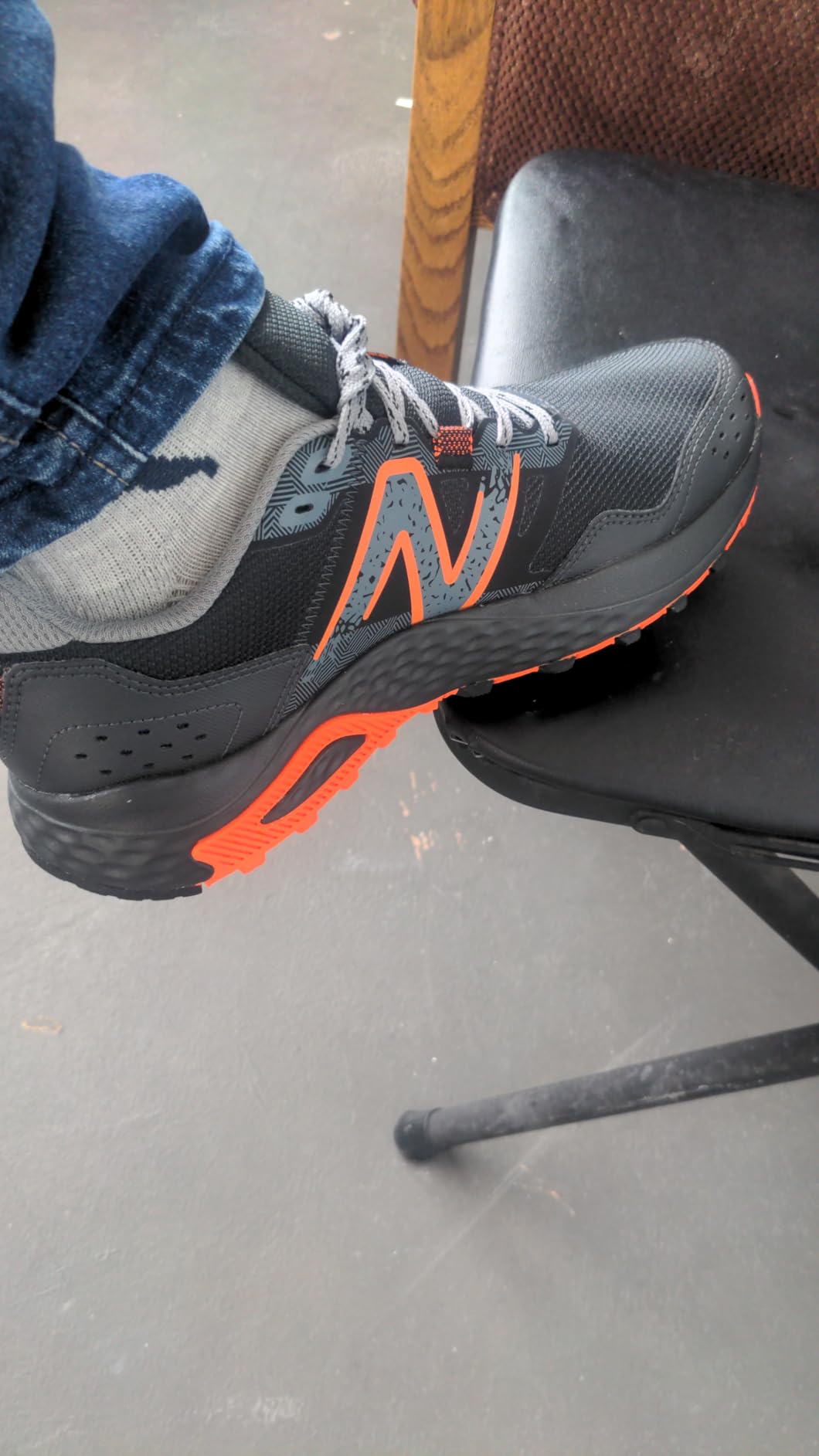
For weekend warriors who mostly hit maintained park trails and fire roads — which describes the majority of recreational trail runners — the dry-terrain performance justifies the purchase. Side-to-side stability is solid; you don’t feel the shoe rolling under lateral load on moderate grades. The lacing system locks the foot without creating friction points over 5-7 mile efforts.
Wet Conditions: Where the Math Changes
I didn’t plan the rainy-day run. A forecasted partly cloudy afternoon turned into sustained drizzle halfway through a Bear Mountain session, and I got an unintended wet-condition test.
The AT Tread outsole on wet granite is a different shoe entirely. On the slick rock sections where I’d normally run without adjusting my pace, I was stepping around, actively routing to moss-free lines, and taking descents more carefully than the grade warranted. The rubber compound doesn’t have the tackiness for confident wet-rock contact.
Wet mud and clay perform somewhat better — the lugs do some mud-clearing work on moderate grades. But if your trails include sustained wet sections, creek crossings, or technical terrain after rain, the MT410 V8 will have you slowing down.
The shoe is also not waterproof. The mesh saturates quickly. During that rainy session, I had wet feet within about 5-7 minutes. If you need waterproofing, options like the KEEN Circadia Waterproof or NORTIV 8 hiking shoes serve that use case better.
Rocky and Technical Terrain
The MT410 V8 lacks a dedicated rock plate. On most moderate terrain, this isn’t an issue — the BIO Foam and outsole together absorb enough impact that root strikes and small rocks aren’t uncomfortable. On technical sections with frequent sharp rock exposure, the difference between this shoe and something like the Altra Lone Peak 8 becomes tangible.
It’s not painful. It’s cumulative. Over a 7-mile run with significant rocky sections, my feet were noticeably more fatigued than they’d be in a plated shoe. The upper construction — overlays at the toe — protects adequately against direct rock impacts and brush contact. After 45 miles including several scramble sections, the overlays show surface scuffs but no structural damage or separation from the mesh.
The Lace Hole Problem: What You Need to Know Before You Buy
This is the most critical section of this review, and the issue that most competitors either skip entirely or mention in passing.
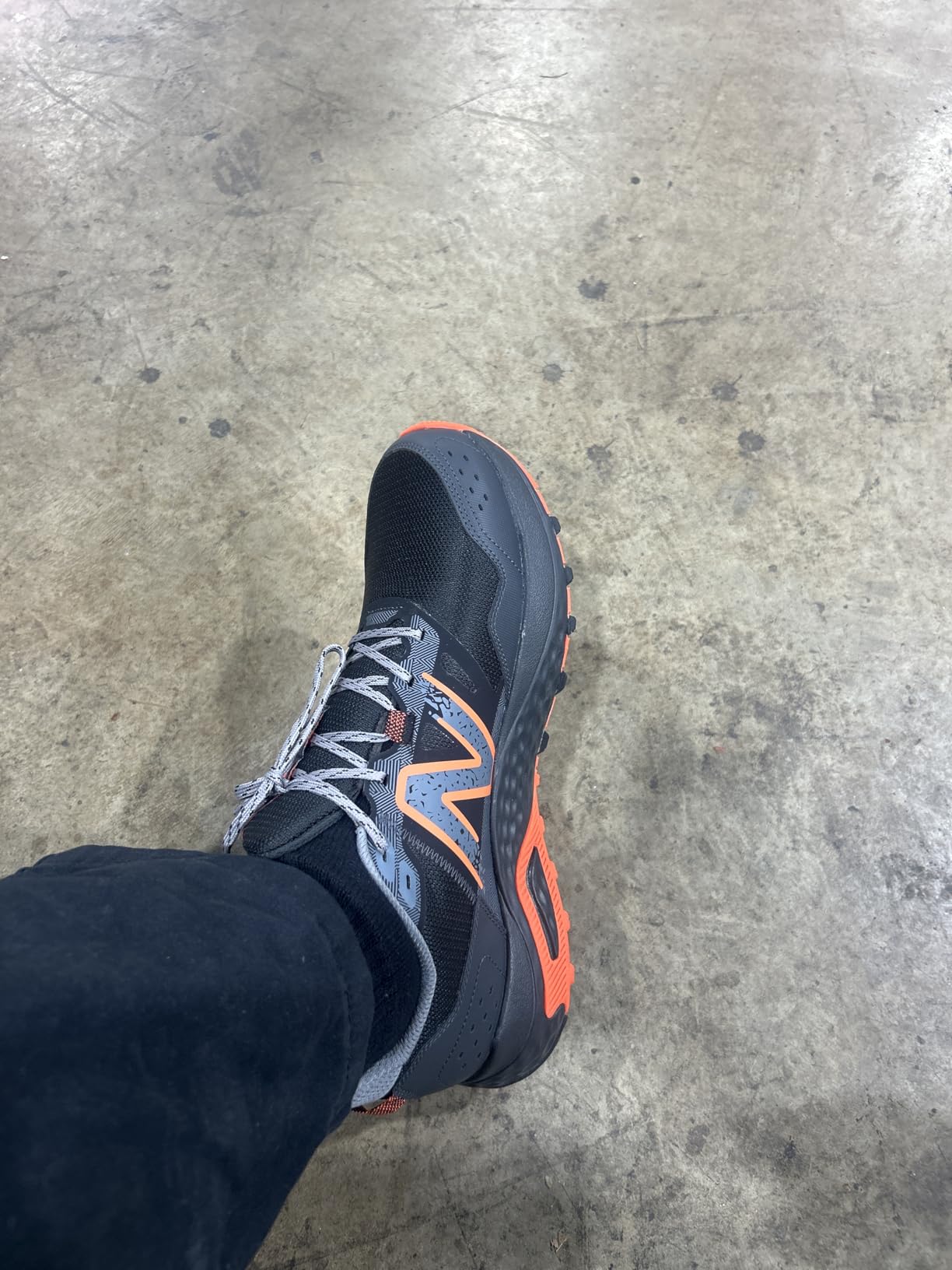
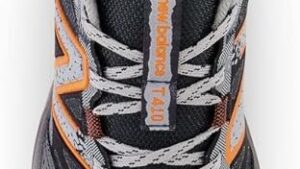
The MT410 V8 has a documented, recurring quality control problem with its lace eyelets. Multiple independent sources — Amazon verified purchase reviews, Reddit trail running communities, and competitor review aggregation — report lace holes tearing through with varying timelines. Some units develop the problem in weeks. Others at 2-3 months of regular use. Some, apparently, not at all.
My test pair’s lace holes are intact after 8 weeks and 45 miles. That’s the honest answer. But the broader pattern in user data is consistent enough that calling this a one-off manufacturing defect doesn’t hold up. It looks like a design or material spec issue that affects a meaningful percentage of units.
Why does this matter more than typical wear concerns? A worn outsole or compressed midsole are gradual degradation signals. A lace eyelet tearing mid-run or mid-hike is an immediate structural failure with no quick field fix. If you’re on a remote section of trail and an eyelet goes, you’re improvising your way back.
Practical response: before committing to remote trail use, inspect the lace holes carefully. Consider a preventive lace hole patch (available at outdoor gear shops for a few dollars) before the issue develops. Buy from a retailer with a generous return policy and inspect the stitching around each eyelet before the return window closes.
Do New Balance’s Marketing Claims Hold Up?
Claim: “AT Tread for versatile traction during on and off-road activities”
Verdict: Mostly accurate for the intended use case. The outsole handles the road-to-trail transition without drama, and works well on packed dirt, loose gravel, and fire roads. “Reliable traction” on technical wet terrain is where the claim stretches past what the rubber actually delivers.
Claim: “Soft BIO Foam midsole for comfort underfoot”
Verdict: Calibration needed. BIO Foam provides adequate comfort for recreational use under 7 miles. “Soft” oversells what is, in practice, a firm EVA that’s appropriate for a budget trail shoe. If you’re coming from maximum-cushion road shoes, reset your expectations before trying this.
Claim: “Durable overlays and meshes for lasting wear”
Verdict: Upper durability passes the test. Lace hole durability does not, based on community data. The word “durable” needs a specific qualifier when applied to the lacing system.
Comfort and Cushioning: Setting Realistic Expectations
At 185 pounds running 5-7 mile trail loops, the MT410 V8 BIO Foam handled my use case adequately. The midsole does its job — firm enough to feel stable and responsive, not so firm that you’re wincing after mile 4. Runs up to 7 miles felt comfortable throughout, with foot fatigue accumulating more from the terrain than from midsole inadequacy.
Beyond 8 miles, the firmness becomes noticeable. This isn’t a long-distance shoe. For someone running 15-mile mountain routes, you’ll want something with more stack — the New Balance Fresh Foam X 880 V14 or a purpose-built trail shoe with a higher stack height.
For recreational runs in the 3-8 mile range on moderate terrain, the cushioning is appropriate. That covers most weekend warrior use cases.
Fit and Sizing
The MT410 V8 runs true to size for most buyers. There are occasional QC-batch inconsistencies where units run slightly small or narrow, but the standard recommendation applies: order your usual size.
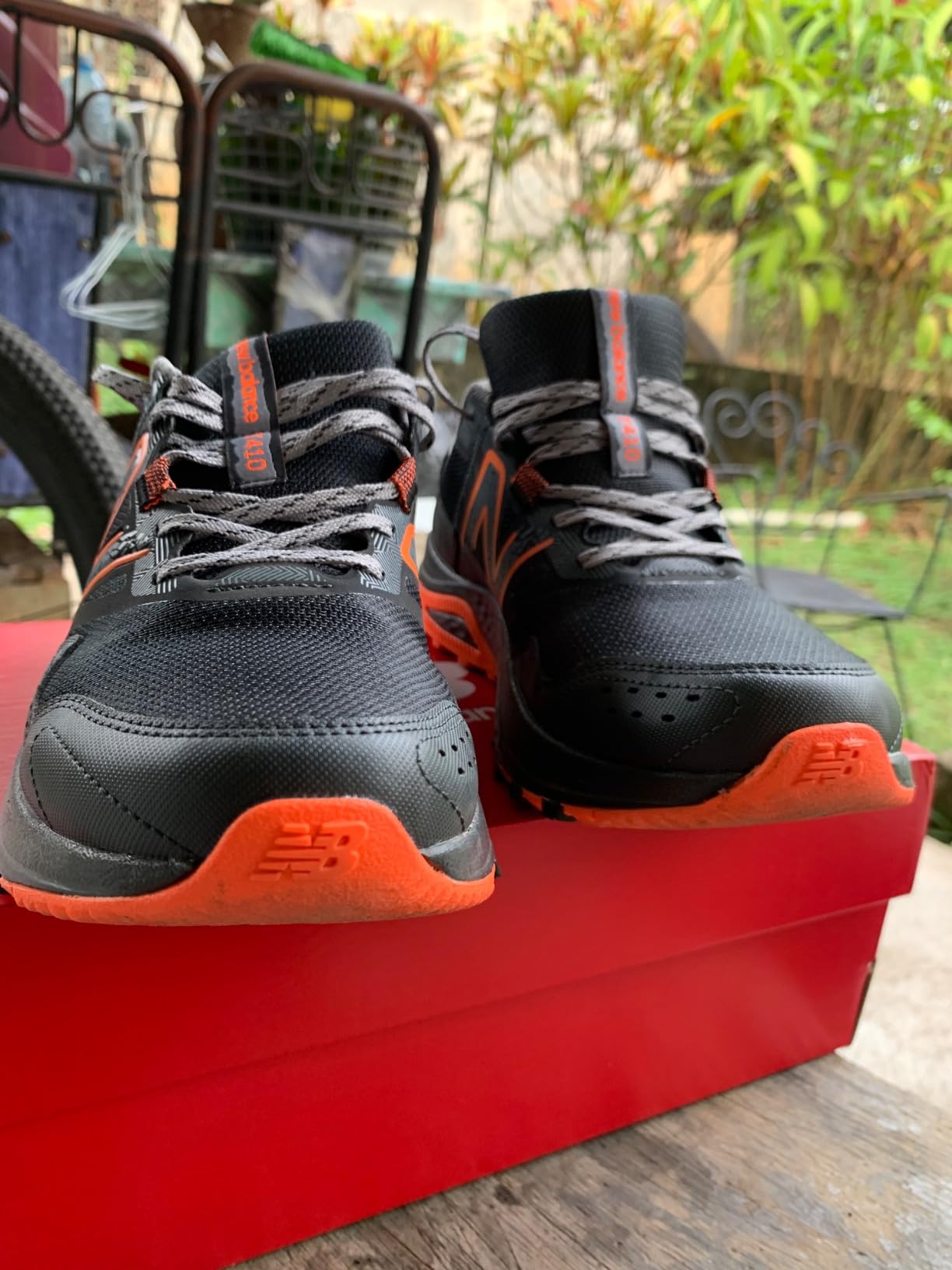
Wide-footed runners should pay attention: the MT410 V8 comes in 2E (wide) and 4E (extra wide) for men, and D (wide) for women. At this price point, having a 4E option is genuinely uncommon. Budget trail shoes rarely offer this range — the ASICS Gel-Venture 10 offers wide, but 4E at $65 is harder to find. If you’ve been locked out of properly fitting budget trail shoes because of foot width, this matters.
Standard-width buyers: the toe box is accommodating without being sloppy. No pinching through my testing, and I never needed to adjust lacing tension mid-run.
If you’re between sizes or have wider feet in standard width, sizing up half a size is reasonable before jumping to the wide variant.
✅ What Works
- Road-to-trail transitions: AT Tread handles mixed surfaces without drama
- Dry terrain confidence: Packed dirt and fire road traction is solid and predictable
- Wide-width availability: 4E option rare at this price point — significant advantage for wide-footed runners
- Upper construction: TPU overlays survive moderate brush and rock contact; structural integrity intact at 45 miles
- True to size: Standard-width fit is consistent for most buyers
- Weight: Lightweight feel for a trail shoe; uphills don’t feel draggy
- Price: When you get a well-constructed pair, performance-to-dollar ratio is compelling
❌ What Doesn’t
- Lace hole durability: Documented recurring QC failure — the most critical issue with this shoe
- Wet traction: AT Tread rubber lacks tackiness for wet rock, slick roots, and muddy descents
- Cushioning ceiling: BIO Foam EVA firm enough to notice on runs beyond 7 miles at heavier body weight
- No rock plate: Technical terrain with frequent rock exposure accumulates foot fatigue faster than plated alternatives
- Not waterproof: Mesh saturates quickly — wet feet within minutes in rain or stream crossings
- QC inconsistency: Width and sizing batch variability creates return-policy dependency
Performance Scores
| Category | Score | Rationale |
|---|---|---|
| Traction & Grip | 7.0/10 | Reliable on dry/packed terrain; meaningful limitation on wet rock and serious mud |
| Comfort & Cushioning | 6.5/10 | Adequate through 7 miles at 185 lbs; BIO Foam firmness noticeable on longer efforts |
| Durability & Construction | 5.5/10 | Upper passes 45-mile test; lace hole QC failure pattern is significant and documented |
| Fit & Sizing | 7.5/10 | Generally TTS; 4E option rare at this price; occasional batch inconsistencies noted |
| Value for Money | 8.0/10 | Strong price-to-performance ratio when you receive a properly constructed pair |
| Versatility | 8.5/10 | Road-to-trail transition is this shoe’s genuine strength |
| Overall | 6.8/10 | Cautious Yes — with important reservations |
Who Should Buy the New Balance MT410 V8
✅ Good fit for:
- Weekend trail runners on moderate terrain who primarily hit maintained park trails, fire roads, and light singletrack 2-3 times per week
- Road runners transitioning to trail who need one versatile shoe for mixed-surface runs
- Wide-footed buyers who’ve struggled to find affordable trail options in 2E or 4E widths
- Recreational hikers covering 4-8 mile day hikes on established trails — the shoe handles both running and hiking use cases credibly
- Budget-conscious beginners who want to explore trail running without committing $130+ to a first pair
❌ Skip if you:
- Frequently run wet terrain — muddy trails, creek crossings, technical wet rock sections will expose the traction limitation
- Log high weekly mileage — the lace hole QC concern becomes more likely to materialize, and the midsole ceiling matters more
- Run technical mountain terrain with significant rock and root exposure requiring a dedicated rock plate
- Need bulletproof reliability for important training blocks or remote adventures where equipment failure has real consequences
- Want maximum cushioning for long trail days — step up to a higher-stack trail hiking shoe for 12-15 mile efforts
Better Options for Specific Needs
Comparable price, better wet traction: The Merrell Men’s Accentor 3 offers more confidence on mixed wet terrain at a similar price point. More hiking-oriented, less pure running shoe.
Step up in trail capability: The Under Armour Charged Maven Trail brings more structured midsole support and better wet-grip rubber for around $20-30 more.
More New Balance, more trail: The New Balance DynaSoft Nitrel V6 sits in the same New Balance ecosystem with improved trail performance for those willing to step up.
Technical trail step-up: If you’re regularly hitting rocky, technical terrain, the Saucony Endorphin Edge delivers the grip and rock protection the MT410 V8 lacks, though at a meaningfully higher price.
Minimalist trail alternative: For runners who prefer ground feel without heavy cushioning, the Joomra Trail Running Barefoot Shoes offer a zero-drop, minimal-cushion approach to budget trail running.
Frequently Asked Questions
Are the New Balance MT410 V8 good for beginners transitioning from road to trail?
Yes, with appropriate expectations. The AT Tread handles mixed road-to-trail transitions well, and the traditional drop geometry doesn’t require the adjustment that zero-drop trail shoes demand. The moderate price makes it a reasonable first trail shoe. The lace hole concern means buying from a retailer with a good return policy matters — inspect carefully before committing.
How do they compare to other New Balance running shoes in fit?
True to size with the standard New Balance fit profile. The toe box is accommodating for moderate foot widths. Where this shoe stands out is the 4E width option — if you’re a wide-footed New Balance runner who owns the Fresh Foam Roav or similar road shoes, the MT410 V8 maintains that wide-fit compatibility in a trail platform.
Can I use these for road running too?
Yes — this is actually one of the shoe’s strengths. The AT Tread doesn’t punish pavement the way aggressive trail lugs do. Road runners who occasionally hit dirt paths or park trails will find the MT410 V8 handles both surfaces adequately in one shoe.
How long do they realistically last?
Well-constructed pairs report 300-500 miles of mixed terrain use. Translating to calendar time: casual runners (1-2x/week, 4-6 miles per run) can expect 12-15 months. Regular weekend warriors (2-3x/week) should plan for 6-9 months. The lace hole issue can cut that short in affected units — which is why buying from a retailer with return flexibility matters more than typical.
Cost-per-mile at $70 and 400-mile average lifespan: approximately $0.175/mile. That’s compelling value for a trail shoe in this category — when the QC holds.
Are they waterproof?
No. The mesh upper breathes well in summer conditions but offers no water resistance. Light dew and brief water contact are fine; sustained rain or stream crossings will saturate the shoe within minutes. If your trail use regularly involves wet conditions, look at waterproof hiking and trail shoes specifically designed for that purpose.
Do they run true to size?
For most buyers, yes. The main caveat is QC batch variability — some units run slightly narrow or small. Standard advice: order your usual size, inspect the fit carefully within the return window, and if you’re between sizes consider going half a size up in standard width.
What about arch support?
Moderate arch support from the NB Comfort Insert (removable sockliner). Adequate for neutral-arch runners through the 45-mile test period. Flat-footed runners or those with significant arch support needs will likely want to swap in an aftermarket insole at the 3-4 week mark when the stock insert shows its limitations. The removable design makes this straightforward — standard aftermarket insoles fit without modification.
Are they good for day hiking as well as trail running?
Yes, for light to moderate day hikes on established trails. The shoe handles the role switch naturally — the cushioning that’s adequate for 5-7 mile trail runs is also appropriate for 4-6 hour day hikes at similar mileage. For technical hiking, multi-day backpacking, or significant off-trail scrambling, a purpose-built hiking shoe with more structured support is a better tool.
Final Verdict
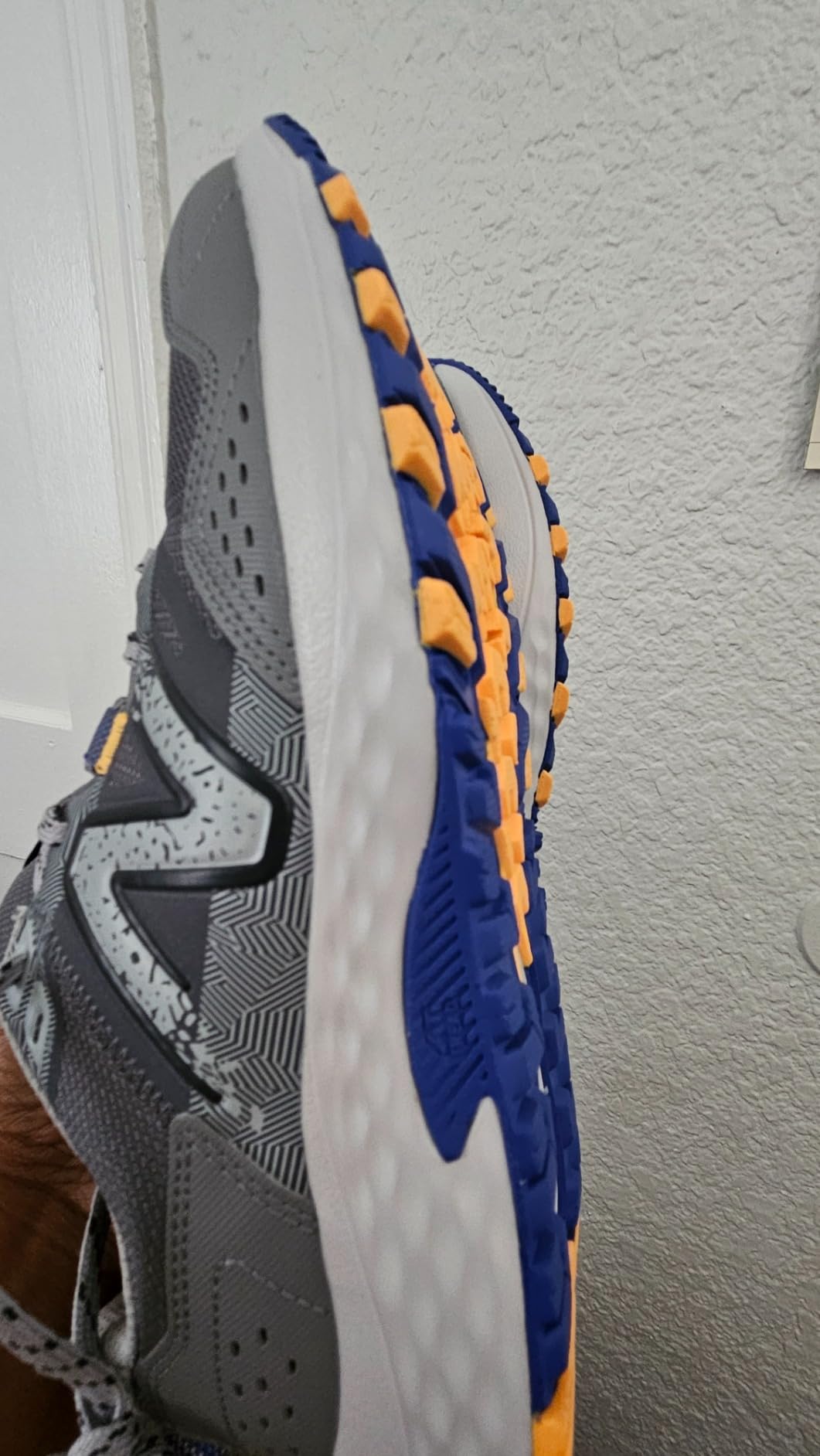
After 8 weeks and 45 miles across varied terrain, the New Balance MT410 V8 is a genuine budget trail shoe that performs where budget trail shoes typically fail to perform: dry terrain confidence, road-to-trail versatility, and wide-width availability at an accessible price point.
The lace hole quality control issue is real. Not in every pair, but in a pattern consistent enough across Amazon reviews and independent user reports that it can’t be dismissed as outlier anecdotes. That issue, combined with the wet-traction limitation and cushioning ceiling for heavier runners or longer efforts, prevents a straightforward recommendation.
What I’d tell a friend: if you’re a moderate-terrain weekend warrior who runs 3-7 mile trail loops on dry conditions, the MT410 V8 is excellent value. Buy from Amazon, Zappos, or any retailer with easy returns. When the shoes arrive, put them on and inspect every lace eyelet before you commit to taking them on a remote trail. If the construction quality looks right, you’ll likely get 9-12 months of solid recreational use.
If you’re regularly running wet terrain, technical rocky singletrack, or logging serious weekly mileage, the MT410 V8 isn’t the right tool regardless of price.
| New Balance MT410 V8 — Final Scores | |
|---|---|
| Overall Performance | 6.8/10 |
| Traction & Grip | 7.0/10 |
| Comfort & Cushioning | 6.5/10 |
| Durability & Construction | 5.5/10 |
| Fit & Sizing | 7.5/10 |
| Value for Money | 8.0/10 |
| Versatility | 8.5/10 |
| Recommended? | Cautious Yes — With Reservations |
Bottom Line: The MT410 V8 delivers real trail capability at a budget price when quality control cooperates. The AT Tread outsole genuinely handles mixed surfaces, and the wide-width options are a genuine advantage at this price point. The lace hole QC issue is the shoe’s significant weakness — inspect carefully before committing to remote use, and buy where returns are easy. For moderate-terrain recreational trail running on a realistic budget, this shoe earns its cautious recommendation.
🏃♂️ Browse trail running shoes at FootGearUSA
Be the first to review “New Balance Men’s V8 Running Shoes 410 V8”
Related products

Running Shoes
Running Shoes
Running Shoes
Running Shoes

Running Shoes
Running Shoes

Running Shoes


Hiking/Trekking Shoes
Reviews
There are no reviews yet.