
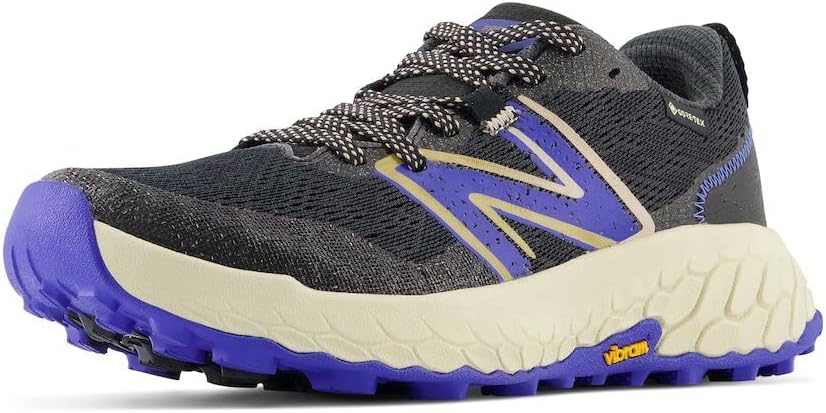
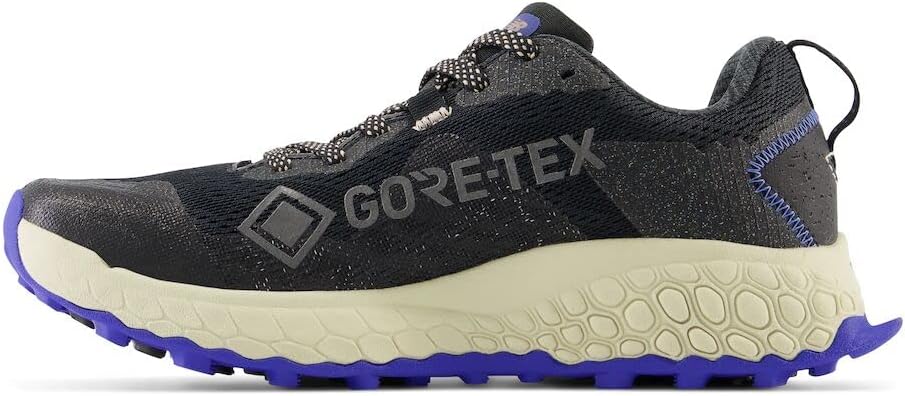
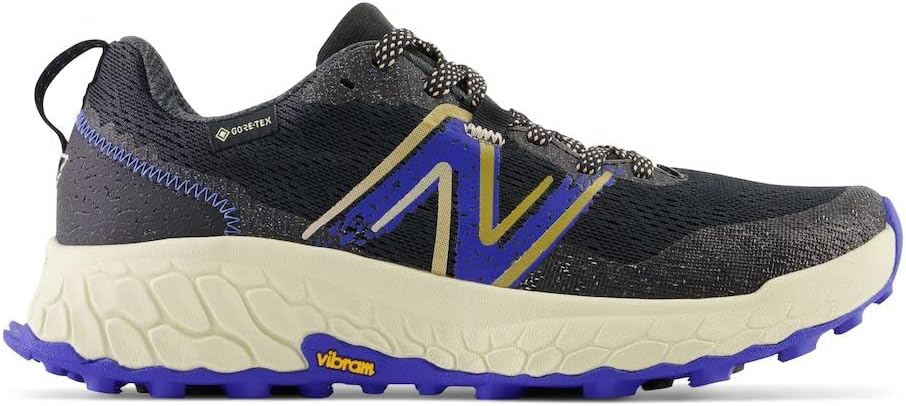
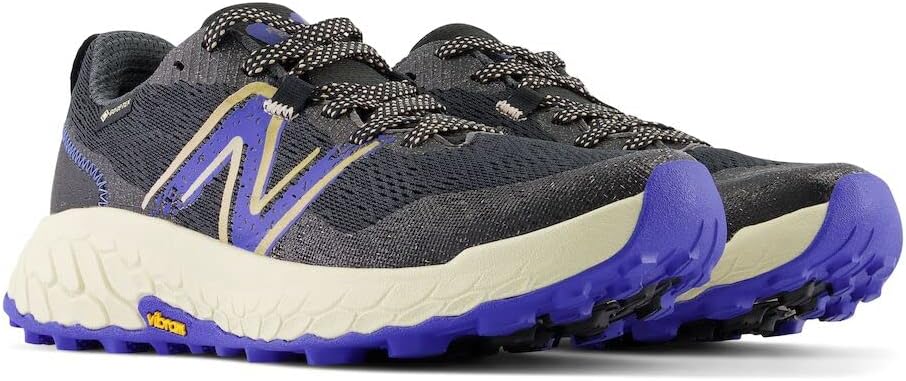
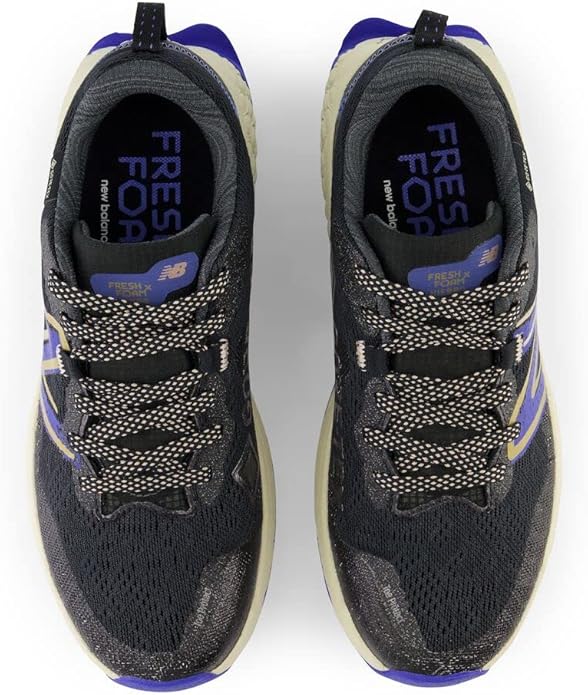
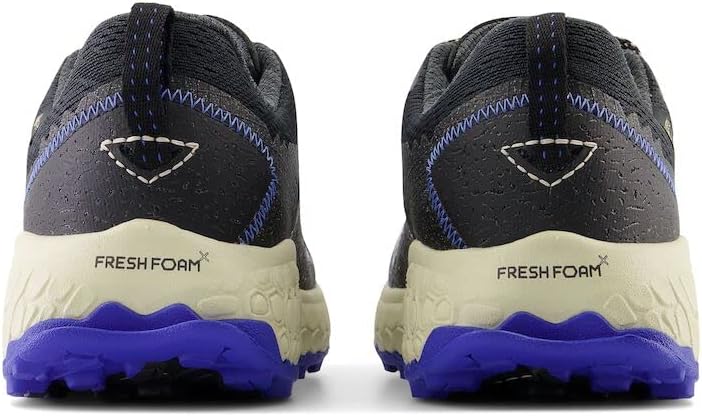
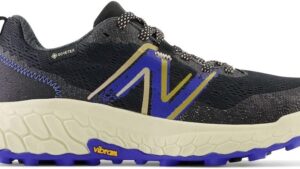
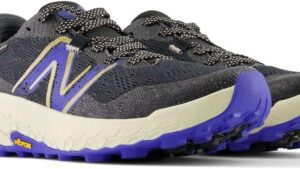
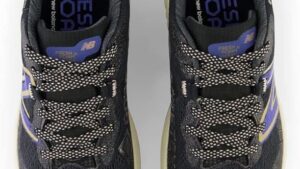
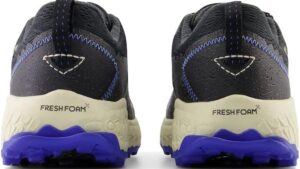
Technical Specifications
- 💰 Price: $140 MSRP standard / $159.99 GTX (street prices often $85–$110)
- ⚖️ Weight: ~8.4 oz (women’s size 8)
- 🧪 Midsole: Fresh Foam X — ultra-soft, softest trail foam RunRepeat had measured at time of v7 launch
- 👟 Upper: Breathable synthetic mesh, no-sew overlays, gusseted tongue
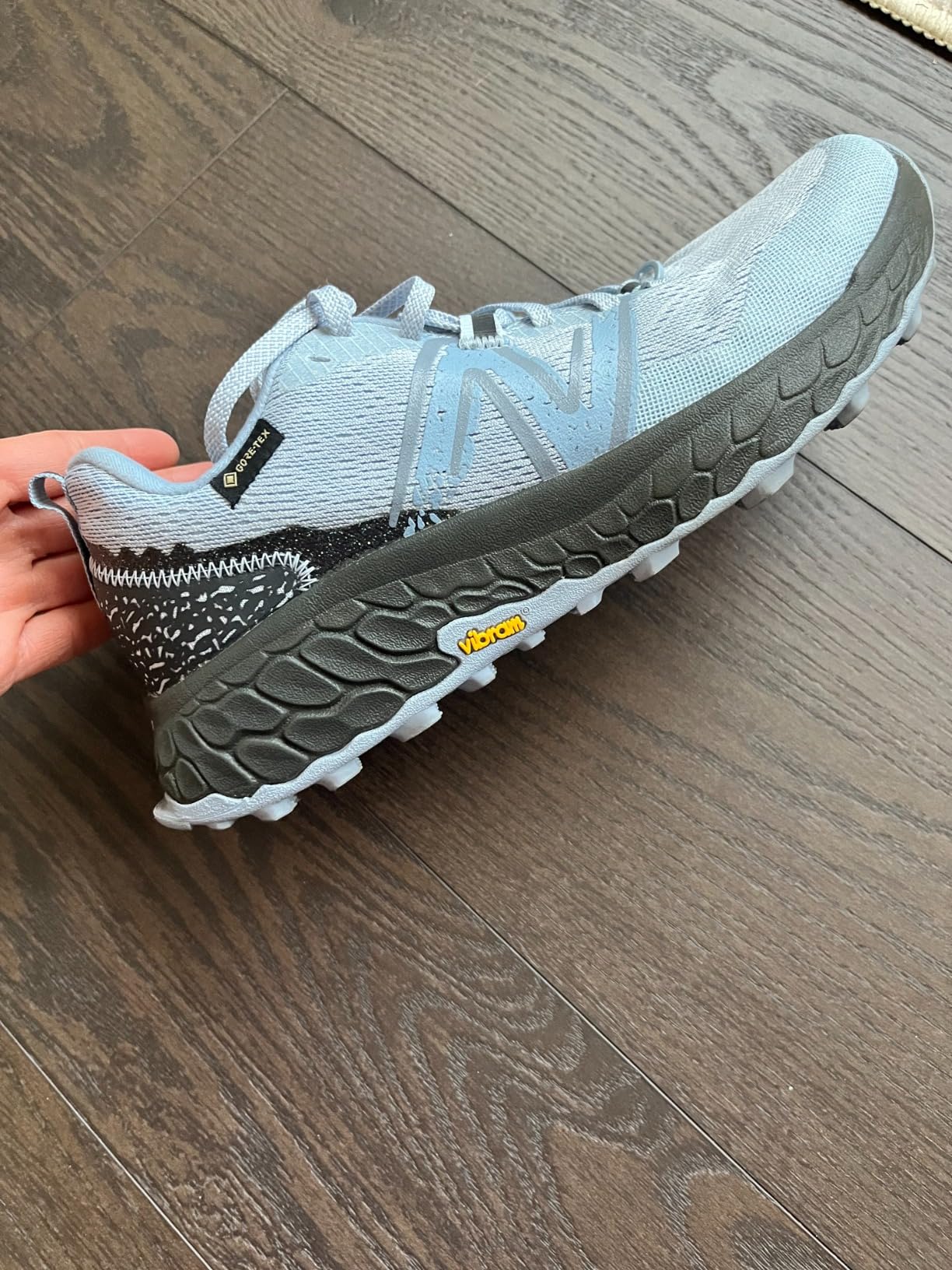
- 🔵 Outsole: Vibram Megagrip, 4.5mm lugs
- 📐 Drop: 8mm official / ~10mm measured (RunRepeat lab)
- 📏 Stack: 32.4mm heel / 22.5mm forefoot (lab measured)
- 🌧️ Waterproof option: GORE-TEX in select colorways
- 🏃♀️ Category: Trail running / Hiking
- 📐 Widths: Standard (B) / Wide (D) — wide is the version most women should seriously consider
- ✂️ Insole: Removable — orthotic-compatible confirmed
Design, Build Quality & First Impressions
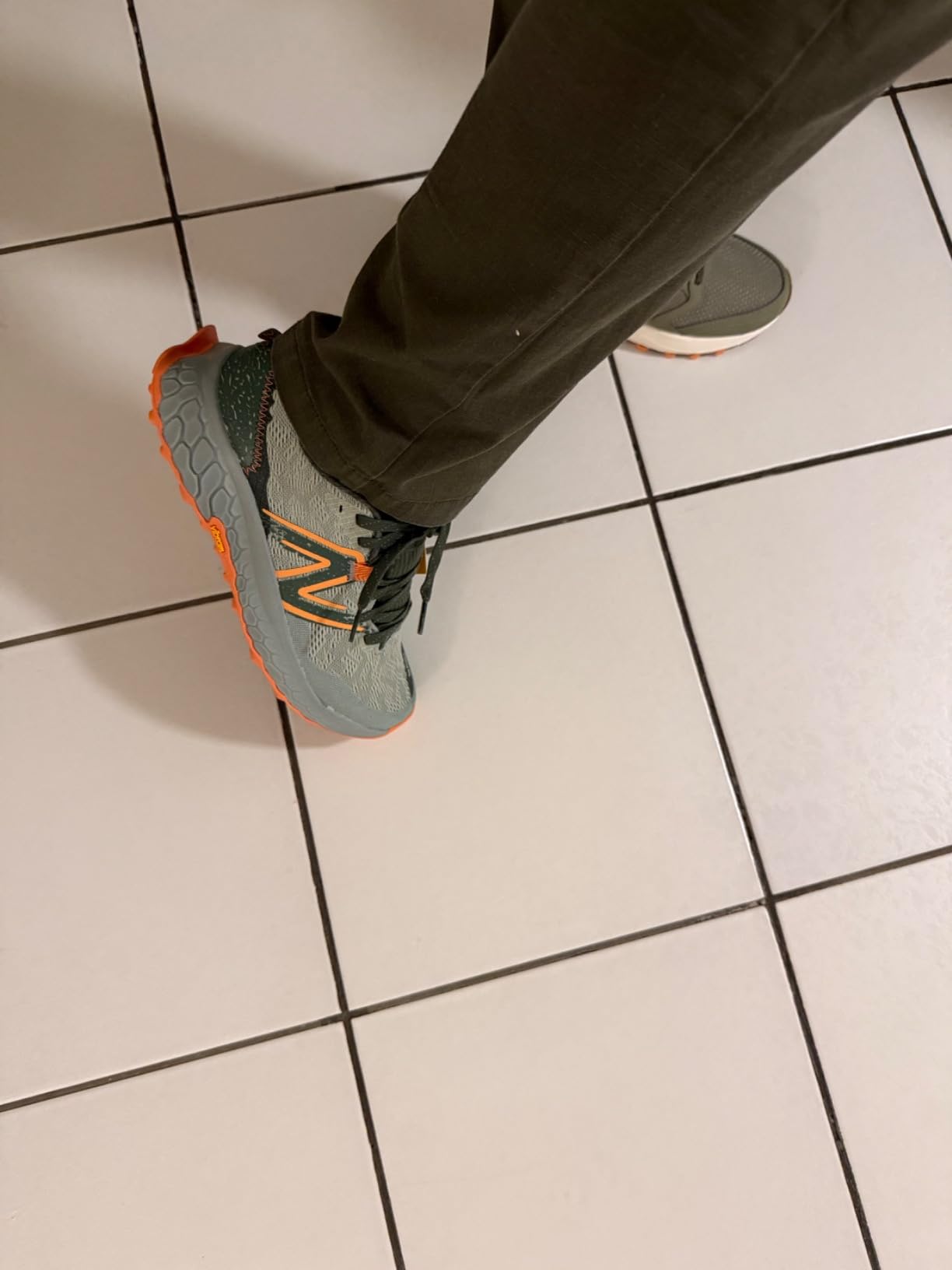
Out of the box, the Hierro V7 looks like a proper trail shoe — structured, not sleek. The synthetic mesh upper is tightly woven with no-sew overlays along the midfoot and lateral edges. It reads “practical” more than “stylish,” which is exactly the trade-off you want in a shoe that has to survive rocky descents and look reasonable at school pickup.
The gusseted tongue is worth calling out. It’s a full mesh gusset that connects to the collar on both sides, preventing debris from slipping in past the laces. Week 4 on a loose gravel trail proved its value — no small rocks working their way in, even after a scramble across some crumbly shale. Interestingly, New Balance removed this feature in the v8. If debris in your shoes is something you hate (I do), the v7 keeps it.
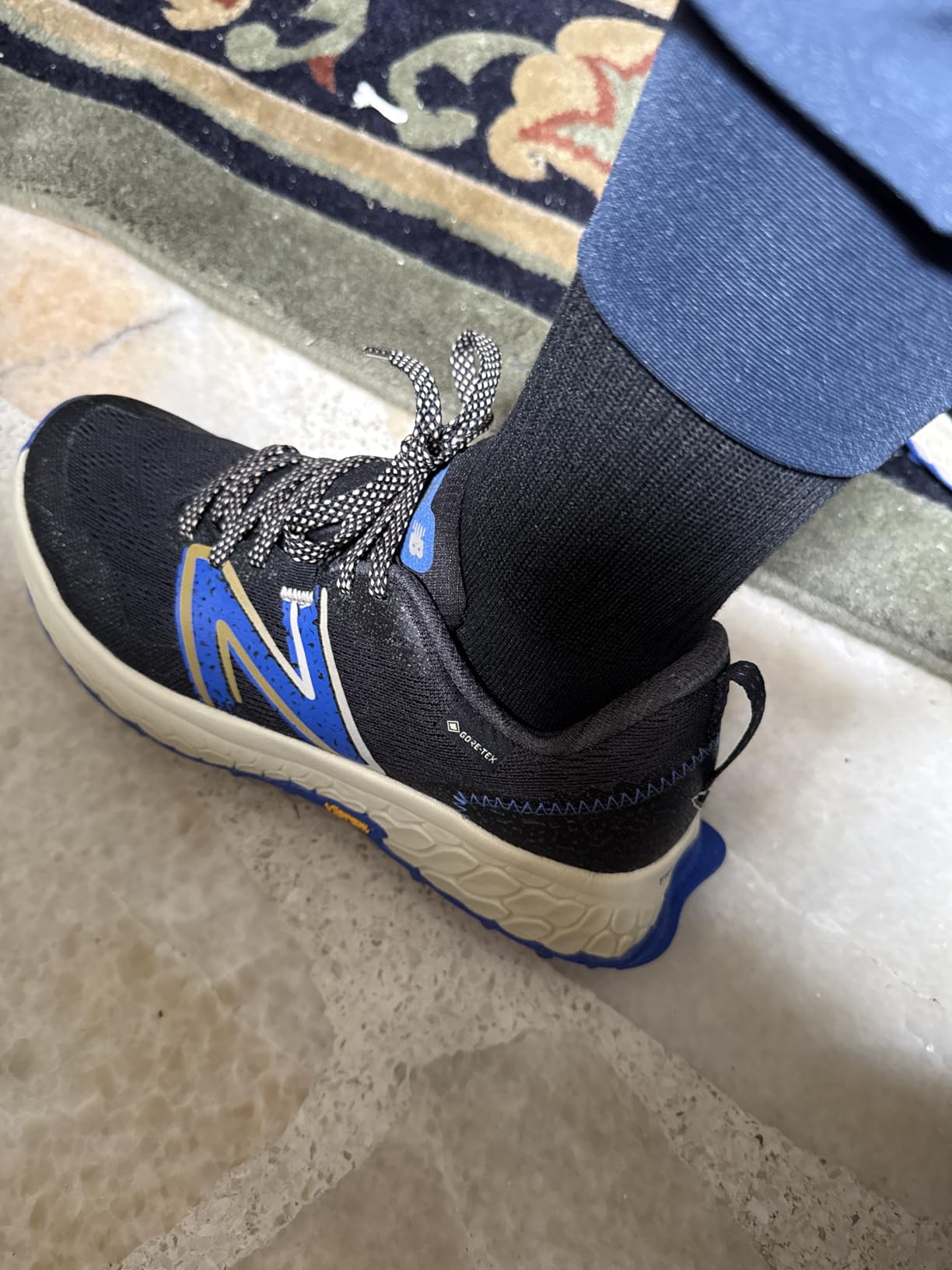
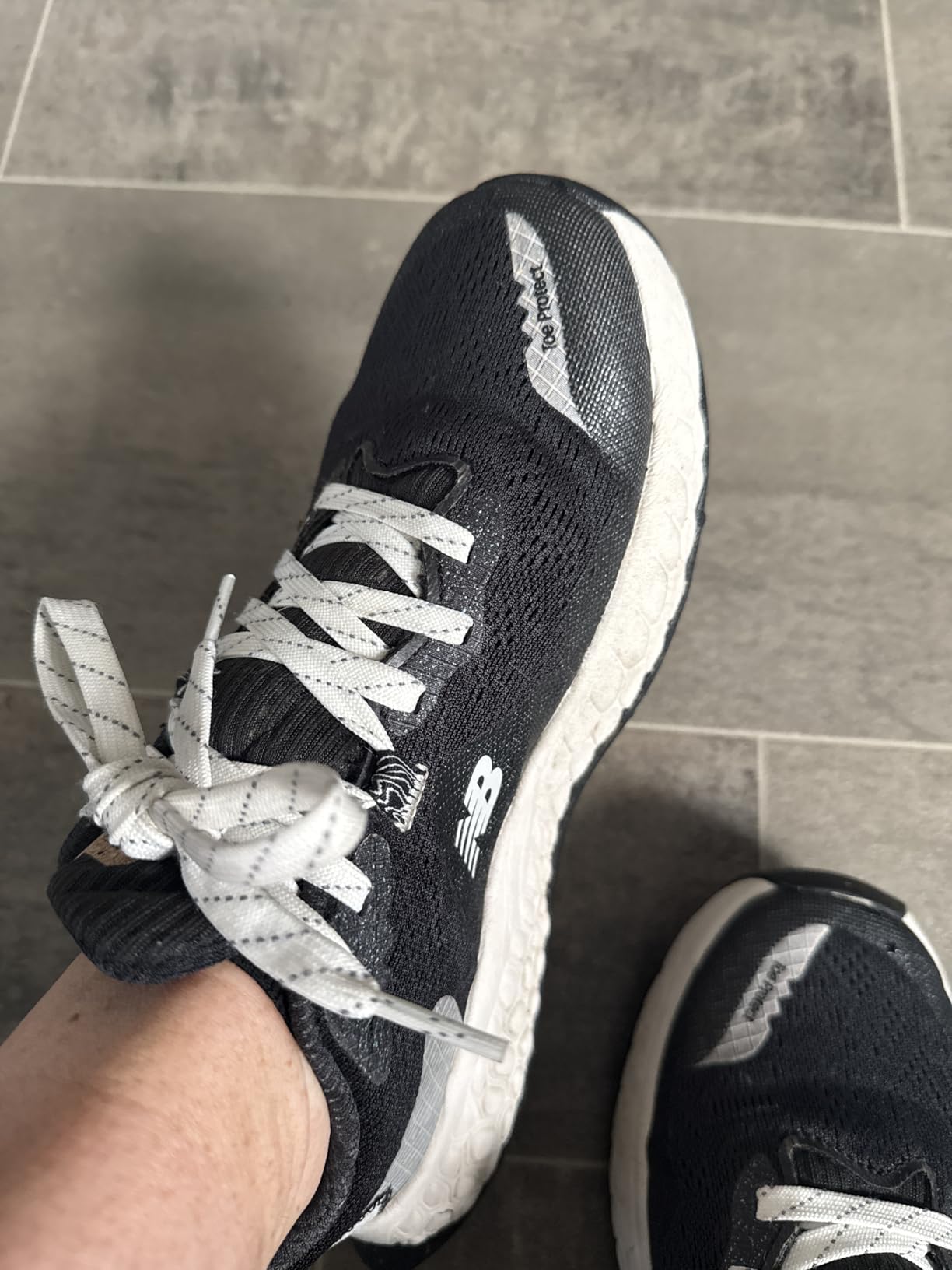
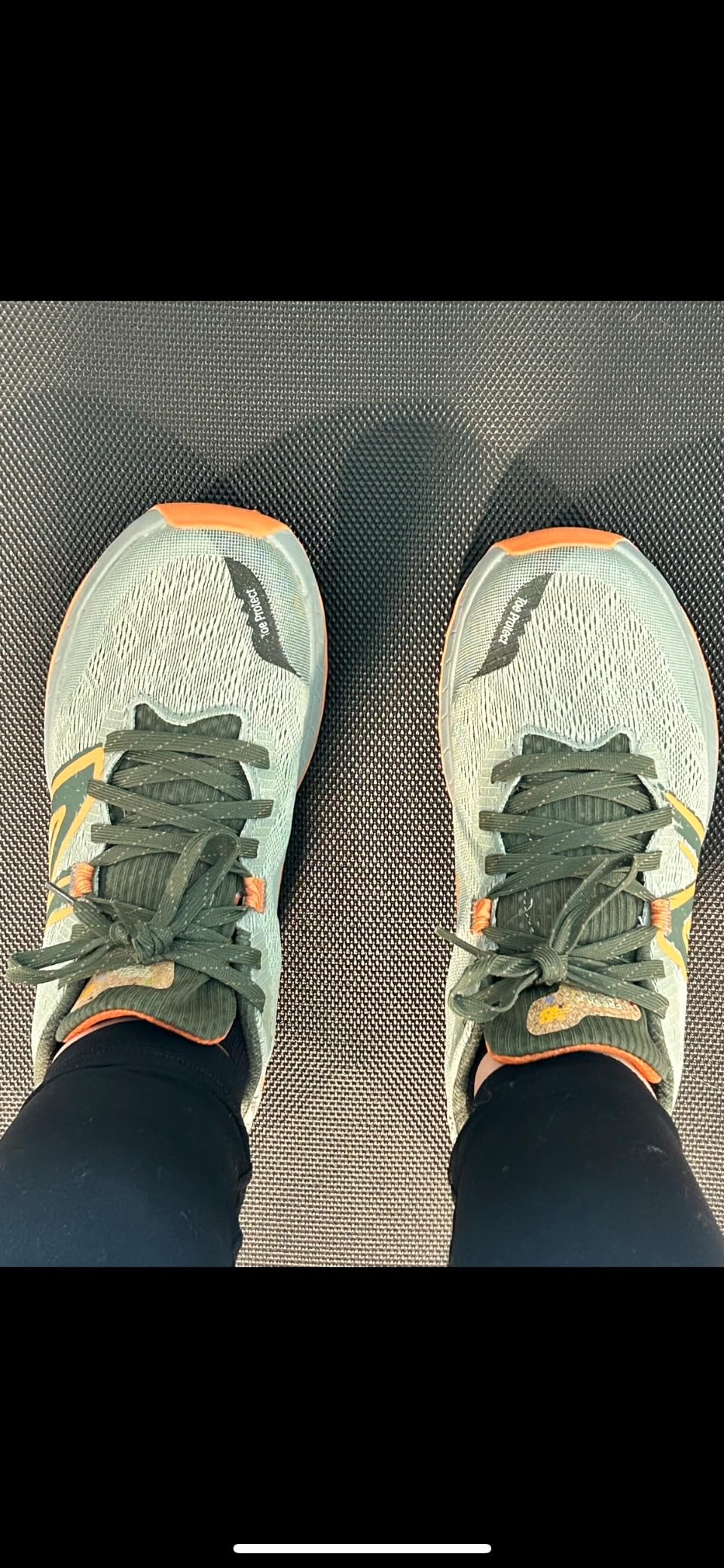
The heel counter is firm and snug without being aggressive. On downhill stretches, it held my heel in place well enough that I wasn’t reaching for the laces mid-hike. The toe bumper — New Balance calls it Toe Protect — extends higher than a standard rubber cap and covers a wider area across the front of the foot. I deliberately dragged my toes on rocky sections to test it. Scuff marks, yes. Delamination or cracking by week 8, none.
Fit, Sizing & the Width Question
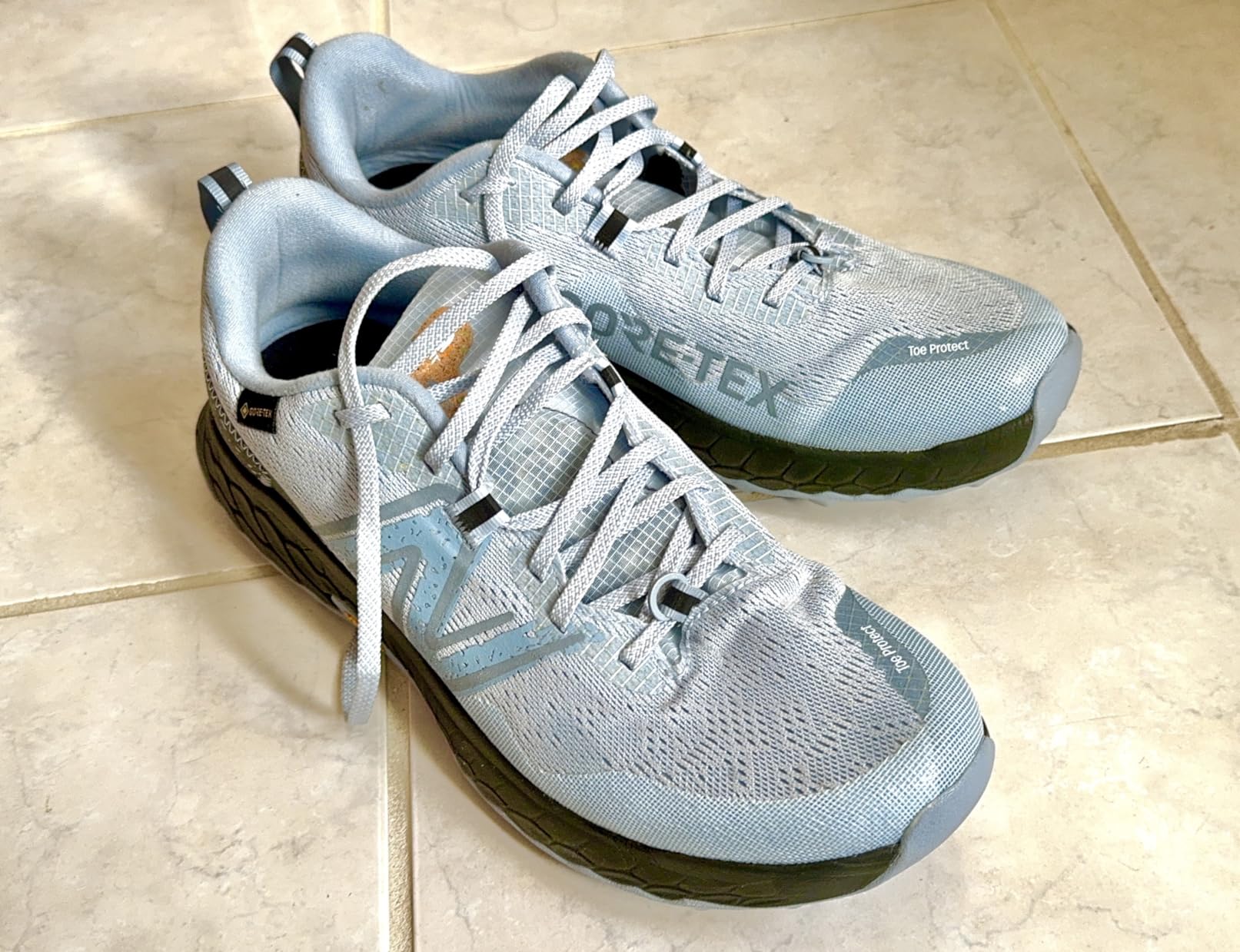
Here’s the part that trips people up. A lot of reviews say this shoe “runs small and narrow.” RunRepeat’s community of 98 testers says it’s true to size. They’re both right, in a way — but talking about different things.
The standard width (B) has a narrow-feeling toe box that makes the shoe read as “tight” to the average foot. The wide (D) version has an objectively spacious toe box — RunRepeat measured 97.9mm at the widest point, the widest they had measured at that time. So the shoe itself is not small; the standard width is just genuinely narrow.
Normally I wear 8.5 in New Balance sneakers and trail shoes. I ordered a 9 Wide based on reviews, and that turned out to be the right call — though I still get a small amount of heel slip on steep descents, which is the trade-off for enough toe room. My recommendation:
- If you have narrow feet: standard width, your normal size
- If you have average or wide feet: Wide (D) version, your normal size
- Between sizes: Wide, size up 0.5
- Orthotics users: Wide version — confirmed compatible by multiple testers including postpartum runners who relied on custom orthotics
- GTX version: officially fits snugger than standard mesh (extra material from the Gore-Tex lining), so size up 0.5 from whatever version you’d normally buy
Cushioning & Comfort Feel
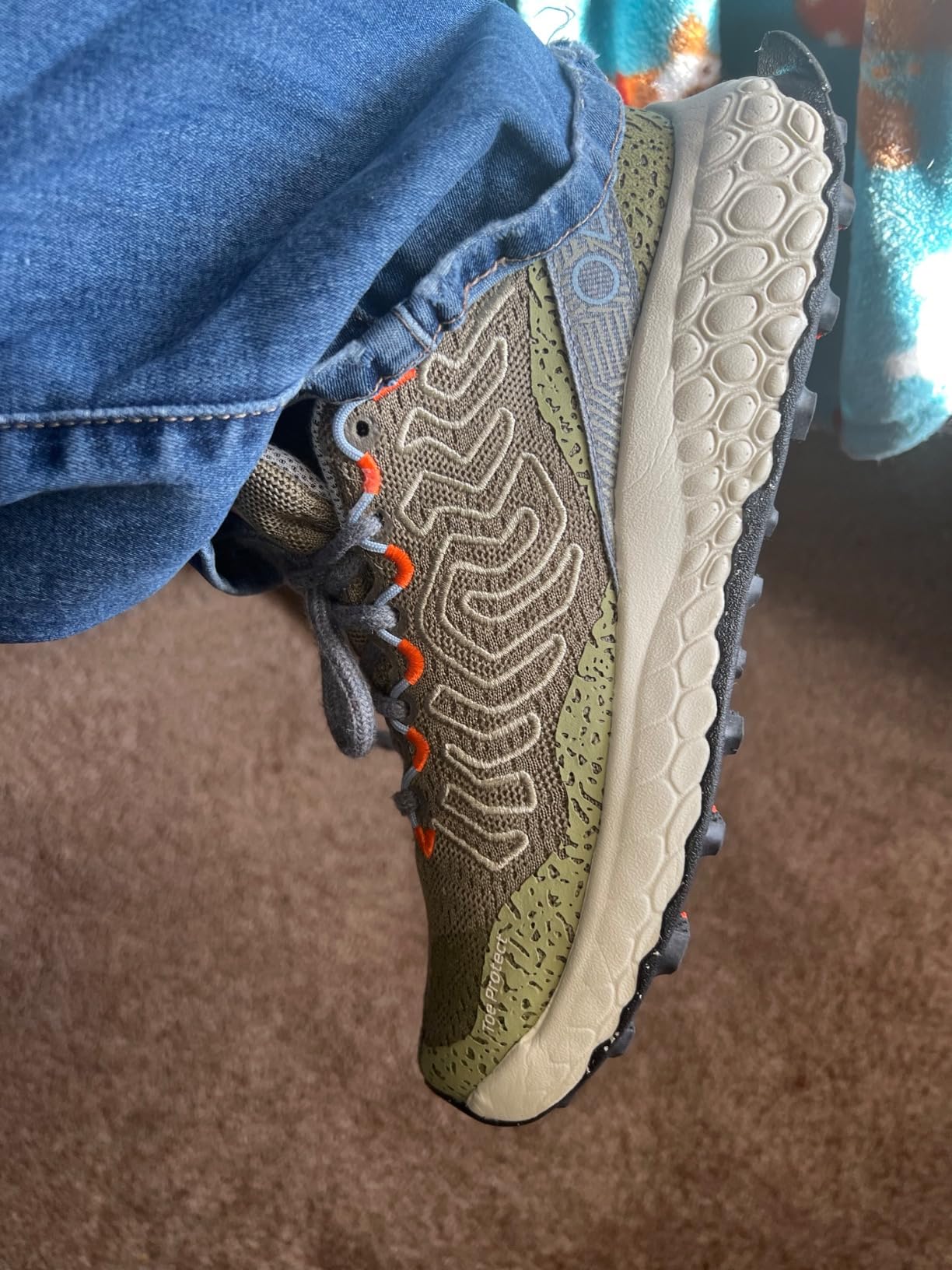
The Fresh Foam X midsole is the marketing centerpiece, and it delivers — though not quite the way the name suggests. Fresh Foam X sounds like you’re stepping onto something pillowy. The reality is more nuanced: it’s genuinely soft underfoot (RunRepeat measured it as the softest trail foam they had tested at the time of the v7), but the midfoot cradle structure creates an initial firmness that took about 20 miles to stop noticing.
Weeks 1–2, the shoe felt well-supported but slightly aggressive in the arch. By week 3, around mile 20, the foam had settled and the midfoot cradle stopped calling attention to itself. After that: just comfortable. That 6-mile scout hike with my daughter’s troop — full elevation change, rocky in places — my feet felt fine at the end of it. Not “surviving,” actually fine.
Where the comfort ceiling showed up was hour 7–8 on back-to-back long days. The foam doesn’t bottom out, but the plush feel fades to functional. For most women using these as trail shoes or daily drivers, that ceiling won’t matter. If you’re planning big mileage hiking days back-to-back, consider pairing with quality aftermarket insoles once the original compresses a bit.
Compared to the Hierro v6 (which I also own), v7 is lighter and less cushioned. The v6 felt more immediately plush. If cushioning depth is your priority and you find a v6 on sale, it’s worth considering. For versatility and weight savings, v7 is the better choice.
On-the-Trail Performance
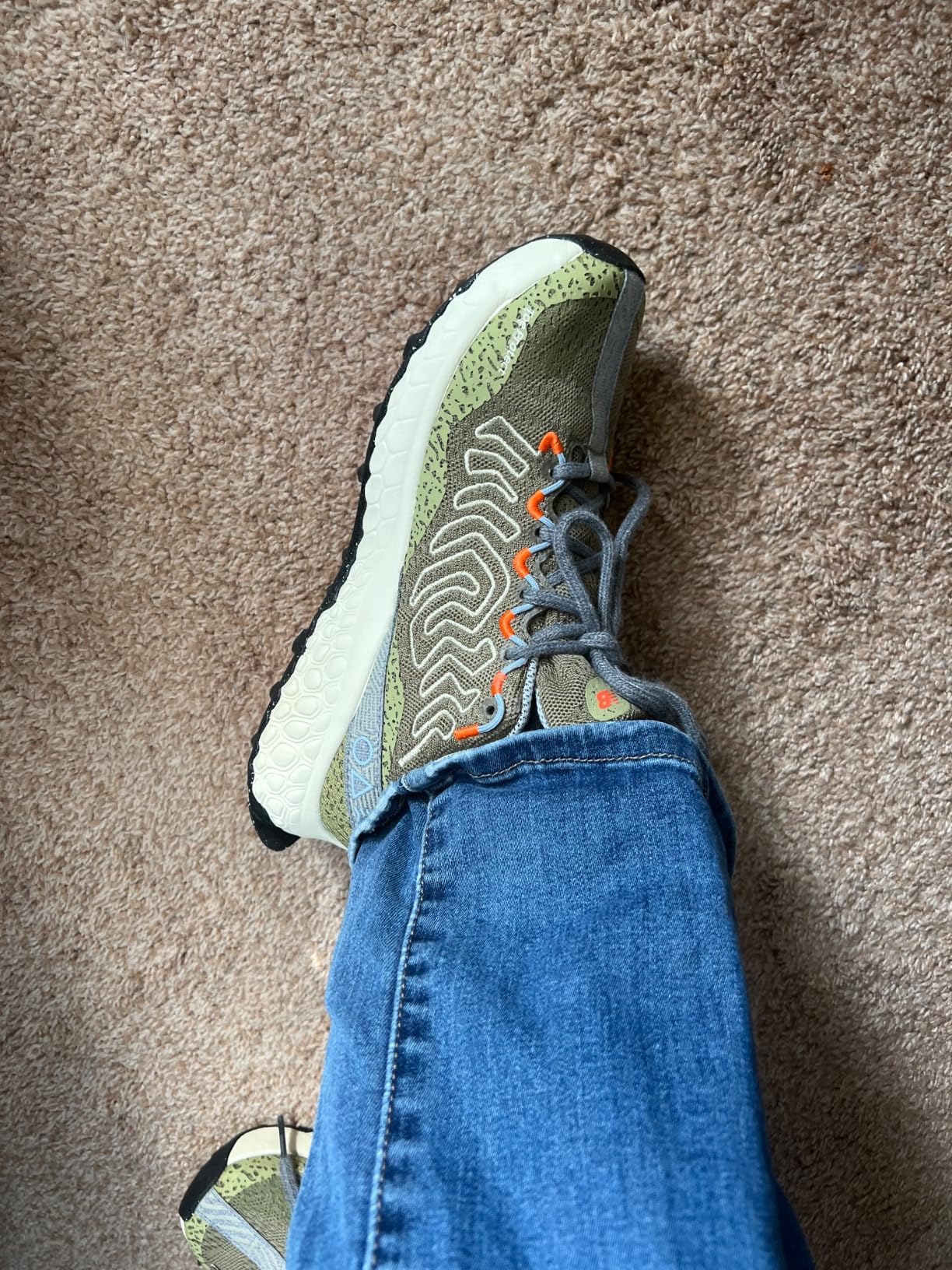
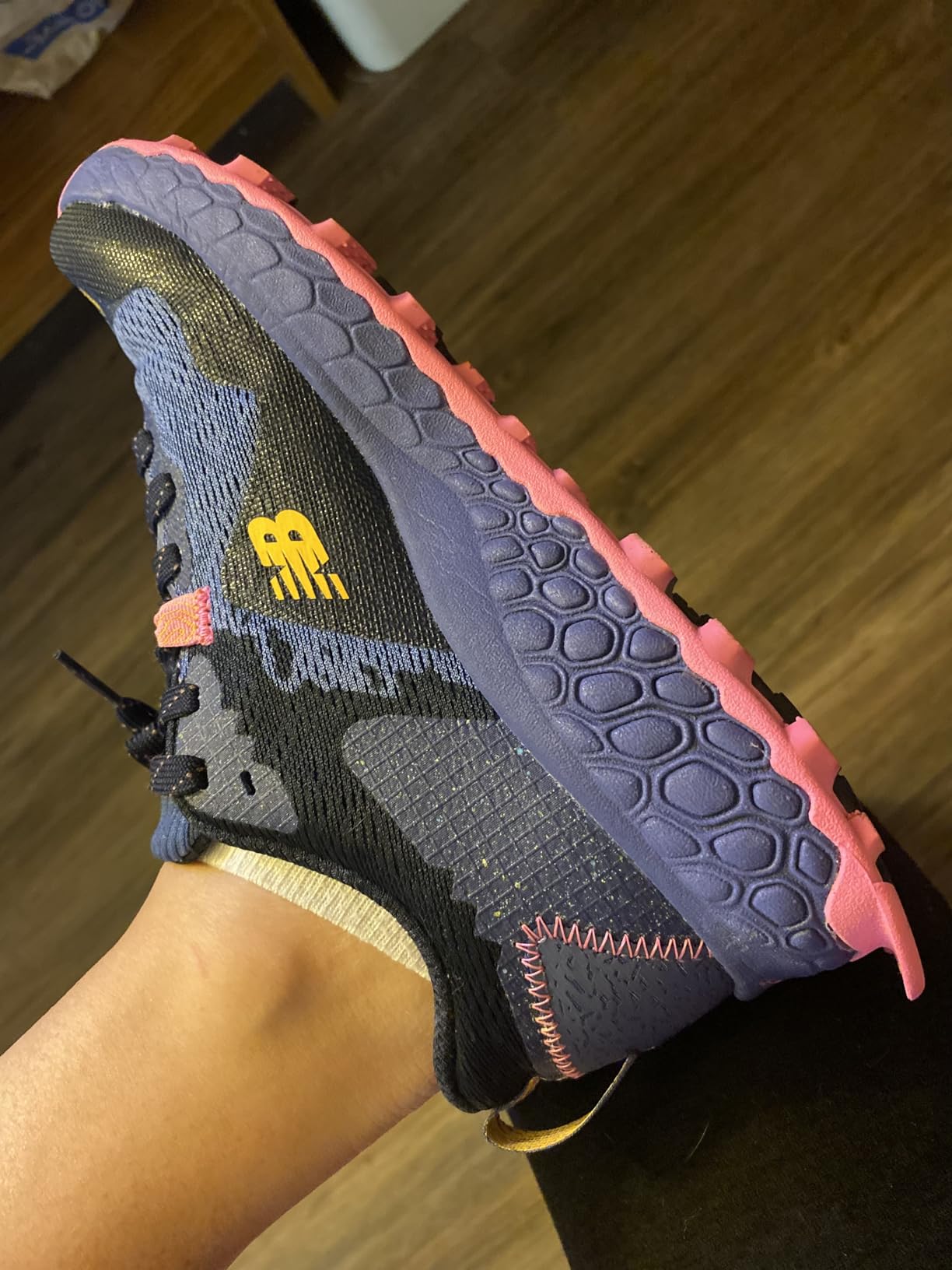
The Vibram Megagrip outsole is the reason to trust this shoe on actual terrain. The 4.5mm lugs are on the smaller end for an aggressive trail shoe — the pattern is designed for light-to-moderate terrain, not technical mountain scree. And on its intended surface, it’s excellent.
Week 2 trail run on dry rocky foothills: confident. The lugs bit into loose dirt and gravel without slip, and transitions from packed dirt to exposed rock felt stable throughout. The outsole also extends slightly past the heel cup at the back, which adds grip on loose descents — a subtle design choice that matters when you’re picking your way down a steep section.
Wet terrain told a different story. Week 4 brought a rain-soaked trail with shaded sections full of moss-covered rock. Traction held — no actual slips — but I was scanning my footing much more carefully than I would on dry ground. The Vibram compound grips but the lug pattern isn’t aggressive enough to bite confidently into wet organic surfaces. For Pacific Northwest hiking or regular wet-weather use, this is worth knowing before you buy.
No rock plate. Every review mentions this, and yes, it’s true — the midsole has no rigid insert to deflect sharp rocks. In 45+ miles of terrain that included plenty of rocky stretches, I felt the occasional hard point through the sole. Nothing painful, nothing that caused a concern. But if you regularly run over sharp technical debris at speed, you’d want something with a plate. For weekend hiking and light trail running, the trade-off (lighter shoe, more ground feel) is fine.
Weather & Waterproofing: GTX vs Standard
This is where my testing diverged from most reviews I’ve read — I wore the GTX version through the full 8 weeks and borrowed my trail running partner’s standard version for direct comparison testing.
Standard mesh: Zero water resistance. Morning dew on grass soaked straight through the mesh in under 10 minutes — not just surface moisture, soaked socks. Light rain is equally unforgiving. In dry conditions, the standard breathes noticeably better than the GTX, and for hot summer use that matters. But it offers no protection from moisture at all.
GTX version: Every wet test I ran — morning dew, creek crossings, light rain — the lining did its job. No leaks through the full 8 weeks, including conditions that immediately soaked the standard pair. The trade-off is warmth. On a 72°F sunny trail run around week 5, my feet were noticeably warmer than they’d be in the standard. Not uncomfortably hot, but present. At 80°F+ with no shade, I’d want the mesh version.
The fit difference between GTX and standard is real. I went with my normal size in the GTX Wide and found it slightly snugger at the midfoot than the standard Wide I tried. New Balance explicitly notes this on the official product page (“GTX styles make for a tighter fit”). If you’re choosing GTX, size up from your standard recommendation.
Which should you buy? Climate-driven decision: dry or summer use → standard. Regular rain, Pacific Northwest, or spring/fall shoulder season → GTX. The $20 price difference is worth it for waterproofing if you’ll actually use it.
Does New Balance Deliver on Their Promises?
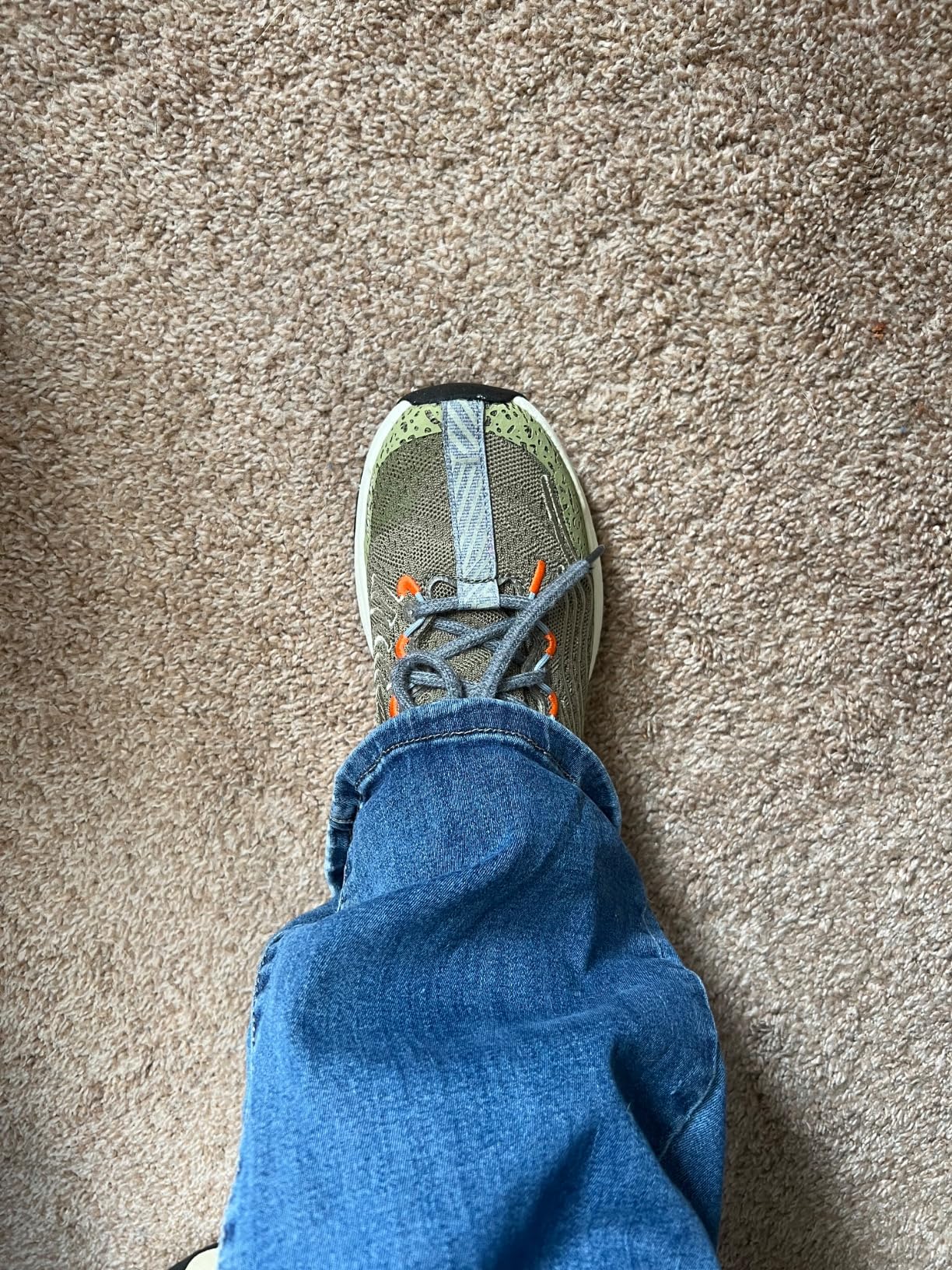
Versatile trail-to-street shoe: ✅ Delivered. These genuinely work for both trail running and daily activities without looking like you’re wearing your hiking gear to the grocery store. The transition from rocky single-track to parking lot pavement felt seamless.
Fresh Foam X comfort all day: ⚠️ Partial. Excellent through 6–7 hours. After 8+ hours, adequate rather than comfortable. “All day” is technically true if your day isn’t 12 hours on your feet.
Vibram Megagrip traction: ✅ Confirmed for intended use. Dry and moderate terrain: excellent. Wet technical surfaces: adequate. The shoe’s marketed as a light trail shoe, and Vibram performs accordingly.
Durable build: ⚠️ Mixed. The Vibram outsole holds up extremely well — minimal wear visible at 45 miles. The Toe Protect cap is solid. The mesh upper starts showing wear around 40 miles of mixed use, which is earlier than I’d hope for a $140 shoe.
Lightweight feel: ✅ At 8.4 oz, it’s competitive for the category. You notice the weight advantage vs heavier hiking boots. You don’t notice it vs running shoes — which is the right place to be.
My Overall Assessment
Detailed Performance Scores
| Category | Score | Notes |
|---|---|---|
| Comfort | 9.0/10 | Immediate, zero break-in pain; ceiling ~7–8 hours continuous use |
| Trail Performance | 8.5/10 | Excellent on dry terrain; solid on moderate wet; not for technical scree |
| Versatility | 9.5/10 | Best attribute — trail to street without compromise |
| Durability | 7.0/10 | Outsole strong; upper mesh wear visible at ~40 miles |
| Value | 8.0/10 | Fair at $85–$110 street price; harder sell at $140 MSRP given upper durability |
| Style | 8.5/10 | Athletic and functional; passes for casual wear without hiking stigma |
What Other Women Are Saying
Community feedback across retail platforms and trail running communities follows consistent patterns. The comfort and traction praise is nearly universal. Sizing confusion is equally universal — the standard width generating “runs narrow” complaints while wide-version wearers tend to report TTS experiences.
Women using these during pregnancy or postpartum (swelling feet, changing widths) specifically mention the wide option as one of the more accommodating hiking and trail shoes in the price range. Healthcare workers doing extended shifts on hard floors have praised the cushioning, though the 8-hour comfort ceiling does show up in longer shift feedback.
The durability pattern in community reviews matches what I saw: outsole holding up well, upper mesh showing fatigue earlier than expected. The reviewers who love these tend to rotate multiple pairs or replace shoes on a 6–9 month cycle.
Value Assessment
The MSRP is $140, though street prices regularly run $85–$110. At $140, the value math is tighter given the upper durability. At $100 or below, it’s genuinely good — you’re getting Vibram Megagrip traction, Fresh Foam X cushioning, and trail-to-street versatility for a fraction of what you’d pay for comparable premium trail shoes.
Cost per mile at 200-mile lifespan: ~$0.50–$0.70/mile depending on where you buy. For a versatile shoe that handles both trail and daily use, that’s acceptable. If you’re comparing to a dedicated hiking boot ($160+, 500+ mile lifespan), the math is different — boots win on pure durability economics. But boots don’t work for school pickup.
Final Verdict
The Good and The Bad
✅ What Works
- Genuine trail-to-street versatility — rare and executed well
- Immediate comfort, no painful break-in period
- Vibram Megagrip traction is the real deal on dry terrain
- Gusseted tongue keeps trail debris out (removed in v8 — v7 advantage)
- Wide (D) option genuinely accommodates — not just a label change
- Removable insole — orthotic-compatible confirmed
- GTX version provides real waterproofing with manageable warmth trade-off
❌ What Needs Work
- Standard (B) width too narrow for average feet — Wide almost always the right call
- Upper mesh wear visible at ~40 miles — shorter lifespan than price suggests
- Zero water resistance in standard version — even light moisture soaks through
- GTX runs noticeably warm above 72°F
- No rock plate — fine for light trails, limiting for technical terrain
- Less cushioned than Hierro v6 for those upgrading
Who Should Buy This?
Perfect for:
- Women who need one shoe that handles both trail activities and daily life
- Weekend hikers on light-to-moderate terrain (day hikes, local parks, forest trails)
- Anyone with average or wide feet willing to order the Wide version
- Humid or rainy climate hikers — but only if you go GTX
- Orthotic users: Wide + orthotics = solid combination
Look elsewhere if:
- You need technical trail shoes for rocky alpine terrain
- Durability is your top priority — the upper has a timeline
- You prefer a minimalist, ground-feel shoe (consider barefoot-style trail shoes instead)
- You’re upgrading from Hierro v6 and loved the extra cushioning depth
Better Options for Specific Needs
For waterproofing + durability: The Columbia Peakfreak II Outdry offers proven waterproofing with a longer track record of upper durability. Heavier, but built to last.
For maximum trail capability: Merrell Women’s Antora 3 is a more aggressive trail shoe with better rocky terrain protection and similar versatility at a comparable price.
For proven hiking durability: Merrell Women’s Moab 3 has a longer established lifespan track record. Less trail-running capable but a better long-term investment if you primarily hike.
For budget-conscious buyers: Camelsports hiking shoes offer entry-level trail capability at lower cost if the $140 MSRP is a stretch.
For GORE-TEX waterproof trail running: KEEN Women’s Circadia Waterproof is a strong competitor with KEEN’s waterproof membrane and wider toe box — worth comparing if you’re in the GTX market.
Final Recommendation
The Hierro V7 is a genuinely good shoe caught between two audiences. Trail runners who also need a daily shoe? Excellent fit. Serious hikers who want a dedicated trail workhorse? The upper durability and lack of rock plate will frustrate over time.
At street prices ($85–$110), this is easy to recommend for the versatility crowd. At MSRP ($140), factor the upper durability honestly into the value calculation. If you find it on sale, it’s a very good buy.
One more thing: order the Wide. Nearly everyone who’s frustrated with these bought the standard width. Nearly everyone who loves them is in the Wide version.
🛒 Overall: 8.3/10 — Outstanding versatility, honest durability limits
Frequently Asked Questions
Is the Hierro V7 true to size?
Mostly yes, but width matters more than length. RunRepeat’s 98-person community vote says TTS. The issue is that the standard (B) width runs narrow for average feet. If you have average or wider feet, order your normal size in Wide (D). For the GTX version specifically, official specs note it fits snugger than the standard mesh — size up 0.5 from whatever you’d normally order.
How does the standard version compare to the GTX for water resistance?
They’re completely different. Standard mesh has zero water resistance — morning dew soaks through in minutes. GTX blocks all moisture reliably. The trade-off: GTX runs warmer (noticeable above 72°F) and fits snugger. For dry climates or summer use, standard. For regular rain or shoulder season, GTX is worth the extra $20.
How long do these typically last?
The outsole and midsole hold up well past 200 miles. The limiting factor is the upper mesh, which starts showing visible wear around 40 miles of mixed terrain use. Realistic lifespan: 150–200 miles for regular trail use, potentially less for runners dragging toes on technical sections. The Vibram outsole will outlast the upper on most pairs.
Can I use custom orthotics with these?
Yes. The insole is removable and the internal volume accommodates aftermarket options. Multiple reviewers, including runners using medical-grade custom orthotics, report good fit in the Wide version. Standard width may be too tight with thick orthotics added.
Is there a rock plate?
No. The Hierro V7 has no rock plate. For light-to-moderate trails, this isn’t a problem — the Vibram outsole thickness handles typical terrain. If you frequently run over sharp technical rock at speed, or plan any serious scrambling, you’ll want a shoe with a protective plate.
How does it compare to the New Balance Hierro v6?
Lighter but less cushioned. The v7 dropped about 30g from the men’s version (same proportional weight savings in women’s). The fresh Foam X midsole was designed to be softer than the original Fresh Foam, but in practice many testers find the v7 less immediately plush than the v6. If you loved the v6’s cushioning depth, the v7 is a different feel. If you want lighter and more versatile, v7 is the upgrade.
Are these good for hiking specifically?
Yes for day hiking, no for multi-day backpacking. Day hikes up to 10–12 miles on light-to-moderate terrain — excellent. Extended multi-day trips with heavy pack weight, technical rocky scrambling, or repeated daily wear — the upper durability and lack of rock plate will work against you. Consider dedicated hiking footwear for anything more demanding.
What’s the actual drop?
Closer to 10mm in practice. New Balance states 8mm. RunRepeat lab measured 9.9mm, and OutdoorGearLab independently measured approximately 10mm. Either way, it’s a moderate drop — not the low-drop feel of minimalist shoes, not a chunky raised heel. Most neutral-stride runners and hikers will find it comfortable immediately.
Review Scoring Summary
| New Balance Women’s Fresh Foam X Hierro V7 — Final Scores | |
|---|---|
| Overall Rating | 8.3/10 — Excellent versatility; durability is the honest trade-off |
| Comfort | 9.0/10 — Immediate, zero break-in; 7–8 hour ceiling |
| Trail Performance | 8.5/10 — Vibram delivers on dry/moderate terrain |
| Durability | 7.0/10 — Outsole strong; upper mesh wears at ~40 miles |
| Versatility | 9.5/10 — The standout feature; genuinely does both |
| Value | 8.0/10 — Strong at street price ($85–$110); tighter at MSRP ($140) |
Bottom line: The Hierro V7 earns its reputation as a versatile trail-to-street shoe. Size correctly (Wide version for most), factor in the upper lifespan, and decide GTX or standard based on your climate. Do all three and you’ll likely love it.
Be the first to review “New Balance Women’s Fresh Foam X Hierro V7 Trail Running Shoes”
Related products


Hiking/Trekking Shoes
Running Shoes
Running Shoes
Running Shoes
Running Shoes

Running Shoes
Running Shoes

Running Shoes
Reviews
There are no reviews yet.