
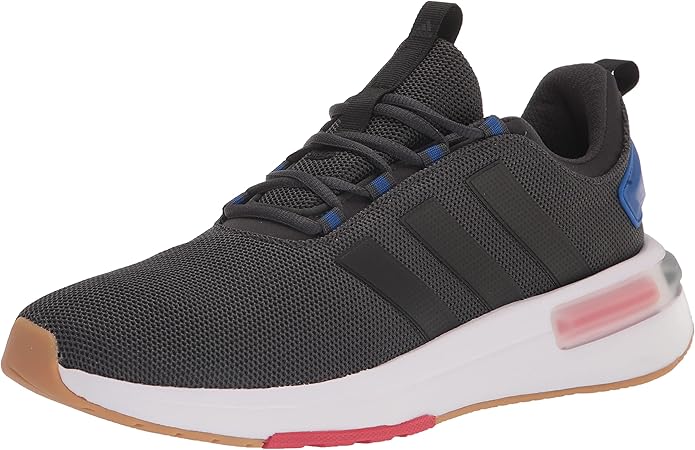
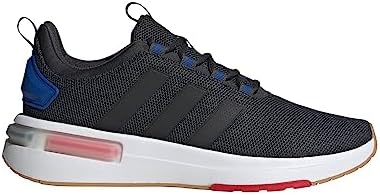
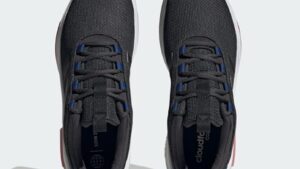
Three pairs of budget sneakers in six months — that was my track record before I spotted the Adidas Racer TR23 during a late-night Amazon scroll. Mike here. I stand on concrete floors for 10-hour workdays in Midwest heat, and I’d burned through one heel-separated pair by month 3, another with a compressed insole by month 4, and a third that just gave up on traction entirely. At $75, the Racer TR23 was in the same price range as everything that had failed me. But 6 weeks, 45+ wear sessions, and 120+ miles of city walking later, I’ve got a more complicated answer than I expected.
Technical Specifications
- 💰 Price: $75 MSRP (frequently found on sale ~$45–55)
- ⚖️ Weight: 10.2 oz per brand — ⚠️ OutdoorGearLab lab-measured ~13.5 oz
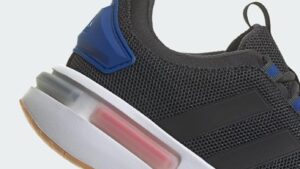
- 🧪 Midsole: Cloudfoam cushioning
- 👟 Upper: Engineered mesh with synthetic no-sew overlays (50%+ recycled content)
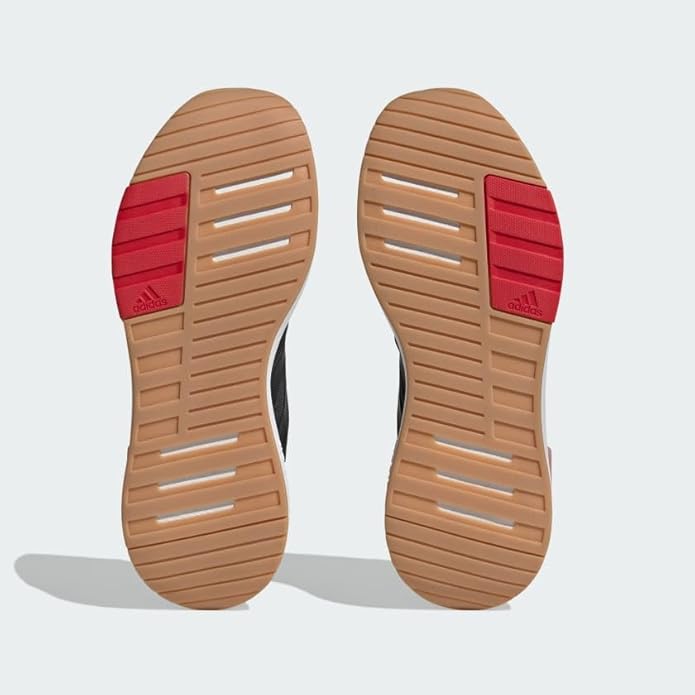
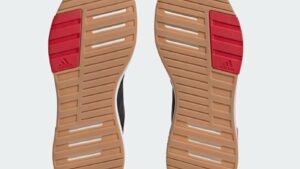
- 👞 Outsole: All-rubber with diagonal cut traction lines
- 📐 Heel stack: 40mm (OutdoorGearLab lab-measured)
- 📏 Heel drop: 21mm (OutdoorGearLab lab-measured)
- 🏃♂️ Category: Lifestyle / casual sneakers
- 🎯 Best for: Daily wear, standing jobs, office-to-errand use
| Category | Score (1–10) | Notes |
|---|---|---|
| Comfort | 8.0 | Cloudfoam delivers immediate plush feel; degrades to consistent by week 4 |
| Style/Appearance | 7.5 | NMD-inspired clean aesthetic, works with jeans or chinos |
| Durability | 6.5 | Upper holds up well; outsole wears at 120+ miles; lace loops a real risk |
| Value for Money | 8.5 | $75 MSRP, often $45–55 on sale; strong comfort-per-dollar ratio |
| Breathability | 8.0 | Genuine airflow in 90°F heat; not water-resistant |
| Fit & Sizing | 7.0 | Generally TTS but loose upper causes heel lift without careful lacing |
| Overall | 7.6/10 | Solid daily driver with genuine Adidas comfort — right person, right use case |
Design & Build — What You’re Actually Getting
Upper Construction: Budget Shoe Trying Harder
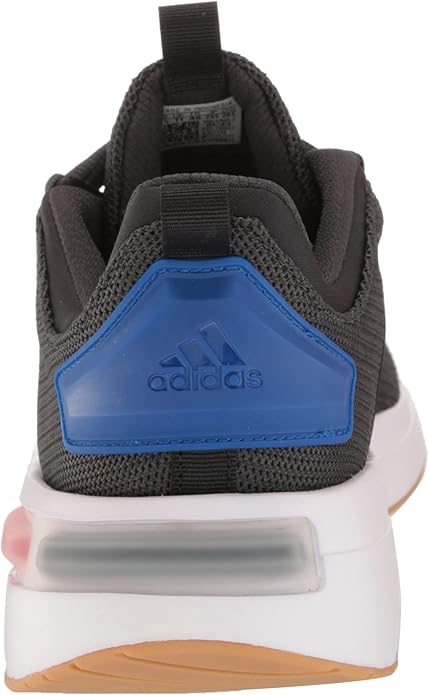
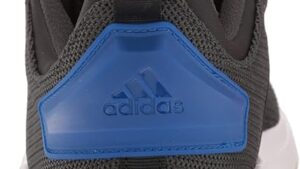
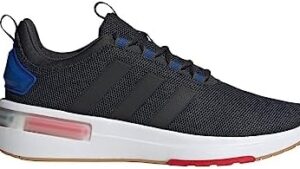
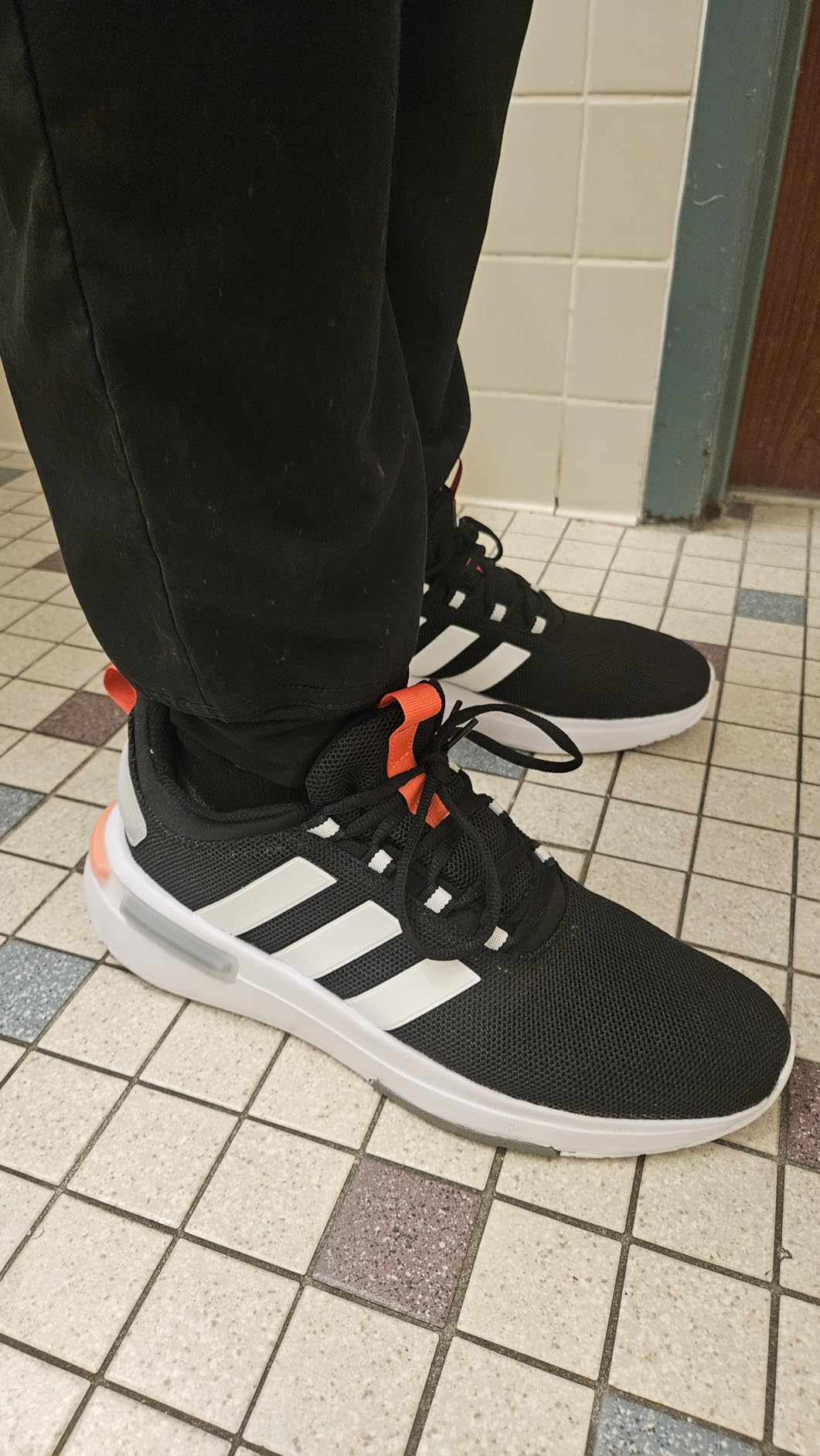
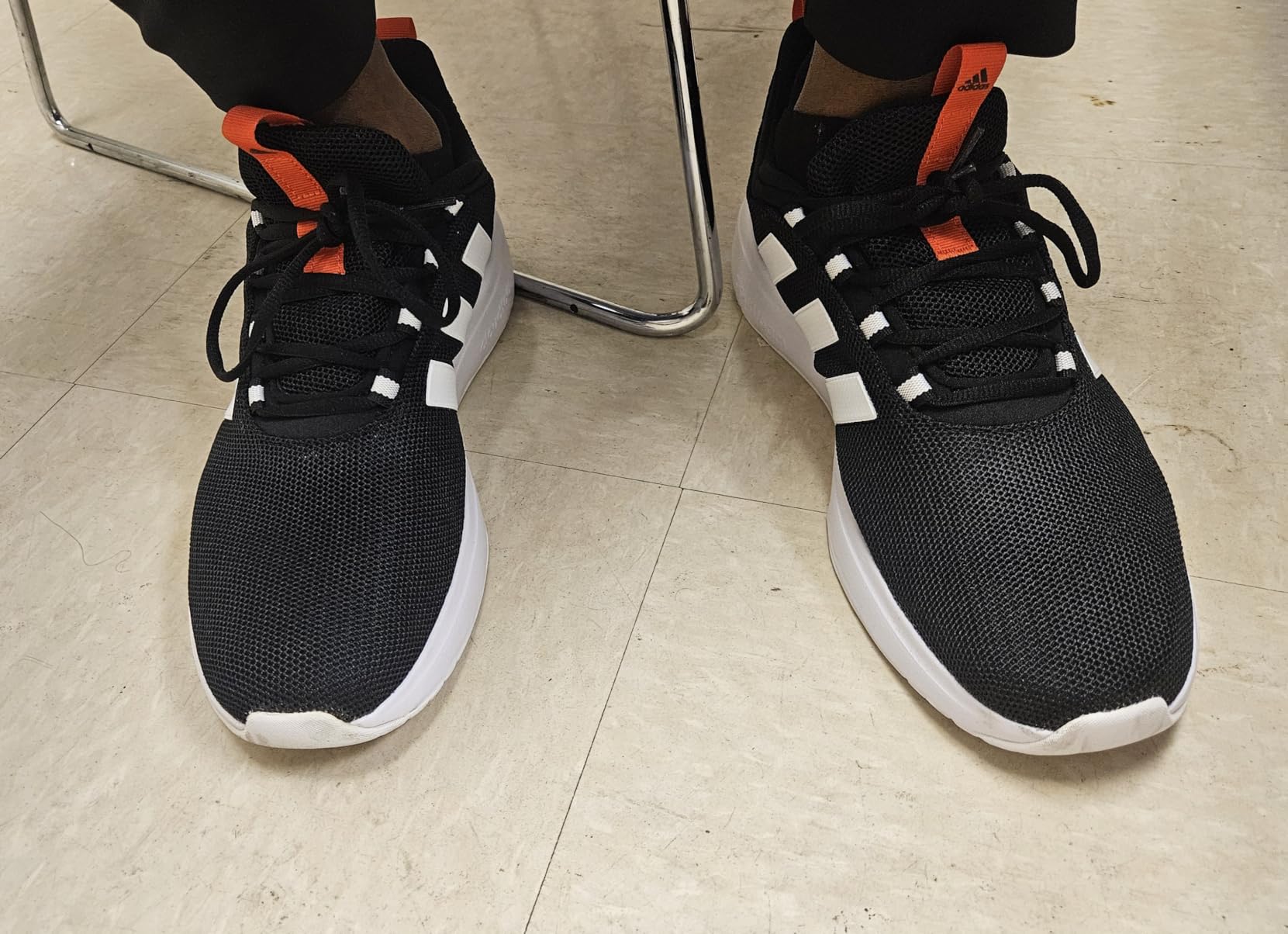
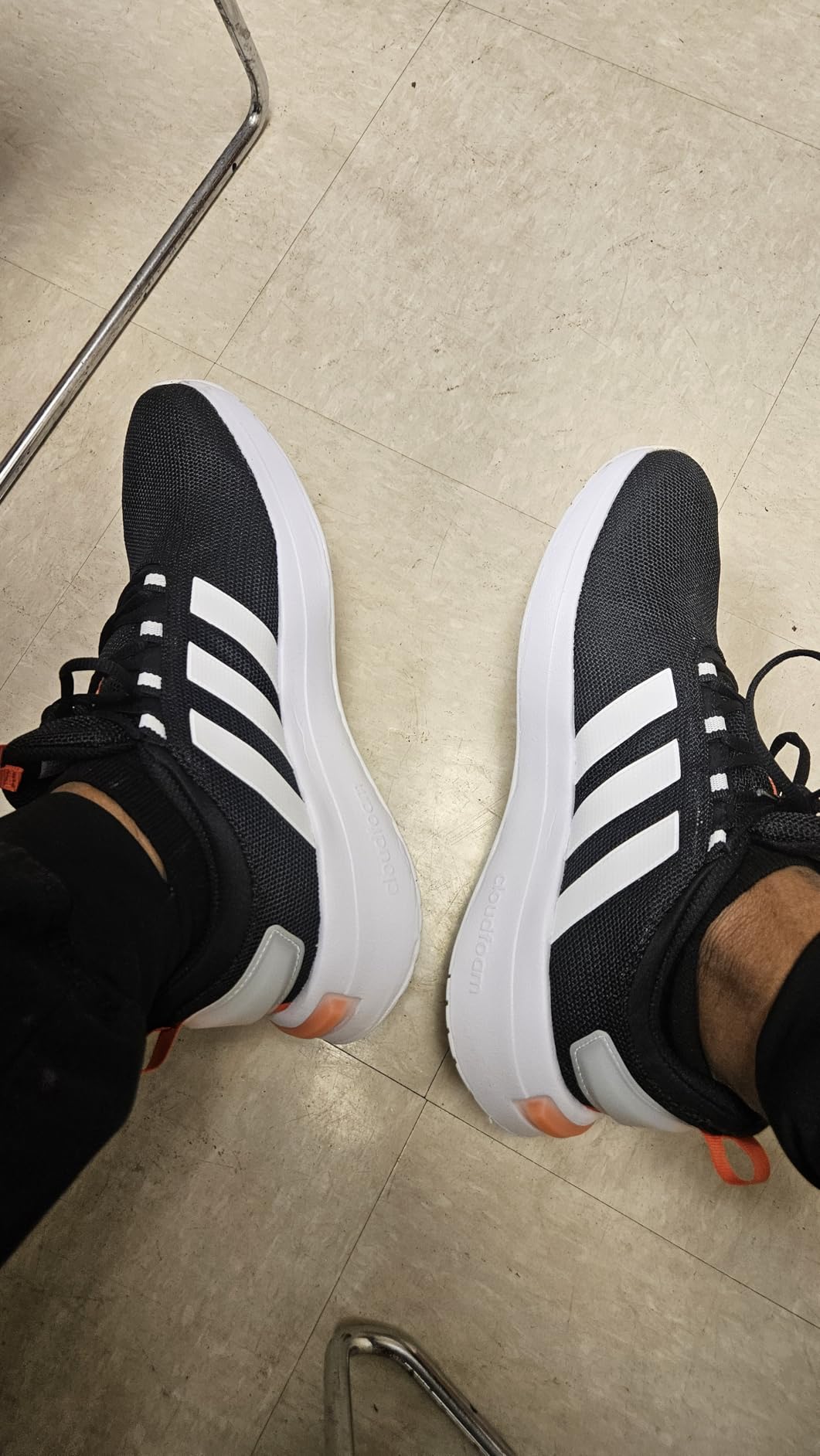
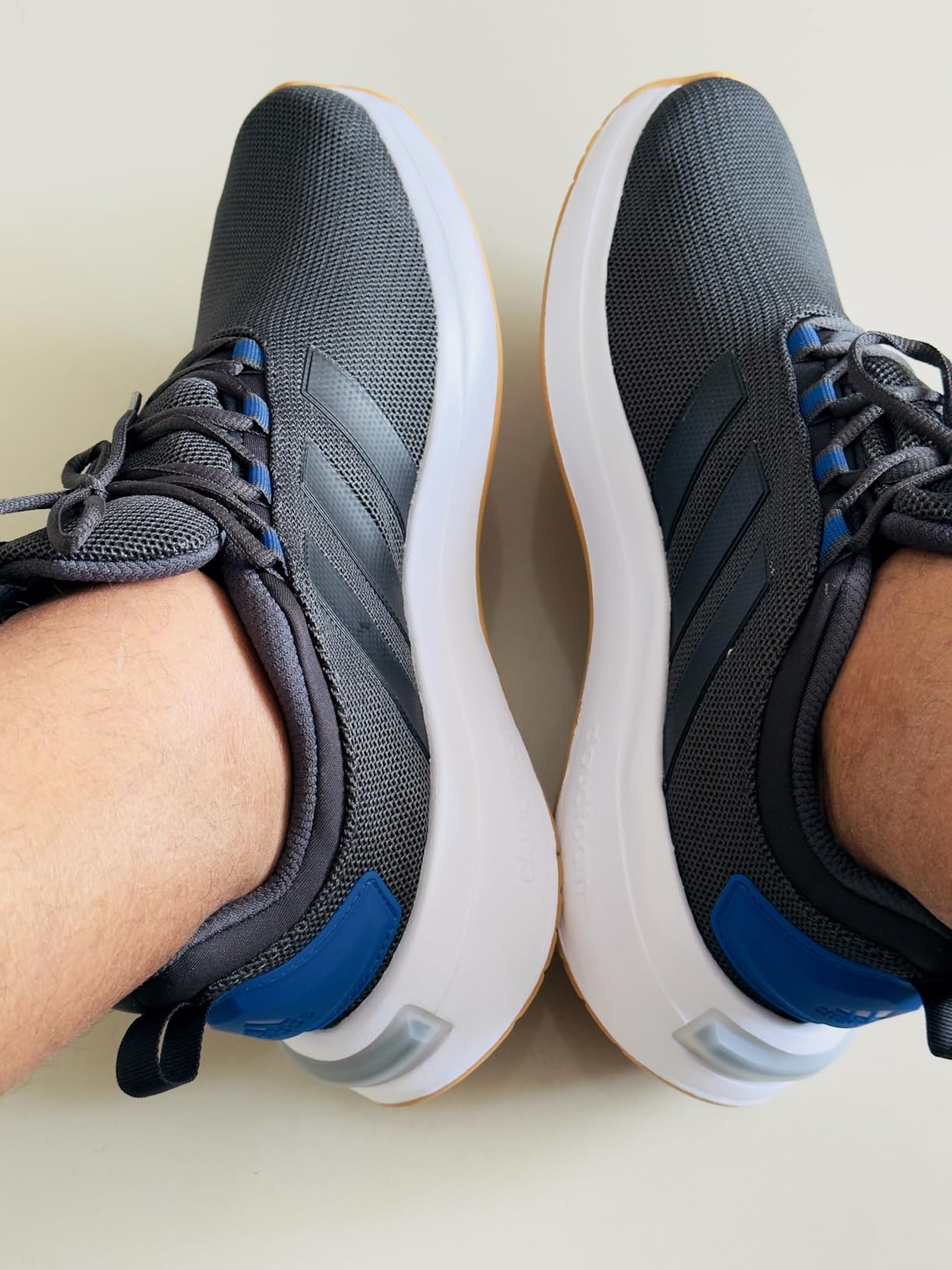
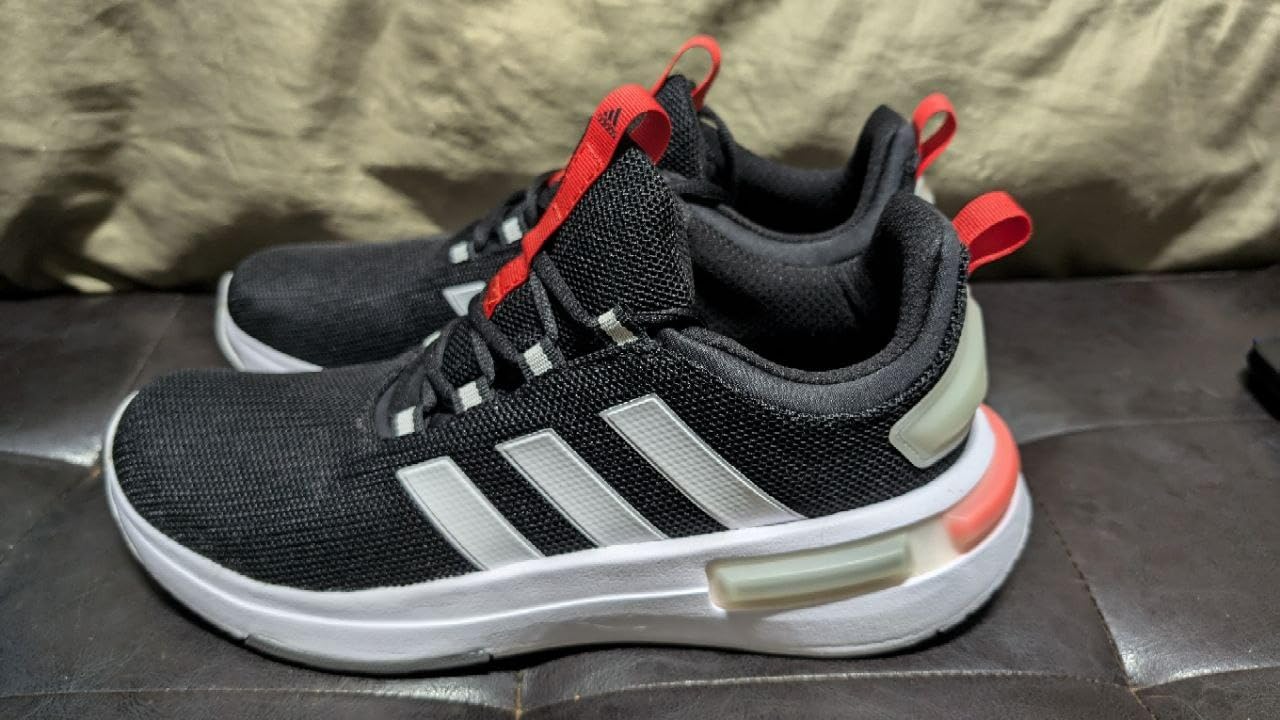
The carbon black and royal blue colorway I tested has a visual pedigree that costs significantly more. If you set it next to an Adidas NMD R1 at $140, the design language is clearly related — clean three-stripe branding, engineered mesh panels, no-sew overlays that give it a technical look without bulk. At $75, that’s a strong visual win.
The mesh itself is soft to the touch without feeling flimsy. The no-sew overlays are thermal-bonded to the upper (no stitching lines cutting into the mesh), which contributes to the breathability but also means the upper has less structural rigidity than a stitched alternative. SneakerLens, aggregating 1,057 reviews, described it as “sleek but unstructured” — which matches what I found. It looks premium, but there’s not much architecture holding your foot in place beyond the laces.
One environmental credential worth noting: Adidas claims 50%+ recycled content in the upper materials. That’s a credible claim given Adidas’s broader End Plastic Waste initiative, though I couldn’t independently verify which components. Not a make-or-break factor, but if sustainability matters to you, it’s a genuine differentiator in this price range.
Fit & Sizing — One Warning You Need to Read
The Racer TR23 fits true to size for most people. I’m a size 10 with slightly wide feet and had no toe-box complaints — the roomy front end is genuinely accommodating. Wide-foot buyers will find this a feature, not a compromise.
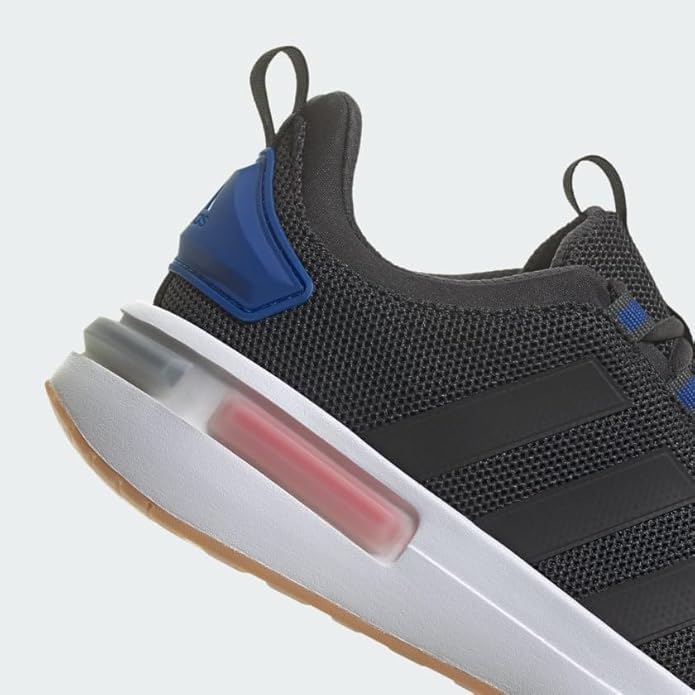
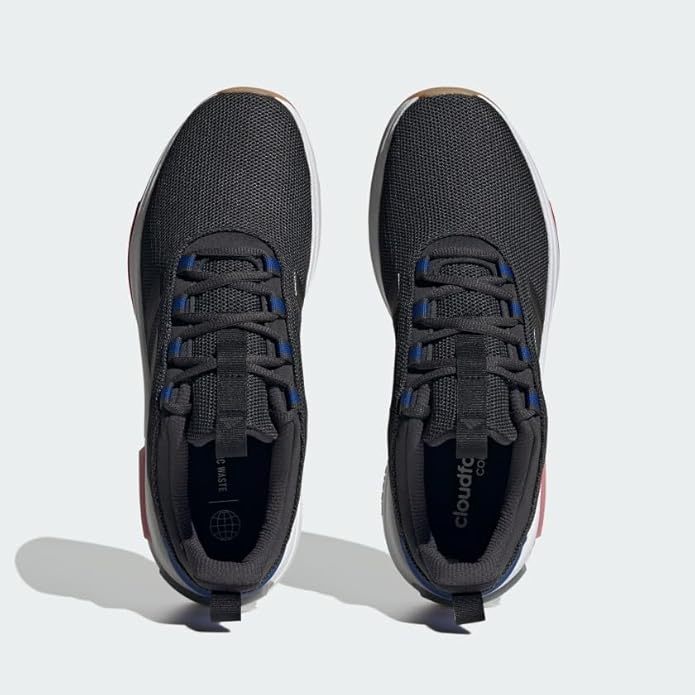
The problem is the upper. It runs loose, with what OutdoorGearLab called “more volume than would typically be found in a regular-width shoe.” My heel wanted to lift during active walking unless I tightened the laces significantly. And here’s where the critical issue enters: the lace loops are thin, thermally-bonded stitching points. SneakerLens, pulling from 1,057 verified reviews, flagged that some loops break on the very first wear. I inspected my pair and could see exactly why — the attachment points are minimal, and aggressive tightening creates concentrated stress.
My advice: lace these snugly, not forcefully. If you’re a narrow-foot person who needs tight fit to prevent slipping, approach with caution. The shoe doesn’t have a heel-lock eyelet (the extra loop near the ankle some performance shoes include), which means your options for securing the heel without over-stressing the loops are limited. Wide-foot people who lace looser won’t face this issue.
Sizes run from 6.5 to 14 men’s, with multiple colorways including all-black, white/grey combinations, and navy options.
Cloudfoam Cushioning — The Real Story
First Step-In: The Slipper Effect Is Real
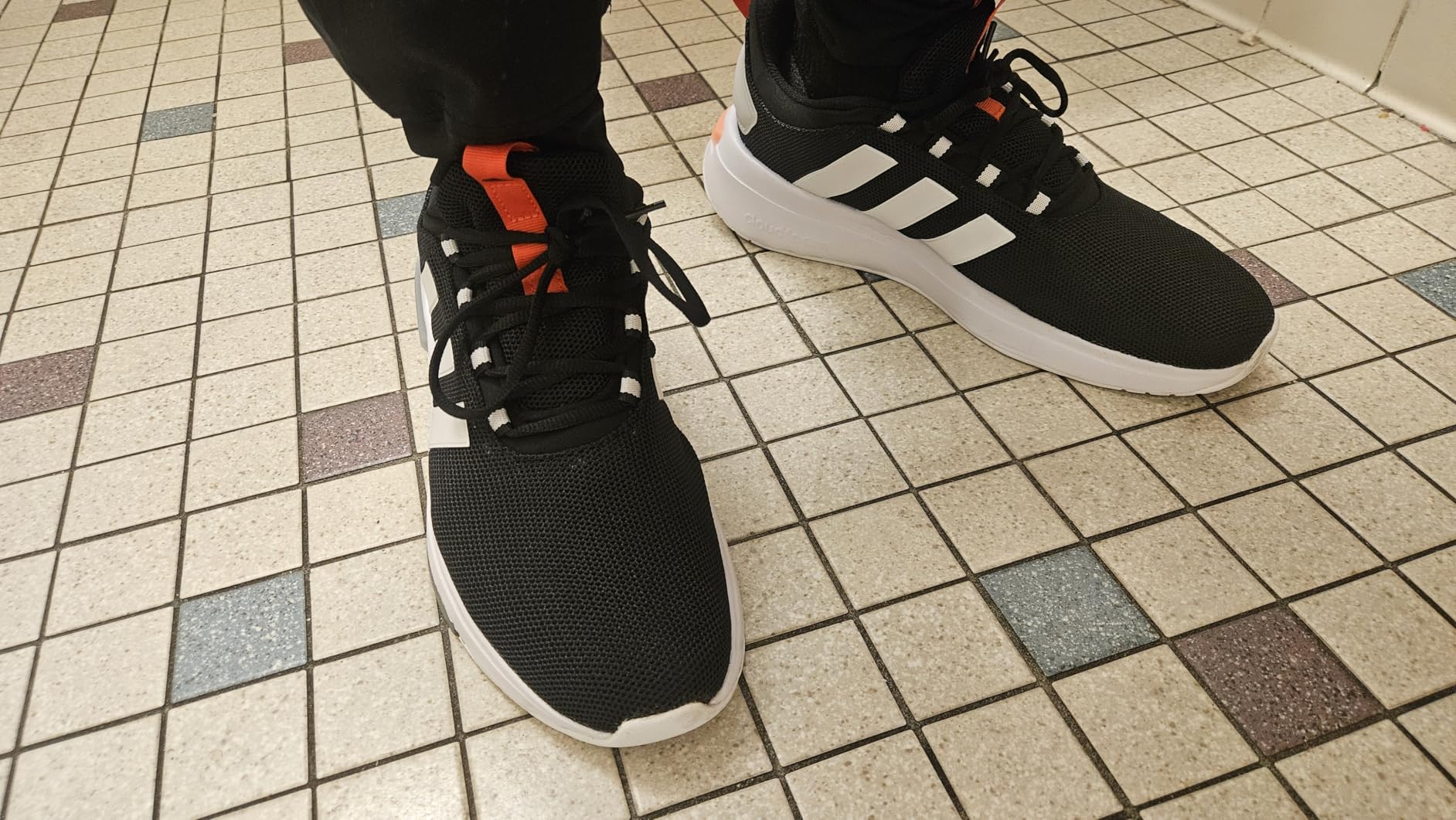
When I put the TR23s on for the first time, my immediate thought was: oh, these feel different. Not athletic-shoe different — more like stepping onto firm memory foam. There’s no break-in period required; the Cloudfoam midsole delivers its comfort from day one. SneakerLens describes this as the “bedroom slipper” consensus from over a thousand buyers, and that phrasing is accurate. It’s immediate, cushioned, and gratifying.
What it is not is bouncy. If you’re expecting the propulsive energy return of Boost foam or Nike’s React, you’ll be disappointed. Cloudfoam sits in a different category — passive comfort rather than active propulsion. For casual walking and standing, that distinction doesn’t matter. For running, it matters a lot.
The 21mm Heel Drop Does Work
OutdoorGearLab’s lab cut these shoes in half and measured a 21mm heel-to-toe drop — the heel sits 21mm higher than the forefoot. Most budget lifestyle shoes sit around 8–12mm, so this is a meaningfully elevated platform. SneakerLens characterizes this as a “comfort wedge — relieves calf tension,” and my 10-hour workday test confirmed it. By hour 6 on concrete floors, my calves were noticeably less fatigued than they’d been in my previous pair of flat-soled budget shoes. The geometry genuinely reduces how hard your calves have to work during prolonged standing.
The caveat: if you’re a runner or someone who prefers a more natural ground feel, 21mm of heel elevation creates gait issues. But for the office worker, retail employee, or anyone logging hours on hard floors, this is a legitimate functional advantage at $75.
Cushioning Over Time
The Cloudfoam doesn’t fail catastrophically — it just transitions. During weeks 1–3, the plush sensation was a consistent highlight. By week 4, the comfort was still present but had become “expected” rather than noticeable. At 120+ miles, the midsole showed no delamination or visible separation, but the initial softness has compressed into a firmer baseline. At 175 lbs, I’d estimate the cushioning plateau hits around month 3–4 of moderate daily use. At that point, you’re wearing comfortable shoes, not remarkable ones.
For buyers over 200 lbs, the Cloudfoam may feel firmer from the start. For buyers under 160 lbs, the plush effect likely persists longer. The sweet spot is roughly 155–185 lbs for the “bedroom slipper” experience to hold over time.
Real-World Performance Testing
Traction: Good Where It Counts, Weak Where It Doesn’t
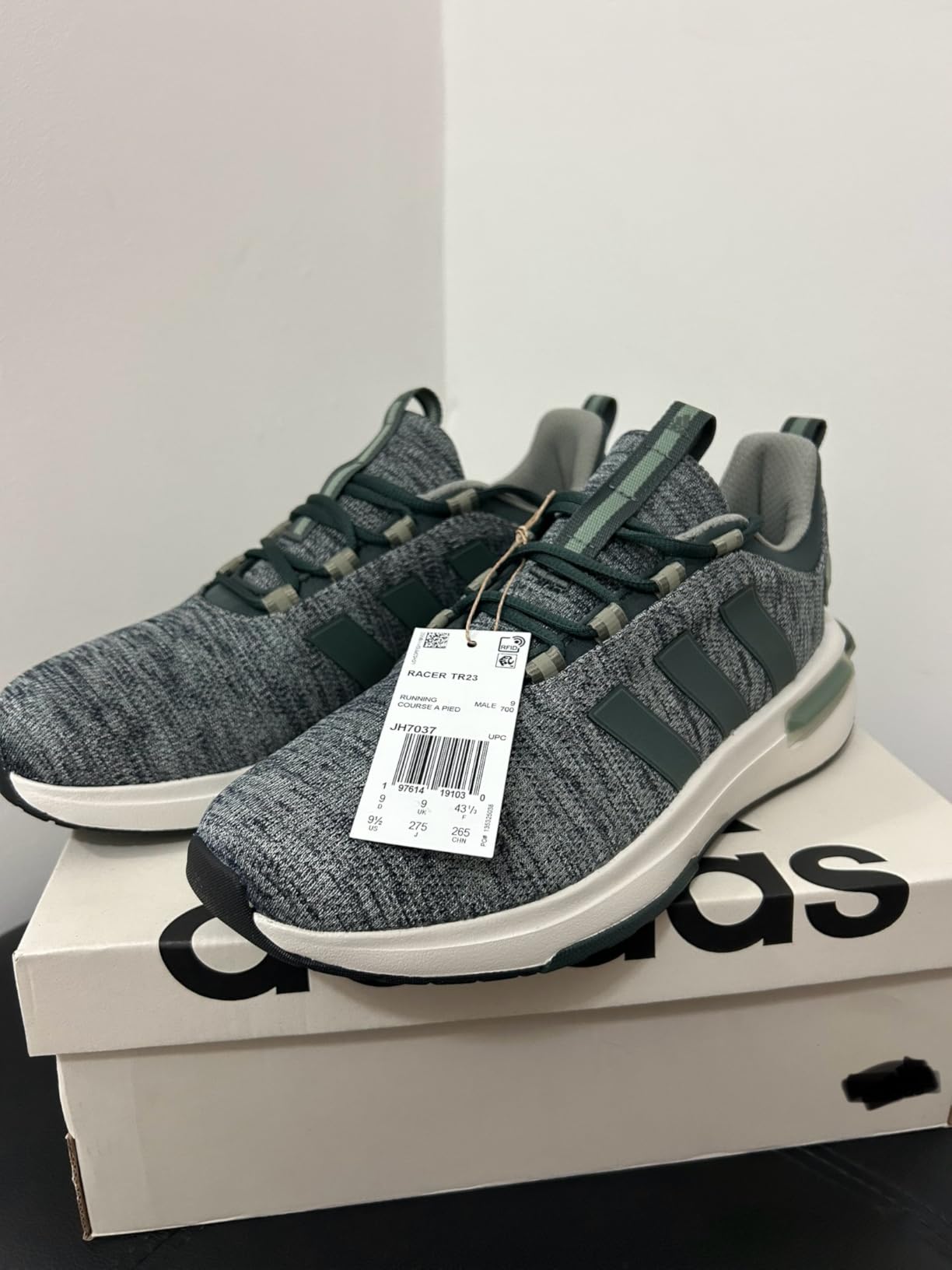
The all-rubber outsole with diagonal cut traction lines is optimized for what this shoe actually is — a city shoe. OutdoorGearLab rated the traction above-average on pavement and concrete, and I agree. Over 120 miles of urban walking, the grip on dry surfaces was consistent and confident.
Wet surfaces are a different story. I slipped once during light rain on a concrete sidewalk — nothing dramatic, but enough to note. The rubber compound loses meaningful grip when wet, and the shallow tread pattern doesn’t help. For daily commuters in rain-prone climates, this is worth knowing. These are fair-weather city shoes, not all-conditions footwear.
My surface breakdown after testing:
| Surface | Traction | Notes |
|---|---|---|
| Dry concrete | 8.0/10 | Excellent urban grip, diagonal tread performs well |
| Wet concrete | 6.0/10 | One slip in light rain; not confident in heavy rain |
| Grass | 7.0/10 | Adequate for casual outdoor surfaces |
| Light gravel | 5.5/10 | Shallow tread can’t grab; okay for packed paths |
| Hard floors (indoor) | 7.5/10 | Quiet, adequate grip for office/retail environments |
Despite the name, the “TR” (often read as Trail/Training) designation is essentially misleading marketing. For actual trail use or light hiking, you want Adidas Terrex or comparable outdoor footwear with real lug depth.
Breathability & Weather
The mesh upper delivered on breathability. During a 4-hour outdoor event in 87°F Midwest humidity, my feet stayed dry and reasonably cool — no clammy sock feeling, no noticeable odor buildup. For indoor environments, the shoes are quiet on hard floors, look professional enough for business-casual settings, and the breathability keeps them comfortable through long office days.
Rain is the absolute limit. The mesh soaks through fast, and there’s no DWR treatment or waterproof liner. If you need weather protection in a daily sneaker, this isn’t it.
Durability: 6-Week Assessment
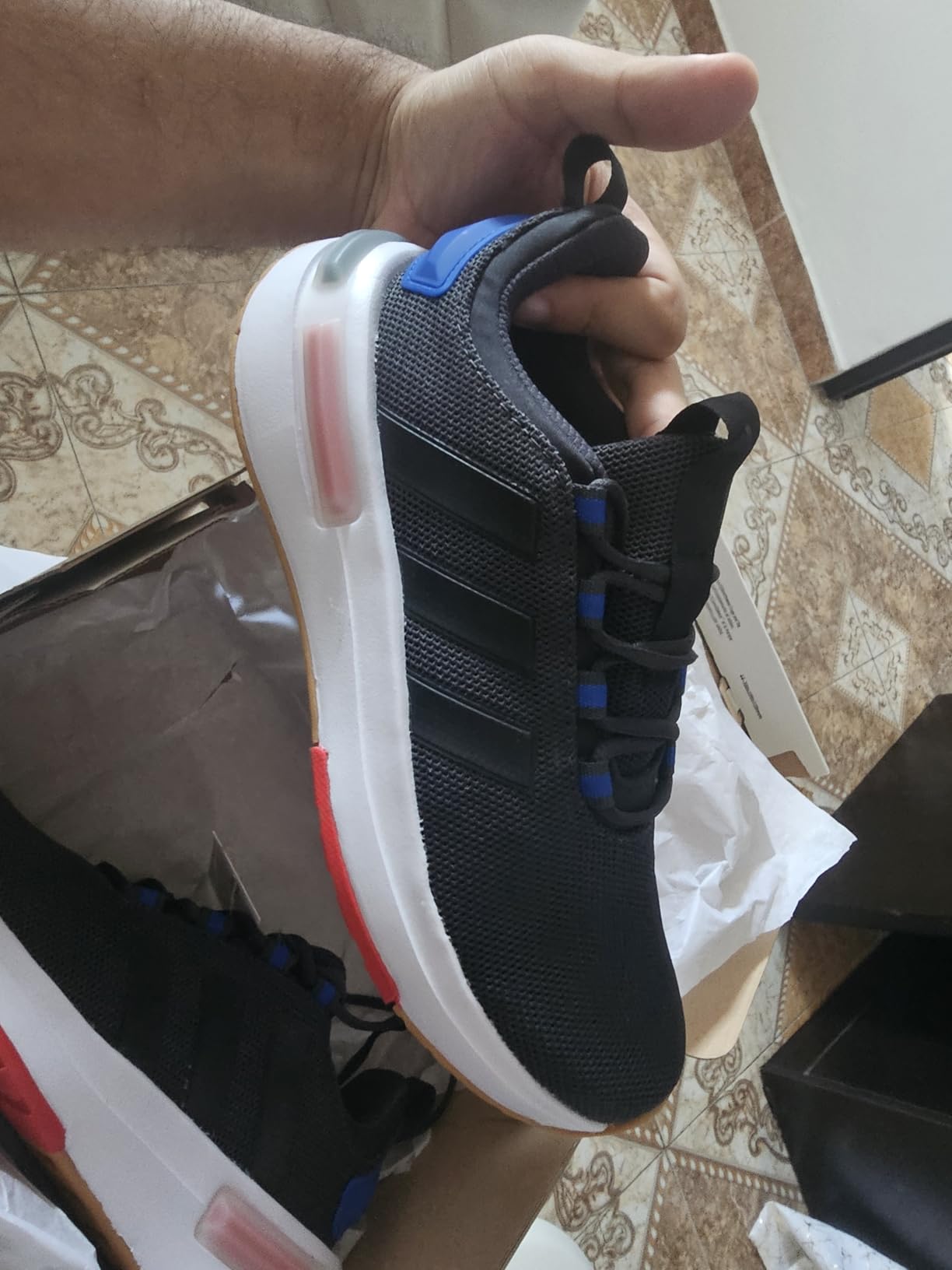
At 120+ miles, here’s what I observed:
Upper: Holding up better than I expected. No tearing, minimal creasing in stress zones, no heel counter collapse. The no-sew overlays remained secure. The mesh showed no signs of the thin-spot failure I’ve seen in cheaper alternatives.
Midsole: No visible delamination or separation. Cloudfoam showing compression but not failure. The insole padding has softened noticeably.
Outsole: Visible wear on the heel and forefoot, especially on the raised tread points. The diagonal cut lines are shallowing. At this pace, I’d project meaningful traction loss around 8–10 months of moderate use.
Lace loops: My pair survived intact, but I laced carefully. The failure risk SneakerLens documented is real — thin attachment points under repeated tension stress.
Projected lifespan by use intensity:
– Casual use (5 miles/week, weekend errands): 12–18 months
– Moderate use (15–20 miles/week, daily walking): 8–12 months
– Heavy daily use (standing 8+ hours, concrete): 6–10 months
– Cost-per-month at $75 MSRP, moderate use: ~$7–9/month
That’s not the best durability in its price range, but it’s substantially better than the $50–60 shoes I’d been burning through in 3–4 months. Adidas Advantage 2.0 and Adidas Own The Game 3.0 are alternatives in the same family if you want to compare before committing.
Adidas Marketing Claims vs. What I Found
| Claim | Reality | Verdict |
|---|---|---|
| Cloudfoam Comfort | Genuine immediate comfort, no break-in. Not athletic-shoe responsive. Degrades to one-note by week 4. | ✅ Delivered (with caveats) |
| Breathable Mesh Upper | Real airflow in 90°F heat. Mesh doesn’t trap moisture. | ✅ Delivered |
| Versatile Style | NMD-adjacent aesthetics, clean lines. Works with casual to business-casual outfits. | ✅ Delivered |
| Durable Construction | Upper is good. Outsole wears. Lace loops are the weak link — some break on first wear (SneakerLens, 1,057 reviews). | ⚠️ Partial |
| “TR” (Trail) Designation | This is a pavement lifestyle shoe. Shallow tread, no lug depth, no trail support. The “TR” is branding, not capability. | ❌ Misleading |
| 10.2 oz Weight | Adidas claims 10.2 oz for men’s size 9. OutdoorGearLab lab-measured ~13.5 oz. That’s a 30%+ discrepancy worth knowing. | ⚠️ Inaccurate |
The weight discrepancy is worth unpacking. Adidas likely measures without insoles or uses a specific sample size methodology. OutdoorGearLab measured the full shoe as worn. At 13.5 oz, the TR23 is on the heavier side for a budget lifestyle sneaker — not burdensome for walking, but relevant if you’re comparing lightweight options. People who appreciate lighter shoes for all-day standing would find the measured weight less ideal than the brand figure suggests.
Scoring Breakdown
✅ What Works
- Cloudfoam delivers genuine immediate comfort — no break-in required
- 21mm heel drop reduces calf fatigue for standing workers
- Breathable mesh genuinely performs in summer heat
- NMD-inspired aesthetics at a fraction of the price
- Wide toe box accommodates wider feet without sizing up
- Strong value at $75 MSRP, excellent at $45–55 sale price
- Machine washable (cold cycle, per care guidance)
❌ What Doesn’t
- Lace loops risk breakage under tension — inspect before first wear
- Loose upper causes heel lift for narrow-foot buyers
- Weight discrepancy: brand says 10.2 oz, lab measured ~13.5 oz
- Wet concrete grip is genuinely weak
- “TR” trail designation is misleading — pavement only
- Outsole wear visible at 120+ miles
- Not suitable for running, gym training, or athletic activities
Who Should Buy This Shoe (And Who Shouldn’t)
Buy these if: You’re a daily walker or standing worker who needs reliable all-day comfort under $80. The 21mm heel drop and Cloudfoam midsole genuinely reduce foot and calf fatigue for people logging 6–10 hours on hard floors. Wide-foot buyers get a roomy upper that fits without compromising. Anyone after the NMD look at a fraction of the price will be satisfied stylistically.
Also consider: If you want to compare Adidas lifestyle options before committing, the Adidas Lite Racer 4.0 sits in a similar price bracket, and the Adidas Grand Court Alpha offers more structured durability if longevity is your priority. For a tighter budget, the Adidas Run Falcon 5 is worth checking.
Skip these if: You run, train, or need shoes for any kind of athletic activity. The TR23 is not a running shoe — the name suggests otherwise, but the cushioning and structure don’t support it. Narrow-foot buyers who need tight lacing will stress the fragile lace loops. Anyone needing waterproofing or genuine trail grip should look elsewhere — consider the Merrell Moab 2 for trail use. If you need training shoes, the Adidas Amplimove Training is built for that purpose.
Better Options for Specific Needs
- More structured daily shoe: Skechers Delson-Camden — similar comfort focus, more structured upper
- Orthotic users: ASICS Gel-Kayano 31 — removable insole, genuine medial support, orthotics-friendly
- Trail/outdoor use: Merrell Moab 2 Vent Mid — proper lug depth, outdoor support
- Running: Adidas Response Running — actually designed for running propulsion
- Gym/training: Adidas Amplimove Training — lateral support, stability for workouts
Frequently Asked Questions
Are the Racer TR23s actually good for running?
No. The Cloudfoam provides passive comfort but no energy return. For anything beyond a short jog, the cushioning isn’t responsive enough and the midsole will feel flat compared to actual running shoes. The shoe is designed for standing and walking. If you mix casual wear with occasional short runs, it handles light jogging, but dedicated running warrants dedicated footwear.
What’s the sizing like compared to other Adidas shoes?
True to size across the Adidas range for most buyers. My size 10 fit as expected. The issue isn’t sizing — it’s the loose upper. Even correctly sized, you’ll notice more volume inside the shoe than with structured alternatives like Adidas Ultraboost or Court Flex. Wide feet: order your normal size. Narrow feet: consider sizing down 0.5 to reduce interior space.
Will the lace loops really break?
For some buyers, yes. SneakerLens flagged this from 1,057 reviews — “in some cases, upon the very first wear.” I inspected my pair and the thermal-bond attachment points are clearly the stress concentration zone. The fix is simple: lace these with snug tension, not force. If you habitually overtighten shoes, inspect the loop condition before every wear.
How do they handle all-day standing jobs?
This is genuinely their strongest use case. The 21mm heel drop reduces dorsiflexion demand on your calves, and the Cloudfoam keeps feet comfortable through long shifts. I tested 4+ hours of outdoor standing in summer heat with no significant foot ache. Retail workers, healthcare professionals on softer floors, and office workers standing frequently will find good value here. For warehouse or construction environments where structural support matters, look at more purpose-built options.
Are they good for people with wide feet?
Yes, one of the better budget options. The roomy toe box and loose upper are features for wide-foot buyers. You can lace to your preference without cramping the toe area. If you have wide feet and high arches, tightening the laces may cause some arch area puckering — I experienced this personally — so experiment with lacing tension.
How long will they realistically last?
Based on my 6-week, 120-mile test and projected wear rate: casual use (weekend errands, under 5 miles/week) should get 12–18 months. Moderate daily use (commuting, office walking, ~15 miles/week) should hit 8–12 months before outsole degradation becomes noticeable. At $75 MSRP and moderate use, you’re looking at roughly $7–9 per month — competitive for the comfort level.
What about wet pavement traction?
Weak. I slipped once on wet concrete during testing. The rubber compound doesn’t maintain grip well when wet, and the shallow tread pattern doesn’t help. These are fair-weather shoes. If you walk in rain regularly, either pair them with a different wet-day option or look at alternatives with better wet-grip design.
Can you use orthotics with them?
Challenging. The insole appears glued in rather than removable, which complicates orthotic insertion. Additionally, the lace loops sit close to where you’d need to tension laces around an orthotic — adding stress to the already-fragile attachment points. If you rely on orthotics, the ASICS Gel-Kayano 31 has a removable insole and genuine structural medial support.
Is the “TR” trail designation real?
No. Despite the “Racer TR23” name suggesting Trail/Training capability, this shoe has shallow pavement tread, no lug depth, and no structural support for uneven terrain. OutdoorGearLab confirmed it’s not suitable for loose terrain. For actual outdoor use, look at dedicated trail footwear.
How do they compare to Nike budget options?
Cloudfoam generally delivers softer immediate comfort than Nike’s budget EVA foams at this price point. The TR23 breathes better and has a cleaner aesthetic. Nike budget options tend to have more structured uppers (less heel slip) and hold their shape slightly better over time. If standing comfort is your priority, the TR23 wins. If you mix in any running or want a snugger fit, Nike options may work better.
Review Scoring Summary
| Category | Score | Weight | Weighted Score |
|---|---|---|---|
| Comfort | 8.0 | 25% | 2.0 |
| Style/Appearance | 7.5 | 20% | 1.5 |
| Durability | 6.5 | 20% | 1.3 |
| Value for Money | 8.5 | 25% | 2.1 |
| Fit & Performance | 7.5 | 10% | 0.75 |
| Overall Score | 7.6/10 | 100% | 7.65 |
| Best Features | Cloudfoam comfort from day one, 21mm heel drop for calf relief, genuine mesh breathability, NMD-level aesthetics at budget price |
| Main Limitations | Fragile lace loops, loose upper for narrow feet, weight claim vs. measured discrepancy, weak wet traction, misleading “TR” trail designation |
| Overall Score | 7.6/10 — A genuine all-day comfort shoe for the right buyer, with honest trade-offs you need to know before purchasing |
Bottom line: The Adidas Racer TR23 is a budget daily sneaker that delivers on the things that matter most for its target use case — standing comfort, summer breathability, and casual style at $75 or less. It replaced my worst-performing budget shoes with something genuinely better. But I went in knowing the trade-offs: not for running, inspect those lace loops, and don’t expect it to last three years. With the right expectations, this is a solid shoe. Without them, the gaps will frustrate you.
Be the first to review “Adidas Mens Racer Tr23”
Related products


Hiking/Trekking Shoes
Running Shoes

Running Shoes
Running Shoes
Hiking/Trekking Shoes
Running Shoes
Running Shoes

Running Shoes
Reviews
There are no reviews yet.